Africa Business

Senegal ferry disaster town remembers 20 years after 1,900 drowned

Twenty years after Le Joola ferry sank, the Senegalese town where half of the nearly 1,900 dead lived will on Monday hold commemorations for a “wound that never heals”.

When news spread that the vessel had capsized on the night of September 26, 2002, no one in the southern city could believe it.

“It was unthinkable,” said Nouha Cisse, who was head teacher at a secondary school in Ziguinchor that lost 150 pupils to the tragedy.

A total of 1,863 people drowned or were lost — surpassing the Titanic toll of more than 1,500 some 90 years earlier.

Le Joola sailed into a storm off the coast of The Gambia on the way from Ziguinchor to the capital Dakar.

The ferry played a major role in the town in the isolated Casamance enclave, providing a lifeline to Dakar and transporting agricultural produce as well as tourists.

The Casamance, almost separated from the rest of Senegal by the tiny state of The Gambia, had since 1982 been wracked by a separatist rebellion. September 2002 saw a surge in attacks.

On September 26, more than 1,928 people officially crowded on to the ferry, which had a capacity for 536 passengers.

Victims’ associations say more than 2,000 passengers from more than a dozen countries died, and only 65 survived.

– ‘Unbearable’ news –

With crowds gathering at the port the morning after, the prime minister announced Le Joola had capsized.

“After that it was unbearable in Ziguinchor,” recalled Ibrahima Gassama, a journalist who covered the disaster for Sud FM radio.

“No one could console anyone. The gendarmes cordoned off the area because some people were threatening to throw themselves into the sea.

“They had lost everything,” Gassama said.

“It really was a catastrophe,” said 65-year-old Khadidiatou Diop, who lost her mother.  

“In this house one person died, in that house another death, across the road one dead. It was like that all over Ziguinchor.”

For Gassama, “It’s a wound that never heals.

“I don’t think it ever can because the   subsequent behaviour over the handling of the catastrophe was a second shipwreck.”

He noted the rescue effort that only happened the next day and the official “lies”, denying the high death toll.

– Questions remain –

Two decades on, many questions remain unanswered.

The causes of the incident have never been fully established, despite a Senegalese government inquiry and a French probe launched because of the deaths of 18 French citizens. 

Engine failure, a navigational error, bad weather, poor maintenance and overcrowding — or a combination — were likely to blame.

Senegal closed the case in 2003 after concluding an investigation that blamed the captain, lost in the catastrophe.

French courts also dismissed a years-long probe, which found evidence against seven Senegalese officials, concluding that Paris did not have jurisdiction.

Senegalese and French victims’ associations want the raising of the wreck of Le Joola, which sunk to a depth of some 20 metres (60 feet), and is thought to hold many bodies.

They also want a memorial erected. One was promised for five years ago but the site is still nowhere near ready in Ziguinchor in time for Monday’s anniversary.

Senegalese victims’ relatives have been compensated but President Macky Sall has not attended the annual anniversary remembrance since he took office.

In the town on the banks of the Casamance river, as at every anniversary of the sinking, “everyone will gather to pray together”, noted Diop.

“But for those of us affected by this, it’s the same every day. From 2002 till today, there has not been a day when I haven’t thought about the boat,” she said
Top African coach Mosimane joins Saudi club

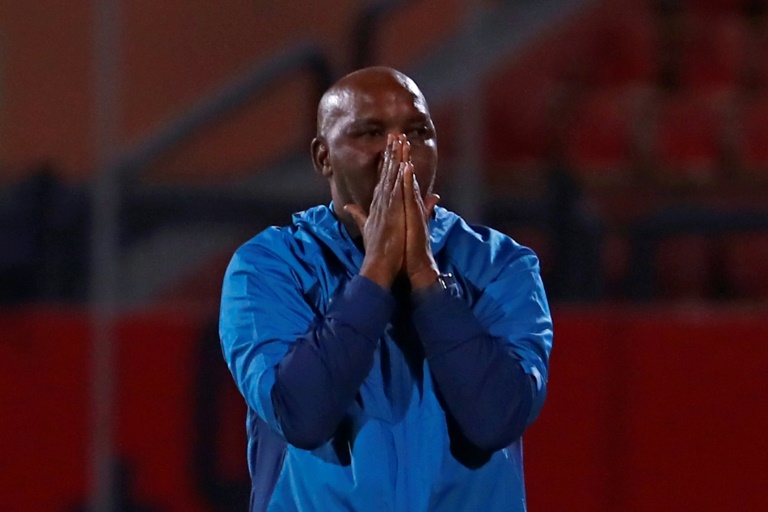
South African Pitso Mosimane, the most successful African coach in Confederation of African Football (CAF) club competitions, has joined Saudi Arabian second division side Al Ahli Saudi.

A close associate of Mosimane on Sunday confirmed to AFP the deal with the team based in Jeddah, but did not reveal the length of the contract or financial details.

Mosimane left Egyptian club Al Ahly in June, citing the mental pressure of handling the most decorated club in CAF competitions with 23 titles.

Under Mosimane, the Cairo Red Devils won the Champions League in 2020 and 2021 and were runners-up to Wydad Casablanca this year.    

The 58-year-old South African also guided Ahly to two victories in the Super Cup, an annual match between the winners of the Champions League and the second-tier Confederation Cup.

Mosimane also won the Champions League and Super Cup with Pretoria outfit Mamelodi Sundowns, and his six CAF club titles are one more than veteran Tunisian coach Faouzi Benzarti.

Argentina slam referee after four yellow cards and 22 penalties

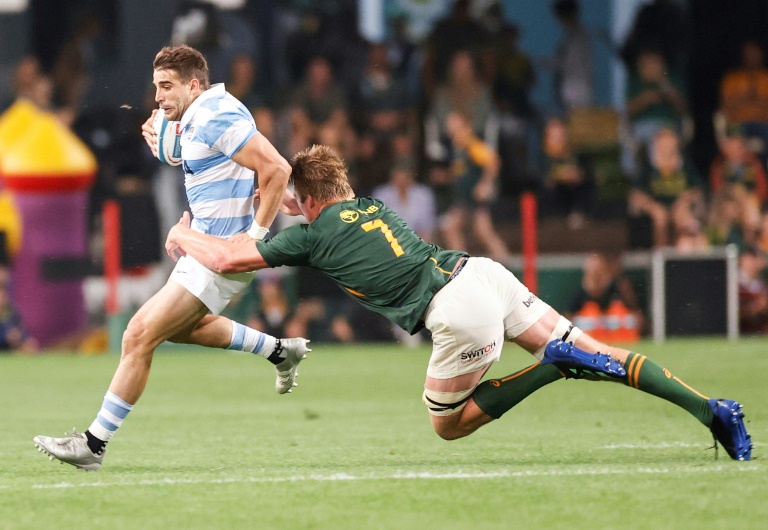
Argentina coach Michael Cheika has slammed Australian referee Damon Murphy after four of his players were yellow-carded and they conceded 22 penalties in a weekend loss to South Africa.

Two penalty tries were also awarded against the South Americans when they attempted to stop driving mauls by the reigning world champions during the second half.

The Springboks beat the Pumas 38-21 on Saturday in a scrappy, penalty-riddled final round Rugby Championship match at Kings Park in Durban.

South Africa finished second, one point behind eight-time champions New Zealand, while Argentina came last with nine points, one less than Australia.

Cheika hinted last weekend that he was unhappy with the refereeing of New Zealander James Doleman in a 36-20 home loss to South Africa, but stopped shot of criticising him publicly.

“I promised my mother not to talk about referees anymore and I cannot lie to my mother,” the Australian told reporters in Buenos Aires.

Cheika broke his silence about officiating, though, after his side suffered a third straight loss in the southern hemisphere championship after winning two of the first three matches.

“After the first three rounds of the Rugby Championship, we were the least penalised team. It is not clear to us what we are suddenly doing wrong.

“It is very difficult to win games when decisions are made like this,” he said, referring to the 17-point defeat in Durban. 

– ‘We need respect’ –

“At one point the referee told our captain (Julian Montoya) he has empathy for him. We do not need empathy, we need respect.”

Reflecting on the Championship campaign, which included a stunning first victory for Argentina in New Zealand, Cheika said they should have won at least two more matches

“We could have beaten Australia twice at home, instead of once, and after coming within two points of South Africa in Buenos Aires, we should have gone on to win.

“I also do not think the score in Durban was a true reflection of that match.

“The lesson we take from our latest game is that it is very important to make good decisions at key moments.”

Cheika said Argentina are improving but must develop a winning mentality ahead of the 2023 Rugby World Cup in France, where they will play England, Samoa, Chile and Japan in Pool D.

“Argentina are good enough to win more Tests than we do. We have to get rid of this notion that just competing is sufficient. We must win regularly. 

“We have learnt many lessons from this Rugby Championship and must take them into our November tour of Europe.”

Argentina are scheduled to play England at Twickenham on November 6, Wales at the Principality Stadium six days later and Scotland at Murrayfield on November 19. 

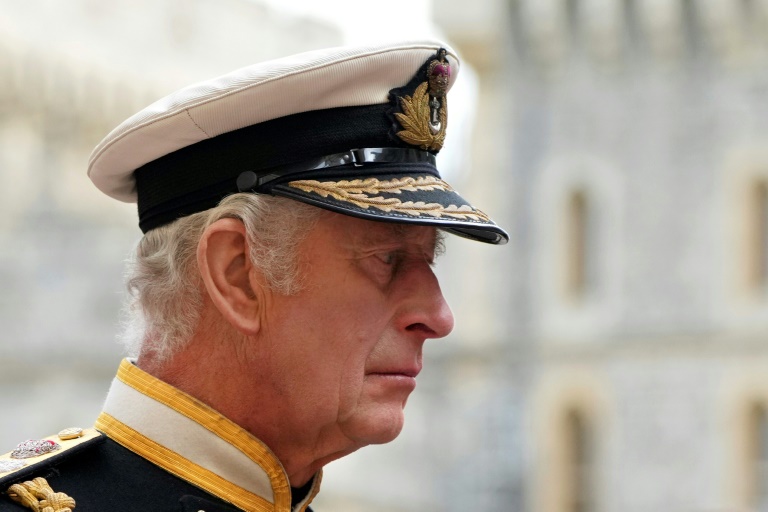
King Charles faces battle to win over UK black community

Queen Elizabeth II’s death earlier this month prompted a flood of tributes — but not from everyone. In Britain’s black community, many asked: what had she ever done for us?

The question gave her eldest son and successor, Charles III, an early taste of what he will have to confront as king, with feelings still running high about the toxic legacy of Britain’s colonial past.

At her death, the queen was head of state of 14 countries outside Britain, including nations in the Caribbean exploited by the slave trade.

Charles immediately succeeded his mother as their distant head of state but the question of for how long is increasingly being discussed as republican movements gather pace.

Kehinde Andrews, professor of black studies at the University of Birmingham, wrote the day after the queen’s death on September 8 that he did not share the country’s loss.

“For the children of the British empire, those of us who were born here and those of us who were born in the 15 nations of the ‘commonwealth’, the Queen is the number one symbol of white supremacy.

“She may have been seen as an institution but for us, she was the manifestation of the institutional racism that we have to encounter on a daily basis,” he wrote on the Politico website.

– Royals accused –

Many black Britons no longer want to stay silent about the racism that they see as rooted at the heart of many British institutions. 

The subject came to fore in Black Lives Matter anti-racism protests, which saw calls for statues of historical figures linked to slavery to be torn down.

During the national mourning period which ended with the queen’s funeral on September 19, protests were held about the death of Chris Kaba, an unarmed black man who was shot dead by police in London.

The monarchy itself had previously been drawn into the debate when Charles’s youngest son, Prince Harry, and his mixed-race wife, Meghan, accused the royal family of racism.

That claim saw the queen promise to investigate but prompted an outright rejection from Harry’s brother William. “We are very much not a racist family,” he told reporters.

Harry and Meghan quit royal life in early 2020 and moved to California, winning many fans among younger people and in the black community for taking on the British establishment.

– ‘Mass awakening’ –

Unresolved questions about race and colonialism are all the more significant as Charles stands to succeed his mother as head of the 56-nation Commonwealth group of nations.

Many members are former British colonies, while most of the body’s 2.6 billion people are not white and most are aged under 30.

David Olusoga, author of “Black and British: A Forgotten History”, said there had been a “mass awakening to the realities and legacies of imperialism and slavery” in the Commonwealth.

But the British historian wrote in The Guardian that Buckingham Palace had failed to recognise or understand the “shift of consciousness”.

He highlighted William and his wife Catherine’s Caribbean tour earlier this year, which was widely criticised as smacking of colonialism.

William also faced calls to apologise for slavery and for the monarchy to pay reparations.

“Historians might well look back at that tour as the first portent of the age in which we now find ourselves: the post-Elizabethan age,” Olusoga said.

Since then, William has praised the “immense contribution” of the “Windrush” generation of Caribbean migrants, who came to Britain after World War II to help the country rebuild.

Despite arriving legally, many found themselves later wrongly detained and even deported under the government’s hardline immigration policies.

– Race equality –

Ashok Viswanathan, deputy director of Operation Black Vote, said Charles’s record, via his Prince’s Trust charity, of working with disadvantaged young people and the black community “speaks for itself”.

But he said that to convince black Britons and especially the young, “he will have to foster that relationship in his new role”.

Charles is said to have been working behind the scenes to counter discrimination.

In early September, before he became king, he was invited to guest-edit The Voice, a newspaper for the African-Caribbean community.

But not all readers were happy, given the continued lack of apology for slavery, including from the royal family, the monthly’s editor, Lester Holloway, said.

He told the BBC: “We agreed to collaborate with the Prince of Wales after looking at the work he had done on race equality over 40 years and the parallels with our campaigning over the same period.”

Several thousand protest Angola's disputed vote result

Angolan opposition supporters took to the streets on Saturday to protest the return to power of the long ruling MPLA party in divisive elections last month.

The demonstrations were called by UNITA — the largest opposition party and a former rebel movement which fought a 27-year civil war against the MPLA government that ended in the oil-rich country in 2002.

The opposition National Union for the Total Independence of Angola (UNITA), whose popularity has been growing in recent years rejected the results of the August 24 vote.

It challenged the outcome in court, but the country’s top court dismissed the petition.

More than 2,000 protesters marched, some brandishing placards inscribed with slogans such as “respect for the peoples vote” and waving UNITA flags in downtown Luanda.

“Today we are a national consensus,” said charismatic UNITA leader Adalberto Costa Junior, addressing the crowd to rapturous applause and chants of “president Adalberto”.

“The court has come out badly damaged because everyone knows who really won the elections,” he added.

The formerly Marxist Popular Movement for the Liberation of Angola (MPLA) won a wafer-thin majority of 51.17 percent of the vote, handing President Joao Lourenco, the 68-year-old former general, a second term in power.

It was the MPLA’s worst electoral showing since independence from Portugal in 1975.

UNITA proved popular in urban areas and among young voters eager for economic change.

“The MPLA must understand that there are other voices they have to listen to,” Maria Saraiva, a 33-year-old unemployed hairdresser told AFP at the start of the march.

Costa Junior, 60, who has been credited with reinvigorating the opposition in Angola, told young people on Saturday that “your presence here is an example of courage and this is the beginning of a march for the future”.

Opposition parties and civic groups had said the vote was marred by irregularities. 

“Today is the first of many steps we as UNITA sympathisers will take to force political changes,” said sound engineer Jose Costa, 46.

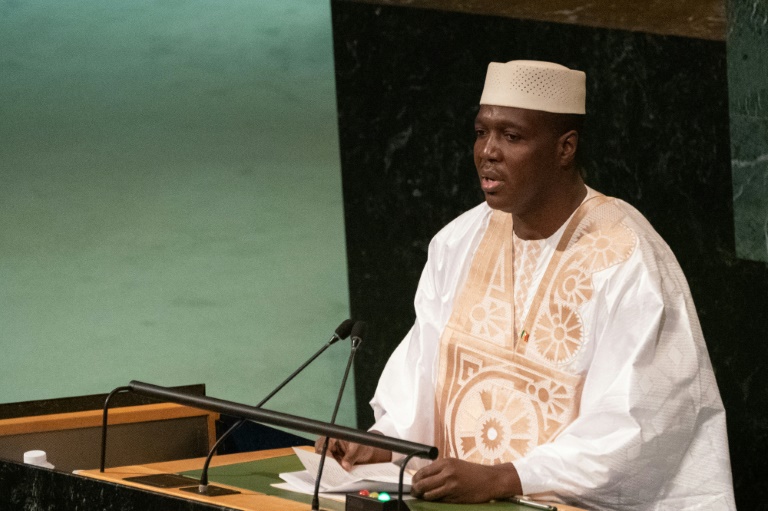
Mali post-coup PM denounces France, salutes Russia at UN

Mali’s military-appointed prime minister on Saturday lashed out at France as well as the United Nations in a grievance-filled address over his nation’s deteriorating security.

Colonel Abdoulaye Maiga, named last month by coup leaders as Mali’s interim prime minister, accused France of having “stabbed in the back” the West African nation with its withdrawal of troops.

French leaders “have disowned universal moral values and betrayed the rich history of the Lumieres philosophers and turned themselves into a junta in the service of obscurantism,” he told the UN General Assembly.

Maiga denounced the former colonial power for “neocolonialist, condescending, paternalist and vengeful policies” such as sanctions on the junta in Mali, which has seen two coups since 2020.

He instead saluted “the exemplary and fruitful cooperation between Mali and Russia,” whose Wagner Group security firm has been hired by the junta in Bamako despite widespread concerns in the West.

Maiga also denounced UN Secretary-General Antonio Guterres, who in a recent interview rejected the junta’s claims that 46 Ivorian soldiers detained in Mali were mercenaries.

Ivory Coast said that the soldiers, detained at the Bamako airport, were sent to provide backup to the UN peacekeeping force MINUSMA, one of the international body’s largest and most dangerous missions.

“Mr. Secretary-General, Mali shall exert all legal consequences over your actions,”  Maiga said, before repeating his call for reform of MINUSMA.

Maiga also attacked the leaders of several West African nations that have put pressure on the junta.

He charged that Niger’s President Mohamed Bazoum was not actually from Niger and accused Ivorian President Alassane Ouattara of “keeping power only for himself and his clan” by changing the constitution to have a third term.

The military in 2020 threw out Mali’s elected president, Ibrahim Boubacar Keita, amid frustration over the failure to stop a jihadist insurgency.

France in August withdrew its last troops from Mali after a nine-year deployment, seeing little progress against the jihadists and sour relations with the junta.

Senegal ferry disaster relatives fight for justice 20 years on

What was a trip of a lifetime for some and a day out for others ended in one of the world’s worst maritime disasters, with victims’ families still seeking justice 20 years on.

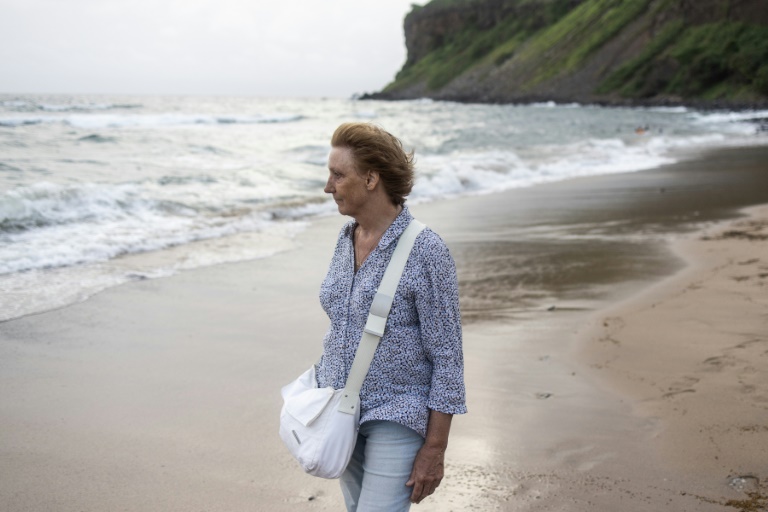
Nadine Verschatse’s eyes mist over when she recalls the capsizing of Le Joola on the night of September 26, 2002 after it sailed into a storm off the coast of Gambia.

The tragedy has haunted the 69-year-old Frenchwoman as she continues her fight to get justice for her daughter “and all the others”.

She picks up a green folder and pulls out a photograph while sitting in a Dakar restaurant. 

“Look, I always keep it with me. You have to put faces to names,” says Nadine looking at the photo of Claire, her daughter, a radiant 20-year-old flanked by her childhood friend Guerande. 

“For their birthdays, as they’d been working hard, we gave them a trip.”

The trip, to Senegal, marked the first time they had ever travelled by plane, but they were never to return.

Today, Nadine says they are “forgotten,” just two more victims of “injustice”.

That night saw 1,863 people drowned or lost — surpassing the Titanic toll of more than 1,500 90 years earlier.

Le Joola ran into trouble on the way from Ziguinchor in the Casamance region to Dakar.

Victims’ associations say more than 2,000 passengers from more than a dozen countries died after cramming onto a vessel designed for a quarter as many, with only 65 survivors.

– ‘Apocalyptic vision’ – 

Senegalese Leandre Coly, 37, was among the survivors.

He remembers an “apocalyptic vision,” which still haunts his dreams, describing an initially joyful atmosphere onboard with some passengers playing cards, others laughing and joking as musicians played.

Then the wind picked up and heavy rain prompted the passengers to close the portholes.

The vessel tilted dangerously “and everything slid away — instruments, the musicians, people. Water began to seep in, the lights went out. People were crying out all around”, Leandre said.

Instinctively, Leandre grabbed hold of a fellow passenger and stumbled to an exit, swimming away from the stricken vessel, discarding his clothes as his strength ebbed away.

Despite fearing he would drown, he defied the odds and, guided by the sound of voices in the darkness, found a small group holding on to an inflatable boat which they prised open.

In the early hours a group of fishermen pulled them to safety, Leandre recalls tearfully.

Nadine looks on from a separate table, giving him space to remember.

– ‘Big family’ –

“We are a big family,” she says referring to those affected by the disaster.

Two decades on, many questions remain unanswered.

The causes of the incident have never been fully established, despite a Senegalese government inquiry and a French probe launched because of the deaths of several French citizens. 

Engine failure, a navigational error, bad weather, poor maintenance and overcrowding — or a combination — were likely to blame.

Officially, 1,928 people were onboard a boat designed for only 536.

“There was negligence, failures — that much is known,” says Nadine.

– Legal dead end –

Senegal closed the case in 2003 after concluding an investigation that blamed the captain, lost in the catastrophe.

French courts also dismissed a years-long French probe into the case, which had found evidence against seven Senegalese officials, concluding that Paris did not have jurisdiction.

Nadine said that amounted to “killing the victims a second time”.

Senegalese and French victims’ associations want the raising of the wreck of Le Joola, which sunk to a depth of some 20 metres (60 feet).

They also want a memorial erected.

One was due to be unveiled in Ziguinchor, where most of the victims were from, in time for Monday’s anniversary — but the site is nowhere near ready.

French victims have long tried unsuccessfully to obtain permission for a memorial gravestone to be placed at Paris’ Pere-Lachaise cemetery.

“We shall not abandon our victims… they deserve to be honoured,” said Nadine. 

She will join commemorations in Senegal, now a “second home”, as she has done every year since the disaster except for a period during the pandemic.

“Without them perhaps I wouldn’t be here today. I might have chosen just to go to pieces,” she reflects, wiping away tears.

Africa's first post-pandemic Comic-Con festival draws thousands

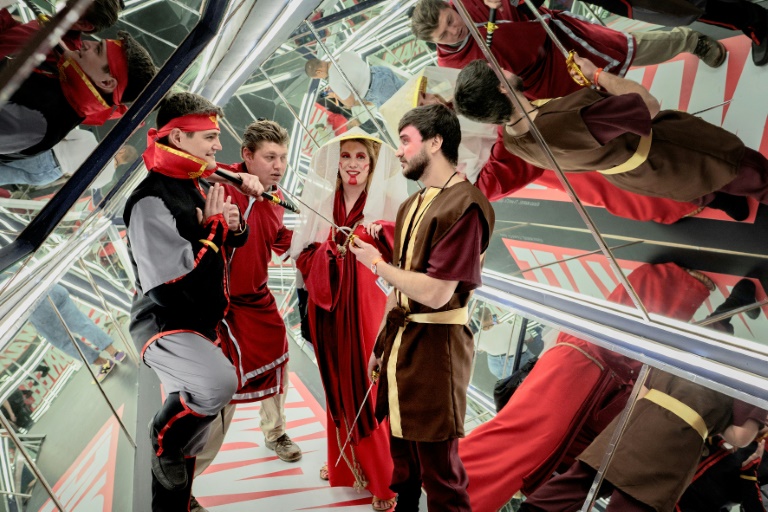
In a makeshift changing room swathed with black fabric, South African Luke Andalis transforms into the burly Aratak, preparing to perform at Comic-Con Africa, the continent’s largest pop culture, fantasy and gaming festival.

“There’s so much fur in my mouth,” the 32-year-old cosplayer Andalis chuckles to friends as he dons a stiff green pleather parka over his head and shoulders.

This year he chose to cosplay Aratak, the  middle-aged chieftain of the Banuk tribe in the popular video game Horizon Zero Dawn: The Frozen Wild.

After a two-year Covid hiatus, Comic-Con Africa’s return has been widely anticipated by cosplayers and fans.

Clad in superhero capes, colourful masks, sci-fi costumes and eccentric wigs, thousands on Saturday flocked to a vast expo centre near the FNB Stadium, which hosted the FIFA 2010 World Cup final. 

Loud music welcomed the festival-goers to Stranger Things escape rooms, pop-up tattoo parlours and comic haven.

This year’s festivities are star-studded, hosting fan favourites including award-winning Stranger Things and Twilight actor, Jamie Campbell Bower among others.

Africa’s third edition of the comic convention is being staged at the national recreation centre, south of the economic hub Johannesburg. The festival first hit African soil in 2018.

– ‘Very proud moment’ –

Andalis has been cosplaying for six years but says his 12 years as a film costume designer and maker made for a natural transition. 

During the pandemic when performances slammed to a halt, the Cape Town-raised artist shared tips on costume play and showing off his “builds”, a term used to describe a finished costume, racking up a large Instagram following.

Shortly before stepping on stage, Andalis’s personality shifts slightly as he starts to get into character. 

He complains about the stiffness of the costume, which perfectly imitates Aratak’s garb, a traditional attire used to protect the character from the frigid climate of his tribe’s territory.

“It is a very proud moment. I’ve been working on this costume for eight months,” he says.

Complete with stocky faux fur tussles that swing as he turns and a regal head garment  atop a fake triangle shaped beard and thick sideburns, Andalis’s friend helps him put on the last component of the ensemble — armoured quill braces.

As he walks from the dimly-lit dresser, a crowd swarms around him marvelling at the final product.

The four-day pop culture festival has won praise for opening doors for cosplayers in a country where the industry is not yet as big as in more developed nations.

It is the first time at Comic-Con for Johannesburg-based Thifhuriwi Nephawe.

She is dressed as princess Neytiri of the alien Na’vi race, in the American science fiction film series Avatar.

“The character Neytiri is for me an African woman who’s very powerful and fighting for her village, for her tribe,” she tells AFP.

“People from the outside are coming to try and take everything from them, so she’s trying to fight against that, that’s what I resonate with, just the power.”

Ghana coach downplays 'danger' of his World Cup reshuffle

Ghana coach Otto Addo acknowledged the “danger” of integrating a number of new players into the squad ahead of the World Cup, but he does not believe it will have a destabilising effect.

Addo, who took charge in February after Ghana’s disastrous Africa Cup of Nations campaign, handed debuts to Inaki Williams, Tariq Lamptey and Mohammed Salisu in Friday’s 3-0 friendly loss to Brazil.

The 28-year-old Williams won one cap for Spain in 2016 and Lamptey, 21, played regularly for England’s youth teams before opting to switch allegiance.

German-born Addo, who played for Ghana at the 2006 World Cup, has also called up Ransford-Yeboah Konigsdorffer and Stephan Ambrosius, both capped by Germany at under-21 level.

“It’s always a danger to get new players, especially if the players who are there before achieve something really, really good,” said Addo, who oversaw the World Cup play-off win over Nigeria in March.

“There’s a group dynamic which I don’t want to break, but I think from what I saw they were welcomed well.

“They did well in training and get along with each other and it’s not like they were strangers. Before some knew each other from playing in the same league and everything is okay.”

Addo believes adding European-born members of the diaspora will increase competition for places and benefit the Black Stars. 

“It’s a good situation. We have pressure from the bench because new people are there who are very, very solid in Europe, and we have players on the pitch who have to prove themselves,” he said.

Addo admitted to being “very unhappy” with the nature of his team’s defending at set-pieces, but insisted the loss to Brazil would provide a useful learning opportunity before heading to Qatar.

– ‘Team was bad’ –

Brazil, the world’s top-ranked side, tore Ghana apart in a dominant first half in Le Havre, with Richarlison striking twice after Marquinhos headed in the opener.

The second of Richarlison’s goals came from a Neymar free-kick, with the Tottenham Hotspur forward nodding in at the near post.

“In all, the team was bad, if you lose 3-0 you’re bad,” Addo said after Ghana suffered their fifth defeat in as many meetings with Brazil.

“I was very disappointed, especially with the set-pieces. They had a lot of chances. We were a bit lucky in some situations they didn’t score.”

But he bristled at the suggestion the four-time African champions were not ready to compete at the World Cup.

“If you see how many times they (Brazil) have scored three or four goals, then nobody’s ready,” said Addo.

“It’s not like we were playing against some small boys. They’re really, really good.”

At the 2018 World Cup in Russia, no African team made it to the knockout phase for the first time in 36 years.

Ghana, who were a missed Asamoah Gyan penalty away from reaching the last four in 2010, have one final tune-up game against Nicaragua on Tuesday before Addo must finalise his World Cup plans.

“We lost 3-0 so everybody probably thinks this is a weak team. This is maybe an advantage for us,” he said.

“Everything brings something good if you learn from it. I hope that I learnt myself. Maybe I have to do some things differently. If everybody thinks like that then we’ll do better. I’m not concerned at all.”

“I made some mistakes, I will learn from them and can hopefully improve,” he added.

“The second half showed we can compete with them.”

Ghana play Portugal in their opening match at the World Cup on November 24. They have also been drawn alongside Uruguay and South Korea in Group H.

E.Guinea's ruler to run for sixth term

President Teodoro Obiang Nguema Mbasogo, who has ruled Equatorial Guinea with an iron fist for more than 43 years, will seek a sixth term in November, the vice president said Friday.

Obiang, 80, is the longest ruling head of state in the world excluding monarchs but it was uncertain if he would stand again or whether his son would succeed him.

It was his son, Vice President Teodoro Nguema Obiang Mangue, nicknamed “Teodorin”, who made the announcement.

“Because of his charisma, his leadership and his political experience”, the ruling party unanimously chose Obiang as its candidate for the November 20 poll, Obiang Mangue wrote on Twitter.

The Democratic Party of Equatorial Guinea (PDGE) holds 99 of the 100 seats in the outgoing lower house of parliament and all 70 of the senate seats. 

But it had not been clear who would be named as the party’s candidate in the presidential ballot.

No other candidate has so far been declared.

– Succession –

Obiang seized power in a coup in 1979 that led to the execution of his feared, ruthless uncle and predecessor Francisco Macias Nguema.

The PDGE was the country’s single legal political movement until 1991, when multi-party politics were introduced.

But Obiang himself has never officially been re-elected with less than 93 percent of the vote.

He could now be set for another seven years in power.

Last year, Teodorin seemed to have been lined up to stand in the elections. In the end, however, and to general surprise, he was not chosen as a candidate last November.

Observers and diplomats pointed to a power struggle between Teodorin and certain regime figures who did not want to see the president’s son taking over the reigns.

Teodorin has been sentenced in France to a three-year suspended prison term and a fine of 30 million euros for having fraudulently accumulated luxury properties and goods.

On Tuesday, the small, oil-rich country announced it was bringing forward the presidential vote by five months.

It also said the poll would take place at the same time as parliamentary elections.

Holding the two costly votes together was necessary at a time of economic crisis due to the Ukraine conflict and the pandemic, it said.

The country, one of the world’s most authoritarian, abolished the death penalty, state television announced on Monday citing a new law signed by the president.

International rights groups regularly accuse the authorities in the former Spanish colony of human rights abuses.

Close Bitnami banner
Bitnami