Africa Business

Green protest hits DR Congo ahead of climate summit

Climate activists protested in the Democratic Republic of Congo’s capital Kinshasa on Friday ahead of a climate summit in the city next month. 

Kinshasa is due to host the pre-COP27 talks in October, before the main summit begins in Egypt in November.  

But the pre-COP27 meeting comes after the DRC put 27 oil and gas blocks up for auction in July, ignoring warnings from environmentalists that drilling in peatlands and forests could release huge volumes of carbon dioxide. 

On Friday, about 200 protesters marched in Kinshasa toting banners bearing slogans such as “No to new fossil fuels”.

Rose Mathe, a 22-year-old climate activist, said developing the oil and gas blocks contradicted the government’s push to brand the DRC as a “solution country” for climate change. 

“The world is transitioning towards 100-percent renewable energy,” she said, adding that drilling for oil is environmentally destructive.

Roughly the size of western Europe, the DRC enjoys vast mineral riches, including huge reserves of cobalt and lithium that are critical for battery production. 

Peatlands in the Congo Basin also store around 30 billion tonnes of carbon, according to a 2016 Nature study. The figure is roughly equivalent to three years’ of global emissions.

Patient Muamba, a campaigner for Greenpeace Africa who attended the protest, told AFP petrol has no future. 

“We’re asking the government cancel these offers,” he said, referring to the oil and gas auction. 

The DRC’s government has argued that drilling will be conducted using methods that minimise harm to the environment. It has also stressed that exploiting oil and gas will help diversify the mining-reliant economy. 

About three-quarters of the DRC’s population of 90 million people lives on under $1.9 a day, according to World Bank figures. 

Ebola deaths in Uganda climb to four

A total of four people have died from the highly contagious Ebola virus in Uganda, where the authorities declared an outbreak earlier this week, health officials said on Friday. 

“Three new deaths were recorded,” the health ministry said in a statement, raising the toll from one to four after the country’s first fatality from the virus since 2019 was reported on Tuesday.

The total number of confirmed cases now stood at 11 after four more infections were confirmed in the last 24 hours, the officials said. 

It was not immediately clear if the 11 cases included the four fatalities. 

Nineteen others suspected of contracting Ebola were receiving treatment at a hospital, the ministry added. 

“The Ministry of Health Rapid Response Teams remain on ground to list and follow up contacts to the confirmed cases,” it said, urging increased vigilance. 

Authorities declared an outbreak in the central district of Mubende on Tuesday, announcing the death of a 24-year-old man.

Travel restrictions on non-essential work and a ban on large public gatherings have been imposed in Mubende, health ministry spokeswoman Emma Ainebyoona told AFP on Friday. 

The first victim had tested positive for the relatively rare Sudan strain of the virus.

There have been seven previous outbreaks of the Sudan strain, including four times in Uganda and thrice in Sudan, according to the WHO. 

Uganda, which shares a porous border with the Democratic Republic of Congo (DRC), has experienced several Ebola outbreaks, most recently in 2019 when at least five people died.

The DRC last month recorded a new case in its violence-wracked east, less than six weeks after an epidemic in the country’s northwest was declared over.

– Difficult to contain –

Ebola is an often fatal viral haemorrhagic fever. The death rate is typically high, ranging up to 90 percent in some outbreaks, according to the World Health Organization.

First identified in 1976 in the DRC (then Zaire), the virus, whose natural host is the bat, has since set off a series of epidemics in Africa, killing around 15,000 people.

Human transmission is through body fluids, with fever, vomiting, bleeding and diarrhoea the main symptoms.

Outbreaks are difficult to contain, especially in urban environments.

People who are infected do not become contagious until symptoms appear, which is after an incubation period of between two and 21 days.

At present there is no licensed medication to prevent or treat Ebola, although a range of experimental drugs are in development and thousands have been vaccinated in the DRC and some neighbouring countries.

The worst epidemic in West Africa between 2013 and 2016 killed more than 11,300 alone. The DRC has had more than a dozen epidemics, the deadliest killing 2,280 people in 2020.

Central Africa's top court scraps panel to rewrite constitution

The Central African Republic’s top court on Friday annulled presidential decrees setting up a committee to rewrite the constitution, which had sparked fears Faustin Archange Touadera was seeking a third term in office.

In a legal setback for the president, the Constitutional Court declared that the decrees “are unconstitutional and invalid” and noted the basic law could only be revised after a Senate has been set up.

The 65-year-old president was first elected in 2016, then re-elected in a highly controversial poll in 2020, but the current constitution does not allow him to run again.

The court also said that any referendum on revising the constitution had to be initiated by the president but that he could not go against the oath he’d taken at his investiture to refrain from modifying the number and length of his mandates. 

Opposition and civil society groups on August 27 staged a protest in the capital Bangui against changing the constitution.

Early Friday, a heavy police presence and members of the UN peacekeeping force in the war-torn country were posted along the road leading to the court, according to an AFP journalist.

CAR authorities had in recent months organised demonstrations in favour of a revamped constitution, with more than 1,000 people turning out for such a gathering on August 6.

Less than a week later, Touadara said that “more and more voices are being raised to demand a modification of the constitution”.

His United Hearts Movement (MCU) in March had attempted to scrap the two-presidential term limit during a “republican dialogue” boycotted by the bulk of the opposition.

But the party rowed back on the idea in the face of public protest and criticism from the international community.

The 53-member committee was made up of representatives from the National Assembly, political parties, opposition and civil society, according to the annulled decree.

– ‘Resounding victory – 

On Friday, the main petitioner in the case Crepin Mboli-Goumba called the court ruling “a resounding victory for all democrats, wherever they are”.

A special adviser to the president said they accepted the court’s decision. “We are not worried,” Fidele Gouandjika told AFP.

“A constitutional coup is always possible,” he said.

After the decision was made public, calls to demonstrate went out via social media, drawing about a hundred protesters outside the constitutional court building.

Demonstrators whistled and called for the resignation of the court’s judges, before singing the national anthem and quickly dispersing. 

The move marks “a major blow for President Touadera who is going to have to rethink his strategy for a third term,” central Africa specialist Thierry Vircoulon, of the French Institute of International Relations, told AFP.

Touadera won a second term in 2020 with a 53.16-percent vote share in a controversial poll amid widespread insecurity in the CAR, which has been battling a decade-long civil war.

Less than one in three voters were able to cast a ballot, in a country of some five million which the UN says is the world’s second least developed nation.

Fear grips undocumented foreign workers in South Africa

Zimbabwean domestic migrant worker Precious clocked in late for work, launched into her duties for a white South African family as if nothing happened, yet hours earlier she had been arrested for being in the country without papers.

South Africa — the continent’s most industrialised country — is buckling under a wave of illegal migration triggered by economic woes in its neighbours. Many come from Malawi, Lesotho, but the majority are from Zimbabwe.

Lately police have scaled up crime-busting stop-and-search operations, including weeding out undocumented migrants.

One such early morning blitz was launched this week in Springs, a district at the eastern end of the largest city of Johannesburg.

Several dozen police officers mounted a check point on a narrow road, stopped cars and buses, meticulously searching boots and ordering occupants out, demanding identification documents.

Grabbed by the waist or arm, one-by-one they were led to the side of the road to a queue stretching out in front of immigration officers. 

“These are weekly operations,” provincial police chief Elias Mawela, told AFP. “When it’s confirmed they are illegal in the country they’ll be taken in and later on they’ll be taken to court… and back to their countries of origin”.

But in some raids, police officers solicit bribes to release the migrants.

The day Precious was arrested at a minibus taxi rank in downtown Johannesburg, she was one of 30 people bundled into a police van.

She was asked to pay 1,000 rands on the spot — equivalent to her weekly wages — or risk being taken to the police station for eventual deportation.

Precious immediately texted her employer warning she would be late and frantically called friends and associates to raise the bribe money.

– ‘Scared’ –

“I was scared,” said the single mother of two. 

“It’s not good being a foreigner these days,” said Precious, 36, folding a pair a velvet pants she was ironing. 

Official data lists an estimated 3.8 million migrants in South Africa, a figure considered a gross understatement.  

Foreigners, especially those from the rest of Africa, are targets of xenophobic resentment and accused of taking jobs in a country where at least one in every three people is unemployed.

Zimbabwe has a long history of immigration into South Africa, dating back to the 19th century when the gold rush saw mining companies hiring labour across the borders.

In 2009 Pretoria granted four-year work visas to around 250,000 Zimbabweans fleeing economic and political turmoil at home. The permits have since then been repeatedly renewed, but authorities have vowed they will not be extended beyond June 2023.

But many more Zimbabweans have continued to pour into South Africa illegally through porous borders in search of greener pastures.

The huge influx of foreigners has irked many South Africans who accuse them of taking their jobs and placing undue pressure on public facilities.

Recently an anti-immigration group of activists picketed outside a public hospital west of Pretoria — blocking patients they suspected were foreigners, accusing them of putting the public health sector under strain.

Their action followed a viral video of provincial health minister berating a Zimbabwean patient, accusing her of seeking free treatment at a government hospital at the expense of South Africans.

Domestic worker Precious recalls giving birth to her now 11-year-old son at a public hospital in Zimbabwe.

“There is nothing there, not even water to wash the baby when he’s born. No painkillers,” she said.

Asked about some of his bribe-taking officers in a country dogged with high crime levels and endemic corruption, police commissioner Mawela urged anyone who is asked for a bribe “to bring it to our attention so we can investigate it”.

“We can’t just take it lightly these accusations”.

Nigeria's 2020 protesters look to the ballot box

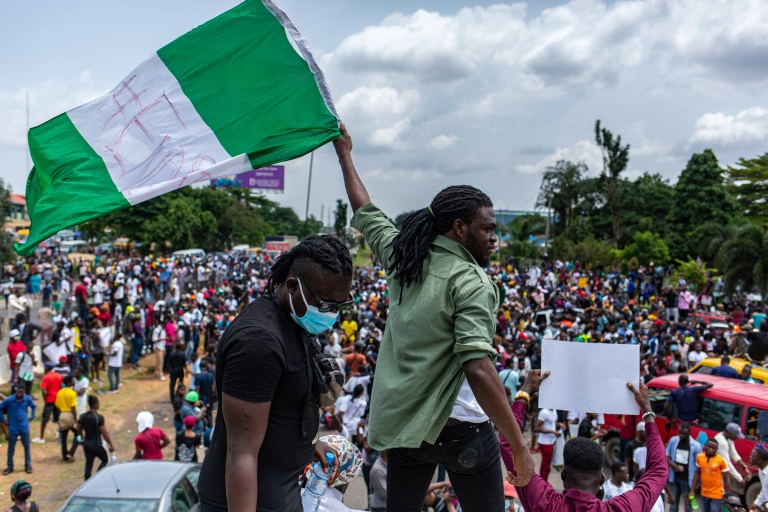
Two years after Samuel Ashola was shot in the leg during a peaceful protest in Nigeria’s economic capital Lagos, the unemployed artist boils with anger as he prepares to vote. 

“My blood is hot,” said the 30-year-old, before campaigning for the 2023 general elections starts later in September. 

“I’m from the ghetto, the slum, the gutter… and I can tell you, Nigerians are really mad. The way our government is running things, with all that happened… I want to vent it out.”

Many young Nigerians behind the largest protests in the country’s modern history were traumatised by shootings in Lagos State on October 20, 2020, when security forces violently dispersed a crowd demanding better governance.

Mass protests, which rallied to the hashtag #EndSARS — referring to the Special Anti-Robbery Squad (SARS) that was eventually disbanded over reports of extortion and brutality — ground to a halt after that fateful night.

Amnesty International said at least 10 people were killed by the security forces, a claim the government has repeatedly denied. A Lagos investigative panel described the incident as a “massacre”.

For those who were there and many others watching online, it was a moment of political awakening that could impact the outcome of next year’s vote. 

“We stopped fighting because we knew we had a chance to change the people at the top in 2023,” said 27-year-old Esther Jonathan. “We’ve been waiting for this.”

Since 2020, the economy has deteriorated, insecurity has spread and public universities have been shut for eight months due to strikes, spurring on those who want change. 

– ‘Momentum’ –

Vying to replace President Muhammadu Buhari, who is to step down after his two constitutional terms, are Atiku Abubakar of the People’s Democratic Party (PDP) and Bola Ahmed Tinubu of the ruling All Progressives Congress (APC) party.

But outsiders Rabiu Kwankwaso of the New Nigeria People’s Party and the popular Peter Obi of the Labour Party could benefit from an emerging protest vote.

Voter turnout is generally low in Nigeria — 33 percent in the last election — and young people are not known for being the most politically active. 

But “there has been a positive progression from 2015 until now” in interest in politics, said Udo Jude Ilo, analyst and consultant with Thoughts and Mace Advisory.

Last month, the electoral commission said around 70 percent of newly registered voters were aged 18 to 34.

“(The) 2023 election is not going to be like every other election,” said Akinwunmi Ibrahim Adebanjo, 26. “This time we will be coming outside… to get the country back from the hands of political thieves.”

Odunayo Eweniyi, a 28-year-old founding member of the Feminist Coalition, a key group behind the movement, believes the 2020 protests inspired people who had not directly supported them.

“Whether you were pro or against, the truth is, a change was made, voices were heard,” she said. “And now because we realise it is possible — wherever you are in Nigeria — to have your voice heard, people are building on that momentum.”

The protests were also a turning point for the political elite, according to Hamzat Lawal, a 35-year-old activist who recently announced he intends to run for office.

The government “could have created an enabling environment for dialogue,” he said, but instead resorted to force because “they were scared.

“They never saw young people this organised… mobilising resources, coordinating themselves, speaking in one voice.” 

– Challenges –

Five out of seven protesters AFP interviewed in Lagos and the political capital Abuja said they would vote for Obi. At 61, his age is one of his attractions, since Abubakar and Ahmed are both over 70.

“Right from independence we’ve been ruled by one old person to another,” said 27-year-old Anita Izato. “I think it’s time to see if a younger person could do better.”

While Obi used to be a member of the PDP, he is now running with the much lesser known Labour Party and has managed to position himself as anti-establishment.

Many say his chances are limited, in part because his party does not control any of Nigeria’s 36 states or governors’ posts, perceived to be necessary to deliver votes.

Apathy and vote buying are hard to shake off in a country where 80 million people live below the poverty line and influence can be paid for.

If the APC or PDP candidate wins? “I will protest,” said Jonathan, with a smile. 

For others, like 30-year-old Leo Dasilva, such a result should serve “as a lesson”, so that by the following election “we (the youth) will be a lot more prepared to take power”.

West Africa leaders agree on gradual sanctions on Guinea junta

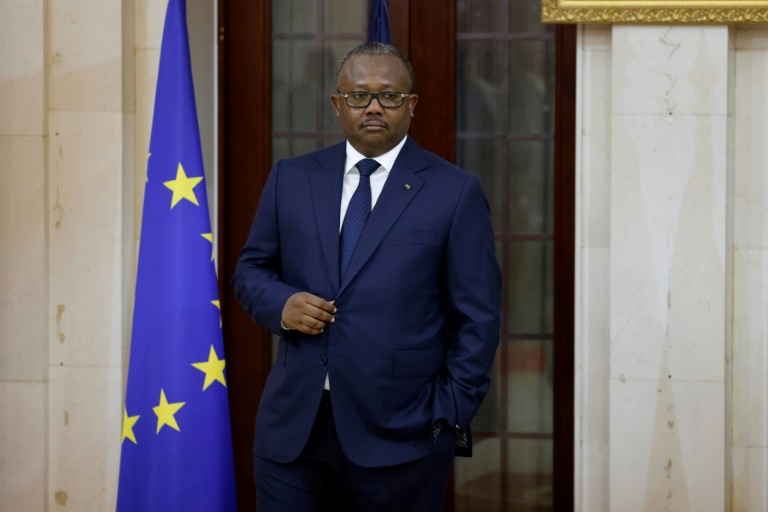
West African leaders agreed at an emergency summit Thursday to impose gradual sanctions on Guinea’s junta over its inflexibility on setting a date to return to civilian rule.

“We have decided to take sanctions against Guinea,” Omar Alieu Touray, president of the commission of the ECOWAS bloc, told AFP.

The leaders from the Economic Community of West African States — minus those of Guinea, Mali and Burkina Faso, suspended due to coups — met in New York where they were attending the UN General Assembly.

A summary of the meeting said that the leaders agreed on “gradual sanctions” on a list of people linked to the Guinean junta who will be identified “very soon” by the bloc’s leadership.

Poor but mineral-rich Guinea has been ruled by the military since a coup in September 2021 that ousted president Alpha Conde, in power since 2010.

Guinea’s junta-appointed prime minister, Bernard Gomou, earlier slammed ECOWAS chief Umaro Sissoco Embalo, describing him as a “puppet wearing the mantle of a statesman.”

In a statement, Gomou said Embalo, who is also president of Guinea-Bissau, was an “overexcited” man who “forced his way in” to the ECOWAS presidency.

The prime minister also pointed to the two countries’ geographical closeness and blood ties, but warned “no political upstart, let alone a badly briefed opportunist, will lead us to destroy this precious heritage.”

– ‘Unacceptable’ timetable –

During a visit to Guinea, Embalo had said he had secured an agreement with the junta to give way to elected civilians after two years.

Three years in power before a return to civilian rule is “unacceptable for ECOWAS,” Embalo said on Wednesday in an interview with France’s RFI and France 24 broadcasters.

Embalo warned in the interview that if the junta maintained that timetable, there would be sanctions — “heavy sanctions, even.”

Colonel Amara Camara, a senior junta figure, earlier on Thursday accused Embalo of “lies.”

“Crude lies and intimidation are backward steps that dishonor (Embalo) and at the same time tarnish ECOWAS’ image,” Camara said in a video received by AFP.

The West Africa bloc has been struggling with a string of military coups in the region in the past two years.

Camara accused Embalo, who took over the rotating presidency of the conference of West African heads of state a few weeks ago, of being “distinguished by his personal positions in defiance of his fellow presidents.” 

He accused Embalo of “putting on a show” and of disregarding the ECOWAS presidency, of forcing his West African counterparts to hold a summit outside West Africa and of wanting to force through sanctions against Guinea. 

“We are not in… a reality TV relationship,” Camara said, accusing Embalo of “bawdy” diplomacy.

“By forcing his peers to hold this summit outside his geographical space, his leadership will have allowed an opportunity for others not to take us seriously.”

Mali underwent coups in August 2020 and May 2021, followed by Guinea in September 2021 and Burkina Faso in January.

ECOWAS has lifted tough sanctions that had been imposed on Mali’s military regime, accepting a March 2024 return to civilian rule.

But Mali and Guinea remain suspended from ECOWAS bodies.

Springboks hand 'incredible' Steyn key role against Argentina

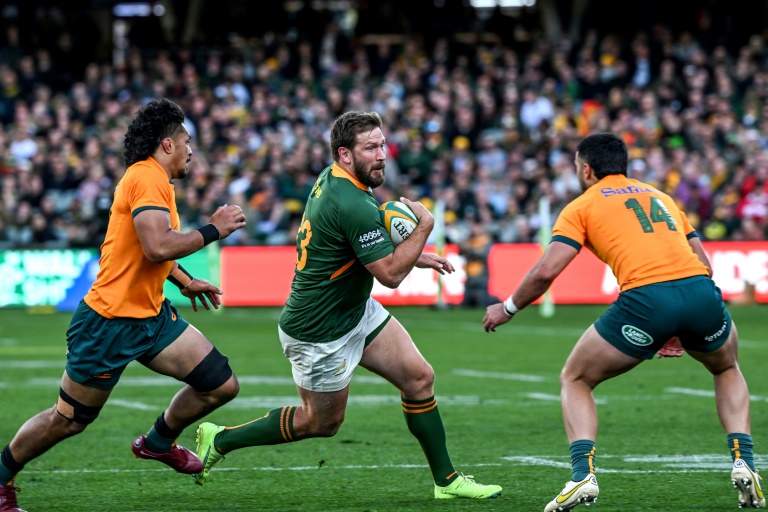
Emergency South Africa fly-half Francois Steyn has been called “incredible” by former head coach Rassie Erasmus ahead of a crucial Rugby Championship clash with Argentina on Saturday.

With Handre Pollard, Elton Jantjies and Damian Willemse unavailable, the 35-year-old utility back will make his first Springbok start as a playmaker since 2008 in the final round match.

First-choice Pollard is injured, Jantjies was dropped from the squad after reports of an alleged affair with the team dietician and Willemse is recovering from concussion.

That left Steyn as the only option for the clash with the Pumas at Kings Park in Durban and reserve scrum-half Faf de Klerk will also provide fly-half cover.

South African director of rugby Erasmus, the coaching mastermind behind South Africa winning the 2019 Rugby World Cup in Japan, lavished praise on Steyn, who has won 77 caps.

“It is incredible how Francois, at the age of 35, is still performing so well at international level. South Africans can be very proud of him,” he said.

Erasmus used six forwards and two backs on the bench rather than the traditional five-three split at the World Cup, enabling South Africa to unleash six fresh forwards in the second half.

Apart from a specialist scrum-half, Steyn was the only other back chosen for all the key matches in Japan, covering the full-back, centre and fly-half positions.

He replaced Willemse late in a 36-20 bonus-point victory over Argentina in Buenos Aires last Saturday and head coach Jacques Nienaber hailed his “calmness”.

– Tightest title race –

A prodigious long-range goal kicker, Steyn slotted two conversions, one from the touchline, to put the match beyond the reach of the Pumas.

In the tightest title race since the southern hemisphere championship was launched 10 years ago, New Zealand and South Africa have 14 points each, Australia 10 and Argentina nine.

Defending champions New Zealand play Australia in Auckland eight hours before the Durban match begins, with the different time zones making simultaneous kick-offs impractical.

Among multiple scenarios is one in which all four teams could finish with 14 points, leaving points difference, head-to-head records or number of tries to separate them.

Nienaber labelled the Buenos Aires match a “semi-final” and says the rematch in Durban is a “final” as South Africa seek to win the Rugby Championship for a second time.

“Winning in Buenos Aires is no guarantee we will succeed again in Durban. Argentina are one of those teams whose patriotism radiates in their performances.”

Apart from Steyn, Nienaber has made one other change with 2019 World Rugby Player of the Year Pieter-Steph du Toit returning to the loose forward trio in place of Franco Mostert.

Fit-again hooker Bongi Mbonambi is among five changes to a bench which includes six forwards and just two backs.

Argentina coach Michael Cheika has made two backline changes to the team that started last weekend with centre Matias Moroni and 34-year-old winger Juan Imhoff promoted. 

The Australian is upbeat despite the home loss to South Africa coming a couple of weeks after a 53-3 mauling in New Zealand.

“Since arriving in South Africa we had our best training session in some time. The environment will be difficult, but we intend to enjoy it,” said Cheika.

Guinea junta slams W.Africa bloc chief's transition 'lies'

Guinea’s ruling military junta on Thursday accused the president of the West African regional bloc ECOWAS of “lies” over his call for sanctions on Conakry if it seeks a three-year transition back to civilian rule.

The poor but mineral-rich nation has been ruled by the military since a coup in September 2021 that ousted president Alpha Conde, in power since 2010.

“Crude lies and intimidation are backward steps that dishonour (Economic Community of West African States chief Umaro Sissoco Embalo) and at the same time tarnish ECOWAS’ image,” Colonel Amara Camara, a senior junta figure, said in a video received by AFP.

During a visit to Guinea, Embalo said he had secured an agreement with the junta to give way to elected civilians after two years, which Camara described as a “lie”.

Three years in power before a return to civilian rule is “unacceptable for ECOWAS,” Embalo, who is also president of Guinea-Bissau, said on Wednesday.

“Unacceptable and non-negotiable,” he added, in an interview with France’s RFI and France 24 broadcasters, a day before an ECOWAS summit on the sidelines of the United Nations General Assembly in New York.

Embalo said in the interview that if the junta maintained that timetable, there would be sanctions — “heavy sanctions, even”.

– Regional instability and coups –

The West Africa bloc has been struggling with a string of military coups in the region in the past two years.

Camara accused Embalo, who took over the rotating presidency of the conference of west African heads of state a few weeks ago, of being “distinguished by his personal positions in defiance of his fellow presidents”. 

He accused Embalo of “putting on a show” and of disregarding the ECOWAS presidency, of forcing his West African counterparts to hold a summit outside west Africa and of wanting to force through sanctions against Guinea. 

“We are not in… a reality TV relationship,” Camara said, accusing Embalo of “bawdy” diplomacy.

“By forcing his peers to hold this summit outside his geographical space, his leadership will have allowed an opportunity for others not to take us seriously.”

Mali underwent coups in August 2020 and May 2021, followed by Guinea in September 2021 and Burkina Faso in January.

ECOWAS has lifted tough sanctions that had been imposed on Mali’s military regime, accepting a March 2024 return to civilian rule.

But Mali and Guinea remain suspended from ECOWAS bodies.

Death at rally against M23 rebels in east DR Congo

One person was killed and two others wounded in eastern Democratic Republic of Congo on Thursday during a demonstration against the M23 rebel group, local officials said.

Civil-society groups staged the rally in the town of Rutshuru in North Kivu province to protest the army’s perceived inaction against the M23 — which has captured swathes of territory since the summer.

A mostly Congolese Tutsi group, the M23 first leapt to prominence in 2012 when it briefly captured North Kivu’s capital Goma before being driven out.

M23 rebels resumed fighting in late 2021 after lying dormant for years. They have since seized territory across North Kivu, including the strategic town of Bunagana on the Ugandan border.

The DRC has repeatedly accused its smaller central African neighbour Rwanda of backing the M23, although Kigali denies the charge. 

On Thursday, protesters gathered outside the office of the military administrator in Rutshuru on the 100th day of the M23’s occupation of Bunagana.

Police officers shot at demonstrators, killing one and wounding two, according to Justin Bin Serushago, a spokesman for a local civil-society group. 

“We will not move until military operations have resumed against the M23,” he told AFP. 

An official at Rutshuru general hospital who requested anonymity confirmed that one person — a young man — had died after he was shot in the chest. 

A senior police officer in Rutshuru told AFP that several people had been wounded in the protest, without offering further details.

The front between the army and the M23 has remained relatively calm in recent weeks, with soldiers and rebels observing each other from their positions without engaging.

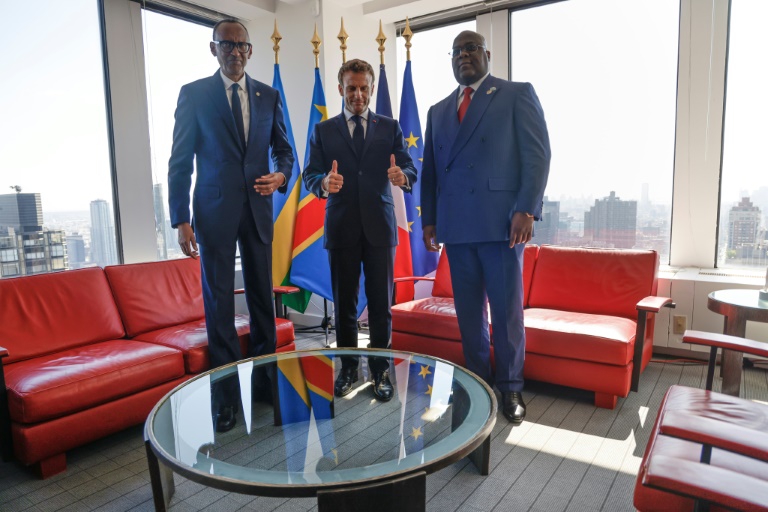
The protest in Rutshuru comes after the DRC’s President Felix Tshisekedi met his Rwandan counterpart Paul Kagame on Wednesday in New York, in a meeting brokered by French President Emmanuel Macron in a bid to calm regional tensions.

S.Africa teens build solar train as power cuts haunt commuters

For years, students in a South African township have seen their parents struggle to use trains for daily commutes, the railways frequently hobbled by power outages and cable thefts.

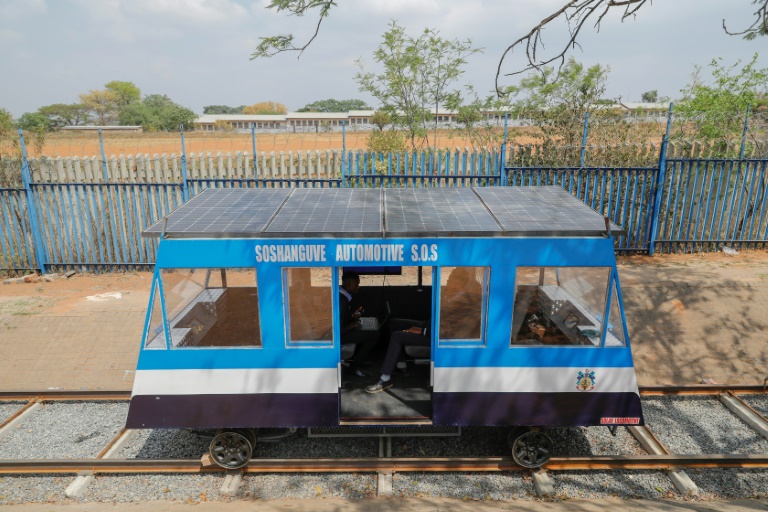
To respond to the crisis, a group of 20 teenagers invented South Africa’s first fully solar-powered train.

Photovoltaic panels fitted to the roof, the angular blue-and-white test train moves on an 18-metre-long (60 feet) test track in Soshanguve township north of the capital Pretoria. 

Trains are the cheapest mode of transport in South Africa, used mostly by the poor and working class.

“Our parents… no longer use trains (because of) cable theft… and load shedding,” said Ronnie Masindi, 18, referring to rolling blackouts caused by failures at old and poorly maintained coal-powered plants.

The state power company Eskom started imposing on-and-off power rationing 15 years ago to prevent a total national blackout. 

The power outages, known locally as load-shedding, have worsened over the years disrupting commerce and industry, including rail services.

Infrastructure operator Transnet has struggled to keep rail traffic flowing smoothly since the economic challenges of the pandemic fuelled a surge in cable theft.

By 2020, rail use among public transport users was down almost two-thirds compared to 2013, according to the National Households Travel Survey with many commuters turning to more expensive minibus taxis.

Masindi said they decided to “create and build a solar-powered train that uses solar to move instead of (mains) electricity”. 

The journey has not been without its challenges. 

A lack of funding delayed production of the prototype locomotive, and the government later chipped in.

“It was not a straight line,” said another student, Lethabo Nkadimeng, 17. “It was like taking a hike to the highest peak of the mountain.”

The train, which can run at 30 kilometres (20 miles) per hour, was showcased at a recent universities innovation event.

For now, the prototype can run for 10 return trips on the track installed on the grounds of a school. 

It will be used for further research, and eventually presented as a model the government could adopt. 

Fitted with car seats and a flat-screen TV to entertain passengers, it took the students two years to build. 

“What we have realised is, if we you give township learners space, resources and a little mentorship they can do anything that any learner can do around the world,” said Kgomotso Maimane, the project’s supervising teacher.

Close Bitnami banner
Bitnami