Africa Business

Guinea junta slams W.Africa bloc chief's transition 'lies'

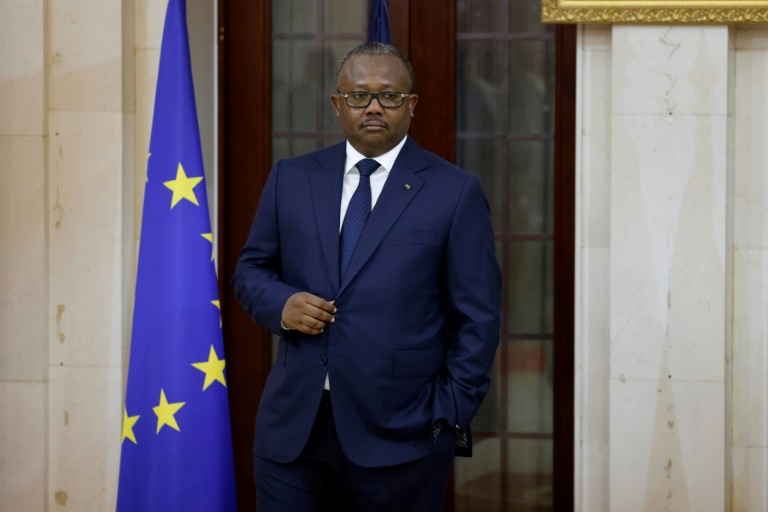
Guinea’s ruling military junta on Thursday accused the president of the West African regional bloc ECOWAS of “lies” over his call for sanctions on Conakry if it seeks a three-year transition back to civilian rule.

The poor but mineral-rich nation has been ruled by the military since a coup in September 2021 that ousted president Alpha Conde, in power since 2010.

“Crude lies and intimidation are backward steps that dishonour (Economic Community of West African States chief Umaro Sissoco Embalo) and at the same time tarnish ECOWAS’ image,” Colonel Amara Camara, a senior junta figure, said in a video received by AFP.

During a visit to Guinea, Embalo said he had secured an agreement with the junta to give way to elected civilians after two years, which Camara described as a “lie”.

Three years in power before a return to civilian rule is “unacceptable for ECOWAS,” Embalo, who is also president of Guinea-Bissau, said on Wednesday.

“Unacceptable and non-negotiable,” he added, in an interview with France’s RFI and France 24 broadcasters, a day before an ECOWAS summit on the sidelines of the United Nations General Assembly in New York.

Embalo said in the interview that if the junta maintained that timetable, there would be sanctions — “heavy sanctions, even”.

– Regional instability and coups –

The West Africa bloc has been struggling with a string of military coups in the region in the past two years.

Camara accused Embalo, who took over the rotating presidency of the conference of west African heads of state a few weeks ago, of being “distinguished by his personal positions in defiance of his fellow presidents”. 

He accused Embalo of “putting on a show” and of disregarding the ECOWAS presidency, of forcing his West African counterparts to hold a summit outside west Africa and of wanting to force through sanctions against Guinea. 

“We are not in… a reality TV relationship,” Camara said, accusing Embalo of “bawdy” diplomacy.

“By forcing his peers to hold this summit outside his geographical space, his leadership will have allowed an opportunity for others not to take us seriously.”

Mali underwent coups in August 2020 and May 2021, followed by Guinea in September 2021 and Burkina Faso in January.

ECOWAS has lifted tough sanctions that had been imposed on Mali’s military regime, accepting a March 2024 return to civilian rule.

But Mali and Guinea remain suspended from ECOWAS bodies.

Ghana's new recruits get Brazil test ahead of World Cup

While Brazil will jet off to Qatar in November dreaming of winning a sixth World Cup, Ghana hope the addition of reinforcements from the diaspora can re-establish the Black Stars as one of Africa’s top sides.

Unbeaten throughout World Cup qualifying, Brazil’s only competitive loss since going out to Belgium in the 2018 quarter-finals in Russia came against Argentina in last year’s Copa America final.

Ghana’s recent record is far less impressive going into Friday’s match in Le Havre, one of two final warm-up games for both nations ahead of the global showpiece.

A shock loss to the Comoros in January consigned Ghana to their earliest Africa Cup of Nations exit in 16 years.

But after the humiliation of that group stage debacle in Cameroon, Ghana rebounded by defeating fierce West African rivals Nigeria to reach a fourth World Cup in five tries.

They edged Nigeria on away goals and with the bitter memories of an AFCON failure still fresh, Ghana’s management team made it a matter of urgency to cast the net for new players far and wide.

Coach Otto Addo turned to his German roots to lure Ransford-Yeboah Konigsdorffer and Stephan Ambrosius, both capped by Germany at under-21 level, while Chris Hughton was instrumental in convincing Tariq Lamptey to switch allegiance from England.

Yet the most intriguing newcomer in the Ghana camp is Inaki Williams, who won one cap for Spain, the country of his birth, in a 2016 friendly.

Williams has made a record 239 consecutive La Liga appearances for Athletic Bilbao. His younger brother, Nico, was called up by Spain for the first time last week.

The 28-year-old qualifies through his parents, who left Ghana and crossed the Sahara desert barefoot before eventually resettling in Bilbao shortly before Williams was born.

“Despite being born in Europe, I have my African roots and Ghanaian blood,” Williams told BBC Sport Africa last month.

“I think this is the best moment to make that decision. I don’t think I will regret it because these trains (opportunities) only come by once.

“I wasn’t going to have this opportunity again and I think I made the right choices. I will enjoy the moment, my roots and repay the chance Ghana has given me.”

– ‘Lifetime decision’ –

Southampton defender Mohammed Salisu has also made himself available having turned down previous call-ups.

There are concerns the influx of new players could disturb the harmony of the squad that qualified for the World Cup.

Addo, himself born in Germany to Ghanaian parents, is keen to stress to his dual nationals the choice to represent the four-time African champions is “a lifetime decision”. 

“It’s not only about the World Cup, but also about more World Cups to come,” Addo, who played for Ghana at the 2006 World Cup, told the BBC World Football podcast.

“It’s about African Cup of Nations. It’s about winning, being successful. So, it’s not about just this one World Cup in Qatar.”

Addo will have little time to integrate the newcomers with next Tuesday’s friendly against Nicaragua in Spain the only other run-out scheduled before he names his final list for Qatar.

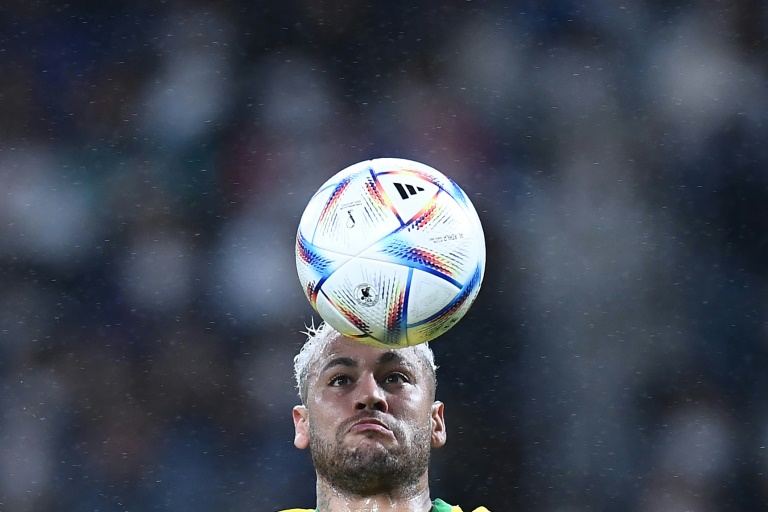
The finals will surely represent one last chance for Lionel Messi and Cristiano Ronaldo to lift a World Cup, but the same could apply to Neymar, still comparatively young at 30.

The Brazilian said last year he might not feature at a World Cup again, such is the strain on his body and mind.

But Neymar looks to have returned to the peak of his powers after a brilliant start to the season with Paris Saint-Germain.

He is three shy of Pele’s national record of 77 goals for Brazil, and coach Tite believes a new generation of players are ready to share the load.

However, there was no place for Gabriel Jesus in his latest squad despite the striker impressing since his July move from Manchester City to Arsenal.

French leader sees progress between Rwanda, DR Congo

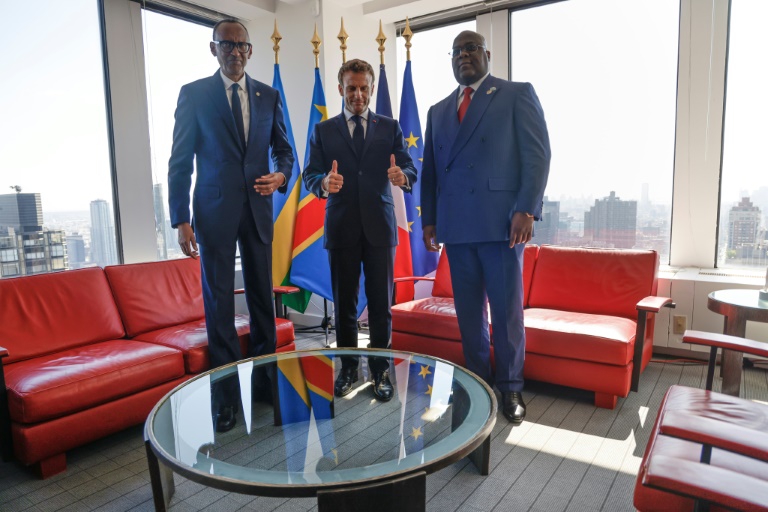
French President Emmanuel Macron met Wednesday with the leaders of Rwanda and the Democratic Republic of Congo, seeing progress in easing tensions that have flared in recent months.

On the sidelines of the United Nations General Assembly, Macron invited Rwandan President Paul Kagame to lunch with his DR Congo counterpart Felix Tshisekedi, who a day earlier had accused Kigali of backing rebel attacks in his country.

The three leaders together “noted their concerns about the resurgence of violence in the east of the DRC,” the French presidency said in a statement.

France said that Kagame and Tshisekedi agreed on the need for the pullout of M23 rebels from the strategic town of Bunagana on the Ugandan border.

The three leaders want to “intensify lasting cooperation to fight impunity and put an end to activities of armed groups in the Great Lakes region,” including the Democratic Forces for the Liberation of Rwanda, or FDLR, the statement said.

Kagame’s government has demanded a crackdown on the FDLR, a Rwandan Hutu group that Kigali views as a threat due to links to the 1994 genocide.

But the M23, a separate, mostly Tutsi group in the violence-wracked east of DR Congo, has been the focus of recent tensions. 

In his address to the General Assembly on Tuesday, Tshisekedi alleged that Rwanda has provided “massive support” to M23, which he blamed for the shooting down of a UN peacekeeping helicopter in March, in which eight people died.

“Rwanda’s involvement and responsibility is no longer debatable,” he said.

Kagame called for calm in his own address on Wednesday.

“There is an urgent need to find a political need to find and address the root cause of instability in eastern DRC,” Kagame said.

“The blame game does not solve the problems. These challenges are not insurmountable and solutions can be found,” he said.

“This would ultimately be much less costly in terms of both money and human lives.”

Kagame’s government has long rejected allegations of backing the M23, but US Secretary of State Antony Blinken, on an August visit to Kinshasa, said there were “credible” reports of Rwandan support.

Tunisia opposition chief questioned all night by counter-terrorism police

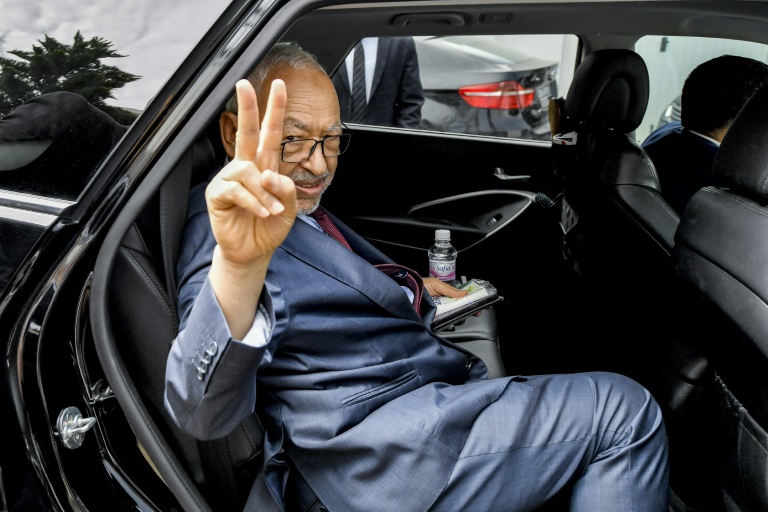
The leader of Tunisia’s Islamist-inspired Ennahdha party was questioned through the night over alleged complicity in the departure of jihadist militants for Syria and Iraq, his lawyer said Wednesday.

Rached Ghannouchi, who has been a key player in Tunisian politics for over a decade, appeared before a judge on Wednesday morning after being questioned overnight by specialist anti-terror police.

The 81-year-old, who had left the police station in Tunis at 6:30 am (0530 GMT), is to be interrogated again on November 28, lawyer Samir Dilou said.

Ghannouchi dismissed all the allegations.

“The questions had no basis and there was no evidence for the accusations,” he told journalists.

“There are attempts afoot to neutralise a political rival.”

Ghannouchi was exiled for over two decades under late dictator Zine El Abidine Ali, but had returned following the country’s 2011 uprising to become a dominant figure in Tunisian politics — including as speaker of parliament.

But he is a key rival of President Kais Saied, who suspended the legislature last year and later seized control of the judiciary.

Ennahdha categorically denies the accusations levelled at Ghannouchi and Tunisia’s former prime minister Ali Laarayedh, who was also questioned for hours on Monday and remained in detention, according to Dilou.

Ghannouchi has now been summoned to appear before the judiciary’s counter-terrorism branch later Wednesday, his lawyer Samir Dilou told AFP.

He had spent 12 hours waiting to be questioned at the police counter-terrorism unit on Monday before being told to come back the following day.

His party denounced the interrogation as “a form of torture” and part of “a total set-up”.

Critics of Ennahdha accuse it of having facilitated the departure of militants for war zones.

After the 2011 overthrow of dictator Zine El Abidine Ben Ali, thousands of Tunisians joined the ranks of jihadist organisations — most notably the Islamic State group in Syria and Iraq, but also in neighbouring Libya.

Ennahdha played a central role in Tunisia’s post-Ben Ali democratic politics until Saied began his power grab in July last year, which was followed by a controversial referendum which granted unchecked powers to his office.

The party has accused the president of seeking “to use the judiciary to tarnish the opposition’s image” and “distract the public” from the North African country’s pressing economic woes.

In July, the same counter-terrorism unit questioned Ghannouchi in a probe into allegations of corruption and money laundering linked to transfers from abroad to the charity Namaa Tunisia, affiliated with Ennahdha.

Senegal court upholds prison term in key case against mayor

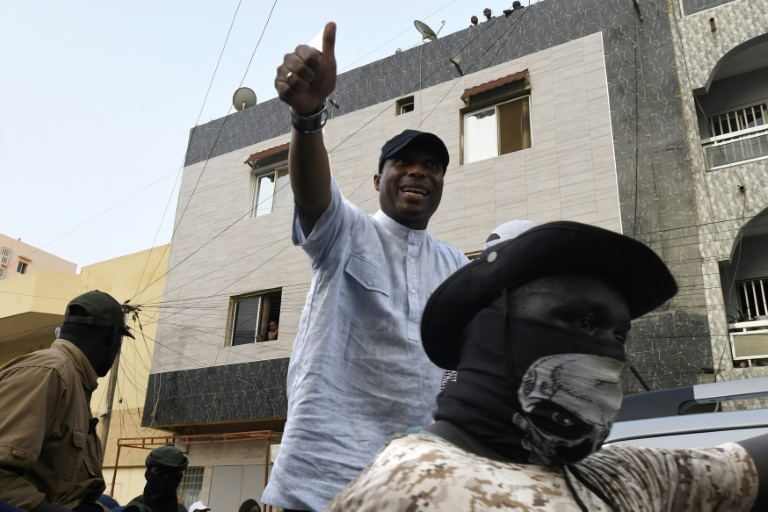
A Senegalese appeal court on Wednesday confirmed a prison sentence handed down to the mayor of Dakar, convicted of killing a man during a wave of political violence. 

In a politically-charged case that played out against a backdrop of tensions between the opposition and government, the court upheld the six-month prison term and 18-month suspended sentence.

The court “confirms the judgement in all its provisions, dismisses the civil party in all its requests”, the presiding judge said.

Dakar Mayor Barthelemy Dias, a fierce opponent of President Macky Sall, had sought to overturn the sentence for the 2011 killing of a wrestler named Ndiaga Diouf during a rally that turned violent. 

Dias, 46, was elected city mayor in February, riding a wave of support for leading opposition figure Ousmane Sonko, and there is speculation that he himself has presidential ambitions.

Police deployed in and around the courthouse and anti-riot vehicles were placed at key intersections of the capital.

“The battle continues, it’s a battle of principles that has nothing to do with politics,” Dias’ lawyer Demba Cire Bathily told AFP outside the Dakar courthouse.

Bathily said he would advise his client to lodge an appeal.

“The major implication is that his mayoral mandate isn’t threatened,” the lawyer said.

The implications for Dias’ mandate as a parliamentarian were not an issue since “the decision isn’t final”, he added.

Dias was sentenced in 2017 to a six-month prison term and 18 months’ suspended in a trial in which he appeared alongside a dozen other defendants.

His appeal began in March after having been postponed several times.

– June clashes –

Ndiaga Diouf was shot dead in 2011 during an assault on the town hall of Mermoz Sacre-Coeur by suspected supporters of the ruling Senegalese Democratic Party. 

Wednesday’s decision was widely expected. 

When the long-delayed appeal was finally heard in March with only two defendants, Dias pleaded self-defence and denied he was the only shooter. 

Prosecutors had asked for five years. 

Such a sentence would have been likely to provoke violent protests from his supporters. 

The political standoff has been tense since March 2021, when Sonko’s indictment for rape sparked days of riots that left at least a dozen people dead. 

Senegal, often seen as an island of stability in west Africa, saw fresh clashes in June that left several people dead after a list of opposition candidates was invalidated in legislative elections on July 31. 

The elections left Sall with a minimal parliamentary majority and a considerably strengthened opposition. 

The bickering and invective that followed the opening of parliament last week amid unprecedented security measures presages a worsened relationship between the legislature and the executive. 

The uncertainty surrounding Sall’s candidacy for a third term is weighing on Senegal’s politics.

Tunisia opposition chief questioned all night by counter-terrorism police

The leader of Tunisia’s Islamist-inspired Ennahdha party was questioned through the night by counter-terrorism police over alleged complicity in the departure of jihadist militants for Syria and Iraq, his lawyer said Wednesday.

Rached Ghannouchi, 81, finally left the police station in Tunis at 6:30 am (0530 GMT), an AFP correspondent reported.

The longtime exile had been a dominant figure in Tunisian politics after the Arab Spring uprising of 2011 but is a bete noire for President Kais Saied, who tightened his grip on the judiciary following the suspension of the Ennahdha-dominated parliament last year.

Ennahdha categorically denies the accusations levelled at Ghannouchi and Tunisia’s former prime minister Ali Laarayedh, who was questioned for hours on Monday.

Ghannouchi has now been summoned to appear before the judiciary’s counter-terrorism branch later Wednesday, his lawyer Samir Dilou told AFP.

He had spent 12 hours waiting to be questioned at the police counter-terrorism unit on Monday before being told to come back the following day.

His party denounced the interrogation as “a flagrant violation of human rights”.

Critics of Ennahdha accuse it of having facilitated the departure of militants for war zones.

After the 2011 overthrow of dictator Zine El Abidine Ben Ali, thousands of Tunisians joined the ranks of jihadist organisations — most notably the Islamic State group in Syria and Iraq, but also in neighbouring Libya.

Ennahdha played a central role in Tunisia’s post-Ben Ali democratic politics until Saied began his power grab in July last year, followed by a controversial referendum which granted unchecked powers to his office.

The party has accused the president of seeking “to use the judiciary to tarnish the opposition’s image” and “distract the public” from the North African country’s pressing economic woes.

In July, the same counter-terrorism unit questioned Ghannouchi in a probe into allegations of corruption and money laundering linked to transfers from abroad to the charity Namaa Tunisia, affiliated with Ennahdha.

Brentford star Mbeumo eyes World Cup place with Cameroon

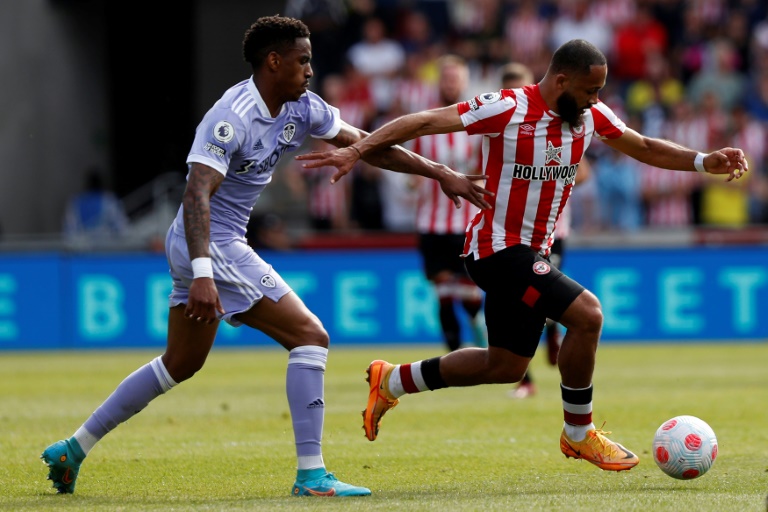
France-born English Premier League forward Bryan Mbeumo hopes switching national team loyalty to Cameroon can win him a place at the 2022 World Cup in Qatar.

Brentford star Mbeumo is one of many wanting to impress from Thursday as the five African qualifiers — Cameroon, Ghana, Morocco, Senegal and Tunisia — play two warm-up matches each.

Brighton defender Tariq Lamptey and Athletic Bilbao forward Inaki Williams, both born in Europe to Ghanaian parents, are among others taking advantage of a FIFA rule that permits changing allegiance.

An increasing number of footballers from Europe are choosing to represent the African country where their parents or grandparents were born.

Opponents for the African quintet between Thursday and Tuesday range from record five-time World Cup winners Brazil to Nicaragua, ranked 139th in the world.

Here, AFP Sport reveals how the qualifiers are shaping up for the last international window until club football halts just seven days before the World Cup kicks off on November 20. 

Cameroon

Apart from selecting Mbeumo for the first time, coach Rigobert Song has recalled Nicolas Nkoulou and George Mandjeck for matches in South Korea against the host nation and Uzbekistan.

Defender Nkoulou last lined up for the Indomitable Lions five years ago and midfielder Mandjeck has not featured for the five-time African champions since 2019. 

“We need experienced players like Nicolas and George, who will help our new generation of players grow. They are passionate and patriotic,” said Song. 

Ghana

Ghana have included Lamptey, Williams and former Germany youth internationals Stephan Ambrosius and Ransford-Yeboah Konigsdorffer for matches against Brazil and Nicaragua in France and Spain.

There is also a place in the squad for Southampton defender Mohammed Salisu, who was born in Ghana but declined previous call-ups, saying he wanted to concentrate on his club career. 

Coach Otto Addo, mastermind of a shock qualification at the expense of Nigeria, has picked five Premier League players, including Arsenal midfielder Thomas Partey and Crystal Palace forward Jordan Ayew. 

Morocco

Most attention will be on Chelsea winger Hakim Ziyech when six-time World Cup qualifiers Morocco tackle Chile and Paraguay at Spanish venues.

He has been recalled by new coach Walid Regragui after being shunned by Bosnian Vahid Halilhodzic, who accused the Premier League player of being “untruthful” and “a trouble maker”.

“We look forward to the Hakim that all Moroccans love, the one who fights on the pitch and gives everything for his country,” said former international Regragui.

Senegal

African champions Senegal have been hit by a string of blows before facing Bolivia and fellow qualifiers Iran in France and Slovakia.  

Bayern Munich full-back Bouna Sarr will miss Qatar due to knee surgery and forward Keita Balde can only play at the World Cup after the second round due to an anti-doping violation.  

A further concern for coach Aliou Cisse is defender Noah Fadiga — the son of 2002 Senegal World Cup midfielder Khalilou — who suffered concussion playing in France last weekend. 

Tunisia

Consistently poor World Cup performers Tunisia will face Africa Cup of Nations surprise packets the Comoros and star-studded Brazil in France. 

“Tackling Brazil is a daunting task,” admits captain and leading scorer Wahbi Khazri, “but it will be a great reality check, telling us where we are strong and where we must improve”.

Tunisia have won only two and lost nine of 15 matches in five World Cup appearances, with 40 years separating victories over Mexico and Panama.

Europe's cars get a second life in Africa, but at a cost

His Toyota Matrix has driven the equivalent of four times around the world and it would never pass an inspection in Europe.

But for its delighted new owner, Adam Adebiyi, the ageing hatchback with more than 170,000 kilometres (105,000 miles) on the clock may just as well have rolled off the factory floor. 

Like millions of other Africans, the Beninese computer scientist has turned to the second-hand market to buy a quality car that would normally be well beyond his budget. 

Africa is the world’s biggest destination for used vehicles.

More than a quarter of second-hand autos exported between 2015 and 2020, or 5.6 million vehicles, ended up on the continent, according to the UN.

These vehicles come mainly from Europe and Japan, and increasingly from South Korea or the United States, but are often very old or high-pollution models.

Adebiyi’s Matrix Toyota went into circulation in 2004 in Canada, before it was shipped by sea 15 years later to Benin, where it was purchased by a first owner, who then sold it to him. 

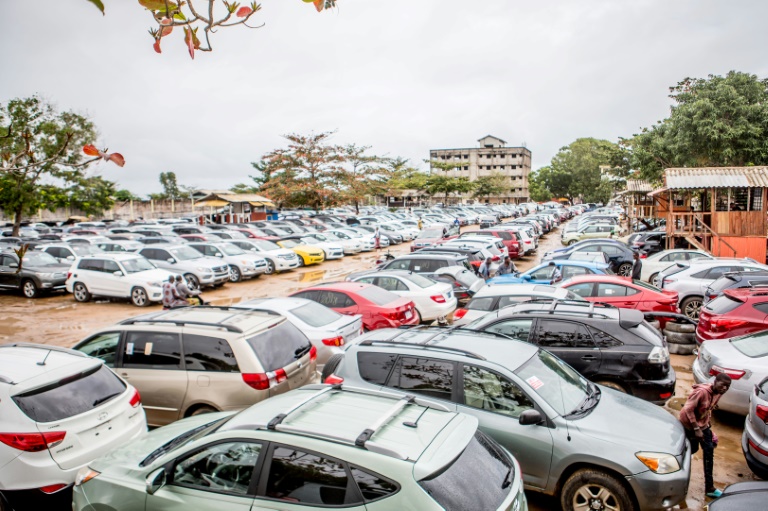
Not far from the port of Cotonou, the economic capital of Benin, sales lots packed with second-hand vehicles, mainly from Europe, stretch for kilometres. 

Benin is one of the five largest importers of used vehicles in Africa, according to a UN report published at the end of 2021.

The West African country has only 11 million inhabitants, but it is the gateway to the markets of Burkina Faso, Niger, Chad, and especially its giant neighbour Nigeria, the most populous country in Africa. 

In one of these huge car lots near the border with Nigeria, Zakari Cisse recently sat with his hand on the steering wheel of his just purchased car, a model put into circulation in Belgium in 2002. 

He would have liked to buy a new one from a dealership. But lacking resources, he fell back on this 20-year-old second-hand vehicle, which is “clean and well maintained”. 

“The engine responds very well and you can tell by the noise,” he said. 

“We don’t import rubbish,” said Ossama Allouch, an importer of used vehicles in Cotonou, who says vehicles are subject to controls before purchase. 

“They are not just any vehicles that are banned from use.” 

In Benin, a 15-year-old imported saloon, also called a sedan, typically changes hands for around 1.5 million CFA francs ($2,300).

That’s quite a bargain in a country where a brand-new model will cost a dozen times as much, and the average salary is little more than $100 per month.

– Stolen converters –

According to a United Nations Environment Programme (UNEP) report in 2021, most vehicles exported to developing countries are old, polluting, energy-inefficient, potentially dangerous and undermine efforts to reduce carbon emissions.

During an inspection by Dutch authorities at the end of 2019 in Amsterdam port — from where boats transporting these cars to Africa leave every week — the average age of the vehicles waiting was 18 years and they exceeded 200,000 kilometres (120,000 miles) mileage on average.

No fewer than 93 percent were Euro 3 or lower — a category meaning they were marketed before the start of the 2000s. 

Some of the vehicles had broken down and some had been stripped of their catalytic converters — attachments that reduce emission of polluting toxic non-carbon gases such as nitrogen oxide. 

To filter the noxious gases, converters use precious metals such as gold, silver, rhodium and platinum.

Their value can exceed $100, providing a rich incentive for them to be removed and trafficked.

Amen Djidjoho, head of one of the sales parks in Benin, dismissed those concerns.

“All imported vehicles come with catalytic converters because in Europe and America, it is strictly forbidden to remove them,” he said.

To avoid converter theft after the vehicles have arrived, security guards watch over the assignments until they are transferred to Beninese sales parks, Djidjoho said. 

Importer Ossama Allouch said converters are often stolen after the purchase, resold by owners or removed from garages. 

– Pollution worry –

Conservationists say pollution generated by these old vehicles is a major concern, given Africans’ thirst for a set of wheels.

Old cars, together with the poor quality of fuels used in West Africa, are “one of the main causes of the increase in air pollution levels in the cities of the region”, UNEP said.

“Children, who walk to schools and use busy roads, and informal vendors along these roads” are most at risk, it said. 

Regulating this important sector of the Beninese economy and a major provider of jobs is predictably not an easy task. 

The 15-member regional bloc Economic Community of West African States adopted a directive in 2020 aimed at bringing cleaner fuels and vehicles to the market, with implementation planned for January 2021.

Imported second-hand vehicles must in particular meet at least Euro 4 standards, which means they have been put into circulation after 2006. 

But it is clear that in Benin, vehicles sold in car parks are much older.

Contacted several times, the Ministry of Transport had not answered AFP’s questions about legislation in force in the country.

Zelensky blames Russia as world vows response to food shortages

Global leaders called Tuesday for urgent efforts to address global food insecurity amid fears of disastrous harvests next year, as Ukraine’s president blamed Russia for the crisis and sought the world’s “toughest reaction” against Moscow.

On the sidelines of the United Nations General Assembly, ministers from the European Union, United States, African Union and Spain met on food shortages which are seen as a key factor in conflicts and instability.

Appearing by video link was Ukraine’s Volodymyr Zelensky, who directly accused Moscow of willingly triggering a food crisis.

“Any state that provokes famine, that tries to make access to food a privilege, that tries to make the protection of nations from famine dependent on… the mercy of some dictator — such a state must get the toughest reaction from the world,” Zelensky said.

He blamed Russian blockades and other “immoral actions” for slashing exports from Ukraine, a major agricultural producer.

“Russia must bear responsibility for this,” he said.

Spanish Prime Minister Pedro Sanchez said Russian President Vladimir Putin, with his February invasion of Ukraine, “is trying to blackmail the international community with food.”

“There is no peace with hunger and we cannot combat hunger without peace,” Sanchez said. 

The Group of Seven major industrial powers at a June summit in Germany promised $5 billion to fight food insecurity but German Chancellor Olaf Scholz said there was still “great urgency.”

“The Russian war of aggression has caused and accelerated a multidimensional global crisis. Countries in the Global South with prior vulnerabilities have been hit hardest,” Scholz said.

President Joe Biden will address the General Assembly on Wednesday and announce new US aid, Secretary of State Antony Blinken said.

In his own address Tuesday, French President Emmanuel Macron said his country will finance shipments of Ukrainian wheat to Somalia which is facing risk of famine.

Ukraine is one of the world’s largest grain producers and the Russian invasion sent global prices soaring.

Russia has cast blame on Western sanctions, an assertion denounced by Washington which says it is not targeting agricultural or humanitarian goods.

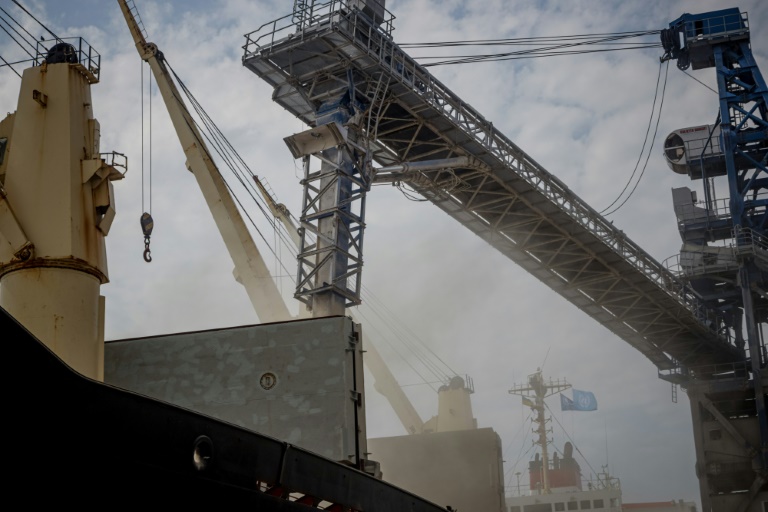
Turkey and the United Nations in July brokered a deal between Russia and Ukraine to allow ships with grain to sail through the blockaded Black Sea.

Putin has recently criticized the deal, pointing to shipments that have headed to Europe. US officials say some of the grain is then processed and sent to poorer countries.

“Despite some of the misinformation that continues to come from Moscow, that grain and other food products are getting where they need to go to the countries most in need, predominantly in the Global South,” Blinken said.

“It’s also helped lower food prices around the world. So it needs to keep going, it needs to be renewed. That is urgent.”

– Long-term fears –

Concerns are also mounting on the long-term impacts. A recent report by the Ukraine Conflict Observatory, a non-governmental US group, found that around 15 percent of Ukraine grain stocks have been lost since the invasion began.

And experts warn that disruptions in fertilizer shipments could seriously impede future harvests worldwide.

“It’s very clear that the current food supply disruption and the war in Ukraine is having an impact on the next harvest,” said Alvaro Lario, incoming president of the International Fund for Agricultural Development.

“There’s one or two harvests per year, and already we’re seeing that it’s going to be devastating for next year,” he told AFP, warning that the impact could be “much worse” than Covid.

He called for longer-term action, which would entail billions of dollars of investment, to ensure stability of food supply chains and adapt to a warming climate.

“We know the solutions and we have the institutions to make that happen. What is currently lacking is the political will, in terms of the investment,” he said.

UN Secretary-General Antonio Guterres said recently that the world had enough food in 2022 but that the problem was distribution.

If the situation does not stabilize this year, in 2023 “we risk to have a real lack of food,” he said.

DR Congo leader, at UN, accuses Rwanda of aggression

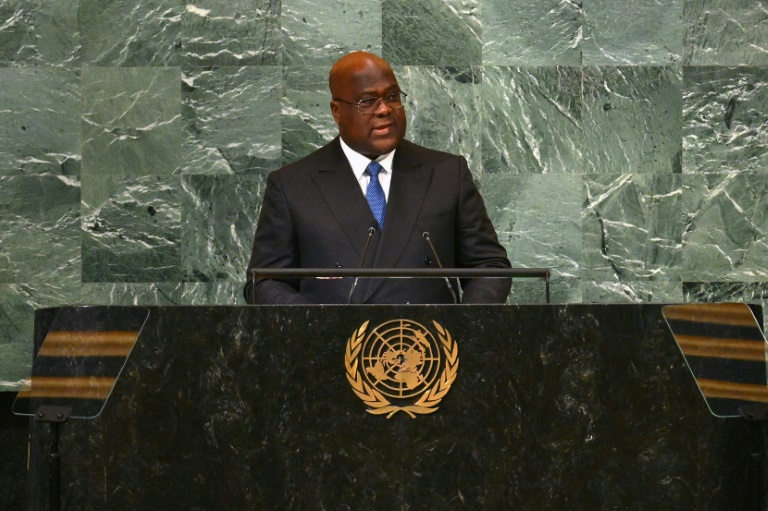
Democratic Republic of Congo President Felix Tshisekedi on Tuesday accused Rwanda of direct aggression, renewing charges as he addressed the United Nations.

“Despite my goodwill and the Congolese people’s outstretched hand for peace, some of our neighbors find no way to thank us other than supporting armed groups in the east of the Democratic Republic of Congo,” Tshisekedi said in a speech to the General Assembly.

“This is currently the case with Rwanda which, in defiance of international law and the UN Charter… once more committed aggression in March with direct incursions by its armed forces into the Democratic Republic of Congo,” he said.

Tshisekedi said that Rwanda has provided “massive support both in war materiel and troops” to M23, which has been increasingly active in eastern border areas and which he brands a “terrorist group.”

He accused the Rwandan military of supporting the M23 in shooting down a UN peacekeeping helicopter in March in which eight people died — six Pakistanis, a Russian and a Serb.

The group has previously denied the charge and the United Nations has stopped short of blaming the rebels, while voicing alarm at the group’s resurgence.

“Rwanda’s involvement and responsibility is no longer debatable in the tragedy that my nation and compatriots are living through in zones occupied by the Rwandan army and their M23 allies,” he said.

The eastern stretch of the vast nation has been beset by violence for nearly 30 years with numerous armed groups active.

The M23, a mostly Tutsi force that had been defeated in 2013, took up arms again late last year as it accused the Kinshasa government of not respecting an agreement on demobilizing and reintegrating combattants.

A UN report seen last month by AFP found that the Rwandan military intervened against Congolese positions from November through June.

US Secretary of State Antony Blinken on a visit in August to Kinshasa also said there were “credible” reports of Rwandan involvement.

Rwanda, where memories of the 1994 genocide against Tutsis remain vivid, has denied the charges and vowed to defend its territory.

President Paul Kagame is due to speak at the United Nations on Wednesday.

Close Bitnami banner
Bitnami