Africa Business

Anti-terror probe of Tunisia opposition chief begins

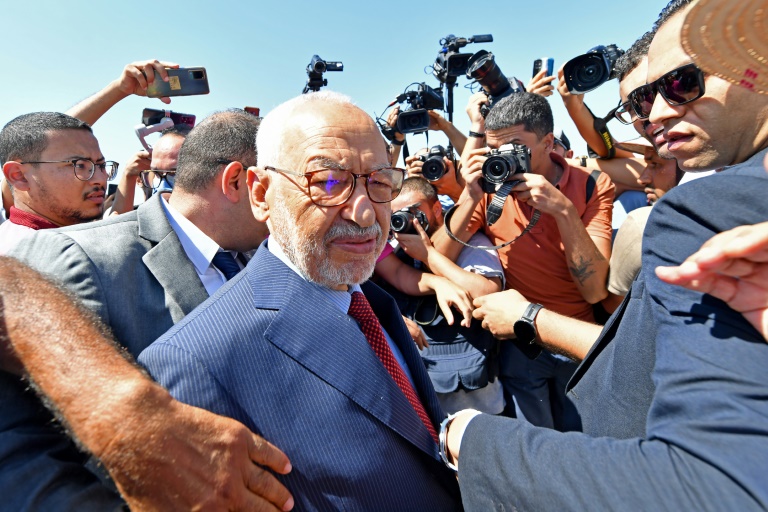
The leader of Tunisia’s Islamist-inspired opposition party Ennahdha appeared Tuesday before an anti-terrorism unit, where he faces questioning over alleged involvement in sending jihadist militants to Syria and Iraq.

Ennahdha categorically denies the accusations levelled at its leader, Rached Ghannouchi, and Tunisia’s former prime minister Ali Laarayedh, who was questioned for hours on Monday.

Ghannouchi, 81, arrived at the headquarters of the anti-terrorism unit in the capital Tunis, where dozens of his supporters had gathered in a show of solidarity, an AFP correspondent said.

The accusations have resurfaced after President Kais Saied tightened his grip on the judiciary, following the suspension of the Ennahdha-dominated parliament last year.

Ghannouchi had arrived at the headquarters of the anti-terrorism centre on Monday afternoon for questioning, according to an AFP reporter, several hours after his deputy Laarayedh.

“After more than 12 hours of waiting, Mr Ghannouchi wasn’t heard by this unit which decided to delay the interrogation until midday Tuesday,” his lawyer Samir Dilou told AFP.

Laarayedh was questioned “for hours” and was still being held by the unit, said Dilou.

In a statement released overnight, Ennahdha denounced the interrogation as “a flagrant violation of human rights”.

Critics of the party and some politicians accuse Ennahdha of having facilitated the departure of militants for war zones.

After the 2011 overthrow of dictator Zine El Abidine Ben Ali, thousands of Tunisians joined the ranks of jihadist organisations — most notably the Islamic State group in Syria and Iraq, but also in neighbouring Libya.

Ennahdha played a central role in Tunisia’s post-Ben Ali democratic politics until Saied began his power grab in July last year, followed by a controversial referendum which granted unchecked powers to his office.

Ennahdha had on Sunday decried attempts “to use the judiciary to tarnish the opposition’s image” and implicate its leaders in “fabricated affairs”.

The probe against Ghannouchi and Laarayedh was meant to “distract the public” from dealing with economic and social issues and the “worsening conditions” in the country, the party said in its statement.

In July, the same anti-terrorism unit questioned Ghannouchi in a probe into allegations of corruption and money laundering linked to transfers from abroad to the charity Namaa Tunisia, affiliated with Ennahdha.
Uganda declares first Ebola death since 2019

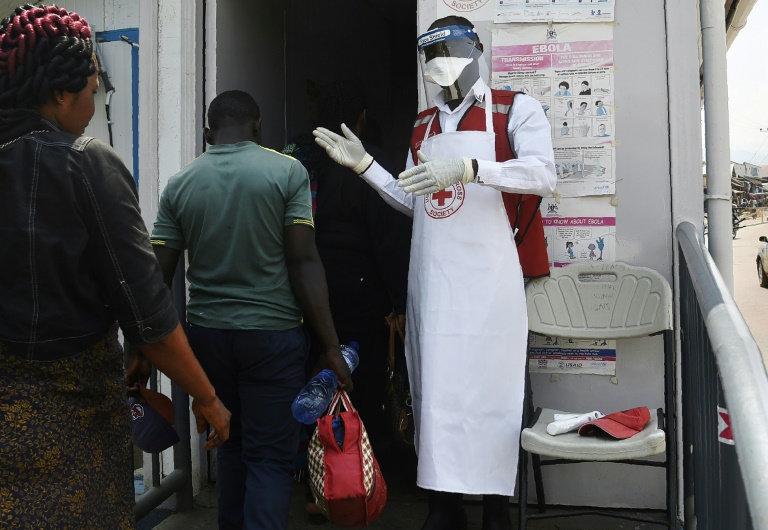
Uganda’s health ministry on Tuesday announced the country’s first fatality from the highly contagious Ebola virus since 2019, declaring an outbreak in the central district of Mubende.

“The confirmed case is a 24 year old male… (who) presented with EVD symptoms and later succumbed,” the ministry said on Twitter, using an abbreviation for Ebola virus disease.

In a statement released earlier on Tuesday, the World Health Organization said a 24-year-old man in Mubende had tested positive for “the relatively rare Sudan strain” of the virus.

“This follows an investigation by the National Rapid Response team of six suspicious deaths that have occurred in the district this month,” WHO said.

Eight other suspected patients were undergoing treatment, WHO said.

“This is the first time in more than a decade that Uganda is recording the Ebola Sudan strain,” WHO Africa Director Matshidiso Moeti said. 

“We are working closely with the national health authorities to investigate the source of this outbreak while supporting the efforts to quickly roll out effective control measures.”

There have been seven previous outbreaks of the Sudan strain, including four times in Uganda and thrice in Sudan, the WHO said. 

Uganda — which shares a porous border with the Democratic Republic of Congo (DRC) — has experienced several Ebola outbreaks in the past, most recently in 2019, when at least five people died.

The DRC last month recorded a new case in its violence-wracked east, less than six weeks after an epidemic in the country’s northwest was declared over.

At present there is no licensed medication to prevent or treat Ebola, although a range of experimental drugs are in development and thousands have been vaccinated in the DRC and some neighbouring countries.

Uganda’s Health Minister Jane Ruth Aceng Ocero told AFP the authorities had started vaccinating frontline workers, including customs officials, at the border with DRC.

“As the investigations in the confirmed case are on, we have stepped up surveillance and contact tracing of the confirmed case,” Aceng said, adding that they had deployed 12,000 doses of the Ebola vaccine. 

– Often fatal –

Ebola is an often fatal viral haemorrhagic fever. The death rate is typically high, ranging up to 90 percent in some outbreaks, according to the WHO.

First identified in 1976 in the DRC (then Zaire), the virus, whose natural host is the bat, has since set off a series of epidemics in Africa, killing around 15,000 people.

Human transmission is through body fluids, with the main symptoms being fever, vomiting, bleeding and diarrhoea.

Outbreaks are difficult to contain, especially in urban environments.

People who are infected do not become contagious until symptoms appear, which is after an incubation period of between two and 21 days.

The worst epidemic in West Africa between 2013 and 2016 killed more than 11,300 alone. The DRC has had more than a dozen epidemics, the deadliest killing 2,280 people in 2020.

Uganda declares first Ebola death since 2019

Uganda’s health ministry on Tuesday announced the country’s first fatality from the highly contagious Ebola virus since 2019, declaring an outbreak in the central district of Mubende.

“The confirmed case is a 24 year old male… (who) presented with EVD symptoms and later succumbed,” the ministry said on Twitter, using an abbreviation for Ebola virus disease.

In a statement released earlier on Tuesday, the World Health Organization said a 24-year-old man in Mubende had tested positive for “the relatively rare Sudan strain” of the virus.

“This follows an investigation by the National Rapid Response team of six suspicious deaths that have occurred in the district this month,” WHO said.

Eight other suspected patients were undergoing treatment, WHO said.

“This is the first time in more than a decade that Uganda is recording the Ebola Sudan strain,” WHO Africa Director Matshidiso Moeti said. 

“We are working closely with the national health authorities to investigate the source of this outbreak while supporting the efforts to quickly roll out effective control measures.”

There have been seven previous outbreaks of the Sudan strain, including four times in Uganda and thrice in Sudan, the WHO said. 

Uganda — which shares a porous border with the Democratic Republic of Congo (DRC) — has experienced several Ebola outbreaks in the past, most recently in 2019, when at least five people died.

The DRC last month recorded a new case in its violence-wracked east, less than six weeks after an epidemic in the country’s northwest was declared over.

At present there is no licensed medication to prevent or treat Ebola, although a range of experimental drugs are in development and thousands have been vaccinated in the DRC and some neighbouring countries.

Uganda’s Health Minister Jane Ruth Aceng Ocero told AFP the authorities had started vaccinating frontline workers, including customs officials, at the border with DRC.

“As the investigations in the confirmed case are on, we have stepped up surveillance and contact tracing of the confirmed case,” Aceng said, adding that they had deployed 12,000 doses of the Ebola vaccine. 

– Often fatal –

Ebola is an often fatal viral haemorrhagic fever. The death rate is typically high, ranging up to 90 percent in some outbreaks, according to the WHO.

First identified in 1976 in the DRC (then Zaire), the virus, whose natural host is the bat, has since set off a series of epidemics in Africa, killing around 15,000 people.

Human transmission is through body fluids, with the main symptoms being fever, vomiting, bleeding and diarrhoea.

Outbreaks are difficult to contain, especially in urban environments.

People who are infected do not become contagious until symptoms appear, which is after an incubation period of between two and 21 days.

The worst epidemic in West Africa between 2013 and 2016 killed more than 11,300 alone. The DRC has had more than a dozen epidemics, the deadliest killing 2,280 people in 2020.

Tough treatment in Ivory Coast schools, expelling 'losers' to boost grades

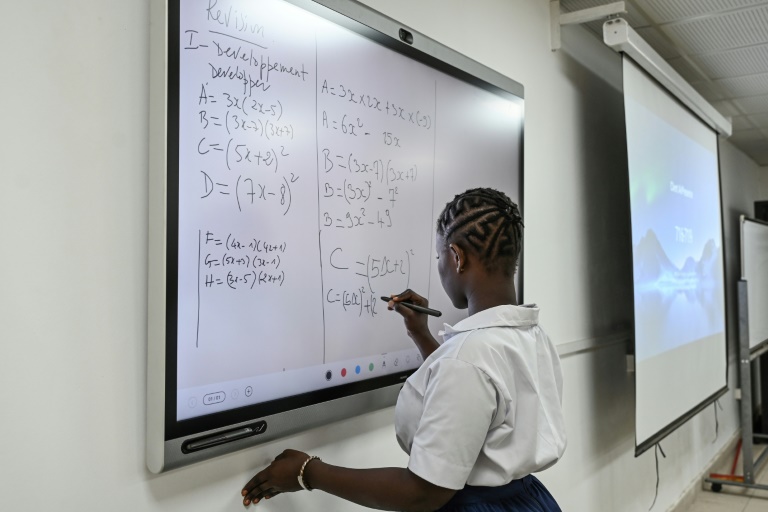
Youngsters in Ivory Coast return to school this week with a sword of Damocles above their heads: those with average grades of less than 8.5 out of 10 will be excluded at the end of the year.

The measure is an old one brought back by authorities in the hope of raising the general standard of education in the west African country — prohibiting any pupil with an unacceptable grade from pursuing their studies.

In the working-class district of Adjame, at the heart of the commercial capital Abidjan, the rule stirs comment at small stalls selling school supplies, where people also exchange secondhand textbooks.

“What are we going to do with the students who will be excluded? It’s too drastic!” exclaims Mariam Eid, a mother of three.

“We’re going to turn them into bandits. We want the teaching to be up to par, but one step at a time,” she adds, while making sure a worn mathematics book has no missing pages before she buys it.

But at the Pierre Amondji college in Adjame — where the motto “Who seeks perfection obtains excellence” is displayed in capital letters on the walls of the courtyard — the measure is generally well received among the students.

— ‘Redouble our efforts’ —

“I find it positive,” says Djenebou, who is taking the baccalaureate school leavers’ exam at the end of the year. 

“It will incite us to redouble our efforts and work harder.”

“It’s a good measure. The goal is to improve our knowledge so we move on with solid training,” adds his classmate Seydou.

But Seydou also hopes the regulation will not encourage fraud, and in particular the blackmailing of students by certain teachers in exchange for good exam grades.

“Some teachers are difficult… The marks are very low and to move on to the next class we have to negotiate with them,” the young student says.

The minister of national education, Mariatou Kone, who is seeing in the second new school year of her time in office, defends a regulation that is far from universally welcomed.

“This is a measure that has existed since the 1970s and that we are restoring to encourage students to work and fight against mediocrity,” she tells AFP.

“Students will not be barred from the school system. There are bridges between technical education and vocational training,” Kone adds, keen “to reassure parents”.

The minister says students who don’t get the grades will not follow the standard curriculum, but they will be able to learn a trade or different skills.

“We must not leave anybody aside. The state must redirect these students to training in other trades,” insists Claude Kadio Aka, president of the Organization of the Parents of Pupils and Students in Ivory Coast (Opeeci).

“All our children are useful in the development of the country,” Aka declares.

— ‘Measure of averages’ —

Minister Kone stresses the aim of the reform is “to raise the standard” of Ivorian schools and to give diplomas their full worth. 

In the past two years, the success rate for the baccalaureate has hovered around 30 percent, compared with 45 percent in previous years.

“Our children are in advanced classes and don’t even know how to write an elementary sentence,” protests Christelle Okingni, who has four children in school and welcomes the initiative.

But the “measure of averages” will not suffice to improve a school system which is sorely lacking in resources.

“Students regularly rise up to denounce the lack of classrooms and desks,” points out a teacher of French from an establishment in Bouake, the country’s second city, who prefers to remain anonymous.

It is not uncommon in Ivory Coast to find classrooms with 60 or even 80 pupils, while a lack of teachers sometimes cuts short the school year by several weeks.

“Last year, we had a mathematics and physics teacher only after the first term, it’s not good for us students,” laments Aya, a middle-school pupil at a college in Bouake.

The matter of school fees has arisen more than ever at a time when worldwide inflation is not sparing low-income households in Ivory Coast.

Officially, Ivorian state schools are free, but the price of uniforms, satchels and supplies can quickly put a strain on the family budget — not to mention illegal registration fees sometimes requested by certain establishments.

Last week, the government announced a free distribution of six million textbooks and 5.3 million kits of classroom supplies, as well as the provision of 167,000 tables.

Too weak to cry: famine looms over Somalia's children

As flies buzz over his tiny body, two-year-old Sadak Ibrahim barely whimpers, too weak to cry or shoo them away — a heartbreaking glimpse of the hunger crisis gripping Somalia.

The Horn of Africa nation is on the brink of a second famine in just over a decade, enduring its worst drought in 40 years after failed rainy seasons since late 2020 wiped out crops and livestock.

With a fifth monsoon forecast to fail, the United Nations warned this month that time was running out to save lives as it urged donors to contribute more to the relief effort.

UN humanitarian chief Martin Griffiths said the situation was worse than the 2011 famine when 260,000 people died in the country, more than half of them children under the age of six.

Aid is slowly making its way to Somalia following delays caused by the war in Ukraine, which also sent the cost of transport and emergency supplies soaring.

But many fear the help will arrive too late for the country’s youngest victims like Sadak, with around 730 children already reported dead in nutrition centres between January and July this year, according to UNICEF.

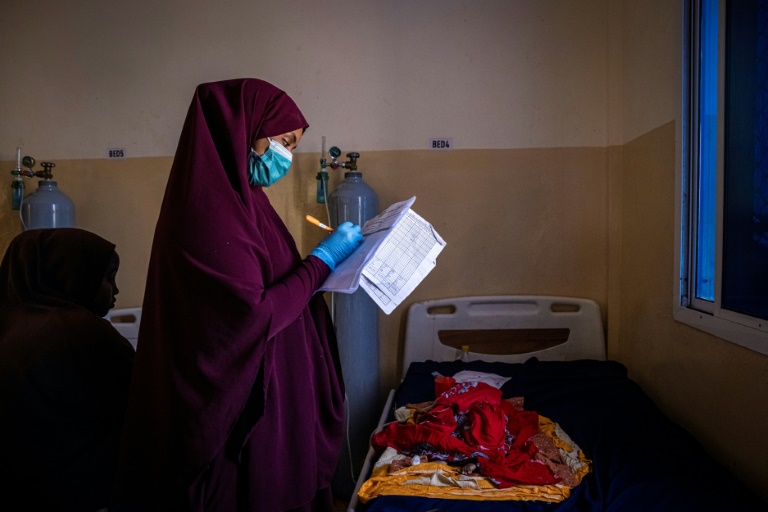
At De Martino Hospital in the capital Mogadishu, Sadak’s anxious mother Fadumo Daud sat vigil by the toddler’s bedside, a feeding tube dangling from his face, as she prayed for a miracle.

“He is the only child I have, and he is very sick as you can see,” the young woman told AFP, recounting the three-day journey that brought her to Mogadishu from Baidoa — one of the epicentres of the crisis.

– ‘Dramatic increase’ –

In recent years, climate disasters have increasingly become the main driver of migration in Somalia, which is also grappling with a brutal 15-year Islamist insurgency.

Every day, dozens of people stream into camps set up for displaced families in Mogadishu.

The International Rescue Committee (IRC) non-profit runs seven health and nutrition centres in and around the capital, but their resources are sharply stretched with the crisis showing no signs of abating.

“The number of new arrivals has increased dramatically starting from June this year,” IRC nutrition officer Faisa Ali told AFP.

Most of the children turn up malnourished, she said, with their numbers trebling from a maximum of 13 a day in May to 40 now.

A mother of 10, Nuunay Adan Durow fled her home and travelled 300 kilometres (200 miles) to find medical help for her three-year-old son Hassan Mohamed, his limbs swollen due to severe malnutrition.

“For the last three years, we have not harvested anything due to lack of rain,” Durow told AFP, describing how she was forced to trek for two hours daily to find water for her family.

“We faced a terrible situation,” the 35-year-old said, cradling Hassan in her arms as they awaited medical attention at an IRC centre on the outskirts of Mogadishu.

– ‘The worst cases’ –

The drought has also affected parts of Kenya and Ethiopia but the risks for Somalia are particularly grave, with 200,000 people in danger of starvation and around 1.5 million children facing acute malnutrition by next month, the UN says.

The crisis has not spared even traditionally fertile regions such as Lower Shabelle, where drought-stricken communities would seek refuge in the past, hoping to find sustenance there.

“We used to farm and get vegetables to feed our children before the drought affected us,” Fadumo Ibrahim Hassan, 35, told AFP.

Now “we live on whatever God gives us”, the widowed mother-of-six said.

A recent arrival in Mogadishu, her two-year-old daughter Yusro’s condition had deteriorated to the point that the IRC staff could no longer care for her.

Weighing just 5.8 kilogrammes (12.8 pounds) — half that of a healthy girl the same age — Yusro was dangerously malnourished, according to the IRC medical team, who told AFP she urgently needed to be admitted to a hospital.

At De Martino Hospital, doctor Fahmo Ali told AFP that each day brought more sick, malnourished children into her care.

“The ones we are receiving here are the worst cases with complications,” she said.

“Sometimes those we have treated come back to the hospital after getting sick again.”

Sport leaders eye Africa as talent source, investment target

Africa offers a vast underdeveloped market for global sports, with thousands of athletes ready to join international ranks if only there were major investment, industry leaders and stars say.

But more government and private-sector partnerships are needed to turbo-charge African sports and bring young players into top-tier leagues of football, basketball and even American football, participants at a business forum said Monday.

In the event on the sidelines of the United Nations General Assembly in New York, NBA commissioner Adam Silver hailed Africa as bursting with sporting potential, noting that more than 10 percent of players in the world’s premier basketball league were born in African countries or have African parents.

“Invariably more NBA, WNBA players will be discovered, will be nurtured, will be developed and then be able to play at the highest level,” he said of the region’s younger generations and the benefits of expanding youth training programs there.

Silver also stressed that in order to attract the “literally billions in investments that are needed,” sport in Africa must be seen as economically viable.

“In order to persuade… great businesspeople to invest in the infrastructure, we have to demonstrate that it’s a real business — that there is real return over time,” he said.

The forum featured former NBA stars like Congolese-American Dikembe Mutombo, WNBA sensation Chiney Ogwumike who is of Nigerian origin, and current Toronto Raptors power forward Pascal Siakam, a Cameroonian who caught the attention of scouts at a Basketball Without Borders camp in South Africa.

American football too has beefed up its presence. More than 100 current NFL players are African, according to Osi Umenyiora, a Super Bowl champion who leads an NFL initiative to expand the pipeline of new talent from places such as Ghana and Nigeria.

“From a business standpoint it would actually make sense to me to start making business in Africa now,” Umenyiora told the audience, adding the NFL has recently opened new player camps in Africa.

– ‘Grounded’ –

The discussion comes along the launch of the new African Super League, which is dangling major prize money for the 24 football clubs that qualify for the first edition next year.

Confederation of African Football president Patrice Motsepe said that while Africa’s link to European and American leagues is “important,” the Super League “will attract billions of dollars in football in Africa to pay the smartest and most talented young Africans and keep them on the continent.”

Recent 100-meter hurdles gold medalist Tobi Amusan, who in July became Nigeria’s first world champion in a track and field event, warned that Africa’s lack of infrastructure including training facilities could fuel a migration of athletes.

“I’m not saying don’t go to other places,” Amusan, who herself is based in Texas, told AFP.

“But if the government and private sector have stuff like this implemented in Africa, we keep our own grounded in our countries and not just have them wander away to other countries.”

The head of the region’s new top-flight basketball league also spoke of the delicate balance between international player recruitment and sports development on the ground.

“Africa needs to cease being just an exporter all the time,” said Amadou Fall, president of the Basketball Africa League, which launched last year.

Sport leaders eye Africa as talent source, investment target

Africa offers a vast underdeveloped market for global sports, with thousands of athletes ready to join international ranks if only there were major investment, industry leaders and stars say.

But more government and private-sector partnerships are needed to turbo-charge African sports and bring young players into top-tier leagues of football, basketball and even American football, participants at a business forum said Monday.

In the event on the sidelines of the United Nations General Assembly in New York, NBA commissioner Adam Silver hailed Africa as bursting with sporting potential, noting that more than 10 percent of players in the world’s premier basketball league were born in African countries or have African parents.

“Invariably more NBA, WNBA players will be discovered, will be nurtured, will be developed and then be able to play at the highest level,” he said of the region’s younger generations and the benefits of expanding youth training programs there.

Silver also stressed that in order to attract the “literally billions in investments that are needed,” sport in Africa must be seen as economically viable.

“In order to persuade… great businesspeople to invest in the infrastructure, we have to demonstrate that it’s a real business — that there is real return over time,” he said.

The forum featured former NBA stars like Congolese-American Dikembe Mutombo, WNBA sensation Chiney Ogwumike who is of Nigerian origin, and current Toronto Raptors power forward Pascal Siakam, a Cameroonian who caught the attention of scouts at a Basketball Without Borders camp in South Africa.

American football too has beefed up its presence. More than 100 current NFL players are African, according to Osi Umenyiora, a Super Bowl champion who leads an NFL initiative to expand the pipeline of new talent from places such as Ghana and Nigeria.

“From a business standpoint it would actually make sense to me to start making business in Africa now,” Umenyiora told the audience, adding the NFL has recently opened new player camps in Africa.

– ‘Grounded’ –

The discussion comes along the launch of the new African Super League, which is dangling major prize money for the 24 football clubs that qualify for the first edition next year.

Confederation of African Football president Patrice Motsepe said that while Africa’s link to European and American leagues is “important,” the Super League “will attract billions of dollars in football in Africa to pay the smartest and most talented young Africans and keep them on the continent.”

Recent 100-meter hurdles gold medalist Tobi Amusan, who in July became Nigeria’s first world champion in a track and field event, warned that Africa’s lack of infrastructure including training facilities could fuel a migration of athletes.

“I’m not saying don’t go to other places,” Amusan, who herself is based in Texas, told AFP.

“But if the government and private sector have stuff like this implemented in Africa, we keep our own grounded in our countries and not just have them wander away to other countries.”

The head of the region’s new top-flight basketball league also spoke of the delicate balance between international player recruitment and sports development on the ground.

“Africa needs to cease being just an exporter all the time,” said Amadou Fall, president of the Basketball Africa League, which launched last year.

UN report warns of crimes against humanity in Ethiopia

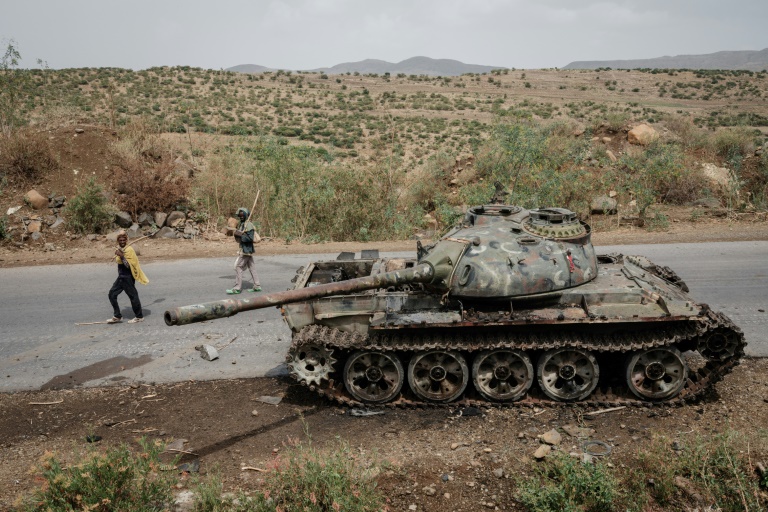
UN investigators said Monday they believed Ethiopia’s government was behind ongoing crimes against humanity in Tigray, and warned the resumption of the conflict there increased the risk of “further atrocity crimes”.

In its first report, the Commission of Human Rights Experts on Ethiopia said it had found evidence of widespread violations by all sides since fighting erupted in the northern Tigray region in November 2020.

The commission, created by the UN Human Rights Council last December and made up of three independent rights experts, said it had “reasonable grounds to believe that, in several instances, these violations amount to war crimes and crimes against humanity”.

The experts listed a long line of horrific violations, from extrajudicial killings to intentional starvation and rape and sexual violence perpetrated on a “staggering scale”.

And they highlighted in particular the situation in Tigray, where the government and its allies have denied around six million people access to basic services, including the internet and banking, for more than a year.

Severe restrictions on humanitarian access have left 90 percent of the region’s population in dire need of assistance.

– ‘Shocking’ –

The report said there were “reasonable grounds to believe that the Federal Government and allied regional State governments have committed and continue to commit the crimes against humanity of persecution on ethnic grounds and other inhumane acts”.

They were “intentionally causing great suffering or serious injury to body or to mental or physical health based on their ongoing denial and obstruction of humanitarian assistance to Tigray”, the report said.

In a statement, commission chair Kaari Betty Murungi described the humanitarian crisis in Tigray as “shocking, both in terms of scale and duration”.

“The widespread denial and obstruction of access to basic services, food, healthcare, and humanitarian assistance is having a devastating impact on the civilian population,” she said.

She condemned likely crimes against humanity and warned that the government appeared to be “using starvation as a method of warfare”.

Murungi called on the government to “immediately restore basic services and ensure full and unfettered humanitarian access”.

She also urged Tigrayan forces to “ensure that humanitarian agencies are able to operate without impediment”.

– ‘Atrocity crimes’ –

Since war broke out in November 2020, thousands have died, and many more have been forced to flee their homes as the conflict expanded from Tigray to the neighbouring regions of Amhara and Afar.

A truce in March had raised hopes for a peaceful resolution of the war, but those were dashed when combat resumed last month.

“With a resumption of hostilities in northern Ethiopia, there is a very real risk of further civilian suffering and further atrocity crimes,” Murungi warned. 

Even before the fighting resumed, the experts said they had found evidence that rape and sexual violence had been perpetrated on a “staggering scale” since the conflict erupted, especially targeting Tigrayan women and girls.

An earlier joint investigation by the UN rights office and Ethiopia’s Human Rights Commission determined that possible war crimes and crimes against humanity had been committed by all sides.

Tigrayan authorities welcomed the report, with a spokesman telling AFP they had “always maintained” that Ethiopia’s government was responsible for crimes against humanity in the region.

Monday’s report meanwhile also found reasonable grounds to believe that Tigrayan forces had committed war crimes, including large-scale killings of Amhara civilians, rape and sexual violence.

– ‘Hatred along ethnic lines’ –

The experts voiced alarm at their findings, which they said “reflect profound polarisation and hatred along ethnic lines in Ethiopia”.

“This has created a disturbing cycle of extreme violence and retribution, which raises the imminent threat of further and more pronounced atrocity crimes,” their report warned.

The report, due to be presented to the rights council on September 22, made a number of recommendations, including that all parties to the conflict “immediately cease hostilities and violations… including those that might amount to war crimes or crimes against humanity”.

It calls on the UN rights office to ensure “full monitoring” of the situation in Ethiopia, and urges the Ethiopian government, its Eritrean ally and authorities in Tigray to investigate and bring all perpetrators of abuses to justice.

Chadian FM resigns blaming junta for his exit

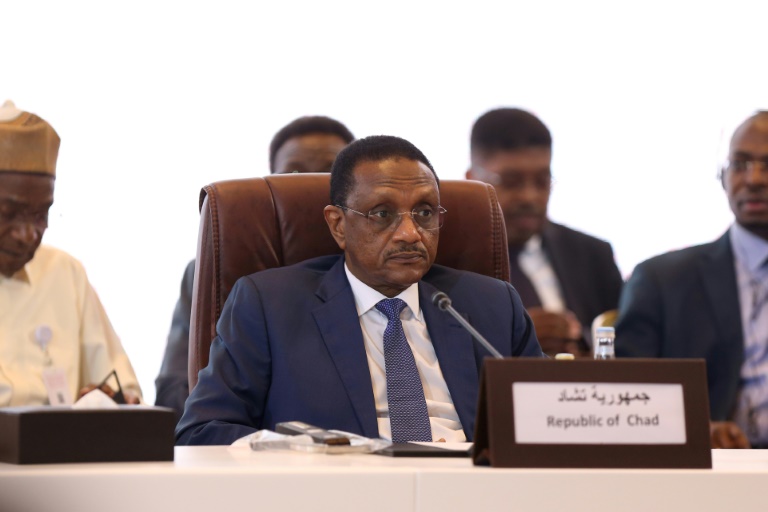
Chad’s foreign minister resigned on Monday, accusing the ruling junta of sidelining him at a key forum aimed at steering the country to democratic rule.

Mahamat Zene Cherif’s exit comes in the midst of gruelling negotiations launched by junta leader General Mahamat Idriss Deby to hold elections after an 18-month transition period.

The talks, which began on August 20 after repeated delays, are being boycotted by many opposition parties, rebels and civil society groups.

In his resignation letter to Deby, Cherif accused the junta of “repetitive and untimely” interference and creating a situation “as unhealthy as it is confused and unacceptable… reducing me to a simple extra”. 

“For several months, my commitment and my desire to serve my country have been thwarted by parallel initiatives and actions by certain members of your cabinet and of the government, undertaken without my knowledge and on your instructions”, Cherif said.

The 58-year-old has held several important jobs and was foreign minister twice.

Deby took the reins of the country after his father, a veteran ruler and former rebel leader, was killed during an operation against rebels in April 2021.

He dissolved parliament and suspended the constitution, vowing to hold “free and democratic” elections after an 18-month rule.

But the elections hinge on the outcome of the so-called national dialogue, a forum intended to seal changes to the constitution and other reforms.

Chad, one of the world’s poorest countries, has endured repeated uprisings and unrest since independence from France in 1960. 

Springboks recall Arendse, Nkosi for Argentina Test

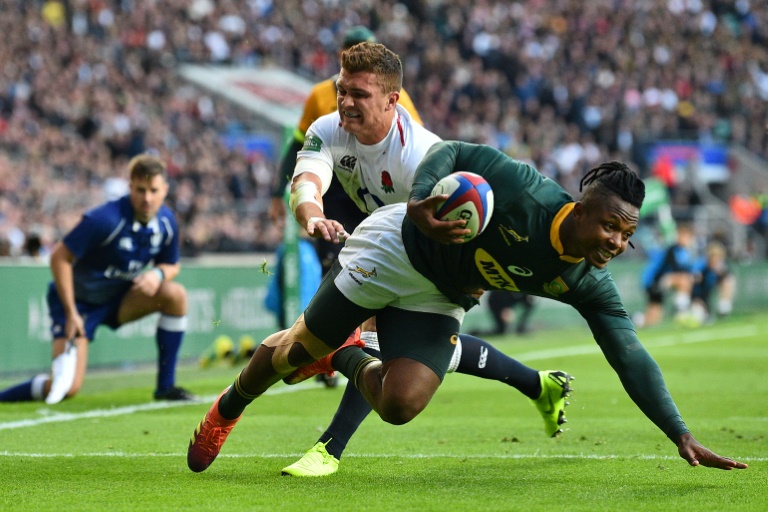
Wingers Kurt-Lee Arendse and Sibusiso Nkosi have been recalled by South Africa ahead of a final round Rugby Championship match against Argentina in Durban on Saturday.

An ankle injury kept Nkosi out of the squad since the Springboks season began in July while Arendse has completed a four-match ban after being sent off against New Zealand last month.

Fly-half Damian Willemse suffered concussion during a 36-20 win over Argentina in Buenos Aires at the weekend and has returned to his Stormers franchise to follow return-to-play protocols.

Utility back Warrick Gelant, hooker Joseph Dweba, lock Salmaan Moerat and loose forward Elrigh Louw have been released from the squad.

The Springboks returned home on Monday after the victory over Argentina at the weekend set up a potentially thrilling climax to the Championship.

South Africa and New Zealand have 14 points each, Australia 10 and Argentina nine in the closest title race since the competition was launched 10 years ago.

New Zealand have dominated the southern hemisphere tournament, winning seven of the nine editions that involved all four teams with Australia and South Africa successful once each.

Coach Jacques Nienaber will name the Springboks matchday 23 on Tuesday for the match against the Pumas at Kings Park stadium.

Close Bitnami banner
Bitnami