Africa Business

Benin welcomes Hollywood take on women warriors

Benin’s historic female warriors known as the Amazons of Dahomey are legendary across West Africa, but a Hollywood production is bringing them back into the limelight.  

The Woman King, released last Friday and shown at one Cotonou’s few cinemas on Saturday, is inspired by the story of the Agojie women who protected the ancient Kingdom of Dahomey and fought against French colonial troops in the 19th century.

The main character General Nanisca is played by the Oscar-winning American actress Viola Davis, who trains the next generation of recruits against a rival African kingdom and European slave traders. 

The production directed by Gina Prince-Bythewood and mainly filmed in South Africa has won praise for its leading roles for black actresses, but has also generated criticism that it glorifies slavery.

At the premiere in Benin’s economic capital, a descendant of Ghezo, a King of Dahomey, who attended the screening at Canal Olympia cinema, shed tears during the viewing. 

“For the princess that I am, some of the scenes were very touching. These brave women gave their lives to protect Ghezo’s heritage, which is my own,” said 37-year-old Sylvine Senami Ghezo.

A younger viewer, 15-year-old Bahunde Efanam, was also emotional and said the film gave her “shivers”.

The Amazons of Dahomey have been celebrated many times before, including in the 2018 film Black Panther in which they inspired Wakanda’s Dora Milaje warriors.

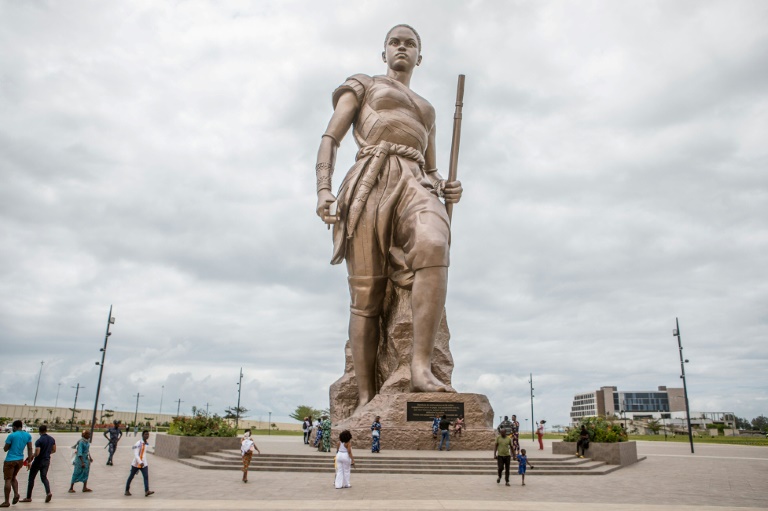
More recently, Benin’s President Patrice Talon unveiled a giant 30-metre high bronze statue representing an Amazon in central Cotonou. 

The government said it chose the figure as a symbol of national identity and key part of its history to showcase in a bid to attract tourists. 

– Tourism –

Made by Chinese artist Li Xiangqun, “the statue will be, for us and those who visit, a symbol of the Beninese woman of yesterday, today and tomorrow”, the president said of the display in July. 

“What is important is that in Benin, the words courage, bravery, strength, combativenesses and honour are not exclusively associated with men,” said the president.

For those working in the nation’s budding tourism industry like Achille Remy Yelouassi who was at the premiere, the hope is also that films like The Woman King “help put Benin on the map”.

Some though said the next film should be made in Benin and not Hollywood since it concerns the country’s history.

In the United States, some have criticised the movie for not addressing the role Dahomey Kingdom played in the slave trade. #Boycottwomanking has been trending on Twitter.

But for some Beninese women, the film can also help tackle issues around women’s rights according to Senami Totin, a lawyer and activist in the country.

“In a patriarchal society like we have in Benin, you need a lot of courage and determination to defend women’s rights,” she said, listing challenges from impunity for rape, forced marriages, exclusion of women from inheritance rights, and a lack of representation in politics.

“We no longer have to fight wars against enemy armies but the fight for women’s emancipation is a daily one, and for that, we have to have an Amazon spirit,” she added.

In addition to celebrating the Beninese woman, actress Viola Davis said she hopes the film also inspires young girls around the world. 

“It’s for my six-year old self… the little girl who was traumatised, the little girl who was called ugly, the little girl who wasn’t seen, who was left invisible,” she told reporters before the Toronto premiere earlier this month. 

“I see you Viola. I see every chocolate girl who is like you. I’m telling you to stop running. This is my gift to you.”


Kotoko shocked by Burkinabe club Kadiogo in CAF Champions League

Twice former champions Asante Kotoko of Ghana were shocked by Rail Kadiogo of Burkina Faso on Sunday in the CAF Champions League preliminary round.

Kadiogo, who trailed 1-0 after the first leg six days ago, won the return match 1-0 in Ghana, and the subsequent penalty shootout 3-1 to reach the final qualifying round during October.   

Although Kotoko last won the competition in 1983, when it was called the African Cup of Champions Clubs, they were not expected to experience much difficulty in overcoming Kadiogo.

Neither Kadiogo, nor any other Burkinabe club, have reached the group phase of the premier African club competition in 50 previous attempts since 1967.

Now, Kadiogo will face V Club from the Democratic Republic of Congo knowing overall victory will secure them a place in Burkinabe football folklore.

Beaten by an added-time Isaac Oppong goal in the first leg, Kadiogo quickly drew level on aggregate with Dramane Kambou scoring on 16 minutes.

There were no further goals in the Kumasi fortress of Kotoko, who converted their first shootout penalty then missed the next three to crash out.

Kadiogo succeeded despite the disadvantage of having to stage home matches in the Beninese city of Cotonou because Burkina Faso does not have a single international-standard stadium.

The other four former champions in action — V Club, JS Kabylie of Algeria, ASEC Mimosas of the Ivory Coast and Zamalek of Egypt — all won.

V Club recovered from a 1-0 away loss to minnows Gaborone United of Botswana by winning 3-1 in Kinshasa with the crucial third goal coming from Marouf Tchakei with eight minutes to go.

Kabylie also overcome a solitary goal first leg loss, defeating Senegalese visitors Casamance SC 3-0 in Setif.

An early penalty converted by Dadi Mouaki set up two-time champions Kabylie, Massinissa Nezla added a second just before half-time and Salim Boukhenchouche netted on 85 minutes. 

ASEC, whose lone Champions League title came in 1998, had a more comfortable passage than V Club or Kabylie, winning 2-0 at home to Coton Sport of Benin having built a 2-1 first leg lead.

Early and late goals from Aubin Kramo and Daouda Diarrassouba in Yamoussoukro took ASEC safely through to an intriguing west African showdown with Horoya of Guinea, who had a bye.

Five-time African champions Zamalek made a belated start to their campaign and goals from ‘Shikabala’ and ‘Zizo’ delivered a 2-0 first leg lead away to Elect Sport of Chad. 

Mixed fortunes for Nigerian challengers in CAF Cup

Nigerian hopefuls had mixed fortunes in the CAF Confederation Cup preliminary round on Sunday with Kwara United qualifying comfortably while Remo Stars were eliminated.

Kwara forced a 0-0 second leg draw away to AS Douanes of Niger in Niamey to advance 3-0 on aggregate after building a healthy lead at home last weekend. 

But African debutants Remo, having exceeded expectations by holding 2005 Confederation Cup winners FAR Rabat in Morocco, fell 1-0 at home to bow out 2-1 on aggregate. 

The crucial goal came 11 minutes into the second half when Ivorian Joseph Gnadou sprinted down the left, cut inside and unleashed a shot into the far corner of the net.

No Nigerian club has won the African equivalent of the UEFA Europa League with now defunct Dolphins coming closest by reaching the two-leg 2005 final, which they lost 3-1 to FAR.

Kwara are likely to face much tougher opposition in the round of 32 during October as they have been paired with two-time Confederation Cup title-holders Renaissance Berkane.

Berkane, who hail from the citrus growing northeastern region of Morocco, enhanced a growing reputation this month by surprising compatriots Wydad Casablanca to lift the CAF Super Cup. 

The Orange Boys have reached three of the last four Confederation Cup finals, losing to Zamalek, then beating another Egyptian club, Pyramids, and South African side Orlando Pirates.

Elgeco Plus of Madagascar beat PWD Bamenda of Cameroon 1-0 in Antananarivo to pull of a surprise 2-1 aggregate victory.

Fenohasina Razafimaro scored the deciding goal on 60 minutes and the reward is a winnable showdown with Marumo Gallants, who are struggling in the South African Premiership.

The other South African challengers, African rookies Royal AM, left it late to seal a place in the next round at the expense of Mbabane Highlanders from neighbouring Eswatini.  

Ruzaigh Gamildien scored on 89 minutes to clinch a 2-0 victory in the second leg and on aggregate after Mozambican Elias Pelembe had broken the deadlock just before half-time.

Next up for Royal, who are bankrolled by TV personality and businesswoman Shauwn ‘Ma’ Mkhize, are vastly experienced Zambian side Zesco United.

Zulu king's aide found dead in S.Africa

An advisor to South Africa’s Zulu king, crowned as monarch last month despite a challenge from within the royal family, was killed late Saturday on the sidelines of a traditional ceremony, according to a local official.

Dumisani Blasius Khumalo “was killed by unknown gunmen last night, shortly after attending the Reed Dance in Nongoma”, Sihle Zikalala, a member of the regional legislature, said in a statement. 

King MisuZulu Zulu confirmed “one of my chiefs has been hurt, Dr Khumalo”. 

“My heart is very sore that something like this has happened to us,” he said.

“Those who committed this crime, I swear to God they will be found.”

Some 10,000 people gathered Saturday in the small town of Nongoma, a Zulu stronghold in the southeastern KwaZulu-Natal province, for the traditional “reed dance”. 

During the centuries-old ritual, the girls present themselves to the king of the country’s largest ethnic group, which numbers 11 million Zulus, almost one in five South Africans.  

It was the new king’s first reed ceremony.  

Opponents of the new ruler had issued threats and predicted a “bloodbath” if the celebration went ahead. 

Security had been stepped up.  

Khumalo, the king’s chief advisor, was responsible for settling disputes within the Zulu community. 

In South Africa, some communal disputes are settled in traditional courts rather than in a state judicial setting.  

“He was very loyal to the royal family and he worked closely with MisuZulu’s father before,” said Khaya Ndwandwe, a Zulu culture expert.  

Since the death of Goodwill Zwelithini last year after a reign of 50 years, a dispute over succession has raged.  

In South Africa, traditional rulers and chiefs are recognised by the constitution and exercise significant moral authority.  

MisuZulu kaZwelithini, recognised by President Cyril Ramaphosa, was born to the favourite and third wife of Goodwill Zwelithini. 

The first wife challenged the succession in court, which rejected the claim. 

The late king’s eldest son, who was born out of wedlock, filed an emergency lawsuit this week claiming he was the rightful heir. 

Brothers of Goodwill Zwelithini also claimed the throne for another contender.  

At the ceremony Saturday, the new king called for “peace and unity (to) prevail in the royal house”.

Zulu king's aide found dead in S.Africa

An advisor to South Africa’s Zulu king, who was crowned as monarch last month despite a challenge from within the royal family, was killed late Saturday on the sidelines of a traditional ceremony, according to a local official. 

Dumisani Blasius Khumalo “was killed by unknown gunmen last night, shortly after attending the Reed Dance in Nongoma,” Sihle Zikalala, a member of the regional legislature, said in a statement. 

Some 10,000 people gathered Saturday in the small town of Nongoma, a Zulu stronghold in the southeastern KwaZulu-Natal province, for the traditional “reed dance”. 

During the centuries-old ritual, the girls present themselves to the king of the country’s largest ethnic group, which numbers 11 million Zulus, almost one in five South Africans.  

It was the first reed ceremony for King MisuZulu Zulu.  

Opponents of the new ruler had issued threats and predicted a “bloodbath” if the celebration went ahead. 

Security had been stepped up.  

Khumalo, the king’s chief advisor, was responsible for settling disputes within the Zulu community. 

In South Africa, some communal disputes are settled in traditional courts rather than in a state judicial setting.  

“He was very loyal to the royal family and he worked closely with MisuZulu’s father before,” said Khaya Ndwandwe, a Zulu culture expert.  

Since the death of Goodwill Zwelithini last year after a reign of 50 years, a dispute over succession has raged.  

In South Africa, traditional rulers and chiefs are recognised by the constitution and exercise significant moral authority.  

MisuZulu kaZwelithini, recognized by President Cyril Ramaphosa, was born to the favourite and third wife of Goodwill Zwelithini. 

The first wife challenged the succession in court, which rejected the claim. 

The late king’s eldest son, who was born out of wedlock, filed an emergency lawsuit this week claiming he was the rightful heir. 

Brothers of Goodwill Zwelithini also claimed the throne for another contender.  

At the ceremony Saturday, the new king called for “peace and unity (to) prevail in the royal house”.

Eritrea calls up armed forces after Ethiopia clashes: UK, Canada

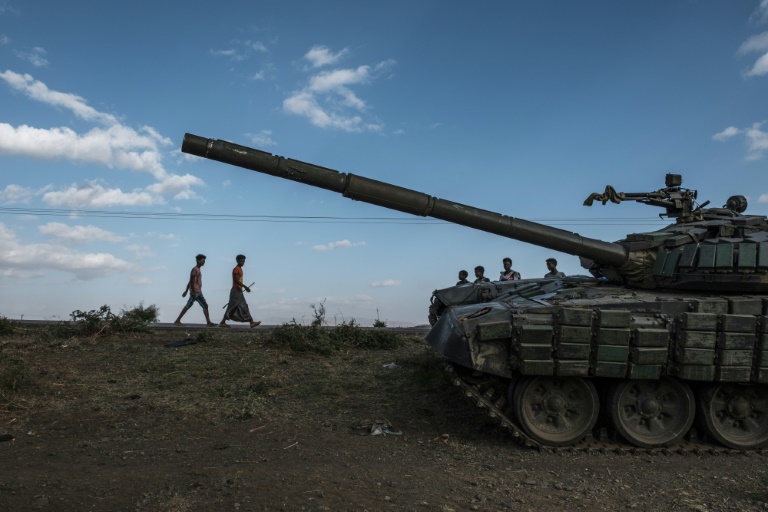
Eritrean authorities have called on their armed forces to mobilise in response to the renewed fighting in northern Ethiopia, the British and Canadian governments said.

The return to combat last month shattered a March truce and dashed hopes of peacefully resolving the nearly two-year war between Ethiopian authorities and the Tigray People’s Liberation Front (TPLF).

Tigrayan authorities have since expressed readiness to hold talks led by the African Union, but the Ethiopian government has not responded publicly to the overtures, other than saying it remains “committed” to the AU-led peace process.

Both sides have accused the other of firing first, and fighting has spread from around southern Tigray to other fronts farther north and west, while also drawing in Eritrean troops who backed Ethiopian forces during the early phase of the war.

In travel advisories published late Friday, the Canadian and British governments warned their nationals in Eritrea to limit their movements following the mobilisation call. 

“Local authorities have issued a general call for mobilization of armed forces in response to the conflict in northern Ethiopia,” the Canadian government said.

“Additional security measures could be imposed on short notice across the country,” it said.

The British advisory said the Eritrean announcement was made on Wednesday.

“You should be extra vigilant at this time,” the advisory said.

Eritrea, which is one of the world’s most closed states, has not commented on the reports.

Since the latest clashes broke out, Tigray has been bombed several times, with an official at Ayder Referral Hospital, the region’s biggest, saying that 16 people had died in air strikes.

AFP was not able to independently verify the claims. Access to northern Ethiopia is severely restricted and Tigray has been under a communications blackout for more than a year.

The TPLF ruled Ethiopia for decades before Prime Minister Abiy Ahmed took office in 2018.

Abiy’s government has declared the TPLF a terrorist group, and considers its claim to authority in Tigray illegitimate.

Abiy — a Nobel Peace Prize laureate — sent troops into Tigray in November 2020 to topple the TPLF, in response to what he said were attacks on federal army camps.

But the TPLF recaptured most of Tigray in a surprise comeback in June 2021.

It then expanded into the neighbouring regions of Afar and Amhara before the fighting reached a stalemate.

'Immoral' Uganda music festival draws sold-out crowds

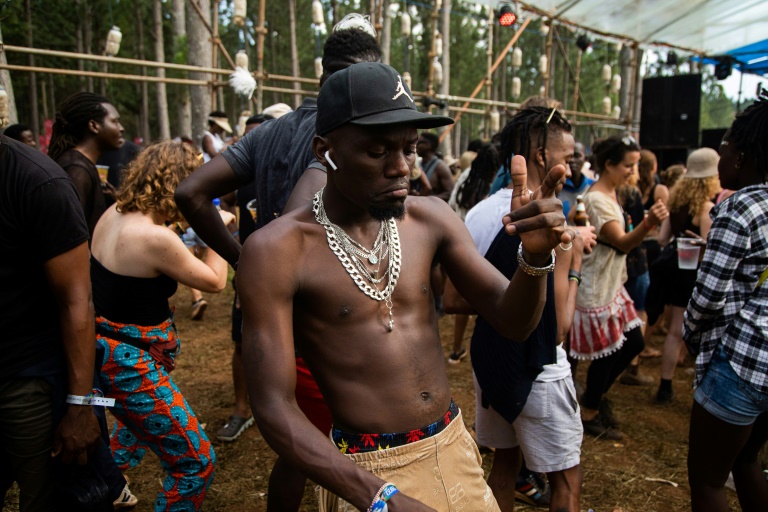
As thousands of revellers grooved to the sounds of Uganda’s sold-out Nyege Nyege music festival on the banks of the Nile, relieved organisers said an attempted “immorality” ban had only served to boost sales.

A public outcry forced Ugandan authorities to reverse the ban — imposed over claims that the four-day extravaganza promoted sex, homosexuality and drug use — but not before news of the prohibition made international headlines.

Some of the partygoers attending the festival, which brings together artists from across Africa, told AFP they had only heard about the event that ends on Sunday thanks to the ban announced earlier this month.

“I learnt about the festival when the government of Uganda banned it on claims it was promoting immorality”, British engineer David Kempson told AFP.

The 31-year-old Londoner had never been to Africa but the news prompted him to book a flight and make his way to Uganda’s scenic Itanda Falls, where he joined 12,000 revellers — including 5,000 foreign tourists.

“It is my first time in Africa. I didn’t expect this much, the huge fan presence, the greenery, the waterfalls and hospitality,” he said.

It was the second ban slapped on the festival since 2018, when Uganda’s former ethics minister Simon Lokodo, an outspoken homophobe, called the event an orgy of homosexuality, nudity and drugs akin to “devil worship”.

Then too the ban failed to hold, following a social media outcry.

But this time, the prohibition proved to be an inadvertent publicity bonanza for the festival, organisers said.

“We are headed for a much bigger number (that) we never anticipated,” the event’s co-founder Arlen Dilsizian told AFP, referring to ticket sales.

The ban “increased vigour and interest in the festival”, drawing visitors from the United States, China, Europe and the Middle East, he said.

– ‘No evidence of orgies’ –

The festival, which moved to a new, larger outdoor venue this year, began in 2015 but had been on a pandemic-induced hiatus since 2020.

Nyege Nyege means an irresistible urge to dance in the local Luganda language, but it can have a sexual connotation in other languages in the region.

Although Dilzanian insisted that “no evidence of sex orgies have been adduced by anybody making the allegations”, the festival was held under tight security, following a government directive against “contraband, narcotic drugs, vulgar language, songs, expressions and gestures”.

Information Minister Chris Baryomunsi earlier warned that if there were serious breaches such as “sex orgies and nudity”, police would halt the event and clear the site.

Despite the presence of a police van outfitted with sensor cameras and remote-controlled drones, fans were unperturbed, determined to savour the buzz and the chance to see celebrated musicians such as 80-year old Cameroonian Eko Roosevelt.

“When I come for Nyege Nyege, I become free, I meet people from all over Africa and beyond, we laugh and dance, stress goes away,” Pamela Nyinabangi, a 27-year-old beauty salon owner from the capital Kampala, told AFP. 

Another attendee, Kenyan businessman Isaac Odwor, told AFP the festival was “the only event where African music is given prominence and we get to interact with the musicians and artists.” 

– ‘One of a kind’ –

This year’s performance is taking place against the backdrop of an economic crisis as the prices of key commodities from fuel to food rise in the wake of the war in Ukraine. 

From street food hawkers to makers of handmade jewelry, many Ugandans hoped the festival would lift their fortunes as tourists thronged the premises, listening to music, taking a dip in the Nile or going white water rafting.

After holding Nyege Nyege’s first international edition in Paris earlier this year, organisers plan to take it to Cameroon next year.

“It is one of a kind festival,” British visitor Tom Uragallo told AFP.

“You can go for a swim in the Nile in the morning and then dance the night away till the early hours.”

Tunisian 'hanging garden' farms cling on despite drought

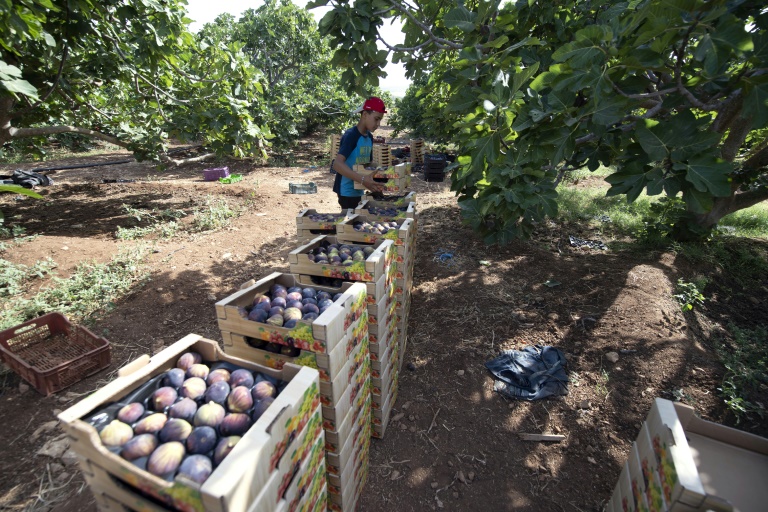
High in the hills of northwestern Tunisia, farmers are tending thousands of fig trees with a unique system of terracing they hope will protect them from ever-harsher droughts.

But the “hanging gardens” of Djebba El Olia have been put to the test this year as the North African country sweltered through its hottest July since the 1950s.

That has exacerbated a long drought that has left Tunisia’s reservoirs at just a third of their capacity.

The gardens are supplied with water from two springs high in the mountains.

The water is fed into the orchards by a network of canals that are opened and shut at set times, according to the size of the orchard.

Crucially, a wide variety of crops provides resilience and in-built pest control, unlike the monocultures that dominate modern agriculture and require huge inputs of pesticides to survive.

“We grow figs but also other trees like quinces, olives and pomegranates, and beneath them we plant a wide range of greens and legumes,” said activist Farida Djebbi as insects buzzed between thyme, mint and rosemary flowers.

Djebbi pointed out some of the channels, which irrigate the area’s 300 hectares (740 acres) of steeply sloping orchards.

In 2020, the Food and Agriculture Organization recognised the system as an example of “innovative and resilient agroforestry”, adding it to an elite list of just 67 “Globally Important Agricultural Heritage Systems”.

The system “has been able to adapt and take advantage of an inhospitable topography”, the UN agency said.

“Through the use of natural geological formations and the use of stones, local communities have been able to transform the landscape into fertile and productive lands.”

The FAO praised the diversity of local crop varieties grown by the area’s farmers, as well as their use of wild plants to repel potential pests and of livestock to “plough” and fertilise the soil.

– Growing up with figs –

While nobody knows exactly how old the system is, human habitation in the area predates the Carthaginian civilisation founded in the ninth century BC.

But while it may have endured for generations, the system is under threat as climate change kicks in.

Activist Tawfiq El Rajehi, 60, says the flow of water from springs irrigating the area has dropped off noticeably, particularly in the past two years.

Unlike in previous years, the surrounding peaks no longer get covered in snow each winter, and the leaves of many of the trees in the lower part of Djebba are yellowing and sick.

Rajehi, a teacher at the local school, said climate change and low rainfall were compounded by another factor: farmers favouring cash crops.

“Some farmers have moved to growing more figs instead of less water-intensive crops because figs have become more profitable in recent years,” he said.

“We need to keep a good balance and variety of plants.”

Nevertheless, residents say they are proud of their heritage.

Farmer Lotfi El Zarmani, 52, said there was also growing demand for Djebba figs, which were given a protected designation of origin by the agriculture ministry in 2012 — still the only Tunisian fruit to enjoy the certification.

“They’re getting a reputation, plus exporting them has become easier, plus they bring higher prices,” Zarmani said, adding that most exports go to the Gulf or neighbouring Libya.

Rajehi’s daughter, university student Chaima, put on protective gloves as she set out to harvest the fruit from her family’s small lot.

“Figs are more than a fruit for us. We’re born here among the fig trees and we grow up with them, we learn from a young age how to look after them,” the 20-year-old said.

Djebbi is working to persuade farmers to preserve traditional ways of processing the products harvested in the area.

She is working with 10 other women on a cooperative that distils essence from wildflowers, dries figs, and produces fig and mulberry jam.

“Products we learnt how to make from our mothers and grandmothers are becoming popular because they’re of such high quality,” she said.

Succession battle festers as S.Africa's Zulu king fetes young women

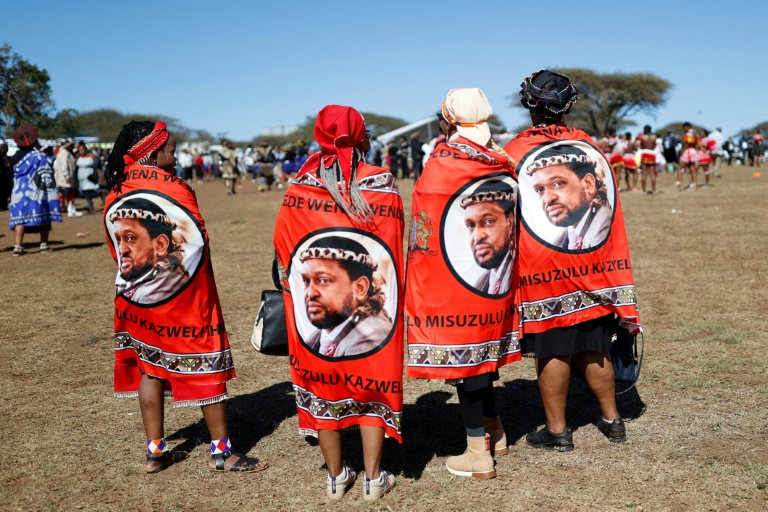
South Africa’s new Zulu king on Saturday celebrated thousands of young women at a colourful traditional rite of womanhood, defying a row over the legitimacy of the royal succession.

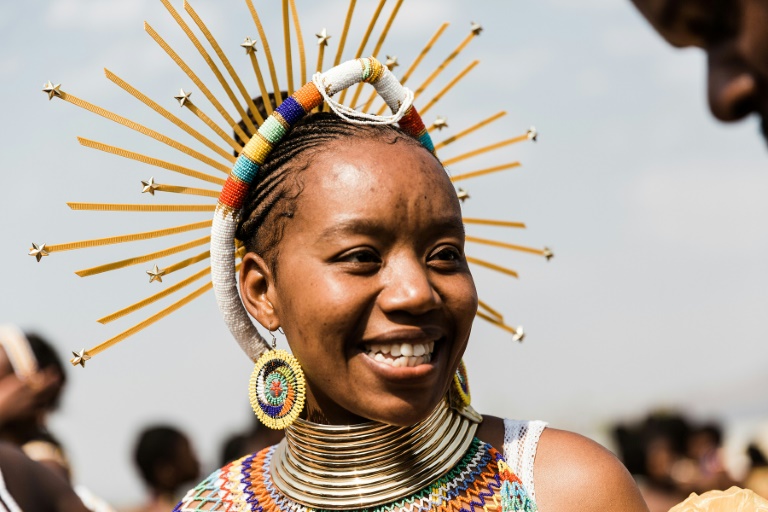
At a stadium nestled between mountains in Nongoma town, the birthplace of South Africa’s ethnic Zulu group, bare-breasted young women ululated and cheered as their new king addressed them.

The young women wearing traditional beads on the neck, waist and the head, kicked off a day of festivities, presenting reeds and filing past the newly-crowned Zulu king MisuZulu Zulu.

The King emerged from a tight circle of Zulu warriors to accept his first ever reed as the new monarch, smiling as the crowd chanted in praise.

Every September — the start of southern hemisphere spring — thousands of women, known locally as maidens, participate in the “reed dance” in KwaZulu-Natal province.

It is an age-old annual ceremony in celebration of sexual purity and promotion of sexual abstinence among young girls.

The ceremony is a traditional rite of womanhood, rooted historically in an occasion when the king would select new wives from among his subjects.

The 47-year-old new head of South Africa’s largest ethnic group was recognised as monarch at a traditional ceremony last month following the death last year of his father King Goodwill Zwelithini, who had reigned for 50 years.

It is the first time the dance is taking place since the outbreak of the Covid-19 pandemic, and MisuZulu’s first time presiding over the reed dance. 

Dressed in a leopard skin shawl, the king smiled confidently throughout the ceremony and his speech which was punctuated with bursts of laughter.

“This is the first time I have seen such a large number of young girls and Zulu warriors attend a reed dance since I was born,” the king said, thanking the estimated 10,000 women.

“We are proud of you and we love you,” he said to loud cheers, chants, ululations and spontaneous dances.

He spoke about rape and femicide which plague South Africa.

“Violence against women and children is an embarrassment to our nation,” he said. “A woman is to be respected and protected. We must do better as men”.

– ‘Excited’ –

Sixteen-year-old Amahle Shange was making her debut at the festival. 

“I am excited to be here for the first time, I can’t believe it’s finally happening and I’m seeing things I’ve never seen before,” she told AFP.

The “reed dance” was abolished for several years but revived in 1984 by MisuZulu’s father.

This year’s event is however clouded by an ongoing succession battle.

One faction of the royal family believes MisuZulu is the rightful heir as his late mother, Queen Mantfombi Dlamini Zulu the third queen consort and sister to Eswatini King Mswati III, was a royal princess.

But Prince Simakade, the late king’s first-born son who was born out of wedlock, has been championed by dissenting relatives by virtue of being the late king’s eldest son.

The king called for “peace and unity (to) prevail in the royal house.”

He also extended condolences to King Charles III on the death of Queen Elizabeth II.

“Our history with the British isn’t covered in glory,” he said. It was his defiant ancestors who inflicted one of the British Empire’s worst defeats in 1879 when they fought bloody battles against the British colonisers.

Prior to the reed dance, the participants had their genitalia inspected, a practice condemned by rights advocates who say it is demeaning and an invasion of privacy.

Traditional doctor and virgin inspector Nomagugu Ngobese defended the practice, saying it was accepted across different social classes.

“I’ve got teachers here, engineers, they have cars; there are attorneys, which goes to prove wrong those who say our culture is outdated,” she told AFP. 

India welcomes back cheetahs, 70 years after local extinction

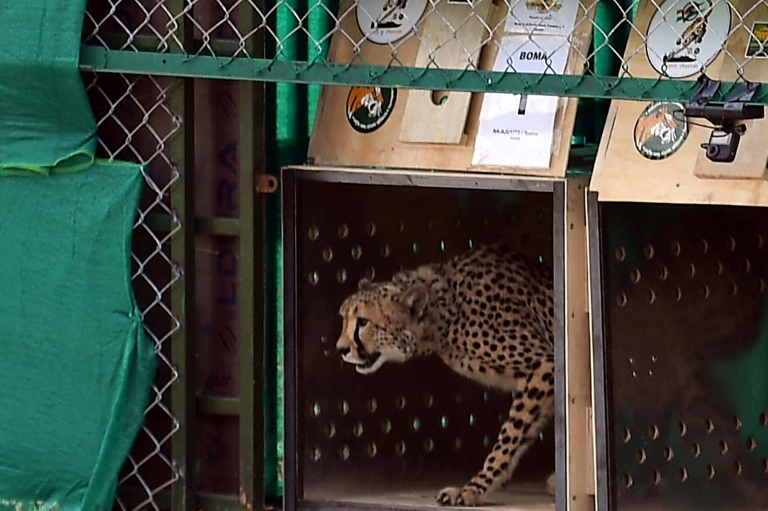
Eight Namibian cheetahs arrived in India Saturday, decades after their local extinction, in an ambitious project to reintroduce the spotted big cats that has divided experts on its prospects.

Officials say the project is the world’s first intercontinental relocation of cheetahs, the planet’s fastest land animal.

The five females and three males were moved from a game park in Namibia aboard a chartered Boeing 747 dubbed “Cat plane” for an 11-hour flight.

Prime Minister Narendra Modi presided over the release at Kuno National Park, a wildlife sanctuary 320 kilometres (200 miles) south of New Delhi selected for its abundant prey and grasslands.

“Today the cheetah has returned to the soil of India,” Modi said in a video address after their arrival, which coincided with the leader’s 72nd birthday.

“The nature loving consciousness of India has also awakened with full force,” he added. “We must not allow our efforts to fail.”

Each of the animals, aged between two and five and a half, have been fitted with a satellite collar to monitor their movements. 

They will initially be kept in a quarantine enclosure for about a month before being released in the open forest areas of the park.

Critics have warned the creatures may struggle to adapt to the Indian habitat.

A significant number of leopards are present in the park, and conservation scientist Ravi Chellam said that cubs could fall prey to feral dogs and other carnivores.

Under the government’s current action plan, “the prospects for a viable, wild and free-ranging population of cheetahs getting established in India is bleak,” he told AFP.

“The habitats should have been prepared first before bringing the cats from Namibia,” he added. “It is like us moving to a new city with only a sub-optimal place to stay — Not a nice situation at all.”

But organisers are unfazed.

“Cheetahs are very adaptable and (I’m) assuming that they will adapt well into this environment,” said Dr Laurie Marker, founder of the Namibia-based charity Cheetah Conservation Fund (CCF), which has been central to the project logistics.

“I don’t have a lot of worries,” she told AFP.

– Habitat loss and hunting –

India was once home to the Asiatic cheetah but it was declared extinct there by 1952. 

The critically endangered subspecies, which once roamed across the Middle East, Central Asia and India, are now only found, in very small numbers, in Iran.

Efforts to reintroduce the animals to India gathered pace in 2020 when the Supreme Court ruled that African cheetahs, a different subspecies, could be settled in India at a “carefully chosen location” on an experimental basis.

They are a donation from the government of Namibia, one of a tiny handful of countries in Africa where the magnificent creature survives in the wild.

Negotiations are ongoing for similar translocation from South Africa, with vets suggesting 12 cats could be moved. 

Cheetahs became extinct in India primarily because of habitat loss and hunting for their distinctive spotted coats. 

An Indian prince, the Maharaja Ramanuj Pratap Singh Deo, is widely believed to have killed the last three recorded cheetahs in India in the late 1940s.

One of the oldest of the big cat species, with ancestors dating back about 8.5 million years, cheetahs once roamed widely throughout Asia and Africa in great numbers, said CCF.

But today only around 7,000 remain, primarily in the African savannas.

The cheetah is listed globally as “vulnerable” on the International Union for the Conservation of Nature (IUCN) Red List of Threatened Species.

In North Africa and Asia it is “critically endangered”.

Their survival is threatened primarily by dwindling natural habitat and loss of prey due to human hunting, the development of land for other purposes and climate change.

Close Bitnami banner
Bitnami