Africa Business

Succession battle festers as S.Africa's Zulu king fetes young women

South Africa’s new Zulu king on Saturday celebrated thousands of young women at a colourful traditional rite of womanhood, defying a row over the legitimacy of the royal succession.

At a stadium nestled between mountains in Nongoma town, the birthplace of South Africa’s ethnic Zulu group, bare-breasted young women ululated and cheered as their new king addressed them.

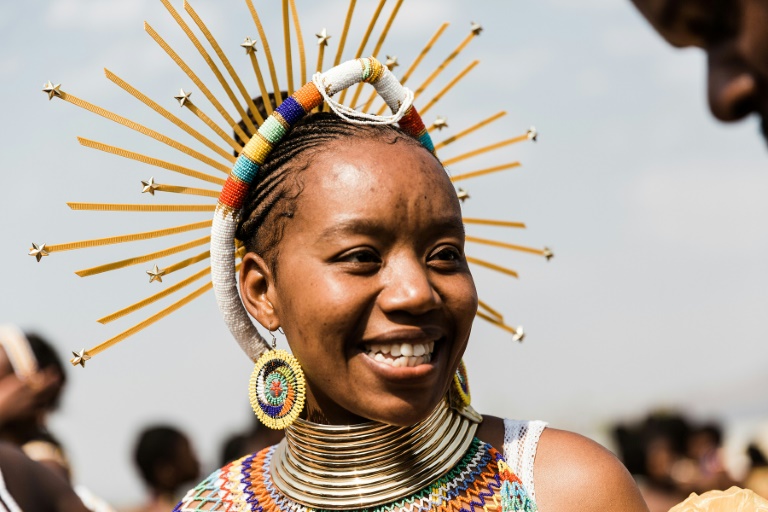
The young women wearing traditional beads on the neck, waist and the head, kicked off a day of festivities, presenting reeds and filing past the newly-crowned Zulu king MisuZulu Zulu.

The King emerged from a tight circle of Zulu warriors to accept his first ever reed as the new monarch, smiling as the crowd chanted in praise.

Every September — the start of southern hemisphere spring — thousands of women, known locally as maidens, participate in the “reed dance” in KwaZulu-Natal province.

It is an age-old annual ceremony in celebration of sexual purity and promotion of sexual abstinence among young girls.

The ceremony is a traditional rite of womanhood, rooted historically in an occasion when the king would select new wives from among his subjects.

The 47-year-old new head of South Africa’s largest ethnic group was recognised as monarch at a traditional ceremony last month following the death last year of his father King Goodwill Zwelithini, who had reigned for 50 years.

It is the first time the dance is taking place since the outbreak of the Covid-19 pandemic, and MisuZulu’s first time presiding over the reed dance. 

Dressed in a leopard skin shawl, the king smiled confidently throughout the ceremony and his speech which was punctuated with bursts of laughter.

“This is the first time I have seen such a large number of young girls and Zulu warriors attend a reed dance since I was born,” the king said, thanking the estimated 10,000 women.

“We are proud of you and we love you,” he said to loud cheers, chants, ululations and spontaneous dances.

He spoke about rape and femicide which plague South Africa.

“Violence against women and children is an embarrassment to our nation,” he said. “A woman is to be respected and protected. We must do better as men”.

– ‘Excited’ –

Sixteen-year-old Amahle Shange was making her debut at the festival. 

“I am excited to be here for the first time, I can’t believe it’s finally happening and I’m seeing things I’ve never seen before,” she told AFP.

The “reed dance” was abolished for several years but revived in 1984 by MisuZulu’s father.

This year’s event is however clouded by an ongoing succession battle.

One faction of the royal family believes MisuZulu is the rightful heir as his late mother, Queen Mantfombi Dlamini Zulu the third queen consort and sister to Eswatini King Mswati III, was a royal princess.

But Prince Simakade, the late king’s first-born son who was born out of wedlock, has been championed by dissenting relatives by virtue of being the late king’s eldest son.

The king called for “peace and unity (to) prevail in the royal house.”

He also extended condolences to King Charles III on the death of Queen Elizabeth II.

“Our history with the British isn’t covered in glory,” he said. It was his defiant ancestors who inflicted one of the British Empire’s worst defeats in 1879 when they fought bloody battles against the British colonisers.

Prior to the reed dance, the participants had their genitalia inspected, a practice condemned by rights advocates who say it is demeaning and an invasion of privacy.

Traditional doctor and virgin inspector Nomagugu Ngobese defended the practice, saying it was accepted across different social classes.

“I’ve got teachers here, engineers, they have cars; there are attorneys, which goes to prove wrong those who say our culture is outdated,” she told AFP. 
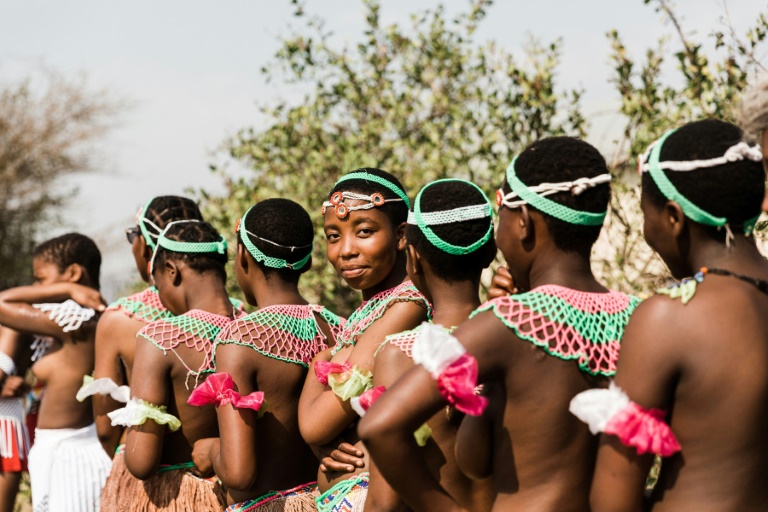
S.Africa's Zulus fete young women's purity amid royal succession spat

As twilight nestles behind the mountains in Nongoma town, the birthplace of South Africa’s ethnic Zulu group, thousands of young women bathe in a cold, shallow river.

Bare-breasted, the gleaming young women wearing in colourful traditional beads, pick up reeds which they will carry as they file past the newly crowned Zulu king MisuZulu Zulu.

The King emerges from a tight circle of Zulu warriors to accept his first ever reed as the new monarch, smiling as the crowd sings unending praises.

The rest of the girls walk past the king in a colourful ceremony lasting several hours. 

Every September – the start of southern hemisphere spring, tens of thousands of women, known locally as maidens, participate in the “reed dance” in KwaZulu-Natal province which opens into the Indian Ocean.

It is an age-old annual ceremony in celebration of sexual purity and promotion of sexual abstinence among young girls.

The ceremony is a traditional rite of womanhood, rooted historically in an occasion for the king to select new wives among his subjects.

The 47-year-old new head of South Africa’s largest ethnic group is also known by his official title as MisuZulu kaZwelithini.

He was recognised as monarch at a traditional ceremony last month following the death last year of his father King Goodwill Zwelithini, who had reigned for 50 years.

This year’s festivities were eagerly awaited.

It is the first time the dance is taking place since the outbreak of the Covid-19 pandemic, and MisuZulu’s first time to preside over the reed dance. 

– ‘Excited’ –

It is also 16-year-old Amahle Shange’s first time attending the festival. 

“I had always seen older girls going to ‘umhlanga’ (reed dance) and found myself so curious,” she told AFP as she walked away from the river with her friends.

“I am excited to be here for the first time, I can’t believe it’s finally happening and I’m seeing things I’ve never seen before”.

The “reed dance” was abolished for several years but revived in 1984 by MisuZulu’s father.

This year’s event is however clouded by an ongoing succession battle.

One faction of the royal family believes MisuZulu is the rightful heir as his late mother, Queen Mantfombi Dlamini Zulu the third queen consort and sister to Eswatini King Mswati III, was a royal princess.

But Prince Simakade, the late king’s first-born son who was born out of wedlock, has been championed by dissenting relatives by virtue of being the late king’s eldest son.

Prior to the reed dance, the participants had their genitalia inspected, a practice condemned by rights advocates who say it is demeaning and an invasion of privacy.

Traditional doctor and virgin inspector Nomagugu Ngobese defended the practice, saying it’s accepted across different societal classes.

“I’ve got teachers here, engineers, they have cars; there are attorneys, which goes to prove wrong those who say our culture is outdated,” she told AFP. 
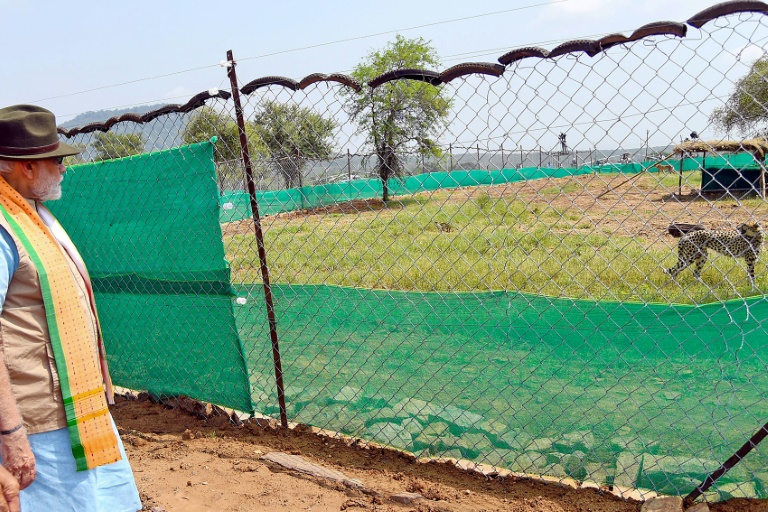
India welcomes back cheetahs, 70 years after local extinction

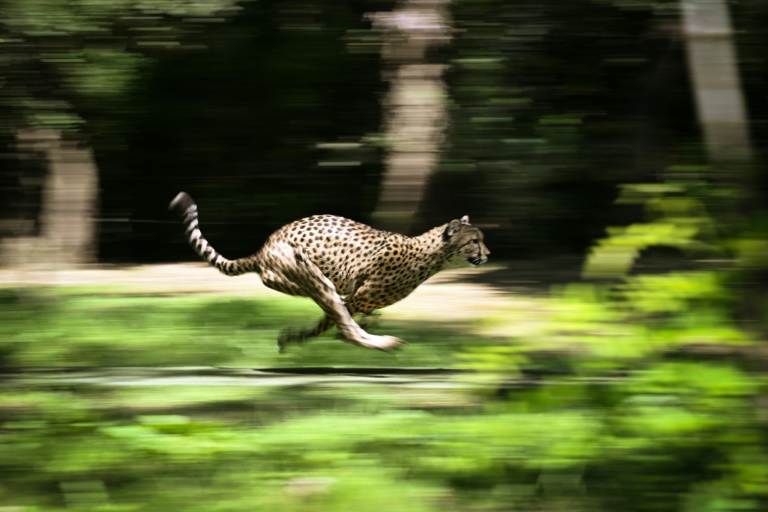
Eight Namibian cheetahs arrived in India Saturday, decades after their local extinction, in an ambitious project to reintroduce the spotted big cats that has divided experts on its prospects.

Officials say the project is the world’s first intercontinental relocation of cheetahs, the planet’s fastest land animal.

The five females and three males were moved from a game park in Namibia aboard a chartered Boeing 747 dubbed “Cat plane” for an 11-hour flight.

Prime Minister Narendra Modi presided over the release at Kuno National Park, a wildlife sanctuary 320 kilometres (200 miles) south of New Delhi selected for its abundant prey and grasslands.

“Today the cheetah has returned to the soil of India,” Modi said in a video address after their arrival, which coincided with the leader’s 72nd birthday.

“The nature loving consciousness of India has also awakened with full force,” he added. “We must not allow our efforts to fail.”

Each of the animals, aged between two and five and a half, have been fitted with a satellite collar to monitor their movements. 

They will initially be kept in a quarantine enclosure for about a month before being released in the open forest areas of the park.

Critics have warned the creatures may struggle to adapt to the Indian habitat.

A significant number of leopards are present in the park, and conservation scientist Ravi Chellam said that cubs could fall prey to feral dogs and other carnivores.

Under the government’s current action plan, “the prospects for a viable, wild and free-ranging population of cheetahs getting established in India is bleak,” he told AFP.

“The habitats should have been prepared first before bringing the cats from Namibia,” he added. “It is like us moving to a new city with only a sub-optimal place to stay — Not a nice situation at all.”

But organisers are unfazed.

“Cheetahs are very adaptable and (I’m) assuming that they will adapt well into this environment,” said Dr Laurie Marker, founder of the Namibia-based charity Cheetah Conservation Fund (CCF), which has been central to the project logistics.

“I don’t have a lot of worries,” she told AFP.

– Habitat loss and hunting –

India was once home to the Asiatic cheetah but it was declared extinct there by 1952. 

The critically endangered subspecies, which once roamed across the Middle East, Central Asia and India, are now only found, in very small numbers, in Iran.

Efforts to reintroduce the animals to India gathered pace in 2020 when the Supreme Court ruled that African cheetahs, a different subspecies, could be settled in India at a “carefully chosen location” on an experimental basis.

They are a donation from the government of Namibia, one of a tiny handful of countries in Africa where the magnificent creature survives in the wild.

Negotiations are ongoing for similar translocation from South Africa, with vets suggesting 12 cats could be moved. 

Cheetahs became extinct in India primarily because of habitat loss and hunting for their distinctive spotted coats. 

An Indian prince, the Maharaja Ramanuj Pratap Singh Deo, is widely believed to have killed the last three recorded cheetahs in India in the late 1940s.

One of the oldest of the big cat species, with ancestors dating back about 8.5 million years, cheetahs once roamed widely throughout Asia and Africa in great numbers, said CCF.

But today only around 7,000 remain, primarily in the African savannas.

The cheetah is listed globally as “vulnerable” on the International Union for the Conservation of Nature (IUCN) Red List of Threatened Species.

In North Africa and Asia it is “critically endangered”.

Their survival is threatened primarily by dwindling natural habitat and loss of prey due to human hunting, the development of land for other purposes and climate change.

Top Kenyan photographer's unseen images of the queen

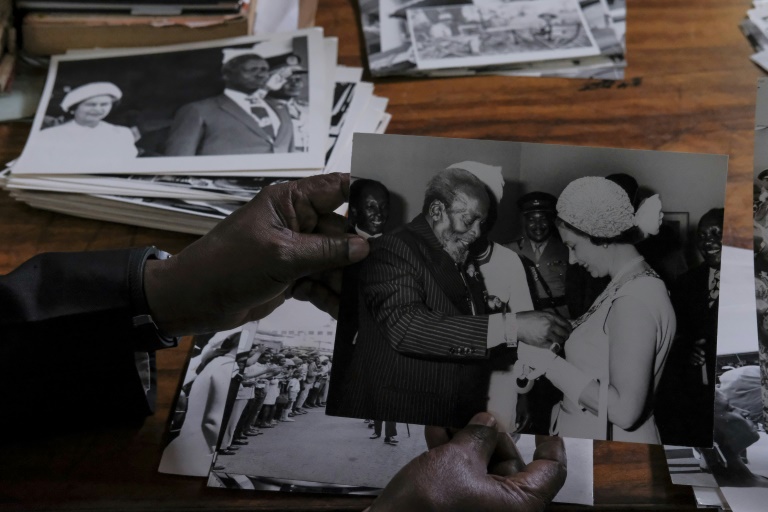
Queen Elizabeth II smiling at children waving Kenyan flags and the Union Jack, alighting from the “Royal Train” or shaking hands with a curious little boy — are all previously unseen images from an enormous archive taken by celebrated photojournalist Mohamed Amin.

The black and white photographs of the queen, shown exclusively to AFP, reflect a level of access that is unheard of today, with Amin capturing candid shots of the monarch chatting with three Kenyan presidents.

Elizabeth II, who died last week at the age of 96, had a close relationship with Kenya. She learnt the news of her father’s death while on her first visit to the former British colony in 1952. She arrived a princess and departed a queen.

Amin covered all her trips to Kenya as monarch.

A prolific journalist whose heartbreaking images of the Ethiopian famine in 1984 brought global attention to the crisis, Amin shot some three million photographs.

He spent decades leading his company Camerapix — which supplied video and pictures to several news outlets — before his tragic death in a plane hijacking in 1996, aged just 53.

His son Salim Amin now runs Camerapix and manages his father’s enormous private archive in Nairobi — filled with photos which have never gone on public display.

Despite being “a child of colonialism” — born to a South Asian family in Tanzania — Amin rarely expressed an opinion about the royal family, his son said.

“He couldn’t afford to have an opinion because it would affect his job,” he told AFP. 

But Amin never kowtowed to authority or discriminated between princes and paupers, his son added, describing how a chance meeting in Saudi Arabia with a bodyguard to exiled dictator Idi Amin helped him score an exclusive interview with the so-called Butcher of Uganda. 

“If he hadn’t been friendly with the bodyguard (in Uganda), he wouldn’t have gotten the interview!”

– Google archive –

The queen’s death has raised questions about Britain’s colonial past and the abuses committed by British authorities across Africa, including during her reign.

In this context, Amin’s achievements testify to a triumph against daunting odds.

A self-taught photographer, he often encountered racism in the field, with officials automatically deferring to his white colleagues.

But he also saw his identity as a source of strength.

He realised “the fundamental reason he was successful was because he was local… (because) he knew the continent inside out”, his son said. 

In 1992, Amin was honoured by the queen and made a Member of the Order of the British Empire.

In addition to covering the Ethiopian famine, when his images jolted the world into a huge relief effort including the massively successful “Live Aid” concert, Amin had a front-row seat to virtually every significant event on the continent.

Last year, Google Arts & Culture established an online archive to catalogue his work in collaboration with the Mohamed Amin Foundation.

Over 6,000 photos have already been uploaded to the digital archive. 

More may follow, including those rare shots of  Elizabeth II.

S.Africa leader vows cooperation with Biden but firm on Russia ties

South Africa’s leader on Friday agreed to cooperate closely with US President Joe Biden on health, security and climate but warned against punishing African nations for maintaining ties with Russia.

The Biden administration has put a new focus on Africa after being taken aback by the reluctance of some nations to condemn Russia over its invasion of Ukraine, which has triggered sweeping Western sanctions.

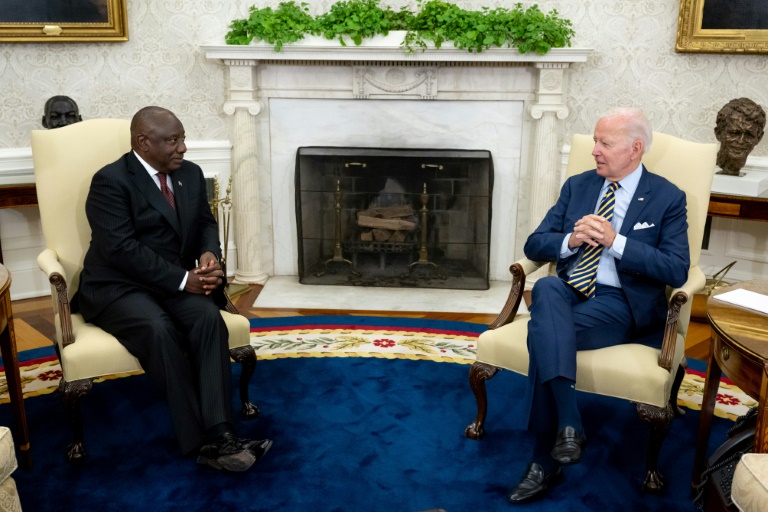
President Cyril Ramaphosa enjoyed unusually warm treatment from Biden, who walked him back to his motorcade at the White House, weeks after Secretary of State Antony Blinken traveled to South Africa and promised that the United States will listen more to Africans.

“We really need to make sure we fully understand one another,” Biden said as he welcomed Ramaphosa in the Oval Office. “Our partnership is essential.”

Ramaphosa said he sought to work together on security, including in South Africa’s troubled neighbor Mozambique, as well as on climate change, a key priority for the Biden administration.

Starting his visit over breakfast with Vice President Kamala Harris, Ramaphosa voiced gratitude to the United States for its “considerable support” on the Covid pandemic as the Biden administration donates 1.1 billion vaccine doses around the world.

“The visit really is about strengthening the relationship between South Africa and the United States,” Ramaphosa said, adding that Washington had a “key role” to play on security across Africa.

But Ramaphosa warned Biden over a piece of legislation that has passed through the US House of Representatives which would require a strategy to counter Moscow’s role in Africa.

Ramaphosa said he explained that Africans should not be “punished” for their historic non-aligned position among major powers.

“I think it will harm Africa and marginalize the continent,” Ramaphosa told reporters after his meetings.

“We should not be told by anyone who we can associate with.”

The legislation, called the Countering Malign Russian Activities in Africa Act, has yet to clear the Senate and US policymakers stress that it does not in itself lay out any repercussions for African countries.

– ‘Histories’ behind Russia stance –

Successive US administrations have focused much of their energy in Africa on countering the growing influence of China, which has become the continent’s dominant trading partner.

But Russia’s invasion of Ukraine has triggered a new front in the battle for influence in Africa, where many nations have been reluctant to embrace the West in its campaign to pressure Moscow.

South Africa’s Foreign Minister Naledi Pandor denied being neutral but said “there are reasons for the perspectives that exist and one should never, I think, try to pretend that there aren’t histories.”

She pointed to the former Soviet Union’s championing of anti-apartheid forces compared with periods of Western cooperation with South Africa’s former white supremacist regime.

“I think we’ve been fairly clear, in our view, that war doesn’t assist anyone and that we believe the inhumane actions we have seen against the people of Ukraine can’t be defended by anybody,” she said this week at the Council on Foreign Relations in Washington.

The United States has sought to highlight the invasion’s role in soaring food prices, as Ukraine was one of Africa’s largest suppliers of grain.

Russia has sought to blame food scarcities on Western sanctions, an argument dismissed by the United States, which says it is not restricting agricultural or humanitarian shipments.

South Africa’s top diplomat broke with the usual polite bipartisanship of foreign dignitaries visiting Washington, not mincing words on Biden’s Republican predecessor Donald Trump, who notoriously referred to nations in the developing world with an epithet.

“We relate very well, I think probably better, with the Democrats than the Republicans,” she said. “You will recall how President Trump described Africa and no one has apologized for that as yet.”

Trump was the first US president in decades not to visit sub-Saharan Africa. Biden has not yet visited but has pledged a renewed interest, including with a summit of African leaders planned in Washington this December.

Springbok Jantjies apologises, but denies affair with team dietician

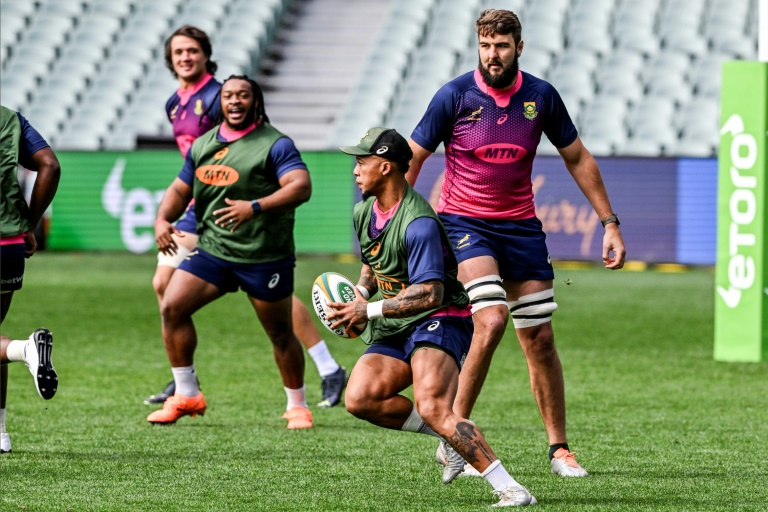
Springbok fly-half Elton Jantjies, who early this week was sent home from Argentina ahead of a Rugby Championship match, said on Friday that “I let myself…down” but denied having an affair with the squad’s dietician. 

“I am aware that newspaper articles about my recent behaviour caused a lot of disappointment, distress, and anger to many people, and I apologise unreservedly to everybody I hurt or disappointed, my teammates, the Springbok management team, and SA Rugby,” he wrote in a statement.

Jantjies, 32, said he “did not do the Springbok jersey – a jersey that I revered since I was just a little boy – proud”

“I sadly let myself, my family, and the rugby-loving people of this country down, and I deeply regret my actions”.

“I take full responsibility for my actions, and I am serious about doing everything in my power to change my behaviour,” he said.

South African media last week reported Jantjies, who is married, spent time at a guesthouse with a woman last month, as the team was in Mbombela, South Africa, to play New Zealand.

But he denied that he was with dietician Zeenat Simjee. 

“Simjee was never with me at either of the two guest houses that I stayed at. She is a good friend and nothing more,” he said. “That her good name is now being dragged through the mud is a shame”.

In a separate statement issued at the same time, Simjee said she was with her parents dealing with a family bereavement during the weekend the team was preparing for the Test against Argentina.

“So, the allegations of me spending time with Elton Jantjies at a guesthouse is devoid of any truth,” she said, adding she was “shocked” and “devastated” that a local newspaper could “publish such damaging allegations on false and baseless hearsay. It is disappointing”.

The Springboks are due to play Argentina on September 17 in the Rugby Championship.

In May, Jantjies was arrested on charges of malicious damage to property of an airline he had flown with from Dubai to Johannesburg.

The case against him was provisionally withdrawn in June.

Jantjies made his professional debut in 2011 with the Johannesburg-based Lions and was loaned to French Top 14 club Pau in 2021 before joining Japanese outfit NTT Red Hurricanes this year.

He also apologised to the management and squad of the Red Hurricanes.

Namibian cheetahs head for India, 70 years after local extinction

Eight Namibian cheetahs were on Friday airlifted to India, part of an ambitious project to reintroduce the big cats after they were driven to extinction there decades ago, officials and vets said.

The wild cheetahs were moved by road from a game park north of the Namibian capital Windhoek to board a chartered Boeing 747 dubbed “Cat plane” for an 11-hour flight.

They will be personally welcomed by Prime Minister Narendra Modi on Saturday, his 72nd birthday.

He will swing open the gates of Kuno National Park, a new sanctuary created for the cats, 320 kilometres (200 miles) south of Delhi.

The 750-square-kilometre (290-square-mile) protected park was selected as a home because of its abundant prey and grasslands.

The project is the world’s first inter-continental translocation of cheetahs, the world’s fastest land animal, according to the Indian high commissioner to Namibia, Prashant Agrawal.

“This is historic, global first. Game-changing,” he told AFP. “We are all the more excited because it is happening in the 75th year of Indian independence”.

Critics have warned that the Namibian cheetahs may struggle to adapt to the Indian habitat and may clash with the significant number of leopards already present.

But organisers are unfazed.

“Cheetahs are very adaptable and (I’m) assuming that they will adapt well into this environment. So I don’t have a lot of worries,” said Dr Laurie Marker, founder of the Namibia-based charity Cheetah Conservation Fund (CCF), which has been central to the project logistics.

The project has been in the making for more than a decade. Initial discussion started in the 1990s, she told AFP.

India was once home to the Asiatic cheetah but it was declared extinct there by 1952. The critically endangered subspecies, which once roamed across the Middle East, Central Asia and India, are now only found, in very small numbers, in Iran.

New Delhi has since 2020 been working to reintroduce the animals after the Supreme Court announced that African cheetahs, a different subspecies, could be settled in a “carefully chosen location” on an experimental basis.

The five females and three males, aged between two and five and a half, will each be fitted with a satellite collar. 

They are a donation from the government of Namibia, one of a tiny handful of countries in Africa where the magnificent creature survives in the wild.

Negotiations are ongoing for similar translocation from South Africa, a government official told AFP on Friday, with vets suggesting 12 cats could be moved. 

Cheetahs became extinct in India primarily because of habitat loss and hunting for their distinctive spotted coats. 

An Indian prince, the Maharaja Ramanuj Pratap Singh Deo, is widely believed to have killed the last three recorded cheetahs in India in the late 1940s.

One of the oldest of the big cat species, with ancestors dating back about 8.5 million years, cheetahs once roamed widely throughout Asia and Africa in great numbers, said CCF.

But today only around 7,000 remain, primarily in the African savannas.

The cheetah is listed globally as “Vulnerable” on the International Union for the Conservation of Nature (IUCN) Red List of Threatened Species.

In North Africa and Asia it is “Critically Endangered”.

Their survival is threatened primarily by dwindling natural habitat and loss of prey due to human hunting, the development of land for other purposes and climate change.

Chadian rebel returns for talks on country's future

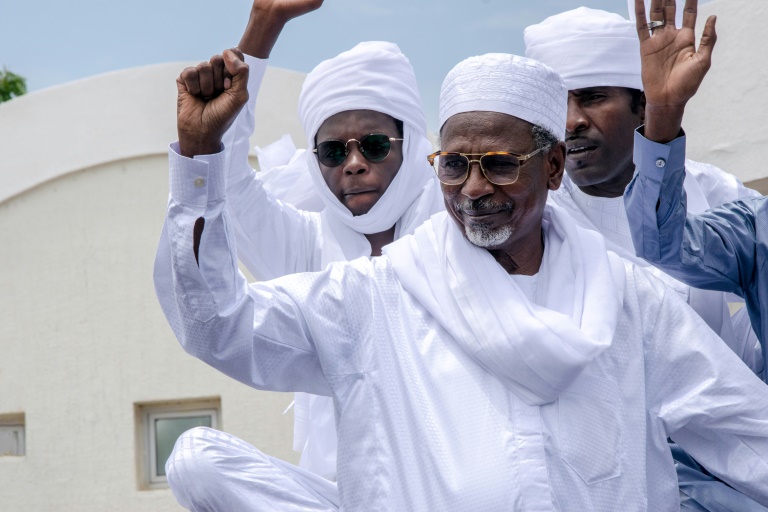
A leading Chadian rebel flew home on Friday to join talks on the country’s political future, after spending nearly two years in jail in Egypt, an AFP reporter saw.

Tom Erdimi, 67, arrived at N’Djamena airport aboard an EgyptAir flight and was greeted by his twin brother, Timan Erdimi, who leads the Union of Resistance Forces (UFR).

The brothers — nephews of Chad’s iron-fisted late president Idriss Deby Itno — were key figures in the regime in the 1990s before they rebelled against it, co-founding the UFR.

Erdimi was arrested in Egypt in December 2020, a move that the UFR said was the result of Chadian pressure on the Cairo government.

But on Wednesday, the Chadian government announced that he had been pardoned by Egyptian President Abdel Fattah al-Sissi and would be returning home. 

There have been no other details about his release, which had been a condition set by the UFR for joining a forum on charting the military-run country’s return to civilian rule.

Erdimi, wearing a traditional white gown, was warmly received by relatives and sympathisers. Two ministers in the junta-appointed government were also present.

He called for “peace and reconciliation, in a democratic system”.

He thanked “Chadians who mobilised… for my release”, singling out his brother as well as “the president of the transitional military council” — a reference to junta leader General Mahamat Idriss Deby.

Deby took the reins of the country after his father was killed during an operation against rebels in April 2021.

He dissolved parliament and suspended the constitution, vowing to hold “free and democratic” elections after an 18-month rule.

The elections hinge on the outcome of a so-called inclusive national dialogue, a forum launched by Deby that would seal changes to the constitution and other reforms.

The dialogue began on August 20 after repeated delays, and work is progressing very slowly, hobbled in part by the absence of key political opponents and rebels.

The scheduled closure has already been pushed back 10 days to September 30.

Chad, one of the world’s poorest countries, has endured repeated uprisings and unrest since independence from France in 1960.

Tom Erdimi was director of former president Deby’s cabinet in 1991, and in charge of a range of oil-related activities in the central African state.

He and his brother rebelled against the late ruler in 2005, launching several offensives aimed at overthrowing the government, including one that earned them a death sentence in absentia while they were in exile overseas. 

Guinea trial to start on anniversary of 2009 massacre

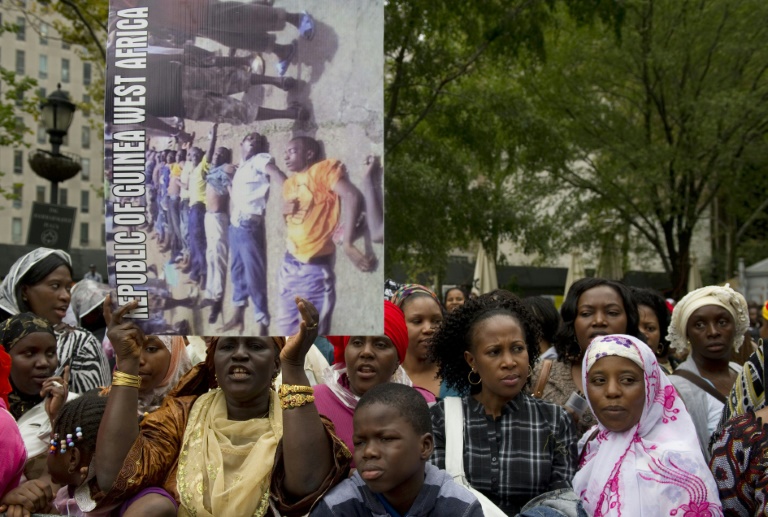
The West African state of Guinea on Friday announced that the long-awaited trial over a 2009 massacre will begin on September 28, 13 years to the day after an event that marked a turning point in its history.

The proceedings will “revisit our history” and ensure “we all come out of this trial with a new vision of Guinea, where impunity will no longer have its place,” Justice Minister Alphonse Charles Wright said at a press conference.

He said he hoped for a “process of reconciliation.”

On 28 September 2009, a group of NGOs and opposition parties organised a rally at a stadium in the capital Conakry.

Thousands gathered there to protest against the possible presidential candidacy of then-junta leader, Moussa Dadis Camara, who had seized power in a December 2008 putsch.

Camara’s government sent in the army, which carried out a bloody crackdown in and around the compound. 

At least 157 people were murdered and 109 women raped, according to a UN international commission of enquiry. 

The victims’ testimonies are harrowing, with the UN enquiry concluding that the massacre was a “premeditated act” by the junta.

– Long wait –

A judicial investigation ended in December 2017 and dozens of defendants, including Camara, were referred to a court.

Despite recurring commitments under former president Alpha Conde’s regime, victims and relatives have been waiting for the trial ever since. 

Human rights defenders have also been pushing for the trial, as well as the International Criminal Court (ICC), which sent a delegation in early September to assess preparations.

“Since investigations opened before the Guinean courts in February 2010, many victims have died, some are sick and live in the most precarious conditions,” the African Francophone Coalitions for the International Criminal Court, a civil society network, said in a statement on Thursday.

“To this sad fact, we must add the situation of women repudiated by their husbands and those infected with HIV, following the rapes of which they were victims, without forgetting the orphaned children who have lost their schooling, who have now become adults.”

– Anniversary –

Colonel Mamady Doumbouya, head of the ruling junta, had called in mid-July for the trial to begin before the massacre’s anniversary. 

“The Minister of Justice… has been able to do everything possible to ensure that Guinea has the technical capacity to meet its international commitments to promote and protect human rights,” Wright said Friday.

He had previously suggested the trial could begin on September 26 but said it was not confirmed. 

The date was pushed back to September 28, “at the request of the ICC prosecutor, who requested to be present here on the 28th to attend the opening of this trial,” the minister said.

Camara, who had been exiled in Burkina Faso since he renounced power in 2010, returned to Guinea in December 2021. 

He had said he was ready to face justice, but has since returned to Burkina. 

The massacre was a key factor in the rise of Conde, who a few months later became Guinea’s first democratically elected president since independence from France in 1958. 

Conde himself was overthrown in a coup in September 2021, which came on the back of protests against his bid for a third term in office.

US, S.Africa leaders vow cooperation after Ukraine discord

The leaders of South Africa and the United States called Friday for close cooperation on health, security and climate, as President Joe Biden puts a new focus on African powers after their reluctance to take on Russia.

President Cyril Ramaphosa was set to meet President Joe Biden weeks after Secretary of State Antony Blinken paid his own trip to South Africa and promised that the United States will do more to listen to Africa.

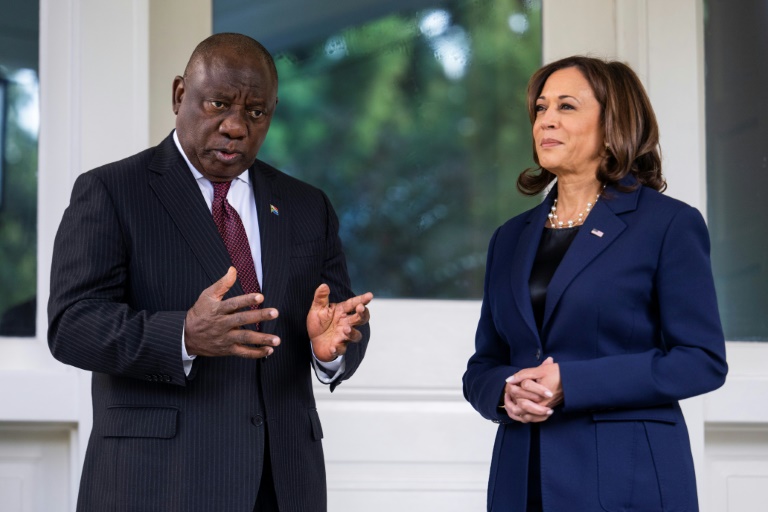
Starting his visit over breakfast with Vice President Kamala Harris, Ramaphosa voiced gratitude to the United States for its “considerable support” on the Covid pandemic as the Biden administration donates 1.1 billion vaccine doses around the world.

“The visit really is about strengthening the relationship between South Africa and the United States,” Ramaphosa said, adding that Washington had a “key role” to play on security issues across Africa.

Harris hailed the leadership of Ramaphosa — who is under growing pressure at home over a scandal — and said she would discuss working together on fighting climate change, a key priority for the Biden administration.

“I cannot emphasize enough how important the relationship between our countries is to the people of the United States both in terms of our security and our prosperity,” she said.

Like other developing nations, South Africa — whose eastern Mpumalanga province has one of the world’s largest concentrations of coal — argues that industrialized nations should bear the brunt of efforts to cut emissions due to their historic responsibility for climate change.

Wealthy nations at last year’s Glasgow climate conference promised $8.5 billion of financing to South Africa to transition away from coal.

– ‘Histories’ behind Russia stance –

Successive US administrations have focused much of their energy in Africa on countering the growing influence of China, which has become the continent’s dominant trading partner.

But Russia’s invasion of Ukraine has triggered a new front in the battle for influence in Africa, where many nations have been reluctant to embrace the West in its campaign to punish and pressure Moscow.

South Africa’s Foreign Minister Naledi Pandor denied being neutral but said “there are reasons for the perspectives that exist and one should never, I think, try to pretend that there aren’t histories.”

She pointed to the former Soviet Union’s championing of anti-apartheid forces compared with periods of Western cooperation with South Africa’s former white supremacist regime.

“I think we’ve been fairly clear, in our view, that war doesn’t assist anyone and that we believe the inhumane actions we have seen against the people of Ukraine can’t be defended by anybody,” she said this week at the Council on Foreign Relations in Washington.

“But what we have said is that a lot of the public statements that are made by leading politicians are not assisting in ameliorating the situation, because the first prize must be to achieve peace.”

The United States has sought to highlight the invasion’s role in soaring food prices, as Ukraine was one of Africa’s largest suppliers of grain.

Russia has sought to blame food scarcities on Western sanctions, an argument dismissed by the United States, which says it is not restricting agricultural or humanitarian shipments.

South Africa’s top diplomat broke with the usual polite bipartisanship of foreign dignitaries visiting Washington, not mincing words on Biden’s Republican predecessor Donald Trump, who notoriously referred to nations in the developing world with an epithet.

“We relate very well, I think probably better, with the Democrats than the Republicans,” she said. “You will recall how President Trump described Africa and no one has apologized for that as yet.”

Trump was the first US president in decades not to visit sub-Saharan Africa. Biden has not yet visited but has pledged a renewed interest, including with a summit of African leaders planned in Washington this December.

Close Bitnami banner
Bitnami