Africa Business

Sierra Leone delays full switchover to new currency

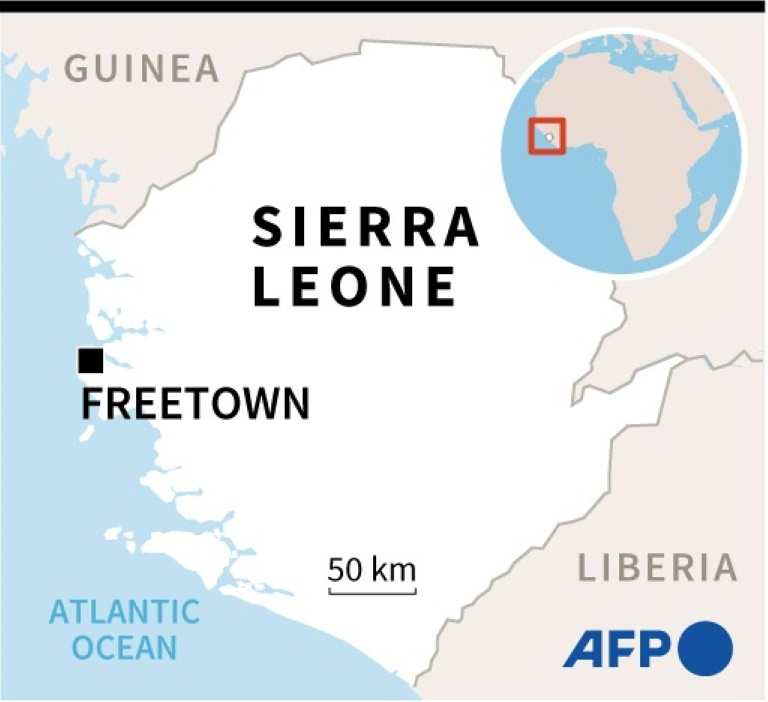
Sierra Leone is to delay the phaseout of its old currency until next spring, the central bank said.

On July 1, the West African country stripped three noughts off its banknotes in a bid to restore confidence in the inflation-hit currency, the leone.

The old and new notes both remain in circulation for the moment.

The transition period was due to end on October 1, when the old leone ceased to be legal tender, but has now been extended for six months, the bank announced late Thursday.

“The transition period of 1st July, 2022 to 30th September, 2022 (wherein both the Old Leone and the New Leone shall be legal tender) is hereby extended to 31st March, 2023,” it said on social media, without elaborating.

The public will be able to swap the old currency for the new one between April 1 and 15, 2023, it said.

President Julius Maada Bio introduced the re-denominated currency this summer in a bid to stop its freefall.

Shoppers needed huge quantities of the old banknotes for the simplest transactions, and unscrupulous bank tellers sometimes pilfered notes from sealed bundles of bills.

The new 10-leone note is the equivalent of 10,000 old leones and is worth around 70 US cents.

Sierra Leone’s eight million people live in one of the poorest nations in the world. The former British colony ranks 182 out of 189 countries on the United Nations’s Human Development Index.

The economy, which is heavily dependent on its diamonds and other mineral wealth, was devastated by a civil war that ran from 1991 to 2002 and left about 120,000 dead.

Efforts at rebuilding were set back by an Ebola epidemic in 2014-2016, a fall in world commodity prices, the coronavirus epidemic and the war in Ukraine.

Air strikes, floods displace Nigeria jihadists

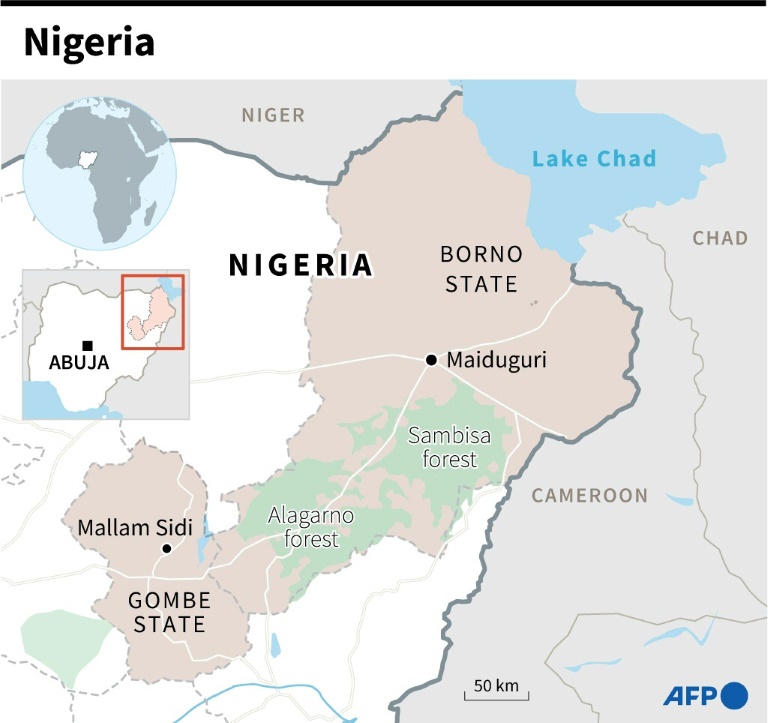
Hundreds of Boko Haram jihadists have fled a forest enclave in northeast Nigeria, escaping air strikes by the military and floods from torrential rains to seek shelter on Niger’s side of Lake Chad, sources told AFP. 

Northeast Nigeria is facing a 13-year armed insurgency by jihadist groups which has killed more than 40,000 people and displaced around two million from their homes.

The violence has spilled into neighbouring Niger, Chad and Cameroon, with the jihadists maintaining camps in the vast Lake Chad region straddling the four countries. 

A Nigerian security source said there had an exodus of Boko Haram militants from Sambisa forest since last month due to a sustained bombing campaign on their hideouts. 

Nigeria has also recorded a more intensive rainy season, which usually runs from May through September, and floods have occurred in almost every part of the country. 

“The exodus of the Boko Haram terrorists has increased in recent days as the bombardments have intensified, coupled with the floodings that have submerged many of their camps,” said the security source in the region who asked not to be identified.

On Monday, a convoy of more than 50 trucks carrying Boko Haram fighters and their families passed through villages on a route linking Sambisa with Lake Chad, several residents in the region said. 

The fighters are believed to be loyal to Bakura Buduma, a Boko Haram factional leader, the sources said. 

The convoy drove through Mafa forest into Jere and Koshobe before crossing between the towns of Gajiram and Gasarwa on the 135-kilometre (85-mile) highway linking the regional capital Maiduguri and the garrison town of Monguno, said the sources. 

“They (Boko Haram) crossed the highway in batches of 10 vehicles at a time under the watch of heavily armed fighters,” said Laminu Kontoma, a resident of the area.

After crossing the highway, the convoy moved into Gudumbali forest from where they emerged at Gaidam, before traversing a river into Abadam district on the border with Niger, said another resident, Bunami Garga.

“The Boko Haram convoy is definitely heading to the islands on Lake Chad in the Bosso area of Niger where the group has camps,” said a fisherman named Kallah Sani who said he was familiar with Boko Haram movements in the region.

Niger authorities could not immediately confirm the movement.

– Infighting –

Those heading into Niger are Boko Haram fighters who had been holed up in parts of the Sambisa forest that remained under the group’s control after it lost ground to a rival, the Islamic State West Africa Province (ISWAP).

ISWAP split from Boko Haram in 2016, rising to become a dominant jihadist group focusing more on attacking military bases and ambushing troops rather than civilians.

Boko Haram’s leader Abubakar Shekau was killed in May 2021 during the infighting with ISWAP, which also seized most of the group’s territory in Sambisa.

Some Boko Haram fighters moved out of Sambisa towards forests in the northwest where they forged alliances with criminal gangs involved in looting and kidnapping for ransom, according to a Nigerian intelligence report.

Queen's death leaves Zimbabweans conflicted

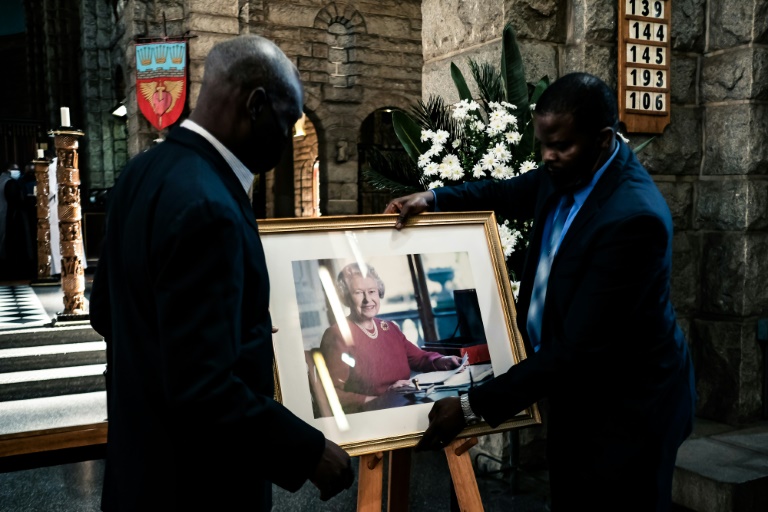
On a chilly spring morning, a kilted piper playing the bagpipes led diplomats into Harare’s stone-walled Anglican Cathedral for a thanksgiving service in honour of Queen Elizabeth II.

But the turnout among the public was meagre — numbering in the dozens — and the flags that flew at half-mast were in honour not of Zimbabwe’s former monarch but of an army brigadier who had died a week after her.

Sentiments in this southern African country after the death of the queen are mixed. 

Many of Zimbabwe’s institutions, such as its parliament and bewigged judges, are based on the British model, and food, clothing and even accents are inspired by Britain.

Yet memories remain of the humiliation of the colonial era, tinged more recently by tensions under Zimbabwe’s first post-independence leader, Robert Mugabe.

Older Zimbabweans grew up in a country called Rhodesia — a British colony created and named after Cecil Rhodes, an ardent imperialist.

Colonial relations “were exploitative,” said historian Phatisa Nyathi. “It was about the looting of resources, minerals and a source of hostility.”

In 1964, as British rule in Africa was fading, Rhodesia’s white-dominated government unilaterally declared a republic, triggering a war with nationalists that ended with independence under negotiations fostered by Britain.

It was the queen’s successor, King Charles III, who attended independence ceremonies in 1980, where he was handed the Union Jack after it was lowered and replaced by the new multi-coloured Zimbabwean flag.  

– Souring ties –

For the first two decades after independence, relations between Britain and Zimbabwe were cordial, even warm.

Bathed in the glory of the struggle and its negotiated outcome, Mugabe in 1986 was awarded the highest royal honour granted to an African statesman, and several British universities showered him with honorary degrees.

When the queen visited Zimbabwe in 1991 for a Commonwealth summit, Harare city authorities burned down shacks in parts of the capital and moved the 3,000 dwellers to a farm out of sight of the visiting monarch.

But relations started to sour when Zimbabwe launched controversial reforms in 2000, kicking nearly 4,000 white farmers off the land, and Mugabe cracked down on dissent. 

Zimbabwe found itself expelled from the Commonwealth, and its economy started to crater. Today, in a country of agricultural riches, many Zimbabweans are poor and hungry, and inflation is running at more than 250 percent.

Many Zimbabweans say they harbour a fondness for the queen, or at least disassociate her from the country’s woes and its spat with the former colonial power.

“I will always remember her for her love and affection. She embraced every religion and loved everyone. I have never known anyone more loving,” said Sandy Rowan, walking out of the memorial service.

“Her legacy continues in the name of a school, a hotel and a courtyard” in Harare, said Takavafira Zhou, a political scientist at Masvingo State University.

– Royal remoteness –

But others say that the queen’s hands-off approach are precisely what was wrong.

“We don’t feel compelled to mourn Queen Elizabeth II, considering that she presided over a lot of atrocities in Africa,” opposition leader Linda Masarira said.

British colonialists took home the remains of some African fighters and leaders killed during the first anti-colonial resistance to Britain, and some are still there, she said.

“We still have the heads of our ancestors in British museums which we have asked time and again to be repatriated back to Zimbabwe and that has not been done.”

Wright Chirombe, a Harare resident, said “Queen Elizabeth II’s main weakness was that she never raised her voice against human rights abuses,” both under Mugabe and his successor, Emmerson Mnangagwa.

All that Patrick Bande, another local, remembered about the queen was that “she came to Zimbabwe.” 

“I don’t know if there is anything she did for our country,” he said.

S.African women to defy criticism and dance for Zulu king

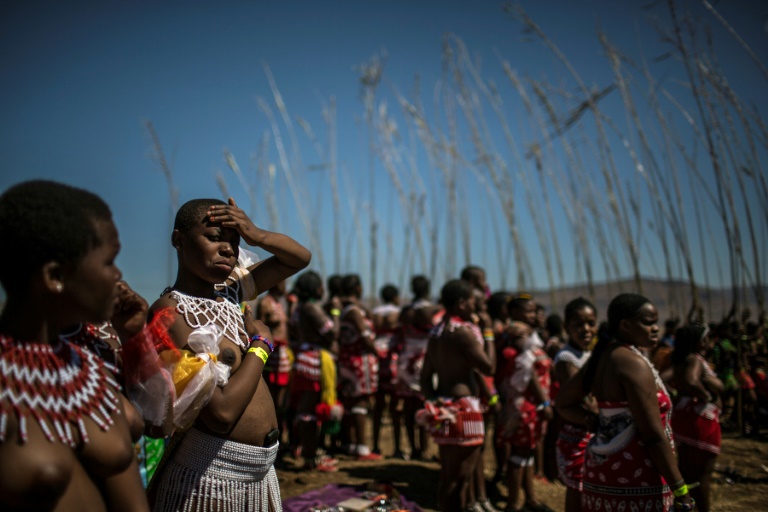
Thousands of young women and teenage girls will dance before the new king of South Africa’s Zulu nation on Saturday, defying critics of the tradition and a row over the legitimacy of the royal succession.

Every September, tens of thousands of women, known locally as maidens, descend on the royal palace in the mountain town of Nongoma in the southeast KwaZulu-Natal province, to perform a reed dance.

During the ceremony, each girl will present a tall reed to the new king which, legend has it, will wilt if the holder is not a virgin.

The ceremony is a traditional rite of womanhood, rooted historically in an occasion for the king to select new wives among his subjects.

The newly crowned head of South Africa’s largest ethnic group is the 47-year-old King MisuZulu Zulu, also known by his official title as MisuZulu kaZwelithini.

He was recognised as monarch at a traditional ceremony last month following the death last year of his father King Goodwill Zwelithini, who had reigned for 50 years.

A succession row involving two factions of the royal family rumbles on, however.

– First since Covid –

This year’s festivities are eagerly awaited — it will be the first time the dance will take place since the outbreak of the Covid-19 pandemic.

“I can’t wait for this weekend. I am so excited — it’s been a long time since we have all been together as girls,” Thembalami Dumakade, 23, told AFP.

Prior to the dance, the participants will have their genitalia inspected, a practice condemned by rights advocates who say it is demeaning and an invasion of privacy.

“The girls have the right to partake in the virginity testing if they want, it is their bodies. Those who are telling us our traditions are dated are entitled to their opinion,” said Nomagugu Ngobese, one of the virginity testers, told AFP by telephone.

“But it is our culture, we do not have to consult with anyone about it.”

Virginity is a precondition to partake in the dance.

This year’s event is also clouded by the ongoing succession battle.

Those opposed to King MisuZulu ascending the throne have warned of “bloodshed” if the reed dance goes ahead, according to local media reports.

– ‘Only one king’ –

“We have tight security on our side. Everything will go ahead as normal and we will be welcoming maidens from all corners of our country,” the royal family’s spokesman, Prince Thulani Zulu, told AFP.

“People are free to say what they want. It is a democracy after all. They can claim to be kings, but there is only one king”.

One faction of the royal family believes Misuzulu is the rightful heir as his late mother, Queen Mantfombi Dlamini Zulu the third queen consort and sister to Eswatini King Mswati III, was a royal princess.

But Prince Simakade, the late king’s first-born son who was born out of wedlock, has been championed by dissenting relatives by virtue of being the eldest son and therefore the rightful heir.

Simakade on Wednesday filed an urgent court application seeking to dethrone his half-brother, according to local media. 

The first-born son also challenged South African President Cyril Ramaphosa’s decision to recognise Misuzulu as the rightful Zulu monarch.

“I promise I will work to unite the Zulu nation,” MisuZulu, who has not addressed the succession tussle publicly, vowed during his coronation speech last month.

Biden to welcome S.Africa leader as Ukraine raises Africa priority

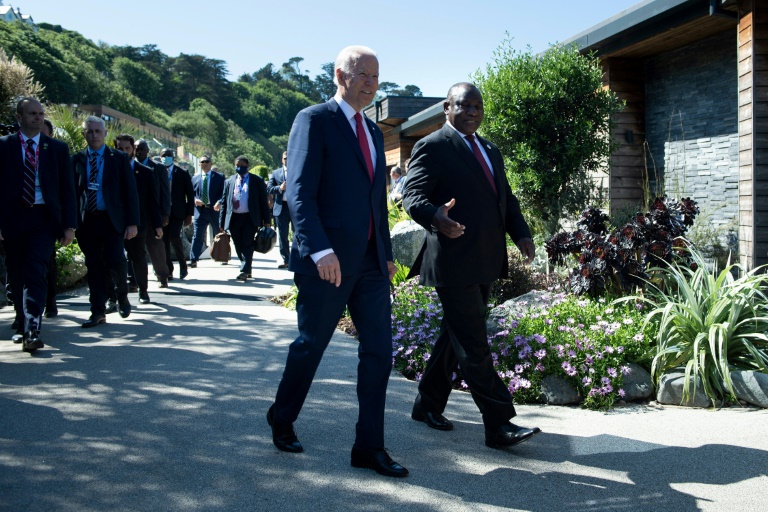
President Joe Biden on Friday will welcome South African leader Cyril Ramaphosa to the White House, part of a renewed US courting of the developing world power after its caution in condemning Russia.

The visit by Ramaphosa comes a month after US Secretary of State Antony Blinken made his own trip to South Africa, where he vowed that the United States will do more to listen to Africans.

Successive US administrations have focused much of their energy in Africa on countering the growing influence of China, which has become the continent’s dominant trading partner.

But Russia’s invasion of Ukraine has triggered a new front in the US battle for influence in Africa, where many nations have been reluctant to embrace the West in its campaign to punish and pressure Moscow.

“There are reasons for the perspectives that exist and one should never, I think, try to pretend that there aren’t histories,” said South Africa’s Foreign Minister Naledi Pandor.

She pointed to the former Soviet Union’s championing of anti-apartheid forces compared with periods of Western cooperation with South Africa’s former white supremacist regime.

“I think we’ve been fairly clear, in our view, that war doesn’t assist anyone and that we believe the inhumane actions we have seen against the people of Ukraine can’t be defended by anybody,” she said this week at the Council on Foreign Relations in Washington.

“But what we have said is that a lot of the public statements that are made by leading politicians are not assisting in ameliorating the situation, because the first prize must be to achieve peace.”

The United States has sought to highlight the invasion’s role in soaring food prices, as Ukraine was one of Africa’s largest suppliers of grain.

Russia has sought to blame food scarcities on Western sanctions, an argument dismissed by the United States, which says it is not restricting agricultural or humanitarian shipments.

– Common ground –

South Africa’s top diplomat broke with the usual polite bipartisanship of foreign dignitaries visiting Washington, not mincing words on Biden’s Republican predecessor Donald Trump, who notoriously referred to nations in the developing world with an epithet.

“We relate very well, I think probably better, with the Democrats than the Republicans,” she said. “You will recall how President Trump described Africa and no one has apologized for that as yet.”

Trump was the first US president in decades not to visit sub-Saharan Africa. Biden has not yet visited but has pledged a renewed interest, including with a summit of African leaders planned in Washington this December.

White House Press Secretary Karine Jean-Pierre said that Biden would speak to Ramaphosa about increasing trade and investment as well as efforts to combat climate change, a key priority for the US administration.

Like other developing nations, South Africa — whose eastern Mpumalanga province has one of the world’s largest concentrations of coal — argues that industrialized nations should bear the brunt of efforts to cut emissions due to their historic responsibility for climate change.

Wealthy nations at last year’s Glasgow climate conference promised $8.5 billion of financing to South Africa to transition away from coal.

Ramaphosa’s Washington visit comes amid political woes at home, three months before a party conference at which he will seek a new term.

The South African leader risks impeachment if a new independent panel established by parliament finds that he took part in an alleged cover-up of a heist at his luxury farmhouse.

S.African virgins to dance for new Zulu king amid succession row

Thousands of bare-breasted maidens will on Saturday dance before the new king of South Africa’s Zulu nation, defying criticism of this time-honoured event and a row over the legitimacy of the royal succession.

Every September, tens of thousands of young virgins descend on the royal palace in the mountain town of Nongoma in the southeastern KwaZulu-Natal province, to take part in the age-old reed dance.

The newly-crowned head of South Africa’s largest ethnic group is the 47-year-old King MisuZulu Zulu, also known by his official title as MisuZulu kaZwelithini.

He was recognised as monarch at a traditional ceremony last month following the death last year of his father King Goodwill Zwelithini, who had reigned for 50 years.

However a succession row involving two factions of the royal family rumbles on.

During the dance ceremony, each girl will present a tall reed to the new king which, legend has it, will wilt if the holder is not pure.

The ceremony is a traditional rite of womanhood, rooted historically in an occasion for the king to select new wives among his subjects.

This year’s festivities are eagerly awaited — it will be the first time the dance will take place since the outbreak of the Covid-19 pandemic.

“I can’t wait for this weekend. I am so excited — it’s been a long time since we have all been together as girls,” Thembalami Dumakade, 23, told AFP.

Prior to the dance, the girls will have their genitalia inspected, a tradition that has previously drawn an outcry from rights advocates who say it is demeaning and an invasion of privacy.

“The girls have the right to partake in the virginity testing if they want, it is their bodies. Those who are telling us our traditions are dated are entitled to their opinion,” said Nomagugu Ngobese, one of the virginity testers, who also spoke to AFP by phone. 

“But it is our culture, we do not have to consult with anyone about it.”

– ‘Only one king’ –

This year’s event is also been clouded by the ongoing succession battle.

Those opposed to King MisuZulu ascending the throne have warned of “bloodshed” if the reed dance goes ahead, according to local media reports. 

“We have tight security on our side. Everything will go ahead as normal and we will be welcoming maidens from all corners of our country,” the royal family’s spokesman, Prince Thulani Zulu, told AFP.

“People are free to say what they want, it is a democracy after all. They can claim to be kings, but there is only one king”.

One faction of the royal family believes Misuzulu is the rightful heir as his late mother, Queen Mantfombi Dlamini Zulu the third queen consort and sister to Eswatini King Mswati III, was a royal princess.

But Prince Simakade, the late king’s first-born son who was born out of wedlock, has been championed by dissenting members of the family by virtue of being the eldest son and therefore the rightful heir.

Simakade on Wednesday filed an urgent court application seeking to dethrone his half-brother, according to local media. 

The first-born son also challenged South African President Cyril Ramaphosa’s decision to recognise Misuzulu as the rightful Zulu monarch.

“I promise I will work to unite the Zulu nation,” MisuZulu, who has not addressed the succession tussle publicly, vowed during his coronation speech last month.

Cheika dreaming of championship ahead of Boks clash

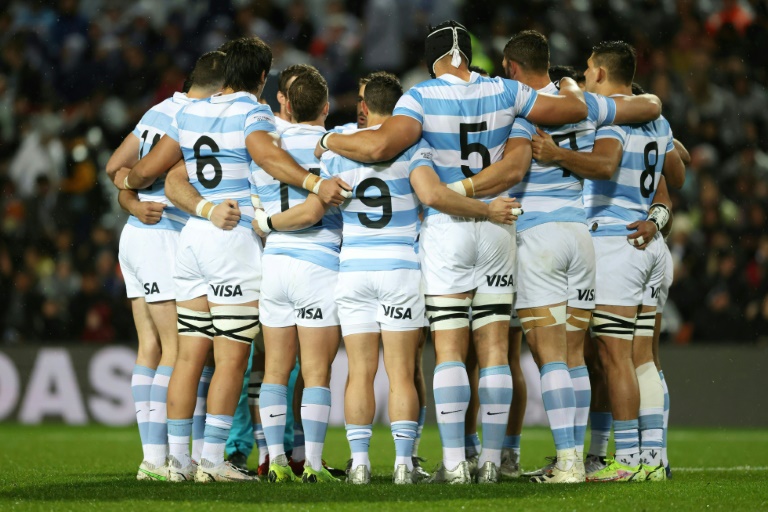
When Michael Cheika took over as coach of Argentina he said his main aim was to build a team for next year’s Rugby World Cup, yet ahead of Saturday’s clash with South Africa in Buenos Aires, he is still dreaming of winning The Rugby Championship.

The Pumas began this week bottom of the table but only a point off the leaders New Zealand, who thrashed them 53-3 in their previous outing.

Ahead of that match, though, Argentina had been top of the standings with all four sides winning two and losing two of their opening four games.

It’s a mark of how close this season’s championship has been.

The Pumas are now five points behind the All Blacks, who earned a controversial and dramatic last gasp 39-37 win in Australia on Thursday, having played a game less.

But all four sides can still win the competition.

“It is up to us to keep The Rugby Championship open and alive,” said Australian Cheika after making seven changes to his team.

Two weeks ago, Argentina suffered their heaviest ever Rugby Championship defeat to the All Blacks, a week after recording their first ever victory in New Zealand.

Cheika insisted there will be no hangover from their hiding.

“When we got back to work at the start of the week, everyone had a good attitude, very positive and have concentrated on the strategy for the game,” he said.

“It will be important to impose our way of playing. South Africa are a lot different to play against than Australia and New Zealand. It will be a different dynamic.”

– ‘Tough players’ –

With New Zealand playing at home to Australia next week, South Africa scrum-half Faf De Klerk knows that realistically his side will need to win their final two matches against Argentina to have any chance of finishing top.

“All the teams are aware of how close the log is in the competition, so we know that we probably need to get five points in (each of) our next two matches,” said De Klerk this week.

“If we play to our potential, hopefully we can achieve that this weekend, and then we’ll see next week exactly what we need to do in Durban.”

Springbok coach Jacques Nienaber named an unchanged line-up following their bonus point 24-8 win in Australia last time out.

He made three changes to the bench, bringing in Harlequins’ wrecking ball Andre Esterhuizen, who is looking forward to a midfield battle should he come on.

“They have good centres. I’ve played against Jeronimo de la Fuente and Matias Moroni and they are tough players who run good lines and are solid on defence,” he said.

De la Fuente starts after recovering from injury while Moroni drops to the bench.

Argentina have only won three of their 32 matches against the Boks, the last of those coming in 2018.

They have had four successive defeats since.

But in this tournament they have already recorded their record victory over Australia (48-17) and their first win away to New Zealand (24-18) so confidence is high.

Teams (15-1):

Argentina: 

Juan Cruz Mallia; Emiliano Boffelli, Jeronimo De La Fuente, Matias Orlando, Lucio Cinti; Santiago Carreras, Gonzalo Bertranou; Pablo Matera, Marcos Kremer, Juan Martin Gonzalez; Tomas Lavanini, Matias Alemanno; Eduardo Bello, Julian Montoya (capt), Nahuel Tetaz Chaparro

Replacements: Agustin Creevy, Thomas Gallo, Joel Sclavi, Guido Petti, Rodrigo Bruni, Tomas Cubelli, Benjamin Urdapilleta, Matias Moroni

Coach: Michael Cheika (AUS)

South Africa: 

Willie le Roux; Canan Moodie, Jesse Kriel, Damian de Allende, Makazole Mapimpi; Damian Willemse, Jaden Hendrikse; Jasper Wiese, Franco Mostert, Siya Kolisi (capt); Lood de Jager, Eben Etzebeth; Frans Malherbe, Malcolm Marx, Steven Kitshoff

Replacements: Deon Fourie, Ox Nche, Trevor Nyakane, Elrigh Louw, Kwagga Smith, Faf De Klerk, Andre Esterhuizen, Frans Steyn

Coach: Jacques Nienaber (RSA)

Referee: James Doleman (NZL)

New UNICEF ambassador seeks to give louder voice to climate change victims

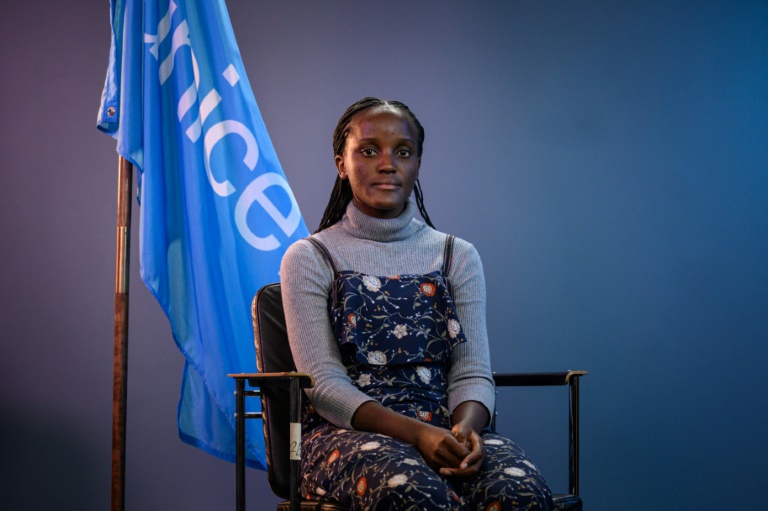
Ugandan climate activist Vanessa Nakate recently traveled to the drought-ravaged Horn of Africa to hear from children suffering from starvation. The next day she learned that one of the boys she met had died.

It is for such children, whose lives have been shattered by the global climate crisis, that Nakate, UNICEF’s newest Goodwill Ambassador, has set out to make their voices heard.

“I’m hoping to continue doing the same thing to amplify, and really platform, the stories of the children … that are suffering, because of the climate crisis,” Nakate, who is 25, told AFP in an interview.

Inspired by Sweden’s climate crusader Greta Thunberg, several years ago Nakate founded the Rise Up Climate Movement in her native Uganda and has spoken at prestigious international climate events.

On Thursday, she was appointed the newest Goodwill Ambassador for UNICEF, the United Nations’ children’s agency, joining recent high-profile supporters such as actor Priyanka Chopra Jonas, singer Katy Perry and Syrian refugee and education activist Muzoon Almellehan.

“In my journey of activism, I’ve always told myself, and I’ve always believed that every activist has a story to tell,” Nakate said. “And every story has a solution to give and every solution has a life to change.”

The activist says children and women suffer the most from global warming and her mission is make their voices heard — but not to speak on their behalf.

“I cannot say that I can give a voice to anyone, because I believe everyone has their own distinct voice,” she added.

“But the question is, who is listening to what we are saying? Who is paying attention?”

– ‘Roof for all of us’ –

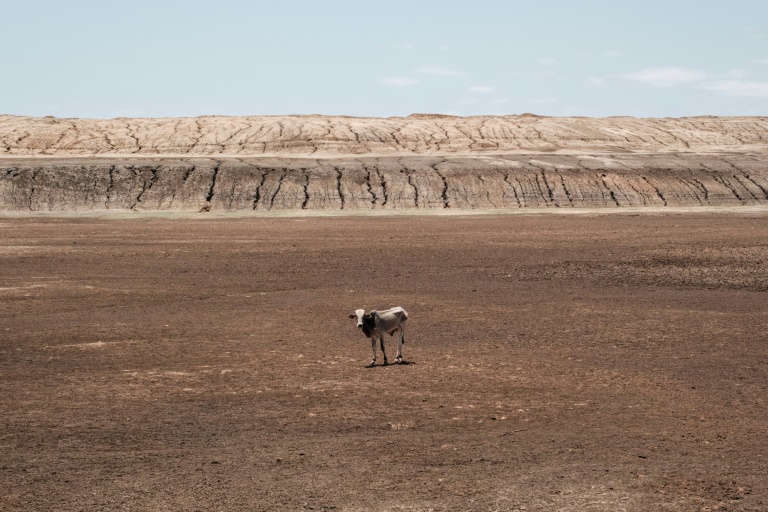
Last week, Nakate visited UNICEF-run hospitals and nutrition centers in Turkana, a Kenyan region in the Horn of Africa hit by devastating drought.

There she witnessed the tragedy firsthand.

“I got to meet many children suffering from severe, acute malnutrition, because of this drought,” Nakate said of the trip. “One of the children that I got to meet that day, I got to learn the following morning that he had passed.”

UNICEF says about half of the world’s children — roughly 1 billion — live in one of 33 countries classified as “extremely high risk” due to climate change impacts.

Scientists say that droughts, floods, storms and heat waves will only get stronger and more frequent due to global warming, and Nakate is frustrated that governments around the world, busy with the war in Ukraine and the Covid-19 pandemic, are not doing enough to save the planet.

“It can be discouraging to see that the world is not paying the attention that it should to climate issues, it can be very frustrating,” said the activist.

“Leaders especially need to understand that Earth is a home for all of us, is like that roof for all of us. And we have to ensure that the entire roof is well and no part is leaking,” Nakate said. “Because any leak in a part of a roof will eventually affect everyone in that house.”

Kerry urges rich-poor unity on climate effort ahead of UN talks

US climate envoy John Kerry on Thursday urged African countries to help overcome divisions between rich and poor nations at the upcoming UN COP27 talks.

Meeting African environment ministers, Kerry acknowledged the historic role of wealthy countries in stoking climate change but said tackling today’s emissions was a global problem.

“There are some folks unfortunately who are willing to sort of allocate responsibility in a sort of historical… way,” he said at talks in the Senegalese capital Dakar.

“(They are) pointing a finger at us — ‘what you guys created, you guys need to clear’,” Kerry said.

“Well, guess what: Mother Nature does not measure where the emissions come from — they don’t have a label of one country or another.”

The United States is the world’s richest country and its second biggest emitter of heat-trapping carbon dioxide.

But the first place goes to China, which joins developing economies in a negotiating bloc at the UN climate talks.

Kerry pointed to the worsening impact from climate change on Africa. 

“(The) climate crisis here in Africa is more acute than it is in some other parts of the world,” Kerry said.

“This year has seen devastating floods in South Africa, Mozambique and Uganda that just killed hundreds and displaced tens of thousands.

“Meanwhile, the Horn of Africa is in its fourth year of drought, with more than 18 million suffering from food insecurity as a consequence.”

– Money and emissions –

COP27 — the 27th Conference of the Parties to the UN Framework Convention on Climate Change (UNFCCC) — will take place at the Egyptian resort of Sharm el-Sheikh from November 6-18.

The annual climate parlays are dominated by often fierce debate on national pledges on emissions curbs and on funding.

Wealthy countries have previously promised billions of dollars to help poorer nations avert carbon emissions and build resilience against climate change.

On Wednesday, a bloc of the world’s poorest countries said they would urge COP27 to push ahead with another envisioned area of climate finance — a fund to compensate vulnerable nations for damage such as floods and rising seas.

Ministers and experts from the 46-nation Least Developed Countries (LDC) bloc, also meeting in Dakar, said setting up a funding mechanism for the proposed fund was of “crucial importance.”

Kerry took a swing at former president Donald Trump, who ditched the UN’s landmark 2015 agreement on climate change.

“President (Joe) Biden has brought unprecedented resources to the table, joining the Paris Agreement again on Day One after the miserable decision of a president who didn’t know the science,” he said.

Kerry, a former secretary of state, also pointed to the United States’ help for Africa, which last year amounted to $8.2 billion in humanitarian and climate adaptation aid.

“I will say to you bluntly: the developed world needs to do more… but we need you to also be at the table to do the things that make the difference to be able to deploy the funding and make it work,” he said.

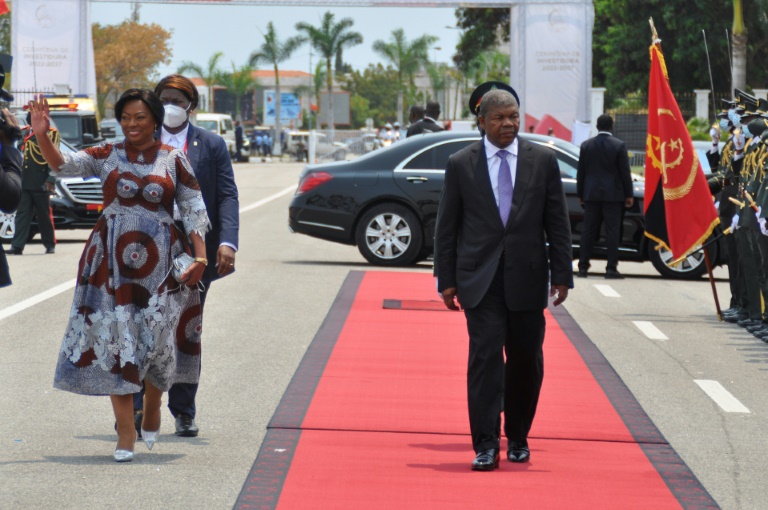
Angola's Lourenco eyes further reforms as sworn in

Angolan President Joao Lourenco vowed to push ahead with economic reform and hailed voters’ “tolerance” as he was sworn in on Thursday for a second term after a divisive electoral win.

Amid tight security, Lourenco pledged to be “president for all Angolans” at a colourful ceremony held at the historic Praca da Republica square in the capital Luanda.

“Congratulations for the patriotism and high degree of tolerance, and civility shown in what are already considered the most disputed general elections in the history of the young Angolan democracy,” he said in his inauguration speech.

“Angolans have demonstrated to the world that at crucial moments, they know how to make the best choices and choose the future of their country with great responsibility”.

He said that by electing him and his party, Angola had chosen “continuity” and will be guaranteed “stability” as he pointed to further economic liberalisation in a country ruled since independence by a historically socialist party.

He promised to push ahead with reforms to encourage the private sector, expand the offer of goods and services and fight youth unemployment. 

“We as a country have a clear option for democracy and a market economy.”

Security forces set up a heavy cordon around the venue, a move which the main opposition party, UNITA, said aimed at stifling dissent.

The 68-year-old former general returned to power after elections on August 24 gave his Popular Movement for the Liberation of Angola (MPLA) a thin majority, winning just 51.17 percent of the vote.

It was the MPLA’s poorest showing in the oil-rich country it has controlled since independence from Portugal in 1975.

Lourenco also promised to increase wages, including for the armed forces — receiving cheers from the crowd.  

His new deputy, Esperanca Maria da Costa, 61, a college professor and biologist, was also sworn in, becoming Angola’s first female vice president.

The guest list for the swearing-in ceremony was limited to some 15,000 selected Angolans. Around 50 foreign leaders or their representatives were also invited.

Many Angolans stayed at home, with less traffic on the streets than usual and fewer vendors hawking their wares.

– UNITA protests –

Opposition parties and civic groups say the vote was marred by irregularities, but a legal challenge by UNITA to overturn the result was tossed out.

Observers from other parts of Africa praised the peaceful conduct of the polls but raised concerns over press freedom and the accuracy of the electoral roll. 

UNITA — a former rebel movement which fought a bitter 27-year civil war against the MPLA government — notched up 43.95 percent of the vote, up from 26.67 percent in 2017.

Under its charismatic leader Costa Junior, 60, the party proved popular in urban areas and among young voters eager for economic change. 

It did particularly well in the capital, where it won a majority for the first time.

Costa Junior did not attend the inauguration and has called for protests. 

Lourenco first came to power in 2017 when, as defence minister, he took over from long-time ruler Jose Eduardo dos Santos.

He was bequeathed a country deep in recession and riddled by corruption and nepotism.

He swiftly turned on his predecessor, launching an anti-graft campaign targeting dos Santos’s family and friends, which some critics say was a political stunt. 

He also embarked on an ambitious reform programme to lure foreign investors and diversify the economy. 

But that has so far failed to brighten the prospects of many of Angola’s 33 million people who are mired in poverty.

“The president speaks well but always makes a lot of promises. We only want our lives to improve, better wages, food on the table, access to schools and hospitals, more jobs,” said Luiza Basic, a school teacher in Luanda.

Dos Santos died in Spain in July. State funerals for the late strongman were held in August in the same square where the inauguration took place.

Analysts see little change between Lourenco and his predecessor.

“There is not much difference between (the) two… in terms of respect for human rights and fundamental freedoms,” said Borges Nhamirre, a researcher at the Pretoria-based think-tank Institute for Security Studies.

Close Bitnami banner
Bitnami