Africa Business

Joao Lourenco: Former general back at the helm in Angola

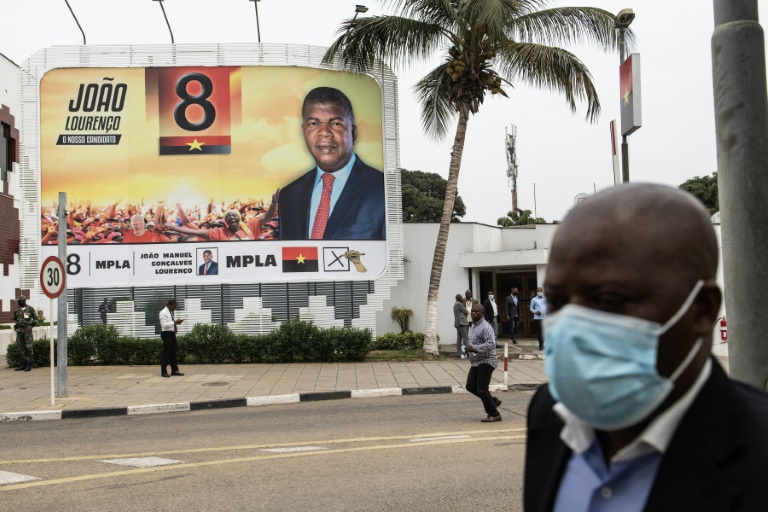
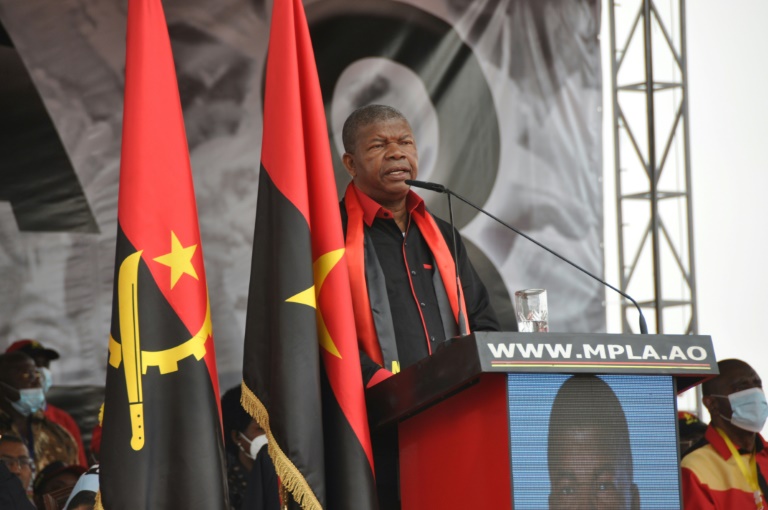
A general who became a graft buster and turned on his political patron, Angolan President Joao Lourenco was sworn in for a second term on Thursday but faces dwindling popularity in a country struggling with problems.

Nicknamed JLo, the 68-year-old secured a new five-year tenure in the tightest-ever vote held in the oil-rich country.

Lourenco leads the People’s Movement for the Liberation of Angola (MPLA) party, which has ruled for nearly five decades.

In the August 24 ballot, the MPLA suffered its worst performance while its long-term rival, UNITA, surged.

Lourenco’s victory was declared just 24 hours after he buried his predecessor, long-time ruler Jose Eduardo dos Santos, who died in Spain in July.

Handpicked by dos Santos, Lourenco took the helm in 2017. That year his party won with a comfortable 61 percent of the vote. This time he notched up just 51 percent.

In his acceptance speech before a crowd of selected delegates in the oceanside capital, Lourenco recycled his old promises of economic reforms and job creation.

But he made no mention of his long touted anti-graft campaign.

The election outcome reflected fading support for the historic ruling party, especially among young people clamouring for jobs and a better life. 

– Political purgatory –

Squared-faced with small-eyes, Joao Manuel Goncalves Lourenco was born in Lobito in western Angola. He often displays an emotionless face when in public.

As a young man, he fought the colonial power Portugal and then after independence took part in the civil war that erupted between the MPLA government and UNITA rebels.

Lourenco studied in the former Soviet Union, which trained many rising young African nationalists during decolonisation.

He became political chief of the armed wing of the MPLA in the civil war — a Cold War proxy conflict that drew in Cuban forces to fight alongside the MPLA, while CIA-backed militias did battle against them.

The ex-artillery general ascended through the MPLA hierarchy, leading the party in parliament before becoming deputy speaker.

Yet his ambition almost ended his career.

Unable to hide his angling for the top job, he was sidelined by dos Santos around the turn of the century. 

In 2014, he was brought back from the cold and appointed defence minister. Three years later he eased himself into the top job.

– Anti-graft drive –

After winning the 2017 elections, Lourenco quickly turned on his predecessor, starting an anti-corruption drive to recoup the billions allegedly embezzled by dos Santos’ family.

Inheriting an economy deep in recession, he launched ambitious reforms to diversify government revenue and privatise state-owned firms.

Lourenco has trumpeted his successes, but many of Angola’s 33 million people still wallow in poverty.

His anti-graft push has also been criticised as selective and politically motivated, fuelling divisions within the MPLA.

Dos Santos’s death worsened his woes, triggering a public spat with the veteran revolutionary leader’s children — several of whom face graft investigations. 

Even so, Lourenco’s change in tack from the previous regime has won praise abroad. 

He has become the go-to mediator in Africa — whether dealing with the crisis in the Central Africa Republic or brokering talks between the Democratic Republic of Congo and Rwanda.

But analysts say he is following his predecessor’s footsteps in cracking down on dissent at home.

He is married to Ana Dias, a former planning minister who also represented Angola at the World Bank. They have six children.

Angola's Lourenco eyes further reforms as sworn in

Angolan President Joao Lourenco vowed to push ahead with economic reform on Thursday as he was sworn in for a second term after a divisive electoral win.

Amid tight security, Lourenco pledged to be “president for all Angolans” at a colourful ceremony on historic Praca da Republica square in the capital Luanda.

He pointed to further economic liberalisation in a country ruled since independence by a historically socialist party.

He promised to push ahead with reforms to encourage the private sector, expand the offer of goods and services and fight youth unemployment.

“Angolans show the world that at crucial moments they can make the better choice,” Lourenco declared. 

“We as a country have a clear option for democracy and a market economy.”

Security forces set up a heavy cordon around the venue, which the main opposition party, UNITA, said aimed at stifling dissent.

The 68-year-old former general returned to power after elections on August 24 gave his Popular Movement for the Liberation of Angola (MPLA) a thin majority, winning just 51.17 percent of the vote.

It was the MPLA’s poorest showing in the oil-rich country it has controlled since independence from Portugal in 1975.

In his inauguration speech, Lourenco also promised to increase wages, including for the armed forces — receiving cheers from the crowd.  

His new deputy, Esperanca Maria da Costa, 61, a college professor and biologist, was also sworn in, becoming Angola’s first female vice president.

The guest list was limited to some 15,000 selected Angolans. Around 50 foreign leaders or their representatives were invited, State Minister Adao de Almeida told reporters.

Many Angolans stayed at home, with less traffic on the streets and fewer vendors hawking their wares.

– UNITA protests –

Opposition parties and civic groups say the vote was marred by irregularities, but a legal challenge by UNITA to overturn the result was tossed out.

Observers from other parts of Africa praised the peaceful conduct of the polls but raised concerns over press freedom and the accuracy of the electoral roll. 

UNITA — a former rebel movement which fought a bitter 27-year civil war against the MPLA government — notched up 43.95 percent of the vote, up from 26.67 percent in 2017.

Under its charismatic leader Costa Junior, 60, the party proved popular in urban areas and among young voters eager for economic change. 

It did particularly well in the capital, where it won a majority for the first time.

Costa Junior did not attend the inauguration and has called for protests. 

Lourenco first came to power in 2017 when, as defence minister, he took over from long-time ruler Jose Eduardo dos Santos.

He was bequeathed a country deep in recession and riddled by corruption and nepotism.

He swiftly turned on his predecessor, launching an anti-graft campaign targeting dos Santos’s family and friends, which some critics say was a political stunt. 

He also embarked on an ambitious reform programme to lure foreign investors and diversify the economy. 

But that has so far failed to brighten the prospects of many of Angola’s 33 million people who are mired in poverty.

“The president speaks well but always makes a lot of promises. We only want our lives to improve, better wages, food on the table, access to schools and hospitals, more jobs,” said Luiza Basic, a school teacher in Luanda.

Dos Santos died in Spain in July. State funerals for the late strongman were held in August in the same square where the inauguration took place.

Analysts see little change between Lourenco and his predecessor.

“There is not much difference between (the) two… in terms of respect for human rights and fundamental freedoms,” said Borges Nhamirre, a researcher at the Pretoria-based think-tank Institute for Security Studies.

Benin bronzes get final Berlin show before return

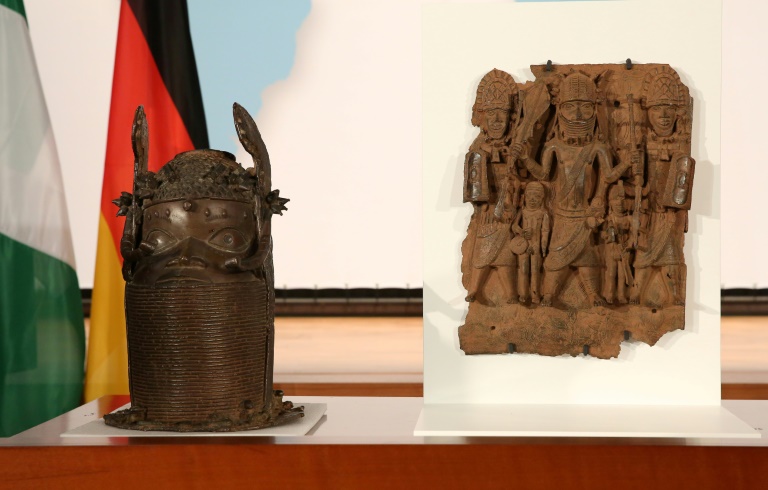
Stolen during the colonial era, dozens of Benin bronzes that once decorated the royal palace of the Kingdom of Benin will go on show for one last time in Berlin from Saturday before being repatriated to Nigeria.

The renowned pieces of African art and their tumultuous journey up to the exhibition at the Humboldt Museum speak to Germany’s gradual reckoning with the colonial era and the injustices of the past.

The move to return some of the bronzes is the latest in a series of steps taken by Berlin to try to take responsibility for the crimes of the colonial era, including the official recognition in May 2021 of a genocide perpetrated by Germany in Namibia.

Among the items being exhibited are a pair of thrones and a commemorative bust of the monarch of the Kingdom of Benin, in modern-day Nigeria. 

Two rooms in the sprawling museum are being dedicated to the art and the history of the kingdom, an exhibition realised “in close cooperation with partners in Nigeria”, according to the German side.

The removal of the precious objects is explained in the gallery, while educational workshops are also planned around the display.

“When it comes to colonial injustice, I think we’re on the right path,” said Hermann Parzinger, president of the Prussian Cultural Heritage Foundation, which oversees the national museums in the German capital.

“We’re nowhere near the end,” Parzinger added, but the museums were open to continuing on their journey to better understand the past “together” with international partners.

– ‘Lucid view’ –

Thousands of Benin bronzes, metal plaques and sculptures are now scattered around European museums after being looted by the British at the end of the 19th century.

But many museums have begun looking at restituting the artworks.

“Just like the Netherlands and Belgium, Germany has established a museums policy that has a lucid view of the colonial past,” French historian Pascal Blanchard, a specialist on the era, told AFP.

The Africa museum in Tervuren, near Brussels in Belgium, which reopened at the end of 2018, claims to take a “critical look” at the past and the history of the objects collected by Belgian King Leopold II, who for a long time kept the Congo as his private property in the 19th century.

Likewise, the Tropenmuseum in Amsterdam takes a long look at the Netherlands’ colonial past.

Unlike some countries, such as France, Germany lost its empire after its defeat in World War One and as such does not have a significant community of people repatriated from Africa.

“It does not play politically, which makes it easier to come to terms with the past,” said Blanchard. 

– Benin City –

Nonetheless, Germany has been the target of criticism in recent years over the origin of many of the objects in its museums, following in the wake of a greater public reckoning with racism.

The outrage grew louder with the opening of the first part of the new Humboldt Museum in December 2020, which is housed in a partially rebuilt Prussian palace.

The highly symbolic location — the former residence of the Hohenzollern dynasty, who oversaw Germany’s colonial adventures — was set to exhibit objects from the period.

Berlin’s Ethnological Museum currently holds 530 items that were taken from the Kingdom of Benin, including some 440 bronzes, considered to be the second-largest collection, behind the British Museum in London.

According to the Berlin museum’s director, Lars-Christian Koch, a portion of the objects will soon be returned, another third will be kept as a loan, and the rest, not on display, will be studied by researchers.

Germany is not the only country to begin returning stolen artefacts. In November 2021, France returned 26 artefacts from the royal treasures of Abomey to the country of Benin, next to Nigeria.

The pressure is also growing on the British Museum, which has around 700 bronzes. It has long argued that its vast trove of foreign artefacts, such as the Elgin Marbles taken from the Parthenon in Athens, are best housed there.

The repatriation of the Benin bronzes from Germany has been a long time coming, according to historian Benedicte Savoy. 

“The requests for return go back to independence in the 1960s. They have been silenced, refused, forgotten for years,” she told AFP.

Nigeria is planning to build a museum in Benin City, in the south of the country, to bring together the works on their return.

S.African panel named to probe Ramaphosa over farm heist

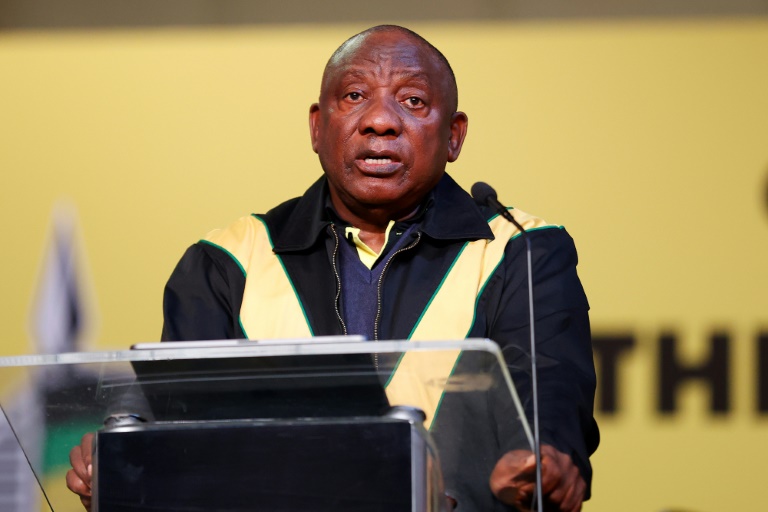
South Africa’s parliament has appointed an independent panel to determine whether President Cyril Ramaphosa should face impeachment over the alleged cover-up of a heist at his luxury farmhouse.

National Assembly speaker Nosiviwe Mapisa-Nqakula named the panel in a statement overnight Wednesday. 

It comprises ex-chief justice Sandile Ngcobo, a former prominent high court judge and a university professor.

To remove a president requires a two-thirds majority vote in the National Assembly. Ramaphosa’s African National Congress (ANC) party commands more than two-thirds of the seats, however.

A small opposition party, the African Transformation Movement (ATM), set down the motion that led to the creation of the panel.

The scandal around Ramaphosa erupted in June after South Africa’s former national spy boss, Arthur Fraser, filed a complaint with the police.

He alleged that robbers broke into the president’s farm in the northeast of the country, where they stole $4 million in cash stashed in furniture. 

Ramaphosa hid the robbery from the authorities and instead organised for the robbers to be kidnapped and questioned, and then bribed into silence, Fraser said. 

The president has acknowledged a burglary but denies the accusations of kidnapping and bribery, saying he reported the break-in to the police. 

He has also disputed the amount of money involved, and said the cash came from legitimate sales of game from his animal-breeding farm.

In June, Ramaphosa suspended the country’s graft ombudswoman, a day after she launched a probe into the burglary.

Last week, the High Court dismissed the suspension, saying the “hurried nature” of the move “may have been retaliatory”.

Pressure has been piling on Ramaphosa ahead of an ANC conference in December where he is expected to seek re-election.

The panel will have 30 days to report its findings.

Poorest nations to push on compensation at climate talks

The world’s poorest countries say they will insist that the UN’s upcoming climate talks push ahead with proposals for a fund to compensate vulnerable nations for climate-inflicted damage.

Ministers and experts from the 46-nation Least Developed Countries (LDC) bloc, meeting in Dakar, said their countries were most exposed to climate impact but least to blame for the carbon emissions that cause it.

In a statement issued late Wednesday ahead of the November climate talks, they said that setting up a funding mechanism for loss and damage was of “crucial importance.”

They also reiterated a call for “all parties, particularly major emitters” to make swift and deep cuts in carbon emissions, and for rich economies to honour past pledges on climate aid.

COP27 — the 27th Conference of the Parties to the UN Framework Convention on Climate Change (UNFCCC) — runs in the Egyptian resort of Sharm el-Sheikh from November 6-18.

The annual parlays are dominated by often fierce debate on national pledges on emissions curbs and on funding.

Wealthy countries have previously promised billions of dollars to help poorer nations avert carbon emissions and build resilience against climate change.

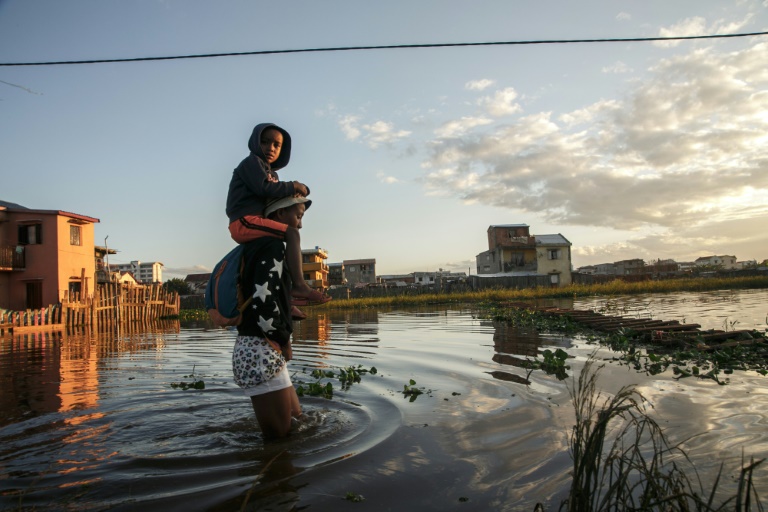
The LDC bloc, gathering countries mainly from Africa and Asia, is campaigning in particular for compensation for vulnerable countries which suffer from climate-related damage such as floods and rising seas.

It wants the upcoming talks to establish a mechanism to provide funding.

“Countries are being left to fend for themselves” in the face of climate damage, Senegalese Environment Minister Abdou Karim Sall told reporters.

“It is imperative for a fund to be set up which takes care of loss and damage, especially for least developed countries.”

The pre-COP meeting among LDC representatives in the Senegalese capital was to be followed by talks on Thursday among African environment ministers, attended by US climate envoy John Kerry.

Benin bronzes get final Berlin show before return

Stolen during the colonial era, dozens of Benin bronzes that once decorated the royal palace of the Kingdom of Benin will go on show for one last time in Berlin from Saturday before being repatriated to Nigeria.

The renowned pieces of African art and their tumultuous journey up to the exhibition at the Humboldt Museum speak to Germany’s gradual reckoning with the colonial era and the injustices of the past.

The move to return some of the bronzes is the latest in a series of steps taken by Germany to try to take responsibility for the crimes of the colonial era, including the official recognition in May 2021 of a genocide perpetrated by Germany in Namibia.

Among the items being exhibited are a pair of thrones and a commemorative bust of the monarch, which used to decorate the walls of the royal palace in Benin city, in modern-day Nigeria. 

Two rooms in the sprawling museum are being dedicated to the art and the history of the Kingdom of Benin, an exhibition realised “in close cooperation with partners in Nigeria”, according to the German side.

The removal of the precious objects is explained in the gallery, while educational workshops are also planned around the display.

Thousands of Benin bronzes, metal plaques and sculptures are now scattered around European museums after being looted by the British at the end of the 19th century.

The recognition of the colonial injustices and the subsequent return of the items “will continue to define our work in the future,” Hermann Parzinger, president of the Prussian Cultural Heritage Foundation, which oversees the national museums in the German capital, said in a statement.

– ‘Lucid view’ –

“Just like the Netherlands and Belgium, Germany has established a museums policy that has a lucid view of the colonial past,” French historian Pascal Blanchard, a specialist on the era, told AFP.

The Africa museum in Tervuren, near Brussels in Belgium, which reopened at the end of 2018, claims to take a “critical look” at the past and the history of the objects collected by Belgian King Leopold II, who for a long time kept the Congo as his private property in the 19th century.

Likewise, the Tropenmuseum in Amsterdam takes a long look at the Netherlands’ colonial past.

Unlike some countries, such as France, Germany lost its empire after its defeat in World War One and as such does not have a significant community of people repatriated from Africa.

“It does not play politically, which makes it easier to come to terms with the past,” said Blanchard. 

– Benin City –

Nonetheless, Germany has been the target of criticism in recent years over the origin of many of the objects in its museums, following in the wake of a greater public reckoning with racism.

The outrage grew louder with the opening of the first part of the new Humboldt Museum in December 2020, which is housed in a partially rebuilt Prussian palace.

The highly symbolic location — the former residence of the Hohenzollern dynasty, who oversaw Germany’s colonial adventures — was set to exhibit objects from the period.

Berlin’s Ethnological Museum currently holds 530 items that were taken from the Kingdom of Benin, including some 440 bronzes, considered to be the largest collection behind the British Museum in London.

According to the Berlin museum’s director, Lars-Christian Koch, a portion of the objects will soon be returned, another third will be kept as a loan, and the rest, not on display, will be studied by researchers.

Germany is not the only country to begin returning stolen artefacts. In November 2021, France returned 26 artefacts from the royal treasures of Abomey to the country of Benin, next to Nigeria.

The pressure is also growing on the British Museum, which has around 700 bronzes. It has long argued that its vast trove of foreign artefacts, such as the Elgin Marbles taken from the Parthenon in Athens, are best housed there.

The repatriation of the objects was a long time coming in the opinion of historian Benedicte Savoy. 

“The requests for return go back to independence in the 1960s. They have been silenced, refused, forgotten for years,” she told AFP.

Nigeria is planning to build a museum in Benin City, in the south of the country, to bring together the works on their return.

Angola's Lourenco is to be sworn in after disputed win

Angolan President Joao Lourenco is to be sworn in for a second term on Thursday amid tight security after a disputed electoral win last month.

The inauguration will be held on the historic palm tree-lined Praca da Republica square in the centre of the capital, Luanda.

Security forces set up a heavy cordon around the venue ahead of the ceremony, AFP correspondents saw, which the main opposition party said was aimed at stifling dissent.

Around 20 military tanks were stationed at a large traffic circle, around a kilometre from the square.

Large numbers of police and military forces had started patrolling the streets on the eve of the ceremony.

“This set up aims to intimidate citizens who want to demonstrate against the election results on the day of the inauguration of a president without legitimacy,” the National Union for the Total Independence of Angola (UNITA) said in a statement.

The guest list for the ceremony is strictly by invitation and limited to some 15,000 selected Angolans and 50 foreign heads of state and government, State Minister Adao de Almeida told reporters.

Lourenco, 68, returned to power after the August 24 vote gave his Popular Movement for the Liberation of Angola (MPLA) a thin majority, winning just 51.17 percent of the votes.

The vote was to choose members of parliament, where the leader of largest party automatically ascends to the presidency.

It was the MPLA’s poorest showing in the oil-rich African country it has controlled since independence from Portugal in 1975.

UNITA — a former rebel movement which fought a bitter 27-year civil war against the MPLA government — made significant gains, earning 43.95 percent of the vote, up from 26.67 percent in 2017.

Opposition parties and civic groups say the vote was marred by irregularities. 

UNITA disputed the results in court but its appeal was tossed out.

“Tomorrow I will stay at home. There are too many police forces around town,” Joao, a high school student who only gave his first name, said Wednesday at a bus stop on the outskirts of Luanda.

– ‘President of all’ –

Under its charismatic leader Costa Junior, 60, UNITA has proved popular in urban areas and among young voters eager for economic change. 

It did particularly well in the capital, where it won a majority for the first time. 

The MPLA instead lost its two-thirds parliamentary majority with its seats dropping to 124 from 150. 

Lourenco struck a conciliatory tone after the vote, pledging to promote “dialogue” and be the “president of all Angolans”.

But Costa Junior has said he will skip the inauguration and promised protests against the result of the vote, but has said his party will join the new parliament.

Foreign observers from other parts of Africa praised the peaceful conduct of the polls but raised concerns over press freedom and the accuracy of the electoral roll. 

The former general first came to power in 2017 when he took over from long-time ruler Jose Eduardo dos Santos, who bequeathed a country deep in recession and riddled by corruption and nepotism.

Lourenco swiftly turned on his predecessor, launching an anti-graft campaign targeting his family and friends, which critics say was a political stunt. 

He also embarked on an ambitious reform programme to lure foreign investors and diversify the economy. 

But that has so far failed to brighten the prospects of many of Angola’s 33 million people who are mired in poverty.

Dos Santos died in Spain in July. State funerals for the late strongman were held in August in the same square where Lourenco is to be sworn in.  

Analysts see little change between Lourenco and his predecessor.

“There is not much difference between two… in terms of respect for human rights and fundamental freedoms,” said Borges Nhamirre, a researcher at the Pretoria-based think-tank Institute for Security Studies.

Fuel prices jump in Kenya after subsidies cut

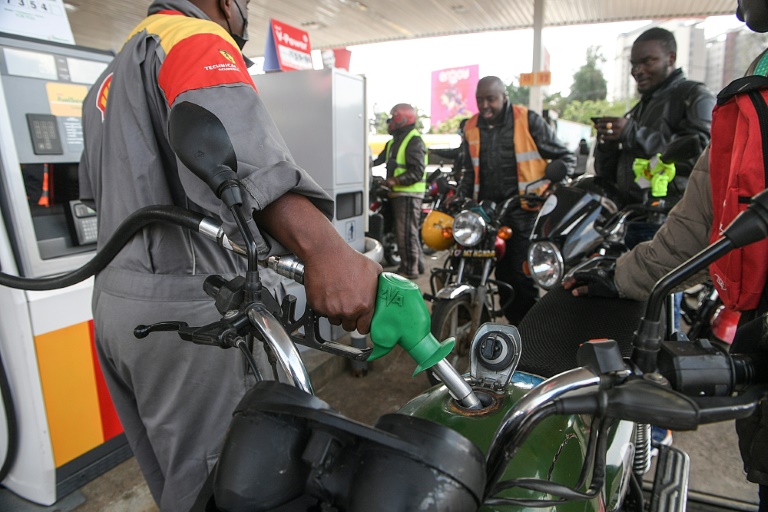
Fuel prices in Kenya surged to record highs on Thursday after the new government slashed subsidies, piling on misery for a population already facing deep economic hardship. 

The price of petrol increased by 20 shillings to 179.30 (about $1.50) per litre while diesel and kerosene prices are up by 20 and 25 shillings respectively, the Energy and Petroleum Regulatory Authority (EPRA) said. 

The new price regime that will remain in force until October 14 was announced shortly after Kenya’s new President William Ruto took office on Tuesday vowing to scrap food and fuel subsidies. 

“The interventions in place have not borne any fruit,” Ruto said in his inauguration speech. 

Kenya is reeling from the global surge in crude oil prices and last year introduced measures to cushion consumers from the high retail prices. 

It has so far spent 144 billion shillings ($1.2 billion) — about 86 percent of tourism earnings this year — to subside fuel, according to government figures. 

Ruto lambasted the policies of his predecessor Uhuru Kenyatta, saying they gobbled up billions of shillings with no impact.

“In addition to being very costly, consumption subsidy interventions are prone to abuse, they distort markets and create uncertainty, including artificial shortages of the very products being subsidised,” he said.

Under the new prices announced by EPRA, the subsidy for petrol has been removed while those for diesel and kerosene have been reduced. 

Kenya is the most dynamic economy in East Africa but many are suffering financial hardship with about a third of the population living in poverty. 

Prices for basic goods skyrocketed in the wake of Covid pandemic and the war in Ukraine, and unemployment remains a major problem, particularly among the young.

Inflation soared to a 65-month high of 8.5 percent in August, while the currency is at record lows at around 120 shillings to against the dollar.

There are fears the new fuel price increases could see public service providers hike fares and further add to cost of living pressures.

Tutankhamun: Egyptians bid to reclaim their history

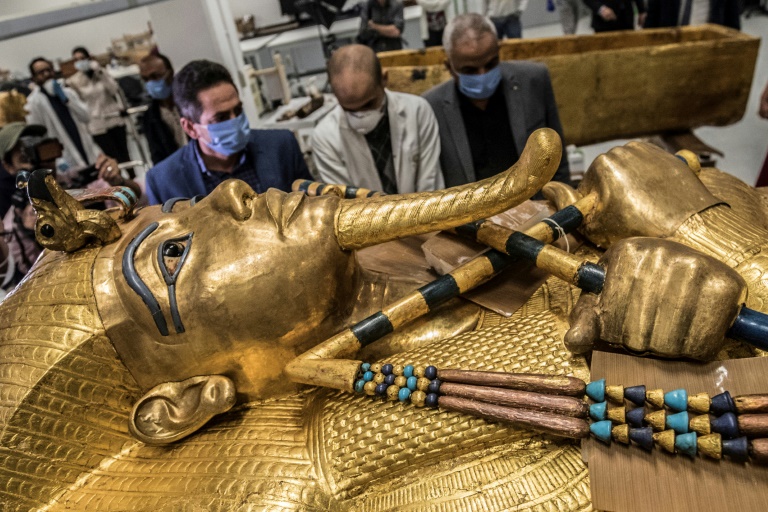
It’s one of the 20th century’s most iconic photos: British archaeologist Howard Carter inspecting the sarcophagus of Tutankhamun in 1922 as an Egyptian member of his team crouches nearby shrouded in shadow.

It is also an apt metaphor for two centuries of Egyptology, flush with tales of brilliant foreign explorers uncovering the secrets of the Pharaohs, with Egyptians relegated to the background.

“Egyptians have been written out of the historical narrative,” leading archaeologist Monica Hanna told AFP.

Now with the 100th anniversary of Carter’s earth-shattering discovery — and the 200th of the deciphering of the Rosetta Stone which unlocked the ancient hieroglyphs — they are demanding that their contributions be recognised.

Egyptians “did all the work” but “were forgotten”, said chief excavator Abdel Hamid Daramalli, who was born “on top” of the tombs at Qurna near Luxor that he is now in charge of digging.

Even Egyptology’s colonial-era birth — set neatly at Frenchman Jean-François Champollion cracking the Rosetta Stone’s code in 1822 — “whitewashes history”, according to specialist researcher Heba Abdel Gawad, “as if there were no attempts to understand Ancient Egypt until the Europeans came.”

The “unnamed Egyptian” in the famous picture of Carter is “perhaps Hussein Abu Awad or Hussein Ahmed Said,” according to art historian Christina Riggs, a Middle East specialist at Britain’s Durham University.

The two men were the pillars, alongside Ahmed Gerigar and Gad Hassan, of Carter’s digging team for nine seasons. But unlike foreign team members, experts cannot put names to the faces in the photos.

– ‘Unnoticed and unnamed’ –

“Egyptians remain unnoticed, unnamed, and virtually unseen in their history,” Riggs insisted, arguing that Egyptology’s “structural inequities” reverberate to this day.

But one Egyptian name did gain fame as the tomb’s supposed accidental discoverer: Hussein Abdel Rasoul.

Despite not appearing in Carter’s diaries and journals, the tale of the water boy is presented as “historical fact”, said Riggs.

On November 4, 1922, a 12-year-old -– commonly believed to be Hussein -– found the top step down to the tomb, supposedly because he either tripped, his donkey stumbled or because his water jug washed away the sand. 

The next day, Carter’s team exposed the whole staircase and on November 26 he peered into a room filled with golden treasures through a small breach in the tomb door.

According to an oft-repeated story, a half century earlier two of Hussein’s ancestors, brothers Ahmed and Mohamed Abdel Rasoul, found the Deir el-Bahari cache of more than 50 mummies, including Ramesses the Great, when their goat fell down a crevasse. 

But Hussein’s great-nephew Sayed Abdel Rasoul laughed at the idea that a goat or boy with a water jug were behind the breakthroughs.

Riggs echoed his scepticism, arguing that on the rare occasions that Egyptology credits Egyptians with great discoveries they are disproportionately either children, tomb robbers or “quadrupeds”.

The problem is that others “kept a record, we didn’t”, Abdel Rasoul told AFP.

– ‘They were wronged’ –

Local farmers who knew the contours of the land could “tell from the layers of sediment whether there was something there,” said Egyptologist Abdel Gawad, adding that “archaeology is mostly about geography”.

Profound knowledge and skill at excavating had been passed down for generations in Qurna — where the Abdel Rasouls remain — and at Qift, a small town north of Luxor where English archaeologist William Flinders Petrie first trained locals in the 1880s.

Mostafa Abdo Sadek, a chief excavator of the Saqqara tombs near Giza, whose discoveries have been celebrated in the Netflix documentary series “Secrets of the Saqqara Tomb”, is a descendant of those diggers at Qift.

His family moved 600 kilometres (370 miles) north at the turn of the 20th century to excavate the vast necropolis south of the Giza pyramids.

But his grandfathers and great-uncles “were wronged”, he declared, holding up their photos.

Their contributions to a century of discoveries at Saqqara have gone largely undocumented.

– ‘Children of Tutankhamun’ –

Barred for decades from even studying Egyptology while the French controlled the country’s antiquities service, Egyptians “were always serving foreigners”, archaeologist and former antiquities minister Zahi Hawass told AFP.

Another Egyptologist, Fatma Keshk, said we have to remember “the historical and social context of the time, with Egypt under British occupation.”

The struggle over the country’s cultural heritage became increasingly political in the early 20th century as Egyptians demanded their freedom.

“We are the children of Tutankhamun,” the diva Mounira al-Mahdiyya sang in 1922, the year the boy pharaoh’s intact tomb was found.

The same year Britain was forced to grant Egypt independence, and the hated partage system that gave foreign missions half the finds in exchange for funding excavations was ended.

But just as Egyptians’ “sense of ownership” of their heritage grew, ancient Egypt was appropriated as “world civilisation” with little to do with the modern country, argued Abdel Gawad.

“Unfortunately that world seems to be the West. It’s their civilisation, not ours.”

While the contents of Tutankhamun’s tomb stayed in Cairo, Egypt lost Carter’s archives, which were considered his private property.

The records, key to academic research, were donated by his niece to the Griffith Institute for Egyptology at Britain’s Oxford University.

“They were still colonising us. They left the objects, but they took our ability to produce research,” Hanna added.

This year, the institute and Oxford’s Bodleian Library are staging an exhibition, “Tutankhamun: Excavating the Archive”, which they say sheds light on the “often overlooked Egyptian members of the archaeological team.”

– Excavators’ village razed –

In Qurna, 73-year-old Ahmed Abdel Rady still remembers finding a mummy’s head in a cavern of his family’s mud-brick house that was built into a tomb. 

His mother stored her onions and garlic in a red granite sarcophagus, but she burst into tears at the sight of the head, berating him that “this was a queen” who deserved respect.

For centuries, the people of Qurna lived among and excavated the ancient necropolis of Thebes, one of the pharaohs’ former capitals that dates back to 3100 BC.

Today, Abdel Rady’s village is no more than rubble between the tombs and temples, the twin Colossi of Memnon — built nearly 3,400 years ago — standing vigil over the living and the dead.

Four Qurnawis were shot dead in 1998 trying to stop the authorities bulldozing their homes in a relocation scheme. 

Some 10,000 people were eventually moved when almost an entire hillside of mud-brick homes was demolished despite protests from UNESCO.

In the now deserted moonscape, Ragab Tolba, 55, one of the last remaining residents, told AFP how his relatives and neighbours were moved to “inadequate” homes “in the desert”.

The Qurnawis’ dogged resistance was fired by their deep connection to the place and their ancestors, said the Qurna-born excavator Daramalli.

But the controversial celebrity archaeologist Hawass, then head of Egypt’s Supreme Council of Antiquities, said “it had to be done” to preserve the tombs.

Egyptologist Hanna, however, said the authorities were bent on turning Luxor into a sanitised “open-air museum… a Disneyfication of heritage”, and used old tropes about the Qurnawis being tomb raiders against them.

Sayed Abdel Rasoul’s nephew, Ahmed, hit back at what he called a double standard.

“The French and the English were all stealing,” he told AFP. 

“Who told the people of Qurna they could make money off of artefacts in the first place?”

– ‘Spoils of war’ –

Over the centuries, countless antiquities made their way out of Egypt.

Some, like the Luxor Obelisk in Paris and the Temple of Debod in Madrid, were gifts from the Egyptian government.

Others were lost to European museums through the colonial-era partage system.

But hundreds of thousands more were smuggled out of the country into “private collections all over the world,” according to Abdel Gawad.

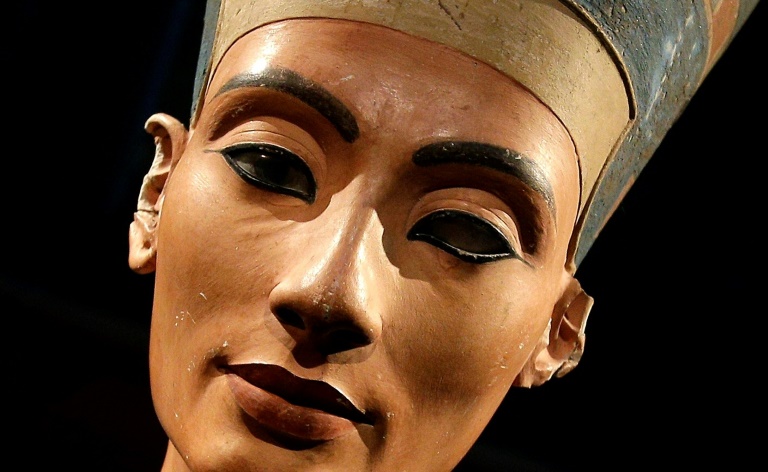
Former antiquities minister Hawass is now spearheading a crusade to repatriate three of the great “stolen” treasures — the Rosetta Stone, the bust of queen Nefertiti and the Dendera Zodiac.

He told AFP he plans to file a petition in October demanding their return.

The Rosetta Stone has been housed in the British Museum since 1802, “handed over to the British as a diplomatic gift”, the museum told AFP.

But for Abdel Gawad, “it’s a spoil of war”.

Nefertiti’s 3,340-year-old bust went to Berlin’s Neues Museum a century later through the partage system, but Hawass insisted it “was illegally taken, as I have proved time and again.”

The Frenchman Sebastien Louis Saulnier meanwhile had the Dendera Zodiac blasted out of the Hathor Temple in Qena in 1820.

The celestial map has hung from a ceiling in the Louvre in Paris since 1922, with a plaster cast left in its place in the southern Egyptian temple.

“That’s a crime the French committed in Egypt,” Hanna said, behaviour no longer “compatible with 21st century ethics.”

Lost treasures Egyptians want back

For decades, Egyptians have dreamed of bringing back some of the glories of their ancient civilisation scattered across museums and private collections across the world.

Now as Cairo gears up to open “the largest archaeological museum in the world” at the foot of the pyramids of Giza in November, Egypt’s former antiquities minister Zahi Hawass told AFP that he will soon demand the return of three of its greatest lost treasures:

– Rosetta Stone –

The basalt slab dating from 196 BC was the key that helped French linguist Jean-Francois Champollion crack the code of Egypt’s ancient hieroglyphs.

The stone was discovered by Napoleon Bonaparte’s invading French army in 1799 while troops were repairing a fort near the Nile Delta port of Rashid (or Rosetta), close to the Mediterranean.

It bore extracts of a decree written in Ancient Greek, an ancient Egyptian vernacular script called Demotic and hieroglyphics.

Comparing the three scripts finally helped resolve a mystery which had bedevilled historians for centuries.

Champollion announced his discovery on September 27, 1822. 

The stele has been housed in the British Museum since 1802, inscribed with the legend “Captured in Egypt by the British Army in 1801” on one side and “presented by King George III” to the museum on the other.

Egypt has been demanding its return for decades, with Egyptologist Heba Abdel Gawad saying the inscriptions alone were “an act of violence that no one talks about, and which the British Museum denies is destruction of an artefact.”

The museum told AFP that the stone was “handed over to the British as a diplomatic gift.”

– Nefertiti bust –

The bust of the wife of the Pharaoh Akhenaten, whose name meant “the beautiful one has come”, was sculpted around 1340 BC but was carted off to Germany in controversial circumstances by a Prussian archaeologist after it was found at Amarna in 1912.

The depiction of one of the most famous women of the ancient world was later given to the Neues Museum in Berlin.

Cairo demanded its restitution as early as the 1930s, but Germany has long held that it was handed over in a colonial-era partage agreement, under which countries that funded archaeological digs could keep half of the finds.

But for Hawass it “was illegally taken”.

Egyptologist Monica Hanna told AFP that Germany once agreed to give the bust back only for Adolf Hitler to block it after the Nazi leader fell under its spell.

No official requests for the treasures’ return have been received “from the Egyptian government”, according to the three European museums.

Egypt’s Supreme Council of Antiquities did not respond to AFP’s request for comment.

– Dendera Zodiac –

The celestial map was blasted out of the Hathor Temple in Qena in southern Egypt on the orders of French official Sebastien Louis Saulnier in 1820.

It has been suspended on a ceiling in the Louvre museum in Paris since 1922, while a plaster cast stands in its place in the temple.

The chart, regarded as “the only complete map that we have of an ancient sky”, is thought to date from around 50 BC.

Close Bitnami banner
Bitnami