Africa Business

Joao Lourenco: Angola's reformist leader back in driving seat

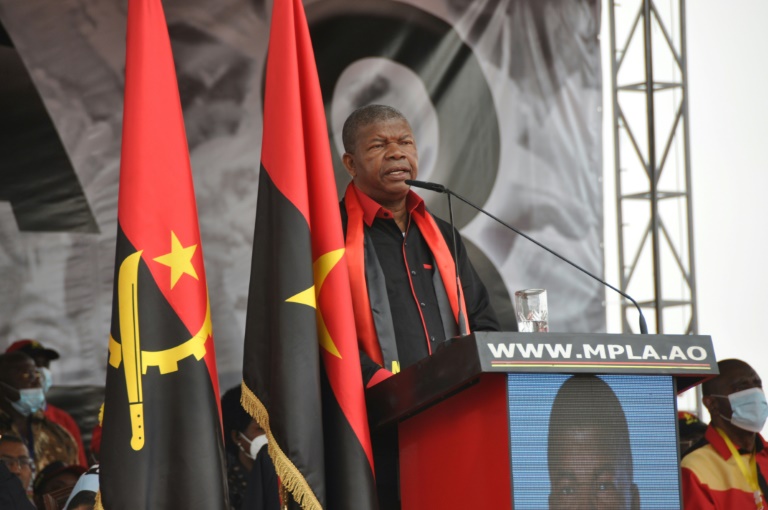
A general who became a graft buster and turned on his political patron, Angolan President Joao Lourenco will be sworn in for a second term on Thursday but faces dwindling popularity in a country struggling with problems.

Nicknamed JLo, the 68-year-old secured a new five-year tenure in the tightest-ever vote held in the oil-rich country.

Lourenco leads the People’s Movement for the Liberation of Angola (MPLA) party, which has ruled since independence from Portugal in 1975.

In the August 24 ballot, the MPLA suffered its worst performance while its long-term rival, UNITA, surged.

Lourenco’s victory was declared just 24 hours after he buried his predecessor, long-time ruler Jose Eduardo dos Santos, who died in Spain in July.

Handpicked by dos Santos, Lourenco took the helm in 2017. That year his party won with a comfortable 61 percent of the vote. This time he notched up just 51 percent.

He had promised sweeping economic reforms and a drive against graft.

But the election outcome reflected fading support for the historic ruling party, especially among young people clamouring for jobs and a better life. 

– Political purgatory –

Joao Manuel Goncalves Lourenco was born in Lobito in western Angola.

As a young man, he fought the colonial power Portugal and then after independence took part in the civil war that erupted between the MPLA government and UNITA rebels.

Lourenco studied in the former Soviet Union, which trained many rising young African nationalists during decolonisation.

He became political chief of the armed wing of the MPLA in the civil war — a Cold War proxy conflict that drew in Cuban forces to fight alongside the MPLA, while CIA-backed militias did battle against them.

The ex-artillery general ascended through the MPLA hierarchy, leading the party in parliament before becoming deputy speaker.

Yet his ambition almost ended his career.

Unable to hide his angling for the top job, he was sidelined by dos Santos around the turn of the century. 

In 2014, he was brought back from the cold — he was appointed defence minister and three years later eased himself into the top job.

– Anti-graft drive –

After winning the 2017 elections, Lourenco quickly turned on his predecessor, starting an anti-corruption drive to recoup the billions allegedly embezzled by dos Santos’ family.

Inheriting an economy deep in recession, he launched ambitious reforms to diversify government revenue and privatise state-owned firms.

Lourenco has trumpeted his successes, but many of Angola’s 33 million people still wallow in poverty.

His anti-graft push has also been criticised as selective and politically motivated, fuelling divisions within the MPLA.

Dos Santos’s death worsened his woes, triggering a public spat with the veteran revolutionary leader’s children — several of whom face graft investigations. 

Even so, Lourenco’s change in tack from the previous regime has won praise abroad. 

He has become the go-to mediator in Africa — dealing with the crisis in the Central Africa Republic or brokering talks between the Democratic Republic of Congo and Rwanda.

He is married to Ana Dias, a former planning minister who also represented Angola at the World Bank. They have six children.
Angola's Lourenco to be sworn in after disputed win

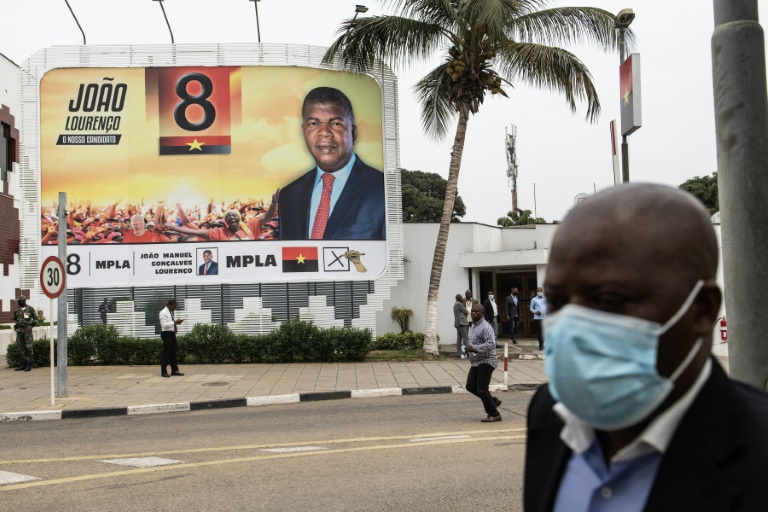
Angolan President Joao Lourenco is to be sworn in for a second term on Thursday amid tight security after a disputed electoral win last month.

The inauguration will be held on the historic palm tree-lined Praca da Republica square in the centre of the capital, Luanda.

Large numbers of police and military forces patrolled the streets ahead of the ceremony, AFP correspondents saw — a presence the main opposition party said aimed at stifling dissent.

“This setup aims to intimidate citizens who want to demonstrate against the election results on the day of the inauguration of a president without legitimacy,” the National Union for the Total Independence of Angola (UNITA) said in a statement.

Several heads of state and government, including Portuguese President Marcelo Rebelo de Sousa, are expected to be in attendance. 

Lourenco, 68, returned to power after the August 24 vote gave his Popular Movement for the Liberation of Angola (MPLA) a thin majority, winning just 51.17 percent of the votes.

The vote was to choose members of parliament, where the largest party automatically selects the president.

It was the MPLA’s poorest showing in the oil-rich African country it has controlled since independence from Portugal in 1975.

UNITA — a former rebel movement which fought a bitter 27-year civil war against the MPLA government — made significant gains, earning 43.95 percent of the vote, up from 26.67 percent in 2017.

Opposition parties and civic groups say the vote was marred by irregularities. 

UNITA disputed the results in court but its appeal was tossed out.

“Tomorrow I will stay at home. There are too many police forces around town,” Joao, a high school student who only gave his first name, said at a bus stop on the outskirts of Luanda.

– ‘President for all’ –

Under its charismatic leader Adalberto Costa Junior, 60, UNITA has proved popular in urban areas and among young voters clamouring for economic change. 

It did particularly well in the capital, where it won a majority for the first time. 

The MPLA instead lost its two-thirds parliamentary majority with its seats dropping to 124 from 150. 

Lourenco struck a conciliatory tone after the vote, pledging to promote “dialogue” and be the “president of all Angolans”.

But Costa Junior has said he will skip the inauguration and promised protests against the result of the vote, but has said his party will join the new parliament.

Foreign observers from other parts of Africa praised the peaceful conduct of the polls but raised concerns over press freedom and the accuracy of the electoral roll. 

The former general first came to power in 2017 when he took over from long-time ruler Jose Eduardo dos Santos, who bequeathed a country deep in recession and riddled by corruption and nepotism.

Lourenco swiftly turned on his predecessor, launching an anti-graft campaign targeting his family and friends, which critics say was a political stunt. 

He also embarked on an ambitious reform programme to lure foreign investors and diversify the economy. 

But that has so far failed to brighten the prospects of many of Angola’s 33 million people who are mired in poverty.

Dos Santos died in Spain in July. State funerals for the late strongman were held in August in the same square where Lourenco is to be sworn in.  

10 killed in twin air strikes on Ethiopia's Tigray: hospital

Ten people were killed in a second day of air strikes on Ethiopia’s Tigray region Wednesday, hospital officials said, in attacks that came after authorities there expressed readiness for a ceasefire.

Twin drone attacks hit a neighbourhood in Tigray’s capital Mekele at around 7:30 am (0430 GMT), killing 10 and injuring more than a dozen others, two officials from the biggest hospital in the war-torn region said.

The air raids follow an announcement by Tigrayan authorities on Sunday that they were ready for talks led by the African Union (AU) to end almost two years of brutal warfare in northern Ethiopia.

On Wednesday, the Ethiopian government said it was “committed” to the AU-led peace process following calls by the international community for the warring sides to seize the opportunity for peace.

“Death toll raised to 10,” Kibrom Gebreselassie, a senior official at Ayder Referral Hospital in Mekele, told AFP via text message. In a later statement, he said 14 people were injured.

Fasika Amdeslasie, a surgeon at the same hospital, confirmed the death toll, adding that the first bombing injured two women followed by a second strike “on the people gathered to help and see the victims”.

“Among the victims, a father was dead and his son is taken to surgery,” he said on Twitter.

AFP was not able to independently verify the claims. Access to northern Ethiopia is severely restricted and Tigray has been under a communications blackout for more than a year.

– Renewed combat –

The reported attack followed another drone strike on Tuesday on Mekele University, which Tigrayan authorities said caused injuries and property damage.

Dimtsi Weyane, a TV network run by Tigrayan authorities, said its station was also hit on Tuesday, forcing it off air and “causing heavy human and material damage”.

“The regime in #Addis continues to defy any possibility for peaceful solution through show of force & air raids,” Kindeya Gebrehiwot, a spokesman for the Tigray People’s Liberation Front (TPLF), said on Twitter following Wednesday’s attacks.

Prime Minister Abiy Ahmed’s government has not commented on this week’s reported bombings, and AFP requests to officials were not answered.

Tigray has been bombed several times since fighting resumed in late August between government forces and their allies, and rebels led by the TPLF, which ruled Ethiopia for decades before Abiy took office in 2018.

The return to combat shattered a March truce and dashed hopes of peacefully resolving the war, which has killed untold numbers of civilians and triggered a humanitarian crisis in northern Ethiopia.

Both sides have accused the other of firing first, and fighting has spread from around southern Tigray to other fronts farther north and west, while also drawing in Eritrean troops who backed Ethiopian forces during the early phase of the war.

TPLF military boss Tadesse Worede on Tuesday said “Eritrean forces are in Sheraro”, a town in northwestern Tigray, where the rebels said they were resisting a major offensive by Ethiopian and Eritrean troops launched earlier this month.

– Diplomatic push –

Frantic diplomatic efforts are under way to end the war, with the new US envoy to the Horn of Africa, Mike Hammer, extending his visit to Ethiopia this month.

The offer by Tigrayan authorities to participate in AU-led talks removed an obstacle to negotiations with Abiy’s government, which had insisted the pan-Africa bloc based in Addis Ababa mediate any potential talks.

“The Ethiopian government is committed to the AU-led peace process and expressed hope that the EU would support efforts to end the conflict peacefully,” the foreign ministry quoted Deputy Prime Minister and Foreign Minister Demeke Mekonnen as saying Wednesday at a meeting with a visiting EU envoy.

It was the first official comment by the government after the Tigrayan authorities said they were ready to negotiate.

UN Secretary General Antonio Guterres, AU Commission chief Moussa Faki Mahamat, the East African bloc IGAD, and the European Union welcomed the offer by “the regional government of Tigray”.

Abiy’s government has declared the TPLF a terrorist group, and considers its claim to authority in Tigray illegitimate.

The UN human rights office has documented hundreds of civilian deaths from air strikes and drone attacks including on refugee camps, a hotel and a market.

It has warned that disproportionate attacks against non-military targets could amount to war crimes.

The government has accused the TPLF of staging civilian deaths from air strikes to manufacture outrage, and insists it only targets military sites.

Abiy, a Nobel Peace Prize laureate, sent troops into Tigray in November 2020 to topple the TPLF in response to what he said were attacks on federal army camps.

But the TPLF recaptured most of Tigray in a surprise comeback in June 2021.

It then expanded into the neighbouring regions of Afar and Amhara before the fighting reached a stalemate.

10 killed in twin air strikes on Ethiopia's Tigray: hospital

Ten people were killed in a second day of air strikes on Ethiopia’s Tigray region Wednesday, hospital officials said, in attacks that came after authorities there expressed readiness for a ceasefire.

Twin drone attacks hit a neighbourhood in Tigray’s capital Mekele at around 7:30 am (0430 GMT), killing 10 and injuring more than a dozen others, two officials from the biggest hospital in the war-torn region said.

The air raids follow an announcement by Tigrayan authorities on Sunday that they were ready for talks led by the African Union (AU) to end almost two years of brutal warfare in northern Ethiopia.

On Wednesday, the Ethiopian government said it was “committed” to the AU-led peace process following calls by the international community for the warring sides to seize the opportunity for peace.

“Death toll raised to 10,” Kibrom Gebreselassie, a senior official at Ayder Referral Hospital in Mekele, told AFP via text message. In a later statement, he said 14 people were injured.

Fasika Amdeslasie, a surgeon at the same hospital, confirmed the death toll, adding that the first bombing injured two women followed by a second strike “on the people gathered to help and see the victims”.

“Among the victims, a father was dead and his son is taken to surgery,” he said on Twitter.

AFP was not able to independently verify the claims. Access to northern Ethiopia is severely restricted and Tigray has been under a communications blackout for more than a year.

– Renewed combat –

The reported attack followed another drone strike on Tuesday on Mekele University, which Tigrayan authorities said caused injuries and property damage.

Dimtsi Weyane, a TV network run by Tigrayan authorities, said its station was also hit on Tuesday, forcing it off air and “causing heavy human and material damage”.

“The regime in #Addis continues to defy any possibility for peaceful solution through show of force & air raids,” Kindeya Gebrehiwot, a spokesman for the Tigray People’s Liberation Front (TPLF), said on Twitter following Wednesday’s attacks.

Prime Minister Abiy Ahmed’s government has not commented on this week’s reported bombings, and AFP requests to officials were not answered.

Tigray has been bombed several times since fighting resumed in late August between government forces and their allies, and rebels led by the TPLF, which ruled Ethiopia for decades before Abiy took office in 2018.

The return to combat shattered a March truce and dashed hopes of peacefully resolving the war, which has killed untold numbers of civilians and triggered a humanitarian crisis in northern Ethiopia.

Both sides have accused the other of firing first, and fighting has spread from around southern Tigray to other fronts farther north and west, while also drawing in Eritrean troops who backed Ethiopian forces during the early phase of the war.

TPLF military boss Tadesse Worede on Tuesday said “Eritrean forces are in Sheraro”, a town in northwestern Tigray, where the rebels said they were resisting a major offensive by Ethiopian and Eritrean troops launched earlier this month.

– Diplomatic push –

Frantic diplomatic efforts are under way to end the war, with the new US envoy to the Horn of Africa, Mike Hammer, extending his visit to Ethiopia this month.

The offer by Tigrayan authorities to participate in AU-led talks removed an obstacle to negotiations with Abiy’s government, which had insisted the pan-Africa bloc based in Addis Ababa mediate any potential talks.

“The Ethiopian government is committed to the AU-led peace process and expressed hope that the EU would support efforts to end the conflict peacefully,” the foreign ministry quoted Deputy Prime Minister and Foreign Minister Demeke Mekonnen as saying Wednesday at a meeting with a visiting EU envoy.

It was the first official comment by the government after the Tigrayan authorities said they were ready to negotiate.

UN Secretary General Antonio Guterres, AU Commission chief Moussa Faki Mahamat, the East African bloc IGAD, and the European Union welcomed the offer by “the regional government of Tigray”.

Abiy’s government has declared the TPLF a terrorist group, and considers its claim to authority in Tigray illegitimate.

The UN human rights office has documented hundreds of civilian deaths from air strikes and drone attacks including on refugee camps, a hotel and a market.

It has warned that disproportionate attacks against non-military targets could amount to war crimes.

The government has accused the TPLF of staging civilian deaths from air strikes to manufacture outrage, and insists it only targets military sites.

Abiy, a Nobel Peace Prize laureate, sent troops into Tigray in November 2020 to topple the TPLF in response to what he said were attacks on federal army camps.

But the TPLF recaptured most of Tigray in a surprise comeback in June 2021.

It then expanded into the neighbouring regions of Afar and Amhara before the fighting reached a stalemate.

Ivory Coast lashes Mali 'blackmail' over detained troops

Ivory Coast on Wednesday accused Mali of “blackmail” over 46 Ivorian troops who have been detained by Bamako and called for West African leaders to discuss the crisis as soon as possible.

Mali’s ruling junta last week tied the troops’ release to the extradition of Malians living in Ivory Coast — a condition that amounts to “unacceptable blackmail,” the government’s National Security Council said in a statement.

It reiterated a call for the soldiers’ “immediate release” and urged a meeting of leaders of the regional bloc ECOWAS “as soon as possible.”

“The latest developments… are liable to harm peace and security in the sub-region,” said the council, which is headed by President Alassane Ouattara.

The two countries have been locked in a diplomatic tug-of-war since July 10, when the Malian authorities arrested 49 troops who had arrived at Bamako airport.

The junta-led government said the troops had had no orders or supporting documents and described them as “mercenaries”.

In August, the soldiers were charged with “attempted harm to external state security” and formally placed in custody.

Ivory Coast says the troops were simply on a routine rotation for personnel who provide back-up services for the UN peacekeeping mission in Mali. 

Three women soldiers in the group were released in early September — a move that Ivory Coast welcomed as a good sign.

– ‘Hostages’ –

But last Friday, junta chief Colonel Assimi Goita called for “compensation for Mali”, referring to Malians living in political asylum in Ivory Coast who were being sought by Bamako through international arrest warrants.

“This request confirms once more the fact that our soldiers are in no way mercenaries but hostages,” Wednesday’s statement said.

Malians in Ivory Coast include Karim Keita — son of former president Ibrahim Boubacar Keita overthrown by the junta in 2020 — and Tieman Hubert Coulibaly, defence and foreign affairs minister under Keita.

Mali has been dominated by the military since the coup, which followed mass protests over the handling of a long-running and bloody jihadist insurgency.

In the runup to the dispute over the soldiers, bilateral ties had become fraught over the timetable for Mali’s return to civilian rule.

Mali accused Ivory Coast of insisting that ECOWAS — the Economic Community of West African States — take a hard line on sanctions aimed at pressing the junta to hand back power.

Tough trade and financial sanctions were lifted in July after Mali, yielding to the bloc’s demands, published a new electoral law and a timetable that includes a presidential election in February 2024.

But an Ivorian source told AFP at the weekend that sanctions could return to the ECOWAS agenda if no progress was made on the detained soldiers.

ECOWAS has previously said Mali will remain suspended from its ranks pending restoration of constitutional order. 

It has also retained sanctions imposed individually against around 150 members of the junta.

Sudanese recall queen's visit in years before partition

It has been more than 50 years since Queen Elizabeth II visited Sudan but there are still some who remember her tour of the formerly British-ruled territory in its first decade of independence.

In subsequent decades, repeated military coups and civil war between north and south have led to protracted isolation and partition into two independent nations.

There is not much nostalgia for British rule. Many in the rump Sudan left behind by the south’s secession in 2011 blame it for fanning the ethnic and religious differences that eventually led to the bloody divorce.

But there was genuine fondness for the queen personally when her death at the age of 96 last week brought down the curtain on a reign lasting more than 70 years.

“I was a schoolgirl in my uniform and we were pulled out of school to greet the queen,” recalled Khartoum resident Belqis Rikabi, now in her 70s.

Rikabi remembered that she had been impressed by the queen’s dress and had tried to get through the jostling crowd to touch the fabric. 

“One of the guards hit me very hard but then the queen saw this and called out: ‘No, no, no’,” Rikabi said. 

“He stopped and then she held up the hem of the dress for me to examine it.” 

– ‘Good resonance’ –

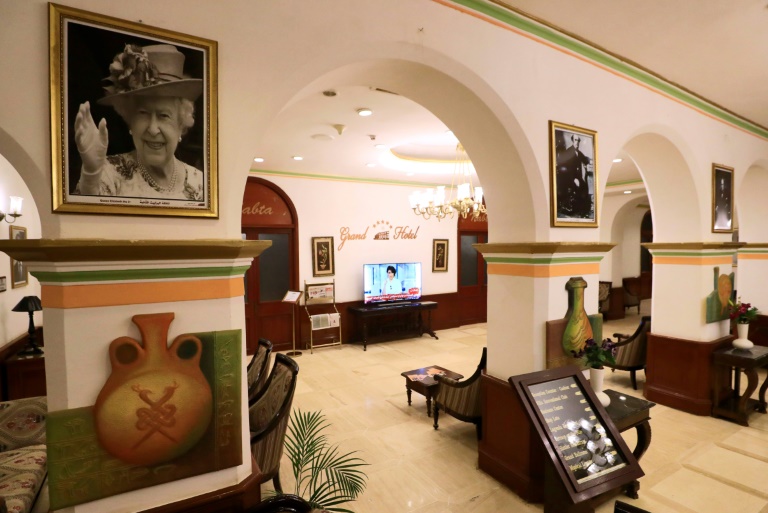
During her stay in the Sudanese capital in February 1965, the queen stayed in the colonial-era Grand Hotel overlooking the Nile, where a portrait of her still takes pride of place alongside pictures of other eminent Britons, including wartime prime minister Winston Churchill.  

“The hotel holds memories, photos and records for all the world’s greatest people who visited the country in different periods, most notably Queen Elizabeth,” said the hotel’s general manager, Abdelmoneim Abdelmahmoud al-Hassan. 

The hotel was built in 1902 and other visitors over the years have included anti-apartheid hero Nelson Mandela and US civil rights leader Malcolm X. 

Though it was long ago, the queen’s visit “has good resonance” among Sudanese people, Hassan said. 

Surviving newsreel footage of the visit is dominated by camel racing and camel-mounted cavalrymen in traditional robes.

But the queen also visited development projects first conceived when Sudan was still ruled under a British-dominated joint administration with Egypt. 

– ‘Great woman’ –

Outside Khartoum, she toured the Gezira agricultural scheme in the fertile soils between the Blue Nile and the White Nile, still one of the world’s largest irrigation projects.

She visited farmers in the Gezira state capital Wad Madani and the Roseires Dam on the Blue Nile, which was completed the year after her visit.

Now 73, Manahel Abou Kashwa was among those who greeted the queen in Wad Madani.

As a 16-year-old, Abou Kashwa says she was among 10 pupils chosen to escort the monarch around their school. 

“As a young girl, I was amazed at the queen and how people were doing everything for her. I was however happy to be chosen to accompany her.” 

Thirty-five years later and now married to a senior Sudanese diplomat, Abou Kashwa met the queen again when her husband, Hassan Abdeen, presented his credentials as Sudan’s ambassador to the United Kingdom.

“I told her we met before and she laughed,” Abou Kashwa said. 

When Abou Kashwa learnt of the queen’s death, she said: “I was saddened. She was a great woman.”

10 killed in twin air strikes on Ethiopia's Tigray: hospital

Ten people were killed in a second day of air strikes on Ethiopia’s Tigray region Wednesday, hospital officials said, in attacks that came after authorities there expressed readiness for a ceasefire.

Twin drone attacks hit a neighbourhood in Tigray’s capital Mekele at around 7:30 am (0430 GMT), killing 10 and injuring more than a dozen others,  two officials from the biggest hospital in the war-torn region said.

The air raids follow an announcement by Tigrayan authorities on Sunday that they were ready for talks led by the African Union (AU) to end almost two years of brutal warfare in northern Ethiopia.

Prime Minister Abiy Ahmed’s government is still yet to officially comment on the overture, as the international community presses the warring sides to seize the opportunity for peace.

“Death toll raised to 10,” Kibrom Gebreselassie, a senior official at Ayder Referral Hospital in Mekele, told AFP via text message. In a later statement, he said 14 people were injured.

Fasika Amdeslasie, a surgeon at the same hospital, confirmed the death toll, adding that the first bombing injured two women followed by a second strike “on the people gathered to help and see the victims”.

“Among the victims, a father was dead and his son is taken to surgery”, he said on Twitter.

AFP was not able to independently verify the claims. Access to northern Ethiopia is severely restricted and Tigray has been under a communications blackout for over a year.

– Renewed combat –

The reported attack followed another drone strike on Tuesday on Mekele University, which Tigrayan authorities said caused injuries and property damage.

Dimtsi Weyane, a TV network run by Tigrayan authorities, said its station was also hit on Tuesday, forcing it off air and “causing heavy human and material damage”.

“The regime in #Addis continues to defy any possibility for peaceful solution through show of force & air raids,” Kindeya Gebrehiwot, a spokesman for the Tigray People’s Liberation Front (TPLF), said on Twitter following Wednesday’s attacks.

Abiy’s government has not commented on this week’s reported bombings, and AFP requests to officials were not answered.

Tigray has been bombed several times since fighting resumed in late August between government forces and their allies, and rebels led by the TPLF, which ruled Ethiopia for decades before Abiy took office in 2018.

The return to combat shattered a March truce and dashed hopes of peacefully resolving the war, which has killed untold numbers of civilians and triggered a humanitarian crisis in northern Ethiopia.

Both sides have accused the other of firing first, and fighting has spread from around southern Tigray to other fronts farther north and west, while also drawing in Eritrean troops who backed Ethiopian forces during the early phase of the war.

TPLF military boss Tadesse Worede on Tuesday said “Eritrean forces are in Sheraro”, a town in northwestern Tigray, where the rebels said they were resisting a major offensive by Ethiopia and Eritrean troops launched earlier this month.

– Diplomatic push –

Frantic diplomatic efforts are under way to end the war, with the new US envoy to the Horn of Africa, Mike Hammer, extending his visit to Ethiopia this month.

The offer by Tigrayan authorities to participate in AU-led talks removed an obstacle to negotiations with Abiy’s government, which had insisted the pan-Africa bloc based in Addis Ababa mediate any potential talks.

UN Secretary-General Antonio Guterres, AU Commission chief Moussa Faki Mahamat, the East African bloc IGAD, and the European Union welcomed the offer by “the regional government of Tigray”.

Abiy’s government has declared the TPLF a terrorist group, and considers its claim to authority in Tigray illegitimate.

The UN human rights office has documented hundreds of civilian deaths from air strikes and drone attacks including on refugee camps, a hotel and a market.

It has warned that disproportionate attacks against non-military targets could amount to war crimes.

The government has accused the TPLF of staging civilian deaths from air strikes to manufacture outrage, and insists it only targets military sites.

Abiy, a Nobel Peace laureate, sent troops into Tigray in November 2020 to topple the TPLF in response to what he said were attacks on federal army camps.

But the TPLF recaptured most of Tigray in a surprise comeback in June 2021.

It then expanded into the neighbouring regions of Afar and Amhara before the fighting reached a stalemate.

DR Congo fishermen pin hopes on tourism as stocks dwindle

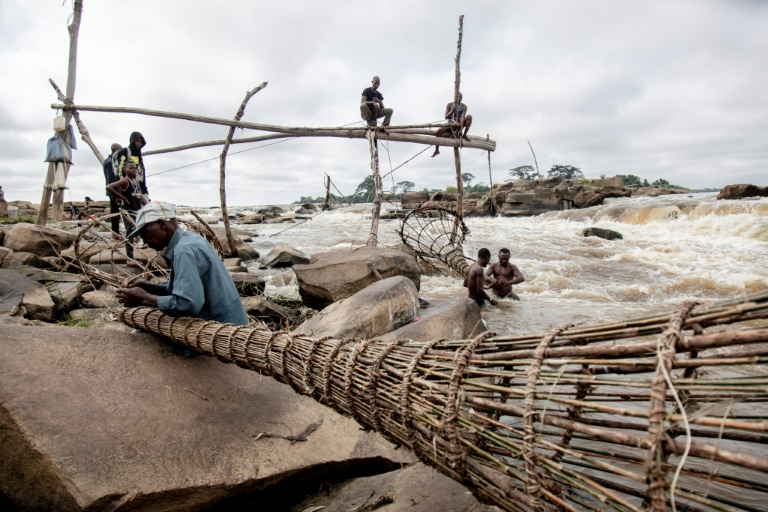
Fishermen perch precariously on wooden scaffolds stretching over turbulent rapids in northeastern Democratic Republic Congo, hauling up wicker baskets in the hope of catching tilapia or a Nile perch -– a time-honoured practice now threatened by overfishing.

Basket fishing was once the lifeblood of the Wagenya community, feeding them handsomely on a section of the mighty Congo River close to Kisangani, a city in Tshopo province. 

But fish numbers have dwindled in recent years, and the fishermen see little help from the government.

Many people, like 16-year-old student Kalimo, get by selling handcrafted dioramas of traditional Wagenya life to the few tourists who visit the impoverished area. 

“It helps me to pay for school,” said the teenager, who was selling wooden models of small stick men holding large fish, for $10.

Kalimo, whose father is a fisherman, wants to become an engineer.

On top of the problems with fish, the Wagenya — split between three main clans and five sub-clans — are bickering among themselves.

The position of traditional chief, who serves as an intermediary between the community and the government, is unfilled because of factional infighting.

Augustin Tangausi, who described himself as a “fisherman and servant of God,” said this means problems are piling up. 

“Everyone does as he likes and we have no-one to defend our rights”.  

– ‘Abandoned’ –

Tangausi pointed to what he calls the “small fishery” by the rapids, which are known as the Wagenya Falls. 

Wooden poles are wedged into holes in the rocks and tied together with lianas to form scaffolds.

Baskets are then dropped from the scaffolding into the roaring currents to trap fish. 

“There were installations everywhere before,” says Tangausi. “But now there are hardly any”. 

The government once subsidised maintenance of the elaborate scaffolds, he said, but stopped doing so over a decade ago.

Andjoipa Aluka, a 27-year-old fisherman, also feels a sense of loss. 

“Our ancestors handed on this occupation. We have to do it, but it’s really difficult,” he said.

Fish stocks have plummeted because mature fish are being caught during the spawning season and poor people scour the waters with mosquito nets to scoop up juvenile fish, Aluka said.

Augustin Issa Balabala, described as the manager of Wagenya Falls, said fishing offered nothing anymore. 

“We live off visitors, off the little they give us,” he said, sitting on a plastic chair in a straw hut.

– No infrastructure –

Tourists have been few and far between since the Covid-19 pandemic struck, although there is hope that more may begin to come. 

The DRC’s environment minister visited Wagenya Falls at the beginning of the year and promised investment to attract visitors. 

Augustin Tangausi, for his part, was enthusiastic. “We want modern huts, a restaurant, a hotel, shops, offices, a museum, an aquarium, and a cold room too, for the fish,” he said. 

“This is an international tourist site, known worldwide,” he added, noting cautiously that the renovation work still needed to be done.

Tshopo Governor Madeleine Nikomba told AFP that a hotel will be built, and that “we will try to modernise the fishery”. 

But the scale of the work that needs to be done is momentous. Roads are so poor that they are impassible. Electricity is patchy. And tourist sites related to Congolese history lie in ruins. 

Visitors must also brave chaos at the local airport, where crowds jostle to board flights and occasional shortages of jet fuel ground planes. 

Much of the DRC, one of the world’s poorest countries, has crumbling or non-existent infrastructure due to mismanagement, successive wars and chronic corruption.  

Nikomba, the governor of Tshopo province, promised that all the problems will be fixed. The airport will be renovated, she said, as well as tourist sites and the local zoo — which currently lies empty. 

French court to rule on deadly 2009 Yemenia Airways crash

A French court on Wednesday will issue its verdict on involuntary homicide charges against Yemenia Airways over a 2009 crash that killed 152 people — but miraculously left a 12-year-old girl alive.

The Yemeni national airline faces a maximum fine of 225,000 euros ($225,000) if found guilty of insufficient pilot training that led to fatal mistakes by the crew onboard, as prosecutors have alleged.

On June 29, 2009, flight Yemenia 626 was on approach to Moroni, the capital of the Comoros islands that lie between Mozambique and Madagascar, after departing from the airport in the Yemeni capital Sanaa.

France’s overseas territory of Mayotte is also part of the Comoros archipelago in the Indian Ocean off the eastern coast of Africa. Among the 142 passengers and 11 crew were 66 French citizens.

Just before 11:00 pm the Airbus A310 plunged into the Indian Ocean with its engines running at full throttle, killing everyone on board except Bahia Bakari, then just 12 years old.

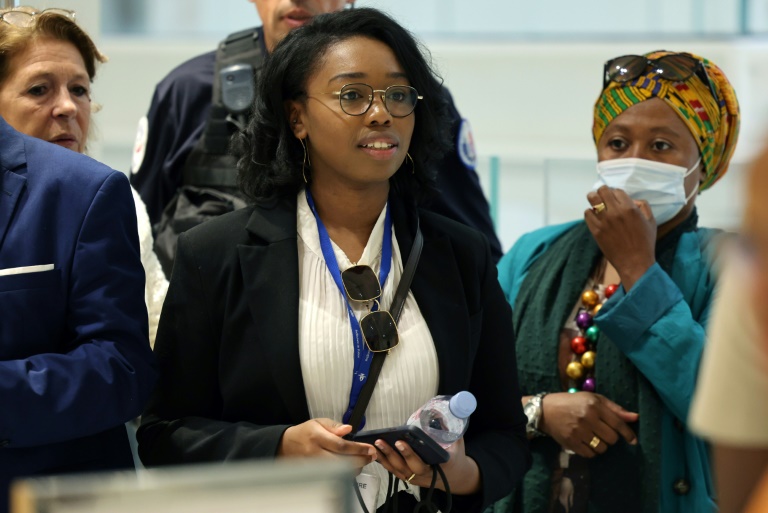
“I started to feel the turbulence, but nobody was reacting much, so I told myself it must be normal,” Bakari told a Paris courtroom in May during the trial, attended by dozens of friends and relatives of the victims.

Suddenly “I felt something like an electric shock go through my body,” she recalled, before blacking out and then finding herself in the water among the wreckage.

She had left Paris to attend a wedding in the Comoros with her mother, who perished in the crash.

– Series of errors? –

Investigators and experts found there was nothing wrong with the aircraft, blaming instead “inappropriate actions by the crew during the approach to Moroni airport, leading to them losing control”.

According to analyses of the “black box” flight data recorders found on the ocean floor several weeks later, a series of erroneous decisions was made by pilots over nearly five minutes before the crash. 

No one from Yemenia Airways appeared at the trial, where prosecutors accused the company of pilot training programmes “riddled with gaps” and of continuing to fly to Moroni at night despite several non-functioning landing lights.

Yemenia is charged with involuntary homicide and injuries. The company’s lawyers have denied any wrongdoing, saying the airline is being made a “scapegoat”.

Around 560 people have joined the suit as plaintiffs, many of them from the region around Marseille in southern France, home to many of the victims.

Several people aboard were travelling to the Comoros to celebrate the islands’ extravagant wedding parties, which often bring together entire villages.

“It’s an entire community that was on this plane,” a lawyer for one of the plaintiffs, Claude Lienhard, said during the trial. 

New president Ruto pledges to work for all Kenyans

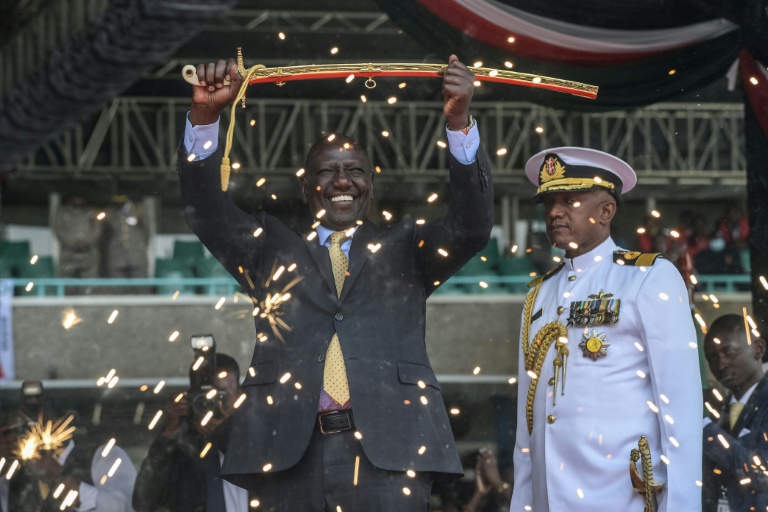
William Ruto pledged to work for all Kenyans after he was sworn in as president at a pomp-filled ceremony on Tuesday, five weeks after his narrow victory in a bitterly-fought but largely peaceful election.

Tens of thousands of people joined regional heads of state at a packed 60,000-seat stadium in Nairobi to watch him take the oath of office, with many spectators clad in the bright yellow of Ruto’s party, cheering loudly and waving Kenyan flags.

“I will work with all Kenyans irrespective of who they voted for,” the 55-year-old said in his inauguration speech, vowing to unite the polarised nation and announcing a series of measures to tackle its economic woes.

“In this process we have demonstrated the maturity of our democracy, the robustness of our institutions and the resilience of the Kenyan people.”

The rags-to-riches businessman described his swearing-in as Kenya’s fifth post-independence president as a “moment like no other,” adding: “Today, I want to thank God, because a village boy has become the president of Kenya.” 

A notoriously ambitious politician who has been deputy president since 2013, Ruto beat his rival Raila Odinga — who had the backing of now former president Uhuru Kenyatta — by less than two percentage points in the August 9 poll.

But the Supreme Court on September 5 unanimously upheld his victory, dismissing his opponents’ claims of fraud and mismanagement.

– ‘Political maturity’ –

African Union Commission chair Moussa Faki Mahamat, who was at the ceremony, hailed the peaceful transfer of power in a post on Twitter, saying it was “an enduring feature of the country’s political maturity”.

Ruto’s rise has been closely watched by the international community, which looks to Kenya as a reliable and stable democracy in a turbulent region.

Foreign allies and independent observers praised the conduct of the vote, which was mostly free of the violence that has marred past elections in the country of 50 million people.

Before Tuesday’s ceremony began, several people were injured as crowds tried to force their way into the stadium. Television footage showed dozens of people falling on top of one other in a crush at one entrance gate.

Ruto, who once sold chickens on the roadside in what is now his Rift Valley stronghold, had painted the election as a battle between ordinary “hustlers” and the elite Kenyatta and Odinga “dynasties” that had dominated Kenyan politics for decades.

But he faces a daunting task ahead to unite the country after a bruising and divisive election campaign, and ease the hardship of ordinary Kenyans who are struggling to make ends meet as prices for basic goods soar.

In his speech, Ruto pledged to stem the rising tide of youth unemployment, provide resources to help ease those confronted by a punishing drought, and stabilise Kenya’s public finances — which are creaking under the weight of a $70-billion debt mountain.

Ruto said he would establish a 50-billion-shilling ($415-million) “hustler fund” to provide loans to small enterprises to help drive growth, while making Kenya more business-friendly.

– ‘Fiscal cliff’ –

Kenyatta, who in a stunning turn of events reached a pact with his longtime rival Odinga in 2018 and banished his deputy Ruto to the sidelines, had promised a smooth transfer of power.

But the 60-year-old had pointedly failed to publicly congratulate his successor for several weeks, finally shaking Ruto’s hand at a meeting at the presidential residence on Monday.

And Ruto’s new deputy Rigathi Gachagua took potshots at Kenyatta during the inauguration ceremony, saying the new administration had inherited a “dilapidated economy”.

Odinga, meanwhile, turned down an invitation to attend the event, charging that the election commission did not conduct a “free and fair” poll.

Oxford Economics said Ruto’s ascendancy was “momentous” in that he was not part of a political dynasty and had campaigned on socio-economic rather than ethnic divides in the multi-tribe nation.

His inauguration marks the end of Kenyatta’s near decade in power, and one of the rare occasions his powerful family has not been at the apex of Kenyan politics.

“Once the election euphoria subsides, Mr Ruto will find himself tasked with uniting a divided Kenya and navigating the government away from a fiscal cliff,” Oxford Economics said in a note.

Ruto, whose new presidential coat of arms bears his party symbol, the humble wheelbarrow, will get a salary of about $144,000 a year as well as all the trappings of presidential office.

Close Bitnami banner
Bitnami