Africa Business

William Ruto: Kenya's 'hustler-in-chief' president

Kenya’s President William Ruto has clawed his way to the top as the nation’s “hustler-in-chief”, playing on his religious faith and humble beginnings selling chickens by the roadside.

Although one of the richest men in the country and dogged by corruption allegations for years, the fiercely ambitious Ruto portrayed himself as the champion of the poor and downtrodden during the August 9 election campaign.

He won a narrow victory over veteran politician Raila Odinga, despite running as the effective challenger after acrimoniously falling out with his boss, then president Uhuru Kenyatta, who backed his rival in the closely-fought race.

Ruto, who served as deputy president under Kenyatta for almost a decade, has pledged to reach out to his rivals in the deeply divided country, and tackle its economic woes and endemic corruption.

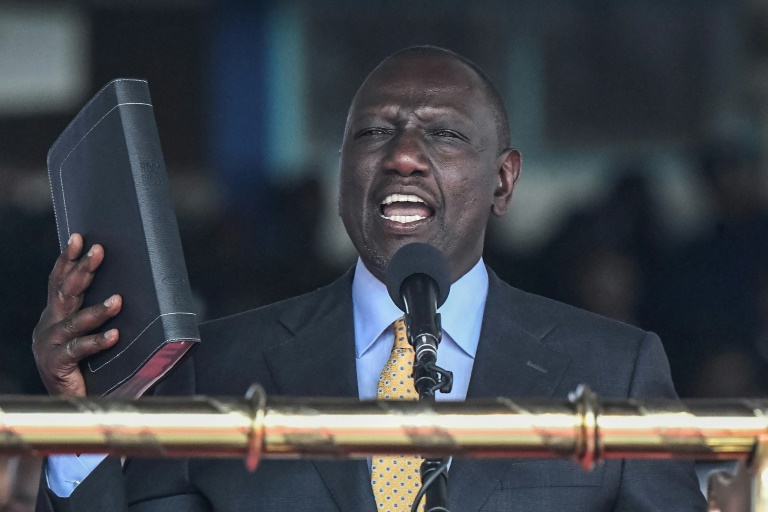
“I will work with all Kenyans irrespective of who they voted for,” the rags-to-riches businessman said in his inauguration speech, describing his swearing-in as a “moment like no other”.

The 55-year-old has built a career on defeating expectations. 

“In becoming Kenya’s fifth president, William Ruto symbolises determination to overcome the odds,” Kenyan historian Macharia Munene said in an opinion piece for The Standard newspaper on the eve of his swearing in.

“Today, I want to thank God, because a village boy has become the president of Kenya,” Ruto said on Tuesday. 

He had described the election as a battle between ordinary “hustlers” struggling to put food on the table and the elite Kenyatta and Odinga “dynasties” which had dominated Kenyan politics for decades.

“We want everyone to feel the wealth of this country. Not just a few at the top,” Ruto had said as he criss-crossed the country promoting his “bottom-up” economic plan.

– Effective strategist –

Ruto had backed Kenyatta in the previous two elections with a promise he would have his backing this time around.

Their now fractured alliance was a marriage of convenience forged in the aftermath of deadly post-poll violence in 2007-2008 that largely pitted the Kikuyu — Kenyatta’s tribe — against the Kalenjin, Ruto’s ethnic group.

Both men were indicted by the International Criminal Court (ICC), accused of stoking the ethnic unrest that left more than 1,100 people dead.

The cases were eventually dropped, with the prosecution complaining of a relentless campaign of witness intimidation.

But Ruto was left out in the cold after Kenyatta shook hands with longtime foe Odinga in a dramatic switch of political allegiance in 2018.

He bounced back with a campaign that was directed as much at Kenyatta as his rival at the ballot box, blaming the government for Kenya’s economic woes and even accusing the president of threatening him and his family.

Clad in the bright yellow of his United Democratic Alliance, whose symbol is the humble wheelbarrow, Ruto sought to reach out to those suffering most from the Covid-induced cost-of-living crisis that has been aggravated by the war in Ukraine.

“He succeeded in penetrating and vanquishing the collegiate club partly because the dynasties disdainfully underestimated him,” wrote Munene.

Kenyatta did not publicly congratulate Ruto until the very eve of his inauguration, while Odinga boycotted the ceremony.

– ‘God has been kind to me’ –

Observers attribute Ruto’s aggressiveness to the fact he has had to struggle to get everything he has achieved in life from his lowly start in Kenya’s Rift Valley, the Kalenjin heartland.

“I sold chicken at a railway crossing near my home as a child… I paid (school) fees for my siblings,” he once said. 

“God has been kind to me and through hard work and determination, I have something.”

His fortune is now said to run into many millions of dollars, with interests spanning hotels, real estate and insurance as well as a vast chicken farm. 

A teetotal father of six who describes himself as a born-again Christian, Ruto seldom lets a speech go by without thanking or praising God or reciting from the Bible.

He first got a foot on the political ladder — and detractors claim, access to funds — in 1992. 

After completing studies in botany, he headed the YK’92 youth movement tasked with drumming up support for the autocratic then-president Daniel arap Moi, also a Kalenjin.

In 1997, when he tried to launch his parliamentary career by contesting a seat on his home turf of Eldoret North, Moi told him he was a disrespectful son of a pauper.

Undeterred, Ruto went on to clinch the seat, which he retained in subsequent elections.

His detractors say he siphoned money from the YK’92 project and used it to go into business, and allegations of corruption and land grabs still hang over him.

But he has long dismissed such claims, once telling local media: “I can account for every coin that I have.”
What Kenya's new presidency could look like

Kenya’s new President William Ruto on Tuesday took charge of the East African economic powerhouse after the country’s Supreme Court confirmed his narrow victory over veteran politician Raila Odinga in the August 9 poll.

Odinga accepted the ruling but categorically said he did not agree with it, portending political divisions that the country is ill-equipped to cope with as it faces a cost-of-living crisis and a brutal drought.

Here is a look at what lies ahead as the new government takes shape: 

– Can Ruto mend the political divide? –

Kenya’s traditional ethnic voting blocs may have ceded ground to class dynamics in this year’s polls, but as in the case of previous elections, the result reflected a nation sharply split down the middle. 

An effective political strategist, Ruto portrayed the election as a battle between ordinary “hustlers” and “dynasties” — a reference to Odinga and outgoing President Uhuru Kenyatta, whose families have dominated politics since independence from Britain in 1963.

The 55-year-old deputy president scraped to victory by a margin of less than two percentage points and has struck a conciliatory tone since the results were announced, promising that his government will serve all Kenyans, regardless of political or ethnic affiliation.

According to the Eurasia Group political risk consultancy, “Ruto has worked to co-opt independent lawmakers and weak links in Azimio (Odinga’s coalition) to establish an operational majority sufficient to pass legislation and budgets” in parliament.

But Ruto’s relationship with Odinga and Kenyatta, former rivals who struck an unlikely alliance ahead of the poll, remains fractious. The outgoing president pointedly failed to publicly congratulate his long-standing deputy for winning the election until the very eve of his inauguration.

Odinga, meanwhile, boycotted the inauguration, charging that the election commission did not conduct a “free and fair” poll.

– How will the economy fare? –

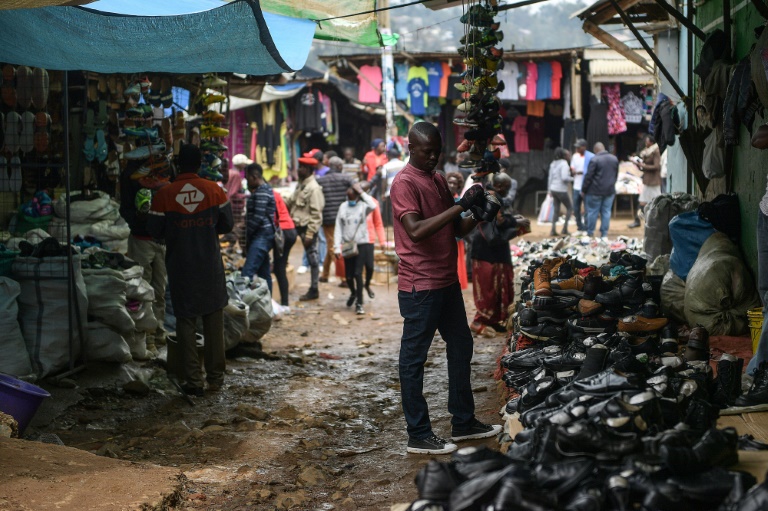
Kenya is the most dynamic economy in East Africa but many are suffering deep hardship. Prices for basic goods are skyrocketing in the wake of Covid and the war in Ukraine, and unemployment is a major problem particularly among the young.

Inflation soared to a 65-month high of 8.5 percent in August in the face of a weakening currency, rising fuel costs and a poorly implemented subsidy to halve the price of maize flour used to prepare ugali, a dense porridge that is Kenya’s staple food.

Ruto — who capitalised on growing frustration among Kenya’s poor — said he would establish a 50-billion-shilling ($415-million) “hustlers fund” to provide loans to small enterprises to help drive growth.

Florentina Kimoi, who hails from Ruto’s Rift Valley bastion of Eldoret, told AFP she hoped the former agriculture minister would pay attention to “long-suffering” farmers like her. 

“This year many farmers did not plant cash crops such as maize, cassava (tapioca) and wheat because the prices of fertilisers were too high,” said 81-year-old Kimoi.

“In the old days there was a lot of food but things have changed. Nowadays people need money to buy food and earn a livelihood.”

On Tuesday, Ruto promised to halve fertiliser prices “from next week” to reinvigorate farming — the backbone of the economy that contributes more than 20 percent to GDP. 

But he will also have to weigh the subsidies against the pressure imposed by the country’s $70-billion debt mountain — another challenge he has vowed to tackle during his rule.

– What about the fight against corruption? –

Ruto has promised to crack down on graft — a hot-button issue in a country where dozens of leaders are facing charges of embezzling public funds — but the promise rings hollow to many Kenyans.

Ruto himself boasts a shadowy reputation with graft claims against him going back years, and his scandal-hit running mate Rigathi Gachagua was ordered to forfeit almost $1.7 million in a court ruling following a corruption probe.

In an editorial last week, The Standard newspaper pleaded for Ruto to pick “men and women of integrity” to serve in his administration.

Transparency International ranked Kenya 128th out of 180 in its 2021 corruption perception index, saying the fight against graft had “stagnated”.

– How will Ruto treat Kenya’s neighbours? –

Ruto’s predecessor Kenyatta devoted a large chunk of his second term to playing peacemaker in East Africa, easing tensions with Somalia, intervening in the crisis in the Democratic Republic of Congo, and hosting talks between Sudan and Ethiopia.

Kenya’s allies are anxiously wondering what is next for a country that has evolved into a trusted ally and democratic anchor in a troubled region.

Analysts say the most pressing regional issue will be the fighting in Ethiopia between government forces and rebels that resumed last month, shattering a March truce.

Kenyatta had been touted as a possible mediator and offered Nairobi as a venue for peace talks, which the warring sides have both now agreed should be led by the African Union.

On Tuesday, with more than a dozen regional leaders attending his inauguration, Ruto sought to reassure Kenya’s allies, promising that his government would be “a dedicated partner to peace, security and prosperity (in) East Africa”.

He pledged to build on “peace initiatives in our region, including both in Ethiopia and in the Great Lakes region”, emphasising that Kenyatta would “continue chairing those discussions on behalf of the people of Kenya.”

Somalia president urges citizens to avoid Al-Shabaab territory

Somalia’s President Hassan Sheikh Mohamud urged citizens to stay away from areas controlled by Al-Shabaab jihadists as he vowed to ratchet up offensives against the militants.

The Al-Qaeda-linked insurgents have been waging a war against the government of the troubled Horn of Africa nation for 15 years and control large swathes of territory in the country.

Mohamud, who had earlier pledged “all-out war” against the group after it staged a deadly 30-hour hotel siege in the capital Mogadishu last month, called on “the Somali people to stay away from locations where Al-Shabaab is present”.

“Al-Shabaab will be confronted using every method that war allows — they will be bombed, raided and subjected to airborne attacks, so… stay away from them,” he said in a speech on Monday after wrapping up a high-level political conference in Mogadishu.

“Every Shabaab member is a target, every Shabaab army is target — just the same way they are targeting and killing the Somali people.”

The recently elected president urged people to stop taking their disputes to so-called shadow courts run by the jihadists — with Somalis complaining of weak enforcement by the country’s legal system.

“Don’t die in Al-Shabaab’s war when you are not one of them,” he said.

His comments came as the drought-hit nation teeters on the brink of famine for the second time in just over a decade, with the United Nations last week warning that time was running out to save lives.

The jihadist group has carried out several attacks in the mainly Muslim country since Mohamud took office in May, ending a protracted political crisis that had distracted from the fight against the jihadists.

On Sunday, Somalia’s ministry of information, culture and tourism announced on Twitter that the “Somali National Army assisted by the local civilians have liberated up to twenty towns… killing over a hundred militias of the (Al-Shabaab) group.”

“The terror group have been using these towns as strongholds for organising their terrorist attacks,” the ministry said in a statement.

– ‘Open war’ –

Military officials and residents told AFP on Monday that government forces supported by local clan militias had launched offensives in central Somalia’s Hiraan region, prompting the militants to flee.

“This is a major offensive and the army is getting support from the local communities who are fed up with Al-Shabaab,” Colonel Mohamed Adan, a member of the Somali military in the region, told AFP by phone. 

Ali Tohow Hassan, an elder from Hiraan, said local clan members decided to take up arms against the militants, who have been accused of extorting money from residents.

“Many of them have decided to assist the army in the fight… There is open war now and all the territories are frontlines,” he told AFP.

The fresh offensives came just over a week after the Islamists killed at least 19 civilians in a night-time attack in central Somalia.

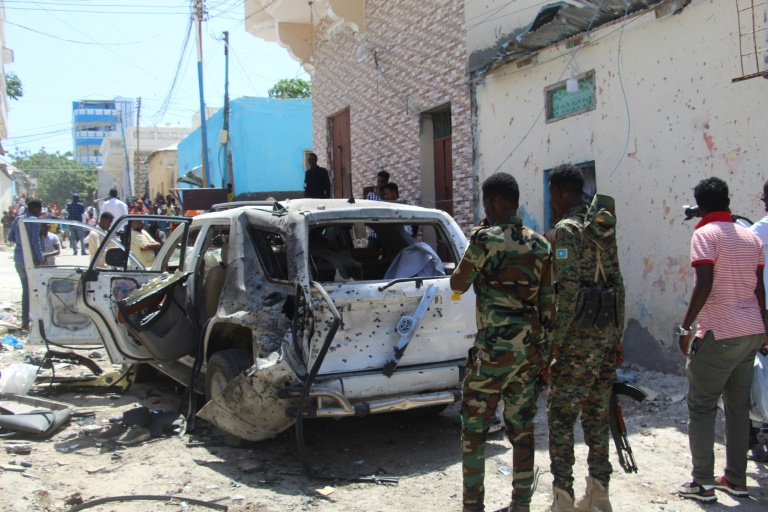
Last month, at least 21 people died in a gun and bomb attack targeting the popular Hayat Hotel, a favoured meeting spot for government officials.

Mohamud said in July that ending the insurgency required more than a military approach, but that his government would negotiate with Al-Shabaab only when the time was right.

The militants, who espouse a strict version of sharia or Islamic law, were driven out of Mogadishu by an African Union force in 2011.

But they still retain the ability to launch deadly strikes, often hitting hotels and restaurants as well as military and political targets.

In Nigeria, finding value in waste recycling

Mounds of waste scattered along roads and vast landfills are a Nigerian eyesore.

In Africa’s biggest economy and most populous country, collecting, sorting and recycling trash is despairingly rare.

But there is also good news. Some entrepreneurs are working hard to tackle the rubbish mountain, despite the many challenges.

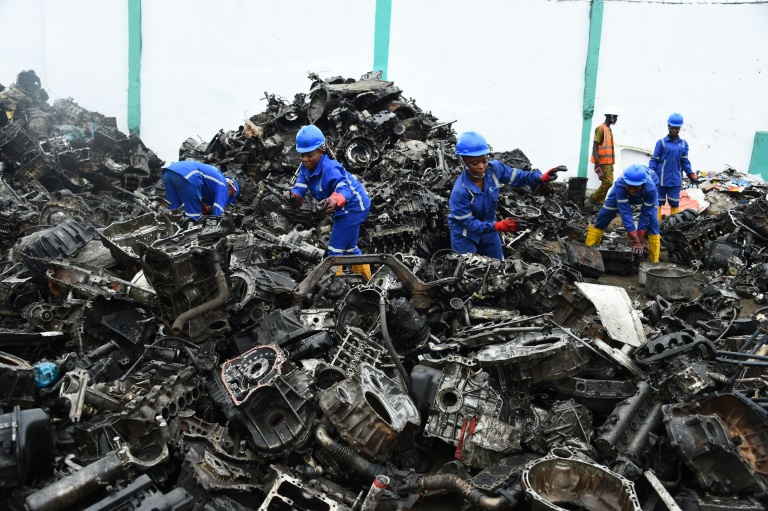
Romco Metals started recycling aluminium at its factory outside Lagos in 2015, drawn by global demand for the light, strong, flexible metal.

Buoyed by good results, it built a second facility outside Ghana’s capital Accra and now plans to open at least three new plants across Africa and triple production by 2025.

Aluminium is the world’s second most-used metal after steel and used widely in construction, medicine and car-making.

“Electric vehicles require more durable lighter material such as aluminium, and that’s where our materials end up,” said the company’s youthful founder, 32-year-old Raymond Onovwigun.

– Job creation –

A British-registered company, Romco melts down and recycles around 1,500 tonnes of discarded aluminium per month, out of a capacity of 3,000 tonnes.

It says it has created 450 direct jobs — 5,000 in total, in this labour-intensive sector — and plans to double that number within a year.

“Before… there was no work,” community leader Bankole Gbenga known as Chief Abore told AFP during a recent visit to the Lagos facility. 

Chief Abore says more than a hundred young people from his community alone now work for Romco in some capacity.

“Some are doing carpentry, some are welders… some of the youth are doing security,” said the 40-year-old.

Among those who have most benefited from Romco’s business are material suppliers like Mohammed Ashiru Madugu, who delivers several truckloads of metal scrap each week.

Madugu has a warehouse in northwestern Katsina, where suppliers from across the state and even neighbouring states bring him discarded metal.

He loads the goods onto trucks and sends them all the way to Lagos, more than a thousand kilometres (600 miles) away.

For one truck, he can get paid up to 26 million naira (about $60,000 dollars) although the price fluctuates.

The scrap supplier said those trips required escorts because of the risk of ambushes by criminal gangs on the road. 

Romco later told AFP that none of its suppliers need escorts and none had been involved in any attacks by criminals.

“We have had zero instances of anything of the sort,” it said in a statement.

– Vast problem –

Only a tiny fraction of waste is recycled in Nigeria, a country of some 210 million consumers.

Plastic, metal and glass that in advanced economies are routinely picked up and processed are mostly tossed out.

Each year, Nigeria disgorges 200,000 tonnes of plastic into the Atlantic, the UN Industrial Development Organisation reported last year.

In Lagos alone, a city of more than 20 million people, less than 10 percent total recyclables are currently collected, Ibrahim Adejuwon Odumboni, managing director of the Lagos State Management Agency told AFP.

By comparison, in the UK, more than 41 percent of waste picked up by local authorities was recycled last year, according to British statistics.

For Odumboni, recycling initiatives are to be commended but more should be done by the companies making aluminium beverage cans and other products.

“We need the manufacturers to invest in the collection system. In many parts of the world, a portion of what producers sell is going into the recovery of products. We currently don’t have that in Nigeria,” he said.

If companies selling aluminium products “are not held responsible (for collecting waste) then it doesn’t make any sense — we’re just going round and round in circle.”

He blames poor legislation but says an improved law on Extended Producer Responsibility (EPR) is currently being discussed in the state house of assembly.

EPR is an environmental policy in place in many countries that gives producers incentives to take responsibility for their products after they are used.

Another challenge for recyclers is carbon emissions from the energy they use to crush, shred or melt old materials.

Romco, for instance, uses compressed natural gas to turn the aluminium into ingots.

“(It) is still a fossil fuel but the best, most efficient fossil fuel. It doesn’t contain lead or sulphur,” said Onovwigun.

The company says, however, that it wants to be independent of fossil fuels and is “exploring the potential of using solar, green hydrogen, and biofuels.”

Ruto pledges to work for all Kenyans after swearing-in

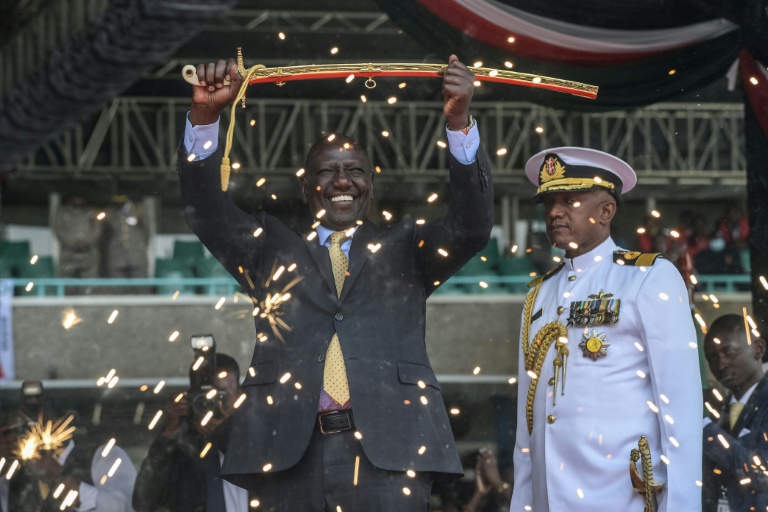
William Ruto pledged to work for all Kenyans after he was sworn in as president at a pomp-filled ceremony on Tuesday, five weeks after his narrow victory in a bitterly-fought but largely peaceful election.

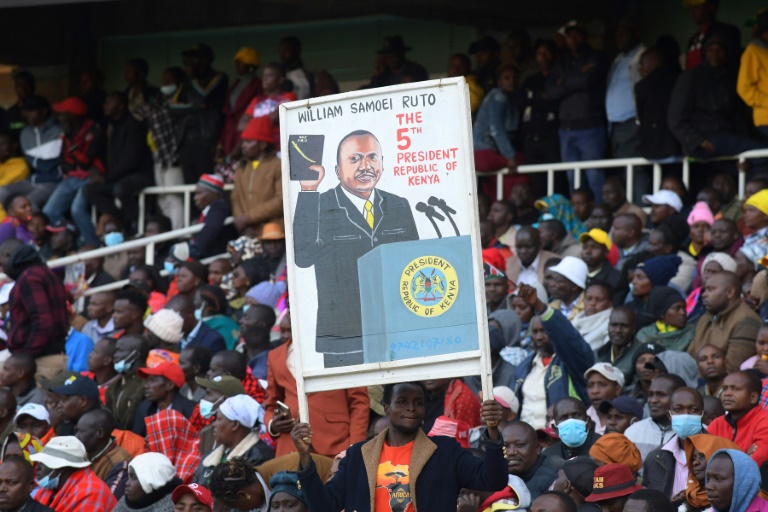
Tens of thousands of people joined regional heads of state at a packed stadium in Nairobi to watch him take the oath of office, with many spectators clad in the bright yellow of Ruto’s party, cheering loudly and waving Kenyan flags.

“I will work with all Kenyans irrespective of who they voted for,” the 55-year-old said in his inauguration speech, announcing a series of measures to tackle the country’s economic woes.

“In this process we have demonstrated the maturity of our democracy, the robustness of our institutions and the resilience of the Kenyan people.”

He described his swearing-in as Kenya’s fifth post-independence president as a “moment like no other,” adding: “Today, I want to thank God, because a village boy has become the president of Kenya.” 

A notoriously ambitious politician who has been deputy president since 2013, Ruto beat his rival Raila Odinga — who had the backing of now former president Uhuru Kenyatta — by less than two percentage points in the August 9 poll.

But the Supreme Court on September 5 unanimously upheld his victory, dismissing his opponents’ claims of fraud and mismanagement.

The rags-to-riches businessman, who once sold chickens on the roadside, faces a daunting task ahead with the country hit by a deep cost-of-living crisis, youth unemployment and a punishing drought.

– ‘Dawn of Ruto era’ – 

African Union Commission chair Moussa Faki Mahamat, who was at the ceremony, hailed the peaceful transfer of power in a post on Twitter, saying it was “an enduring feature of the country’s political maturity”.

The rise of the self-proclaimed “hustler-in-chief” has been closely watched by the international community, which looks to Kenya as a reliable and stable democracy in a turbulent region.

“Dawn of Ruto era,” trumpeted the front-page headline in The Standard newspaper, while The Star said: “Time for Ruto.” 

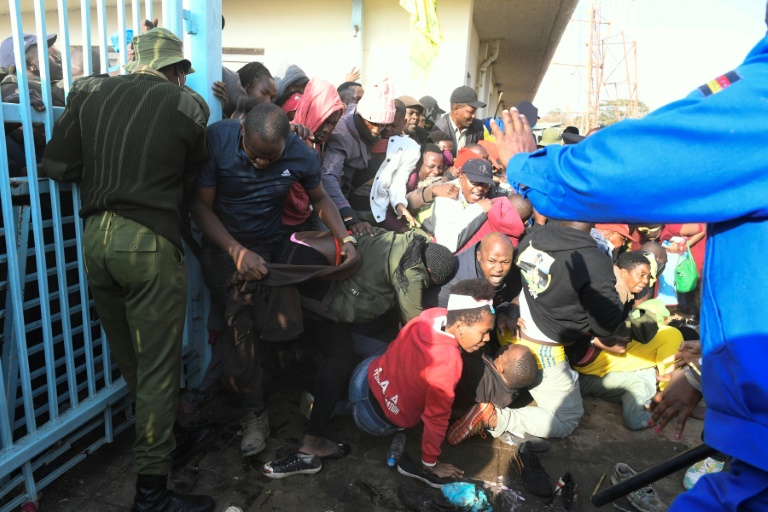
Several people were injured earlier as crowds tried to force their way into the stadium. Television footage showed dozens of people falling on top of one other in a crush at one entrance gate.

Foreign allies and independent observers praised the conduct of the vote, which was mostly peaceful and free of the violence that has marred past elections in the country of 50 million people.

Kenyatta, who in a stunning turn of events reached a pact with his longtime rival Odinga in 2018 and banished his deputy Ruto to the sidelines, had promised a smooth transfer of power.

The 60-year-old had pointedly failed to publicly congratulate his successor for several weeks, finally shaking Ruto’s hand at a meeting at the presidential residence on Monday.

And Ruto’s new deputy Rigathi Gachagua took potshots at Kenyatta during the inauguration ceremony, saying the new administration had inherited a “dilapidated economy”.

Odinga, meanwhile, turned down an invitation to attend the event, charging that the election commission did not conduct a “free and fair” poll.

– ‘Forge united front’ –

Observers say Ruto faces a tough assignment building goodwill after the divisive political campaign that lasted well over a year and was peppered with acrimony and personal slander.

“This is the time to close ranks, embrace opponents and help forge a united front devoid of cheap political competition,” The Standard wrote in an editorial.

Many Kenyans had stayed away from the ballot box, with disillusionment and economic hardship blamed for the low turnout.

“Given sky-high popular expectations and an economy in dire straits, governing may well prove tougher than campaigning,” the International Crisis Group think tank warned.

Ruto, whose new presidential coat of arms bears his party symbol, the humble wheelbarrow, will get a salary of about $144,000 a year as well as all the trappings of presidential office.

His inauguration marks the end of Kenyatta’s near decade in power, and one of the rare occasions his powerful family has not been at the apex of Kenyan politics.

Already one of Kenya’s wealthiest citizens, he is entitled to a generous send-off under the constitution as he leaves office having served the maximum two terms allowed — a tax-free lump sum of $324,000 and more than $600,000 in allowances each year.

Air strike on Ethiopia's Tigray: rebels, hospital

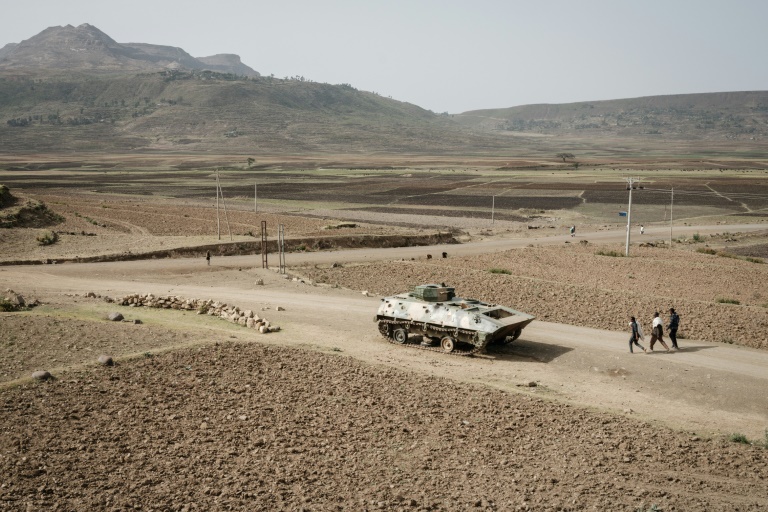
Ethiopia’s northern region of  Tigray was hit by an air strike on Tuesday, local officials said, two days after rebel authorities there said they were ready for a ceasefire.

The reported drone strike on the regional capital Mekele left at least one person injured, said Kibrom Gebreselassie, a senior official at Ayder Referral Hospital, the biggest in Tigray.

“One injured patient has arrived at Ayder. Total casualties not yet known,” he said on Twitter.

The Tigray People’s Liberation Front (TPLF), which has been at war with Ethiopia’s army and its allies for nearly two years, said a military drone “bombed” Mekele University in the early hours of Tuesday, causing injuries and property damage.

“This is happening after the Govt of Tigray established a negotiating team & expressed its readiness for peace talks,” said TPLF spokesman Kindeya Gebrehiwot on Twitter.

Dimtsi Weyane, a TPLF-affiliated TV network broadcasting in Tigray, said its station was also hit, forcing it off air and “causing heavy human and material damage”.

AFP was not able to independently verify the claims. Access to northern Ethiopia is severely restricted and Tigray has been under a communications blackout for over a year.

Prime Minister Abiy Ahmed’s government has not commented on the reported strike. Government spokespeople did not reply to requests for comment.

Tigray has been hit by several air strikes since fighting resumed in late August between government forces and their allies and TPLF rebels in northern Ethiopia.

– ‘Seize this moment’ –

The return to combat shattered a March truce that had paused the worst of the bloodshed, and dashed hopes of peacefully resolving a war that began nearly two years ago.

The fresh offensives have also drawn in Eritrean troops and cut off aid deliveries into Tigray, where the UN says a lack of food, fuel and medicine is causing a humanitarian disaster.

Both sides have accused the other of firing first, and fighting has spread from around southern Tigray to other fronts farther north and west.

On Sunday, the TPLF said it was ready for a ceasefire and would accept a peace process led by the African Union, removing an obstacle to negotiations with Abiy’s government.

The TPLF said a negotiating team including spokesman Getachew Reda and General Tsadkan Gebretensae, a former Ethiopian army chief now in Tigray’s central military command, was “ready to be deployed without delay”.

The international community has urged the warring sides to seize the moment for peace. 

“The United States welcomes Tigray regional authority statement,” White House Press Secretary Karine Jean-Pierre told reporters on Monday.

“It is high time for both sides to stop fighting and turn to dialogue to resolve their differences. The Ethiopian government has stated its willingness to go to talks anytime, anywhere, and should seize this moment.”

Addis Ababa is still yet to officially comment on the overture by Tigrayan authorities, which dominated national politics for nearly three decades until Abiy came to power in 2018.

– Grinding war –

UN Secretary-General Antonio Guterres, AU Commission chief Moussa Faki Mahamat, and the East African bloc IGAD have in recent days welcomed the offer by “the regional government of Tigray” to enter into peace talks.

Abiy’s government has declared the TPLF a terrorist group, and considers its claim to authority in Tigray illegitimate.

Untold numbers of civilians have been killed since the war erupted in Africa’s second most populous country, and grave rights violations by all sides against civilians have been documented.

In March, the UN said at least 304 civilians had been killed in the three months prior in air strikes “apparently carried out by the Ethiopian Air Force”.

The UN human rights office has documented aerial bombardments and drone strikes on refugee camps, a hotel and a market.

It has warned that disproportionate attacks against non-military targets could amount to war crimes.

The government has accused the TPLF of staging civilian deaths from air strikes to manufacture outrage, and insists it only targets military sites.

Abiy, a Nobel Peace laureate, sent troops into Tigray in November 2020 to topple the TPLF in response to what he said were attacks on federal army camps.

But the TPLF recaptured most of Tigray in a surprise comeback in June 2021.

It then expanded into the neighbouring regions of Afar and Amhara before the fighting reached a stalemate.

Ruto to be sworn in as Kenya's president after divisive poll

Tens of thousands of spectators packed a Nairobi stadium on Tuesday to watch William Ruto being sworn in as Kenya’s president after his narrow victory in a bitterly fought but largely peaceful election.

Several people were injured as crowds tried to force their way into the site, with television footage showing dozens of people falling on top of each other in a crush at one entrance gate.

Police have told Kenyans to watch proceedings from home after the 60,000-seat stadium was filled before dawn, with many spectators clad in the bright yellow of Ruto’s party and waving Kenyan flags.

About 20 heads of state and government are expected to attend the ceremony, with Ruto by law obligated to take the oath of office by 2:00 pm (1100 GMT), five weeks to the day since the August 9 election.

“Dawn of Ruto era,” trumpeted the frontpage headline in The Standard newspaper, while the Star said: “Time for Ruto.” 

A notoriously ambitious politician who has been deputy president since 2013, Ruto beat his rival Raila Odinga — who had been backed by outgoing president Uhuru Kenyatta — by less than two percentage points.

He now faces a daunting task to steer a polarised country gripped by a cost-of-living crisis and punishing drought, say analysts.

The 55-year-old rags-to-riches businessman who once sold chickens on the roadside will become the fifth president in Kenya’s post-independence history.

His rise to State House has been closely watched by the international community, which depends on Kenya as a reliable and stable democratic partner in a turbulent region.

– ‘Hand of brotherhood’ –

Foreign allies and independent observers praised the conduct of the vote, which was largely peaceful and free of the violence that has marred past elections in the country of 50 million people.

Ruto won by only around 200,000 votes out of 14 million but the Supreme Court on September 5 upheld his victory, dismissing his opponents’ claims of fraud and mismanagement.

Outgoing head of state Kenyatta, who in a stunning turn of events had backed his longtime arch-rival Odinga in the election race, has promised a smooth transfer of power.

Kenyatta finally shook hands with Ruto at a meeting at the presidential residence on Monday after pointedly failing to publicly congratulate his deputy for several weeks.

Ruto has struck a conciliatory tone, extending a “hand of brotherhood” to his rivals and their supporters.

“We are not enemies. We are Kenyans,” Ruto said after the court’s decision.

But observers say he faces a tough assignment building goodwill after a divisive and expensive political campaign that lasted well over a year and was peppered with acrimony and personal slander.

“This is the time to close ranks, embrace opponents and help forge a united front devoid of cheap political competition,” The Standard wrote in an editorial.

Many ordinary Kenyans stayed away from the ballot box, with disillusionment particularly among the youth and economic hardship blamed for the low turnout.

The East African political and economic powerhouse is reeling from a once-in-a-generation drought and inflation is at five-year highs. 

– Generous send-off –

Ruto said Sunday that Kenya was “in a deep economic hole” and repeated his pledge to lower the cost of living as a priority upon taking office.

From humble beginnings, the multi-millionaire cast himself as a champion for the downtrodden during his campaign, vowing to create jobs and tackle a cost-of-living crisis.

Among his ambitious promises was the creation of a 50-billion shilling ($415 million) “hustler fund” to provide loans to small businesses, and a commitment to bring down prices for fuel, grain and fertiliser.

The task to turn around the economic fortunes of the country may not be easy, the International Crisis Group think tank said, urging Ruto to quickly address the challenges.

“Given sky-high popular expectations and an economy in dire straits, governing may well prove tougher than campaigning,” it said.

Ruto’s inauguration marks the end of Kenyatta’s nearly decade in power, and one of the rare occasions his powerful family has not been at the apex of Kenyan politics.

Already one of Kenya’s wealthiest citizens, the outgoing president will receive a generous send-off under Kenya’s constitution as he leaves office having served two terms, the maximum allowed by law. 

The 60-year-old will receive a tax-free lump sum of $324,000 and more than $600,000 in allowances every year.

Kenyatta, the son of Kenya’s first president Jomo Kenyatta, will also have access to fully furnished offices, dozens of aides, VIP security and new cars of his choice, replaced every three years. 

In Nigeria, finding value in waste recycling

Mounds of waste scattered along roads and vast landfills are a Nigerian eyesore.

In Africa’s biggest economy and most populous country, collecting, sorting and recycling trash is despairingly rare.

But there is also good news. Some entrepreneurs are working hard to tackle the rubbish mountain, despite the many challenges.

Romco Metals started recycling aluminium at its factory outside Lagos in 2015, drawn by global demand for the light, strong, flexible metal.

Buoyed by good results, it built a second facility outside Ghana’s capital Accra and now plans to open at least three new plants across Africa and triple production by 2025.

Aluminium is the world’s second most-used metal after steel and used widely in construction, medicine and car-making.

“Electric vehicles require more durable lighter material such as aluminium, and that’s where our materials end up,” said the company’s youthful founder, 32-year-old Raymond Onovwigun.

– Job creation –

A British-registered company, Romco melts down and recycles around 1,500 tonnes of discarded aluminium per month, out of a capacity of 3,000 tonnes.

It says it has created 450 direct jobs — 5,000 in total, in this labour-intensive sector — and plans to double that number within a year.

“Before… there was no work,” community leader Bankole Gbenga known as Chief Abore told AFP during a recent visit to the Lagos facility. 

Chief Abore says more than a hundred young people from his community alone now work for Romco in some capacity.

“Some are doing carpentry, some are welders… some of the youth are doing security,” said the 40-year-old.

Among those who have most benefited from Romco’s business are material suppliers like Mohammed Ashiru Madugu, who delivers several truckloads of metal scrap each week.

Madugu has a warehouse in northwestern Katsina, where suppliers from across the state and even neighbouring states bring him discarded metal.

He loads the goods onto trucks and sends them -– with escorts because of frequent ambushes by criminal gangs on the road –- all the way to Lagos, more than a thousand kilometres (600 miles) away.

For one truck, he can get paid up to 26 million naira (about $60,000 dollars) although the price fluctuates.

– Vast problem –

Only a tiny fraction of waste is recycled in Nigeria, a country of some 210 million consumers.

Plastic, metal and glass that in advanced economies are routinely picked up and processed are mostly tossed out.

Each year, Nigeria disgorges 200,000 tonnes of plastic into the Atlantic, the UN Industrial Development Organisation reported last year.

In Lagos alone, a city of more than 20 million people, less than 10 percent total recyclables are currently collected, Ibrahim Adejuwon Odumboni, managing director of the Lagos State Management Agency told AFP.

By comparison, in the UK, more than 41 percent of waste picked up by local authorities was recycled last year, according to British statistics.

For Odumboni, recycling initiatives are to be commended but more should be done by the companies making aluminium beverage cans and other products.

“We need the manufacturers to invest in the collection system. In many parts of the world, a portion of what producers sell is going into the recovery of products. We currently don’t have that in Nigeria,” he said.

If companies selling aluminium products “are not held responsible (for collecting waste) then it doesn’t make any sense — we’re just going round and round in circle.”

He blames poor legislation but says an improved law on Extended Producer Responsibility (EPR) is currently being discussed in the state house of assembly.

EPR is an environmental policy in place in many countries that gives producers incentives to take responsibility for their products after they are used.

Another challenge for recyclers is carbon emissions from the energy they use to crush, shred or melt old materials.

Romco, for instance, uses compressed natural gas to turn the aluminium into ingots.

“(It) is still a fossil fuel but the best, most efficient fossil fuel. It doesn’t contain lead or sulphur,” said Onovwigun.

The company says, however, that it wants to be independent of fossil fuels and is “exploring the potential of using solar, green hydrogen, and biofuels.”

Air strike on Ethiopia's Tigray: rebels, hospital

The capital of Ethiopia’s northern Tigray region was hit by an air strike on Tuesday, hospital officials and Tigrayan rebels said.

The reported strike on Mekele came just days after the Tigray People’s Liberation Front (TPLF) said it was ready for a ceasefire and talks with Prime Minister Abiy Ahmed’s government after nearly two years of war.   

“AbiyAhmed’s drones targeted MekelleUniversity Adi Haki campus,” TPLF spokesman Getachew Reda said on Twitter.

Another TPLF spokesman, Kindeya Gebrehiwot, also said on Twitter that Mekele University had been “bombed” causing injuries and property damage, which was still being assessed.

“This is happening after the Govt of Tigray established a negotiating team & expressed its readiness for peace talks,” he said.

Kibrom Gebreselassie, a senior official at Tigray’s Ayder hospital, also said on Twitter there had been “an early morning drone attack” on Mekele.

“One injured patient has arrived at Ayder. Total casualties not yet known,” he said.

AFP was not able to independently verify the claims. Access to northern Ethiopia is severely restricted and Tigray has been under a communications blackout for over a year.

There was no immediate comment from government officials.

Tigray has been hit by several air strikes since fighting resumed in late August between government forces and their allies and TPLF rebels in northern Ethiopia.

The return to combat shattered a March truce that had paused the worst of the bloodshed, and dashed hopes of peacefully resolving a war that began nearly two years ago.

The fresh offensives have also drawn in Eritrean troops and cut off aid deliveries into Tigray, where the UN says a lack of food, fuel and medicine is causing a humanitarian disaster.

Both sides have accused the other of firing first, and fighting has spread from around southern Tigray to other fronts further to the north and west.

– Push for peace –

On Sunday, the TPLF said it was ready for a ceasefire and would accept a peace process led by the African Union, removing an obstacle to negotiations with Abiy’s government.

The TPLF said a negotiating team including Getachew and General Tsadkan Gebretensae, a former Ethiopian army chief now in Tigray’s central military command, was “ready to be deployed without delay”.

The international community — including UN Secretary-General Antonio Guterres, AU Commission chief Moussa Faki Mahamat, and US Secretary of State Antony Blinken — has urged the warring sides to seize the moment for peace. 

Addis Ababa is yet to officially comment on the overture.

The Ethiopian government has previously said it was ready for unconditional talks “anytime, anywhere”, brokered by the Addis Ababa-headquartered AU.

Untold numbers of civilians have been killed since the war erupted in Africa’s second most populous country, and grave rights violations by all sides against civilians have been documented.

In March, the UN said at least 304 civilians had been killed in the three months prior in air strikes “apparently carried out by the Ethiopian Air Force”.

The UN human rights office has documented aerial bombardments and drone strikes on refugee camps, a hotel and a market, and warned that disproportionate attacks against non-military targets could amount to war crimes.

The government has accused the TPLF of staging civilian deaths from air strikes to manufacture outrage, and insists it only targets military sites.

Abiy, a Nobel Peace laureate, sent troops into Tigray in November 2020 to topple the TPLF in response to what he said were attacks by the region’s former ruling party on federal army camps.

But the TPLF recaptured most of Tigray in a surprise comeback in June 2021.

It then expanded into the neighbouring regions of Afar and Amhara before the fighting reached a stalemate.

Several hurt in Kenya stadium crush ahead of Ruto swearing-in

Several people were injured on Tuesday as crowds tried to force their way into the stadium where Kenya’s president-elect William Ruto is to be sworn in, local media reported. 

Television footage showed hundreds of people scaling a wall to gain access to the 60,000-seat Kasarani stadium in Nairobi, which was packed with spectators before dawn.

Dozens of people can be seen falling on top of each other in a crush at one entrance gate, while first aid responders carried people to a waiting ambulance.

Police spokesman Bruno Shioso said the stadium was filled to capacity at 5:00 am (0200 GMT) and urged Kenyans to follow the proceedings from home. 

“In anticipation of being part of history, Kenyans have thronged to the venue in large numbers,” Shioso said in a statement. 

“To avoid logistical challenges, this is to request the public to make alternative arrangements to view the proceedings, especially from the confort of their homes.”

By law, Ruto must take the oath of office by 2:00 pm (1100 GMT) on Tuesday, five weeks to the day since the August 9 election that saw him clinch a narrow win over his rival Raila Odinga.

Close Bitnami banner
Bitnami