Africa Business

Ruto to be sworn in as Kenya's president after divisive poll

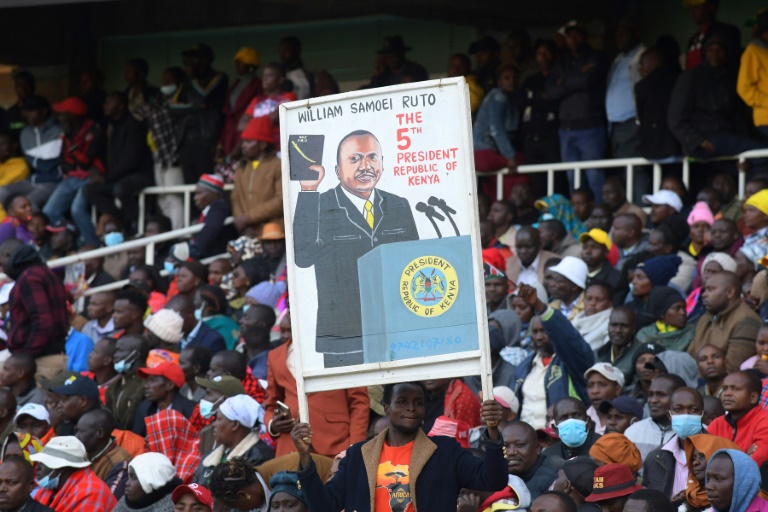
William Ruto will be sworn in as Kenya’s president on Tuesday after narrowly winning the coveted job in a bitterly fought but largely peaceful election.

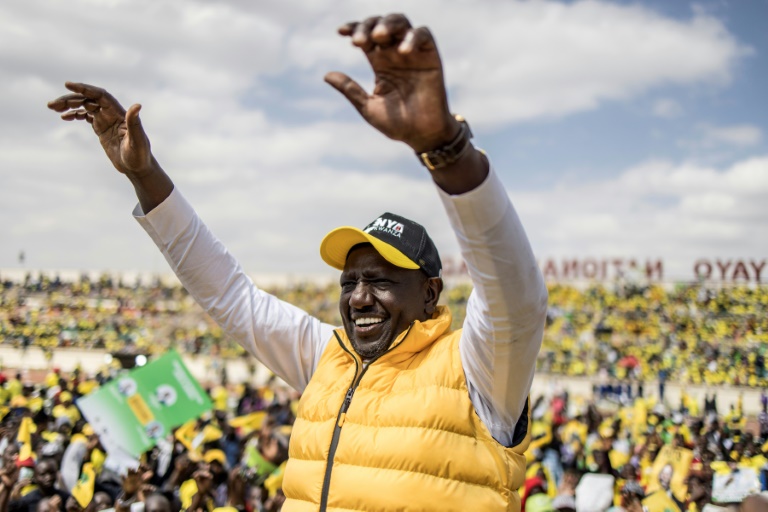
About 20 heads of state are expected to attend his inauguration at a 60,000 seat Nairobi stadium, which was already packed with spectators before dawn, many clad in the bright yellow of Ruto’s party and waving Kenyan flags.

A notoriously ambitious politician who has been deputy president since 2013, Ruto beat his rival Raila Odinga — who had been backed by outgoing president Uhuru Kenyatta — by less than two percentage points.

He now faces a daunting task to steer a polarised country gripped by a cost-of-living crisis and punishing drought, say analysts.   

The 55-year-old rags-to-riches businessman who once sold chickens on the roadside will become just the fifth president in Kenya’s post-independence history.

By law, Ruto must take the oath of office by 2:00 pm (1100 GMT) on Tuesday, five weeks to the day since the August 9 election.

His rise to State House has been closely watched by the international community, which depends on Kenya as a reliable and stable democratic partner in a turbulent region.

Foreign allies and independent observers praised the conduct of the vote, which was largely peaceful and free of the violence that has marred past elections in the country of 50 million people.

Ruto won by only around 200,000 votes out of 14 million cast but the Supreme Court on September 5 upheld his victory, dismissing claims by his opponents of fraud and mismanagement.

– ‘Hand of brotherhood’ –

Outgoing head of state Kenyatta, who in a stunning turn of events had backed his longtime archrival Odinga in the election race, has promised a smooth transfer of power.

Kenyatta finally shook hands with Ruto at a meeting at the presidential residence on Monday after pointedly failing to publicly congratulate his deputy for several weeks.

Ruto has struck a conciliatory tone, extending a “hand of brotherhood” to his rivals and their supporters.

“We are not enemies. We are Kenyans,” Ruto said after the court’s decision.

But observers say he faces a tough assignment building goodwill after a divisive and expensive political campaign that lasted well over a year and was peppered with acrimony and personal slander.

“This is the time to close ranks, embrace opponents and help forge a united front devoid of cheap political competition,” Kenyan newspaper The Standard wrote in a September 11 editorial.

Many ordinary Kenyans stayed away from the ballot box, with disillusionment particularly among the youth and economic hardship blamed for the low turnout.

The East African political and economic powerhouse is reeling from a once-in-a-generation drought and inflation is at five-year highs. 

Ruto said Sunday that Kenya was “in a deep economic hole” and repeated his pledge to lower the cost of living as a priority upon taking office.

From humble beginnings, the multi-millionaire cast himself as a champion for the downtrodden during his campaign, vowing to create jobs and tackle a cost-of-living crisis.

Among his ambitious promises was the creation of a 50-billion shilling ($415 million) “hustler fund” to provide loans to small businesses, and a commitment to bring down prices for fuel, grain and fertiliser.

– Generous send-off –

The task to turn around the economic fortunes of the country may, however, not be easy, the International Crisis Group (ICG) think tank said, urging Ruto to quickly address the challenges. 

“The 2022 Kenyan elections may have been a success… For Ruto, however, given sky-high popular expectations and an economy in dire straits, governing may well prove tougher than campaigning,” it said in a statement. 

Ruto’s inauguration marks the end of Kenyatta’s nearly decade in power, and one of the rare occasions his powerful family has not been at the apex of Kenyan politics.

Already one of Kenya’s wealthiest citizens, the outgoing president will receive a generous send-off under Kenya’s constitution as he leaves office having served two terms, the maximum allowed by law. 

The 60-year-old will receive a tax-free lump sum of $324,000 and more than $600,000 in allowances every year.

Kenyatta, the son of Kenya’s first president Jomo Kenyatta, will also have access to fully furnished offices, dozens of aides, VIP security and new cars of his choice, replaced every three years. 
What Kenya's new presidency could look like

Kenya’s William Ruto will on Tuesday take charge of the East African economic powerhouse after the country’s Supreme Court confirmed his narrow victory over veteran politician Raila Odinga in the August 9 poll.

Odinga accepted the ruling but categorically said he did not agree with it, portending political divisions that the country is ill-equipped to cope with as it faces a cost-of-living crisis and a brutal drought.

Here is a look at what lies ahead as the new government takes shape: 

– Can Ruto mend the political divide? –

Kenya’s traditional ethnic voting blocs may have ceded ground to class dynamics in this year’s polls, but as in the case of previous elections, the result reflected a nation sharply split down the middle. 

An effective political strategist, Ruto portrayed the election as a battle between ordinary “hustlers” and “dynasties” — a reference to Odinga and outgoing President Uhuru Kenyatta, whose families have dominated politics since independence from Britain in 1963.

The 55-year-old deputy president scraped to victory by a margin of less than two percentage points and has struck a conciliatory tone since the results were announced, promising that his government will serve all Kenyans, regardless of political or ethnic affiliation.

According to the Eurasia Group political risk consultancy, “Ruto has worked to co-opt independent lawmakers and weak links in Azimio (Odinga’s coalition) to establish an operational majority sufficient to pass legislation and budgets” in parliament.

But Ruto’s relationship with Odinga and Kenyatta, former rivals who struck an unlikely alliance ahead of the poll, remains fractious. The outgoing president pointedly failed to publicly congratulate his long-standing deputy for winning the election until the very eve of his inauguration.

– How will the economy fare? –

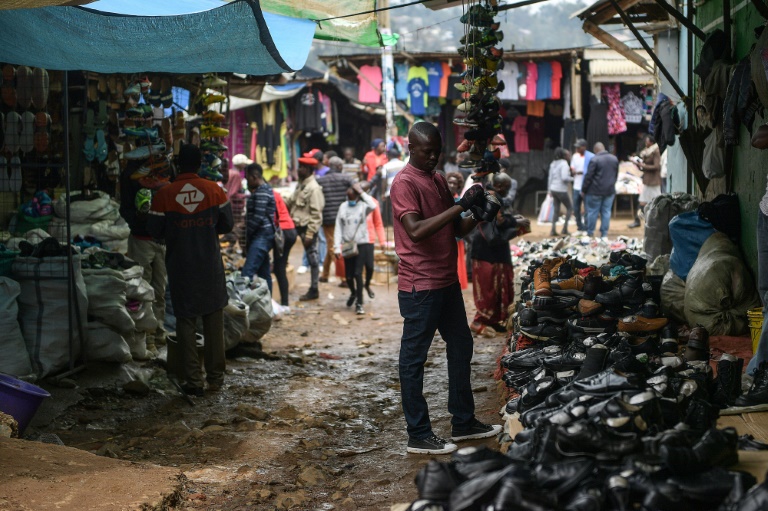
Kenya is the most dynamic economy in East Africa but many are suffering deep hardship. Prices for basic goods are skyrocketing in the wake of Covid and the war in Ukraine, and unemployment is a major problem particularly among the young.

Inflation soared to a 65-month high of 8.5 percent in August in the face of a weakening currency, rising fuel costs and a poorly implemented subsidy to halve the price of maize flour used to prepare ugali, a dense porridge that is Kenya’s staple food.

Ruto — who capitalised on growing frustration among Kenya’s poor — has vowed to tackle the cost-of-living crisis and the country’s $70-billion debt mountain.

He said he would establish a 50-billion-shilling ($415-million) “hustlers fund” to provide loans to small enterprises to help drive growth and a fertiliser subsidy to reinvigorate farming — the backbone of the economy that contributes more than 20 percent to GDP. 

Florentina Kimoi, who hails from Ruto’s Rift Valley bastion of Eldoret, told AFP she hoped the incoming president would pay attention to “long-suffering” farmers like her. 

“This year many farmers did not plant cash crops such as maize, cassava (tapioca) and wheat because the prices of fertilisers were too high,” said 81-year-old Kimoi.

“In the old days there was a lot of food but things have changed. Nowadays people need money to buy food and earn a livelihood.”

– What about the fight against corruption? –

Ruto has promised to crack down on graft — a hot-button issue in a country where dozens of leaders are facing charges of embezzling public funds — but the promise rings hollow to many Kenyans.

Ruto himself boasts a shadowy reputation with graft claims against him going back years, and his scandal-hit running mate Rigathi Gachagua was ordered to forfeit almost $1.7 million in a court ruling following a corruption probe.

In an editorial last week, The Standard newspaper pleaded for Ruto to pick “men and women of integrity” to serve in his administration.

Transparency International ranked Kenya 128th out of 180 in its 2021 corruption perception index, saying the fight against graft had “stagnated”.

– How will Ruto treat Kenya’s neighbours? –

Ruto’s predecessor Kenyatta devoted a large chunk of his second term to playing peacemaker in East Africa, easing tensions with Somalia, intervening in the crisis in the Democratic Republic of Congo, and hosting talks between Sudan and Ethiopia.

Kenya’s allies are anxiously wondering what is next for a country that has evolved into a trusted ally and democratic anchor in a troubled region.

Analysts say the most pressing regional issue will be the fighting in Ethiopia between government forces and rebels that resumed last month, shattering a March truce.

Kenyatta had been touted as a possible mediator and offered Nairobi as a venue for peace talks, which the warring sides have both now agreed should be led by the African Union.

William Ruto: Kenya's 'hustler-in-chief' president

Incoming Kenyan president William Ruto has clawed his way to the top as the nation’s “hustler-in-chief”, playing on his religious faith and humble beginnings selling chickens by the roadside.

Although one of the richest men in the country and dogged by corruption allegations for years, the fiercely ambitious Ruto portrayed himself as the champion of the poor and downtrodden during the August 9 election campaign.

He won a narrow victory over the veteran opposition leader Raila Odinga, despite running as the effective challenger after acrimoniously falling out with outgoing President Uhuru Kenyatta who backed his rival in the closely-fought race.

“In becoming Kenya’s fifth president, William Ruto symbolises determination to overcome the odds,” Kenyan historian Macharia Munene said in an opinion piece for The Standard newspaper on the eve of his swearing in.

Ruto, who served as deputy president under Kenyatta for almost a decade, has pledged to reach out to his rivals in the deeply divided country, and tackle its deep economic woes and endemic corruption.

“There is no room for vengeance,” the shadowy rags-to-riches businessman said after being declared president-elect in his first bid for the job.

He had described the election as a battle between ordinary “hustlers” struggling to put food on the table and the elite Kenyatta and Odinga “dynasties” that had dominated Kenyan politics for decades.

“We want everyone to feel the wealth of this country. Not just a few at the top,” Ruto had said as he criss-crossed the country promoting his “bottom-up” economic plan.

– Effective strategist –

The outgoing president did not publicly congratulate Ruto until the eve of his inauguration, which takes place Tuesday, after the 55-year-old had backed his boss in the previous two elections with a promise he would have Kenyatta’s backing this time around.

Their now fractured alliance was a marriage of convenience forged in the aftermath of deadly post-poll violence in 2007-2008 that largely pitted the Kikuyu — Kenyatta’s tribe — against the Kalenjin, Ruto’s ethnic group.

Both men were indicted by the International Criminal Court (ICC), accused of stoking the ethnic unrest that left more than 1,100 people dead.

The cases were eventually dropped, with the prosecution complaining of a relentless campaign of witness intimidation.

But Ruto was left out in the cold after Kenyatta shook hands with longtime foe Odinga in a dramatic switch of political allegiance in 2018.

He bounced back with a campaign that was directed as much at Kenyatta as his rival at the ballot box, blaming the government for Kenya’s economic woes and even accusing the president of threatening him and his family.

Clad in the bright yellow of his United Democratic Alliance, whose symbol is the humble wheelbarrow, Ruto sought to reach out to those suffering most from the Covid-induced cost-of-living crisis that has been aggravated by the war in Ukraine.

“He succeeded in penetrating and vanquishing the collegiate club partly because the dynasties disdainfully underestimated him,” wrote Munene.

– ‘God has been kind to me’ –

Observers attribute Ruto’s aggressiveness to the fact he has had to struggle to get everything he has achieved in life from his lowly start in Kenya’s Rift Valley, the Kalenjin heartland.

“I sold chicken at a railway crossing near my home as a child… I paid (school) fees for my siblings,” he once said. 

“God has been kind to me and through hard work and determination, I have something.”

His fortune is now said to run into many millions of dollars, with interests spanning hotels, real estate and insurance as well as a vast chicken farm. 

A teetotal father of six who describes himself as a born-again Christian, Ruto seldom lets a speech go by without thanking or praising God or reciting from the Bible.

He first got a foot on the political ladder — and detractors claim, access to funds — in 1992. 

After completing studies in botany, he headed the YK’92 youth movement tasked with drumming up support for the autocratic then-president Daniel arap Moi, also a Kalenjin.

In 1997, when he tried to launch his parliamentary career by contesting a seat on his home turf of Eldoret North, Moi told him he was a disrespectful son of a pauper.

Undeterred, Ruto went on to clinch the seat, which he retained in subsequent elections.

His detractors say he siphoned money from the YK’92 project and used it to go into business, and allegations of corruption and land grabs still hang over him.

But he has long dismissed such claims, once telling local media: “I can account for every coin that I have.”

Uhuru Kenyatta: inscrutable leader leaves a mixed legacy

Puppet or strategist, dilettante or power-hungry heir?

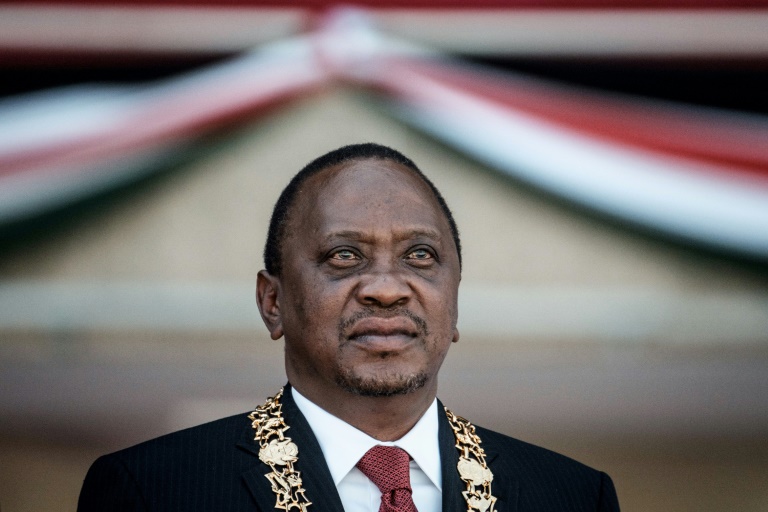
After nearly 10 years in power and a mixed legacy, Uhuru Muigai Kenyatta remains an enigma to many Kenyans as he leaves office.

But one thing is certain: it is impossible to disassociate the outgoing leader from his family, which ranks among Kenya’s richest, with two of Kenya’s four presidents emerging from the Kenyatta dynasty.

Unable to run again after two terms at the helm, his endorsement of historic arch-rival Raila Odinga appeared a cunning move by a kingmaker seeking to influence Kenya’s future long after retirement. 

But the play backfired. 

His deputy and once close ally William Ruto secured victory — and Kenyatta found himself rebuked even in his own heartland, as voters in Mount Kenya turned out for his opponent.

True to form, his motives or future plans remain unclear.

But many believe he will build on the diplomatic legacy crafted since his re-election in 2017.

The 60-year-old has worked hard to raise Kenya’s international stature and fashioned himself as a regional statesman, seeking to resolve conflicts in Ethiopia and the Democratic Republic of Congo.

He also strengthened its status as an East African economic powerhouse, launching several major infrastructure projects including a Nairobi expressway inaugurated in July.

But these projects also caused Kenya’s debt to balloon to about $70 billion.

In his final address to the nation on the eve of Ruto’s inauguration, Kenyatta said the economy had tripled under his watch and Kenya was on track to becoming a middle-income country.

“In all the work I have done as president… I have been guided by the dream of our forefathers: to eliminate poverty, ignorance and disease, to improve the quality of life of all Kenyans and to create conditions for everyone to achieve their dreams,” he said.

– Political alliances –

His avowed fight against corruption has prompted bemusement and even ridicule among Kenyans who have long seen the Kenyatta family as the embodiment of the elite stranglehold on power.

His father Jomo served as independent Kenya’s first president and the family is the country’s largest landowner, with an empire that includes dairy giant Brookside, the NCBA bank and television broadcaster Mediamax.

His own fortune was estimated at $500 million by Forbes in 2011.

Born to Jomo and his fourth wife “Mama” Ngina in October 1961, Uhuru (“freedom” in Swahili) studied in the US and entered politics in the mid-1990s.

Over the years “the prince of Kenyan politics” has allied himself with leaders across the spectrum, from the autocrat Daniel arap Moi — an early mentor — to former president Mwai Kibaki, whom he backed in the 2007 election.

That disputed vote led to an eruption of politically-motivated tribal violence largely involving two of Kenya’s main ethnic groups, the Kikuyu and the Kalenjin, that saw more than 1,100 people killed.

In 2013, Kenyatta — a Kikuyu — allied with Ruto, a Kalenjin, and was elected president. 

Both were indicted by the International Criminal Court for their role in the 2007-2008 killings but the cases eventually collapsed because of what the prosecution said was a relentless campaign of witness intimidation.

Kenyatta’s 2017 re-election bid plunged the country into turmoil, as police cracked down on opposition protests to deadly effect.

His victory was annulled by the Supreme Court, but he won a re-run after his then opponent Odinga boycotted the process.

But in March 2018, the two men stunned the nation by shaking hands and declaring a truce — known simply as “the handshake” — that consigned Ruto to the sidelines.

Kenyatta’s pet political project, the Building Bridges Initiative (BBI) which aimed to expand the executive, hit a roadblock after the Supreme Court ruled it illegal.

Many saw the constitutional proposals, which included the creation of a new prime ministerial post allegedly earmarked for Kenyatta, as a final bid to stay in power after his last term as president.

– ‘Party animal’ –

Kenya’s global profile rose under his watch. He welcomed foreign investors and a succession of visiting dignitaries including former US president Barack Obama and Pope Francis.

Some diplomatic sources characterise him as “a party animal who didn’t want the job” while others describe him as an astute politician with a common touch “who knows how to talk to people”.

A regular churchgoer, he easily mixes with ordinary Kenyans, eagerly gets down on the dance floor and joshes in the local youth slang.

His shy brother Muhoho manages the family finances, while Kenyatta reportedly enjoys driving around Nairobi late at night, incognito and protected by a handful of bodyguards.

Despite many Kenyans suspecting Kenyatta will keep his hand in the game, he himself has dismissed the speculation.

“I don’t want to remain in power as they allege. This is a difficult job,” he told a prayer service last month.

“Ten years for me is enough.”

Burkina junta chief sacks defence minister as jihadist violence rages

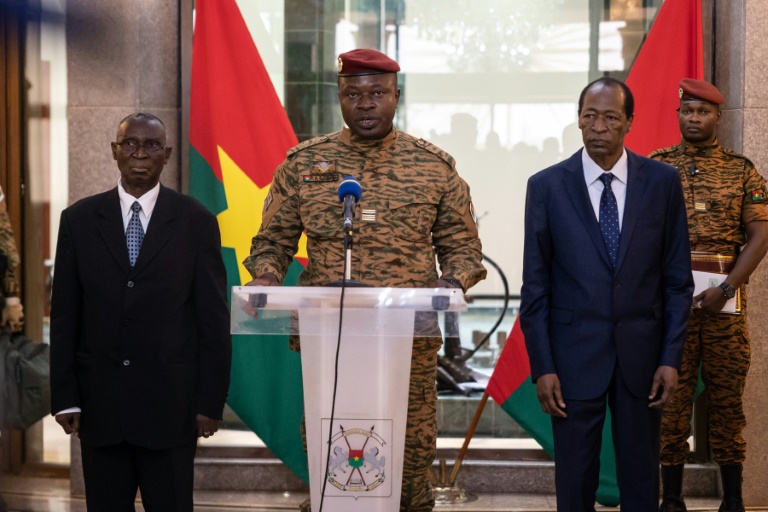
Burkina Faso junta chief Lieutenant-Colonel Paul-Henri Sandaogo Damiba, who took power in a January coup, has sacked his defence minister and assumed the role himself after a series of jihadist attacks, according to decrees published Monday.

The first decree, read on national television, removed General Barthelemy Simpore as defence minister, while the second said the “president has taken over the duties of the minister of national defence and veterans”.

Damiba headed a group of officers who mounted a coup on January 24, toppling elected leader Roch Marc Christian Kabore, who had failed to stem the jihadist insurgency that first emerged in Mali in 2012.

Much of the Sahel region is now battling the insurgency after it spread to Burkina Faso in 2015, then to Niger. In recent years, the violence has also begun to spill over into West African coastal states Ivory Coast and Togo.

The mini-shuffle in Burkina Faso is the first since the appointment of a transitional government in March. At that time, Damiba chose to retain Simpore, who had been appointed by Kabore.

In another change, Colonel-Major Silas Keita was named minister delegate in charge of national defence and promoted to brigadier general. He was the only new minister introduced.

The shuffle follows a string of deadly jihadist attacks this month in the landlocked West African country, where the insurgency has claimed more than 2,000 lives and forced about 1.4 million people to leave their homes.

Attacks have increased since the start of the year, despite the junta’s vow to make security its top priority.

September has been particularly bloody.

Two soldiers died and a dozen “terrorists” were killed Monday during an attack against a military detachment in Burkina Faso’s jihadist-hit north, the army said.

Less than a week earlier, security sources said separate attacks by suspected jihadists had killed nine people, mostly civilians, in the north.

On September 5, at least 35 civilians were killed and 37 wounded when an improvised explosive device blast struck a convoy carrying supplies between Djibo and Bourzanga. 

In early September, Damiba had welcomed a “relative calm” in several locations. He said “offensive actions” by the army had been intensified and asserted that a dialogue process with certain armed groups had led “dozens of youth” to lay down their arms.

But the attacks remain numerous.

More than 40 percent of the country is outside government control. 

ICC orders reparation review in DR Congo warlord case

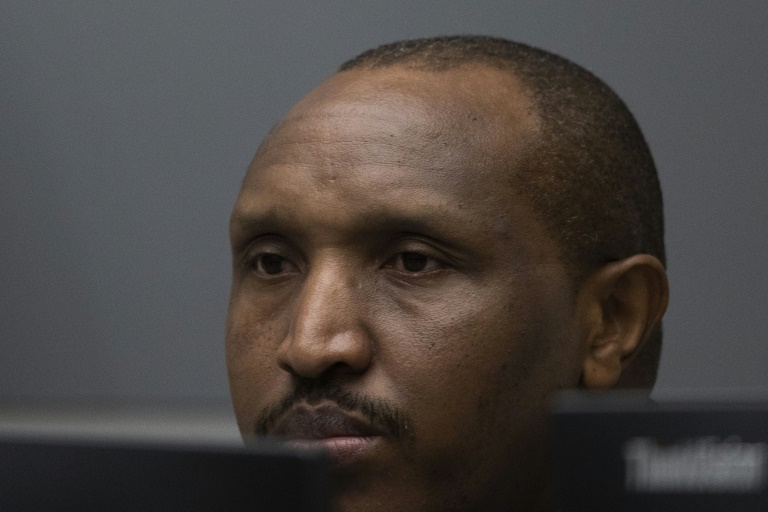
The International Criminal Court on Monday ordered the review of a $30 million reparation package for victims of DR Congo warlord Bosco Ntaganda, saying the number eligible for compensation was absolutely unclear.

Named the “Terminator” for his reign of terror in the vast African country in the early 2000s, Ntaganda was jailed for 30 years in 2019 for war crimes and crimes against humanity.

Last year the Hague-based court awarded $30 million (29.6 million euros) in reparations including for victims of crimes by child soldiers, rape and sexual slavery.

But judges Monday agreed with Ntaganda’s lawyers on a number of points on appeal — including on the exact number of victims who needed to be compensated and how trial judges determined the amount which Ntaganda had to pay.

“The reparations order was made without having any concrete estimate as to one of its fundamental parameters, namely the number of victims” to be compensated, Judge Marc Perrin de Brichambaut said.

Trial judges not only failed to say how many thousands of victims there may have been, “but also at least gave the impression that the relevant figure might be anywhere between at least 1,100 to… 100,000,” victims, he said.

This had a domino effect, meaning it was also “not discernable… how the sum of $30 million was then arrived at,” De Brichambaut said.

“Setting an amount for the award without reference to the concrete estimated number of victims constitutes an error,” the judge said.

The ICC’s appeals judges “reversed the findings of the Trial Chamber” and sent it back so a new reparations order based on more accurate numbers could be issued.

It was not known when a new ruling on compensation will be issued but the decision delayed the payment of reparations to victims — many who have been waiting for years.

The ICC last year upheld a 30-year sentence on appeal for war crimes against Ntaganda.

The Rwandan-born 48-year-old was convicted of five counts of crimes against humanity and 13 counts of war crimes, including murder, sexual slavery, rape and using child soldiers.

Ntaganda was the first person to be convicted of sexual slavery by the court. 

Many of the other charges related to massacres of villagers in the mineral rich Ituri region of the Democratic Republic of Congo.

jhe/ach 

Egypt's Sisi to make first post-rift visit to Qatar

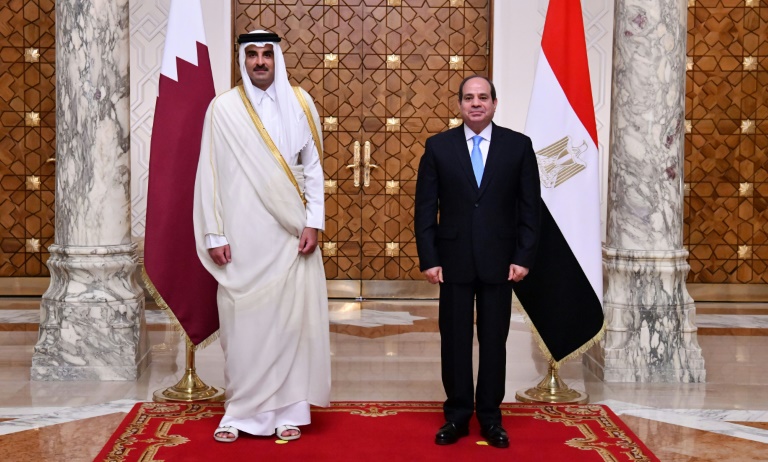
Egypt’s President Abdel Fattah al-Sisi is to visit Qatar on Tuesday for the first time since a four-year rift between Cairo and Doha, the royal palace announced.

The Qatari palace said on Twitter that Sisi would meet with the energy-rich Gulf state’s emir, Sheikh Tamim bin Hamad Al-Thani, on a visit which the official news agency QNA described as marking “a new era in relations” between the two Arab countries.

The emir visited Cairo in June, when Qatari investments in cash-strapped Egypt were on the agenda, as well as cooperation in the energy and agriculture sectors.

In late March, Cairo said Qatar planned to invest five billion dollars in Egypt, while hydrocarbon giant QatarEnergy announced an agreement with US major ExxonMobil to acquire a 40-percent stake in a gas exploration block off Egypt in the Mediterranean.

Cairo had joined Saudi Arabia and its Gulf allies, the UAE and Bahrain, in cutting ties with Doha in June 2017 over its support for the Muslim Brotherhood and alleged soft line on Iran.

Their blockade of Qatar was lifted in January 2021.

Uganda lifts ban on 'immoral' music festival

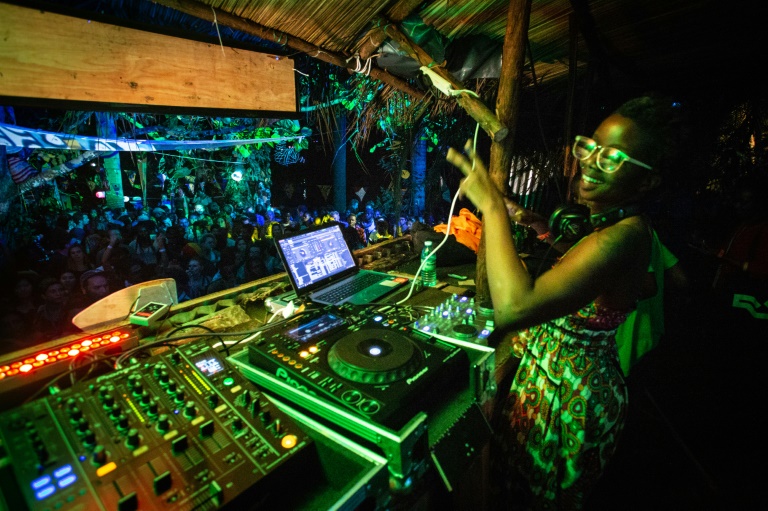
Uganda said on Monday it would allow a popular music festival to go ahead this month, reversing a ban imposed over claims the event promoted sex, homosexuality and drug use.

The four-day Nyege Nyege festival brings together artists from across Africa to entertain 10,000 revellers on the banks of the Nile. 

Last week, Uganda’s parliament banned the event for the second time since 2018, saying it “promotes a lot of immorality”.

The move prompted an outcry, with Uganda’s tourism minister among those warning it would have a harmful impact on the economy as the tourism industry recovers from the Covid-19 pandemic.

On Monday, Information Minister Chris Baryomunsi said the September 15-18 festival could go ahead, but would be ordered shut if there were breaches of Uganda’s laws or its culture and norms.  

“The clearance of the festival was after taking note of the benefits that will accrue from the festival presenting Uganda as a tourism destination of choice,” Baryomunsi told AFP. 

He said that under guidelines distributed to organisers, minors would not be allowed to attend and that “sex orgies and nudity are prohibited at the festival”.

“Contraband, narcotic drugs, vulgar language, songs, expressions and gestures are prohibited,” the minister said, warning that if there were serious breaches the police would halt the event and clear the site.

Nyege Nyege means an irresistible urge to dance in the local Luganda language, but it can have a sexual connotation in other languages in the region.

The festival was banned in 2018 by former ethics minister Simon Lokodo, a fervent Christian and outspoken homophobe, who described it as an orgy of homosexuality, nudity and drugs akin to “devil worship”.

But he was forced to lift the ban barely a day later, following outrage on social media.

Uganda is notorious for its intolerance of homosexuality — which is criminalised in the country — and strict Christian views on sexuality in general.

In 2013 Ugandan lawmakers passed a bill that called for life in prison for people caught having gay sex, although a court later struck down the law.

Liberian officials resign after US corruption allegations

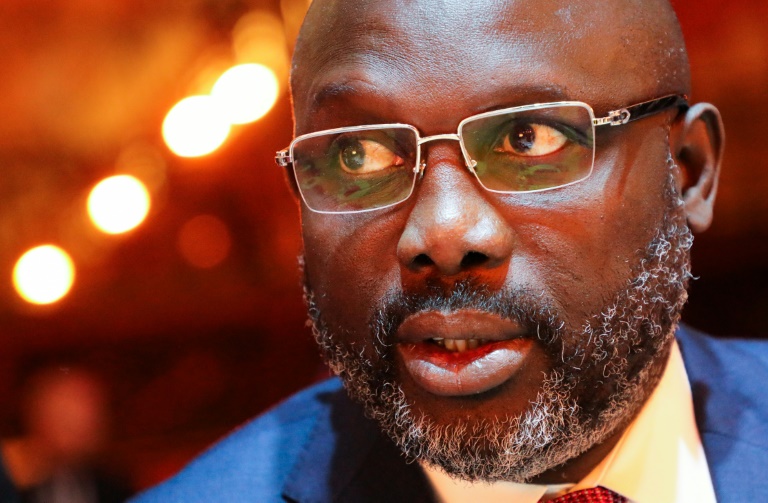
Liberian President George Weah on Monday accepted the resignations of three close allies after the United States last month accused them of corruption, the office of the presidency said Monday.

Nathaniel McGill, the former minister for Presidential Affairs who served as chief of staff to the president, Bill Twehway, who headed the National Port Authority, and Sayma Syrenius Cephus, Liberia’s solicitor general and chief prosecutor have all resigned, according to two statements from the presidency.

The president suspended the men from their roles in mid-August after Washington imposed sanctions on them over corruption allegations tied to multi-million-dollar contracts and at least $1.5 million in diverted public funds.

The affair dominated headlines in Liberia for weeks and Weah had been criticised by opposition leaders and human rights groups for not dismissing them.

In letters written to the president last month, McGill and Cephus responded to the allegations, with McGill denying some accusations and decrying others as “vague”. 

Cephus had said he rejected and denied all accusations.

They formally tendered their resignations on Monday.

All three had on August 15 been designated by the US Treasury’s Office of Foreign Assets Control “for being a foreign person who is a current government official who is responsible for or complicit in, or who has directly or indirectly engaged in, corruption.”

This included the “the misappropriation of state assets, the expropriation of private assets for personal gain, corruption related to government contracts or the extraction of natural resources, or bribery.”

Fighting corruption was one of Weah’s major commitments before taking office in 2018, but he has struggled to fulfil his election promise.

It remains endemic, with the watchdog Transparency International ranking Liberia 136th of 180 countries in its 2021 corruption perceptions index.

The accusations came just over a year ahead of Liberia’s presidential election, slated for October 10, 2023.

Queen's death ignites debate over Africa's colonial past

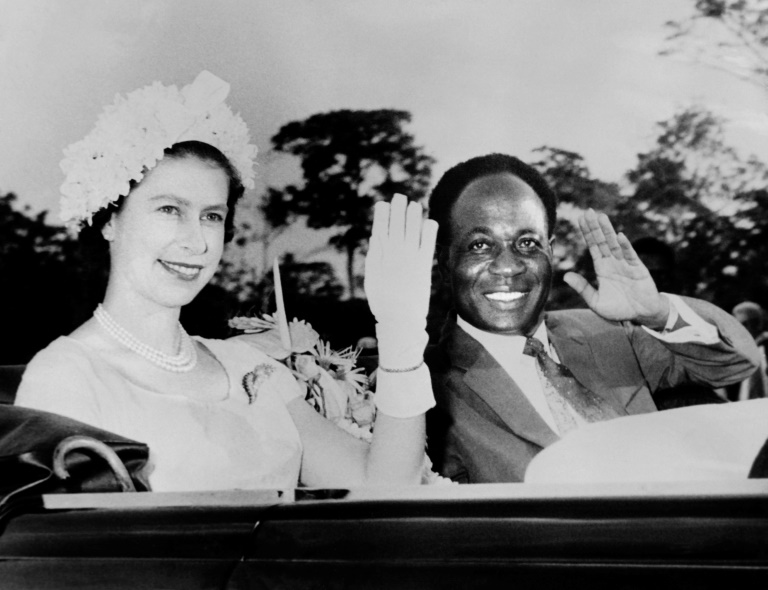
From Kenya and Nigeria to South Africa and Uganda, Queen Elizabeth’s death met with an outpouring of official condolences, mourning and memories of her frequent visits to Africa during her seven decades on the throne. 

But the British monarch’s passing also revived a sensitive debate over Africa’s colonial past.

Her death came at a time when European countries are under pressure to reckon with their colonial histories, atoning for past crimes and returning stolen African artefacts held for years in museums from London and Paris.

Nigerian President Muhammadu Buhari and Kenyan President Uhuru Kenyatta were among those expressing condolences for the loss of an “icon.”

But many Africans reflected more on the tragedies from colonial times, including events that occurred in the first decade of her rule.

Kenya gained independence from Britain in 1963, after an eight-year-long rebellion that left at least 10,000 people dead.

Britain agreed in 2013 to compensate over 5,000 Kenyans who had suffered abuse during the Mau Mau revolt, in a deal worth nearly 20 million pounds ($23 million). 

“The Queen leaves a mixed legacy of the brutal suppression of Kenyans in their own country and mutually beneficial relations,” The Daily Nation, Kenya’s biggest newspaper, wrote in a weekend editorial.

Elizabeth was visiting Kenya in 1952 when her father died and she became queen.

“What followed was a bloody chapter in Kenya’s history, with atrocities committed against a people whose only sin was to demand independence.”

“While the ties with Britain have been useful, it is difficult to forget those atrocities.”

– Treasures, Biafra war –

As part of recent restorations for the past, Nigeria and neighbouring Benin have seen the return from Britain and France of the first of thousands of artefacts plundered during colonial times.

Nigeria’s so-called Benin Bronzes — 16th to 18th century metal plaques and sculptures — were looted from the palace of the ancient Benin Kingdom and ended up in museums across the US and Europe.

Nigeria’s Buhari said the country’s history “will never be complete without a chapter on Queen Elizabeth II”.

While some praised her role leading up to Nigeria’s independence, others pointed out she was head of state when Britain supported the Nigerian army during the country’s civil war.

More than one million people died between 1967-1970, mostly from starvation and disease, during the conflict after ethnic Igbo officers declared independence in the southeast.

“If anyone expects me to express anything but disdain for the monarch who supervised a government sponsored genocide…you can keep wishing upon a star,” Nigerian-born US-based professor Uju Anya said, in a Twitter reference to the Biafra war that triggered fierce debate on social media.

Similar mixed reactions were expressed in South Africa, where President Cyril Ramaphosa called her an “extraordinary” figure.

But the opposition Economic Freedom Fighters or EFF movement was more dismissive, recalling decades of apartheid, in which Britain, the former coloniser, was often passive.

“We do not mourn the death of Elizabeth, because to us her death is a reminder of a very tragic period in this country and Africa’s history,” EFF said in a statement.

– Ugandan legacy –

In Uganda, some went back further, recalling the Bunyoro Kingdom’s ruler Omukama Kabalega, who resisted British rule in the late 1890s. 

He was deposed and exiled to the Seychelles and the kingdom was then absorbed into the British empire.

“As much as the queen was able to maintain cohesion of the former British colonies, she had not addressed adequately the injustices meted out on some of the states including Uganda,” said former intelligence director and now political analyst, Charles Rwomushana.

Last month, the Uganda Tourism Association called for a committee to lead the return of Ugandan artefacts from British and other foreign museums, including some 300 from Bunyoro, according to the parliament.

Charles Onyango-Obbo, writer and Uganda government critic, said on Twitter many long-ruling African leaders used Queen Elizabeth’s 70-year reign to justify their own decades in power. 

“Now that she has passed, they are scrambling to learn how to make their case convincingly in the past tense.” 

Mukoma Wa Ngugi, the son of Kenya’s world renowned writer Ngugi wa Thiong’o and who is himself a novelist as well as an associate professor of English at Cornell University, also questioned the Queen’s legacy in Africa.

“If the queen had apologised for slavery, colonialism and neocolonialism and urged the crown to offer reparations for the millions of lives taken in her/their names, then perhaps I would do the human thing and feel bad,” he wrote on Twitter. 

“As a Kenyan, I feel nothing. This theater is absurd.”

Close Bitnami banner
Bitnami