Africa Business

Queen's death ignites debate over Africa's colonial past

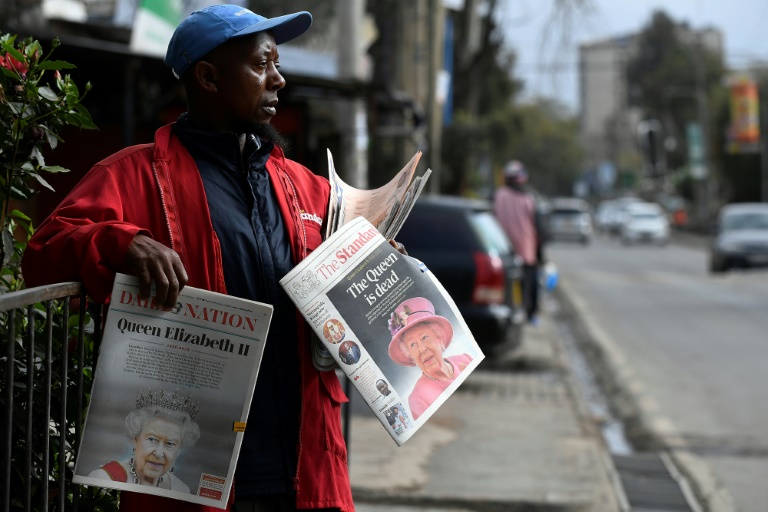
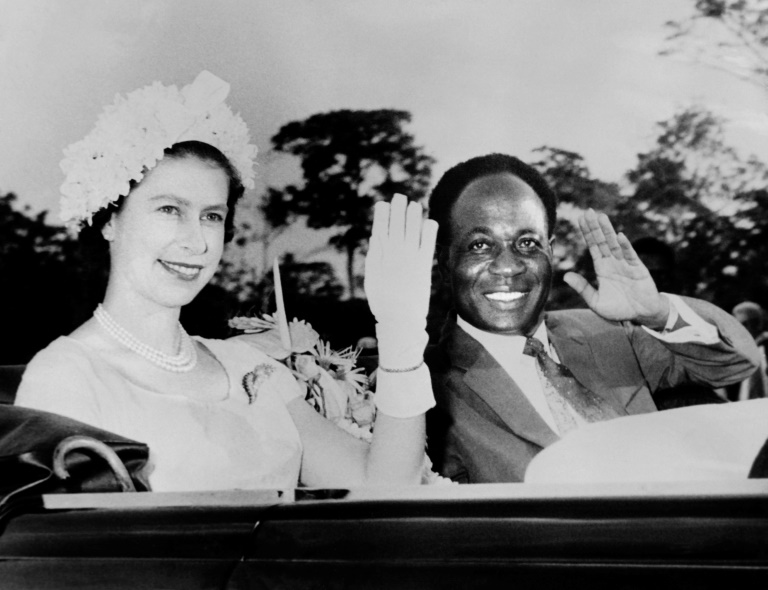
From Kenya and Nigeria to South Africa and Uganda, Queen Elizabeth’s death met with an outpouring of official condolences, mourning and memories of her frequent visits to Africa during her seven decades on the throne. 

But the British monarch’s passing also revived a sensitive debate over Africa’s colonial past.

Her death came at a time when European countries are under pressure to reckon with their colonial histories, atoning for past crimes and returning stolen African artefacts held for years in museums from London and Paris.

Nigerian President Muhammadu Buhari and Kenyan President Uhuru Kenyatta were among those expressing condolences for the loss of an “icon.”

But many Africans reflected more on the tragedies from colonial times, including events that occurred in the first decade of her rule.

Kenya gained independence from Britain in 1963, after an eight-year-long rebellion that left at least 10,000 people dead.

Britain agreed in 2013 to compensate over 5,000 Kenyans who had suffered abuse during the Mau Mau revolt, in a deal worth nearly 20 million pounds ($23 million). 

“The Queen leaves a mixed legacy of the brutal suppression of Kenyans in their own country and mutually beneficial relations,” The Daily Nation, Kenya’s biggest newspaper, wrote in a weekend editorial.

Elizabeth was visiting Kenya in 1952 when her father died and she became queen.

“What followed was a bloody chapter in Kenya’s history, with atrocities committed against a people whose only sin was to demand independence.”

“While the ties with Britain have been useful, it is difficult to forget those atrocities.”

– Treasures, Biafra war –

As part of recent restorations for the past, Nigeria and neighbouring Benin have seen the return from Britain and France of the first of thousands of artefacts plundered during colonial times.

Nigeria’s so-called Benin Bronzes — 16th to 18th century metal plaques and sculptures — were looted from the palace of the ancient Benin Kingdom and ended up in museums across the US and Europe.

Nigeria’s Buhari said the country’s history “will never be complete without a chapter on Queen Elizabeth II”.

While some praised her role leading up to Nigeria’s independence, others pointed out she was head of state when Britain supported Nigerian army during the country’s civil war.

More than one million people died between 1967-1970, mostly from starvation and disease, during the conflict after ethnic Igbo officers declared independence in the southeast.

“If anyone expects me to express anything but disdain for the monarch who supervised a government sponsored genocide…you can keep wishing upon a star,” Nigerian-born US-based professor Uju Anya said, in a Twitter reference to the Biafra war that triggered fierce debate on social media.

Similar mixed reactions were expressed in South Africa, where President Cyril Ramaphosa called her an “extraordinary” figure.

But the opposition Economic Freedom Fighters or EFF movement was more dismissive, recalling decades of apartheid, in which Britain, the former coloniser, was often passive.

“We do not mourn the death of Elizabeth, because to us her death is a reminder of a very tragic period in this country and Africa’s history,” EFF said in a statement.

– Ugandan legacy –

In Uganda, some went back further, recalling the Bunyoro Kingdom’s ruler Omukama Kabalega, who resisted British rule in the late 1890s. 

He was deposed and exiled to the Seychelles and the kingdom was then absorbed into the British empire.

“As much as the queen was able to maintain cohesion of the former British colonies, she had not addressed adequately the injustices meted out on some of the states including Uganda,” said former intelligence director and now political analyst, Charles Rwomushana.

Last month, the Uganda Tourism Association called for a committee to lead the return of Ugandan artefacts from British and other foreign museums, including some 300 from Bunyoro, according to the parliament.

Charles Onyango-Obbo, writer and Uganda government critic, said on Twitter many long-ruling African leaders used Queen Elizabeth’s 70-year reign to justify their own decades in power. 

“Now that she has passed, they are scrambling to learn how to make their case convincingly in the past tense.” 

Mukoma Wa Ngugi, the son of Kenya’s world renowned writer Ngugi wa Thiong’o and who is himself a novelist as well as an associate professor of English at Cornell University, also questioned the Queen’s legacy in Africa.

“If the queen had apologised for slavery, colonialism and neocolonialism and urged the crown to offer reparations for the millions of lives taken in her/their names, then perhaps I would do the human thing and feel bad,” he wrote on Tweeter. 

“As a Kenyan, I feel nothing. This theater is absurd.”
England seal memorable season with South Africa series win

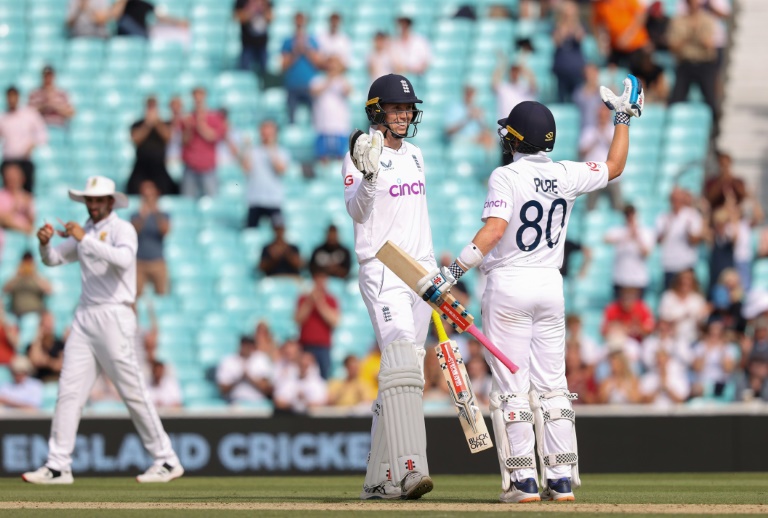
England thrashed South Africa by nine wickets in the third and deciding Test at the Oval on Monday, completing a 2-1 series win in just over two days of action.

The home side, who resumed on 97-0, needed just 5.3 more overs to reach a victory target of 130. Zak Crawley was 69 not out and Ollie Pope unbeaten on 11.

England have now won six of their seven Tests under their new leadership pairing of captain Ben Stokes and coach Brendon McCullum, having managed just one victory in their previous 17 matches when former skipper Joe Root was in charge.

“I’m delighted,” said Stokes. “It’s been a great series for us as a team. It has been one of those series where we haven’t had many individual standout performances, but different people have put their hand up for us throughout and that’s what you want in team sport.

“You want to be able to turn to people at key times and break the game open with either bat or ball and that’s what we’ve had throughout.”

Defeat means South Africa have suffered their first Test series loss since Dean Elgar took over as captain last year.

England resumed just 33 runs shy of their target after the umpires had halted play on Sunday because of bad light to the disappointment of a capacity crowd.

– Crawley runs –

Alex Lees was 32 not out and Zak Crawley 57 not out — his first fifty in 17 Test innings — when play started Monday under sunny skies but in front of a handful of spectators, who had been let in for free.

Lees, having added just two to his overnight score, was dropped off the third ball of the day when he edged Kagiso Rabada, only for diving wicketkeeper Kyle Verreynne to floor the chance.

The batsman’s luck ran out, however, when he was lbw on review to Rabada for 39, with South Africa at least spared the embarrassment of a 10-wicket defeat.

Crawley hit the winning runs when he punched left-arm quick Marco Jansen through the covers for four — the 12th boundary of his innings.

It meant for the third time this series, a match was won inside three days’ playing time.

Thursday’s play was washed out completely before Friday’s scheduled second day was abandoned as a mark of respect following the death of Britain’s Queen Elizabeth II.

Fast bowlers on both sides dominated a series in which runs were hard to come by, with South Africa, who boast a world-class pace attack but a fragile top order, managing just one individual fifty — opener Sarel Erwee’s 73 in their innings-and-12-run win in the first Test at Lord’s.

England bounced back to win the second Test at Old Trafford by an innings and 85 runs.

Seamer Ollie Robinson was named player-of-the-match at the Oval for his career-best 5-49 in South Africa’s first innings.

England earlier this season hammered New Zealand 3-0 before beating India in a Test postponed from last year over coronavirus concerns.

Ethiopia rivals urged to seize moment for peace

The international community on Monday urged warring sides in Ethiopia to seize the moment for peace after Tigrayan rebels said they were ready for talks led by the African Union to end almost two years of brutal warfare.

There has been a flurry of diplomatic efforts to push for negotiations after fighting flared in northern Ethiopia in late August for the first time in several months, torpedoing a humanitarian truce and cutting off aid deliveries to war-stricken Tigray.

Tigrayan authorities said Sunday they were “prepared to participate in a robust peace process under the auspices of the African Union,” after previously rejecting AU mediation and saying they wanted Kenya to lead any talks.

“We are ready to abide by an immediate and mutually agreed cessation of hostilities,” Tigray’s regional government said in a statement coinciding with Ethiopia’s new year.

The government has not formally commented on the Tigrayan stance but has previously said it was ready for unconditional talks “anytime, anywhere,” brokered by the AU, which is headquartered in Addis Ababa.

The Tigray People’s Liberation Front (TPLF) had until now vehemently opposed the role of the AU’s Horn of Africa envoy Olusegun Obasanjo, protesting his “proximity” to Ethiopian Prime Minister Abiy Ahmed.

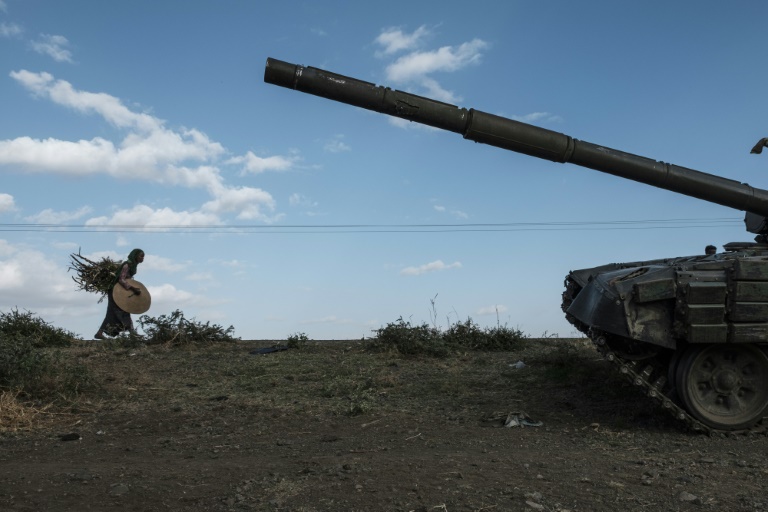
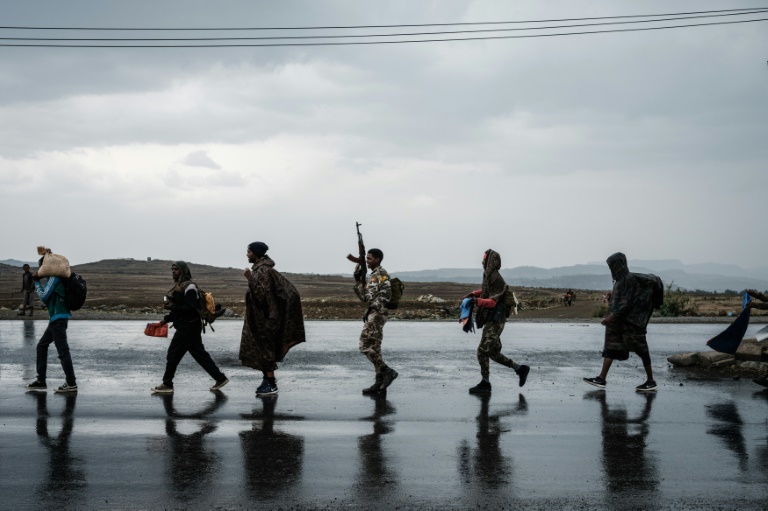
Untold numbers of civilians have been killed since the war erupted in Africa’s second most populous country in November 2020, and the fighting has left millions of people across northern Ethiopia in need of emergency aid.

UN Secretary-General Antonio Guterres urged “the parties to seize this opportunity for peace and to take steps to end the violence definitively and opt for dialogue”.

– ‘Unique opportunity’ –

AU Commission chief Moussa Faki Mahamat also welcomed the development as a “unique opportunity towards the restoration of peace” and urged “both parties to urgently work towards an immediate ceasefire, engage in direct talks”.

Similar messages were issued by US Secretary of State Antony Blinken and EU foreign policy chief Josep Borrell.

“We call on the country’s leaders to put Ethiopia on a path that ends the suffering and achieves a lasting peace,” Blinken said in a statement.

Ethiopia’s international partners were ready to support the peace process, he said, but added: “Eritrea and others should cease fuelling the conflict.”

Fighting has raged on several fronts in northern Ethiopia since hostilities resumed on August 24, with both sides accusing the other of firing first and breaking a March truce.

The TPLF also accused Ethiopia and neighbouring Eritrea — whose forces were involved in the early phase of the war — of having launched a massive joint offensive on Tigray on September 1.

Access to northern Ethiopia is severely restricted and it is not possible to verify what is happening on the ground.

– ‘Unfettered humanitarian access’ –

The Tigray statement made no mention of preconditions for talks, although it said the Tigrayans expected a “credible” peace process with “mutually acceptable” mediators as well as international observers.

TPLF leader Debretsion Gebremichael last week proposed a conditional truce calling for “unfettered humanitarian access” and the restoration of essential services in Tigray, whose six million people are suffering food shortages and a lack of electricity, communications and banking services.

In a letter to Guterres, he also called for the withdrawal of Eritrean forces from across Ethiopia, and for troops to pull out of western Tigray, a disputed region claimed by both Tigrayans and Amharas, the country’s second-largest ethnic group.

Debretsion had disclosed last month that two rounds of confidential face-to-face meetings had taken place between top civilian and military officials, the first acknowledgement by either side of direct contacts.

Sunday’s statement said a negotiating team including TPLF spokesman Getachew Reda and General Tsadkan Gebretensae, a former Ethiopian army chief now in Tigray’s central military command, was “ready to be deployed without delay”.

The March truce had allowed humanitarian convoys to travel to Tigray’s capital Mekele for the first time since mid-December.

But the United Nations said last week that the renewed fighting had forced a halt to aid deliveries to Tigray, both by road and air.

Abiy, a Nobel Peace laureate, sent troops into Tigray in November 2020 to topple the TPLF in response to what he said were attacks by the group on federal army camps.

But the TPLF recaptured most of Tigray in a surprise comeback in June 2021.

It then expanded into the neighbouring regions of Afar and Amhara before the fighting reached a stalemate.

Ethiopia's Tigray rebels say ready for AU-led peace talks

Ethiopia’s Tigray rebels said Sunday they were ready for a ceasefire and would accept a peace process led by the African Union, removing an obstacle to negotiations with the government to end almost two years of brutal warfare.

The announcement was made amid a flurry of international diplomacy after fighting flared last month for the first time in several months in northern Ethiopia, torpedoing a humanitarian truce.

“The government of Tigray is prepared to participate in a robust peace process under the auspices of the African Union,” said a statement by the Tigrayan authorities.

“Furthermore, we are ready to abide by an immediate and mutually agreed cessation of hostilities in order to create a conducive atmosphere.”

The Ethiopian government has previously said it was ready for unconditional talks “anytime, anywhere,” brokered by the Addis Ababa-headquartered AU.

The Tigray People’s Liberation Front (TPLF) had until now vehemently opposed the role of the AU’s Horn of Africa envoy Olusegun Obasanjo, protesting his “proximity” to Ethiopian Prime Minister Abiy Ahmed.

AU Commission chief Moussa Faki Mahamat issued a statement welcoming the development as a “unique opportunity towards the restoration of peace” and urged “both parties to urgently work towards an immediate ceasefire, engage in direct talks”.

UN Secretary-General Antonio Guterres called in a statement for “the parties to seize this opportunity for peace and to take steps to end the violence definitively and opt for dialogue.” 

He said the United Nations is ready to support the AU-led peace process.

Taye Dendea, Ethiopia’s state minister for peace, described the TPLF announcement as a “nice development” on Twitter but insisted the “so-called TDF (Tigray Defence Forces) must be disarmed before peace talks start. Clear stand!”

– Seeking ‘credible’ peace process –

The TPLF statement, which coincided with Ethiopia’s new year, made no mention of preconditions, although it said the Tigrayans expected a “credible” peace process with “mutually acceptable” mediators as well as international observers.

TPLF leader Debretsion Gebremichael earlier this month proposed a conditional truce calling for “unfettered humanitarian access” and the restoration of essential services in Tigray, which is suffering food shortages and a lack of electricity, communications and banking.

In a letter to Guterres, he also called for the withdrawal of Eritrean forces from across Ethiopia, and for troops to pull out of western Tigray, a disputed region claimed by both Tigrayans and Amharas, the country’s second-largest ethnic group.

Sunday’s statement said a negotiating team including TPLF spokesman Getachew Reda and General Tsadkan Gebretensae, a former Ethiopian army chief now in Tigray’s central military command, was “ready to be deployed without delay”.

Debretsion had disclosed last month that two rounds of confidential face-to-face meetings had taken place between top civilian and military officials, the first acknowledgement by either warring side of direct contacts.

– ‘Choose talks over fighting’ –

The AU’s Faki had held talks Saturday with both Obasanjo, the former Nigerian president, and visiting US envoy for the Horn of Africa, Mike Hammer.

“May the parties in the conflict have the courage to choose talks over fighting, and participate in an African Union-led process that produces a lasting peace,” Hammer said in a new year’s message for Ethiopians on Sunday.

Fighting has raged on several fronts in northern Ethiopia since hostilities resumed on August 24, with both sides accusing the other of firing first and breaking a March truce.

The latest combat first broke out around Tigray’s southeastern border but has since spread to areas west and north of the initial clashes, the TPLF accusing Ethiopian and Eritrean forces of having launched a massive joint offensive on Tigray on September 1.

The United Nations said on Thursday that the renewed fighting had forced a halt to desperately needed aid deliveries to Tigray, both by road and air.

The March truce had allowed aid convoys to travel to Tigray’s capital Mekele for the first time since mid-December.

Untold numbers of civilians have been killed since the war erupted in Africa’s second most populous country, and millions of people across northern Ethiopia are in need of emergency aid.

Abiy, a Nobel Peace laureate, sent troops into Tigray in November 2020 to topple the TPLF in response to what he said were attacks by the group on federal army camps.

The TPLF recaptured most of Tigray in a surprise comeback in June 2021 and expanded into Afar and Amhara, before the fighting reached a stalemate.

Fiji dazzle to beat New Zealand in World Cup Sevens final

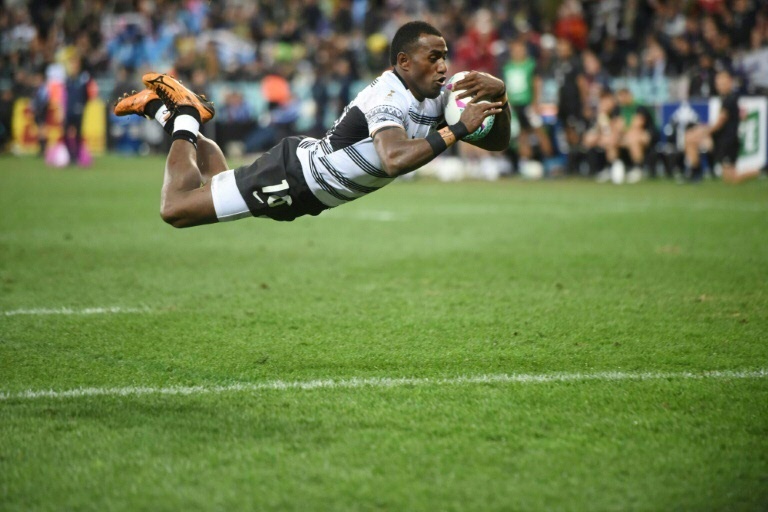
Olympic champions Fiji turned on a dazzling display to win the Rugby World Cup Sevens after emphatic victories against Australia and New Zealand at the Cape Town Stadium on Sunday.

Fiji overwhelmed Australia 38-14 in the semi-finals before romping to a 29-12 win over New Zealand in the final.

It was Fiji’s third world title, but their first since 2005, while New Zealand had won the previous two editions in 2013 and 2018.

Fiji scored five tries against the All Blacks, whose defence had only been breached twice in their first three matches.

Fiji made a sensational start, scoring two tries in the first two minutes through Joseva Talacola and Kaminieli Rasaku.

Moses Leo hit back for New Zealand but Elia Canakaivata and Filipe Sauturaga crossed the All Blacks line again to give Fiji a 24-5 half-time lead.

Two yellow cards early in the second half threatened to undermine Fiji, but New Zealand’s Akuila Rokolisoa was also sent to the sin bin soon after he narrowed the deficit with a try.

Pilipo Bukayaro sealed victory for the Fijians in the last minute.

“This is huge for Fiji,” coach Ben Gollings told SuperSport TV. “The boys have been fantastic. We can score tries but we also have to stop them and it was a huge defensive performance.”

Strong-running Maddison Levi scored a hat-trick of tries as Australia denied New Zealand a third successive women’s title. Australia won 24-22 after both teams scored four tries.

– Costly conversion miss –

Faith Nathan scored Australia’s fourth try while Kelly Brazier, Stacey Fluhler, Shiray Kaka and Alena Saili crossed for New Zealand.

New Zealand trailed by 14 points with two minutes to play but hit back with two tries, the last by Saili almost two minutes after the final hooter.

Tenika Willison narrowly missed a conversion attempt which would have taken the match to extra time.

In the men’s semi-finals, Fiji scored six tries against Australia, with their handling and switches of direction enabling them to outclass the Australians.

New Zealand had a more difficult semi-final, beating tenacious Ireland 17-10 with Ngarohi McGarvey-Black scoring their three tries.

Ireland went on to claim the bronze medal, beating Australia 19-14. Argentina took fifth place with a 10-7 win against France while hosts South Africa ended a disappointing campaign with a 35-5 rout of Samoa in the seventh-place contest.

England, eliminated by Ireland in their opening match on Friday, won the Challenge final for teams which failed to reach the quarter-finals, by defeating Uruguay 28-5.

In three matches after being knocked out of contention for the main trophy they scored 99 points and conceded only five.

France took the women’s bronze medal with a 29-7 win against the United States after being beaten 38-7 by New Zealand in the semi-finals.

Ethiopia's Tigray rebels say ready for AU-led peace talks

Ethiopia’s Tigray rebels said Sunday they were ready to take part in peace talks led by the African Union, removing an obstacle to potential negotiations with the government to end almost two years of brutal warfare.

The announcement was made amid a flurry of international diplomacy after fighting flared last month for the first time in months in northern Ethiopia, torpedoing a humanitarian truce.

“The government of Tigray is prepared to participate in a robust peace process under the auspices of the African Union,” said a statement by the authorities in the northernmost region of Tigray.

“Furthermore we are ready to abide by an immediate and mutually agreed cessation of hostilities in order to create a conducive atmosphere.”

There was no immediate comment from the Ethiopian government, which has long insisted that any peace process must be brokered by the Addis Ababa-headquartered AU.

But the Tigray People’s Liberation Front (TPLF) had until now vehemently opposed the role of the AU’s Horn of Africa envoy Olusegun Obasanjo, protesting at his “proximity” to Ethiopian Prime Minister Abiy Ahmed.

Sunday’s statement, which coincided with Ethiopia’s new year, made no mention of any preconditions for talks, although it said it expected a “credible” peace process with “mutually acceptable” mediators as well as international observers.

TPLF leader Debretsion Gebremichael had earlier this month proposed a truce with four conditions including “unfettered humanitarian access” and the restoration of essential services in war-stricken Tigray.

In a letter to UN Secretary General Antonio Guterres, he had also called for the withdrawal of Eritrean forces from across Ethiopia, and for troops to pull out of western Tigray, a disputed region claimed by both Tigrayans and Amharas, the country’s second-largest ethnic group.

– ‘Choose talks over fighting’ –

On Saturday, the AU’s Commission chief Moussa Faki Mahamat had announced that Obasanjo’s mandate would be extended.

“I reiterated my full confidence in him & encouraged his continued engagement with both parties & intl actors to work towards peace & reconciliation in Ethiopia & the region,” Faki said on Twitter after meeting Obasanjo.

Faki also said he had held talks Saturday with visiting US envoy for the Horn of Africa, Mike Hammer.

“May the parties in the conflict have the courage to choose talks over fighting, and participate in an African Union-led process that produces a lasting peace,” Hammer said in a new year’s message for Ethiopians on Sunday.

Fighting has raged on several fronts in northern Ethiopia since hostilities resumed on August 24, with both sides accusing the other of firing first and breaking a March truce.

The combat first broke out around Tigray’s southeastern border, but has since spread along to areas west and north of the initial clashes, with the TPLF accusing Ethiopian and Eritrean forces of launching a massive joint offensive on September 1.

The United Nations had said on Thursday that the renewed fighting had forced a halt to desperately needed aid deliveries to Tigray, both by road and air.

The March truce had allowed aid convoys to travel to Tigray’s capital Mekele for the first time since mid-December.

But in its first situation report since the latest clashes broke out, the UN’s humanitarian agency OCHA said the violence was “already impacting the lives and livelihood of vulnerable people, including the delivery of lifesaving humanitarian assistance”.

10 years after Benghazi attack, US struggles to calm Libya chaos

Ten years after the US ambassador to Libya was killed in the eastern city of Benghazi, the country remains in turmoil and Washington is vying for influence with other foreign powers. 

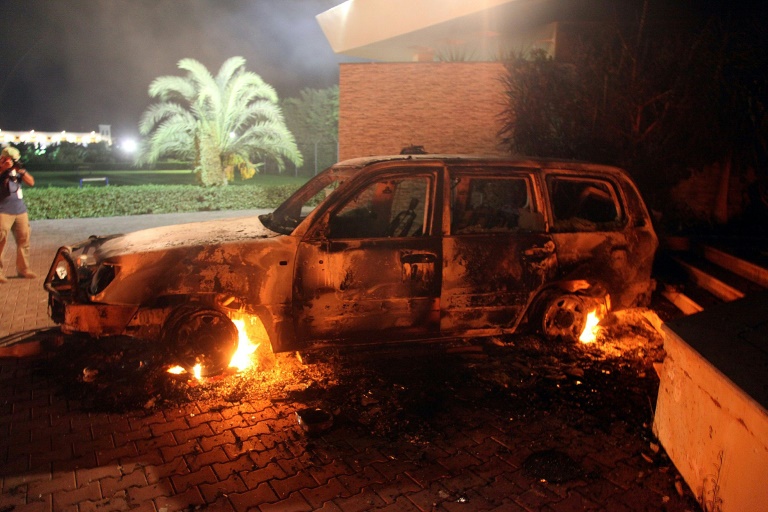
Islamist militants armed with automatic weapons and grenades stormed the US compound on the evening of September 11, 2012, at a time when the oil-rich North African country was torn by civil war.

They set the building ablaze, killing ambassador Christopher Stevens and IT specialist Sean Smith through smoke inhalation, and then also attacked a CIA annex where two contractors died, both former Navy Seals.

The assault, the first to claim the life of an American ambassador since 1979, deeply shocked the United States and caused a political storm for then president Barack Obama’s administration.

The State Department, then headed by Hillary Clinton, was accused by its political foes of deadly mistakes and negligence over the bloodshed, which came 11 years to the day after al-Qaeda’s 9/11 attacks.

Two years after the Benghazi attack, as more violence rocked Libya’s capital Tripoli, the United States, like many other countries, shuttered its embassy there and has not reopened it since. 

The diplomatic vacuum, and a disengagement from Libya under the next US president, Donald Trump, left the door open for other actors.

The main players have been Turkey, which has politically and militarily backed the Tripoli government, and Russia, Egypt and the United Arab Emirates, which supported a rival camp based in the country’s east. 

– ‘Darker moments’ –

The US embassy remains based in neighbouring Tunisia, but this has not stopped Washington from seeking to wield “crucial influence on the Libya file,” analyst Jalel Harchaoui told AFP. 

“There have been positive moments such as the UN agreement in Skhirat in 2015, on which the Americans had worked hard,” he said about the deal struck in Morocco on forming a Libyan national unity government.

There were also “darker moments”, Harchaoui said, such as when Trump supported the eastern-based strongman Khalifa Haftar who launched a failed 2019-20 offensive against Tripoli.

US forces in Libya captured two militants in connection with the Benghazi attack and tried them in the United States. Mustafa al-Imam and Ahmed Abu Khattala were sentenced to 19 and 22 years in prison respectively. 

The Benghazi attack had come almost a year after the fall of former dictator Moamer Kadhafi’s regime, which was swept away by a popular uprising backed by a controversial NATO-led intervention.

The turmoil plunged the country into political and security chaos. Rival centres of power in the east and west are still vying for control, with various militias and mercenary groups in the fray.

While many diplomatic missions returned to Tripoli last year as the situation on the ground improved, Tunis-based US Ambassador Richard Norland only occasionally visits the Libyan capital. 

– Oil exports –

Since March, two rival governments have been wrangling for control in Libya: one based in Tripoli and led by interim premier Abdulhamid Dbeibah since 2021; the other headed by Fathi Bashagha and supported by Haftar’s eastern camp. 

Fighting between rival militias in Tripoli late last month left 32 people dead and 159 wounded, according to a health ministry report. 

The main concern for the United States for now appears to be keeping Libyan oil exports flowing amid the turmoil, said a European diplomatic source in Tripoli, as Russia’s Ukraine war has battered global markets. 

Norland has repeatedly called for elections to be held in the country, after the postponement of polls scheduled for December 2021 deepened the crisis. He also warned in June that Libya’s rivals must not use oil “as a weapon”. 

Oil production in Libya reached 1.2 million barrels a day in late July, matching its daily average before an oil blockade was imposed between mid-April and mid-July by groups close to the eastern camp.

The US embassy in Libya said on Twitter last week that “the status quo is unsustainable, and it is incumbent on all external and internal actors to move toward presidential and parliamentary elections as soon as possible”.

Shadow of Lesotho's 'famo' music wars hangs over Soweto massacre

When 16 people were shot dead at a South African tavern, few thought the investigation would lead to the kingdom of Lesotho, where a war between rival music gangs has claimed scores of lives. 

South African police launched a manhunt this week for five suspects over the July 10 shooting, which saw assailants with high-calibre weapons descend on a Soweto bar and open fire on patrons seemingly at random. 

More than 100 cartridges were found at the scene of a crime that shocked the nation. 

Police identified one of the main suspects as Sarel Lehlanya Sello, a Lesotho man described as a “well-known” figure to law enforcement agencies in the Johannesburg area. 

Sello is reported to be a leader of “Terene”, a Lesotho gang rooted in “famo” music, a local form of hip-hop that has been tied to a wave of violence.

In images released by authorities, Sello can be seen sporting a beanie emblazoned with the word “Terene”, which means “train” in the Sotho language, a reference to the great migrations of workers to South African mines in the 1970s. 

A traditional yellow and black shepherd’s blanket — the gang’s colours — is wrapped around his shoulders. 

More than 15 percent of mountainous Lesotho’s 2.2 million people live in South Africa. 

The country is landlocked within its larger neighbour and economically dependent on it. 

Detectives are tight-lipped on what could have triggered the shooting and have urged those with information to come forward. 

Meanwhile the suspects, wanted on 16 counts of murder and seven of attempted murder, are thought to be on the run “in a neighbouring country”, according to authorities. 

In Maseru, Lesotho’s capital, it is difficult to loosen tongues on a gang war that several local sources say has killed about 100 people over the past 15 years.  

The “famo” music scene has become almost clandestine, with shows now taking place under heavy police presence. 

– ‘Endless revenge’ –

“It went out of control”, famo singer Morena Leraba, told AFP about deadly rivalries, comparing the violence to the gang wars that marked the history of American rap in the 1990s.

The famo hails from the chants that black Lesotho labourers sang on the long journey to South Africa’s diamond and gold mines about a century ago. 

“Today, we would call it rap,” said Rataibane Ramainoane, the founder of local radio station MoAfrika FM. 

Early famo performers would sing of the tiring voyage to South Africa, the lonely evenings in the “shebeens” — clandestine bars during apartheid — and the harshness of everyday life. 

Musical instruments were gradually introduced, with the accordion emerging as the emblem of a genre now considered as “the soul of the country”.

“Famo is part of everyday (life). You hear it everywhere on the streets, in the taxi ranks,” said Leraba. 

As the music’s popularity grew, white South African producers started to market records and by the end of apartheid, some artists were enjoying success selling thousands of copies.

With time, lyrics became more confrontational, as singers threw jabs at each other. 

What started as a war of words, evolved into street violence. 

“Some were jealous of those who sold better than them and literally started eliminating them,” said Ramainoane. 

Radio stations accused of favouring one group or another with more airtime, began receiving threats.

“It’s God’s miracle that I’m still alive,” said Ramainoane. 

After a spate of killings last year, Lesotho’s police minister tried to ban the wearing of traditional blankets associated with the gangs — some of which are suspected of being involved in illegal gold mining in South Africa. 

Yet, despite a bad reputation some gangs enjoy cosy relationships with the political world. 

Nkaku Kabi, the head of Lesotho’s leading All Basotho Convention party, recently congratulated Terene members for recruiting many supporters, ahead of general elections next month.

Speaking from Europe where he is on tour, singer Leraba said he now spends little time back home, wanting to distance himself from a cycle of “endless revenge”.

“Little brothers would join… the movement and sing and kill,” he said. 

Kenya's Kenyatta says queen was 'a towering icon of selfless service'

Queen Elizabeth II was “a towering icon of selfless service” who occupied a special place in Kenyan hearts, the country’s outgoing President Uhuru Kenyatta said Friday, announcing three days of national mourning following her death aged 96.

“Rarely has one person so epitomised the very best of humanity and leadership through selfless public service,” Kenyatta said in a statement, noting the former British colony’s close ties with the queen.

“The People of Kenya have always had a fondness for the magnificent and graceful twenty-five-year-old royal who visited our country as a Princess and left it as Queen,” he said.

Elizabeth was on a visit to the former colony in February 1952 when she received news of her father’s death while staying at the Treetops hotel, a remote game-watching lodge in the Aberdare forest.

Kenya was the first stop on the tour of the Commonwealth she had embarked on with her husband, Prince Philip, in place of her ill father.

It was during their night at the Treetops hotel that Elizabeth would become queen, an episode immortalised in the popular TV series “The Crown”.

The royal visit — and the legend to go with it — made Treetops among the most famous hotels in the world. 

Kenya will observe a period of national mourning until sunset on Monday, with the flags at government buildings, military bases, naval vessels and overseas missions to be flown at half-mast for the same duration, Kenyatta announced.

Kenya “will forever hold Queen Elizabeth II in a special place in our individual and collective hearts”, he said.

The Kenyan leader, whose father Jomo Kenyatta was the country’s first president following independence from Britain in 1963, earlier said he had “received the sad news… with great sorrow and a deep sense of loss”.

Two decades after Kenya achieved independence, the queen returned to the country on the invitation of then president Daniel arap Moi.

– ‘A sad day’ –

On the streets of the capital Nairobi, several Kenyans said they were saddened by the news of her death.

“It’s a sad day because Kenya was colonised by the British, so Kenyans are part and parcel of the British system,” said Vincent Kamondi, a 51-year-old taxi driver.

Although Kenya’s Mau Mau freedom fighters suffered horrific abuses under the colonial regime for taking part in one of the British Empire’s bloodiest insurgencies, independent Kenya has maintained strong ties with its former rulers.

“The education we have, the religion we have, it came from the British, so it gave us a path of where we are heading to,” said businessman Jacob Midam, 38.

The queen’s death “matters a lot”, he told AFP.

In 2015, thousands of Mau Mau veterans attended the Nairobi unveiling of a British-funded memorial to the thousands killed, tortured and jailed in the rebellion, in a rare example of former rulers commemorating a colonial uprising.

– Commonwealth legacy –

Kenya’s president-elect William Ruto also paid tribute to the queen late Thursday, hailing her “admirable” leadership of the Commonwealth.

“May her memories continue to inspire us. We join the Commonwealth in mourning and offer our condolences to the Royal Family and the United Kingdom,” said Ruto.

“She steered the institution’s evolution into a forum for effective multilateral engagement,” Ruto said on Twitter, describing the bloc as a testament to the queen’s “historic legacy”.

The Commonwealth’s membership has expanded to include nations with no historic ties to Britain, with Rwanda joining in 2009. 

Rwandan President Paul Kagame condoled the queen’s passing and said “the modern Commonwealth is her legacy.”

Kagame’s government also announced that the country’s flag and the flag of the East African Community bloc would be flown at half-mast until the conclusion of the queen’s state funeral.

The British government this year struck a much-criticised deal to deport asylum-seekers from the UK to Rwanda, with  Charles — now king and the head of the Commonwealth — reportedly opposed to the scheme.

Voice-operated smartphones target Africa's illiterate

Voice-operated smartphones are aiming at a vast yet widely overlooked market in sub-Saharan Africa — the tens of millions of people who face huge challenges in life because they cannot read or write.

In Ivory Coast, a so-called “Superphone” using a vocal assistant that responds to commands in a local language is being pitched to the large segment of the population — as many as 40 percent — who are illiterate.

Developed and assembled locally, the phone is designed to make everyday tasks more accessible, from understanding a document and checking a bank balance to communicating with government agencies.

“I’ve just bought this phone for my parents back home in the village, who don’t know how to read or write,” said Floride Jogbe, a young woman who was impressed by adverts on social media.

She believed the 60,000 CFA francs ($92) she forked out was money well spent.

The smartphone uses an operating system called “Kone” that is unique to the Cerco company, and covers 17 languages spoken in Ivory Coast, including Baoule, Bete, and Dioula, as well as 50 other African languages. 

Cerco hopes to expand this to 1,000 languages, reaching half of the continent’s population, thanks to help from a network of 3,000 volunteers.

The goal is to address the “frustration” illiterate people feel with technology that requires them to be able to read or write or spell effectively, said Cerco president Alain Capo-Chichi, a Benin national.

“Various institutions set down the priority of making people literate before making technology available to them,” he told AFP. 

“Our way skips reading and writing and goes straight to integrating people into economic and social life.”

Of the 750 million adults around the world who cannot read or write, 27 percent live south of the Sahara, according to UN figures for 2016, the latest year for which data is available.

The continent also hosts nearly 2,000 languages, some of which are spoken by tens of millions of people and are used for inter-ethnic communication, while others are dialects with a small geographical spread.

Lack of numbers or  economic clout often means these languages are overlooked by developers who have already devised vocal assistants for languages in bigger markets.

– Twi and Kiswahili –

Other companies investing in the voice-operation field in Africa include Mobobi, which has created a Twi language voice assistant in Ghana called Abena AI, while Mozilla is working on an assistant in Kiswahili, which has an estimated 100 million speakers in East Africa.

Telecommunications expert Jean-Marie Akepo questioned whether voice operation needed the platform of a dedicated mobile phone.

Existing technology “manages to satisfy people”, he said.

“With the voice message services offered by WhatsApp, for example, a large part of the problem has already been solved.”

Instead of a new phone, he recommended “software with local languages that could be installed on any smartphone”.

The Ivorian phone is being produced at the ICT and Biotechnology Village in Grand-Bassam, a free-trade zone located near the Ivorian capital.

It  came about through close collaboration with the government. The company pays no taxes or customs duties and the assembly plant has benefited from a subsidy of more than two billion CFA francs.

In exchange, Cerco is to pay 3.5 percent of its income to the state and train around 1,200 young people each year.

The company says it has received 200,000 orders since launch on July 21.

Thanks to a partnership with French telecommunications giant Orange, the phone will be distributed in 200 shops across Ivory Coast.

Close Bitnami banner
Bitnami