Africa Business

Napoli striker Osimhen out with thigh injury

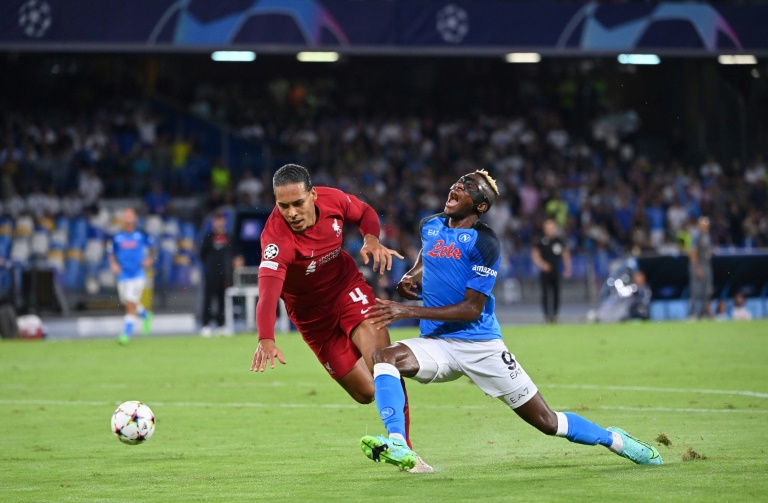
Napoli striker Victor Osimhen will miss the Italian team’s home fixture with Spezia on Saturday with a thigh injury, the Serie A club announced.

In a statement, Napoli said that the Nigeria forward had hurt the femoral bicep in his right thigh, an injury suffered in the first half of Wednesday’s 4-1 hammering of Liverpool in Naples.

The 23-year-old was substituted four minutes before half-time in the Champions League win at the Stadio Maradona and replaced by recent signing Giovanni Simeone.

Osimhen is expected to be out until at least after this month’s international break. 

He will almost certainly also miss next week’s Champions League trip to Scottish club Rangers and their clash with title rivals AC Milan the following Sunday.

Ethiopia rebels call for conditional truce

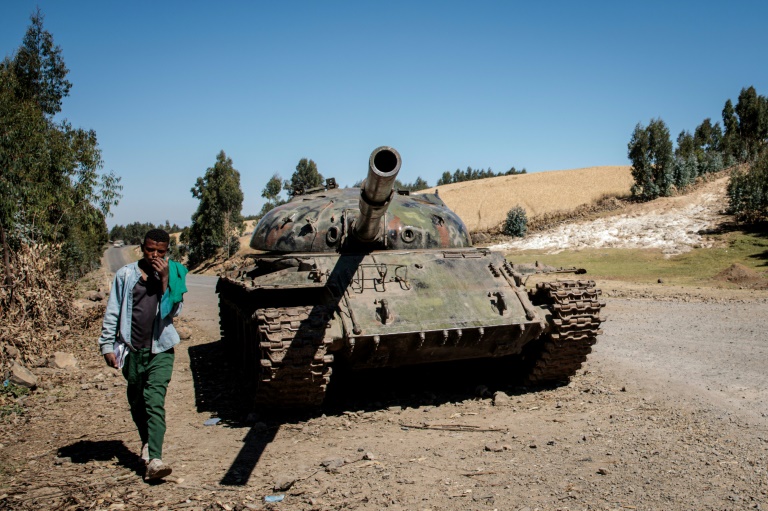
Tigrayan rebels have proposed a conditional truce in the war in northern Ethiopia, a spokesman for the group said Friday, as fresh fighting forced a halt to aid deliveries in the stricken Tigray region.

The resumption of fighting last month shattered a March truce, with frantic diplomatic efforts now under way to find a peaceful resolution to the nearly two-year war.

In a letter sent to the UN Secretary-General Antonio Guterres dated Wednesday, the leader of the Tigray People’s Liberation Front, Debretsion Gebremichael, called for a conditional cessation of hostilities as fighting escalates on multiple fronts.

According to a copy of the letter seen by AFP and confirmed by TPLF spokesman Getachew Reda, Debretsion said the truce would depend on four conditions, including “unfettered humanitarian access” and the restoration of essential services in Tigray.

Ethiopia’s northernmost region has suffered severe food shortages and limited access to basic services including electricity, communications and banking.

The truce had allowed aid convoys to travel to Tigray for the first time since mid-December but on Wednesday, a UN report said  deliveries, including by air, had been halted due to renewed fighting.

The violence has also hit access to aid in the neighbouring Amhara region.

Fighting erupted around Tigray’s southeastern border on August 24, but has since spread along the region’s southern border to areas west and north of the initial clashes.

A diplomatic source and a foreign source told AFP on Thursday that fighting had intensified along Tigray’s northern border, with pro-government forces and troops from neighbouring Eritrea — which backed Ethiopia’s army in the early stages of the war — targeting rebel positions.

AFP was not able to independently verify the claims. Access to northern Ethiopia is severely restricted and Tigray has been under a communications blackout for over a year.

– Eritrean forces –

Debretsion also called for “the withdrawal of Eritrean forces from every part of Ethiopian and Tigrayan territory, under international monitoring, to positions in which they can no longer pose any threat to us”.

He also asked the Security Council to ensure the withdrawal of troops from western Tigray, a disputed region claimed by Amharas and Tigrayans, that has been occupied by Amhara forces since the war erupted, triggering large-scale displacement and US warnings of ethnic cleansing.

There was no response from the Ethiopian government to the letter.

The uptick in violence has sparked international concern, with the US envoy to the Horn of Africa, Mike Hammer, extending his stay in Ethiopia, according to diplomatic sources.

The warring sides have traded blame for starting the latest round of hostilities.

The war erupted in November 2020 when Prime Minister Abiy Ahmed sent troops to topple the TPLF, the region’s former ruling party, saying the move came in response to attacks by the group on army camps. 

Senegal leads way on women legislators but challenges ahead

Senegal will break new ground Monday as West Africa’s largest-ever proportion of women MPs take their seats in a newly elected legislature, stirring hopes of change in a country where patriarchal laws and attitudes are entrenched.

More than 44 percent of seats in Senegal’s next National Assembly will be held by women — the biggest share of any country in the region.

But hopes for dramatic progress on issues ranging from reproductive rights to domestic violence also have to be balanced with political reality.

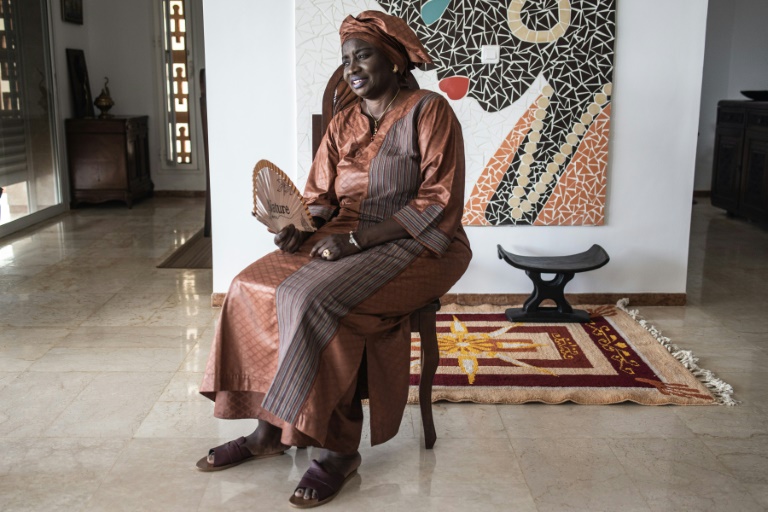
Aminata Toure, a former prime minister and incoming MP for President Macky Sall’s APR party, cautioned that in politics, female pioneers always encounter resistance and suspicion.

“You’re much more scrutinised… they don’t forgive you for any mistakes”, she told AFP. “I think all women in power would tell you the same.”

Seventy-three out of 165 parliamentary seats will be held by women following elections in July across Senegal, widely viewed as a beacon of democracy and stability in a region marked by conflict and military rule.

The country ranks fourth in Africa and 18th in the world for gender parity in parliament, ahead of Switzerland, France, Britain and the US, according to the Geneva-based organisation the Inter-Parliamentary Union.

Outside of Senegal, only 15 of 111 elected or appointed parliamentary or ministerial positions that opened in West Africa and the Sahel between December and June were filled by women, a UN report has said.

Senegal’s high share is explained by a 2010 law requiring “absolute gender parity” in all elective institutions, with candidate lists alternating between men and women. 

The latest tally of legislators is two more than previously, and the highest ever under the parity rules.

The law “allows women to have a say on the national budget, express the concerns and needs of women in parliament and show society that women are equally qualified,” said Toure.

Women “can bring another culture of governing”.

Candidate lists are often topped by men and, when they are odd-numbered, tend to have one more man than woman, which explains why female representation remains below 50 percent, a National Assembly spokeswoman said.

– Incremental change –

Activists point to a mountain of tasks in a country that ranks a lowly 130th out of 189 states on a UN gender equality index.

But efforts to fix them under the new assembly are likely to be incremental.

Rape was only criminalised in 2020, and national laws have yet to fully implement the Maputo Protocol, an African Union initiative to widen abortion access that Senegal ratified in 2005.

It obliges state parties to allow abortion in cases of rape and incest, among others. 

But in Senegal, abortion is only permitted to save a pregnant woman’s life, said Aissatou Ywa of Task Force, an alliance of civil society and medical associations campaigning for rape and incest to be included.

In 2020, one quarter of the female prison population had been jailed for abortion-related crimes, according to the NGO Africa Check, quoting data provided by Senegal’s penitentiary administrators. 

Other campaign groups are pushing for legal changes that would raise the age of marriage for girls to 18 from 16. The legal age of marriage is already 18 for men.

“It should be raised to 18 for girls to enable them to continue school and be on the same footing, in terms of rights, as boys”, said Maimouna Yade, head of the women’s organisation JGEN. 

Campaigners are also pushing to allow mothers to have the same parental authority under law as fathers.

“There are so many things to do,” said Mame Diarra Fam, an incoming MP for the opposition Senegalese Democratic Party.

She highlighted violence against women, education for girls and access to health, following a string of headline-making tragedies in maternity clinics over the last 18 months.

– Test ahead –

Advocates and MPs credit the parity law for several success stories. 

In 2013, parliament enacted a law allowing Senegalese women married to foreigners to pass their nationality onto their children, a right that was already permitted for Senegalese men.

Toure had introduced the bill as justice minister.

Another breakthrough was legislation criminalising rape — a law “largely pushed” by female MPs, said Yade.

Whether women’s rising numbers in parliament translates into executive clout will soon face a key test.

Sall will be scrutinised to see if he names a woman to the role of prime minister, a position that he had abolished in 2019 under the country’s presidential system. 

Senegal’s first woman prime minister was Mame Madior Boye, who served from 2001 to 2002. She was followed by Toure, in office from 2013 to 2014.

Another issue is how many women Sall will name to ministerial jobs. Toure is among those wanting parity to be extended to the cabinet and even to the private sector.

Civil society groups meanwhile are campaigning hard for a female speaker of the assembly, a role never held by a woman.

“We really want a woman leading the 2022-2027 parliament”, said Coumba Gueye, executive secretary of the Association of Senegalese Women Lawyers. “If we have a woman, a lot of things can be changed.”

Scuffles in Chad capital as opposition leader summonsed

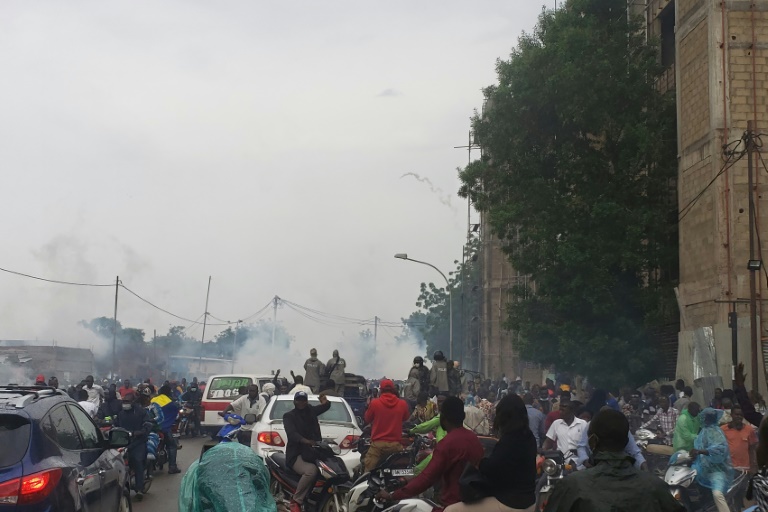
Police in the Chadian capital N’Djamena fired tear gas on Friday to disperse supporters of a leading critic of the country’s ruling junta as he was summonsed for questioning following clashes last week, an AFP reporter saw.

Succes Masra, president of a party called The Transformers, was surrounded by hundreds of supporters as his car headed for the meeting with public prosecutors.

Police fired tear gas to break up the crowd, and the car turned around and headed back to the party’s headquarters.

On Twitter, Masra accused the police of “attacking us and firing live rounds as the people came out to accompany us. The world is witness. They want to stop the dialogue of the people through violence.” 

The confrontation came on the heels of a crackdown on Transformers activists last week as they planned to stage an unauthorised rally.

Around 200 were arrested and held for several days before being released, while the security forces surrounded the party’s headquarters, which also doubles as Masra’s home, before lifting the siege on Sunday.

Masra, 39, told AFP on Thursday he had received a summons to go to the prosecutor’s office the following day, the reasons for which, he said, were not disclosed.

On Friday morning, he announced on Twitter that he would attend — “I will go marching and singing for the freedom of the people… (but) I will not be alone.”

The Transformers are the most radical component of an opposition coalition that is boycotting a forum launched by Chad’s military ruler, General Mahamat Idriss Deby Itno. 

Deby took the helm after his father Idriss Deby Itno, who had ruled with an iron fist for three decades, was killed in April 2021 during an operation to fight rebels.

The junta has suspended the constitution and dissolved civilian government but vowed to hold “free and democratic elections” within 18 months.

These are tied to the outcome of an “inclusive national dialogue,” bringing together government officials, political parties, NGOs and armed rebel groups, that was launched by Deby last month after repeated delays.

After the launch, the dialogue ran into procedural wrangling, and its scheduled end has been pushed back by 10 days, to September 30.

Analysts say there is scant chance of holding elections within the 18-month timeframe, and point to an option previously announced by Deby under which the vote could be delayed by a further 18 months “if the Chadians fail to reach agreement.”

Commonwealth marks loss of figurehead, link to the past

As Britain mourned the death of Queen Elizabeth II on Friday, a string of dominions, realms and former colonies marked the loss of a shared figurehead and an irreplaceable link to a quickly fading era.

Although she was 96 years old, the queen’s death came as an emotional jolt felt from Africa to the Pacific.

“Papua New Guineans from the mountains, valleys and coasts rose up this morning to the news that our Queen has been taken to rest by God,” Prime Minister James Marape told his nation.

“We fondly call her ‘Mama Queen'”, he said, in just one of dozens of emotive tributes that poured in from countries once coloured pink on maps.

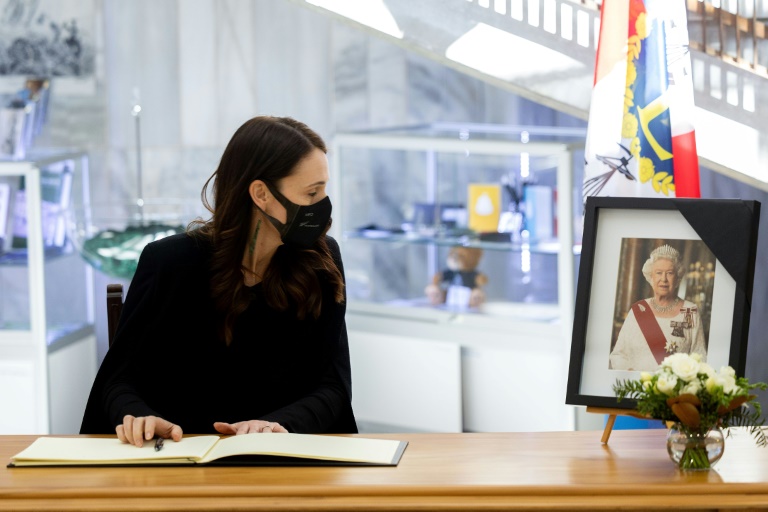
In New Zealand, Prime Minister Jacinda Ardern had been reading ominous news about her monarch’s ill health before going to bed.

A “police officer shone a torch into my room at around 10 to five this morning… I knew immediately what it meant”.

“I am profoundly sad,” she added, fondly recalling conversations about bringing up children in the public spotlight.

On the other side of the Pacific, Prime Minister Justin Trudeau said the queen would “forever remain an important part” of Canada’s history, adding personal memories that moved beyond stuffy declarations.

“She was one of my favourite people in the world,” he said. “I will so miss those chats.”

Most of Britain’s former colonies have transformed utterly since a fresh-faced Elizabeth Windsor was crowned in 1953.

At that time, India’s population was about 380 million — versus 1.4 billion today — British forces were brutally suppressing Kenya’s Mau Mau revolt, and New Zealand subject Edmund Hillary was making the first successful ascent of Mount Everest with his under-recognised Nepalese partner Tenzing Norgay.

For some, Elizabeth II represented one of the few remaining links to a sepia era of empire, to “the old country”, to an intertwined history or the shared sacrifice of a savage world war.

India’s Hindu nationalist Prime Minister Narendra Modi recalled Elizabeth II showing him a hand-spun handkerchief gifted to her by independence hero Mahatma Gandhi at her wedding. 

“I will always cherish that gesture,” he wrote on Twitter. “She personified dignity and decency in public life. Pained by her demise.”

– ‘Can’t be replaced’ –

Elizabeth II’s death inevitably raised questions about whether bonds forcibly formed by colonisation and sustained by the diminutive monarch’s charisma can endure.

The queen had been a “driving force” in the Commonwealth, said Harsh V Pant, professor of international relations at King’s India Institute in London.

The bloc of 56 countries — most former British colonies — spans Africa, Asia, the Americas, Europe and the Pacific, and includes 15 realms where Elizabeth II was still head of state.

“So what happens to that Commonwealth now? Will it survive going forward?” asked Pant.

In Sydney, 20-year-old Maya Munro said the queen was both an “incredible figurehead” and an exemplar, particularly for women.

But, like many young Australians, she imagines “a very different role” for the monarchy going forward.

“I think the queen was the monarchy for such a long time. And she brought it so much respect and history and honour,” she said.

“I think it’s just it plays a different role in our lives these days. Maybe we’re moving away from the monarchy now.”

In the New Zealand capital Wellington, 50-year-old Warwick Murray said “politicians come and go, but someone like Queen Elizabeth can’t be replaced”.

“The fact she was above politics and could really rally positivity means that I have a deep admiration for her.”

Australian Prime Minister Anthony Albanese — an avowed republican — sought to deflect questions about the future head of state as he declared 10 days of mourning.

Instead, he paid tribute to Queen Elizabeth’s “timeless decency”, saying her death marked the “end of an era”.

“An historic reign and a long life devoted to duty, family, faith and service has come to an end,” he said.

“Today is a day for one issue, and one issue only, which is to pay tribute.”

Even in places where the legacy of British colonialism is still raw, leaders focused on the attributes of the woman, rather than the baggage of her role.

“The story of modern Nigeria will never be complete without a chapter on Queen Elizabeth II, a towering global personality and an outstanding leader,” said President Muhammadu Buhari.

In Kenya, President Uhuru Kenyatta said she was “a towering icon of selfless service to humanity”, while president-elect William Ruto said her leadership of the Commonwealth was “admirable”.

The president of Zimbabwe, which withdrew from the Commonwealth in 2003 after its suspension over human rights concerns and endured decades of frosty relations with its former colonial ruler, offered his sympathies to the British public.

“May she rest in peace,” wrote President Emmerson Mnangagwa.

Her death was also lamented as far away as the Cook Islands, where a condolence book will be open for the public to sign before being sent to Buckingham Palace.

The islands’ Prime Minister Mark Brown declared: “The Queen is dead, long live the King.”

burs-arb/leg

To Mandela, the queen was simply 'Elizabeth'

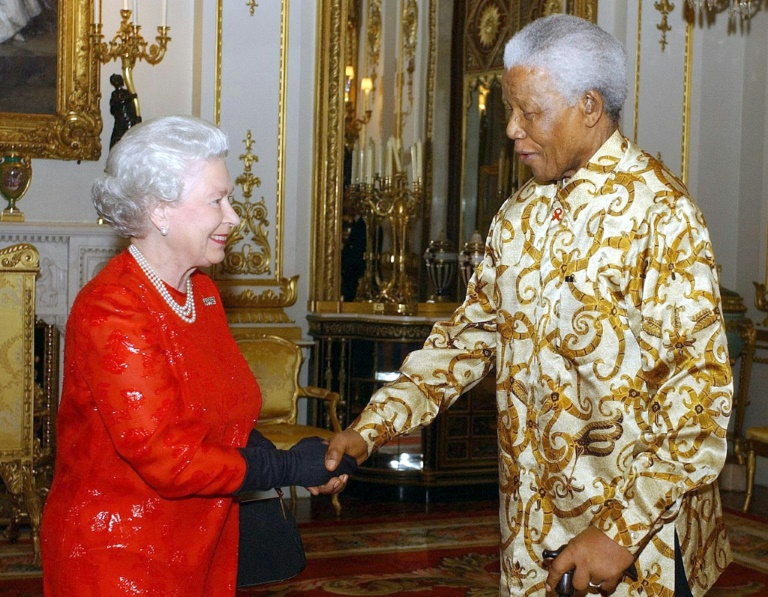
Nelson Mandela was on first-name basis with Queen Elizabeth II, a rare privilege contravening royal etiquette, the late anti-apartheid hero’s foundation said Friday, sharing anecdotes of their fond relationship.

Queen Elizabeth II, the longest-serving monarch in British history, died aged 96 in her Scottish summer residence on Thursday. 

“By his own admission, Nelson Mandela was an anglophile, and in the years after his release from prison cultivated a close relationship with the Queen,” the Nelson Mandela Foundation wrote in a statement, sending condolences to the royal family.

“They also talked on the phone frequently, using their first names with each other as a sign of mutual respect as well as affection.” 

Fondly known to South Africans as Madiba, Mandela spent decades in prison before leading his country from white minority rule to a multi-racial democracy. He died in 2013 aged 95. 

Mandela thought it was important that the former colonial power should have cordial and productive relations with the newly democratic republic of South Africa, the Foundation said.

The non-profit Mandela founded to promote freedom and equality quoted him as saying at a 1997 banquet for Prince Charles — now King Charles III — of how he came up with a special name for the queen after she visited the South Africa two years earlier. 

“As a token of our affection to Her Majesty, we conferred on her the name Motlalepula, because her visit coincided with torrential rains as we had not experienced in a long time,” Mandela had said, describing the her visit as a “watershed”.

In later life Madiba would often take pleasure in reminding interlocutors from Britain that South Africa had thrown off the colonial yoke – as well as in asking anyone who had visited Britain “And did you get to meet the Queen?”, the Foundation said. 

Kenya's Kenyatta says queen was 'a towering icon of selfless service'

Queen Elizabeth was “a towering icon of selfless service”, Kenya’s outgoing President Uhuru Kenyatta said Friday, in a statement expressing his “deep sense of loss” at her death aged 96.

“Her Majesty Queen Elizabeth II was a towering icon of selfless service to humanity and a key figurehead of not only the United Kingdom and the Commonwealth of Nations where Kenya is a distinguished member but the entire world,” he said.

Kenyatta said he “received the sad news… with great sorrow and a deep sense of loss”, noting the former British colony’s close ties with the queen.

Elizabeth, then a princess, was on a visit to Kenya in February 1952 when she received news of her father’s death while staying at the Treetops hotel, a remote game-watching lodge in the Aberdare forest.

Kenya was the first stop on the tour of the Commonwealth she had embarked on with her husband, Prince Philip, in place of her ill father.

It was during their night at the Treetops hotel that Elizabeth would become queen, an episode immortalised in the popular TV series “The Crown”.

The royal visit — and the legend to go with it — made Treetops among the most famous hotels in the world. 

Kenya declared independence from Britain in 1963, with Jomo Kenyatta — the father of the country’s current leader Uhuru — becoming its first president.

Two decades later, the queen returned to the country on the invitation of then president Daniel arap Moi.

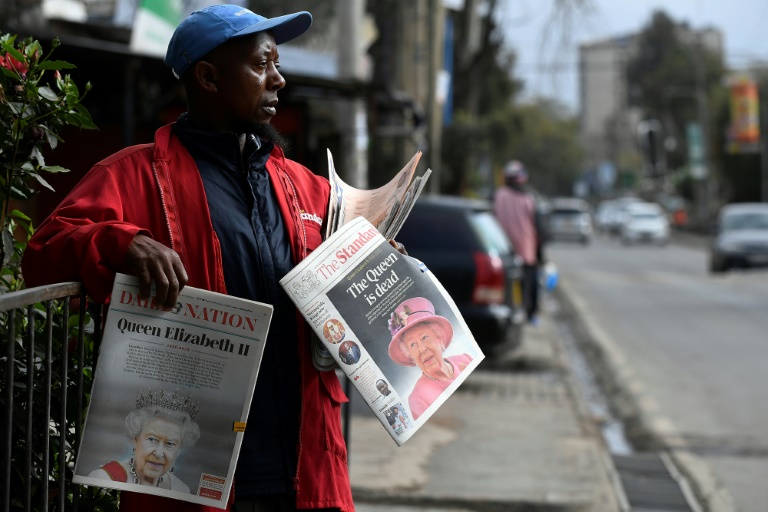
On the streets of the capital Nairobi, several Kenyans said they were saddened by the news of her death.

“It’s a sad day because Kenya was colonised by the British, so Kenyans are part and parcel of the British system,” said Vincent Kamondi, a 51-year-old taxi driver.

Although Kenya’s Mau Mau freedom fighters suffered horrific abuses under the colonial regime for taking part in one of the British Empire’s bloodiest insurgencies, independent Kenya has maintained strong ties with its former rulers.

“The education we have, the religion we have, it came from the British, so it gave us a path of where we are heading to,” said businessman Jacob Midam, 38.

The queen’s death “matters a lot”, he told AFP.

In 2015, thousands of Mau Mau veterans attended the Nairobi unveiling of a British-funded memorial to the thousands killed, tortured and jailed in the rebellion, in a rare example of former rulers commemorating a colonial uprising.

– Commonwealth legacy –

Kenya’s president-elect William Ruto also paid tribute to the queen late Thursday, hailing her “admirable” leadership of the Commonwealth.

“May her memories continue to inspire us. We join the Commonwealth in mourning and offer our condolences to the Royal Family and the United Kingdom,” said Ruto.

“She steered the institution’s evolution into a forum for effective multilateral engagement,” Ruto said on Twitter, describing the bloc as a testament to the queen’s “historic legacy”.

The Commonwealth’s membership has expanded to include nations with no historic ties to Britain, with Rwanda joining in 2009. 

Rwandan President Paul Kagame condoled the queen’s passing and said “the modern Commonwealth is her legacy.”

The British government this year struck a much-criticised deal to deport asylum-seekers from the UK to Rwanda, with  Charles — now king and the head of the Commonwealth — reportedly opposed to the scheme.

Commonwealth marks loss of figurehead, link to the past

As Britain mourned the death of Queen Elizabeth II on Friday, a string of dominions, realms and former colonies marked the loss of a shared figurehead and an irreplaceable link to a quickly fading era.

Although she was 96 years old, the queen’s death came as an emotional jolt felt from Africa to the Pacific.

“Papua New Guineans from the mountains, valleys and coasts rose up this morning to the news that our Queen has been taken to rest by God,” Prime Minister James Marape told his nation.

“We fondly call her ‘Mama Queen'”, he said, in just one of dozens of emotive tributes that poured in from countries once coloured pink on maps.

In New Zealand, Prime Minister Jacinda Ardern had been reading ominous news about her monarch’s ill health before going to bed.

A “police officer shone a torch into my room at around 10 to five this morning… I knew immediately what it meant”.

“I am profoundly sad,” she added, fondly recalling conversations about bringing up children in the public spotlight.

On the other side of the Pacific, Prime Minister Justin Trudeau said the queen would “forever remain an important part” of Canada’s history, adding personal memories that moved beyond stuffy declarations.

“She was one of my favourite people in the world,” he said. “I will so miss those chats.”

Most of Britain’s former colonies have transformed utterly since a fresh-faced Elizabeth Windsor ascended to the throne in 1953.

At that time, India’s population was about 380 million — versus 1.4 billion today — British forces were brutally suppressing Kenya’s Mau Mau revolt, and New Zealand subject Edmund Hillary was making the first successful ascent of Mount Everest with his under-recognised Nepalese partner Tenzing Norgay.

For some, Elizabeth II represented one of the few remaining links to a sepia era of empire, to “the old country”, to an intertwined history or the shared sacrifice of a savage world war.

India’s Hindu nationalist Prime Minister Narendra Modi recalled Elizabeth II showing him a hand-spun handkerchief gifted to her by independence hero Mahatma Gandhi at her wedding. 

“I will always cherish that gesture,” he wrote on Twitter. “She personified dignity and decency in public life. Pained by her demise.”

– ‘Can’t be replaced’ –

Elizabeth II’s death inevitably raised questions about whether bonds forcibly formed by colonisation and sustained by the diminutive monarch’s charisma can endure.

The queen had been a “driving force” in the Commonwealth, said Harsh V Pant, professor of international relations at King’s India Institute in London.

The bloc of 56 countries — most former British colonies — spans Africa, Asia, the Americas, Europe and the Pacific, and includes 15 realms where Elizabeth II was still head of state.

“So what happens to that Commonwealth now? Will it survive going forward?” asked Pant.

In Sydney, 20-year-old Maya Munro said the queen was both an “incredible figurehead” and an exemplar, particularly for women. 

But, like many young Australians, she imagines “a very different role” for the monarchy going forward.

“I think the queen was the monarchy for such a long time. And she brought it so much respect and history and honour,” she said.

“I think it’s just it plays a different role in our lives these days. Maybe we’re moving away from the monarchy now.”

In the New Zealand capital Wellington, 50-year-old Warwick Murray said “politicians come and go, but someone like Queen Elizabeth can’t be replaced”. 

“The fact she was above politics and could really rally positivity means that I have a deep admiration for her.”

Australian Prime Minister Anthony Albanese — an avowed republican — sought to deflect questions about the future head of state as he declared 10 days of mourning.

Instead, he paid tribute to Queen Elizabeth’s “timeless decency”, saying her death marked the “end of an era”.

“An historic reign and a long life devoted to duty, family, faith and service has come to an end,” he said.

“Today is a day for one issue, and one issue only, which is to pay tribute.”

Even in places where the legacy of British colonialism is still raw, leaders focused on the attributes of the woman, rather than the baggage of her role.

“The story of modern Nigeria will never be complete without a chapter on Queen Elizabeth II, a towering global personality and an outstanding leader,” said President Muhammadu Buhari.

In Kenya, President Uhuru Kenyatta said she was “a towering icon of selfless service to humanity”, while president-elect William Ruto said her leadership of the Commonwealth was “admirable”.

The president of Zimbabwe, which withdrew from the Commonwealth in 2003 after its suspension over human rights concerns and endured decades of frosty relations with its former colonial ruler, offered his sympathies to the British public.

“May she rest in peace,” wrote President Emmerson Mnangagwa.

Her death was also lamented as far away as the Cook Islands, where a condolence book will be open for the public to sign before being sent to Buckingham Palace.

The islands’ Prime Minister Mark Brown declared “The Queen is dead, long live the King.”

burs-arb/aha

Kidnapping, the industry bringing Nigeria to its knees

It was past midnight when a dozen men armed with AK47s stormed into Mohammed’s home just outside Nigeria’s capital Abuja to kidnap the truck driver and his wife.

After being held hostage in a tiny cave deep in a forest for three days, the couple were released when a relative paid the gunmen 600,000 naira (about $1,400).

For the criminals called “bandits” by Nigerians, it was quick and easy money, but for Mohammed, who asked not be identified by his real name, the trauma lives on.

Kidnappings are not new in Africa’s most populous country, where Boko Haram jihadists made worldwide headlines in 2014 when they abducted 276 schoolgirls in the north-eastern town of Chibok.

But hostage-taking has since snowballed into an industry now largely led by criminals, with authorities seemingly powerless to stop them.

The phenomenon, along with general insecurity, will be major issues in Nigeria’s elections in February 2023 to replace President Muhammadu Buhari.

At least five times more people were kidnapped in Nigeria last year than in both Mexico and Colombia combined — countries notorious for abductions — according to estimates from the Armed Conflict Location and Event Data Project (ACLED).

Families and entire communities who pool their savings to pay ransoms are being destroyed, with many hostages afraid or ashamed of reporting their ordeals. 

Businesses too are affected, with many spending fortunes to protect their assets.

– 500 a month kidnapped –

Data on kidnapping is notoriously unreliable because of under reporting, but ACLED estimates almost 3,000 people were taken last year.

A senior Western diplomatic source who tracks kidnappings in Nigeria told AFP the real figure could be more than double that, with an average of 500 people a month taken.

Nigeria’s security services, known as the DSS, denied there was a “kidnapping epidemic”.

It “has spread because insurgency has spread”, DSS spokesman Peter Afunanya told AFP, blaming insecurity on the proliferation of foreign weapons and the spread of jihadists outside of their enclaves in the northeast.

Analysts in Nigeria have documented instances of cooperation between bandits and jihadists, but so far have described the links as minor.

One reason for the dramatic rise is a series of mass kidnappings with hundreds of people taken at a time. In one in late 2020, more than 300 boys were taken by bandits from a school in Katsina state.

They were released after a week, but the shocking case was a turning point for many, with some deciding to stop sending their children to school.

Police and other security agencies have deployed anti-kidnap units, but the forested areas where gangs hide are difficult to access let alone control. 

The northwest, the most affected region, consists of seven states and is almost the size of the UK.

The authorities say they have tried alternative methods to curb kidnapping, such as registering mobile phone SIM cards to better track their owners.

Lawmakers have also passed a bill criminalising payments to kidnappers, but observers say enforcement will be impossible.  

Of the handful of kidnappers who are arrested, most end up in a clogged judicial system where investigations are rarely completed.

And so, every day, gangs “rustle human beings, and nobody cares,” said Murtala Rufa’i, a professor at northern Nigeria’s Usmanu Danfodiyo University, who has studied banditry and lives in the northwest.

– ‘No rehabilitation’ –

Former bandit Musa, who asked not to be identified by his real name, said he joined a gang after losing all his cows to rustlers. 

“Nobody forced me but when you have nothing… you find yourself hopeless, you end up joining them,” said the 43-year-old from Zamfara state.

For four years, he helped launch reprisal attacks against the cattle rustlers but the violence escalated and he eventually decided to leave the gang.

“For us nothing justifies crime, but for them, it’s just tit for tat,” Sheikh Ahmad Gumi, a prominent Muslim cleric told AFP in an interview in late 2021. 

Gumi has long argued that some of the bandits — like Musa — are driven at first by a sense of injustice, after losing relatives and belongings in old inter-communal conflicts.

For him, a “Marshall plan” for bandits rather than more security could help solve the crisis.

“Bandits have been surrendering and giving up their weapons but… there’s no rehabilitation, no school, no nothing, so they go back, because a man cannot be idle,” he said. “The real bandits are the political class.”

Those who can afford it have stopped using roads and trains and travel only by air, creating a vicious cycle where parts of the country are abandoned to bandits who prey on poorer rural communities.

Many end up selling their homes, belongings or land to pay for ransoms, which for an average Nigerian farmer can be anywhere “between 200,000 naira and up to two million ($4,700),” said security analyst Kabir Adamu of Beacon Consulting.

And it’s not just cash they need to find — sometimes kidnappers also demand food, smartphones, motorbikes or even sunglasses.

When kidnappers target higher status victims such as priests or politicians and their relatives, the ransoms tend to be a lot higher.

In a daring case earlier this year, gunmen kidnapped 72 passengers from a train from the capital Abuja, many of them well-off. 

“As of the end of July, 37 hostages had been released for various sums starting from 100 million ($230,000) per abductee,” according to a report by consultancy firm SBM Intelligence.

– Abandoned farms –

The problem is also worsening food insecurity in the country where already more than 80 million live below the poverty line. 

“People don’t go to their farms because of the fear of abduction… The rural economy has been grounded completely,” said professor Rufa’i.

Many rural communities are ruined by repeated ransom payments, or because they decide instead to pay “taxes” to bandits for a promise of protection.

In one case among many, a resident of Yankara village in Katsina state said they had paid bandits 700,000 naira ($1,700) to leave their farms alone, but then another gang attacked them.

In some instances, farms and villages are being abandoned entirely.

“There are areas where 70 percent of the people have been displaced or are unable to farm. This disrupts supply chains, even in (the capital) Abuja,” said Adamu. 

Companies in Africa’s largest economy are also affected.

The kidnap threat “is a nightmare”, an executive with two decades of experience in the country told AFP on condition of anonymity.

“The impact on business is huge… because of the cost of securing our assets,” he said. “I have some projects guarded by 30 soldiers at night.”

The Nigerian security services said they were “in a hurry to see” kidnapping tackled, in part because insecurity drives away investors.

“The DSS is concerned about the menace of kidnapping and is very committed in stamping it out,” Afunya told AFP.

People should stop seeing “kidnapping as a way of life or as a means of survival,” he added.

But when more than seven out of 10 Nigerians are under 30 and official youth unemployment stands at 42 percent, some become desperate to make money.

And as “the level of poverty and unemployment is on the increase,” Rufa’i said “the possibility of more people joining the kidnappers is very clear.”

'Floating artists' offer hope to strife-torn Mali

Twilight settles on Bamako, and traffic starts to clog the roads on the banks of the mighty Niger River.

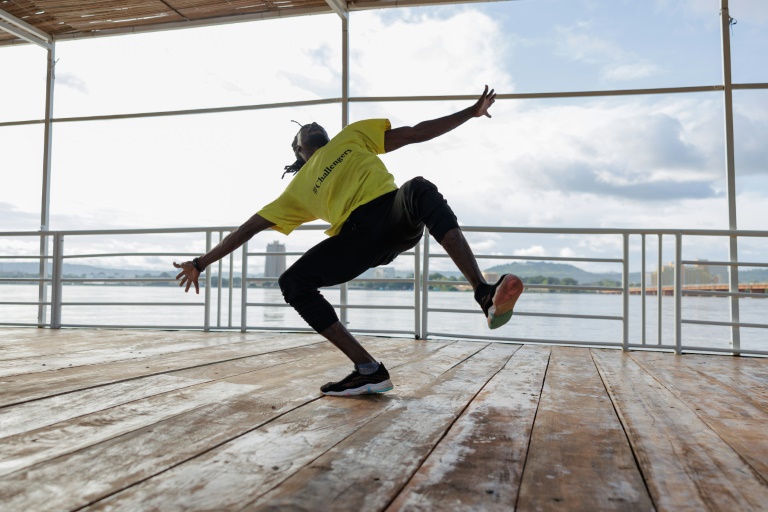
But something else is stirring on the river’s brownish waters: ripples from a boat, moored to a bank, where 12 young dancers are pounding the boards to the sound of tomtoms.

To the bemusement of peanut hawkers watching nearby, the dance troupe members are in final rehearsals before they carry out a maiden performance aboard Mali’s first floating art venue.

“Every second counts. Everything has to be perfect tomorrow,” says dancer and choreographer Lassina Kone, 37, wearing short dreadlocks and vintage sunglasses.

Behind him, painters and welders are hard at work, putting the final touches to the rear of the boat.

The vessel — the Pirogue of the Zeme (the Wise Man’s Canoe in the Bambara language) — is the brainchild of Kone, a restless artist, and Cheick Diallo, a well-known architect and designer.

“Lassina came to me a few years ago, and said, ‘Hey, old guy, I have a dream — help me,” said Diallo.

“It turned out that I had virtually the same dream,” he said. “So I teamed up with him.”

– ‘Crazy’ –

Their idea: to make art a moveable feast, no longer restricted to fixed venues in the cities and available to as many people as possible.

“Floating artists” aboard a specially adapted vessel would move up and down the Niger, a river that nourishes West Africa from Guinea to Nigeria.

They would bring dance, theatre, puppetry and exhibitions wherever they could find a place to tie up and people to entertain.

Both men had an established reputation. Lassina heads Don Sen Folo Lab, a creative nursery for artists in the village of Bancoumana, 45 kilometres (27 miles) from the Malian capital.

Diallo’s work has been widely exhibited internationally. He also oversees a photography exhibition held in Mali every two years which is one of the biggest cultural draws in Africa.

But their idea — in one of the poorest countries of the world, battered by a decade-old jihadist insurgency — seemed outlandish at the time.

“We artists have the right to be crazy — it’s craziness that helps to break through the boundaries of everyday life,” said Diallo. 

“It was a meeting between two crazies.”

– ‘A different Mali’ –

Four years after their talk, and with some financial help from the European Union, the Pirogue of the Zeme was born. The overall project cost the equivalent of almost $300,000, including the construction of the boat, salaries for the craftsman and funding for activities over four years.

The fruit of five months’ labour, the wood and steel vessel measures around 20 metres (66 feet) long by six metres (20 feet) wide.

That provides room for a stage — covered by light matting to keep off sun and rain — for performances which are watched by an audience seated on the adjacent riverbank, and enough space for exhibitions.

But the boat’s relatively small size also means it is susceptible to the great river’s moods and movements.

Assetou Aida Doumbia, a 24-year-old dancer, admitted she had been taken aback by the idea of performing on water.

“It’s really different, but we are 100 percent ready,” she said. 

Yacouba Coulibably, 28, added: “There’s a particular challenge to working as a dancer in this environment. This is the first time that I’ve been on a boat.”

The EU’s envoy to Mali, Bart Ouvry, had no problems defending Europe’s decision to back the unusual venture.

“This is a way of getting to know a different Mali,” he said.

Culture “helps to prevent young people from falling into something else,” he said, adding: “It tells investors Mali is a land of creativity.”

Close Bitnami banner
Bitnami