Africa Business

Commonwealth marks loss of figurehead, link to the past

As Britain mourned the death of Queen Elizabeth II on Friday, a string of dominions, realms and former colonies marked the loss of a shared figurehead and an irreplacable link to a quickly fading era.

Although she was 96 years old, the queen’s death came as an emotional jolt felt from Africa to the Pacific.

“Papua New Guineans from the mountains, valleys and coasts rose up this morning to the news that our Queen has been taken to rest by God,” Prime Minister James Marape told his country.

“She was the anchor of our Commonwealth and for PNG we fondly call her ‘Mama Queen'”, he said, just one of dozens of emotive tributes that poured in from countries once coloured pink on maps. 

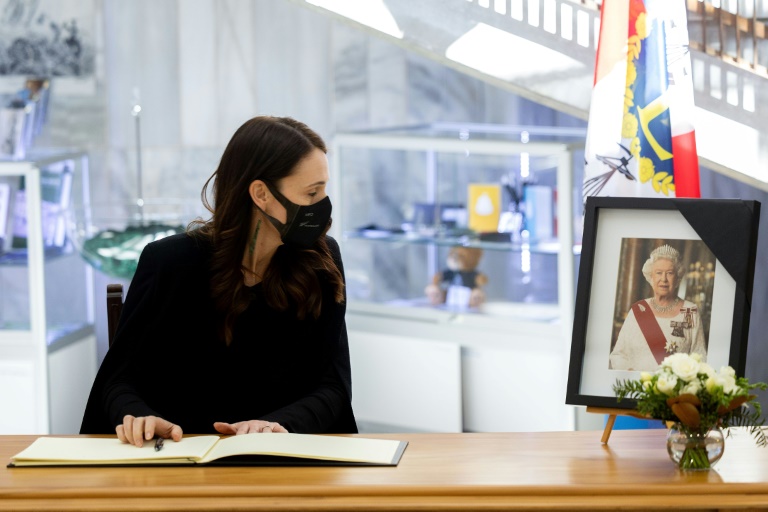
In New Zealand, Prime Minister Jacinda Ardern had been reading about her monarch’s ill health before going to bed.

A “police officer shone a torch into my room at around 10 to five this morning… I knew immediately what it meant”.

“I am profoundly sad,” she added, fondly recalling conversations about bringing up children in the public spotlight.

Across the Pacific in Canada, Prime Minister Justin Trudeau said the queen would “forever remain an important part” of his country’s history, but also offered personal stories that moved beyond stuffy-sounding declarations.

“She was one of my favourite people in the world,” he said. “I will so miss those chats.”

Most of Britain’s former colonies have transformed utterly since a fresh-faced Elizabeth Windsor ascended to the throne in 1953.

At that time, India’s population was about 380 million — versus 1.4 billion today — British forces were brutally suppressing Kenya’s Mau Mau revolt, and New Zealand subject Edmund Hillary was making the first successful ascent of Mount Everest with long-unrecognised Nepalese partner Tenzing Norgay.

For many, Elizabeth II represented one of the few remaining links to that fading era of empire, to “the old country”, to an intertwined history or the shared sacrifice of a savage world war.

India’s Hindu nationalist Prime Minister Narendra Modi recalled Elizabeth II showing him a handkerchief gifted to her by independence hero Mahatma Gandhi at her wedding. 

“I will always cherish that gesture,” he wrote on Twitter. “She personified dignity and decency in public life. Pained by her demise.”

– ‘Can’t be replaced’ –

Elizabeth II’s death inevitably raised questions about whether links forged in colonialism and sustained through a diminutive monarch’s personal charisma can endure.

The queen had been a “driving force” in the Commonwealth, said Harsh V Pant, professor of international relations at King’s India Institute in London.

The bloc of 56 countries — most former British colonies — spans Africa, Asia, the Americas, Europe and the Pacific, and includes 15 realms where Elizabeth II was still head of state.

“So what happens to that Commonwealth now? Will it survive going forward?” asked Pant.

In Sydney, 20-year-old Maya Munro, said the queen was both an “incredible figurehead” and an example, particularly for women. 

But, like many young Australians, she imagines “a very different role” for the monarchy going forward.

“I think the queen was the monarchy for such a long time. And she brought it so much respect and history and honour,” she said.

“I think it’s just it plays a different role in our lives these days. Maybe we’re moving away from the monarchy now.”

In New Zealand capital Wellington, 50-year-old Warwick Murray said “politicians come and go, but someone like Queen Elizabeth can’t be replaced.” 

“The fact she was above politics and could really rally positivity means that I have a deep admiration for her.”

Australian Prime Minster Anthony Albanese — an avowed republican — sought to deflect questions about the future head of state as he declared 10 days of mourning.

Instead, he paid tribute to Queen Elizabeth’s “timeless decency”, saying her death marked the “end of an era.”

“An historic reign and a long life devoted to duty, family, faith and service has come to an end,” he said.

“Today is a day for one issue, and one issue only, which is to pay tribute.”

Even in places where the legacy of colonialism is still raw, leaders focused on the attributes of the woman, rather than the baggage of her role.

“The story of modern Nigeria will never be complete without a chapter on Queen Elizabeth II, a towering global personality and an outstanding leader,” said President Muhammadu Buhari.

“She dedicated her life to making her nation, the Commonwealth and the entire world a better place.”

The president of Zimbabwe, which withdrew from the Commonwealth in 2003 after its suspension over human rights concerns and endured decades of frosty relations with its former colonial ruler, offered his own sympathies to the British public.

“May she rest in peace,” wrote President Emmerson Mnangagwa.

Jabeur thrashes France's Garcia to reach US Open final

Tunisia’s Ons Jabeur demolished Caroline Garcia in straight sets to become the first African woman in history to reach the final of the US Open on Thursday.

Fifth seed Jabeur dominated Garcia from start to finish of a one-sided semi-final at Arthur Ashe Stadium, winning 6-1, 6-3 in just 1hr 6min.

Jabeur, who also made history as the first African woman to reach the final of Wimbledon in July, will play world number one Iga Swiatek or Aryna Sabalenka of Belarus in Saturday’s final.

“It feels amazing,” Jabeur said. “After Wimbledon I had a lot of pressure on me and I’m really relieved that I can back up my results. 

“The hard court season started a little bit bad, but I’m very happy that I made it to the finals here.”

Jabeur’s victory extended her career-long domination of Garcia. 

The 28-year-old Tunisian had beaten Garcia four times as a junior in Grand Slam events, and twice as a professional in Slams before Thursday.

“I know she was playing amazing tennis and that puts a lot of pressure on you,” Jabeur said. “It wasn’t easy for me but mentally I was so ready.”

Jabeur will head into Saturday’s final brimming with confidence after a dominant victory over the in-form Garcia.

Garcia, seeded 17, had arrived in the last four on the back of a 13-match winning streak which included a victory at the Cincinnati Masters lead-in event.

But Jabeur ruthlessly dismantled Garcia’s dream of becoming the first French woman to win the US Open crown with a clinical win.

Jabeur fired down eight aces and won 83% of her points on first serve.

Garcia looked hesitant from the outset and handed Jabeur an early break point in the opening game when she missed an easy smash with the court wide open.

Jabeur duly converted the break and never looked back thereafter, breaking Garcia on two further occasions in a first set that saw the Frenchwoman make 14 unforced errors.

Jabeur was soon back on top in the second set, breaking Garcia again in the fourth game before holding for a commanding 4-1 lead.

With the next three games going with serve, Jabeur served for the match at 5-3. 

Garcia, who had failed to earn a single break point throughout the match, was again unable to put pressure on Jabeur, who wrapped up victory when a weak Garcia return of serve flopped into the net.

Jabeur meanwhile saluted Tunisian supporters, stating that fans in her homeland had tuned in to her quarter-final earlier this week instead of Paris Saint-Germain’s Champions League clash with Juventus.

“Usually in Tunisia they follow soccer but that time they chose to watch my match,” she said. “That’s unbelievable. So thank you guys in Tunisia if you’re still awake and watching.”

Donkey domestication happened 7,000 years ago in Africa: DNA study

Despite transforming history as beasts of burden essential for transporting goods and people, the humble donkey has long been woefully understudied.

But scientists on Thursday took a big step towards clarifying the species’ origins with a comprehensive genomic analysis of 238 ancient and modern donkeys, finding they were likely domesticated in a single event in eastern Africa some 7,000 years ago.

The paper, published in the journal Science, was the result of an international collaboration led by Evelyn Todd at the Centre for Anthropobiology and Genomics of Toulouse, France.

“Donkeys subsequently spread into Eurasia from ~2500 BCE, and Central and Eastern Asian subpopulations differentiated ~2000 to 1000 BCE,” the team wrote.

Eventually, lineages from Europe and the Near East backbred into western African donkey populations.

Horses, their equid cousins, are believed on the other hand to have been domesticated twice — the first time around 6,000 years ago in the western Eurasian steppes.

The donkey DNA study included three jennies (females) and six jacks (males) from an ancient Roman site in France who were closely interbred.

The authors suggest that Romans bred improved donkey bloodlines to produce mules that were essential to sustaining the military and economic might of the empire.

Donkeys were vital to the development of ancient societies and remain important in middle and lower income countries, but lost their status and utility in modern industrial societies, perhaps explaining why they were neglected by science.

Angola's court rejects vote challenge, upholds ruling party win

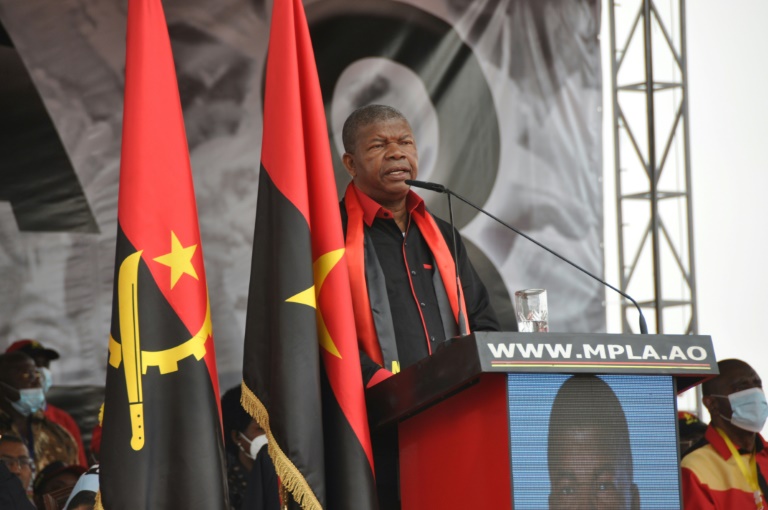
Angola’s top court on Thursday dismissed an opposition challenge disputing the results of last month’s general elections, paving the way for President Joao Lourenco to be sworn in for a second term.

The constitutional court rejected the appeal filed by Angola’s main opposition party, UNITA, saying the evidence it presented “does not call the overall results into question”. 

“The Constitutional Court has dismissed the electoral litigation appeal brought by the political party UNITA,” the court said in a summary of its decision. 

The August 24 elections — the most hotly contested in the oil-rich country since its first multi-party vote in 1992 — saw the long-ruling MPLA win, but with a significantly reduced majority. 

Opposition parties and civic groups have said the vote was marred by irregularities. 

Ahead of the ruling, five opposition parties including UNITA said they planned to stage “peaceful and orderly” protests to channel the electorate’s disappointment with the results. 

The parties condemned “serious anomalies” in the vote tally and said they reserved the right to file further legal challenges, without elaborating.  

Results declared last week gave the Movement for the Liberation of Angola (MPLA), which has traditionally wielded control over the electoral process, 51.17 percent of the vote, handing Lourenco, 68, a second term. 

A swearing-in ceremony is scheduled for September 15.

UNITA — a former rebel movement that fought a bitter 27-year civil war against the MPLA government that ended in 2002 — made significant gains, earning 43.95 percent of the vote, up from 26.67 percent at the previous election in 2017.

But earlier this week, UNITA leader Adalberto Costa Junior said a partial parallel count suggested his party had come ahead, winning 49.5 percent against 48.2 percent for the MPLA. 

In their preliminary reports, foreign observers from Africa praised the peaceful conduct of the polls but raised concerns ranging from press freedom to the accuracy of the electoral roll. 

The vote was for the National Assembly, where the winning party automatically chooses the president. As a result, Lourenco, who took over from long-term ruler Jose Eduardo dos Santos in 2017, returns for a second five-year term.

The MPLA has been the only party to govern Angola since the country gained independence from Portugal in 1975.

But the latest elections saw the party suffer its poorest-ever showing, down from its share of 61 percent of the vote in 2017. 

UNITA — the National Union for the Total Independence of Angola (UNITA) — has proved popular in urban areas and among young voters who want change for the country’s struggling economy. 

It did particularly well in Luanda, where it won a majority, taking the capital away from the MPLA for the first time. 

Angola is Africa’s second-largest crude producer, but the oil bonanza has been accompanied by corruption and nepotism, and many Angolans remain deeply poor.  

Fell asleep a princess, awoke a queen: Elizabeth in Kenya

Princess Elizabeth was deep in the Kenyan forest on the adventure of a lifetime, spotting wildlife from high up in the treetops, when her father died and she became queen.

The world awoke on February 6, 1952, to the death of King George VI, who had succumbed during the night to lung cancer at the royal Sandringham residence in Norfolk.

His 25-year-old daughter and heir to the throne only heard the news later the same day, when word reached Elizabeth thousands of miles from home in the wilderness of the Aberdare Range.

Kenya, then a British colony, was the first stop on Elizabeth’s tour of the Commonwealth she had embarked upon with her husband, Prince Philip, in place of her ill father.

The royal couple had taken a night out of their official engagements to stay at a one-of-a-kind game-watching lodge perched in a tree in the Aberdares.

It was during their night at the Treetops hotel that the king would die, and Elizabeth would become queen.

Jim Corbett, the naturalist and hunter who accompanied the royal couple to Treetops, is credited with writing in the visitor book: “For the first time in the history of the world, a young girl climbed into a tree one day a Princess and, after having what she described as her most thrilling experience, she climbed down from the tree next day a queen.”

– ‘Most wonderful experience’ –

In fact, the Duke of Edinburgh broke the news to Elizabeth after they had left Treetops but the story stuck and the hotel became the fabled locale where a princess became a queen.

First opened in 1932 as an overnight stay for wealthy and intrepid visitors, Treetops overlooked a watering hole from its position in a giant fig tree.

In its day, there wasn’t really anything like it. 

A private setting among branches, remote in the African bush, Treetops offered the privileged elite a chance to encounter wildlife up close, and in safety, as they grazed below.

Elizabeth and Philip kept a handwritten tally of what they saw, recorded on a sheet of paper framed at Treetops.

Large herds of elephant — “about 40” in one sighting — were spotted at the watering hole, along with baboons and waterbuck.

“Rhinos all night”, read the list dated February 5/6, 1952, and signed by the Princess and Prince, and “in the morning, two bulls fighting”.

An aide to the royal couple, instructed to write and thank the hotel’s owners, described a “tremendous experience of watching the wild game in its natural surroundings” and day and night “packed with interest”.

“I am quite certain that this is one of the most wonderful experiences that either The Queen or The Duke of Edinburgh have ever had,” read the letter framed in Treetops dated February 8, 1952.

– Faded memories –

Two years after the historic visit, with Elizabeth having assumed the throne, Treetops burned down in what was rumoured to be an arson attack by anti-colonial Mau Mau rebels.

A new, much larger hotel was built on elevated wooden stilts on the opposite side of the watering hole to the original setting, where it still stands today.

The royal visit — and the legend to go with it — made Treetops among the most famous hotels in the world.

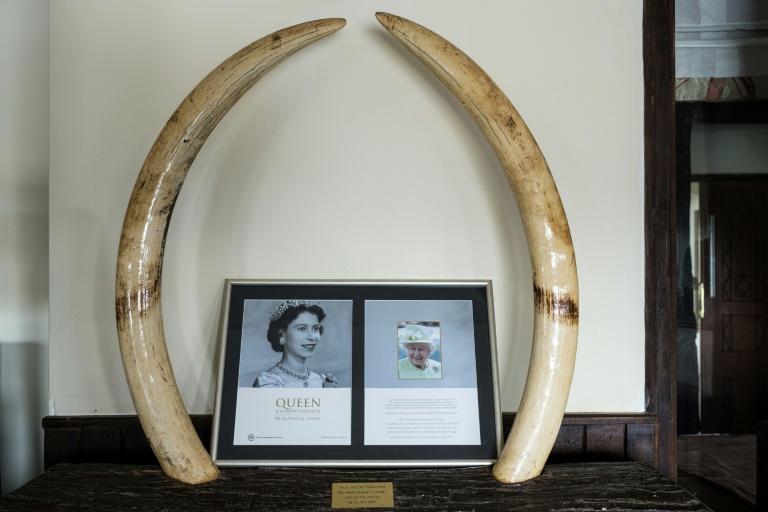
Well-heeled guests could stay in the Princess Elizabeth Suite, peruse royal memorabilia in the dining room, or gaze upon a portrait of the Queen framed by the tusks of an elephant shot by hunters in the 1960s.

Elizabeth and Philip returned in 1983 — more formal than safari, with the queen in a knee-length dress, the duke in a blazer and tie — to find Treetops very much changed in the 31 years between visits.

For many years, nothing more than a plaque marked where they spent that fateful night by the watering hole.

But now it is nowhere to be seen, put in storage after Treetops closed its doors at the onset of the coronavirus pandemic.

And the hotel remains shut to this day, a faded icon of a bygone era.

All the queen's kingdoms: where did Elizabeth II reign?

Queen Elizabeth II’s reign encompassed to a large degree Britain’s declining global influence, from an empire that once bestrode the world to a middle-ranking economy.

During her time as queen, the footprint of her monarchy shrank dramatically, but at her death she was still head of state of the United Kingdom and 14 Commonwealth countries or realms, from Canada and Jamaica to Australia and New Zealand.

– Ceremonial –

At her coronation in 1953, Elizabeth II was crowned queen of seven independent countries: the United Kingdom, Canada, Australia, New Zealand, South Africa, Pakistan and Ceylon, which later changed its name to Sri Lanka.

The numbers grew as decolonisation accelerated and British colonies and dependencies became new Commonwealth realms.

Some decided to keep her as head of state, others did not.

Where she remained queen, the role was largely ceremonial, and her duties were carried out by one of her governor generals — a viceroy who effectively acts as head of state.

She was the queen of each newly independent country in its own right, not merely because she was the British monarch previously.

At her death, she was head of state of: Antigua and Barbuda, Australia, The Bahamas, Belize, Canada, Grenada, Jamaica, New Zealand, Papua New Guinea, Saint Kitts and Nevis, Saint Lucia, Saint Vincent and the Grenadines, Solomon Islands, Tuvalu and the UK.

These countries are distinct from the broader 54-state Commonwealth of nations that have historical ties to the United Kingdom, but did not necessarily choose to have the queen as head of state.

Over her entire reign, she was head of state of 32 countries in total. 

Seventeen of those decided to cut ties at some point after becoming independent. They were:

Barbados 1966-2021

Ceylon (Sri Lanka) 1952-1972

Fiji 1970-1987

The Gambia 1965-1970

Ghana 1957-1960

Guyana 1966-1970

Kenya 1963-1964

Malawi 1964-1966

Malta 1964-1974

Mauritius 1968-1992

Nigeria 1960-1963

Pakistan 1952-1956

Sierra Leone 1961-1971

South Africa 1952-1961

Tanganyika 1961-1962

Trinidad and Tobago 1962-1976

Uganda 1962-1963

At the peak, she was queen of 18 countries at the same time, between 1983 and 1987. Since then, Fiji (1987), Mauritius (1992) and Barbados (2021) have become republics.

When Rhodesia — Zimbabwe today — unilaterally declared its independence from Britain in 1965, it proclaimed its allegiance to the queen before declaring itself a republic with a president in 1970, although its status was never recognised internationally.

Being queen of New Zealand also meant she was the head of state of the Cook Islands and Niue, which are associated states that form part of the wider realm of New Zealand.

Britain has 14 overseas territories, including Bermuda, the Falkland Islands, Gibraltar and British Antarctic Territory, over which she also ruled.

Her shortest reigns were in Kenya, Tanganyika — now the major part of Tanzania — and Uganda, which each lasted exactly a year between independence from Britain and becoming a republic.

During her time on the throne, eight referendums were held on becoming a republic, three of which passed: Ghana (1960), South Africa (1960) and The Gambia (1970). 

Barbados declared itself a republic without holding a referendum.

Those that did not pass were a first referendum in The Gambia (1965), two in Tuvalu (1986 and 2008), Australia (1999) and Saint Vincent and the Grenadines (2009).

Aid halted to Ethiopia's Tigray, UN says, as fighting escalates

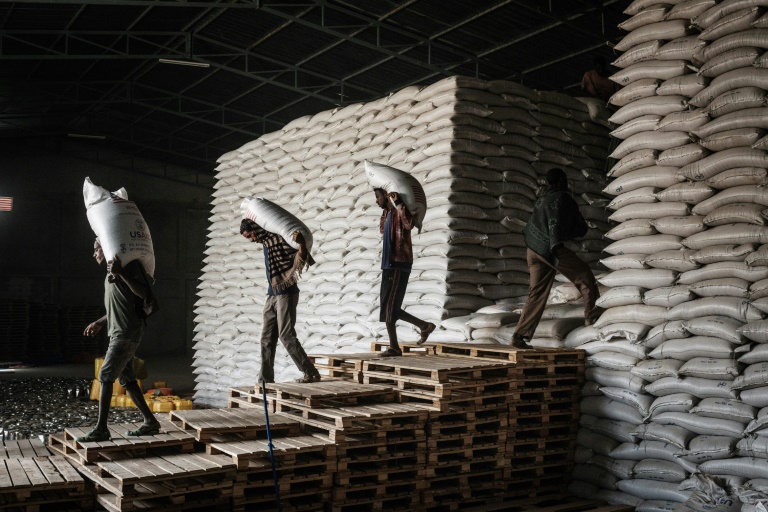
Renewed clashes in northern Ethiopia have forced desperately needed aid deliveries to a halt in war-torn Tigray, the United Nations said, as fighting escalated Thursday between Tigrayan rebels and pro-government forces.

The resumption of combat last month shattered a March truce and sparked international concern, with frantic diplomatic efforts now under way to find a peaceful resolution to the nearly two-year war.

The truce had allowed aid convoys to travel to Tigray’s capital Mekele for the first time since mid-December.

But in its first situation report since clashes broke out on August 24, the UN’s humanitarian agency OCHA said the violence was “already impacting the lives and livelihood of vulnerable people, including the delivery of lifesaving humanitarian assistance”.

“The last humanitarian convoy to enter Tigray before the interruption was the humanitarian convoy on 23 August consisting of 158 trucks with humanitarian and operational supplies,” the UN’s Office for the Coordination of Humanitarian Affairs said late Wednesday.

It said twice-weekly UN humanitarian flights between Addis Ababa and Mekele have also come to a halt since August 26.

Fighting erupted around Tigray’s southeastern border, but has since spread along the region’s southern border to areas west and north of the initial clashes.

A diplomatic source and a foreign source, who spoke to AFP on condition of anonymity, said fighting had intensified along Tigray’s northern border, with pro-government forces and troops from neighbouring Eritrea — which backed Ethiopia’s army in the early stages of the war — targeting rebel positions.

Both sources described heavy artillery fire near Adigrat, a town in northern Tigray not far from the Eritrean border.

There is “intense shelling from Eritrea into the Adigrat area, around the border”, said the diplomatic source. The second source confirmed the details.

Both sources said pro-government forces had captured the town of Mai Tsebri in Tigray, but Kindeya Gebrehiwot, spokesman for the Tigray People’s Liberation Front (TPLF), denied the claim, telling AFP: “It’s incorrect.”

AFP was not able to independently verify the claims. Access to northern Ethiopia is severely restricted and Tigray has been under a communications blackout for over a year.

– Diplomatic efforts –

The uptick in violence has sparked international concern, with the US envoy to the Horn of Africa, Mike Hammer, extending his stay in Ethiopia, according to diplomatic sources.

The European envoy to the region, Annette Weber, is also expected to visit the country soon, diplomatic sources told AFP, without elaborating.

The warring sides have traded blame for starting the latest round of hostilities, with the TPLF accusing the government and Eritrea of launching a joint offensive against Tigray.

Ethiopia’s northernmost region has been suffering from severe food shortages and limited access to basic services such as electricity, communications and banking.

The fighting has also hit access to aid in neighbouring regions, with the OCHA report saying that “humanitarian operations in hard-to-reach areas in Amhara region, such as in parts of Wag Hemra, were put on hold due to security concerns”.

Even before the latest clashes, Tigray was in the grip of a hunger crisis, with the UN’s World Food Programme warning last month that nearly half of the region’s six million people were “severely food insecure”.

“Hunger has deepened, rates of malnutrition have skyrocketed, and the situation is set to worsen as people enter peak hunger season until this years’ harvest in October,” WFP said in its latest assessment covering November 2021 to June 2022.

The war erupted in November 2020 when Prime Minister Abiy Ahmed sent troops to topple the TPLF, the region’s former ruling party, saying the move came in response to attacks by the group on army camps. 

The TPLF mounted a comeback, recapturing most of Tigray in June 2021 and expanding into Afar and Amhara, before the fighting reached a stalemate.

Unknown numbers of civilians have died and millions need humanitarian aid.

Nigeria Islamic court orders arrest of local celebrities

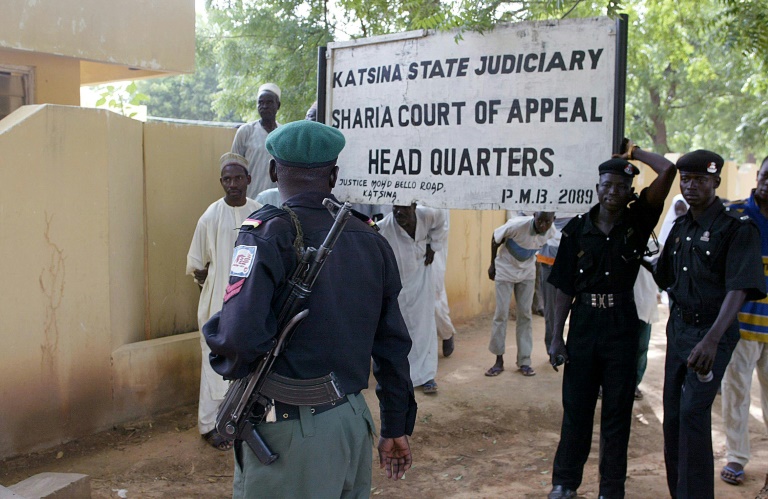
An Islamic court in northern Nigeria has ordered police to arrest and investigate 10 local celebrities for “immoral conduct” on social media that could influence youth, a judicial official told AFP Thursday.

The court issued the order on Tuesday last week after lawyers filed a lawsuit, calling for their prosecution for singing and dancing to “immoral” songs and sharing them online, Baba-Jibo Ibrahim, a judicial spokesman said.

The accused celebrities, four men and six women, include a popular hip-hop singer, a famous film actress and eight TikTok influencers with huge followings.

The order highlights strict measures often employed by authorities in Nigeria’s Muslim-majority north to regulate social media content and force users to conform to tradition and religious norms.

Sharia law operates alongside criminal and civil law in Nigeria’s 12 Muslim-majority northern states.

“The Upper Sharia court gave an order to the police commissioner to arrest the 10 suspects and carry out an investigation on the roles they played in displaying immoral conduct,” Ibrahim said. 

Hip-hop singer Ado Gwanja is accused of releasing a song titled “A Sosa”, meaning “Scratch your body” in Hausa language to which the other celebrities danced in videos online. 

The song and the videos generated furore in Kano, the country’s second-largest city, prompting condemnation from hardline clerics. 

But none of the accused has been arrested or reported to the police, nine days after the court order, Ibrahim said.

“We will wait for the completion of the investigation by the police for the next line of action to be taken by the court,” he said.

None of the celebrities has so far reacted publicly and Gwanja and other high-profile figures did not immediately respond to attempts to contact them.

On Tuesday, Nigeria’s broadcasting regulator NBC banned television and radio stations from airing another of Gwanja song for containing obscenities and “portrayal of drunkenness as an acceptable way of life”.

– Kannywood films –

Kano is home to a burgeoning film industry dubbed Kannywood, which produces more than 200 film each month in local Hausa language spoken in the region and across West Africa. 

It also houses hundreds of musical studios which churn out songs by local artists like Gwanja which dwell on love, marriage and money. 

Kannywood has already been under close watch by Muslim clerics and officials who believed it promoted un-Islamic foreign values, prompting authorities to create a censorship board. 

The increasing use of social media by Kannywood for skits and songs prompted the board to extend its authority to social media. 

“Social media has a wider reach and potential to circulate content to a large audience,” Ismail Na-Abba, head of Kano’s film censorship board told AFP. 

“For this, we will not allow anyone to hide under the ubiquity of social media to spread immoral content.” 

UN says aid halted to Ethiopia's Tigray after renewed clashes

Renewed clashes in northern Ethiopia have forced desperately needed aid deliveries to a halt in Tigray, the United Nations said, exacerbating a humanitarian crisis triggered by the nearly two-year war between pro-government forces and Tigrayan rebels.

The resumption of fighting late last month shattered a tenuous truce agreed in March that had allowed aid convoys to travel to the stricken region’s capital Mekele for the first time since mid-December.

In its first situation report since fresh clashes broke out on August 24, the UN’s humanitarian agency OCHA said that the violence was “already impacting the lives and livelihood of vulnerable people, including the delivery of lifesaving humanitarian assistance”.

“The last humanitarian convoy to enter Tigray before the interruption was the humanitarian convoy on 23 August consisting of 158 trucks with humanitarian and operational supplies,” the UN’s Office for the Coordination of Humanitarian Affairs said late Wednesday.

“The United Nations Humanitarian Air Service (UNHAS) flights, which had been flying between Addis Ababa and Mekele twice per week… have also come to a halt since 26 August.”

Fighting erupted around Tigray’s southeastern border, but has since spread along the region’s southern border to areas west and north of the initial clashes.

The uptick in violence has sparked international concern, with the US envoy to the Horn of Africa, Mike Hammer, currently in Ethiopia to kickstart diplomatic efforts to resolve the crisis.

The two sides have traded blame for starting the latest round of hostilities, with the Tigray People’s Liberation Front accusing the government and Eritrea — which backed Ethiopian forces during the war’s early phase — of launching a joint offensive against Tigray.

Ethiopia’s northernmost region has been suffering from severe food shortages and limited access to basic services such as electricity, communications and banking.

The fighting has also hit access to aid in neighbouring regions, with the OCHA report saying that “humanitarian operations in hard-to-reach areas in Amhara region, such as in parts of Wag Hemra, were put on hold due to security concerns”.

Even before the latest clashes, Tigray was in the grip of a hunger crisis, with the UN’s World Food Programme warning last month that nearly half of the region’s six million people were “severely food insecure”.

“Hunger has deepened, rates of malnutrition have skyrocketed, and the situation is set to worsen as people enter peak hunger season until this years’ harvest in October,” WFP said in its latest assessment covering November 2021 to June 2022.

The war erupted in November 2020 when Prime Minister Abiy Ahmed sent troops to topple the TPLF, the region’s former ruling party, saying the move came in response to attacks by the group on army camps. 

Egypt vows to champion climate finance for Africa at COP27

When Egypt hosts a global climate summit in November, it will seek to represent Africa which shares little of the blame for global warming but suffers many of its worst impacts, its environment minister says.

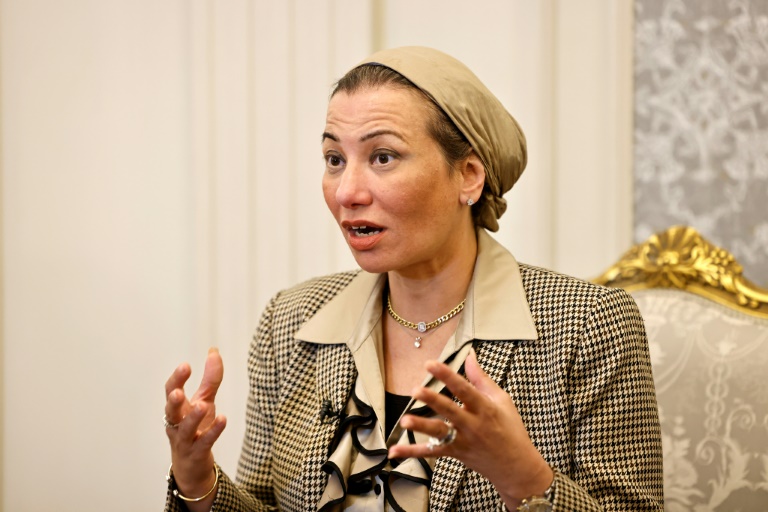
Yasmine Fouad told AFP in an interview Wednesday that Egypt will also remind rich countries of the industrialised world of their unfulfilled aid pledges, at the COP27 summit in the Red Sea resort of Sharm el-Sheikh.

Part of Egypt’s role as host is to “represent the African continent and its needs clearly and explicitly: We were not the cause of these emissions, but it is us –- our people and our natural resources –- that are affected,” Fouad said.

She was speaking on the sidelines of an international conference in Cairo aimed at highlighting “Africa’s needs and ambitions” in fighting and adjusting to climate change.

African countries are among the most exposed to the impacts of climate change, especially worsening droughts and floods, but responsible for only around three percent of global CO2 emissions, former UN chief Ban Ki-moon said this week.

He was speaking at an Africa-focused summit in the Dutch city of Rotterdam, where African leaders lashed out at industrialised nations for failing to show up.

– Targets in danger –

Egypt’s environment minister said that “at this point, a stance must be taken on the international community level to say that everyone must fulfil their obligations, as set out in the Paris Agreement”. 

In 2015, 196 UN members meeting in Paris set the goal of keeping warming below two degrees Celsius (3.6 degrees Fahrenheit) over pre-industrial levels, and preferably 1.5 Celsius, but surging carbon emissions have since endangered the targets.

The Paris Agreement also stipulated that developed countries “shall provide financial resources to assist developing country parties” in curbing their emissions and strengthening resilience.

Already in 2015, a promise made at the Copenhagen climate summit in 2009 — to spend $100 billion a year by 2020 on helping vulnerable nations adapt to climate change — was receding in the rear-view mirror.

The 2020 goal came and went with pledges unmet, and regional meetings in preparation for COP27, such as this week’s in Egypt and the Netherlands as well as another last week in Gabon, signal that funding could become a key flashpoint in Sharm el-Sheikh.

– Water, food and energy –

Fouad said environmental concerns had until recent years been regarded “as an obstacle to investment” and a “luxury” that Egypt could not afford.

Drumming up support for environmental efforts was an uphill battle, until the tide turned and the world became increasingly aware that climate change is a matter of “human survival on planet earth”, she said.

The key to securing financing for efforts to combat climate change, she said, was to zero in on “basic human needs on earth: food, water, energy”.

In focusing on “bankable” projects that can turn a profit, Fouad said Egypt hopes to “use new and renewable energy to provide food and water, such as through desalination”.

Such projects could support developing countries with their basic development needs and with addressing climate change, she said, arguing that the two goals are in fact “one and the same”.

Close Bitnami banner
Bitnami