Africa Business

Anderson strikes before Crawley and Bairstow hold firm against South Africa

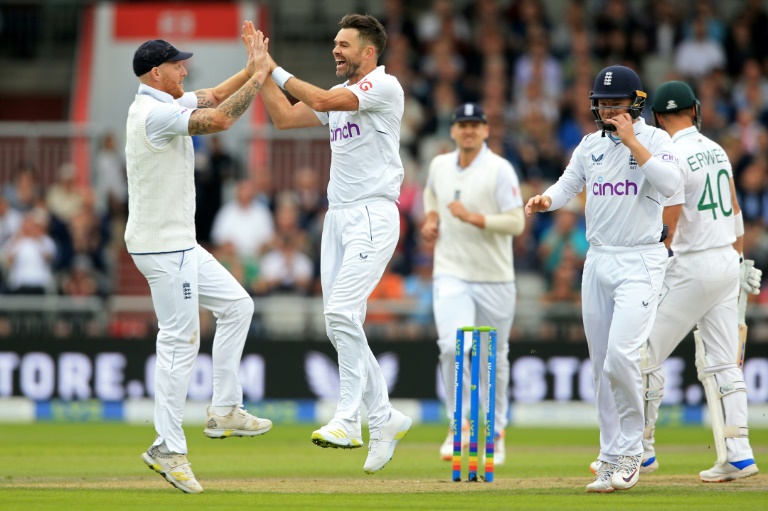
England great James Anderson marked becoming the first player to appear in 100 home Tests by taking 3-32 as South Africa were dismissed for just 151 on Thursday’s first day of the second Test at Old Trafford.

Kagiso Rabada starred with both bat and ball as the Proteas fought back, the fast bowler top-scoring with 36 and then dismissing star batsman Joe Root for just nine as England, bidding to level this three-match series at 1-1, slumped to 43-3.

But by stumps England had recovered to 111-3, a deficit of 40 runs, with struggling opener Zak Crawley surviving to be 17 not out off 77 balls.

By contrast, Jonny Bairstow was 38 not out off 45 balls, including six fours, after sharing an unbroken partnership of 68 with Crawley.

“It was sort of one of those good tosses to lose in a sense,” England veteran Stuart Broad told Sky Sports after taking 3-37 in the unfamiliar position of first change. 

“We were quite keen to have a bowl with the overhead conditions.

“We’re in a really strong position. It looked at one point as if South Africa could have picked up five (wickets) but we’re pretty happy with that day.”

Rabada meanwhile defended South Africa’s fallible top order.

“None of them are getting out on purpose,” he told reporters. 

“It is a young batting line-up and they are gaining experience. You can’t go around pointing fingers, it’s just energy-sapping.”

South Africa’s innings ended in sunshine but the improved batting conditions initially did England little good.

Alex Lees was caught behind off Lungi Ngidi for four before Ollie Pope, who made a promising 23, was bowled by a 90 mph delivery from express quick Anrich Nortje.

Rabada then dismissed Root for his third low score this series, although first slip Sarel Erwee needed four attempts to hold the outside edge. 

– Anderson double –

Anderson, who has now played in 97 Tests in England and three in Wales, had earlier made the initial breakthrough when — bowling from the end named after him on his Lancashire home ground — he removed Erwee during a morning session where the Proteas slumped to 77-5 at lunch.

The 40-year-old paceman then struck twice in successive balls to reduce South Africa to 92-7.

But Rabada and Nortje (10) checked England’s progress with a ninth-wicket stand of 35.

South Africa captain Dean Elgar, with the Proteas top of the World Test Championship table, took a calculated risk in batting first after winning the toss despite overcast conditions favouring fast bowling.

His thinking was influenced by the recall of off-spinner Simon Harmer in place of left-arm quick Marco Jansen, unfortunate to be dropped in the only change to the team that thrashed England by an innings and 12 runs in the first Test at Lord’s last week.

The pitch is expected to offer more turn as the game goes on.

“We played two spinners for a reason, knowing it can get quite dry out there,” explained Rabada.

Anderson struck in just the fifth over when Erwee, fresh from a fine 73 at Lord’s, was caught by diving wicketkeeper Ben Foakes off an inside edge.

Fellow opener Elgar had a couple of reprieves before he fell for 12, with seamer Ollie Robinson, in for Matthew Potts in the only change to England’s side at Lord’s, denied his wicket by a marginal no-ball.

Broad twice beat Elgar before he dismissed him, with Bairstow holding a good low catch at third slip. 

Broad then removed Keegan Petersen (21) with another catch in the cordon.

Stokes (2-17) got in on the act with just his third ball when Aiden Markram (14) top-edged a pull to Foakes before Rassie van der Dussen (16) was lbw after the all-rounder’s raucous appeal was confirmed on the batsman’s review.

Anderson, yet to claim a hat-trick while taking more wickets than any other fast bowler in Test history, went close on Thursday.

He had Harmer and Keshav Maharaj plumb lbw only to spear the hat-trick ball, to Rabada, well down the legside.

jdg/bsp 
Ethiopia's return to conflict: what we know

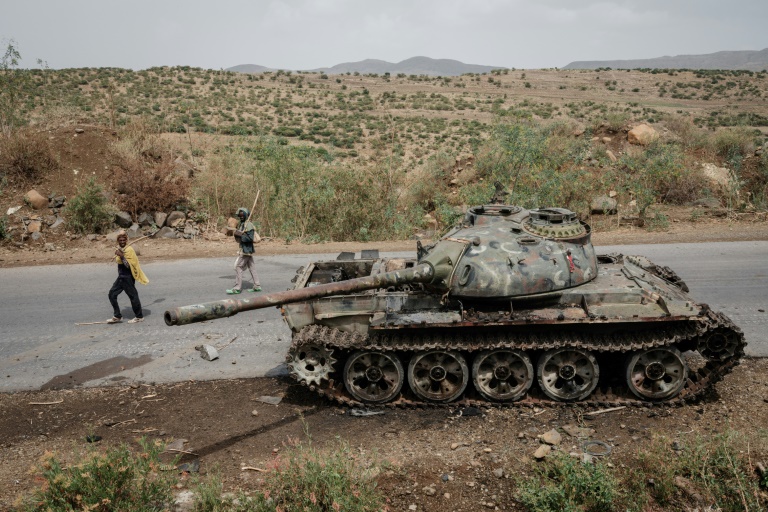
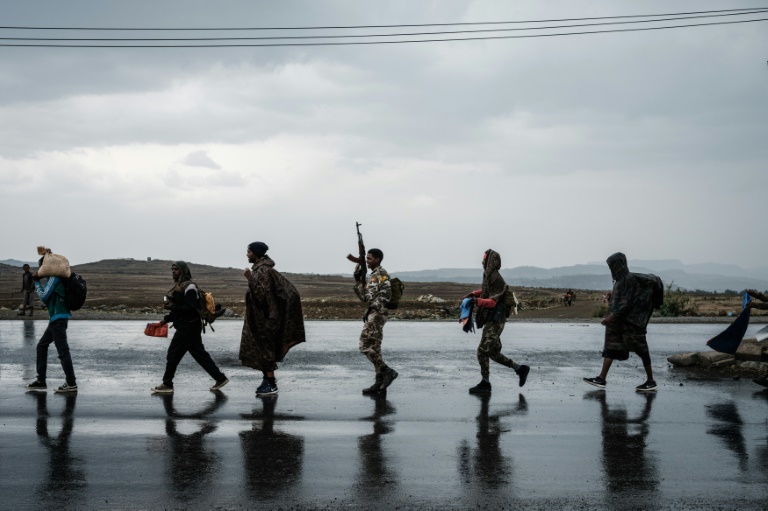
Fresh fighting between Ethiopian forces and Tigrayan rebels has broken a five-month truce that had paved the way for the resumption of humanitarian aid and tentative peace efforts.

The facts behind the sudden return to conflict in northern Ethiopia remain sparse. Here’s what we know so far and the questions that still linger:

– How did it happen? –

As has been the case throughout the 21-month conflict, both sides have accused each other of starting the fighting and violating the truce that had been in place since late March.

The Tigray People’s Liberation Front (TPLF) said government forces and their allies launched a “large-scale” offensive towards southern Tigray at 5 am (0200 GMT) on Wednesday.

But Prime Minister Abiy Ahmed’s government said it was the rebels who struck first.

The tit-for-tat claims could not be independently verified as access to northern Ethiopia is severely restricted.

Later in the day, Ethiopia’s air force announced it had downed a plane carrying weapons for the TPLF that had entered its airspace via Sudan, a claim the rebels dismissed as a “blatant lie”.

– What does this mean for peace efforts? –

Regardless of who initiated Wednesday’s clashes, the prospects for peace in Africa’s second most populous nation appear grim, analysts say.

Even before the latest eruption of violence, the two sides were already at odds over the question of who should mediate potential negotiations. 

The Abiy government wants the African Union’s Horn of Africa envoy Olusegun Obasanjo to lead peace talks while the TPLF has been pushing for Kenya’s outgoing President Uhuru Kenyatta to broker dialogue.

They have also sparred over the restoration of basic services such as electricity, communications and banking to Tigray — a key precondition for dialogue according to the TPLF.

The government on the other hand says federal service providers cannot work inside Tigray without a “secure environment”.

The Eurasia Group political risk consultancy flagged “the pre-emptive recruitment and training of troops by both camps” — an indication that neither side had put much stock in peace negotiations.

“Amid a resurgence in fighting, neither party will be willing to reduce their leverage for future talks by compromising on key issues,” said Eurasia’s Africa analyst Connor Vasey.

“Rather, they will likely aim to use the next phase of fighting to bolster their negotiating positions,” he said, setting the stage for an escalation in violence.

– How will humanitarian aid be affected? –

Prior to the truce, no aid had reached Tigray by road for three months, leaving the region of six million in desperate need of food.

Even after convoys resumed, fuel shortages have made it difficult for aid workers to distribute supplies.

Last week, the UN’s World Food Programme warned that nearly half the population in Tigray was suffering from a severe lack of food and rates of malnutrition had “skyrocketed”.

The return to conflict will worsen an already dire situation.

On Wednesday, the UN said the rebels had “forcibly entered” a WFP warehouse in Tigray’s capital Mekele that morning and taken a dozen tankers carrying 570,000 litres of fuel intended for emergency relief operations.

“Millions will starve if we do not have fuel to deliver food. This is OUTRAGEOUS and DISGRACEFUL,” WFP chief David Beasley said on Twitter.

But the rebels dismissed the “incendiary allegations”, saying they had originally loaned over 600,000 litres of fuel to the WFP on the condition that it “would pay back the fuel in kind”, enabling the TPLF to “run hospitals, schools and other public services” in Tigray.

– Is this a full-blown return to war? –

In recent weeks, both warring parties appear to have simultaneously broached the possibility of peace while also making preparations for a potential return to conflict.

Whether the latest conflagration leads to all-out war will depend on which view prevails, with analysts urging the international community to play a more active role in bringing both players to the negotiating table.

In a statement dated August 23, TPLF leader Debretsion Gebremichael said the rebels had participated in “two rounds of confidential face-to-face” meetings with top Ethiopian officials, the first acknowledgement by either side of direct talks. 

The government has not confirmed the existence of such talks, but last week an official committee tasked with looking into negotiations called for a formal ceasefire in a proposal it planned to submit to the AU.

The eruption of hostilities is “a deafening warning to the key international and regional actors that they must immediately ensure peace talks actually occur”, said William Davison, senior Ethiopia analyst for the International Crisis Group think tank.

“They should accordingly instruct the belligerents to issue all of their demands when at the negotiating table, rather than making them preconditions for talks.”

Diplomatic efforts in the past have run into trouble.

The TPLF has accused Obasanjo of being biased in favour of the government, and Addis Ababa in turn has chastised US and EU envoys for urging a resumption of basic services to Tigray, reflecting the scale of the challenge ahead.

Angola's president set for second term as party leads vote

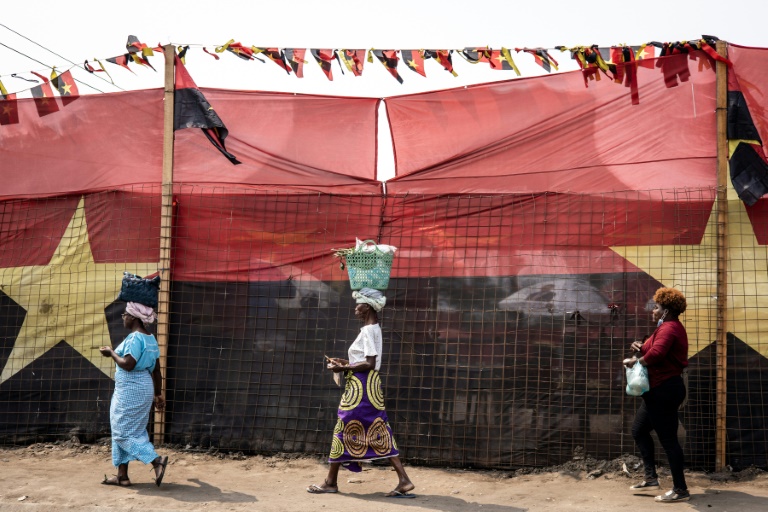
Angola’s Joao Lourenco looked set to remain president Thursday, as his party continued to lead in the country’s most hotly contested election in its democratic history, with most of the votes counted.

Preliminary results published by the country’s electoral commission gave the People’s Movement for the Liberation of Angola (MPLA) 52.08 percent of the vote with more than 86 percent of ballots counted. 

The main opposition group, the National Union for the Total Independence of Angola (UNITA), led by Adalberto Costa Junior, stood at 42.98 percent.

The leader of the winning party automatically ascends to the presidency in the oil-rich former Portuguese colony.

In his first reaction to the initial results, Costa Junior, 60, remained optimistic.

“Don’t let them steal our hope,” he told supporters via his Facebook page.

Augusto Santana, a political analyst in Luanda, however said opposition parties — specifically UNITA — were already questioning the preliminary results.

“There is this feeling something wrong should have happened for the MPLA to be winning at this point,” he told AFP.

The ruling party, which won the previous 2017 polls with 61 percent of the vote, has seen a steady decline in support in recent peacetime elections.

In 2012 it romped to victory with 71.84 percent against UNITA’s 18.66 percent.

In 2008, MPLA won with 81.64 percent.

– ‘Always the same story’ –

The MPLA has ruled Angola for nearly 50 years since the country gained independence in 1975, before a civil war erupted, lasting 27 years and claiming at least 500,000 lives.

Multi-party elections in Angola were introduced in 1992.

But the MPLA’s Jose Eduardo dos Santos, first elected in 1979, remained in office until 2017, when Lourenco succeeded him for a first five-year term.

The latest election has been overshadowed by a struggling economy, inflation, poverty and drought, compounded by dos Santos’ death last month in Spain.

“MPLA leads the count,” read state newspaper Jornal de Angola’s front page on Thursday.

Residents in the oceanside capital Luanda reacted with mixed feelings to the preliminary results.

“I voted for UNITA, and I do not believe in these results,” said Jorge, a 40-year-old mechanic who did not give his surname, accusing the electoral commission of being in cahoots with the ruling party.

“The country is not going to change, it’s always the same story.”

Lourenco, a 68-year-old former general educated in the Soviet Union, is credited with far-reaching reforms since taking power.

These include boosting financial transparency and efficiency in parastatal organisations, fighting sweeping nepotism and corruption, and promoting business-friendly policies to lure foreign investors.

Critics say his anti-graft crusade is one-sided and aimed at settling political scores, targeting children and cronies of his predecessor.

– Fears of tampering –

But his party supporters exude pride in the formerly Soviet-backed party.

“I am happy, the MPLA has given young people opportunities, there is more work and transparency,” said 27-year-old shopkeeper Madalena Antonio, commenting on the early results. 

“The government did what it could do. Things will get better.”

The MPLA has traditionally wielded control over the electoral process, and state media and opposition and civic groups have raised fears of voter tampering.

Results in past elections, including 2017, have been contested — a process that can take several weeks.

UNITA’s deputy leader Abel Chivukuvuku said earlier that the party’s own tally showed it was ahead.

There is a “clear provisional indication of a winning trend for UNITA in all provinces,” he told a live streamed press conference late Wednesday.

More than 14 million people were registered to vote.

A team of observers from the Community of Portuguese-Speaking Countries (CPLP) declared the election to have been organised in “accordance with international requirements” and Angolan laws.

Angola is Africa’s second largest crude producer, but the oil bonanza also nurtured corruption and nepotism under dos Santos.

Dos Santos will be buried on Sunday, which would have been his 80th birthday.

France's Macron looks to 'future' on Algeria trip to mend ties

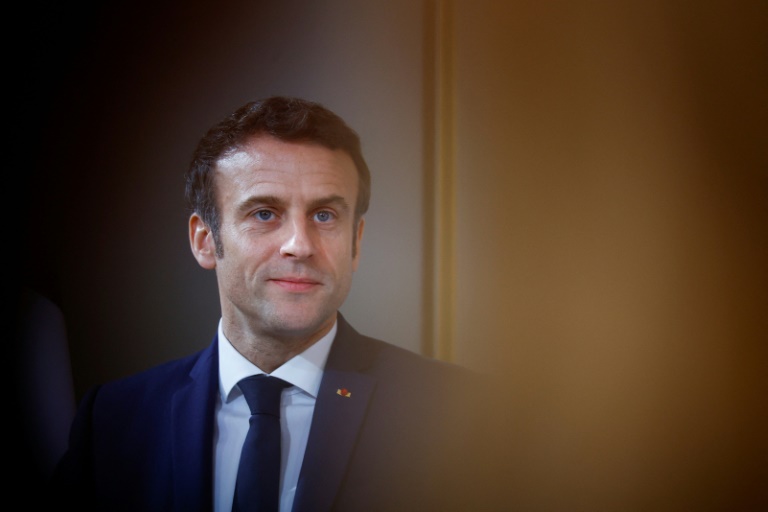
President Emmanuel Macron arrived in Algeria on Thursday for a three-day visit aimed at mending ties with the former French colony, which this year marked its 60th anniversary of independence.  

The first French president to be born after Algerian independence, Macron is hoping “to lay a foundation to rebuild and develop” a sometimes difficult relationship with the North African nation, his office said.

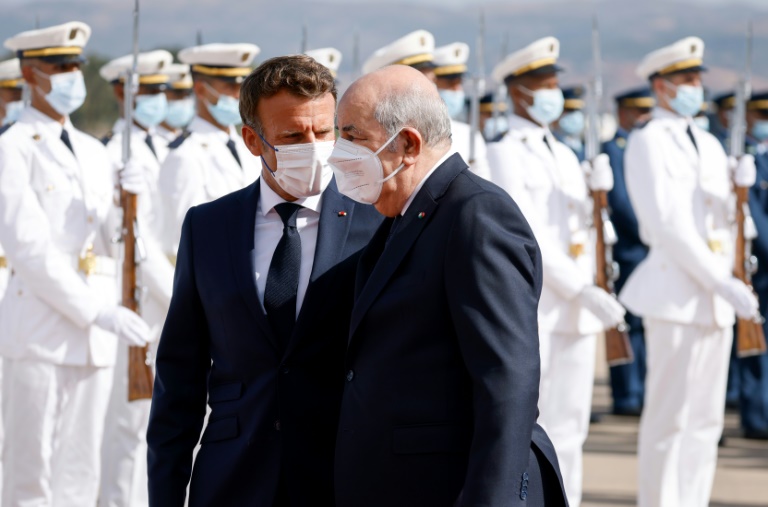
Accompanied by seven ministers, Macron landed at 3:30 pm (1430 GMT) at Houari Boumediene Airport in the capital Algiers, where he was warmly greeted by President Abdelmadjid Tebboune.

The two men, wearing face masks, walked along a red carpet lined by ceremonial guards, then a military band played both national anthems.

Later, Macron visited a monument to martyrs of the country’s war for independence, which ended more than 130 years of French colonial rule in 1962.

Accompanied by Algeria’s top diplomat Ramtane Lamamra, Macron laid a wreath at the site and observed a minute of silence, according to state news agency APS.

The French leader, on his second visit to Algeria since he took power in 2017, “has chosen to direct this visit towards the future, (focusing on) start-ups, innovation, youth, new sectors,” his office said.

Algerian media said Macron’s visit showed both countries’ desire for relations built around “a new vision based on equal treatment and balance of interests”.

It also reflected “a recognition of Algeria’s central role in the region” and the country’s “return to the international scene.”

Macron, who will meet entrepreneurs in Algiers as well as young people in the second city Oran, is accompanied by a 90-strong delegation.

France’s chief rabbi Haim Korsia, the son of Algerian-born Jews, withdrew from the trip at the last moment after testing positive for Covid-19.

His planned attendance had been criticised by prominent Islamist politician Abderrazak Makri and social media users in Algeria, where the Palestinian cause is widely supported.

Ties between Paris and Algiers have been particularly stormy since last year, when Macron questioned Algeria’s existence as a nation before the French occupation and accused the government of fomenting “hatred towards France”.

Tebboune withdrew his country’s ambassador in response and banned French military aircraft from its airspace.

– Better ties ‘a necessity’ –

But Macron’s office said he “regretted” the misunderstandings caused by his comments, and his aides believe both sides have moved on.

They note the resumption of normal diplomatic relations and overflights to French army bases further south in Africa.

Analyst Mansour Kedidir said that “given instability in the Maghreb region, conflicts in the Sahel and the war in Ukraine, improving ties between France and Algeria is a political necessity”.

Macron and Tebboune will discuss the situation in Algeria’s southern neighbour Mali, as well as the growing influence in the region of Russia, Algeria’s top arms supplier.

France’s latest efforts to mend ties comes as Algeria moves to fill a vast shortfall in gas supplies to Europe following Russia’s invasion of Ukraine.

European nations are seeking to end their dependence on Russian hydrocarbons, giving Algeria — Africa’s biggest gas exporter with direct pipelines to Spain and Italy — renewed clout.

“The French president will certainly ask Algeria to make an effort to try to increase its gas production,” said Algerian economist Abderrahmane Mebtoul.

But Macron’s office has said gas is not a major feature of the visit — although the head of French energy firm Engie, Catherine MacGregor, will be on Macron’s delegation.

– ‘Different discourse’ –

Macron has long ruled out issuing an apology for the highly sensitive issue of colonialism, but he has made a series of gestures aimed at healing past wounds.

In Algiers, few have much sympathy towards Macron, who during his first election campaign had described French colonialism as a “crime against humanity”.

“Before he was president, he used nice words, he visited (Algeria), but right after he went back to France, he changed,” said computer scientist Othmane Abdellouche, 62. 

“He used a totally different discourse”.

But businessman Kamel Moula, who heads the Council of Economic Renewal Algerian, told the TSA news website that he wanted to see “a new mode of cooperation” between the two countries that would see them “jointly conquer new markets”.

French historians say half a million civilians and combatants died during Algeria’s bloody war for independence, 400,000 of them Algerian. The Algerian authorities say 1.5 million were killed.

Tebboune’s office said in October that over 5.6 million Algerians were killed during the colonial period.

Algerian rights groups have also urged Macron not to overlook human rights abuses by the government that came to power after long-time leader Abdelaziz Bouteflika stepped down in 2019.

Tebboune, a prime minister under Bouteflika, has clamped down on the Hirak opposition movement that forced his predecessor to resign.

Calls for restraint after fighting returns to Ethiopia

The international community appealed for restraint on Thursday after fighting resumed in northern Ethiopia between government forces and Tigray rebels, scuppering a truce and dimming hopes for peace.

The situation on the ground was unclear a day after fresh fighting erupted on the border of Tigray, where the warring sides accused each other of igniting the first major clashes in five months.

Rebel authorities in Tigray said on Wednesday that government forces failed to breach their defensive lines, but offered little detail on the status of combat or casualties.

The government of Prime Minister Abiy Ahmed has also not provided an update on the fighting, or whether combat has spread beyond the scenes of Wednesday’s battles on Tigray’s southern border.

Spokespeople for Abiy’s government and the rebel Tigray People’s Liberation Front (TPLF) did not respond to AFP’s requests for comment about the situation on the ground.

The return to combat has alarmed the international community, which has been pushing both sides to peacefully resolve the brutal 21-month war in Africa’s second most populous nation.

US Secretary of State Antony Blinken said the truce reached between the warring parties in March had “reduced violence and saved lives”. 

“We are concerned that renewed fighting puts that at risk. We call on the Ethiopian government and TPLF to redouble efforts for peace to bring a permanent end to the conflict.”

EU foreign policy chief Josep Borrell also urged both sides to pull back from “a full-blown war”.

UN chief Antonio Guterres and envoys from Britain, Turkey, the African Union and the East African bloc IGAD made similar calls for restraint and a commitment to dialogue. 

– ‘Defend sovereignty’ –

On Thursday, Deputy Prime Minister and Foreign Minister Demeke Mekonnen told diplomats that Ethiopia was “prepared to defend the nation’s territorial integrity and sovereignty”.

“But it is equally committed to using peaceful means to put an end to the conflict and collaborating with humanitarian organisations to lessen needless suffering,” he said.

The March truce paused the worst of the bloodshed and allowed aid convoys to slowly return to Tigray, where the UN says millions are severely hungry, and fuel and medicine are in scarce supply.

The UN’s World Food Programme on Thursday accused the TPLF of seizing half a million litres of fuel from a warehouse in Tigray.

“We demand the Tigrayan authorities return these fuel stocks to the humanitarian community immediately. As the next harvest is not until October, our deliveries of life-saving food could not be more urgent or critical to the survival of millions,” WFP executive director David Beasley said in a statement.

The government on Thursday said the fuel was commandeered to further the TPLF’s military objectives and called on the international community to guarantee aid was “reaching intended beneficiaries”.

But the rebels responded saying they had originally loaned over 600,000 litres of fuel to the WFP on the condition that it “would pay back the fuel in kind”, enabling the TPLF to “run hospitals, schools and other public services” in Tigray.

UN human rights chief Michelle Bachelet said the people of Tigray had been through enough hardship: “This (fighting) will only exacerbate the suffering of civilians already in desperate need.”

– Stalled talks – 

Since the end of June, Abiy’s government and the rebels have repeatedly stated their willingness to enter peace negotiations, but disagreed on the terms.

In recent weeks, too, they have accused each other of preparing for battle.

Addis Ababa wants talks without preconditions under the auspices of the AU, which is headquartered in the Ethiopian capital. 

The rebels are demanding electricity, telecommunications and banking services be restored to Tigray before talks begin, and reject the AU’s envoy Olusegun Obasanjo as mediator, accusing him of a pro-government bias. 

In a statement dated August 23, TPLF leader Debretsion Gebremichael said “two rounds of confidential face-to-face” meetings with top civilian and military officials had taken place, the first acknowledgement by either side of direct talks.

Abiy sent troops into Tigray in November 2020 to topple the TPLF which had dominated Ethiopian politics for three decades until he took office in 2018.

The 2019 Nobel Peace Prize winner said the move came in response to rebel attacks on army camps.

The TPLF mounted a comeback, recapturing Tigray and expanding into the neighbouring regions of Afar and Amhara, before the war reached a stalemate.

The conflict has killed untold numbers, with widespread reports of atrocities including mass killings and sexual violence.

Calls for restraint after fighting returns to Ethiopia

The international community appealed for restraint on Thursday after fighting resumed in northern Ethiopia between government forces and Tigray rebels, scuppering a truce and dimming hopes for peace.

The situation on the ground was unclear a day after fresh fighting erupted on the border of Tigray, where the warring sides accused each other of igniting the first major clashes in five months.

Rebel authorities in Tigray said on Wednesday that government forces failed to breach their defensive lines, but offered little detail on the status of combat or casualties.

The government of Prime Minister Abiy Ahmed has also not provided an update on the fighting, or whether combat has spread beyond the scenes of Wednesday’s battles on Tigray’s southern border.

Spokespeople for Abiy’s government and the rebel Tigray People’s Liberation Front (TPLF) did not respond to AFP’s requests for comment about the situation on the ground.

The return to combat has alarmed the international community, which has been pushing both sides to peacefully resolve the brutal 21-month war in Africa’s second most populous nation.

US Secretary of State Antony Blinken said the truce reached between the warring parties in March had “reduced violence and saved lives”. 

“We are concerned that renewed fighting puts that at risk. We call on the Ethiopian government and TPLF to redouble efforts for peace to bring a permanent end to the conflict.”

EU foreign policy chief Josep Borrell urged both sides to pull back from “a full-blown war”, saying: “Reports of renewed conflict in Northern Ethiopia cast a shadow on the prospect for peace.”

UN chief Antonio Guterres and envoys from Britain, Turkey, the African Union and the East African bloc IGAD made similar calls for restraint and a commitment to dialogue. 

– ‘Defend sovereignty’ –

On Thursday, Deputy Prime Minister and Foreign Minister Demeke Mekonnen told diplomats that Ethiopia was “prepared to defend the nation’s territorial integrity and sovereignty”.

“But it is equally committed to using peaceful means to put an end to the conflict and collaborating with humanitarian organisations to lessen needless suffering,” he told a gathering of foreign envoys in Addis Ababa.

The UN’s World Food Programme on Thursday accused the TPLF of seizing half a million litres of fuel from a warehouse in Tigray, a rebel-held region in the grips of a major humanitarian crisis.

“We demand the Tigrayan authorities return these fuel stocks to the humanitarian community immediately. As the next harvest is not until October, our deliveries of life-saving food could not be more urgent or critical to the survival of millions,” WFP executive director David Beasley said in a statement.

The government on Thursday said the fuel was commandeered to further the TPLF’s military objectives and called on the international community to guarantee aid was “reaching intended beneficiaries”.

UN human rights chief Michelle Bachelet said the people of Tigray had been through enough hardship: “This (fighting) will only exacerbate the suffering of civilians already in desperate need.”

The March truce paused the worst of the bloodshed and allowed aid convoys to slowly return to Tigray, where the UN says millions are severely hungry, and fuel and medicine are in scarce supply.

– Stalled talks – 

Since the end of June, Abiy’s government and the rebels have repeatedly stated their willingness to enter peace negotiations, but disagreed on the terms of such talks.

In recent weeks, too, they have accused each other of preparing for battle.

Addis Ababa wants talks without preconditions under the auspices of the AU, which is headquartered in the Ethiopian capital. 

The rebels are demanding electricity, telecommunications and banking services be restored to Tigray before talks begin, and reject the AU’s envoy Olusegun Obasanjo as mediator, accusing him of a pro-government bias. 

In a statement dated August 23, TPLF leader Debretsion Gebremichael said “two rounds of confidential face-to-face” meetings with top civilian and military officials had taken place, the first acknowledgement by either side of direct talks.

Abiy sent troops into Tigray in November 2020 to topple the TPLF after months of tensions with the party that had dominated Ethiopian politics for three decades until he took office in 2018.

The 2019 Nobel Peace Prize winner said the move came in response to rebel attacks on army camps.

The TPLF mounted a comeback, recapturing Tigray and expanding into the neighbouring regions of Afar and Amhara, before the war reached a stalemate.

The conflict has killed untold numbers, with widespread reports of atrocities including mass killings and sexual violence.

France's Macron looks to 'future' on Algeria trip to mend ties

President Emmanuel Macron arrived in Algeria on Thursday for a three-day visit aimed at mending ties with the former French colony, which this year marked its 60th anniversary of independence.

The first French president to be born after Algerian independence, Macron is hoping “to lay a foundation to rebuild and develop” a sometimes difficult relationship with the North African nation, his office said.

Accompanied by seven ministers, Macron arrived landed at 3:30 pm (1430 GMT) at Houari Boumediene Airport in the capital Algiers, where he was to be received by President Abdelmadjid Tebboune.

The two heads of state will visit a monument to martyrs of the country’s war for independence, which ended more than 130 years of French colonial rule in 1962.

Franco-Algerian relations have seen repeated crises since then.

The French leader, on his second visit to Algeria since he took power in 2017, “has chosen to direct this visit towards the future, (focusing on) start-ups, innovation, youth, new sectors,” the Elysee said.

Algerian media said Macron’s visit showed both countries’ desire for relations built around “a new vision based on equal treatment and balance of interests”.

It also reflected “a recognition of Algeria’s central role in the region” and the country’s “return to the international scene.”

Macron, who will meet entrepreneurs in Algiers as well as young people in the second city Oran, is accompanied by a 90-strong delegation.

France’s chief rabbi Haim Korsia, the son of Algerian-born Jews, withdrew from the trip at the last moment after testing positive for Covid-19.

His planned attendance had been criticised by prominent Islamist politician Abderrazak Makri and social media users in Algeria, where the Palestinian cause is widely supported.

Ties between Paris and Algiers have been particularly stormy since last year, when Macron questioned Algeria’s existence as a nation before the French occupation and accused the government of fomenting “hatred towards France”.

Tebboune withdrew his country’s ambassador in response and banned French military aircraft from its airspace.

– Better ties ‘a necessity’ –

But Macron’s office said he “regretted” the misunderstandings caused by his comments, and his aides believe both sides have moved on.

They note the resumption of normal diplomatic relations and overflights to French army bases further south in Africa.

Analyst Mansour Kedidir said that “given instability in the Maghreb region, conflicts in the Sahel and the war in Ukraine, improving ties between France and Algeria is a political necessity”.

Macron and Tebboune will discuss the situation in Algeria’s southern neighbour Mali, as well as the growing influence in the region of Russia, Algeria’s top arms supplier.

France’s latest efforts to mend ties comes as Algeria moves to fill a vast shortfall in gas supplies to Europe following Russia’s invasion of Ukraine.

European nations are seeking to end their dependence on Russian hydrocarbons, giving Algeria — Africa’s biggest gas exporter with direct pipelines to Spain and Italy — renewed clout.

“The French president will certainly ask Algeria to make an effort to try to increase its gas production,” said Algerian economist Abderrahmane Mebtoul.

But Macron’s office has said gas is not a major feature of the visit — although the head of French energy firm Engie, Catherine MacGregor, will be on Macron’s delegation.

– ‘Different discourse’ –

Macron has long ruled out issuing an apology for the highly sensitive issue of colonialism, but he has made a series of gestures aimed at healing past wounds.

In Algiers, few have much sympathy towards Macron, who during his first election campaign had described French colonialism as a “crime against humanity”.

“Before he was president, he used nice words, he visited (Algeria), but right after he went back to France, he changed,” said computer scientist Othmane Abdellouche, 62. 

“He used a totally different discourse”.

But businessman Kamel Moula, who heads the Council of Economic Renewal Algerian, told the TSA news website that he wanted to see “a new mode of cooperation” between the two countries that would see them “jointly conquer new markets”.

French historians say half a million civilians and combatants died during Algeria’s bloody war for independence, 400,000 of them Algerian. The Algerian authorities say 1.5 million were killed.

Tebboune’s office said in October that over 5.6 million Algerians were killed during the colonial period.

Algerian rights groups have also urged Macron not to overlook human rights abuses by the government that came to power after long-time leader Abdelaziz Bouteflika stepped down in 2019.

Tebboune, a prime minister under Bouteflika, has clamped down on the Hirak opposition movement that forced his predecessor to resign.

Ethiopia's return to conflict: what we know

Fresh fighting between Ethiopian forces and Tigrayan rebels has broken a five-month truce that had paved the way for the resumption of humanitarian aid and tentative peace efforts.

The facts behind the sudden return to conflict in northern Ethiopia remain sparse. Here’s what we know so far and the questions that still linger:

– How did it happen? –

As has been the case throughout the 21-month conflict, both sides have accused each other of starting the fight and violating the truce that had been in place since late March.

The Tigray People’s Liberation Front (TPLF) said government forces and their allies launched a “large-scale” offensive towards southern Tigray at 5 am (0200 GMT) on Wednesday.

But Prime Minister Abiy Ahmed’s government said it was the rebels who struck first.

The tit-for-tat claims could not be independently verified as access to northern Ethiopia is severely restricted.

Later in the day, Ethiopia’s air force announced it had downed a plane carrying weapons for the TPLF that had entered its airspace via Sudan, a claim the rebels dismissed as a “blatant lie”.

– What does this mean for peace efforts? –

Regardless of who initiated Wednesday’s clashes, the prospects for peace in Africa’s second most populous nation appear grim, analysts say.

Even before the latest eruption of violence, the two sides were already at odds over the question of who should mediate potential negotiations. 

The Abiy government wants the African Union’s Horn of Africa envoy Olusegun Obasanjo to lead peace talks while the TPLF has been pushing for Kenya’s outgoing President Uhuru Kenyatta to broker dialogue.

They have also sparred over the restoration of basic services such as electricity, communications and banking to Tigray — a key precondition for dialogue according to the TPLF.

The government on the other hand says federal service providers cannot work inside Tigray without a “secure environment”.

The Eurasia Group political risk consultancy flagged “the pre-emptive recruitment and training of troops by both camps” — an indication that neither side had put much stock in peace negotiations.

“Amid a resurgence in fighting, neither party will be willing to reduce their leverage for future talks by compromising on key issues,” said Eurasia’s Africa analyst Connor Vasey.

“Rather, they will likely aim to use the next phase of fighting to bolster their negotiating positions,” he said, setting the stage for an escalation in violence.

– How will humanitarian aid be affected? –

Prior to the truce, no aid had reached Tigray by road for three months, leaving the region of six million in desperate need of food.

Even after convoys resumed, fuel shortages have made it difficult for aid workers to distribute supplies.

Last week, the UN’s World Food Programme warned that nearly half the population in Tigray was suffering from a severe lack of food and rates of malnutrition had “skyrocketed”.

The return to conflict will worsen an already dire situation.

On Wednesday, the UN said the rebels had “forcibly entered” a WFP warehouse in Tigray’s capital Mekele that morning and taken a dozen tankers carrying 570,000 litres of fuel intended for emergency relief operations.

“Millions will starve if we do not have fuel to deliver food. This is OUTRAGEOUS and DISGRACEFUL,” WFP chief David Beasley said on Twitter.

– Is this a full-blown return to war? –

In recent weeks, both warring parties appear to have simultaneously broached the possibility of peace while also making preparations for a potential return to conflict.

Whether the latest conflagration leads to all-out war will depend on which view prevails, with analysts urging the international community to play a more active role in bringing both players to the negotiating table.

In a statement dated August 23, TPLF leader Debretsion Gebremichael said the rebels had participated in “two rounds of confidential face-to-face” meetings with top Ethiopian officials, the first acknowledgement by either side of direct talks. 

The government has not confirmed the existence of such talks, but last week an official committee tasked with looking into negotiations called for a formal ceasefire in a proposal it planned to submit to the AU.

The eruption of hostilities is “a deafening warning to the key international and regional actors that they must immediately ensure peace talks actually occur”, said William Davison, senior Ethiopia analyst for the International Crisis Group think tank.

“They should accordingly instruct the belligerents to issue all of their demands when at the negotiating table, rather than making them preconditions for talks.”

Diplomatic efforts in the past have run into trouble.

The TPLF has accused Obasanjo of being biased in favour of the government, and Addis Ababa in turn has chastised US and EU envoys for urging a resumption of basic services to Tigray, reflecting the scale of the challenge ahead.

Grain prices ease back but fertiliser costs a growing risk

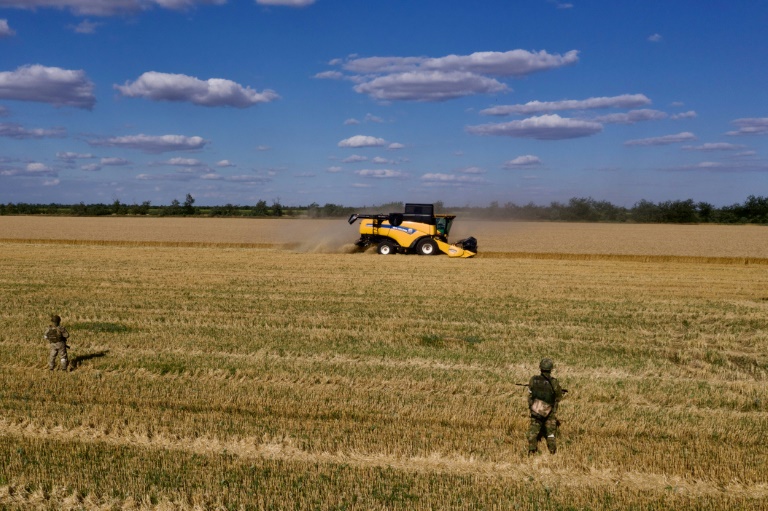
Grain prices have dropped sharply from the record highs they reached following Russia’s invasion of Ukraine, but another menace to global food security remains: a shortage of fertiliser.

The conflict sparked fears of famine in poorer countries reliant on agricultural goods from Ukraine and Russia, two nations that were responsible for nearly a third of global wheat exports last year.

Wheat prices reached a peak of nearly 440 euros ($440) a tonne on the European market in mid-May, double the level of one year ago, as crucial Ukrainian shipments were stuck at port due to a Russian naval blockade in the Black Sea.

But prices have fallen to around 300 euros in August.

“The situation began to calm down at the end of May, beginning of June with the first reassuring harvest forecasts for Europe and the resumption of Ukrainian exports, first by road and rail, then by sea,” said Gautier Le Molgat, analyst at consultancy Agritel.

Kyiv and Moscow reached an agreement in July, brokered by the United Nations and Turkey, that allowed Ukraine to resume grain shipments in the Black Sea.

The agreement opened a shipping corridor for 20 million tonnes of maize, wheat and sunflower seed oil stocked in Ukraine. According to the Joint Coordination Centre which manages the sea corridor, more than 720,000 tonnes have already left Ukraine.

“Thanks to intensive international cooperation, Ukraine is on track to export as much as four million metric tonnes of agricultural products in August,” a senior US State Department official told AFP on Tuesday.

– Strong ruble –

In addition to more supplies reaching markets and helping lower prices, the deal has led to a drop in insurance premiums, reducing transport costs.

But the reduction in tensions is, for the moment, benefitting Ukraine more than Russia, which is expecting a bumper harvest of 88 million tonnes of wheat.

Russian wheat exports in July and August are running 27 percent lower than last year, according to estimates by the Russian market research firm SovEcon.

That is due to fierce competition on the international grain market, as well as the strong value of the ruble and a high Russian export tax. 

“As a result, farmers remain reluctant sellers,” said Andrei Sizov, SovEcon’s managing director. 

The low volume of Russian exports is one of the main reasons why wheat prices have remained so high, said Sizov.

– Fertiliser costs a growing problem –

One of the reasons prices have not come down further is the surge in energy prices, due to the post-pandemic recovery and the war.

Higher oil prices impact transportation costs, while natural gas is a feedstock for manufacturing the chemical fertilisers that most farmers now use.

“Fertiliser prices have tripled in the last 18 months and the hard part of my job is forecasting what they will do in the next 18 months,” Joel Jackson, a fertiliser analyst at BMO Capital Markets, said at an analyst conference in July in the United States.

With European gas prices soaring above 300 euros per megawatt hour, compared to an average of 20 euros over the past decades, “we’ve got a big problem as it’s untenable for ammonia manufacturers,” said Nicolas Broutin, head of the French subsidiary of Yara, the Norwegian firm which is Europe’s largest fertiliser producer. 

Yara announced Thursday it was reducing once again its production in Europe of ammonia, which is made using hydrogen obtained from natural gas and which provides the nitrogen in synthetic fertilisers.

The firm will only be using 35 percent of its production capacity in Europe. A number of other European manufacturers have either reduced or halted output.

Although fertilisers do not fall under international sanctions, farmers are also at risk of shortages of another major element of fertiliser — potassium or potash — as both Russia and Belarus are major producers. 

BMO Capital Markets’ Joel Jackson said fertiliser manufacturers worry that the high prices will prompt farmers to reduce or eliminate their use.

“We’re already seeing that throughout Europe,” said Yara’s Nicolas Broutin.

CyclOpe, a French-based commodities research firm, said “it’s in 2023-2024 that the rise in fertiliser prices and eventually their reduced use will be felt.”

Farmers will try to pass on higher fertiliser costs to consumers, driving up food costs.

Meanwhile, reduced fertiliser use will result in lower crop yields and harvests, which will also drive up food prices.

CyclOpe expects in particular “considerably reduced” output in Africa, where farmers and consumers are both more sensitive to prices.

Calls for restraint after fighting returns to Ethiopia

The international community appealed for restraint on Thursday after fighting resumed in northern Ethiopia between government forces and Tigray rebels, scuppering a truce and casting a shadow over hopes for peace.

The situation on the ground was unclear a day after fresh fighting erupted on the border of Tigray, where the warring sides accused each other of igniting the first major clashes in five months.

Rebel authorities in Tigray said on Wednesday that government forces failed to breach their defensive lines, but offered little detail on the status of combat or casualties.

The government of Prime Minister Abiy Ahmed has also not provided an update on the fighting, or whether combat has spread beyond the scenes of Wednesday’s battles on Tigray’s southern border.

Spokespeople for Abiy’s government and the rebel Tigray People’s Liberation Front (TPLF) did not respond to AFP’s requests for comment about the situation on the ground.

The return to combat has alarmed the international community, which has been pushing both sides to peacefully resolve the brutal 21-month war in Africa’s second most populous nation.

US Secretary of State Antony Blinken said the truce reached between the warring parties in March had “reduced violence and saved lives”. 

“We are concerned that renewed fighting puts that at risk. We call on the Ethiopian Government and TPLF to redouble efforts for peace to bring a permanent end to the conflict.”

EU foreign policy chief Josep Borrell urged both sides to pull back from “a full blown war”, saying: “Reports of renewed conflict in Northern Ethiopia cast a shadow on the prospect for peace.”

UN chief Antonio Guterres and envoys from Britain, Turkey, the African Union and the East African trade bloc IGAD made similar calls for restraint and a commitment to dialogue. 

– ‘Defend sovereignty’ –

On Thursday, Deputy Prime Minister and Foreign Minister Demeke Mekonnen told diplomats that Ethiopia was “prepared to defend the nation’s territorial integrity and sovereignty”.

“But it is equally committed to using peaceful means to put an end to the conflict and collaborating with humanitarian organisations to lessen needless suffering,” he told a gathering of foreign envoys in Addis Ababa.

He also accused the TPLF of commandeering aid supplies meant for Tigray, which is in the grips of a major humanitarian crisis.

The UN’s World Food Programme on Thursday accused the TPLF of seizing half a million litres of fuel from a warehouse in Tigray, a region the rebels have held since ousting government troops in June 2021.

“We demand the Tigrayan Authorities return these fuel stocks to the humanitarian community immediately. As the next harvest is not until October, our deliveries of life-saving food could not be more urgent or critical to the survival of millions,” WFP executive director David Beasley said in a statement.

Vicky Ford, the UK’s Minister for Africa, said the resumption of fighting would “only deepen the already catastrophic humanitarian situation” in Tigray where food, fuel and medicine is scarce.

The March truce paused the worst of the bloodshed and allowed for aid convoys to slowly return to Tigray, where the UN said last week nearly half the population is suffering from a severe lack of food.

– Stalled talks – 

Since the end of June, Abiy’s government and the rebels have repeatedly stated their willingness to enter peace negotiations, but disagreed on the terms of such talks.

In recent weeks, too, they have accused each other of preparing for battle.

Addis Ababa wants talks without preconditions under the auspices of the AU, which is headquartered in the Ethiopian capital. 

The rebels are demanding electricity, telecommunications and banking services be restored to Tigray before talks begin, and reject the AU’s envoy Olusegun Obasanjo as mediator. 

In a statement dated August 23, TPLF leader Debretsion Gebremichael said “two rounds of confidential face-to-face” meetings with top civilian and military officials had taken place, the first acknowledgement by either side of direct talks.

Abiy sent troops into Tigray in November 2020 to topple the TPLF after months of tensions with the party that dominated Ethiopian politics for three decades until he took office in 2018.

The 2019 Nobel Peace Prize winner said the move came in response to rebel attacks on army camps.

The TPLF mounted a comeback, recapturing Tigray and expanding into Afar and Amhara, before the war reached a stalemate.

The conflict has killed untold numbers, with widespread reports of atrocities including mass killings and sexual violence.

Close Bitnami banner
Bitnami