Africa Business

Fighting flares up in northern Ethiopia after five-month lull

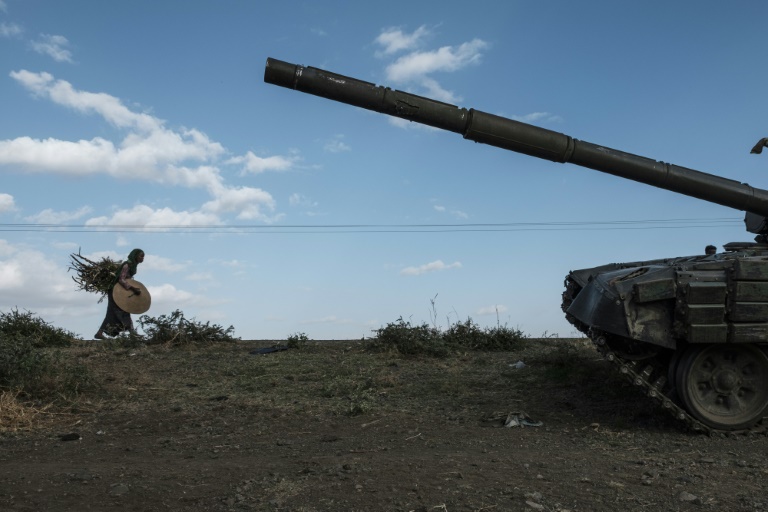
Fighting erupted between government forces and Tigrayan rebels in northern Ethiopia on Wednesday, shattering a five-month truce and dealing a blow to peace efforts. 

Reports of fresh offensives were followed by Ethiopia’s air force announcing it had downed a plane carrying weapons for the Tigray People’s Liberation Front (TPLF).

The government of Prime Minister Abiy Ahmed and the rebels have accused each other of undermining efforts to peacefully resolve the brutal 21-month war in Africa’s second most populous nation, and traded blame over who was responsible for returning to combat.

UN chief Antonio Guterres said he was “deeply shocked” by the renewed fighting and appealed for an “immediate cessation of hostilities and for the resumption of peace talks”.

The head of the African Union Commission, Moussa Faki Mahamat, called for a “de-escalation” and the resumption of “talks to seek a peaceful solution”.

The United States urged both sides “to redouble efforts to advance talks to achieve a durable ceasefire”, a US State Department spokesman said.

The TPLF said government forces and their allies had launched a “large scale” offensive towards southern Tigray early Wednesday after a months-long lull in fighting.

But the government accused the TPLF of striking first and violating the ceasefire.

“Ignoring all of the peace alternatives presented by the government, the terrorist group TPLF armed group continued its recent provocations and launched an attack this morning at 5 am (0200 GMT)” around southern Tigray, the Government Communication Service said in a statement.

The rival claims could not be independently verified as access to northern Ethiopia is restricted, but there were reports of fighting around southern Tigray in areas bordering the Amhara and Afar regions.

“They launched the offensive early this morning around 5 am local time. We are defending our positions,” TPLF spokesman Getachew Reda told AFP.

He said on Twitter that the “large-scale” offensive was launched “against our positions in the southern front” by the Ethiopian army and special forces as well as militias from neighbouring Amhara.

– ‘Violated our airspace’ –

The air force said Wednesday it had shot down a plane “believed to be a property of historical enemies who want Ethiopia’s weakness”.

“The airplane which violated our airspace from Sudan… and aimed to supply weapons to the terror group was shot down by our heroic air force,” the Ethiopian News Agency quoted armed forces spokesman Major General Tesfaye Ayalew as saying.

The date of the incident, the type of aircraft and how it was downed were not detailed.

The TPLF said it was a “blatant lie”.

The March truce had paused fighting in a war that first began in November 2020, allowing a resumption of some international aid to Tigray after a three-month break.

Both sides in recent weeks had evoked possible peace talks. 

But they disagree on who should lead negotiations, and the TPLF also insists basic services must be restored to Tigray’s six million people before dialogue can begin.

Abiy’s government says any talks must be brokered by the African Union’s Horn of Africa envoy Olusegun Obasanjo, who is leading the international push for peace, but the rebels want outgoing Kenyan President Uhuru Kenyatta to mediate.

In a statement dated August 23, TPLF leader Debretsion Gebremichael said “two rounds of confidential face-to-face” meetings with top civilian and military officials had taken place, the first acknowledgment by either side of direct talks.

No time or place was given for these talks, which the government has not confirmed. 

William Davison, senior Ethiopia analyst for the International Crisis Group (ICG) think tank, urged all parties to cease fighting to avert “a return to full-blown war”.

“This serious breach of the truce agreed earlier this year demonstrates the need for the two parties to arrange unconditional face-to-face negotiations as soon as these hostilities cease,” Davison said in a statement.

– ‘Enough of this war’ –

The conflict has killed untold numbers, with widespread reports of atrocities including mass killings and sexual violence.

Millions of people need humanitarian assistance in Tigray, the country’s northernmost region, as well as Afar and Amhara.

The UN’s World Food Programme said last week that nearly half the population in Tigray is suffering from a severe lack of food and rates of malnutrition had “skyrocketed”.

Tigray is largely cut off from the rest of Ethiopia, without basic services such as electricity, communications and banking.

Abiy sent troops into Tigray in November 2020 to topple the TPLF after months of tensions with the party that had dominated Ethiopian politics for three decades.

The 2019 Nobel Peace Prize winner said the move came in response to rebel attacks on army camps. 

The TPLF mounted a comeback, recapturing Tigray and expanding into Afar and Amhara, before the war reached a stalemate.

Last Wednesday, an Ethiopian government committee tasked with looking into negotiations called for a formal ceasefire as part of a proposal it planned to submit to the AU.

“If you can’t win, then you’ve got to sit down and talk,” Abiy said Sunday in remarks carried on state media.

“My advice is… let’s have enough of (this) war.”
txw-ayv/ah/gw

Vote counting begins in tightest ever Angolan election

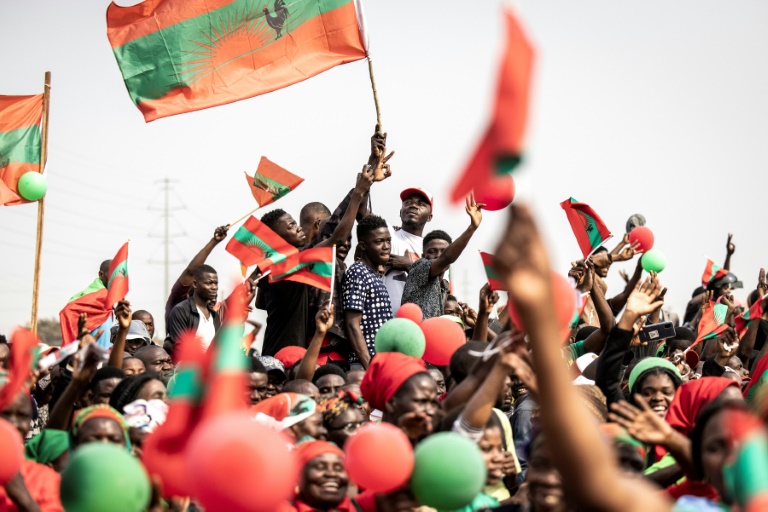
Ballot counting began in Angola Wednesday after polls closed in what was widely seen as the most competitive vote in the country’s democratic history, with incumbent President Joao Lourenco squaring up against charismatic opposition leader Adalberto Costa Junior.

The election has been overshadowed by Angola’s many woes — a struggling economy, inflation, poverty and drought, compounded by the death of a former strongman president.

The People’s Movement for the Liberation of Angola (MPLA), which has ruled the oil-rich nation for nearly five decades, faced its most serious challenge since the first multiparty vote in 1992.

Eight political parties were running, but the real contest lay between the MPLA and its long-standing rival and ex-rebel movement the National Union for the Total Independence of Angola (UNITA).

Pre-voting opinion polls suggested that support for the MPLA — which won 61 percent of the vote in 2017 elections — would dwindle, while the UNITA — which has entered an electoral pact with two other parties — would make gains. 

But UNITA’s inroads might not be enough to unseat Lourenco, 68, who succeeded veteran leader Jose Eduardo dos Santos five years ago.

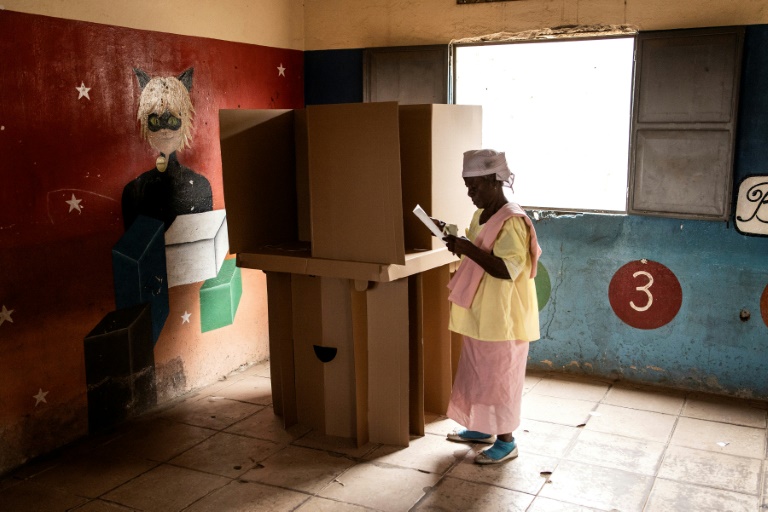
Dozens of voters lined up at polling stations in the early morning, but by midday they were just a trickle. 

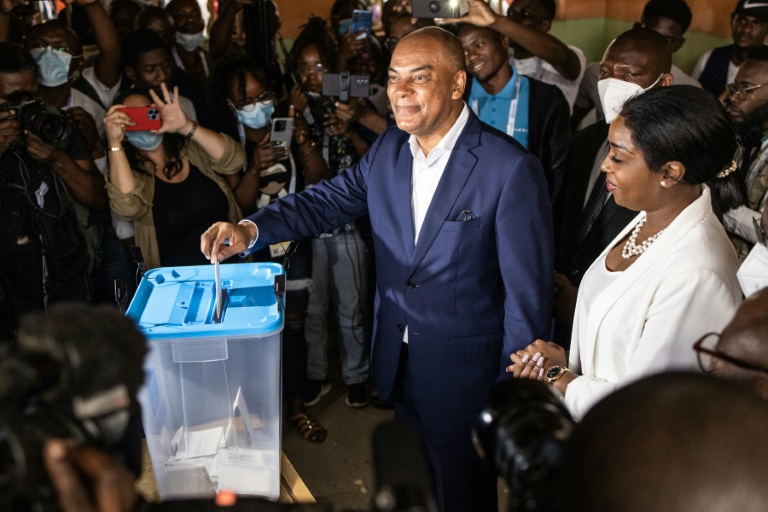
Both leading candidates — Lourenco at the capital’s Lusiada University and Costa Junior in the working-class Nova Vida district — called on the public to make their voices heard while casting their ballots.

Some stations started to close in the early evening about an hour before the scheduled time, with no more would-be voters in sight, according to AFP reporters.

– ‘Closer than ever’ –

Costa Junior, 60, is popular among youth — a significant and growing voting bloc — and has pledged to “eradicate poverty” and create jobs.

Analyst Justin Pearce said the race looked “very competitive”.

“The further we’ve gotten from the civil war, the less currency… the MPLA has had,” said the history lecturer at South Africa’s Stellenbosch University.

“The outcome looks like it’s going to be closer than ever before.” 

The MPLA traditionally wields a grip over the electoral process and state media in Angola, and opposition and civic groups have raised fears of voter tampering. 

In the working-class district of Cazenga, 57-year-old Miguel said he would welcome the vote’s outcome, whatever it was.

“We have to accept the results, it’s the democratic game,” he said, without giving his surname.

But Alberto Bernardo Muxibo, another voter, disagreed.

“We don’t have a real democracy. The government oppresses the people,” he said.

– Poverty and graft –

Lourenco, a Soviet-educated former general who had promised a new era for Angola when he was first elected, is credited with making far-reaching reforms in one of southern Africa’s economic powerhouses.

“The West would not mind an MPLA victory — even with concerns of vote rigging,” said Johannesburg-based analyst Marisa Lourenco said.

“Governments and companies abroad prefer stability over change”.

But little has changed for most of Angola’s 33 million people, for whom life is a daily grind.

Angola is Africa’s second largest crude producer, but the oil bonanza also nurtured corruption and nepotism under dos Santos, who died in Spain last month.

The low-key, night-time repatriation of his remains in the final leg of campaigning has added a macabre touch to the election. 

Dos Santos will be buried on Sunday, which would have been his 80th birthday.

Some 14.7 million people were registered to vote at 13,200 polling stations across the vast southern African nation.

Angolans living overseas were for the first time able to cast ballots from abroad.

Results are expected within a few days. In past elections, results have been contested, in a process that can take several weeks.

Angolans vote for president in tightest ever race

Angolans cast their ballots Wednesday in what was widely seen to be the most competitive vote in their country’s democratic history, with incumbent President Joao Lourenco squaring up against charismatic opposition leader Adalberto Costa Junior.

The election has been overshadowed by Angola’s many woes — a struggling economy, inflation, poverty and drought, compounded by the death of a former strongman president.

The People’s Movement for the Liberation of Angola (MPLA), which has ruled the oil-rich nation for nearly five decades, is facing its most serious challenge since the first multiparty vote in 1992.

Eight political parties are running, but the real contest lies between the MPLA and its long-standing rival and ex-rebel movement the National Union for the Total Independence of Angola (UNITA).

Opinion polls suggest that support for the MPLA — which won 61 percent of the vote in 2017 elections — will dwindle, while the UNITA — which has entered an electoral pact with two other parties — will make gains. 

But UNITA’s inroads might not be enough to unseat Lourenco, 68, who succeeded veteran leader Jose Eduardo dos Santos five years ago.

Dozens of voters lined up at polling stations in the early morning, but by midday they were just a trickle.

After casting his ballot at the capital’s Lusiada University, Lourenco urged Angolans to come out and vote to ensure “it is democracy that wins”.

Voting in the working-class Nova Vida district, his rival Costa Junior called for “full turnout and for all ballots to be counted.”

– ‘Closer than ever’ –

Costa Junior, 60, is popular among youth — a significant and growing voting bloc — and has pledged to “eradicate poverty” and create jobs.

Analyst Justin Pearce said the race looked “very competitive”.

“The further we’ve gotten from the civil war, the less currency… the MPLA has had,” said the history lecturer at South Africa’s Stellenbosch University.

But “the opposition has become more organised and found some synergy with society.

“The outcome looks like it’s going to be closer than ever before.” 

The MPLA traditionally wields a grip over the electoral process and state media in Angola, but the opposition is urging supporters not to be intimidated.

Opposition and civic groups have raised fears of voter tampering, and social media is rife with claims of dead people registered to vote.

The opposition has asked supporters to peacefully monitor the counting process and stage sit-ins outside polling places after voting closes.

In the working-class district of Cazenga, 57-year-old Miguel said he would accept the vote’s outcome, whatever it was.

“We have to accept the results, it’s the democratic game,” he said, without giving his surname.

But Alberto Bernardo Muxibo, who described himself as a civil society activist, disagreed. 

“We don’t have a real democracy. The government oppresses the people,” he said.

– Poverty and graft –

Lourenco, a Soviet-educated former general who had promised a new era for Angola when he was first elected, has trumpeted a list of achievements.

He is credited with making far-reaching reforms in one of southern Africa’s economic powerhouses.

They include boosting financial transparency and efficiency in parastatal organisations, and promoting business-friendly policies to lure foreign investors.

Johannesburg-based analyst Marisa Lourenco said Lourenco’s handling of the debt racked up by his predecessor had been “remarkable”.

“The West would not mind an MPLA victory — even with concerns of vote rigging,” she said.

“Governments and companies abroad prefer stability over change”.

But little has changed for most of Angola’s 33 million people, for whom life is a daily grind.

Angola is Africa’s second largest crude producer, but the oil bonanza also nurtured corruption and nepotism under dos Santos, who died in Spain last month.

The low-key, night-time repatriation of his remains in the final leg of campaigning has added a macabre touch to the election. 

Dos Santos will be buried on Sunday, which would have been his 80th birthday.

Some 14.7 million people are registered to vote at 13,200 polling stations across the vast southern African nation.

Angolans living overseas are for the first time able to cast ballots from abroad.

Results are expected within a few days. In past elections, results have been contested, in a process that can take several weeks.

Fighting resumes in northern Ethiopia after five-month lull

Fighting erupted between government forces and Tigrayan rebels in northern Ethiopia on Wednesday, shattering a five-month truce and dealing a blow to peace talks. 

Within hours, reports of fresh offensives were followed by Ethiopia’s air force announcing it had downed a plane carrying weapons for the Tigray People’s Liberation Front (TPLF) that encroached on the country’s airspace via neighbouring Sudan.

The government and the Tigray rebels have accused each other of undermining efforts to peacefully resolve the brutal 21-month war in Africa’s second most populous nation, and traded blame over who was responsible for returning to combat.

UN chief Antonio Guterres said he was “deeply shocked” by the renewed fighting and appealed for an “immediate cessation of hostilities and for the resumption of peace talks”.

The TPLF said government forces and their allies had launched a “large scale” offensive towards southern Tigray early Wednesday after a months-long lull in fighting.

But the Government Communication Service accused the TPLF of striking first, saying its action had “destroyed the truce”.

“Disregarding the numerous peace options presented by the Ethiopian government, the armed wing of the terror group TPLF, pushing with its recent provocations starting 5 am (0200 GMT) today committed an attack” around southern Tigray, it said in a statement.

The rival claims could not be independently verified as access to northern Ethiopia is restricted, but there were reports of fighting around southern Tigray in areas bordering the Amhara and Afar regions.

“They launched the offensive early this morning around 5 am local time. We are defending our positions,” TPLF spokesman Getachew Reda told AFP in Nairobi in a brief message.

He said on Twitter that the “large-scale” offensive was launched “against our positions in the southern front” by the Ethiopian army and special forces and militias from neighbouring Amhara.

– ‘Violated our airspace’ –

The air force said Wednesday it had shot down a plane “believed to be a property of historical enemies who want Ethiopia’s weakness”.

“The airplane which violated our airspace from Sudan… and aimed to supply weapons to the terror group was shot down by our heroic air force,” the Ethiopian News Agency quoted armed forces Major General Tesfaye Ayalew as saying.

The date of the incident, the type of aircraft and how it was downed were not detailed.

A truce forged in March paused fighting in a war that first began in November 2020, allowing a resumption of some international aid to war-stricken Tigray after a three-month break.

Prime Minister Abiy Ahmed’s government and the TPLF have been locked in a war of words in recent weeks over possible peace talks.

The two sides disagree on who should lead negotiations, and the TPLF also insists basic services must be restored to Tigray’s six million people before dialogue can begin.

Abiy’s government says any negotiations must be brokered by the African Union’s Horn of Africa envoy Olusegun Obasanjo, who is leading the international push for peace, but the rebels want outgoing Kenyan President Uhuru Kenyatta to mediate.

William Davison, senior Ethiopia analyst for the International Crisis Group (ICG) think tank, urged all parties to cease fighting to avert “a return to full-blown war”.

“This serious breach of the truce agreed earlier this year demonstrates the need for the two parties to arrange unconditional face-to-face negotiations as soon as these hostilities cease,” Davison said in a statement.

“It is also a deafening warning to the key international and regional actors that they must immediately ensure peace talks actually occur.”

– ‘Enough of this war’ –

The conflict has killed untold numbers of people, with widespread reports of atrocities including mass killings and sexual violence.

Millions of people need humanitarian assistance in Tigray, the country’s northernmost region, as well as Afar and Amhara.

The UN’s World Food Programme said last week that nearly half the population in Tigray is suffering from a severe lack of food and that rates of malnutrition had “skyrocketed”.

The dire assessment came despite the resumption of desperately needed international aid convoys to Tigray’s capital Mekele in April, with fuel shortages making it difficult to distribute supplies.

Tigray is largely cut off from the rest of Ethiopia, without basic services such as electricity, communications and banking.

Abiy sent troops into Tigray in November 2020 to topple the TPLF after months of seething tensions with the party that had dominated Ethiopian politics for three decades.

The 2019 Nobel Peace Prize winner said the move came in response to rebel attacks on army camps. 

The TPLF mounted a comeback, recapturing Tigray and expanding into Afar and Amhara, before the war reached a stalemate.

Last Wednesday, an Ethiopian government committee tasked with looking into negotiations had called for a formal ceasefire as part of a proposal it planned to submit to the AU.

“If you can’t win, then you’ve got to sit down and talk,” Abiy said Sunday in remarks carried on state media.

“My advice is… let’s have enough of (this) war.”
'Oil, diamonds, but no work': Angola hopes for change in key vote

In an opposition stronghold of the Angolan capital Luanda, dozens of voters queue up to cast their ballots.

They are hoping not just that the tightly fought election will change their fortunes, but are also here for a glimpse of presidential hopeful Adalberto Costa Junior.

The charismatic 60-year-old was due to cast his vote at a polling station on the corner of a dusty alley, between concrete block houses and small shops in Luanda’s working-class Nova Vida district.

Around 33 percent of Angolans are aged between 10 and 24, according to UN data, and millions of young people have high expectations for the election.

“Young people are the future of the country. We have oil, diamonds, but people have no work,” said Manuel Antonio Teca, an unemployed 27-year-old.

“I’m really annoyed,” he said, waiting in line to cast his ballot.

“This country is not doing well, we need change. We need Adalberto Costa Junior to become our president”.

Costa Junior, leader of the main opposition UNITA, has wowed disgruntled young voters, and poses the greatest challenge to the People’s Movement for the Liberation of Angola (MPLA), which has ruled the oil- and gem -ich country for nearly 50 years.

He is up against MPLA leader and incumbent President Joao Lourenco, who is widely respected abroad for his economic reforms and as a peace mediator in the central African region.

Analysts say the MPLA is facing its most serious challenge since the country’s first multiparty vote in 1992.

A talented orator, Costa Junior has captivated young urban voters with pledges to reform government and tackle poverty and corruption — though experts have been less convinced by the opposition’s manifesto.

Around 14.7 million people are registered to vote in national elections at 13,200 polling stations across the vast southern African country.

– ‘Adalberto, president!’ –

Most people in Nova Vida support Costa Junior’s party and think victory is within reach. 

“We have to believe in it,” said Joaquim, a 29-year-old who gave only his first name as he waited for his turn to vote.

Older people were the first to cast their ballots at the polling station, while the young looked on and chatted, leaning against breeze blocks walls.

“Did you vote, mum?” one asked an elderly woman.

“Yes, my son!” she answered, raising her finger to show a blue ink mark on her fingertip.

About an hour and a half after polls opened, there was a stir among the voters. 

“He has arrived! Adalberto, president!” some shouted. 

The opposition leader walked out of a car, surrounded by a crowd of security guards, aides and feverish supporters, and cast his vote.

“This is a historic day,” he told journalists.

Iconic Algeria record store's fortunes revived by DJ Snake

Legendary Algerian music label Disco Maghreb, which launched the careers of some of the Rai folk-inspired genre’s most famous stars, has seen a revival thanks to a hit song by DJ Snake.

This week, the label’s miniature headquarters at a long-shuttered record store in the eastern city of Oran will receive another prominent guest: French President Emmanuel Macron, whose official visit will be focused on outreach to youth in the North African country.

Owner Boualem Benhaoua, 68, said he has “so many memories in the music, so many memories with Rai singers, they all came through here”.

Cheb Khaled, Cheb Mami, Cheb Hasni and Cheba Zahouania are among the most famous stars of the genre, which emerged in 1920s Oran but became a major world music genre in the 1980s, particularly popular in Algeria’s former colonial ruler France.

French-Algerian singer DJ Snake paid tribute to the genre in his song Disco Maghreb, which has been seen 78 million times on YouTube alone and prompted an influx of young Algerians to take selfies at the shop with its iconic model cassette tape hanging outside.

The singer, whose real name is William Sami Grigahcine, has also published a video of himself visiting the famous shop on a street corner in Oran.

“I imagined ‘Disco Maghreb’ as a bridge between different generations and origins, linking North Africa, the Arab world and beyond… This is a love letter to my people,” he wrote on Twitter in May.

Inside the shop, barely touched in years, cassettes pile up on the shelves, surrounded by vintage audio equipment that could be in an antiques museum.

Most of DJ Snake’s fans are from the era of YouTube and TikTok, but they queue up happily for photos with Benhaoua and his vinyl collection.

“It’s an emblematic place in Oran and DJ Snake’s latest track gave it more resonance,” said airline pilot Nawel, 36.

She said she was bringing her children for a visit and to take photos, as they live in France.

Despite the store being closed for years, Benhaoua said he wanted it to become “a place for artists to meet and for new talent to be discovered”.

Benhaoua said the young singer has also shone a spotlight on Oran, with his video clip young people on mopeds and dancing in the street shot in the city.

Many on social media have commented that the clip has done more to promote tourism in the city than official tourism agencies.

Benhaoua said DJ Snake had “the qualities of a great man”.

“He sympathises with people with modest incomes, he himself grew up in these conditions,” he said.

“He’s not just a singer, but like part of the family.”

Fighting resumes in northern Ethiopia after five-month lull

Fighting erupted between government forces and Tigrayan rebels in northern Ethiopia on Wednesday, shattering a five-month truce between the warring sides.

The renewed warfare follows both sides repeatedly blaming the other for a lack of progress towards negotiations to end the brutal 21-month conflict in Africa’s second most populous nation. 

The Tigray People’s Liberation Front (TPLF) said government forces and their allies had launched a “large scale” offensive towards southern Tigray early Wednesday after a months-long lull in fighting.

But the Government Communication Service accused the TPLF of striking first, saying it had “destroyed the truce”.

“Disregarding the numerous peace options presented by the Ethiopian government, the armed wing of the terror group TPLF, pushing with its recent provocations starting 5 am (0200 GMT) today committed an attack” around southern Tigray, it said in a statement.

The rival claims could not be independently verified as access to northern Ethiopia is restricted, but there were reports of fighting around southern Tigray in areas bordering the Amhara and Afar regions.

“They launched the offensive early this morning around 5 am local time. We are defending our positions,” TPLF spokesman Getachew Reda told AFP in Nairobi in a brief message.

He said on Twitter that the “large-scale” offensive was launched “against our positions in the southern front” by the Ethiopian army and special forces and militias from neighbouring Amhara.

– ‘Deafening warning’ –

The March truce paused fighting in a war that first began in November 2020, allowing a resumption of international aid to war-stricken Tigray after a three-month break.

Prime Minister Abiy Ahmed’s government and the TPLF have been locked in a war of words in recent weeks even as both sides have raised the prospect of peace talks.

The two sides disagree on who should lead negotiations, and the TPLF also insists basic services must be restored to Tigray’s six million people before dialogue can begin.

Abiy’s government says any negotiations must be led by the African Union’s Horn of Africa envoy Olusegun Obasanjo, who is leading the international push for peace, but the rebels want outgoing Kenyan President Uhuru Kenyatta to mediate.

William Davison, senior Ethiopia analyst for the International Crisis Group, said all parties should cease fighting before “a return to full-blown war”.

“This serious breach of the truce agreed earlier this year demonstrates the need for the two parties to arrange unconditional face-to-face negotiations as soon as these hostilities cease,” Davison said in a statement.

“It is also a deafening warning to the key international and regional actors that they must immediately ensure peace talks actually occur.”

– ‘Enough of this war’ –

On Tuesday, the Ethiopian National Defence Force had issued a statement accusing the TPLF of seeking to “defame” the army by claiming government forces were moving towards their positions or shelling them with heavy weapons.

The conflict has killed untold numbers of people, with widespread reports of atrocities including mass killings and sexual violence.

Millions of people need humanitarian assistance in Tigray, the country’s northernmost region, and neighbouring Afar and Amhara.

The UN’s World Food Programme said last week that nearly half the population in Tigray is suffering from a severe lack of food.

“Hunger has deepened, rates of malnutrition have skyrocketed, and the situation is set to worsen as people enter peak hunger season until this year’s harvest in October,” it said.

The dire assessment came despite the March truce allowing the resumption of desperately needed international aid convoys to Tigray’s capital Mekele, with fuel shortages making it difficult to distribute supplies.

Tigray is largely cut off from the rest of Ethiopia, without basic services such as electricity, communications and banking.

Abiy sent troops into Tigray in November 2020 to topple the TPLF after months of seething tensions with the party that had dominated Ethiopian politics for three decades.

The 2019 Nobel Peace Prize winner said it came in response to rebel attacks on army camps. 

The TPLF mounted a comeback, recapturing Tigray and expanding into Afar and Amhara, before the war reached a stalemate.

Last Wednesday, an Ethiopian government committee tasked with looking into negotiations called for a formal ceasefire to enable the resumption of services to Tigray as part of a proposal it planned to submit to the AU.

“If you can’t win, then you’ve got to sit down and talk,” Abiy said Sunday in remarks carried on state media.

“My advice is… let’s have enough of (this) war.”

South African inflation hits new 13-year high

Inflation in South Africa accelerated to its highest level in 13 years in July, pushed mainly by surging food, transport and electricity prices, official data showed Wednesday as workers staged protests over the high cost of living.

Consumer prices rose at an annual rate of 7.8 percent in July, up from 7.4 percent in June, the national statistics agency StatsSA said in a statement.

The publication of the latest statistics coincided with protests in major cities over the worsening economic conditions, which have been particularly crushing for the poorest in the continent’s most industrialised country. 

Strikers led by South Africa’s two largest trade unions called for government action to combat rising poverty and the cost of living in the world’s most unequal country.

While the new inflation figure is bad news for consumers, economists see the country likely reaching a tipping point and believe inflation could ease in the coming months. 

This “is likely the peak in the current inflation cycle,” according to Investec bank chief economist Annabel Bishop.

“Inflation will be lower this time next year,” said Dawie Roodt, an economist with the financial services firm Efficient Group. 

Inflation has been soaring worldwide, fuelled by supply chain disruptions after the easing of Covid restrictions as well as surging energy and food prices following Russia’s invasion of Ukraine.

For South Africans, it has resulted in rising costs for necessities including food, electricity, fuel and medication, the statistics agency said.

Although grain prices are on the decline internationally, Roodt said, “it takes as much as two years before a price shock works its way through the economy.”

Prices for breads and cereals were up 13.7 percent in July, from 11.2 percent in June. It means a loaf of white bread now costs 17.84 rand ($1.05) compared to 15.57 rand ($0.91) a year ago, the statistics agency said.

The price of fuel increased by 56.2 percent on last year. 

Rising inflation prompted the country’s central bank to impose the steepest hike to the benchmark interest rate last month, raising it by three-quarters of a percentage point to 5.5 percent.

Roodt said another hike is likely to come. 

It will have a spiralling impact on the broader economy with higher rates resulting in higher debt repayments for consumers, which will hit household budgets, said Christie Viljoen, senior manager and economist for PwC South Africa. 

“This, in turn, results in reduced spending power for consumers and companies. This is a challenge for South Africa which is a consumer-driven economy,” he said.

The rising cost of living is taking a toll on a population where the unemployment rate hovers near 34 percent.

The government called the unemployment figures a “major concern” on Wednesday, saying more needed to be done to improve conditions following the pandemic. 

“Job creation and economic recovery remain the top priorities for government,” said cabinet spokeswoman Phumla Williams in a statement. 

Angolans vote for president in tightest ever race

Angolans were casting ballots on Wednesday in what was expected to be the most competitive vote in their country’s democratic history, with incumbent president Joao Lourenco squaring up against charismatic opposition leader Adalberto Costa Junior.

The election has been overshadowed by Angola’s many woes — a struggling economy, inflation, poverty and drought, compounded by the death of a former strongman president.

The People’s Movement for the Liberation of Angola (MPLA), which has ruled the oil-rich nation for nearly five decades, is facing its most serious challenge since the first multiparty vote in 1992.

“It’s been 20 years of peace and we are still poor,” said Lindo, a 27-year-old electrician queueing up to vote in Nova Vida, a middle-class suburb of the capital Luanda.

“The people want change — the government doesn’t provide for people’s basic needs,” said Lindo, who gave only his first name. 

Eight political parties are running, but the real contest lies between the MPLA and its long-standing rival and ex-rebel movement the National Union for the Total Independence of Angola (UNITA).

Opinion polls suggest that support for the MPLA — which won 61 percent of the vote in 2017 elections — will dwindle, while the UNITA, which has entered an electoral pact with two other parties, will make gains. 

But UNITA’s inroads might not be enough to unseat Lourenco, 68, who succeeded veteran leader Jose Eduardo dos Santos five years ago.

“The margins will be closer than ever before… but the advantages of incumbency mean MPLA is still odds on to pip Costa (Junior),” said Eric Humphery-Smith, an analyst at London-based Verisk Maplecroft.

– Appeal to vote  –

The MPLA traditionally wields a grip over the electoral process and state media in Angola, but the opposition is urging supporters not to be intimidated.

“This is a historic day,” Costa Junior declared, after casting his ballot.

“It is important that this day be a celebration,” he said, urging “full turnout and for all ballots to be counted.”

Lourenco urged citizens to come out and vote because “in the end it’s all of us who will emerge winners and it is democracy that wins” he said after casting his ballot at Lusiada de Angola University in Luanda.

Opposition and civic groups have raised fears of voter tampering, and social media is rife with claims of dead people registered to vote.

Costa Junior, 60, is popular among young people — a significant and growing voting bloc — and has pledged to “eradicate poverty” and create jobs.

– Poverty and graft –

Lourenco, a Soviet-educated former general who had promised a new era for Angola when he was first elected, has trumpeted a list of achievements.

He is credited with making far-reaching reforms in one of southern Africa’s economic powerhouses. 

They include boosting transparency in the financial sector and efficiency in parastatal organisations, and promoting business-friendly policies to lure foreign investors. His government has managed to attract back global diamond miner De Beers, which had quit 10 years ago.

But little has changed for most of Angola’s 33 million people for whom life is a daily grind.

Angola is Africa’s second largest crude producer, but the oil bonanza also nurtured corruption and nepotism under dos Santos, who died in Spain last month.

The low-key, night-time repatriation of his remains in the final leg of campaigning has added a macabre touch to the election. 

Dos Santos will be buried on Sunday, which would have been his 80th birthday.

Analysts warn that any MPLA attempts to capitalise on the funeral could backfire, given widespread anger over his legacy among young people.

Some 14.7 million people are registered to vote at 13,200 polling stations across the vast southern African nation.

Angolans living overseas are for the first time able to cast ballots from abroad.

Results are expected within a few days. In past elections, results have been contested, in a process that can take several weeks.

Migrants face abuse in Libya after EU-backed interceptions

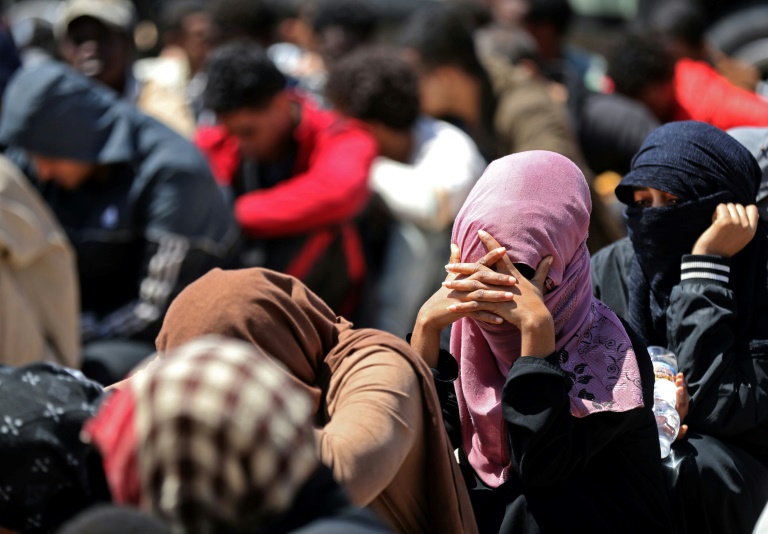
Godwin risked everything for a better life in Europe, but he was detained and ransomed in Libya by European Union-backed authorities accused of “extreme abuse” against captured migrants.

The 34-year-old Nigerian had paid 1,100 euros ($1,100) for a place on an overcrowded vessel from the Libyan port of Zawiya, heading for Italian shores via the world’s deadliest migration route.

“It was night when I got on the boat, it was already dark. I didn’t know (where we were going),” he said, giving only his first name. “I just wanted to go to Europe and have a good life.”

Those hopes were dashed when a Libyan patrol boat approached.

Godwin said he was so reluctant to avoid going back to Libya that he considered throwing himself into the sea.

But he was detained and dragged back to Libya, where he was only released after his family paid a 550 euro ransom.

His is far from the only case.

Earlier this month, Human Rights Watch said some 32,450 people had been intercepted by Libyan forces last year and “hauled back to arbitrary detention and abuse” in the war-ravaged country as European countries turned a blind eye.

HRW accused the EU’s border agency Frontex of using a drone to provide information that “facilitates interceptions and returns to Libya … (despite) overwhelming evidence of torture and exploitation of migrants and refugees”.

The migrant-run @RefugeesinLibya Twitter account regularly posts images of refugees allegedly killed by Libyan forces or tortured to extort money from their families.

Refugees in the country are “tortured by European taxpayers’ money, dehumanised and deprived in all forms,” it said in a recent tweet.

That chimes with a report in October by United Nations experts, who said acts of “murder, enslavement, torture, imprisonment (and) rape” against detained migrants in Libya may amount to crimes against humanity.

– Malta ‘abandoning’ vulnerable boats –

None of this has stopped the European Union funding and working closely with the Libyan coast guard to prevent migrants reaching northern Mediterranean shores.

The accusations against Europe are not limited to financial support. 

Alarm Phone, a group running a hotline for migrants needing rescue, this month accused Malta of failing to launch operations to rescue migrants in danger, “despite their obligations to do so” under international law.

“Alarm Phone has witnessed this non-assistance policy in action innumerable times,” it said, accusing Malta of “abandoning boats at risk of capsizing” within the island’s search and rescue zone.

From the start of January until August 20, almost 13,000 migrants have been intercepted and dragged back to detention in Libya while trying to cross the Mediterranean, according to the International Organization for Migration (IOM).

Some have been detained, while others have been sent home or simply allowed to leave the overcrowded detention centres.

A further 918 were either dead or missing.

Libyan authorities deny reports that migrants are abused.

“The arrests are carried out according to the rules in place,” a migration official said.

– ‘No work, no food’ –

But many argue that the long years of lawlessness since a NATO-backed revolt toppled and killed longtime dictator Moamer Kadhafi in 2011 has left the country prey to armed groups and people traffickers. 

“Human rights? There are no human rights in Libya,” said Hussein, another migrant stuck in Tripoli.

The 26-year-old from Sudan said he had tried to reach Europe on an overnight boat crossing in 2017.

“The Libyan coast guard caught us and sent us back,” he said.

He was detained for a day before managing to escape, he said.

He called on African countries to “look after their people” and discourage them from leaving, “instead of European countries funding Libya to stop migration”.

But despite the risks, both Godwin and Hussein said they were saving money for a new effort to reach Europe. 

They spoke to AFP while waiting on the roadside in the hope of picking up some work for the day — for a pittance.

“Now I’m just in Libya, suffering, there is no work, no food to eat, nothing,” said Godwin, wearing a paint-specked t-shirt and a grey beanie. 

“I’m tired of living this kind of life I’m living here.”

Close Bitnami banner
Bitnami