Africa Business

Angolans vote for president in tightest ever race

Angolans started casting ballots on Wednesday in what is expected to be the most competitive vote in its democratic history, with incumbent president Joao Lourenco squaring up against charismatic opposition leader Adalberto Costa Junior.

A struggling economy, the high cost of living, soaring poverty compounded by the Covid pandemic, drought in southern parts of the country and the death of a former strongman president all loom large.

The ruling People’s Movement for the Liberation of Angola (MPLA) party, which has held power for nearly five decades in the oil-rich nation, is facing the most serious challenge since the country’s first multiparty vote in 1992.

“It’s been 20 years of peace and we are still poor,” said Lindo, a 27-year-old electrician who only gave his first name while queuing up to vote in a middle class suburb of Nova Vida. “I’m going to vote for Unita. The people want change, the government doesn’t provide for the basic needs of the people”. 

Eight political parties are running, but the real contest lies between the MPLA and its long-standing rival and ex-rebel movement the National Union for the Total Independence of Angola (UNITA).

Opinion polls suggest that support for the MPLA — which won 61 percent of the vote in 2017 elections — will dwindle, while the UNITA, which has entered an electoral pact with two other parties, will make gains. 

But UNITA’s inroads might not be enough to unseat Lourenco, who is expected to secure a second five-year mandate. 

Still, it is unlikely to be a smooth swing back into office for the 68-year-old, who succeeded veteran leader Jose Eduardo dos Santos five years ago.

“The margins will be closer than ever before… but the advantages of incumbency mean MPLA is still odds on to pip Costa (Junior),” said Eric Humphery-Smith, an analyst at London-based Verisk Maplecroft.

– ‘An alternative’ –

The MPLA has maintained its grip on the electoral process and public media in Angola, but the opposition tells its supporters not to be intimidated.

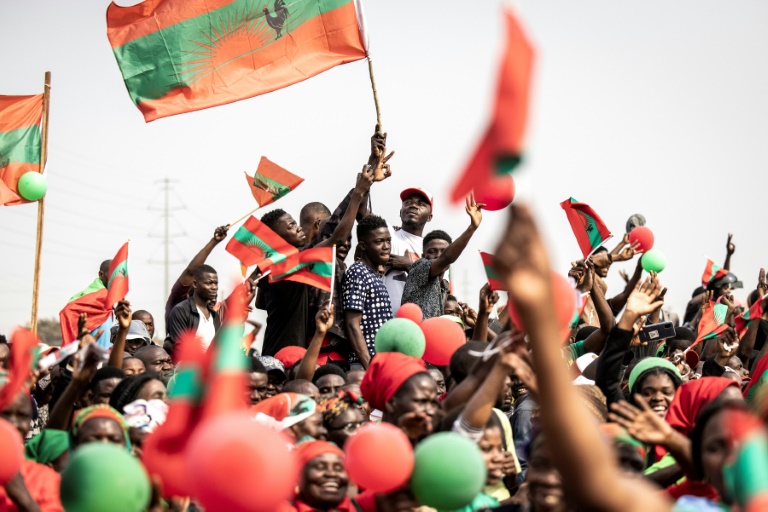
“Don’t be afraid of an alternative,” Costa Junior told supporters at his final rally in the capital Luanda on Monday. “There is no democracy with a single party in power.”

The 60-year-old Costa Junior who is popular among the youth  — a significant and growing voting bloc — pledges to “eradicate poverty” and create jobs.

His rival, a Soviet-educated former general who had promised to usher in a new era for Angola when he was first elected, has trumpeted a list of achievements to woo voters.

“We made and restructured our economy,” he told one of his final rallies in the capital at the weekend. 

But little has changed for most of Angola’s 33 million people for whom life is a daily grind in Africa’s second largest crude oil producer.

The petro-dollars benefited the former president, the late dos Santos who died in Spain last month, his family and cronies.

The night-time and low-key repatriation of dos Santos’s remains to Angola in the final leg of campaigning has added a macabre element to the election.

Analysts warn that ruling party attempts to capitalise on dos Santos’s funeral could backfire as opinions on his legacy are not “unanimous”, especially among young people.

Some 14.7 million people are registered to vote at 13,200 polling stations across the vast southern African nation.

Angolans living overseas are for the first time able to cast ballots from abroad.

Polling opened at 7:00 am (0600 GMT) and ends 11 hours later.

Results are expected within a few days. In past elections, results have been contested in a process that can take several weeks.
Angolans vote for president in tightest ever race

Angolans started casting ballots on Wednesday in what is expected to be the most competitive vote in its democratic history, with incumbent president Joao Lourenco squaring up against charismatic opposition leader Adalberto Costa Junior.

A struggling economy, the high cost of living, soaring poverty compounded by the Covid pandemic, drought in southern parts of the country and the death of a former strongman president all loom large.

The ruling People’s Movement for the Liberation of Angola (MPLA) party, which has held power for nearly five decades in the oil-rich nation, is facing the most serious challenge since the country’s first multiparty vote in 1992.

“It’s been 20 years of peace and we are still poor,” said Lindo, a 27-year-old electrician who only gave his first name while queuing up to vote in a middle class suburb of Nova Vida. “I’m going to vote for Unita. The people want change, the government doesn’t provide for the basic needs of the people”. 

Eight political parties are running, but the real contest lies between the MPLA and its long-standing rival and ex-rebel movement the National Union for the Total Independence of Angola (UNITA).

Opinion polls suggest that support for the MPLA — which won 61 percent of the vote in 2017 elections — will dwindle, while the UNITA, which has entered an electoral pact with two other parties, will make gains. 

But UNITA’s inroads might not be enough to unseat Lourenco, who is expected to secure a second five-year mandate. 

Still, it is unlikely to be a smooth swing back into office for the 68-year-old, who succeeded veteran leader Jose Eduardo dos Santos five years ago.

“The margins will be closer than ever before… but the advantages of incumbency mean MPLA is still odds on to pip Costa (Junior),” said Eric Humphery-Smith, an analyst at London-based Verisk Maplecroft.

– ‘An alternative’ –

The MPLA has maintained its grip on the electoral process and public media in Angola, but the opposition tells its supporters not to be intimidated.

“Don’t be afraid of an alternative,” Costa Junior told supporters at his final rally in the capital Luanda on Monday. “There is no democracy with a single party in power.”

The 60-year-old Costa Junior who is popular among the youth  — a significant and growing voting bloc — pledges to “eradicate poverty” and create jobs.

His rival, a Soviet-educated former general who had promised to usher in a new era for Angola when he was first elected, has trumpeted a list of achievements to woo voters.

“We made and restructured our economy,” he told one of his final rallies in the capital at the weekend. 

But little has changed for most of Angola’s 33 million people for whom life is a daily grind in Africa’s second largest crude oil producer.

The petro-dollars benefited the former president, the late dos Santos who died in Spain last month, his family and cronies.

The night-time and low-key repatriation of dos Santos’s remains to Angola in the final leg of campaigning has added a macabre element to the election.

Analysts warn that ruling party attempts to capitalise on dos Santos’s funeral could backfire as opinions on his legacy are not “unanimous”, especially among young people.

Some 14.7 million people are registered to vote at 13,200 polling stations across the vast southern African nation.

Angolans living overseas are for the first time able to cast ballots from abroad.

Polling opened at 7:00 am (0600 GMT) and ends 11 hours later.

Results are expected within a few days. In past elections, results have been contested in a process that can take several weeks.
Hubble-bubble trouble: Hookah ban leaves Malians divided

“Shisha-abana,” exclaims Bilal, a grocer in Mali’s capital Bamako, in the national language Bambara: “Shisha is finished.”

His is a common reaction. 

An unexpected ban on hookah smoking in this West African country has stirred surprise as well as division, leaving devotees dismayed but health advocates delighted.

Bars where small groups of smokers — primarily young men — hang out to chat and puff on water pipes have flourished in Bamako in recent years. 

Mali is an overwhelmingly Muslim country, and interpretations of Islam are generally unfavourable to cigarettes and to shisha.

But it is also a secular nation that tolerates alcohol, even if consumption is limited to certain public places and most shops and restaurants do not serve it.

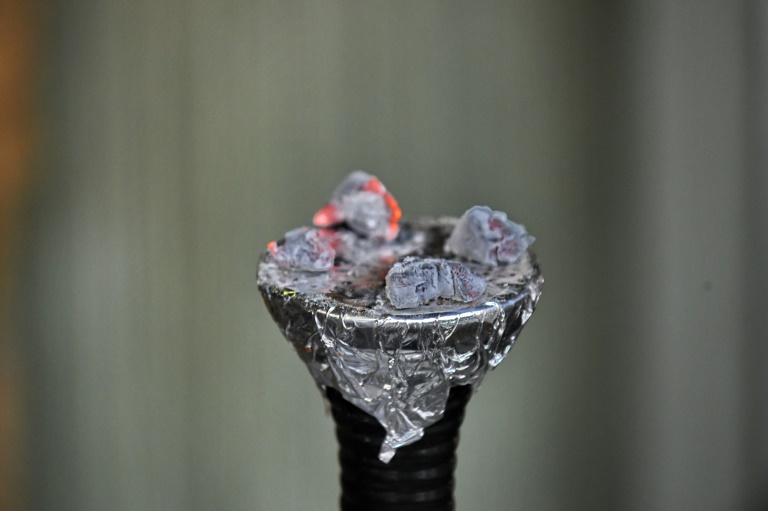
Shishas, or hookahs, typically burn a tobacco flavoured with fruit to provide a sweetened taste. The smoke is inhaled in through a long rubber tube, passing through water to cool it down. “Shisha” is also the term sometimes used for the tobacco product.

The government’s sudden decision on August 15 to ban shishas took many by surprise — the ruling junta, in power since 2020, had not been particularly known for its concerns about tobacco.

The law, co-signed by six ministries, including the ministry of security, health and youth, “prohibits the importation, distribution, sale and use of shishas (water pipes) or any similar device throughout the national territory”.

Any shisha smoker will be punished with a prison sentence of one to 10 days and a fine of 300 to 10,000 CFA francs ($0.45 to $15.00). 

Shisha bars have six months to close.

The authorities did not provide any reason for the ban. 

But in his shop in the centre of Bamako, Abdramane Daff is fuming as he shows off his pile of stock. 

“We can’t sell all this in six months, it’s impossible”, he said.

“We beg (the authorities) to look for another solution — maybe they could limit themselves to banning consumption in the streets and spare shisha sales”.

– ‘Thank you’ – 

On the consumer side, there are questions about the authorities’ ability to enforce the decree.

“Is it possible to stop smoking shisha for good?” asked one occasional smoker on condition of anonymity. 

Measures such as the closure of restaurants during the Covid-19 pandemic had little effect in a country where many businesses are informal and law enforcement resources are limited. 

On social networks or in conversations in street hangouts in Bamako, the news was rather well received.

“Thank you for the ban on shisha in Mali, I think we should now ban cigarettes as they are also a drug!” posted Abdoul Karim Maiga on Twitter. 

“I think the decree is very important,” Ousmane Toure, a representative of the association of tobacco victims, told AFP. 

“In terms of mortality and disease, if we took into account shisha and tobacco, we would see that frankly it is better to stop,” he said.

Salif Kone, a tobacco specialist, points to a study conducted in schools in Bamako showing that “about 70 percent of young people use shisha”. 

– Health risk –

A working group of the World Health Organization (WHO) warned in 2017 about the danger of shisha smoking.

The practice is up to 10 times more harmful than cigarettes but is not targeted by the same awareness campaigns as with tobacco, it said.

It is “up to us, the doctors, the parents of these children, to combine our efforts with those of the government to (make them) stop using shisha”, Kone said.

Countries such as Saudi Arabia and Lebanon have taxed shisha consumption. Others, including Jordan and Cameroon, have banned it.

In Mali, where free speech has been increasingly threatened since 2020, few critical voices have been raised apart from shisha bar managers. 

“Was this the most urgent thing, when our country is in the grip of a multi-pronged crisis?” asked one social scientist on condition of anonymity.

England vow to stick with 'Bazball' in bid to level South Africa series

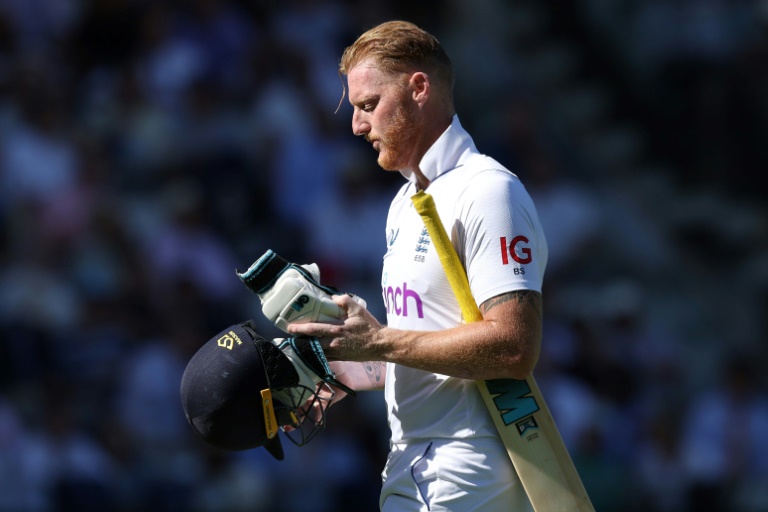
England captain Ben Stokes has insisted there will be no let-up in the team’s attacking approach as they look to bounce back in the second Test against South Africa starting Thursday.

The hosts have arrived at Manchester’s Old Trafford 1-0 down in a three-match series following a chastening innings and 12-run defeat inside three days by the Proteas at Lord’s last week.

That was their first defeat under the new leadership duo of Stokes and coach Brendon McCullum following a run of four successive wins with an aggressive approach dubbed ‘Bazball’, characterised by attacking batting that saw England chase down stiff fourth innings targets against New Zealand and India during the past two months.

England, however, had no answer to a formidable South Africa pace attack led by Kagiso Rabada at Lord’s, where they were dismissed for just 165 and 149 in their two innings, although a lack of domestic red-ball cricket since last month’s win over India, was arguably more responsible than ‘Bazball’ for a clatter of wickets.

And a rare double failure by Joe Root meant England have not won a Test when the star batsman has not made a fifty for more than two years.

All-rounder Stokes, who took over as captain after close friend Root had presided over just one win in 17 Tests, was in no mood to change tack after just one loss.

“Absolutely not,” he said. “We know well that when we perform to the capabilities that we’re capable of, then we can go out and put on an incredible performance, like everybody’s seen in the four games before.”

– ‘Timid’ –

Former New Zealand captain McCullum said England’s problem at Lord’s had been a lack of attack rather than too much cavalier cricket. 

“I think they were perhaps a touch timid,” he said. “We approach the game with a clear mentality about the way we want to play.

“It’s not always going to work. As we said at the time, you’ve got to buckle up for the ride. It’s not nice at times like this but we’ll come back strong.”

There are, however, legitimate questions over the form of opening batsman Zak Crawley who, after another two low scores at Lord’s, is now averaging a mere 16.4 across 10 Test innings this season.

England, however, seem determined to stick with the 24-year-old Kent right-hander, backed in bizarre fashion by McCullum when the coach said: “I look at a guy like Zak and his skill-set is not to be a consistent cricketer.”

As for their bowling, England may consider recalling Ollie Robinson in place of Matthew Potts to a seam attack that lacked sharpness and penetration at Lord’s, where South Africa cemented their position at the top of the World Test Championship table.

No Proteas batsman managed a century in the match but a collective effort led by opener Sarel Erwee got them to a competitive total of 326.

Undeniably gifted batsman Aiden Markram came out of the match, however, with an average of under 10 from his last 10 Test innings.

The uncapped Ryan Rickelton, in form for English county side Northamptonshire, could be given a Test debut if Markram is dropped. 

South Africa spinner Keshav Maharaj, asked Tuesday if the Proteas had struck a psychological blow against England by winning the first Test so emphatically, replied: “I’d like to think so.”

The left-armer added: “I think England have played some really good cricket and fought themselves out of tough situations to win Test matches and series in the last year.”

South Africa captain Dean Elgar made it clear before the series he was still a believer in Test cricket’s fundamentals for all the ‘Bazball’ hype surrounding England.

Elgar also demonstrated a nice line in tactical innovation when his decision to bring Maharaj on early in England’s second innings was rewarded by the spinner taking two top-order wickets.

The Proteas have become a highly effective Test team since Elgar became their skipper 18 months ago.

“I think we know what to do and go about our business a lot better,” said Maharaj. “And there’s more clarity and role definition within the team. 

“I think that’s been Dean’s mantra from the time he’s taken over as the Test captain.”

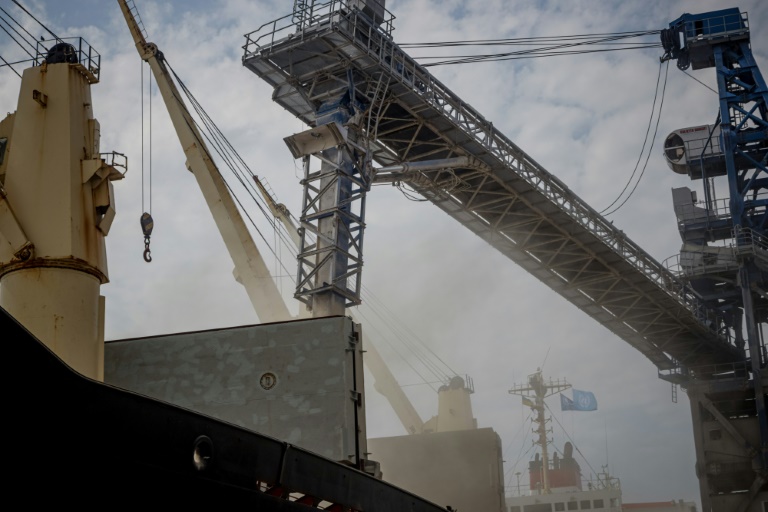
US says Ukraine grain exports near pre-war levels

Ukraine is on course to ship nearly as much grain this month as it did before the Russian invasion, in a triumph for international efforts to ease food shortages, a US official said Tuesday.

Ukraine is one of the world’s largest exporters of wheat, corn, barley and sunflower oil, shipping around five million metric tons of grain each month before the war.

Its exports ground to a trickle after the February 24 invasion, contributing to a spike in global food prices that has hit poor nations especially hard.

“Thanks to intensive international cooperation, Ukraine is on track to export as much as four million metric tons of agricultural products in August,” a senior US State Department official told AFP.

Ukraine and Russia in July reached a first wartime agreement through the mediation of Turkey and UN Secretary-General Antonio Guterres, with guarantees for ships to sail out of Ukraine’s Black Sea ports.

The State Department official said that the efforts have moved out more than 720,000 tons of grain from the ports through 33 ships over the past several weeks.

More significant so far has been a European initiative to ship Ukrainian grain by river, rail and road routes.

The so-called “Solidarity Lanes” established by the European Union rushed additional vehicles including trucks to the border, addressing hurdles including Ukrainian wagons’ incompatibility with European rail gauges.

The European effort is shipping 2.5-3 million tons of produce into the European Union and beyond to international markets each month, the official said.

As part of the agreement negotiated in Istanbul, Russia will also be guaranteed shipment of food and fertilizer without being subject to sanctions.

Guterres recently appealed for “unimpeded access,” saying that the world could face dangerous agricultural shortfalls next year unless Russian fertilizer reaches international markets.

The United States says that its sweeping sanctions on Russia over the Ukraine war have exempted agricultural products and accuses Moscow of seeking to distract the world from its own responsibility for shortages.

Last week the United States said it was contributing another $68 million to the World Food Programme to buy 150,000 metric tons of Ukrainian wheat to address food insecurity.

The UN agency warned on Friday that some 22 million people face starvation in Horn of Africa countries where the rising costs of imported food have exacerbated the effects of climate change.

Kenya, Ethiopia and Somalia have suffered the unprecedented failure of four straight rainy seasons.

Somalia president vows 'all-out war' against Al-Shabaab

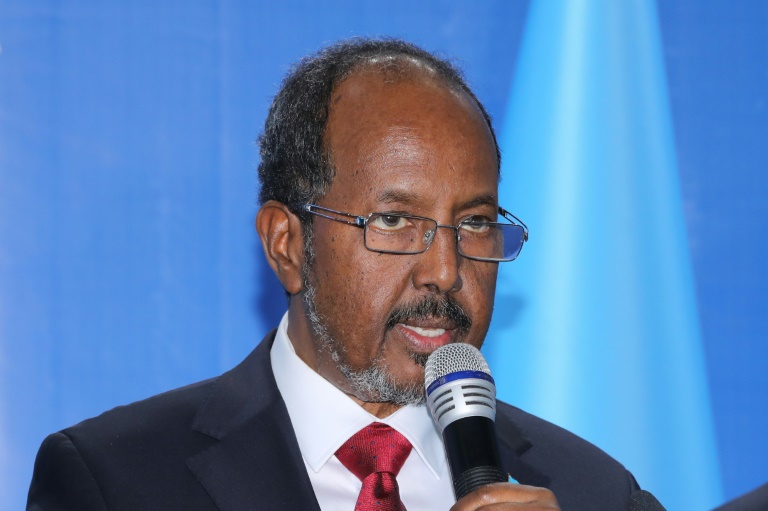
Somalia’s President Hassan Sheikh Mohamud on Tuesday pledged “an all-out war” to eliminate Al-Shabaab in his first statement to the nation since the jihadists staged a deadly 30-hour hotel siege in Mogadishu.

The attack, which began on Friday night, was the biggest to hit Somalia’s capital since Mohamud took office in June and underscored the challenge of trying to crush the 15-year insurgency by the Al-Qaeda-linked group.

At least 21 people died and 117 others were wounded in the gun and bomb attack targeting the popular Hayat Hotel, with the fatalities including Norwegian citizens, according to Norway’s government.

“I know that the Somali people are fed up with the endless condolences and mourning, I know that you lose respectable people in every attack carried out by the terrorists,” Mohamud said.

“So I call upon you to be prepared for an all-out war against the ruthless (people) who are hostile to our peace,” he said in a statement released by the presidency.

“We are determined to weaken the terrorists who destroy our people till all the areas they control are liberated, this is a priority for our government and the preparation and implementation of that plan is ongoing,” he said, without elaborating.

Earlier on Tuesday, Mohamud convened a national security committee meeting attended by the prime minister, interior minister and the foreign minister, as well as the country’s defence chiefs.

– ‘Never surrender’ –

In a televised speech later in the evening, Mohamud told citizens to have no doubt that “Somalia will defeat the enemy that is oppressing its country, people and religion.”

“Our government, army and people will never surrender until we have a Somalia that is free from terrorists,” he said.

The Hayat was a favoured meeting spot for government officials and scores of people were inside when a suicide bomber triggered a massive blast, enabling heavily armed gunmen to enter the hotel.

Minutes later, a second explosion struck as rescuers, security forces and civilians rushed to help the injured, witnesses said.

The siege only ended at around midnight Saturday after security forces bombarded the building, leaving much of it in ruins.

Somalia’s allies, including the United States, Britain, the European Union and Turkey, as well as the United Nations, strongly condemned the attack, as did ATMIS, the African Union force tasked with helping Somali forces take over primary responsibility for security by the end of 2024.

Earlier this month, Washington said its forces had killed 13 Al-Shabaab operatives in an air raid, the latest strike since President Joe Biden in May ordered the re-establishment of a US troop presence in Somalia, reversing a decision by Donald Trump.

Mohamud, who was elected in May after a protracted political crisis, said last month that ending the insurgency required more than a military approach, but that his government would negotiate with Al-Shabaab only when the time was right.

The group has carried out several attacks in the mainly Muslim country since his election.

Last month it also mounted an incursion into neighbouring Ethiopia and raided a military base on the border.

The Islamist militants, who espouse a strict version of sharia or Islamic law, were driven out of Mogadishu by an African Union force in 2011.

But they still control swathes of countryside and retain the ability to launch deadly strikes, often hitting hotels and restaurants as well as military and political targets.

Kenyans taking UK to EU court over colonial-era abuses

Kenyans forced off their land by British settlers during colonial rule are taking their case against the UK to the European Court of Human Rights, their supporters said on Tuesday.

Lawyers for those evicted from Kenya’s Rift Valley say that by ignoring the victims and their complaints, the UK government has violated the European Convention of Human Rights to which it is a signatory.

“The UK Government has ducked and dived, and sadly avoided every possible avenue of redress,” said Joel Kimutai Bosek, who is representing the Kipsigis and Talai peoples.

“We have no choice but to proceed to court for our clients so that history can be righted.”

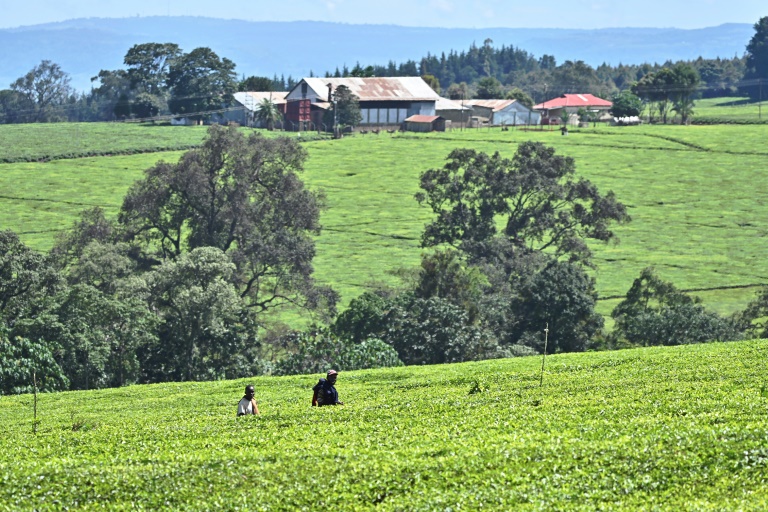
The Kipsigis and Talai were evicted in the early 20th century from ancestral lands around Kericho, a major tea-growing region today farmed by large multinationals including Unilever, Finlay’s and Lipton.

They took their case to the UN, where a panel of special investigators in 2021 expressed “serious concern” at the UK’s failure to offer a public apology or acknowledge their share of responsibility for these colonial-era abuses.

Lawyers for the Kipsigis and Talai argued that the British army and colonial administrators had used rape, murder and arson to seize swathes of arable land in Kericho from its traditional owners.

The victims — more than 100,000 were signatories to the UN complaint filed in 2019 — demanded an apology, and reparations for their homeland being usurped and reallocated to white settlers, who used the fertile soil to cultivate tea.

But lawyers for the Kipsigis and Talai said the British government had refused to meet with the victims or their representatives.

The victims’ legal team said it had made a submission to the EU court, which had yet to receive the application as of Tuesday afternoon.

Once the case is filed, a decision could be months or even years away.

“This is a historic day,” said Paul Chepkwony, the outgoing governor of Kericho County, who has fought for reparations for years.

“We have taken all reasonable and dignified steps. But the UK Government has given us the cold shoulder… we hope for those who have suffered for too long that their dignity will be restored.”

In June, the EU court issued an interim ruling blocking the UK from deporting asylum seekers to Rwanda. 

London has since introduced legislation that would allow it to override rulings by the court in Strasbourg, but denied it intends to withdraw from the European Convention on Human Rights.

UN urges 'immediate de-escalation' in Libya

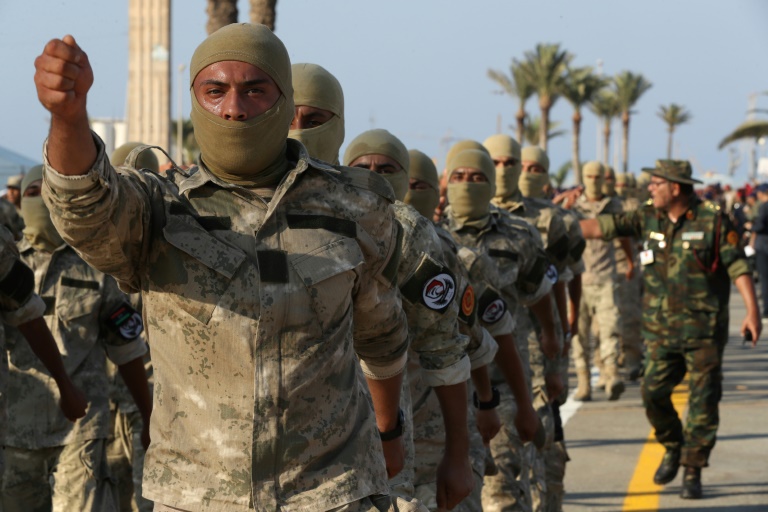
The United Nations on Tuesday voiced “deep concern” over growing tensions between rival Libyan forces, calling for “immediate” moves to calm the situation.

The UN’s mission UNSMIL said it was “following with deep concern the ongoing mobilisation of forces and threats to resort to force” by groups vying for control of the North African country.

Libya has been ravaged by repeated conflicts since the 2011 revolt that overthrew dictator Moamer Kadhafi.

A long-running political crisis deepened in February when an eastern-based parliament picked former interior minister Fathi Bashagha to replace the government of Abdulhamid Dbeibah.

But Dbeibah, the interim premier appointed last year as part of a United Nations-backed peace process to end more than a decade of violence in the North African country, has refused to hand over power before elections.

In its statement on Tuesday, UNSMIL warned that “the current political stalemate … cannot be resolved through armed confrontation.”

It called for an “immediate de-escalation” said that “the use of force by any party is not acceptable” and would not lead to international recognition.

Bashagha told AFP last month that Dbeibah’s government is “illegitimate”, arguing that “its mandate is over and it failed to make elections happen”.

On Tuesday, Bashagha’s office issued a statement urging “Libyan men of honour” to drop their support for Dbeibah’s “obsolete and illegitimate” administration.

That sparked fears of renewed conflict in the capital Tripoli between backers of the two sides.

Bashagha, despite his appointment by the parliament elected in 2014, has been unable to impose his authority in Tripoli, initially ruling out the use of force.

More recently he has hinted that he could resort to force.

Last month, the most deadly clashes between rival groups in Tripoli since 2020 left 16 people dead including a child.

Clashes at empty UN base in troubled DR Congo city

Deadly clashes broke out on Tuesday between DR Congo troops and an armed group at an empty UN base in the country’s troubled east, officials said.

Two attackers were killed and four captured when the group struck the site in the city of Butembo, mayor Roger Mowa said.

The UN peacekeeping force in Democratic Republic of Congo (DRC) had moved its troops out of the base following violent protests in late July.

They were redeployed to outside the city, according to the authorities.

The attackers “thought that we had lied, that the MONUSCO troops hadn’t left,” said Mowa.

“They went and attacked this base and fortunately they didn’t find anything there.”

The city is “secure,” he added.

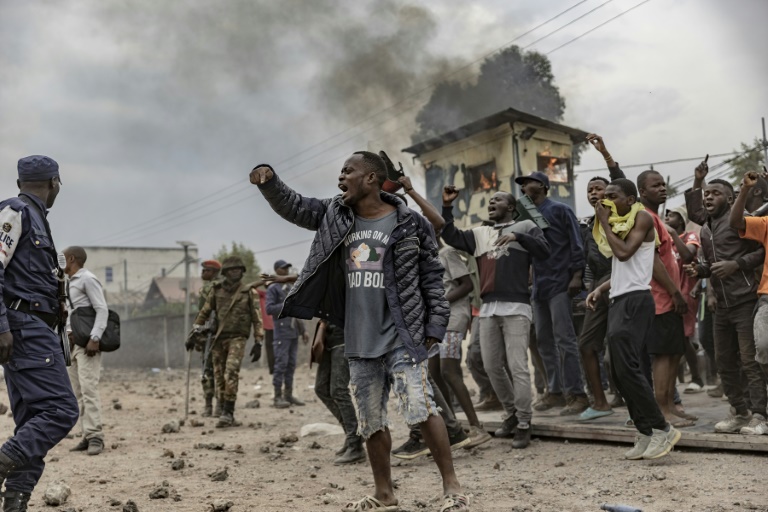
UN bases in eastern DRC were assailed last month by protesters angered at MONUSCO’s perceived failure to provide security.

Thirty-two demonstrators and four UN troops died over the course of a week-long disturbance, according to a Congolese toll.

An estimated 120 armed groups roam eastern DRC, many of them a legacy of two regional wars that flared in the last decade of the 20th century.

Among the most notorious are the Allied Democratic Forces (ADF), which the self-described Islamic State claims as its regional affiliate, and the M23, whose resurgence has parked a diplomatic row between the DRC and neighbouring Rwanda.

Last Thursday the DRC authorities said MONUSCO had “already left” Butembo and that any remaining equipment in the city would be moved out.

But MONUSCO then insisted that it was “not leaving Butembo” but “momentarily suspending its operations.”

The city authorities published what they called a timetable for MONUSCO’s “planned redeployment” in Butembo, with traffic movements scheduled from August 20 to 24.

The force’s acting spokesman, Ndeye Khady Lo, told AFP on Tuesday that MONUSCO’s “temporary redeployment has taken effect. We no longer have personnel, either civilian or military in Butembo.”

The force’s three bases were being secured by the DRC police and army, she added.

MONUSCO “will resume its activities in Butembo as soon as the minimum conditions guaranteeing safety and security for its personnel are there,” she said.

The UN first deployed an observer mission to eastern Congo in 1999. 

It became the peacekeeping mission MONUSCO — the United Nations Organization Stabilization Mission in the Democratic Republic of the Congo — in 2010, with a mandate to conduct offensive operations.

It has a current strength of about 16,000 uniformed personnel.

On August 9, more than 800 inmates escaped from Butembo’s central jail after gunmen staged a jailbreak in which two policemen were killed.

A respected US-based monitor, the Kivu Security Tracker (KST), said the suspects were the ADF.

Jihadist attacks fuel fear of ethnic violence in Burkina

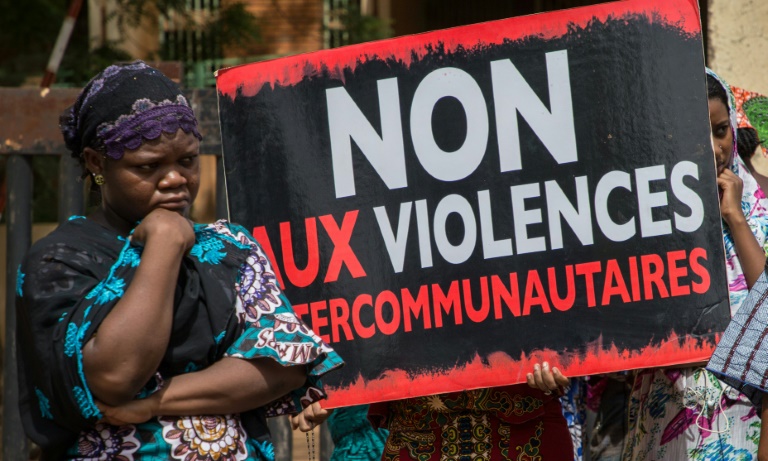
Jihadist attacks in Burkina Faso have inflamed accusations against the Fulani community, sparking warnings the troubled country may spiral into ethnic conflict — even civil war.

The impoverished Sahel state is battling a seven-year-old jihadist insurgency that has claimed thousands of lives and prompted nearly two million to flee their homes.

The jihadists have drawn some of their recruits from the Fulani minority, causing the group as a whole to be stigmatised, say specialists.

Audio messages posted mainly on WhatsApp have urged “native” Burkinabe to attack the Fulani, especially in the southwest region bordering Ivory Coast.

The government last Thursday issued a fierce condemnation.

It likened the posts to Radio Mille Collines — a notorious radio station in Rwanda that in 1994 urged its Hutu listeners to slaughter “Tuti cockroaches.”

The calls amount to “active and direct calls for murder, mass killings, ethnic cleansing and sedition — the tone and words used send shivers down the spine,” said government spokesman Lionel Bilgo.

The country had to act “firmly and resolutely” against “speech that is hateful, subversive, dangerous and unacceptable in a country as rich and diversified as Burkina Faso,” he said.

– Massacres –

The Fulani, also known as Peul, account for around 1.5 million out of Burkina Faso’s 20.5 million people.

They have been singled out in the past for association with jihadist massacres.

On January 1, 2019, unidentified assailants attacked the village of Yirgou in northern Burkina Faso, killing six people, including the village elder.

The attack triggered instant reprisals against Fulani that led to 50 deaths, according to the official toll, while civil society groups say fatalities numbered at least 146.

Three months later, at least 116 unarmed men, accused of supporting or housing Islamists, were believed to have been killed by the security forces in the village of Arbinda, Human Rights Watch (HRW) said.

“With few exceptions, the victims were members of the Fulani ethnicity,” it said, after sending investigators to the location.

Other massacres in 2020 in the villages Dinguila and Barga left dozens of dead, most of them also Fulani.

Last month a man was arrested for allegedly distributing an audio message directed at two Fulani traditional and religious leaders.

“Your community is behind the insecurity which is rampant in our country,” it said.

“Out of the 60 ethnic groups (in Burkina Faso), yours is the one which is behind the massacres.”

– Fulani victims –

Political analyst Drissa Traore said the finger-pointing widened after the army published a list of most-wanted jihadists.

First published in 2018 and updated in May, the list comprised pictures of 136 individuals, 120 of whom were of Fulani origin.

“People quickly put two and two together and likened the Fulani to terrorists, even though 90 percent of Fulani have nothing to do with terrorism,” said Traore.

“All this is symptomatic of deep social divisions which have been exacerbated by terrorism,” he said.

“Today, they constitute a serious threat to the very survival of the country, which every day is on the brink of chaos.”

Another commentator, Lassina Ouedraogo, said the “Fulani-are-terrorists” trope was completely disproven by the facts.

“This community is paying the highest price,” he said. 

“The Fulani have the highest number of people who are killed in (jihadist) attacks and have the highest number of people who are internally displaced,” said Ouedraogo.

“In virtually every place they go, they are shunned or even chased away, accused of being accomplices.”

Community violence flared in central Mali after the jihadists moved into the ethnically-mixed region in 2015.

Yoporeka Somet, head of a think tank called the African Renaissance Studies Centre (CERA) said Burkina faced a “trap set by terrorism — murderous stigmatisation” of fellow citizens.

In an opinion piece published last week, former foreign minister Alpha Barry warned the anti-Fulani postings amounted to “the risk of a genuine civil war”.

He called on politicians, religious and traditional leaders and intellectuals “to go out and talk to people, work hard to encourage cohesion and community life, which are what hold our nation together.”

Barry served under former president Roch Marc Christian Kabore, who was overthrown in January by colonels angered at his failure to end the jihadist crisis.

Close Bitnami banner
Bitnami