Africa Business

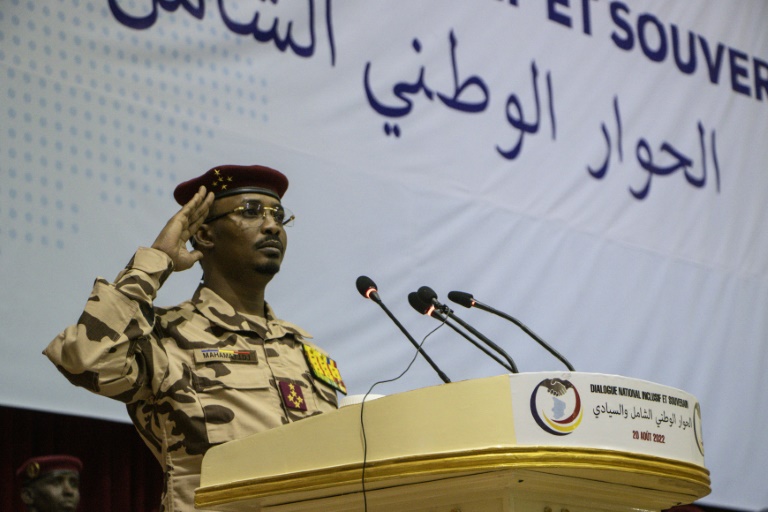
Chad forum to start work a day late

A much-delayed national forum on Chad’s future will start its work a day later than scheduled because of “organisational reasons”, the government said Tuesday.

The so-called inclusive national dialogue aimed at paving the way to restoring civilian rule was given a ceremonial start at the weekend and had been scheduled to start work on Tuesday.

But government spokesman Abderaman Koulamallah told AFP “the dialogue has been delayed for organisational reasons, mainly because of the late arrival of certain delegations”.

The delay was “not at all for political reasons”, he insisted. 

“Everything is fine at the moment, the timeframe is good.”

The forum gathers some 1,400 representatives from political parties, trade unions, the government, civil society and armed rebel groups.

It is scheduled to run for three weeks, culminating in agreements to overhaul Chad’s institutions and revise the constitution. 

If all goes well, the draft constitution will be submitted to a referendum, followed by “free and democratic elections” to enable the return to civilian rule after 18 months of military rule.

One of the world’s poorest countries, Chad has endured repeated uprisings and unrest since independence from France in 1960.

It has been ruled by a junta since April 2021, when President Idriss Deby Itno, Chad’s iron-fisted president for the previous 30 years, died during an operation to fight rebels.

He was succeeded by his son, General Mahamat Idriss Deby Itno, aged 38.

The forum, his brainchild, should have started in February but was delayed for months as rebels squabbled over whether to attend.

It eventually kicked off on Saturday, although two large rebel groups and a major civilian opposition group are boycotting proceedings.

Saleh Kebzabo, a senior member of the organising committee and former opponent of the elder Deby, said that work this week would “focus on adopting internal rules” for the talks.

Thereafter, commissions will start work on August 30, focussing on individual themes, such as social issues, peace, national reconciliation and fundamental liberties.

The initial schedule has a closure ceremony for September 20.

“The length (of the meeting) is not imperative — if it needs more days, we will take more days,” said Koulamallah, who is also communications minister.

The 18-month “transition” set by the junta runs out in October, which leaves scant time for organising a referendum and elections in a vast underdeveloped country.

Deby, who has the title of transitional president, gave himself the option in June 2021 of extending junta rule by 18 months if need be.
Ivory Coast's 'Pearl of Lagoons' loses its lustre

It was once a jewel of West Africa — the “Pearl of Lagoons,” people liked to call it.

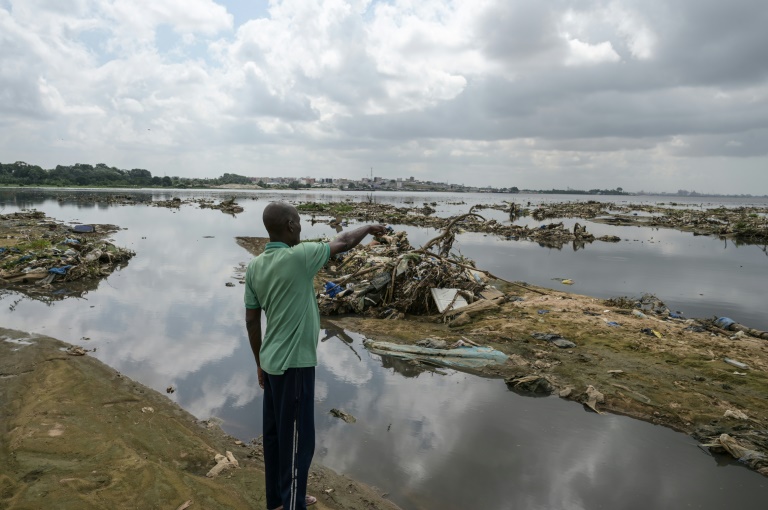
Today, the vast Ebrie lagoon which abuts Ivory Coast’s economic capital Abidjan is a sick and sorry sight, choked by plastic pollution and ravaged by sand extraction and unbridled development.

Named after an ethnic group that lives on its banks, the lagoon covers 120,000 hectares (297,000 acres), mostly separated from the Atlantic Ocean by a strip of land.

Old-timers wax nostalgic about the days when its waters were a pristine aquamarine and mangroves teemed with fish and wildlife.

Today, the shoreside village of Beago exemplifies a nightmarish problem with plastic. 

Discarded bottles, wrappers and other plastic rubbish smother the banks for at least a kilometre (more than half a mile).

“The situation is alarming. There are no more fish because of the pollution — fishing has been abandoned,” said the village chief Paul Abe Blessoue, 73.

Urban and industrial waste from Yopougon, Abidjan’s biggest district, has transformed his village of 3,000 inhabitants into an open dump, he said.

“If we are not careful, Beago could disappear in a few years, abandoned by its inhabitants,” he said.

– Minimal recycling – 

Discarded plastic typically enters the marine environment from rivers or drains or by the wind. Once there, it becomes a notorious problem.

Larger pieces can choke seabirds and mammals, and after biodegradation that can take years, tiny fragments may enter the food chain at the smallest level.

Many rich economies are trying to crack down through such measures as banning single-use plastic bags, launching awareness programmes and sorting rubbish to encourage recycling.

But in Ivory Coast, as in many developing countries, little such headway has been made.

The country of 26 million produces 460,000 tonnes of plastic waste each year, said Yaya Kone, CEO of recycling company Coliba Africa.

Of this, 290,000 tonnes come from Abidjan, where some six million people live.

“Only three percent is recycled and used again,” he said. 

The rest “ends up in nature, especially the lagoon and the sea.”

– ‘Dead bay’ –

One of the biggest expanses of brackish water in Africa, the lagoon stretches far through countryside west of Abidjan to the Azagny National Park.

Its eastern point lies at Grand Bassam — Ivory Coast’s first French colonial capital, renowned today for its ocean beach.

“Plastic is the (lagoon’s) biggest pollution source,” said Ayenon Seka, from the Institute of Tropical Geography at the University of Cocody in Abidjan.

But plastic is not the only ill.

Around Bietry Bay, pollution has been compounded by industrial extraction of sand and anarchic development.

“Bietry Bay is a dead bay — it is extremely polluted, a real environmental disaster,” said businessman Bernard Derrien, 76, who has lived in the area since 1998.

He said 1.6 million square metres (17.2 million square feet) of the bay had been filled in to build factories there.

– ‘Poto-poto’ –

Gerard Frere, a Frenchman who has lived in Abidjan for 67 years and owns a hotel in the bay, remembered the old days with nostalgia.

“Bietry used to be a corner of paradise — now it is poto-poto,” said Frere, using a term for muddy terrain infested with mosquitoes and exposed to flooding.

A specialist in sports fishing, Frere said pollution had halved his turnover.

“The floor of the lagoon is carpeted with plastic waste 30 centimetres (a foot) thick,” he said.

Voices are being raised to reverse the lagoon’s catastrophic decline, with some, like Derrien, demanding a massive sewerage network to ensure that water entering the lagoon from Abidjan is clean.

Residents in Bietry district have launched an association, Abidjan Ma Lagune, and Kone’s company is launching a training programme for as many as 6,000 plastic rubbish collectors.

But public awareness is still far behind, said Kouadio Affian, an oceanographer at the University of Abidjan.

“People don’t realise that when they throw away a plastic bottle in the street, it could end up in the lagoon,” he said.

After 'doomsday' floods, Sudanese fear worse to come

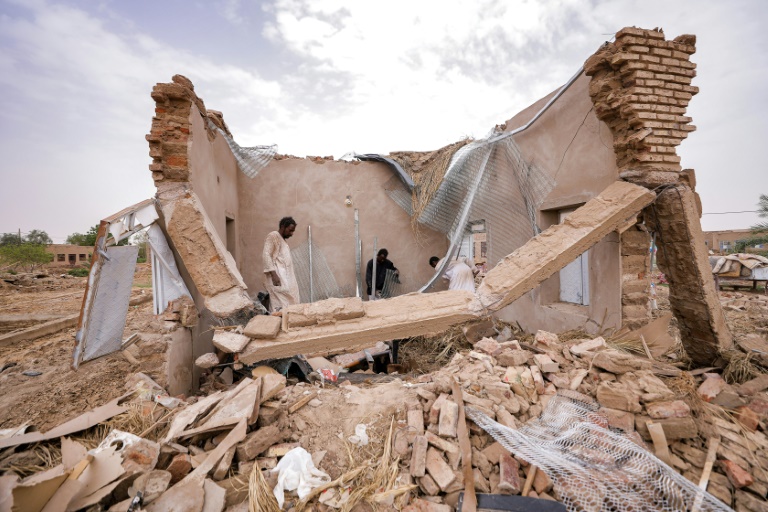
In the Sudanese village of Makaylab, Mohamed Tigani picked through the pile of rubble that was once his mud-brick home, after torrential rains sparked heavy floods that swept it away.

“It was like doomsday,” said Tigani, 53, from Makaylab in Sudan’s River Nile state, some 400 kilometres (250 miles) north of the capital Khartoum.

“We have not seen rains and floods like that in this area for years,” he said, scouring for anything to help build a shelter for his pregnant wife and child.

In Sudan, heavy rains usually fall between May and October, and the country faces severe flooding every year, wrecking property, infrastructure and crops.

This year, floods have killed at least 79 people and left thousands homeless, according to official figures.

On Sunday, Sudan declared a state of emergency due to floods in six states, including River Nile.

The crisis comes as Sudan reels from deepening political unrest and a spiralling economic crisis exacerbated by last year’s military coup led by army chief Abdel Fattah al-Burhan.

Almost a quarter of Sudan’s population — 11.7 million people — need food aid.

The United Nations Office for the Coordination of Humanitarian Affairs (OCHA), citing government figures, estimates over 146,000 people have been affected by flooding this year, with 31,500 homes damaged or destroyed.

But the UN warns that with more than a month of rain still expected, flooding could affect up to 460,000 people this year — far higher than the average 388,600 people affected between 2017 and 2021.

“Compared to the same period of 2021, the number of affected people and localities this year has doubled,” OCHA said Monday. 

The flooding is not just along the Nile River, with the war-ravaged western region of Darfur the hardest hit, where over 90,000 people are affected.

– ‘Only just starting’ –

Since the start of the devastating rainy season, thousands of Sudanese families have been left homeless, sheltering under tattered sacking.

“Everything is totally destroyed,” said Haidar Abdelrahman, sitting in the ruins of his home at Makaylab.

OCHA warns that “swollen rivers and pools of standing water increase the risk of water-borne disease such as cholera, acute watery diarrhoea, and malaria”.

Abdelrahman said he fears the floodwaters have also forced scorpions and snakes to move. “People are scared,” he said. 

“People are in serious need of basic aid against insects and mosquitoes,” said Seifeddine Soliman, 62, from Makaylab.

But health ministry official Yasser Hashem said the situation is “so far under control” with “spraying campaigns to prevent mosquitoes”.

Out of around 3,000 residents in Makaylab, they had been receiving about six or seven cases daily, mainly diarrhoea, he said.

Upstream, on the White Nile, neighbouring South Sudan has seen record rainfalls and overflowing rivers in recent years, forcing hundreds of thousands of people from their homes, with the UN saying the “extraordinary flooding” was linked to the effects of climate change.

The floods on the Nile in Sudan also come despite Ethiopia’s controversial construction upstream across the Blue Nile of a 145-metre (475-foot) tall hydroelectric dam.

Some experts, such as the US-based research and campaign group International Rivers, have warned that changing weather patterns due to climate change could result in irregular episodes of flooding and drought in the Nile drainage basin, the world’s longest river.

In Makaylab, many fear the devastating floods are only the beginning.

“The rainy season is just starting,” said Abdelrahman. “And there is no place for people to go.”

Angola's opposition in final push for votes in tight race

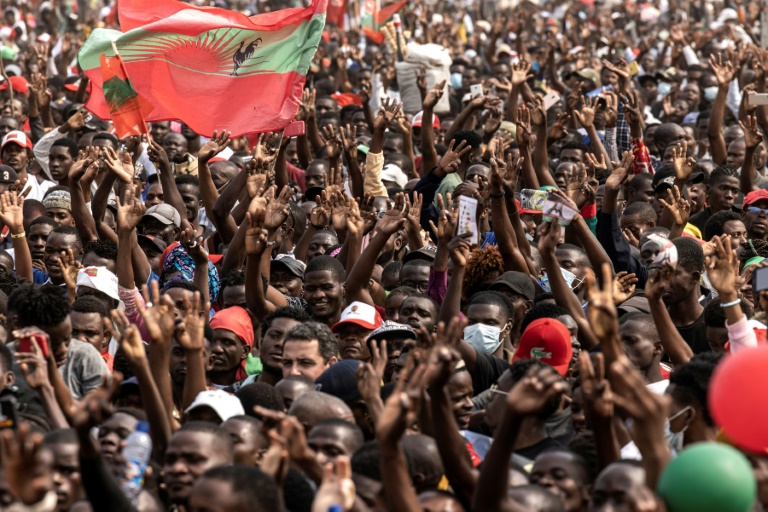
A sea of red-and-green-clad supporters rallied in a densely populated and impoverished district of Angola’s capital Luanda Monday to show support for the opposition group posing the biggest threat to the long-ruling MPLA party.

“President Adalberto!” chanted the crowd, dressed in the party colours of the National Union for the Total Independence of Angola (UNITA), as its leader Adalberto Costa Junior arrived.

The thousands of supporters — mainly young people — were feverish with excitement, chanting “the black rooster” in reference to UNITA’s symbol.  

“You’re showing that Angola has a fighting spirit,” Costa Junior told the crowds in response.

UNITA, a rebel movement turned political party, is one of seven opposition parties standing in Wednesday’s elections.

But it is the main rival to the People’s Movement for the Liberation of Angola (MPLA), which has ruled the oil-rich country since independence from Portugal in 1975.  

“Don’t be afraid of an alternative, long live free and fair elections. There is no democracy without changing of power,” Costa Junior told supporters, who had gathered in a dusty field in the city’s Cazenga neighbourhood.

“There is no democracy with a single party in power.”

– ‘Our life is difficult’-

The 60-year-old Costa Junior was quick to acknowledge the youth, who represent a significant and growing voting bloc. 

“UNITA’s mandate represents the realisation of a dream, the realisation of the youths’ goals,” he said. 

Rally goers said they were fed up with the high level of poverty and corruption in Angola that festered under former president Jose Eduardo dos Santos.

He ruled the country for nearly four decades until 2017 and died last month.

“Our life is difficult. Everything is very expensive because of these people who are in government,” said Jorge Domingos, 27, a student and a self-employed trader. 

Supporters are enthused by Costa Junior’s approach to politics, in building a coalition with other opposition parties to take on the MPLA.

“We are here because people want an alternative. Angola is a rich country but its people are suffering. It’s very sad. We absolutely want an alternative,” said Luis Santana, a street vendor who earns $5 per day.

UNITA has formed an electoral coalition with two other opposition groups to boost its chances of defeating the MPLA.

And the opposition’s united front was clear to see on the rally podium. 

Costa Junior was joined by the popular Abel Chivukuvuku, president of the PRA-JA Servir Angola party, along with the head of Democratic Bloc party, Filomeno Vieira Lopes. 

Despite the excitement over the opposition and high levels of despair and frustration among its mainly youthful supporters, analysts say that the MPLA however is likely to win the vote.

An Afrobarometer survey in May showed support for the opposition was growing but still trailed by seven percentage points behind the MPLA.

The MPLA’s final campaign rally was on Saturday but incumbent President Joao Lourenco held a special women’s rally earlier Monday.

His running mate, Esperanca Maria Eduardo Francisco da Costa, would be the country’s first female vice-president if the MPLA wins. 

Accusations of voter fraud have swirled in the lead up to the polls.

Somalia PM vows accountability over deadly hotel siege

Somalia’s prime minister pledged that the government will be held accountable over the deadly Mogadishu hotel siege by Al-Shabaab jihadists, whom he branded “children of hell”.

Hamza Abdi Barre also called on Somalis to unite against the Al-Qaeda-linked group, which has been waging a bloody insurgency in the impoverished Horn of Africa nation for more than 15 years.

“There will be accountability in the government… anyone who neglected the responsibility he was entrusted with will be held accountable,” Barre told reporters late Sunday.

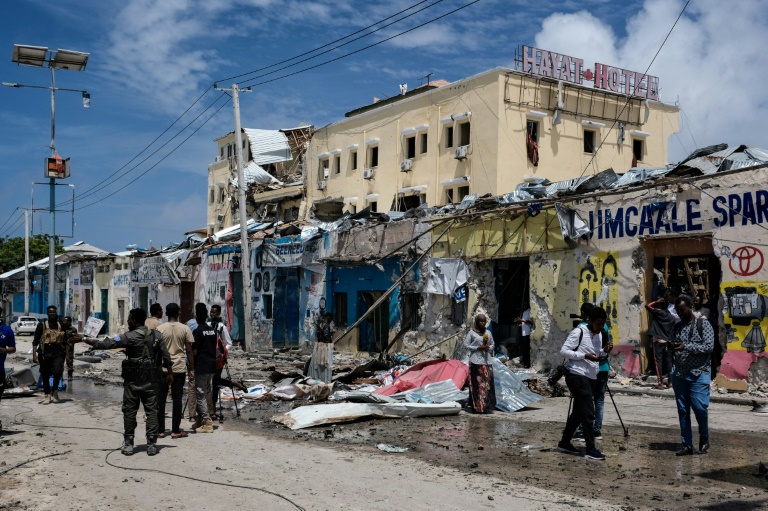
He was speaking after visiting a hospital treating victims of the bomb and gun attack on the Hayat Hotel that the health ministry says claimed the lives of 21 people and wounded 117.

Norwegian citizens are among the dead, Norway’s foreign ministry announced Monday, without giving the exact number.

“We’re also trying to establish if Norwegian citizens may have been injured,” spokeswoman Ragnhild Simenstad told AFP.

The 30-hour siege was the deadliest attack in Mogadishu since President Hassan Sheikh Mohamud was elected in May after a protracted political crisis.

Al-Shabaab commandos stormed the hotel on Friday evening, with the siege only ending at around midnight Saturday after security forces bombarded the building, leaving much of it in ruins.

Police said more than 100 people, including women and children, had been rescued.

– ‘Unite against the enemy’ –

“There is only one of two choices here, we either allow Al-Shabaab — the children of hell — to live, or we live. We cannot live together,” said Barre, appointed prime minister in June.

“I call on the Somali people to unite to fight against the enemy… so that what they did now will never happen again.

“The fight against them has already started taking place around several locations,” he said, without elaborating.

The Hayat was a favoured meeting spot for government officials and scores of people were inside when a suicide bomber triggered a massive blast, opening a way into the site for heavily-armed gunmen.

Minutes later, a second explosion struck as rescuers, security forces and civilians rushed to help the injured, witnesses said.

Security officials were still combing through the rubble on Monday, hunting for explosives and possibly buried bodies.

The building remained cordoned off, but roads nearby had reopened and traffic was back to normal in Mogadishu.

“The only difference between this attack and previous ones is the length of the siege and how long it took for security forces to contain the situation,” said Samira Gaid, executive director of the Mogadishu-based Hiraal Institute think tank.

She said the change in Somalia’s leadership may have affected how the security forces responded. “There was the fact that security forces and security heads are expected to be changed whenever there is a new administration coming in.”

– ‘Repent’ –

Al-Shabaab has carried out several attacks in the mainly Muslim country since Mohamud took office. Last month it also mounted an incursion into neighbouring Ethiopia and raided a military base on the border.

Former Al-Shabaab commander Mukhtar Robow, who is now religion minister in Barre’s cabinet, condemned the attack and called on fighters to abandon the extremist group.

“I call on them to repent… I say to them, ‘you know that this is not right so repent and abandon (Al-Shabaab) and God willing you will survive’,” he said.  

Somalia’s allies, including the United States, Britain, the European Union and Turkey, as well as the UN, strongly condemned the attack, as did ATMIS, the African Union force tasked with helping Somali forces take over primary responsibility for security by the end of 2024.

Earlier this month, Washington said its forces had killed 13 Al-Shabaab operatives in an air raid, the latest strike since President Joe Biden in May ordered the re-establishment of a US troop presence in Somalia, reversing a decision by Donald Trump.

The Islamist militants, who espouse a strict version of sharia or Islamic law, were driven out of Mogadishu by an African Union (AU) force in 2011.

But they still control swathes of countryside and retain the ability to launch deadly strikes, often hitting hotels and restaurants as well as military and political targets.

The deadliest attack occurred in October 2017 when a truck packed with explosives blew up in Mogadishu, killing 512 people.

The Hayat assault was reminiscent of deadly sieges in neighbouring Kenya, a contributor to the AU force. 

Al-Shabaab claimed responsibility for a four-day siege at a mall in Nairobi in September 2013 that killed 67 people and an hours-long attack on an upmarket hotel complex there in 2019 that left 21 dead.

Somalia PM vows accountability over deadly hotel siege

Somalia’s prime minister pledged that the government will be held accountable over the deadly Mogadishu hotel siege by Al-Shabaab jihadists, whom he branded “children of hell”.

Hamza Abdi Barre also called on Somalis to unite against the Al-Qaeda-linked group, which has been waging a bloody insurgency in the impoverished Horn of Africa nation for more than 15 years.

“There will be accountability in the government… anyone who neglected the responsibility he was entrusted with will be held accountable,” Barre told reporters late Sunday.

He was speaking after visiting a hospital treating victims of the bomb and gun attack on the Hayat Hotel that the health ministry says claimed the lives of 21 people and wounded 117.

The 30-hour siege was the deadliest attack in Mogadishu since President Hassan Sheikh Mohamud was elected in May after a protracted political crisis.

Al-Shabaab commandos stormed the hotel on Friday evening, with the siege only ending at around midnight Saturday after security forces bombarded the building, leaving much of it in ruins.

Police said more than 100 people, including women and children, had been rescued.

– ‘Unite against the enemy’ –

“There is only one of two choices here, we either allow Al-Shabaab — the children of hell — to live, or we live. We cannot live together,” said Barre, appointed prime minister in June.

“I call on the Somali people to unite to fight against the enemy… so that what they did now will never happen again.

“The fight against them has already started taking place around several locations,” he said, without elaborating.

The Hayat was a favoured meeting spot for government officials and scores of people were inside when a suicide bomber triggered a massive blast, opening a way into the site for heavily-armed gunmen.

Minutes later, a second explosion struck as rescuers, security forces and civilians rushed to help the injured, witnesses said.

Security officials were still combing through the rubble on Monday, hunting for explosives and possibly buried bodies.

The building remained cordoned off, but roads nearby had reopened and traffic was back to normal in Mogadishu.

“The only difference between this attack and previous ones is the length of the siege and how long it took for security forces to contain the situation,” said Samira Gaid, executive director of the Mogadishu-based Hiraal Institute think tank.

She said the change in Somalia’s leadership may have affected how the security forces responded. “There was the fact that security forces and security heads are expected to be changed whenever there is a new administration coming in.”

– ‘Repent’ –

Al-Shabaab has carried out several attacks in the mainly Muslim country since Mohamud took office. Last month it also mounted an incursion into neighbouring Ethiopia and raided a military base on the border.

Former Al-Shabaab commander Mukhtar Robow, who is now religion minister in Barre’s cabinet, condemned the attack and called on fighters to abandon the extremist group.

“I call on them to repent… I say to them, ‘you know that this is not right so repent and abandon (Al-Shabaab) and God willing you will survive’,” he said.  

Somalia’s allies, including the United States, Britain, the European Union and Turkey, as well as the UN, strongly condemned the attack, as did ATMIS, the African Union force tasked with helping Somali forces take over primary responsibility for security by the end of 2024.

Earlier this month, Washington said its forces had killed 13 Al-Shabaab operatives in an air raid, the latest strike since President Joe Biden in May ordered the re-establishment of a US troop presence in Somalia, reversing a decision by Donald Trump.

The Islamist militants, who espouse a strict version of sharia or Islamic law, were driven out of Mogadishu by an African Union (AU) force in 2011.

But they still control swathes of countryside and retain the ability to launch deadly strikes, often hitting hotels and restaurants as well as military and political targets.

The deadliest attack occurred in October 2017 when a truck packed with explosives blew up in Mogadishu, killing 512 people.

The Hayat assault was reminiscent of deadly sieges in neighbouring Kenya, a contributor to the AU force. 

Al-Shabaab claimed responsibility for a four-day siege at a mall in Nairobi in September 2013 that killed 67 people and an hours-long attack on an upmarket hotel complex there in 2019 that left 21 dead.

Kenya's Odinga mounts court challenge to presidential poll result

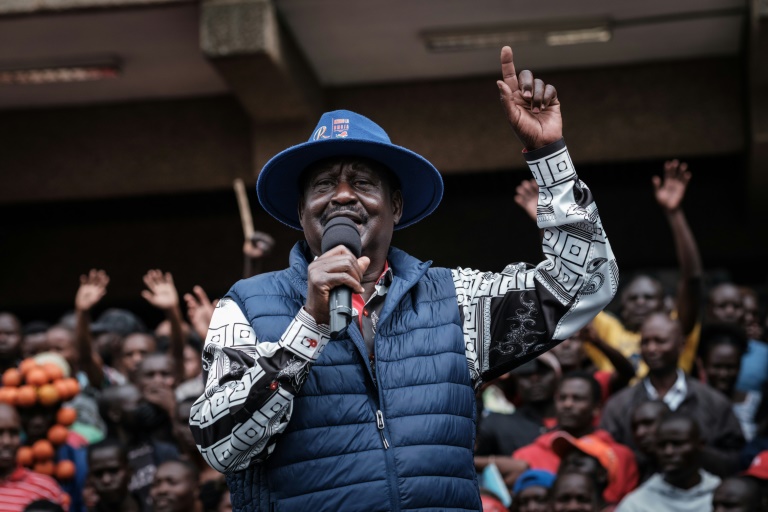
Kenya’s defeated presidential candidate Raila Odinga filed a petition to the country’s top court Monday, challenging the outcome of the August 9 election in what he called a fight for “democracy and good governance”.

Odinga, a veteran opposition leader who ran with the backing of President Uhuru Kenyatta and the ruling party, has rejected the outcome of the poll that delivered victory to his rival William Ruto, branding it a “travesty”.

The 77-year-old politician lost his fifth bid for the presidency by a narrow margin of around 230,000 votes — less than two percentage points.

Hundreds of supporters cheered as dozens of boxes of evidence were unloaded from a truck outside the Supreme Court.

“We have enough evidence that it is us who won the election. We didn’t have an election we can be proud of,” Odinga told a press conference after filing the case.

The outcome of the poll represented a “continuing struggle pitting the forces for democracy and good governance against the corruption cartels that… will stop at nothing to take control of government,” he said, without giving specific details.

“The action we have taken… affirms our deep belief in constitutionalism, the rule of law and a peaceful resolution of disputes.”

Although polling day passed off peacefully, the announcement of the results a week ago sparked angry protests in some Odinga strongholds and there are fears a drawn-out dispute may lead to violence in a country with a history of post-poll unrest.

Since 2002, no presidential election in Kenya has gone uncontested, with this year’s outcome also causing a rift within the Independent Electoral and Boundaries Commission (IEBC) which oversaw the poll.

According to a copy of the 72-page petition seen by AFP, Odinga’s team alleges that IEBC chairman Wafula Chebukati failed to tally around 140,000 votes.

As a result, Ruto “did not meet the constitutional threshold of 50% plus 1 of the valid votes cast” — a requirement for him to be declared the winner.

Judges now have 14 days to issue a ruling. If they order an annulment, a new vote must be held within 60 days.

– ‘We want justice’ –

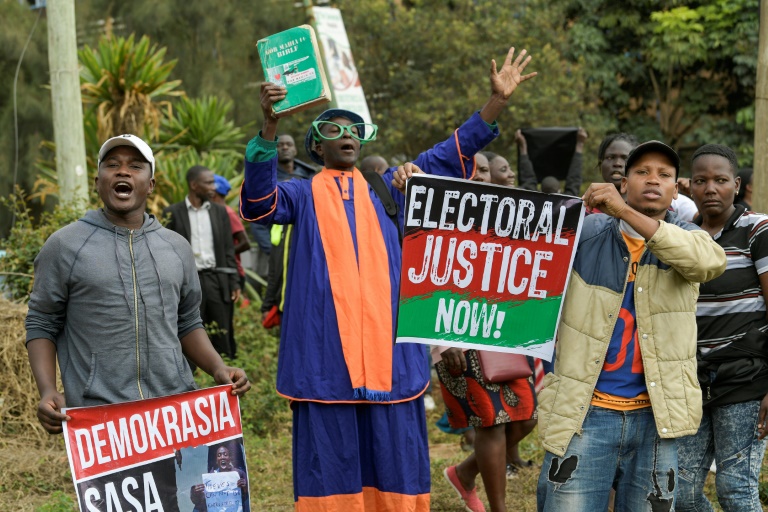
Odinga supporters began gathering outside the court hours before his arrival, blowing whistles and waving placards reading “Electoral Justice Now!” and “We want justice now”. 

“Odinga must win so that we get the 6,000 shillings ($50) promised in his manifesto,” said one man, wearing a crown made with plants who was referring to a monthly cash handout for vulnerable households.

Another man — armed with a Bible and wearing huge green glasses — knelt down in prayer as police guarded the court premises.

A court clerk told AFP the tribunal had also received another eight petitions over the results filed by voters, politicians and non-profit organisations.

The IEBC was under heavy pressure to deliver a clean vote after facing sharp criticism over its handling of the August 2017 election, which was also challenged by Odinga.

The court annulled that election in a first for Africa and ordered a re-run which was boycotted by Odinga. Dozens of people died during a police crackdown on protests.

In a shock development shortly before the results of this year’s poll were announced, four of the IEBC’s seven commissioners accused chairman Chebukati of running an “opaque” operation and later said the numbers did not add up.

Chebukati dismissed the claims, insisting he had carried out his duties according to the law of the land despite “intimidation and harassment”.

– Divided opinion –

Legal experts are divided on whether Chebukati needed the commissioners’ backing to announce the results, with constitutional lawyer Charles Kanjama telling AFP there was “some ambiguity” surrounding the issue.

Odinga has previously said he was cheated of victory in the 2007, 2013 and 2017 elections, and the poll’s aftermath is being keenly watched as a test of democratic maturity in the East African powerhouse.

On the campaign trail, both frontrunners pledged to resolve any disputes in court rather than on the streets.

Since the results were declared, Odinga has commended his supporters for “remaining calm” while Ruto has taken a conciliatory tone and promised to “work with all leaders”.

Kenya’s worst electoral violence occurred after the 2007 vote, when more than 1,100 people died in politically motivated clashes involving rival tribes.

If the Supreme Court upholds the results, Ruto will become Kenya’s fifth president since independence from Britain in 1963, taking the reins of a country battling inflation, high unemployment and a crippling drought.

UN challenges Guinea junta on rights

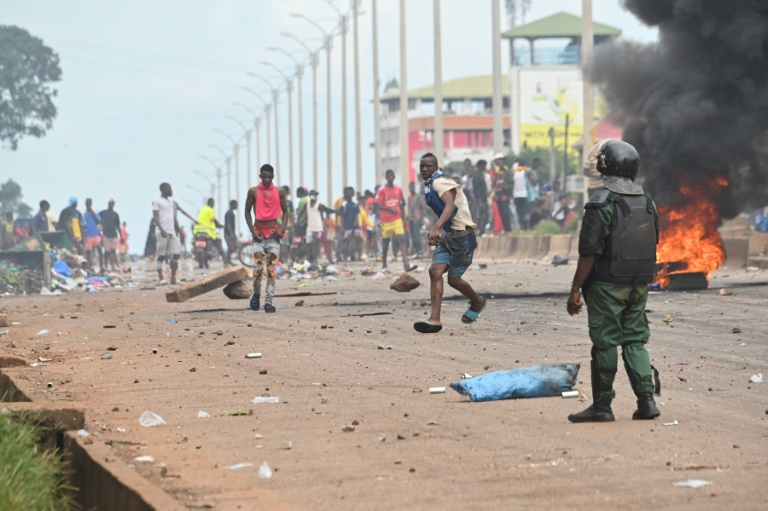
The United Nations has warned Guinea’s ruling junta about respect for human rights after it cracked down on protesters and dissolved an opposition coalition.

In a letter to junta leader Colonel Mamady Doumbouya, UN Rights Commissioner Michelle Bachelet said the situation was a source of “deep concern.”

The letter was reported on Guinean media on Sunday and authenticated by Bachelet’s office on Monday.

Bachelet pointed to the death of demonstrators by security forces on July 28 and 29 and reports of a “large number” of arrests.

Five people died on those days, and two more on August 17 on another day of outlawed protests, according to organisers.

Bachelet called on the authorities to investigate the deaths, free those arrested and reauthorise an opposition coalition, the National Front for the Defence of the Constitution (FNDC).

Its dissolution “constitutes a major violation of freedom of association and public gathering,” Bachelet said.

Rich in minerals but deeply poor, the West African state has had little stability since it gained independence from France in 1958.

A junta has been in power since September after ousting President Alpha Conde, 84.

Conde in 2020 became the country’s first democratically elected president.

But his popularity dived in his second term as critics accused him of authoritarianism, and opposition protests were violently repressed.

Dozens died, the overwhelming majority of them civilians, in protests launched by the FNDC, an alliance of political parties, trade unions and civil groups.

Friction had been growing between the FNDC and the junta in the months before the coalition was banned.

A decree ordering its dissolution was signed on August 6, nine days ahead of protests that it had scheduled in defiance of a ban.

The junta accused the FNDC of encouraging violence against the security forces and “threatening national unity, public peace and cohabitation.”

Kenya's history of disputed elections

Kenya’s defeated presidential candidate Raila Odinga filed a court petition on Monday disputing the result of the August 9 election that handed victory to his rival William Ruto.

In its 30 years of multi-party rule, elections in the East African powerhouse have often produced disputed results and set off deadly violence, with rivals accusing each other of fraud and vote-rigging.

Here is a look at past crises: 

– 1992: first multi-party election turns deadly –

Daniel arap Moi is elected president in Kenya’s first multi-party poll on December 29, 1992, benefiting from deep divisions among opposition figures.

Moi had been in power since 1978 when he took over after the death of Jomo Kenyatta, Kenya’s first leader after independence from Britain.

The 1992 vote is marred by violence between Moi’s Kalenjin tribe and the Kikuyu community to which Kenyatta and much of the Kenyan elite belong. Hundreds of people are killed.

– 2007-2008: inter-ethnic bloodshed –

Outgoing president Mwai Kibaki is proclaimed winner for a second term on December 27, 2007 but his challenger Raila Odinga says the vote was rigged.

Clashes in the weeks that follow kill more than 1,100 people and force 600,000 from their homes in a country generally seen as a beacon of stability in Africa.

The epicentre of the violence is the Rift Valley, where members of the Kalenjin and Luo communities, who mainly back Odinga, clash with members of the Kikuyu tribe, to which Kibaki belongs.

On February 28, 2008, an internationally brokered power-sharing agreement is signed under which Kibaki keeps his job and Odinga becomes prime minister.

In 2010, the International Criminal Court (ICC) opens a probe into crimes against humanity over the 2007-2008 violence.

Two years later its judges confirm charges against Uhuru Kenyatta, son of Jomo Kenyatta, and William Ruto, members of opposing parties at the time, for their alleged role in the violence.

Kenyatta wins the 2013 election and a year later becomes the first sitting president to appear before the ICC. 

But the cases against both Kenyatta and Ruto later collapse, with former ICC chief prosecutor Fatou Bensouda saying a relentless campaign of victim and witness intimidation made a trial impossible.

– 2017: Election annulled –

Kenyatta beats longtime rival Odinga in the August 2017 presidential election but Odinga rejects the results and claims hackers broke into the electoral commission database.

The announcement of Kenyatta’s win sparks days of violent protests in Odinga strongholds.

Odinga takes his complaints to the Supreme Court and, in a shock announcement on September 1, judges declare the results of the poll “invalid, null and void” and order a re-run within 60 days.

The annulment is a first for Africa.

Kenyatta is re-elected in October in a vote boycotted by the opposition and marked by low voter turnout.

Dozens of people die in protests that follow, mainly in clashes with police.

But the two men stun the country in 2018 by shaking hands and declaring a truce, leaving Deputy President Ruto out in the cold.

– 2022: Contested result –

The presidential election on August 9, 2022 goes ahead smoothly. 

After an anxious days-long wait, the Independent Electoral and Boundaries Commission (IEBC) announces on August 15 that Ruto has won with 50.49 percent of the vote, just ahead of Odinga on 48.85 percent.

Shortly before the announcement, the results are rejected by four out of seven IEBC commissioners. Violent protests break out in Odinga strongholds.

The next day Odinga, who is now making his fifth bid for the top job, rejects the results, calling them a “travesty”, and appeals for calm from his supporters, promising to pursue “all constitutional and legal options”.  

On Monday he files an online petition to the country’s top court challenging the result. 

Judges now have 14 days to issue a ruling. If they order an annulment, a new vote must be held within 60 days.

Kenya's Odinga mounts court challenge to presidential poll result

Kenya’s defeated presidential candidate Raila Odinga filed a petition to the country’s top court on Monday challenging the result of the August 9 election that handed victory to his rival William Ruto.

Odinga, a veteran opposition leader who ran with the backing of President Uhuru Kenyatta and the ruling party, has rejected the outcome of the poll, branding it a “travesty.”

He narrowly lost to Ruto by around 230,000 votes — less than two percentage points.

The 77-year-old politician filed a physical copy of the petition with barely an hour to go before the court’s 2 pm (1100 GMT) deadline for accepting the case. An online copy was filed earlier in the day, according to a member of his legal team.

Hundreds of supporters cheered as dozens of boxes of evidence were unloaded from a truck outside the court.

“We have hopes that we have made a good case and will win,” Daniel Maanzo, a member of Odinga’s legal team, told AFP.

Although polling day passed off peacefully, the announcement of the results a week ago sparked angry protests in some Odinga strongholds and there are fears that a drawn-out dispute may lead to violence in a country with a history of post-poll unrest.

Since 2002, every presidential election in Kenya has triggered a dispute, with this year’s outcome also causing a rift within the Independent Electoral and Boundaries Commission (IEBC) which oversaw the poll.

Odinga, who was making his fifth bid for the top job, said last week that the figures announced by the IEBC were “null and void and must be quashed by a court of law”.

According to a copy of the 72-page petition seen by AFP, Odinga’s team alleges that IEBC chairman Wafula Chebukati failed to tally around 140,000 votes.

As a result, Ruto “did not meet the constitutional threshold of 50% plus 1 of the valid votes cast” — a requirement for him to be declared the winner.

Judges now have 14 days to issue a ruling. If they order an annulment, a new vote must be held within 60 days.

– ‘We want justice’ –

Odinga supporters began gathering outside the court hours before his arrival, blowing whistles and waving placards reading “Electoral Justice Now!” and “We want justice now”. 

“Odinga must win so that we get the 6,000 shillings ($50) promised in his manifesto,” said one man, wearing a crown made with plants who was referring to a monthly cash handout for vulnerable households.

Another man — armed with a Bible and wearing huge green glasses — knelt down in prayer as police guarded the court premises.

Judges are also expected to consider other challenges against the result, with a court clerk telling reporters the tribunal had already received two petitions filed by a voter and a non-profit organisation.

The IEBC was under heavy pressure to deliver a clean vote after facing sharp criticism over its handling of the August 2017 election, which was also challenged by Odinga.

The court annulled that election in a first for Africa and ordered a re-run which was boycotted by Odinga. Dozens of people died during a police crackdown on protests.

In a shock development shortly before the results of this year’s poll were announced, four of the IEBC’s seven commissioners accused chairman Chebukati of running an “opaque” operation and later said the numbers did not add up.

Chebukati dismissed the claims, insisting he had carried out his duties according to the law of the land despite “intimidation and harassment”.

– Divided opinion –

Legal experts are divided on whether Chebukati needed the commissioners’ backing to announce the results, with constitutional lawyer Charles Kanjama telling AFP there was “some ambiguity” surrounding the issue.

Odinga has previously said he was cheated of victory in the 2007, 2013 and 2017 elections, and the poll’s aftermath is being keenly watched as a test of democratic maturity in the East African powerhouse.

On the campaign trail, both frontrunners pledged to resolve any disputes in court rather than on the streets.

Since the results were declared, Odinga has commended his supporters for “remaining calm” while Ruto has taken a conciliatory tone and promised to “work with all leaders”.

Kenya’s worst electoral violence occurred after the 2007 vote, when more than 1,100 people died in politically motivated clashes involving rival tribes.

If the Supreme Court upholds the results, Ruto will become Kenya’s fifth president since independence from Britain in 1963, taking over the reins of a country battling surging inflation, high unemployment and a crippling drought.

Close Bitnami banner
Bitnami