Africa Business

Somalia PM vows accountability over deadly hotel siege

Somalia’s prime minister pledged that the government will be held accountable over the deadly Mogadishu hotel siege by Al-Shabaab jihadists whom he branded “children of hell”.

Hamza Abdi Barre also called on Somalis to unite in the fight against the Al-Qaeda-linked group which has been waging a bloody insurgency in the impoverished Horn of Africa nation for more than 15 years.

“There will be accountability in the government… anyone who neglected the responsibility he was entrusted with will be held accountable,” Barre told reporters late Sunday.

He was speaking after visiting a hospital treating wounded victims of the bomb and gun attack on the Hayat Hotel that the health ministry says claimed the lives of 21 people and wounded 117.

The 30-hour siege was the deadliest attack in Mogadishu since the new President Hassan Sheikh Mohamud was elected in May after a protracted political crisis.

Police said more than 100 people, including women and children, had been rescued during the siege, which began on Friday evening and finally ended around midnight Saturday after security forces bombarded the hotel.

“There is only one of two choices here, we either allow Al-Shabaab — the children of hell — to live, or we live. We cannot live together,” said Barre, who was appointed prime minister in June.

“I call on the Somali people to unite to fight against the enemy… so that what they did now will never happen again.

“The fight against them has already started taking place around several locations,” he said, without elaborating.

– ‘Abandon Al-Shabaab’ –

The Hayat was a favoured meeting spot for government officials and scores of people were inside when a suicide bomber triggered a massive blast, forcing his way onto the premises along with heavily-armed gunmen.

Minutes later, a second explosion struck as rescuers, security forces and civilians rushed to help the injured, witnesses said.

Al-Shabaab has carried out several attacks in the mainly Muslim country since Mohamud took office, and last month launched an incursion into neighbouring Ethiopia and raided a military base on the border.

Former Al-Shabaab commander Mukhtar Robow, who is now religion minister in Barre’s cabinet, condemned the attack and called on fighters to abandon the group.

“I call on them to repent… I say to them ‘you know that this is not right so repent and abandon (Al-Shabaab) and God willing you will survive’,” he said.  

“Society everywhere should know that their interest lies in uniting to fight against them,” he added. 

Somalia’s allies, including the United States, Britain, the European Union and Turkey, as well as the UN, strongly condemned the attack, as did ATMIS, the African Union force tasked with helping Somali forces take over primary responsibility for security by the end of 2024.

Earlier this month, Washington announced its forces had killed 13 Al-Shabaab operatives in an air strike, the latest since President Joe Biden ordered the re-establishment of a US troop presence in Somalia, reversing a decision by his predecessor Donald Trump.

The Islamist militants, who espouse a strict version of sharia or Islamic law, were driven out of Mogadishu by an African Union force in 2011.

But they still control swathes of countryside and retain the ability to launch deadly strikes, often hitting hotels and restaurants as well as military and political targets.

The deadliest attack occurred in October 2017 when a truck packed with explosives blew up in Mogadishu, killing 512 people.

The Hayat Hotel assault was reminiscent of deadly sieges in neighbouring Kenya, one of the contributors to the AU force. 

Al-Shabaab claimed responsibility for a four-day siege at the Westgate shopping mall in Nairobi in September 2013 that killed 67 people and an hours-long attack on an upmarket hotel complex in the city in 2019 that claimed the lives of 21 people.
Kenya's Odinga files court challenge to presidential poll result

Kenya’s defeated presidential candidate Raila Odinga filed an online petition to the country’s top court on Monday challenging the result of the August 9 election that handed victory to his rival William Ruto, his lawyer told AFP.

Odinga, a veteran opposition leader who ran with the backing of the ruling party, has rejected the outcome of the poll, branding it a “travesty.”

He narrowly lost to Ruto by around 230,000 votes — less than two percentage points.

“It has already been sent to them and they will see it soon,” Daniel Maanzo, a member of the 77-year-old politician’s legal team, said of the petition.

“We have hopes that we have made a good case and will win,” he added.

Paul Mwangi, who is also representing Odinga, told AFP that a physical copy of the petition would be filed before the Supreme Court’s 2 pm (1100 GMT) deadline.

Although polling day passed off peacefully, the announcement of the results a week ago sparked angry protests in some Odinga strongholds and there are fears that a drawn-out dispute may lead to violence in a country with a history of post-poll unrest.

Since 2002, every presidential election in Kenya has triggered a dispute, with this year’s outcome also causing a rift within the Independent Electoral and Boundaries Commission (IEBC) which oversaw the poll.

Odinga, who was making his fifth bid for the top job, also approached the Supreme Court in August 2017, when President Uhuru Kenyatta was declared the winner of the presidential race.

The court annulled that election in a first for Africa and ordered a re-run which was boycotted by Odinga. Dozens of people died during a police crackdown on protests.

Judges now have 14 days to issue a ruling. If they order an annulment, a new vote must be held within 60 days.

– ‘We want justice’ –

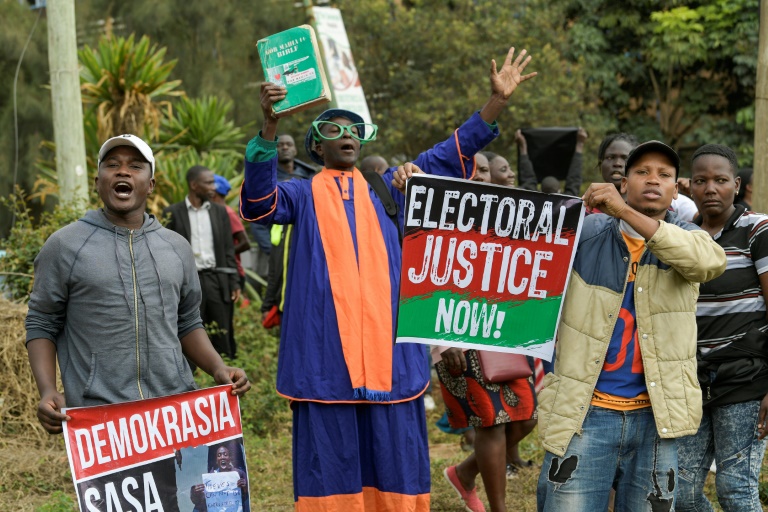
Hundreds of Odinga supporters gathered outside the court on Monday, blowing whistles and waving placards reading “Electoral Justice Now!” and “We want justice now”. 

“Odinga must win so that we get the 6,000 shillings ($50) promised in his manifesto,” said one man, wearing a crown made with plants who was referring to a monthly cash handout for vulnerable households.

Another man — armed with a Bible and wearing huge green glasses — knelt down in prayer as police guarded the court premises.

Judges are also expected to consider other challenges against the result, with a court clerk telling reporters the tribunal had already received one petition filed by a voter.

Odinga, who buried the hatchet with Kenyatta in 2018, winning the president’s backing for his candidacy, said last week that the figures announced by the IEBC were “null and void and must be quashed by a court of law”.

The IEBC was under heavy pressure to deliver a clean vote after facing sharp criticism over its handling of the August 2017 election.

But in a shock development shortly before the results were announced, four of the IEBC’s seven commissioners accused chairman Wafula Chebukati of running an “opaque” operation and later said the numbers did not add up.

Chebukati dismissed the claims, insisting he had carried out his duties according to the law of the land despite “intimidation and harassment”.

– Divided opinion –

Legal experts are divided on whether Chebukati needed the commissioners’ backing to announce the results, with constitutional lawyer Charles Kanjama telling AFP there was “some ambiguity” surrounding the issue.

Odinga has previously said he was cheated of victory in the 2007, 2013 and 2017 elections, and the poll’s aftermath is being keenly watched as a test of democratic maturity in the East African powerhouse.

On the campaign trail, both frontrunners pledged to resolve any disputes in court rather than on the streets.

Since the results were declared, Odinga has commended his supporters for “remaining calm” while Ruto has taken a conciliatory tone and promised to “work with all leaders”.

Kenya’s worst electoral violence occurred after the 2007 vote, when more than 1,100 people died in politically motivated clashes involving rival tribes.

If the Supreme Court upholds the results, Ruto will become Kenya’s fifth president since independence from Britain in 1963, taking over the reins of a country battling surging inflation, high unemployment and a crippling drought.

Death toll from Algeria wildfires rises to over 40

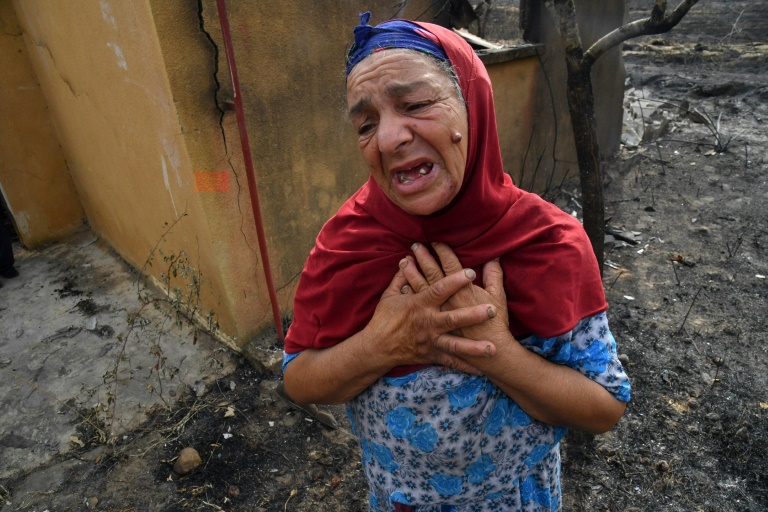
The death toll has climbed to at least 43 from wildfires that have raged for days in northern Algeria, with numbers expected to rise further, the gendarmerie said Monday.

Thirteen people have been arrested over suspicion of involvement in starting the fires, it added.

“The latest toll of victims from the fires increased to 43,” from 38 recorded two days earlier, the gendarmerie command said on state radio.

Fires had swept through 14 wilayas, or administrative councils, in the north of the country, with most concentrated in the northeastern El Tarf region near the border with Tunisia.

The gendarmerie, which operates under the defence ministry, added that they are still working on identifying the bodies of the victims.

The death toll is expected to increase, it said, despite earlier reports that the fires had mostly been contained.

Civil protection services said some 31 fires were put out in various parts of the North African country between Saturday and Sunday.

More than 1,000 families were evacuated from various districts over the past few days, the civil defence’s Colonel Boualem Boughlef said on Saturday.

The fires, which have become a yearly fixture due to climate change, have devastated thousands of hectares (acres) of woodland in the mostly-desert country.

Fires last year killed at least 90 people and seared 100,000 hectares (247,000 acres) of forest and farmland in the north.

Kenya's supreme court at the heart of election dispute

Kenya’s Supreme Court is once again taking centre stage in the nation’s election battle after defeated presidential candidate Raila Odinga on Monday filed a Supreme Court challenge over the results.

Odinga last week described the outcome of the August 9 vote and its handling by the Independent Electoral and Boundaries Commission (IEBC) as a “travesty”.

He said the figures announced by the head of the IEBC — which show he lost by a margin of less than two percentage points to his rival William Ruto — were “null and void and must be quashed by a court of law”.

The court has 14 days to make a ruling.

– ‘The final arbiter’ –

The Supreme Court is the highest in the land, created under Kenya’s 2010 constitution “as the final arbiter and interpreter of the constitution”. 

Its rulings are final and binding.

The court comprises a president, vice president and five other judges. They are officially appointed by the head of state, although he does not have the power to choose them. 

Instead, candidates’ names are submitted to the presidency for approval after an open nomination process and public hearings, some televised, held by the judiciary.

The Supreme Court was established to rule on decisions by appeal courts regarding the law or interpretation of the constitution and is the only court permitted to adjudicate in election disputes.

“The judiciary in Kenya has repeatedly asserted its independence from the executive branch,” the Carnegie Endowment for International Peace said in a July report on the elections.

“The Kenyan court system is one of the most robust in the region and will not bend to political pressure,” Verisk Maplecroft analyst Benjamin Hunter said, adding that the Supreme Court enjoyed “strong credibility”.

– 2017 vote annulment – 

In the August 2017 poll, the incumbent Uhuru Kenyatta was declared the winner with 54 percent of the vote against 45 percent for Odinga.

Odinga petitioned the Supreme Court, claiming hackers broke into the IEBC database and manipulated the results.

In a shock decision September 1, the court ruled by a majority that the results were “invalid, null and void” and ordered a rerun, delivering a stinging rebuke of the IEBC.

The annulment was a first for Africa.

Although it won praise worldwide as a sign of judicial independence in Kenya, Kenyatta angrily called the judges “crooks” and the ruling led to bruising acrimony and unrest.  

The court headed by then chief justice David Maraga cited widespread “irregularities and illegalities” in the counting process and mismanagement by the IEBC.

A rematch was held on October 26 but Odinga boycotted the race, saying the election body had failed to make necessary reforms, and Kenyatta went on to win with 98 percent of the vote.

In 2013, the court rejected another poll challenge by Odinga, upholding Kenyatta’s first-term election victory.

In an extraordinary turn of events, Odinga, a veteran opposition leader, later joined hands with Kenyatta and was backed by the ruling party in this year’s election.

– Building Bridges Initiative –


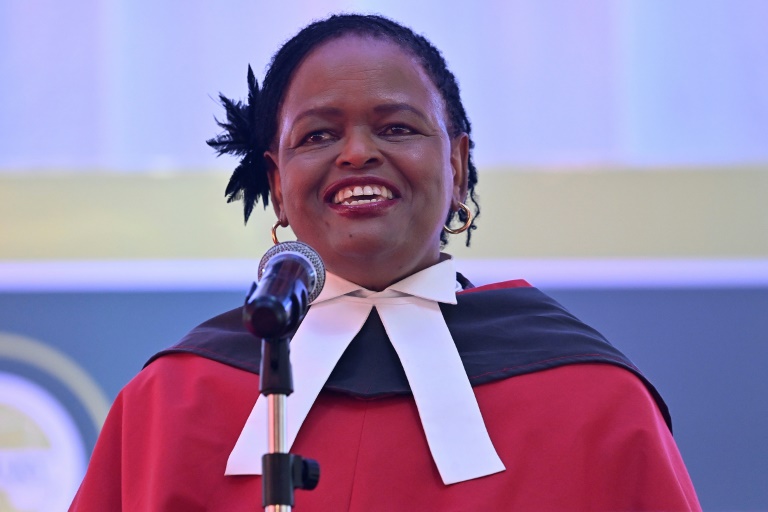
In a major ruling in March 2022, the court — under Chief Justice Martha Koome — determined that a controversial bid to change the constitution was illegal, dealing a blow to Kenyatta who had spearheaded the proposals.

Known as the Building Bridges Initiative (BBI), the changes would have expanded the executive and increased the number of parliamentary seats, in the biggest revision of Kenya’s political system since the adoption of the constitution in 2010.

After a near two-year legal wrangle, the judges deemed the BBI “unconstitutional”, saying the president could not initiate such amendments, but left open the possibility for them to be submitted again by parliament or other means.

– First female chief justice –

Koome, 62, was appointed chief justice in May 2021, the first woman to occupy the post.

The staunch women’s rights campaigner had been seen as an unlikely candidate in a list of 10, including the lawyer who represented Kenyatta in the 2017 election case. 

Koome made a name for herself during the autocratic regime of late president Daniel arap Moi when she represented political prisoners, including Odinga. 

The University of London-trained Koome joined the judiciary in 2003 after practising as a lawyer for over a decade. In eight years, she rose to the Court of Appeal following stints at the environmental and family division courts. 

During her vetting, Koome promised to rid the judiciary of corruption and safeguard its independence.

“I am a judge who looks at society and Kenyans will feel safe with me,” she said. 

Angola's ruling party faces tight poll test

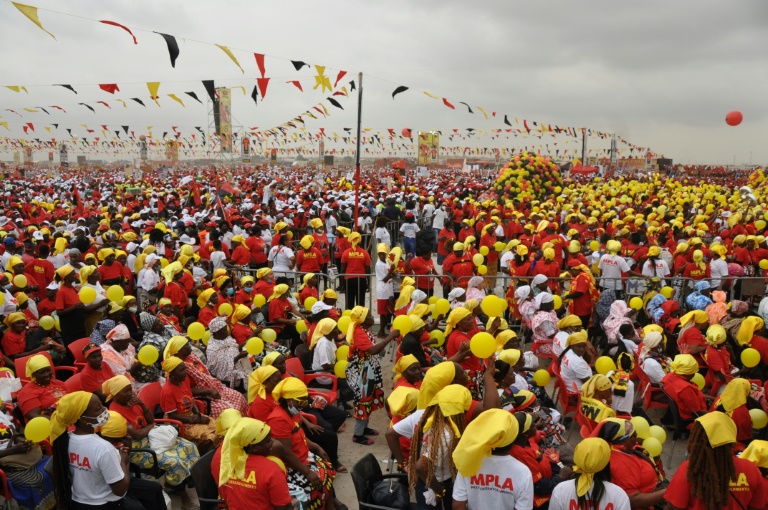
Millions of Angolans will vote on Wednesday in polls expected to be the most competitive since the country’s first multiparty vote in 1992 but with electoral fraud a concern among voters.

A youthful and largely poor electorate will decide whether to continue with the liberation movement that has ruled since independence or embrace change with the opposition led by a charismatic coalition-builder.

Eight political parties are standing, but the real contest is between the ruling People’s Movement for the Liberation of Angola (MPLA) and its long-standing rival and former rebel movement the National Union for the Total Independence of Angola (UNITA).

Stakes are high for MPLA now led by incumbent President Joao Lourenco, who was first elected in 2017 and is seeking a second term. 

Many Angolans are weary of the party that has held power since the country won independence from colonial power Portugal in 1975. 

Despite the oil wealth that benefited the former president, late Jose Eduardo dos Santos and his family, many of Angola’s 33 million people live in poverty and seek change.

“There is a lot of expectation within society,” said Claudio Silva, a political commentator in the capital Luanda. “People are very excited because there is a prospect for actual change.” 

For many, the face of change is UNITA leader Adalberto Costa Junior, nicknamed “ACJ”, who has reinvigorated the opposition since taking the helm in 2019 promising a better future. 

A talented orator, Costa Junior has captivated young urban voters with pledges to reform government and tackle poverty and corruption.

He broadened the party’s base with an untraditional, collaborative approach, building a coalition with other opposition groups.

– Young voters –

Young people aged 10-24 make up 33 percent of population, according to UN data. 

Their concerns differ from older voters, while voters born after Angola’s civil war ended in 2002 do not feel an allegiance to the MPLA, said Augusto Santana, an electoral observation specialist. 

“They are looking for better education, jobs and living conditions,” Santana said. “They want to experience something different.”

The MPLA will likely capitalise on Sunday’s repatriation of the body of dos Santos, the late longtime president who died in Spain last month, to trumpet its liberation credentials, said Marisa Lourenco, an independent political analyst.

Dos Santos, whose family have faced corruption allegations following his death, has a mixed legacy meaning his repatriation is unlikely to have a “major impact” on the outcome, Lourenco said.

“Many Angolans loved President dos Santos…. He made mistakes, yes, but what person doesn’t?” MPLA activist Simao Hemenegildo dos Santos, not a relation, said as he attended a small campaign party with barbecue and beers near Luanda’s waterfront.

– Tight, but fair? –

While the MPLA remains the favourite, analysts and opinion polls predict a tight race.

Yet the opposition and parts of the public are already questioning whether it will be fair. 

Social media has been rife with claims of dead people registered to vote, Silva said.  

On Thursday, Lourenco rebuffed opposition criticism of the electoral commission, which is mostly led by MPLA appointees.

“If they are saying that the electoral process and the National Electoral Commission are discredited, why do they want to participate?” Lourenco told supporters at a rally.  

Foreign election observers have arrived in recent weeks.

– ‘Revolution on their hands’ –

For many Angolans struggling to survive, the stakes are high. 

In Viana a poor suburb southeast of Luanda, MPLA and UNITA flags vie for space on street lamp posts. 

Activists in pickups adorned with campaign banners make a last dash to rally support through the dusty alleys lined with small cinderblock houses.

Most of those AFP spoke to here support the opposition. 

“The MPLA has been in power for 40 years, the population sees nothing, yet our country is rich. It’s a shame, we’re abandoned,” said Mateos Lima, a 51-year-old civil engineering technician. 

On taking power Lourenco, inheriting an oil-dependent economy in recession, launched ambitious reforms to diversify revenue and privatise state-owned firms. 

But many are yet to see the benefits, with almost half the population living on less than $2 a day. 

“The MPLA have to do a lot better, they have to tackle poverty… create jobs… deliver better services — if they don’t they’ll have a revolution on their hands,” said Cristina Roque, an independent political analyst specialising in Angola.

Whoever wins, fixing social and economic woes will be a battle without quick fixes, analysts say.

“The next five years are going to be painful, regardless of who takes power,” said Roque.

giv-str/sn/ub/gw/har

'We are divided': lake upends life for tiny Kenyan tribe

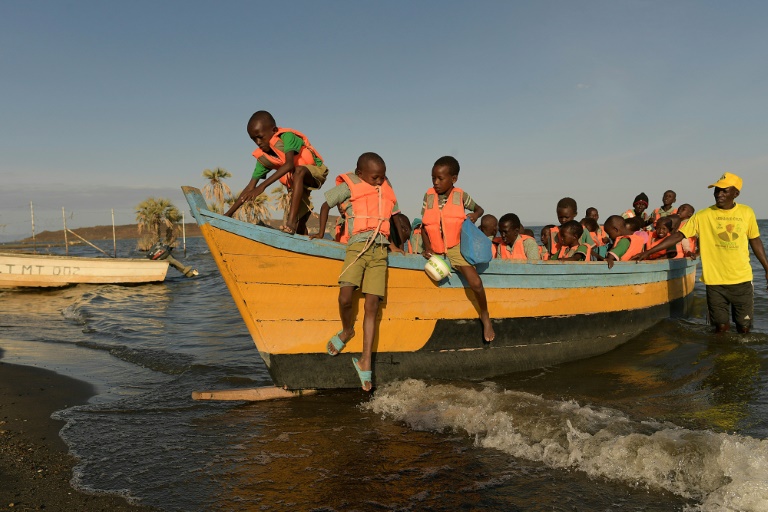
At first light, children from one of Kenya’s smallest and most isolated tribes put on life jackets and board a fishing boat for the journey across the lake to school.

Until recently, they could walk the distance. A road connected the El Molo with the world beyond their tiny village, a lifeline for a secluded community of fishers and craftspeople subsisting on the shores of Lake Turkana.

But three years ago the lake started rising dramatically, lapping at the El Molo’s dome-shaped huts draped in dry fish, then pushing inland, forcing villagers to higher ground.

As the tide reached levels not seen in living memory, the El Molo watched their only freshwater pipeline slip beneath the surface, as well as the burial mounds of their ancestors.

Eventually, the road to the mainland disappeared completely, marooning the El Molo on an island in a lake so large and imposing it is sometimes called the “Jade Sea”.

“There never used to be water here,” said El Molo fisherman Julius Akolong as he crossed the wide channel that today separates his community from the rest of far northern Kenya.

“You could drive a jeep across.”

Turkana, already the world’s largest desert lake, stretching 250 kilometres (155 miles) tip to tip, grew 10 percent in the decade to 2020, according to a government study published last year.

That expansion submerged nearly 800 additional square kilometres (about 300 square miles) of land including around El Molo Bay, where the tribespeople live on Turkana’s eastern shores.

Extreme rainfall over catchment areas -– a climatic event linked to global warming — greater soil runoff from deforestation and farming, and tectonic activity were all cited as contributing causes.

– Blessings and curses –

The phenomenon has profoundly impacted the El Molo, whose distinct Cushitic culture was already under serious threat.

Barely numbering 1,100 in the last census, the El Molo are dwarfed by Kenya’s larger and more prosperous ethnic groups that dominate a country of around 50 million people.

Known as “the people who eat fish” by the livestock-rearing tribes of northern Kenya, the El Molo are believed to have migrated from Ethiopia to Turkana around 1,000 BC.

But few today speak a word of their mother tongue, and ancient customs have evolved or vanished entirely through generations of intermarriage with neighbouring ethnic groups.

The lake’s unexpected rise fragmented the remaining El Molo still following the old ways of life.

Some displaced in the disaster made the wrenching decision to relocate to the mainland, erecting a squatter camp on the opposite shore.

The cluster of shanties on a barren and wind-swept clearing is nearer to the school and other facilities, but a world away from their tight-knit community and its traditions.

“It was very difficult… We had to go and discuss this with the elders so they could permit or bless us to go with no curses,” said Akolong, a 39-year-old father of two.

For those who stayed, life on the island has become a struggle.

The El Molo are skilled fishers, but as Turkana rose higher their people went hungry.

The fishing nets and baskets used for millennia, hand-woven with reeds and doum palm fibre, proved less effective in the deeper water, reducing catch. 

No longer able to access freshwater, the El Molo were forced to drink from Turkana, the most saline lake in Africa.

Children in the village suffer chalky teeth and bleached hair, a side effect of the lake’s high fluoride content.

“We often get diarrhoea… we have no other clean water. This is all we have. It is salty, and corrodes our teeth and hair,” said Anjela Lenapir, a 31-year-old mother of three who decided to stay.

– Disappearing culture – 

School attendance has fallen sharply because parents cannot afford the boat fare, said David Lesas, deputy head teacher at El Molo Bay Primary School.

“Most of them remain at home,” he lamented.

The local government and World Vision, an aid group, are assisting but resources are scarce and needs many in the region, which is experiencing a once-in-a-generation drought.

The school has suffered too: the perimeter fence and toilet block are underwater, and crocodiles have taken over part of the playground.

But the real damage to the El Molo is indelible.

Separated from his people, Akolong has missed initiation rites, naming ceremonies, and funerals — rituals that strengthen tribal identity and community.

“We are now divided,” he said bitterly.

Stone cairns marking the resting place of El Molo’s dead have been swept away, erasing memories of the past, while the lake threatens venerated shrines to tribal deities.

“It is a place that is deeply respected in our culture. With the water rising, we will lose that tradition too,” said Lenapir.

Death toll in Somalia hotel siege climbs to 21

The death toll from a devastating 30-hour siege by Al-Shabaab jihadists at a hotel in Somalia’s capital Mogadishu has climbed to 21, Health Minister Ali Haji Adan said Sunday, as anxious citizens awaited news of missing relatives.

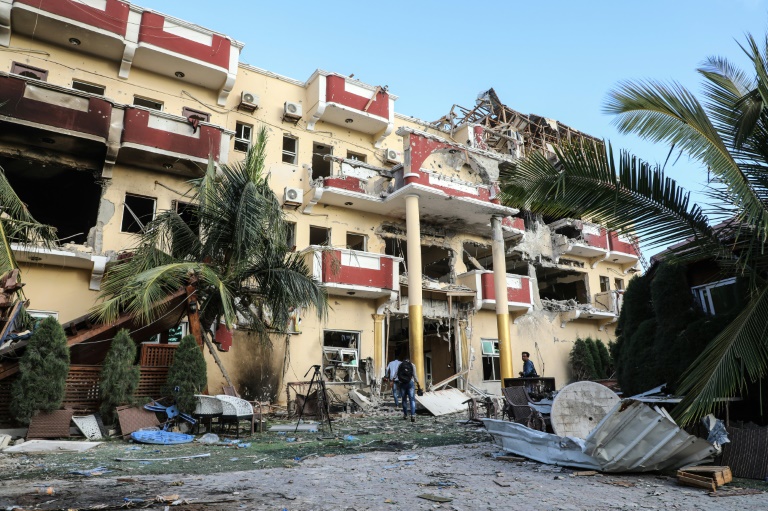
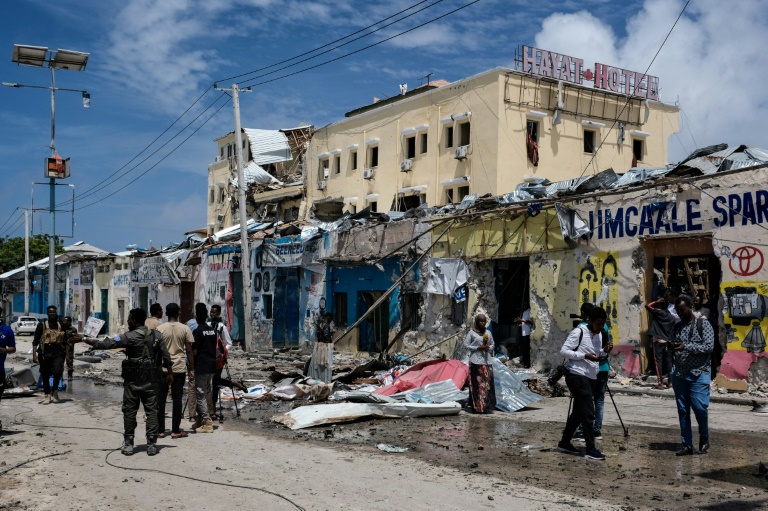
The gun and bomb attack by the Al-Qaeda-linked group on the popular Hayat hotel caused parts of the building to collapse, with many people feared trapped inside since the assault began on Friday evening.

“The ministry of health has so far confirmed the deaths of 21 people and 117 people wounded,” 15 of them seriously, Adan said.

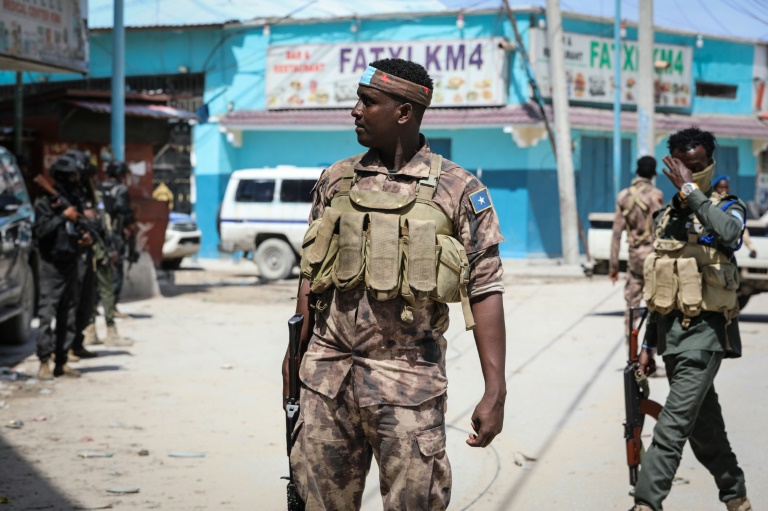
Emergency workers and bomb disposal experts made their way through the heavily damaged hotel on Sunday, looking for any explosives and removing rubble as security forces patrolled the area.

Police commissioner Abdi Hassan Mohamed Hijar told reporters on Sunday that “106 people including children and women” had been rescued during the siege, which ended around midnight.

As bullets and flames ripped through the hotel, security forces searched the property to bring civilians to safety, including three young children who hid inside a toilet.

“The casualties mostly happened in the early hours of the attack, after that security forces spent time rescuing people individually and room by room,” Hijar said.

The attack was the biggest in Mogadishu since Somalia’s new President Hassan Sheikh Mohamud took office in June, and underscored the challenge of trying to crush the 15-year insurrection by the Islamist group.

– ‘Like an earthquake’ –

Dozens of people arrived at the hotel premises on Sunday morning, desperate for news of their family members.

“It is like the devastation after a high-magnitude earthquake… You can only see damaged columns standing in most parts,” said nurse Sadik Ahmed, who lost his uncle in the attack.

“My uncle was killed in the reception area; he had gunshot wounds.” 

The hotel was a favoured meeting spot for government officials and scores of people were inside when a suicide bomber triggered a massive blast, forcing his way onto the premises along with heavily-armed gunmen.

Minutes later, a second explosion struck as rescuers, security forces and civilians rushed to help the injured, witnesses said.

Civil servant Abdifatah Mohamed told AFP he had just sat down with a friend and ordered a cappuccino when he heard a deafening explosion, followed by gunfire. 

“The gunmen directly went towards the lobby area in the main building where they were randomly shooting people,” he said, narrating the harrowing ordeal.

He managed to find shelter near the toilets along with a dozen other people before being rescued 40 minutes later. 

Somalia’s allies, including the United States, Britain, the European Union and Turkey, as well as the UN, strongly condemned the attack, as did ATMIS, the African Union force tasked with helping Somali forces take over primary responsibility for security by the end of 2024.

Earlier this month, Washington announced its forces had killed 13 Al-Shabaab operatives in an air strike, the latest since President Joe Biden ordered the re-establishment of a US troop presence in Somalia, reversing a decision by his predecessor Donald Trump.

– ‘Audacious attack’ –

Samira Gaid, executive director of the Hiraal Institute, a Mogadishu-based security think tank, told AFP that the “audacious attack” was a message to the new government and its foreign allies.

“The complex attack is to show that they are still very much present, very relevant and that they can penetrate government security and conduct such attacks.”

The key “difference between this attack and previous ones is the length of the siege and how long it took for security forces to contain the situation,” she said.

“The length of the siege has been very traumatising,” even for a city that is regularly targeted by Al-Shabaab.

Mohamud said last month that ending the insurgency required more than a military approach, but that his government would negotiate with the group only when the time was right.

Somalia is also battling a looming famine, with the region’s worst drought in 40 years leaving nearly half the country’s population of 15 million at risk of starvation.

Al-Shabaab spokesman Abdiaziz Abu-Musab said Sunday that the group had killed more than 40 people during the hotel siege.

The jihadists have carried out several attacks in Somalia since Mohamud took office, and last month launched strikes on the Ethiopian border.

The militants were driven out of Mogadishu in 2011, but still control swathes of countryside and retain the ability to launch deadly strikes, often targeting hotels and restaurants.

The deadliest attack occurred in October 2017 when a truck packed with explosives blew up in Mogadishu, killing 512 people.

Somalis anxiously await news of loved ones as hotel siege ends

Somalis anxiously waited to know the fate of their missing relatives on Sunday as emergency workers attempted to clear the debris of a deadly 30-hour siege by Al-Shabaab jihadists at a hotel in the capital Mogadishu.

At least 13 civilians lost their lives and dozens were wounded in the gun and bomb attack by the Al-Qaeda-linked group that began on Friday evening and lasted over a day, leaving many feared trapped inside the popular Hayat Hotel.

On Sunday morning, the area surrounding the hotel was quiet and the roads blocked by a heavy security presence as emergency workers and bomb disposal experts sought to clear the premises of any explosives and remove rubble.

The hotel building sustained heavy damage during the gunfight between Somali forces and the militants, causing some parts of it to collapse and leaving many people frantic for their loved ones who were inside when the attack began.

Police commissioner Abdi Hassan Mohamed Hijar told reporters on Sunday that “106 people including children and women” were rescued by security forces during the siege which ended around midnight.

As bullets and flames ripped through the hotel, security forces searched the property to bring civilians to safety, including three young children who hid inside a toilet.

“The casualties mostly happened in the early hours of the attack, after that security forces spent time rescuing people individually and room by room,” Hijar said.

He did not however provide an update on the number of casualties, saying only that the ministry of health would brief journalists later in the day.

The attack was the biggest in Mogadishu since Somalia’s new President Hassan Sheikh Mohamud took office in June, and underscored the challenge of trying to crush the 15-year insurrection by the Islamist militant group.

– ‘Tense’ –

Dozens of people gathered near the road leading up to the hotel on Sunday morning, desperate for news of their family members as security forces guarded the area, not letting anyone through.

Businessman Muktar Adan, whose brother was inside the hotel when the attack started, told AFP he was waiting for permission to enter the premises and look for his sibling.

“My brother was inside the hotel the last time we heard from him, but his phone is switched off now and we don’t know what to expect,” he said.

Said Nurow, who heard the attack unfold, said he was very worried about his friend who was a guest at the property.

“I hope… (he) is alive, he stayed in the hotel according to the last information we got from his sister,” he told AFP, describing the mood as “tense”.

The hotel was a favoured meeting spot for government officials and scores of people were inside when gunmen stormed the property. 

Somalia’s allies, including the United States, Britain and Turkey, as well as the UN, have strongly condemned the attack. So did ATMIS, the African Union force tasked with helping Somali forces take over primary responsibility for security by the end of 2024.

Earlier this month, Washington announced its forces had killed 13 Al-Shabaab operatives in an air strike, the latest since President Joe Biden ordered the re-establishment of a US troop presence in Somalia, reversing a decision by his predecessor Donald Trump.

– Twin explosions –

Mohamud said last month that ending the jihadist insurrection required more than a military approach, but that his government would negotiate with the group only when the time was right.

According to police, the attack began with a blast caused by a suicide bomber who forced his way into the hotel along with gunmen.

Minutes later, a second explosion struck as rescuers, security forces and civilians rushed to help the injured, witnesses said.

Al-Shabaab spokesman Abdiaziz Abu-Musab told the group’s Andalus radio earlier Saturday that its forces had “inflicted heavy casualties”.

Al-Shabaab has carried out several attacks in Somalia since Mohamud took office, and last month launched strikes on the Ethiopian border.

The militants were driven out of Mogadishu in 2011, but still control swathes of countryside and retain the ability to launch deadly strikes, often targeting hotels and restaurants.

The deadliest attack occurred in October 2017 when a truck packed with explosives blew up in Mogadishu, killing 512 people.

Morocco king calls for 'unequivocal' support over W. Sahara

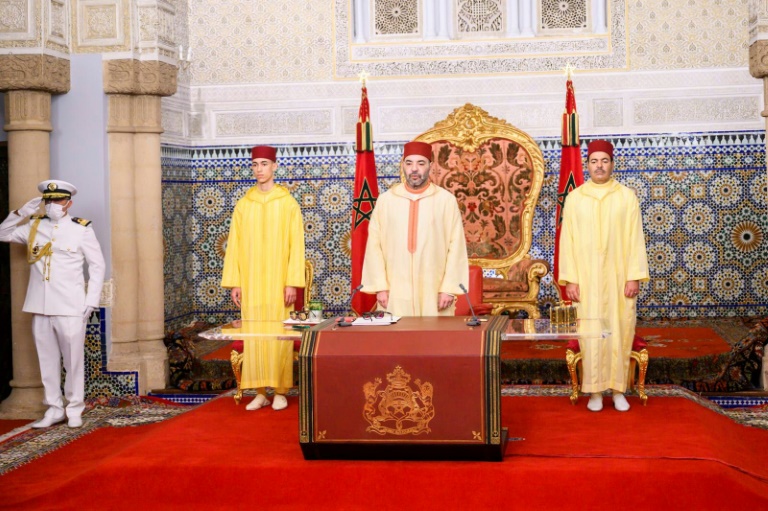
Morocco’s King Mohammed VI has called on his country’s partners to “clarify” their position over the disputed Western Sahara territory and offer “unequivocal” support.

“I would like to send a clear message to the world: the Sahara issue is the prism through which Morocco views its international environment,” he said in a televised speech Saturday evening.

He also described the issue as the “clear and simple measure for the sincerity of friendships” between Morocco and its partners, in remarks marking the Revolution of the King and the People, a national holiday that celebrates the kingdom’s anti-colonial struggle.

Rabat controls most of Western Sahara, which it views as its own territory.

Morocco fought a 15-year war with the Polisario Front independence movement after Spain withdrew from its former colony in 1975.

A United Nations-monitored ceasefire deal provided for a referendum, but Morocco has since rejected any vote that includes independence as an option, offering only limited autonomy.

King Mohammed VI called on allies to “clarify their stance… in an unequivocal manner” on the matter. He did not specify which countries he was addressing, but saluted the United States’ “incontrovertible” position.

The US under former president Donald Trump recognised Morocco’s sovereignty over the disputed former Spanish colony, a policy that has continued under his successor Joe Biden.

The king also lauded recent moves by Spain and Germany to reverse previous policies and recognise Rabat’s autonomy initiative for the territory.

In a U-turn, Spain in March publicly backed Morocco’s autonomy plan for the disputed region after a months-long diplomatic spat.

Rabat and Berlin had in February agreed to renew ties after a year-long diplomatic freeze over disagreements including on Trump’s recognition of Moroccan sovereignty over the Western Sahara.

Zimbabwean MP pays the price of opposition in solitary cell

When Zimbabwean lawmaker Job Sikhala settles down to sleep at night, he does so on the floor of an ageing maximum-security prison in Harare.

The 50-year-old opposition MP has been held in solitary for almost two months.

Jail is hardly a novel experience for the 50-year-old firebrand, who in a political career spanning more than two decades has been arrested 67 times but never been convicted, his lawyer says. 

Under Robert Mugabe — a liberation hero who ruled with an iron fist for 37 years — the southern African country gained a long experience with arrests of dissenters and abuse.

But rights groups say the clampdown has stepped into new territory, often featuring repeated detentions and exceptionally harsh custody, as elections loom. 

“It’s worse than under Mugabe right now,” Sikhala’s lawyer, Beatrice Mtetwa, told AFP.

The justice and information ministries as well as the national prosecuting authority did not respond to an AFP request for comment. 

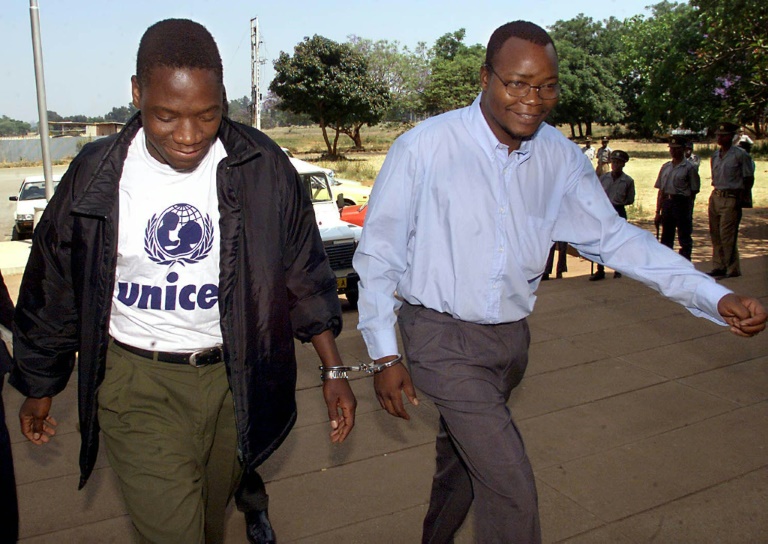
Sikhala was arrested in June along with fellow opposition politician and lawmaker Godfrey Sithole over a speech he gave at the memorial service for another opposition activist whose mutilated body was found in a well days earlier. 

A practising lawyer, Sikhala told mourners that the woman’s spirit would come back to avenge her death, his lawyer said. 

The day was marked by what police has described as an “orgy of public violence.” 

– ‘Travesty’ –

Supporters of the ruling ZANU-PF party reportedly harassed funeral-goers. In turn, opponents torched the house of a ruling party official. 

Sikhala was charged with inciting violence and obstructing the course of justice over his speech and for having allegedly suggested that ZANU-PF members were behind the murder. 

Police have arrested a man they say was the victim’s ex-lover over the killing. 

Sikhala’s lawyers have denied any link between their client and the violence. 

Amnesty International has described the case as “political” and a “travesty of justice”. 

The rights group’s director for Zimbabwe, Lucia Masuka, told AFP the case is part of a pattern that has seen a string of opposition figures arrested in recent years, often on charges of inciting violence.

The Zimbabwe Human Rights NGO Forum, a coalition of rights groups, logged 114 cases of arbitrary arrest across the country in the first six months of this year alone.

High-profile cases include award-winning novelist Tsitsi Dangarembga who was arrested in 2020 over a protest and three young female activists held the same year on accusations of having faked their own abduction.

– Anger over economy –

The crackdown comes as the government of President Emmerson Mnangagwa, who replaced Mugabe in 2017, is struggling to rein in inflation which reached more than 250 percent in July, end Zimbabwe’s chronic power cuts and ease entrenched poverty. 

General elections are due to be held in 2023, at a date that is likely to be in the first half of the year.

Mtetwa, a veteran defender of dissenters in Zimbabwe, said she expected the situation to worsen as the vote neared. “There is no question about it,” she said.

“There’s an economic meltdown, things are not working at all,” said Masuka. “People are disgruntled”.

By going after the likes of Sikhala, the government was sending a message to discourage others who might want to engage in activism and speak out, Masuka said. 

“He has to sleep on the floor and we have had a very cold winter,” said Mtetwa.

Sikhala is being held in a single cell typically used for prisoners considered dangerous, she said, and was shackled every time he changed location.

An activist in the Movement for Democratic Change and now a senior official in the Citizens Coalition for Change, Sikhala faces up to 10 years behind bars if convicted. 

He is due in court for a bail hearing on Monday, after several previous failed bids to secure his release.   

But Mtetwa was sceptical of his chances, saying that independent judges had been sidelined, disciplined or dismissed under Mnangagwa. 

“The point is not so much to have him prosecuted, but to harass him and to keep him in custody for as long as possible,” she said. 

Close Bitnami banner
Bitnami