Africa Business

On track: Cairo metro employs Egypt's first women train drivers

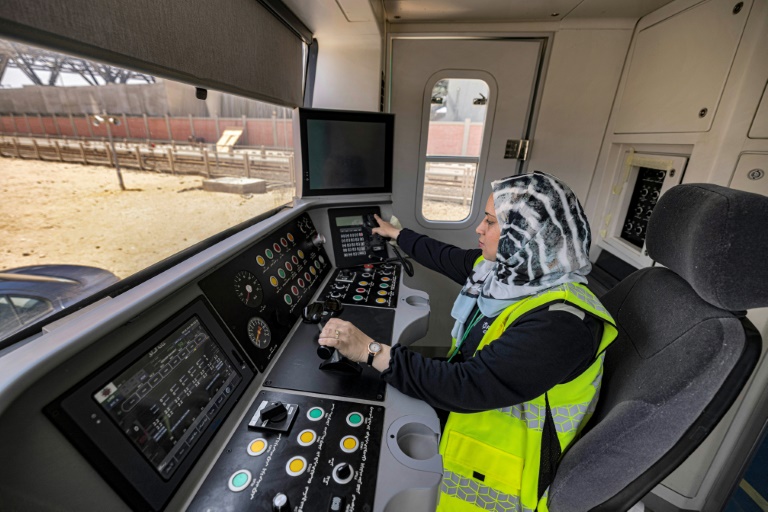
As it prepares to expand to serve a population now exceeding 20 million, the Cairo metro has recruited Egypt’s first female train drivers, a novelty in a country where few women have formal jobs.

Since April, commuters on the network’s newest line have seen women take the controls in the driver’s cab, with reactions ranging from raised eyebrows to outright disapproval, according to the two pioneers.

Egyptian women have had the right to vote and stand for office since 1956, but patriarchal legislation and a male-dominated culture have severely limited personal rights.

The Cairo metro itself provides reserved carriages for women who do not wish to ride with men in an attempt to provide protection against sexual harassment.

Business graduate and mother of two Hind Omar said she had rushed to apply to be a train driver, eager to be a pioneer in a country where only 14.3 percent of women are in formal employment, according to 2020 figures.

“I have several thousand lives in my hands every day,” the 30-year-old told AFP, proudly wearing a fluorescent jacket emblazoned with the RATP-Dev logo of the foreign operations arm of the Paris metro beneath her black and white headscarf.

Omar acknowledged that she had been lucky to have the support of her family.

“My parents found it strange at first but they ended up supporting me,” she said.

“My husband was enthusiastic from the start and always encouraged me.”

A key factor had been the exemption from night shifts offered to women drivers, she said.

Omar said the tests for would-be drivers had been gruelling, requiring candidates to demonstrate their “attention span” and “endurance”.

She said drivers had to remain “extremely vigilant for long hours” during a six-day working week.

– ‘Some passengers were afraid’ –

Omar was one of two women accepted for the training programme run by Egypt’s National Authority for Tunnels in cooperation with RATP-Dev.

The other, Suzanne Mohamed, 32, recalled the first time commuters on the platform saw her in the driver’s cab.

She said she could understand “they were surprised” in a country where women have limited access to many careers.

“Some passengers were afraid,” she told AFP. “They doubted my skills and said they didn’t feel safe with a woman at the controls.”

Launched in 1987, the Cairo metro is the oldest in the Arab world but it has fallen behind other Arab countries in providing employment opportunities for women.

Moroccan Saida Abad became the first female train driver in Africa and the Arab world in 1999.

Even in Saudi Arabia, where until recently women were banned from driving cars, a first group of women is currently in training to be drivers on the railways.

With the Cairo metro planning to add three new lines as well as Egypt’s first monorail system, Omar said she hoped her example would help “pave the way for other women” to become train drivers and ensure “that there’s a lot of us”.
Ex-president dos Santos' body lands in Angola

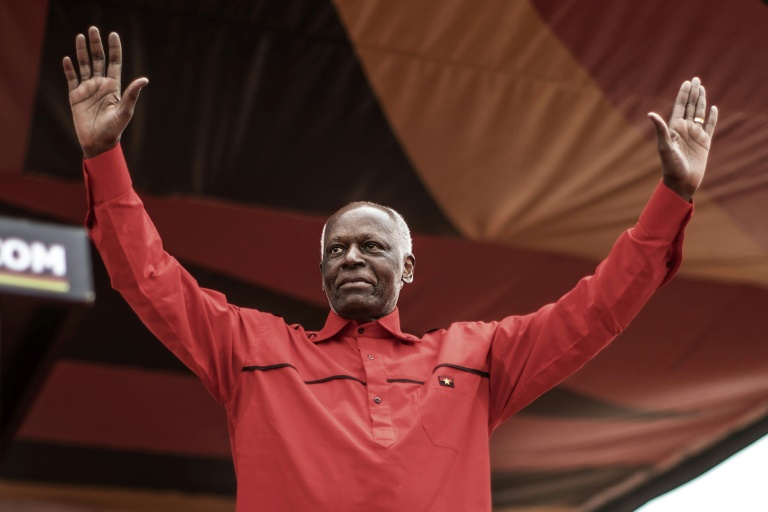
The body of Angola’s Jose Eduardo dos Santos, who died in Spain last month, arrived in Luanda on Saturday, ending a weeks-long feud over the repatriation of the ex-president’s corpse.

A plane carrying the remains landed in the Angolan capital from Barcelona in the evening, AFP reporters at the scene said. 

Only a few dozen people had gathered at Luanda’s airport to welcome the former president’s casket. 

“I was told he was going to arrive, so I came to greet him. It was a nice welcome,” said Wilson Miguel, one of those in attendance.

Several of dos Santos’ children and his widow, Ana Paula, were also present. Ana Paula appeared teary as she got into a vehicle outside the airport. 

Some people clapped as the coffin wrapped in an Angolan flag was taken away followed by a convoy of black cars.

More came out on the streets to watch the convoy pass by. Some cheered, others chanted “Ze Du!”, dos Santos’s nickname, footage posted on social media showed. 

“We Angolans are proud to welcome the remains of president dos Santos, and that he can have a dignified funeral,” said another attendee, Telma Pilartes. 

Dos Santos, who ruled the oil-rich African nation with an iron first from 1979 to 2017, died in Barcelona on July 8 at the age of 79 after suffering a cardiac arrest. 

Since then, the question of when and where he will be buried has pitted the Angolan government and his widow against some of his adult children.

A Barcelona court this week ordered his remains be delivered to Ana Paula and granted authorisation for “the repatriation and international transfer of (his) remains to Angola”. 

Dos Santos’ 44-year-old daughter Tchize dos Santos filed an appeal to challenge the decision.

But Josep Riba Ciurana, a lawyer for the widow told AFP a judge had granted immediate execution of the ruling, allowing the body to leave Spain.

– ‘Ripped out of my arms’ –

“We are the first to be surprised,” said Tchize’s lawyer, Carmen Varela, adding they learnt about the repatriation from television and had not been “notified of anything”.  

Varela explained they wanted to hold the funeral in Barcelona because returning to Angola is not an option for some members of the family. 

Several of dos Santos’ children have faced an array of corruption investigations in recent years.  

The repatriation came just a few days before Angolans are due to head to the polls in a national vote, and marks a small victory for President Joao Lourenco. 

Lourenco was addressing a large crowd of supporters at a campaign rally in Luanda as the body’s imminent return was announced. 

In an Instagram post, Tchize accused the president of using her father’s corpse as a campaigning tool, describing this as a “world shame”. 

The nearly four-decade tenure of dos Santos saw members of his family capitalise on the nation’s oil riches while most Angolans remained mired in poverty.

When he stepped down in 2017, dos Santos handed over power to Lourenco, the former defence minister.

But Lourenco quickly turned on his erstwhile patron, unleashing an anti-corruption drive to recoup billions he suspected had been embezzled under dos Santos, a campaign that has targeted the former president’s family.

“You took me to the altar and… I will not be able to take you to your last (resting) place,” Dos Santos’ eldest daughter Isabel, who has faced a slew of investigations into her multinational business dealings, wrote in an Instagram post.

“They ripped you out of my arms.”

burs-str-ub/ah/har

Thousands fete South Africa's new Zulu king

Thousands of people gathered at the Zulu royal palace in South Africa Saturday to witness the crowning of a new king in the country’s richest and most influential traditional monarchy.

Misuzulu Zulu, 47, ascended to the throne once held by his late father, Goodwill Zwelithini, during traditional ceremonies that were partially overshadowed by a bitter succession dispute. 

“Today the Zulu nation starts a new chapter,” the new sovereign told well-wishers speaking from a podium in a large white marquee, wearing a traditional leopard skin and a necklace of predator claws.

“I promise I will work to unite the Zulu nation.”

Although the title of king does not bestow executive power, the monarchs wield great moral influence over more than 11 million Zulus, who make up nearly a fifth of South Africa’s population.

From early morning, men and women in colourful traditional outfits started to assemble outside the marble palace on the hills of Nongoma — a small town in the southeastern province of KwaZulu-Natal, the Zulu heartland — to honour the new monarch.

“It’s a great day, we are making history,” Bongani Khumalo, 80, who is part of the regiments of warriors in charge of protecting the king, told AFP.

Amid the festivities, however, an acrimonious family dispute over the throne raged.

As celebrations got underway, an eleventh-hour legal appeal from a branch of the royal family to block all ceremonies was struck down by a court, local media reported. 

– Coronation rites –

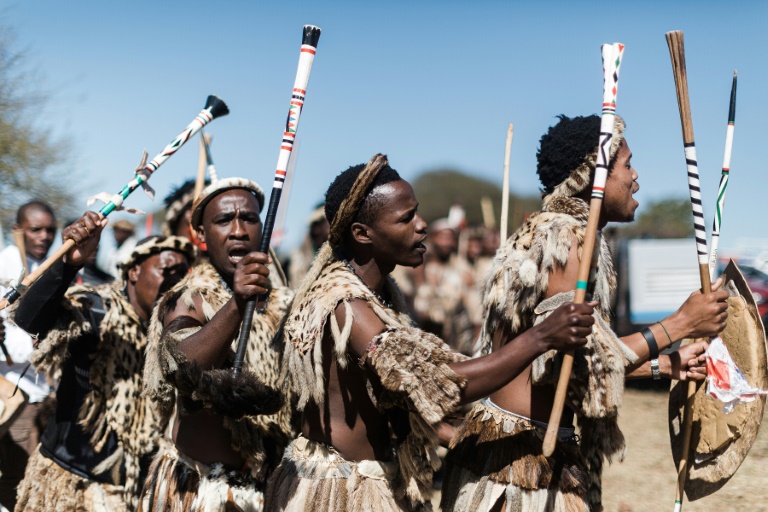
In Nongoma, lines of Zulu warriors, known as amaButhos and holding spears and shields of animal skin, marched into the palace grounds. 

For hours they enacted war dances under the warm winter sun waiting for the king to appear. 

In keeping with tradition, he had killed a lion a few days before the ceremony.

Then on Friday night, Misuzulu had entered the palace’s “cattle kraal” where he took part in a secret rite designed to present the new monarch to his ancestors.

During the day, women — some bare-chested, others in pleated skirts and beaded belts or draped with fabrics bearing the effigy of the sovereign — sang and danced.

Royal minstrels sang the praises of the new king and told the story of his legendary ancestors. 

Suddenly, the king emerged before the crowd wearing a costume of black feathers cinched at the waist by a belt, a spear and holding a shield.

He joined a line of warriors who swore loyalty to their new leader.

“We have our king!” shouted Sinenhlanhla Msweli, a 29-year-old in attendance.

– Family dispute –

Zulu kings are descendants of King Shaka, the 19th-century leader still revered for having united a large swathe of the country as the Zulu nation, which fought bloody battles against the British colonisers.

The new monarch’s first name means “strengthening the Zulus” but his path to the crown has not been smooth.

King Zwelithini who died in March last year after 50 years in charge, left six wives and at least 28 children. 

Misuzulu is the first son of Zwelithini’s third wife, who he designated as regent in his will. 

But the queen died suddenly a month later, leaving a will naming Misuzulu as the next king — a development that did not go down well with other branches of the family. 

Queen Sibongile Dlamini, the late king’s first wife, has backed her son Prince Simakade Zulu as the rightful heir.

Some of the late king’s brothers have put forward a third prince as their candidate for the throne. 

Queen Sibongile’s legal bid to challenge the succession was revived Friday as she was granted the right to appeal a previous unfavourable ruling. 

But on Saturday a Pietermaritzburg court struck down an urgent motion by two of her daughters to stop all rituals.

“Those who are Zulu and know the traditions, know who is the king,” said Themba Fakazi, an adviser to the previous ruler who supports Misuzulu.

The next Zulu monarch will inherit a fortune and tap into a rich seam of income.

Zwelithini received some 71 million rand ($4.2 million) a year from the government and owned several palaces and other properties. 

A royal trust manages almost three million hectares (7.4 million acres) of land — an area about the size of Belgium.

President Cyril Ramaphosa, who in March recognised Misuzulu as the rightful king, is to formally certify the crowning at a ceremony in the coming months.

The new king has two wives and four children.

Guinea opposition calls fresh protests after deaths

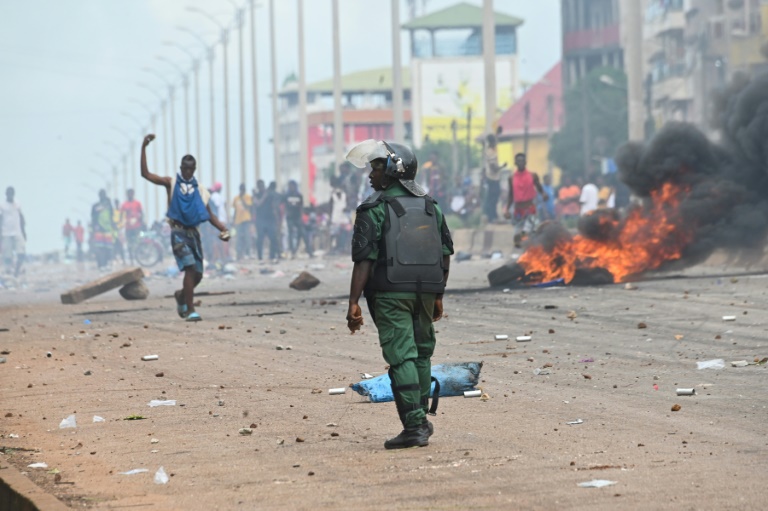
A political coalition on Saturday called for fresh protests a day after Guinea’s junta denied its forces had shot dead two teenagers at opposition demonstrations earlier in the week.

On Wednesday, an opposition alliance, relatives and neighbours said that security forces in Guinea’s capital had shot dead two teens as their convoy drove through the capital Conakry during protests against the junta.

The National Front for the Defence of the Constitution (FNDC) accused junta leader Mamady Doumbouya’s forces of having killed the pair, aged 17 and 19.

Junta spokesman Amara Camara said in a statement released late Friday: “The rumours about shots fired from the presidential motorcade are false and unfounded.”

But the FNDC, a coalition of political parties, trade unions and civil society organisations, called for fresh protests in messages posted on social media Saturday. The junta banned the group earlier this month.

The alliance staged rallies on July 28 and 29 in which five people were killed. It called for the demonstrations last Wednesday — also forbidden by the junta — at which the two teenagers were shot dead.

Ibrahima Balde was killed by a projectile fired by a member of the security forces in Wanidara, a suburb of Conakry that has been the scene of clashes, his father Mohamed Cherif told AFP. 

A relative of the young man, speaking on condition of anonymity, said he was hit by a soldier’s bullet as the junta leader’s motorcade passed through the neighbourhood. 

Oumar Barry, a 17-year-old secondary school student, died later in nearby Koloma district. “They shot him in the stomach in Koloma,” said his neighbour, Pathe Diallo.

– Minister’s warning –

Justice Minister Charles Alphonse Wright, who met with relatives of Barry, said that justice would be done, according to a statement read out by ministry spokesman Yaya Kairaba Kaba Friday.

But the statement also made clear that anyone calling for protests would also have to answer before the courts, denouncing any attempt to exploit the deaths of the teenagers.

During Wednesday’s banned demonstration, police were heavily deployed around the city, and demonstrators in one flashpoint suburb of Conakry hurled stones at the security forces who retaliated with teargas.

The poor but mineral-rich state has been ruled by the military since a coup last September that ousted President Alpha Conde, in power since 2010.

In May, the junta banned all protests and on August 6 decreed the dissolution of the FNDC.

The FNDC spearheaded protests against Conde while he was in power, fiercely opposing his bid for a third term that it said was unconstitutional. The demonstrations were often brutally repressed.

Since the coup, the group has turned its focus on the junta, progressively amplifying its concern over human rights and the pace of return to civilian rule.

Doumbouya has pledged to hand over power to elected civilians within three years — a timeline that fellow West African states want accelerated. 

Kenya's Odinga vows to contest election loss in court

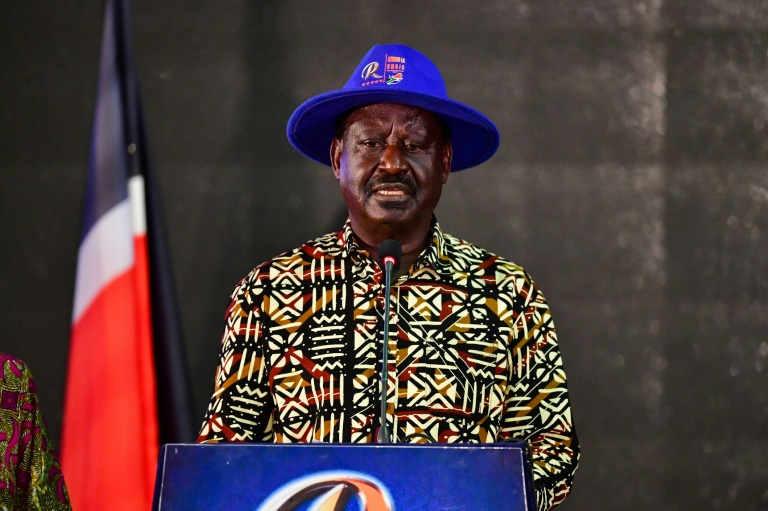
Kenya’s veteran politician Raila Odinga on Saturday defended plans to make a court challenge to the results of last week’s “joke” election that handed victory to Deputy President William Ruto. 

Ruto was declared president-elect on Monday, scraping past Odinga with a margin of less than two percentage points, after an anxious days-long wait for results of the August 9 vote.

The outcome has been challenged not only by Odinga’s camp but also, in a bizarre twist, by four out of seven commissioners at the election body that oversaw the vote.

“We want to see justice done so that peace can be found,” 77-year-old Odinga said at his Nairobi home after a meeting with religious leaders. 

“We have decided to use the law to go before the Supreme Court and table our evidence to show that it was not an election but a joke.”

The veteran opposition leader has now been defeated in all five presidential votes he has contested, even though this year he ran with the backing of outgoing President Uhuru Kenyatta and the weight of the ruling party behind him.

No presidential poll outcome has gone uncontested in Kenya since 2002, and the disputes have led to bloodshed in the past.

In August 2017, the Supreme Court annulled the election after Odinga rejected Kenyatta’s victory. Dozens of people were killed by police in post-poll protests.

The aftermath of this year’s court decision is being keenly watched as a test of democratic maturity in East Africa’s richest economy.

Kenya’s worst electoral violence occurred after the 2007 vote, when more than 1,100 people died in bloodletting between rival tribes.

Odinga — or any other challenger — has until 1100 GMT on Monday to file a petition at the Supreme Court. 

The seven-judge tribunal will then have 14 days to issue a ruling. If it orders an annulment, a new vote must be held within 60 days.

“We are doing this to defend the democracy of our country that many people fought for,” Odinga said. 

Chad at 'decisive moment' as dialogue opens

Delayed talks on Chad’s future that the ruling junta says are a “decisive moment” opened Saturday, even as some opposition groups boycott the gathering.

More than 1,400 delegates from the military government, civil society, opposition parties, trade unions and rebel groups gathered in N’Djamena for the “national dialogue” that is scheduled to last three weeks.

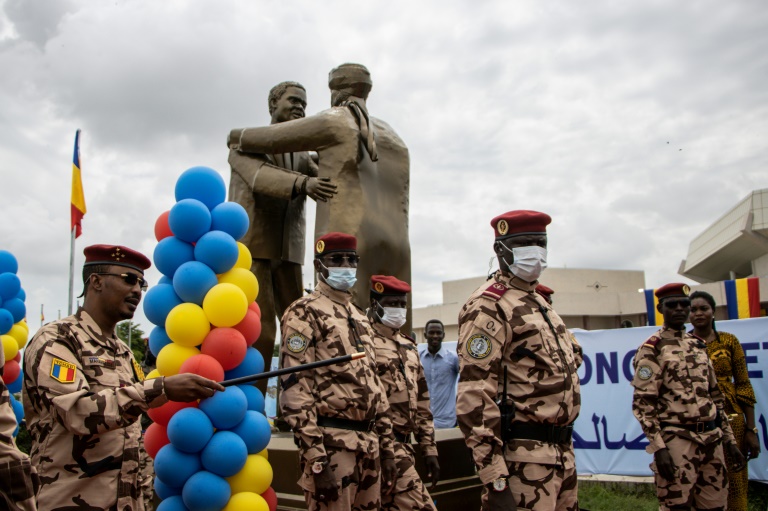
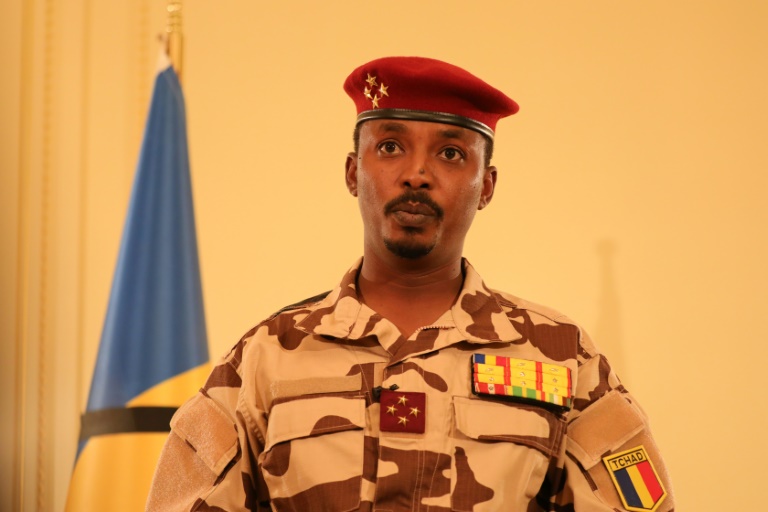
Junta chief General Mahamat Idriss Deby described the forum, his brainchild, as a “decisive moment in history of our country” after arriving in military dress surrounded by tight security to open the forum.

Earlier, he had first inaugurated a statue symbolising national unity at the January 15 palace in the capital N’Djamena before reviewing an honour guard, an AFP journalist at the scene saw.

“This dialogue should allow us definitively to put recourse to arms behind us,” said government spokesman Abderamane Koulamallah.

Deby in midweek signed a decree saying the forum would make “sovereign” decisions which would be legally binding and that he would act as guarantor.

The junta head took power in April 2021 at the age of just 37 after his father, who ruled for 30 years, was killed during a military operation against rebels.

The military leader says the talks should open the way to “free and democratic” elections after an 18-month rule by the junta — a deadline that France, the African Union (AU) and others have urged him to uphold.

The dialogue, which should have begun in February, was hit by repeated delays as Chad’s numerous rebel groups, meeting in Qatar, squabbled over whether to attend.

In the end, around 40 groups on August 8 signed up to a deal that included a ceasefire and guarantee of safe passage.

How to achieve lasting peace, reform state institutions and grant fundamental freedoms to all topped the agenda.

Committees must also draw up a new constitution that will be put to a referendum.

While a number of opposition groups appeared ready to give the forum a chance, some groups did not attend.

– ‘Skewed in advance’ –

The Front for Change and Concord in Chad (FACT) boycotted the event which it considers to be “skewed in advance” towards the military junta.

FACT is a key opposition group which did not sign the peace accord and which triggered the offensive in the northeast last year that ended in the death in combat of Deby’s father Idriss Deby. 

Wakit Tamma, a large coalition of opposition parties and civil society groups, is also refusing to take part, accusing the junta of “human rights violations”.

Forum opponents are also upset at an indication Deby may decide to stand as president having initially pledged not to do so on assuming power as junta chief.

Succes Masra, leader of the Transformers party, which is part of the Wakit Tamma coalition, on Saturday called for civil resistance at a meeting in N’Djamena attended by several hundred supporters which drew a large police presence.

After Saturday’s preliminaries, actual dialogue is set to start on Sunday or Monday.

 – ‘Rebuild Chad’ –

On Thursday, two exiled rebel leaders, Timan Erdimi and Mahamat Nouri of the Union of Forces for Democracy and Development (UFDD), a former defence minister, returned to Chad to participate in the forum.

“We signed this agreement to rebuild Chad,” Erdimi, the head of the Union of Resistance Forces (UFR), told AFP.

Chad, one of the world’s poorest countries, has endured repeated uprisings and unrest since independence from France in 1960.

The talks face major challenges according to observers: time pressure and the absence of two of the biggest rebel groups.

Algeria fires burned UNESCO-listed park: expert

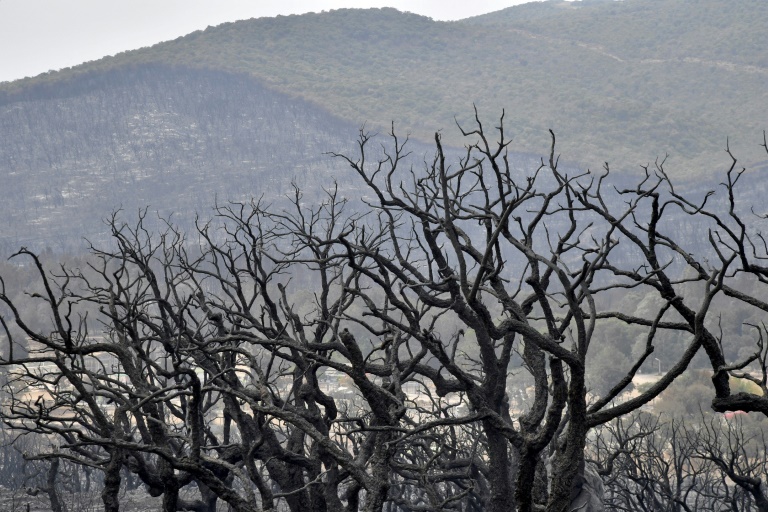
More than 10 percent of a UNESCO-listed biosphere reserve has been destroyed by fires that tore through northeastern Algeria, killing at least 38 people, an expert told AFP on Saturday.

The figure cited by Rafik Baba Ahmed, former director of the El Kala Biosphere Reserve, means that the burned area of the park alone is almost double what the civil defence service said has been destroyed throughout Africa’s largest country since June.

Algeria’s northeast was particularly hard-hit since Wednesday by blazes exacerbated by climate change, but the fire service on Saturday said most of the fires there had been put out.

“The Wednesday fires damaged around 10,000 hectares (24,700 acres)” of the park, Baba Ahmed said.

According to the United Nations cultural agency UNESCO, El Kala Biosphere Reserve covers more than 76,000 hectares.

It is the last refuge of the Barbary Red Deer and “home to a very remarkable bird life, more than 60,000 migratory birds every winter”, UNESCO’s website says.

“It is (a) mosaic of marine, dune, lake and forest ecosystems, with its marine strip rich in corals, Posidonia meadows and fish,” UNESCO says.

According to Baba Ahmed, forest covers 54,000 hectares of the park and most of the trees are cork oak.

“It is considered one of the main biodiversity reserves in the Mediterranean basin,” he said, extolling its “exceptional biological richness”.

But Baba Ahmed said he was “very pessimistic” about the future of the area regularly damaged by forest fires.

“Over time the fires weaken the forest, making it vulnerable to other attacks: harmful insects but especially to human activities.”

As a consequence, the area loses its flora and fauna, the forestry expert added.

Civil Defence Colonel Boualem Boughlef said on television Friday night that since June 1, 1,242 fires had destroyed 5,345 hectares of woodlands in Algeria.

Baba Ahmed said that figure is not realistic.

While Algeria’s northeastern fires have been largely extinguished, firefighters fought two blazes on the other side of the country in Tlemcen, in the far west, the civil defence said Saturday on its Facebook page.

The fires led Algerians both at home and in the diaspora to collect clothing, medicines and food to help those affected. 

European Union foreign policy chief Josep Borrell has also offered support, and French President Emmanuel Macron called his Algerian counterpart Abdelmadjid Tebboune to express his condolences “for the victims of the fires”, state news agency APS reported on Saturday.

Spain and Portugal too fought massive wildfires over the past week, including in another UNESCO-listed park where more than 25,000 hectares were estimated to have been scorched.

Father and son: The Deby regime charts Chad’s future

General Mahamat Idriss Deby Itno, whose plans for shaping the future of Chad enter a key phase on Saturday, has faced a mountainous challenge since he took the country’s helm last year.

On April 20, 2021, the army went on television to announce the death in combat of Idriss Deby Itno, Chad’s iron-fisted president for the past 30 years.

Mahamat, his son and political heir, looked shy and nervous in his military uniform.

The 37-year-old soldier had already been catapulted by his father to the rank of four-star general, but was a political newbie.

Now he had been proclaimed head of a junta that dissolved parliament and suspended the constitution — a move that would last for 18 months until “free and democratic elections” could be held.

Today, the younger Deby smoothly plays the part of self-assured leader, but one who also follows a trail set down by his father.

Like his forebear, he strikes a martial pose in his appearances at home or abroad. Western leaders look to him for assurances that Chad will remain a sturdy ally in the fight against jihadism in the Sahel.

In his early months in power, Deby was rarely seen out of uniform, his head adorned with the red beret of the elite presidential guard that he commanded under his father.

Already a four-star general who had won plaudits for fighting a rebel offensive in the east of the country in 2009, he pinned on a fifth star in December. 

After a while, Deby was increasingly seen in traditional headdress and flowing robes, or a finely-tailored suit with gold-rimmed glasses on his nose — a less aloof civilian image that his father also favoured.

– Paternal template –

Opinions of the younger Deby’s character vary. 

Some observers say he is taciturn and secretive while others say he is striving to establish his authority. 

But there is also broad agreement that his template is his father.

Mahamat Deby “consolidated his power base by surrounding himself with the old guard”, says Thierry Vircoulon at the French Institute of International Relations (IFRI) think-tank.

“There is real continuity between father and son. The Deby system is still in place.”

In 1993, the older Deby launched a national conference to set up state institutions after a period of transition.

Today, his son seeks to do something similar with an “inclusive national dialogue” that will be launched on Saturday among 1,400 delegates, including representatives of many armed groups. Its declared goal is to agree a pathway towards elections.

“Mahamat has the same desire as his father, to show a semblance of dialogue with the opposition,” said Kelma Manatouma, a Chadian analyst who also noted that the tactic did not unlock “the expected results” in the past.

To shore up his power, the elder Deby relied on his ethnic group, the Zaghawa, a small minority in Chad, entrusting them with key positions in the army. 

Mahamat, through his mother, is half Gorane, which is often a rival or even enemy ethnic group, but he too relies on his father’s clan.

“It is always the same group who are in power, the Zaghawa core,” said Roland Marchal, from the Centre for International Research (Ceri) in Paris.

– More tolerant? –

Some observers point to differences between father and son in how they exercise power.

Unlike Idriss Deby, who forbade any demonstrations, Mahamat Deby “leaves a small space for opposition to be expressed”, said Marchal. 

Seeking to push ahead with his national forum, the new strongman arranged a “pre-dialogue” in Qatar with rebel groups that his father had fought for years.

He reached out to rebel leaders — including his own cousin, Timan Erdimi, also an ethnic Zaghawa, who had repeatedly tried to overthrow his late father — inviting them to join the dialogue.

“He is less impulsive than the father, calmer — he listens more than he speaks,” says a close adviser, speaking on condition of anonymity.

Five challenges facing world champion Springboks in Australia

World Cup title-holders South Africa are set to arrive in Australia on Friday for two Rugby Championship matches, seeking consistency after erratic early-season form. 

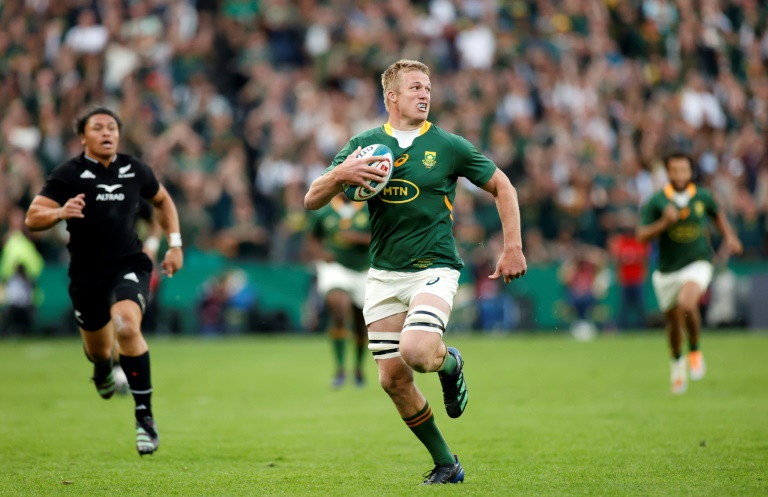
The Springboks have been both brilliant and lacklustre at home against Wales and New Zealand from July, winning three matches and losing two.

Australia has not been a happy hunting ground for South Africa, losing six of the last seven Tests there and drawing the other. 

Here, AFP Sport highlights five challenges facing head coach Jacques Nienaber and his staff ahead of internationals in Adelaide on August 27 and in Sydney on September 3.

Wing

First choice right wing Cheslin Kolbe is ruled out by a broken jaw and understudy Kurt-Lee Arendse is suspended until late September.

That leaves solid Jesse Kriel, creative Warrick Gelant and uncapped 19-year-old Canan Moodie as candidates for the No. 14 green and gold shirt.

Springboks 2007 World Cup-winning coach Jake White says Moodie is “good enough to win 100 caps for the Springboks”.

Hooker

Nienaber will be keeping his fingers tightly crossed that Malcolm Marx is not injured during a tour Bongi Mbonambi was unable to go on due to injury.

South Africa often start with Mbonambi and introduce Marx early in the second half as a highly effective impact player. Both score regularly off driving mauls.

Joseph Dweba, the likely second choice in Australia, had a nightmare Test against New Zealand, conceding several scrum free kicks and penalties and being guilty of crooked lineout throws.

Flanker

Loose forward Pieter-Steph du Toit was a colossus during the triumphant 2019 World Cup campaign in Japan and subsequently won the Rugby Player of the Year award.

But the Japan-based flanker has been hampered by injures since and was not his usual rampant self in the loss to the All Blacks in Johannesburg last weekend.

Apart from injuries, Du Toit did not have much game time before the Springboks season kicked off in July and Nienaber will hope for a big improvement soon. 

No.8

Like Du Toit, the form of veteran Duane Vermeulen has been affected by a lack of game time and injuries, which led to mid-year surgery.

Nienaber gambled by choosing the 36-year-old warrior in his starting line-up last Saturday and it backfired with the No.8 taken off before half-time.

South Africa do have options if they decide to rest the ‘Great Duane’ or put him on the bench, including Jasper Wiese and Kwagga Smith.

‘Bomb squad’

Popularly referred to as the ‘bomb squad’, South Africa chose a bench of six forwards and two backs instead of the usual five-three split at the last World Cup with huge success. 

A key factor in the success was utility back Francois Steyn, who provided cover at full-back, centre and fly-half. The other back was Herschel Jantjies, a specialist scrum-half.

But without injured Steyn this season, South Africa have been hit by injuries in several matches, triggering backline reshuffles. Now fit, Steyn was on flight to Australia.

Algeria fire crews rein in blazes that left 38 dead

Algerian firefighters on Thursday brought under control a string of forest blazes that have killed at least 38 people including 12 who died in a bus trapped by the flames.

Deadly fires have become an annual scourge in Algeria, where climate change has turned large areas of forest into a tinderbox in the blistering summer months.

Authorities have been accused of being ill-prepared, with few firefighting aircraft available despite record casualties in last year’s blazes and a cash windfall from gas exports amid soaring global energy prices.

Fire service spokesman Farouk Achour told AFP late Thursday that 16 fires were still burning across seven districts but that those in the worst-hit eastern areas, El Tarf and Souk Ahras, were under control.

In Souk Ahras, a large crowd gathered to mourn five members of the same family who perished in the flames.

The justice ministry launched an inquiry after Interior Minister Kamel Beldjoud suggested some of the fires were deliberately started, and authorities on Thursday announced four arrests of suspected arsonists.

At least 38 people have been killed including more than 10 children and 10 firefighters, according to multiple sources, including local journalists and the fire service.

Most were in the El Tarf region near Algeria’s eastern border with Tunisia, an area which has been sweltering in 48 degree Celsius (118 Fahrenheit) heat.

At least 200 more people have suffered burns or respiratory problems, according to various Algerian media. 

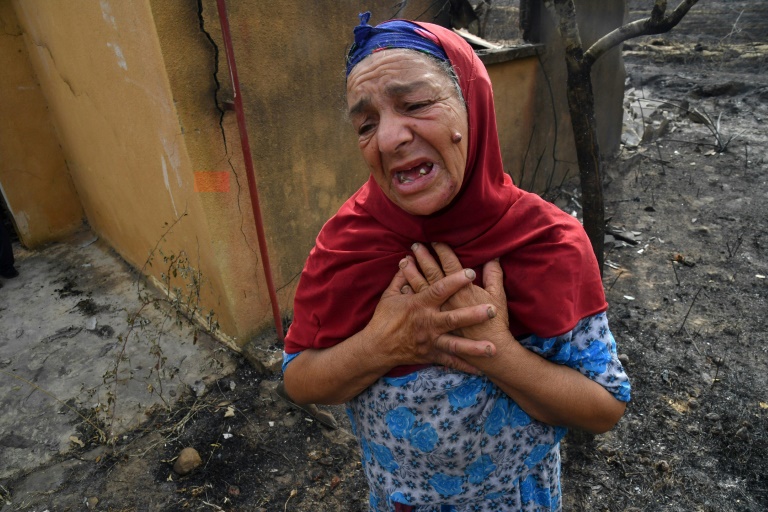
Algerian television showed people fleeing burning homes, women carrying children in their arms. 

A journalist in El Tarf described “scenes of devastation” on the road to El Kala, a northeastern seaport.

“A tornado of fire swept everything away in seconds,” he told AFP by telephone. 

An AFP team in El Kala saw burned-out cars, exhausted people and charred trees amid the strong smell of smoke.

A witness, who asked not to be named, said 12 people had burned to death in their bus as they tried to escape when the fire ripped through an animal park.

Takeddine, a worker at the park who declined to give his full name, said staff had helped families with young children to escape as fire surrounded the park.

“Nobody came to help us, neither the fire service nor anyone else,” he told AFP. 

One of his colleagues died in the process, he added.

– Authorities criticised –

A medic in El Kala said 72 people had been admitted to the city’s hospital, where nine had died and another nine remained in intensive care.

Associations across Algeria called for donations of money and medical supplies to help the victims.

The fire service said Thursday afternoon that 1,700 firefighters had been deployed to battle the fires, of which 24 were still raging.

A journalist in the mountainous area of Souk Ahras told AFP that a huge blaze in a forest nearby had sparked panic in the city of half a million people, where nearly 100 women and 17 newborn babies had to be evacuated from a hospital.

The scenes were reminiscent of fires last year which killed at least 90 people and seared 100,000 hectares (247,000 acres) of forest and farmland in the country’s north.

That disaster provoked criticism of authorities over the lack of firefighting aircraft.

Algeria had agreed to buy seven such aircraft from Spanish firm Plysa, but cancelled the contract following a diplomatic row over the Western Sahara in late June, according to specialist website Mena Defense.

Authorities have rented a Russian water bomber, but it broke down and is not expected to be operational again until Saturday, Interior Minister Kamel Beldjoud said. 

The civil protection service and the army have access to several firefighting helicopters.

– ‘The forest is weakened’ –

Experts have called for a major effort to bolster the firefighting capacity of Africa’s biggest country, which has more than four million hectares of forest.

One specialist, who asked not to be named, told AFP that in the 1980s the country had 22 Grumman aircraft for battling forest fires but that they had been “sold on the cheap, without any alternative solution being proposed”.

Since early August, fires have destroyed more than 800 hectares of forest and 1,800 hectares of woodlands, according to Beldjoud.

On Thursday, Prime Minister Aimene Benabderrahmane defended the government’s response, saying that the country had ordered four new firefighting aircraft — but that they would not be available until December.

He added that strong winds had exacerbated the blazes and said authorities were “deploying all their means” to extinguish them.

Retired academic and forestry expert Rafik Baba-Ahmed said in a video published on social media that “winds of over 90 kilometres (55 miles) per hour make the work of water bombers difficult if not impossible”.

He said bad land management had added to the problem.

“Today, the forest is weakened. It has been chipped away at,” he said.

Close Bitnami banner
Bitnami