Africa Business

Senegal's Sonko says will run in 2024 presidential election

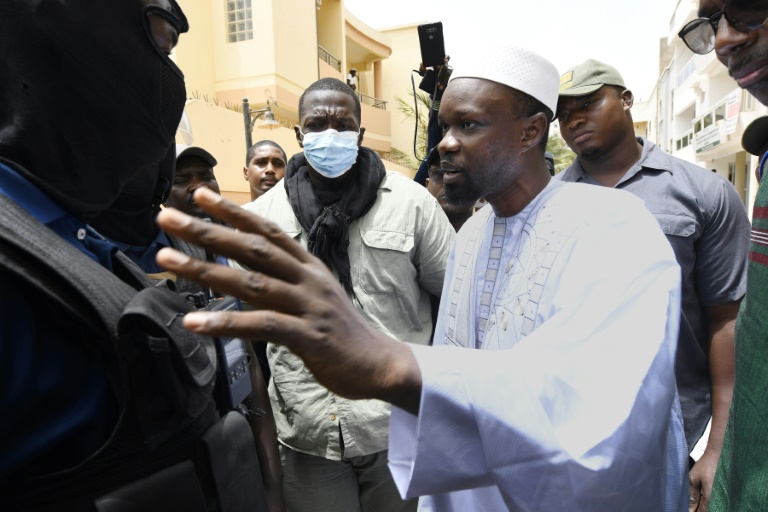
Senegal’s main opposition politician Ousmane Sonko on Thursday officially launched his candidacy for the country’s 2024 presidential election, accusing the incumbent president and France of conspiring to prevent him from running.

Sonko, leader of the PASTEF party, came third in the 2019 presidential election and there was little doubt he would run again.

The 49-year-old former tax inspector was elected mayor of the southern city of Ziguinchor in January. He has enjoyed a rapid political rise in part thanks to his popularity with young people — half of Senegal’s population is under 20 years old. 

But critics characterise Sonko as a populist firebrand. He regularly tears into social elites and corruption, slamming the economic and political grip of multinational firms and former colonial power France.

“I, Ousmane Sonko, if it pleases God and if my party wants it, am a candidate in the 2024 presidential election. No one is better placed than us to win,” he said during a press conference in Dakar.

He said President Macky Sall and France fear his advance and “every day, their teams are running at full speed, concocting conspiracies… to prevent the candidacy of Ousmane Sonko”.

Last year, Sonko was accused of raping an employee at a beauty salon where he was getting a massage.

His arrest led to several days of deadly riots, looting and destruction in March 2021.

Sonko claims he was set up by the government to knock his 2024 presidential bid off course.

In his speech, he accused Sall of fabricating “cases of terrorism, rebellion, imaginary rape, manufactured with the support of France”.

He also attacked French media, which he said acted as an “unofficial megaphone of the Elysee” and presented him as a “dangerous politician”.

S.Leone opposition demands probe over deadly protest

Sierra Leone’s main opposition party is calling for an independent probe into last week’s deadly clashes and ensuing police raids that killed one of its well-known members.

The recent violence “provided a clear indication that there has been an erosion in the gains made in strengthening reconciliation, social cohesion and peacebuilding in post-war Sierra Leone”, said Chernor Maju Bah, the leader of the All People’s Congress (APC) party.

I “call for an independent committee to speedily and conclusively investigate the August 10 demonstrations” and their aftermath, he said in a statement Wednesday.

He also demanded records of all those incarcerated and killed during and after the protests, and urged authorities to release the bodies of the dead for “dignified burial rites”.

On August 10, a protest about the cost of living spiralled into deadly clashes between security forces and young men demanding the president resign.

Violence erupted in several parts of the West African country, with the authorities imposing an internet blackout in response.

The police described the incident, which left at least four officers and several protesters dead, as an “insurrection by misguided individuals”.

It said earlier this week it had been conducting raids on “hideouts for perpetrators”.

During one of those raids on Sunday in the city of Makeni, Hassan Dumbuya, alias Evangelist Samson — a social media influencer and APC member — was killed in crossfire, the statement said.

It said former combatants had fired on police during a street chase and a light submachine gun was found at the scene.

Police also said they had made multiple arrests in Makeni and the capital Freetown.

The interior ministry said at least 38 minors had been arrested across the country and were being held in detention.

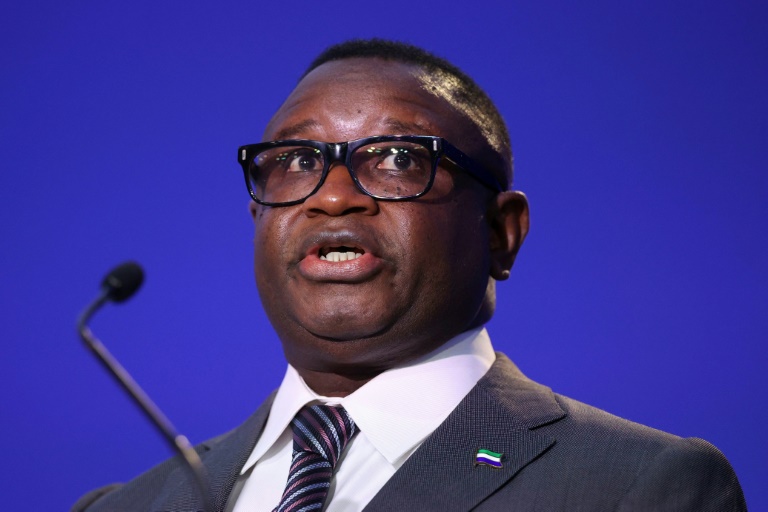
On Friday, President Julius Maada Bio — who had cut short a vacation to the United Kingdom — blamed the demonstrations on opposition parties, claiming that his political rivals had attempted to overthrow his government in a “premeditated” insurrection.

Bio, a general turned politician who was elected in 2018, specifically pinpointed the APC, his party’s main political rival and the country’s former ruling party, as well as the People’s Progressive Party (PPP).

Sierra Leone has had a reputation for relative stability since the end of a civil war that ran from 1991 to 2002 and left about 120,000 dead.

But the economy, heavily dependent on minerals, has struggled to rebound, and the country’s eight million residents live in one of the poorest nations in the world.

Ethiopia accuses Tigray rebels of refusing to talk peace

The Ethiopian government on Thursday accused Tigrayan rebels of lacking any interest in peace talks to try to end the devastating 21-month war in the north of the country.

Both Prime Minister Abiy Ahmed’s government and the Tigray People’s Liberation Front (TPLF) have in recent weeks raised the prospect of negotiations but key hurdles remain, with both sides blaming each other for the impasse.

Abiy’s spokeswoman Billene Seyoum said Thursday the government was continuing to call for a peaceful resolution of the conflict “despite there being not a shred of interest for peace by TPLF”.

“If TPLF genuinely care for the wellbeing of Ethiopians in the Tigray region they should… sit for talks instead of looking for excuses to avoid peace,” she told reporters in English.

The warring sides are at loggerheads over who should lead any negotiations, and the TPLF also insists basic services must be restored to the region of six million people before dialogue can begin.

But Billene retorted: “The issue of restoration of services comes up again and again as if there is an on and off switch.”

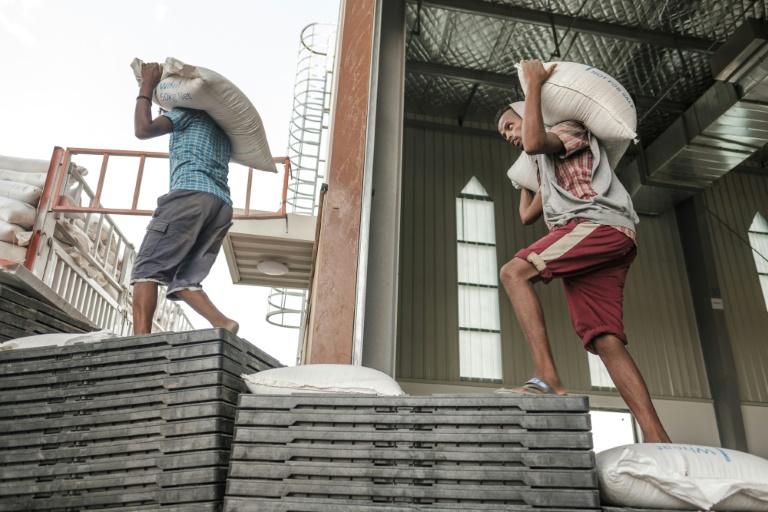
The war which erupted in November 2020 has left Tigray facing desperate food shortages and without access to basic services such as electricity, communications and banking.

Untold numbers of people have been killed and millions are in need of humanitarian assistance in Tigray and the neighbouring regions of Afar and Amhara.

On Wednesday, a government committee had called for a formal ceasefire to enable the resumption of services as part of a peace proposal it planned to submit to the African Union (AU).

Billene said however that the ceasefire and the issue of essential services were “two separate items”, adding that there needed to be a “secure environment” for federal service providers to work inside Tigray.

“At the moment with a vocally belligerent and illegally armed group operating at its own whim and refusing to accept peace talks, the required enabling and secure environment is lacking,” she said.

– ‘Partisan politics’ –

The government also slammed the World Health Organization (WHO) chief Tedros Adhanom Ghebreyesus for his comments on Wednesday calling the situation in Tigray the “worst disaster on Earth”.

Tedros, who is himself from Tigray, suggested racism may be why the situation ranked behind Ukraine in terms of international attention, despite it being “the worst humanitarian crisis”.

The Ethiopian government has previously accused Tedros of endorsing the TPLF.

Billene said that Tedros was “using the race card and (his) multilateral position to garner the sympathy of the global North for… personal partisan politics”, and called his conduct “unbecoming for a such high-profile position”.

Responding to the ceasefire call, TPLF spokesman Getachew Reda on Wednesday accused the government of “obfuscation” and said its troops were “actively provoking our forces in various fronts”.

Fighting has eased in northern Ethiopia since a truce was declared at the end of March, allowing the resumption of desperately needed international aid convoys to Tigray after a break of three months.

Abiy’s government says any negotiations must be led by the AU’s Horn of Africa envoy Olusegun Obasanjo who is leading the international push for peace, but the rebels want outgoing Kenyan President Uhuru Kenyatta to mediate.

South Africa's Erwee stands firm after Rabada rocks England in 1st Test

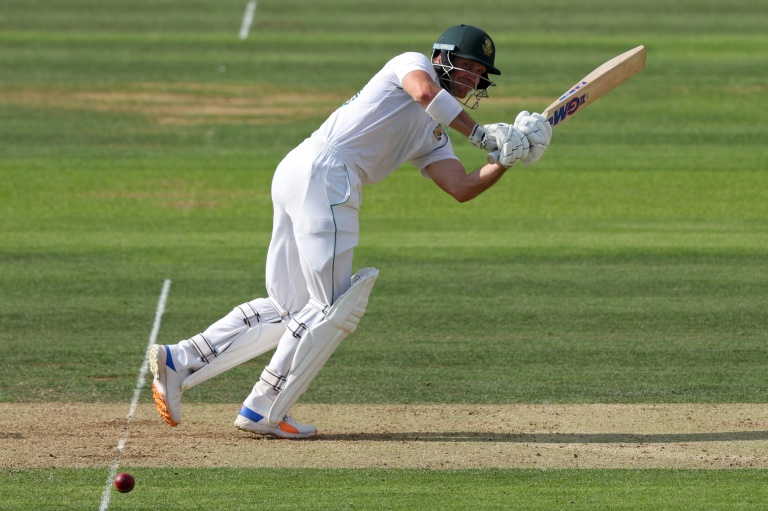
Sarel Erwee guided South Africa to within sight of a first-innings lead in the first Test against England at Lord’s on Thursday.

Erwee’s 60 not out was the cornerstone of the Proteas’ 158-2 at tea on the second day, a deficit of just seven runs after England had been bundled out for a mere 165.

Aiden Markram was in fine touch, his 16 not out featuring three elegant fours off Matthew Potts, James Anderson and spinner Jack Leach.

South Africa fast bowler Kagiso Rabada did the bulk of the damage in England’s innings, returning figures of 5-52 — the 12th time he has taken five wickets in a Test innings.

Ollie Pope’s 73 was the only double-figure score by a specialist England batsman, with the next-best contribution coming from captain and all-rounder Ben Stokes, who made 20.

South Africa captain Dean Elgar and fellow opener Erwee both scored briskly, without taking undue risks, against an England attack that lacked both the pace and accuracy of their opponents’ four quicks.

Elgar, however, was dropped on seven when he edged Potts, only for Zak Crawley to spill a head-high slip catch.

Elgar, punishing anything loose, was largely untroubled from then on until, having made 47, he fell in freak fashion when a ball from 40-year-old Anderson deflected off his thigh guard and forearm before trickling onto the stumps. His exit left South Africa 85-1.

New batsman Keegan Petersen got off the mark by stylishly whipping Anderson legside for a well-struck boundary.

The 32-year-old Erwee reached just his second fifty in his short Test career when he struck Stuart Broad through the covers for a sixth four in 89 balls faced.

But he nearly ran himself out soon afterwards when, going for a quick legside single, he was well short of his ground only for Broad to miss with a shy at the non-striker’s stumps.

England did have a second wicket when Potts had Petersen (24) edging to Jonny Bairstow at third slip.

– England dismissed –

England resumed Thursday on 116-6, with Pope 61 not out and Broad unbeaten on nought, only to be all before lunch.

Rabada polished off the tail after he had sparked a collapse on Wednesday’s rain-shortened first day by removing openers Alex Lees and Crawley.

England have won all four of their Tests under their new leadership pairing of Stokes and coach Brendon McCullum after switching to a mode of all-out attack.

But the policy did not work against a quality attack that has helped South Africa climb to the top of the World Test Championship table.

Pope should have been out for 67 when he edged Rabada straight to first slip, only for Erwee to floor a routine chance despite four juggled attempts to keep hold of the ball.

Rabada then got the wicket he deserved when Pope chopped on to a full-length ball for 73 to end a 102-ball innings, leaving England 134-7.

And he showed there was more to his game than sheer speed when he undid Broad (15) with a clever slower ball that the tailender lobbed to Elgar at point.

Rabada ended the innings when he had Anderson lbw for a duck to earn a place on the coveted honours board at Lord’s.

Kenya's outgoing president promises smooth transition

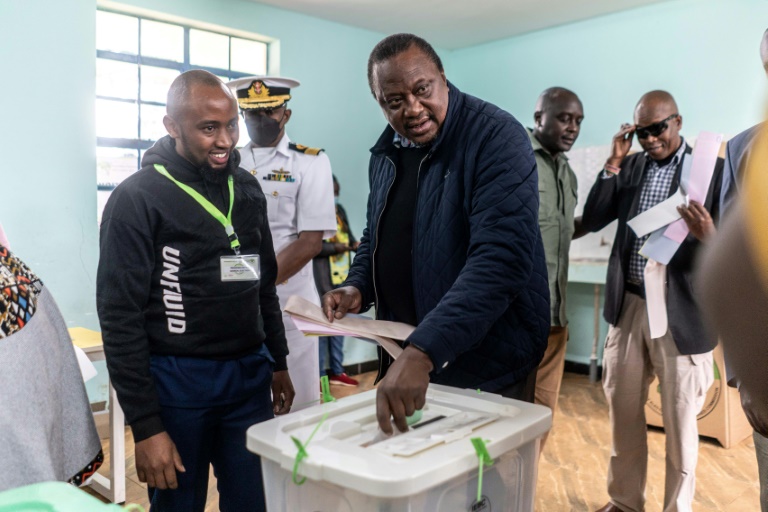
Kenya’s outgoing President Uhuru Kenyatta pledged Thursday that there would be a smooth transition of power after a hotly disputed election whose outcome could be challenged in court.

Kenyatta had backed his erstwhile foe Raila Odinga in the August 9 poll after falling out with his deputy William Ruto, who won the presidential race by a narrow margin.

The outgoing leader has yet to publicly congratulate Ruto, who has served as deputy president since 2013 and was long considered Kenyatta’s heir-apparent.

At a meeting with Kenyan religious leaders on Thursday, Kenyatta “assured them that the process of transition will be smooth”, his office said in a statement.

He delivered a similar message to visiting US congressional leaders.

“Kenya will remain steadfast in entrenching the principles of good governance to ensure the country upholds its position of a shining example of democracy in the continent by maintaining peace during this transition period,” his office said on Twitter.

Ruto had been counting on Kenyatta’s support for the top job, but in an extraordinary turn of events the president reached a pact with veteran opposition leader Odinga in 2018 that left him sidelined.

On the campaign trail, Kenyatta — who has served two terms as head of state and could not run again — had described Ruto as “untrustworthy”.

Odinga, who at 77 was making his fifth bid for the presidency, has vowed to pursue all “constitutional and legal” avenues against a result he considers “null and void”.

The outcome has also caused a schism within the Independent Electoral and Boundaries Commission (IEBC).

Four its seven commissioners have disowned the results and accused the body’s head of acting outside the constitution.

Any challenge to the results must be lodged by Monday afternoon with the Supreme Court which then has 14 days to issue a ruling. If it orders an annulment, a new vote must be held within 60 days.

Kenya's election commission in eye of vote storm

Feuding officials, questionable calculations and accusations of intimidation and violence — Kenya’s election body is once again under the glare of public scrutiny.

Kenyans have been agog at the drama dividing the Independent Electoral and Boundaries Commission (IEBC) over the August 9 poll, yet another disputed election in a country considered a pillar of stability in the volatile East Africa region.

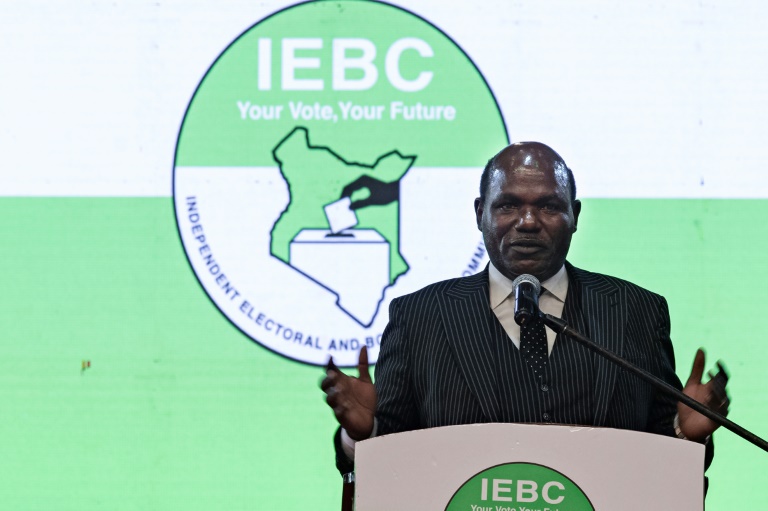
IEBC chairman Wafula Chebukati announced Monday that William Ruto had scraped victory with 50.49 percent of the vote against 48.85 percent for Raila Odinga, a veteran opposition figure backed by the ruling party.

But a court challenge is likely to be lodged by Odinga, who lost his fifth bid for the top job and called the outcome a “travesty”.

– A ‘farce’ –

The IEBC and its 59-year-old chairman have long been viewed with suspicion by many.

It faced scathing criticism over the 2017 election when the Supreme Court — in a first for Africa — annulled the vote and ordered a rerun.

This year the IEBC, with its $347 million budget, was under intense pressure to prove it could deliver a clean and transparent vote.

While polling day passed largely peacefully, with only a few issues of malfunctioning equipment and voting delays reported, Kenyans became increasingly jittery when the wait for results stretched over six long days.

On Monday, just minutes before Chebukati was to unveil the winner, four of the IEBC’s seven commissioners said they disowned the results, triggering scenes of chaos at the commission’s national tallying centre in Nairobi.

The four rebels chastised Chebukati for an “opaque” tallying process and complained he had failed to cooperate with them.

Discussing whether Chebukati needed their backing to announce the results, constitutional lawyer Charles Kanjama said there was “some ambiguity”.

“The constitution is not clear… so it is an issue of interpretation”, he told AFP.

The commissioners also claimed the total aggregated numbers were a “mathematical absurdity,” adding up to 100.01 percent or a discrepancy of about 140,000 votes.

Their calculations were widely ridiculed, with people taking to Twitter in droves to say the disparity could be explained by rounding and that 0.01 percent actually represented around 1,400 votes. 

The leading Daily Nation newspaper branded the quarrelling at the heart of the IEBC a “farce”.

But Kenyan newspapers are divided over whether the rebel commissioners’ arguments carry legal weight.

– No stranger to drama –

The IEBC is no stranger to controversy.

Days before the August 2017 poll, the torture and murder of senior IEBC official Chris Msando sparked alarm.

In the election dispute that followed, the Supreme Court cited widespread “irregularities and illegalities” in the counting process and mismanagement by the commission.

Dozens of people died in post-poll clashes with police over incumbent President Uhuru Kenyatta’s initial win against Odinga, who went on to boycott the October rerun.

Several IEBC commissioners quit, including Roselyn Akombe who fled to the United States, saying she feared for her life and accusing her colleagues of pro-government bias.

Chebukati said he was unable to ensure the fairness of the October election and was highly critical of Kenya’s political leaders.

– A man ‘under siege’ –

Chebukati has been hailed as a “hero” by the victorious Ruto but vilified by Odinga, who claims the results he issued were “null and void”. 

Chebukati insisted he had carried out his duty in accordance with the laws of the land despite facing “intimidation and harassment” and said he and other IEBC officials had been “physically attacked”.

Police are also investigating the death of a returning officer in a Nairobi constituency who went missing during the election period.

The co-founder of a Nairobi law firm, Chebukati was appointed to the post in January 2017 after the departure of his predecessor, who had also come under fire over the 2013 elections.

After the 2017 fiasco, Chebukati’s continued presence remains something of a surprise, although this is his last election at the helm of the IEBC. 

“Chairman Chebukati is a very well-meaning person, he has the temperament to be able to be a leader,” Amkombe said in a 2017 interview, describing him as a “leader under siege”.

– ‘More open and secure’ –

The IEBC’s level of preparation and the reliability of its electronic kits — used to biometrically identify voters and transmit results — came under particular scrutiny during this year’s election.

But both international and local observers in general praised the running of the vote and the counting process.

The Africa-focused Elections Observation Group said there had been improvements since 2017 with a “more open and secure” results management process, adding that its own tallies were “consistent” with the official figures. 

If the IEBC does have to defend its running of the vote, it is better prepared than the last time and has put its lawyers through intensive training, Kenyan academic Macharia Munene said.

“The national officials are being very careful not to be caught, the way they were caught in 2017,” he said.

Congolese split over Burundi troops in troubled east

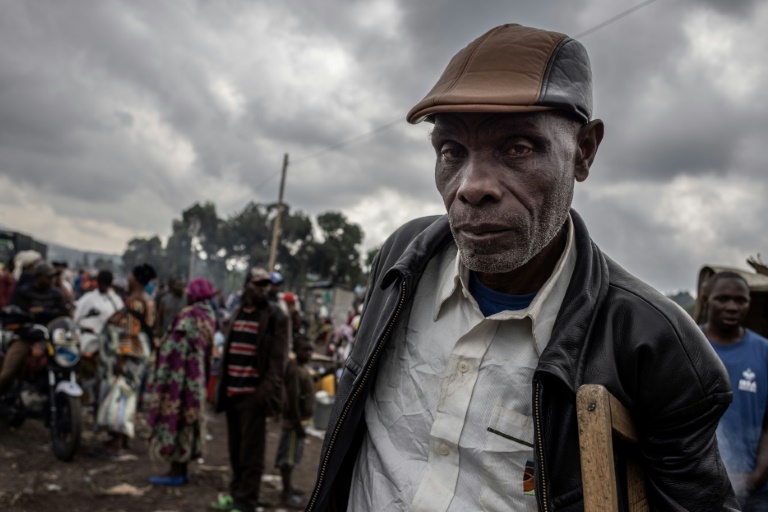
The deployment of Burundian troops to help quell rebel groups in the Democratic Republic of Congo’s east has divided local people, with some fiercely opposed but others giving a cautious welcome.

Burundian forces began arriving in South Kivu province on Monday, pushing ahead with a plan by the seven-nation East African Community (EAC) to stabilise the chronically troubled region.

Scores of armed groups roam the DRC’s east, many of them a legacy of full-blown wars that erupted in the final decade of the 20th century.

Some people are sceptical that the Burundian deployment will improve security, but others hope for an improvement.

Others are enraged that Burundi — accused like Rwanda of past meddling in the mineral-rich region — has been invited into the DRC.

The deployment is “one more humiliation for our nation,” said 2018 Nobel Peace co-laureate Denis Mukwege, a surgeon who has treated thousands of rape victims in the region.

“Let’s end the policy of outsourcing our security to destabilizing states & work on reforming our army to make it professional and operational,” he said on Twitter on Tuesday.

– ‘Meddling’ suspicion –

A campaign group in South Kivu, the New Dynamics of Civil Society, said foreign forces “only intensify rather than resolve the problem.”

“The majority” of these forces have been on the DRC’s territory for years, it charged, alluding to long-standing suspicions of interference by the country’s neighbours.

Some nations support armed groups to “maintain chaos… (and) loot our mineral resources,” it said.

Thousands of people have died at the hands of rebels in the country’s east over the past decade, and tens of thousands have fled their homes. 

An estimated 120 armed groups, many of them organised along ethnic lines, operate in the region.

Among the bloodiest are the Allied Democratic Forces (ADF), which the self-described Islamic State claims as its regional affiliate, and a Congolese Tutsi militia called the M23.

Some groups are historic opponents of regimes in neighbouring countries and have holed up in the DRC — which could complicate the EAC mission.

In Burundi’s case, this includes the Burundian rebel groups RED Tabara and the FNL, or National Liberation Forces.

– Foreign help –

The DRC’s armed forces, supported by a large UN peacekeeping mission, have been unable to stem the bloodshed.

Attacks have continued, even though the provinces of North Kivu and Ituri were placed under emergency measures in May last year to help the fight against the rebels.

Under this so-called “state of siege,” senior civilian officials have been replaced by members of the security forces.

Saint-Cadet Kibibi, head of civil society group Minembwe, said the Burundian troops were “welcome”, although he questioned whether the forces would be able to bring peace.

“We want to see this force do its job correctly, with respect for international humanitarian law,” he said.

Kelvin Bwija, of a group called the Civil Society of Compatriots/Uvira-Fizi, said he hoped the operations would be given a “precise timeline” for winding up.

The EAC comprises Burundi, the DRC, Kenya, Rwanda, South Sudan, Tanzania and Uganda.

In June, the bloc’s leaders decided to set up a regional force that would work alongside Congolese troops.

Kenyan and Ugandan forces will be deployed to North Kivu and Ituri, while South Sudanese forces will be sent to Haut-Uele province.

Kinshasa accuses Kigali of supporting the M23 rebel group in North Kivu and has rejected any participation of Rwandan troops in the EAC force.

Hague trial set for Rwanda genocide accused Felicien Kabuga

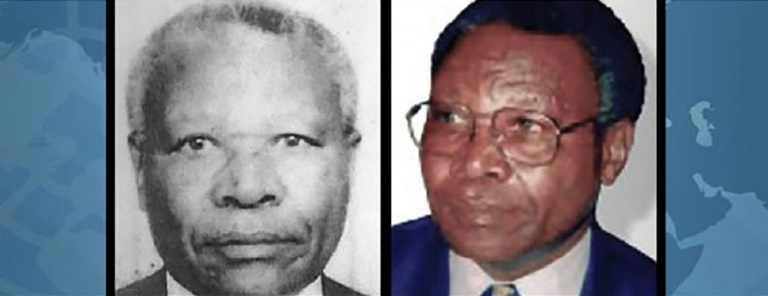
Felicien Kabuga, an alleged financier of the 1994 genocide in Rwanda, will go on trial in The Hague on September 29 facing charges of genocide and crimes against humanity, a UN judge announced Thursday.

Once one of Rwanda’s richest men, Kabuga allegedly helped set up hate media that urged ethnic Hutus to “kill Tutsi cockroaches” and funded militia groups.

Now in his 80s, Kabuga was arrested in France in May 2020 and transferred to a UN tribunal in The Hague to face charges of playing a key role in the slaughter of 800,000 Tutsis and moderate Hutus.

“The Chamber orders the trial to commence at the Hague branch with opening statements on the 29th of September… and evidence to start on the 5th of October,” Mechanism for International Criminal Tribunals (MICT) judge Iain Bonomy said.

Wearing a dark suit, spotted black tie and striped white shirt, a frail-looking Kabuga listened intently through headphones perched on his head.

Earlier he was pushed into the courtroom in a wheelchair.

Kabuga was originally scheduled to appear in court in Arusha, where the other arm of the MICT resides, but judges had ruled he would remain in The Hague “until otherwise decided.”

In June, the judges denied a defence objection, ruling Kabuga was indeed fit to stand trial.

Bonomy said on Thursday the defendant would appear “three times a week for two hours at a time.”

Kabuga is being held at the tribunal’s detention unit a few kilometres (miles) away.

He will be allowed to attend hearings through a video link if necessary, the judge said.

“Routine is an important part of Mr Kabuga’s life,” he said. “Whatever is required will be done.”

Kabuga listened motionless but told Bonomy he wanted to change lawyers when asked if he wished to address the court.

– Eagerly-awaited trial  –

His current defence lawyer, Emmanuel Altit, pleaded not guilty on his client’s behalf at Kabuga’s first appearance in November 2020.

He faces six charges including one count of genocide and three counts of crimes against humanity: persecution, extermination and murder.

Reacting to Thursday’s announcement, Egide Nkuranga of the umbrella IBUKA genocide survivors’ association said the trial was eagerly awaited “despite the delay tactics being employed by Kabuga’s lawyers.”

“We want justice to be served, so his trial needs to be sped up,” Nkuranga told AFP.

“If Kabuga dies before facing justice, he would have died under the presumption of innocence, and this would be devastating for justice.”

“It would also mean that some crucial information regarding the planning and execution of the genocide would have gone with him,” Nkuranga added. 

The UN says 800,000 people were murdered in Rwanda in 1994 in a 100-day rampage that shocked the world.

An ally of Rwanda’s then-ruling party, Kabuga allegedly helped create the Interahamwe Hutu militia group and the Radio-Television Libre des Mille Collines (RTLM), whose broadcasts incited people to murder.

The radio station also identified the hiding places of Tutsis where they were later killed, prosecutors said in the indictment.

– ‘Distributed machetes’ –

More than 50 witnesses are expected to appear for the prosecution, which said they needed about 40 hours to wrap their case.

Prosecutors said Kabuga controlled and encouraged RTLM’s content and defended the station when the minister of information criticised the broadcasts. 

Kabuga is also accused of “distributing machetes” to genocidal groups, and ordering them to kill Tutsis.

Later fleeing Rwanda, Kabuga spent years on the run using a succession of false passports.

Investigators say he was helped by a network of former Rwandan allies to evade justice.

Following his arrest in a small apartment near Paris, his lawyers argued that Kabuga, whose age is now given as 87 on the indictment, should face trial in France for health reasons.

But France’s top court ruled he should be moved to UN custody, in line with an arrest warrant issued in 1997.

Jihadists spread from the Sahel to coastal West Africa

Their campaign began in northern Mali a decade ago, advanced into the country’s powder-keg centre and from there into neighbouring Niger and Burkina Faso.

Now, fears are growing that the ruthless jihadists wreaking havoc in the Sahel are heading towards coastal West Africa.

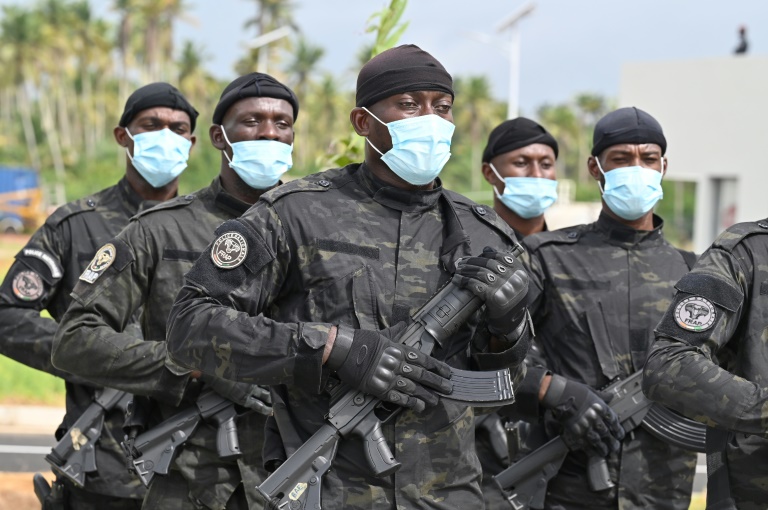
Following multiple incursions including deadly attacks in the northern regions of Benin, Ivory Coast and Togo, governments in the Gulf of Guinea are reviewing their strategy. 

Their chief concerns, say analysts: how to avoid replicating the mistakes of their neighbours in the Sahel, and how best to muster foreign support.

After Mali’s junta took power in August 2020, the country’s ties with Paris went into a downward spiral, triggering a withdrawal of French troops that was completed on Monday. 

Last month, Benin President Patrice Talon told his French counterpart Emmanuel Macron that his country needed more equipment, especially drones. 

Among coastal states, northern Benin has been the most affected by the expanding jihadist threat, with around 20 attacks against security forces since late 2021.

“What we are going through is terrifying,” a Beninese officer deployed at the border with Burkina Faso told AFP, speaking under condition of anonymity. 

“We wake up every morning without knowing if we will survive the day,” he added.

Macron has said that France, despite its exit from Mali, is committed to the “fight against terrorism” in West Africa. 

He said he is ready to participate in meetings of the “Accra Initiative” — a body set up in 2017 to boost security cooperation between countries in the region. 

– Recruitment –

“The deteriorating security situation in Burkina Faso and Mali has made the north of the coastal countries the new front line against armed groups operating in the Sahel,” the Konrad Adenauer Foundation, a German think tank, said in a report in April.

Countries in the region have beefed up security in vulnerable areas, including Ghana, which so far has been spared attacks.

But whether this will work is the big question.

Shoring up border security will be “ineffective, (just) as it was in the Sahel,” the Moroccan Policy Center for the New South think tank warned this month. 

Jihadist groups in the Sahel “are not traditional armies,” it said. “They spread ideas and exploit the grievances of target populations.”

Jeannine Ella Abatan at the pan-African Institute for Security Studies in Senegal described the rash of recent attacks as “the tip of the iceberg.”

“Since 2019, studies on the Sahel show that extremist groups were already connected to coastal states, either for logistical or operational support, but also for financing,” she told AFP. 

Militants do not occupy territory in the coastal countries but instead infiltrate northern regions where they conduct sophisticated attacks, Abatan said.

Togo first experienced a jihadist attack in May 2021. Benin’s first known fatal attack was last December, when two soldiers were killed near the border with Burkina Faso. In Ivory Coast, four members of the security forces died in 2021, after 14 in 2020.

Such attacks, said Abatan, are only possible thanks to good intelligence-gathering capabilities and the “complicity” of locals.

Increased recruitment among border populations is a major threat, she said. 

“The difficult living conditions can easily encourage desperate people into the camps of terrorists,” a Beninese police officer in the troubled region told AFP. 

Last week, a widely-shared propaganda video featuring two jihadists speaking Bariba, the local language in northern Benin, called on people to join them and threatening those who collaborate with the state. 

– Investment –

“The state must urgently respond to the needs of these people — make them feel protected by the presence of security forces instead of letting them seek protection from these groups,” Abatan said.

Amnesty International has warned of alleged human rights violations committed by security forces in Benin and Togo, as well as arbitrary detentions. 

Coastal countries seem to have accepted the argument that poverty and other sources of resentment create a potential pool for recruitment.

In Benin, the government has launched development projects, building schools and hospitals in some underdeveloped areas, and millions of dollars have been invested in Ivory Coast.

But much more needs to be done, says the Moroccan think tank, which also gives a specific warning against militarisation of the border areas.

“Without an immediate and dramatic change of approach,” it warned, residents in these border areas will “collaborate with extremists to keep themselves alive as best they can.”

India present huge ODI challenge for transformed Zimbabwe

Transformed Zimbabwe face their biggest challenge since Dave Houghton became coach two months ago when they host India in a series of three one-day internationals, starting on Thursday.

Although several stars, including batters Virat Kohli and Rohit Sharma, are being rested ahead of the Asia Cup in the UAE this month, the tourists are expected to win all three matches in Harare.

India are placed third behind leaders New Zealand and England in the ODI rankings, 10 places above Zimbabwe.

Under the guidance of 64-year-old former batting star Houghton, the southern Africa nation have won nine of 11 ODI and Twenty20 internationals.

With Houghton in charge, hosts Zimbabwe beat non-Test teams Jersey, Singapore, the United States, Papua New Guinea and the Netherlands to qualify for the 2022 T20 World Cup.

Higher-ranked Bangladesh were expected to burst the bubble, but suffered shock 2-1 losses in both T20 and ODI series.

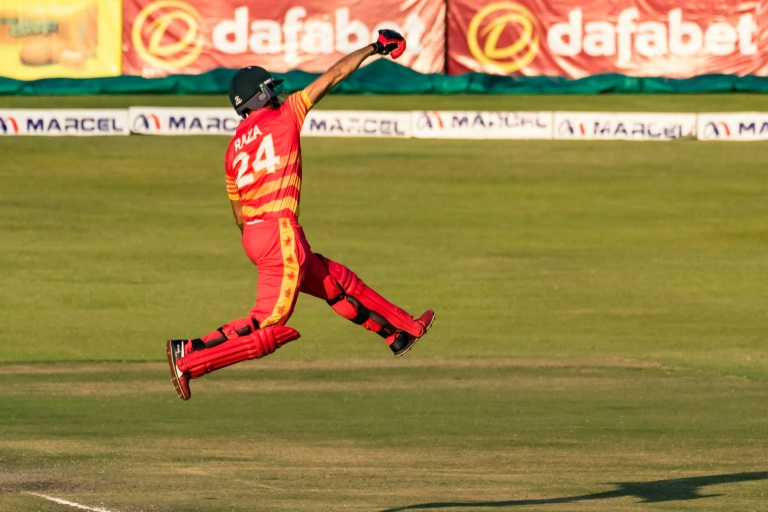
Pakistan-born batsman Sikandar Raza, whose childhood dream to be a fighter pilot was dashed by an eyesight glitch, played a key role in the ODI series with successive centuries.

“He is a very good player who has been representing Zimbabwe with distinction for a long time,” said India vice-captain and opening batsman Shikhar Dhawan.

“Sikandar is a quality cricketer with bat and ball. I am sure our bowlers will come up with nice plans against him.”

Houghton said the unbeaten innings of 135 and 117 by the 36-year-old had a knock-on effect as they instilled confidence in his teammates.

“Playing alongside Sikandar, Innocent Kaia hit a century in his first ODI, then Regis Chakabva scored his first ODI ton with some brilliant shots.”

– ‘Deserve wider recognition’ –

Former West Indies fast bowler Ian Bishop hailed the Raza tons, tweeting “The things that Sikandar Raza has been doing in recent weeks with the bat deserve wider recognition”.

Although missing Kohli and Sharma, Houghton says there is no such thing as a weak India cricket team. 

“They could pick four teams and then occupy the first four places in an international tournament. That is how good they are.

“However, I told my boys that we dare not become mere spectators in this series while India play all the cricket. We must believe we can win.

“The boys know they are far from invincible despite nine victories — we were 90-9 in our last ODI against Bangladesh before the tail-enders added 61 runs.

“But if we continue to play without fear and express ourselves, we will succeed far more than we fail.”

Houghton pinpointed poor batting starts as a concern, and vowed to “try and get higher scores from our top order”.   

Opening batsman and wicketkeeper Chakabva skippers Zimbabwe in place of injured Craig Ervine on Thursday as the home team seek only a fifth ODI victory over India at home in 24 matches.

Injuries have also ruled out Blessing Muzarabani (thigh), Tendai Chatara (collarbone) and Wellington Masakadza (shoulder) while former captain Sean Williams is unavailable.

India had to make a late change to a 16-strong squad with all-rounder Shahbaz Ahmed coming in for Washington Sundar, who was injured playing English county cricket. 

Opening batsman KL Rahul, a late inclusion after recovering from a hernia injury and testing positive for coronavirus, leads the tourists.

Close Bitnami banner
Bitnami