Africa Business

S.Africans rally to mark Marikana massacre 10th anniversary

Thousands of people gathered in the South African town of Marikana on Tuesday to mark a decade since dozens of striking workers were killed in the worst act of police violence since the end of apartheid.

On August 16, 2012, 34 people were killed and 78 injured when police opened fire on platinum mine workers who had gathered on a hill near the mine to press demands for better wages and housing.

Ten years later, survivors and relatives of victims are still demanding justice. 

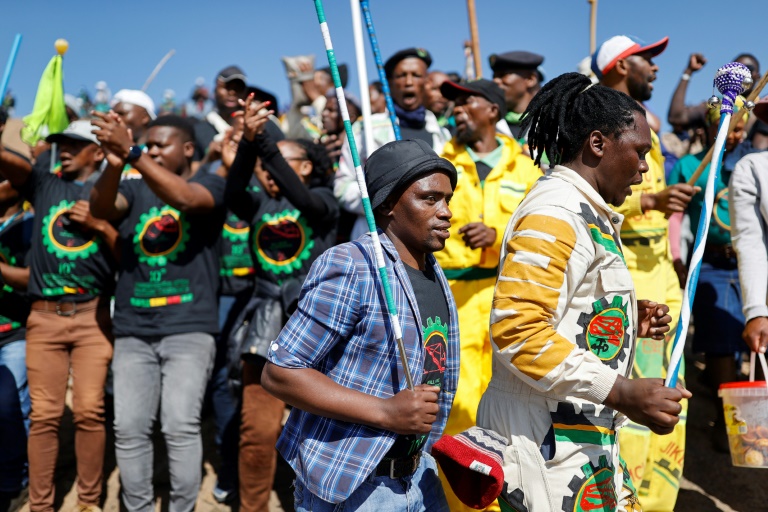
On Tuesday, some danced and sang songs while brandishing sticks on the same rocky hill that played as backdrop to the massacre, around 100 kilometres (60 miles) northwest of Johannesburg, according to AFP reporters at the scene.  

Many miners wearing mining union T-shirts were in attendance, along with opposition officials.

“We are still waiting to know the person who sent the police to kill our husbands,” a representative for the widows of those killed who did not give her name told the crowd from a stage, the words “No justice, no arrest” appearing on a banner behind her.

An official inquiry placed much of the blame for the deaths on police tactics, finding that an operation to remove the miners should not have gone ahead.

It cleared senior government officials of any culpability. 

President Cyril Ramaphosa, who at the time was non-executive director at Lonmin, which operated the mine, was also exonerated. 

No one has been charged over the massacre.

“We want justice. Now, not tomorrow,” Joseph Mathunjwa, the leader of the Association of Mineworkers and Construction Union (AMCU) told the rally. 

-‘A turning point’ –

Some people used the day as a family outing. A father stood at the back of his cars, trunk open, sipping a lager from a glass while his daughter drank juice as her mother sat on a camping chair.

The Independent Police Investigative Directorate, a police watchdog, said the incident is still under investigation.

“They must apologise,” said Dali Mpofu, a lawyer representing the victims, calling for the creation of a memorial to those who lost their lives. 

Authorities have said they are still finalising dozens of compensation claims, having already paid almost 76 million rand ($4.6 million) to the victims’ families. 

“We need to be strong men, in the end the truth will come out, even when we are no longer there, as to who was responsible for the spilling of blood in Marikana,” said Mzoxolo Magidiwana, a survivor of the massacre who escaped with nine gunshot wounds. 

No government representatives attended the event.

In a statement Minister in the Presidency Mondli Gungubele, said, “the Marikana tragedy was a turning point in the history of democratic South Africa and one that must never be repeated”.

Wages in the mining sector have increased by 86.5 percent since 2012, the Minerals Council South Africa, an industry group, said in a statement.
Kenya's Odinga vows to pursue 'legal options' over vote defeat

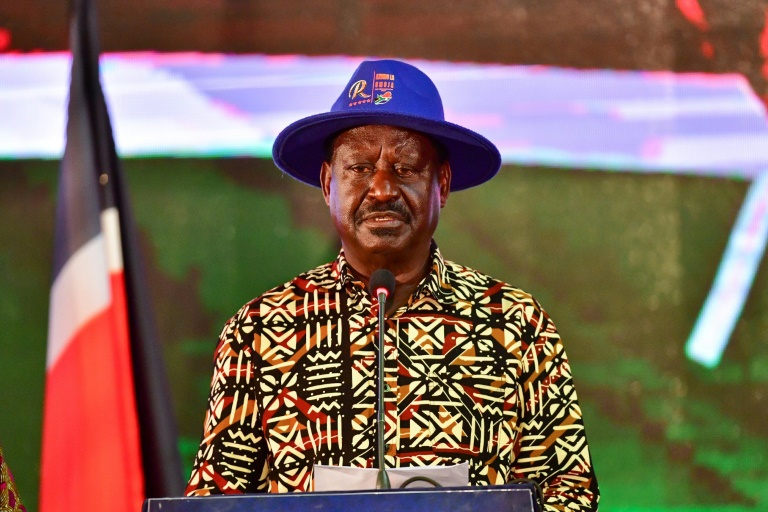
Kenya’s defeated presidential candidate Raila Odinga vowed Tuesday to pursue “all constitutional and legal options” after rejecting the outcome of elections that awarded victory to his rival William Ruto.

The 77-year-old veteran politician branded the result of the August 9 race a “travesty” but stopped short of explicitly announcing that he would mount a challenge at the Supreme Court.

“What we saw yesterday (Monday) was a travesty and a blatant disregard of the constitution and the laws of Kenya,” he told a press conference in Nairobi, blaming the head of the Independent Electoral and Boundaries Commission (IEBC) which oversaw the poll.

“I do not want to fully address our strategies going forward but… we will be pursuing all constitutional and legal options available to us.”

Odinga narrowly lost his fifth bid for the top job to Deputy President Ruto, 55, who was proclaimed president-elect Monday after a nail-biting wait for results.

His supporters cried foul over the outcome, which also triggered divisions in the IEBC.

Odinga lost by around 230,000 votes despite the support of his old foe, the outgoing President Uhuru Kenyatta, and the weight of the ruling party machinery behind him.

He has previously said he was cheated of victory in the 2007, 2013 and 2017 elections, and the poll’s aftermath is being keenly watched as a test of democratic maturity in the East African powerhouse.

No presidential poll outcome has gone uncontested in Kenya since 2002, and the disputes have led to bloodshed in the past.

In August 2017, the Supreme Court annulled the election after Odinga rejected Kenyatta’s victory. Dozens of people were killed by police in post-poll protests.

Kenya’s worst electoral violence occurred after the 2007 vote, when more than 1,100 people died in bloodletting between rival tribes.

– ‘We don’t need to protest’ –

On the campaign trail, both frontrunners pledged to resolve any disputes in court rather than on the streets.

Violent protests nevertheless erupted in Odinga’s strongholds in two Nairobi slums and the lakeside city of Kisumu on Monday evening, although the situation was calm Tuesday.

While many businesses in Kisumu kept their doors shut on Tuesday, waiting for tensions to blow over, Odinga commended his supporters “for remaining calm and keeping the peace”. 

“Let no-one take the law into their own hands,” he said.

Abel Tom, a 48-year-old businessman and pastor, said Odinga’s speech would cool the temperature in Kisumu.

“Raila’s word is law in these regions. If he speaks anything, it has a serious effect,” he told AFP.

“Raila has brought calm at the right time, it comes as a balm to heal the nation.”

Some Kenyans, who are already battling a cost-of-living crisis, told AFP they were weary of the constant political bickering.

“I don’t think we need to protest. We need to fend for our families. Protests are expensive. It can even cost you your life,” said Bernard Isedia, a 32-year-old taxi driver and father of two who voted for Odinga.

“Life has to return to normal,” he told AFP.

– ‘Opaque’ process –

Ruto, who was banished to the sidelines after Kenyatta’s pact with Odinga despite being his deputy since 2013, was conciliatory in his victory speech Monday.

“I will work with all leaders in Kenya so that we can fashion a country that leaves nobody behind,” Ruto said.

“There is no room for vengeance.”

The race remained unpredictable to the end, with Ruto scoring 50.49 percent of the vote compared to 48.85 percent for Odinga, IEBC chairman Wafula Chebukati said.

But in an extraordinary move shortly before the announcement, four of the IEBC’s seven commissioners disowned the results.

Vice chair Juliana Cherera told a press conference Tuesday that the aggregated percentages of the votes for the four presidential candidates was 100.01 percent — a “mathematical absurdity”.

Analysts however said the discrepancy could be explained by rounding up the percentages.

The IEBC had come under intense pressure to produce a transparent vote after facing stinging criticism over its handling of the annulled 2017 election.

Chebukati, who was IEBC boss in 2017, insisted he had carried out his duties according to the law of the land despite “intimidation and harassment”.

Any challenge must be made by Monday to the Supreme Court, which then has 14 days to issue a ruling. If it orders an annulment, a new vote must be held within 60 days.

If there is no court petition, Ruto will take the oath of office in two weeks’ time, becoming Kenya’s fifth president since independence.

But he will inherit a country burdened with soaring prices, a crippling drought that has left millions hungry, endemic corruption and disenchantment with the political elite.

Twins, triplets among child victims of Cairo church blaze

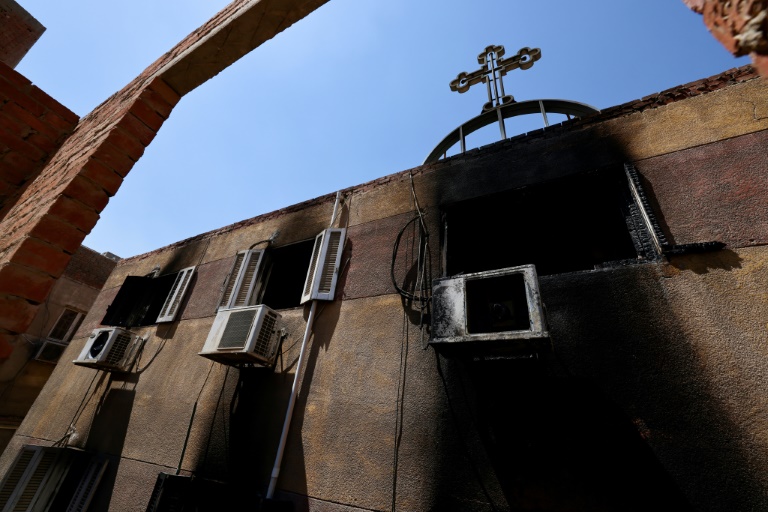
Mourners in Egypt attended a memorial service Tuesday for victims of a Coptic church fire in Cairo that killed 41 people — among them many children, including twins and triplets.

The electrical fire on Sunday ripped through the Abu Sifin church in Imbaba, a working class district west of the Nile River, part of Giza governorate in greater Cairo. 

At least 10 of those killed during Sunday mass, when families flock to the church and its daycare services, were minors aged under 16, according to a list from just one hospital circulated by local media. 

Coptic Bishop Martyros led a “third day” service Tuesday in central Cairo’s Church of the Blessed Virgin Mary to commemorate the resurrection of Christ and honour the souls of the dead.

“The entire country is ailing,” the bishop told the bereaved, two days after the blaze rocked Egypt’s 10-million-strong Coptic community, the Middle East’s largest Christian population.

Among those killed were six members of the same family, one mourner, Sandy George, told AFP.

“My aunt Magda and her daughters, Merna and Irina, and Irina’s three kids” died of asphyxiation, George said.

Irina’s children who were killed were the five-year-old twins Barthinia and Mariam and their brother Ibram, aged four.

Also killed were five-year-old triplets Mehrael, Youssef and Filopateer Bassem Amir, according to the hospital list.

Hundreds attended another third-day service in a nearby church, for Father Abd al-Messih Bekheit of the Abu Sifin church, who reportedly died trying to save members of the congregation.

Mali mired in security problems two years after coup

On August 18 2020, crowds in the Malian capital Bamako applauded as young colonels toppled a civilian government struggling to roll back a bloody jihadist insurgency.

Today, the looming anniversary of President Ibrahim Boubacar Keita’s ouster sees a country mired in problems.

On Monday, Mali’s long-standing ally France packed its bags, withdrawing the last of its troops after falling out with the junta.

Here is a snapshot of what has happened since the coup:

– Militarisation of politics –

On taking power, the junta appointed military officers to key government jobs, installed a parliament, arrested political heavyweights under an anti-corruption probe and issued arrest warrants for those who had left the country. 

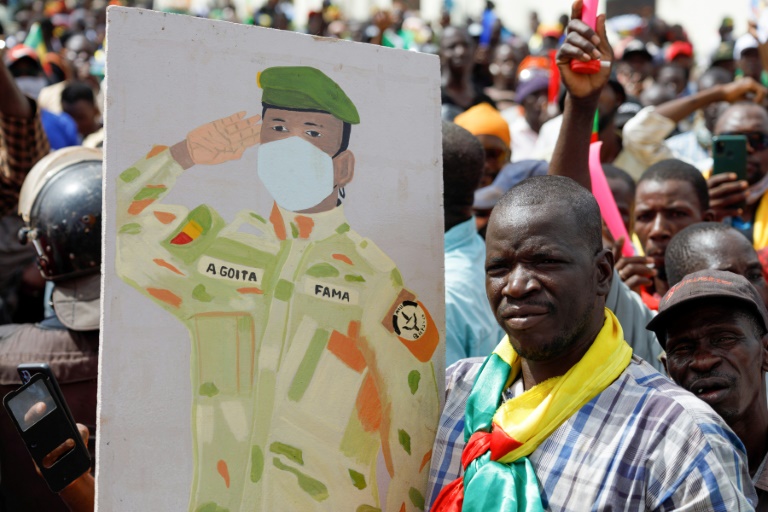
The takeover was completed when strongman Colonel Assimi Goita staged a de-facto second coup in May 2021, after which he was appointed interim president.

His junta’s failure to hold promised elections on schedule prompted the 15-nation Economic Community of West African States (ECOWAS) to impose sanctions, badly hitting one of the world’s poorest economies.

The measures were lifted last month after ECOWAS accepted a timetable for restoring civilian rule by March 2024, although Mali remains suspended from its ranks.

– Spreading insurgency –

Keita had been facing street protests over failures to stem a jihadist campaign that erupted in northern Mali in 2012 and then spread to the centre of the country and neighbouring Niger and Burkina Faso.

Since then, jihadist attacks have continued and recently accelerated. More people were killed in the Sahel in the first six months of 2022 than the whole of 2021.

In Mali itself, attacks have occurred as far south as the outskirts of the capital Bamako, including the garrison town of Kati — the launch pad of the 2018 coup.

A 2015 peace agreement between Bamako and armed ex-rebel groups in the north yielded little progress. The groups remain armed and firmly established.

In the rural bush, civilians are caught in the crossfire. 

There is a new massacre almost every month. In August, 42 Malian soldiers were killed in Tessit, near the border with Niger and Burkina Faso, in one of the deadliest attacks on the army. 

In June, more than 130 civilians were killed in Diallassagou, central Mali, in one night.

– Shifting ties – 

The junta’s message to the public is that of patriotism and national sovereignty.

With this strategy has come a dramatic shift in Mali’s allegiances.

The former colonial power France, which these days is accused of meddling and acting out of self-interest, has been sidelined.

In its stead, the junta has revived ties with the Kremlin that were first forged in the heady post-independence Socialist era.

This relationship once centred on education but now focusses heavily on defence.

Mali has received warplanes, combat helicopters and surveillance radars for its poorly equipped armed forces.

It is also being supported by Russian paramilitaries — “mercenaries” from the Wagner group, say Western countries, while Mali insists they are military instructors.

A recent report by UN experts referred to the presence of “white soldiers” accompanying Malian soldiers at the scene of killings, including at Robinet El Ataye, where 33 civilians were killed in March.

In March, the army massacred about 300 people by summary execution in Moura in central Mali, according to Human Rights Watch (HRW). Mali says its armed forces killed more than 2,000 jihadists.

Kenyan women make history with record election wins

Kenyans have elected a record number of women to positions of power in this month’s polls, with the list including seven governors, three senators and 26 MPs, in a step towards gender equality.

The East African nation has long struggled to get women into politics, with men accounting for the overwhelming majority of elected officials and female politicians largely consigned to serving as one of Kenya’s 47 women representatives.

But the August 9 elections marked a breakthrough for female politicians.

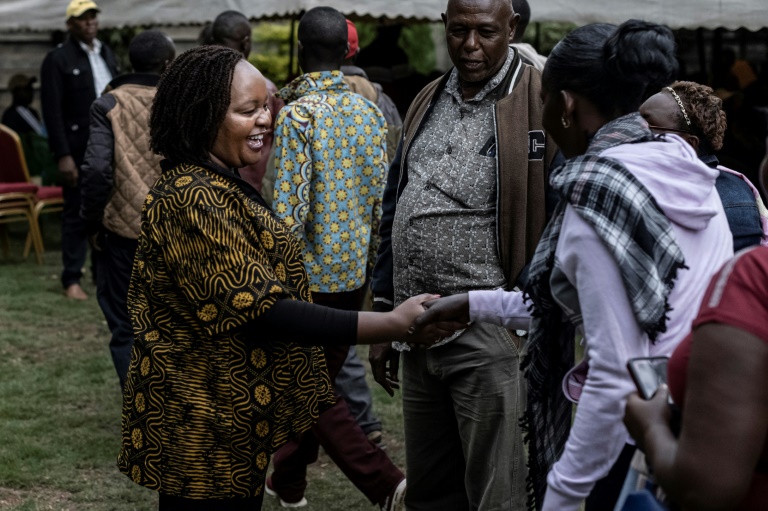
In the populous Rift Valley town of Nakuru for instance, female candidates were elected to eight positions, including governor, senator and woman representative — with Susan Kihika, Tabitha Karanja and Liza Chelule claiming those victories.

“Now sit and watch and see what women can do in office,” said newly elected senator Karanja, who runs Kenya’s second largest brewery Keroche Breweries Ltd.

Governor-elect Kihika thanked the voters of Nakuru “for being progressive and electing three women to the leadership of this county”.

– ‘Broken barriers’ –

All three women belong to president-elect William Ruto’s United Democratic Alliance party, with the country’s incoming leader hailing their wins.

“We celebrate the many women who have broken barriers to climb the political ladder. Best wishes as you embark on your new responsibilities,” Ruto said on Twitter on Saturday as results trickled in.

Kenyans voted in six elections, choosing a new president as well as senators, governors, lawmakers, women representatives and some 1,500 county officials.

With the exception of Ruto, all the presidential candidates had female running mates, including his main rival Raila Odinga, who picked former justice minister Martha Karua to join his ticket.

Women secured seven gubernatorial wins, more than doubling their 2017 tally.

They claimed the politically influential counties of Kirinyaga and Machakos as well as Meru, where former woman’s representative Kawira Mwangaza ran as an independent candidate and defeated her male competitors.

“Thank you for believing in me and in women leadership,” said Mwangaza. 

“I am promising you that Meru will be the best county because there will be sustainable development projects,” she added.

– Online abuse –

In addition to winning seven out of 47 gubernatorial races, female candidates claimed three out of 47 Senate seats up for grabs and 26 out of 290 MP positions.

Linet Chepkorir, 24, became the youngest female parliamentarian in Kenya’s history following her election as woman representative in the Rift Valley county of Bomet, barely a year after she graduated from university.

The victories capped a months-long election campaign that saw female candidates subjected to a barrage of online abuse, including aggressive sexist language, gender stereotyping, and sexual overtures.

The International Federation for Human Rights and the Kenya Human Rights Commission warned ahead of the poll that such tactics were “consciously deployed to prevent women politicians or candidates from participating in active politics”.

About 22.1 million voters were registered in a population of around 50 million. Nearly 40 percent of voters, or 8.8 million, are aged between 18 and 34, a drop since the last poll but still attesting to a vibrant youth contingent.

But observers say the record victories will likely embolden more women to enter the political fray and strengthen the push for gender parity.

According to Kenya’s 2010 constitution, each gender must have at least a third of seats in parliament.

But successive parliaments and governments have fallen short of the target.

Efforts to pass a law that would force the dissolution of parliament if the one-third threshold is not met have been repeatedly stymied by male lawmakers.

England v South Africa: Three landmarks in long rivalry

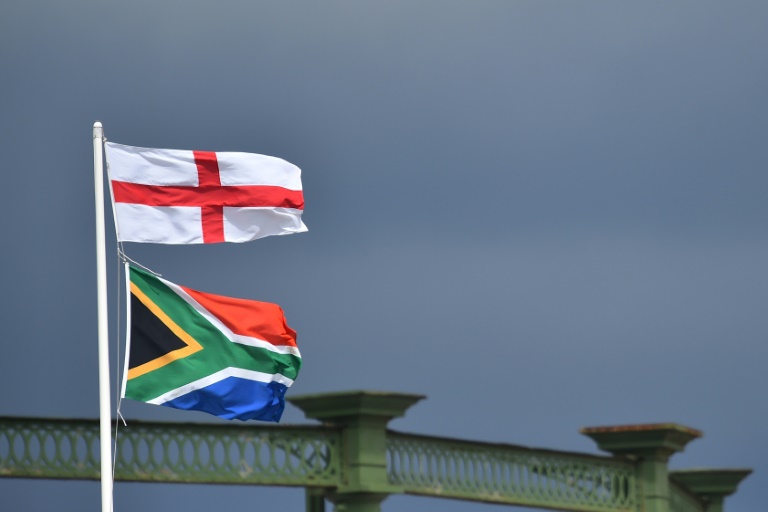
England play South Africa in the first Test of a three-match series at Lord’s from Wednesday, pitting their wits against the Proteas after a stunning start to life under new captain Ben Stokes.

The hosts have won all four Tests so far on home soil this season but the visitors have an impressive recent record, including a series win against India.

AFP Sport looks back at three headline-grabbing incidents in a rivalry stretching back to 1889.

1939: The ‘timeless’ Test

Test matches were not always limited to today’s standard maximum of five days — sometimes they were played to a finish, however long it took.

But the last “timeless” Test took place between South Africa and England in Durban in 1939. The match was eventually declared a draw after nine days’ play spread across 12 days in all.

The game ended in a stalemate because the England team had to leave to catch the boat home.

England’s fourth innings total of 654-5 remains a record for a first-class match and the “timeless” Test is the longest ever played.

1968: The D’Oliveira Affair

Basil D’Oliveira, classified as a “Cape Coloured”, was unable to play cricket in his native South Africa due to the system of apartheid in the country.

The batsman instead came to Britain and eventually forced his way into the England side.

Despite his superb 158 against Australia at the Oval in the final Test of the 1968 Ashes, D’Oliveira was dramatically omitted from the England squad for the subsequent tour of South Africa, sparking a huge furore.

Yet when Tom Cartwright, a bowler, withdrew from the squad through injury, he was replaced by D’Oliveira, a batting all-rounder.

John Vorster, South Africa’s then prime minister, responded to D’Oliveira’s inclusion by threatening to refuse him entry into the country, saying: “The MCC (England) team is not the team of the MCC but of the anti-apartheid movement.” 

The MCC called off the tour because of attempts to influence the selection of the squad, sparking South Africa’s isolation from international cricket that lasted for more than two decades.

2000: Cronje’s forfeit

South Africa had an unassailable 2-0 lead heading into the fifth and final Test in Centurion in January 2000 and a draw seemed inevitable after rain had washed out three days’ play.

But home skipper Hansie Cronje contrived a positive result by persuading England counterpart Nasser Hussain to agree that both sides should forfeit an innings. 

England were left with a target of 249 for victory after Cronje declared, and eventually won by two wickets.

Traditionalists criticised the contrived nature of the result, yet few were prepared for the size of the scandal that was to follow.

An AFP report, later confirmed by New Delhi police, said the force had phone recordings of Cronje and an Indian bookmaker discussing predetermined Proteas’ performances during a tour of India in February and March 2000.

Cronje later confessed to several allegations at the South African government-appointed King Commission, including attempts to bribe team-mates Herschelle Gibbs and Henry Williams to underperform in a one-day international against India.

He also admitted to receiving thousands of dollars from bookmakers and gamblers.

Cronje, who insisted he had never thrown a game, was later given a life ban from cricket. He died aged just 32 in a 2002 plane crash.

Turkey's Kenyan-born Can wins second European 10,000m title

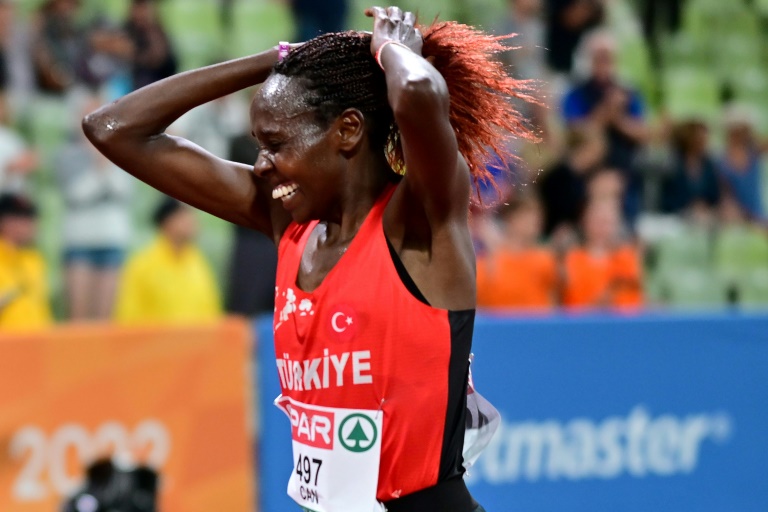
Turkey’s Kenyan-born Yasemin Can won her second European 10,000m title in Munich on Monday as a trio of world-class heavyweights guaranteed their spots in respective finals.

Fresh from sealing the Commonwealth title, Britain’s Eilish McColgan forced the pace in the 25-lap race, but Can hit the front with just under 3km to go.

Can, who previously won the 10,000m title in Amsterdam in 2016, was merciless as she turned the screw at Munich’s Olympic Stadium, clocking a winning time of 30min 32.57sec.

McColgan claimed silver more than 8sec behind while a second Kenyan-born athlete, Israel’s defending champion and world marathon bronze medallist Lonah Chemtai Salpeter, took bronze.

In the first field medal of the Euros, world bronze medallist Jessica Schilder of the Netherlands won the women’s shot put with a best of 20.24m on the second of her six attempts.

Portugal’s Auriol Dongmo took silver with a national record of 19.82m, Schilder’s teammate Jorinde Van Klinken claiming bronze (18.94).

That was closely followed by Croatia’s Filip Mihaljevic claiming victory in the men’s shot with a best of 21.53m, Serbia’s Armin Sinancevic taking silver with 21.39m and Czech Tomas Stanek bronze (21.24).

– Test is good –

Norway’s Jakob Ingebrigtsen kept his bid for a repeat double gold on course after winning his 1,500m heat in 3:38.48.

The Norwegian was one of the stars of the Berlin Euros in 2018 when he went home with golds in both the 1,500 and 5,000m.

It will be a quick turnaround for Ingebrigtsen, who had to settle for silver behind surprise British winner Jake Wightman in the 1,500m at the world champs.

The 5,000m final is scheduled for 1908 GMT on Tuesday, with the 1500m final to be held on Thursday.

“Today was a first test for me and the test result is: very good,” Ingebrigtsen said.

“The Olympic stadium is a beautiful arena and the track is really good and fast.”

Croatia’s Sandra Perkovic, bidding for a record sixth continental title, also qualified for the final of the women’s discus throw.

“The European championships are always very special to me because my first major medal was a European gold medal in Barcelona in 2010,” said the two-time Olympic and world champion.

“I am proud to be the number one in Europe and to represent Europe around the world. They all know who the discus girl is, and I think I want to stay in this position for a long time.”

– Easy and relaxed –

Cuban-born Portuguese triple jumper Pedro Pichardo, the reigning world and Olympic champion, also sailed through qualifying for Wednesday’s final with a best of 17.36m.

“I know I am in very good shape, and my only goal today was to get the big Q to the final – it was easy and relaxed,” Pichardo said.

Poland’s Aleksandra Lisowska claimed the first title at the European championships, winning the women’s marathon on the streets of Munich.

The men’s marathon title went the way of host nation Germany as Richard Ringer produced an extraordinarily well-judged final burst past Ethiopian-born Israeli Maru Teferi for gold.

The opening day had kicked off in dramatic style as world decathlon champion Kevin Mayer’s bid for a first European title came to a shuddering halt as he pulled up in the opening 100m.

World record holder Mayer, twice world champion and a two-time Olympic silver medallist, said he had made the decision to ease up “before injury”.

In the Frenchman’s absence, Switzerland’s Simon Ehammer goes into Tuesday’s second day of action in pole position on the back of a massive 8.31m in the long jump, an event in which he won world bronze in Oregon.

William Ruto: From chicken hawker to Kenya's president-elect

President-elect William Ruto is one of Kenya’s wealthiest men but has long portrayed himself as “hustler-in-chief” — the champion of the poor and downtrodden.

Defying corruption allegations going back years, the ambitious 55-year-old clawed his way to the centre of power by playing on his religious faith and humble beginnings selling chickens by the roadside.

His duel against former prime minister Raila Odinga in the August 9 elections was something that he painted in simple terms.

It was, he said, a battle between ordinary “hustlers” struggling to put food on the table and the elite Kenyatta and Odinga “dynasties” that had dominated Kenyan politics for decades.

“We want everyone to feel the wealth of this country. Not just a few at the top,” Ruto had said as he criss-crossed the country promoting his “bottom-up” economic plan.

The shadowy rags-to-riches businessman had effectively run as a challenger after a very public and acrimonious falling out with outgoing president Uhuru Kenyatta, who backed Odinga for the top job.

Despite a race dominated by mudslinging, Ruto on Monday struck a conciliatory tone after his win, vowing to work with “all leaders” after the outcome split the election commission and sparked fears of violence.

“There is no room for vengeance,” Ruto said, adding: “I am acutely aware that our country is at a stage where we need all hands on deck.”

– ‘Effective strategist’ –

Ruto had served as deputy president under Kenyatta since 2013, supporting him in two elections with a promise that he would have the backing of his boss in this year’s vote.

It was a political marriage of convenience forged in the aftermath of deadly post-poll violence in 2007-2008 that largely pitted the Kikuyu — Kenyatta’s tribe — against the Kalenjin, Ruto’s ethnic group.

Both men were hauled before the International Criminal Court (ICC), accused of stoking the ethnic unrest.

The cases were eventually dropped, with the prosecution complaining of a relentless campaign of witness intimidation.

But Ruto was left out in the cold after Kenyatta shook hands with longtime foe Odinga in a dramatic switch of political allegiance in 2018.

He bounced back with a campaign that was directed as much at Kenyatta as his rival at the ballot box, blaming the government for Kenya’s economic woes and even accusing the president of threatening him and his family.

“Ruto is seen by many people to be one of the most effective strategists in Kenyan politics,”  Nic Cheeseman, a political scientist at the University of Birmingham in Britain, said before the poll.

– ‘Perfect storm’ –

Clad in the bright yellow of his United Democratic Alliance, whose symbol is the humble wheelbarrow, Ruto sought to reach out to those suffering most from the Covid-induced cost of living crisis that has been aggravated by the war in Ukraine.

Ruto “picked the perfect storm,” Kenyan political analyst Nerima Wako-Ojiwa said before the election.

Observers attribute Ruto’s aggressiveness to the fact he has had to struggle to get everything he has achieved in life from his lowly start in Kenya’s Rift Valley, the Kalenjin heartland.

“I sold chicken at a railway crossing near my home as a child… I paid (school) fees for my siblings,” he once said. 

“God has been kind to me and through hard work and determination, I have something.”

His fortune is now said to run into many millions of dollars, with interests spanning hotels, real estate and insurance as well as a vast chicken farm. 

A teetotal father of six who describes himself as a born-again Christian, Ruto seldom lets a speech go by without thanking or praising God or reciting from the Bible.

He first got a foot on the political ladder — and detractors claim, access to funds — in 1992. After completing studies in botany, he headed the YK’92 youth movement tasked with drumming up support for the autocratic then-president Daniel arap Moi, also a Kalenjin.

In 1997, when he tried to launch his parliamentary career by contesting a seat on his home turf of Eldoret North, Moi told him he was a disrespectful son of a pauper.

Undeterred, Ruto went on to clinch the seat, which he retained in subsequent elections.

His detractors say he siphoned money from the YK’92 project and used it to go into business, and allegations of corruption and land grabs still hang over him.

But he has long dismissed such claims, once telling local media: “I can account for every coin that I have.”

Five things to know about Kenya

Here are key facts about Kenya following the outcome of its presidential elections last week.

Deputy President William Ruto has been declared winner, although the results have been rejected by some members of the electoral commission and a court battle seems likely.

– End of Kenyatta era –

Kenya became independent from Britain on December 12, 1963, scarred by the 1952-1960 Mau Mau rebellion against colonial rule that left at least 10,000 people dead.

Independence struggle icon Jomo Kenyatta was appointed Kenya’s first post-colonial leader. He died in office in August 1978, succeeded by his vice president Daniel arap Moi.

In late 1991 Moi abandoned single-party rule and won presidential elections in 1992 and 1997.

Mwai Kibaki then swept into power in 2002 and went on to win re-election in 2007 against Raila Odinga, Ruto’s main rival in last week’s poll.

Disputes over the 2007 vote count sparked the worst political violence since independence, with more than 1,100 people killed in ethnic clashes.

Jomo Kenyatta’s son Uhuru Kenyatta defeated Odinga in elections in 2013 despite being charged by the International Criminal Court (ICC) over the violence.

The court dropped its case against him in 2014 and Kenyatta was re-elected in 2017, after the Supreme Court annulled his initial victory and Odinga boycotted the rerun.

Ruto was also charged by the ICC but prosecutors abandoned the case in 2016.

– ‘Cradle of Mankind’ – 

Kenya attracted about 1.5 million visitors last year to its wildlife parks and idyllic Indian Ocean beaches.

From the Maasai Mara to Amboseli, Kenya boasts about 50 parks and reserves that are home to native wildlife including the so-called Big Five — lions, elephants, rhinos, leopards and buffalo — as well as giraffes, hippos and cheetahs.

The Rift Valley that stretches from Tanzania to Ethiopia via Kenya is also the site of major discoveries of fossils showing man’s evolution and has been dubbed the “Cradle of Mankind”.

The remains of hominids believed to be nearly six million years old have been found in Kenya.

– East African hub –

Kenya has a mostly Christian population of about 50 million, according to government figures, made up of more than 40 tribes, the largest being Kikuyu.

Along with Ethiopia, it is East Africa’s biggest economy with gross domestic product of just over $110 billion in 2021, according to the World Bank, and remains the region’s main trading hub.

Agriculture is the backbone of the economy, accounting for more than a fifth of GDP, with key exports including tea, coffee and flowers.

Kenya estimates its economy grew by 7.5 percent last year after shrinking 0.3 percent in 2020 as the pandemic threw hundreds of thousands of people out of work.

It is now grappling with a cost of living crisis, as prices of fuel and basic foodstuffs soar in a country where about a third of the population lives in poverty.

Kenya also suffers from endemic corruption. It was ranked 128th out of 180 countries on Transparency International’s 2021 corruption perceptions index, with the watchdog saying its fight against graft had “stagnated”.

– Athletics stars –

Kenya is renowned for its athletes, especially long-distance runners, with a raft of world championship medals and records.

Among its numerous stars are marathon world record holders Eliud Kipchoge and Brigid Kosgei and Africa’s fastest man over 100 metres, Ferdinand Omanyala.

Kenyan athletics is nevertheless struggling to rebuild a reputation tarnished by doping and corruption.

– Bloody attacks –

Kenya has suffered a string of terror attacks, the deadliest on August 7, 1998 when massive truck bombings against the US embassy in Nairobi killed 213 people and wounded 5,000. It was claimed by Al-Qaeda.

Kenya has also been targeted by the Al-Qaeda-linked Al-Shabaab since 2011 when the Kenyan military entered Somalia to fight the jihadists.

In September 2013, Islamist gunmen stormed Nairobi’s Westgate mall, killing at least 67 people. In April 2015 another Al-Shabaab attack killed 148 at a university in Garissa, eastern Kenya.

Observers voice concern about Kenya vote disinformation

International observers expressed concern Thursday about the spread of disinformation during the long wait for results from Kenya’s election, as provisional counts point to a tight presidential race.

Preliminary results broadcast by local media indicate that Deputy President William Ruto and Raila Odinga, the veteran opposition leader now backed by the ruling party, are neck-and-neck, raising the likelihood of a challenge by the losing candidate.

No presidential poll outcome has gone uncontested in Kenya since 2002, and the disputes have led to bloodshed in the past, either involving ethnic clashes or police violence.

The Independent Electoral and Boundaries Commission (IEBC) is under pressure to deliver a free and fair poll after 2017 presidential vote was annulled due to irregularities in the counting process and mismanagement by the election body. 

But with the complex process of verifying and tallying votes expected to take days, social media is swamped with disinformation about the results, with rights campaigners and civil society groups accusing both candidates’ camps of sharing misleading posts.

Observers from the Commonwealth warned on Thursday that the delay in releasing the results was allowing disinformation to spread rapidly online.

“The time lag between the announcement of the official results by the IEBC and the provisional, and at times conflicting, results announced by the media is an area of concern,” Bruce Golding, chairman of the Commonwealth Observer Group, told a press conference in Nairobi.

– ‘Need trust in the system’ –

At a separate briefing, observers from the United States also voiced concern about misinformation spreading as the counting process entered its third day.

“It is important that there is timely and accurate information and that all the citizens have access to that information,” said Donna Brazile of the National Democratic Institute.

“It is about the citizens having trust in the system and that is working properly. It is not about the continuation of campaigns — campaigns have ended, and results must be tabulated accurately to ensure confidence in the system.”

The remarks echoed concerns shared by Amnesty International and several Kenyan civil society groups on Wednesday about “rising levels of false or misleading information” being shared on social media.

They said in a statement that several posts by candidates and their supporters in the rival camps had “intentionally sought to misinform the electorate and the public” on the electoral process and election results.

“These include distortion, false information shared without malicious intent (misinformation) and those shared to deliberately deceive people (disinformation).”

Kenyans voted in six elections on Tuesday, choosing a new president as well as senators, governors, lawmakers, woman representatives and some 1,500 county officials in polls that were largely peaceful.

The IEBC has yet to publish a final turnout figure but as of Wednesday, turnout was just over 65 percent.

That compares with a final turnout of 78 percent in the disputed August 2017 election.

Observers from the East African Community (EAC) said the lower turnout, especially among Kenyans aged under 35, was worrying.

“This should concern everyone that young people are not participating in the process,” said Jakaya Kikwete, head of the bloc’s observation mission.

As economic pressures have mounted in the country of 50 million, with food and fuel costs shooting up, many Kenyans said they were fed up with electing leaders who had done little to ease their troubles.

“I have voted twice in my life and after the last election I decided I won’t even vote because it is a waste of time,” Ruth Musyoki, 40, told AFP in Nairobi.

Close Bitnami banner
Bitnami