Africa Business

War, poverty, no internet: The trials of a C.Africa rapper

Clad in a fluorescent jumpsuit and high-top sneakers, Cool Fawa grabs the microphone and fires up the audience.

The rapper and hip-hop singer launches confidently into her best-known song, “Valide” (“Validated”), and the swaying crowd sings to the chorus.

Her gig is a bar in Bangui, the capital of the Central African Republic — arguably one of the toughest countries in the world for a female rapper to seek stardom.

In the music business, talent is drawn to mega-cities in wealthy countries and would-be stars use the internet to pitch their songs and videos.

By that metric, the CAR does not even register on the scale.

Remote and landlocked, the country has been torn by civil war for more than nine years. 

Its people are among the poorest on the planet. Only 10 percent of the population of some five million have access to the internet.

– Radical rap –

Such problems do not deter Cool Fawa, meaning “Cool Girl”.

A music professional since 2012 and aged 27 today, she has more than 4,500 followers on Instagram and notched up more than 50,000 views on YouTube for her 2018 hit “On va se marier” (“We’re Gonna Get Married”).

Such figures are of course tiny compared with the followings of Adele, Beyonce or Taylor Swift — but in the context of the CAR, they amount to big recognition.

“I love her music. It gives me hope of succeeding one day,” said a 16-year-old girl at the bar in Bangui.

“Cool Fawa, she rocks,” exclaimed a young man.

Cool Fawa — real name Princia Plisson — sings mainly in the former colonial tongue French, with touches of national language Sango and English.

When she first envisaged a musical future in 2010, the CAR was devoid of local women stars.

“I was a fan of Diam’s,” said Cool Fawa, referring to a French rapper, Melanie Georgiades, who shot to fame with a debut album, “Brut de Femme”, that ventured boldly into male territory.

Determined to follow suit, the teenager became the only woman in an all-male revolutionary rap group, MC Fonctionnaire, whose songs attacked poverty and inequality.

“At first they didn’t take me seriously but they ended up accepting me,” she said.

But, she said, “My music was frowned upon — there were parents who no longer wanted their daughters to associate with me.”

– Always hustle –

Within a couple of years, her fledgling career went up in smoke.

Civil war erupted along sectarian lines, triggered by the overthrow of president Francois Bozize by mainly Muslim rebels.

“We couldn’t go out anymore, we were afraid of taking a bullet or being kidnapped,” she said.

After violence de-escalated, Cool Fawa revived her career, focusing more on male-female relationships with a “zouk-love” rhythm — a lyrical genre from distant Haiti that spread from the Caribbean. 

“That’s what sells,” she said, with a touch of regret. “For most people in the CAR, rap is a music for losers.”

Surviving means having to hustle, for money is a constant struggle. 

She has received some support from her relatives, although she comes from a modest background, and has received some backing from the ministry of arts and culture.

“Sponsors too often try things on sexually,” she said. “I quickly realised that I had to fund my music myself.”

Cool Fawa has a small business that she manages with her sister.

“We buy wigs, shoes, bags… abroad to resell them here. This enables me to pay for the recording of my songs in (neighbouring) Cameroon.” Her goal is to release her first album.

Cool Fawa earns a living from concerts, but not yet with revenue from songs and videos on YouTube, given the public’s lack of access to the internet.

“People around me always comment negatively on what my daughter is doing,” said her mother Cecile Yohoram, a high-school English teacher. 

“But as soon as I hear her sing, I feel proud.”
A tense Kenya awaits results of high-stakes vote

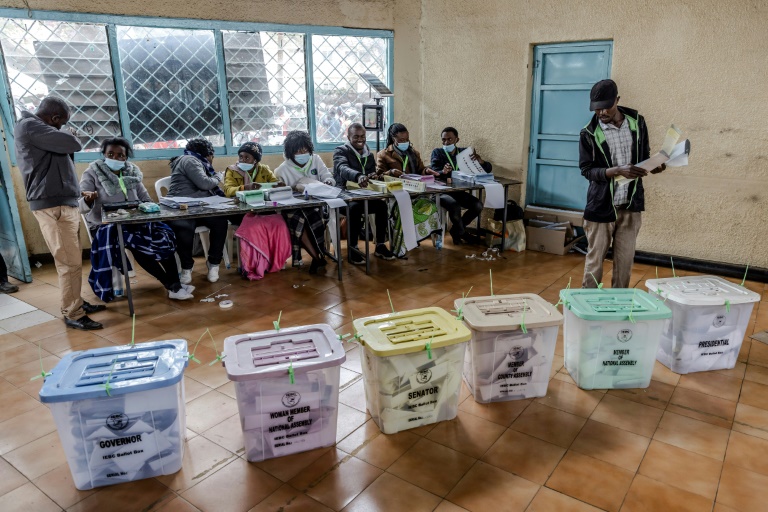
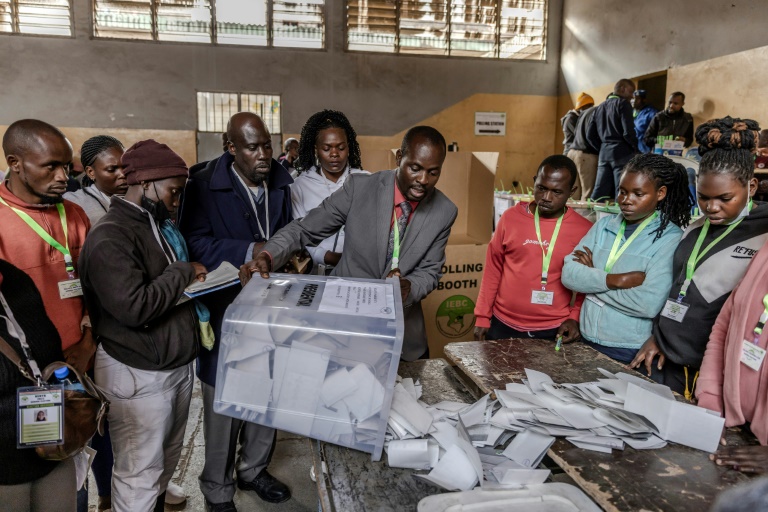
Kenyans waited anxiously on Wednesday for the results of the country’s presidential election after a largely peaceful poll, with low turnout in some areas suggesting growing frustration with the political elite.

Although presidential frontrunners William Ruto and Raila Odinga have both vowed to maintain calm following Tuesday’s poll, the memory of past election-related violence remains fresh for many Kenyans, who have urged political parties to accept the results.

With pressure building on the Independent Electoral and Boundaries Commission (IEBC), which has to declare the results by August 16, officials worked overnight to count votes and dispel rigging fears.

“We call for patience among Kenyans as we undertake this rigorous exercise and also endeavour to complete this exercise as soon as possible,” IEBC chairman Wafula Chebukati said in a late-night briefing.

Kenyans, some of whom lined up before dawn to cast their ballot, voted in six elections on Tuesday, choosing a new president as well as senators, governors, lawmakers, woman representatives and some 1,500 county officials.

Despite the early show of enthusiasm however, turnout in some areas appeared to be weak, suggesting that for some Kenyans at least, patience with years of unfulfilled promises was running out.

Even those who showed up early to vote said they were tired of electing political leaders who had done little to improve their lives.

“All along we have been doing elections, getting promises but we see no change,” said George Otieno Henry, a 56-year-old artisan.

“I hope this time it will be better,” he told AFP in Kibera, one of Nairobi’s largest slums.

By 4:00 pm (1300 GMT), 10 hours after polling began, turnout was at just over 56 percent of the 22 million registered voters, according to the IEBC.

Comparable figures for the August 2017 election were not immediately available but overall turnout reached 78 percent in that vote.

– Cost-of-living crisis –

Deputy President Ruto and Odinga, a veteran opposition leader now backed by the ruling party, have both pledged to tackle the cost-of-living crisis and ease the lives of ordinary Kenyans.

But many are bracing for the pair to spar over the results, reflecting earlier polls in the East African nation where no presidential election outcome has gone uncontested since 2002.

Once the heir-apparent, Ruto, 55, found himself banished to the sidelines after two-term President Uhuru Kenyatta — who cannot run for a third time — joined hands with his former foe Odinga, 77, in a move that stunned the country.

Since then, the wealthy businessman has cast himself as the champion of “hustlers” trying to eke out a living in a country ruled by “dynasties” — the Kenyatta and Odinga families that have dominated Kenyan politics since independence from Britain in 1963.

With a third of Kenya’s population living in poverty, economic pressures weighed on voters even before the war in Ukraine sent the prices of essential goods soaring.

Prior to the election, some observers surmised that the economy could surpass tribal affiliations as a key factor driving voter behaviour, while others said politicians’ failure to tackle the crisis could keep people away from the ballot all together.

“Many Kenyans… have cited their lack of faith in politicians to improve their current economic circumstances as the main reason for not participating in the August polls,” Oxford Economics said in a note last week.

– ‘Calm and peaceful’ –

Analysts have suggested that Odinga, a onetime political prisoner and former prime minister who is making his fifth stab at the presidency, could edge past his younger rival.

If neither wins more than 50 percent, Kenya will stage a run-off for the first time in its history.

Kenya’s international partners are closely watching the election in a country deemed a beacon of regional stability.

Local polls were suspended in several areas on Tuesday, triggering a protest in one case, but police said the electoral process had largely “remained calm and peaceful with no major incidents to report”.

Security was tight, with a view to preventing a repeat of the post-election violence that has hit Kenya in the past.

The 2007 poll was followed by politically motivated ethnic clashes that killed more than 1,100 people, while Odinga’s challenge to the 2017 election result was met with a heavy-handed police response that left dozens dead.

US 'concerned' by reports of Rwandan support for DRC rebels

Secretary of State Antony Blinken on Tuesday said the United States was “concerned” by “credible” reports that Rwanda is supporting rebels in eastern Democratic Republic of Congo.

The resurgence of the M23 group in Congo’s restive east has exacerbated tensions between the neighbours, with Kinshasa accusing Kigali of backing the rebels.

Blinken was speaking in the Congolese capital Kinshasa, where he arrived on Tuesday for the second leg of a three-nation African tour and met President Felix Tshisekedi.

Rwanda has denied the allegations and Blinken is due to visit the country following a one-day stay in the DRC.

“We are very concerned by credible reports that Rwanda has supported the M23,” the top US diplomat told a press conference in Kinshasa. 

“All countries have to respect their neighbours’ territorial integrity. Any entry of foreign forces into the DRC must be done transparently and with the consent of the DRC.”

Blinken added that he was “not turning a blind eye” and would discuss the issue with Rwandan President Paul Kagame.

He said his trip to the region was to ensure US support for mediation efforts led by Angola and Kenya “to prevent further violence, to end conflict (and) to preserve the territorial integrity of the DRC”.

He spoke after visiting South Africa on Monday, where he said the United States was seeking a “true partnership” with Africa.

– Strained relations –

The DRC is seeking international support as it struggles with Rwanda over the M23, a primarily Congolese Tutsi group that is one of many operating in the troubled east.

After lying mostly dormant for years, the rebels resumed fighting late last year, seizing the strategic town of Bunagana on the Ugandan border in June and prompting thousands of people to flee their homes.

In a 131-page report to the UN Security Council seen last week by AFP, experts said Rwandan troops had intervened militarily inside the DRC since at least November. 

Rwanda also “provided troop reinforcements” for specific M23 operations, the experts’ report said, “in particular when these aimed at seizing strategic towns and areas”.

Congolese Foreign Minister Christophe Lutundula on Tuesday urged the United Nations to make the report public.

“We demand the Security Council publish (this) report in its entirety,” he said.

Kinshasa and Kigali have had strained relations since the mass influx of Rwandan Hutus accused of slaughtering Tutsis during the 1994 Rwanda genocide.

Relations began to thaw after Tshisekedi took office in 2019 but the M23’s resurgence has revived tensions.

The group, also known as the “March 23 Movement”, first leapt to prominence in 2012 when it briefly captured the city of Goma before a joint Congolese-UN offensive drove it out.

Kenyan President Uhuru Kenyatta has led an initiative to disarm the active rebel groups, while Angolan counterpart Joao Lourenco has worked to ease tensions between Kinshasa and Kigali.

– Rwanda and M23 –

Blinken arrived in Kinshasa from South Africa, where he said the United States was seeking a “true partnership” with Africa and was not vying with other powers for influence on the continent.

Tshisekedi was to “raise the questions of strategic partnership” between the DRC and the United States during his meeting with Blinken at the presidential palace, his office said in a statement Monday.

On the eve of Blinken’s swing through the DRC and Rwanda, Human Rights Watch (HRW) urged him to condemn the M23 attacks and press Rwanda on its rights record, which included a “brutal” crackdown on dissent.

“As in 2012, the M23 are committing war crimes against civilians,” said a HRW statement.

“Witnesses described summary killings of at least 29 people, including children, in June and July… The US should raise with Rwanda the reliable reports that it is again supporting the M23’s abusive conduct in eastern Congo.”

The M23 is just one of scores of armed groups that roam eastern DRC, many of them a legacy of two regional wars that flared late last century.

One of the bloodiest militias is the Allied Democratic Forces (ADF) — an organisation the Islamic State group describes as its “Central Africa Province” affiliate.

The US State Department placed the ADF on its list of IS-linked “terrorist” organisations in March 2021.

Guinea dissolves FNDC opposition coalition

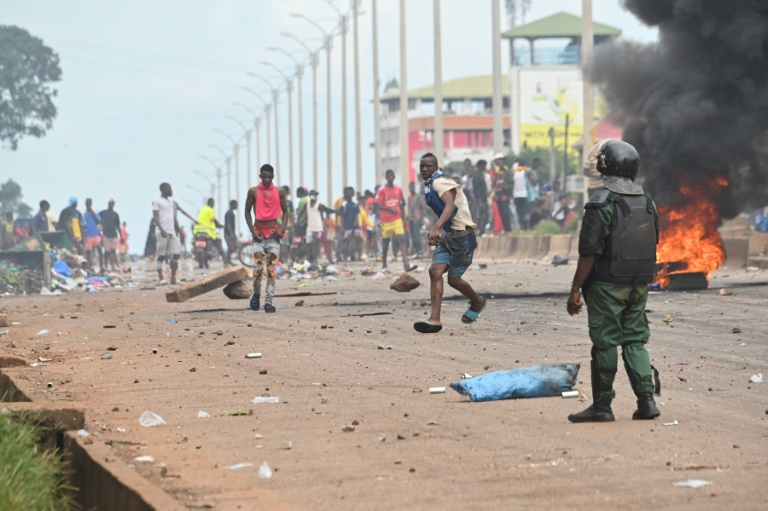
Guinea’s junta-appointed government has dissolved the country’s leading opposition movement, the National Front for the Defence of the Constitution (FNDC), under a decree authenticated by AFP on Tuesday.

An alliance of political parties, trade unions and civil groups, the FNDC spearheaded protests against former president Alpha Conde before his ouster in a coup last year.

Friction has been growing for months between the FNDC and the junta, culminating in an announcement by the coalition on Monday that it would stage demonstrations on August 17.

A decree, dated Saturday, declared the FNDC’s dissolution, signed by Territorial Administration Minister Mory Conde. It was authenticated by AFP on Tuesday.

“The de-facto group called the National Front for the Defence of the Constitution, is dissolved… with effect from the date of signature,” the ruling said.

Rumours of the decree had spread on social media late Monday.

It said the FNDC’s “operational mode is based on violent attacks (perpetrated) during banned demonstrations, attacks against individuals who do not share their ideology, and targeted attacks against the security forces”.

The organisation has “the behaviour of combat groups and private militias… threatening national unity, public peace and cohabitation”, it said. 

– Unstable –

Rich in minerals but deeply poor, the West African state has had little stability since it gained independence from France in 1958.

In 2010, Conde, today aged 84, became the country’s first democratically elected president.

But his popularity dived in his second term as critics accused him of authoritarianism, and opposition protests were violently repressed.

Dozens died, the overwhelming majority of them civilians, in protests launched by the FNDC.

On September 5, as anger mounted over Conde’s successful bid for a third term — a move he defended on the grounds of a change to the constitution — mutinous troops rebelled.

Junta strongman Mamady Doumbouya has pledged to return power to elected civilians within three years.

The timeline has put the junta into conflict with the region’s bloc, the Economic Community of West African States (ECOWAS).

ECOWAS’ chair, Guinea-Bissau President Umaro Sissoco Embalo, said late last month that he had convinced the junta to shorten the transition to two years. But that figure has not been confirmed by Guinea.

Cellou Dalein Diallo, a leading opposition figure under Conde, condemned the decision to dissolve the FNDC, calling it “a blow to freedom, justice, democracy and peace” in a social media post. 

– Protests –

Demonstrations broke out in Guinea on July 28 and 29 over concerns the junta was dragging its feet on restoring civilian rule, leaving five dead.

The FNDC on Monday called for nationwide protests on August 17 to condemn the lack of “credible dialogue” and use of lethal weapons against demonstrators. The organisation is also calling for the release of jailed supporters.

The coalition’s communications officer, Abdoulaye Oumou Sow, refused to comment Tuesday on the dissolution order.

But the Guinean Organisation for the Defence of Human Rights (OGDH) separately warned that “confiscating civil liberties or silencing all dissenting voices will only make the situation more complicated.”

It said it was “very concerned… by the turn of events”.

Two FNDC leaders, Oumar Sylla and Ibrahima Diallo, were jailed after the July demonstrations.

They have been charged with taking part in an illegal gathering, destruction of property and bodily harm.

The organisation suspended its activities for a week, including a demonstration planned for August 4, in response to an appeal for calm issued by ECOWAS on August 1.

US 'concerned' by reports of Rwandan support for DRC rebels

Secretary of State Antony Blinken on Tuesday said the United States was “concerned” by “credible” reports that Rwanda is supporting rebels in eastern Democratic Republic of Congo.

The resurgence of the M23 group in Congo’s restive east has exacerbated tensions between the neighbours, with Kinshasa accusing Kigali of backing the rebels.

Blinken was speaking in the Congolese capital Kinshasa, where he arrived on Tuesday for the second leg of a three-nation African tour and met President Felix Tshisekedi.

Rwanda has denied the allegations and Blinken is due to visit the country following a one-day stay in Kinshasa.

“We are very concerned by credible reports that Rwanda has supported the M23,” the top US diplomat told a press conference in Kinshasa. 

“All countries have to respect their neighbours’ territorial integrity,” he added, saying he was “not turning a blind eye” and would discuss the issue with Rwandan President Paul Kagame.

Blinken said his trip to the region was to ensure US support for mediation efforts led by Angola and Kenya “to prevent further violence, to end conflict (and) to preserve the territorial integrity of the DRC”.

The DRC is seeking international support as it struggles with Rwanda over the M23, a primarily Congolese Tutsi group that is one of many operating in the troubled east.

After lying mostly dormant for years, the rebels resumed fighting late last year, seizing the strategic town of Bunagana on the Ugandan border in June and prompting thousands of people to flee their homes.

In a 131-page report to the UN Security Council seen last week by AFP, experts said Rwandan troops had intervened militarily inside the DRC since at least November. 

Rwanda also “provided troop reinforcements” for specific M23 operations, the experts’ report said, “in particular when these aimed at seizing strategic towns and areas”.

Kinshasa and Kigali have had strained relations since the mass influx of Rwandan Hutus accused of slaughtering Tutsis during the 1994 Rwanda genocide.

Relations began to thaw after Tshisekedi took office in 2019 but the M23’s resurgence has revived tensions.

The group, also known as the “March 23 Movement”, first leapt to prominence in 2012 when it briefly captured the city of Goma before a joint Congolese-UN offensive drove it out.

– Rwanda and M23 –

Blinken arrived in Kinshasa from South Africa, where he said the United States was seeking a “true partnership” with Africa and was not vying with other powers for influence on the continent.

Tshisekedi was to “raise the questions of strategic partnership” between the DRC and the United States during his meeting with Blinken at the presidential palace, his office said in a statement Monday.

On the eve of Blinken’s swing through the DRC and Rwanda, Human Rights Watch (HRW) urged him to condemn the M23 attacks and press Rwanda on its rights record, which included a “brutal” crackdown on dissent.

“As in 2012, the M23 are committing war crimes against civilians,” said a HRW statement.

“Witnesses described summary killings of at least 29 people, including children, in June and July… The US should raise with Rwanda the reliable reports that it is again supporting the M23’s abusive conduct in eastern Congo.”

The M23 is just one of scores of armed groups that roam eastern DRC, many of them a legacy of two regional wars that flared late last century.

One of the bloodiest militias is the Allied Democratic Forces (ADF) — an organisation the Islamic State group describes as its “Central Africa Province” affiliate.

The State Department placed the ADF on its list of IS-linked “terrorist” organisations in March 2021.

Guinea dissolves FNDC opposition coalition

Guinea’s junta-appointed government has dissolved the country’s leading opposition movement, the National Front for the Defence of the Constitution (FNDC), under a decree dated Saturday.

An alliance of political parties, trade unions and civil groups, the FNDC spearheaded protests against former president Alpha Conde before his ouster in a coup last year.

Friction has been growing for months between the FNDC and the junta, culminating in an announcement by the coalition on Monday that it would stage demonstrations on August 17.

A decree declaring the FNDC’s dissolution, signed by Territorial Administration Minister Mory Conde, was authenticated by AFP on Tuesday.

“The de-facto group called the National Front for the Defence of the Constitution, is dissolved… with effect from the date of signature,” the ruling said.

Rumours of the decree had spread on social media late Monday.

The decree said the FNDC’s “operational mode is based on violent attacks (perpetrated) during banned demonstrations, attacks against individuals who do not share their ideology, and targeted attacks against the security forces”.

The organisation has “the behaviour of combat groups and private militias… threatening national unity, public peace and cohabitation”, it said. 

– Unstable –

Rich in minerals but deeply poor, the West African state has had little stability since it gained independence from France in 1958.

In 2010, Conde, today aged 84, became the country’s first democratically elected president.

But his popularity dived in his second term as critics accused him of authoritarianism, and opposition protests were violently repressed.

Dozens died, the overwhelming majority of them civilians, in protests launched by the FNDC.

On September 5, as anger mounted over Conde’s successful bid for a third term — a move he defended on the grounds of a change to the constitution — mutinous troops rebelled.

Junta strongman Mamady Doumbouya has pledged to return power to elected civilians within three years.

The timeline has put the junta into conflict with the region’s bloc, the Economic Community of West African States (ECOWAS).

ECOWAS’ chair, Guinea-Bissau President Umaro Sissoco Embalo, said late last month that he had convinced the junta to shorten the transition to two years. But the figure has not been confirmed by Guinea.

– Protests –

Demonstrations broke out in Guinea on July 28 and 29 over perceptions that the junta was dragging its feet on restoring civilian rule, leaving five dead.

The FNDC on Monday called for nationwide protests on August 17 to condemn the lack of “credible dialogue” and use of lethal weapons against demonstrators. The organisation is also calling for the release of jailed supporters.

The coalition’s communications officer, Abdoulaye Oumou Sow, refused to comment Tuesday on the dissolution order.

But the Guinean Organisation for the Defence of Human Rights (OGDH) separately warned that “confiscating civil liberties or silencing all dissenting voices will only make the situation more complicated.”

It said it was “very concerned… by the turn of events”.

Two FNDC leaders, Oumar Sylla and Ibrahima Diallo, were jailed after the July demonstrations.

They have been charged with taking part in an illegal gathering, destruction of property and bodily harm.

The organisation suspended its activities for a week, including a demonstration planned for August 4, in response to an appeal for calm issued by ECOWAS on August 1.

Blinken arrives in DR Congo on 2nd leg of African tour

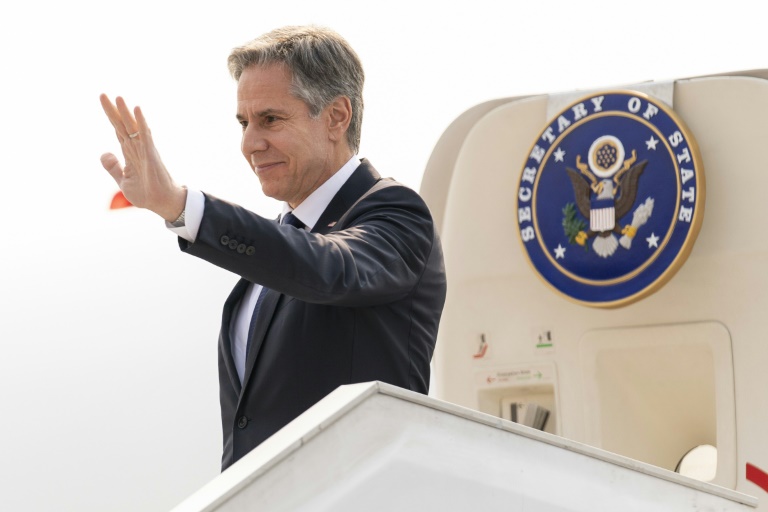
US Secretary of State Antony Blinken arrived in DR Congo on Tuesday for a one-day visit expected to focus on a conflict in the east of the country that has sparked tensions with Rwanda.

Blinken, on the second leg of an African tour, was met at Kinshasa’s Ndjili Airport by Foreign Minister Christophe Lutundula, the president’s office said.

He and President Felix Tshisekedi will have a “one-on-one” meeting at the presidential palace in the evening, it said in a statement. 

The Democratic Republic of Congo is seeking international support as it tussles with neighbouring Rwanda over an armed group, the M23, in the country’s deeply troubled east.

The DRC accuses Rwanda of backing the rebels — an assertion repeatedly denied by Kigali, which Blinken will visit immediately after his one-day stay in Kinshasa.

Tshisekedi “will not fail to raise the questions of strategic partnership between the DRC and the USA”, the presidential office said in a statement on Monday.

Blinken arrived from South Africa, where he said the United States was seeking a “true partnership” with Africa and was not vying with other powers for influence on the continent.

The M23 — for “March 23 Movement” — is a primarily Congolese Tutsi group.

It first leapt to prominence in 2012 when it briefly captured the eastern DRC city of Goma before a joint Congolese-UN offensive drove it out.

After lying mostly dormant for years, the rebel group resumed fighting late last year, seizing the strategic town of Bunagana on the Ugandan border in June and prompting thousands of people to flee their homes.

Kinshasa and Kigali have had strained relations since the mass influx of Rwandan Hutus accused of slaughtering Tutsis during the 1994 Rwanda genocide.

Relations began to thaw after Tshisekedi took office in 2019 but the M23’s resurgence has revived tensions.

– Rwanda and M23 –

On the eve of Blinken’s swing through the DRC and Rwanda, Human Rights Watch (HRW) urged him to condemn the M23 attacks and press Rwanda on its rights record, which included a “brutal” crackdown on dissent.

“As in 2012, the M23 are committing war crimes against civilians,” HRW said in a press release.

“Witnesses described summary killings of at least 29 people, including children, in June and July… The US should raise with Rwanda the reliable reports that it is again supporting the M23’s abusive conduct in eastern Congo.”

In a 131-page report to the UN Security Council seen last week by AFP, experts said Rwandan troops had intervened militarily inside the DRC since at least November. 

Rwanda also “provided troop reinforcements” for specific M23 operations, the experts’ report said, “in particular when these aimed at seizing strategic towns and areas”.

The M23 is just one of scores of armed groups that roam eastern DRC, many of them a legacy of two regional wars that flared late last century.

One of the bloodiest militias is the Allied Democratic Forces (ADF) — an organisation that the Islamic State group describes as its “Central Africa Province” affiliate.

The State Department placed the ADF on its list of IS-linked “terrorist” organisations in March 2021.

Kenyans vote in close-fought election race

Kenya voted for a new president on Tuesday against a backdrop of economic hardship and growing disenchantment with the political elite, with voting largely peaceful but producing low turnout in some areas.

The country is hoping for an orderly transition of power after almost a decade under two-term President Uhuru Kenyatta, but concerns about vote-rigging linger after past election disputes triggered deadly unrest.

Deputy President and erstwhile heir-apparent William Ruto, 55, is running against Raila Odinga, the 77-year-old veteran opposition leader now backed by longtime rival Kenyatta after a stunning shift in allegiances.

Voters lined up well before dawn to cast their ballots in what has been billed as a key test for democracy in a country where ordinary people have become frustrated with political leaders and their failure to deliver on their promises.

By 4:00 pm (1300 GMT), 10 hours after polling began, turnout was at just over 56 percent of the 22 million registered voters, according to the Independent Electoral and Boundaries Commission (IEBC).

Comparable figures for the August 2017 election were not immediately available but overall turnout then reached 78 percent.

Polls were due to close at 5:00 pm (1400 GMT), with some stations reporting sparse turnout as they shut their doors.

Others continued to host queues of waiting voters while polling stations whose opening was delayed will stay open until later.

“Those of them on the queue, all of them will vote — no-one will be turned away,” said Sylvia Amoni, an election officer in a central district of Nairobi.  

Many people said they hoped this year’s vote would make their lives easier as they struggle to put food on the table amid soaring inflation and a crippling drought.

“I have come to vote to pick someone who bring change to this country,” said unemployed 34-year-old Ruth Iminza in the Nairobi slum of Kibera.

“Everything has gone up including school fees for our children.”

– Hope for fair vote –

Pressure is on the IEBC to ensure a free and fair vote in all six polls — for the presidency as well as for senators, governors, lawmakers, woman representatives and some 1,500 county officials.

The IEBC acknowledged that about 200 electronic voter registration devices had failed, out of a total of more than 46,000.  

Polling was suspended in Wajir, a county bordering Somalia, after a gunfight left election officials trapped inside an office where ballots were stored, the IEBC said.

Police also fired tear gas after youths blocked a road with burning tyres in western Nakuru county after a local vote was suspended.

No presidential election outcome has gone uncontested since 2002, and there will be an anxious wait for this year’s results which are not expected for several days.

Analysts have suggested that Odinga, a onetime political prisoner and former prime minister who is making his fifth stab at the presidency, could edge past his younger rival.

If neither wins more than 50 percent, Kenya will stage a run-off for the first time in its history.

Ruto has painted the election as a battle between ordinary “hustlers” and “dynasties” — the Kenyatta and Odinga families that have dominated Kenyan politics since independence from Britain in 1963.

Since neither man belongs to the dominant Kikuyu tribe, which has produced three of the country’s four presidents, the election will open a new chapter in Kenya’s history.

If Odinga wins, his running mate Martha Karua — a Kikuyu — would become deputy president, the first woman to hold the post.

– ‘We want peace’ –

Kenya’s international partners are closely watching the vote in a country deemed a beacon of regional stability. 

Both Odinga and Ruto have urged a peaceful election, but fears remain that if the loser challenges the outcome — as widely expected — there could be unrest.

Security was tight, with more than 150,000 officers deployed across the country of about 50 million.

The trauma of the 2007 poll, which was followed by politically motivated ethnic clashes that killed more than 1,100 people, runs deep.

Odinga’s challenge to the 2017 election result that saw then foe Kenyatta re-elected was met with a heavy-handed police response that left dozens dead.

Some observers say economic pressure could vie with tribal allegiance as the big motivator for voters in a country where a third of the population lives in poverty.

The new president will have to tackle the cost-of-living crisis, youth unemployment, a $70-billion debt mountain and entrenched corruption.

But first, he will have to make peace with his opponent, Kenyans say.

“There should be no violence. Whoever wins, we will support them and the person who fails should support the winner,” said unemployed Mary Musera, who woke up at 3:00 am to vote in Kibera.

“We want peace.”

Blinken arrives in DR Congo on 2nd leg of African tour

US Secretary of State Antony Blinken arrived in DR Congo on Tuesday for a one-day visit expected to focus on a conflict in the east of the country that has sparked tensions with Rwanda.

Blinken, on the second leg of an African tour, was met at Kinshasa’s Ndjili Airport by Foreign Minister Christophe Lutundula, the president’s office said.

He and President Felix Tshisekedi will have a “one-on-one” meeting at the presidential palace in the evening, it said in a statement. 

The Democratic Republic of Congo is seeking international support as it tussles with neighbouring Rwanda over an armed group, the M23, in the country’s deeply troubled east.

The DRC accuses Rwanda of backing the rebels — an assertion repeatedly denied by Kigali, which Blinken will visit immediately after his one-day stay in Kinshasa.

Tshisekedi “will not fail to raise the questions of strategic partnership between the DRC and the USA”, the presidential office said in a statement on Monday.

The M23 — for “March 23 Movement” — is a primarily Congolese Tutsi group.

It first leapt to prominence in 2012 when it briefly captured the eastern DRC city of Goma before a joint Congolese-UN offensive drove it out.

After lying mostly dormant for years, the rebel group resumed fighting late last year, seizing the strategic town of Bunagana on the Ugandan border in June and prompting thousands of people to flee their homes.

Kinshasa and Kigali have had strained relations since the mass influx of Rwandan Hutus accused of slaughtering Tutsis during the 1994 Rwanda genocide.

Relations began to thaw after Tshisekedi took office in 2019 but the M23’s resurgence has revived tensions.

The M23 is just one of scores of armed groups that roam eastern DRC, many of them a legacy of two regional wars that flared late last century.

One of the bloodiest militias is the Allied Democratic Forces (ADF) — an organisation that the Islamic State group describes as its “Central Africa Province” affiliate.

The State Department placed the ADF on its list of IS-linked “terrorist” organisations in March 2021.

On the eve of Blinken’s swing through the DRC and Rwanda, Human Rights Watch (HRW) urged him to condemn the M23 attacks and press Rwanda on its rights record, which included a “brutal” crackdown on dissent.

Blinken arrived from South Africa, where he said the United States was seeking a “true partnership” with Africa and was not vying with other powers for influence on the continent.

War, poverty, no internet: The trials of a C.Africa rapper

Clad in a fluorescent jumpsuit and high-top sneakers, Cool Fawa grabs the microphone and fires up the audience.

The rapper and hip-hop singer launches confidently into her best-known song, “Valide” (“Validated”), and the swaying crowd sings to the chorus.

Her gig is a bar in Bangui, the capital of the Central African Republic — arguably one of the toughest countries in the world for a female rapper to seek stardom.

In the music business, talent is drawn to mega-cities in wealthy countries and would-be stars use the internet to pitch their songs and videos.

By that metric, the CAR does not even register on the scale.

Remote and landlocked, the country has been torn by civil war for more than nine years. 

Its people are among the poorest on the planet. Only 10 percent of the population of some five million have access to the internet.

– Radical rap –

Such problems do not deter Cool Fawa, meaning “Cool Girl”.

A music professional since 2012 and aged 27 today, she has more than 4,500 followers on Instagram and notched up more than 50,000 views on YouTube for her 2018 hit “On va se marier” (“We’re Gonna Get Married”).

Such figures are of course tiny compared with the followings of Adele, Beyonce or Taylor Swift — but in the context of the CAR, they amount to big recognition.

“I love her music. It gives me hope of succeeding one day,” said a 16-year-old girl at the bar in Bangui.

“Cool Fawa, she rocks,” exclaimed a young man.

Cool Fawa — real name Princia Plisson — sings mainly in the former colonial tongue French, with touches of national language Sango and English.

When she first envisaged a musical future in 2010, the CAR was devoid of local women stars.

“I was a fan of Diam’s,” said Cool Fawa, referring to a French rapper, Melanie Georgiades, who shot to fame with a debut album, “Brut de Femme”, that ventured boldly into male territory.

Determined to follow suit, the teenager became the only woman in an all-male revolutionary rap group, MC Fonctionnaire, whose songs attacked poverty and inequality.

“At first they didn’t take me seriously but they ended up accepting me,” she said.

But, she said, “My music was frowned upon — there were parents who no longer wanted their daughters to associate with me.”

– Always hustle –

Within a couple of years, her fledgling career went up in smoke.

Civil war erupted along sectarian lines, triggered by the overthrow of president Francois Bozize by mainly Muslim rebels.

“We couldn’t go out anymore, we were afraid of taking a bullet or being kidnapped,” she said.

After violence de-escalated, Cool Fawa revived her career, focusing more on male-female relationships with a “zouk-love” rhythm — a lyrical genre from distant Haiti that spread from the Caribbean. 

“That’s what sells,” she said, with a touch of regret. “For most people in the CAR, rap is a music for losers.”

Surviving means having to hustle, for money is a constant struggle. 

She has received some support from her relatives, although she comes from a modest background, and has received some backing from the ministry of arts and culture.

“Sponsors too often try things on sexually,” she said. “I quickly realised that I had to fund my music myself.”

Cool Fawa has a small business that she manages with her sister.

“We buy wigs, shoes, bags… abroad to resell them here. This enables me to pay for the recording of my songs in (neighbouring) Cameroon.” Her goal is to release her first album.

Cool Fawa earns a living from concerts, but not yet with revenue from songs and videos on YouTube, given the public’s lack of access to the internet.

“People around me always comment negatively on what my daughter is doing,” said her mother Cecile Yohoram, a high-school English teacher. 

“But as soon as I hear her sing, I feel proud.”
Close Bitnami banner
Bitnami