Africa Business

Former South African umpire Koertzen dies in car accident

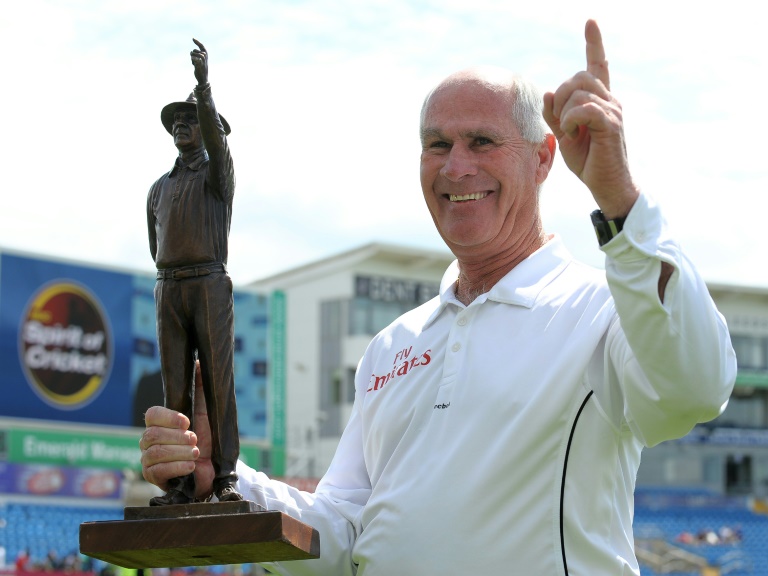
Former South African umpire Rudi Koertzen, labelled the ‘slow finger of death’ by the media, has died in a car accident, a family member told AFP on Tuesday. He was 73.

“Rudi suffered fatal injuries after an accident near Stilbaai between Cape Town and Gqeberha,” said the family spokesperson, who requested anonymity.

“My father went to a golf tournament with some friends and they were expected to come back on Monday, but it seems they decided to play another round of golf,” his son Rudi told a Gqeberha radio station.

The South African team will wear black armbands on Wednesday in honour of Koertzen when they face England at Lord’s in London in a Test match.

Koertzen first umpired in 1981, handled his maiden international assignment 11 years later, and retired in 2010 after a Test between Australia and Pakistan in Leeds, England.

He became known as the ‘slow finger of death’ because he very slowly raising his finger whenever indicating a batsman was out.

“Every umpire has their trademark and that was mine. The media labelled it the ‘slow finger of death’ and I found that pretty interesting. There is a story behind it,” Koertzen said in an interview.

“When my umpiring career first began, I used to hold my hands in front of me and every time there was an appeal, I would fold them against my ribs,” said Koertzen.

“The someone told me ‘Rudi, you cannot do that. Every time you raise your hands to fold them, the bowler thinks you are going to give him a wicket’.”

“So I started clasping my wrists at the back. The finger comes out slowly because it takes time for me to release my grasp at the back.”

Hope for change, prayers for peace as Kenya votes

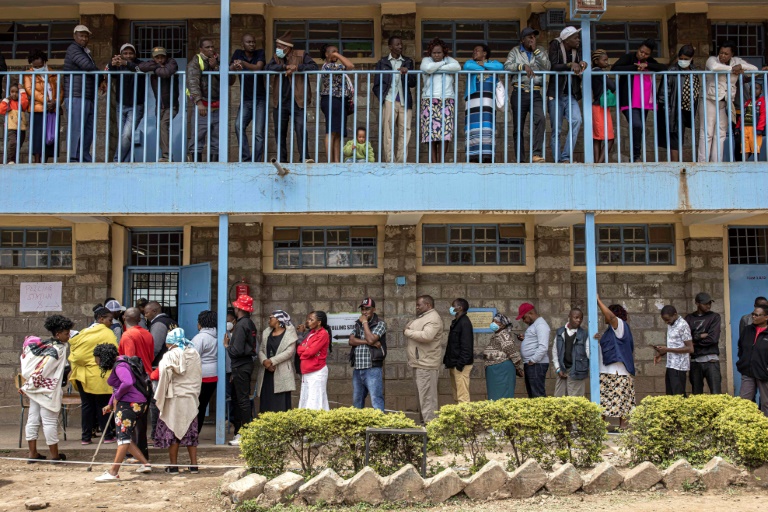
From Nairobi slums to Rift Valley towns, Kenyans voiced cautious hope for change and a peaceful future, flocking to polling stations well before voting opened across the nation on Tuesday.

None were in any doubt about the high stakes involved in this year’s presidential poll as the East African country of 50 million people struggles with inflation, corruption and an unemployment crisis.

In Kibera, one of the largest slums in Kenya’s capital Nairobi, thousands lined up to cast their ballot, trying to shrug off memories of past disappointments in the hope that this vote would prove lucky for them and ease their hardship.

“All along we have been doing elections, getting promises but we see no change. I hope this time it will be better,” George Otieno Henry, a 56-year-old artisan, told AFP.

Around 270 kilometres (170 miles) northwest, the mood in the lakeside city of Kisumu — the stronghold of presidential candidate Raila Odinga — was festive, with voters loudly proclaiming their support for the former prime minister and motorcylists honking and blowing whistles.

Clara Otieno Opiyo, a 35-year-old vegetable seller, told AFP she left home before dawn to vote, travelling with her five-year-old boy strapped to her back.

“I came here at 4am to vote, having a lot of hope and faith, but if my presidential candidate succeeds, my children’s schooling will be free, I will find work, and my life will change.”

Others even flew in from abroad, eager to ensure they have a say in choosing Kenya’s next leader as well as governors, senators, MPs and other representatives.

Daniel Ouko, a 30-year-old sociology graduate who works in a restaurant in Qatar, flew to his hometown Kisumu from Doha, telling AFP: “It is worth the money. I couldn’t miss the vote.”

– ‘Calm and peaceful’ –

In the Rift Valley town of Eldoret — the stomping ground of Deputy President William Ruto, who is locked in a tight race with Odinga — voters patiently waited in line, swapping colourful “shuka” blankets for umbrellas as the sun emerged.

Despite an ugly campaign rife with mudslinging and rigging claims, calm has largely prevailed, including in Kisumu and Eldoret, which saw a horrific eruption of politically motivated inter-ethnic violence after the 2007 elections.

“This election is different from the others, it’s way (more) calm and peaceful. This one is really good,” Joyce Kosgei, a 52-year-old mother of five, told AFP in the village of Kosachei, where Ruto cast his ballot.

Hussein Kassim, a 35-year-old businessman, shuddered as he recalled witnessing the 2007-2008 clashes in Eldoret as a young man.

“It is high time Kenya should realise voting is just like any other exercise,” he told AFP.

“In every competition, there is a winner and a loser. If your candidate loses, fight another day.”

Even as many sought to cast off the shadow of past violence, rigging fears made a troubling appearance in at least one constituency, where the MP vote was suspended because of incorrect ballot papers.

Around 500 demonstrators protested the suspension in western Kenya’s Rongai constituency, blocking a road with burning tyres as police responded with tear gas.

“There is mischief in all this,” said tomato seller Peninah Tanui, criticising the “incompetent” election commission for the mix-up, in which the names of some candidates were missing from ballot papers.

The election commission earlier cancelled several local polls, including in the port city of Mombasa, due to erroneous ballot papers.

– ‘Vote, go home, relax’ –

But voting largely passed off peacefully elsewhere, with young and old alike turning up to make their voice heard.

In the town of Kiambu, on the outskirts of Nairobi, a beaming Hellena Nyokabi said she wanted “to vote for leaders who will protect and support this generation and generations to come”.

As onlookers helped the frail 88-year-old walk out of the polling station, she said: “I feel good that I have voted. I have never missed (a) vote all my life.”

And in a race that has struggled to attract interest from Kenyans aged under 35, some first-time voters said they were optimistic the process would conclude peacefully.

“We want to see a new change for the new generation,” said Ibrahim Ahmed Hussein, a 23-year-old student in Kibera — an Odinga bastion.

“I expect people to vote wisely and go back home so as to maintain peace and order,” he told AFP.

“Vote, go home and relax.”

Ten killed in jihadist attack in northern Burkina

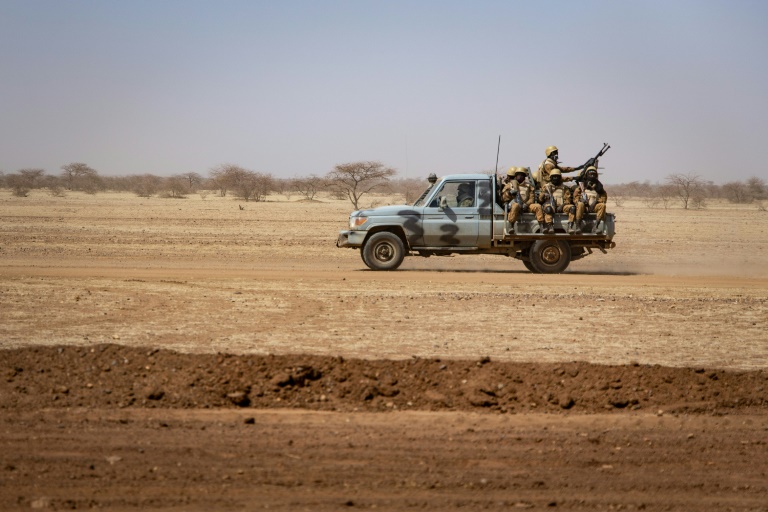
Ten civilians, including four security auxiliaries, have been killed by suspected jihadists in northern Burkina Faso, a security source said on Tuesday.

Six civilians and four members of the VDP auxiliary force died on Monday in an attack in Sima, in Yatenga province, the source said, adding that “several” others were wounded.

The assailants withdrew after reinforcements and air support arrived, another security official said.

A member of the VDP — the Volunteers for the Defence of the Fatherland — confirmed the attack but gave no toll.

“Several volunteers are listed as missing,” this source said.

The landlocked Sahel state is wrestling with a seven-year-old jihadist insurgency that has claimed thousands of lives and driven some two million people from their homes.

More than 40 percent of the country is no longer under government control, according to official figures.

Burkina’s elected president, Roch Marc Christian Kabore, was overthrown in January by colonels angered at failures to stem the bloodshed.

After a lull, attacks resumed and have escalated in recent months.

On June 11, 86 people were massacred at Seytenga in the northwest, in one of the bloodiest acts of the long-running insurgency.

Thirty-four villagers were killed on July 2-3 in the north and northwest. 

Set up in December 2019, the VDP comprises civilian volunteers who are given two weeks’ military training and then work alongside the army, typically carrying out surveillance, information-gathering or escort duties. 

The force has paid a high price. Last Thursday, nine volunteers and four soldiers were killed in Bourzanga, also in the north of the country.

In June, military commanders said the VDP would be reorganised so that it would be “completely integrated into the military and security structure deployed for fighting terrorism.”

Kenyans vote in droves in close-fought election race

Kenyans lined up before dawn to vote in a high-stakes election Tuesday, with the East African powerhouse on edge as two political heavyweights battle it out in a tight race for the presidency.

The country is hoping for a peaceful transition of power after almost a decade under President Uhuru Kenyatta, but concerns about vote-rigging linger after past election disputes spiralled into bloodshed.

More than 22 million people, about 40 percent of them under 35, are registered to vote in an election held against a backdrop of soaring inflation, a punishing drought and disenchantment with the political elite.

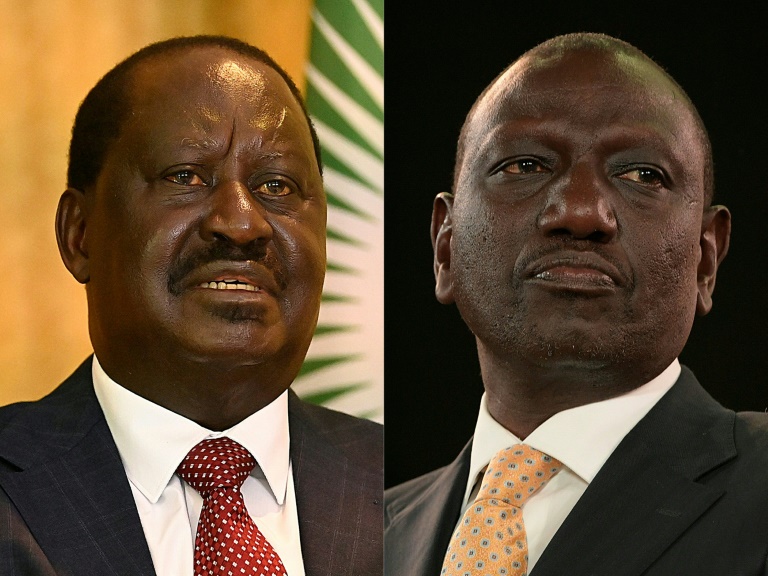
Deputy president and erstwhile heir-apparent William Ruto, 55, is running against Raila Odinga, the 77-year-old veteran opposition leader now backed by longtime rival Kenyatta after a stunning shift in allegiances.

After a vitriolic campaign, voting was generally smooth.

But some incidents of delays in opening polling stations and problems with electronic voter registration equipment were reported. 

And in one area in Nakuru county in western Kenya, police fired tear gas after youths blocked a road with burning tyres.

– ‘Hope my life will change’ –

Ruto was among the first to vote in his Rift Valley stronghold on what he described as “D-day”.

Odinga, who is known as “baba” or father and is making his fifth stab at the presidency, later cast his ballot in the Nairobi slum of Kibera.

In his bastion in the lakeside city of Kisumu, the atmosphere was festive, with motorcylists honking and blowing whistles.

Clara Otieno Opiyo, a 35-year-old vegetable seller who travelled before dawn to vote with her five-year-old boy strapped to her back, said she hoped her vote would ease economic pain for working-class Kenyans like herself.

“I came here at 4am to vote, having a lot of hope and faith, but if my presidential candidate succeeds, my children’s schooling will be free, I will find work, and my life will change.”

Analysts have in recent days suggested that Odinga, a onetime political prisoner and former prime minister could edge past his younger rival.

If neither wins more than 50 percent, Kenya would have to hold a run-off for the first time in its history.

– Tight security –

Pressure is on the Independent Electoral and Boundaries Commission to ensure a free and fair vote in all six polls — for the presidency as well as for senators, governors, lawmakers, woman representatives and some 1,500 county officials.

On Monday, six IEBC officials were arrested and the commission suspended several local polls because of erroneous ballot papers.

Kenya’s international partners are closely watching the vote in a country deemed a beacon of regional stability. Diplomats say they are cautiously optimistic.

Both Odinga and Ruto have urged a peaceful election, but fears remain that if the loser challenges the outcome — as widely expected — there could be unrest.

Security is tight, with more than 150,000 officers deployed across the country of about 50 million.

The trauma of the 2007 poll, which was followed by politically motivated ethnic clashes that killed more than 1,100 people, runs deep.

Odinga’s challenge to the 2017 election result that saw then foe Kenyatta re-elected was met with a heavy-handed police response that left dozens dead.

In a historic first, the Supreme Court annulled the 2017 vote, citing widespread irregularities.

No presidential election outcome has gone uncontested since 2002, and there will be an anxious wait for this year’s results which are not expected for several days.

As neither Ruto nor Odinga belong to the dominant Kikuyu tribe, which has produced three of the country’s four presidents, the election will open a new chapter in Kenya’s history.

– ‘New generation’ –

Ruto has painted the election as a battle between ordinary “hustlers” and “dynasties” — the Kenyatta and Odinga families that have dominated Kenyan politics since independence from Britain in 1963.

Some observers say economic pressure could vie with tribal allegiance as the big motivator for voters in a country where a third of the population lives in poverty.

Lawyers David Mwaure and George Wajackoyah — an eccentric former spy who wants to legalise marijuana — are also standing for president but are likely to trail far behind the frontrunners.

If Odinga wins, his running mate Martha Karua would become deputy president, the first woman to hold the post.

The new president will face challenges to tackle the cost-of-living crisis, youth unemployment, a $70-billion debt mountain and entrenched corruption.

Already battered by the Covid pandemic which threw hundreds of thousands out of work, Kenyans are now suffering from the Ukraine war, which has sent prices of basic goods spiralling.

“Our country is now full of corruption, we want someone to deal with the issue permanently,” said first-time voter Ibrahim Ahmed Hussein, a 23-year-old student, in Kibera.

“I am voting so as to choose a leader who will change this country totally. Now we want to see a new change for the new generation.”

Jittery Kenya votes in close-fought election race

Kenyans lined up before dawn to vote in a high-stakes election Tuesday, with the East African powerhouse on edge as two political heavyweights battle it out in a fiercely contested race for the presidency.

Kenyans are praying for a peaceful transition of power after almost a decade under President Uhuru Kenyatta, but concerns about vote-rigging linger in a nation still haunted by previous election disputes that descended into deadly violence.

More than 22 million people are registered to vote in an election taking place against a backdrop of soaring prices for food and fuel, a punishing drought that has left millions hungry, and deep disenchantment with the political elite, particularly among the youth.

Deputy president and erstwhile heir apparent William Ruto, 55, is pitted against Raila Odinga, the 77-year-old veteran opposition leader now backed by his longtime rival Kenyatta after a stunning shift in political allegiances.

Ruto, who portrays himself as the “hustler-in-chief” championing the poor, was among the first to vote in his Rift Valley stronghold on what he described as “D-day”.

“I am confident that the people of Kenya will make the right choice that will take Kenya to the future,” he said. “It is upon all of us to respect the choice of Kenyans and I look forward to a victorious day.”

In Odinga’s stronghold in the lakeside city of Kisumu, voters in lines many hundreds of metres long queued in the dark outside polling stations as motorcyclists passed by honking and blowing whistles.

“I woke up early so that I go and choose my leader who might bring change. I have hope in that,” Moses Otieno Onam, 29, told AFP.

Polling stations opened from 6:00 am (0300 GMT) and are due to close at 5:00 pm (1400 GMT).

Analysts have in recent days suggested that Odinga, a onetime political prisoner and former prime minister who is making his fifth bid for the top job, could narrowly edge past his younger rival.

But if neither wins more than 50 percent, Kenya would be forced to hold a run-off for the first time in its history.

– Pleas for peaceful vote –

Despite mudslinging on the hustings and widespread disinformation, campaigning passed off largely peacefully in contrast to previous polls.

Pressure is on the Independent Electoral and Boundaries Commission to ensure a free and fair vote in all six polls — for the presidency as well as for senators, governors, lawmakers, woman representatives and some 1,500 county officials.

But already, the election has run into some hitches, with six IEBC officials arrested Monday and the commission suspending several local polls because of erroneous ballot papers.

Kenya’s international partners are keenly watching the vote in a country considered a beacon of stability in a troubled region, with diplomats voicing cautious optimism it will pass off largely violence-free.

Both Odinga and Ruto have called for a peaceful vote, but fears remain that if the losing candidate challenges the outcome — as widely expected — the discord could erupt into street fighting.

Security is tight, with more than 150,000 officers being deployed.

The trauma of the 2007 election, which was followed by a horrific bout of politically motivated ethnic clashes that killed more than 1,100 people, still looms large.

And Odinga’s challenge to the 2017 election result that saw then foe Kenyatta re-elected was met with a heavy-handed police response that left dozens dead.

The Supreme Court ordered a rerun in 2017, citing widespread irregularities.

No presidential election outcome has gone uncontested since 2002, and there will be an anxious wait for this year’s results which are not expected for several days.

With neither Ruto nor Odinga belonging to the dominant Kikuyu tribe, which has produced three of the country’s four presidents, the election will open a new chapter in Kenya’s history.

– ‘Life is tough’ –

Ruto, who once sold chickens on the roadside, has painted the election as a battle between ordinary “hustlers” trying to put food on the table and “dynasties” — the Kenyatta and Odinga families that have dominated Kenyan politics since independence from Britain in 1963.

Some observers say economic pressures could compete with tribal allegiances as the key factor driving voter behaviour in a country where a third of the population lives in poverty.

Lawyers David Mwaure and George Wajackoyah — an eccentric former spy who wants to legalise marijuana — are also standing for president but are likely to trail far behind the frontrunners.

If Odinga wins, his running mate Martha Karua would become deputy president, the first woman to hold the post.

The new president will face tricky challenges to get the economy back on its feet, rein in Kenya’s mammoth $70 billion debt mountain and tackle the corruption that infects every level of society.

Already hit hard by the Covid pandemic that threw hundreds of thousands out of work, Kenyans are now battling soaring inflation as the war in Ukraine sends prices of basic goods spiralling.

“It’s has become a necessity (to vote) because life has become tough. We need to elect someone to help this economy,” said unemployed 29-year-old Rolland Kwatsima as he cast his ballot in the Nairobi slum of Kibera.

Jittery Kenya votes in close-fought election race

Kenyans lined up to vote in a high-stakes election Tuesday, with the East African powerhouse on edge as two political heavyweights battle it out in a fiercely contested race for the presidency.

Kenyans are praying for a peaceful transition of power after almost a decade under President Uhuru Kenyatta, but concerns about vote-rigging linger in a nation still haunted by previous election disputes that descended into deadly violence.

More than 22 million have registered to vote in an election taking place against a backdrop of soaring prices for food and fuel, a punishing drought that has left millions hungry, and deep disenchantment with the political elite, particularly among the youth.

The deputy president and erstwhile heir apparent William Ruto, 55, is pitted against Raila Odinga, the 77-year-old veteran opposition leader now backed by Kenyatta after a stunning shift in political allegiances.

Before dawn in Odinga’s stronghold in the lakeside city of Kisumu, voters in lines many hundreds of metres long queued in the dark outside polling stations as motorcyclists passed by honking and blowing whistles.

Moses Otieno Onam, 29, said woke up at 3:00 am to be near the front of the queue in Obunga, an informal settlement in the city centre.

“I woke up early so that I go and choose my leader who might bring change. I have hope in that,” he told AFP.

Polling stations opened from 6:00 am (0300 GMT) and are due to close at 5:00 pm (1400 GMT).

Analysts have in recent days suggested that Odinga, a onetime political prisoner and former prime minister who is making his fifth bid for the job, could narrowly edge past his younger rival.

But if neither wins more than 50 percent, Kenya would be forced to hold a run-off for the first time in its history.

Despite mudslinging on the hustings and widespread disinformation, campaigning passed off largely peacefully in contrast to previous polls.

Pressure is on the Independent Electoral and Boundaries Commission to ensure a free and fair vote in all six polls — for the presidency as well as for senators, governors, lawmakers, woman representatives and some 1,500 county officials.

But already, the election has run into some hitches, with six IEBC officials arrested Monday and the commission suspending constituency or gubernatorial polls in several counties because of erroneous ballot papers.

IEBC head Wafula Chebukati vowed that the body would not hesitate to take “stern action” against any official flouting election laws. 

– Beacon of stability –

Kenya’s international partners are keenly watching the vote in a country considered a beacon of stability and democracy in a troubled region, with diplomats voicing cautious optimism it will pass off largely violence-free.

Both Odinga and Ruto have called for a peaceful vote, but fears remain that if the losing candidate challenges the outcome — as widely expected — the discord could erupt into street fighting.

Security is tight, with more than 150,000 officers being deployed.

The trauma of the 2007 election, which was followed by a horrific bout of politically motivated ethnic clashes that killed more than 1,100 people, still looms large.

And Odinga’s challenge to the 2017 election result that saw then foe Kenyatta re-elected was met with a heavy-handed police response which left dozens dead.

The Supreme Court ordered a rerun in 2017, citing widespread irregularities in the counting process and mismanagement by the IEBC.

No presidential election outcome has gone uncontested since 2002, and there will be an anxious wait for this year’s results which are not expected for several days.

“Kenya votes, East Africa holds breath,” was the headline in The East African regional newspaper.

With neither Ruto nor Odinga belonging to the dominant Kikuyu tribe, which has produced three of the country’s four presidents, the election will open a new chapter in Kenya’s history.

– ‘Jobs, jobs, jobs’ –

Ruto, who said he once sold chickens on the roadside, has painted the election as a battle between ordinary “hustlers” and “dynasties” — the Kenyatta and Odinga families that have dominated Kenyan politics since independence from Britain in 1963.

Some observers say economic pressures could compete with tribal allegiances as the key factor driving voter behaviour in a country where a third of the population lives in poverty.

“The reshaped electoral chessboard means the outcome will probably come down to the degree to which Odinga and Ruto can muster support outside their respective bases,” the International Crisis Group’s East and Southern Africa analyst Meron Elias said in a note.

Lawyers David Mwaure and George Wajackoyah — the latter an eccentric former spy who wants to legalise marijuana — are also running but are likely to trail far behind the frontrunners.

If Odinga wins, his running mate Martha Karua would become deputy president, the first woman to hold the post.

Both candidates have vowed to get the economy back on its feet, rein in Kenya’s mammoth $70 billion debt mountain and tackle the corruption that infects every level of society.

Already hit hard by the Covid pandemic that threw hundreds of thousands out of work, Kenyans are now battling soaring inflation as the Ukraine war sends prices of basic necessities spiralling.

Kenya's Ruto: the chicken hawker turned presidential 'hustler'

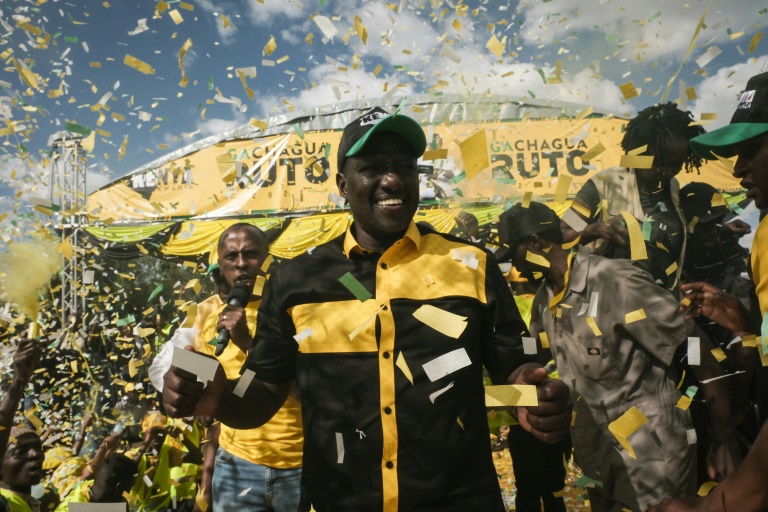
Kenya’s William Ruto, the sharply-dressed deputy president now running for the top office, is one of the wealthiest men in the country but likes to portray himself as a champion of the poor and downtrodden.

Despite being dogged by corruption allegations going back years, the ruthlessly ambitious 55-year-old clawed his way to the corridors of power by playing on his religious faith and humble beginnings selling chickens by the roadside.

He has painted the August 9 poll, set to be a two-horse race between Ruto and veteran politician Raila Odinga, as a battle between ordinary “hustlers” and the elite “dynasties” that have dominated Kenyan politics for decades.

“We want everyone to feel the wealth of this country. Not just a few at the top,” Ruto said as he criss-crossed the country promoting his “bottom-up” economic plan.

Ruto first dipped his toe into politics three decades ago, and has served as deputy president for nine years despite a very public and acrimonious falling out with his boss, the outgoing President Uhuru Kenyatta.

The shadowy rags-to-riches businessman is making his first stab at the presidency — a post he thought he had in the bag as a reward for supporting Kenyatta in the 2013 and 2017 elections.

It was a political marriage of convenience in the aftermath of deadly post-poll violence in 2007-2008 that largely pitted Kikuyus — Kenyatta’s tribe — against the Kalenjin, Ruto’s ethnic group.

Both men were hauled before the International Criminal Court accused of stoking the ethnic unrest but the cases were eventually dropped, with the prosecution complaining of a relentless campaign of witness intimidation.

– ‘Man on a mission’ –

Their so-called “Uhuruto” alliance began unravelling after Kenyatta stunned the nation in 2018 with a pledge to work with Odinga, his longtime arch-rival who is now running with the endorsement of the ruling Jubilee party.

“I’m a man on a mission,” Ruto declared last year, defying the president’s call for him to resign as they clashed over Kenyatta’s — now failed — bid to change the constitution.

Shifting allegiances between political leaders are common in Kenya, where Ruto himself had once lent his support to Odinga before switching to Kenyatta.

“Ruto is seen by many people to be one of the most effective strategists in Kenyan politics,” said Nic Cheeseman, a political scientist at the University of Birmingham.

“He’s someone with extensive experience of running campaigns, performing very well in campaigns, of seeing politics from both sides. He stood with Odinga, he stood with Kenyatta, he knows most of these figures intimately well, he knows their strengths and weaknesses.”

On the campaign trail, Ruto’s venom was directed as much at Kenyatta as his rival at the ballot box, blaming the government for the country’s economic woes and even accusing the president of threatening him and his family.

– ‘Perfect storm’ –

Clad in the bright yellow of his United Democratic Alliance, whose symbol is the humble wheelbarrow, Ruto has sought to reach out to those suffering most from the Covid-induced cost of living crisis that has been aggravated by the war in Ukraine.

“I think what Ruto did that was clever is it’s the perfect time, he picked the perfect storm,” said Kenyan political analyst Nerima Wako-Ojiwa.

But she added: “A lot of people have this fear that if he enters leadership, he is going to be the kind of person that we cannot take out.”

Observers attribute Ruto’s aggressiveness to the fact he has had to struggle to get everything he has achieved in life from his lowly start in Kenya’s Rift Valley, the Kalenjin heartland.

“I sold chicken at a railway crossing near my home as a child… I paid (school) fees for my siblings,” he once said. “God has been kind to me and through hard work and determination, I have something.”

His fortune is now said to run into many millions of dollars, with interests spanning hotels, real estate and insurance as well as a vast chicken farm. 

A teetotal father of six who describes himself as a born-again Christian, Ruto seldom lets a speech go by without thanking or praising God or reciting from the Bible.

He first got a foot on the political ladder — and detractors claim, access to funds — in 1992. After completing studies in botany, he headed the YK’92 youth movement tasked with drumming up support for the autocratic then-president Daniel arap Moi, also a Kalenjin.

In 1997, when he tried to launch his parliamentary career by contesting a seat on his home turf of Eldoret North, Moi told him he was a disrespectful son of a pauper.

Undeterred, Ruto went on to clinch the seat, which he retained in subsequent elections.

His detractors say he siphoned money from the YK’92 project and used it to go into business, and allegations of corruption and land grabs still hang over him.

But he dismisses such claims, once telling local media: “I can account for every coin that I have.”

Commonwealth Games chief looks to bright, 'edgy' future

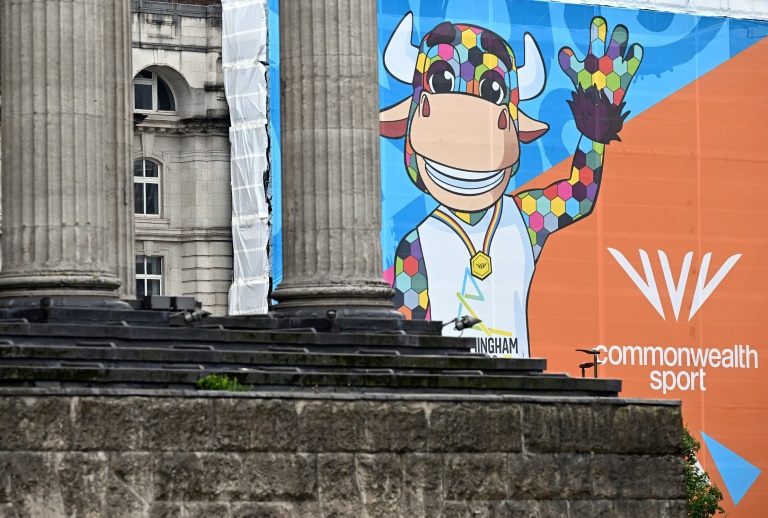
The Commonwealth Games must be “modern and edgy” to stay relevant to a young audience, according to federation chief Katie Sadleir, who praised 2022 host city Birmingham for an “outstanding job”.

The 57-year-old former synchronised swimmer said the Games must show how “they are different and individual” from other events in a cluttered sporting calendar.

The 2022 Games, featuring competitors from 72 nations and territories, many of which are former British colonies, came to an end on Monday, with Australia top of the medals table.

Sadleir, the Commonwealth Games Federation (CGF) chief executive, said ticket sales in the Midlands city were close to matching those of Melbourne in 2006 and the Games had run smoothly despite numerous obstacles.

Birmingham stepped in to organise the Games at relatively short notice after Durban, in South Africa, was forced to pull out due to a number of issues including financial problems.

The city also faced the huge hurdle of coronavirus but succeeded in putting on an event that created a real buzz.

The 2026 Games, to be held in the Australian state of Victoria, will be spread over four hubs — Ballarat, Bendigo, Geelong and Gippsland — rather than centred on one city.

Sadleir hopes that will serve as a model for future events, offering potential bidders more flexibility.

A CGF “roadmap” for the future was rolled out in October, a month before Sadleir took up her role after five years as general manager of women’s rugby at World Rugby.

In future, hosts will be able to feature sports that are relevant to their country, with swimming and athletics the only mandatory events.

“A flexible sports programme brings in sports that are important to you (the host),” said Sadleir.

“Lets look at them being modern and edgy rather than the traditional ones and strike a good balance for the future.”

– ‘Relevant’ –

Sadleir said part of her probation period was “to get 2026 over the line”, which was a huge relief.

“Victoria is a kind of model that works for regions or countries. That is kind of exciting.”

The Australian state has made it clear it wants more than a sporting legacy from the Games.

“Victoria believes in how sport can transform the social and economic issues they are facing,” she said.

“The Victoria government has made a huge commitment to investing in a social housing programme. That will be the legacy.” 

Such a model could open the way for African nations to co-host the Games, perhaps as early as 2034.

Canada’s Hamilton is in the running for the centenary Games in 2030, along with two or three other interested parties.

“At a sports ministers’ conference pre-Games lots of African countries were saying ‘When is it our turn?'” said Sadleir.

“In terms of a regional-based Games I think we can sit down with African countries who are really keen to explore that and set up a feasibility study.

“We could see which countries — say two or three together — are best placed to host one and that is really exciting.

“We could sit down with development banks and talk about government structure and think long term about their sports policy.

“An African Games could be in play for 2034 or 2038, why not?”

Scotland-born Sadleir, who competed for New Zealand at the 1984 Olympics and won a bronze medal at the 1986 Commonwealth Games, said it was crucial to avoid “going stale”.

“We need to move with the times and look at the fact that 60 percent of the 2.5 billion people in the Commonwealth are 29 or under,” she said.

“We have got to be open to innovation and change and make things attractive to young people.

“We do want to be edgy and open to test stuff.”

But she is adamant the Games are in a healthy state despite the frequent charge that the event is a quirky sporting relic.

“People ask, ‘Is the Commonwealth movement dead?'” she said. “Well, to me it does not seem to be.

“Look at ticket sales, look who is showing up here, Victoria came on board very quickly for 2026.

“It is very much relevant, absolutely. As one says, it is never over until it is over.”

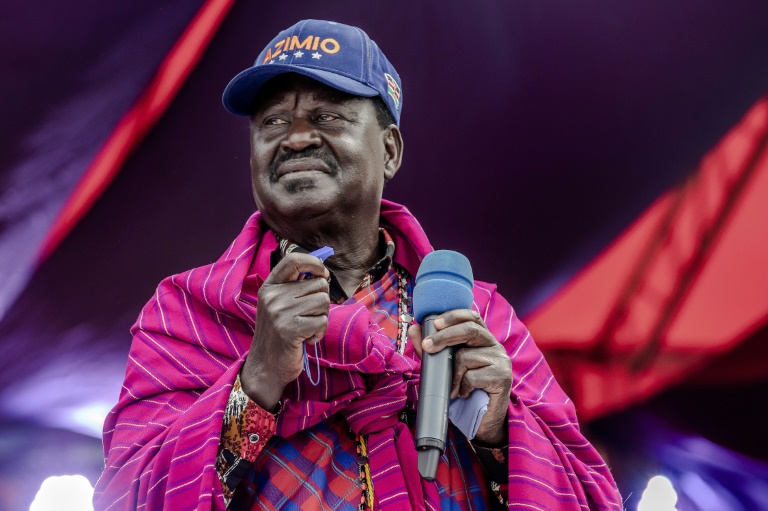
'Baba' Odinga: Kenya's diehard presidential hopeful

Raila Amolo Odinga, a veteran Kenyan political leader and one-time prime minister, has long cast himself as an anti-establishment firebrand, despite belonging to one of the country’s top political dynasties.

But his decision to strike an alliance with his arch-rival, President Uhuru Kenyatta, and secure the ruling party’s backing risks taking the shine off his brand as he vies yet again for the top job in Tuesday’s elections.

The Kenyatta and Odinga families have dominated Kenyan politics since the country won independence from Britain in 1963.

Uhuru Kenyatta’s father Jomo was the East African nation’s first president while his rival Jaramogi Oginga Odinga — Raila’s father — served as vice president.

Now 77, Raila Odinga’s early years in politics saw him spend much of his time in prison or in exile as he fought for democracy during the autocratic rule of president Daniel arap Moi.

A member of the Luo tribe, he entered parliament in 1992 and ran unsuccessfully for the presidency in 1997, 2007, 2013 and 2017, claiming to have been cheated of victory in the last three elections. 

The 2007 polls in particular — which many independent observers also considered deeply flawed — cast a long shadow over Kenyan politics, unleashing a wave of ethnic violence that pitted tribal groups against each other and cost more than 1,100 lives.

Few therefore expected Odinga and Kenyatta to shake hands and draw a line under decades of vitriol in March 2018.

Known universally as “the handshake”, the pact stunned Odinga’s colleagues and supporters, effectively leaving Kenya without an opposition.

– ‘Nobody’s stooge’ –

When Kenyatta — a two-time president who cannot run for a third term — endorsed Odinga for the presidency earlier this year, observers speculated that Kenya’s best-known agitator had traded his autonomy for a chance to be in power.

Odinga has hit out at the claims, telling a press conference earlier this month that Kenyans “know that I am an independent person, that I am a person of conscience, and with very strong convictions”.

“I cannot be somebody else’s stooge or candidate.”

Odinga’s elevation came at the expense of Kenya’s Deputy President William Ruto, who found himself frozen out as the erstwhile foes drew closer.

It also came loaded with risks for the veteran leader, with Ruto now positioning himself as a politician looking to upend the status quo and stand up for the “hustlers” trying to make ends meet in a country ruled by “dynasties”.

“Raila is quite conscious that a lot of the support he enjoys is because he has been an anti-establishment figure for so long,” said Gabrielle Lynch, professor of comparative politics at the University of Warwick.

“The handshake has undermined that narrative,” she told AFP.

Odinga, who was born on January 7, 1945 and is fondly known as “Baba” or “daddy” in Swahili, is now caught in a complex balancing act.

“He has a lot of trust to build, especially in his main voting bloc,” Kenyan political analyst Nerima Wako-Ojiwa told AFP.

– Polarising politician –

While his supporters consider Odinga a much-needed social reformer, detractors see him as a rabble-rousing populist, unafraid to play the tribal card.

A charismatic speaker, he has a reputation for being stubborn and sometimes short-tempered.

In the eyes of some observers, his crowd-pleasing skills have diminished in recent years, attributed to advancing age and ill health.

With his speech notes in hand, he often stumbles and labours over his words — especially in English. Speaking off-the-cuff in his native Swahili, however, he retains the ability to inspire.

Passionate about reggae, he has adopted South African star Lucky Dube’s song “Nobody Can Stop Reggae” as an unofficial motto for his campaign in recent years.

An Arsenal fan, he credits his love of football for helping him develop a philosophical attitude towards the rough-and-tumble world of politics.

“You lose some, you win some. It is painful but that is the way to perfection,” he said in an interview with AFP last year.

Raised an Anglican, he later converted to evangelicalism and was baptised in a Nairobi swimming pool by a self-proclaimed prophet in 2009. 

The Bible even crept into Odinga’s 2017 campaign with his repeated promise to lead his followers to Canaan, the mythical “promised land”.

He studied engineering in communist former East Germany and named his eldest son Fidel, who died in 2015, after the Cuban revolutionary.

Although not as wealthy as Kenyatta or Ruto, Odinga sits at the head of a business empire with stakes in energy companies.

Married to his wife Ida for almost half a century, Odinga has three surviving children and five grandchildren.

Cash-strapped African clubs eagerly await Super League riches

African football supremo Patrice Motsepe will launch in Tanzania on Wednesday a CAF Super League, with promises of a $100 million (98 million euros) prize fund for cash-strapped clubs.

Team owners have complained for decades about the costs of competing in the current marquee competition, the CAF Champions League, which offers a $2.5 million first prize from a $12.5 million pot.    

“There are some African clubs with literally millions of supporters and the owners have to pay money in order to compete in CAF competitions,” FIFA president Gianni Infantino said.

Billionaire South African businessman and Confederation of African Football (CAF) president Motsepe admitted after his club, Mamelodi Sundowns, won the 2016 Champions League that the prize money did not cover all the expenses.

Hamdi Meddeb, chairman of four-time Champions League winners Esperance Tunis, says “if we think of what we spend on the Champions League, compared to what we earn, it would be better not to play in it.

“Africa is a huge continent and sometimes we have to charter flights at a cost of more than $100,000 each.

“When we won the Champions League (in 2018 and 2019), more than half the prize money was spent on bonuses and allowances for the squad and the technical staff. Those are contractual obligations.”    

Champions League prize money kicks in only at the group stage, meaning 42 of the 58 entrants for the 2023 edition will incur travel, accommodation and other costs but not receive a cent from CAF.

Motsepe has said more profitable times lie ahead, however, and will reveal details of the Super League in the Tanzanian city of Arusha at 1300 local time (1000 GMT) during a gathering of top CAF officials.

He previously said there will $100 million in prize money and hinted that the winners will be at least $10 million richer.   

– ‘Rival best in the world’ –

“We want the Super League to be a world-class competition and to rival the best in the world in terms of quality of football, resources, infrastructure, pitches, referees and ticketing,” the 60-year-old said.

“The Super League will be organised in partnership with FIFA, who bring a wealth of experience in terms of running the best competition in the world — the World Cup.”

Infantino said “the Super League is an exciting and unique project and FIFA is happy to assist and share some of the experience we have accumulated”.

While no details about the Super League have been officially released, it is believed 24 clubs will take part in the maiden edition. 

Eight will come from the north, the dominant region in African club football, eight from the west-centre and eight from the south-east.

Invitations to compete will be based on results in the two annual CAF competitions — the Champions League and the second-tier Confederation Cup.

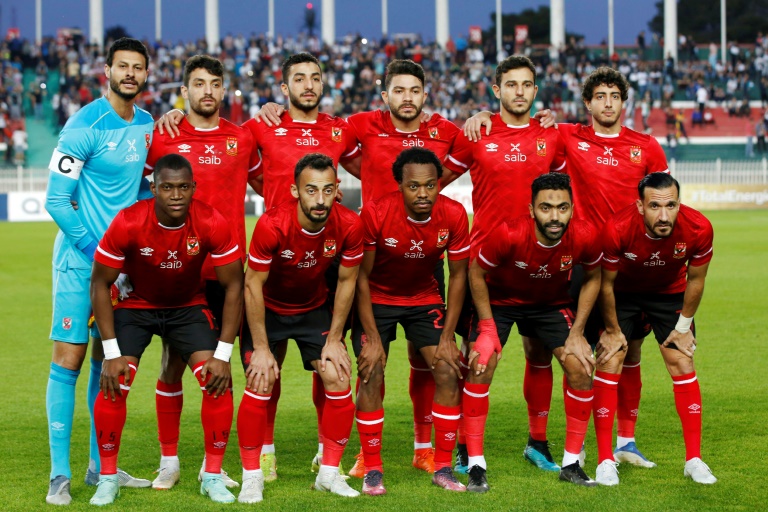
Champions League title-holders Wydad Casablanca, fellow Moroccan club Raja Casablanca, Al Ahly and Zamalek from Egypt and Esperance seem certain to be among the eight competitors from the north.

Five-time African champions TP Mazembe from the Democratic Republic of Congo are sure to be among the west-centre selections.

Sundowns, a Pretoria club owned by Motsepe and run by his son Tlhopane, will be certainties for the south-east list having consistently reached the Champions League knockout stages since 2016.

A CAF official suggested that after the three regional groups, there would be three knockout rounds leading to the final, and record riches for the winners. 

But not everyone is excited about the Super League with Cape Town City FC owner John Comitis calling it a “super silly idea”.

“The Super League will kill African club football,” he warned. “You can switch off the lights on the domestic leagues.” 

Close Bitnami banner
Bitnami