Africa Business

Five things to know about Kenya

Kenya is an East African political and economic powerhouse, renowned for its wildlife and stunning tropical beaches.

It has become a key player on the regional stage, but its economy has been hard hit by the Covid pandemic, a punishing drought and the fallout from the war in Ukraine.

As it heads to the polls on Tuesday, here are key facts about the country:

– End of Kenyatta era –

Kenya became independent from Britain on December 12, 1963, scarred by the 1952-1960 Mau Mau rebellion against colonial rule that left at least 10,000 people dead.

Independence struggle icon Jomo Kenyatta was appointed Kenya’s first post-colonial leader. He died in office in August 1978, succeeded by his vice president Daniel arap Moi.

In late 1991 Moi abandoned single-party rule and won presidential elections in 1992 and 1997.

Mwai Kibaki then swept into power in 2002 and went on to win re-election in 2007 against Raila Odinga, now one of the frontrunners on August 9.

Disputes over the 2007 vote count sparked the most serious political violence since independence, with more than 1,100 people killed in ethnic clashes.

Jomo Kenyatta’s son Uhuru Kenyatta defeated Odinga in the 2013 elections despite being charged by the International Criminal Court (ICC) over the violence.

The court dropped its case against him in 2014 and Kenyatta was re-elected in 2017, after the Supreme Court annulled his initial victory and Odinga boycotted the rerun.

Deputy President William Ruto, Odinga’s main rival next week, was also charged by the ICC but prosecutors abandoned the case in 2016.

– ‘Cradle of Mankind’ – 

Kenya attracted about 1.5 million visitors last year to its wildlife parks and idyllic Indian Ocean beaches.

From the Maasai Mara to Amboseli, Kenya boasts about 50 parks and reserves that are home to native wildlife including the so-called Big Five — lions, elephants, rhinos, leopards and buffalo — as well as giraffes, hippos and cheetahs.

The Rift Valley that stretches from Tanzania to Ethiopia via Kenya is also the site of major discoveries of fossils showing man’s evolution and has been dubbed the “Cradle of Mankind”.

The remains of hominids believed to be nearly six million years old have been found in Kenya.

– East African hub –

Kenya has a mostly Christian population of about 50 million, according to government figures, made up of more than 40 tribes, the largest being Kikuyu.

Along with Ethiopia, it is East Africa’s biggest economy with gross domestic product of just over $110 billion in 2021, according to the World Bank, and remains the region’s main trading hub.

Agriculture is the backbone of the economy, accounting for more than a fifth of GDP, with key exports including tea, coffee and flowers.

Kenya estimates its economy grew by 7.5 percent last year after shrinking 0.3 percent in 2020 as the pandemic threw hundreds of thousands of people out of work.

It is now grappling with a cost of living crisis, as prices of fuel and basic foodstuffs soar in a country where about a third of the population lives in poverty.

Kenya also suffers from endemic corruption. It was ranked 128th out of 180 countries on Transparency International’s 2021 corruption perceptions index, with the watchdog saying its fight against graft had “stagnated”.

– Athletics stars –

Kenya is renowned for its athletes, especially long-distance runners, with a raft of world championship medals and records.

Among its numerous stars are marathon world record holders Eliud Kipchoge and Brigid Kosgei and Africa’s fastest man over 100 metres, Ferdinand Omanyala.

Kenyan athletics is nevertheless struggling to rebuild a reputation tarnished by doping and corruption.

– Bloody attacks –

Kenya has suffered a string of terror attacks, the deadliest on August 7, 1998 when massive truck bombings against the US embassy in Nairobi killed 213 people and wounded 5,000. It was claimed by Al-Qaeda.

Kenya has also been targeted by the Al-Qaeda-linked Al-Shabaab since 2011 when the Kenyan military entered Somalia to fight the jihadists.

In September 2013, Islamist gunmen stormed Nairobi’s Westgate mall, killing at least 67 people. In April 2015 another Al-Shabaab attack killed 148 at a university in Garissa, eastern Kenya.
Raza at the controls of high-flying Zimbabwe

With all the noise going on elsewhere in the wealthy world of white ball cricket, it is easy to miss a small revolution taking place in a territory that since 2003 has become something of a backwater. 

On Sunday, Zimbabwe pulled off a great run chase for the second time in three days to beat Bangladesh by five wickets and take a winning 2-0 lead in a three-match one-day international series, which closes in Harare on Wednesday. 

It followed hard on the heels of a 2-1 T20I series win against the same opponents and a convincing qualification for the T20 World Cup later this year. 

At the heart of these successes is one man, a 36-year-old all-rounder whose boyhood dream lay not on the cricket field but in the skies, as a fighter pilot in the Pakistani Air Force (PAF). 

“The things that Sikandar Raza has been doing in recent weeks with the bat deserve wider recognition. Back to back ODI centuries. #ZIMvBAN,” tweeted former West Indies fast bowler Ian Bishop, suggesting that Raza is the new (not quite so young) kid on the block. 

Batting in the middle-order, Raza has been in outstanding form. 

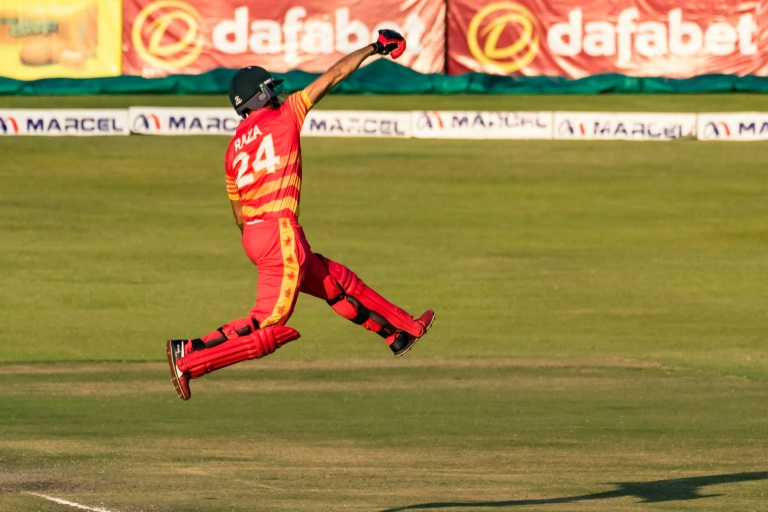
On Sunday, he creamed 117 not out and shared a match-winning partnership of 201 with Regis Chakabva, who made 102. Two days earlier Raza struck 135 not out and shared a 192-run partnership with the inexperienced Innocent Kaia who hit his maiden ODI century. 

But that is only half the tale. In the space of four weeks, Raza has rattled up 607 runs across formats at an average of 101.16, with four half-centuries to add to those two hundreds. 

With his off-spin, he has also picked up 11 wickets at 22.18 apiece, and took 4 for 8 against the Netherlands in the final of the T20 World Cup qualifiers.

At the age of 36, when many players are considering retirement, Raza has become an ‘overnight’ success. 

– ‘Always a fighter’ –

Born in Pakistan and arriving in Zimbabwe with his parents in 2002, he never had thoughts of a cricket career, instead spending three years training to be a fighter pilot. 

He did not make the final cut because of a glitch in his eyesight but he credits the experience for his resilience on the pitch and ability to deal with pressure.

“There’s pressure to do well and win the game, I won’t lie,” Raza told ESPNcricinfo last week. 

“Of course, it helps that I am from an Air Force background. We don’t give up. I get hit, I get hurt, broken fingers, toes, etc. I don’t care. 

“I personally feel it helps spending the three-and-a-half years in PAF college. I will always be a fighter within myself. I couldn’t become a fighter pilot. But I think as a person, I will always be a fighter. 

“The training mentally and physically is paying dividends now.”

That toughness also helped when he had to undergo bone marrow surgery in his right shoulder last year. 

Fortunately it was not cancerous but he has had to alter his bowling action, although as recent returns show that does not seem to have posed a problem. 

Raza’s rise, which may well lead to the riches of T20 franchise competitions around the world, coincides with the return of the doughty Dave Houghton as coach, an experienced head who played a key role in helping elevate Zimbabwe from Associate to Test status in the 1980s and 90s.

“Since Dave came back, we have put a lot of emphasis on a lot of good things and to be able to achieve that, it is such a humbling feeling,” said Raza after Sunday’s win.

With this key combination, the future is looking up for Zimbabwe.

Suspected jihadists kill 17 Mali soldiers, four civilians in north

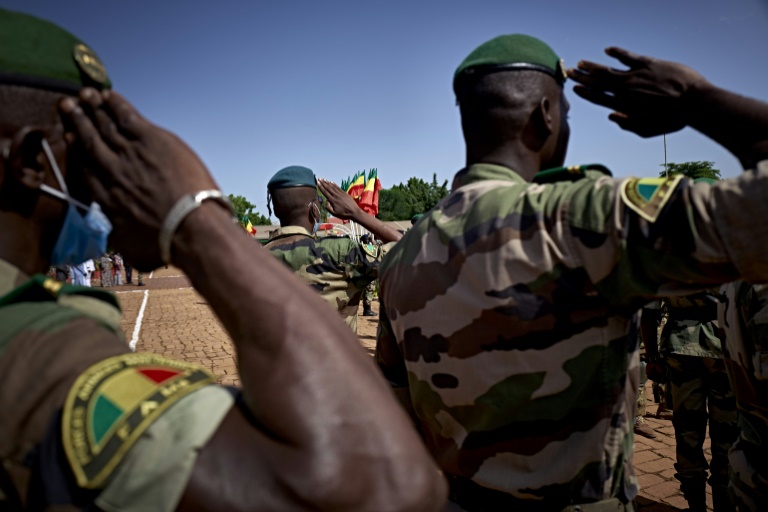
At least 17 soldiers and four civilians were killed Sunday in an attack in a strategic border zone between Mali, Burkina Faso and Niger, Mali’s army said. 

Some 22 troops were injured while nine other soldiers are missing, the army said late Monday, adding that the toll could still rise.

The army had blamed the attack on “terrorists” in an earlier announcement late Sunday, using the term it typically uses for jihadists.

It had said its troops had been repelling an attack by the Islamic State in the Greater Sahara (ISGS) group, affiliated with the Islamic State organisation.

The previous death toll was four soldiers and two civilians.

The two civilians killed were local elected officials, their relatives told AFP.

The army said Monday it killed seven from the attacking side, “likely” from the ISGS group, adding that there was “an unknown number of dead and injured carried away by the attackers”.

It also said the attack caused damage to vehicles and residents’ homes.

Tessit is located on the Malian side of the so-called three-border area in a vast gold-rich region beyond state control.

Like the whole of the zone, Tessit is even more isolated during the rainy season when heavy rainfall blocks access.

Armed groups under the umbrella of Al-Qaeda aligned jihadists Jama’at Nasr al-Islam wal Muslimin, or JNIM, are fighting ISGS there.

Thousands of residents have fled the area, many heading to the town of Gao, some 150 kilometres (90 miles) away.

The Malian army, which has a military camp next to the town of Tessit, has frequently been attacked in the area. 

UN peacekeepers and, until a few months ago, French soldiers from Operation Barkhane, have also been deployed there.

– Separate incidents –

In a separate incident, Barkhane on Sunday announced that it had “neutralised” a cadre and several jihadist fighters in the Talataye area, some 200 kilometres northeast of Gao, the day before. 

Barkhane troops are currently preparing to exit their last base in Mali, in Gao, to redeploy to Niger after Mali’s junta turned away from France and toward Russia in its fight against jihadism.

Also Sunday, five police officers were killed in an attack in Sona, in the Koutiala area of southern Mali near the border with Burkina Faso.

On Friday, suspected jihadists killed about 12 people in central Mali with explosives planted in the bodies of slain civilians that relatives had come to collect.

Mali is struggling with a long jihadist insurgency that has claimed thousands of lives and forced hundreds of thousands from their homes.

Violence that began in the north has spread to the centre and south of the country, as well as to neighbouring Burkina Faso and Niger.

Mali is also in the grip of political upheaval following military coups in August 2020 and May 2021.

Trial of 56 suspected IS fighters begins in Libya

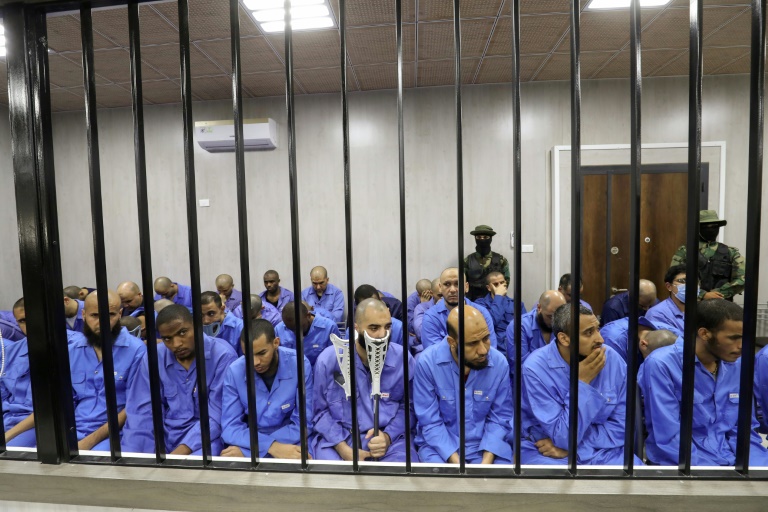
The trial opened Monday in Libya’s western city of Misrata of 56 suspected Islamic State group militants captured after the 2016 fall of its bastion Sirte.

The 56 suspects, out of a total of 320 facing trial, appeared in court before the trial was adjourned to September 25, judicial sources said.

The IS group captured the central city of Sirte in 2015, setting up a stronghold before being driven out the following year by forces loyal to the Tripoli-based Government of National Accord in power at the time.

The suspected jihadists face charges of “joining a terrorist group” and killing members of the GNA forces, said lawyer Lotfi Mohaychem, representing families of anti-IS fighters killed in the battle for Sirte.

The suspects appeared in the dock clad in blue prison overalls, some with their faces covered, in the crowded courtroom where dozens of the families had gathered.

The suspects comprised Syrians, Tunisians, Sudanese and Libyan nationals.

Fatima al-Tlisi told AFP that her son was “still a high school student when he joined the forces” and was killed fighting IS.

Libya was plunged into over a decade of chaos and lawlessness following the 2011 NATO-backed uprising that led to the removal and killing of longtime dictator Moamer Kadhafi.

Dozens of militias and jihadist groups took advantage of the power vacuum, with IS setting up base in Sirte and the eastern town of Derna before being driven out with the help of US-led air strikes.

Guinea political coalition calls for fresh protests

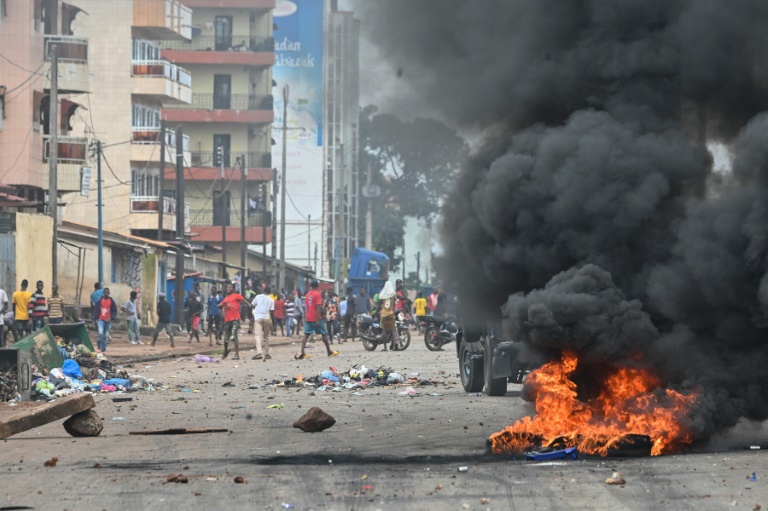
A Guinean political coalition Monday called for renewed demonstrations against the ruling junta, ending a truce for lack of response to its demands for “credible dialogue” on the transition to civilian rule.

The call to protest on August 17 came after the National Front for the Defence of the Constitution (FNDC) — an influential alliance of political parties, trade unions and civil society organisations — halted demonstrations following deadly clashes and a plea for calm by West Africa’s regional bloc.

Demonstrations on July 28 and 29 — announced, in defiance of an ongoing protest ban, to denounce the ruling junta’s “unilateral management of the transition” to civilian rule — left five people dead.

A second protest was planned for August 4, but the coalition called it off after the chair of the Economic Community of West African States (ECOWAS), Guinea-Bissau’s leader Umaro Sissoco Embalo, asked its members to give mediation a chance.

Colonel Mamady Doumbouya, who overthrew ex-president Alpha Conde last September, pledged to return power to elected civilians within three years, a transition period that regional powers and most domestic political actors have rejected, with ECOWAS suspending Guinea after the coup.

In a statement released Monday, the FNDC denounced the junta’s “contemptuous and arrogant refusal to respond to the numerous calls for dialogue on the transition” and its “chronically defiant attitude towards the regional and international community”.

It also denounced the military leaders’ “illegal use of lethal weapons in managing demonstrations”.

It demanded that the junta open a framework for “credible dialogue” with political and civil society groups, set a “reasonable and consensual” deadline for the return to democracy and unconditionally release all political detainees linked to the demonstrations.

Two of the coalition’s leaders — Oumar Sylla, alias Fonike Mangue, and Ibrahima Diallo — as well as Saikou Yaya Barry, the executive secretary of the Union of Republican Forces (UFR) political party, were still being held Monday in Conakry’s civil prison.

They have been charged with unlawful assembly, looting, the destruction of property and intentional assault and battery.

On Monday, Sylla’s lawyer told local media that the FNDC leader did not “recognise” what he is accused of and believes he is “within his rights to fight for the establishment of democracy”.

Embalo in late July said he had convinced the junta to shorten the transition period from three to two years, a statement that has not been confirmed by Guinea.

Kenya watchdog cancels four local polls on eve of presidential vote

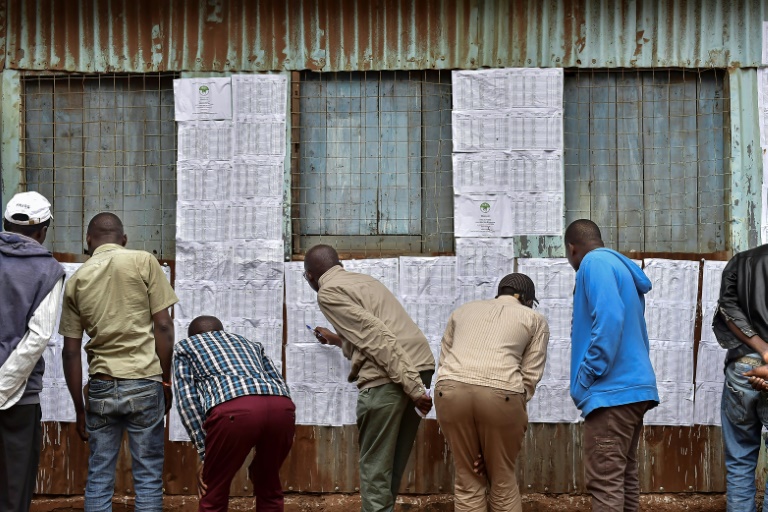
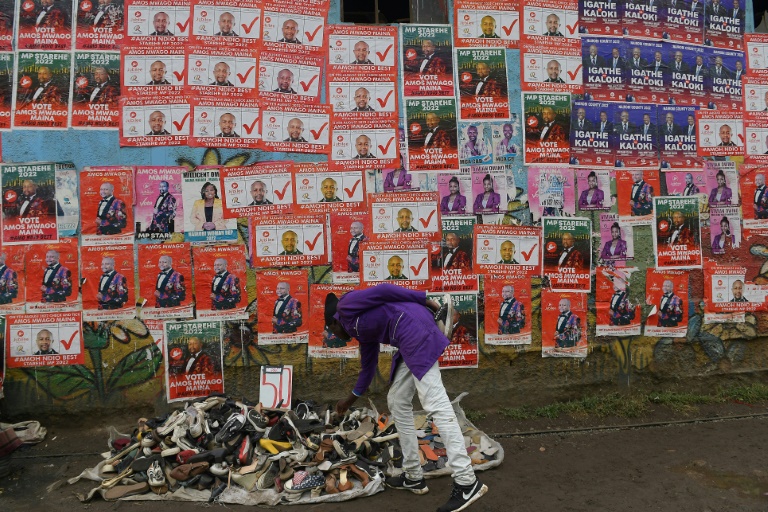
Kenya’s election commission on Monday cancelled four local polls and announced the arrest of six officials on the eve of a high-stakes presidential vote, raising alarm after a campaign dominated by rigging fears.

Millions of Kenyans will vote for a new leader on Tuesday, in a tight race between Deputy President William Ruto and Raila Odinga, a veteran opposition politician now backed by the ruling party.

Voters will also choose governors, senators, lawmakers, woman representatives and county officials.

Despite mudslinging and fake news, campaigning has so far been largely peaceful, a relief in a country where past election-related unrest still casts a shadow.

But Monday’s announcement by the Independent Electoral and Boundaries Commission (IEBC) will do little to ease worries over rigging — presidential poll outcomes have been routinely disputed over the last two decades, and the discord often spills over into violence.

IEBC chairman Wafula Chebukati said gubernatorial polls in the counties of Mombasa and Kakamega as well as elections for MP in the Kachiliba and Pokot South constituencies would be postponed until further notice, due to erroneous ballot papers.

The cancellations could affect turnout if citizens decide not to show up at polling stations to cast their ballot for the five other positions still in the running. Together, Mombasa and Kakamega account for some 1.5 million registered voters.

Chebukati also said six IEBC officials were arrested for allegedly meeting with candidates with a view to influencing election outcomes.

“The commission… will not hesitate to take stern action against any official found to be in breach of the code of conduct and election offences act,” he said, dismissing rigging fears and urging citizens to vote.

“Let us collectively rise up and show the world that Kenya is a vibrant democracy.”

– Calls for peace –

The unsettling developments followed a pledge on Sunday by both the presidential frontrunners to respect the result and not trigger a repeat of the violence that followed polls in 2007 and 2017.

“Each Kenyan wherever you are, whatever you do, be a peacemaker. It is a qualification to become a son and a daughter of God,” Ruto said.

The 55-year-old has previously said he will pursue any dispute at the Supreme Court, which in 2017 ordered a rerun of the presidential vote, citing irregularities in the counting process and mismanagement by the electoral commission.

Odinga — who is making his fifth run at the presidency — also urged calm, saying: “We want a peaceful country, that no life should be lost at the hands of no other person.”

In an editorial published Monday, the Daily Nation newspaper welcomed the “good signals” from the two men, saying it would “help to ease tension”.

In recent days, analysts have suggested that Odinga, 77, will likely scrape past Ruto, with Oxford Economics highlighting the fact that he is backed by “several influential political leaders”, including President Uhuru Kenyatta.

“A final poll giving him (Odinga) an 8% lead will encourage undecided swing voters to pick the winning side,” Ben Hunter, Africa analyst at risk intelligence company Verisk Maplecroft, said in a note.

– Stable partner –

Ruto was long expected to succeed Kenyatta, but was sidelined after his boss — who cannot run again — shook hands with longtime foe Odinga in a 2018 pact that stunned the nation.

Since then, Ruto, a wealthy businessman with a rags-to-riches background, has vowed to overthrow the “dynasties” running Kenya — a reference to the Kenyatta and Odinga families, which gave the country its first president and vice president.

Ruto has presented himself as “hustler in chief”, claiming to speak for the downtrodden and hoping to strike a chord in a country where three in 10 people live on less than $1.90 a day, according to the World Bank.

In his final campaign speech on Saturday, Odinga vowed to continue with the “handshake doctrine.”

“I will shake the hand if I win, and I will shake the hand if I don’t. And I will do it because I love Kenya,” he said.

The election is being closely watched by the international community, which views Kenya as a stable partner in a region roiled by conflict.

About 22.1 million people — out of a population of around 50 million — are registered to vote, with polling stations open from 6:00 am to 5:00 pm (0300 GMT to 1400 GMT).

US not trying to 'outdo' world powers in Africa, says Blinken

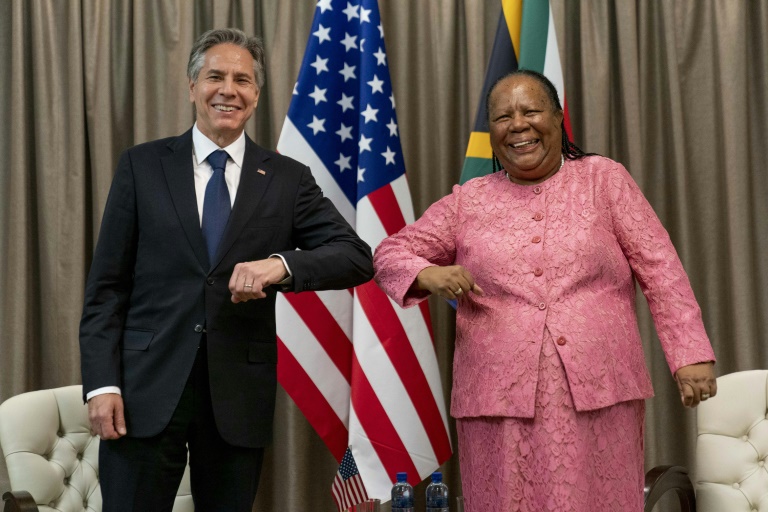
The United States is seeking a “true partnership” with Africa and not trying to “outdo” other world powers in vying for influence on the continent, US Secretary of State Antony Blinken said on Monday.

Blinken outlined the US government’s new Africa strategy as he visited South Africa in the first stop of a three-nation trip to the continent. 

The visit followed hot on the heels of an extensive African tour by Russian Foreign Minister Sergei Lavrov. 

Yet Blinken said the United States did not see the region as the “latest playing field in a competition between great powers”.

“Our commitment to a stronger partnership with Africa is not about trying to outdo anyone else,” the top US diplomat told a press briefing in the capital, Pretoria, alongside his South African counterpart Naledi Pandor.

South Africa, a leader in the developing world, has remained neutral in the Ukraine war.

Pretoria has refused to join Western calls to condemn Moscow, which had opposed apartheid before the end of white-minority rule in 1994.

Pandor said no one in South Africa supported war and described Russia as a “negligible economic partner” but added she was glad the United States was not asking her country to take sides.

However, there had been “a sense of patronising bullying” from other partners in Europe and elsewhere, she said.

“We should be equally concerned at what is happening to the people of Palestine, as we are with what is happening to the people of Ukraine,” she said, referring to a flare-up in fighting in Gaza. 

– New Africa policy –

Later on Monday, in a lecture at the University of Pretoria, Blinken laid out the new US strategy for sub-Saharan Africa, which he said focused on four priorities — fostering “openness” and democracy, pursuing economic development, and tackling global warming. 

The United States and African nations needed to work together as “equal partners” to address those issues, he said. 

“Too often, African nations have been treated as instruments of other nations’ progress, rather than the authors of their own,” he said. 

“The United States will not dictate Africa’s choices, neither should anyone else. The right to make these choices belongs to Africans, and Africans alone.”

The new strategy was announced at the end of an extended policy review by President Joe Biden’s administration. 

Some critics say a US focus on fighting extremist groups in Africa militarily has borne little fruit, even while China and Russia have made continued inroads by aggressively using diplomatic and economic tools.

A policy paper outlining the new strategy argued that a push for greater openness and democracy in sub-Saharan Africa would help “counter harmful activities” by China, Russia and other actors. 

“The poor governance, exclusion and corruption inherent to weak democracies makes them more vulnerable to extremist movements, as well as to foreign interference,” Blinken said in Pretoria.

“That includes the Kremlin-backed Wagner, which exploits instability to pillage resources, and commit abuses with impunity,” he said referring to the shadowy Russian mercenary organisation, which operates in African countries including Mali and the Central African Republic. 

– ‘Open season’ –

Blinken outlined a series of initiatives including investments in agriculture and renewable power plants.

The United States has been funding the projects to help African economies seek a clean energy transition and cope with the fallout from Covid-19 and the war in Ukraine, which has sent fuel and food prices soaring.

“What we seek most of all is a true partnership between the United States and Africa. We don’t want an imbalanced or transactional relationship,” Blinken told the press briefing.

His remarks came after Russian President Vladimir Putin in June urged BRICS countries — Brazil, Russia, India, China and South Africa — to cooperate in the face of “selfish actions” from the West.

Commenting on Russia’s invasion of Ukraine, he said the United States did not seek conflict anywhere but that it was important to stand up to challenges to the international order. 

“If we allow a big country to bully a smaller one, to simply invade and take its territory, then it’s going to be open season, not just in Europe, but around the world,” he said. 

Suspected jihadists kill 4 Mali soldiers, 2 civilians in north

At least four soldiers, two civilians and five assailants were killed on Sunday in an attack in a strategic border zone between Mali, Burkina Faso and Niger, Mali’s army said. 

The army blamed the attack on “terrorists” in an announcement late Sunday, using the term it typically uses for jihadists. 

Earlier, it had said its troops had been repelling an attack by the Islamic State in the Greater Sahara (ISGS) group, affiliated with the Islamic State organisation.

The army’s death toll could be “much higher,” an elected official told AFP, asking not to be named for security reasons. 

The two civilians killed were local elected officials, their relatives told AFP. 

Tessit is located on the Malian side of the so-called three-border area in a vast gold-rich region beyond state control.

Like the whole of the zone, Tessit is even more isolated during the rainy season when heavy rainfall blocks access.

Armed groups under the umbrella of Al-Qaeda aligned jihadists Jama’at Nasr al-Islam wal Muslimin, or JNIM, are fighting ISGS there.

Thousands of residents have fled the area, many heading to the town of Gao, some 150 kilometres (90 miles) away.

The Malian army, which has a military camp next to the town of Tessit, has frequently been attacked in the area. 

UN peacekeepers and, until a few months ago, French soldiers from Operation Barkhane, have also been deployed there.

– Separate incidents –

In a separate incident, Barkhane on Sunday announced that it had “neutralised” a cadre and several jihadist fighters in the Talataye area, some 200 km northeast of Gao, the day before. 

Barkhane troops are currently preparing to exit their last base in Mali, in Gao, to redeploy to Niger after Mali’s junta turned away from France and toward Russia in its fight against jihadism.

Also Sunday, five police officers were killed in an attack in Sona, in the Koutiala area of southern Mali near the border with Burkina Faso.

On Friday, suspected jihadists killed about 12 civilians in central Mali with explosives planted in the bodies of slain civilians that relatives had come to collect.

Mali is struggling with a long jihadist insurgency that has claimed thousands of lives and forced hundreds of thousands from their homes.

Violence that began in the north has spread to the centre and south of the country, as well as to neighbouring Burkina Faso and Niger.

Mali is also in the grip of political upheaval following military coups in August 2020 and May 2021.

Holders Wydad Casablanca among 58 CAF Champions League hopefuls

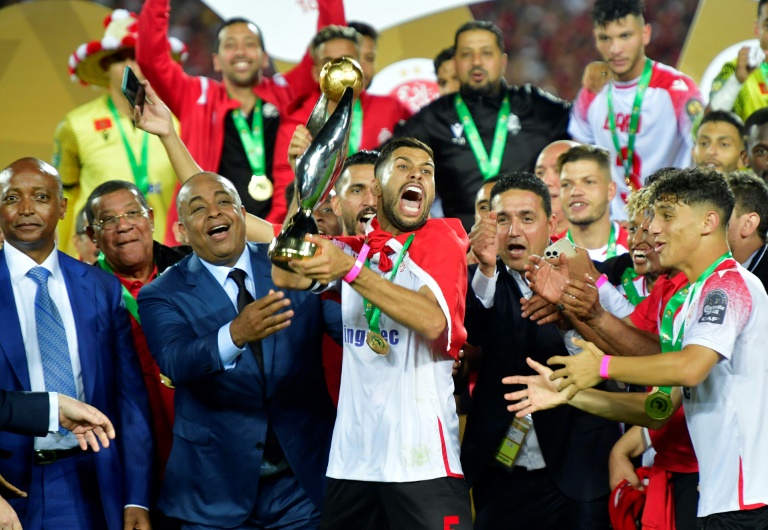
Title-holders Wydad Casablanca from Morocco are among 58 clubs who have entered the 2022-2023 CAF Champions League, with the qualifying rounds draw to be made in Cairo on Tuesday.

Originally set for Monday, a Confederation of African Football (CAF) statement said the event had been delayed 24 hours due to unexplained “technical reasons”.

The draws mark the start of a big week for African clubs as CAF president Patrice Motsepe is due to launch in Tanzania on Wednesday an African Super League, with the first edition planned for 2023.   

Wydad were crowned African champions a third time in May, defeating record 10-time winners Al Ahly from Egypt 2-0 in the final in Casablanca.

The choice of the home ground of Wydad for the biggest club match in Africa sparked an angry reaction from Ahly, whose appeal to the Court of Arbitration for Sport (CAS) for a neutral venue was rejected.

Wydad and neighbours Raja Casablanca, Ahly and fellow Cairo club Zamalek and Esperance from Tunisia will be among the favourites to pocket the $2.5 million (2.45 mn euros) first prize next June.

According to a CAF statement, Wydad, Raja, Ahly and Esperance will receive byes into the round of 32, along with TP Mazembe from the Democratic Republic of Congo and South African club Mamelodi Sundowns.

Zamalek, however, must play in the preliminary round having performed surprisingly poorly in the last two editions after finishing runners-up to Ahly in 2020.

The preliminary round is scheduled for September and the round of 32 for October — both over two legs — and the 16 survivors advance to the group stage, which begins next February.   

Title-holders Renaissance Berkane from Morocco are among 50 entrants for the second-tier CAF Confederation Cup, which has an additional qualifying round, pitting round of 32 winners against Champions League round of 32 losers in November. 

US not trying to 'outdo' world powers in Africa, says Blinken

The United States is seeking a “true partnership” with Africa and not trying to “outdo” other world powers in vying for influence on the continent, US Secretary of State Antony Blinken said on Monday.

Blinken arrived in South Africa for an official visit on Sunday during a three-nation African trip which follows hot on the heels of an extensive tour of the continent by Russian Foreign Minister Sergei Lavrov.

Speaking in the South African capital Pretoria on Monday, Blinken said the United States did not see the region as the “latest playing field in a competition between great powers”. 

“That is fundamentally not how we see it. It’s not how we will advance our engagement here,” Blinken told a press briefing alongside his local counterpart Naledi Pandor. 

“Our commitment to a stronger partnership with Africa is not about trying to outdo anyone else.” 

For his first stop, the US top diplomat chose South Africa, a leader in the developing world which has remained neutral in the Ukraine war.

Pretoria has refused to join Western calls to condemn Moscow, which had opposed apartheid before the end of white-minority rule in 1994.

“What we seek most of all is a true partnership between the United States and Africa. We don’t want an imbalanced or transactional relationship,” Blinken said. 

Pandor described Russia as a “negligible economic partner” for South Africa but added she was glad the United States was not asking her country to take sides.

However, there had been “a sense of patronising bullying” from other partners in Europe and elsewhere, she said.

– New Africa policy –

Blinken’s comments came ahead of a policy announcement on the US government’s new Africa strategy, which the Secretary of State was expected to lay out in a speech at the University of Pretoria on Monday. 

White House officials told reporters on Sunday that the new strategy will actively engage the region’s leaders on issues from climate change to pandemic recovery to food insecurity, while thinking “more holistically” about military engagement on the continent.

Their comments in a background briefing come at the end of an extended policy review by President Joe Biden’s administration. 

Some critics say a US focus on fighting extremist groups in Africa militarily has borne little fruit, even while China and Russia have made continued inroads on the huge continent by aggressively using diplomatic and economic tools.

In its policy paper outlining the new US strategy, the Biden administration argues that a push for greater openness and democracy in sub-Saharan Africa will help “counter harmful activities” by China, Russia and other actors.

The new policy paper suggests that Beijing sees the region as an “arena to challenge the rules-based international order, advance its own narrow commercial and geopolitical interests… and weaken US relations with African peoples and governments”.

It says Russia views the region as a “permissive environment” for actors including “private military companies, often fomenting instability for strategic and financial benefit”.

– ‘Open season’ –

Vulnerable countries in Africa and elsewhere in the world have been hard hit by the fallout from the Ukraine war that has sent prices of fuel and food soaring.

Powerhouse South Africa belongs to a group of emerging economies called BRICS.

In June, Russian President Vladimir Putin urged BRICS countries — Brazil, Russia, India, China and South Africa — to cooperate in the face of “selfish actions” from the West.

On Monday, commenting on Russia’s invasion of Ukraine, Blinken said the United States did not seek conflict anywhere but that it was important to stand up to challenges to the international order. 

“If we allow a big country to bully a smaller one, to simply invade and take its territory, then it’s going to be open season, not just in Europe, but around the world,” he said. 

On tensions with China over Taiwan, Blinken said it was “deeply unfortunate” that Beijing had chosen to suspend cooperation with Washington on issues including climate change. 

“That’s not punishing the United States, that’s punishing the entire world,” he said, adding that developing nations, notably in Africa, stood to lose the most.

Close Bitnami banner
Bitnami