Africa Business

Hope and excitement in hometowns of Kenya's presidential favourites

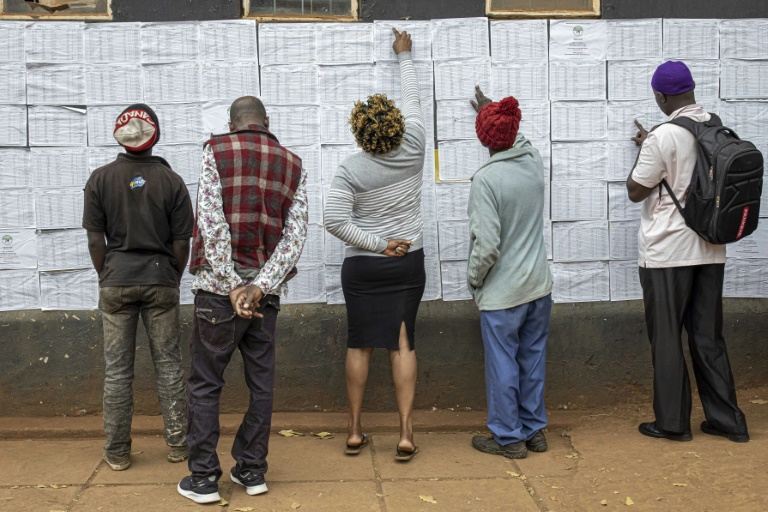
On the eve of Kenya’s election, yellow banners drape William Ruto’s bastion of Eldoret, where voters are quietly optimistic their hometown hero will emerge the next president after a bruising contest.

Some 90 kilometres away (55 miles), not a single Ruto banner flies in Kisumu, the stronghold of his opponent Raila Odinga, whose victory is considered a foregone conclusion by many in the lakeside city.

Eldoret and Kisumu have been hotbeds of electoral violence in the past and Tuesday’s poll is too close to call, raising fears of similar civil unrest.

But in Eldoret, voters say they are confident peace will prevail even as they firmly back Ruto — a son of the soil and ally-turned-foe of the ruling establishment, which now supports opposition veteran Odinga.

The Rift Valley’s biggest city has been painted yellow and the ubiquitous presence of wheelbarrows — the symbol of Ruto’s United Democratic Alliance (UDA) party — serves as a clear reminder of Eldoret’s allegiances.

But along a busy intersection, dozens of Odinga supporters gathered freely near a group of Ruto fans at a so-called “Bunge la Mwananchi”, or “citizens’ parliament”.

“In the previous elections, it was not possible to have two groups supporting two different candidates so close to each other,” said Alfred Ekale, a 38-year-old security guard and Ruto backer.

“Everyone was suspicious of each other and there was a lot of tension.

“This time we are all together here, from different tribes, and we can coexist without tension.”

– ‘Time to party’ – 

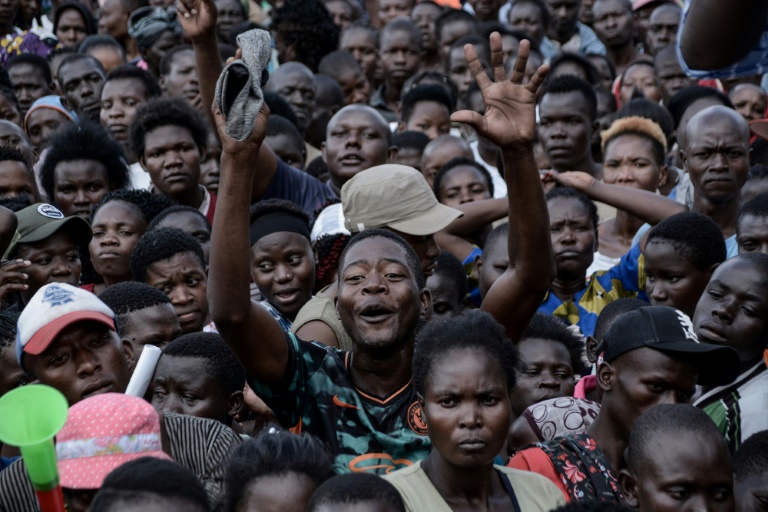
To the southwest in sunny Kisumu, a carnival-like atmosphere was building as the hours ticked down to voting day.

Motorcycles dashed back and forth with riders blaring vuvuzela horns for Odinga, a political titan in the western regions around Lake Victoria known affectionally as “Baba” (Father).

Odinga — like his father before him — fought Kenya’s rulers from the opposition trenches, running unsuccessfully in four presidential elections he claimed were rigged, and spending years in jail as a political prisoner.

Now with the ruling party backing his candidacy, many in Kisumu see victory this time as preordained — going as far as to call Odinga the “president-in-waiting.”

“We expect a big celebration, because we know the person who is going to win the election. The people of Kisumu are ready,” said Abdallah Abuga, a motorcycle taxi driver in the city centre. 

“Raila Amolo Odinga is going to win.”

Odinga would be the first president from Kenya’s Luo community, and many kinsmen believe his victory would bring much-needed development to the region denied for decades by ruling elites in Nairobi. 

“We’ve always been sidelined. Kisumu has always been the opposition,” said Amos Owino, a 31-year-old accounting graduate, who claimed he’d been overlooked for jobs because he was Luo.

“It is the time to change, and a big one, for the whole western region… We are going to celebrate, it’s going to be a party.”

– ‘All is calm’ – 

The Kisumu champion also enjoys some support in Eldoret, where Joseph Owuor said Odinga was the “perfect” candidate to lead Kenya.

Despite rooting for the enemy in Ruto’s very backyard, Owuor said the stone-throwing and divisionism that marred past elections wasn’t a feature this time around.

“This time, there is tolerance,” he said. “I believe that everything will go well. I think it will be a free, fair and peaceful election.”

Extra security forces have been deployed to Eldoret with the city — along with Kisumu — identified as possible hotspots for violence by rights monitors.

“They have sent a lot of police, but it is quiet,” said one cab driver in Eldoret as a truckload of soldiers pass by.

In Kisumu — where police have turned water cannons, tear gas and live rounds on voters during past elections — the striking absence of boots on the ground this time is another good omen.

“Their guys are always around. But now there’s no police around here, everything is calm… that again has shown it’s going to be a fair election,” said Owino.
Chad military government signs deal to launch peace talks

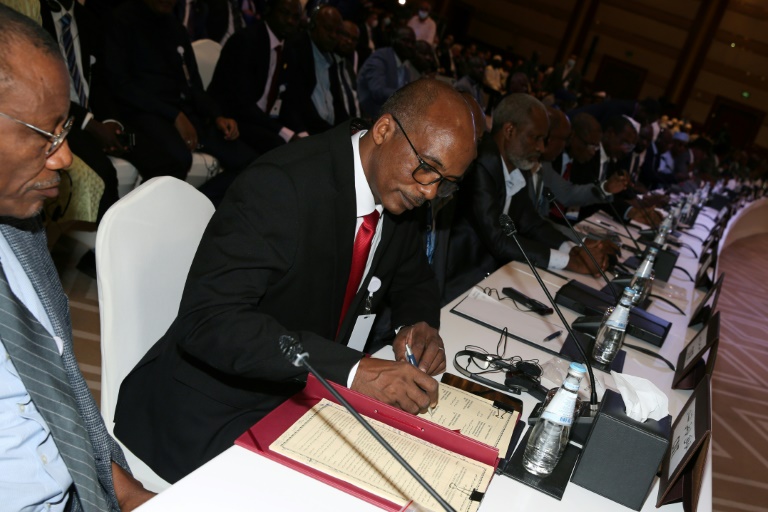
Chad’s military government and more than 40 opposition groups signed a deal Monday to launch national peace talks this month, but the main rebel outfit refused to take part.

United Nations and African Union leaders urged the junta and opposition to seize the latest opportunity to stabilise a country considered key to international efforts to stamp out Islamic extremists in the Sahel region.

But after five months of mediation efforts by Qatar, the main rebel Front for Change and Concord in Chad (FACT) announced hours before the ceremony in Doha that it would not join.

And several other armed groups, including the Military Command Council for the Salvation of the Republic, also refused to sign the agreement.

Under the deal, Mahamat Idriss Deby’s Transitional Military Council and hundreds of opposition representatives will launch a national peace dialogue in the capital, N’Djamena, on August 20.

Deby, who was in Doha for the signing, took power after his father, long-time president Idriss Deby Itno, was killed in April last year shortly after taking personal charge of a counter-offensive against the rebels.

The dialogue aims to agree the rules for a presidential election that Deby has promised by October. 

Chad, one of the world’s poorest countries, has endured repeated uprisings and unrest since independence in 1960.

Deby promised a national dialogue and elections within 18 months after seizing power, but the mediation has been fraught since the first day when FACT and other groups walked out of the launch ceremony.

– Ceasefire and protection –

Opposition parties have demanded that Deby preclude himself from the election, but Deby has said this can only be negotiated in N’Djamena. 

He has also said his transitional rule could be extended by another 18 months. 

In a video message, UN Secretary General Antonio Guterres said the signing was “a key moment for the Chadian people” but that the national dialogue had to be “inclusive” to succeed.

African Union Commission chief Moussa Faki Mahamat said it would be “crucial” for both sides to keep their promises to build trust with the Chadian people.

Qatar’s Foreign Minister Sheikh Mohammed bin Abdulrahman bin Jassim Al Thani said the accord aimed to establish “a peace to replace the trouble and strife that the country has known for many long years”.

But Jerome Tubiana, a French expert on Chadian rebel groups, struck a cautious note. “It is an agreement that will not resolve the issue of armed opposition” to the regime, he said, noting the refusal of the main armed factions to take part.

Forty-three of the 47 groups who remained at the end of the mediation signed the accord to start national talks in N’Djamena on August 20.

Mahamat Zene Cherif, the interim government’s foreign minister, acknowledged that there had been “difficult talks” in Doha but said FACT had missed a “historic opportunity” to help the country.

The European Union also urged FACT to rethink.  

“The European Union encourages all the political-military groups that have not yet adhered to the agreement to do so. This would allow the launch of a truly inclusive national dialogue,” said a European Commission spokesperson.

The accord commits all signatories to a ceasefire, while the government has guaranteed the security of all those who return from abroad to take part in the talks.

FACT had demanded increased safety guarantees and the release of more than 300 of its fighters in government prisons. 

FACT leader Mahamat Mahadi Ali told AFP: “War does not resolve anything. We want a peaceful and political resolution, but when we are forced to defend ourselves, we will defend ourselves.”

Among the signatories was a veteran rebel leader, Mahamat Nouri, 75, who has been signing tentative peace agreements with Chadian governments since the 1970s.

He told AFP the N’Djamena talks could work if there was “political goodwill” on all sides. 

Choua Dazi, another long-standing rebel, told AFP the N’Djamena talks had a “less than 50 percent chance of success” and that he did not expect an election this year.

Red-carded Springbok Arendse banned for four matches

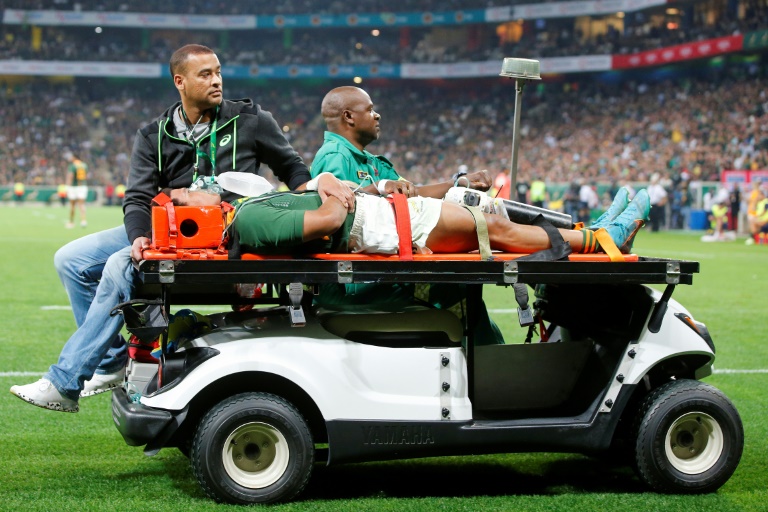
South Africa wing Kurt-Lee Arendse was suspended on Monday for four matches after committing a dangerous foul in a Rugby Championship victory over New Zealand at the weekend, the organisers said.

Arendse, who scored the first try in the Springboks’ 26-10 win in Mbombela, fouled All Blacks fly-half Beauden Barrett when he jumped to catch a kick in the 75th minute, leading to both players being injured and forced to retire.

Australian referee Angus Gardner almost immediately red-carded Arendse before he was stretchered off the field while Barrett was able to walk to the touchline.

Barrett injured his neck in the incident and faces a fitness test before New Zealand coach Ian Foster names his team on Thursday for a second match against South Africa in Johannesburg on Saturday.

“Taking into account mitigating factors, including the clean judicial record of the player and his acceptance of guilt, the foul play review committee reduced the suspension to four weeks (matches).

“The player is therefore suspended for four weeks (matches), up to and including 17 September, 2022,” said a statement, adding that the Springbok could have faced a ban of up to eight weeks (matches).

Arendse is ruled out of the second New Zealand Test, two in Australia and one in Argentina, before being available for the return match against the Pumas in Durban on September 24.

Slightly-built Arendse, 26, won his first cap against Wales last month and faced the All Blacks because of an injury to star winger Cheslin Kolbe. 

dl/bsp


Kenya in final preparations for closely watched polls

Kenyans braced for Tuesday’s high-stakes election, as millions prepared to vote for a new president in a tight race between Deputy President William Ruto and Raila Odinga, a veteran opposition leader now backed by the ruling party.

With the spectre of post-election unrest looming over the polls, many welcomed a final pledge by both men on Sunday to respect the result and not trigger a repeat of the violence that followed votes in 2007 and 2017.

The campaign has been dominated by mudslinging and fake rigging claims, but both candidates made a pointed effort to call for a peaceful vote at separate church services in the Kenyan capital Nairobi on Sunday.

“Each Kenyan wherever you are, whatever you do, be a peacemaker. It is a qualification to become a son and a daughter of God,” Ruto said.

The 55-year-old has previously said he will pursue any dispute at the Supreme Court, which in 2017 ordered a rerun of the presidential vote, citing irregularities in the counting process and mismanagement by the electoral commission.

No Kenyan presidential election has gone unchallenged in the last 20 years and the discord has previously led to violence, either between communities or at the hands of the police. 

Odinga — who is making his fifth run at the presidency — also urged calm, saying: “We want a peaceful country, that no life should be lost at the hands of no other person.”

In an editorial published Monday, the Daily Nation newspaper welcomed the “good signals” from the two men, saying it would “help to ease tension”.

With lawyers David Mwaura and George Wajackoyah — an eccentric former spy who wants to legalise marijuana — also in the fray, speculation has mounted that Kenya may see its first presidential run-off.

But in recent days, analysts have suggested that Odinga, 77, will likely scrape past Ruto, with Oxford Economics highlighting the fact that he is backed by “several influential political leaders”, including President Uhuru Kenyatta.

“A final poll giving him (Odinga) an 8% lead will encourage undecided swing voters to pick the winning side,” Ben Hunter, Africa analyst at risk intelligence company Verisk Maplecroft, said in a note.

– Stable democracy –

Ruto was long expected to succeed Kenyatta, but was sidelined after his boss — who cannot run again — shook hands with longtime foe Odinga in a 2018 pact that stunned the nation.

Since then, Ruto, a wealthy businessman with a rags-to-riches background, has vowed to overthrow the “dynasties” running Kenya — a reference to the Kenyatta and Odinga families, which gave the country its first president and vice president.

Ruto has presented himself as “hustler in chief”, claiming to speak for the downtrodden and hoping to strike a chord in a country where three in 10 people live on less than $1.90 a day, according to the World Bank.

In his final campaign speech on Saturday, Odinga vowed to continue with the “handshake doctrine”.

“I will shake the hand if I win, and I will shake the hand if I don’t. And I will do it because I love Kenya,” he said.

The election is being closely watched by the international community, which views Kenya as a stable partner in a region roiled by conflict.

“The August 9 election represents an opportunity for Kenyans to showcase for the world the strength of Kenya’s democracy by conducting free, fair, and peaceful elections,” the new US ambassador to Nairobi, Meg Whitman, said on Twitter.

About 22.1 million people — out of a population of around 50 million — are registered to vote, with polling stations open from 6:00 am to 5:00 pm (0300 GMT to 1400 GMT). 

Suspected jihadists kill 4 Mali soldiers, 2 civilians in north

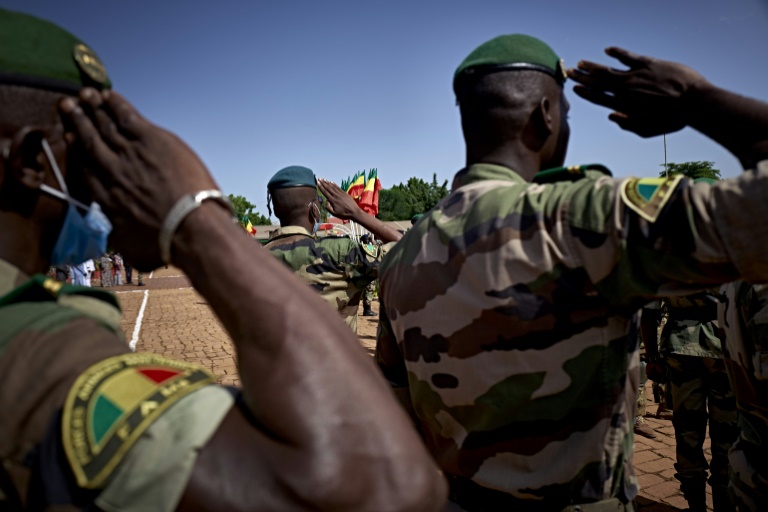
At least four soldiers, two civilians and five assailants were killed on Sunday in an attack in a strategic border zone between Mali, Burkina Faso and Niger, Mali’s army said. 

The army blamed the attack on “terrorists” in an announcement late Sunday, using the term it typically uses for jihadists. 

Earlier, it had said its troops had been repelling an attack by the Islamic State in the Greater Sahara (ISGS) group, affiliated with the Islamic State organisation.

The army’s death toll could be “much higher,” an elected official told AFP, asking not to be named for security reasons. 

The two civilians killed were local elected officials, their relatives told AFP. 

Tessit is located on the Malian side of the so-called three-border area in a vast gold-rich region beyond state control.

Armed groups under the umbrella of Al-Qaeda aligned jihadists Jama’at Nasr al-Islam wal Muslimin, or JNIM, are fighting ISGS there.

The Malian army, which has a military camp next to the town of Tessit, has frequently been attacked in the area. 

UN peacekeepers and, until a few months ago, French soldiers from Operation Barkhane, have also been deployed there. 

Thousands of residents have fled the area, many heading to the town of Gao, some 150 kilometres (90 miles) away.

The Tessit area, like the whole of the so-called three-border zone, is even more isolated during the rainy season when heavy rainfall prevents passage. 

In a separate attack Sunday morning, five police officers were killed in Sona, in the Koutiala area of southern Mali near the border with Burkina Faso.

On Friday, suspected jihadists killed about 12 civilians in central Mali with explosives planted in the bodies of slain civilians that relatives had come to collect.

Mali is struggling with a long jihadist insurgency that has claimed thousands of lives and forced hundreds of thousands from their homes.

Violence that began in the north has spread to the centre and south of the country, as well as to neighbouring Burkina Faso and Niger.

African players in Europe: Salah, Mane score as season starts

African superstars and former Liverpool teammates Mohamed Salah and Sadio Mane scored at the weekend as new league seasons dawned in Europe.

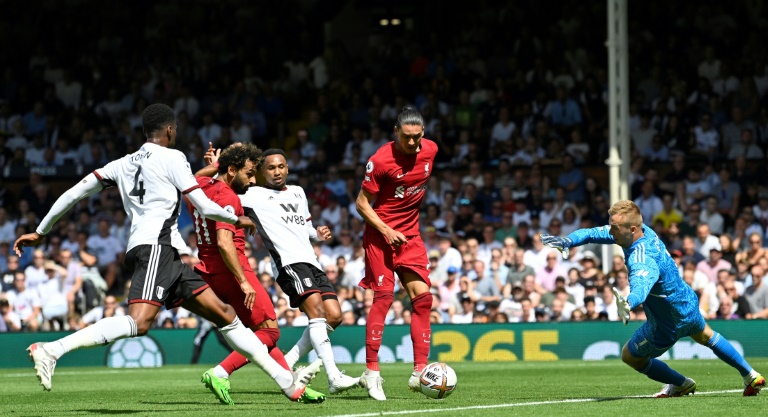
Egyptian Salah scored on the opening day of the Premier League for a sixth straight season to salvage a 2-2 draw for Liverpool at Fulham.  

Senegalese Mane, who left Anfield for Bayern Munich during the close season, netted as the reigning German champions ran riot at Eintracht Frankfurt to triumph 6-1 in the Bundesliga. 

Here, AFP Sport highlights some of the Africans who created headlines at the weekend:

ENGLAND

MOHAMED SALAH (Liverpool)

He helped rescue a point for the 2022 runners-up as they were unexpectedly held to a 2-2 draw by promoted Fulham. Jurgen Klopp’s men were still behind with 10 minutes left when a long ball towards substitute Darwin Nunez caused panic among the Fulham defenders. The ball eventually fell kindly to Salah, who netted from close range.

MOHAMMED SALISU (Southampton)

It was a match to forget for the Ghanaian defender and his Saints team-mates as they suffered a 4-1 hiding at Tottenham Hotspur despite scoring the opening goal. Spurs were 2-1 ahead when, just after the hour mark, the off-balance Salisu made the game safe for the London club by turning a cross from South Korean Son Heung-min into his own net.

GERMANY    

SADIO MANE (Bayern Munich)

Reigning African Footballer of the Year Mane picked up where he left off in Liverpool colours, scoring on his Bundesliga debut as Bayern thrashed UEFA Europa League title-holders Eintracht. Mane, who also scored in the German champions’ 5-3 Super Cup win over RB Leipzig, helped assuage those Bayern fans who are concerned their side may be toothless up front after the loss of Poland forward Robert Lewandowski to Barcelona.

FRANCE

ACHRAF HAKIMI (Paris Saint-Germain)

The Morocco defender gave a  plausible impersonation of Usain Bolt as he dashed forward, received a pass from Neymar and slammed the ball into the net for the second goal as PSG began their Ligue 1 title defence with a 5-0 hammering of hosts Clermont. It was a masterclass of anticipation by the former Real Madrid full-back. 

Chad military government signs deal to launch peace talks

Chad’s military government Monday signed a deal with more than 40 opposition groups to launch national peace talks later this month, although the main rebel outfit refused to take part.

UN Secretary General Antonio Guterres and the African Union urged the junta and opposition to seize the latest opportunity to stabilise a country considered key to international efforts to stamp out Islamic extremists in the Sahel region.

But after five months of mediation efforts by Qatar, the main rebel Front for Change and Concord in Chad (FACT) announced hours before the ceremony at a Doha hotel that it would not sign the deal.

Under the agreement, Mahamat Idriss Deby’s Transitional Military Council and hundreds of opposition representatives will launch a national peace dialogue in the capital N’Djamena on August 20.

Deby, who was in Doha for the signing, took power after the death of his father, long-time president Idriss Deby Itno, in a battle with rebels in April last year.

The dialogue aims to agree the schedule and rules for a presidential election that Deby has promised by October. 

However, few of the groups who took part in the talks, or the diplomats who monitored the painstaking negotiations, expect an election this year.

– ‘Shocked’ –

Chad, one of the world’s poorest countries, has endured repeated uprisings and unrest since its independence in 1960.

Deby promised a national dialogue and elections within 18 months of him seizing power, but the mediation has been fraught with discord.

FACT and other opposition groups have demanded that he announce that he will not stand in the election. Deby has said this can only be negotiated in N’Djamena. 

He has also said his transitional rule could be extended but faces pressure from the international community to keep the deadline.

In a video message to the ceremony, UN Secretary General Antonio Guterres called the signing “a key moment for the Chadian people” but said the national dialogue had to be “inclusive” to be successful.

African Union Commission chief Moussa Faki Mahamat said that both sides keeping their promises would be “crucial criteria” to build trust with the Chadian people.

Qatar’s Foreign Minister Sheikh Mohammed bin Abdulrahman bin Jassim Al Thani said the accord aimed to establish “a peace to replace the trouble and strife that the country has known for many long years”.

Forty-three of the 47 groups who remained at the end of the mediation signed the accord to start national talks in N’Djamena on August 20.

Mahamat Zene Cherif, the interim government’s foreign minister, acknowledged that there had been “difficult talks” in Doha but said he believed there was now a chance for “sustainable peace” in the country of 16 million people.

Cherif said he was “a little bit shocked” that the FACT rebels had not signed the accord but insisted that all armed groups could take part in the dialogue.

Groups who signed the accord committed to a ceasefire while the government has guaranteed the security of all those who return from abroad to take part in the talks.

FACT, which led a walkout on the first day of the Doha negotiations in March, had demanded increased safety guarantees and the release of more than 300 of its fighters in government prisons. 

Cherif said the demand had been “unacceptable” without FACT giving assurances in return.

Among the signatories was a veteran rebel leader, Mahamat Nouri, 75, who has been signing tentative peace agreements with Chadian governments since the 1970s.

He told AFP the N’Djamena talks could work if there was “political goodwill” on all sides.

Chad military leader signs accord for talks with opposition

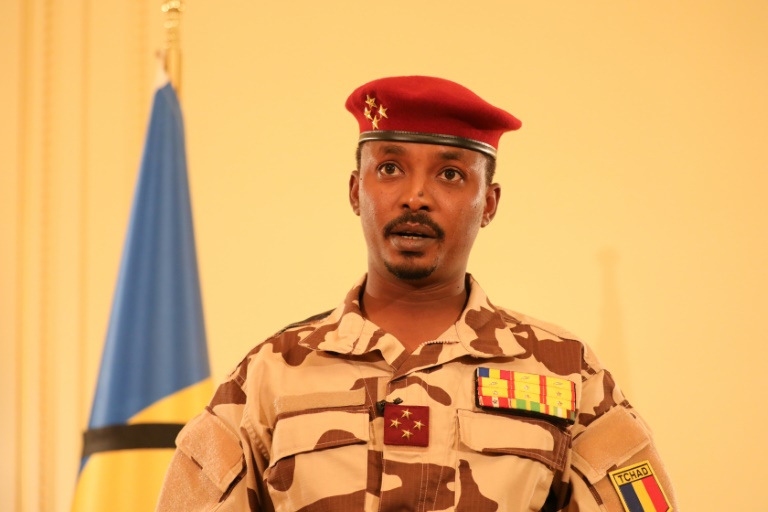
Chad’s military ruler Mahamat Idriss Deby Itno Monday signed a deal with more than 40 opposition groups to launch national peace talks later this month, although the main rebel outfit refused to take part.

The 38-year-old general and opposition representatives sealed the accord at a ceremony in Doha after five months of mediation by Qatar. 

The landmark talks are due to start in Chad’s capital N’Djamena on August 20. 

The Front for Change and Concord in Chad (FACT), the main rebel group, said it would not sign the deal despite last-minute efforts by Qatar’s mediators.

In a video message to the ceremony, UN Secretary General Antonio Guterres called the signature “a key moment for the Chadian people” but said the national dialogue had to be “inclusive” to be successful.

Qatar’s Foreign Minister Sheikh Mohammed bin Abdulrahman bin Jassim Al Thani said the accord aimed to establish “a peace to replace the trouble and strife that the country has known for many long years”.

Forty-two of the 47 groups who remained at the end of the mediation signed the accord to start national talks.

Deby took power after the death of his father, long-time president Idriss Deby Itno, in a battle with rebels in April last year.

He promised a national dialogue and elections within 18 months but the mediation has been fraught with discord. 

Diplomats monitoring the negotiations said there would be a “race against time” to hold the election before October.

Deby has said his transitional rule could be extended but faces pressure from the international community to keep to the deadline.

Millions hungry but drought overlooked as Kenya prepares to vote

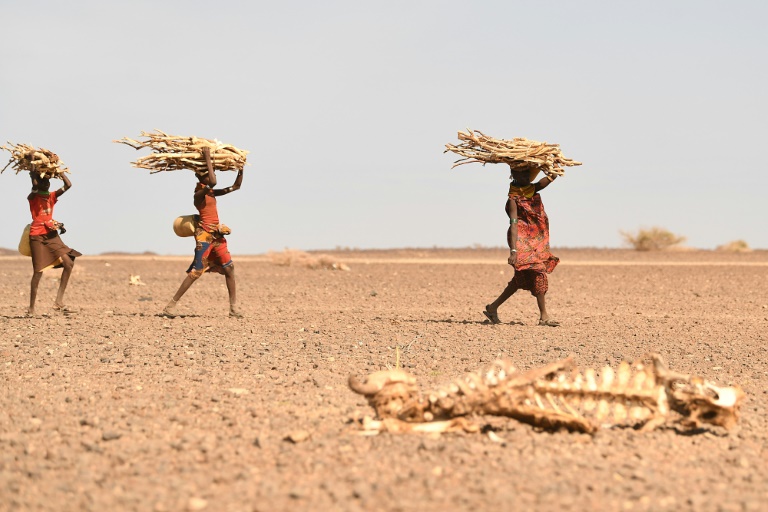
In the dust bowl of Kenya’s drought-stricken north, the people of Purapul are edging closer to starvation, surviving on nothing but wild berries as their children waste away from hunger.

Loka Metir knows the bitter fruits make her children sick, further weakening their frail condition. But it hasn’t rained properly in three years, and there’s simply nothing else to eat.

“This is the only way to survive,” the mother of five told AFP in Purapul, a scattering of thatch huts a two-day walk from the nearest town in the bone-dry Marsabit county.

At least 18 million people across the Horn of Africa are facing severe hunger as the worst drought in 40 years devastates the region.

Over four million are in Kenya’s often-forgotten north, a number that has climbed steadily this year, as the crisis struggles to attract national attention in the midst of a hard-fought — and expensive — election campaign.

Nearly 950,000 children under five years and 134,000 pregnant and breastfeeding women in Kenya’s remote arid regions are acutely malnourished and need aid, according to government figures from June.

Hunger in the three hardest-hit counties, including Marsabit, borders on famine.

– ‘Under the carpet’ –

The World Bank forecast in June that the drought, coupled with economic disruption from Russia’s invasion of Ukraine, would drag on Kenya’s recovery from the coronavirus pandemic.

Yet it has barely featured on the election agenda as Kenya’s political giants have criss-crossed the country drumming up votes.

In the hustings, the soaring cost of living in East Africa’s biggest economy has overshadowed other concerns.

Protesters in major cities have threatened to boycott the much-anticipated August 9 poll if prices aren’t lowered, chanting “no food, no election”.

The plight of northern Kenya has largely gone “under the carpet”, said economist Timothy Njagi from the Tegemeo Institute of Agricultural Policy and Development in Nairobi.

“I found it quite sad… Given that this was going to be an election year, we would have imagined that it was going to be a key discussion point,” he told AFP.

Four consecutive failed rainy seasons, made worse by a changing climate, have created the driest conditions since the early 1980s. 

Rivers and wells have run dry, and grazing land has turned to dust, spurring the death of more than 1.5 million livestock in Kenya alone.

Animal carcasses litter the rocky plains around Purapul, where pastoral families have struggled without milk or meat in their diets, or any means of trading for food.

– Out of sight –

Iripiyo Apothya watched her goats shrink and die. The skins she couldn’t boil and eat line the floor of her hut.

“Now I eat what the monkeys eat,” said the 73-year-old, clutching a handful of the berries she boils into a bitter paste.

“But even these are running out — what can we do?”

The village is isolated and like many across Kenya’s chronically underfunded north, has no school, road, shop or dispensary. 

The nearest town Loiyangalani is 60 kilometres (37 miles) away. Despite hosting Africa’s biggest wind farm, this dusty settlement on Lake Turkana is itself without electricity.

Outside town, children dig for water along the desolate shoreline of Turkana, an enormous salt lake.

The two main presidential aspirants, William Ruto and Raila Odinga, have helicoptered into drought-affected regions, promising infrastructure and development in brief campaign stops.

But this is not vote-rich country to canvas and droughts generally don’t win elections, said Karuti Kanyinga from the Institute for Development Studies at the University of Nairobi.

“It is a lose-lose for anyone who raises it,” said Kanyinga.

Claire Nasike, from Greenpeace Africa, told AFP that pledges by both candidates to invest in water and agriculture in drought-prone areas lacked important detail.

“The nitty-gritties of how they are going to address the climate crises have not been captured.”

– ‘We are dying’ –

The drought, which could stretch into 2023 if the next rains fail as predicted, has also struggled for global attention in a crowded field.

An appeal for Ukraine has raised $1.92 billion — nearly 86 percent of its goal, according to UN data.

Kenya’s much smaller drought appeal has reached just 17 percent of its target.

At the same time, the cost of delivering aid has jumped as the war in Ukraine drives up food and fuel prices.

Under an acacia tree, a single doctor checks dozens of mothers and infants for malnutrition during a twice-monthly visit to Purapul.

“The kind of aid we give is just a drop in the ocean,” said James Jarso from World Vision, one of the few charities providing drought relief on the ground.

The government says it has spent over 10 billion Kenyan shillings ($84.3 million) since the drought was declared a national disaster in September.

“We are going through tough economic times. We are doing everything possible within the means of the government to support the communities,” Steven Mavina, the Deputy County Commissioner of Loiyangalani, told AFP.

In Purapul, villagers draw water from a contaminated well and wait for help to arrive.

“We don’t have anyone to help us,” Apothya said. “I want people to know that we are dying.”

'A dirty game': Young Kenyans shun election hype

As a familiar campaign jingle brings the Kenyan crowd to their feet, Hellen Atieno joins her compatriots and sways to the catchy tune at a political rally in the lakeside city of Kisumu.

Just don’t expect the 23-year-old to vote.

“I have only come to the rally because there is money. I hope there will be something,” Atieno told AFP, referring to the widespread Kenyan practice of offering freebies to prospective voters. 

Currently without a job, the former fishmonger says she is so fed up with the country’s insular political class that she plans to stay home when Kenya votes on August 9 in parliamentary and presidential polls.

She is not alone.

The East African economic powerhouse ranks among the world’s youngest countries — three-quarters of Kenyans are aged under 34, according to government figures.

Many have no interest in participating in an electoral process they widely dismiss as corrupt and pointless.

The number of registered young voters has dropped five percent since the 2017 poll, in contrast to over-35s, whose tally has increased, Kenya’s election commission announced last month.

Over 22 million Kenyans are eligible to take part in this year’s polls, with young people accounting for less than 40 percent of that number, the Independent Electoral and Boundaries Commission (IEBC) said.

– ‘A dirty game’ –

Politicians have responded with a freebie bonanza, offering cash, umbrellas, shirts, caps and even packets of maize flour — a dietary staple — to anyone who attends their rallies.

The bribes — an electoral offence that can attract a fine of up to two million Kenyan shillings ($17,000) and/or a six-year jail term — are not new to Kenyan politics.

But galloping food inflation — made worse by the war in Ukraine — and an unemployment crisis have intensified the appetite for such handouts.

According to census figures published in 2020, about five million young Kenyans were out of work.

Brian Denzel has spent recent weeks hitting one rally after another, eager to pocket the cash on offer, even though the 19-year-old butcher has no plans to vote and sees politics as little more than “a dirty game”.

“Who will reject the free money that they are given?” he said, while waiting in line to collect 200 shillings ($1.70) from a local politician.

Kenya’s Interior Minister Fred Matiang’i even told reporters in late July that the banks were running short of 100 and 200 shilling notes “because politicians are bribing villagers”.

In the months leading up to the polls, observers suggested that the youth factor could help heal Kenya’s often toxic tribal politics, with a younger electorate less likely to vote according to ethnic affiliations.

Yet, although young Kenyans are less tribally-minded, they also lack “ideological steadfastness”, Kisumu-based political analyst Francis Owuor told AFP.

“That conviction that normally comes with the political process is not there,” Owuor said.

“Everyone (is) to blame for this, both the people and the leaders, but again the leaders are the duty bearers, so they must take much of the blame.” 

– Disillusioned –

Thirty years after the emergence of multi-party democracy in Kenya, many are disillusioned by constant battles over the credibility of polls and disputed election results.

This year’s presidential vote is largely a two-horse race between Deputy President William Ruto, 55, and Raila Odinga, the 77-year-old veteran opposition leader who is now backed by the ruling party.

If both leaders accept the results, it will be a first for the country since 2002.

Amina Soud, manager for voter education at the IEBC, told AFP the election watchdog was “worried” by the increasing indifference shown by young people towards the political process.

“We did a lot of mobilisation during registration using all these tools and still voter apathy was too high,” Soud said, referring to the IEBC’s social media push to enlist new voters.

But exhorting youth to vote via campaigns on TikTok or comics in Sheng — a local slang popular with urban youth — does little to offer hope to a generation of Kenyans facing runaway inflation, corruption and unemployment.

“I don’t think I am going to vote,” 27-year-old salon owner Irene Awino Owino told AFP.

“I have no interest, because the government puts themselves first rather than us.”

Close Bitnami banner
Bitnami