Africa Business

'Feels normal' as Bayern rout Frankfurt 6-1 in Bundesliga opener

Bayern Munich coach Julian Nagelsmann said he didn’t mind if it was beginning to feel “normal” for his team to win the title, after thrashing an overwhelmed Eintracht Frankfurt 6-1 away at Deutsche Bank Park on Friday.

Munich got their quest for an 11th consecutive Bundesliga title off to the best possible start, with teenage forward Jamal Musiala scoring two as Bayern dismantled the reigning Europa League champions. 

Asked after the match if Munich winning the Bundesliga was begnning to feel like “normality”, Nagelsmann unsurprisingly said he was happy with the status quo. 

“When you win ten in a row, yes it starts to feel normal,” he told broadcaster DAZN.

“But I don’t really care if it feels normal or not – but yes, it can stay ‘normal’.

“The first half was oustanding. I don’t think it’ll always be like this, but we should be satisfied.”

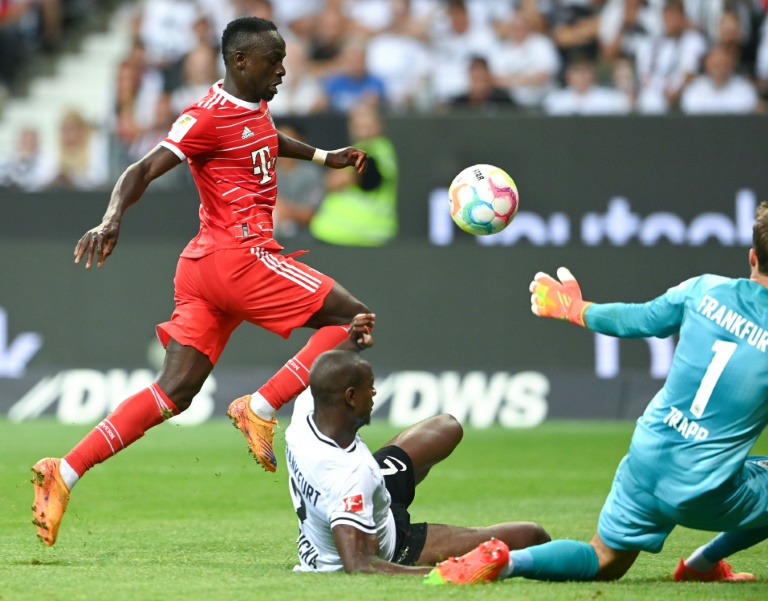
Former Liverpool forward Sadio Mane scored on his league debut when he nudged a 28th minute header past goalkeeper Kevin Trapp.

The Senegalese was one of five different goal scorers for Munich, allaying fears Bayern may be toothless up front after the summer exit to Barcelona of Robert Lewandowski.

Joshua Kimmich, Benjamin Pavard, Musiala (two) and Serge Gnabry also got on the scoresheet for the Bavarians.

Kimmich opened the scoring in the fifth minute via a free kick, with his shot bouncing in off the post past a stunned Trapp, who may have had his vision obscured by dense fog caused by the pyrotechnics of his own home fans.

Kimmich lauded the variety of his side’s new attack. 

“The four up front, they had fun,” he said.

– ‘Absolute debacle’ –

French defender Pavard scored just five minutes later, volleying in a loose ball across his body in a manner reminiscent of his goal of the tournament against Argentina in the 2018 World Cup.

Despite the opening onslaught, the next stages belonged to the home side, who had two clear cut chances to peg one back.

A header from Tuta hit the crossbar one minute after Pavard’s goal, while in the 27th minute midfielder Jesper Lindstrom dribbled past several Munich defenders and had keeper Manuel Neuer beaten but sprayed his shot just wide of the left-hand post.

Munich won back the initiative immediately, with Mane heading in past Trapp to score Bayern’s third and take the wind out of Frankfurt’s sails.

Teenager Musiala continued his impressive pre-season form that saw him named man of the match in Bayern’s 5-3 Super Cup win over Leipzig, tapping in a dribbled cross from Thomas Mueller from close range.

Fresh from signing a new deal that will see him stay in Munich until at least 2026, Gnabry tickled the ball under keeper Trapp in the 43rd minute to put Bayern 5-0 up at half-time.

Seeking to bring some defensive stability to his side, Frankfurt coach Oliver Glasner made three changes at half-time including pulling captain Sebastian Rode from the field. 

Glasner may have also had one eye on Frankfurt’s midweek UEFA Super Cup clash with Real Madrid. 

Glasner praised his team’s effort but said they had no answer for the Bavarians. 

“The whole time, the boys tried everything, but Bayern were just two good for us. Today we didn’t have a chance,” said the coach.

Rode summed up his side’s performance. 

“The first half was an absolute debacle”. 

Frankfurt striker Randal Kolo Muani, another one of those subbed on at half-time, managed to pull one back in the 64th minute, scoring on debut for the Eagles. 

The France under-21 international slid the ball into an empty net after Neuer lost control, having travelled too far outside the Munich box. 

Musiala scored his second in the 83rd minute, putting the ball under Trapp from close range after beating off several exhausted Frankfurt defenders. 

At one point it appeared Bayern were on track to eclipse their own record for the best performance in an opening round clash, set in 2020 when they trounced Schalke 8-0 in a season where the Royal Blues were ultimately relegated. 
Raza, 'brilliant' Kaia slam ODI centuries as Zimbabwe stun Bangladesh

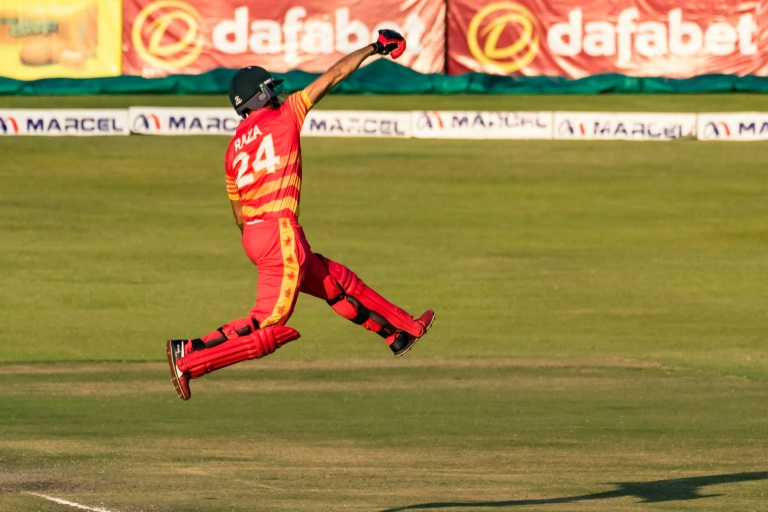
Sikandar Raza and Innocent Kaia struck centuries as Zimbabwe recovered from a disastrous start to stun Bangladesh with a  five-wicket win in the first match on Friday of a three one-day internationals series.

The home team lost openers Regis Chakabva and Tarisai Musakanda with just six runs on the board as they chased a formidable Bangladesh total of 303-2 that included four half centuries.  

A third Zimbabwe wicket fell after they lifted the score to 62 and then Raza and Kaia came together to put on 192 for the fourth wicket and set up a brilliant victory as Zimbabwe reached 307-5 with 10 balls to spare.

Raza was unbeaten on 135, including six sixes and eight fours, while Kaia struck two sixes and 11 fours in his 110 before being caught by Shoriful Islam at short fine leg. 

“I thought Innocent was brilliant,” said man-of-the-match Raza of his teammate, who was playing in just his fourth ODI. 

“I was trying to back him and tell him that if we stayed together we can win this game.

“I wanted to calm him down and encourage him to play good shots instead of just trying to hit the ball too hard.

“Most of the chats we had were about me encouraging him and trying to steady his nerves as we chased a very formidable total.”

Kaia said: “This a big win. Playing against Bangladesh is big for us. When you score your first 100 and go on to win the game, I do not know how to explain this but it is an awesome feeling. I am humbled.”

Captain Chakabva, standing in for injured Craig Ervine, added: “I could not have asked for more from the boys. We spoke during lunch about how we needed somebody to get a 100 and then we get two.” 

– Liton injured – 

Bangladesh captain Tamim Iqbal was evidently less euphoric, disappointed with a poor performance in the field as well as a serious hamstring injury to opening batter Liton Das.

“We have been dropping catches regularly and getting away with it, but I knew that one day it would cost us and today was that day,” said Tamim.

“The news about Liton (Das) is not good — I think he could miss the rest of the series. This is what I have heard and I need to check up on some others.”

Bangladesh, seventh in the ODI rankings and eight places above Zimbabwe, took advantage of being put in to bat by building what seemed a winning score.

Opener Liton led the way with an unbeaten 81 before being forced to retire with a suspected hamstring injury. He faced 89 balls and scored one six and nine fours.

Anamul Haque (73), Tamim (62) and Mushfique Rahim (52) were the other scorers of half centuries for a team fresh from a 3-0 ODI hammering of the West Indies last month.

When Tamim reached 57, he became the first Bangladeshi to score 8,000 ODI runs. He departed soon after having skied a Raza delivery to Kaia.

But while the visiting batsmen scored freely, their bowlers had no answers to Pakistan-born Raza and Kaia at Harare Sports Club.

The pair reached centuries within two balls of each other during the 39th over with Kaia scoring his maiden ton through a single while two runs from Raza gave him his fourth 100 in the 50-over format.

Victory continued a remarkable transformation of Zimbabwe since former batting star Dave Houghton began a second stint as coach after 3-0 ODI and Twenty20 whitewashes by Afghanistan in June.

They hosted a T20 World Cup qualifying tournament last month and won all five matches to clinch a place at the main event in Australia from October.

Earlier this week, Zimbabwe edged Bangladesh by 10 runs in a thriller to snatch a 2-1 victory in a T20 series. 

DR Congo buries 10 killed in anti-UN protests

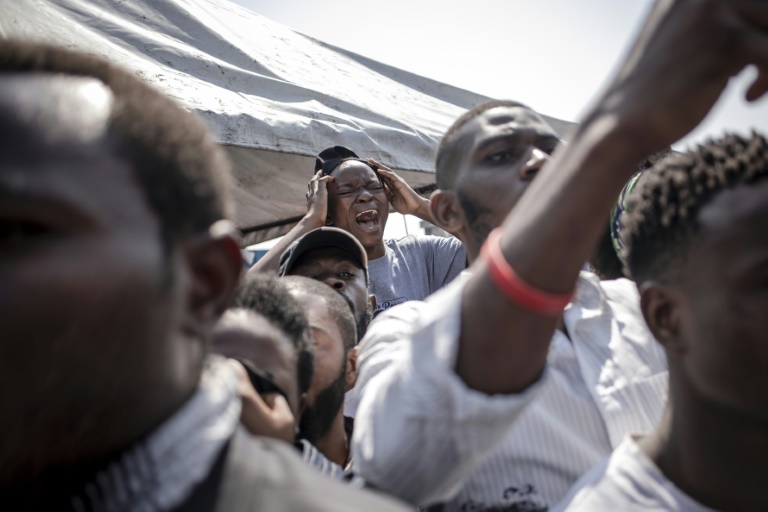
Mourners on Friday buried 10 people killed during anti-UN protests in eastern Democratic Republic of Congo, some chanting slogans against peacekeepers, an AFP reporter said.

Last week, demonstrations demanding the departure of the UN peacekeeping mission, known as MONUSCO, took place in the eastern city of Goma and quickly spread to several towns in the east of the country.

Thirty-two civilians and four UN peacekeepers were killed during the protests, according to a government tally.

Anger has been fuelled by perceptions that MONUSCO is failing to do enough to stop decades of armed conflict. More than 120 militias operate in the DRC’s troubled east.

On Friday, a crowd gathered to pay respects before the coffins of ten of the protesters in a stadium in Goma, an important commercial hub of about 1 million people.

Mourners chanted slogans hostile to the peacekeepers, according to an AFP journalist, and touted banners reading “MONUSCO is killing Congolese people”. 

“We will continue to fight to expel this army from our country,” said Josue Wallay, a member of the activist group Lucha that spearheaded the protests. 

After the ceremony, the 10 bodies were buried in a graveyard on the outskirts of the city. 

The United Nations first deployed an observer mission to eastern Congo in 1999, and established MONUSCO in 2010 with a mandate to conduct offensive operations.

The peacekeeping operation is one of the largest and costliest in the world, with an annual budget of around $1 billion.

Late last week, the DRC’s government requested the expulsion of MONUSCO spokesman Mathias Gillmann, citing “indelicate” remarks that he had made. 

Gillmann had told a journalist that the UN lacked the military means to defeat a notorious armed group called the M23, according to a senior government official who asked for anonymity. 

The militia had lain mostly dormant for years before resuming fighting last November, capturing swathes of territory in eastern DRC. 

An unpublished report by independent experts for the UN Security Council, seen by AFP this week, pointed to neighbouring Rwanda backing the M23.

The Congolese government has repeatedly accused Rwanda of supporting the M23, although Rwanda has denied the claims. 

dhbm-mbb/blb/eml/ah

Chad junta chief flying to Qatar for peace deal with rebels

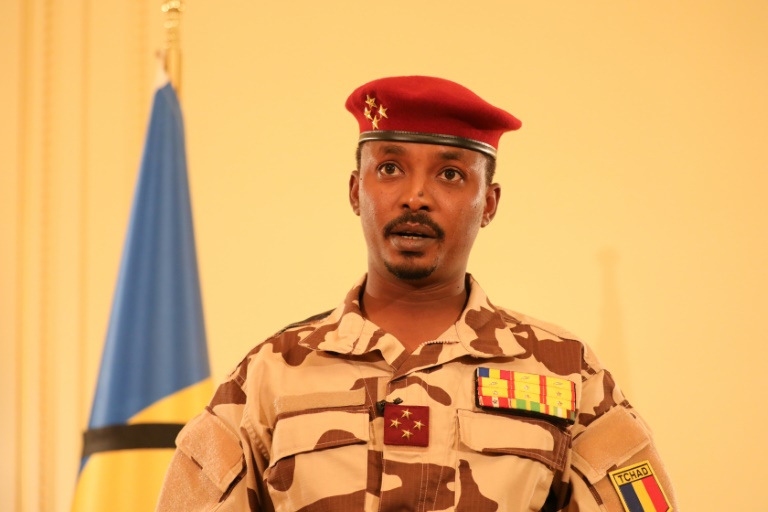
The head of Chad’s ruling junta Friday flew off to Qatar to seal a possible peace deal with rebels, a key step in plans to restore civilian rule, the presidency’s website said.

General Mahamat Idriss Deby Itno’s plane took off from N’Djamena airport at around 1230 GMT, an AFP journalist said.

Earlier, diplomats and negotiators in Doha said Deby and opposition groups would sign an accord on Monday, opening the way for the rebels to attend a “national inclusive dialogue” on Chad’s future.

Deby has been in power since April 2021, when his father, veteran president Idriss Deby Itno, was killed in an operation against insurgents in northern Chad.

He has promised to stage elections within an 18-month timeframe.

The ballot would follow a “dialogue” gathering representatives across Chadian society, including its political opposition and constellation of rebel groups.

The forum was initially scheduled to start on February 15 but was postponed to May 10 and then again to August 20.

It has been persistently delayed by discord among the dozens of rebel groups locked in talks with the government.

Qatar has been playing the role of mediator in the parlay, which began in March.

On the table is a government plan for a ceasefire and guarantees of security for rebel leaders who attend the forum.

On Friday, a senior diplomatic source in Doha said “the signature will be on Monday”.

The source spoke on condition of anonymity as no official announcement had been made by the Qatari government.

A deeply poor country in the heart of the Sahel, Chad has had little stability since gaining independence from France in 1960.

Armed rebels are a major factor in the volatility, traditionally posing a threat to the government from havens in the north of the country

The main armed opposition Front for Change and Concord in Chad (FACT) has not yet announced whether it will sign the accord.

FACT fighters were among rebels battling the senior Deby when he was killed last year after an iron-fisted reign lasting 30 years.

According to a decree signed Thursday by Prime Minister Albert Pahimi Padacke, more than 1,300 representatives of rebel groups, civil society, trade unions and government officials will attend the talks in the Chadian capital.

The 18-month timeframe set by Deby runs out in October, which leaves little time to prepare for elections in the vast arid country.

The junta has given itself the option of extending the deadline but faces pressure from France, the European Union and African Union not to do so.

Mediator says Senegal peace deal with southern rebels an 'important step'

The peace deal Senegal has signed with rebels from the country’s south is “an important step” towards permanent peace in the home of one of Africa’s oldest active rebellions, a mediator said Friday.

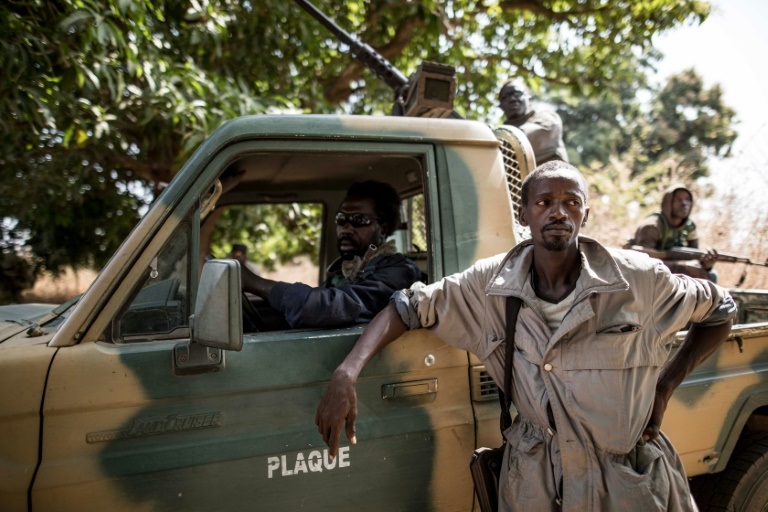
Rebel leader Cesar Atoute Badiate, head of a unit of the Movement of Democratic Forces of Casamance (MFDC), and an emissary of Senegalese President Macky Sall signed the peace deal in Guinea-Bissau on Thursday.

The rebels pledged to lay down their arms in the nearly 40-year-old conflict in the Casamance region.

“This is an important step towards definitive peace,” mediator and former Senegalese cabinet minister Robert Sagna told private Senegalese radio station Iradio.

“For nearly four years, the MFDC has said it would lay down its arms but had never signed it,” the head of the Reflection Group for Peace in Casamance added.

The agreement, the content of which was not disclosed, was reached following mediation by Guinea-Bissau’s head of state, Umaro Sissoco Embalo, who is also the chairman of the Economic Community of West African States (ECOWAS). 

Rebel leader Badiate was in June sentenced in absentia in Ziguinchor, the main city in Casamance, to life in prison for murder and armed insurrection in connection with the January 2018 massacre of 14 men in the region.

“It is to be hoped that the whole MFDC will be able to join” this agreement, Sagna said on Friday, referring to the group’s various political and military branches.

Senegalese President Sall — who had made a “definitive peace” in the Casamance region one of the priorities of his second term — said on Twitter that he welcomed the peace agreement and remained “committed to the consolidation of lasting peace in Casamance”.

Casamance, Senegal’s southernmost region, is almost separated from the rest of the country by the tiny state of The Gambia.

It has a distinct culture and language derived from its past as a former Portuguese colony.

The MFDC has led a low-intensity separatist campaign since 1982 that has claimed several thousand lives.

But the conflict was mostly dormant until Senegal launched a major offensive last year to drive out the rebels.

In a clash on January 24, four Senegalese soldiers were killed and seven were captured alive and taken across the border to The Gambia. The rebels released the hostages the following month. 

In March, the army launched a new operation in which it claimed to have destroyed several rebel bases for the loss of one soldier and eight wounded.

Malian and 'white' soldiers involved in 33 civilian deaths: UN experts

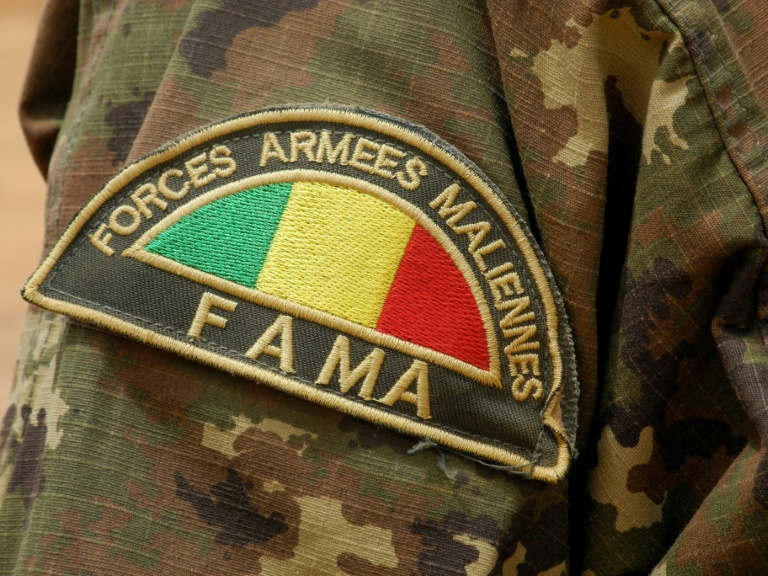
The Malian army and “white-skinned soldiers” were involved in the deaths of 33 civilians, according to an expert report to the UN seen by AFP Friday.

The bodies of 29 Mauritanians and four Malians were found near the village of Robinet El Ataye in the Segou region, where 33 civilians had been beaten and taken away on March 5, a Panel of Experts on Mali said in a report to the UN Security Council late last month.

A diplomatic source in New York told AFP that the white soldiers were paramilitaries of Russia’s Wagner group.

The civilians’ disappearance stoked friction between Mali and Mauritania at the time. 

Nouakchott accused the Malian army of “recurrent criminal acts” against Mauritanian citizens in the border region. 

Bamako said there was no proof its army was involved. 

The two countries in mid-March launched a joint investigation but its results had not yet been published as of early August. 

Western countries say Russian paramilitaries in Mali are mercenaries from the controversial Wagner group while Bamako describes them as “instructors” for its security forces.

– ‘Screams’ –

At 8:30 am on March 5, a “group of ‘white-skinned soldiers’ arrived in Robinet El Ataye”, a village whose well was frequently used by Malian and Mauritanian herders, the report said. 

“The soldiers proceeded to round up the adult men, including older boys, tied their hands behind their backs and blindfolded them,” the report said. “The women and children were told to go into their homes and not to watch.” 

The soldiers raided the houses in the village of jewelry, mobile phones and other possessions, according to the report.

It said a group of soldiers from the Malian army arrived at 11:00 am and began beating the men with their herding sticks.

“The women could not leave their homes as there were soldiers blocking the doors,” it said.  

“They could only hear the screams of the men as they were being beaten.” 

The Malian soldiers then released some of the younger men and carried off “thirty-three or thirty-four” others, including twenty-nine Mauritanians and four Tuareg Malians. 

The “white-skinned soldiers” left several hours after the beatings began.

The bodies of the men were found four kilometres (two and a half miles) away the next day. They had been “shot and then burnt”, according to the report.

An eye witness claimed the bodies were covered by “a dark substance which could not be identified”. 

– ‘Pattern’ –

The expert panel said it was unable to visit the site of the incident but had collected “several testimonials” on Malian army operations in the region this year.

It said it had unconvered a “similar pattern of pillage and beatings” in five other locations, though not civilian killings. Two other operations the panel investigated involved the presence of “white-skinned soldiers”, according to testimonies.

The military court in Bamako has also said it will probe the incident.

The Malian army has conducted numerous military operations to “hunt down” jihadist groups in the Segou and Mopti regions of central Mali since the beginning of the year. 

Its soldiers have been accused of abuses on several occasions by NGOs. 

In March, the army massacred about 300 people by summary execution in Moura in central Mali, according to Human Rights Watch (HRW). 

The government soldiers were accompanied by foreigners identified by several sources as Russians.

The Malian authorities have said they will investigate events there. 

The Sahel country is also in the grip of political upheaval following military coups in August 2020 and May 2021.

Ethiopia 'dismayed' over US, EU envoys' Tigray stance

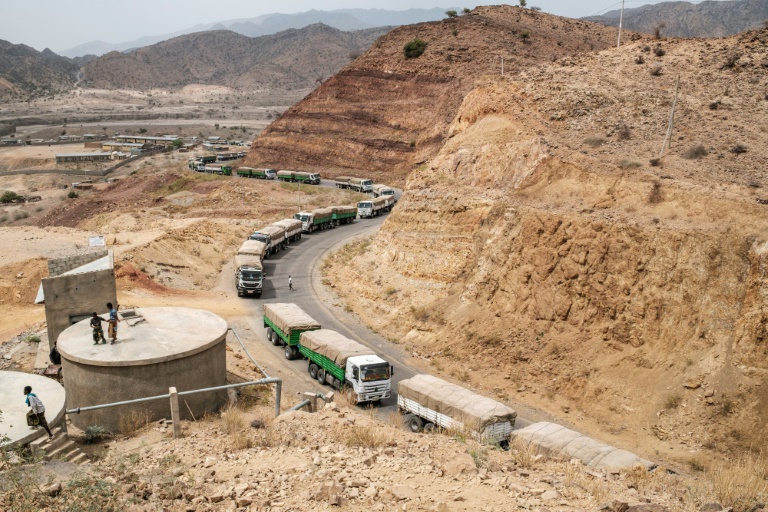
The Ethiopian government has chastised EU and US envoys who visited the war-stricken region of Tigray, accusing them of siding with the rebels’ stance on peace talks and aid.

Negotiations between Prime Minister Abiy Ahmed’s government and the Tigray People’s Liberation Front (TPLF) are on the cards, but key obstacles remain, including over who should mediate.

US Horn of Africa envoy Mike Hammer and EU counterpart Annette Weber visited Tigray’s capital Mekele this week to press for the launch of talks under the auspices of the African Union.

They also called for the restoration of basic services in Tigray and for unrestricted aid access to the region and neighbouring Afar and Amhara.  

But Abiy’s national security adviser Redwan Hussein voiced the government’s “dismay” over the envoys’ mission in a post on Twitter late Thursday.

“The team failed to press for unequivocal commitment for peace talks, and rather indulged in appeasement & fulfilling preconditions placed by the other party,” he said.

“Regarding restoration of services, the will of the government has been reaffirmed and preludes for that have been reiterated: ie creating enabling conditions and semblance of peace by beginning the talks.”

The war erupted in November 2020 when Abiy ordered troops into Tigray to topple the TPLF, accusing the rebels of attacking federal army camps.

Tigray, the northernmost region of Ethiopia, has suffered food shortages and access to basic services such as electricity, communications and banking has been limited.

There has been a lull in fighting since a humanitarian truce was declared in March, paving the way for the resumption of international aid convoys to Tigray’s six million people.

But more than 13 million people remain in need of food assistance across northern Ethiopia, according to the United Nations.

– Unfettered aid call –

In a statement on Tuesday, the US and EU diplomats called for unfettered aid deliveries to Tigray, Afar and Amhara, and urged the government to lift restrictions on cash and fuel to Tigray.

But Redwan dismissed the envoys’ entreaties, saying the issue had been addressed.

“No limit on the number of flights; none either on the number of trucks carrying aid. The issue of fuel has also been addressed,” he added. 

The UN’s humanitarian agency OCHA said in a July 22 report that a lack of cash and fuel in Tigray was “heavily impacting implementation of food distributions”.

TPLF leader Debretsion Gebremichael has warned that key services would have to be reinstated in Tigray and the “blockade” lifted before dialogue could begin.

The rebels also want any peace talks to be mediated by neighbouring Kenya, but the government insists they must be brokered by the AU.

“The bottom line? The AU is the only channel and has been reiterated in no uncertain terms once again,” Redwan said.

From coffee to toothpaste, Nigerians buy small as hardships bite

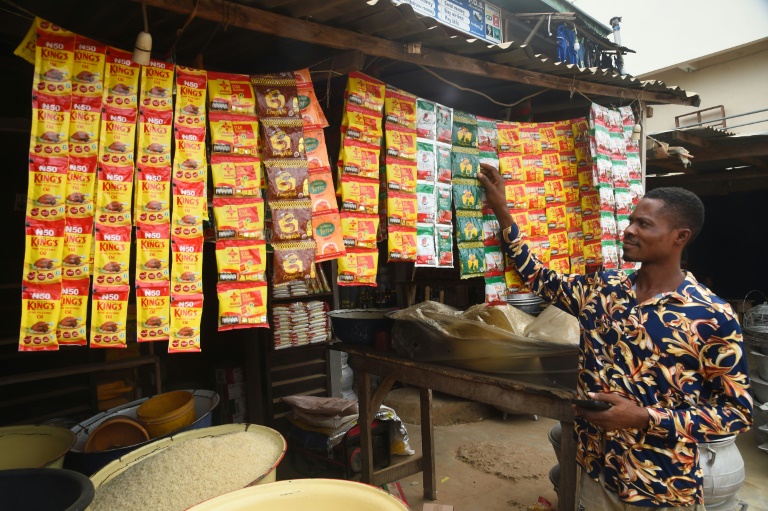
From five grams of toothpaste to 10 millilitres of cooking oil, many Nigerians struggling with soaring prices now buy their basic necessities in small quantities packed in tiny plastic bags to be consumed on the same day.

Consumer brands behind this “sachetisation of the economy” see it as a creative innovation, allowing consumption for all Nigerians, the majority of whom live on less than $2 a day.

But critics see the development as an economic and ecological aberration, even as Africa’s largest economy struggles with the inflationary fallout from Russia’s war in Ukraine.

In the streets of Lagos, the vibrant economic capital of Africa’s most populous country, small sachets are now part of the decor: they colour its streets, packing the wood and tin shops found on the corner of most streets. 

Sitting on a stool, Ibrahim Atahire has been running his small grocery store for 30 years in a busy area of Obalende, a popular district of the megalopolis.

“At my place, you can buy everything in small quantities,” said the 55-year-old trader with a streaked grey beard.

On its stand, everything is sold in sachets: coffee or powdered milk for just one cup, a few grams of cereal, toothpaste for one brushing, razors packaged and sold individually, washing powder and fabric softener for a single wash.

Even mosquito cream to relieve bites is sold in a package smaller than the palm of a hand. 

For lunch, cooking oil is purchased in sachets, as are spices, tomato sauce, crushed garlic and ginger powder. One sachet, for each ingredient and for each meal.

“I have been selling sachets for several years, but recently people can no longer afford to buy in normal quantities, so that is all I am selling now,” Atahire said.

In a parallel street, Sanni Aicha was searching the stalls for the cheapest packet of cooking oil. The mother of two confides that she is “no longer getting by”.

“Before I used to get oil in cans, but for two years everything has been so expensive.”

– 95 million poor –

Nigeria has been hit hard by the coronavirus pandemic, which pushed up consumer prices in 2021 by 17 percent and forced an additional six million Nigerians into poverty. 

It is now suffering the fallout from the war in Ukraine.

In 2022, the World Bank predicts inflation of 15.5 percent and one million more poor people, with the national poverty line calculated at $1.93 at 2011 levels per person per day.

June inflation was 18 percent. In all, the number of poor people in Nigeria is expected to reach 95.1 million — nearly half of the population — by the end of this year, the institution said. 

“A lot of people that used to be in the middle class are now falling into poverty… People that used to consume those products at a bigger size, but they can’t afford those sizes any longer,” said Tunde Leye, an economist at SBM Intelligence risk analysts. 

“Big brands were losing market because people are unable to buy in big quantity, so they started to sachetise so they could reach that part of the market.”

Sachets really hit the Nigerian market in the early 2010s, with brands offering consumers products in reduced quantities to entice them to try new products, says a former marketing manager for a major European brand in Nigeria. 

But in 2016, when the country fell into recession after the fall in oil prices, “everybody was buying sachet. So we started to sell every product in sachet,” the manager said.

Since then, the economic situation has not improved much, so demand for small packaging has exploded, said one director of a plastics factory in the country.

“Inflation is so high. Sanitary pads are now sold as single units,” said the entrepreneur, who spoke on condition of anonymity.

– Floods –

The sun is setting in Obalende, and Aicha is scouring the streets in search of the most competitive price.

“Buying in sachets almost every day costs me more at the end of the month,” said the peanut seller. 

For cooking oil it is on average 20 percent more expensive, she says.

This is how the poorest end up “spending more” than the others, SBM economist Leye said. All the more so in times of high inflation when the prices of sachets increase almost every day. 

The packaging also poses a major environmental problem, by generating “always more plastic”, said Nigerian environmental activist Oluwaseyi Moejoh.

Sachets not only colour the stalls of Lagos, they are also found on the ground: scattered on the potholed sidewalks or in the plastic magmas which clog its open sewers and overflow each rainy season. 

About a quarter of the waste generated in Lagos is discharged into canals and lagoons and is identified as a major cause of the city’s flooding and the spread of waterborne disease, according to a 2017 study. 

The poorest who live in precarious housing and flood-prone neighbourhoods are the first to be affected. Moejoh is calling for greater “state control”, and for big brands to be held “accountable” for their plastic pollution. 

“The poor always end up paying more,” Moejoh said.

Uhuru Kenyatta, millionaire heir and inscrutable president

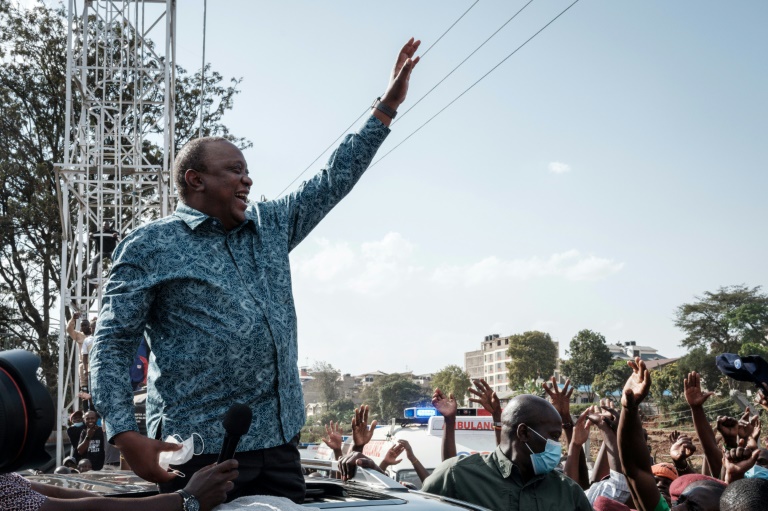
Puppet or strategist, dilettante or power-hungry heir? After nearly 10 years in power and a mixed legacy, Uhuru Muigai Kenyatta remains an enigma to many Kenyans, even to those who twice elected him president.

But one thing is certain: it is impossible to disassociate the outgoing leader from his family, which ranks among Kenya’s richest, with two of Kenya’s four presidents emerging from the Kenyatta dynasty.

His endorsement of longtime arch-rival Raila Odinga sparked rumours that he wants to play kingmaker, helping the veteran opposition leader secure the backing of his ruling Jubilee party.

True to form, Kenyatta’s motives or future plans remain unclear but many believe he will build on the diplomatic legacy crafted since his re-election in 2017.

The 60-year-old has worked hard to raise Kenya’s international stature and fashioned himself as a regional statesman, seeking to resolve conflicts in Ethiopia and the Democratic Republic of Congo.

He also strengthened the country’s status as an East African economic powerhouse, launching several major infrastructure projects including a Nairobi expressway inaugurated last month that has also caused Kenya’s debt to balloon.

His avowed fight against corruption has been less successful, prompting bemusement and even ridicule among Kenyans who have long seen the Kenyatta family as the embodiment of the elite stranglehold on power.

His father Jomo served as independent Kenya’s first president and the family is the country’s largest landowner, with a financial empire that includes dairy giant Brookside, the NCBA bank and television broadcaster Mediamax.

His own fortune was estimated at $500 million by Forbes in 2011.

– Political alliances –

Born to Jomo and his fourth wife “Mama” Ngina in October 1961, Uhuru (which means “freedom” in Swahili) studied in the United States and entered politics in the mid-1990s.

Over the years “the prince of Kenyan politics” has allied himself with leaders across the spectrum, from the autocrat Daniel arap Moi — an early mentor — to former president Mwai Kibaki, who he backed in the 2007 election.

The disputed vote led to an eruption of politically-motivated tribal violence largely involving two of Kenya’s main ethnic groups, the Kikuyu and the Kalenjin, that saw more than 1,100 people killed.

In 2013, Kenyatta — a Kikuyu — allied with William Ruto, a Kalenjin, and was elected president. 

Both were indicted by the International Criminal Court for their role in the 2007-2008 killings but the cases eventually collapsed, with the prosecution saying a relentless campaign of witness intimidation made a trial impossible.

Kenyatta’s re-election bid in 2017 plunged the country into turmoil, as police cracked down on opposition protests to deadly effect.

His victory was annulled by the Supreme Court, but he won a re-run after his then opponent Odinga boycotted the process, calling the vote rigged.

Then, in a turn of events few saw coming, the two men stunned the nation in March 2018 by shaking hands and declaring a truce.

The pact — known simply as “the handshake” — consigned Ruto to the sidelines.

But Kenyatta’s pet political project, the Building Bridges Initiative (BBI) which aimed to expand the executive, hit a roadblock after the Supreme Court ruled it illegal.

Many saw the constitutional proposals, which included the creation of a new prime minister post allegedly earmarked for Kenyatta, as a final bid to stay in power after his second and last term as president.

– ‘Party animal’ –

Kenya’s global profile rose under his watch, as he welcomed foreign investors and a succession of visiting international dignitaries including former US president Barack Obama and Pope Francis.

Despite his long career, the father-of-three remains a mystery to many.

Some diplomatic sources characterise him as “a party animal who didn’t want the job” while others describe him as an astute politician with a common touch “who knows how to talk to people”.

A regular churchgoer, he easily mixes with ordinary Kenyans, eagerly gets down on the dance floor and joshes in the local youth slang.

His shy brother Muhoho manages the family finances, while he reportedly enjoys driving around Nairobi late at night, incognito and protected by a handful of bodyguards.

As his final term winds down, Kenyatta looms over Tuesday’s election, with Ruto devoting much of his time to campaigning against his former boss instead of Odinga.

Although many Kenyans expect Kenyatta to keep his hand in the game, the man himself has dismissed the speculation, telling broadcaster France 24 last year: “Oh, please, please! I would rather enjoy a holiday in France each summer.”

“I don’t want to remain in power as they allege. This is a difficult job,” he told a prayer service last month.

“Ten years for me is enough. I am waiting for 9th August.”

The tricky challenges ahead for Kenya's next leader

Spiralling prices, endemic corruption and a mammoth debt mountain: whoever takes the helm after Kenya’s presidential elections next Tuesday will face a raft of challenges.

– Cost of living crisis –

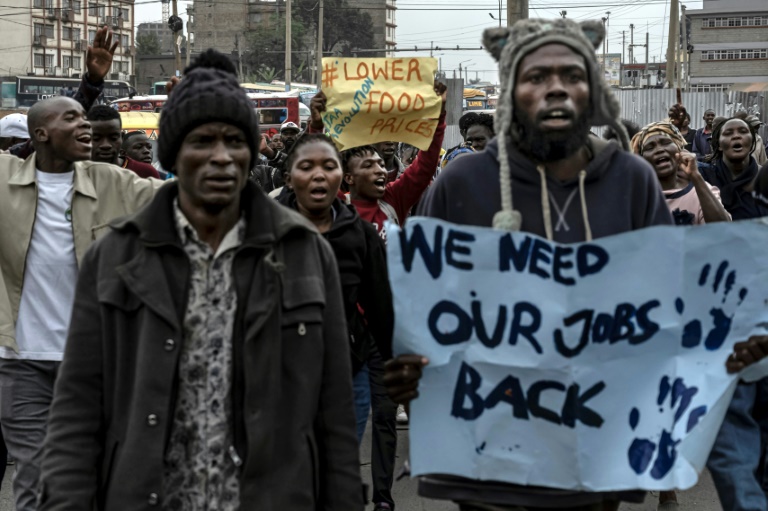
“No food, no elections” — hundreds of demonstrators took to the streets in July, vowing to shun the ballot box in the face of ever-higher fuel and food costs.

Inflation has soared, hitting a five-year high of 8.3 percent in July.

The government in May raised the minimum wage by 12 percent and last month pledged to halve the price of maize (corn) flour used to prepare ugali, a dense porridge that is Kenya’s staple food.

But such measures are temporary, “populist and “simplistic”, said Jared Osoro, an economist at the University of Nairobi.

The conflict in Ukraine and its impact on global food and energy prices have clouded prospects for recovery in the East African powerhouse. 

From 7.5 percent in 2021, growth should average 5.2 percent in 2023-2024, according to the World Bank, which also forecasts a deterioration in Kenya’s trade balance this year. 

Kenya usually imports a fifth of its grain from Russia and 10 percent from Ukraine, according to official figures. 

Agriculture — the backbone of the economy that contributes over 20 percent to GDP — is suffering from soaring fertiliser prices and is also threatened by a punishing drought.

– Debt mountain – 

By 2050, half of Kenya’s population will live in cities, which will lead to “a myriad of challenges” including providing education and access to healthcare, according to British charity Oxfam. 

It says more than a third of Kenya’s 17 million poor live in urban areas, mostly in informal settlements. 

To promote development, successive governments since 2008 have pursued an ambitious programme dubbed Kenya Vision 2030 that focuses on major infrastructure projects.

As a result, debt has more than quadrupled to about $70 billion during outgoing President Uhuru Kenyatta’s near decade in office. The figure amounts to nearly two-thirds of the country’s GDP in 2021.

China is now Kenya’s second largest creditor after the World Bank, notably lending $5 billion for a railway linking Nairobi to the Indian Ocean port of Mombasa. 

The International Monetary Fund (IMF) said Kenya’s economic turnaround and improved tax revenues made it more resilient to external “shocks”.

Even so, “Kenya remains at high risk of debt distress”, IMF mission chief Mary Goodman warned last month. 

– Corruption – 

Kenya’s fight against graft has “stagnated” says Transparency International, which ranked the country 128th out of 180 in its 2021 corruption perceptions index.

Last year, Kenyatta said at least two billion shillings ($16.8 million) was stolen each day from the government. 

The country’s Ethics and Anti-Corruption Commission (EACC) has even linked around 240 election candidates to graft.

Alexia Van Rij, author of a report on Kenyan corruption for a French think tank, said nevertheless that judicial and anti-graft bodies had been bolstered and there was a greater media focus on the problem.

Last month, a candidate for deputy president was ordered to forfeit the equivalent of $1.7 million after he could not explain the source of the money.

Dozens of senior officials have been charged since 2018, including ex-finance minister Henry Rotich, but “no big fish” have been convicted, said Van Rij.

– Youth ‘time bomb’ –  

With three quarters of the population under the age of 34, young people are one of Kenya’s key assets, but many struggle to find jobs.

About 500,000 students obtain a higher education diploma every year. But corruption, nepotism or the demand for experience are all obstacles to their entry into working life. 

According to census figures published in 2020, five million young people were without jobs. 

The youth are a “demographic, social and economic time bomb”, says independent public policy researcher Alex Awiti. 

He called for greater government incentives for the private sector and job training, in a nation where 80 percent of the workforce is in the informal sector.

– Uniting the nation –

Speculation is rife that the election may not be decided on August 9, with a run-off to be held if no candidate wins more than 50 percent of the vote, and court challenges to the results almost certain.

Disputes over previous elections have stoked deadly violence and there is strong pressure on the leading candidates to ensure calm.

For the first time since 2002, the next head of state will not be from the Kikuyu tribe, the biggest of Kenya’s more than 40 ethnic groups and the most politically and economically critical.

However the two favourites — Raila Odinga, a Luo, and William Ruto, a Kalenjin, have both chosen Kikuyu running mates.

Tribal politics have long been a feature of Kenyan elections, but this year the economic crisis and disenchantment with the political elite are also high on people’s minds.

Close Bitnami banner
Bitnami