Africa Business

Blue Origin sends first Egyptian and Portuguese nationals to space

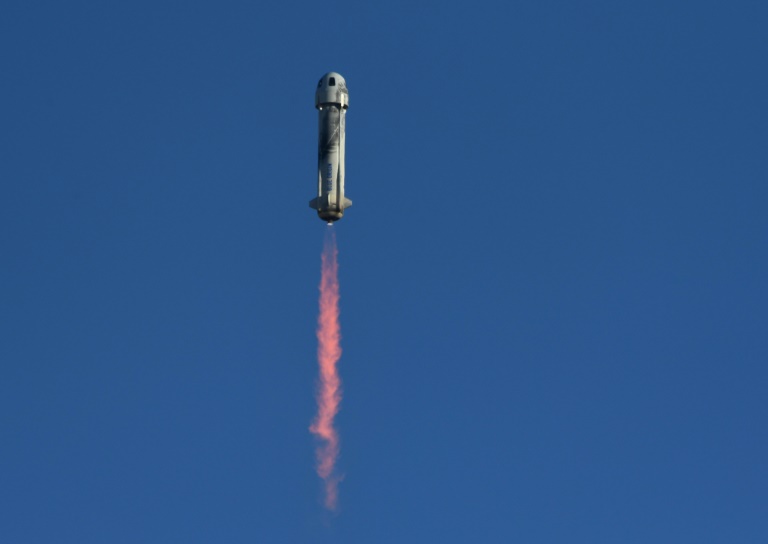
Jeff Bezos’ Blue Origin on Thursday launched six people to space, including the first from Egypt and Portugal, on the company’s sixth crewed flight. 

Mission “N-22” saw the New Shepard suborbital rocket blast off around 8:58 am local time (1358 GMT) from Blue’s base in the west Texas desert.

The autonomous, re-usable vehicle sent its crew capsule soaring above the Karman line, the internationally recognized space boundary, 62 miles (100 kilometers) above sea level. 

“I’m floating!” a crew mate could be heard saying on a livestream, as the capsule coasted to its highest point and the passengers experienced a few minutes of weightlessness. 

Both the rocket and capsule separately returned to the base — the latter using giant parachutes — completing the mission around 11 minutes after lift-off.

The crew included Egyptian engineer Sara Sabry, and Portuguese entrepreneur Mario Ferreira, both the first people of their countries to leave Earth.

It also included Coby Cotton, one of five co-founders of the YouTube sports and comedy channel Dude Perfect, which boasts more than 57 million followers.

A Blue Origin spokeswoman confirmed all six crew were paying passengers — though Sabry’s seat was sponsored by nonprofit Space for Humanity.

Blue Origin has not revealed its ticket prices. 

Past flights have included celebrity guests who have flown for free, including Star Trek legend William Shatner. 

Foster fights for survival as Nienaber tries to silence critics

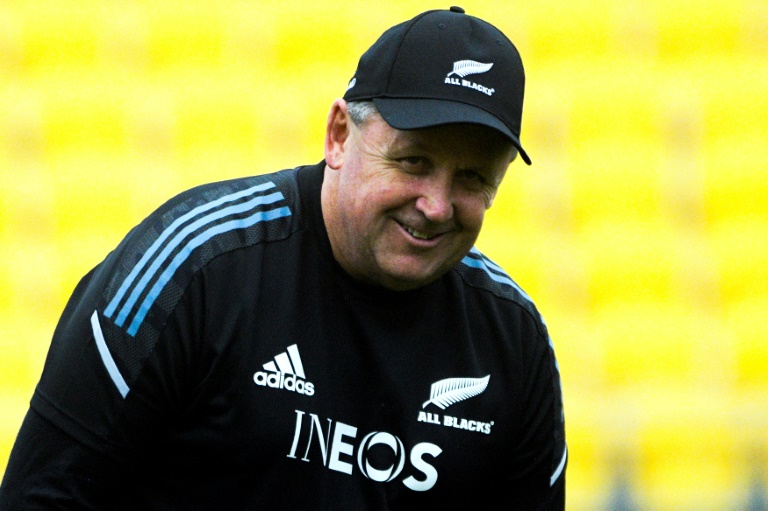
New Zealand coach Ian Foster is fighting to save his job while South African counterpart Jacques Nienaber is battling to silence critics ahead of a Rugby Championship showdown between the arch foes on Saturday.

Foster has been unable to match the results of predecessor Steve Hansen and a 2-1 home series loss to Ireland last month triggered calls for his sacking. 

Instead, assistant coaches John Plumtree and Brad Mooar were dumped and Jason Ryan hired by the three-time world champions, who have lost four of their last five Tests. 

But were New Zealand to lose in Mbombela, and again in Johannesburg next weekend in the second and final match of a mini-tour, it is difficult to imagine Foster surviving.

Foster, who assisted Hansen for eight years before being promoted, acknowledges the importance of the clashes with the Springboks, who have also been world champions three times.

“We are desperate to perform against South Africa,” he told reporters ahead of the first-round match. “There is a lot riding on these two matches.

“It is about the team manning up because the Springboks are not one-trick ponies. That is a complete fallacy.

“What they do well, they do really well. You do not become world champions if you are not proficient at a whole lot of things.

“They are a great team and they play well, but it is also about us not getting too hung up on that either.

“We have to go into the Mbombela Test with the mindset of wanting to play our game. We know we can play better.

“Much has been made of the last (Ireland) series. Did we get everything right? No, we did not. We have to face the Springboks with the mindset of wanting to play our game.

– History favours All Blacks –

“It is not a matter of bringing in 10 new things. It is about bringing a couple in and honing two or three things that we wanted to do, but did not do well.”

History favours the All Blacks. They have won 14 and drawn one of 18 matches against the Springboks over the past 10 years.

While New Zealand lost consecutive matches against Ireland in July, South Africa edged Wales 2-1 in another three-Test series.

But the overall success did not prevent criticism of Nienaber, who took charge two years ago when World Cup-winning coach Rassie Erasmus returned to his director of rugby role.

A weekly newspaper labelled the Springboks “boorish, boring and brutal” and “a team loved by South Africans but no one else”.

The issue, once again, was the uncompromising physical approach of the men in green and gold, while fly-half Handre Pollard insisted that “it is in our DNA and we are not going to change”.

Jake White, coach of the 2007 World Cup-winning Springboks, said “they squeeze, squeeze and squeeze until you can no longer withstand the physical onslaught”. 

This was evident in the series-deciding third Test triumph over Wales with Pollard, Bongi Mbonambi and captain Siya Kolisi scoring tries through sheer strength.

South Africa have made three changes from the team that started that match in Cape Town with wing Kurt-Lee Arendse, scrum-half Faf de Klerk and hooker Malcolm Marx promoted. 

Arendse wins only his second cap as a replacement for star Cheslin Kolbe, who broke his jaw against the Welsh.

New Zealand show four personnel changes to the side that started the final Test against Ireland with one injury enforced as veteran lock Brodie Retallick is recovering form a fractured cheekbone.

His place goes to Scott Barrett, wing Caleb Clarke comes in for Sevu Reece and, in a front row reshuffle, hooker Samson Taukeiaho and prop Angus Ta’avao replace Codie Taylor and Nepo Laulala. 

Broadbell cruises to Commonwealth hurdles gold as Australia seal cycling double

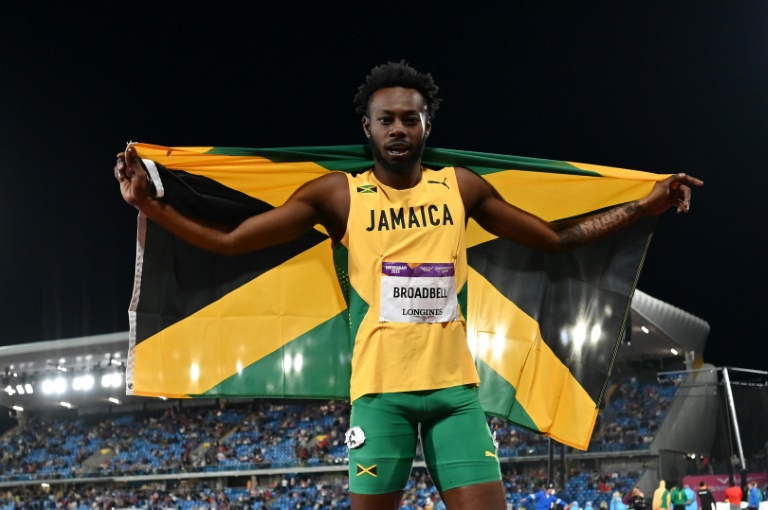
Jamaica’s Rasheed Broadbell equalled Colin Jackson’s 32-year-old Commonwealth Games record as he cruised to victory in the 110m hurdles on Thursday as Australia won a cycling road race double.

Broadbell, 21, dominated the final from the start to win in 13.08sec, making up for the disappointment of last year, when injury prevented him going to the Tokyo Olympics.  

Fellow Jamaican Hansle Parchment, the Olympic champion, had withdrawn earlier in the day due to a niggle just as he had done before last month’s world championship final. 

Heptathlon champion Katarina Johnson-Thompson’s boyfriend Andrew Pozzi won bronze.

“I knew I had to stay focused and that is what I did,” said Broadbell. “Sometimes, when you run, you don’t know what is going to happen. 

“You just have to execute properly. I’m not sure if I clipped any hurdles.”

He said Parchment gave him a call to tell him he had withdrawn.

“I’m not sure what the problem was, but he’s an Olympic champion, so he knows best.”

Broadbell’s performance lit up a low-key evening athletics session in Birmingham, which was still a 30,000 sell-out.

LaQuan Nairn gave the Bahamas their first-ever men’s long jump gold, while Australia’s Matthew Denny won the discus.  

Nairn won with a best leap of 8.08 metres, edging out Murali Sreeshankar of India on countback.

“I said in Eugene (at the world championships) that I wanted to come here and get a gold medal,” said 26-year-old Nairn. “To say that and do it is great.”

Sreeshankar gave India their first medal in the event since Suresh Babu won bronze in 1978.

“It feels good,” he said. “This medal has been a long time coming. I have been waiting for a global medal for a very long time, but I kept missing out.”

Denny threw a best of 67.26 metres, with England’s Lawrence Okoye taking silver a decade after he reached the Olympic final in London before departing to play in the NFL with the San Francisco 49ers.

Grenada’s defending decathlon champion Lindon Victor is hanging on to his title by the slenderest of margins heading into Friday’s final five events.

He has a total of 4,327 points, just 85 ahead of Cedric Dubler of Australia. 

“I’m actually ahead of my score from Eugene (world championships where he finished fifth) nine days ago. That is a good sign,” he said.  

Reflecting the weakness of some of the fields in Birmingham, just 11 athletes competed in the two heats of the women’s 400m hurdles — with eight going through to the final.

Jamaica look hot favourites to take gold — both defending champion Janieve Russell and 2019 world bronze medallist Rushell Clayton looked smooth in their respective heats.

South African sprinter Akani Simbine missed the men’s 100m medals ceremony.

The 28-year-old 2018 champion flew to Poland where the next Diamond League meet takes place on Saturday.

His absence failed to dislodge the smile of Kenya’s first-ever Commonwealth Games 100m champion, Ferdinand Omanyala. 

– Cycling double –

In the men’s individual cycling time trial, Australia’s two-time world champion Rohan Dennis won gold as former Tour de France winner Geraint Thomas took bronze despite a crash.

Dennis’s victory made it a double for Australia after Grace Brown won the women’s event.

Thomas’s hopes of adding time-trial gold to the road race title he won in 2014 were dashed when he fell early in the ride.

“Sometimes it’s bad luck, but today I’ll take it on the chin and say it was my fault,” said the 2018 Tour de France winner.

On the first night of diving at the Sandwell Aquatics Centre, England’s Jack Laugher, who won a gold medal in the 3m synchro at the 2016 Rio Olympics, won the men’s one-metre springboard

England’s Andrea Spendolini-Sirieix triumphed in the women’s 10m platform competition, with Laugher’s girlfriend, Lois Toulson, taking silver.

In the boxing competition, Welsh identical twins Ioan and Garan Croft, 20, are both guaranteed at least bronze medals while brother and sister Aidan and Michaela Walsh are also guaranteed medals for Northern Ireland.

England’s Twenty20 women cricketers beat New Zealand by seven wickets to set up a semi-final against India, while favourites Australia will face New Zealand.

Canada won gold in the rhythmic gymnastics team event, with Australia second and England third.

Senegal president's camp loses absolute majority in parliament

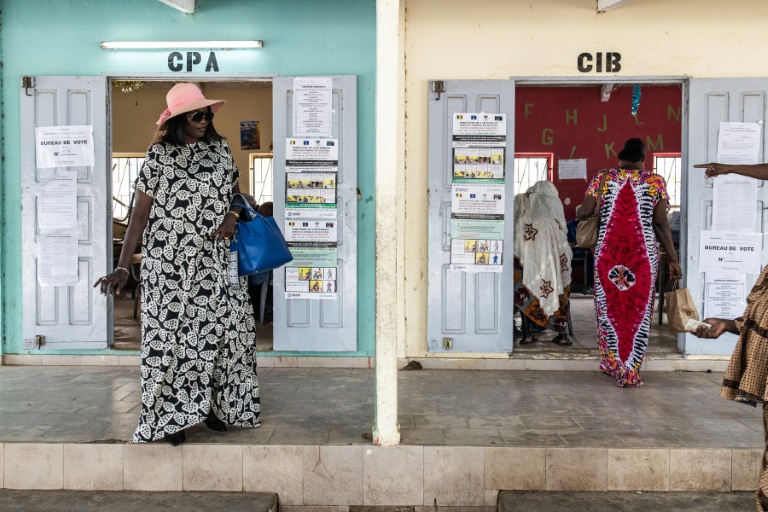
Senegalese President Macky Sall’s coalition has lost its absolute majority in parliament but finished first by a narrow margin in parliamentary polls, provisional results showed Thursday.

It is the first time since the historically stable West African country’s independence in 1960 that the ruling party’s camp has lost that majority and will have to rely on other forces in parliament to pass legislation.

The president’s coalition, which includes his party Alliance for the Republic (APR) and other parties, won 82 seats of the National Assembly’s 165, the national vote-counting commission said, down from the 125 it won in 2017.

Opposition parties had already begun gaining momentum in municipal elections in January, when they won major cities including the capital Dakar, Ziguinchor in the south and Thies in the west.

In Sunday’s election, they gained 80 seats in total in the single-chamber parliament.

Three other seats were won by three small coalitions, who could serve as kingmakers. 

The final figures are to be published by the country’s highest court within five days of the announcement, if no parties appeal the results.

For Sall, who has been accused by the opposition of wanting to break the two-term limit and run for president again in 2024, the disappointing legislative results could curb any such ambitions.

The president, who was elected in 2012 for seven years and re-elected in 2019 for five years, has so far remained vague about his future plans.

He has, however, promised to appoint a prime minister — a position he abolished in 2019 and reinstated in December 2021 — from the winning party of Sunday’s election.

– Conflicting claims –

On Monday, both the opposition and Sall’s ruling coalition claimed to have won the vote.

The main opposition coalition, Yewwi Askan Wi (which means “Liberate the People” in Wolof), had formed an alliance for the election with the Wallu Senegal (“Save Senegal”) coalition, led by former president Abdoulaye Wade.

They won 56 and 24 seats respectively, the results Thursday showed.

Earlier on Thursday, the opposition alliance asked the electoral commission for “the right to verify the minutes (of polling stations) in order to make observations and possible claims within the legal deadlines”.

Aida Mbodj, another opposition leader, on Wednesday accused the government of “ballot box stuffing” in the northern regions of Matam, Podor, Ranerou and Kanel, all strongholds for the president.

Yewwi Askan Wi’s highest-profile member, Ousmane Sonko, came third in the 2019 presidential election.

But he was prevented from running in Sunday’s vote over a technicality.

On Wednesday, he said the opposition would “not allow victory to be confiscated”.

“We reject these results,” added Dethie Fall, one of the opposition alliance leaders, on Thursday after the official announcement.

Sall on Wednesday however said the elections had run smoothly, “in calm, serenity and transparency”.

Late on Thursday, Sall tweeted in praise of the Senegalese people for the “exemplary nature of our democracy, the credibility of our electoral system”.

The presidential coalition will pursue “reforms essential to the construction of a united, prosperous Senegal with the rule of law”, said former prime minister Aminata Toure, who led the coalition’s list in the elections.

Voter turnout was a little below 47 percent, the national vote-counting commission said.

International observers from the Economic Community of West African States (ECOWAS) and the Collective of Civil Society Organisations for the Elections (COSCE) said the vote was peaceful and transparent.

– ‘Out of breath’ –

Senegalese lawmakers are elected according to a system that combines proportional representation with national lists for 53 lawmakers and majority voting in the country’s departments for 97 others.

The diaspora elects the remaining 15 members of parliament.

While the 21-day election campaign passed in a mostly calm atmosphere, the pre-campaign period was marked by violent demonstrations that left at least three people dead.

Those followed a decision by the interior ministry — which was confirmed by the country’s highest court — to toss out the first-choice election candidates submitted by Yewwi Askan Wi, citing technical grounds.

The ban, which applied specifically to first-choice candidates for seats contested by national lists, barred Sonko from running.

“The ruling coalition is out of breath,” political analyst Maurice Soudieck Dione told AFP.

He said this was due to “the high cost of food, the increase in the price of water (and) the authoritarian practices around the demonstrations, followed by deaths”.

Rwanda attacked Congo troops, backed rebels: experts for UN

Rwandan troops have attacked soldiers inside DR Congo and aided the M23 rebel group, according to a report by independent experts for the UN seen by AFP on Thursday.

The findings follow months of deepening tensions between the Democratic Republic of Congo (DRC) and Rwanda over the notorious M23.

The DRC has repeatedly accused Rwanda of backing the militia, which has captured swathes of territory in recent months. Kigali has repeatedly denied any involvement. 

But according to a 131-page report by experts for the UN Security Council, Rwanda has launched military interventions inside Congolese territory since at least November 2021.

Rwanda also “provided troop reinforcements” for specific M23 operations, the report said, “in particular when these aimed at seizing strategic towns and areas.”

A Rwandan government spokesperson in a statement described the allegations as “unvalidated” and stressed that Rwanda had the right to defend itself.

“Rwanda has a legitimate and sovereign right to defend our territory and citizens, and not just wait for disaster to unfold,” Yolande Makolo said.

The investigation for the UN also found that Congolese forces had been providing support for armed groups in the deeply troubled east.

The M23 — for “March 23 Movement” — is a primarily Congolese Tutsi group.

It first leapt to prominence in 2012 when it briefly captured the eastern DRC city of Goma before a joint Congolese-UN offensive drove it out.

After lying mostly dormant for years, the rebel group resumed fighting late last year.

It has made significant advances, notably capturing the strategic town of Bunagana on the Ugandan border in June.

– ‘Joint attack’ –

On May 25, the report said, a large DRC army base in Rumangabo in eastern North Kivu province came under heavy mortar and small-arms fire.

M23 fighters and Rwandan troops “jointly attacked” the site after Rwandan troops had crossed into the DRC the day before, it alleged. 

An estimated 1,000 Rwandan troops also cut the main highway leading to the provincial capital Goma, an important commercial hub on the Rwandan border, and attacked Congolese positions, it said. 

On the eve of the attack on Bunagana, and on the day itself, Rwandan soldiers were in the vicinity, the report said, citing drone images from the UN peacekeeping mission in the DRC, eyewitnesses, amateur videos and photos.

It added that Ugandan troops at the border acquiesced to M23 fighters crossing into the DRC.

“On repeated occasions, aerial imagery showed large columns of up to 500 armed men in the vicinity of the DRC, Rwandan and Ugandan borders, moving in a very organized manner,” the report said. 

The columns of soldiers wore “standardized military attire” that bore close resemblance to Rwandan army uniforms, the report added. 

Some 300 Rwandan troops also conducted operations against rebel groups in eastern DRC, such as the Democratic Forces for the Liberation of Rwanda (FDLR).  

The FDLR is a Rwandan Hutu rebel group based in the DRC, which the Rwandan government views as a threat. Kigali has regularly accused Congo of supporting the militia.

– DRC and militias –

The UN report also found that the Congolese army supported militias active in the east of the country. 

On May 26, after being dislodged from positions near the Goma highway, the Congolese army launched a counterattack alongside militia fighters, for example. 

A coalition of armed groups had formed in May, with the knowledge of Congolese officers, the report said.

Leaders of several militias confirmed to the experts that the Congolese army had provided them with weapons and munitions “on several occasions,” it added.

The DRC and Rwanda have had strained relations since the mass influx of Rwandan Hutus accused of slaughtering Tutsis during the 1994 Rwanda genocide. 

Relations began to thaw after DRC President Felix Tshisekedi took office in 2019 but the M23’s resurgence reignited tensions.

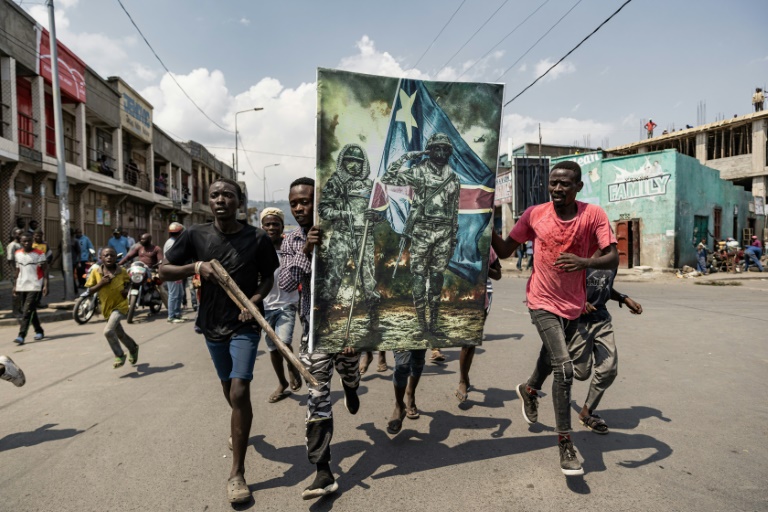
The report comes after 36 people died in eastern Congo last week during protests against the UN’s peacekeeping force, which were fuelled by perceptions that it is ineffectual against armed groups.

A poll by New York University’s Congo Research Group and Congolese research institute Ebuteli, published on Thursday, found that 44 percent of Congolese people interviewed thought peacekeepers should leave the country.

Thousands raid informal miners after S.Africa mass rape

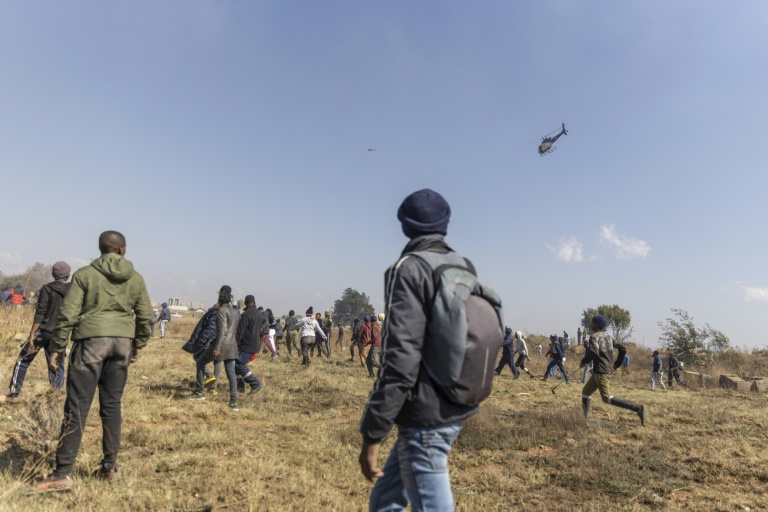
Thousands of angry South African protesters Thursday hunted down miners without permits, sealing makeshift shafts and burning houses, after the mass rape of eight women last week west of Johannesburg.

Police minister Bheki Cele has said informal miners commonly known as “zama zamas” — believed to largely be undocumented foreigners — were likely behind the attack on July 28 in the town of Krugersdorp.

Armed with machetes, golf clubs and hammers, mobs of residents on Thursday moved from one area to another on the fringes of the town’s Kagiso township, trying to smoke out miners operating illegally in informal shafts.

AFP reporters at the scene saw residents torching a house thought to belong to a gangmaster.

Local television footage showed protesters using boulders to close makeshift mine shafts in a Kagiso district known as Soul City.

Police kept a distance and fired stun grenades from a helicopter to disperse the crowds.

Later in the evening, authorities said the situation had stabilised and 29 undocumented people had been arrested on charges of illegal immigration. 

Police said a murder and public violence investigation was opened after the body of a man was found near the area in the morning. 

It was not immediately clear if the death was linked to the protests.

– ‘Zama zamas must go’ –

In an incident that has shocked the nation, which is usually numb to violent crime, a gang of gunmen forced their way into a music video shoot near a mine dump in Krugersdorp.

They robbed the crew and raped eight young models who were part of the cast. 

Authorities have arrested more than 100 people since the assault — most of them migrants for being in the country illegally, according to an AFP tally.

“The zama zamas must go, they are attacking our sisters,” 39-year-old protester Daniel Nzuma told AFP. 

Residents in the town around 30 kilometres (18 miles) west of Johannesburg blamed poor policing for the deepening illegal mining crisis.

Kagiso police “have failed”, said Nzuma.

“The army must come and assist the police in this area to protect the community.” 

Police kept a distance and fired stun grenades from a helicopter to disperse the crowds.

South Africa’s commercial hub of around six million is built around mountainous dumps of soil and cavernous pits left behind by generations of mining companies that extracted gold during the 1880s gold rush.

Armed gangs of informal miners run rampage and battle for control of the abandoned shafts to exploit any remaining gold.

S.Sudan extends transitional govt by two years 

South Sudan’s leaders announced Thursday that the country’s post-war transitional government would remain in power two years beyond an agreed deadline, in a move foreign partners warned lacked legitimacy.

Martin Elia Lomuro, the minister of cabinet affairs, said the decision was taken “to address the challenges that impede the implementation of the peace agreement”, following a 2018 deal to end a five-year civil war that left nearly 400,000 people dead.

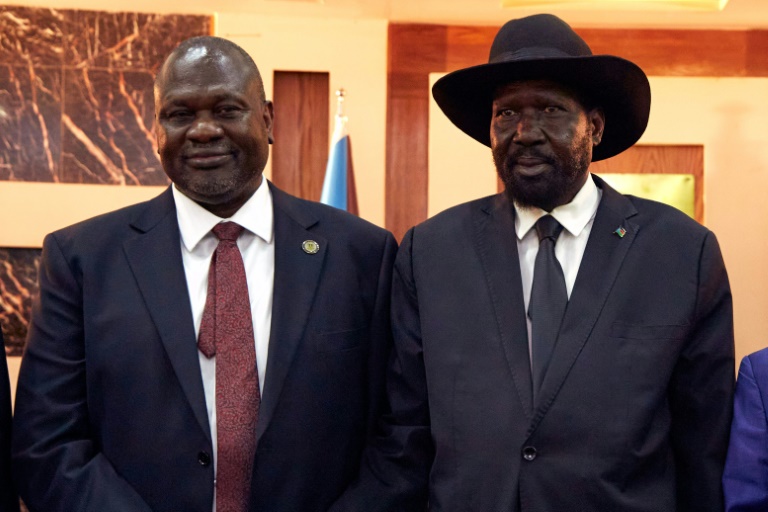
“Thus a new roadmap has been agreed,” the minister said, speaking in the presence of President Salva Kiir and Vice President Riek Machar, who formed a unity government more than two years ago after half a decade of fighting.

The world’s newest nation was meant to conclude a transition period with elections in February 2023, but the government has so far failed to meet key provisions of the agreement, including drafting a constitution.

The so-called troika of the United States, Britain and Norway boycotted Thursday’s announcement, pointing out that the government had not consulted all the parties involved in the 2018 deal before announcing the extension.

In a letter to Kiir, the troika expressed “profound concern that fully inclusive consultations must take place with civil society, faith-based groups, business, women’s groups, youth representatives, eminent persons and international partners before the (peace deal) is amended”.

“Whether a roadmap and an extension are seen as legitimate by the people of South Sudan and the international community will depend on an inclusive consultation process,” the letter said.

“We cannot guarantee that we will be able to support a roadmap or extension in other circumstances.”

In a speech addressing the nation, Kiir explained the decision, saying: “We don’t want to rush you into an election that will take us back to war.”

“We extend the transition period as a pragmatic and realistic choice for 24 months of healing and consolidating.”

South Sudan’s lumbering peace process has run into multiple delays, with violence breaking out between Kiir and Machar’s forces as recently as this year.

The troika said the roadmap “must demonstrate how another extension would differ from previous ones, and include steps for clear progress in setting up the institutions and mechanisms necessary to hold elections”.

– Alleged war crimes –

The United States last month pulled out of two peace process monitoring organisations in South Sudan due to the country’s failure to meet reform milestones, citing a “lack of sustained progress”.

After long delays, Kiir and Machar finally inked a deal on the creation of a unified armed forces command in April — a key provision of the peace deal.

The United Nations, which maintains a peacekeeping mission in the country, has repeatedly criticised South Sudan’s leadership for its role in stoking violence, cracking down on political freedoms and plundering public coffers.

The peacekeeping operation, with up to 17,000 soldiers and 2,100 police officers, is one of the UN’s most expensive, with an annual budget topping $1 billion.

The UN has also accused the government of rights violations amounting to war crimes over deadly attacks in the southwest last year.

South Sudan, one of the poorest countries on the planet despite large oil reserves, has suffered from war, natural disasters, hunger, ethnic violence and political infighting since it gained independence in 2011.

The UN’s World Food Programme warned in March that over 70 percent of South Sudan’s 11 million people would face extreme hunger this year because of natural disasters and violence.

8 months' jail for 14 migrants in Morocco: lawyer

Morocco on Thursday sentenced 14 migrants to eight months’ jail following their arrest a day before a deadly mass crossing into the Spanish enclave of Melilla in June, their lawyer said.

“It’s a very severe judgement,” the lawyer, Mbarek Bouirig, told AFP.

He said he planned to appeal.

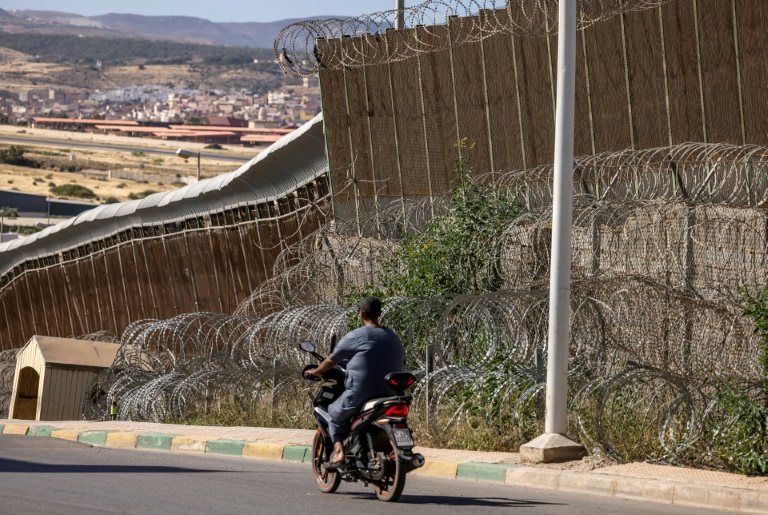
The accused, mostly from impoverished Sudan, were arrested on June 23 during a Moroccan operation near Melilla, which along with Spain’s other enclave of Ceuta is the EU’s only land border with Africa.

At least 23 migrants died the following day when around 2,000 people, many also Sudanese, stormed the fences along the frontier. It was the heaviest death toll in years of attempted crossings into the enclaves.

The 14 were charged with offences including belonging to a criminal immigration gang and insulting law enforcement officers, Bouirig said.

Omar Naji of the AMDH human rights group, which monitored the trial, said the migrants did not try to cross the border. 

“Why condemn migrants whose sole wrongdoing was to have taken refuge in a forest?” he asked. 

A Moroccan court last month sentenced 33 migrants to 11 months in jail for illegal entry, while a separate trial of 29 migrants including a minor continues.

Spanish rights group Caminando Fronteras says as many as 37 people lost their lives in the mass crossing attempt, higher than the official toll of 23.

The United Nations, the African Union and independent rights groups have condemned the use of excessive force by Moroccan and Spanish security personnel. 

Poverty and turmoil: S.Sudan's post-independence history

South Sudan’s leaders have announced they will remain in power two years beyond an agreed deadline, sparking criticism from foreign partners.

Here’s a look at the tragic history of the world’s newest nation.

– 2011: New nation –

On July 9, South Sudan proclaims itself independent from Sudan following six years of autonomy and decades of war.

The president is Salva Kiir, with Riek Machar as his deputy. The rivals, who belong to two different ethnic groups, led the Sudan People’s Liberation Movement (SPLM) that spearheaded the push for independence.

– 2013: Civil war –

Kiir fires Machar and all government ministers, their deputies and several police brigadiers on July 23.

After a night of fighting in the capital Juba, Kiir says on December 16 his forces had thwarted an attempted coup by Machar, who denies the claim.

The fighting spreads beyond the capital, fuelled by rivalries between Kiir’s Dinka group and Machar’s Nuer.

It sets off tit-for-tat massacres, spiralling into five years of war.

– 2016: Leader in exile –

Machar and Kiir sign a peace accord in August 2015.

Machar returns to Juba and is sworn in as vice president on April 26, 2016.

But fighting between supporters of both leaders breaks out again in July. Machar goes into exile, accusing Kiir of trying to have him killed.

– 2018: Peace deal –

Kiir and Machar meet for the first time in two years on June 20. 

On September 12 they sign a new peace agreement to end a war that has killed nearly 400,000 people and displaced roughly four million.

The deal paves the way for a power-sharing government which, after much delay concerted international pressure, is eventually installed in February 2020, with Machar reinstated as vice president.

– 2021: Violence continues – 

However, armed violence remains widespread, with recurring bloodshed beween rival ethnic groups, and an insurgency in the country’s south displacing hundreds of thousands of people. 

The UN several times extends its peace mission, as well as an arms embargo.

A UN report in April warns that the slow pace of implementing the peace accord risks a relapse into “large-scale conflict”.

On May 8, after a delay of more than a year, Kiir includes opposition lawmakers in a new parliament. 

– 2022: Extension of power –

In March, the UN accuses the government of rights violations amounting to war crimes over attacks in the southwest last year, calling for investigations against dozens of individuals, including for abuses against children.

The same month, the UN’s World Food Programme (WFP) warns that over 70 percent of South Sudan’s 11 million people will face extreme hunger this year because of natural disasters and violence.

In April, Kiir and Machar agree on the creation of a unified armed forces command, a key provision of the peace deal after years of deadlock.

Four months later, they announce that the transitional government will remain in power two years beyond the agreed deadline, in a move foreign partners warned lacked legitimacy.

Martin Elia Lomuro, the minister of cabinet affairs, says the decision was taken “to address the challenges that impede the implementation of the peace agreement”.

But the United States, Britain and Norway boycott the announcement, expressing concern that the extension did not involve consultations with civil society or international partners, among other groups.

Rwanda attacked Congo troops, backed rebels: experts for UN

Rwandan troops have attacked soldiers inside DR Congo and aided the M23 rebel group, according to a report by independent experts for the UN seen by AFP on Thursday.

The findings follow months of deepening tensions between the Democratic Republic of Congo (DRC) and Rwanda over the notorious M23.

The DRC has repeatedly accused Rwanda of backing the militia, which has captured swathes of territory in recent months. Kigali has repeatedly denied any involvement. 

But according to a 131-page report by experts for the UN Security Council, Rwanda has launched military interventions inside Congolese territory since at least November 2021.

Rwanda also “provided troop reinforcements” for specific M23 operations, the report said, “in particular when these aimed at seizing strategic towns and areas.”

The investigation also found that Congolese forces had been providing support for armed groups in the deeply troubled east.

The M23 — for “March 23 Movement” — is a primarily Congolese Tutsi group.

It first leapt to prominence in 2012 when it briefly captured the eastern DRC city of Goma before a joint Congolese-UN offensive drove it out.

After lying mostly dormant for years, the rebel group resumed fighting late last year.

It has made significant advances, notably capturing the strategic town of Bunagana on the Ugandan border in June.

– ‘Joint attack’ –

On May 25, the report said, a large DRC army base in Rumangabo in eastern North Kivu province came under heavy mortar and small-arms fire.

M23 fighters and Rwandan troops “jointly attacked” the site after Rwandan troops had crossed into the DRC the day before, it alleged. 

An estimated 1,000 Rwandan troops also cut the main highway leading to the provincial capital Goma, an important commercial hub on the Rwandan border, and attacked Congolese positions, it said. 

On the eve of the attack on Bunagana, and on the day itself, Rwandan soldiers were in the vicinity, the report said, citing drone images from the UN peacekeeping mission in the DRC, eyewitnesses, amateur videos and photos.

It added that Ugandan troops at the border acquiesced to M23 fighters crossing into the DRC.

“On repeated occasions, aerial imagery showed large columns of up to 500 armed men in the vicinity of the DRC, Rwandan and Ugandan borders, moving in a very organized manner,” the report said. 

The columns of soldiers wore “standardized military attire” that bore close resemblance to Rwandan army uniforms, the report added. 

Some 300 Rwandan troops also conducted operations against rebel groups in eastern DRC, such as the Democratic Forces for the Liberation of Rwanda (FDLR).  

The FDLR is a Rwandan Hutu rebel group based in the DRC, which the Rwandan government views as a threat. Kigali has regularly accused Congo of supporting the militia. 

– DRC and militias –

The UN report also found that the Congolese army supported militias active in the east of the country. 

On May 26, after being dislodged from positions near the Goma highway, the Congolese army launched a counterattack alongside militia fighters, for example. 

A coalition of armed groups had formed in May, with the knowledge of Congolese officers, the report said.

Leaders of several militias confirmed to the experts that the Congolese army had provided them with weapons and munitions “on several occasions,” it added.

The DRC and Rwanda have had strained relations since the mass influx of Rwandan Hutus accused of slaughtering Tutsis during the 1994 Rwanda genocide. 

Relations began to thaw after DRC President Felix Tshisekedi took office in 2019 but the M23’s resurgence reignited tensions.

The report comes after 36 people died in eastern Congo last week during protests against the UN’s peacekeeping force, which were fuelled by perceptions that it is ineffectual against armed groups.

A poll by New York University’s Congo Research Group and Congolese research institute Ebuteli, published Thursday, found that 44 percent of Congolese people interviewed thought peacekeepers should leave the country.

Close Bitnami banner
Bitnami