Africa Business

A wary Kenya gears up for tense election

Millions of Kenyans head to the polls next Tuesday, with two political veterans locked in a fierce battle for the presidency.    

Memories of violence during previous elections loom large, and the country is grappling with a cost-of-living crisis, widening inequality and a crippling drought.

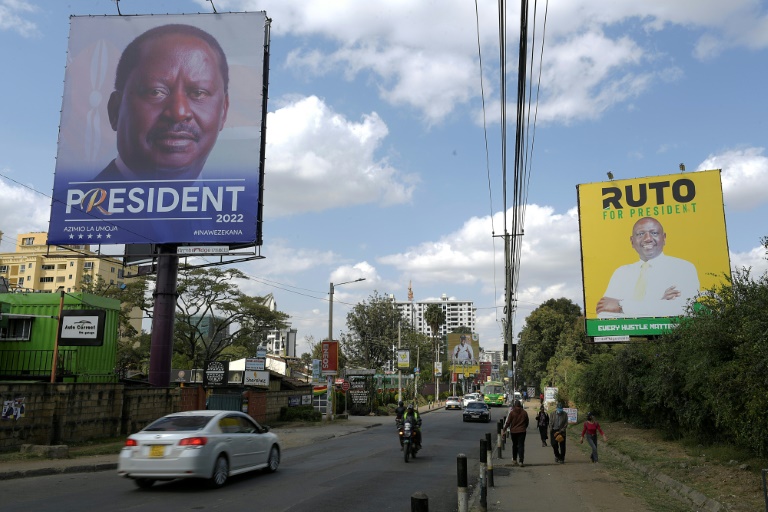
Four candidates are vying for the top job, with a tight race between frontrunners Deputy President William Ruto and Raila Odinga, the opposition leader now backed by the ruling party. 

Campaigning has been dominated by mud-slinging, fake news and the practice of showering prospective voters with freebies including umbrellas, groceries and cash.

There is speculation Kenya may have its first presidential run-off, and concerns are mounting that if losing candidates challenge the results, the discord could erupt into street violence.

“It’s very hard to say who will win the election because it’s a toss-up on whoever can… be more emotionally attractive” to voters, said Macharia Munene, professor of history at Nairobi’s United States International University.

The leading contenders are familiar faces: Odinga, 77, served as prime minister from 2008 to 2013 and Ruto, 55, became deputy president in 2013.

But Ruto — long cast as President Uhuru Kenyatta’s successor — saw his ambitions thwarted when his boss shook hands with longtime rival Odinga in 2018.

Kenyatta, who has served two terms and cannot run again, has thrown his weight behind Odinga for August 9, giving him access to the ruling Jubilee party’s powerful election machinery.

The handshake however dealt a blow to Odinga’s anti-establishment credentials, prompting suggestions he had effectively bartered away his autonomy in exchange for Kenyatta’s support.

Joining the presidential contest are lawyers David Mwaure and George Wajackoyah — the latter an eccentric former spy who wants to legalise marijuana.

Kenyans will also choose senators, governors, lawmakers, woman representatives and some 1,500 county officials.

– ‘Driving the apathy’ – 

The political gamesmanship has fuelled frustration, especially among young Kenyans.

Around 22 million people have registered to vote, but the number of young voters has dropped compared to the 2017 poll.

“Politics doesn’t seem to solve problems, it is just driving the apathy,” said Alex Awiti, an independent public policy researcher.

“So (voters) think it doesn’t really matter, the next president, the next senator, the next governor will just do what the other guy did last time,” he told AFP.

Odinga has vowed to tackle endemic corruption, pointing out that Ruto’s running mate is fighting a graft case.

Meanwhile Ruto — with a rags-to-riches background and a shadowy reputation — has taken aim at the “dynasties” running Kenya — a reference to the Kenyatta and Odinga families, who gave the country its first president and vice-president. 

Ruto has styled himself as “hustler-in-chief” and champion of the downtrodden in a nation where three in 10 people live on less than $1.90 a day, according to the World Bank.

Kenyans, already hit by the Covid pandemic, are struggling to afford basic staples as the war in Ukraine pushes up prices.

“Customers who used to buy many items… have now cut down,” said Peter Kibacia, a fruit and vegetable seller in Nairobi.

Any profit goes straight towards household expenses, the 40-year-old father of three told AFP.

“There’s no saving at the moment.”

Economic pressures could even compete with tribal allegiances as the key factor driving voter behaviour, according to some observers.

With neither Ruto nor Odinga belonging to the dominant Kikuyu tribe, which has produced three of the country’s four presidents, the election will open a new chapter in Kenya’s history.

If Odinga wins, his running mate Martha Karua would become deputy president, the first woman to hold the post.

– ‘Pray for peace’ –

Fears persist about the risk of violence — a reflection of the dark shadow cast by the 2007 polls, which were followed by a horrific bout of politically motivated ethnic clashes that killed more than 1,100 people.

Odinga’s challenge to the 2017 election result was met with a heavy-handed police response which left dozens dead.

Both polls were believed to be beset with problems, with the Supreme Court ordering a re-run of the 2017 vote, citing widespread irregularities in the counting process and mismanagement by the electoral commission.

Concessions are a rarity in Kenya — no presidential election result has gone unchallenged since 2002.

The National Cohesion and Integration Commission, a peace-building body set up after the 2007-2008 clashes, said there was a 53-percent chance of violence during the election period.

Schools have already shut their doors while some supermarkets have urged customers to stock up in advance.

Diplomatic sources were cautiously optimistic but with pressure high on the election commission to ensure a free and fair poll, voters remain wary.

“It’s shaky,” said Suzana Napwora, a 22-year-old student and first-time voter. 

“But we will pray for a peaceful election.”
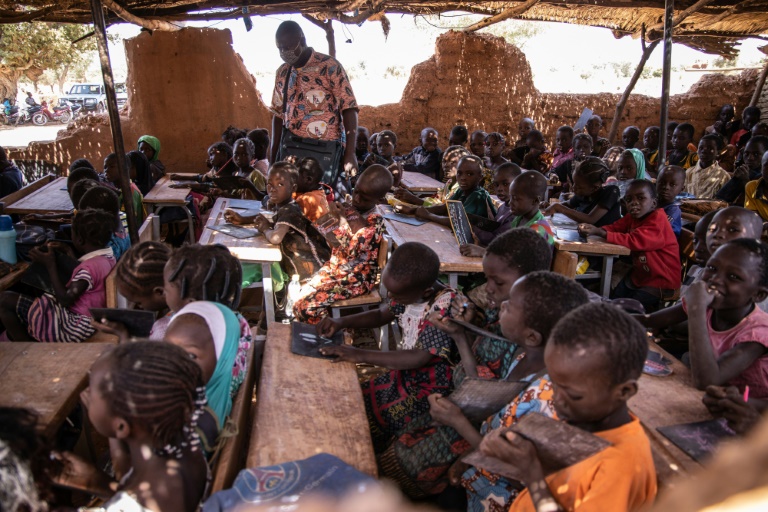
Burkina army says civilians killed in air raid

Burkina Faso’s army said on Wednesday that civilians had been killed in an air strike against jihadists, as local inhabitants reported around 30 people had died.

In a statement, army headquarters said “targeted actions” were carried out in the east on Monday against “terrorist groups responsible for several atrocities”.

“During these operations, which enabled several dozen terrorists to be neutralised, the strikes unfortunately caused collateral victims among the civilian population,” it said.

The civilians were close to a jihadist hideout on the Kompienga-Pognoa highway when they were hit by “projectiles”, the text said.

It gave no other details, but expressed “sincere condolences” to relatives of the dead and said an inquiry had been launched.

Local residents said around 30 people had died, most of whom were women.

“They had gathered for the inauguration of a mill when the tragedy happened,” said one, speaking on condition of anonymity.

Monday’s operations were undertaken at Djamanga, Djabiga, Mandeni, Bounou, Obiagou and Pognoa-Sankoado, the army statement said. 

The military typically use the term “terrorist” for armed groups behind a ruthless jihadist insurgency.

One of the poorest countries in the world, Burkina Faso first came under attack in 2015 from militants operating in neighbouring Mali.

Since then thousands of people have died, around two million have been displaced and more than a third of the country’s territory lies outside government control, according to official figures.

Attacks have increased since the start of the year, despite a coup by colonels whose declared priority is to restore security.

Air raids have been increasingly used against the jihadists in recent months. 

The army has previously acknowledged the death of a civilian which it said occurred on June 11 during a strike on armed traffickers in the south. Military prosecutors have opened an inquiry.

– Blockaded town –

Meanwhile, inhabitants of a town in northern Burkina which has been cut off by jihadists said that food was running out.

Islamist militants on June 25 damaged a bridge providing the only road access to the town of Sebba, the administrative seat of Yagha province.

Residents swiftly repaired the damage but the bridge was attacked again last week and destroyed, leaving Sebba cut off from the rest of the country.

Local traders have commissioned 14 trucks to bring in supplies, but they are stranded in the town of Dori.

“The food situation is critical,” Sebba inhabitant Abdoulaye Ly told AFP. 

“We’ve sounded the alarm, but at the moment we don’t see the light at the time of the tunnel… people here justifiably feel abandoned.”

MSF (Medecins Sans Frontieres – Doctors Without Borders) confirmed that hunger was worsening. 

“There is a desperate need for food — people are eating leaves every day,” said the charity’s project manager in Burkina, Ulrich Crepin Namfeibona.

“If really nothing is done to give these people food, in the coming days we could be witnessing a disaster, a nutrition crisis which will hit children most of all.”

Sebba, with a population of 30,000, had become a haven for many people in Yaghan who have fled their homes because of jihadist attacks.

Solar electric tricycles give Zimbabwean women a lift

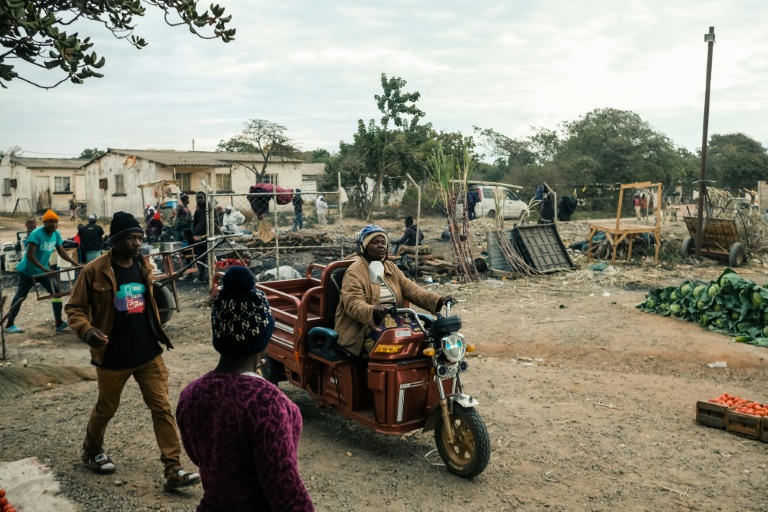
For years, selling eggs was a joyless business for Danai Bvochora, as most of the money she made went to cover minibus fares to the market in a rural area of Zimbabwe.

That was until an earth-brown solar-powered electric tricycle changed her life.

“We used to carry loads on our heads before. The tricycle has lessened the burden,” said the 47-year-old from Domboshava, about 40 kilometres (25 miles) north of Zimbabwe’s capital, Harare.

She carefully loads eggs onto the tricycle’s trailer before embarking on a bumpy eight-kilometre journey to the market.

“We even use it to go to church and worship,” Bvochora said, explaining a single trip to buy chicken feed from a local business centre used to cost her $12.

But charging her new solar-powered vehicle sets her back only $2.50 every two weeks, and the mother of two is now making a profit.

Bvochora is among groups of women in Domboshava, a district renowned for its picturesque hills and giant boulders, who received a tricycle last year as part of a European Union-funded project to assist small-scale farmers.

Assembled by Harare-based social enterprise Mobility for Africa, the  three-wheelers were first introduced in Zimbabwe in 2019 to help women develop their businesses, said the company’s director Shantha Bloemen. 

Transport has historically been inadequate in sparsely populated rural areas of Zimbabwe, where women often have to walk long distances carrying heavy loads on their heads to trade products — which sometimes spoil on the way in the heat.

– Electric push –

Yet the idea of addressing that with electric three-wheelers raised a few eyebrows at first, said American-born Bloemen, who is a permanent resident in Zimbabwe and lived in the country in the 1990s when she worked for UNICEF. 

“It was very lonely when we started,” Bloemen said, explaining her team had to work hard to prove to funders that the idea was viable. 

“No one was talking about electric mobility in Africa let alone for rural women.” 

Three years later, the social enterprise is planning to more than triple its current fleet of 88 motorised vehicles by the end of 2022.

It operates three solar-powered stations, where drivers can come to swap their lithium battery for a fully charged one when running low on energy — and foots the bill when something breaks.

Zimbabwe has for more than two decades faced tough economic conditions, with rural areas particularly hard hit. The country’s economy is mainly driven by the informal sector, to which Domboshava women farmers such as these belong. 

While some of the three-wheelers — nicknamed “Hamba” or “go” in the local Ndebele language — were bought by the EU and then gifted to locals, others are rented out for $5 a day.

Phyllis Chifamba, a 37-year-old mother of four, uses her rented vehicle as a taxi.

Her clients include sick people going to a clinic, pregnant women going for medical checks, and villagers and farm dwellers going to do their shopping and other errands.

“I am able to provide food for my family and pay school fees for my children with the money I make from using the Hamba,” she said.

Mobility for Africa said it was planning to expand operations to other areas. 

“African women are the most entrepreneurial, most productive but no one takes them seriously,” said Bloemen. “If we solve the transport problems, rural economies will work. Small farmers will get more produce to the market.”

Beneficiary Frasia Gotosa said her small business has improved since she has been driving to the market as her vegetables no longer rot while waiting for the bus or pushing a wheelbarrow. 

“Now I get to the market while my produce is still fresh,” she said.

Toilets, funerals, rap: Kenya's no-stone-unturned campaign

At funerals, in rap videos or even inside public toilets: Kenya’s election candidates are leaving no stone unturned in their fight for votes.

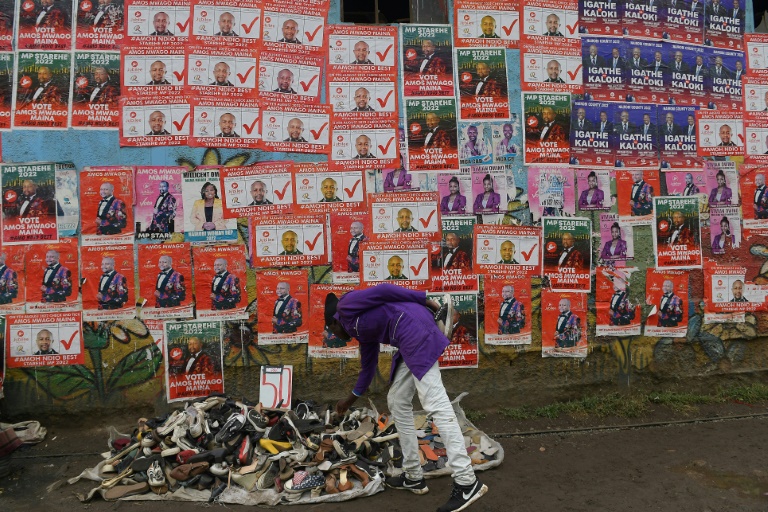
In addition to traditional election convoys blasting slogans and giant posters plastered along roads, candidates have looked for ingenious ways to excite weary voters.

On August 9, 22.1 million Kenyans will elect hundreds of representatives, including senators, governors, MPs and the East African nation’s next president. 

Six elections will be held, capping a campaign blitz that has punctuated the life of the country for several months.

In the capital Nairobi, the race for the post of governor has taken an unexpected turn thanks to ruling party candidate Polycarp Igathe.

A former top bank executive, Igathe is a familiar face to Nairobians, who elected him deputy governor in 2017.

The 49-year-old resigned in 2020 over disagreements with his boss, the scandal-hit Mike Sonko.

Since then, he has made a no-holds-barred bid to win the governorship, doing everything from cleaning public toilets and washing cars to selling chapatis (an Indian flatbread) in the street.

– ‘Show up and talk’ – 

The unusual campaign has prompted a torrent of comments on social media, occasionally enthusiastic, but more often making a joke at Igathe’s expense.

“Nairobians beware there is somebody known as Polycarp Igathe he can easily walk into your house as early as 5am to cook breakfast for you and even wash your utensils,” one Twitter user wrote.

“He is accompanied by 10 camera men and security. So don’t confuse them with THIEVES.”

Another Twitter user joked: “I plan to go to the salon tomorrow; why am I telling you this? I’m just putting it out there in case Polycarp Igathe is on shampoo duty.”

The candidate is unfazed.

“The way I have designed my campaign, my first phase was to ground myself and root myself in Nairobians’ day-to-day lives,” he told The Standard newspaper in May.

For those less inclined to get their hands dirty, funerals have become a key staging ground for stump speeches, offering a captive audience.

The practice dates back decades, with funerals providing a rare opportunity for people to gather and speak freely during the 1978-2002 rule of autocratic president Daniel arap Moi.

“Campaigning in funerals has become a culture,” political analyst Nerima Wako-Ojiwa told AFP. 

“A funeral is where you find a lot of people present, a ready public. You just show up and talk, it’s easy.”

When former president Mwai Kibaki died in April, the two leading presidential candidates Raila Odinga and William Ruto used his funeral to advertise their credentials.

– Rap battle – 

The two men have also turned to another staple of Kenyan politics, music, to lure prospective voters.

Ever since Kibaki adopted the hip-hop hit “Unbwogable” (a riff on Luo and English words meaning “unbreakable”) as his party’s anthem in 2002, music has become an indispensable part of Kenyan political campaigns.

This year, Odinga, 77, made an appearance in several music videos, including the popular “Leo ni Leo” (“Today is the day” in Swahili), which has headlined many of his rallies.

Dressed in a bomber jacket and surrounded by twentysomethings, observers say the video aims to broaden the veteran politician’s appeal among young Kenyans.

One rap number, “Sipangwingwi” (“You don’t decide for me” in Swahili), has even sparked a battle of its own, with its two teenage creators splitting up over their political differences.

Since its release late last year, the song by two high-school students has accumulated more than 7.5 million views on YouTube and featured in thousands of TikTok videos. 

But the duo soon went their separate ways, with one supporting Odinga and the other backing Ruto, who used a version of the song as a campaign slogan.

Ruto’s riff on the rap hit “Hatupangwingwi” (“You don’t decide for us”) was aimed at the political “dynasties” represented by Odinga and President Uhuru Kenyatta, whose families have dominated Kenyan politics for decades.

A government watchdog barred the use of the term “hatupangwingwi” in April, saying it amounted to hate speech.

Within hours of the announcement, a defiant Ruto tweeted “Hatupangwingwi!” accompanied by a remixed version of the song.

In July, a court overturned the ban, inadvertently helping his slogan go viral less than a month before voting day.

'Why are we being ignored' plead the hungry in Ethiopia's Afar

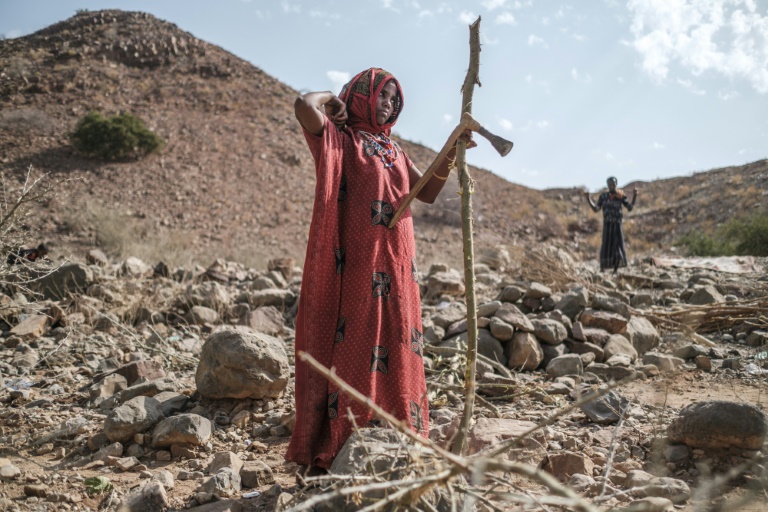
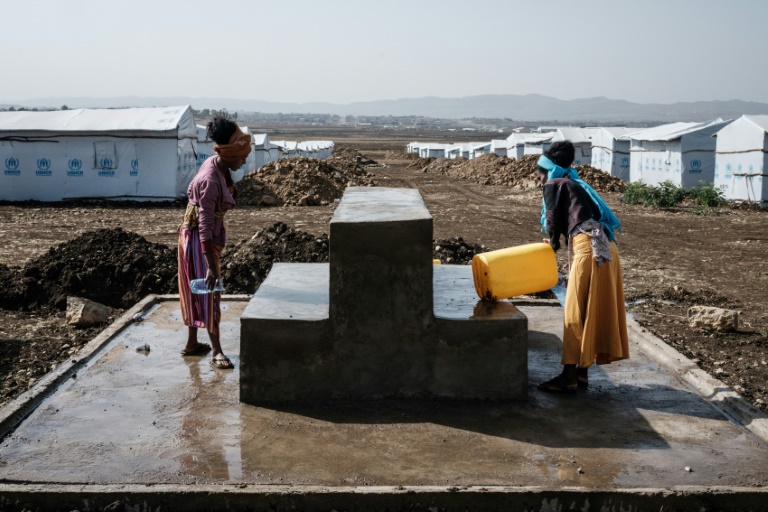
From a makeshift camp in Ethiopia’s Afar region for people displaced by war, herder Abdu Robso stares in bewilderment at the food aid trucks rolling up the nearby hill towards Tigray.

“Why is this food going to Tigray and not feeding us,” the hungry 50-year-old ponders as the World Food Programme convoy slowly winds along the dusty road linking Tigray and the port in neighbouring Djibouti where international aid arrives for the landlocked country.

Along with dozens of men, women and children in the camp in Erebti, an emaciated Abdu says he has been struggling to survive with almost nothing to eat.

The displaced claim they are being ignored while the world focuses on Tigray, the northernmost region ravaged by the brutal conflict that erupted between Tigrayan rebels and Ethiopian federal forces in November 2020.

Fighting has eased since the government and the Tigray People’s Liberation Front (TPLF) each declared a truce in March but northern Ethiopia remains in the grip of a humanitarian crisis that has left millions in need of emergency aid.

In January, Abdu and his family had to hastily flee their hometown of Abala, about 60 kilometres (40 miles) away on the border with Tigray when the TPLF bombarded the area and advanced into Afar.

After days of walking and an hours-long truck journey, Abdu along with his wife and several of their 22 children reached a camp for displaced people in Afdera, hundreds of kilometres from Erebti. 

But after the TPLF withdrew from Afar in April, the regional authorities told the displaced to return home, promising help.

Abdu and his family headed back to Erebti, where they are still waiting for aid.

“We answered the call and here we are with nothing,” he said.

– ‘What have we done wrong?’ –

The residents of Erebti take shelter from the searing heat under plastic sheets stretched under trees on the edge of a dry riverbed that lies below the road.

Even as lunchtime approaches, the fires remain unlit. Children eat some fruit taken from the trees. The weakest sleep. 

“Trucks carrying aid for Tigray pass here. What about us? What have we done wrong? Why is no aid coming here? We are also hungry,” protests Aldim Abdela, a 28-year-old shepherd. 

Mustapha Ali Boko says the TPLF knows how to mobilise the strong Tigrayan diaspora and its international networks, built up during the 27 years that the party dominated national politics until Prime Minister Abiy Ahmed took power in 2018.

“The reason is that Tigray has a strong leadership and we (the Afar) don’t,” the 45-year-old says, complaining of “discrimination” by the international community.

In Erebti, he says, “some sleep on an empty stomach”. 

“People don’t have medicines… they don’t have food and water.”

However, the WFP’s country director for Ethiopia, Claude Jibidar, insisted: “WFP has continuously been delivering food to the Afar region. And I know that sometimes, it’s less talked about but it is being done.”

Across all of northern Ethiopia — Tigray, Afar and Amhara — more than 13 million people are in need of food aid, according to the United Nations.

In July, the UN’s humanitarian agency OCHA said the situation in Afar remained “dire with alarming levels of food insecurity and malnutrition” due to the combined effects of drought and conflict, ensuing displacement, lack of market access, and high food prices.

Ali Boko says that the only aid has come from a local charity, the Afar Pastoralist Development Association.

APDA official Valerie Browning, an Australian nurse who is married to an Afar and has lived in the region for 33 years, says she has never seen such extreme conditions.

“No Afar wants the people of Tigray to starve. That’s obvious, but on the other side, the world and the Tigray people and the government of Ethiopia should not want the Afar to starve… and the unfortunate thing is that this is happening,” she says. 

“The humanitarian situation is beyond crisis.”

– ‘Whole town looted’ –

The people in Erebti say it is impossible to return to Abala.

It is now a virtual ghost town, abandoned by residents, its stores all empty, according to AFP journalists who visited.

“I went to Abala, I saw that my house had burned down, all the houses had burned down,” says Ali Boko. “Our homes are destroyed and our cattle have disappeared.”

“The whole town has been looted,” adds Abdu Robso. 

The hospital has been wrecked, its doors and windows destroyed, and stripped of equipment such as resuscitation and X-ray devices, incubators, beds and mattresses.

Only a dozen families have returned. 

Ali Mohammed says his daughter was wounded in the fighting, and so he was unable to go far. 

“They took a lot of things from the house, my TV, my laptop…” says the 45-year-old farmer.

“Conditions are very harsh. The flour is full of weevils. We sift it, but when we eat it it tastes sour. We have no oil, no onions, we eat berbere (a local spice mixture) mixed with water. 

“There is no medicine, no water. We drink water from the river and we get sick,” he says, anxiously awaiting the help that the authorities promised would arrive soon.

“Here we live with monkeys and stray dogs.”

Wounded All Blacks desperate to hit back against Springboks

The All Blacks will be desperate to bounce back and prove their critics wrong when they go behind enemy lines to face world champions South Africa on Saturday.

New Zealand clash with the Springboks in Mbombela, then Johannesburg seven days later, in the opening rounds of The Rugby Championship.

The All Blacks have faced a barrage of criticism from pundits and fans in New Zealand since the humbling 2-1 home series defeat to Ireland. They have now lost four of their last five games.

New Zealand’s forwards must front up to the notoriously physical Springboks pack, but centre Rieko Ioane said the backs must also assert themselves.

“There’s plenty to work on,” Ioane told reporters. “We, as backs, need to fire.

“We know that we’re coming up against a world-class outfit.

“We need to get better all over the park, whether it’s on attack or defence.”

He sees the two away Tests against the Springboks as a chance to wipe the slate clean.

“It’s a completely different beast that we’re facing this week,” he added.

“The Irish play how they play and (South) Africa have some similarities, but they’re smart footballers.”

This will be New Zealand’s first match in South Africa for four years and comes with the All Blacks under enormous pressure after only one win in their last five Tests. 

Head coach Ian Foster has had to endure calls to stand aside, with Canterbury Crusaders’ highly successful boss Scott Robertson waiting in the wings having already declared his interest.

In the bitter aftermath of the Ireland defeats, New Zealand Rugby sacked Foster’s assistant coaches John Plumtree and Brad Mooar, bringing in Crusaders forwards coach Jason Ryan.

Scrum-half Aaron Smith said the blunt criticism of both Foster and All Blacks captain Sam Cane has been “hurtful”.

“It’s actually quite ridiculous how ruthless it’s been and I feel for them,” he said before the squad left for South Africa.

“The noise is the noise. The pressure of wearing the black jersey, or coaching it, is big.” 

But Smith said the All Blacks have a great chance in South Africa to prove their critics wrong.  

“There’s nothing better than the challenge of playing South Africa in South Africa, we know what’s coming, and it’s up to us as players to own our part of it and get our own stuff right,” he said.

Veteran lock Sam Whitelock said he has been using his experience of a previous pressure environment to help his team-mates.

“When I first came into the team, we were going into the home Rugby World Cup (of 2011) and there was a lot of external pressure,” he said.

“The best advice I got given from the senior players was ‘look, don’t read into media, don’t worry about all those things, just control what you can control’.

“And that’s the main thing that I’ve been trying to tell the boys. It’s still true now.”

Perennial insecurity fuels DR Congo's anti-UN protests

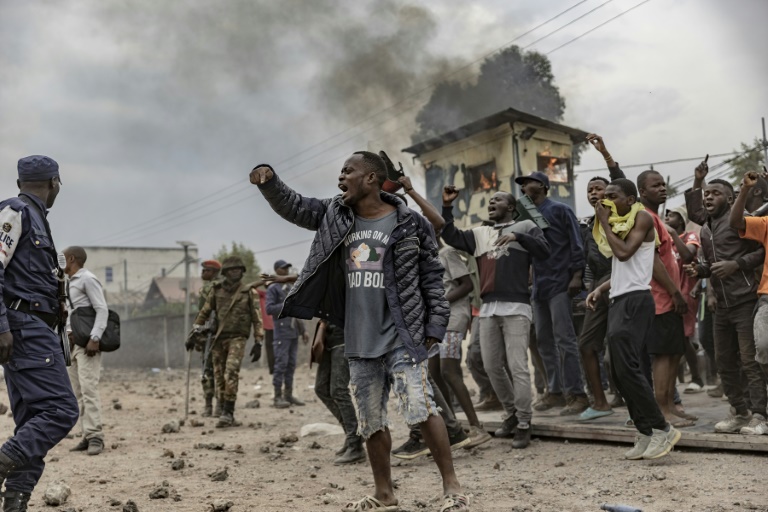
Violent anti-UN protests that rocked eastern Democratic Republic of Congo last week, claiming 36 lives, reflect local anger at persistent insecurity in the turbulent region.

Conflict has raged for three decades across eastern DRC, a mineral-rich region roamed by more than 120 armed groups, which regularly massacre civilians. 

Suspected rebel violence killed around 4,000 civilians in the eastern Congolese provinces of North Kivu and Ituri between 2020 and 2022, according to Kivu Security Tracker, a respected monitor.

Many locals view UN peacekeepers — who first arrived in eastern Congo in 1999 — as standing idly by while militias attack them.

With an annual budget of over $1 billion, the peacekeeping mission known as MONUSCO has more than 16,000 uniformed personnel, according to UN figures from November 2021.

Local anger boiled over on July 25, when anti-UN protesters ransacked MONUSCO bases in North Kivu’s capital Goma. Demonstrations then quickly spread.

The following day, clashes in the town of Butembo led to the deaths of four peacekeepers, according to a government tally published on Monday. Nine civilians were also killed there. 

At total of 36 people were killed over several days of unrest, the government said, including 13 civilians in Goma. 

On July 31, peacekeepers also opened fire and killed three people during an incident on the Congolese-Ugandan border. 

“It often happens that militiamen massacre women, children and elderly people 50 metres (164 feet) away from the Blue Helmets’ positions,” said Losuire Shabani of the pro-democracy movement Fight for Change in the eastern town of Beni.

Antoine-Roger Lokongo, a political scientist at Joseph Kasa-Vubu University in western Congo, said “everything is happening as if MONUSCO has received a mission to subjugate the DRC in complicity with neighbouring countries”.

He accused Rwanda and Uganda of “creating and sustaining armed groups in the east”.

Many in Congo believe that MONUSCO is a front for countries with evil designs on the central African nation. There is little to no evidence to support the idea. 

MONUSCO was not immediately able to respond to questions from AFP. 

However, its spokesman Mathias Gillmann regularly points out that the mission has lost some 400 staff serving in the DRC over the past 22 years, and that it intervenes alongside Congolese armed forces. 

– ‘Enemies of the republic’ –

Pro-democracy movements and some local politicians have been calling for MONUSCO to leave since 2019.

Speaking at a public meeting on July 15, weeks before the protests broke out, senate president Modeste Bahati called on the mission to “pack its bags” and claimed the DRC would defend itself.

Augustin Muhesi, a university professor in North Kivu, said the recent protests were “the consequence of speeches by politicians who pull the strings in the shadows”.

“These speeches are poisoning the atmosphere of distrust that already existed between part of the population and MONUSCO.”

Congolese President Felix Tshisekedi told his cabinet on Friday that “appropriate communication” should protect the population from “manipulators, enemies of the republic” who stir up anti-MONUSCO sentiment “to serve their own interests”.

Jason Stearns, director of New York University’s Congo Research Group, said it was “completely possible” that the anti-UN protesters were manipulated.

“But what is clear is that the mission has lost a lot of popularity,” he added.

Muhesi believes the Congolese government must also take responsibility for popular anger.

“If MONUSCO is still in Congo, it’s because the state is yet to escape its institutional fragilities,” he said, explaining that Congolese security forces were too weak to bring peace to the east.

US, EU envoys urge Ethiopia to restore key services in Tigray

The US and EU envoys for the Horn of Africa on Tuesday urged Ethiopia’s government to resume essential services in Tigray after a rare visit to the war-torn region facing dire conditions.

The northern region has been struggling to cope with food shortages and no access to basic utilities since June 2021, when Tigrayan rebels recaptured it from federal forces after war erupted around 21 months ago.

In recent weeks, Prime Minister Abiy Ahmed’s government and the Tigray People’s Liberation Front (TPLF) have both raised the prospect of negotiations to end the brutal conflict.

Diplomatic efforts have also picked up of late, with new US envoy Mike Hammer and EU envoy Annette Weber visiting Ethiopia to hold talks, including with TPLF leader Debretsion Gebremichael in Tigray.

“A swift restoration of electricity, telecom, banking, and other basic services in Tigray is essential for the people of Tigray,” the two envoys said in a joint statement.

Debretsion, who last week warned that key services would have to be reinstated in Tigray before negotiations could begin, offered “security guarantees for those who need to work to restore services”, the envoys said.

“With this security assurance, there should be no obstacle for the restoration of services to begin,” they added.

The diplomats also called for unfettered aid deliveries to Tigray and the neighbouring conflict-hit regions of Afar and Amhara, and urged the government to lift restrictions on cash and fuel to Tigray.

More than 13 million people need food assistance across northern Ethiopia, according to the UN.

– UN investigators –

The envoys’ visit partially coincided with a trip by UN rights experts to Ethiopia last week as the three-member team attempts to investigate abuses committed in Tigray during the war.

The UN Human Rights Council created the commission last December to probe alleged violations of international human rights, humanitarian and refugee law.

Ethiopia originally rejected the decision to create a commission, calling it “counter-productive”, before eventually approving its arrival in the country.

In a statement released on Tuesday, the commission said it had concluded its first visit to Ethiopia and met with the deputy prime minister, the minister of justice and other senior officials.

“The Commission hopes that the government will provide it with unhindered access without delay, so that it may visit sites and speak freely and privately with survivors, witnesses, and other persons of interest,” it said.

The conflict has driven hundreds of thousands of people to the brink of famine and displaced more than two million, while both sides have been accused of committing serious human rights violations.

Fighting has eased since a humanitarian truce was declared at the end of March.

Burl, Jongwe star for Zimbabwe in first T20 series win over Bangladesh

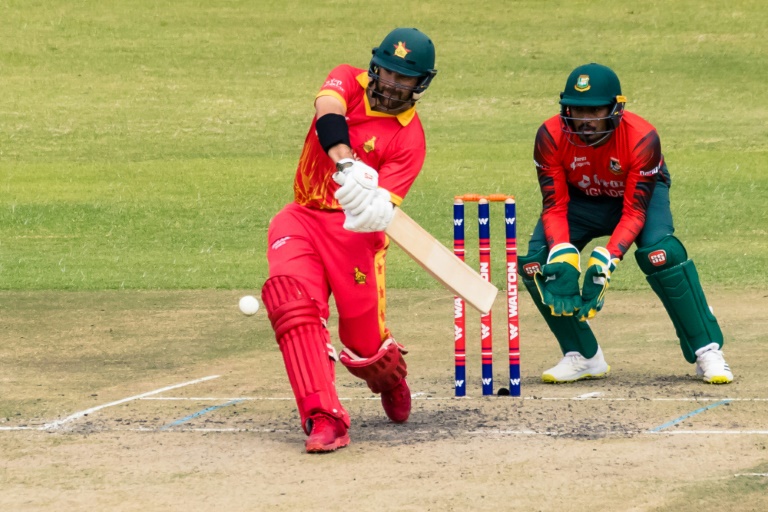
A 79-run seventh-wicket partnership between Ryan Burl and Luke Jongwe proved crucial as Zimbabwe beat Bangladesh by 10 runs on Tuesday to win a Twenty20 international series between the countries for the first time.

After slumping to 67-6 off 13 overs in the third and final match, Burl and Jongwe smashed eight sixes and six fours between them off 31 balls to offer hope to the hosts.

Both Jongwe (54) and Burl (35) were dismissed during the penultimate over as they looked to hammer medium-pacer Hasan Mahmud over the ropes. 

Zimbabwe finished their 20 overs on 156-8 and, in a tense finish at Harare Sports Club, restricted Bangladesh to 146-8 for a 2-1 series triumph. 

A 17-run victory for Zimbabwe last Saturday was followed one day later by a seven-wicket win for the tourists.

The Zimbabwe total was achieved despite losing their regular top scorer, Pakistan-born Sikandar Raza, for a golden duck.

Mahmud and Mehidy Hasan were the pick of the Bangladesh bowlers, both finishing with identical figures of 2-28 off four overs.

Always slightly behind the required run rate, Bangladesh reached 131-6 off 18 overs, leaving them requiring 26 runs to snatch victory in the match and the series.

Victor Nyauchi, one of three changes to the Zimbabwe team convincingly beaten on Sunday, restricted Bangladesh to seven runs in the penultimate over.

Needing 19 off the final over, Jongwe held his nerve with the ball to secure the win for Zimbabwe. Afif Hossain finished as Bangladesh’s leading scorer with an unbeaten 39 off 27 deliveries. 

Nyauchi took three wickets and Brad Evans, another change after the second T20 loss, claimed two for Zimbabwe, who have won seven of eight matches in the shortest format since the beginning of July.  

The change in fortunes after 3-0 T20 and one-day international whitewashes at home to Afghanistan coincided with the appointment of former star Dave Houghton as national coach. 

Bangladesh were without captain and wicketkeeper Nurul Hasan due to a finger injury, which has also ruled him out of a three-match ODI series beginning in Harare on Friday. 

Somalia appoints former Al-Shabaab leader as religion minister

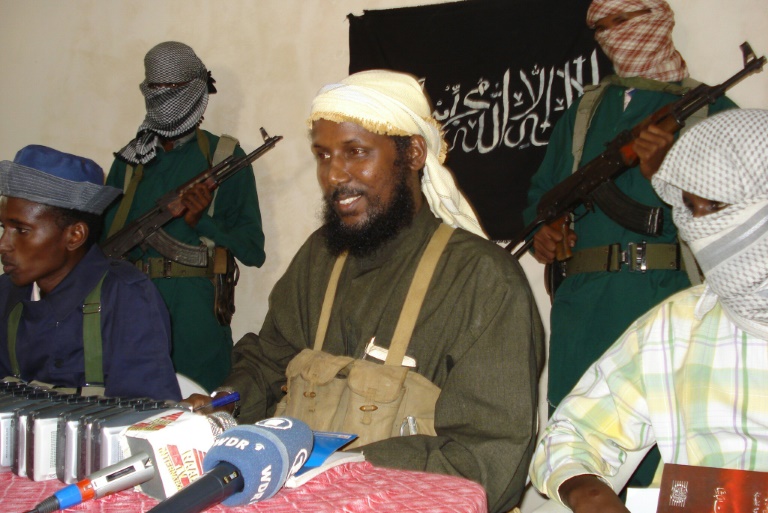
Somalia has appointed the former deputy leader and spokesman for the Al-Shabaab Islamist group as religion minister, Prime Minister Hamza Abdi Barre said Tuesday. 

The announcement marks a sharp reversal of fortune for Muktar Robow, who has spent the last four years under house arrest after a falling-out with ex-president Mohamed Abdullahi Mohamed, better known as Farmajo.

Robow, 53, publicly defected from the Al-Qaeda-linked militants in August 2017, with the United States government at one point offering a $5-million bounty for his capture.

“After consultations that took a period of more than 30 days… I’m very happy to present Somali men and women who I have selected based on their academic background, experience and fairness,” Barre said. 

“I’m expecting they will respond to the needs of the country.”

Robow was arrested in late 2018, days before he was scheduled to run in regional elections.

Farmajo’s government accused him of “organising a militia” in Baidoa, the capital of the southwestern Bay region, and seeking to “undermine stability”.

His arrest triggered sporadic protests with demonstrators burning images of Farmajo, whom they accused of meddling in regional affairs.

His elevation comes weeks after recently elected President Hassan Sheikh Mohamud hinted at his government’s willingness to negotiate with Al-Shabaab, saying it would only happen when the time is right.

Al-Shabaab has waged a bloody insurrection against Somalia’s fragile central government for 15 years and remains a potent force despite an African Union operation against the group.

Its fighters were ousted from Somalia’s capital Mogadishu in 2011, but continue to wage attacks on military, government and civilian targets.

Barre was initially expected to name a cabinet within 30 days of his appointment on June 25 but said the delays were due to the country’s protracted election process that culminated in May with the selection of Mohamud as president.

Tuesday’s appointments include a deputy prime minister, 25 ministers, 24 state ministers and deputy ministers in a 75-member team, with parliament due to vote on the nominees. 

The new government faces a host of challenges, including a looming famine and the grinding Islamist insurgency. 

A crippling drought across the Horn of Africa has left about 7.1 million Somalis — nearly half the population — battling hunger, with more than 200,000 on the brink of starvation, according to UN figures. 

In July, Mohamud said ending the violent insurgency required more than a military approach.

Close Bitnami banner
Bitnami