Africa Business

Miners unearth pink diamond believed to be largest seen in 300 years

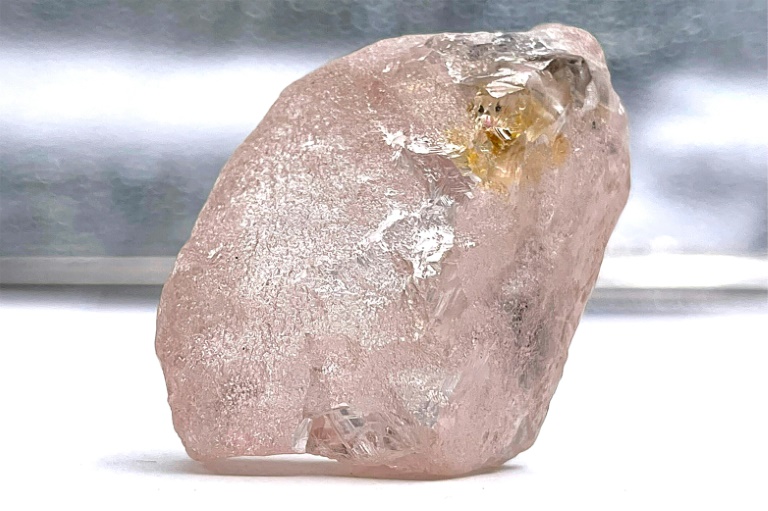
Miners in Angola have unearthed a rare pure pink diamond that is believed to be the largest found in 300 years, the Australian site operator announced Wednesday.

A 170 carat pink diamond — dubbed The Lulo Rose — was discovered at Lulo mine in the country’s diamond-rich northeast and is among the largest pink diamonds ever found, the Lucapa Diamond Company said in a statement to investors.

The “historic” find of the Type IIa diamond, one of the rarest and purest forms of natural stones, was welcomed by the Angolan government, which is also a partner in the mine.

“This record and spectacular pink diamond recovered from Lulo continues to showcase Angola as an important player on the world stage,” Angola’s Mineral Resources Minister Diamantino Azevedo said.

The diamond will be sold at international tender, likely at a dazzling price.

Although The Lulo Rose would have to be cut and polished to realise its true value, in a process that can see a stone lose 50 percent of its weight, similar pink diamonds have sold for record-breaking prices.

The 59.6 carat Pink Star was sold at a Hong Kong auction in 2017 for 71.2 million US dollars. It remains the most expensive diamond ever sold.

Miners unearth pink diamond believed to be largest seen in 300 years

Miners in Angola have unearthed a rare pure pink diamond that is believed to be the largest found in 300 years, the Australian site operator announced Wednesday.

A 170 carat pink diamond — dubbed The Lulo Rose — was discovered at Lulo mine in the country’s diamond-rich northeast and is among the largest pink diamonds ever found, the Lucapa Diamond Company said in a statement to investors.

The “historic” find of the Type IIa diamond, one of the rarest and purest forms of natural stones, was welcomed by the Angolan government, which is also a partner in the mine.

“This record and spectacular pink diamond recovered from Lulo continues to showcase Angola as an important player on the world stage,” Angola’s Mineral Resources Minister Diamantino Azevedo said.

The diamond will be sold at international tender, likely at a dazzling price.

Although The Lulo Rose would have to be cut and polished to realise its true value, in a process that can see a stone lose 50 percent of its weight, similar pink diamonds have sold for record-breaking prices.

The 59.6 carat Pink Star was sold at a Hong Kong auction in 2017 for 71.2 million US dollars. It remains the most expensive diamond ever sold.

'Life-saving' peanut paste unlikely victim of Ukraine war

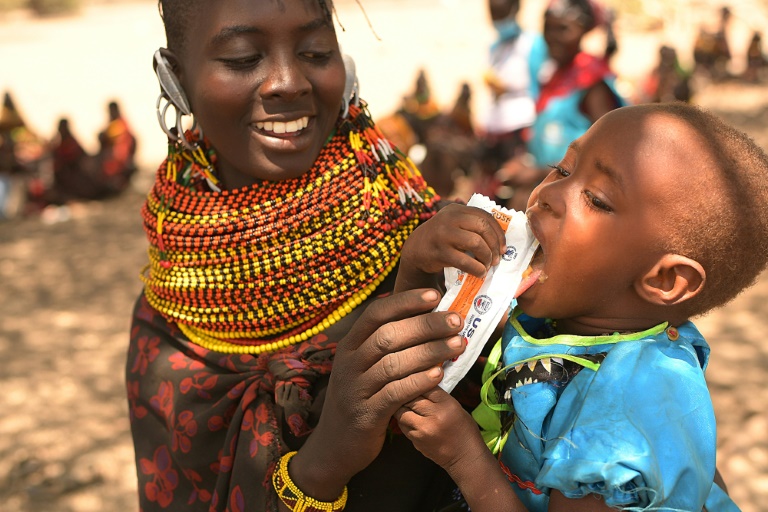
Under an acacia tree in Kenya’s drought-ravaged north, malnourished infants feed on sticky mouthfuls of a nutrient-dense peanut paste long used to prevent child starvation in disasters across the globe.

This wonder food can mean the difference between life and death for a child in hard-hit Marsabit, where aid workers say young children are perishing in conditions that border on famine.

“If we ran out of these, more deaths would be recorded very soon,” James Jarso of aid group World Vision said of the sachets being distributed by charity workers in the parched and isolated village of Purapul.

But just as 1.7 million children face starvation in the drought-stricken Horn of Africa, the cost of these life-saving supplements is skyrocketing because of another crisis unfolding thousands of miles away.

The conflict in Ukraine is making ready-to-use therapeutic food (RUTF) more expensive to manufacture and procure, says UNICEF, which buys almost 80 percent of the world’s supply.

Ukraine is a major exporter of sunflower oil, wheat and other grains. The war has affected the price and availability of staple foods, driven up fuel prices, and disrupted supply chains already off-kilter because of the pandemic.

A knock-on effect has been higher prices for powdered milk, vegetable oils and peanuts — all key ingredients in RUTF, said Christiane Rudert, a nutrition adviser for UNICEF for southern and eastern Africa.

Even the materials used to make RUTF packaging have become scarcer and costlier, she said.

– Power paste –

UNICEF, which purchases around 49,000 tonnes of RUTF every year, is starting to feel the pinch.

“The cost has definitely gone up already, which affects our orders,” Rudert told AFP.

French company Nutriset told AFP it raised the cost of its leading RUTF product “Plumpy’Nut” twice in the past year, including a 13-percent hike in May.

It could not attribute this directly to Ukraine but a confluence of factors, including the war but also the pandemic, higher shipping costs, and environmental disasters, Nutriset said in a statement.

Overall the price of “Plumpy’Nut” — which reached 9.7 million children last year — had risen 23 percent since May 2021, it said.

UNICEF forecasts that by November, prices for RUTF will have risen 16 percent from pre-war levels.

Russia’s invasion has also raised fuel prices, making it costlier to deliver RUTF to where it’s needed.

The timing could not be worse.

More than 1.7 million children in Kenya, Ethiopia and Somalia are suffering the most lethal form of malnutrition as the Horn of Africa experiences its worst drought in generations.

The rising cost of RUTF means treating those children “will cost $12 million more than it would have cost before Ukraine”, Rudert said.

It is money that is sorely lacking, she said, with donations to address the hunger crisis in the Horn falling well short of need.

“This product… is literally what saves children’s lives when they have already reached that really severe form of malnutrition.

“It’s not just peanuts and milk and sugar and oil… it’s therapeutic,” Rudert said.

– ‘It’s life-saving’ –

Invented a quarter of a century ago, RUTF proved revolutionary in treating severe wasting, a deadly condition where underfed children are too thin for their height.

A single sachet of RUTF delivers 500 calories and essential vitamins and minerals.

Eaten directly from the packet, RUTF helps malnourished children quickly regain weight and energy, and requires no refrigeration or preparation by a healthcare worker.

This is essential in remote and impoverished regions like northern Kenya, where clean water and health workers are in short supply.

On a twice-monthly visit to Purapul, government doctor Mohamed Amin said most women and children were surviving on little else than the packs of paste he prescribed.

“It has really been a challenge,” he told AFP at a mobile health clinic, where mothers were handed two weeks’ worth of supplements to feed their children between screenings.

“At least it boosts them.”

UNICEF buys enough RUTF to feed at least 3.5 million children a year. But at current funding levels, a 16-percent price rise could mean 600,000 miss out on this life-saving treatment, Rudert said.

This would have disastrous consequences not just for the Horn but elsewhere in Africa such as South Sudan, where 300,000 children are expected to require RUTF treatment this year. 

Jarso, from World Vision, said the impact of RUTF in a place like Purapul could not be overstated. 

“There is no milk. There is no meat… there is no food for them. Therefore, it is life-saving.”

Commonwealth Games defy doomsayers to remain afloat

The Commonwealth Games are sometimes seen as a quirky relic in the modern sporting calender but former International Olympic Committee (IOC) marketing chief Michael Payne says they have consistently defied the doomsayers.

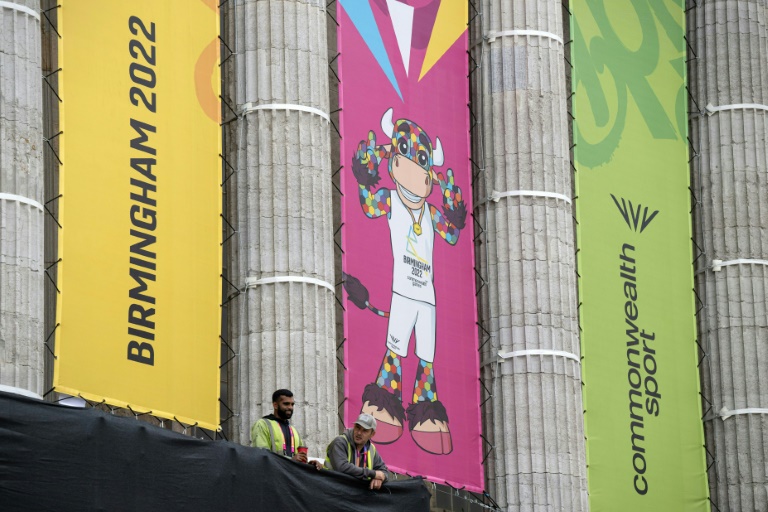
The 22nd edition of the Games opens in Birmingham on Thursday, bringing together around 5,000 athletes from 72 nations and territories — mostly former British colonies — to compete in 19 sports over 11 days.

Some track and field stars will be absent when the competition gets under way — just days after the end of the world championships in Eugene, Oregon.

But there will still be plenty of big names on show at the event, which features sports as diverse as lawn bowls and marathon running. 

The Commonwealth Games are not on the scale of the Olympics that Birmingham once aspired to host — the city was beaten by Barcelona for the right to put on the 1992 Games — but officials hope they can provide a big economic boost for the area.

According to the Financial Times, the West Midlands Combined Authority estimates the event will be worth £1 billion ($1.2 billion) to the regional economy.

Payne, credited with transforming the IOC brand and finances through sponsorship, said the Commonwealth Games had shown remarkable resilience over the decades.

“People have been talking of the demise of the Commonwealth Games for nearly half a century but they are still going, so I would not write them off just yet,” he told AFP.

Another former IOC marketing executive, Terrence Burns, who since leaving the organisation has played a role in five successful Olympic bid campaigns, said it was important for the event to find its own niche and evolve accordingly.

“These other Games are not the Olympic Games but tend to try to mirror them in look, feel, and impact,” he said. “That’s just not possible or credible.

“So I think they need to redefine ‘success’ and build their product accordingly.” 

– ‘Proud nation’ –

The Commonwealth Games have, like other global events in recent years, had trouble in attracting host cities.

“Finding nations willing to host is a challenge for many sports bodies these days,” said Payne. “That is why you have seen a far more flexible process introduced to identify potential hosts.

“But the Commonwealth Games do face a major hurdle, as their marketing and sponsorship revenue potential is limited and, as such, nations wanting to host must be willing to commit to $1 billion of taxpayer support.”

Burns said the nature of the Games, held every four years, throws up obstacles for organisers.

“I think an event that aspires to be global but by definition limits its participation base to a finite set of nations and territories, has a global fan interest challenge as well as a hosting city challenge,” he said. “That part is just maths.”

Steps have been taken to remodel the event, with the Commonwealth Games Federation last year publishing a roadmap for the future.

One recommendation was for “approximately” 15 sports to feature at the Games, with athletics and swimming compulsory but some flexibility to allow hosts to choose from a wider list of core sports.

Payne says that makes sense but he takes issue with a bolder idea of awarding co-hosting admittedly “only in exceptional circumstances” to non-Commonwealth countries.

“Like staging the Asian Games in Europe, it is a non-starter.”

He says the Commonwealth Games are a vital showcase for smaller nations and territories that struggle to attract compete at the bigger events.

“For many of the smaller nations this is their one moment on the world sports stage, with an opportunity to shine and win medals,” said the 64-year-old Irishman.

“That is important for these nations and governments to drive local sports interest. At the Olympics there is no chance for them to medal.”

This is reflected by the lengths the impoverished Sri Lankan team have gone to  get to Birmingham.

Commonwealth Games organisers and the Sri Lanka cricket board have covered their costs.

“We want to stand like other nations, in front of our flag, as a proud nation, keeping our backs straight, our heads strong and we want to do our best,” said Dampath Fernando, the team’s chef de mission.

Tunisia approves new constitution in vote with low turnout

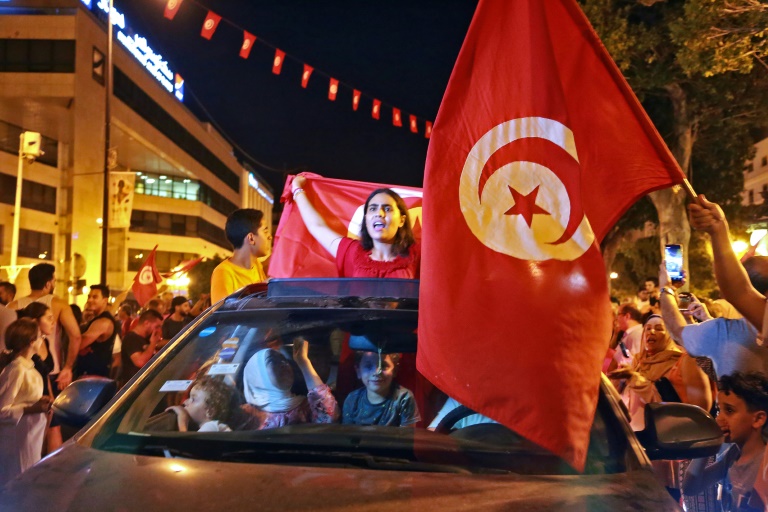
Tunisia has approved a new constitution granting unchecked powers to the office of President Kais Saied, the electoral board said, after a poorly attended referendum in which voters overwhelmingly backed the document.

Saied’s rivals accused the electoral board controlled by Saied of “fraud” and said his referendum, held Monday, had failed.

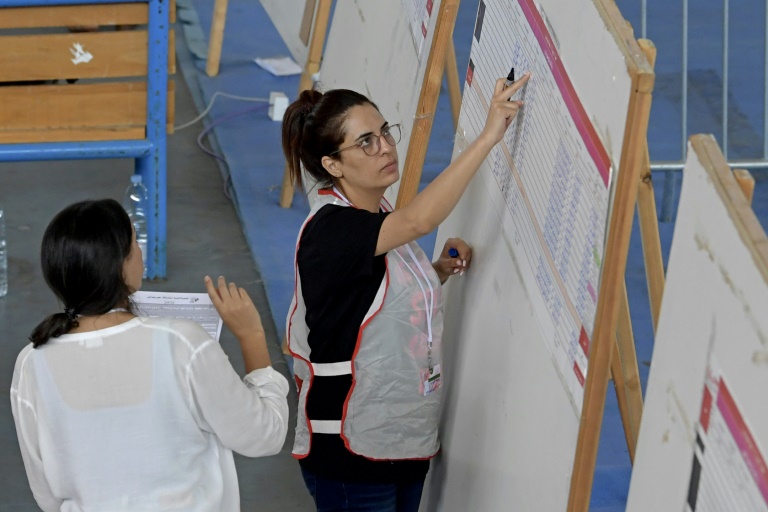
On Tuesday evening, electoral commission head Farouk Bouasker told journalists the body “announces the acceptance of the new draft constitution for the Republic of Tunisia”, based on preliminary results, with 94.6 percent of valid ballots voting “yes”, on 30.5 percent turnout.

Monday’s vote came a year to the day after the president sacked the government and suspended parliament in a dramatic blow to the only democracy to have emerged from the 2011 Arab Spring uprisings.

For some Tunisians, his moves sparked fears of a return to autocracy, but they were welcomed by others, fed up with high inflation and unemployment, political corruption and a system they felt had brought few improvements.

There had been little doubt the “yes” campaign would prevail, a forecast reflected in an exit poll by independent polling group Sigma Conseil.

Most of Saied’s rivals called for a boycott, and while turnout was low, it was higher than the single figures many had expected.

“Tunisia has entered a new phase,” Saied told celebrating supporters after polling closed.

“What the Tunisian people did… is a lesson to the world, and a lesson to history on a scale that the lessons of history are measured on,” he said.

But the US State Department said on Tuesday it noted “concerns that the new constitution includes weakened checks and balances that could compromise the protection of human rights and fundamental freedoms”.

And Tunisia’s National Salvation Front opposition alliance accused the electoral board of falsifying turnout figures.

– ‘Opaque and illegal’ –

NSF head Ahmed Nejib Chebbi said the figures were “inflated and don’t fit with what observers saw on the ground”.

The electoral board “isn’t honest and impartial, and its figures are fraudulent”, he said.

Saied, a 64-year-old law professor, dissolved parliament and seized control of the judiciary and the electoral commission on July 25 last year.

His opponents say the moves aimed to install an autocracy more than a decade after the fall of dictator Zine El Abidine Ben Ali, but his supporters say they were necessary after years of corruption and political turmoil.

“After 10 years of disappointment and total failure in the management of state and the economy, the Tunisian people wanted to get rid of the old and take a new step — whatever the results are,” said Noureddine al-Rezgui, a bailiff.

A poll of “yes” voters by state television suggested “reforming the country and improving the situation” along with “support for Kais Saied/his project” were their main motivations.

Thirteen percent cited being “convinced by the new constitution”.

Rights groups have warned the draft gives vast, unchecked powers to the presidency, allows Saied to appoint a government without parliamentary approval and makes him virtually impossible to remove from office.

Said Benarbia, regional director of the International Commission of Jurists, told AFP the new constitution would “give the president almost all powers and dismantle any check on his rule”.

“The process was opaque and illegal, the outcome is illegitimate,” he added.

– ‘Whatever he wants’ –

Saied has repeatedly threatened his enemies in recent months, issuing video diatribes against unnamed foes he describes as “germs”, “snakes” and “traitors”.

On Monday, he promised to hold to account “all those who have committed crimes against the country”.

Analyst Abdellatif Hannachi said the results meant Saied “can now do whatever he wants without taking anyone else into account”.

“The question now is: what is the future of opposition parties and organisations?”

As well as remaking the political system, Monday’s vote was seen as a gauge of Saied’s personal popularity, almost three years since the political outsider won by a landslide in Tunisia’s first democratic direct presidential election.

The country is now set to hold elections to the neutered parliament in December.

Until then, “Kais Saied will have more powers than a pharaoh, a Middle Ages Caliph or the (Ottoman-era) Bey of Tunis,” said political scientist Hamadi Redissi.

Participation in elections has gradually declined since the 2011 revolution, from just over half in a parliamentary poll months after Ben Ali’s ouster to 32 percent in 2019.

Three peacekeepers killed as anti-UN protests spread in DR Congo

Three United Nations peacekeepers and at least 12 demonstrators have been killed in escalating anti-UN protests in eastern DR Congo, officials said on Tuesday.

Anger has been fuelled by perceptions that MONUSCO, the UN mission in the Democratic Republic of Congo (DRC), is failing to do enough to stop attacks by armed groups.

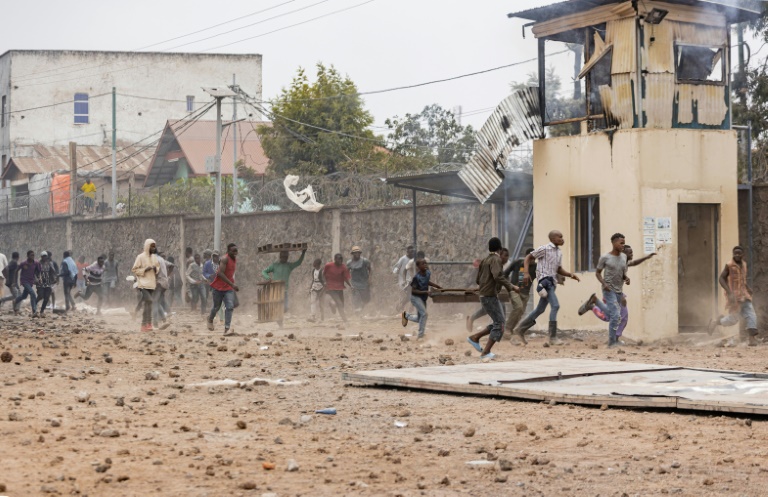
Crowds on Monday stormed a MONUSCO headquarters and supply base in Goma, the chief city in North Kivu province, and the protests spread on Tuesday to Beni and Butembo to the north.

Butembo police chief Colonel Paul Ngoma said three peacekeepers there — two Indians and a Moroccan — had been killed and another injured, while seven demonstrators had died and several others were wounded.

MONUSCO stated on Tuesday that one soldier and two military police officers serving with the UN had been killed in an attack on its base in Butembo. Another peacekeeper was gravely wounded.

“Assailants violently snatched weapons from elements of the Congolese National Police and fired at point-blank range at our peacekeepers,” MONUSCO said, adding that it “strongly condemns” the attack.

Morocco’s army also released a statement confirming that one Moroccan peacekeeper had been shot dead, with 20 of the North African country’s MONUSCO contingent also wounded during recent unrest.

Farhan Haq, a UN spokesman, warned reporters in New York that the situation on the ground is “very volatile”. “Reinforcements are being mobilised,” he said.

At a news conference in the DRC’s capital Kinshasa, government spokesman Patrick Muyaya said that about 15 people, including three peacekeepers, had been killed in the recent unrest and 61 people wounded. 

“In no case is violence justified,” he said. 

– Anger –

MONUSCO is one of the world’s biggest peacekeeping operations.

But it has regularly come under criticism in the troubled east, where many accuse it of failing to do enough to end decades-long bloodshed.

More than 120 armed groups roam the volatile region, where civilian massacres are common and conflict has displaced millions of people. 

In Monday’s unrest, hundreds of people in Goma blocked roads and chanted hostile slogans before storming MONUSCO’s headquarters and a supply base there.

Protesters smashed windows and looted valuables, while helicopters airlifted UN staff from the premises and security forces fired teargas in a bid to push them back. 

The unrest in Goma continued on Tuesday, with the fatal shooting of a man near the supplies base, an AFP correspondent saw.

Congolese security forces held back a crowd outside the facility, some of whom carried placards with slogans such as “Bye-bye, MONUSCO”.

At Goma’s CBCA Ndosho Hospital, the head of administration, Serge Kilumbiro, told AFP that 28 people had been admitted with gunshot wounds on Monday and eight more on Tuesday.

In Beni, about 350 kilometres (215 miles) to the north, soldiers deployed on the road leading to the MONUSCO base there on Tuesday, while protesters burned tyres. Shops, markets and petrol stations were closed.

In the town of Butembo, security forces dispersed protesters who had gathered in front of a MONUSCO base, witnesses said.

Ngoma, the local police chief, said some youths were “armed”.

– Rebels –

The latest protests come after the president of the senate, Modeste Bahati, told supporters in Goma on July 15 that MONUSCO should “pack its bags”.

They coincide with the resurgence of the M23 — a militia that lay mostly dormant for years before resuming fighting last November. 

The rebels have since made significant advances in eastern Congo, including capturing the North Kivu town of Bunagana on the Ugandan border. 

The UN first deployed an observer mission to eastern Congo in 1999. 

In 2010, it became the peacekeeping mission MONUSCO — the United Nations Organization Stabilization Mission in the Democratic Republic of the Congo — with a mandate to conduct offensive operations.

It has a current strength of about 16,300 uniformed personnel, according to the UN. 

MONUSCO on Monday said it “vigorously condemned the attack” on its premises in Goma, “carried out by a group of looters on the sidelines of a demonstration which, in addition, was banned by the mayor of Goma”.

In a statement on Monday, Khassim Diagne, the deputy special representative of the UN secretary general to MONUSCO, said the peacekeepers were there to protect civilians.  

“The incidents in Goma are not only unacceptable but totally counterproductive,” he said. 

Kenya holds single-candidate presidential 'debate'

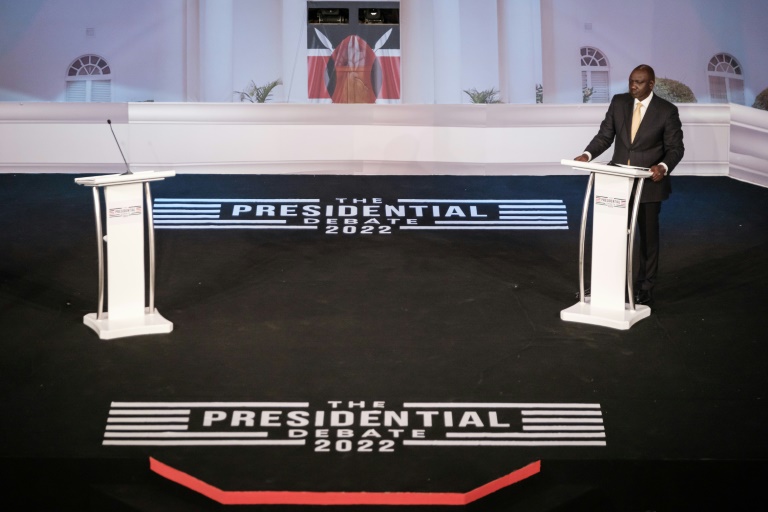
Kenya’s Deputy President William Ruto appeared alone at a presidential debate Tuesday ahead of April 9 polls, after his main rival pulled out at the weekend.

Former prime minister Raila Odinga, 77, would not take part, his campaign team said Sunday, accusing Ruto, 55, of trying to avoid certain topics such as corruption.

Organisers said the event would still go ahead, and insisted the moderators would not share any of the questions with the candidates beforehand, hoping Odinga would change his mind.

But on Tuesday Ruto found himself alone on stage, opposite an empty pulpit, fielding questions from two journalists.

“My competitor is not here because he doesn’t have a plan, he doesn’t have an agenda,” he alleged.

He “is not here because he doesn’t want to answer difficult questions.”

Odinga has made the battle against graft one of the main themes of his campaign, while Ruto has been accused of corruption in a case since last year.

Asked to respond to these allegations, the deputy president replied: “Any piece of land that I have is legally acquired.”

“I propose in my manifesto to deal firmly, squarely, institutionally with the fight against corruption,” he added.

Sitting President Uhuru Kenyatta cannot run again and has endorsed Odinga over his deputy of nine years after an acrimonious falling out.

Odinga’s spokesman said on Sunday that the former premier would instead take part in a televised town hall meeting in the capital Nairobi with “ordinary Kenyans”.

Protester killed in Sudan rally against coup, tribal violence

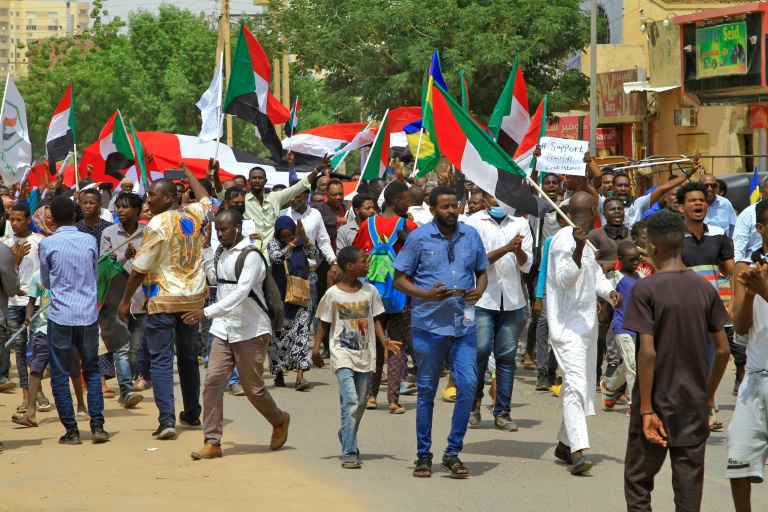
A protester was killed Tuesday as hundreds rallied against last year’s military coup in Sudan and a recent spike in tribal violence which killed more than 100 people, medics said.

The unidentified protester was hit “by live bullets to the face by coup forces” during protests in Omdurman, the capital’s twin city, the Central Committee of Sudan Doctors said.

Tuesday’s death brings to 116 the number of protesters killed in the crackdown since last October’s coup led by army chief Abdel Fattah al-Burhan, the committee said in a statement.

Sudan’s main civilian group, the Forces for Freedom and Change (FFC), had called for mass demonstrations with hashtags urging co-existence and a “unified nation”. 

In the capital Khartoum, demonstrators marched with the national flag and chanted “Sudan is a nation for all people!”

Protesters also chanted “No to tribalism and no regionalism!” while others called on the military “to go back to barracks”, according to an AFP correspondent.

Senior civilian politicians including Mohamed al-Fekki and ex-minister Khaled Omar Youssef were seen at the demonstrations.

The two men, key leaders of the FFC, were among civilian officials who have been removed from power since the coup.

Some pro-democracy activists and protesters opposed the FFC’s participation, saying the rallies should not be overshadowed by partisan motives, AFP correspondents said.

Near-weekly protests and deepening turmoil have rocked Sudan since last year’s coup which upended a transition to civilian rule following the 2019 ouster of president Omar al-Bashir.

Sudan has since reeled from a spiralling economic crisis and a broad security breakdown which has seen a spike in ethnic clashes in its far-flung regions.

On July 11, tribal clashes over a land dispute erupted in southern Blue Nile state, leaving at least 105 people dead and 291 wounded.

The clashes between members of the Berti and Hausa ethnic groups have since triggered furious protests in several cities, with Hausa members taking to the streets including in Khartoum to demand justice for comrades who were killed.

On July 4, Burhan pledged to step aside to make way for Sudanese factions to agree on a civilian government, but the FFC dismissed his move as a “ruse”.  

Tunisia president hails vote set to bolster power grab

President Kais Saied declared Tuesday that Tunisia was moving “from despair to hope” after a referendum almost certain to approve a new constitution that concentrates nearly all powers in his office.

But his rivals accused the Saied-controlled electoral board of “fraud” and said his referendum — held on Monday and marked by an official turnout of little more than a quarter of the 9.3 million electorate — had failed.

Counting was well under way in the late afternoon, with the first official results due between 7:00 pm and 9:00 pm (1800 GMT to 2000 GMT).

The independent polling group Sigma Conseil has said that of 7,500 participants questioned in an exit poll, 92-93 percent voted “Yes”.

Monday’s vote came a year to the day after the president sacked the government and suspended parliament in a dramatic blow to the only democracy to have emerged from the 2011 Arab Spring uprisings.

For some Tunisians, his moves sparked fears of a return to autocracy, but they were welcomed by others, fed up with high inflation and unemployment, political corruption and a system they felt had brought few improvements.

There had been little doubt the “Yes” campaign would prevail, a forecast reflected in the exit poll.

Most of Saied’s rivals called for a boycott, and while turnout was low, it was higher than the single figures many had expected — at least 27.5 percent, according to ISIE, the electoral board.

“Tunisia has entered a new phase,” Saied told celebrating supporters after polling closed.

“What the Tunisian people did… is a lesson to the world, and a lesson to history on a scale that the lessons of history are measured on,” he said.

But the US State Department said on Tuesday that it noted “concerns that the new constitution includes weakened checks and balances that could compromise the protection of human rights and fundamental freedoms”.

And Tunisia’s National Salvation Front opposition alliance accused the electoral board of falsifying turnout figures.

– ‘Opaque and illegal’ –

NSF head Ahmed Nejib Chebbi said the figures were “inflated and don’t fit with what observers saw on the ground”.

The electoral board “isn’t honest and impartial, and its figures are fraudulent”, he said.

Saied, a 64-year-old law professor, dissolved parliament and seized control of the judiciary and the electoral commission on July 25 last year.

His opponents say the moves aimed to install an autocracy more than a decade after the fall of dictator Zine El Abidine Ben Ali, but his supporters say they were necessary after years of corruption and political turmoil.

“After 10 years of disappointment and total failure in the management of state and the economy, the Tunisian people wanted to get rid of the old and take a new step — whatever the results are,” said Noureddine al-Rezgui, a bailiff.

A poll of “Yes” voters by state television suggested “reforming the country and improving the situation” along with “support for Kais Saied/his project” were their main motivations.

Thirteen percent cited being “convinced by the new constitution”.

Rights groups have warned the draft gives vast, unchecked powers to the presidency, allows Saied to appoint a government without parliamentary approval and makes him virtually impossible to remove from office.

Said Benarbia, regional director of the International Commission of Jurists, told AFP the new constitution would “give the president almost all powers and dismantle any check on his rule”.

“The process was opaque and illegal, the outcome is illegitimate,” he added.

– ‘Back on the rails’ –

Saied has repeatedly threatened his enemies in recent months, issuing video diatribes against unnamed foes he describes as “germs”, “snakes” and “traitors”.

On Monday, he promised to hold to account “all those who have committed crimes against the country”.

Analyst Abdellatif Hannachi said the results meant Saied “can now do whatever he wants without taking anyone else into account”.

“The question now is: what is the future of opposition parties and organisations?”

As well as remaking the political system, Monday’s vote was seen as a gauge of Saied’s personal popularity, almost three years since the political outsider won a landslide in Tunisia’s first democratic direct presidential election.

The country is now set to hold elections to the neutered parliament in December.

Until then, “Kais Saied will have more powers than a pharaoh, a Middle Ages Caliph or the (Ottoman-era) Bey of Tunis,” said political scientist Hamadi Redissi.

Participation in elections has gradually declined since the 2011 revolution, from just over half in a parliamentary poll months after Ben Ali’s ouster to 32 percent in 2019.

Those who voted “Yes” on Monday did so primarily to “put the country back on the rails and improve the situation,” Zargouni said.

Three peacekeepers killed as anti-UN protests spread in DR Congo

Three United Nations peacekeepers and at least 12 demonstrators have been killed in escalating anti-UN protests in eastern DR Congo, officials said on Tuesday.

Anger has been fuelled by perceptions that MONUSCO, the UN mission in the Democratic Republic of Congo, is failing to do enough to stop attacks by armed groups.

Crowds on Monday stormed a MONUSCO headquarters and supply base in Goma, the chief city in North Kivu province, and the protests spread on Tuesday to Beni and Butembo to the north.

Butembo police chief Colonel Paul Ngoma said three peacekeepers there — two Indians and a Moroccan — had been killed and another injured, while seven demonstrators had died and several others were wounded.

MONUSCO stated on Tuesday that one soldier and two military police officers serving with the UN had been killed in an attack on its base in Butembo. Another peacekeeper was gravely wounded.

“Assailants violently snatched weapons from elements of the Congolese National Police and fired at point-blank range at our peacekeepers,” MONUSCO said, adding that it “strongly condemns” the attack.

Morocco’s army also released a statement confirming that one Moroccan peacekeeper had been shot dead, with 20 of the North African country’s MONUSCO contingent also wounded during recent unrest.

Earlier, government spokesman Patrick Muyaya said on Twitter that “at least five people (were) dead, about 50 wounded” in Goma.

The security forces had fired “warning shots” at protesters to stop attacks on UN personnel, he said. 

– Anger –

MONUSCO is one of the world’s biggest peacekeeping operations.

But it has regularly come under criticism in the troubled east, where many accuse it of failing to do enough to end decades-long bloodshed.

More than 120 armed groups roam the volatile region, where civilian massacres are common and conflict has displaced millions of people. 

In Monday’s unrest, hundreds of people in Goma blocked roads and chanted hostile slogans before storming MONUSCO’s headquarters and a supply base there.

Protesters smashed windows and looted valuables, while helicopters airlifted UN staff from the premises and security forces fired teargas in a bid to push them back. 

The unrest in Goma continued on Tuesday, with the fatal shooting of a man near the supplies base, an AFP correspondent saw.

Congolese security forces held back a crowd outside the facility, some of whom carried placards with slogans such as “Bye-bye, MONUSCO.”

At Goma’s CBCA Ndosho Hospital, the head of administration, Serge Kilumbiro, told AFP that 28 people had been admitted with gunshot wounds on Monday and eight more on Tuesday.

In Beni, about 350 kilometres (215 miles) to the north, soldiers deployed on the road leading to the MONUSCO base there on Tuesday, while protesters burned tyres. Shops, markets and petrol stations were closed.

In the town of Butembo, security forces dispersed protesters who had gathered in front of a MONUSCO base, witnesses said.

Ngoma, the local police chief, said some youths were “armed”.

– Rebels –

The latest protests come after the president of the senate, Modeste Bahati, told supporters in Goma on July 15 that MONUSCO should “pack its bags”.

They coincide with the resurgence of the M23 — a militia that lay mostly dormant for years before resuming fighting last November. 

The rebels have since made significant advances in eastern Congo, including capturing the North Kivu town of Bunagana on the Ugandan border. 

The UN first deployed an observer mission to eastern Congo in 1999. 

In 2010, it became the peacekeeping mission MONUSCO — the United Nations Organization Stabilization Mission in the Democratic Republic of the Congo — with a mandate to conduct offensive operations.

It has a current strength of about 16,300 uniformed personnel, according to the UN. 

MONUSCO on Monday said it “vigorously condemned the attack” on its premises in Goma, “carried out by a group of looters on the sidelines of a demonstration which, in addition, was banned by the mayor of Goma”.

In a statement on Monday, Khassim Diagne, the deputy special representative of the UN secretary general to MONUSCO, said the peacekeepers were there to protect civilians.  

“The incidents in Goma are not only unacceptable but totally counterproductive,” he said. 

Close Bitnami banner
Bitnami