Africa Business

Morocco, Israel sign legal deal as cooperation expands

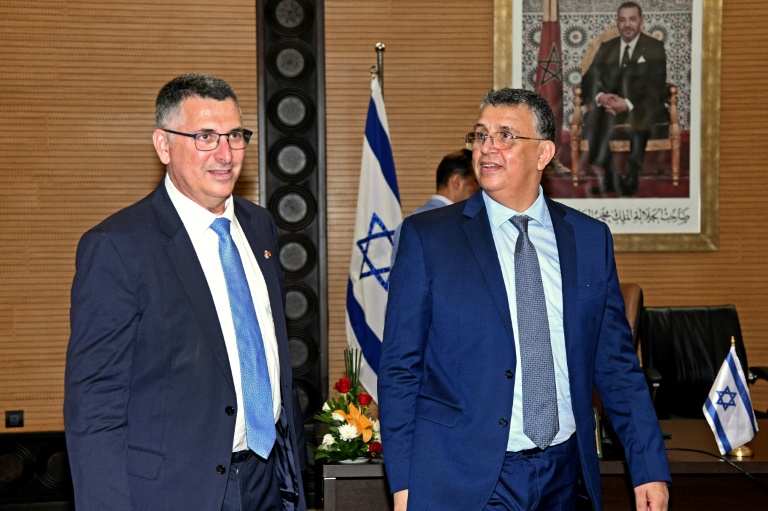
Morocco and Israel added legal links to a growing list of cooperation accords since they normalised relations in 2020, during a visit Tuesday by Israeli Justice Minister Gideon Saar.

He signed a judicial accord in Rabat with his Moroccan counterpart Abdellatif Ouahbi.

A joint statement said the two countries would share expertise and modernise their judicial systems through digitalisation, while cooperating in the fight against organised crime, terrorism and human trafficking.

Also on Tuesday, Israel’s Regional Cooperation Minister Issawi Frej, an Israeli Arab whose family originated in Morocco, held talks in Rabat on a cultural exchange programme for youths from both countries.

Morocco cut relations with Israel in 2000 following the outbreak of the second Palestinian intifada, but re-established ties two decades later in a deal that saw Washington recognise Rabat’s sovereignty over the disputed Western Sahara.

Since then, a steady stream of Moroccan and Israeli officials have visited each others’ countries and signed deals ranging from defence and security to the economy, culture and sports.

Israeli army chief Aviv Kohavi visited Morocco last week, consolidating the strategic and military alliance between the Jewish state and the North African country.

Burkina ex-leader Compaore apologises to family of slain Sankara

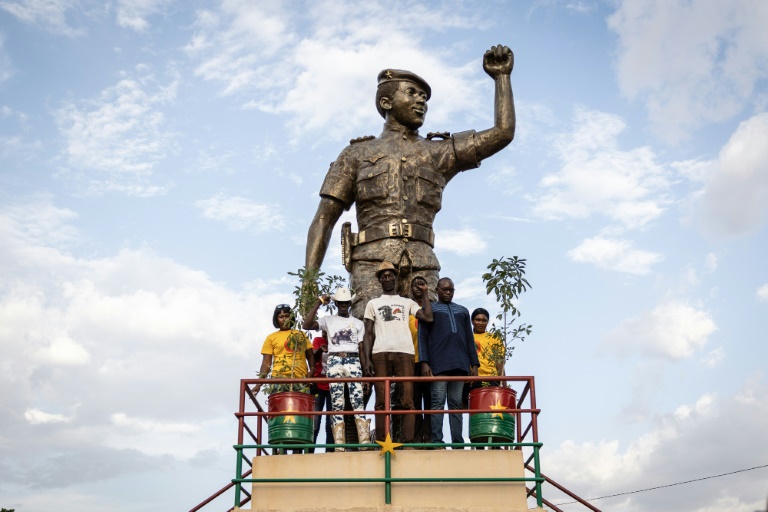
Burkina Faso’s former president Blaise Compaore, sentenced in absentia to life in jail for the 1987 assassination of revolutionary icon Thomas Sankara, apologised to the ex-leader’s family on Tuesday.

“I ask the Burkinabe people for forgiveness for all the acts I may have committed during my tenure, and especially the family of my brother and friend Thomas Sankara,” he said in a message read out by government spokesman Lionel Bilgo.

Compaore seized power in the West African nation in a 1987 coup in which Sankara was gunned down by a hit squad.

The violent death of his former comrade-in-arms was a taboo subject throughout his 27 years in power.

A Burkina court handed him a life term in absentia in April for his role in the assassination. 

“I take responsibility for, and regret from the bottom of my heart, all the suffering and tragedies experienced by all victims during my terms as leader of the country and ask their families to grant me their forgiveness,” Compaore said.

Compaore, 71, has been living in exile in neighbouring Ivory Coast since being ousted from power by mass protests in 2014.

He returned to Burkina Faso for several days this month, without facing arrest, after the country’s military leader Lieutenant Colonel Paul-Henri Sandaogo Damiba invited him in the name of “national reconciliation”.

The visit sparked an outcry among civil society groups and political parties, who said uniting the nation should not come at the expense of impunity.

Compaore expressed his “deep gratitude” to Burkina Faso’s military-dominated transitional government.

He called on his compatriots to join “a sacred union, tolerance, moderation, but above all forgiveness so that the national interest prevails”.

– ‘A masquerade’ –

A fiery Marxist-Leninist who blasted the West for neo-colonialism and hypocrisy, Sankara came to power as an army captain aged just 33.

He was assassinated little more than four years later on the same day as the coup which brought his erstwhile comrade-in-arms to power. 

He and 12 colleagues were gunned down by a hit squad at a meeting of the ruling National Revolutionary Council on October 15, 1987.

Support for Sankara’s belief in pan-Africanism and egalitarianism remains deeply rooted, and the country has erected monuments in his honour.

Luc Damiba, secretary of the International Thomas Sankara Memorial Committee, blasted Compaore’s apology as “a masquerade… a kind of diversion that he is sowing in people’s minds”.

Compaore’s goal, he said, was “to be able to return to Burkina and get a presidential pardon”.

Burkina’s ruling junta took power in a January coup that ousted former president Roch Marc Christian Kabore, amid widespread anger at the government’s failure to deal with a jihadist insurgency that spread from Mali in 2015.

Thousands of people have died and nearly two million have been displaced, inflicting widespread economic damage to a country that is already among the poorest in the world.

Uganda's Museveni defends ties with Russia as Lavrov visits

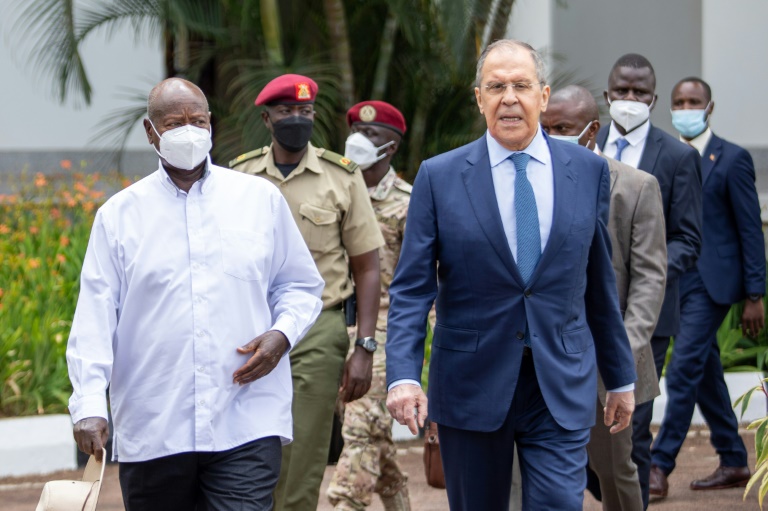
Ugandan President Yoweri Museveni on Tuesday defended his country’s relationship with Russia, as Moscow’s top diplomat toured Africa to drum up support over the war in Ukraine.

“How can we be against somebody who has never harmed us,” the veteran Ugandan leader said alongside Russian Foreign Minister Sergei Lavrov at a press conference in the town of Entebbe. 

“If Russia makes mistakes, we tell them. When they have not made mistakes, we can’t be against them,” he added, hailing Russia for backing anti-colonial movements in Africa.

Uganda was one of 17 African nations to abstain during a vote in March on a UN resolution that overwhelmingly condemned the Russian invasion of Ukraine.

Vulnerable countries on the continent and elsewhere in the world, however, have been hard hit by the fallout from the war that has sent prices of fuel and food soaring.

Lavrov insisted Russia was not to blame.

“There is a very loud campaign around this, but our African friends understand their root cause,” Lavrov said. 

“They are not related to what is happening within the special military operation,” he said, using the Kremlin’s term for the conflict.

Lavrov’s trip comes hot on the heels of a landmark deal Russia and Ukraine signed on Friday with the United Nations and Turkey, which is aimed at relieving the global food crisis caused by blocked Black Sea grain deliveries.

Less than 24 hours later Moscow struck the Ukrainian port in Odessa — one of three exit hubs designated in the agreement — sparking fury in Kyiv and heightening fears the Kremlin would not go through with the deal.

As relations with the West have collapsed over the conflict, Lavrov said Africa would play a greater role in Russia’s foreign policy.

Museveni also said Kampala would cooperate with Moscow in a range of fields including space, energy, agriculture and vaccines.

“Our interest with Russia is when there is progress with Russia, we (Africa) benefit,” he added.

Lavrov arrived in Ethiopia later Tuesday on the latest leg of a trip that took him to Egypt and Congo-Brazzaville before Uganda.

France committed to Africa's security, says Macron

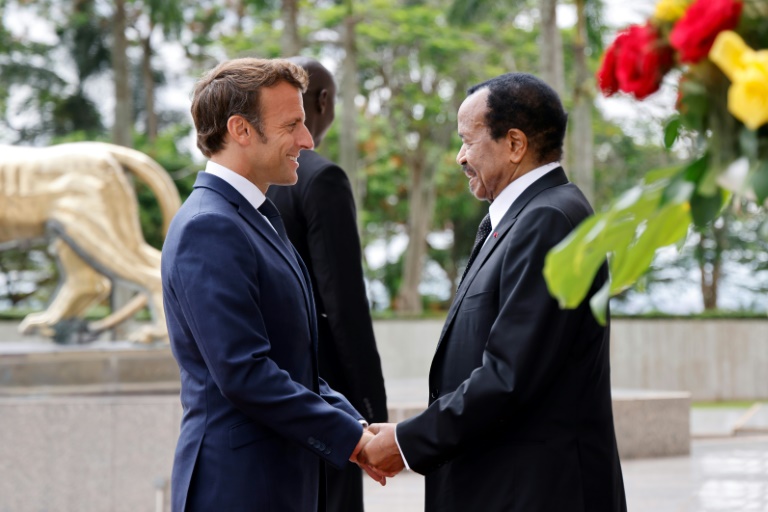
French President Emmanuel Macron on Tuesday declared his country would support Africa’s need for security as he embarked on a three-nation tour aimed at renewing France’s relations with the continent.

Touching on a long-standing grievance in France’s former African colonies, Macron also announced French archives on its colonial era in Cameroon would be opened up so that historians could “shed light” on “painful moments”.

In a speech in the Cameroonian capital Yaounde, Macron promised France “will not relinquish the security of the African continent”, where a jihadist campaign in the Sahel is now shaking countries to the south.

“France remains resolutely committed to the security of the continent, acting in support and at the request of our African partners,” Macron told a gathering of French expatriates.

France is reconfiguring its posture in the Sahel after falling out with the military junta in Mali, the epicentre of a bloody 10-year-old jihadist campaign in the region.

After a pullout from Mali that is expected to be completed in the coming weeks, France’s Barkhane anti-jihadist force will have around 2,500 troops in the Sahel, just under half of the deployment at its peak, say French officers.

The force will also make a tactical shift, acting more in a support role for local forces than in taking the lead, they say.

Macron landed late on Monday on a three-day tour that will also take him to Benin and Guinea-Bissau. 

He met on Tuesday with Cameroon’s 89-year-old president, Paul Biya, an iron-fisted ruler who has been in power since 1982.

In his speech, Macron said the reconfigured mission will extend “beyond the Sahel, to the Gulf of Guinea and second-layer countries which now have to face terrorist groups which are expanding and shaking up the whole region”.

The jihadist insurgency began in northern Mali in 2012 and hit neighbouring Niger and Burkina Faso in 2015.

Across the region, thousands of people have been killed and more than two million have fled their homes.

Sporadic cross-border attacks have also occurred on coastal countries to the south, sparking fears of an expansion by the jihadists to the Gulf of Guinea.

Macron also pledged French support for countries fighting jihadists in the Lake Chad region, where an older insurgency launched by Nigeria’s Boko Haram is also raging.

These include Cameroon, whose Far North region, which reaches into the Lake Chad basin, has suffered repeated attacks.

– History archives –

Macron, at a press conference with Biya, said France’s archives on colonial rule in Cameroon would be opened “in full” and hoped historians from both countries would work together to investigate “painful moments”.

French colonial authorities brutally repressed armed Cameroonian nationalists before the country’s independence in 1960.

Macron, 44, is the first French president born after the colonial era and has repeatedly said he will turn the light on dark episodes during colonial rule.

These incidents have also fuelled a narrative by critics who say it is meddling once more in the continent under the guise of security.

Last year, France returned more than a dozen artefacts looted from Benin by colonial forces, soothing a source of friction between Paris and its former possession.

– Africa ‘priority’ –

Macron’s swing through central and western Africa is his first trip to the continent since he was re-elected in April.

France has followed with concern the emergence of Russia, China and others in seeking footholds in an area it still considers part of its sphere of influence.

The tour “will show the commitment of the president in the process of renewing the relationship with the African continent”, a French presidential official, who asked not to be named, said ahead of the trip.

It will signal that the African continent is a “political priority” of his presidency, the official said.

Macron on Tuesday also hit out at “nonsense” that he said had been doing the rounds as a result of the Ukraine war.

“We are being attacked by certain people who maintain that European sanctions (against Russia) are the cause of the world food crisis, including in Africa.

“This is completely false. It’s just that food, like energy, have become Russian weapons of war,” he said.

He hit out at “the hypocrisy, particularly on the African continent” that denied the Ukraine conflict was a war.

Hundreds rally in Sudan against coup, tribal violence

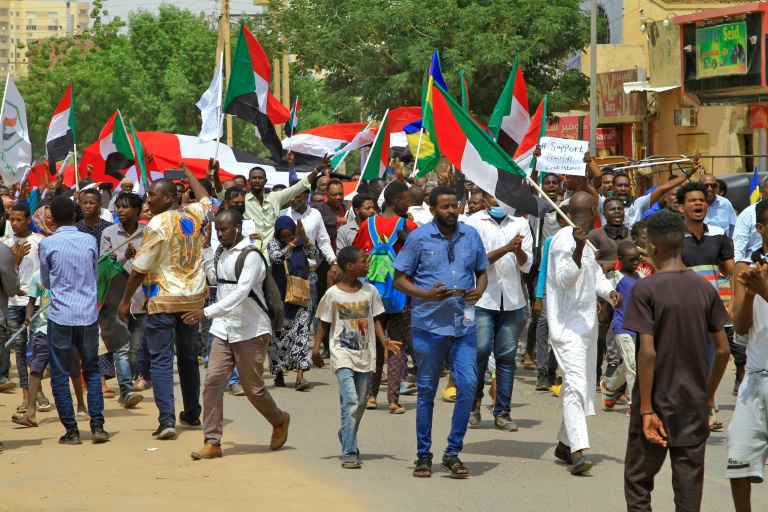
Hundreds of protesters rallied on Tuesday against last year’s military coup in Sudan and a recent spike in tribal violence which killed more than 100 people, AFP correspondents said.

Sudan’s main civilian group, the Forces for Freedom and Change (FFC), which was ousted in the coup, had called for mass demonstrations with hashtags urging co-existence and a “unified nation”. 

In the capital Khartoum, demonstrators were seen carrying the Sudanese flag while chanting “Sudan is a nation for all people!” 

Protesters also chanted “No to tribalism and no regionalism!” while others called on the military “to go back to barracks”, according to an AFP correspondent.

Senior civilian politicians including Mohamed al-Fekki and ex-minister Khaled Omar Youssef, were seen at the demonstrations.

The two men, key leaders of the FFC, were among civilian officials who have been removed from power since the coup.

Some pro-democracy activists and protesters were opposed to the FFC’s participation, saying the rallies should not be overshadowed by partisan motives, AFP correspondents said.

Near-weekly protests and deepening turmoil have rocked Sudan since army chief Abdel Fattah al-Burhan led the coup last October, upending a transition to civilian rule following the 2019 ouster of president Omar al-Bashir.

Sudan has since reeled from a spiralling economic crisis and a broad security breakdown which has seen a spike in ethnic clashes in its far-flung regions.

On July 11, tribal clashes over a land dispute erupted in southern Blue Nile state, leaving at least 105 people dead and 291 wounded.

The clashes between members of the Berti and Hausa ethnic groups have since triggered furious protests in several cities, with Hausa members taking to the streets including in Khartoum to demand justice for comrades who were killed.

On July 4, Burhan pledged to step aside to make way for Sudanese factions to agree on a civilian government, but the FFC dismissed his move as a “ruse”.  

Nigerians bask in Amusan's record-breaking athletic glory

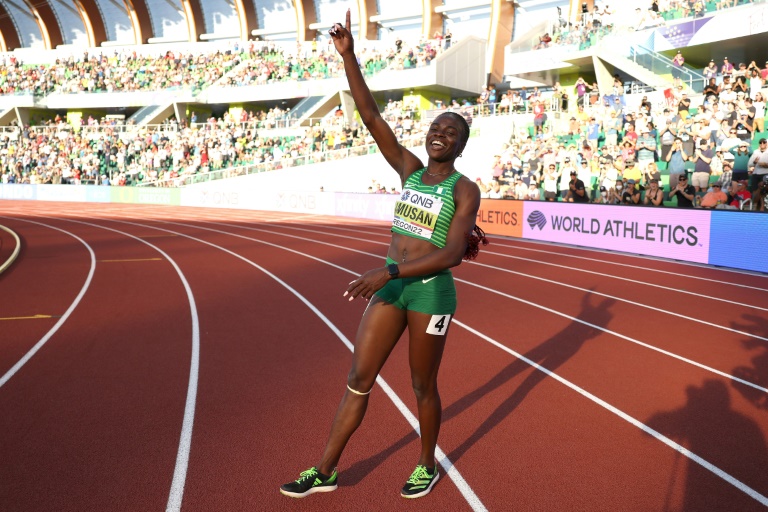
Nigerians, including three presidential candidates, basked in the glory of the country’s first world athletics gold medal, welcoming a respite from bad news about economic hardships and deepening insecurity.

Tobi Amusan, 25, won gold in the women’s 100m hurdles on Sunday in the World Athletics Championships after breaking the world record in a semi-final where she clocked 12.12sec in Eugene, Oregon.

Her winning time of 12.06sec in the final will not be recognised as a world record, however, due to regulations over a strong tailwinds assisting runners. 

President Muhammadu Buhari praised the “outstanding feat by a compatriot and two-time African Games champion, who in one night stunned the athletics world with her superlative and stellar performance”.

He said Amusan’s feat would inspire upcoming generations of Nigerian athletes.

Buhari, who came to power in 2015, will step down after next year’s presidential elections.

The three main challengers in the February ballot also hailed Amusan’s success as well as that of Nigeria’s Ese Brume who won silver medal in the long jump.

Atiku Abubakar of the main opposition Peoples Democratic Party (PDP) said he was “particularly proud of this feat… it underscores my plan to refocus investments in sports, and creative sectors, amongst others.” 

Peter Obi of the Labour Party said the athletes’ feats showed Nigeria was “a great country blessed with talents ready to rule the world.”

Ordinary Nigerians also showed their appreciation.

“She has done it for us, Tobi Amusan, you have written your name boldly in our history and posterity will be kind to you. Thank you, Nigeria is proud of you!!!” said Enetomhe Stephen on social media. 

Praise for the athletes comes as Nigeria is struggling with high inflation and unemployment as well as power outages and jihadist and gang attacks, including killings and kidnappings for ransom. 

Burkina ex-leader Compaore apologises to family of slain Sankara

Burkina Faso’s former president Blaise Compaore, sentenced in absentia to life in jail for the 1987 assassination of revolutionary icon Thomas Sankara, apologised to the ex-leader’s family on Tuesday.

“I ask the Burkinabe people for forgiveness for all the acts I may have committed during my tenure, and especially the family of my brother and friend Thomas Sankara,” he said in a message read out by government spokesman Lionel Bilgo.

Compaore seized power in the West African nation in a 1987 coup that toppled and killed serving leader Sankara.

A Burkina court handed him a life term in absentia in April for his role in the assassination. 

“I take responsibility for, and regret from the bottom of my heart, all the suffering and tragedies experienced by all victims during my terms as leader of the country and ask their families to grant me their forgiveness,” he added.

Compaore, 71, has been living in exile in neighbouring Ivory Coast since being ousted from power by mass protests in 2014.

He returned to Burkina Faso for several days this month, without facing arrest, after the country’s military leader Lieutenant Colonel Paul-Henri Sandaogo Damiba invited him in the name of “national reconciliation”.

The visit sparked an outcry among civil society groups and political parties, who said uniting the nation should not come at the expense of impunity.

Compaore expressed his “deep gratitude” to Burkina Faso’s military-dominated transitional government.

He called on his compatriots to join “a sacred union, tolerance, moderation, but above all forgiveness so that the national interest prevails”.

A fiery Marxist-Leninist who blasted the West for neo-colonialism and hypocrisy, Sankara was gunned down by a hit squad on October 15, 1987, little more than four years after coming to power as an army captain aged just 33.

Damiba took power in a January coup that ousted former president Roch Marc Christian Kabore, amid widespread anger at the government’s failure to deal with a bloody jihadist insurgency that spread from neighbouring Mali in 2015.

France committed to Africa's security, says Macron

French President Emmanuel Macron on Tuesday declared his country would support Africa’s need for security as he began a three-country tour marked by France’s military revamp in the jihadist-torn Sahel.

“We will not relinquish the security of the African continent,” Macron said in a speech in Cameroon, a former French colony and close ally that has been troubled by attacks.

“France remains resolutely committed to the security of the continent, acting in support and at the request of our African partners,” Macron told a gathering of French expatriates in the capital Yaounde.

France is reconfiguring its posture in the Sahel after falling out with the military junta in Mali, the epicentre of a bloody 11-year-old jihadist campaign in the region.

After a pullout from Mali that is expected to be completed in the coming weeks, France’s Barkhane anti-jihadist force will have around 2,500 troops in the Sahel, just under half of the deployment at its peak, say French officers.

The force will also make a tactical shift, acting more in a support role for local forces than in taking the lead, they say.

Macron landed late on Monday on a three-day tour that will also take him to Benin and Guinea-Bissau. 

He headed into a meeting with Cameroon’s 89-year-old president, Paul Biya, an iron-fisted ruler who has been in power since 1982.

In his speech, Macron said the changes in Barkhane had been prompted because “the political framework was no longer there” — a reference to the dispute with the Malian junta.

The reconfigured mission, he said, will extend “beyond the Sahel, to the Gulf of Guinea and second-layer countries which now have to face terrorist groups which are expanding and shaking up the whole region.”

The jihadist insurgency began in northern Mali in 2012 and hit neighbouring Niger and Burkina Faso in 2015.

Across the region, thousands of people have been killed and more than two million have fled their homes.

Sporadic cross-border attacks have also occurred on coastal countries to the south, sparking fears of an expansion by the jihadists to the Gulf of Guinea.

Macron also pledged French support for countries fighting jihadists in the Lake Chad region, where an older insurgency launched by Nigeria’s Boko Haram is also raging.

These include Cameroon, whose Far North region, which reaches into the Lake Chad basin, has suffered repeated attacks.

– Food crisis rebuttal –

Macron also hit out at “nonsense” that he said had been doing the rounds as a result of the Ukraine war.

“We are being attacked by certain people who maintain that European sanctions (against Russia) are the cause of the world food crisis, including in Africa.

“This is completely false. It’s just that food, like energy, have become Russian weapons of war,” he said.

Macron’s swing through central and western Africa is his first trip to the continent since he was re-elected in April.

France has followed with concern the emergence of Russia, China and others in seeking footholds in an area it still considers part of its sphere of influence.

The tour “will show the commitment of the president in the process of renewing the relationship with the African continent”, a French presidential official, who asked not to be named, said ahead of the trip.

It will signal that the African continent is a “political priority” of his presidency, the official said.

Lesotho drops murder charges against ex-PM

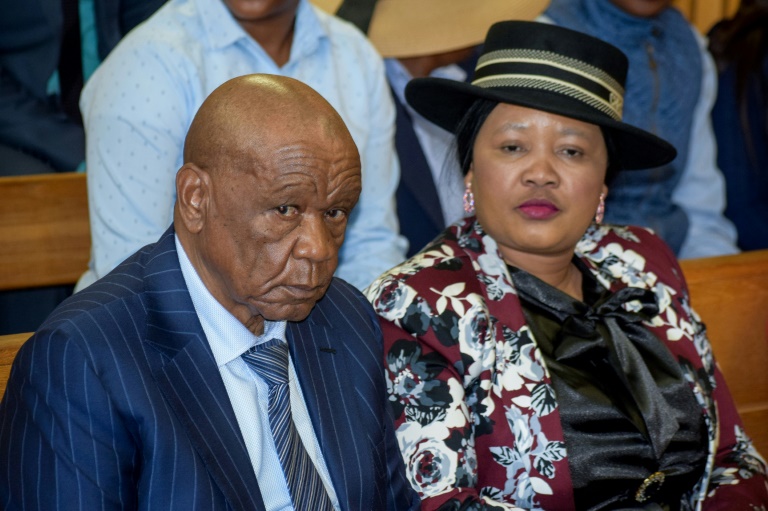
Lesotho on Tuesday dropped murder charges against the country’s former prime minister Thomas Thabane and his wife over the 2017 killing of his previous estranged wife Lipolelo.

Prosecutors told a court hearing in the capital Maseru the decision was taken as they could no longer locate a key witness in the case.

“We have been unable to trace an important witness in this matter and the (Director of Public Prosecutions) has decided to withdraw the charges against the accused,” prosecutor Gareth Lappan told the court.

Thabane, 83, was accused of hiring hitmen to kill Lipolelo in June 2017, two days before the prime minister’s inauguration.

The pair had been embroiled in bitter divorce proceedings. 

Both the former premier and his current wife Maesaiah — whom he married two months after Lipolelo was killed — have denied any involvement in the murder.

The killing sparked a political crisis in the mountain kingdom landlocked within South Africa.

Thabane resigned as prime minister in May 2020, giving in to then mounting pressure to step down over the case. 

The decision to drop charges came a week after the instability-plagued country announced it will hold general elections in October.

Police accused Thabane of paying assassins a down payment of $24,000 to kill his wife. 

Five co-defendants in the trial included 45-year-old Maesaiah, who was controversially granted bail in June 2020, and the four suspected hitmen allegedly hired by Thabane.

5 killed as anti-UN protesters spread in east DR Congo

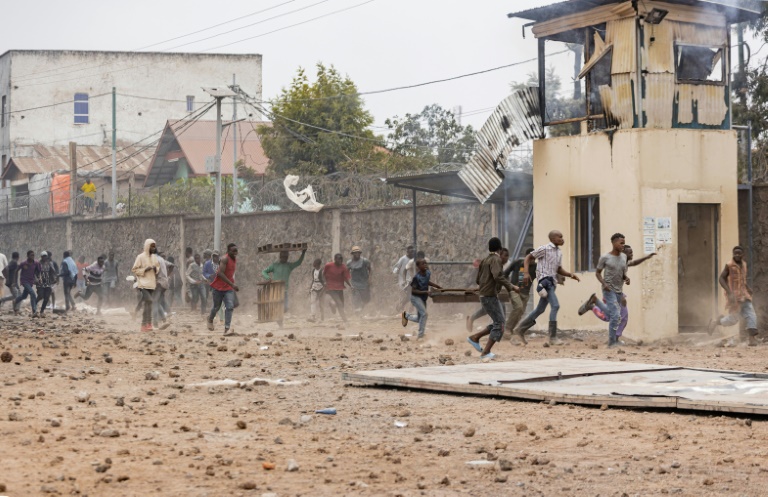
At least five people have been killed and dozens injured during anti-UN protests in eastern DR Congo, a government spokesman said Tuesday as the unrest spread.

On Monday, hundreds of people blocked roads and chanted hostile slogans before storming the UN peacekeeping mission’s headquarters and a supply base in Goma, the main city in North Kivu province.

Protesters smashed windows and looted valuables, while helicopters airlifted UN staff from the premises and security forces fired teargas in a bid to push them back. 

In a post on Twitter, government spokesman Patrick Muyaya said”at least five people (were) dead, about 50 wounded” in the unrest.

The security forces had fired “warning shots” at protesters to stop attacks on UN personnel, he said. 

The unrest continued on Tuesday, with the fatal shooting of a man near the supplies base, an AFP correspondent saw.

The security forces were pushing back crowds outside the depot as protesters waved placards bearing slogans such as “bye bye MONUSCO”.

Anti-UN protesters also took to the streets in the North Kivu towns of Beni and Butembo, according to witnesses. 

Soldiers were deployed on the road leading to the MONUSCO base in Beni, which lies about 350 kilometres (215) miles north of Goma, while protesters burned tyres. 

Security forces also dispersed protesters who had gathered in front of a MONUSCO base in Butembo, another provincial hub, local sources said. 

– Anger –

The UN mission in the Democratic Republic of Congo, known as MONUSCO, is one of the world’s biggest peacekeeping operations.

But it has regularly come under criticism in the troubled east, where many accuse it of failing to do enough to stem decades-long bloodshed.

More than 120 armed groups roam the volatile region, where civilian massacres are common and conflict has displaced millions of people. 

The killings have continued despite the presence of thousands of UN peacekeepers, sparking bouts of anger among local people. 

In late 2019, nine anti-UN protestors were killed as Beni and Butembo were terrorised by the Allied Democratic Forces (ADF), which the Islamic State group describes as its central African affiliate.

In a statement on Monday, Khassim Diagne, the deputy special representative of the UN secretary general to MONUSCO, said the peacekeepers were there to protect civilians.  

“The incidents in Goma are not only unacceptable but totally counterproductive,” he said. 

– M23 –

The latest protests come after the president of the senate, Modeste Bahati, told supporters in Goma on July 15 that MONUSCO should “pack its bags.”

They coincide with the resurgence of the M23 — a militia that lay mostly dormant for years before resuming fighting last November. 

The rebels have since made significant advances in eastern Congo, including capturing the North Kivu town of Bunagana on the Ugandan border. 

The UN first deployed an observer mission to eastern Congo in 1999. 

In 2010, it became the peacekeeping mission MONUSCO — the United Nations Organization Stabilization Mission in the Democratic Republic of the Congo — with a mandate to conduct offensive operations.

It has a current strength of about 16,300 uniformed personnel, according to the UN. 

The peacekeepers have suffered 230 fatalities during the course of their mission. 

Close Bitnami banner
Bitnami