Africa Business

Senegalese pirogue race a day of friendly feuds — and fun

Koutaye Niang has been racing in the Saint-Louis regatta for 20 years, but this year’s competition, held Saturday in Senegal’s historic second city, was the “best day” of his life.

Niang — who, like all his teammates, is a fisherman from the coastal city’s Guet N’dar quarter — was the captain of one of three winning pirogues that ended a rival team’s five-year hot streak at this year’s fishing boat race, a traditional event dating back generations.

“All those who live (in my community), Dak, feel like kings today,” the 43-year-old said, radiating with pride and wrapped in the red and green colours of his team’s flag.

The regatta -– held annually in the former capital of colonial French West Africa, some 250 kilometres (150 miles) north of Dakar –- sees hundreds of men board long wooden pirogues to race two-and-a-half kilometres through the estuary where the Senegal River meets the Atlantic Ocean.

The city’s fishermen have been racing recreationally for over a century, but the event became more formalised in the 1950s, according to the president of the organising committee, El Hadj Moctar Gueye.

“There are a lot more people now, and it’s more official,” said N’Deye Seck, 75, a tailor in the N’dar Market. 

Her own father and brothers participated when she was young, and she remembers the former French president Charles de Gaulle attending in 1959, months before Senegal’s independence.

– Ancestral loyalties –

On the eve of this year’s event, Guet N’dar — one of Africa’s most populated neighbourhoods — was buzzing with nervous energy.

Men clad in traditional boubou tunics for Friday prayers and women in elegant “moussor” head wraps jostled in the streets with gleeful children, horse-drawn carts and stray livestock.

On the riverbank, an old man chipped away at wooden planks to fashion oars, while younger men coated them in red and white paint.

Saint-Louis’s fishermen are divided into three teams, each representing a geographical section of the old quarter. Groups of between 50 and 70 people from each team compete in one of three race categories.

Separate races are also held for fishermen from elsewhere around the country.

“It’s a feeling of joy whenever we win,” said Younouss Dieye, a rower with the Pondou Khole team who has been competing in the regatta for over a decade. 

He said he trained for 10 days before the race.

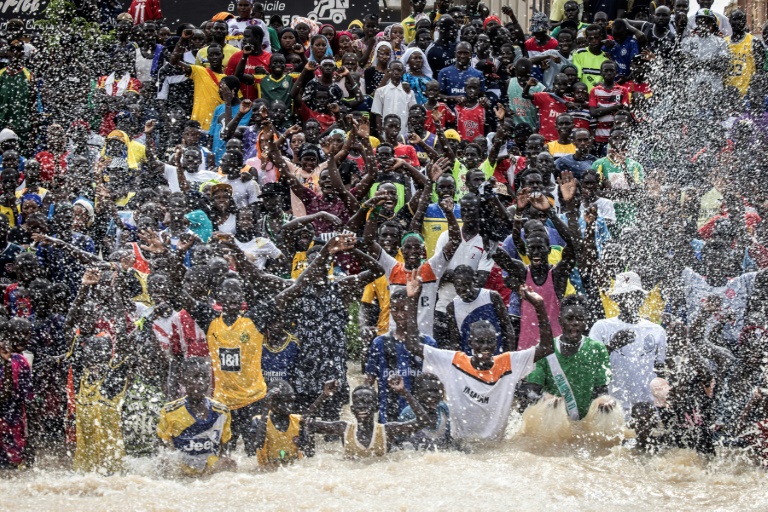
At sunrise on Saturday, young men played wooden “tam tam” drums and spectators danced and blew plastic whistles as the narrow fishing boats, measuring between 15 and 20 metres, were launched into the water. 

The previous day’s boubous were replaced by colourful sports tops, with the number 23 jersey of American basketball player Lebron James ubiquitous in the Pondou Khole community, whose team colours are yellow and blue.

Nearby, a vendor sold bucket hats and bowties in the same colours.

– ‘The blood that flows’ –

Further down the riverbank, in the Dak community, spiritual leaders burned incense and smashed packets of ice where boats were launched.

“This is the only truly local sport here,” said Assane Diaw, a former competitor whose family has been racing for about 100 years. 

“We have football teams, but the pirogue race is uniquely Saint-Louisien.”

He said his grandfather’s generation competed in the same boats they used for fishing, but nowadays the teams use specially made racing pirogues.

As for the prize, he said: “It’s the love that people have… it’s the blood that flows.”

By afternoon, tens of thousands of onlookers had gathered along the river.

Young people clamoured up the arches of the Faidherbe Bridge, which links the island city to Senegal’s mainland, for a better view.

Elated Dak supporters jumped into the river when their team won the first and second races, the victors waving oars and beating their chests before tipping their boats over and plunging in themselves.

Mid-way through the final event, tensions boiled over when Pondou Khole — the reigning champions — began to squabble with Dak rowers in the water.

But nothing could dim captain Niang’s mood, or the glow in his eyes as he sat peacefully with his family back in the old town that evening.

“Guet N’dar is a village where everyone lives together — we share everything”, he said, the sun setting behind him as the evening call to prayer rang out.  

“We are one and indivisible -– all three teams are really family.”
Angola gears up for tight election as Lourenco's star fades

Angolan President Joao Lourenco’s quest for re-election couldn’t come at a worse time, analysts say, with the recent death of his strongman predecessor, a struggling economy and soaring poverty looming large. 

Lourenco is seeking a second term in the August 24 vote, which observers predict will be the tightest since the oil-rich country emerged from a lengthy civil war two decades ago.

The excitement that accompanied the 68-year-old’s rise to power in 2017 has “largely dissipated”, said Alex Vines, who heads the Africa programme at British think tank Chatham House.

Many in the Portuguese-speaking country of 33 million people are yet to see the benefit of economic reforms, and feel Lourenco’s anti-corruption drive has fallen short of its promises. 

Polls show waning support for his People’s Movement for the Liberation of Angola (MPLA) party, which has ruled the country since 1975.

“The people are suffering, they live in garbage cans. Are these people going to vote for the outgoing president? I don’t think so,” said Joao Afonso, a 60-year-old accountant in the capital Luanda.

An Afrobarometer survey in May found the opposition National Union for the Total Independence of Angola (UNITA) was trailing the MPLA by just seven percentage points, with around half of voters still undecided.

On the streets of Luanda, Lourenco portraits vie for space with UNITA’s red and green flags.

UNITA’s leader Adalberto Costa Junior, commonly known as ACJ, has modernised the former rebel militia turned political force and broadened its base, joining forces with other parties.

“He is a very charismatic leader who is able to engage with young people in the cities,” said Marisa Lourenco, an analyst at the consultancy Control Risks.

“There will be pressure on Lourenco if the MPLA doesn’t perform well,” she added.

– Deepening poverty –

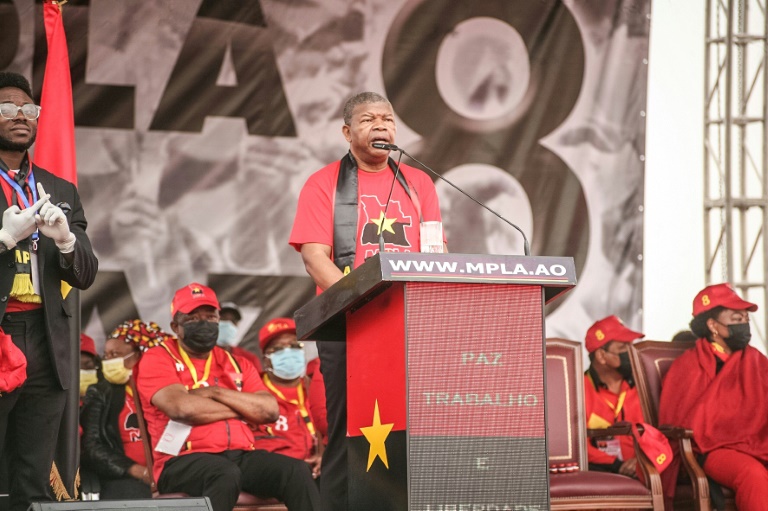
On Saturday, thousands of MPLA supporters wearing red T-shirts gathered in Camama, outside Luanda, for the opening campaign rally where Lourenco promised new hospitals and transport links. 

“We still believe in him and we will certainly emerge victorious in these elections,” said Luisa Andre Valente, an unemployed 29-year-old at the event.

Handpicked by his predecessor Jose Eduardo dos Santos, Lourenco promised to usher in a new era for Angola after winning 61 percent of the vote in 2017.

He quickly turned on the former strongman, starting an anti-corruption drive to recoup the billions allegedly embezzled by dos Santos and his family.

Having inherited an oil-dependent economy deep in recession, he also launched an ambitious reform plan to differentiate revenue streams and privatise state-owned firms.

But many have come to see the anti-graft push as selective and politically motivated.

And while reforms have won praise abroad, little has changed for millions of Angolans who struggle to put food on the table amid soaring inflation and the worst drought in 40 years. 

Some Angolans now feel nostalgic about their former leader, who died in Spain earlier this month.

“When dos Santos left, there was a sense that this man brought us to a level of decay… but now after five years, they look at dos Santos in relative terms,” said Paula Cristina Roque, an independent political analyst specialising in Angola.

“We’ve seen a deepening of poverty and socioeconomic injustice,” she said.

Dos Santos’s death reignited a public spat between Lourenco and the old revolutionary leader’s children — several of whom have faced an array of corruption investigations.

This week, some of dos Santos’s children finally agreed to have their father buried in Angola, but only after the vote.

Observers expect to see voting violations — while the country has opened up in recent years, it is still ranked as “not free” by democracy watchdog Freedom House.

“Those in power will never leave,” said Felix Kaputu, a professor specialising in African studies at Bard College in the United States. 

Nigeria's Amusan storms to 100m hurdles gold

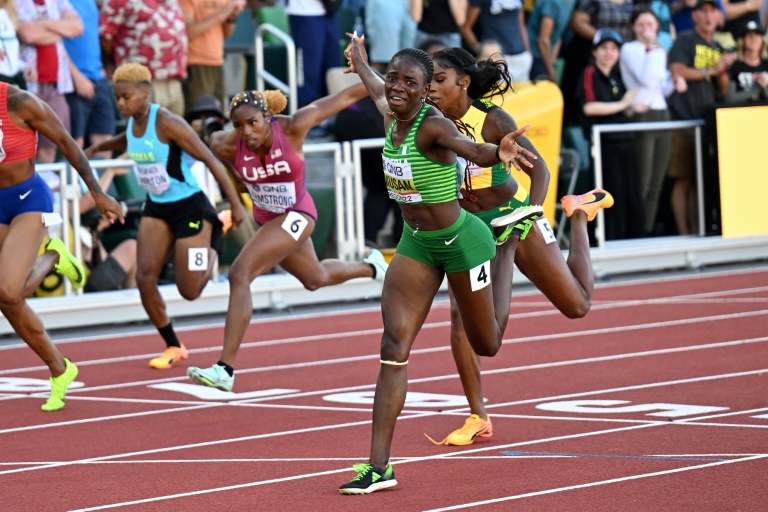
Tobi Amusan became the first Nigerian athlete to win a World Athletics Championship gold as she stormed to victory in the women’s 100m hurdles in Oregon on Sunday.

Amusan, who had obliterated the world record in an astonishing semi-final where she clocked 12.12sec, powered over the line at Hayward Field in 12.06sec.

Her winning time will not be recognised as a world record, however, due to a strong following win of 2.5 metres per second.

Jamaica’s Britany Anderson took silver in 12.23sec, while Olympic champion Jasmine Camacho-Quinn of Puerto Rico claimed bronze in 12.23.

Amusan had produced a jaw-dropping world record in the semi-finals, smashing the previous best mark of 12.20secs held by Keni Harrison of the United States since 2016.

Harrison had been left in Amusan’s slipstream in the semi, and was again shown a clean pair of heels by the Nigerian in the final.

Amusan got off to a scorching start and was smoothly into her stride after the first hurdle, building a clear lead and then pulling away ahead of Anderson and the fast-closing Camacho-Quinn.

Former rugby union players set to sue authorities over head injuries

A case involving several former rugby union players diagnosed with early onset dementia and other irreversible neurological conditions now appears destined for the courts.

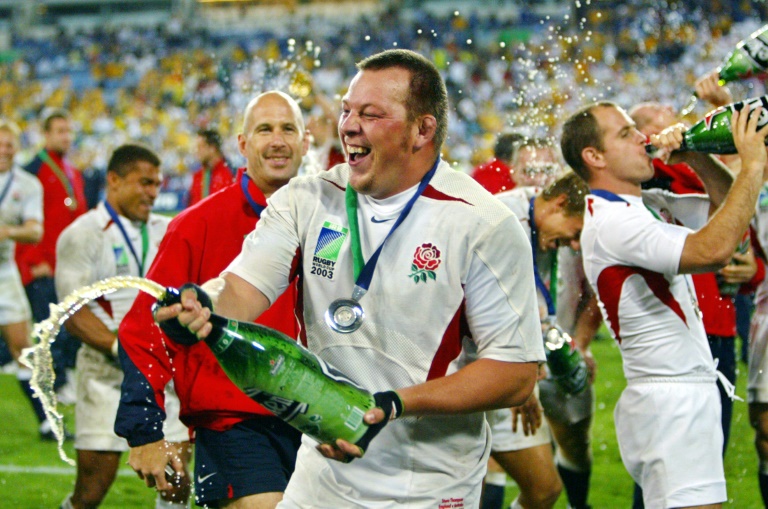
Rylands Law, acting on behalf of a group of players including England’s 2003 World Cup-winning hooker Steve Thompson and former Wales captain Ryan Jones, are to take action against World Rugby, England’s Rugby Football Union and the Welsh Rugby Union.

Britain’s Press Association reported proceedings would be issued on Monday, with the parties unable to agree a settlement since a pre-action letter of claim was issued to the same governing bodies on behalf of a group of nine players in December 2020.

The basis of the action is an alleged failure by rugby authorities to protect players from concussion risks.

Jones, capped 75 times by Wales and a member of the 2005 British and Irish Lions squad in New Zealand, revealed his diagnosis of early onset dementia in an interview with the Sunday Times last week.  

“I feel like my world is falling apart,” the 41-year-old, who said he was “really scared”, told the newspaper. “I don’t know what the future holds.”

Kenya presidential contender Odinga says won't take part in debate

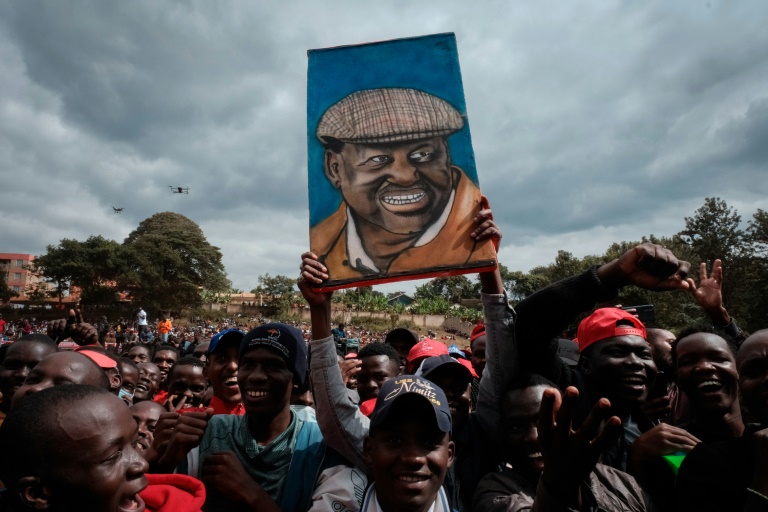
One of Kenya’s two leading presidential candidates, Raila Odinga, will not take part in an upcoming electoral debate, his campaign team said Sunday, accusing his principal rival of trying to avoid certain topics such as corruption.

Odinga, 77, a former prime minister, and Deputy President William Ruto, 55, are the leading contenders in the August 9 presidential poll.

But in a statement announcing Odinga would boycott Tuesday’s debate, his campaign spokesman accused Ruto of trying to dodge discussion of key issues.

Ruto “has demanded that the debate not focus on corruption, integrity, ethics, and governance — the key existential questions that Kenya faces”, Odinga’s spokesman said in the statement.

“Any debate devoid of these questions would be an insult to the intelligence of Kenyans. That is why we do not intend to share a national podium with a person who lacks basic decency,” he added.

Instead, Odinga plans to take part in a televised town hall meeting in an eastern neighbourhood of the capital Nairobi with “ordinary Kenyans”, according to the statement.

The organisers of the debate said that they “continue to engage all stakeholders, including the various presidential campaign teams”.

“In accordance with the Presidential Debate Guidelines, we have shared the thematic areas with all the candidates and the moderators will endeavour to cover all the said topics within the set timeline,” the statement said.

The debate, scheduled for six hours, would still proceed on Tuesday, the organisers added.

– ‘Fair opportunity’ –

Odinga’s announcement follows a letter sent Thursday by Ruto’s director of communications to the debate organisers.

It said that he was “ready to answer any question and speak to any matter that arises during the debate” but added that his attendance was “contingent” on certain matters.

“We expect that the moderators will allocate equal time to issues affecting Kenyans and equally allow candidates a fair opportunity to address them,” the letter said.

“To that end we wish to know in advance the number of minutes that will be allocated to respective interventions including, but not restricted to governance and integrity, agriculture, healthcare, MSMEs and manufacturing, housing, the digital economy, foreign policy, and so on and so forth,” it continued.

The debate organisers have insisted that “the moderators will select the questions to be asked, and shall NOT share the same with the candidates”. 

“They will NOT meet with any of the campaign teams or the candidates,” they added in the statement.

Sitting President Uhuru Kenyatta cannot run again and has endorsed Odinga over his deputy of nine years after an acrimonious falling out.

Egypt's small farms play big role but struggle to survive

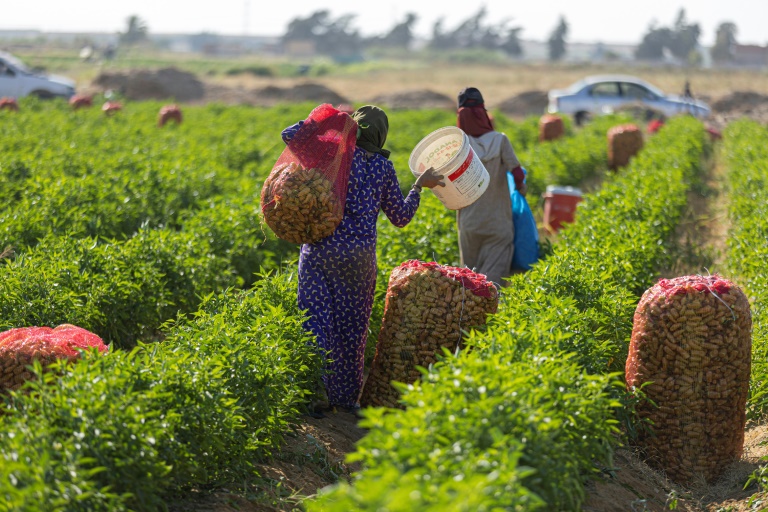
Egyptian smallholders grow nearly half of the country’s crops, a lifeline role increasingly important after grain imports were stalled by war in Ukraine — but they are struggling to survive.

Despite their crucial role providing food for the North African nation’s 103 million people, smallholders are cash-strapped and indebted, frequently selling their harvests at a loss.

“The farmer is dead, trampled,” farmer Zakaria Aboueldahab told AFP, brewing tea on his rented plot of wheat and onions in Qalyubia, 30 kilometres (18 miles) north of Cairo.

“I’m trying to sell my onion harvest but I can’t find a market,” he said, the remnants of his crop scattered across the soil. “I just want to break even. I don’t know how I’m going to pay rent”. 

His onions would sell in Egypt: but financing, marketing and infrastructure hurdles create massive gaps between supply and demand.

According to the United Nations Food and Agriculture Organisation (FAO), small farms are the “primary producers” of food for domestic consumption in Egypt. 

Farmers cultivating less than three feddans (1.2 hectares, three acres ) — an area the size of a football pitch — till 35 percent of arable land.

Yet they produce some 47 percent of Egypt’s field crops, the FAO calculates.

Larger farms focus more on exports -– a dynamic that came to a head when Russia invaded Ukraine.

– ‘Patriotic duty’ –

Egypt, the world’s leading importer of wheat, relied on Russia and Ukraine for 80 percent of its imports, providing the flour for Egypt’s traditional flat bread.

Ordinary Egyptians eat bread at almost every meal, and Egypt’s wheat farmers ramped up production to 40 percent of the country’s needs.

“Without the 40 percent of wheat that we produce domestically,” rural sociologist Saker al-Nour told AFP, the consequences of the war “would be much worse.”

In March, Cairo ordered farmers to grow wheat, calling the “compulsory delivery” orders a “patriotic duty.”

By June, farmers had provided more than 3.5 million tonnes, according to the supply ministry, over half the domestic supply goal to August, and equal to the total amount supplied in 2021.

Compulsory crop deliveries were a pillar of president Gamal Abdel Nasser’s socialist policies in the 1960s, but those policies were dropped amid the structural adjustment programmes of the 1990s.

With them went the former subsidies on seeds, pesticides, and fertilisers which have steadily shrunk over the decades.

“Instantly, when things got tough, it went back to compulsory delivery, but this time without the services that came with it,” Nour said.

To encourage farmers to grow wheat, the government had previously set domestic prices higher than imports.

But the unprecedented surge in global prices undermined that.

– Stronger together? –

“Now I owe money to the pesticide guy, to the fertiliser guy,” Aboueldahab said. “So if someone comes along and bids a low price, what am I supposed to do?”

One solution is for smallholders to join together and harness the power of technology.

Entrepreneur Hussein Abou Bakr launched a start-up finance company called Mozare3, ‘farmer’ in Arabic, which offers farmers financing solutions and agronomy support.

It also helps farmers “become a bloc”, in the absence of effective local cooperatives and sets prices “as a form of protection” against market fluctuations.

Nour warns smallholders have “very limited negotiating power, especially when they don’t have the storage capacity for their harvest”. 

But with illiteracy among smallholders at 32 percent, according to the FAO, offline village associations are necessary.

As climate change bites, Nour warns bottom-up approaches are essential.

These associations could, for example, communicate extreme weather events quickly and directly to farmers whose crops are at risk.

These tools exist, the sociologist said. “We just need to make them available to small farmers.”

Libya militia clashes kill 16: health ministry

At least 16 people were killed and 52 wounded in fighting between armed groups in Tripoli, the health ministry said Saturday, following the latest politically driven violence to hit the Libyan capital.

The fighting began on Thursday night and extended into Friday afternoon. On Saturday, violence erupted in Libya’s third city Misrata, prompting the US embassy to warn of the risk of a wider flare-up. 

Misrata is the hometown of both of the rival prime ministers who are vying for control of what remains of a central government.

The clashes pitted a militia loyal to the unity government of Prime Minister Abdulhamid Dbeibah against another loyal to his rival Fathi Bashagha, named in February by a parliament based in the country’s east, Libyan media reported.

US ambassador Richard Norland called on all political actors and their supporters among armed groups to stand down in order to avoid escalation.

“Today’s clashes in Misrata demonstrate the dangerous prospect that the recent violence will escalate,” he warned in a tweet.

“Armed efforts either to test or to defend the political status quo risk bringing Libya back to an era its citizens thought had been left behind.” 

The Tripoli clashes were between two armed groups with major clout in the west of the war-torn country: the Al-Radaa force and the Tripoli Revolutionaries Brigade.

Several sources said one group’s detention of a fighter belonging to the other had sparked the fighting, which extended to several districts of the capital.

On Friday, another group called the 444 Brigade intervened to mediate a truce, deploying its own forces in a buffer zone before they too came under heavy fire, an AFP photographer reported.

Libya has been gripped by insecurity since a NATO-backed uprising toppled and killed dictator Moamer Kadhafi in 2011, leaving a power vacuum armed groups have been wrangling for years to fill.

Tensions have been rising for months in Libya as the rival prime ministers face off, raising fears of renewed conflict two years after a landmark truce ended a ruinous attempt by eastern military chief Khalifa Haftar to seize Tripoli by force.

The dead were the first civilian casualties of fighting in Tripoli since the 2020 truce.

Both groups involved in the Tripoli fighting are nominally loyal to Dbeibah’s Government of National Unity, appointed last year as part of a United Nations-backed peace process.

Dbeibah has refused to cede power to Bashagha, named prime minister after he made a pact with Haftar.

WHO triggers highest alert on monkeypox

The World Health Organization on Saturday declared the monkeypox outbreak, which has affected nearly 16,000 people in 72 countries, to be a global health emergency — the highest alarm it can sound.

“I have decided that the global #monkeypox outbreak represents a public health emergency of international concern,” WHO chief Tedros Adhanom Ghebreyesus said at a press conference.

He said a committee of experts who met on Thursday was unable to reach a consensus, so it fell on him to decide whether to trigger the highest alert possible.

“WHO’s assessment is that the risk of monkeypox is moderate globally and in all regions, except in the European region where we assess the risk as high,” he added.

Monkeypox has affected over 15,800 people in 72 countries, according to a tally by the US Centers for Disease Control and Prevention (CDC) published on July 20.

A surge in monkeypox infections has been reported since early May outside the West and Central African countries where the disease has long been endemic.

On June 23, the WHO convened an emergency committee (EC) of experts to decide if monkeypox constitutes a so-called Public Health Emergency of International Concern (PHEIC) — the UN health agency’s highest alert level. 

But a majority advised Tedros that the situation, at that point, had not met the threshold.

The second meeting was called on Thursday with case numbers rising further, where Tedros said he was worried.

“I need your advice in assessing the immediate and mid-term public health implications,” Tedros told the meeting, which lasted more than six hours.

A US health expert sounded a grim warning late on Friday.

“Since the last #monkeypox EC just weeks ago, we’ve seen an exponential rise in cases. It’s inevitable that cases will dramatically rise in the coming weeks & months. That’s why @DrTedros must sound the global alarm,” Lawrence Gostin, the director of the WHO Collaborating Center on National and Global Health Law, said on Twitter.

“A failure to act will have grave consequences for global health.” 

– Warning against discrimination –

A viral infection resembling smallpox and first detected in humans in 1970, monkeypox is less dangerous and contagious than smallpox, which was eradicated in 1980.

Ninety-five percent of cases have been transmitted through sexual activity, according to a study of 528 people in 16 countries published in the New England Journal of Medicine — the largest research to date.

Overall, 98 percent of infected people were gay or bisexual men, and around a third were known to have visited sex-on-site venues such as sex parties or saunas within the previous month.

“This transmission pattern represents both an opportunity to implement targeted public health interventions, and a challenge because in some countries, the communities affected face life-threatening discrimination,” Tedros said earlier, citing concern that stigma and scapegoating could make the outbreak harder to track.

The European Union’s drug watchdog on Friday recommended for approval the use of Imvanex, a smallpox vaccine, to treat monkeypox.

Imvanex, developed by Danish drugmaker Bavarian Nordic, has been approved in the EU since 2013 for the prevention of smallpox. 

It was also considered a potential vaccine for monkeypox because of the similarity between the monkeypox virus and the smallpox virus.  

The first symptoms of monkeypox are fever, headaches, muscle pain and back pain during the course of five days. 

Rashes subsequently appear on the face, the palms of hands and soles of feet, followed by lesions, spots and finally scabs.

Springboks recall Vermeulen, Steyn for New Zealand Tests

South Africa have recalled back-row forward Duane Vermeulen and utility back Francois Steyn for two Rugby Championship home matches against New Zealand during August.

Both veterans have recovered from injuries that ruled them out of a series against Wales this month, which the Springboks won 2-1.

Vermeulen, 36, had a knee operation while Steyn, 35, suffered a hamstring injury, which prevented them being involved in the first three Tests of the 2022 season.

Both were in the South Africa matchday 23 that won the Rugby World Cup in Japan three years ago by defeating England 32-12 in the final in Japan.

“Duane and Frans are very experienced players and have valuable traits that they bring to the field of play,” said coach Jacques Nienaber.

“So we are excited to welcome them into the fold. This will offer the coaches and medical staff a good opportunity to determine where they are in terms of their rugby.”

Star wing Cheslin Kolbe was unavailable after breaking his jaw in the final match against Wales and another wing, Aphelele Fassi, and back-row forward Marcell Coetzee have been dropped.

“It is disappointing for Aphelele and Marcell, but we were limited in how many players we could select,” added Nienaber.

“That said, we know what both of them can do on the field and we have a big picture in mind with the Rugby World Cup next year.”

The Springboks face the All Blacks in the northeastern city of Mbombela on August 6 and at Ellis Park in Johannesburg seven days later.

After the New Zealand Tests, South Africa play twice in Australia, then away and home against Argentina in the Championship before tour matches against Ireland, France, Italy and England during November.

Squad

Forwards: Thomas du Toit, Steven Kitshoff, Vincent Koch, Frans Malherbe, Ntuthuko Mchunu, Ox Nche, Trevor Nyakane, Joseph Dweba, Malcolm Marx, Bongi Mbonambi, Lood de Jager, Eben Etzebeth, Salmaan Moerat, Ruan Nortje, Marvin Orie, Pieter-Steph du Toit, Siya Kolisi (capt), Elrigh Louw, Evan Roos, Kwagga Smith, Duanve Vermeulen, Jasper Wiese, Rynhardt Elstadt, Deon Fourie, Franco Mostert

Backs: Faf de Klerk, Jaden Hendrikse, Herschel Jantjies, Grant Williams, Elton Jantjies, Handre Pollard, Lukhanyo Am, Damian de Allende, Andre Esterhuizen, Jesse Kriel, Warrick Gelant, Willie le Roux, Makazole Mapimpi, Francois Steyn, Kurt-Lee Arendse, Damian Willemse

Coach: Jacques Nienaber (RSA)

Macron embarks on first Africa trip of new term

President Emmanuel Macron on Monday begins a three-nation tour of western African states in the first trip to Africa of his new term as he seeks to reboot France’s post-colonial relationship with the continent.

Macron will begin his July 25-28 tour, also the first venture outside Europe of his new mandate, with a visit to Cameroon, before moving on to Benin and then finishing the trip in Guinea-Bissau.

Top of the agenda in the talks will be food supply issues, with African nations fearing shortages especially of grain due to Russia’s invasion of Ukraine.

But security will also loom large as France prepares to complete its pullout from Mali this year, with all countries in the region seeking to head off fears of Islamist insurgencies.

The trip to three countries which rarely feature on the itinerary of global leaders comes with Macron, who won a new term in April, pledging to keep up his bid for a new relationship between France and Africa.

France has also followed with concern the emergence of other powers seeking a foothold in an area Paris still considers parts of its sphere of influence, notably Turkey under President Recep Tayyip Erdogan but also increasingly China and Russia.

– ‘Political priority’ –

The tour “will show the commitment of the president in the process of renewing the relationship with the African continent”, said a French presidential official, who asked not to be named.

It will signal that the African continent is a “political priority” of his presidency.

In Cameroon, which has been riven by ethnic violence and an insurgency by anglophone separatists, Macron will meet President Paul Biya, 89, who has ruled the country for almost 40 years and is the longest-serving non-royal leader in the world.

Biya has run the country with an iron fist, refusing demands for federalism and cracking down on the rebellion by separatists. 

Macron will move on Wednesday to Benin, a neighbour of Africa’s most populous nation Nigeria. The north of the country has faced more deadly attacks, with the jihadist threat now spreading from the Sahel to Gulf of Guinea nations.

He is likely to be lauded for championing the return in November of 26 historic treasures which were stolen in 1892 by French colonial forces from Abomey, capital of the former Dahomey kingdom located in the south of modern-day Benin.

Benin was long praised for its thriving multi-party democracy. But critics say its democracy has steadily eroded under President Patrice Talon over the last half decade. Opposition leader Reckya Madougou was sentenced in 2021 to 20 years in prison on terrorism charges.

On Thursday, Macron will finish his tour in Guinea-Bissau, which has been riven by political crisis at a time when its President Umaro Sissoco Embalo is preparing to take the helm of the Economic Community of West African States (ECOWAS).

– Rethink strategy –

With all the countries criticised by activists over their rights records, the Elysee has insisted that governance and rights issues will be raised, albeit “without media noise but in the form of direct exchanges between the heads of states”. 

Macron’s first term was marked by visits to non-francophone African countries including regional powerhouses Nigeria and South Africa as he sought to engage with the entire continent and not just former French possessions.

Benin is a former French colony, but Guinea-Bissau was once a Portuguese colony while Cameroon’s colonial heritage is a mixture of British and German as well as French.

Macron meanwhile has insisted France’s military presence in the region will adapt rather than disappear once the pullout from Mali is complete.

He announced last week that a rethink of France’s presence would be complete by autumn, saying the military should be “less exposed” in the future but their deployment still a “strategic necessity”.

The pullout from Mali follows a breakdown in relations with the country’s ruling junta, which Western states accuse of relying on Russian Wagner mercenaries rather than European allies to fight an Islamist insurgency. 

Close Bitnami banner
Bitnami