Africa Business

Amnesty urges probe into 'horrific' ethnic massacre in Ethiopia

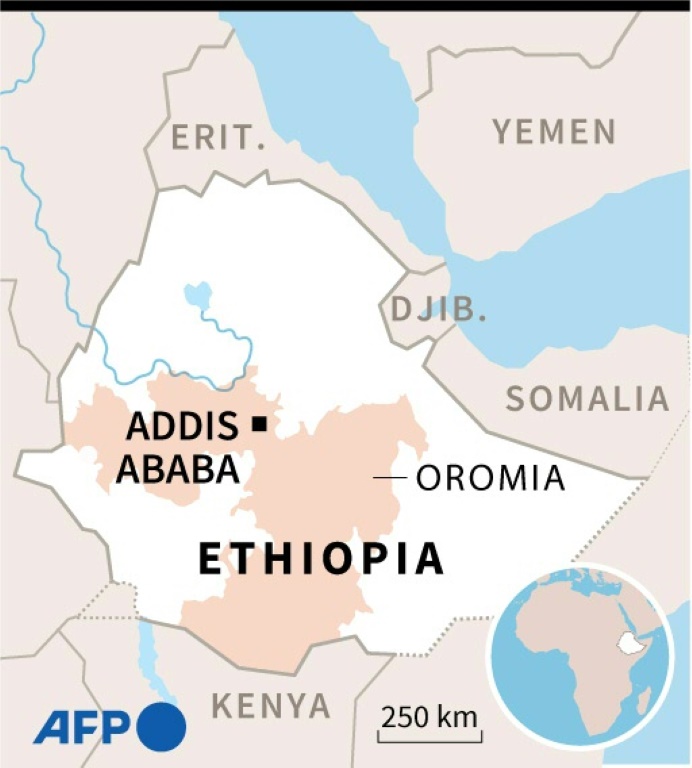
Amnesty International on Thursday called for an investigation into a massacre of more than 400 Amhara civilians in Ethiopia’s Oromia region last month, citing eyewitnesses who blamed a local rebel group for the killings.  

The Oromo Liberation Army (OLA) has denied the accusations, saying government-allied militias were responsible for the June 18 massacre in the west of Ethiopia’s most populous region, which has seen an uptick in violence in recent months.

The assault began around 9 am, when armed men allegedly belonging to the OLA surrounded villages in Tole Kebele, according to nine witnesses interviewed by the human rights group. 

Government forces only arrived hours after the attack ended, despite villagers immediately alerting district officials after the first bullets were fired. 

The attackers unleashed a campaign of summary executions of ethnic Amhara, while also looting and burning homes, in claims corroborated by satellite imagery which showed evidence of fires breaking out in the area, Amnesty said.

“These horrific killings in Tole, allegedly at the hands of the Oromo Liberation Army, reveal its perpetrators’ utter disregard for human life,” Deprose Muchena, Amnesty’s director for East and Southern Africa, said in a statement.

“This callous massacre, which also saw women and children lose their lives, must be independently and effectively investigated,” he added.

– ‘Dozens of bodies piled up’ –

The Amnesty statement follows a call by UN rights chief Michelle Bachelet last month urging the Ethiopian authorities to conduct “prompt, impartial and thorough” investigations into the Tole killings.

Hussein, a 64-year-old man, told Amnesty he lost 22 children and grandchildren in the attack and saw dozens of bodies piled up in the area, including a newborn baby.

“They killed 42 people at one place. There was only one adult male among them, the rest were women and children,” he said.

Another man told the rights group the attackers “torched the house of my neighbour while the family with his children and grandchildren and others were inside”.

“One of them was seven months pregnant and was with her two children. They were buried in the compound since they were completely charred.”

None of the witnesses were identified by their real names due to safety concerns, Amnesty said.

No official toll from the massacre has been published, but Prime Minister Abiy Ahmed’s spokeswoman Billene Seyoum said last month that 338 victims had so far been identified.

A local administrative official told Amnesty that at least 450 people were killed in the attack.

Witnesses said they identified the attackers as OLA militants because of their uniforms, their “distinctive long braided hair”, and their use of the Oromiffa language. 

The gunmen also set fire to houses and looted cattle, cash and other items belonging to the villagers, Amnesty said.

Officials “said they were unable to respond because the road was closed”, the watchdog said.

Ethiopian authorities have blamed the OLA for a number of massacres targeting Amharas, the country’s second largest ethnic group after the Oromo.

The OLA, a shadowy group which has been fighting the federal government in Oromia since 2018, gained new prominence last year when it struck up an alliance with Tigrayan rebels who have been at war with pro-Abiy forces in northern Ethiopia since November 2020. 

Semenya falls well short in bold bid at world 5000m

Caster Semenya’s first appearance in a world championships in five years on Wednesday saw the controversy-mired South African fail to qualify for the women’s 5000m finals.

In roasting mid-afternoon temperatures, Semenya finished 13th in the first of two rounds at Hayward Field, Eugene, in 15:46.12, more than 45sec off the 15th and final qualifying place.

“Cooking!” said Semenya post-race. “It was hot, I could not keep up with the pace, I tried to stick as much as I can, but you know, it is a part of the game.

“I think it is great to be able to run here,” she added. “Just being able to finish the 5k, for me it is a blessing. I am learning and I am willing to learn even more.”

Her time was far off the heat-winning 14:52.64 set by Ethiopian Gudaf Tsegay, fresh from her silver in the 1500m.

Semenya sat 13th of the 18-strong field as Japan’s Kaede Hagitani set the early pace in her heat.

When a nine-strong pack broke clear, it was clear Semenya would not be part of the breakaway and she quickly fell to a full 80 metres off the lead with 2km to go.

That has increased to a clear 100 metres as American Karissa Schweizer hit the lead with three laps to run.

Tsegay kicked and led a pack of five through the bell with Semenya a distant figure 300 metre off the pace.

The South African last competed at a world championships in London in 2017 where she won her third 800m world crown.

A year later she won double gold in the 800m and 1500m at the Commonwealth Games which is the last time she represented South Africa in a global international competition.

Semenya was forced to switch from her favoured distance to the longer event due to gender eligibility rules that required her to take testosterone-reducing drugs to compete in races between 400m to a mile.

World Athletics bars women athletes with high testosterone levels from competing in shorter races because the governing body says the hormone increases muscle mass and oxygen uptake.

Semenya, who became a world champion at 18 years of age in Berlin in 2009, has made several unsuccessful legal attempts to overturn the ruling.

“She’s eligible to be here,” Coe said of Semenya, who initially missed qualification when she only finished sixth at the African Championships last month, but benefitted from a number of athletes dropping out.

Joining Tsegay in Saturday’s final will be Ethiopian teammates Letesenbet Gidey, the 10,000m winner here, and Dawit Seyaum and Ethiopian-born Dutch runner Sifan Hassan, the reigning Olympic champion over 5000m.

Also going through were the Kenyan trio of Margaret Chelimo Kipkemboi, Gloria Kite and Beatrice Chebet, Britons Eilish McColgan and Jessica Judd, and three Americans in Schweizer, Emily Infeld and Elise Cranny.

West Africa mediators discuss transition with Guinea junta

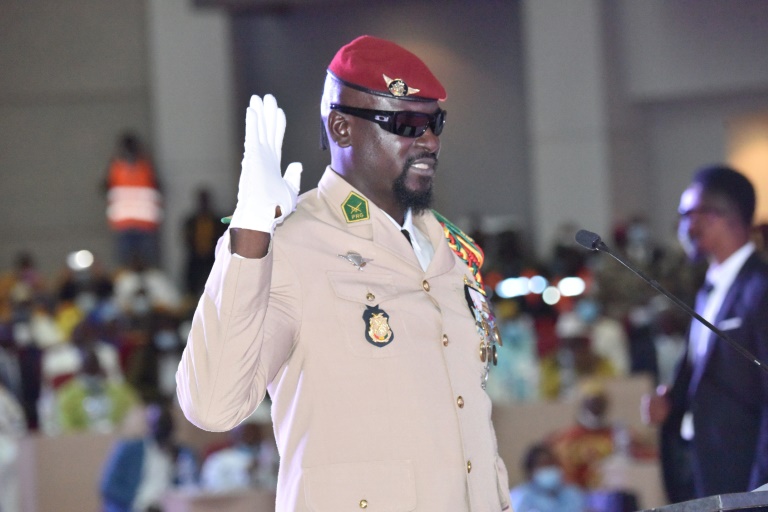
West African mediators met Guinea’s ruling junta on Wednesday for talks on a return to civilian rule, according to a regional bloc and state media.

Colonel Mamady Doumbouya, who seized power last September, has pledged to restore civilian rule within three years.

The Economic Community of West African States (ECOWAS), which suspended Guinea after the coup, has rejected this timeline.

The acting head of ECOWAS, Guinea-Bissau President Umaro Sissoco Embalo, as well as the president of the bloc’s commission, Gambian diplomat Omar Alieu Touray, landed in Conakry on Wednesday, a source at the Guinean president’s office told AFP.

The ECOWAS mediator for Guinea, Benin’s former president Thomas Boni Yayi, has been in the Guinean capital since Tuesday, an official from the West African bloc said.

The three men met Doumbouya as well as the acting prime minister and other officials, the source added.

Their meetings were shown on state television, but the contents of their discussions were not disclosed.

The head of Guinea’s main political party, former prime minister Cellou Dalein Diallo, on Wednesday sounded the alarm over what he called a “dangerously growing list of breaches of fundamental rights”.

The National Alliance for Change and Democracy (ANAD), which comprises about 20 organisations, separately protested against a “travel ban” being imposed on opposition leader Oumar Sylla.

Sylla, a member of the National Front for the Defence of the Constitution (FNDC), had been set to take part in a West African civil society gathering in Senegal from Tuesday to Thursday, but his group said he was prevented from boarding the plane.

The Guinean authorities declined to comment.

Sylla was among three members of the FNDC found not guilty of contempt of court this month over comments they had posted on social media criticising the prosecutor’s office and the military-appointed parliament.

Their arrest had sparked violent protests, some of the first since Doumbouya toppled president Alpha Conde last year.

The ruling junta had banned political protests in May.

Rights group slams Morocco, Spain over migrant deaths

A rights group on Wednesday said Moroccan and Spanish authorities were responsible for a horrific border tragedy last month in which two dozen migrants died.

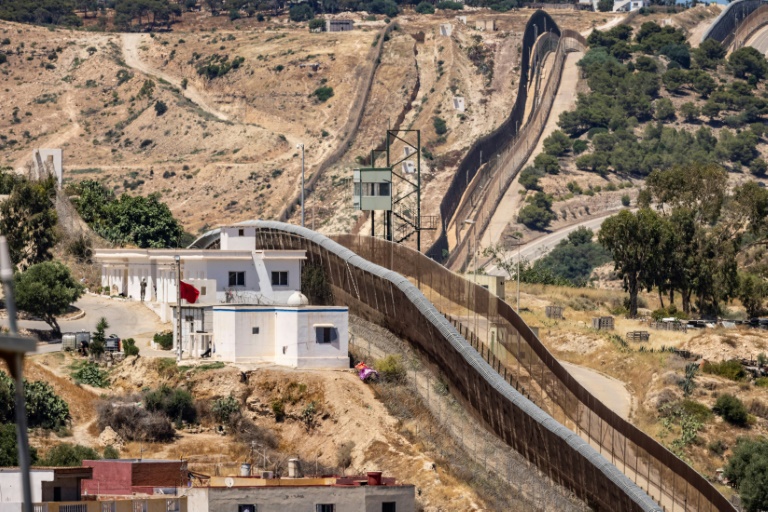
It resulted in the highest migrant death toll in years of attempts to enter the Spanish enclave of Melilla, one of the European Union’s only land borders with Africa.

“The tragedy of June 24 cost the lives of 27 migrants and was due to unprecedented repression by the Moroccan authorities, with the complicity of their Spanish counterparts,” Omar Naji of the Moroccan Association for Human Rights (AMDH) told journalists in Rabat.

Moroccan authorities have said 23 migrants died when some 2,000 people, many from Sudan, stormed the frontier.

Naji, presenting a report on the deaths, called it “a despicable crime, the result of deadly migration policies”.

The report accuses Moroccan forces of “massive use of tear gas” as migrants tried to enter a cramped border post or scale the barbed wire-topped metal barrier. 

“The decision to violently attack the asylum seekers once they arrived at the barrier is probably the main cause behind the very heavy toll,” the report reads.

Morocco’s state-backed CNDH rights group said last week that 23 migrants had died, mostly likely from suffocation, in a crush at a border post where manual turnstiles allow the passage of a single person at a time.

The CNDH said videos apparently showing security forces beating prone migrants were “isolated” cases.

But the AMDH linked the incident to a resumption in cooperation between Madrid and Rabat in March after a year-long diplomatic spat.

Since then there has been a sharp uptick in Moroccan police raids of migrant camps in the forest near the border, it said.

It added that Spanish authorities had “turned back about 100 migrants” on June 24, while some 64 are still missing.

Spanish premier Pedro Sanchez initially blamed “human trafficking mafias” for what he said was “a well-organised violent assault” on the frontier.

But Naji dismissed that as part of a “discourse of criminalisation” of migrants, pointing out that those at the Melilla frontier were attempting to cross “free of charge, unlike those who try to cross by sea”.

A Moroccan court on Tuesday sentenced 33 migrants to 11 months in jail for “illegal entry”, while a separate trial of 29 migrants including a minor is set to resume on July 27. 

Mali expels spokesman of UN peacekeeping mission

Mali is expelling the spokesman of the UN’s peacekeeping force in the country over posts he made on Twitter, the foreign ministry said on Wednesday.

MINUSMA spokesman Olivier Salgado has been given 72 hours to leave over “tendentious and unacceptable” posts he made concerning a controversy involving Ivorian troops, it said in a statement received by AFP.

The expulsion comes amid mounting friction between Mali’s ruling military and international partners supporting the country’s fight against jihadists.

The issue over Salgado, a French national, relates to 49 troops from Ivory Coast who were detained after landing at Bamako airport on July 10.

The authorities have accused the troops of being “mercenaries”.

But Ivory Coast says they were sent to provide a support role for MINUSMA, under a routine rotation.

Countries that provide contingents to MINUSMA commonly bring in “national support elements”, or NSEs, who help with supplies and other backup functions.

According to Mali’s version of events, the troops had no mission orders or any authorisation to enter the country.

The foreign ministry accused Salgado of Twitter posts “declaring without any proof that the Malian authorities had been previously informed” of their arrival.

MINUSMA, it said, was asked to provide evidence to support Salgado’s assertions but had given no reply.

The UN secretary general’s deputy spokesman, Farhan Haq, said the UN “deeply” regretted the Malian decision.

“The doctrine of ‘persona non grata’ does not apply to United Nations personnel and is contrary to obligations under the Charter of the UN,” he said.

“MINUSMA and UN Headquarters are taking appropriate measures to follow up with the relevant authorities on this matter.”

– Security crisis –

The incident takes place against a backdrop of problems in Mali, one of Africa’s poorest and most unstable countries.

Thousands of people have died and hundreds of thousands have been displaced in a jihadist campaign that began in northern Mali in 2012 and spread to Niger and Burkina Faso three years later.

Colonels angry at the government’s handling of the insurgency seized power in August 2020 and carried out another coup in May 2021.

Their takeover triggered a long standoff with the regional bloc ECOWAS over a timetable for restoring civilian rule.

The coup also led to a spat with France, Mali’s former colonial ruler, which says the junta has hired Russian “mercenaries” to support it.

France’s anti-jihadist mission in the Sahel is now pulling out of Mali. The operation is expected to be completed in the coming weeks.

– UN force –

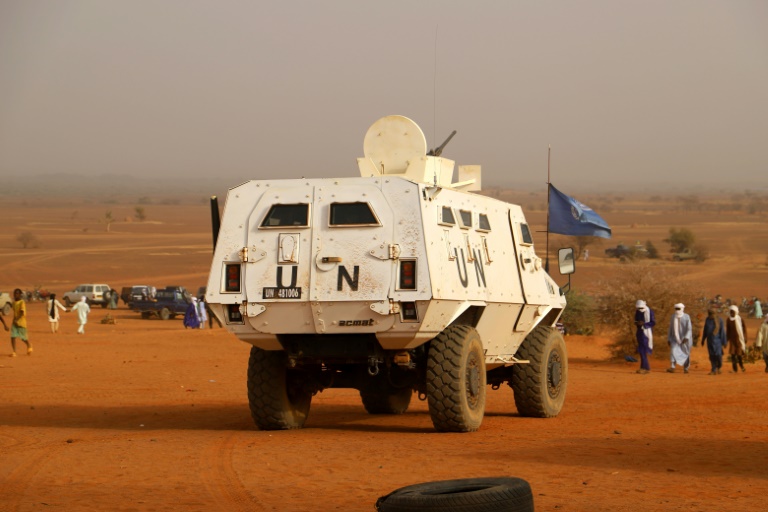
MINUSMA — the United Nations Multidimensional Integrated Stabilisation Mission in Mali — was launched in 2013.

It is one of the UN’s biggest peacekeeping operations, with 17,609 troops, police, civilians and volunteers deployed as of April, according to its website. 

It is also one of the most dangerous UN missions, with 275 fatalities from attacks, accidents or other causes, according to the website.

The UN Security Council renewed MINUSMA’s mandate for one year on June 29, although the junta opposed requests to allow freedom of movement for rights investigators with the mission.

Four days after the row flared over the Ivorian troops, Mali announced it was suspending rotations of MINUSMA personnel for “national security” reasons.

The suspension will last until a meeting is held to “facilitate the coordination and regulation” of the rotation of contingents, it said. So far, no date has been set for any talks.

The following day, MINUSMA said that Egypt, its biggest troop contributor, had decided to “temporarily suspend” participation in operations after seven of its personnel were killed this year.

On Wednesday, a group called Yerewolo that is reputedly close to the junta handed over a letter at MINUSMA headquarters in Bamako demanding that the mission leave the country.

It described MINUSMA as having become “an occupation force which incites and maintains fear.”

An analyst in Bamako, speaking on condition of anonymity, said the friction between MINUSMA and the Malian authorities was following “the same path” as that with France.

The pattern, he said, was “blocking foreign contingents, challenging the legal framework (for the mission) and then expelling a high-profile symbolic figure.”

France’s ambassador was expelled in January, at around the same time that Denmark was told to withdraw a newly-arrived unit that was part of a fledgling European force. 

Lesotho sets October 7 election date

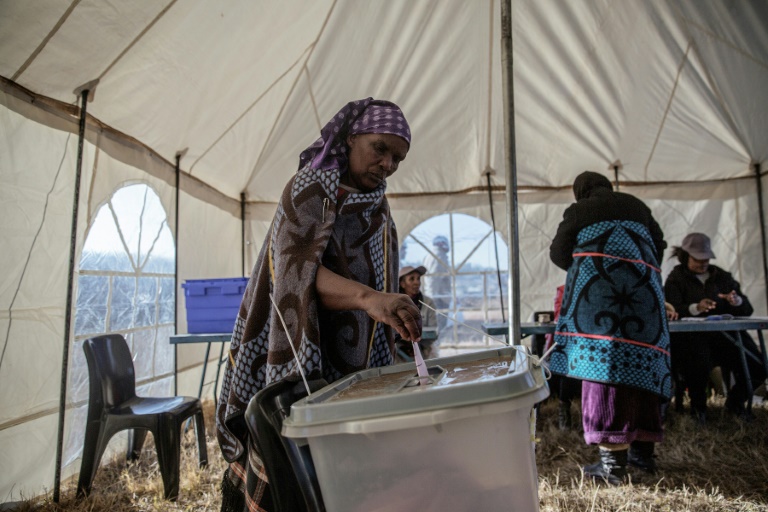
Lesotho says it will hold general elections on October 7, in the latest round of polling in the landlocked southern African country plagued by instability.

The date was contained in a proclamation signed by King Letsie III and in a separate notice issued by the head of the country’s electoral commission, Mpaiphele Maqutu. Both were dated July 19 but published on Wednesday. 

Final results are set to be published the day after polling.

A mountainous kingdom of more than 2.2 million people entirely surrounded by South Africa, Lesotho has suffered repeated bouts of instability and army interference in politics.

The elections were announced after King Letsie III last week dissolved parliament, in line with procedures to prepare for new polls.

The outgoing parliament had failed to pass a law on electoral reform aimed at ending political volatility.

The proposed changes would have prohibited lawmakers from switching party allegiance within the first three years of their tenure.

They would also have named the king as commander of the armed forces — a move aimed at preventing political leaders from meddling in the security services.

Under the system still in place, lawmakers elect a prime minister to head government, who usually comes from the party with the majority in the 120-seat parliament.

Between 2012 and 2017, Lesotho held three elections that resulted in fractious coalitions and turbulence.

The last government saw then premier Thomas Thabane forced to step down after he was accused of hiring hitmen to kill his estranged wife, Lipolelo, two days before his inauguration.

He resigned in 2020 and was succeeded by his finance minister at the time, Moeketsi Majoro.

Thabane and his younger wife Maesaiah, also accused in the case, are yet to face trial over the murder.

No premier has served out a full five-year term over the past decade in the kingdom, which is a constitutional monarchy ruled by King Letsie III, who has no formal power.

Death toll from Sudan ethnic clashes rises to 105: official

Ethnic clashes in a deadly land dispute in Sudan’s Blue Nile state has killed 105 people and wounded 291, the state’s health minister said Wednesday, providing a new toll.

Fighting broke out in the southern state which borders Ethiopia and South Sudan on July 11 between members of the Berti and Hausa ethnic groups.

Troops were deployed in the state on Saturday to stop the fighting, and “the situation is now calm,” state health minister Jamal Nasser told AFP.

“The challenge now is in sheltering the displaced,” Nasser said, speaking by telephone from the state capital al-Damazin, some 460 kilometres (285 miles) south of Khartoum.

The United Nations said Tuesday that more than 17,000 people have fled their homes from the fighting, with 14,000 “sheltering in three schools in al-Damazin.”

But regional Hausa leader Mohamed Noureddine said he believed the death toll would rise further, with some people missing following the heavy fighting, which has seen houses torched.

“We cannot determine the number of victims, since there are corpses trapped under rubble,” Noureddine said, who called from Blue Nile to speak to reporters at a press conference in Khartoum.

Another senior Hausa leader, Hafez Omar, accused local officials of being behind the violence, claiming that “government weapons” were used in the violence.

“We hold the governor responsible for what happened,” Omar said, accusations rejected by the authorities.

– Economic crisis –

In Sudan, deadly clashes regularly erupt over land, livestock and access to water and grazing, especially in areas still awash with weapons left over from decades of civil war.

The violence is the latest unrest to hit the northeast African nation, already reeling from months of mass demonstrations demanding the restoration of a transition to civilian rule following a military coup last year.

Sudan, one of the world’s poorest countries and mired in an economic crisis that has deepened since an October coup led by army chief Abdel Fattah al-Burhan, has seen only rare interludes of civilian rule since independence.

Fighting in Blue Nile reportedly broke out after Bertis rejected a Hausa request to create a “civil authority to supervise access to land”, a prominent Hausa member said.

But a senior Berti leader said the group was responding to a “violation” of their land by the Hausas.

Between January and March this year, the UN said aid was provided to 563,000 people in Blue Nile, a region still struggling to rebuild after years of heavy fighting during Sudan’s devastating 1983-2005 civil war.

The latest violence in Blue Nile has sparked protests, with Hausa people taking to the streets in the capital Khartoum on Tuesday demanding “justice for the martyrs.”

Thousands of Hausa also protested Tuesday in the key eastern cities of Gedaref, Kassala and Port Sudan, as well as El Obeid in North Kordofan.

Between January and March this year, the UN said aid was provided to 563,000 people in Blue Nile.

West Africa mediators in Guinea for talks

West African mediators were in Guinea Wednesday for talks with the ruling junta on a return to civilian rule, a source at the Guinean presidency and an official with the regional bloc said.

Colonel Mamady Doumbouya, who seized power last September, has pledged to restore civilian rule within three years.

The Economic Community of West African States (ECOWAS), which suspended Guinea after the coup, has rejected this timeline.

The acting head of ECOWAS, Guinea-Bissau President Umaro Sissoco Embalo, as well as the president of the bloc’s commission, Gambian diplomat Omar Alieu Touray, landed in Conakry on Wednesday, a source at Guinean president’s office told AFP.

The ECOWAS mediator for Guinea, Benin’s former president Thomas Boni Yayi, has been in the Guinean capital since Tuesday, an official from the West African bloc said.

The three men were set to meet Doumbouya as well as foreign diplomats.

The head of Guinea’s main political party, former prime minister Cellou Dalein Diallo, on Wednesday sounded the alarm over what he called a “dangerously growing list of breaches of fundamental rights.”

The National Alliance for Change and Democracy (ANAD), which comprises about 20 organisations, separately protested against a “travel ban” being imposed on opposition leader Oumar Sylla.

Sylla, a member of the National Front for the Defence of the Constitution (FNDC), had been set to take part in a West African civil society gathering in Senegal from Tuesday to Thursday, but his group said he was prevented from boarding the plane.

The Guinean authorities declined to comment.

Sylla was among three members of the FNDC found not guilty on contempt of court this month over comments they had posted on social media criticising the prosecutor’s office and the military-appointed parliament.

Their arrest had sparked violent protests, some of the first since Doumbouya toppled president Alpha Conde last year.

The ruling junta had banned political protests in May.

Biden plans Africa summit in December as China influence grows

US President Joe Biden announced Wednesday that he will welcome African leaders to Washington in December, a new initiative to build ties with the continent where China’s influence has been rising.

Biden said he will hold the summit from December 13 to 15 to “demonstrate the United States’ enduring commitment to Africa.”

“The US-Africa Leaders Summit will build on our shared values to better foster new economic engagement,” Biden said in a statement.

The meeting will also “reinforce the US-Africa commitment to democracy and human rights” and tackle Covid-19 and future pandemics as well as climate change and food security, Biden said.

Secretary of State Antony Blinken announced the summit during a visit in November to Nigeria without giving a date.

The summit comes as China — identified by the Biden administration as the leading US rival — as well as Russia and Turkey sharply increase their presence in Africa.

The US foreign aid chief, Samantha Power, on Monday urged China to do more to address the global food crisis aggravated by Russia’s invasion of Ukraine as she announced more than $1 billion to avert starvation in the parched Horn of Africa.

China, with its quest for natural resources and an infrastructure spending blitz, has increased investments to Africa some 100-fold since the Asian power’s integration into the global economy in 2000 and has regularly met with African leaders.

US allies France, Britain and Japan have also been holding routine summits with African leaders.

Biden did not specify the guest-list for the Africa summit. When former president Barack Obama held a similar summit in 2014, he invited the vast majority of leaders but declined to include Central African Republic, Eritrea, Sudan and Zimbabwe due to human rights and democracy concerns.

The summit marks a return of high-level US attention after the presidency of Donald Trump, who made no secret of his lack of interest in sub-Saharan Africa.

South Africa's power cuts take a toll on mental health

You can’t do your work because there’s no power. You eat late and bolt your food before the lights fail. And then to be at home, in the utter dark, gives you the creeps.

As blackouts unfurl across South Africa, triggered by problems that have overwhelmed its energy provider, stress is taking a mounting toll on mental health, experts say.

“People are frustrated, some (are) angry, some are experiencing symptoms” of post-traumatic stress disorder, said Sinqobile Aderinoye, a psychologist in Johannesburg.

“The consistent on-and-off of the electric grid is creating an air of disillusionment.” 

South Africa has struggled for years with power cuts, known here as load-shedding, as as its monopoly utility Eskom failed to keep pace with demand.

But ageing infrastructure and labour disputes have added to the crisis — and in recent weeks, the country has been hit by rolling blackouts that can last up to nine hours a day. 

“There was a time … I felt like I was going to scream,” said Blessed Dlamini, a 25-year-old father living in downtown Johannesburg.

For five hours, he recalled, he had no power as he struggled to work and at the same time deal with a hungry two-year-old.

“It was very, very hectic,” said Dlamini who works for a sexual health centre.

Blackouts eased this week, with cuts reduced to about two hours a day. 

But the schedule of cuts provided by Eskom is not always followed, giving rise to an unpredictability that leaves many people on edge. 

The crisis “is leading to feelings of hopelessness, which is associated with depression,” said Claire Lownie, a psychiatrist in Johannesburg’s financial centre, Sandton.

– Fight-or-flight-

Plunged into darkness with a sense of unmet basic needs, the human brain can be triggered into survival mode, leading to a fight-or-flight response, explained Aderinoye. 

“The brain starts to think we are under attack. The body is then notified that we are in danger and we create an anxiety response,” she said. 

At work, on the streets or around the dinner table, swapping tips on how to cope with blackouts has become a national pastime. 

Some people prefer the romantic feel of candles to light their homes, while others resort to camping lanterns. 

Others debate whether coughing up money for take-out meals is preferable to investing in gas cookers or simply eating at odd hours. 

Yet, in a country burdened by high crime rates, outages aren’t a simple inconvenience. Fear of burglary, assault or rape runs deep.

“You cannot go around when it’s dark,” said Flora Sithole, 30, a domestic worker employed in the upmarket Johannesburg suburb of Rosebank. 

“We are so afraid of that — it’s not safe. Our country is not safe.”

The added stress caused by power cuts often compounds an already precarious situation, psychologists say.

Anxiety, depression and other disorders were already up almost two-thirds since the start of the coronavirus pandemic, according to Cheryl Johnston, a Johannesburg-based psychologist.

“A lot of people are at or crossing over (their) breaking point,” she said. 

The result can be “abnormal behaviour” as well as angry or violent outbursts, Johnston said. 

Having a plan and being prepared to deal with the cuts is the best way to cope, according to health experts. 

Dlamini said he has joined Twitter to follow the city’s electricity updates more closely.

Better mental health awareness is also crucial, Johnston said.

“Being able to be honest with yourself about the emotions that you’re having and waiting for yourself to be calm before taking action… is best thing you can do,” she said.

Close Bitnami banner
Bitnami