Africa Business

Sahel leaders face battle to keep G5 force alive without Mali

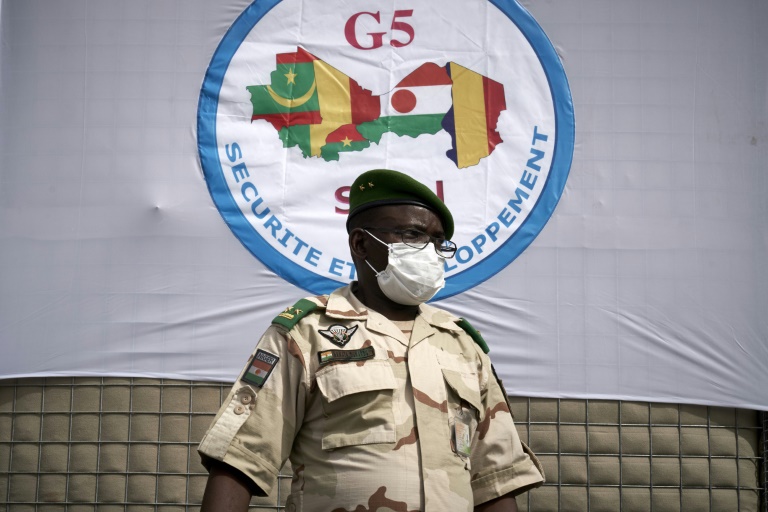
Major challenges lie ahead for African leaders seeking to breathe new life into the G5 Sahel anti-jihadist force.

The five-nation mission began operations in 2017, showcased as an unprecedented example of cooperation in one of the world’s troubled regions.

But the force — originally gathering Burkina Faso, Chad, Mali, Mauritania and Niger — has achieved meagre results and the Sahel’s security crisis continues to deepen.

Added to this have been two hammer blows, delivered in quick succession this year.

In April, 1,200 Chadian soldiers based in Niger left in secret for N’Djamena, according to G5 and French military officials.

The following month, Mali announced it would leave the group over a dispute with France, forcing all the force’s commanders to abandon their base in Bamako and relocate to the Chadian capital N’Djamena. 

“They left overnight, leaving everything behind, even the cars,” a G5 official told AFP.

“The G5 is dead,” Niger’s president, Mohamed Bazoum, told the French newspaper La Croix in May.

But last week, he and President Mahamat Idriss Deby of Chad sounded a different tone, announcing an upcoming meeting between the force’s four remaining members to “ensure that the G5 is viable.”

“We have not yet considered that it is over for the G5 Sahel — we will fight,” Bazoum said. “Let’s remain optimistic.”

– An immense task –

The regional grouping began with an ambitious idea to create a joint military force that would go hand in hand with development projects.

The force was largely financed by the European Union (EU) and its operations were supported by France. 

It represented, in the eyes of international partners, a solution in a region plagued by jihadist violence.

Its eight battalions comprised about 5,000 troops, based in their own countries, with the exception of a Chadian battalion deployed in Niger. They were tasked with coordinating operations in the hotspot border areas.

There are numerous reasons for its decline, two G5 officials told AFP.

These include chronic underfunding, disparate political will among member countries and regional politics.

Mali has undergone two coups in two years, and there have been military takeovers in Burkina Faso and Chad.

In 2021, Chad was meant to hand the G5 presidency over to Mali but did not — a move that Bamako interpreted as French interference.

Paris is reputedly close with N’Djamena, and Mali’s ruling junta, led by Colonel Assimi Goita, lashed the G5’s “instrumentalisation” before slamming the door.

“It would be hard not to see the French hand behind this refusal to transfer the presidency,” said Malian researcher Boubacar Haidara.

The G5 Sahel “has been perceived since the beginning as being controlled by Paris,” said Ornella Moderan, from the South Africa-based Institute for Security Studies (ISS).

But, she said, it has above all “suffered from variable political support from one member state to another.”

Since the creation of the G5, “there have been no joint operations between Burkina and Mali, let alone between Niger and Mali,” Niger’s foreign minister, Hassoumi Massoudou, said last week.

– A ‘necessary tool’ – 

In Burkina Faso, people are questioning “the survival of the G5,” according to a source close to the authorities, although no departure is in sight. 

Despite the force’s travails, Burkinabe troops in the G5 have continued to operate with the Nigeriens in recent months. 

“There is no other option than to work together,” said a member of the joint force.

“Can the G5-Sahel pull through?” asked Mahamat Saleh Annadif, a senior UN official.

“I can’t say, but in any case, by design, it remains a necessary tool.”

But how can the remaining four states be convinced to stay without the participation of Mali, whose territory is the epicentre of the conflict? 

“Being a member of the G5 brings money and logistical support from partners — the states know that,” said an African diplomat in Bamako.

The diplomat said the UN provides G5 contingents with fuel and food — things that are always needed for troops, whether or not they are wearing the G5 badge.

For Massoudou, the G5 Sahel’s future lies with Bamako. 

“When Mali has democratically elected authorities who normalise relations with its neighbours, we could revive this organisation,” he said.

Mali’s military junta has bust up with France and its relationship with the UN peacekeeping mission is also suffering friction.

And it has only just turned the page on a political tussle with the regional bloc ECOWAS over its return to civil rule. Delayed elections are now scheduled for February 2024.
Benin to auction off assets held by opposition tycoon

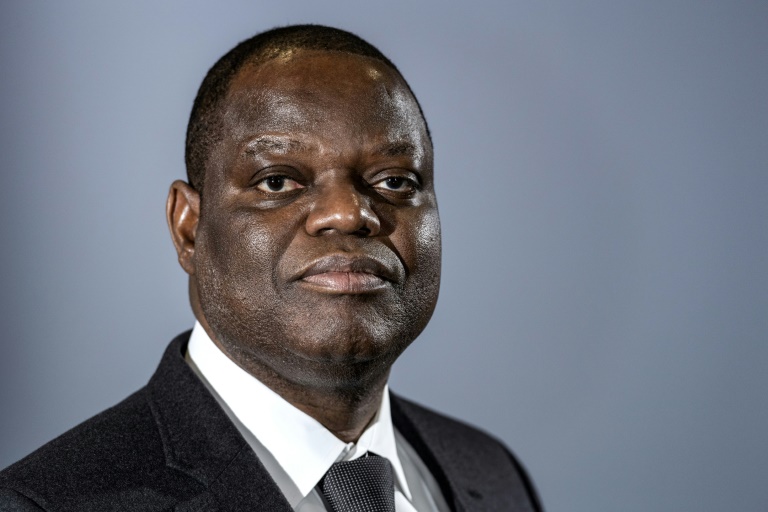
The West African state of Benin says it will auction off art, luxury furniture and a Rolls-Royce limousine seized from an opposition tycoon who lives in exile in Paris.

On August 9, auctioneers in Cotonou, the country’s economic hub, will put under the hammer 140 items belonging to Sebastien Ajavon, who has been handed a 20-year sentence on drugs charges.

The sale includes a Rolls-Royce whose starting price is 80 million CFA francs ($122,339), the judicial branch of Benin’s finance ministry said in a statement late Tuesday.

The property was taken from Ajavon’s home in central Cotonou on July 1 by tax agents, who cleared out the premises working under a heavy police and military escort.

Ajavon made a fortune in agribusiness before entering politics.

He ran in the March 2016 presidential elections as an independent, arriving in third place in the first round of voting.

In the runoff vote, Ajavon threw his support behind another successful businessman, Patrice Talon, who eventually won.

Ajavon’s electoral foray caused relations with Talon — who was already a competitor in business — to go quickly downhill

In October 2016, Ajavon was arrested after around 18 kilogrammes (39.6 pounds) of cocaine, with an estimated street value of $14 million, was discovered in a freight container that was being shipped to one of his companies.

He was discharged several months later for lack of evidence.

But in 2018 a special court handed him a 20-year jail term in absentia.

The conviction was branded illegal by the African Court on Human and People’s Rights, but Benin has refused to overturn it.

Ajavon was handed a second conviction, with a five-year jail sentence, in March 2021 for alleged fraud and use of fake documents.

Talon, who made his fortune in the cotton industry, was re-elected last year on the back of a campaign that touted his record of economic reform.

But critics say his economic success has gone hand-in-hand with iron-fisted rule that has devastated one of the region’s most vibrant political cultures.

Some opposition figures have fled the country while others have been disqualified from running in elections or targeted for probes, they say.

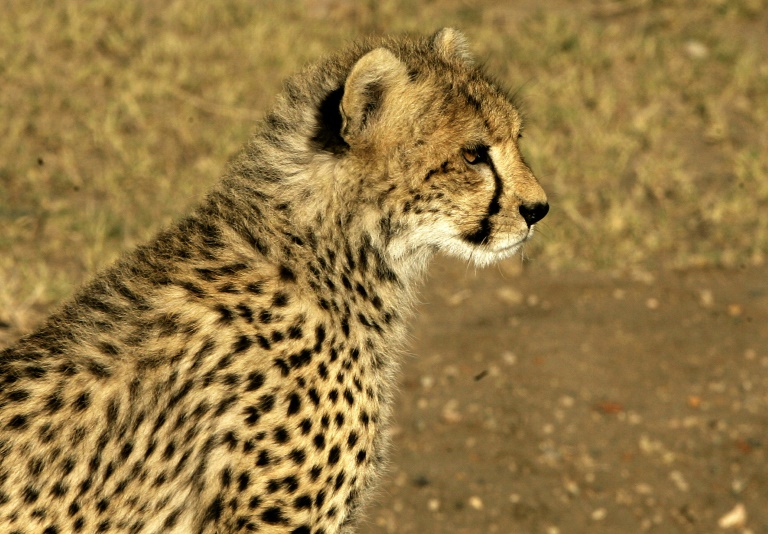
African cheetahs to be spotted soon in India thanks to Namibia deal

India and Namibia signed a deal Wednesday to bring cheetahs into the South Asian country, with the first batch of eight wild cats set to arrive next month, officials said.

India has been working to relocate the animals since 2020, when the Supreme Court announced that African cheetahs could be introduced in a “carefully chosen location” on an experimental basis.

India in the past had Asiatic cheetahs, but the species was officially declared extinct within the country by 1952.

The deal inked Wednesday will see Namibia’s African cheetahs flown in next month to a wildlife sanctuary in the central state of Madhya Pradesh for captive breeding — a move expected to coincide with India’s 75th Independence Day celebrations. 

“Completing 75 glorious years of Independence with restoring the fastest terrestrial flagship species, the cheetah, in India, will rekindle the ecological dynamics of the landscape,” India’s environment minister Bhupender Yadav tweeted.

“Cheetah reintroduction would also greatly enhance local community livelihoods through eco-tourism prospects in the long term.”

Signed in New Delhi with Namibia’s deputy prime minister Netumbo Nandi-Ndaitwah, the deal will also see the two countries collaborate in areas of climate change, waste and wildlife management. 

The Kuno-Palpur National Park in Madhya Pradesh state was selected as the new home for the cheetahs because of its abundant prey base and grasslands which were found suitable for the felines.

“The main goal of cheetah reintroduction project is to establish viable cheetah metapopulation in India that allows the cheetah to perform its functional role as a top predator,” the environment ministry said in a statement.

The cheetah is the only large carnivore believed to have gone extinct in India, primarily due to hunting for its distinctive, spotted pelts and habitat loss.

Maharaja Ramanuj Pratap Singh Deo is widely believed to have killed the last three recorded cheetahs in India in the late 1940s. 

India is also planning to ship in some cheetahs from South Africa but a formal pact has yet to be signed.

Considered vulnerable under the IUCN Red List of Threatened Species, the cheetah has a declining population of less than 7,000 — found primarily in African savannas.

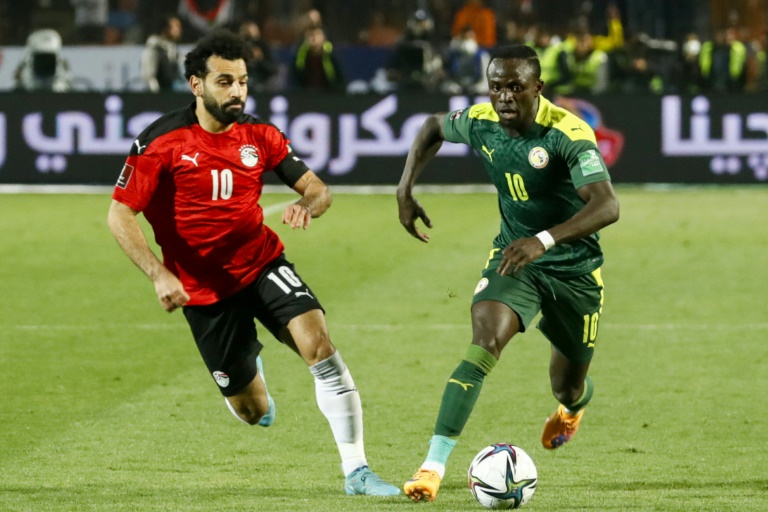
Mane and Salah renew rivalry with top African award up for grabs

Another chapter in the personal rivalry between former Liverpool teammates Sadio Mane and Mohamed Salah will play out in Rabat on Thursday when the annual African award winners are announced.  

Mane was a key figure in the Senegal team that defeated Salah-captained Egypt in the 2021/2022 Africa Cup of Nations final and in a 2022 World Cup play-off.

Both the African title decider in Cameroon and the Qatar eliminator in Senegal were won by the Teranga Lions after penalty shootouts.

Mane scored in each shootout while the final was decided before Salah could take his kick, and he blazed wide in the play-off.  

The Senegalese successes have made Mane favourite to win a second straight Player of the Year award after 2019 — the following two editions were cancelled due to the coronavirus pandemic.

Should Mane win in the Moroccan capital, he will become the first Bayern Munich star to be voted the top African footballer.

The closest a player from the German giants has come to winning was in 1999 and 2001 when Ghanaian Samuel Kuffour finished second. 

Mane moved to Bayern last month on a three-year deal after joining Liverpool in 2016 from Southampton and Anfield boss Jurgen Klopp calls him “a complete forward”.

“My only criticism of Sadio is that maybe at times he is the only one not to realise just how good he is.” 

Liverpool defender Andy Robertson hailed the predatory instincts of the 30-year-old: “Whenever he is in front of the goal you do not think he will miss.” 

Salah lifted the award in 2017 and 2018 and the victory of Mane the following year raised to four the number of winners from Liverpool with another Senegalese, El Hadji Diouf, topping the 2002 vote.

– South Africans dominate women hopefuls –

The Egyptian had an outstanding 2021-2022 season for the Reds, sharing the Golden Boot award with South Korean Son Heung-min of Tottenham Hotspur.

Salah was voted Premier League Player of the Season by both the Professional Footballers’ Association and the Football Writers’ Association.

Algeria captain and Manchester City winger Riyad Mahrez is the other former winner among the 10 nominees having come first in 2016 after helping rank outsiders Leicester City become Premier League champions.

Mahrez and Algeria have struggled lately, however, with the defending champions making a humiliating first round exit from the Cup of Nations, then losing a World Cup play-off against Cameroon.

The 10 candidates for the Club Player of the Year include Brazilian Tiago Azulao, whose chart-topping seven goals in the CAF Champions League took Angolan outfit Petro Luanda to a surprise semi-finals spot.

South Africans dominate the Women’s Player of the Year nominees with 2018 winner Thembi Kgatlana, Andile Dlamini, Refiloe Jane and Bambanani Mbane among 10 hopefuls.

Ghana, notable absentees from the ongoing Women’s Africa Cup of Nations in Morocco after losing a first round qualifier against Nigeria, have two representatives, Evelyn Badu and Doris Boaduwaa.

Nigeria, the powerhouse of women’s football in Africa for decades, have one candidate, highly decorated Asisat Oshoala, who plays for 2022 European Champions League runners-up Barcelona.

Ruled out of the Cup of Nations in Morocco by injury, Oshoala has been voted African Player of the Year four times, most recently in 2019.

Choosing the best women’s national team will be delayed until after the Cup of Nations final between Morocco and South Africa in Rabat on Saturday.

African football legends, CAF technical committee members, coaches and captains of national teams and of some clubs and selected media pick the winners. 

Job seekers in Africa easy prey for online scammers

From careers in banking to roles in globe-spanning agencies, social media in Africa is awash with lucrative job offers.

But investigators with AFP Fact Check have found that many of these ads are bogus — they are scams designed to extract cash or steal personal data.

Fresh out of college in Kenya -– a country with more than 1.6 million young unemployed -– Job Mwangi believed he had been shortlisted for field assistant at the United Nations Environment Programme (UNEP), a position advertised on LinkedIn.

After passing two online tests, he was asked to pay 2,000 Kenyan shillings (about $17) in “facilitation fees” in order to secure an interview.

“Everything about the job posting seemed legit,” Mwangi told AFP Fact Check in an interview. 

“I was asked to pay 1,000 Kenyan shillings ($8.5) for medical and radiology tests… but the tests didn’t happen since I was told that they would be done at the UN offices on interview day.”

A shuttle bus that was supposed to transfer Mwangi and more than 30 other job-seekers to the UN office never showed up.

“We waited for about one hour for the UN bus but it did not arrive, so we decided to take a bus on our own. 

“On arrival at the gate, we mentioned that we had been invited for interviews with UNEP and the security officers manning the gate laughed at us, telling us that we’d been scammed.”

Mwangi filed a police report but says he has heard nothing since.

– Promise of easy money –

This particular hoax is far from uncommon in Africa — indeed, UN agencies regularly warn job seekers about fake ads.

“The United Nations Environment Programme does not charge a fee at any stage of its recruitment process (application, interview, processing, training) or other fees, or request information on applicants’ bank accounts,” UNEP says on its website.

Keyword searches on Facebook reveal dozens of pages featuring bogus vacancies cleverly crafted to lure hopefuls.

Many of the pitches have the same telltale signs: they have short deadlines, promise high salaries and often include a hyperlink to an external online platform requesting personal information.

Scammers also use logos of reputable organisations and companies to lend credibility to spoof emails. 

Code for Africa, a data journalism and civic technology initiative, found that in 2020 -– when job losses soared during the Covid-19 pandemic —- some 30 Facebook accounts, groups and pages with over 184,000 followers targeted unsuspecting job hunters in Kenya with sham ads. 

Analysts say those behind these scams rely on the desperation of job seekers, who often fail to check whether the postings are genuine.

Many of these applicants send money without hesitation, hoping this will help them in the race to get the position.

“Most online job scams aim to con unsuspecting people into sending money and once this money is sent the scammer disappears,” Kenyan cybersecurity expert Anthony Muiyuro told AFP Fact Check.

LinkedIn said it was investing in ways to tackle the problem.

“Our teams use automated and manual defences to detect and address fake accounts or suspected scams. We also encourage members to report anything that doesn’t seem right so we can investigate,” the company told AFP Fact Check.

– Africa-wide problem –

Other countries targeted in Africa include Nigeria, the continent’s most populous nation, where more than 23 million are unemployed.

Victims include Ayobambo Taiwo, a 29-year-old from the southern state of Ondo who lost her job in 2020 during the Covid-19 pandemic.

She spotted a vacancy with the Nigerian Customs Service, advertised on Facebook, and jumped at the chance.

She said she paid 25,000 naira ($60) to a purported customs agent to secure employment. 

“The man demanded an additional 92,000 naira ($222) for training kits, which I told him I couldn’t afford. When he asked me how much I had, I sensed foul play and told him to refund my money but he stopped picking up my calls since then.”

Job cons are a frequent hazard in South Africa, whose unemployment rate is the highest on the continent — more than a third of its labour force are without work.

Bogus adverts there typically claim to offer relatively good, entry-level wages of up to 10,000 rand ($630) and do not ask for qualifications.

Facebook posts, often poorly written, are continuously recycled to promote thousands of supposed work opportunities, often with national retailers, the police or military.

– Money & data – 

Lockdowns imposed during the coronavirus pandemic, which caused many Africans to be thrown onto the job market, made for especially rich pickings.

AFP Fact Check debunked dozens of false job claims in Kenya, Nigeria and South Africa at the peak of the crisis.

In the anonymous, shadowy world of job scamming, thieves stand a good chance of getting away with their crime.

But one notable success was a conviction in South Africa in 2020 — a man who was jailed for eight years for defrauding job seekers of 95,000 rand ($6,000).

Kenyan police last year arrested four suspects for allegedly swindling victims out of millions of shillings with fake offers from the Teachers Service Commission (TSC) — a major human-resources agency in the education sector.

The suspects, thought to belong to a crime ring, had opened several fake Facebook accounts in the name of TSC chief executive Nancy Macharia, and duped people into forking over fees in exchange for jobs that didn’t exist.

Watchdogs say a common ploy is to get the job-seeker to fill out forms giving personal information — a clear opportunity for blackmail or identity theft.

Muiyuro advises simple but thorough precautions: check the official organisation or company website or LinkedIn page to verify the job opening, “or reach out to friends or acquaintances who work in the organisation.”

jok-burs/bh-gfa/nla/txw/ri

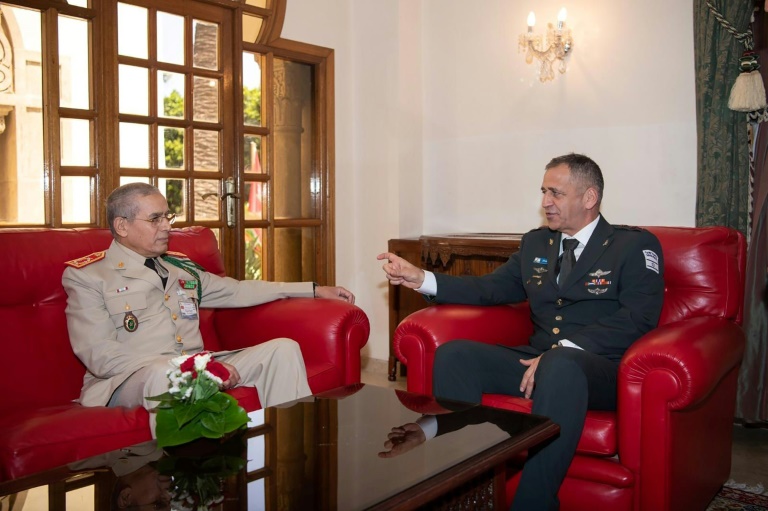
Morocco, Israel strengthen military links as army chief visits kingdom

Israel and Morocco strengthened military ties during meetings Tuesday between the Jewish state’s army chief and Moroccan defence officials in the kingdom, amid tension with Rabat’s rival Algeria.

Israeli army chief Aviv Kohavi, who arrived Monday, met with the Inspector General of the Royal Armed Forces Belkhir El Farouk, an Israeli army statement said.  

He also met with Morocco’s minister delegate in charge of defence administration, Abdellatif Loudiyi, and intelligence chief Brahim Hassani, it added.

It is the first official visit of an Israeli army chief to the North African kingdom.

During the discussions, the Moroccan side noted its “interest in jointly setting up industrial defence projects in Morocco”, the kingdom’s army chief said in a statement.

“The meetings discussed opportunities for military cooperation, both in exercises and training, as well as in the operational and intelligence fields,” a statement said.

Morocco cut relations with Israel in 2000 following the outbreak of the second Palestinian intifada, but re-established ties two decades later in a deal that saw Washington recognise Rabat’s sovereignty over the disputed Western Sahara.

Since then, a steady stream of Moroccan and Israeli officials have visited each others’ countries and signed cooperation deals in various fields.

They have included Israeli Defence Minister Benny Gantz, who on a visit to the kingdom in November last year signed a security agreement making it easier for Rabat to acquire high-tech exports from Israel’s defence industry.

Last month, Israeli military observers for the first time attended the annual “African Lion” military exercise — vast drills involving thousands of personnel from several nations, co-organised by Morocco and the United States.

And in March, an Israeli army delegation met with Moroccan officers in Rabat, in the first visit of its kind since the 2020 normalisation deal, signing a military cooperation agreement.

The North African kingdom’s mending of relations with Israel re-ignited its long-standing rivalry with Algeria, which in August last year cut diplomatic ties with Rabat.

Algiers cited “hostile acts” and Morocco’s relations — including on military and security issues — with “the Zionist entity”, referring to Israel.

Morocco considers the Western Sahara an integral part of the kingdom, while the Algeria-backed Polisario Front has long demanded an independence referendum there.

Rival Libya military leaders meet in Tripoli

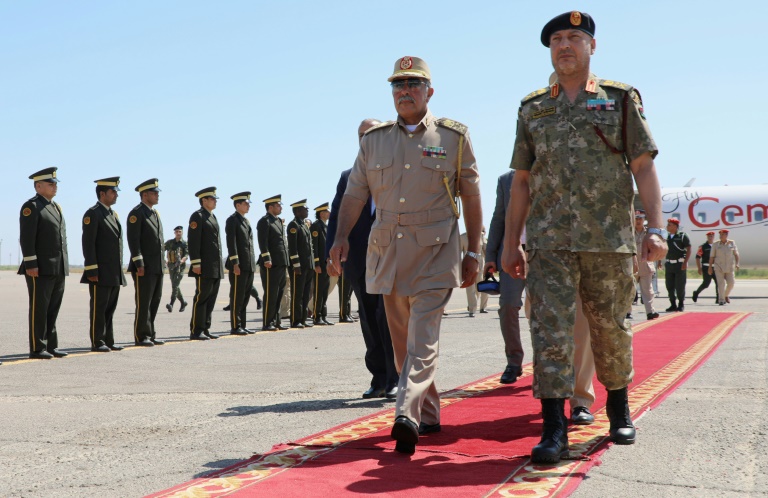
Senior military figures from Libya’s rival eastern and western power bases have held an unprecedented meeting in the capital Tripoli, calling Tuesday for a unified command over their troops.

Two rival governments are currently vying for power, one based in Tripoli, the other in the central city of Sirte.

General Abdelrazzak al-Nadhouri, second in command of forces loyal to eastern strongman Khalifa Haftar, visited Tripoli on Monday and Tuesday to meet with his counterpart in the country’s west, General Mohammad al-Haddad.

“It is necessary to name a single chief of staff for the military institution and begin the reunification of the army,” the pair said in a joint statement following their encounter.

The meeting reportedly enabled work by the so-called 5+5 military commission — made up of military officials from each of the rival camps — to progress, including on the thorny issue of foreign fighters who were supposed to depart following an October 2020 ceasefire.

The sides also agreed Tuesday to carry out border patrols, including in the south, in order to stem the flow of migrants and root out smuggling and trafficking networks.

“I am heartened by the outcome of the meeting between General Haddad and General” Nadhouri, the UN’s top Libya envoy Stephanie Williams said on Twitter, adding: “Their spirit of cooperation and compromise is a model for the political class.”

“The United Nations commends this important dialogue and continues to support the security track talks, notably through the Joint Military Commission (JMC 5+5), including on the full implementation of the October 2020 ceasefire agreement,” the United Nations Support Mission in Libya (UNSMIL) said in a statement.

Libya fell into more than a decade of crisis and repeated episodes of armed conflict after the fall of longtime dictator Moamer Kadhafi in a 2011 NATO-backed uprising.

Presidential and legislative elections were originally scheduled for December 2021 to cap a UN-sponsored peace process following the last bout of large-scale fighting in 2019-20.

But the polls were postponed indefinitely due to sharp differences over controversial candidates and rules surrounding participation.

The country’s east and part of the south are under the de facto control of Haftar, who made a failed attempt to take the capital in 2019-2020.

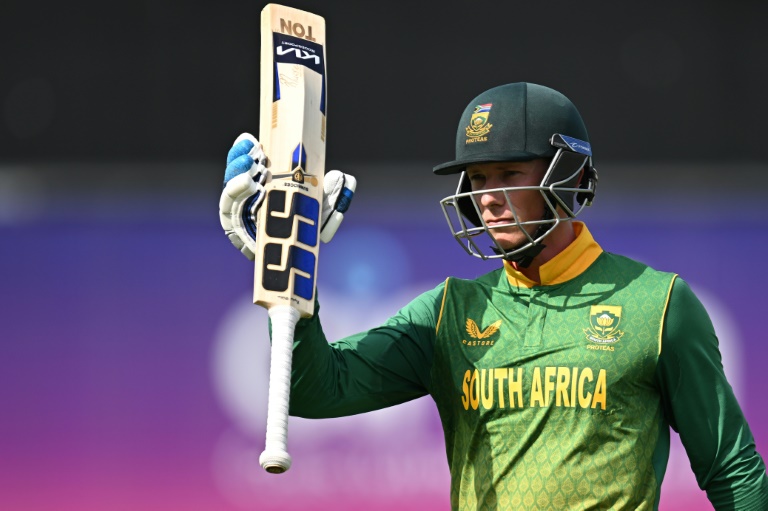
Van der Dussen ton leads South Africa to 333-5 in Stokes's farewell ODI

Rassie van der Dussen’s century was the cornerstone of South Africa’s imposing 333-5 as the Proteas threatened to spoil England star Ben Stokes’s farewell to one-day international cricket on Tuesday.

Van der Dussen made a career-best 133 and shared a partnership of 151 with Aiden Markram (77) after putting on 109 with opener Janneman Malan (57).

South Africa’s total might have been greater had not both Markram and van der Dussen fallen in the same over from spinner Liam Livingstone.

Markram, who faced just 61 balls and struck nine fours, holed out in the deep to Jonny Bairstow and, two balls later, a tired van der Dussen, was bowled trying to muscle a slower ball that kept low.

Dynamic all-rounder Stokes announced on Monday that Tuesday’s game at his Durham home ground in Chester-le-Street would be his 105th and last ODI, with the now Test captain saying the demands of a congested fixture schedule made it impossible for him to give of his best across all three international formats.

– Tough spell for Stokes –

He led the team on to the field but an expensive bowling return of 0-44 in five overs left his loyal fans in the northeast hoping to witness some batting heroics from Stokes, the player of the match in England’s 2019 World Cup final triumph.

England made three changes to the side that lost the third ODI, and with it a three-match series, against India at Old Trafford on Sunday.

They gave a debut to seam bowler Matthew Potts with Adil Rashid, who missed the India series while on the Hajj pilrgrimmage, and Sam Curran returning in place of the in-form Reece Topley, David Willey and Craig Overton.

Potts, who impressed for England after making his Test debut against New Zealand last month was given his first ODI cap by fellow Durham paceman Mark Wood, one of several currently injured England fast bowlers.

South Africa stand-in captain Keshav Maharaj, leading the side in place of the injured Temba Bavuma, won the toss and decided to bat first amid a heatwave gripping England.

Quinton de Kock was bowled early on by Curran before Malan and van der Dussen took charge.

Malan was first of the pair to reach fifty, off 63 balls, before van der Dussen got there in just 45 balls.

The second-wicket duo were eventually separated when Malan chipped off-spinner Moeen Ali to deep midwicket.

Van der Dussen kept going and a leg-glanced boundary off Curran saw him to a 90-ball hundred including nine fours. It was the 33-year-old’s third century in 36 ODIs and first against England.

Van der Dussen was dropped on 121 when Bairstow, running in from midwicket, failed to hold a difficult low chance off Moeen, and went on to surpass his previous highest ODI score of 129 not out against India at Paarl in January this year. 

Thousands of Sudan's Hausa protest after deadly clashes over land

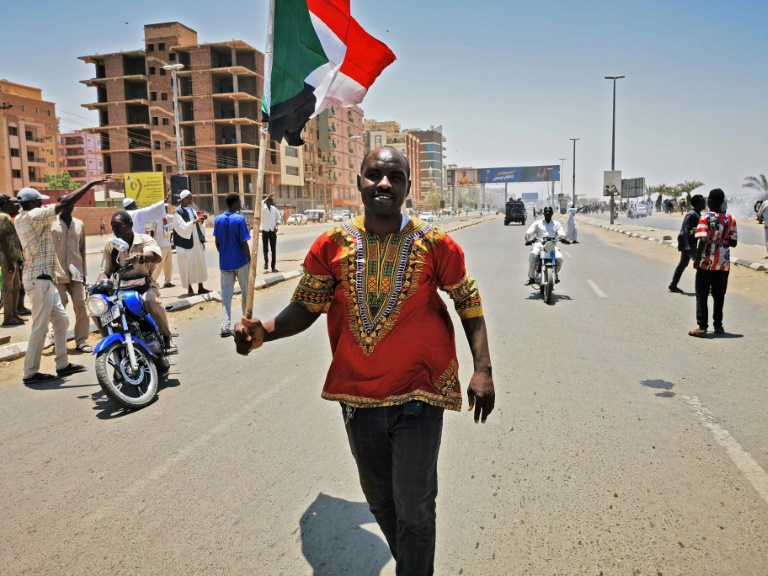
Thousands of Sudan’s Hausa people protested in multiple cities Tuesday, demanding justice for dozens of comrades killed in a deadly land dispute with a rival ethnic group in the country’s south.

The protests sparked by anger at the violence is the latest unrest to hit the northeast African nation, already reeling from months of mass demonstrations demanding the restoration of a transition to civilian rule following a military coup last year.

At least 79 people have been killed and 199 wounded since heavy fighting broke out last week between the Berti and Hausa groups in Blue Nile state, the health ministry says.

According to the United Nations, more than 17,000 people have been displaced by the fighting, with 14,000 “sheltering in three schools in al-Damazin”, the state capital.

While the army has been deployed in Blue Nile and the fighting there quashed, protests have since erupted in other states, with marches on the streets of the capital Khartoum, as well as in the key eastern cities of Gedaref, Kassala and Port Sudan.

On Tuesday, Hausa protesters in Khartoum held up signs demanding “justice for the Blue Nile martyrs” and “no to the murder of Hausas”.

The Forces for Freedom and Change, the country’s key civilian bloc ousted by last year’s coup, called Tuesday for a “One Nation March” on July 24 “to denounce tribal clashes and stand in solidarity with the victims”.

Fighting reportedly broke out on July 11 after Bertis rejected a Hausa request to create a “civil authority to supervise access to land”, a prominent Hausa member told AFP on condition of anonymity.

But a senior Berti leader said the group was responding to a “violation” of their land by the Hausas.

In Sudan, deadly clashes regularly erupt over land, livestock, access to water and grazing, especially in areas awash with weapons still struggling from the impact of decades of civil war.

– ‘Revenge’ –

Experts however say an October coup led by army chief Abdel Fattah al-Burhan has stroked a resurgence in ethnic violence.

In Gedaref, some 4,000 people marched chanting “Hausa are citizens too” and “revenge for the martyrs of the Blue Nile”.

Some 500 people also blocked the highway in the town of Al-Showak in Gedaref state, eyewitness Saleh Abbas told AFP.

In El Obeid, capital of North Kordofan state, some 3,000 marched on the streets chanting “the Hausa will win”, while in Port Sudan, on the Red Sea, thousands of Hausa gathered outside local government offices.

In Kassala, authorities have banned public gatherings after thousands of Hausa demonstrators “set government buildings and shops on fire”, said Hussein Saleh, another witness.

Sudan, one of the world’s poorest countries and mired in an economic crisis that has deepened since Burhan seized power last year, has seen only rare interludes of civilian rule since independence.

Blue Nile, where the fighting erupted last week, was a key battleground of rebels trying to topple former president Omar al-Bashir during Sudan’s north-south civil war of 1983-2005, with fighting resuming again in 2011.

After enormous protests against his rule, the army ousted Bashir in 2019.

The following year, a civilian-military power-sharing government reached a peace deal with key rebel groups, including from Blue Nile as well as the war-ravaged western Darfur region.

Darfur has also seen a renewed spike in deadly violence in recent months.

Pro-democracy activists have accused Sudan’s military and ex-rebel leaders who signed that peace deal of exacerbating ethnic tensions for political gain, claims they reject.

Showdown looms as Kenya rivals pick same venue for final election push

Kenya’s leading presidential candidates on Tuesday announced plans to make their final push for votes at the same stadium on the same day, raising fears of possible clashes before the August 9 polls. 

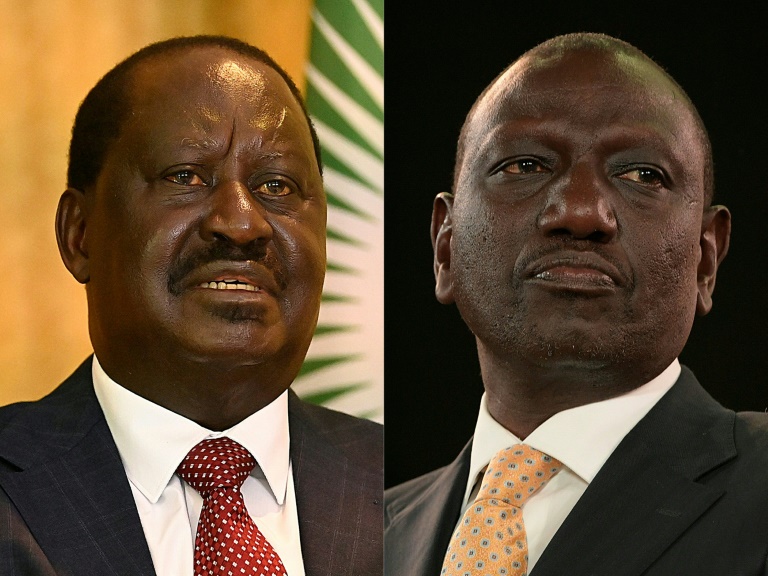
The high-stakes election campaign has seen Deputy President William Ruto and former Prime Minister Raila Odinga combing the vast East African country for votes, with thousands of people attending their rallies.

Previous polls have often been marred by violence, and Tuesday’s announcement has set the stage for a showdown, with both parties saying they have reserved Nairobi’s Nyayo National Stadium on August 6, the last campaign day in a race deemed too close to call.

Ruto’s United Democratic Alliance (UDA) paid 1.58 million Kenyan shillings ($13,500) for the 30,000-seater stadium, in addition to a refundable fee of one million Kenyan shillings to cover any damage, according to a contract seen by AFP.

Meanwhile, Odinga’s Azimio la Umoja (Swahili for Quest for Unity) coalition “will hold its last official campaign meeting” at the same venue on August 6, the party’s secretary general Junet Mohammed said in a statement. 

The choice of venue will act as a litmus test for the safety of the polls.

Last month, police fired teargas to disperse stone-throwing supporters of the two candidates when they clashed over access to a campaign venue in the east of Nairobi, forcing Ruto to take cover. 

But a UDA official who spoke to AFP on condition of anonymity offered assurances, saying: “We have the legal right to the premises. We expect no trouble.”

Some 22.1 million Kenyans are eligible to vote in this year’s polls which are shaping up to be a two-horse race between 55-year-old Ruto and Odinga, a 77-year-old veteran opposition politician now backed by the ruling party. 

Two other candidates have been cleared to contest the race to succeed President Uhuru Kenyatta, who must stand down after serving the maximum of two five-year terms.

Ruto was initially anointed by Kenyatta as his successor but has found himself out in the cold after Kenyatta and Odinga forged an alliance in 2018.

With its diverse population and large ethnic voting blocs, Kenya has long suffered politically motivated communal violence around election time, notably after a 2007 poll when more than 1,100 people died.

Close Bitnami banner
Bitnami