Africa Business

Africa's fastest man Omanyala to miss Worlds over visa delay

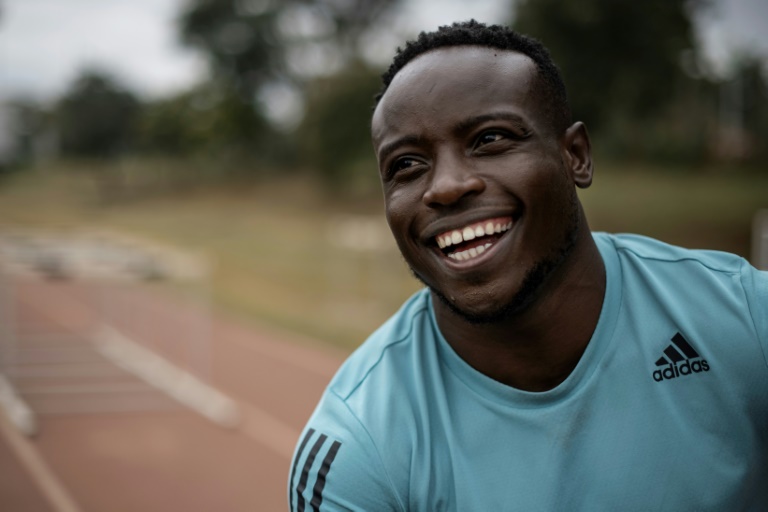
Africa’s fastest man Ferdinand Omanyala told AFP on Thursday he has given up on competing at the World Athletics Championships in the United States because of a delay in getting a visa.

“I have given up my trip to Oregon. Even if I am given a visa today it’s too late,” said the 26-year-old Kenyan sprinter.

Omanyala had been due to compete in the 100m heats on the first day of the world championships on Friday, but lost a race against time to secure his US visa and travel to Oregon — a trip of about 24 hours or more.

“It would mean booking flights which can only be possible at night and the race is on tomorrow. It’s not possible,” he said.

“There’s nothing I can do. It’s been my longest day of waiting and I don’t like waiting.”

Omanyala is the third-quickest man in the world this season behind Americans Fred Kerley and Trayvon Bromell, setting a time of 9:85 in May.

In September last year, he clinched the African record of 9:77, making him the ninth-fastest man ever, behind four Americans and three Jamaicans.

“I have accepted the situation and will now focus on the Commonwealth Games in Birmingham,” said Omanlaya.

The Commonwealth Games open in the English city on July 28 and run until August 8.

Libyans at boiling point amid summer power cuts

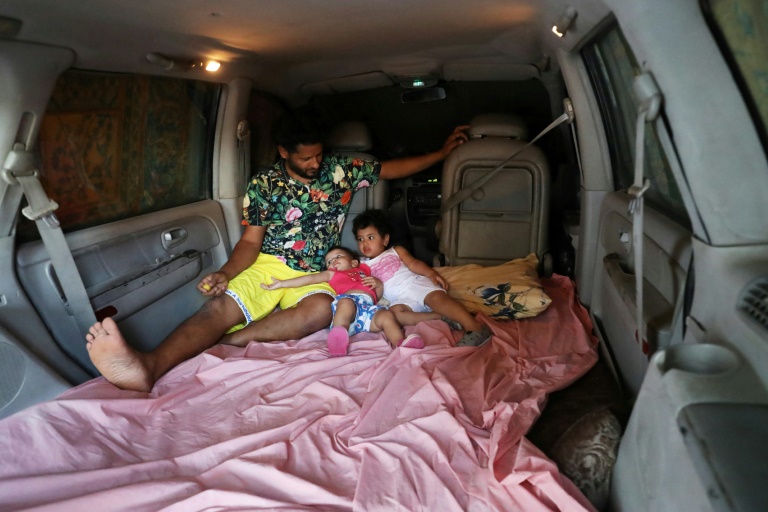
Mahmud Aguil has a comfortable house in Libya’s capital Tripoli, but chronic power outages in the war-battered country and roasting summer heat now force him to sleep in his air-conditioned van.

“This is my bedroom,” the 48-year-old said pointing to the cramped vehicle, its back seats removed to make space for him and his two young children. “In the morning I wake up with a terrible backache. 

“That’s our life these days.”

The people of Libya are enduring electricity cuts of up to 18 hours a day, despite their country sitting atop Africa’s largest proven oil reserves.

After a decade of violence, rising poverty and fragmenting government, many have reached the limits of their tolerance.

Public anger spilled into the streets earlier this month, when protests drew thousands chanting “we want the lights to work” in the capital and in Benghazi, the country’s second largest city.

Demonstrators torched and ransacked the House of Representatives, based in the eastern city of Tobruk, along with other official buildings, while masked protesters burned tyres and blocked roads in Tripoli.

“Even when we have electricity, it’s very weak — just enough to keep the lights on,” said Aguil, who works for a group clearing unexploded ordnance.

The electricity crisis is just the latest trial for Libyans after a decade of insecurity, fuel shortages, crumbling infrastructure and economic woes since a 2011 NATO-backed uprising toppled and killed dictator Moamer Kadhafi.

– ‘Trouble with everything’ –

One of the walls of Aguil’s house is riddled with bullet holes, bearing witness to the violence that has repeatedly ravaged the North African country.

“We have trouble with everything: the health sector, education, the roads are terrible,” he said. “We have nothing.”

Under Kadhafi, Libya boasted a generous welfare state financed by oil revenues.

But that too has fallen victim to the country’s conflict and division, with fuel squandered, infrastructure damaged or dilapidated, and crippling oil-facility blockades.

Many of Libya’s seven million people have turned to unreliable, gas-guzzling and polluting generators for electricity. 

More dependable models cost those who can afford them around $5,000.

“Thanks to our government,” Aguil said bitterly.

The Tripoli-based authorities have sought to quell public anger over the power outages, admitting they had underestimated the problem.

Interim prime minister Abdulhamid Dbeibah said three power stations were to open this month, two in the west and one in the east.

– ‘State is absent’ –

Dbeibah leads a western-based administration, while former interior minister Fathi Bashagha draws support from the eastern Tobruk-based parliament and military strongman Khalifa Haftar.

Supporters of the eastern camp have restricted production at key oil facilities in recent months to pressure Dbeibah to transfer power to Bashagha.

The blockade has also reduced the amount of fuel available for power stations, exacerbating electricity shortages.

Sitting with his severely disabled son in Benghazi, the cradle of Libya’s 2011 uprising against Kadhafi’s 42-year rule, Ahmed Hejjaji said he feels helpless.

His four-year-old’s medical equipment needs electricity, and the power cuts are wreaking havoc with his treatment.

The authorities “must guarantee us access to electricity” the 42-year-old father said.

Hejjaji said the daily challenges are never-ending.

Before the Muslim Eid al-Ahda celebration, he said, “I went to the bank early to take out money, but I waited in the queue until 3 pm.

“Why? Because the state is absent.”

Gambian ex-spies sentenced to death for Jammeh-era murder

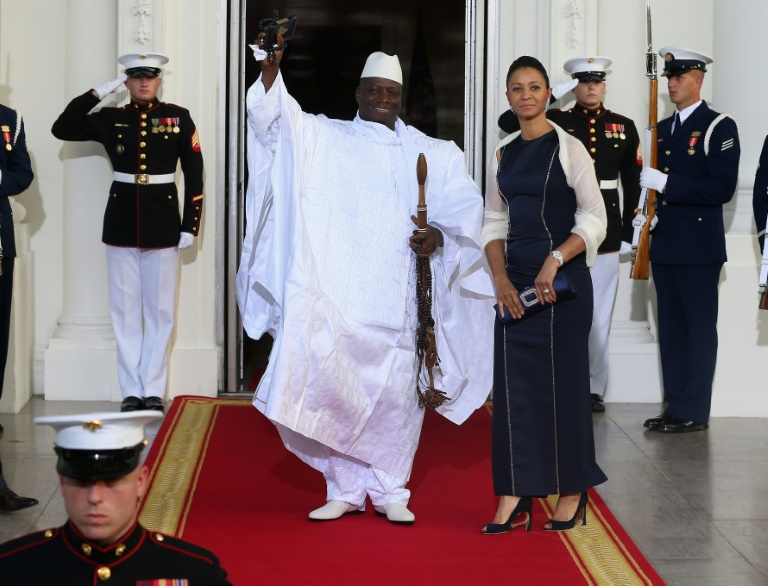
A Gambian court on Wednesday sentenced five former members of the intelligence service to death for the murder of a political activist during the rule of ex-dictator Yahya Jammeh.

High Court Justice Kumba Sillah-Camara pronounced the sentence against the former head of the National Intelligence Agency, Yankuba Badjie, after finding him guilty of murdering Ebrima Solo Sandeng, an important figure in the opposition United Democratic Party, in 2016.

Badjie was also convicted of bodily harm.

The agency’s former operations chief, Sheikh Omar Jeng, as well as NIA officials Babucarr Sallah, Lamin Darboe and Tamba Mansary, were convicted on the same charges and sentenced to death by the Banjul court.

Sandeng was arrested during an April 2016 demonstration against Jammeh. He died in custody two days later after having been beaten and tortured.

His death galvanised a political movement that eventually ousted Jammeh, who had ruled the tiny West African nation for 22 years.

Haruna Susso, another NIA official, and Lamin Sanyang, a nurse, were found not guilty of murder or bodily harm.

The former deputy director of the spy agency, Louie Richard Leese Gomez, had also been accused but has since died. 

Another official, Yusupha Jammeh, had been accused but was later acquitted.

– ‘Justice is catching up’ –

“Justice is catching up to Yahya Jammeh’s henchmen in Gambia and around the world and hopefully it will soon catch up to Yahya Jammeh himself,” said Reed Brody, a lawyer with the International Commission of Jurists who works with Jammeh’s victims.

The trial, which began in 2017, was the only ongoing domestic trial tied to crimes committed under Jammeh’s brutal regime.

Previously, Yankuba Touray was tried in The Gambia for the 1995 murder of finance minister Koro Ceesay. He was convicted in July 2021 and sentenced to death, but has since appealed.

Another former Jammeh accomplice, Bai Lowe, went on trial in April in Germany, accused of crimes against humanity, murder and attempted murder.

The former interior minister, Ousman Sonko, has been under investigation in Switzerland since 2017, while Michael Sang Correa, alleged to have been a hitman, was indicted in June 2020 in the United States.

Jammeh has been accused of a range of crimes, including rape, the use of death squads, and of having ordered the disappearances of political enemies. In May, The Gambia’s authorities promised to prosecute him.

The government also accepted a truth commission’s recommendations to prosecute more than 200 others for crimes committed under the former president’s regime.

Jammeh himself remains in exile in Equatorial Guinea, where he fled in early 2017 following his December 2016 electoral loss to President Adama Barrow.

Barrow in 2017 renamed the NIA the State Intelligence Services (SIS).

Melilla migrants likely died of 'suffocation': Moroccan probe

At least 23 migrants who died last month in a mass attempt to enter the Spanish enclave of Melilla from Morocco likely “suffocated”, Morocco’s state-backed CNDH rights group said on Wednesday.

The death toll after around 2,000 people, many from Sudan, stormed the frontier on June 24 was the worst in years of attempted migrant crossings into Spain’s Ceuta and Melilla enclaves, which have two of the EU’s only land borders with Africa.

Adil El-Sehimi, a doctor who examined the bodies during a CNDH fact-finding mission, said the migrants had most likely died of “mechanical asphyxiation”, when a force or object prevents a person from breathing.

CNDH chief Amina Bouayach said 23 migrants had died in the incident, confirming the official toll.

None of the dead have been buried and autopsies were pending, Bouayach told a press conference in Rabat to present the initial findings of the CNDH probe.

Spanish rights group Caminando Fronteras says as many as 37 people lost their lives. 

Five days after the incident, Human Rights Watch (HRW) cited “reports that the authorities in Morocco may be organising hasty mass burials”, along with photographic evidence of recently dug graves in nearby Nador.

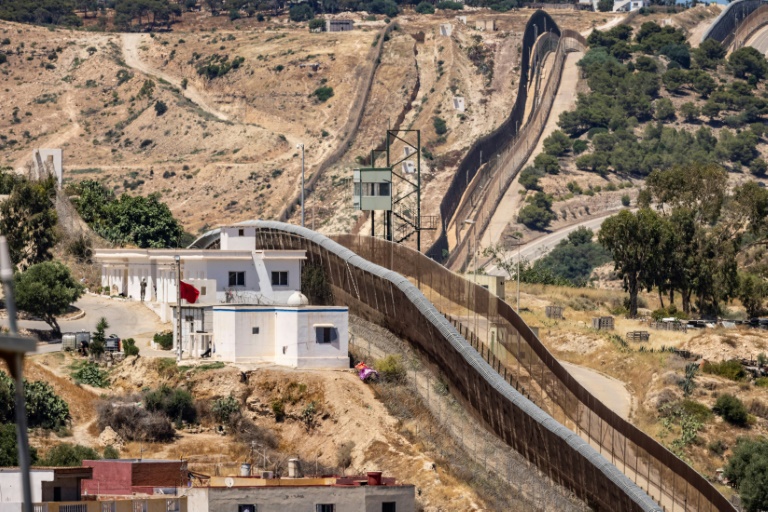
The CNDH said large numbers of migrants, “armed with sticks and stones… split into two groups: the first stormed a border post closed since 2018 and the second climbed nearby walls topped with barbed wire”.

It said that the dead had been crushed in part of a border post, where manual turnstiles allow the passage of a single person at a time.

“A large number of migrants found themselves crammed into this narrow area, resulting in jostling which led to migrants suffocating,” it said.

The United Nations, the African Union and independent rights groups have denounced the use of excessive force by Moroccan and Spanish security personnel.

HRW said a video showed a Moroccan security agent “beating obviously injured men prone on the ground and another agent throwing a limp body onto a pile of people”.

The CNDH defended Moroccan forces’ actions, saying such cases were “isolated” and citing the danger posed by “the large number of migrants” carrying sticks and stones.

“Law enforcement did not use any firearms,” it added.

Also Wednesday, the trial opened in Nador of a group of 29 migrants, including a minor, accused of “illegal entry onto Moroccan territory” as well as “violence against law enforcement officers” and “participating in a criminal gang with a view to organising and facilitating” irregular migration.

The prosecution presented “medical certificates of members of the security forces hurt during the clashes. The judge decided to summon them”, Khalid Ameza, a lawyer for the accused, told AFP.

Melilla migrants likely died of 'suffocation': Moroccan probe

At least 23 migrants who died last month in a mass attempt to enter the Spanish enclave of Melilla from Morocco likely “suffocated”, Morocco’s state-backed CNDH rights group said on Wednesday.

The death toll after around 2,000 people, many from Sudan, stormed the frontier on June 24 was the worst in years of attempted migrant crossings into Spain’s Ceuta and Melilla enclaves, which have two of the EU’s only land borders with Africa.

Adil El-Sehimi, a doctor who examined the bodies during a CNDH fact-finding mission, said the migrants had most likely died of “mechanical asphyxiation”, when a force or object prevents a person from breathing.

CNDH chief Amina Bouayach said 23 migrants had died in the incident, confirming the official toll.

None of the dead have been buried and autopsies were pending, Bouayach told a press conference in Rabat to present the initial findings of the CNDH probe.

Spanish rights group Caminando Fronteras says as many as 37 people lost their lives. 

Five days after the incident, Human Rights Watch (HRW) cited “reports that the authorities in Morocco may be organising hasty mass burials”, along with photographic evidence of recently dug graves in nearby Nador.

The CNDH said large numbers of migrants, “armed with sticks and stones… split into two groups: the first stormed a border post closed since 2018 and the second climbed nearby walls topped with barbed wire”.

It said that the dead had been crushed in part of a border post, where manual turnstiles allow the passage of a single person at a time.

“A large number of migrants found themselves crammed into this narrow area, resulting in jostling which led to migrants suffocating,” it said.

The United Nations, the African Union and independent rights groups have denounced the use of excessive force by Moroccan and Spanish security personnel.

HRW said a video showed a Moroccan security agent “beating obviously injured men prone on the ground and another agent throwing a limp body onto a pile of people”.

The CNDH defended Moroccan forces’ actions, saying such cases were “isolated” and citing the danger posed by “the large number of migrants” carrying sticks and stones.

“Law enforcement did not use any firearms,” it added.

Chad and Niger vow to revive West Africa's anti-jihadist force

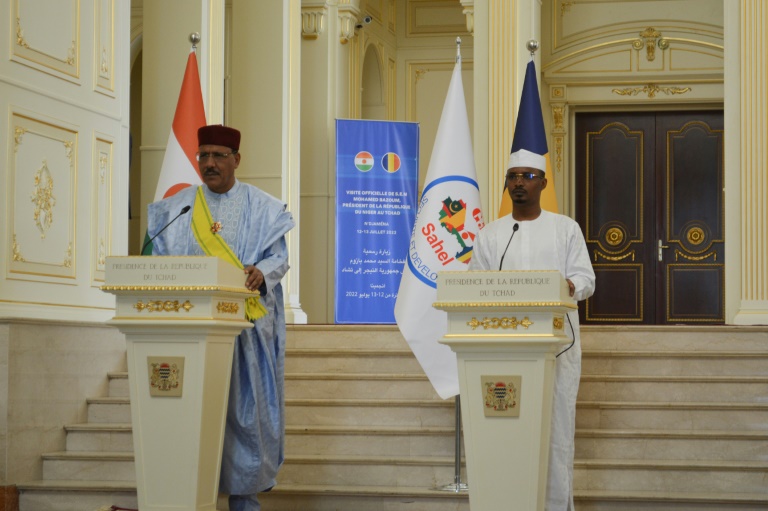
The presidents of Chad and Niger pledged Wednesday to revive the G5 Sahel military grouping to boost the fight against jihadist insurgents after Mali quit the West African force.

But Niger’s Mohamed Bazoum who held talks in N’Djamena with junta leader Mahamat Idriss Deby Itno, skirted round a question on the redeployment of French troops.

After nine years battling jihadists in Mali, France is pulling its troops out and reducing its presence in the wider Sahel following a falling out with the Bamako junta.

“The decision to withdraw from Mali is an episode that will be behind us,” Bazoum told a press conference.

“Soon there will be a meeting” of the remaining four G5 allies  — Burkina Faso, Chad, Mauritania and Niger — “to make sure the G5 is viable,” he added.

Mali’s junta announced in May it was leaving the G5 alliance which was set up in 2014 and has worked alongside the French Barkhane force against multiple jihadist factions who are nonetheless advancing southwards.

More than 2,000 civilians have been killed in Mali, Niger and Burkina Faso since the start of the year.

“We don’t consider that it’s over for the G5 Sahel, we are going to fight,” Bazoum insisted.

General Deby, who took power when his father died more than a year ago on the frontlines after ruling for three decades, said he “regretted” Mali’s departure from the G5.

“Let’s stay optimistic and hope it comes back on the decision,” he said.

France announced the Barkhane withdrawal in February after deploying as many as 5,000 troops in Mali. Only 2,500 French soldiers will remain in the Sahel.

Paris is set to maintain more than 1,000 troops in Niger, backed by three fighter planes, six armed drones and up to six helicopters as its role changes to supporting rather than replacing local forces.

Bazoum said Niamey was still in talks with partners about the French redeployment.

The two presidents said they had signed a security agreement on Wednesday but gave no further details.

They also made no mention of how their own army deployments would be adjusted to take into account France’s troop reductions.

The reduced French operation that takes over from Barkhane will for now remain based in N’Djamena.

Chad’s army is considered the most powerful in the region and as the mainstay in the fight against jihadists has regularly gone into neighbouring states.

Ethiopia holds first meeting of peace committee

A body charged by the Ethiopian government to look into possible peace negotiations with Tigrayan rebels has held its first meeting, a top aide to Prime Minister Abiy Ahmed said.

The seven-member committee, headed by Deputy Prime Minister and Foreign Minister Demeke Mekonnen, “has started work”, Redwan Hussein said on Twitter after Tuesday’s meeting. 

“It has decided on its internal workings and ethics for the discussion which will be led by the African Union,” said Redwan, who is Abiy’s national security adviser.

Abiy last month for the first time raised the prospect of possible peace talks with the Tigray People’s Liberation Front (TPLF) to try to end the brutal conflict that erupted in northern Ethiopia in November 2020.

His ruling Prosperity Party insisted in June that any negotiations could only be led by the African Union (AU), a stance rejected by the rebels.

The TPLF has voiced concerns about the “proximity” of the AU’s envoy, former Nigerian president Olusegun Obasanjo, to Abiy and said it wants any talks to be under the auspices of Kenyan President Uhuru Kenyatta.

Aside from Demeke and Redwan, the committee comprises Justice Minister Gedion Timotheos; National Intelligence and Security Service (NISS) director general Temesgen Tiruneh; military intelligence chief General Berhanu Bekele; Prosperity Party official Hassan Abdulkadir; and the deputy president of the Amhara region which neighbours Tigray, Getachew Jember.

Fighting has eased in northern Ethiopia since a humanitarian truce was declared at the end of March.

But Tigray remains in the grip of a humanitarian crisis, lacking in food, fuel and essential services, according to aid agencies.

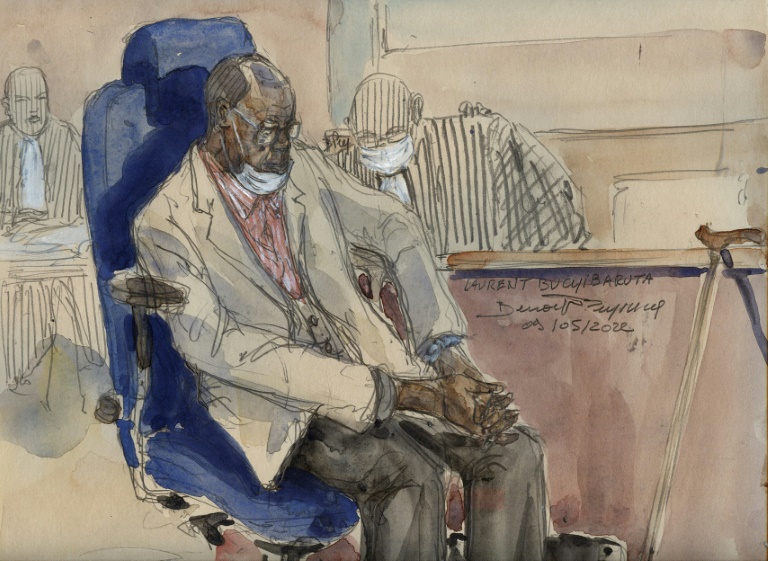
Rwandan genocide survivor group says French verdict a 'strong' message

A Rwandan genocide survivors’ group said Wednesday it welcomed the jailing in France of a former top official convicted of a role in the 1994 slaughter as a “strong” message.

Laurent Bucyibaruta was sentenced Tuesday to 20 years in jail, the highest-ranking Rwandan to have faced trial in France over the massacres in which an estimated 800,000 Tutsis and moderate Hutus died in 100 days of bloodletting.

“It is a strong indication that the political will by France to pursue justice against genocide fugitives is positively changing,” said Naphtal Ahishakiye, executive secretary of Ibuka, the Rwandan umbrella support group for genocide survivors.

“Genocide survivors have little to celebrate considering what they lost but nevertheless, this sentencing is an indication that the truth will always prevail,” Ahishakiye told AFP, calling for other genocide fugitives who have found safe haven in Europe to face justice.

France has long been under pressure from activists to act against suspected Rwandan perpetrators who took refuge on French soil after the massacres.

The French government at the time of the genocide had been a long-standing backer of the Hutu regime in power, something that has since caused decades of tension between the two countries.

Bucyibaruta, the former prefect of the southern province of Gikongoro, was accused of having persuaded thousands of people to take refuge in the Murambi Technical School by promising them food, water and protection. 

Days later, in the early hours of April 21, tens of thousands of Tutsis were executed there in one of the genocide’s bloodiest episodes.

Remy Kamugire, a survivor of the Gikongoro killings who travelled to France to testify in the trial, said the sentence against the 87-year-old should have been tougher.

“Justice is welcome but a 20-year jail term is not enough for Laurent Bucyibaruta, considering his big role in the genocide crimes that were committed and what we lost as survivors.

“We lost everything,” said Kamugire, whose parents were among the victims in 1994. “After he evaded justice for two decades, he deserved life in jail.”

Three arrested in probe into S.Africa tavern tragedy

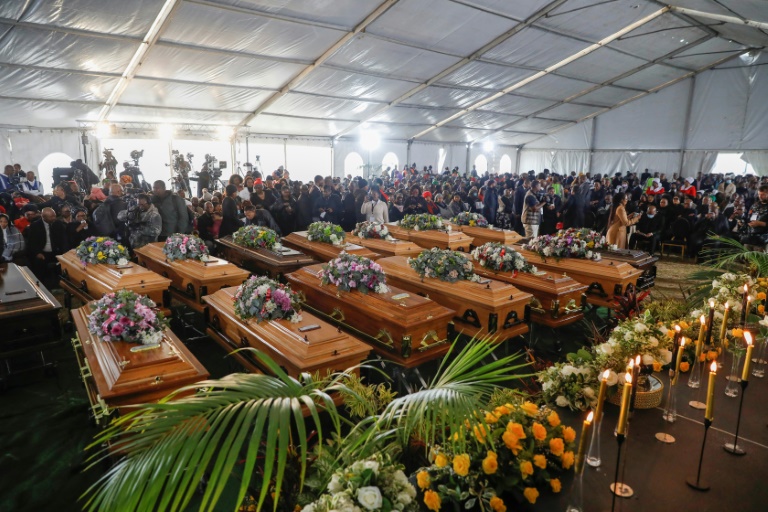
Police in South Africa said on Wednesday they had arrested three people following the mysterious deaths last month of 21 young people in a township tavern. 

The bar’s 52-year-old owner and two employees aged 33 and 34 were taken into custody in recent days for allegedly breaching alcohol sale regulations, police said in a statement without naming the arrested.

The owner will appear in court on August 19 on charges related to selling or supplying alcohol to minors, while the two employees have each been handed a 2,000-rand ($118) fine.

The youths, most of them teenagers, died on June 26 at the Enyobeni tavern in Scenery Park, a township in the coastal city of East London, but the cause of their death remains unclear. 

Survivors have described a battle to escape the jam-packed venue, with one reporting a suffocating smell.

The police have yet to wrap up their investigation, and although officials have ruled out a stampede, autopsy results have not yet been made public.

“Just as we said in the beginning, investigation is a process and needs to be treated with extreme care and wisdom so that we can achieve the desired outcomes,” Eastern Cape provincial commissioner Nomthetheleli Mene said in a statement.

At a memorial service last week, President Cyril Ramaphosa blamed the deaths on the “scourge of underage drinking” and vowed to crack down on “unscrupulous” bar keepers who flouted regulations.

Africa's fastest man Omanyala is on a sprint mission for Kenya

Africa’s fastest man Ferdinand Omanyala is on a mission to put sprinting on the map in Kenya, a country where the long-distance runner is king.

The 26-year-old Kenyan is hoping to shine in the 100m at the World Athletics Championships opening this week in Eugene, Oregon.

But he was facing a race against time on Wednesday to obtain a US visa to enable him to get to Oregon for the 100m heats on Friday.

“Sad that I haven’t travelled to Oregon yet and 100m is in 2 days. Visa delays!!” he posted on Instagram.

“We are anxiously waiting for the US embassy to issue visas for a number of athletes, including Omanyala. Hopefully they will be able to fly out today,” Athletics Kenya executive member Barnabas Korir told AFP.

Omanyala is the third quickest man in the world this season behind Americans Fred Kerley and Trayvon Bromell.

He wears two wristbands on his right arm: one, made of black and green beads, bears the numbers 9:85, his season-best 100m time set in May.

The other, a bracelet crafted from leather and metal, is inscribed with 9:77, the African record he set last September. It made him the ninth fastest man ever, behind four Americans and three Jamaicans.

Making the podium in Eugene would be an historic first for an African runner. 

Namibia’s Frankie Fredericks twice won Olympic silver in the 100m in the 1990s, but his one gold and three silvers in the World Championships were all over 200m. 

Omanyala said he has set his sights on at least reaching the final on July 16.  

“I’m targeting 9.6,” he told AFP in an interview during a training session at the main stadium in the Kenyan capital Nairobi.

“That will be my biggest achievement. And of course, I am going for the win.”

– ‘Something big’ –

As well as Kerley and Bromell, his opposition in Oregon should include Olympic gold medallist Marcell Jacobs of Italy and the 2019 world champion Christian Coleman.

“I am an athlete who runs well under pressure. So I am looking forward to getting better in Oregon, because now everybody who is an athlete will be there,” said Omanyala, who beat Kerley in May.

The young athlete and his coach Duncan Ayiemba have been mapping out ways to make sprinting more popular in Kenya, renowned for its top middle and long-distance runners.

“Normally it’s long distance in Kenya, so I want the 100 metres to be something big in Kenya this year,” said Ayiemba.

Omanyala became the first Kenyan sprinter to reach an Olympic semi-final at the Tokyo Games last year.

The chemistry student took up athletics six years ago after playing rugby sevens.

“When I started athletics, my aim was to make people know that Kenyans can sprint, that is something that has changed,” he said.

– ‘Beating the odds’ –

Omanyala, who hails from western Kenya and is the third of five brothers, said he has had to overcome obstacles, not least the distance.

“In a medium- and long-distance country, it’s a challenge coming up as a sprinter,” he said.

“Even the national federation at some point did not believe there could be a sprinter in Kenya. You have to beat all these odds.”

One hurdle he overcame was being allowed to represent Kenya at the Tokyo Olympics after Athletics Kenya relaxed a decision to prohibit any banned athletes from taking part in international competitions.

He had been suspended for 14 months in 2017 by the Anti-Doping Agency of Kenya after testing positive for a banned substance.

“It was a hard 14 months but life has to move on,” Omanyala said. 

“I was just a year old in the sport. But I was still training during these 14 months, I don’t remember a day that I did not train. I still wanted to do this more and more. That made me stronger.”

Omanyala said he hopes he will be a role model for other Kenyan youngsters.

“I believe I opened the way for so many people coming behind me,” he said. “One of the things that I wanted to do is to leave a legacy. I want to leave an industry of sprint in Kenya. 

“I believe I will inspire so many kids, not only in Kenya but in Africa. I believe there is some kid, somewhere, who is looking up and saying ‘I want to be where Omanyala has been’.”


Close Bitnami banner
Bitnami