Africa Business

Africa's fastest man Omanyala is on a sprint mission for Kenya

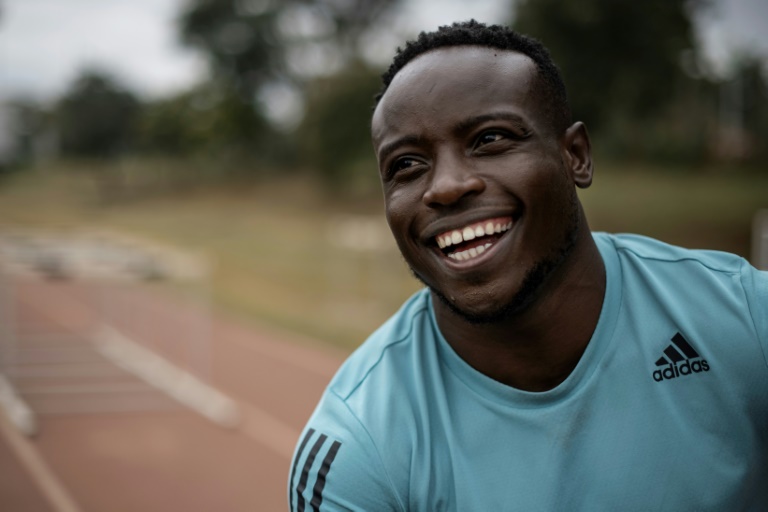
Africa’s fastest man Ferdinand Omanyala is on a mission to show Kenyan runners can shine in sprints.

The 26-year-old heads to the World Athletics Championships aiming to put sprinting on the map in a country where the long-distance runner is king.

Omanyala wears two wristbands on his right arm: one, made of black and green beads, bears the numbers 9:85, his season-best 100m time set in May.

The other, a bracelet crafted from leather and metal, is inscribed with 9:77, the African record he set last September. It made him the ninth fastest man ever, behind four Americans and three Jamaicans.

He will arrive in Eugene, Oregon, where the 100m heats start on the opening morning on July 15, as the third quickest man in the world this season behind the Americans Fred Kerley and Trayvon Bromell.

Making the podium would be an historic first for an African. 

Namibia’s Frankie Fredericks twice won Olympic silver in the 100m in the 1990s, but his one gold and three silvers in the World Championships were all over 200m. 

Omanyala said he has set his sights on at least reaching the final on July 16.  

“I’m targeting 9.6,” he told AFP in an interview during a training session at the main stadium in the Kenyan capital Nairobi.

“That will be my biggest achievement. And of course, I am going for the win.”

– ‘Something big’ –

As well as Kerley and Bromell, his opposition in Oregon should include Olympic gold medallist Marcell Jacobs of Italy and the 2019 world champion Christian Coleman.

“I am an athlete who runs well under pressure. So I am looking forward to getting better in Oregon, because now everybody who is an athlete will be there,” said Omanyala, who beat Kerley in May.

The young athlete and his coach Duncan Ayiemba have been mapping out ways to make sprinting more popular in Kenya, renowned its strength in middle and long-distance runners.

“Normally it’s long distance in Kenya, so I want the 100 metres to be something big in Kenya this year,” said Ayiemba.

Omanyala became the first Kenyan sprinter to reach an Olympic semi-final at the Tokyo Games last year.

The chemistry student took up athletics six years ago after playing rugby sevens.

“When I started athletics, my aim was to make people know that Kenyans can sprint, that is something that has changed,” he said.

– ‘Beating the odds’ –

Omanyala, who hails from western Kenya and is the third of five brothers, said he has had to overcome obstacles, not least the distance.

“In a medium- and long-distance country, it’s a challenge coming up as a sprinter,” he said.

“Even the national federation at some point did not believe there could be a sprinter in Kenya. You have to beat all these odds.”

One hurdle he overcame was being allowed to represent Kenya at the Tokyo Olympics after Athletics Kenya relaxed a decision to prohibit any banned athletes from taking part in international competitions.

He had been suspended for 14 months in 2017 by the Anti-Doping Agency of Kenya after testing positive for a banned substance.

“It was a hard 14 months but life has to move on,” Omanyala said. 

“I was just a year old in the sport. But I was still training during these 14 months, I don’t remember a day that I did not train. I still wanted to do this more and more. That made me stronger.”

Omanyala said he hopes he will be a role model for other Kenyan youngsters.

“I believe I opened the way for so many people coming behind me,” he said. “One of the things that I wanted to do is to leave a legacy. I want to leave an industry of sprint in Kenya. 

“I believe I will inspire so many kids, not only in Kenya but in Africa. I believe there is some kid, somewhere, who is looking up and saying ‘I want to be where Omanyala has been’.”
French court jails ex-top Rwanda official for 20 years over genocide

A French court on Tuesday jailed a former senior Rwandan official for 20 years after finding him guilty of complicity in the African nation’s genocide.

Laurent Bucyibaruta is the highest-ranking Rwandan to have faced trial in France over the 1994 massacres in which an estimated 800,000 Tutsis and moderate Hutus died in 100 days of mass killings.

At the heart of the case against the 78-year-old were several “security” meetings, either ordered or attended by Bucyibaruta, which prosecutors had argued were actually planning sessions for the killings.

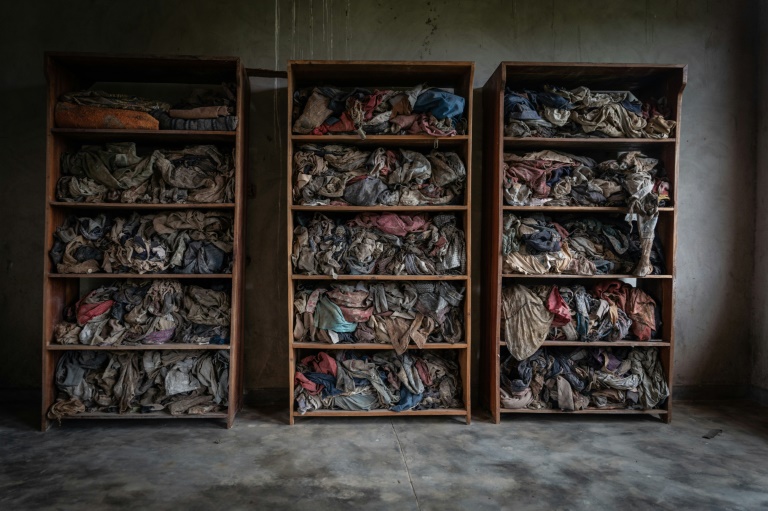
Specifically, the former prefect of the southern province of Gikongoro was accused of having persuaded thousands of people to take refuge in the Murambi Technical School, by promising them food, water and protection. 

Days later, in the early hours of April 21, tens of thousands of Tutsis were executed there in one of the genocide’s bloodiest episodes.

The court also examined Bucyibaruta’s responsibility in the massacre of around 90 Tutsi pupils at the Marie Merci school in Kibeho on May 7, 1994 and in the execution of Tutsi prisoners — including three priests — in Gikongoro prison.

During his trial, Bucyibaruta denied any involvement in the killings.

“I was never on the side of the killers,” Bucyibaruta told the court as his trial ended on Tuesday.

In an apparent message to genocide survivors, he said: “I want to tell them that the thought of leaving them to the killers never entered my mind.”

He added: “Did I lack courage? Could I have saved them? Those questions, those regrets even, have been haunting me for over 28 years.”

His lawyers had called for the court to take “a courageous decision” and acquit him.

– Court cases –

The trial involved more than 100 witness statements, including some from survivors from Rwanda, either in person or by video conference.

Bucyibaruta, who has been in France since 1997, has myriad health problems and was allowed to remain under house arrest during trial to receive treatments.

France has long been under pressure from activists to act against suspected Rwandan perpetrators who took refuge on French soil afterwards.

The French government at the time of the genocide had been a long-standing backer of the Hutu regime in power, which has caused decades of tensions between the countries since.

A separate French probe into the act that sparked the genocide — the shooting down of Hutu president Juvenal Habyarimana’s plane — was closed earlier this year.

Investigators had suspected that rebels under the command of Tutsi rebel leader Paul Kagame — now president of Rwanda — was responsible for attacking the aircraft as it landed in the Rwandan capital.

Kagame has always denied this. 

Four people in three cases have already been convicted in French courts over the genocide: a former hotel driver was handed a 14-year sentence, an army officer was jailed for 25 years and two mayors were given life sentences.

Ethiopia tasks UN to help rebuild Tigray infrastructure

The Ethiopian government said on Tuesday it was tasking a UN agency with helping to rebuild infrastructure in Tigray that was destroyed in the conflict between rebels and federal forces.

The reconstruction is part of a project financed by the World Bank, which in April gave Ethiopia a $300 million grant to help conflict-hit communities.

The “national recovery programme” aims to rebuild infrastructure, improve access to essential services and help victims of gender-based violence, the finance ministry said in a statement.

It said the UN Office for Project Services (UNOPS) would “reconstruct basic service-providing infrastructure” in Tigray, Ethiopia’s war-ravaged northernmost region which is largely under the control of the Tigray People’s Liberation Front (TPLF).

“UNOPS will implement the project in Tigray until situations in Tigray improve to enable the government to implement the project with its own structure,” the ministry said.

It said the other part of the programme involving help for survivors of gender-based violence would be implemented by another party, with negotiations currently taking place. 

Several of Ethiopia’s international partners suspended aid soon after the Tigray conflict erupted in November 2020 between the government and the TPLF.

The conflict has been marked by numerous atrocities and a humanitarian crisis that has left millions in need of emergency aid.

In April, the World Bank was the first major financial institution to unblock funds to Ethiopia — a move that followed the announcement of a “humanitarian truce” in late March.

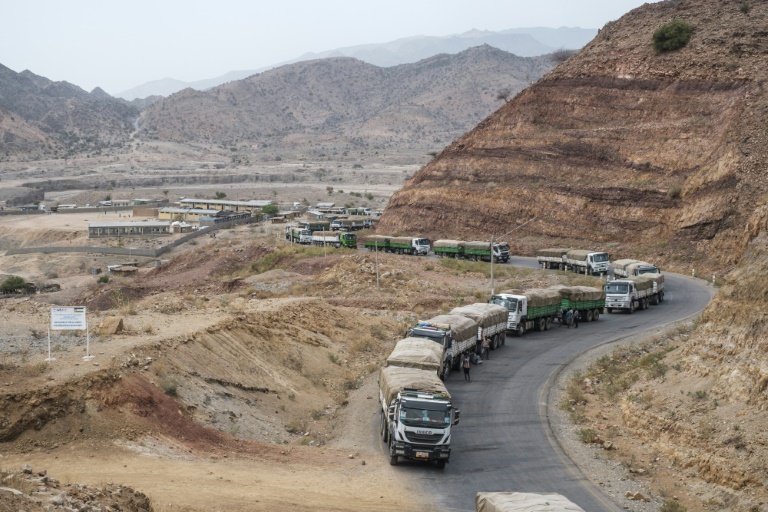
Since then, fighting has largely halted in Tigray and the government in April authorised the resumption of aid convoys by road to the region, after being suspended for three months.

But Tigray remains in desperate straits, deprived of essential services such as electricity, telecommunications and banking, and the UN has said hundreds of thousands of people are on the brink of famine.

Last month, the World Bank agreed to provide $715 million in grants and loans to help herding communities in Ethiopia hit by the conflict and a devastating drought.

Just days before, Prime Minister Abiy Ahmed had said for the first time that his government was open to negotiations with the TPLF, the party that had dominated national politics for three decades until he took office in 2018.

Former Benfica coach Rui Vitoria takes over Egypt national

Egypt has named Rui Vitoria, formerly of Portugal’s Benfica, as the coach for its national team after Ehab Galal was sacked, according to a statement on Tuesday.

“The Egyptian Football Association has reached a final deal with Portuguese Rui Vitoria to lead the Egyptian national team for the next four years,” the association wrote on Twitter.

Egyptian media reports said the Portuguese coach, who led Benfica to the Primeira Liga title in 2016 and 2017, would earn 2.4 million euros annually under the contract.

Former coach Galal was dismissed on June 16 after the Pharaohs slipped to a shock 2-0 defeat by Ethiopia in the qualifiers for the upcoming African Cup of Nations.

His stint lasted a mere two months after taking over from Carlos Queiroz who led Egypt to the AFCON final which they lost to Senegal in February.

Egypt lost to Senegal again under Queiroz in African play-off for a place at this year’s World Cup in Qatar.

Olympic great Mo Farah was trafficked to UK, forced to be child servant

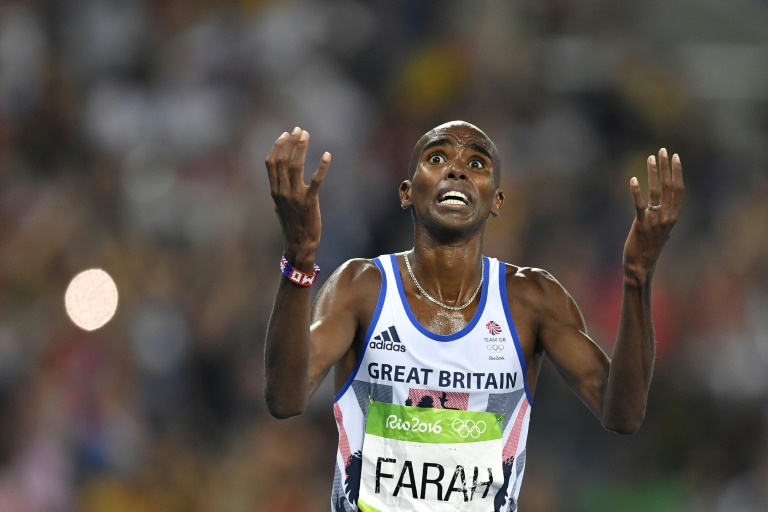
Olympic great Mo Farah was illegally trafficked as a child to Britain from Djibouti and forced to work as a servant, he has revealed, saying his real name is Hussein Abdi Kahin.

The distance runner was flown to the UK from the East African country aged eight or nine by a woman he had never met, given the name Mohammed Farah, and then made to look after another family’s children, he tells a BBC TV documentary “The Real Mo Farah” to be aired Wednesday.

Farah, who completed the 5,000m-10,000m double at both the London 2012 and Rio 2016 Olympics, has previously said he came to the UK as a refugee from Somalia with his parents.

But in stunning revelations, the 39-year-old now says his parents have never been to the UK. 

His father was killed in civil unrest in Somalia when Farah was four years old and his mother, Aisha, and two brothers live in the breakaway state of Somaliland, which is not internationally recognised.

“The truth is I’m not who you think I am,” says Farah. 

“Most people know me as Mo Farah, but it’s not my name or it’s not the reality.”

The woman who flew with him to the UK told him he was being taken to live with relatives and to say his name was Mohamed as she had fake travel documents that showed his photo next to the name “Mohamed Farah”.

Farah said his children motivated him to tell the truth about his past.

“That’s the main reason in telling my story because I want to feel normal and don’t feel like you’re holding on to something.”

– ‘Get out and run’ –

Farah’s wife Tania said in the year leading up to their 2010 wedding she realised “there were lots of missing pieces to his story” but she eventually “wore him down with the questioning” and he told the truth.

When he arrived in the UK, Farah says the woman who accompanied him took a piece of paper from him that had his relatives’ contact details and “ripped it up and put it in the bin. 

“At that moment, I knew I was in trouble,” he says.

Farah says he was forced to do housework and childcare “if I wanted food in my mouth”, and was told: “If you ever want to see your family again, don’t say anything.”

“Often, I would just lock myself in the bathroom and cry,” he says.

His life was transformed for the better once he went to live with Kinsi Farah, the sister of the man who is alleged to have aided in his journey to England.

She tells him in the documentary that she wanted to protect him and adds she does not know why her sister-in-law brought him to England.

“Do you think that was her reason when she bought me to the UK, in helping her with cooking, cleaning?” asks Farah in a video call.

“I don’t know,” she replies.

The athlete is also reunited with his mother in Somaliland in the documentary.

“I sent you away because of the war,” his mother tells him.

“You were given a name that was not yours, sent away to England, a country you knew nothing about.

“It’s important that you tell your story. Lying is a sin.”

Farah’s physical education teacher, Alan Watkinson, noticed how the youngster’s mood changed when he was on the running track.

“The only language he seemed to understand was the language of PE and sport,” says Watkinson.

Farah says it was athletics that enabled him to escape.

“The only thing I could do to get away from this (situation) was to get out and run,” he says.

Farah eventually told Watkinson the truth and he informed local authorities. 

It was Watkinson who applied for Farah’s British citizenship which he described as a “long process” and on July 25, 2000 Farah was recognised as a British citizen.

“I often think about the other Mohamed Farah, the boy whose place I took on that plane and I really hope he’s OK,” said Farah.

Farah was told by lawyers during the making of the documentary due to “false representations” he risked being stripped of his British citizenship.

However, a Home Office spokesman told The Times “No action whatsoever will be taken” against Farah — often called ‘Sir Mo’ after he was ennobled by Queen Elizabeth II in 2017. 

Olympic great Mo Farah was trafficked to UK, forced to be child servant

Olympic great Mo Farah was illegally trafficked to Britain at the age of nine from Djibouti and forced to work as a child servant, he has revealed, saying his real name is Hussein Abdi Kahin.

The distance runner was flown to the UK from the east African country aged eight or nine by a woman he had never met, given the name Mohammed Farah, and then made to look after another family’s children, he tells a BBC TV documentary “The Real Mo Farah” to be aired Wednesday.

Farah, who completed the 5,000m-10,000m double at both the London 2012 and Rio 2016 Olympics, has previously said he came to the UK as a refugee from Somalia with his parents.

But in stunning revelations the 39-year-old now says his parents have never been to the UK — his father was killed in civil unrest in Somalia when Farah was four years old and his mother and two brothers live in the breakaway state of Somaliland, which is not internationally recognised.

“The truth is I’m not who you think I am,” says Farah. “Most people know me as Mo Farah, but it’s not my name or it’s not the reality.”

The woman who flew with him to the UK told him he was being taken to live with relatives and to say his name was Mohamed as she had fake travel documents that showed his photo next to the name “Mohamed Farah”.

Farah, the first British track and field athlete to win four Olympic golds, said his children motivated him to tell the truth about his past.

“I’ve been keeping it for so long, it’s been difficult because you don’t want to face it and often my kids ask questions, ‘Dad, how come this?’ And you’ve always got an answer for everything, but you haven’t got an answer for that,” he said.

“That’s the main reason in telling my story because I want to feel normal and don’t feel like you’re holding on to something.”

– ‘Get out and run’ –

Farah’s wife Tania said in the year leading up to their 2010 wedding she realised “there were lots of missing pieces to his story” but she eventually “wore him down with the questioning” and he told the truth.

When he arrived in the UK, Farah says the woman who accompanied him took a piece of paper from him that had his relatives’ contact details and “ripped it up and put it in the bin. 

“At that moment, I knew I was in trouble,” he says.

Farah says he was forced to do housework and childcare “if I wanted food in my mouth”, and was told: “If you ever want to see your family again, don’t say anything.”

“Often I would just lock myself in the bathroom and cry,” he says.

Farah’s physical education teacher, Alan Watkinson, noticed how the youngster’s mood changed when he was on the running track.

“The only language he seemed to understand was the language of PE and sport,” says Watkinson.

Farah says it was athletics that enabled him to escape.

“The only thing I could do to get away from this (situation) was to get out and run,” he says.

Farah eventually told Watkinson the truth and he informed local authorities. 

It was Watkinson who applied for Farah’s British citizenship which he described as a “long process” and on July 25, 2000 Farah was recognised as a British Citizen.

“I often think about the other Mohamed Farah, the boy whose place I took on that plane and I really hope he’s OK,” said Farah.

Farah was praised on Wednesday for telling his story. 

“We applaud @Mo_Farah for his bravery in telling his heartbreaking story,” tweeted Britain’s Refugee Council charity. 

“He underlines the human reality at the heart of so many stories like his,” it added. “And the desperate need for safe and humane routes for people seeking asylum.”

Autopsy in Spain for ex-Angola leader amid foul play claims

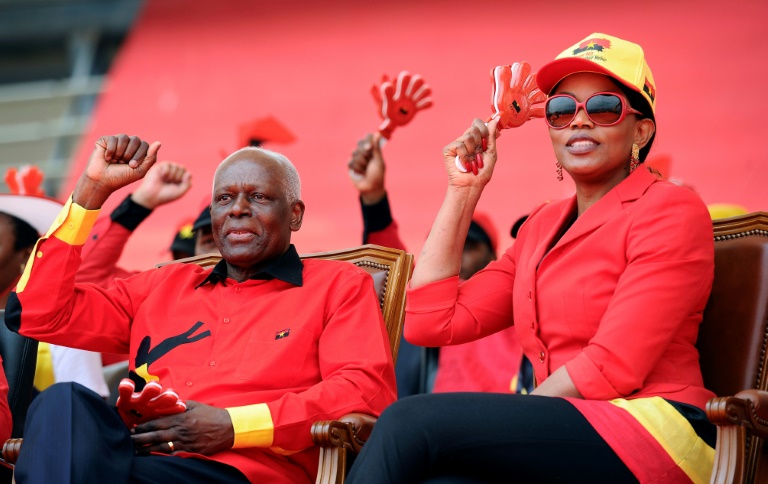
An autopsy has been carried out in Spain on former Angolan President Jose Eduardo dos Santos, who died last week in Barcelona, at the request of one of his daughters who suspects foul play, her lawyers said Monday.

The results of the autopsy, which was conducted over the weekend, are not yet available, a spokesperson for Tchize dos Santos’ lawyers said.

A Barcelona court authorised the post-mortem on Friday, the day of his death, a court spokeswoman said.

Dos Santos, who ruled Angola with an iron fist between 1979 and 2017, had lived in Barcelona since April 2019.

The 79-year-old was taken to hospital and placed in intensive care after suffering a cardiac arrest on June 23. 

His 44-year-old daughter — whose full name is Welwitschia dos Santos — swiftly demanded the hospital retain his body “until an appropriate autopsy is carried out”.

She said in a statement on Saturday there were “a series of signs” that her father’s death occurred under “suspicious circumstances”.

Tchize has filed a legal case in Spain against the former Angolan president’s widow, Ana Paula, and his personal physician for “attempted murder”.

The complaint also includes allegations relating to “failure to exercise a duty of care, injury resulting from gross negligence and disclosure of secrets by people close to him,” her lawyers said in a statement on Friday.

Tchize claimed her father and his wife — a former flight attendant 21 years his junior — had been separated for some time, meaning that his spouse had no right to make decisions about his health. 

She said her father’s health “seriously deteriorated” after Ana Paula arrived in Barcelona and moved into her father’s home in the Spanish city.

Police confirmed receiving the complaint and said they had opened an inquiry. 

Tchize also argues her father wanted to be buried privately in Spain and not in Angola in a state funeral “which could favour the current government” in the former Portuguese colony.

“My father did not want to be buried by Joao Lourenco,” she told CNN Portugal on Monday, calling the current Angolan president “a corrupt dictator”.

– Corruption allegations –

Angolan Foreign Minister Tete Antonio declined to comment on her accusations on Friday as he left the Barcelona hospital where the former president had been treated.

“We did not come here to deal with these things,” he told reporters.

Born in the slums of Luanda, dos Santos was one of Africa’s longest-serving leaders.

Critics say he used his nation’s oil wealth to enrich his family but left his people among the poorest on the planet.

When he stepped down in 2017, dos Santos handed over to former defence minister Lourenco whom he had handpicked to succeed him. 

But Lourenco quickly turned on his erstwhile patron, unleashing an anti-corruption drive to recoup the billions he suspected had been embezzled under dos Santos.

Dos Santos’s son Jose Filomeno has been in prison since 2019 on corruption charges.

His eldest daughter Isabel, who was once named by Forbes as Africa’s richest woman, faces a slew of investigations into her multinational business dealings.

Lourenco, who is seeking re-election in August, nonetheless declared a period of national mourning over the death of dos Santos, calling it a “big loss” for Angola. 

The authorities on Monday announced the opening of a book of condolences in the capital Luanda to allow Angolans to pay tribute to their former leader. 

S.Africans scoff at 'empty' government promises after massacres

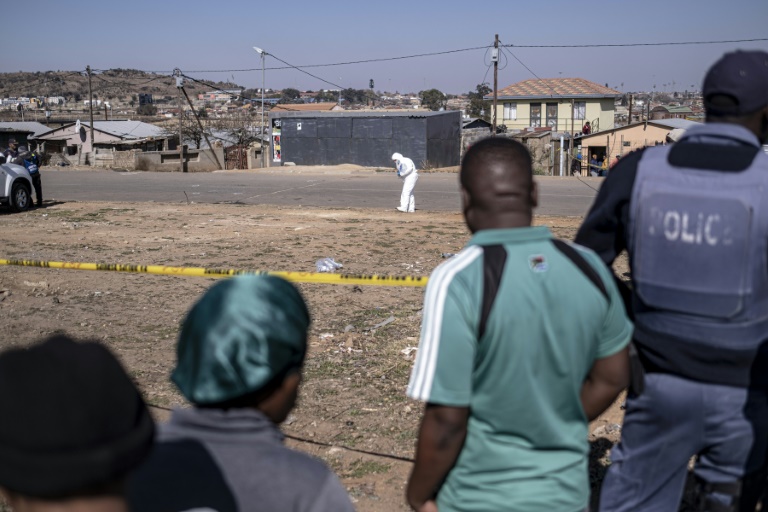
From a mobile stage set up in a dusty, derelict soccer field overlooking hundreds of tin shacks, South African officials promised justice and more security for a grieving community in Soweto on Monday following a weekend massacre.

Fifteen people were shot dead early Sunday when assailants descended on a tavern in the Orlando district of Soweto, wielding powerful guns and shooting seemingly at random. 

“Investigators picked up over 140 empty cartridges from high-calibre weapons at the scene,” said Police Minister Bheki Cele in a statement.

“It was a brutal war in there and quite clear that these murderers wanted to kill as many people as possible.”

At the scene, he told the local community the killers will be found and policing ramped up, beginning with five new police vehicles for the local station, which were brought out for the occasion.

“We have to react. We have to work with people, we have to put hope and stability back,” Cele told reporters after addressing a crowd of more than 200, some in tears, others visibly angry.

But locals said they have heard it before — and no longer believe it.

“As usual, (they’re) giving us empty promises that have never been implemented,” said Tim Thema, 50, a community leader in the informal settlement where the shooting took place. “He’s just trying to score cheap political points.”

Soweto, one of the largest townships in Johannesburg and which used to be a hotbed of anti-apartheid activism, has experienced a revival in recent years but many areas remain impoverished.

Thema said government officials normally visit the area where the shooting took place ahead of elections and after tragedies, promising electricity, water and other resources – only for things to remain the same.

Violent crime has been on the rise in the country, with an average of 67 people murdered every day in the first four months of 2022 — the highest rate in the past five years.

This same weekend saw another mass shooting at a tavern. 

In the eastern province of KwaZulu-Natal, four people were killed and eight others injured amid a hail of bullets in the city of Pietermaritzburg. 

Cele said police did not believe the incidents were connected.

Police announced the arrest of two people in connection with the Pietermaritzburg killings.

The arrests were “a first step of bringing to book all those who orchestrated one of the country’s bloodiest weekends”. e

The violence comes as South Africa faces compounding social and economic challenges, with unemployment at 34.5 and youth unemployment at nearly 64 percent.

– Poverty, no jobs, drink –

“Poverty is among the things that’s caused this,” said Siyabonga Sam, 32, another Orlando resident who lost his job during the coronavirus pandemic. “If government doesn’t create jobs, this thing will never end.”

Johannesburg Mayor Mpho Phalatse told reporters the high number of taverns and liquor shops was an issue, adding such venues often outnumber “schools, clinics, churches and everything else combined”.

Alcohol abuse is a major concern in the country, with binge drinking on the rise according to government health reports.

Phalatse said the government, along with the liquor board, needed to find a way to intervene.

But residents don’t see the taverns as the source of the violence.

“It’s not a question of taverns… The problem (is the lack of) social economic activities, something that can keep occupied these youth, to have something in life,” Thema said.

With the area devoid of streetlights, parks and proper housing, Sipho Khwinda, 49, a pastor with four children said basic infrastructure would go a long way to improving community safety.

“There’s no fence… there’s no security,” he said.

Tunisia opposition renews calls for referendum boycott

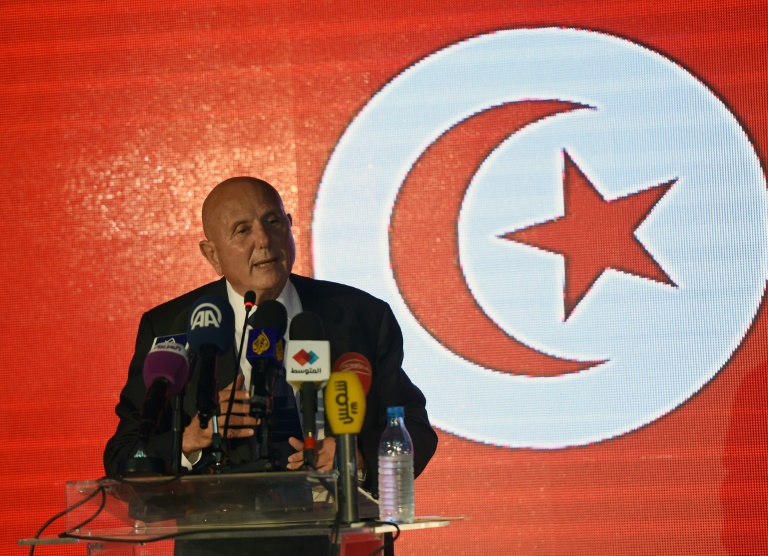
A Tunisian opposition alliance renewed calls Monday for a boycott of a July 25 referendum on a new constitution promoted by President Kais Saied, despite the publication of an amended draft.

The draft constitution is the centrepiece of Saied’s programme to overhaul Tunisia’s political system, but rivals say the text confirms fears he is seeking to reinstall an autocracy in the birthplace of the 2011 Arab Spring uprisings.

“We call on Tunisians to boycott this illegal, unconstitutional process that aims to legitimise a coup d’etat,” veteran opposition figure Ahmed Nejib Chebbi, leader of the National Salvation Front, told AFP on the sidelines of a news conference in Tunis.

Chebbi told reporters that rights and freedoms in the North African country would be threatened if the charter was approved.

“For me it’s the quintessential bad constitution,” he said.

The National Salvation Front (FSN) includes five political parties, among them Saied’s nemesis the Islamist-inspired Ennahdha party, along with five civil society groups involving independent political figures.

It was formed in April, months after Saied, a former law professor elected in 2019 amid public anger against the political class, on July 25, 2021 sacked the government and suspended parliament, later seizing far-reaching legislative and judicial powers.

Saied’s initial power grab was welcomed by many Tunisians sick of the often-stalemated post-revolution political system.

But critics have warned his moves risk a return to autocracy, a decade after the 2011 overthrow of dictator Zine el Abidine Ben Ali in a popular revolt.

The process of writing the constitution has also come under fire.

The legal expert who oversaw the constitution’s drafting has disavowed it, saying it was “completely different” from what his committee had submitted and warning that some articles could “pave the way for a dictatorial regime”.

Then last week, Saied published an amended draft, apparently attempting to ward off criticism after the original was blasted for the nearly unlimited power it gave his office.

On Monday, Jawhar Ben Mbarek, FSN member and leader of “Citizens Against the Coup”, urged Tunisians to “massively reject this referendum”.

“We reject the entire process,” he told AFP. “We are committed to the 2014 constitution, which we consider to be the only legal constitution, representative of the will of the Tunisian people.”

The European Union called Monday for an “inclusive national dialogue”, saying it would be “a cornerstone of any credible constitutional process and long-term stability”.

“It is essential to bring together the widest possible spectrum of political and societal actors in addressing the political, economic and social challenges the country is facing,” EU foreign policy chief Josep Borrell’s office said in a statement.

Raza stars as Zimbabwe sink Singapore in T20 World Cup qualifier

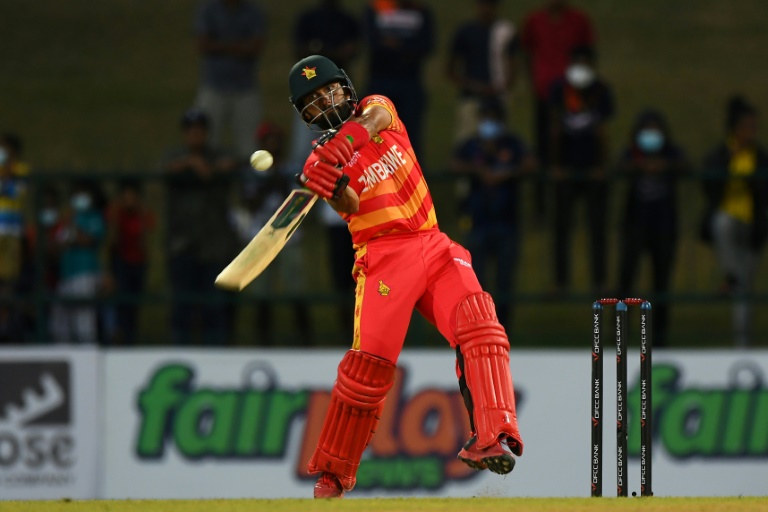
Sikandar Raza struck 87 off 40 balls as hosts Zimbabwe defeated Singapore by 111 runs on Monday to make a great start in their bid to qualify for the 2022 Twenty20 World Cup in Australia.

Put into bat after losing the toss, Zimbabwe posted 236-5 in 20 overs with Raza, Sean Williams (53) and captain Craig Ervine (34) the leading run makers at Queens Sports Club in southern city Bulawayo.

Singapore never looked like matching the run rate of the home team and managed just 125-7 with unbeaten Janak Prakash (32) top scoring and Surendran Chandramohan (21) the only other contributor of note.

Tendai Chatara (3-14) and Blessing Muzarabani (2-21) were the most successful bowlers for Zimbabwe, who are seeking a sixth T20 World Cup tournament appearance.

New Zimbabwe coach and former star batsman Dave Houghton had called for exciting, positive cricket from a team that last month suffered 3-0 series losses to visiting Afghanistan in both white-ball formats.

Batting at number five, Pakistan-born right-hander Raza heeded the rallying cry with a man-of-the-match performance that included five sixes and eight fours.

“This was a great start. The coach has emphasised the need to not only start the tournament well but finish it equally well. Our goal is to qualify for Australia,” said Raza.

“We want the other seven teams to know that we are determined to secure one of the two qualifying places on offer and I think we did that really well.

“The win over Singapore is history now. The focus of my teammates and I has already shifted to the match against Jersey tomorrow.”

– Taylor ton for USA –

A United States side including former South Africa fast bowler Rusty Theron defeated Jersey by eight wickets in the other Group A clash.

Jersey, one of four contenders in Bulawayo hoping to reach the T20 World Cup for the first time, made 154-5 off 20 overs.

Batting at number three, Asa Tribe struck an unbeaten 73, including six sixes, for Jersey, a tiny London-ruled island between England and France. 

The USA surpassed that total by reaching 159-2 with 11 balls to spare and opener Steven Taylor (101 not out) starred. He faced 55 balls and fired five sixes and 12 fours. 

If Zimbabwe beat Jersey and the USA defeat Singapore on Tuesday both will secure semi-finals places, leaving the hosts and the Americans to fight for first place in the group on Thursday.

Four-time qualifiers the Netherlands lived up to their billing as Group B favourites with a 52-run victory over Papua New Guinea.

The Dutch won the toss and posted 163-7 with Stephan Myburgh (39) top scoring while Semo Kamea and Charles Amini took two wickets each for the Pacific islanders.

Papua New Guinea were all out for 111 in 19.4 overs having never matched the Netherlands run rate. Sese Bau (35) was the only batsman to impress while Logan van Beek (3-17) was the pick of the Dutch bowlers.

Uganda surprised Hong Kong in the same group, winning by two wickets in a low scoring affair. Replying to 87-9, the Africans reached 88-8 off the third ball of the final over.

Wins for the Netherlands over Hong Kong and Uganda against Papua New Guinea on Tuesday will seal semi-finals places.

The Bulawayo finalists will join 14 other nations at the T20 World Cup in Australia from October 16.

Close Bitnami banner
Bitnami