Africa Business

S.Africans scoff at 'empty' government promises after massacres

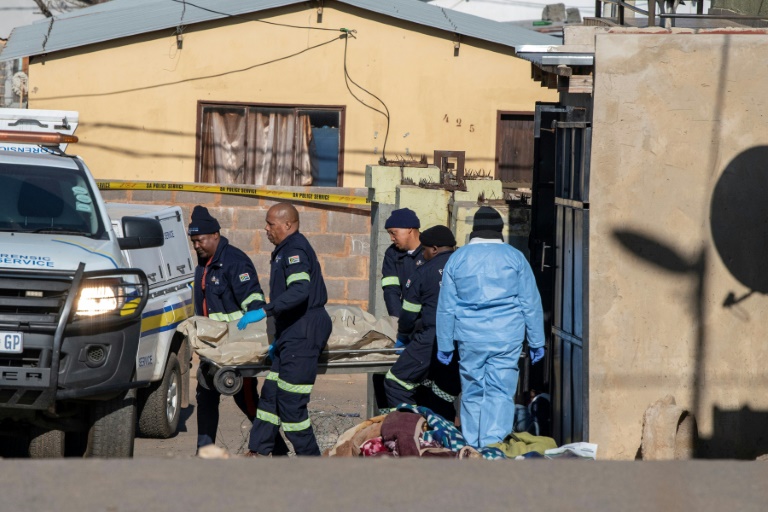
From a mobile stage set up in a dusty, derelict soccer field overlooking hundreds of tin shacks, South African officials promised justice and more security for a grieving community in Soweto on Monday following a weekend massacre.

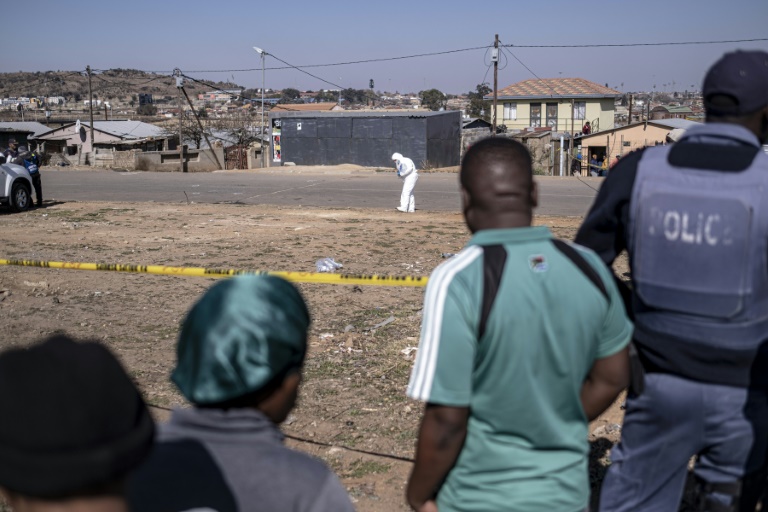
Fifteen people were shot dead early Sunday when assailants descended on a tavern in the Orlando district of Soweto, wielding powerful guns and shooting seemingly at random. 

Police Minister Bheki Cele told the local community the killers — who remain at large — will be found and policing ramped up, beginning with five new police vehicles for the local station, which were brought out for the occasion.

“We have to react. We have to work with people, we have to put hope and stability back,” Cele told reporters after his address to a crowd of more than 200 people, some in tears, others visibly angry.

But locals said they have heard it before — and no longer believe it.

“As usual, (they’re) giving us empty promises that have never been implemented,” said Tim Thema, 50, a community leader in the informal settlement where the shooting took place. “He’s just trying to score cheap political points.”

Soweto, one of the largest townships in Johannesburg and which used to be a hotbed of anti-apartheid activism, has experienced a revival in recent years but many areas remain impoverished.

Thema said government officials normally visit the area where the shooting took place ahead of elections and after tragedies, promising electricity, water and other resources – only for things to remain the same.

Violent crime has been on the rise in the country, with an average of 67 people murdered every day in the first four months of 2022 — the highest rate in the past five years.

This same weekend saw another mass shooting at a tavern. 

In the eastern province of KwaZulu-Natal, four people were killed and eight others injured amid a hail of bullets in the city of Pietermaritzburg. 

Cele said police did not believe the incidents were connected.

The violence comes as South Africa faces compounding social and economic challenges, with unemployment at 34.5 and youth unemployment at nearly 64 percent.

– Poverty, no jobs, drink –

“Poverty is among the things that’s caused this,” said Siyabonga Sam, 32, another Orlando resident who lost his job during the coronavirus pandemic. “If government doesn’t create jobs, this thing will never end.”

Johannesburg Mayor Mpho Phalatse told reporters the high number of taverns and liquor shops was an issue, adding such venues often outnumber “schools, clinics, churches and everything else combined”.

Alcohol abuse is a major concern in the country, with binge drinking on the rise according to government health reports.

Phalatse said the government, along with the liquor board, needed to find a way to intervene.

But residents don’t see the taverns as the source of the violence.

“It’s not a question of taverns… The problem (is the lack of) social economic activities, something that can keep occupied these youth, to have something in life,” Thema said.

With the area devoid of streetlights, parks and proper housing, Sipho Khwinda, 49, a pastor with four children said basic infrastructure would go a long way to improving community safety.

“There’s no fence… there’s no security,” he said.
Mane, Salah among African Player of the Year contenders

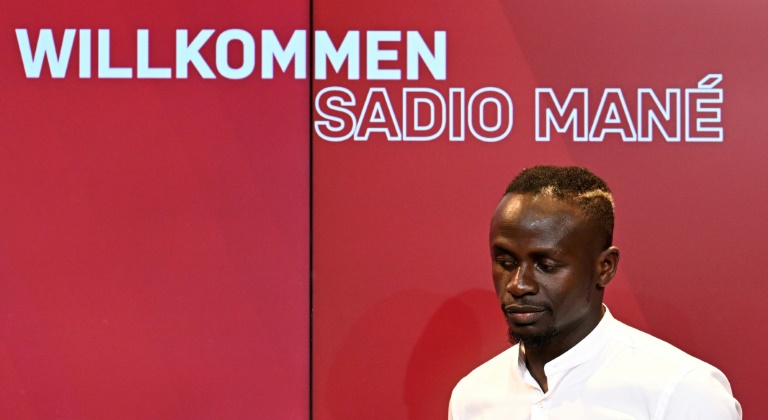
Former Liverpool teammates Sadio Mane and Mohamed Salah are among 10 stars shortlisted for the 2022 African Player of the Year award, the Confederation of African Football (CAF) announced on Monday.

Salah won the award in 2017 and 2018 and Mane in 2019. The 2020 and 2021 editions were cancelled due to the coronavirus pandemic.

Mane moved to Bayern Munich last month while Salah signed an extension to his contract at Anfield.

Playing key roles as Senegal won the Africa Cup of Nations for the first time this year and qualified for the 2022 World Cup in Qatar could give Mane the edge over Salah.  

Another contender is 2016 African Player of the Year Riyad Mahrez, the Algeria captain and Manchester City winger.

Senegal and Chelsea shot-stopper Edouard Mendy is hoping to become the first goalkeeper to lift the trophy since Moroccan Ezzaki Badou in 1986.

The winner will be announced at a ceremony in Rabat on July 21 after the captains and coaches of African national teams, CAF technical committee members and selected media vote.  

African Player of the Year nominees:

Riyad Mahrez (Algeria, Manchester City/ENG), Karl Toko Ekambi (Cameroon, Lyon/FRA), Vincent Aboubacar (Cameroon, Al Nassr/KSA), Sebastien Haller (Ivory Coast, Borussia Dortmund/GER), Mohamed Salah (Egypt, Liverpool/ENG), Naby Keita (Guinea, Liverpool/EGY), Achraf Hakimi (Morocco, Paris Saint-Germain/FRA), Edouard Mendy (Senegal, Chelsea/ENG), Kalidou Koulibaly (Senegal, Napoli/ITA), Sadio Mane (Senegal, Bayern Munich/GER)

Tunisia opposition renews calls for referendum boycott

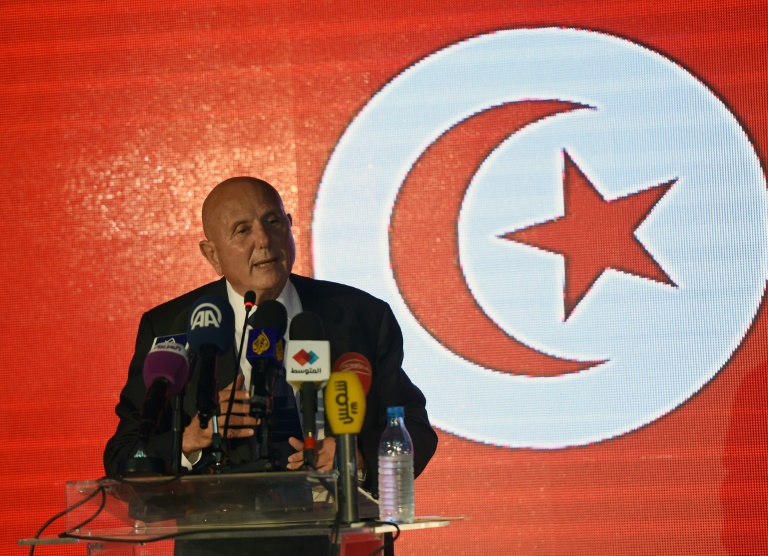
A Tunisian opposition alliance renewed calls Monday for a boycott of a July 25 referendum on a new constitution promoted by President Kais Saied, despite the publication of an amended draft.

The draft constitution is the centrepiece of Saied’s programme to overhaul Tunisia’s political system, but rivals say the text confirms fears he is seeking to reinstall an autocracy in the birthplace of the 2011 Arab Spring uprisings.

“We call on Tunisians to boycott this illegal, unconstitutional process that aims to legitimise a coup d’etat,” veteran opposition figure Ahmed Nejib Chebbi, leader of the National Salvation Front, told AFP on the sidelines of a news conference in Tunis.

Chebbi told reporters that rights and freedoms in the North African country would be threatened if the charter was approved.

“For me it’s the quintessential bad constitution,” he said.

The National Salvation Front (FSN) includes five political parties, among them Saied’s nemesis the Islamist-inspired Ennahdha party, along with five civil society groups involving independent political figures.

It was formed in April, months after Saied, a former law professor elected in 2019 amid public anger against the political class, on July 25, 2021 sacked the government and suspended parliament, later seizing far-reaching legislative and judicial powers.

Saied’s initial power grab was welcomed by many Tunisians sick of the often-stalemated post-revolution political system.

But critics have warned his moves risk a return to autocracy, a decade after the 2011 overthrow of dictator Zine el Abidine Ben Ali in a popular revolt.

The process of writing the constitution has also come under fire.

The legal expert who oversaw the constitution’s drafting has disavowed it, saying it was “completely different” from what his committee had submitted and warning that some articles could “pave the way for a dictatorial regime”.

Then last week, Saied published an amended draft, apparently attempting to ward off criticism after the original was blasted for the nearly unlimited power it gave his office.

On Monday, Jawhar Ben Mbarek, FSN member and leader of “Citizens Against the Coup”, urged Tunisians to “massively reject this referendum”.

“We reject the entire process,” he told AFP. “We are committed to the 2014 constitution, which we consider to be the only legal constitution, representative of the will of the Tunisian people.”

Autopsy in Spain for ex-Angola leader amid foul play claims

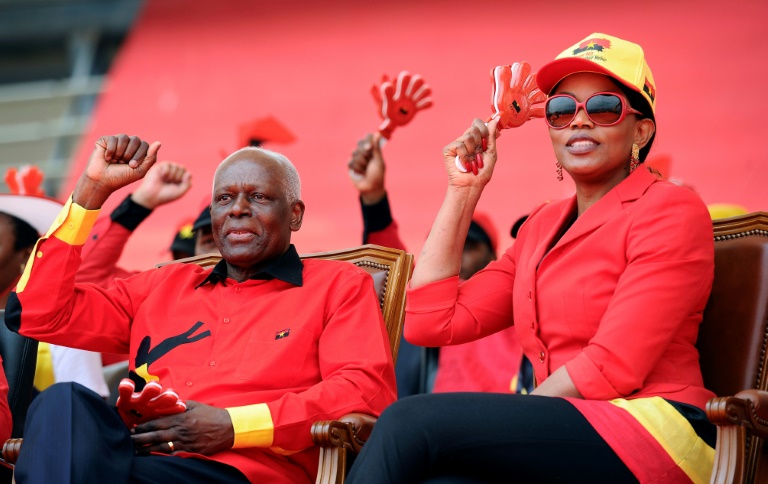
An autopsy has been carried out on in Spain on former Angolan President Jose Eduardo dos Santos, who died last week in Barcelona, at the request of one of his daughters who suspects foul play, her lawyers said Monday.

The results of the autopsy, which was carried out over the weekend, are not yet available, a spokesperson for Tchize dos Santos’ lawyers said.

A Barcelona court authorised the post-mortem on Friday, the day of his death, a court spokeswoman said.

Dos Santos, who ruled Angola with an iron fist between 1979 and 2017, had lived in Barcelona since April 2019.

The 79-year-old was taken to hospital and placed in intensive care after suffering a cardiac arrest on June 23. 

His 44-year-old daughter — whose full name is Welwitschia dos Santos — swiftly demanded the hospital retain his body “until an appropriate autopsy is carried out.”

She said in a statement on Saturday there were “a series of signs” that her father’s death occurred under “suspicious circumstances”.

Tchize has filed a legal case in Spain against the former Angolan president’s widow, Ana Paula, and his personal physician for “attempted murder”.

The complaint also includes allegations relating to “failure to exercise a duty of care, injury resulting from gross negligence and disclosure of secrets by people close to him,” her lawyers said in a statement on Friday.

Tchize claimed her father and his wife — a former flight attendant 18 years his junior — had been separated for some time, meaning that his spouse had no right to make decisions about his health. 

She said her father’s health “seriously deteriorated” after Ana Paula arrived in Barcelona and moved into her father’s home in the Spanish city.

Police confirmed receiving the complaint and said they had opened an inquiry. 

Tchize also argues her father wanted to be buried privately in Spain and not in Angola in a state funeral “which could favour the current government” in the former Portuguese colony.

– Corruption allegations –

Angolan Foreign Minister Tete Antonio declined to comment on her accusations on Friday as he left the Barcelona hospital where the former president had been treated.

“We did not come here to deal with these things,” he told reporters.

Born in the slums of Luanda, dos Santos was one of Africa’s longest-serving leaders.

Critics say he used his nation’s oil wealth to enrich his family but left his people among the poorest on the planet.

When he stepped down in 2017, dos Santos handed over to former defence minister Joao Lourenco whom he had handpicked to succeed him. 

But Lourenco quickly turned on his erstwhile patron, unleashing an anti-corruption drive to recoup the billions he suspected had been embezzled under dos Santos.

Dos Santos’s son Jose Filomeno has been in prison since 2019 on corruption charges.

His eldest daughter Isabel who was once named by Forbes as Africa’s richest woman, faces a slew of investigations into her multinational business dealings.

Lourenco, who is seeking re-election in August, nonetheless declared five days of national mourning over the death of dos Santos, calling it a “big loss” for Angola. 

Palace sign Mali midfielder Doucoure from Lens

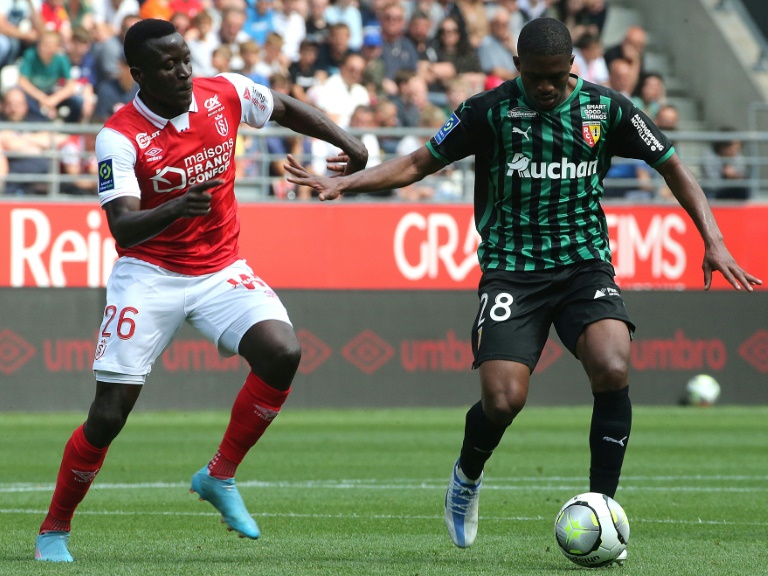
Crystal Palace signed Mali midfielder Cheick Doucoure from Lens in a deal worth a reported £20 million ($23 million) on Monday.

Doucoure agreed a five-year contract with the Premier League club after impressing for Lens in the French top-flight last season.

The 22-year-old was one of Patrick Vieira’s top transfer targets as the Palace boss looked for a replacement for England midfielder Conor Gallager, who has returned to Chelsea after last season’s loan spell at Selhurst Park.

“I’m very happy, I feel a lot of joy and a lot of pride to be a Palace player. I’m proud to be at Palace today,” Doucoure said.

Doucoure is Palace’s third close-season signing following the arrivals of Malcolm Ebiowei and Sam Johnstone.

Palace chairman Steve Parish added: “Cheick’s arrival is yet another statement of intent, demonstrating our ambition to further improve the squad this summer.

“We are extremely confident that Cheick will adapt seamlessly to the rigours of the Premier League and that he will contribute positively to the squad, and I wish him all the very best for his time with us.”

Autopsy in Spain for ex-Angola leader amid foul play claims

An autopsy has been carried out on in Spain on former Angolan President Jose Eduardo dos Santos, who died last week in Barcelona, at the request of one of his daughters who suspects foul play, her lawyers said Monday.

The results of the autopsy are not yet available, a spokesperson for Tchize dos Santos’ lawyers said.

A Barcelona court authorised the post-mortem on Friday, the day of his death, a court spokeswoman said.

Dos Santos, who ruled Angola between 1979 and 2017, had lived in Barcelona since April 2019.

The 79-year-old was taken to hospital and placed in intensive care after suffering a cardiac arrest on June 23. 

His 44-year-old daughter — whose full name is Welwitschia dos Santos — swiftly demanded the hospital retain his body “until an appropriate autopsy is carried out.”

She said in a statement on Saturday there were “a series of signs” that her father’s death occurred under “suspicious circumstances”.

Tchize has filed a legal case in Spain against the former Angolan president’s widow, Ana Paula, and his personal physician for “attempted murder”.

The complaint also includes allegations relating to “failure to exercise a duty of care, injury resulting from gross negligence and disclosure of secrets by people close to him,” her lawyers said in a statement on Friday.

Tchize claimed her father and his wife had been separated for some time, meaning that his spouse had no right to make decisions about his health. 

Police confirmed receiving the complaint and said they had opened an inquiry. 

Tchize also argues her father wanted to be buried privately in Spain and not in Angola in a state funeral “which could favour the current government” in the former Portuguese colony.

Born in the slums of Luanda, dos Santos was one of Africa’s longest-serving leaders.

Critics say he used his nation’s oil wealth to enrich his family while leaving his people among the poorest on the planet.

When he stepped down, dos Santos handed over to former defence minister Joao Lourenco whom he had handpicked to succeed him. 

But Lourenco quickly turned on his erstwhile patron, starting an anti-corruption drive to recoup the billions he suspected had been embezzled under dos Santos.

Khartoum democracy activists lift half of sit-ins

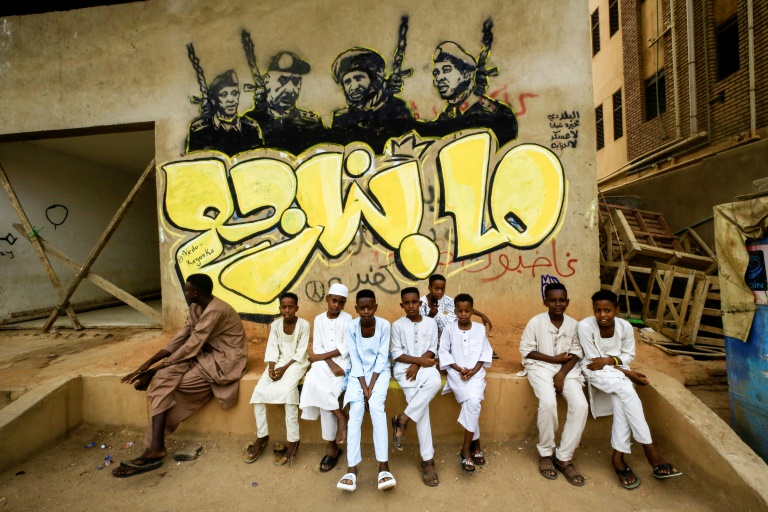
Organisers of Khartoum’s sit-ins, begun 10 days ago to force Sudan’s army to return power to civilians, announced Monday that they had dismantled two of their four camps. 

The protests began after security force killed nine demonstrators in anti-coup rallies by tens of thousands on June 30, according to pro-democracy medics, in the deadliest violence so far this year.

In response, protesters called for “unlimited” sit-ins the following day, in an attempt to end military rule.

They set up four camps — two in the centre of Khartoum on streets they barricaded with bricks, and one each in the capital’s sister cities of Omdurman and Khartoum North.

But on Monday, while Sudan celebrated the Muslim festival of Eid al-Adha for a third day, “resistance committees” announced they were breaking up the Omdurman camp. 

The committees are influential neighbourhood groups that have been organising demonstrations since the October 25 coup. 

A sit-in outside Khartoum’s al-Jawda hospital was lifted on Friday, according to activists. It ended on the eve of Eid al-Adha, a major holiday for which many residents of Khartoum return to their provincial homes for several days.

The other two sit-ins continue even if the number of demonstrators participating has fallen because of the holiday.

Rallies on June 30 and the subsequent sit-ins marked a resurgence of the protest movement for civilian rule. Although the movement had continued to hold near-weekly anti-coup rallies they appeared to decline in intensity.

Medics say a total of 114 people have been killed in the crackdown by security forces against protesters since the October coup, which disrupted a transition to civilian rule forged after the 2019 overthrow of longtime autocrat Omar al-Bashir.

The coup drew international condemnation and cuts in vital aid.

Four days into the sit-ins the army chief, General Abdel Fattah al-Burhan, last week vowed to make way for a civilian government but activists are deeply sceptical of his pledge.

On Thursday pro-democracy groups, including political parties and resistance committees, announced their plans to establish a revolutionary council in opposition to Burhan.

Democratic interludes have been rare in Sudan’s history, and the military dominates lucrative companies specialising in everything from agriculture to infrastructure projects. 

19 killed in South Africa bar shootings

Nineteen people are dead after armed assailants randomly shot at patrons in two bars in South Africa in separate incidents denounced by the president as “unacceptable and worrying”. 

In Soweto, 15 people — among them two women — were killed as they enjoyed a night out, police said, when assailants pulled up in a minibus taxi and began randomly firing high-calibre guns at drinkers.

In the eastern city of Pietermaritzburg in KwaZulu-Natal province four people were killed and eight wounded in a bar when two men fired indiscriminately at customers.

Shootings are common in South Africa, a country with one of the world’s highest murder rates, fuelled by gang violence and alcohol.

But the similar modus operandi in the weekend killings has left investigators puzzled.

“As a nation, we cannot allow violent criminals to terrorise us in this way, regardless of where such incidents may occur,” President Cyril Ramaphosa said in a statement.

The violent deaths are “unacceptable and worrying” he added, offering condolences for the lives lost under “similar circumstances” in Soweto and Pietermaritzburg.

– ‘Shot randomly’ –

In Soweto, Johannesburg’s largest township to the southwest of South Africa’s economic capital, police were called to the scene shortly after midnight.

They found “12 people were dead with gunshot wounds,” a local senior police officer Nonhlanhla Kubheka told AFP. 

Eleven people were taken to hospital, and three later succumbed to their wounds.

The dead were aged between 19 and 35, provincial police chief Elias Mawela told AFP. 

“According to witnesses, they shot randomly,” said Mawela.

He said AK47 bullet cartridges and 9 mm bullet cartridges were found on the scene, suggesting multiple shooters were involved.

No arrests have been made yet and there were no details regarding the assailants.

The shooters were “unprovoked”, said provincial community safety minister Faith Mazibuko told AFP. 

“Patrons were just enjoying themselves… and others (were) playing snooker,” she said.

Hundreds of people massed behind police cordons as police investigated, AFP journalists reported.

Only a small poster showing beer prices at the bar could be seen outside the establishment located between houses.

Police led away crying relatives of those caught up in the drama who tried to approach the crime scene.

The colourful Soweto Towers, a favourite bungee jumping spot for tourists, stood out in the background.

– Blood stains –

In Pietermaritzburg, four people aged between 30 and 45 were killed and eight wounded on Saturday night, police spokeswoman Nqobile Gwala said.

Two men drove up, entered the bar and “fired random shots at the patrons”, before fleeing, Gwala said. Two died at the scene and the other two in hospital.

The attack occurred at a tavern in a semi-rural area 20 kilometres (12 miles) from Pietermaritzburg, close to a car wash and a liquor store, according to an AFP reporter on the scene.

Local mayor Mzimkhulu Thebola said the assault was over very quickly.

“Every week we get news of people that have just been shot at randomly,” said Thebola, wearing a bright yellow winter jacket, the colours of the ruling African National Congress.

An AFP correspondent saw blood stains on the ground in front of the bar.

The killings come two weeks to the day after the mysterious deaths of 21 people, mostly teens, in still unclear circumstances at a township tavern last month in the southern city of East London.

The latest shootings also come a year after an outbreak of the worst violence the country has seen since the end of the apartheid era three decades ago brought democracy.

Last July saw large scale rioting and looting, ransacking of shops, a wave of arson attacks and attacks on infrastructure and industrial warehouses leading to more than 350 deaths and several thousand arrests with the country already in the throes of a major Covid-19 wave.

Most of the unrest occurred in Johannesburg and KwaZulu-Natal as people protested the sentencing and incarceration of former President Jacob Zuma.

Zuma was sentenced after refusing to testify on corruption charges during his 2009 to 2018 tenure. 

Morocco king in first public appearance since Covid recovery

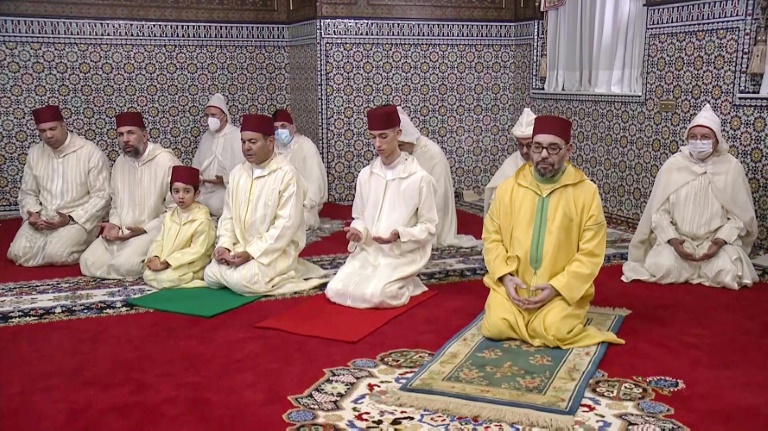
Morocco’s King Mohammed VI took part in rituals for the Muslim feast of Eid al-Adha on Sunday, official media said, in his first public appearance since recovering from Covid-19.

The 58-year-old monarch, accompanied by his son, Crown Prince Moulay El Hassan, 19, led prayers at the royal palace in Sale, adjacent to Rabat.

He then “continued on to the ritual of sacrifice”, the official MAP news agency said.

The ceremony took place “privately and with very limited participation” in order to respect Covid-19 preventive measures, it added.

Wearing a yellow robe and appearing thinner, the king was seen smiling at the end of the prayers next to his son and his brother Prince Moulay Rachid, 52, images broadcast on public television showed.

Muslims across the world celebrate Eid al-Adha by slaughtering livestock to commemorate the willingness of Abraham to sacrifice his son to show obedience to God.

The king is “the commander of the faithful” and Islam is the state religion in Morocco.

On June 16, the monarch’s personal doctor said King Mohammed VI had tested positive for Covid-19 but without exhibiting symptoms and recommended “a period of rest for a few days”.

The king continued to send protocol and other messages during his convalescence.

The monarch’s health is the subject of keen public interest in the North African kingdom, especially since he underwent heart surgery in February 2018 and in June 2020.

The Jeune Afrique weekly said the king contracted Covid-19 in France, where he had arrived for a private visit on June 1.

Since the outbreak of the coronavirus pandemic in March 2020, Mohammed VI had only taken one other overseas trip — to Gabon in December last year.

Mohammed VI has ruled Morocco since July 1999, when he inherited the throne from his father Hassan II.

19 killed in South Africa bar shootings

Nineteen people are dead after armed assailants randomly shot at patrons in two bars in South Africa in separate incidents denounced by the president as “unacceptable and worrying”. 

In Soweto, 15 people — among them two women — were killed as they enjoyed a night out, police said, when assailants pulled up in a minibus taxi and began randomly firing high-calibre guns at drinkers.

In the eastern city of Pietermaritzburg in KwaZulu-Natal province four people were killed and eight wounded in a bar when two men fired indiscriminately at customers.

Shootings are common in South Africa, a country with one of the world’s highest murder rates, fuelled by gang violence and alcohol.

But the similar modus operandi in the weekend killings has left investigators puzzled.

“As a nation, we cannot allow violent criminals to terrorise us in this way, regardless of where such incidents may occur,” President Cyril Ramaphosa said in a statement.

The violent deaths are “unacceptable and worrying” he added, offering condolences for the lives lost under “similar circumstances” in Soweto and Pietermaritzburg.

– ‘Shot randomly’ –

In Soweto, Johannesburg’s largest township to the southwest of South Africa’s economic capital, police were called to the scene shortly after midnight.

On arrival they found “12 people were dead with gunshot wounds,” police officer Nonhlanhla Kubheka told AFP. 

Eleven people were taken to hospital, and three later succumbed to their wounds.

The dead were aged between 19 and 35, provincial police chief Elias Mawela told AFP. 

“According to witnesses, they shot randomly,” said Mawela.

No arrests have been made yet and there were no details regarding the assailants.

“They came and shot at people who were having fun,” said Kubheka, commander of the Orlando police station, the Soweto district where the shooting took place.

Hundreds of people massed behind police cordons as police investigated, AFP journalists reported.

Only a small poster showing beer prices at the bar could be seen outside the establishment located between houses.

Police led away crying relatives of those caught up in the drama who tried to approach the crime scene.

The colourful Soweto Towers, a favourite bungee jumping spot for tourists, stood out in the background.

– Blood stains –

In Pietermaritzburg, four people aged between 30 and 45 were killed and eight wounded on Saturday night, police spokeswoman Nqobile Gwala said.

Two men drove up, entered the bar and “fired random shots at the patrons”, before fleeing, Gwala said. Two died at the scene and the other two in hospital.

The attack occurred at a tavern in a semi-rural area 20 kilometres (12 miles) from Pietermaritzburg, close to a car wash and a liquor store, according to an AFP reporter on the scene.

Local mayor Mzimkhulu Thebola said the assault was over very quickly.

“Every week we get news of people that have just been shot at randomly,” said Thebola, wearing a bright yellow winter jacket, the colours of the ruling African National Congress.

An AFP correspondent saw blood stains on the ground in front of the bar.

The killings come two weeks to the day after the mysterious deaths of 21 people, mostly teens, in still unclear circumstances at a township tavern last month in the southern city of East London.

The latest shootings also come a year after an outbreak of the worst violence the country has seen since the end of the apartheid era three decades ago brought democracy.

Last July saw large scale rioting and looting, ransacking of shops, a wave of arson attacks and attacks on infrastructure and industrial warehouses leading to more than 350 deaths and several thousand arrests with the country already in the throes of a major Covid-19 wave.

Most of the unrest occurred in Johannesburg and KwaZulu-Natal as people protested the sentencing and incarceration of former President Jacob Zuma.

Zuma was sentenced after refusing to testify on corruption charges during his 2009 to 2018 tenure. 

Close Bitnami banner
Bitnami