Africa Business

Two bar shootings leave 19 dead in South Africa

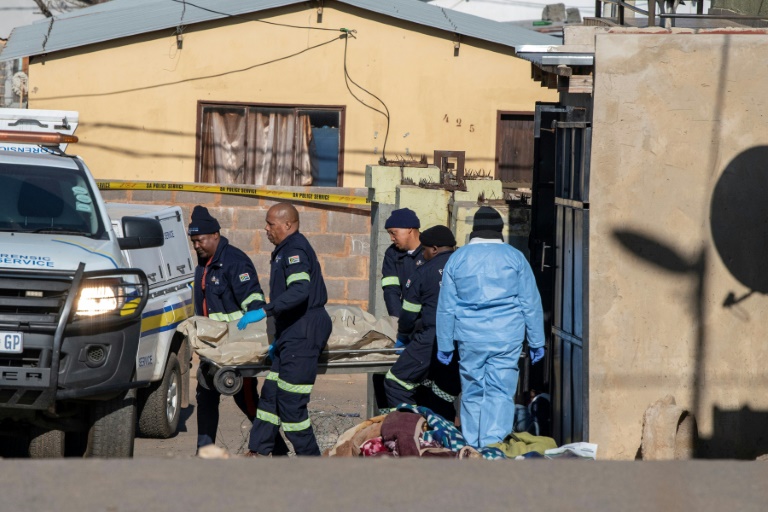
Two bar shootings, one in a township close to Johannesburg, the other in eastern South Africa, left 19 dead, police said on Sunday as they tried to verify if the murders were linked.

In Soweto, 15 people were killed as they enjoyed a night out, police said, when assailants drew up in a minibus taxi and began randomly firing high-calibre guns at drinkers.

Police in the eastern city of Pietermaritzburg, in KwaZulu-Natal, reported four people were killed and eight wounded in a bar when two men fired discriminately at customers.

For the police it was too early to say if the assaults were in some way connected, but they observed their similarity.

In Soweto, Johannesburg’s largest township to the southwest of South Africa’s economic capital, police were called to the scene shortly after midnight.

“When we arrived at the scene, 12 people were dead with gunshot wounds,” police officer Nonhlanhla Kubheka told AFP. 

Eleven people were taken to hospital, and three later succumbed to their wounds.

The dead, who included two women, were aged between 19 and 35, provincial police chief Elias Mawela told AFP. 

“According to witnesses they shot randomly,” said Mawela, adding forensic police were still collecting evidence.

There were no details regarding the assailants.

“Nobody has been arrested. They came and shot at people who were having fun,” said Kubheka, commander of the Orlando police station, the Soweto district where the shooting took place.

Hundreds of people massed behind police cordons as police investigated, AFP journalists reported.

Only a small poster showing beer prices at the bar could be seen outside the establishment located between houses.

Police led away crying relatives of those caught up in the drama who tried to approach the crime scene.

The colourful Soweto Towers, a favourite bungee jumping spot for tourists, stood out in the background.

– Random shooting –

In Pietermaritzburg, four people were killed and eight wounded around 8:30 pm (1830 GMT) on Saturday, local police spokesman Nqobile Gwala said.

Two men drove up, entered the bar and “fired random shots at the patrons”, before fleeing, Gwala said.

“A total of 12 people were shot. Two people were declared dead at the scene and the other two died in hospital.

“Another eight people are still in hospital after they sustained injuries.”

The dead were aged between 30 and 45.

The attack occurred at a tavern in a semi-rural area 20 kilometres (12 miles) from Pietermaritzburg, close to a car wash and a liquor store, according to an AFP reporter on the scene.

Local mayor Mzimkhulu Thebola said the assault was over very quickly without any robbery, conversation or fight. 

“Every week we get news of people that have just been shot at randomly,” said mayor Thebola, wearing a bright yellow winter jacket, the colours of the ruling African National Congress.

An AFP correspondent saw blood stains on the ground in front of the bar.

The killings come two weeks to the day after the mysterious deaths of 21 people, mostly teens, in still unclear circumstances at a township tavern last month in the southern city of East London.

The latest shootings also come a year after an outbreak of the worst violence the country has seen since the end of the apartheid era three decades ago brought democracy.

Last July saw large scale rioting and looting, ransacking of shops, a wave of arson attacks and attacks on infrastructure and industrial warehouses leading to more than 350 deaths and several thousand arrests with the country already in the throes of a major Covid-19 wave.

Most of the unrest occurred in Johannesburg and the eastern province of Kwazulu-Natal as South Africans protested the sentencing and incarceration of former President Jacob Zuma.

Zuma was sentenced after refusing to testify on corruption charges during his 2009 to 2018 tenure. 
More means less for Zimbabweans battling hyperinflation

With runaway inflation eating into incomes, staple foods have vanished from the tables of Zimbabweans like Emina Chishangwe, who lives in a poor dormitory town south of the capital Harare.

“I can’t remember the last time I ate meat. It has become a luxury for some of us,” said the 57-year-old single mother of two adult sons.

Zimbabwe has the highest inflation rate in the world, according to Steve Hanke, a professor of Applied Economics at Johns Hopkins University, who believes it can only be remedied by the full adoption of the US dollar. 

The situation has quickly worsened this year as the Russian invasion of Ukraine compounded with black market foreign exchange has depleted the value of the Zimbabwe dollar.

“The parallel market is to blame to a large degree for the spiralling inflation,” AgriBank chief economist Joseph Mverecha told AFP.

Zimbabwe’s economy has been on a downturn for nearly two decades, marked by shortages of cash and food. 

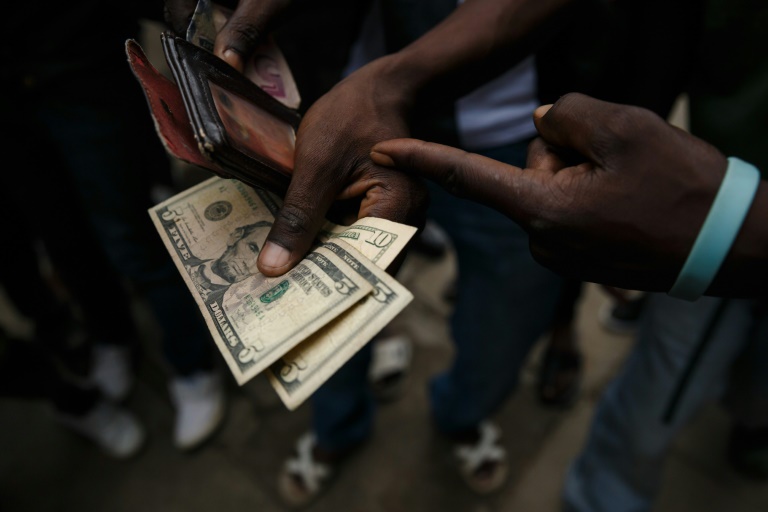
Distrust has led people to exchange their cash for US dollars, further driving down the local currency.

Inflation soared to 191.6 percent in June, up from 60 percent at the beginning of the year, driving prices of goods ever upwards. 

The rate dwarfs even the 41 percent inflation in war-torn Ukraine.

A kilo of choice beef now costs ZWL8,768 ($21.92) and five kilos of chicken drumsticks ZWL21,000 (US$65.22) — the equivalent to a civil servant’s average monthly salary.

Chishangwe, who runs a vegetable stall in Chitungwiza town, and her sons have two meals a day instead of three, usually a thick cornmeal porridge called sadza and kale or tiny dried sardines.

– ‘Anguish’ –

Rising fuel prices forced Edwin Matsvai to downgrade from a fuel-guzzling Toyota Land Cruiser to a more economic Honda Fit.

“My friends made jokes about me ‘stepping down’ when I made the change but now some of them are considering following suit,” said Matsvai, a car salesman.

Petrol rose to US$1.77 per litre this month from US$1.41 in January.

Zimbabweans endured and survived some of the worst hardships of 2008 when hyperinflation saw the central bank mint a one-trillion-dollar note.

Growing discrepancies between incomes and cost of living, forcing people to make tough decisions of how and where they live, is taking a toll on mental health, according to specialist psychiatrist Isabel Chinoperekwei. 

“I see many of them coming with depression, anxiety disorder and also alcohol abuse,” said Chinoperekwei, who has a private practice in Harare. 

It’s not just working professionals feeling the anguish. 

“I have seen adolescents who have changed schools because their parents could no longer afford the schools they were going to,” Chinoperekwei said. “They find it hard to cope.”

Many blame the country’s leaders. 

“The old men have failed us,” said Matsvai, referring to the government. “If they don’t act swiftly and fix the economy, it will cost them in next year’s general elections.”

Already in the March by-elections, the long-ruling Zanu-PF party lost to the opposition Citizens’ Coalition for Change (CCC) which was formed barely three months earlier.

The southern African nation is due to hold general elections in 2023. 

– ‘Hand to mouth’ –

Analysts say the current political and economic landscape now mirrors the crisis leading into the 2008 election, which saw ex-ruler Robert Mugabe nearly fall from power.

“People who are earning starvation wages, those without jobs and all those who are feeling the pinch of the rising cost of living have lost faith in Zanu-PF,” said Takavafira Zhou, a political scientist at Masvingo State University.

“The only hope lies in a new government that will give (the public) reprieve.”

Zanu-PF has been in power since 1980, when British colonial rule ended. Current president Emmerson Mnangagwa took over from Mugabe in a 2017 military coup, pledging to fix the moribund economy he inherited. 

The risk of losing power in upcoming polls is now pushing Zanu-PF to “frantic measures” to halt price hikes that have plunged millions into deeper poverty, said economist Prosper Chitambara.

“The world over, no ruling party is expected to do well in an environment of chronic high inflation,” said Chitambara, of the think-tank Labour and Economic Development Research Institute of Zimbabwe.

Last month Finance Minister Mthuli Ncube announced a raft of monetary policies including maintaining the dual use of the US dollar, adopted after the 2008 hyperinflation, and the Zimbabwe dollar reintroduced in 2019.

Minimum interest rates more than doubled to 200 percent last week. 

The country is also introducing gold coins “as a store of value” starting July 25.

But those are for the rich.

“The ordinary citizens, those who are struggling and living from hand to mouth are not going to afford it,” said Chitambara.

Renovate the Casbah: Efforts speed up to restore historic Algiers district

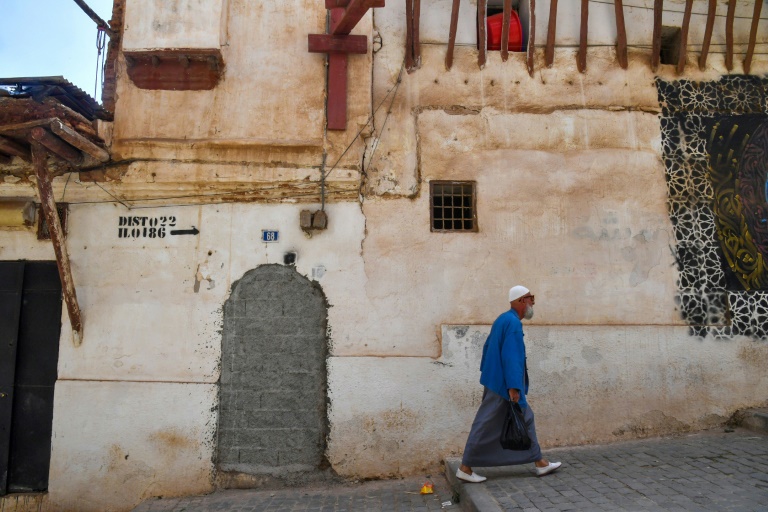
A UNESCO-listed rabbit warren of 16th-century battlements and Ottoman palaces, the Casbah of the Algerian capital is falling into disrepair, but efforts to save it have been accelerating.

The densely populated district, about a kilometre (just under a mile) across, perches above the Bay of Algiers and has been the site of key moments in the North African country’s history.

Some buildings weakened by earthquakes, floods or fires are still propped up with scaffolding, but a plan launched in 2012 is seeking to rehabilitate the area.

Work to restore the Casbah had first started right after Algeria’s independence from France in 1962.

That was some six years after a battle between French colonial forces and the urban guerrillas of the National Liberation Front (FLN), later immortalised in Gillo Pontecorvo’s 1966 film “The Battle of Algiers”, shot on location in the Casbah.

Efforts to restore the buildings involved “several plans and several stakeholders”, said Aissa Mesri of Archimed, a firm working on studies of the Casbah and monitoring the work.

“Restoration operations were started and then halted for financial, technical or legal reasons related to ownership,” he added, lamenting the lack of a “clear vision” for a “Casbah project”.

The 2012 plan was adopted with a budget of 170 million euros (now $170 million).

The project aims to restore the Casbah’s “authentic face”, protect it in the long term and keep at least some of its residents in their homes.

– Battle of Algiers heroine –

The state-run project has already restored a number of prominent buildings, including part of the citadel, which includes the Dey’s palace, mosque and ammunition store, partially open to visitors since November 2020.

The mosque has been decorated with earthenware, marble and Arabic screen printing.

A cluster of four houses that once served as a refuge for key independence war figures, including militant Djamila Bouhired, a heroine of the Battle of Algiers, has been renovated.

The Ketchaoua mosque, closed since 2008 after being seriously damaged by a powerful earthquake five years earlier, has also been restored.

The Ottoman-era mosque was reopened in April 2018 after 37 months of works, funded entirely by the Turkish government.

Before the start of the restoration plan, Algerian authorities had launched emergency work to “consolidate buildings that were in danger of collapsing”, said Mehdi Ali Pacha, head of an architectural firm specialising in heritage work.

“The shoring up of more than 300 buildings was carried out in 2008 and 2013,” added the architect, whose agency has conducted studies on the restoration.

– ‘Residents a problem’ –

Restoration work on the many small traditional houses in the Casbah is sometimes hindered by residents who refuse to grant access to architects or work crews.

“The residents remain a problem. There are some small old houses that have been emptied and walled up by the town hall.

“There, there is no problem, we can work.

“When the houses are inhabited, the study is done as best as possible with difficulties of access,” bemoaned Ali Pacha.

In late 2018, the rehabilitation of the Casbah was at the heart of a controversy, both in France and Algeria, after Algerian authorities decided to entrust a development plan to French architect Jean Nouvel.

Some 400 people, mainly architects, planners and academics, asked Nouvel to withdraw from the project.

The petitioners were concerned that a French architect could propose transformations of a major site of the Battle of Algiers.

The venture was eventually abandoned.

Currently, seven restoration projects of historical buildings are underway, according to Fatima Larbi, architect at the Algiers public works department, quoted by the official news agency APS.

“The aim is to revive the Casbah and enhance it,” said Ali Pacha.

Festivals, guesthouses breathe life back into old Tunis

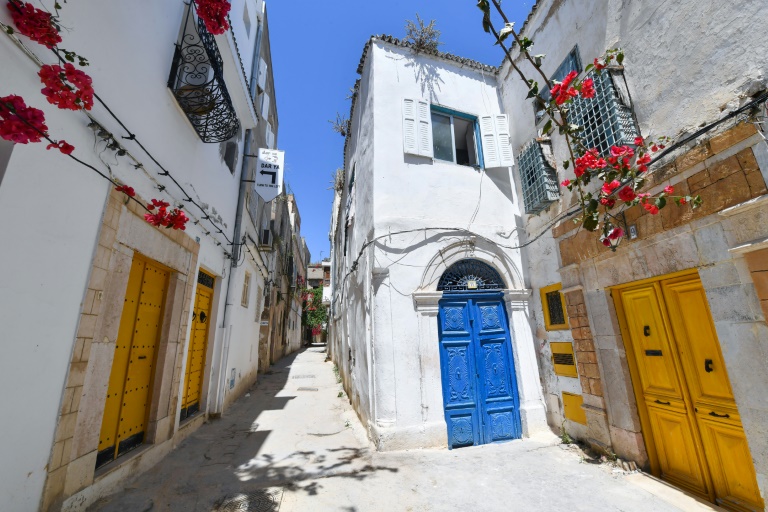
Children’s cries echo through the alleyways as they hunt for hidden treasure — part of growing efforts to bring life back to the Old City of Tunis.

While parts of the ninth-century medina are packed with tourists during the day, it is largely deserted at night and at the weekend.

Writer Hatem Bourial said the medina, one of the first cities built after the Muslim conquests of North Africa and home to the renowned Zitouna mosque, has a deep “emotional charge”.

“It’s the haven of the first madrassas (Koranic schools), and the Zitouna is one of the most famous and oldest mosque-universities in the world,” he said.

But, he added, “people traditionally don’t go in the medina at night, as every souk closes its doors.”

The medina was founded in the ninth century, but its real expansion began in the 13th century, when Tunis became the capital of the Hafsid dynasty’s kingdom, stretching along the Mediterranean coast to Tripoli in what is now Libya.

The kingdom survived an attempt by King Louis IX to capture it, with the French monarch dying of dysentery in the process.

Under the Hafsids, Tunis was one of the biggest cities in the Islamic world, and their legacy has remained in the form of narrow, crowded souks that contributed to the medina being awarded UNESCO heritage status in 1979.

– ‘Create experiences’ –

The district also has some two dozen small souks devoted to specific artisans such as tanners, perfume sellers and shoemakers.

“The medina is the lung of Tunisia, and it’s where Tunis began,” said Salma Garbi, a 38-year-old architect who was taking part in a guided walk.

While visitors mostly stick to its two main arteries, “new cultural events are popping up and breathing life into the medina”, she said.

Garbi welcomed the launch of two art festivals, Interference (art and lights) and Dream City, which involves young artistic productions in unusual places like chapels, often in the evenings.

“They’ve breathed life back into the medina,” she said.

She also pointed out that in Ramadan, shops and cafes stay open late and the medina bustles with concerts and modern dance shows into the small hours.

The district has also found new life from the creation of Art Rue, which organises art workshops with local schools, and a string of guesthouses.

Leila Ben Gacem, who set up her first guesthouse in the UNESCO-listed old city in 2013, is on a mission to brighten up the neighbourhood.

She has brought together a group of small businesses to “create experiences so people enjoy coming to the medina, spend the weekend there, meet craftspeople and enjoy authentic moments,” she said.

The Mdinti project (“my city” in Arabic), financed by German aid agency GIZ, which also campaigns for better lighting and cleaner streets, has 21 members including artisanal workshops, guesthouses, cafes and restaurants.

They are hosting activities across the year, from treasure hunts to walking tours and classes in North African cooking, Arabic calligraphy and making traditional “balgha” shoes (heelless leather slippers).

“If there’s something to do at night or on Sundays, shopkeepers will close later or keep their shops open,” said Souhail Fitouri, who is involved in the Mdinti project.

– Funding constraints –

For this summer, Ben Gacem has a list of potential events for tourists and residents: rooftop cinema screenings, meetings with craft workers, historians and some of the medina’s 25,000 residents.

But residents say that for the medina to experience a real revival, more state support is needed — a big request, given the sorry state of Tunisia’s public finances.

The government has this month begun bailout negotiations with the International Monetary Fund, as its tourism and import-dependent economy has been battered by the coronavirus pandemic and elevated global food and energy prices.

Hatem Bourial bemoans the fact that both the Sidi Bou Khrissane lapidary (gem-carving) museum and the Dar Ben Abdallah museum of popular arts and traditions have been closed for 15 years. The same applies to the famous Tourbet el Bey mausoleum.

And the Zitouna mosque is completely off-limits for non-Muslims. Bourial recommends opening “at least the patio” to visitors.

“The signs currently say entrance is only for Muslims and women with their hair covered. That’s an insult to the very notion of hospitality,” he said.

Rybakina overpowers Jabeur to win Wimbledon title

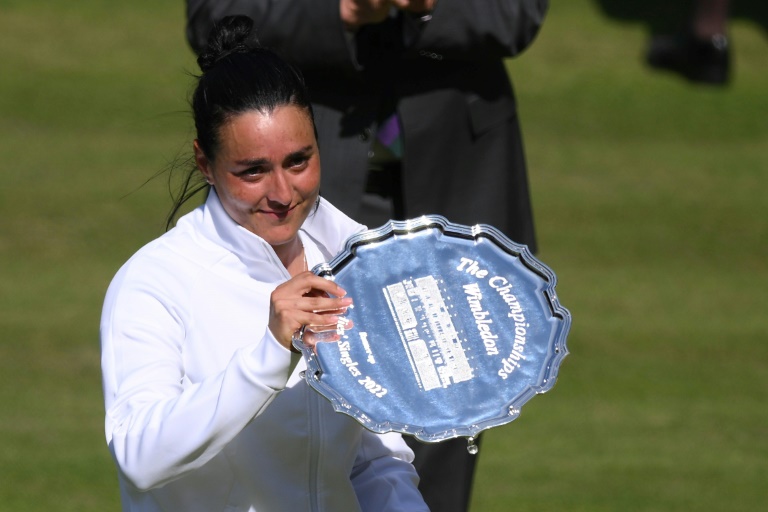
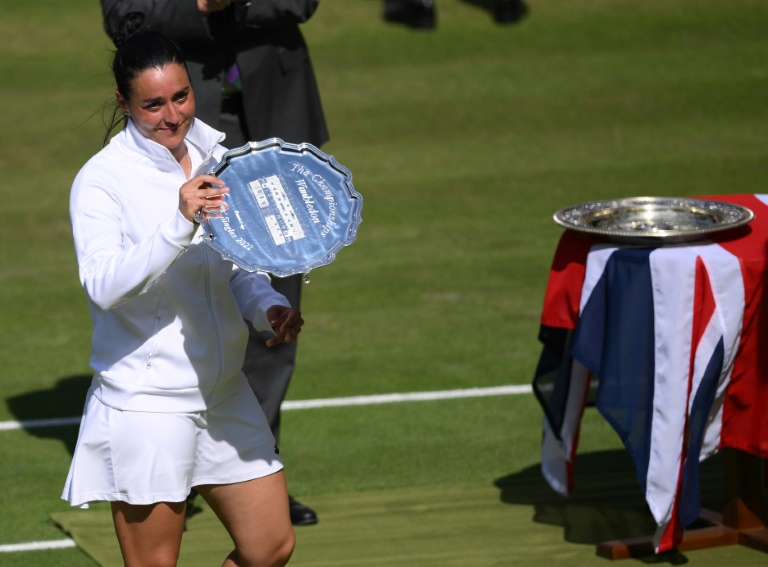
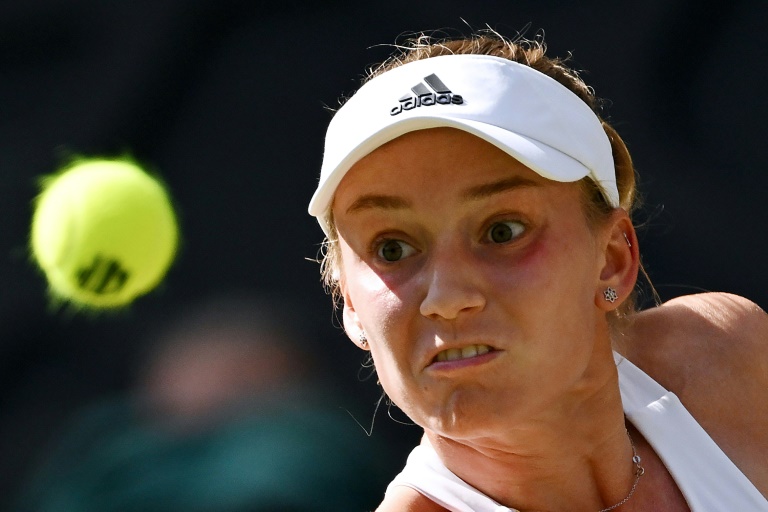
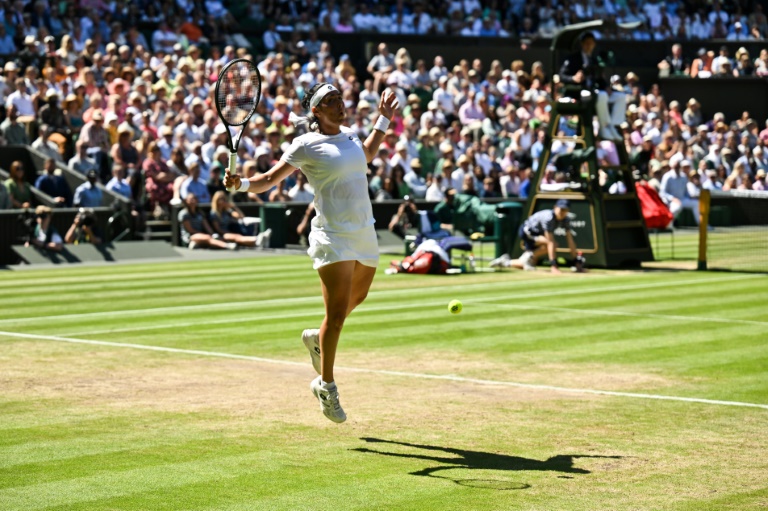
Russian-born Elena Rybakina powered back from a set down against Ons Jabeur to win the Wimbledon title on Saturday, denying the Tunisian world number two the chance to make African tennis history.

Jabeur raced out of the blocks but the 17th seed regrouped and dropped just four more games after the first set on the way to a 3-6, 6-2, 6-2 victory.

Russian and Belarusian players were banned from Wimbledon this year following the invasion of Ukraine but Moscow-born Rybakina was able to play as she had switched her allegiance to Kazakhstan in 2018.

The 23-year-old, who had never previously progressed beyond the quarter-finals of a Grand Slam, said she had been “super nervous” before and during the match on a sun-baked Centre Court.

“I did not expect to be in the second week of a Grand Slam at Wimbledon,” she said. “To be a winner is just amazing. I don’t have the words to say how happy I am.”

Jabeur, 27, started the match in style, using dropshots and passing shots to great effect as Rybakina’s power game failed to fire.

The Tunisian broke in the third game of the match when the Kazakh went long with a backhand.

– Unforced errors –

Rybakina held twice more despite pressure from Jabeur but then produced an error-strewn service game to gift the set to her opponent.

As the Tunisian celebrated with a fist-pump, Rybakina returned to her chair contemplating a costly 17 unforced errors.

But momentum shifted immediately at the start of the second set as Rybakina broke Jabeur before holding for a 2-0 lead.

She had now found her rhythm and Jabeur had to battle hard to stay in touch as the Kazakh repeatedly chased down dropshots and found the touch she needed to hit finely angled winners.

Rybakina, who stands six feet (1.84 metres) tall, then fended off three break points before breaking again to take a 4-1 lead when Jabeur went long with a forehand.

She levelled the match with an ace as Jabeur reflected on four missed break-point opportunities in the set.

– ‘Stole my title!’ –

The 23rd-ranked Kazakh was first to strike in the decider, breaking straight away to heap the pressure on Jabeur, who failed to rediscover her sharpness from earlier in the match.

The Tunisian squandered three break points in the sixth game as her frustration mounted and that proved to be her last chance.

Rybakina showed a few nerves in serving out for the match but won with her first championship point when Jabeur went long with a backhand.

She ended the day with four aces, taking her total at this year’s Wimbledon to a tournament-leading 53, and 29 winners to 33 unforced errors.

Rybakina was asked at her post-match press conference if the Russian government would be tempted to politicise her triumph.

“I’m playing for Kazakhstan very, very long time,” she said. “I represent them on the biggest tournaments, Olympics, which was dream come true. 

“I don’t know what’s going to happen. I mean, it’s always some news, but I cannot do anything about this.”

Russian tennis chief Shamil Tarpischev, however, hailed Rybakina’s victory as a triumph for Russia, describing the player as “our product”.

“It’s very nice! Well done Rybakina! We win the Wimbledon tournament,” Tarpischev was quoted as saying by Russian news agency, Ria Novosti.

Jabeur, the first Arab woman to reach a Grand Slam final, was attempting to become the first African woman to win a major.

The player, labelled by Tunisians as the “Minister of Happiness”, said she had given everything during her run at the All England Club.

“Of course, I will leave happy, with a smile, big smile always,” she said. “Tennis is just a sport for me. The most important thing is that I feel good about myself.”

On Sunday, Novak Djokovic goes for a seventh Wimbledon men’s title when he faces unpredictable Nick Kyrgios of Australia in the final.

A win would put him level with Pete Sampras and just one behind Roger Federer’s men’s record of eight.

In the men’s doubles final on Saturday, Australian pair Matthew Ebden and Max Purcell, the 14th seeds, beat Croatian defending champions Nikola Mektic and Mate Pavic 7-6 (7/5), 6-7 (3/7), 4-6, 6-4, 7-6 (10/2).

Ebden and Purcell had saved a total of eight match points in previous rounds to make the final.

Pavic, meanwhile, played despite breaking his right wrist in the semi-finals.

Jabeur still Tunisia's pride despite Wimbledon loss

Hailing her as the “nation’s pride” and “ambassador of happiness”, Tunisians remained enthralled with tennis star Ons Jabeur Saturday, celebrating her presence in the prestigious Wimbledon final despite her loss.

Jabeur became the world number two player and then made history as the first African or Arab woman to reach a Grand Slam singles final in the modern era.

Although she missed out on the title at the All England Lawn Tennis Club, she said she’ll learn from the experience and can’t wait to play in another final.

“I just try to inspire as many generations as I can,” she said.

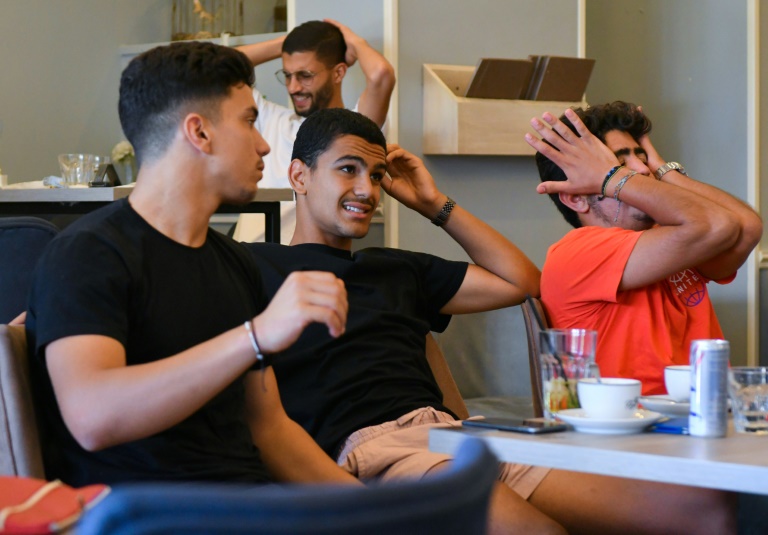
At a cafe not far from the Hammam Sousse tennis club where the 27-year-old began her career, a group of young Tunisian men had been intently watching the match, yelling in excitement at each point she won.

“She’s our Tunisian national product,” said Safwen Ghairi, a 21-year-old student.

He and his friends had rushed through their traditional Eid al-Adha meal to get to the cafe — one of the few open on the national holiday which began Saturday — to watch the match.

Jabeur represents the African continent “and the region at Wimbledon”, Ghairi said. “It’s a real achievement.”

– ‘Nation’s pride’ –

His friend Zaher Edine Dahman, 27, called Jabeur “our ambassador of happiness”.

“The authorities could never match the publicity Ons Jabeur has brought for Tunisia, even if they spent millions,” he said.

“We used to dream of a Tunisian player simply qualifying for Wimbledon, and today, Tunisia is at the final,” he added.

Her former trainer Nabil Mlika told AFP after the match that Jabeur was “the nation’s pride”, wishing her luck for the US Open, which begins next month.

Cafe worker Hafedh Amrouni, 25, said that Jabeur had “honoured” the country despite her coming in runner-up.

Her success has been a rare good news story for a North African country mired in economic and political crisis, made more acute by the coronavirus pandemic and the impact of the war in Ukraine.

On Friday, the country’s Sports Minister Kamel Deguiche said celebrations were planned for after Wimbledon and that he wanted to officially award Jabeur the title of “Minister of Happiness”, adding: “It’s the state’s duty to her.”

– Inspired by her mum –

The youngest of four, born on August 28, 1994 in Ksar Hellal, Jabeur started her career as a child on hotel tennis courts in the nearby resort town of Hammam Sousse.

She has called her mother her inspiration.

“She is a big fan of tennis and took me to a tennis club when I was only three years old,” she said in a BBC column.

“My mum used to play with her friends and I used to commentate… I used to spend the whole day there in the tennis club and I loved it,” she added.

Jabeur said her mother was not in the crowd to watch her play on Saturday because there “wasn’t enough time” for her to apply for a visa. 

Jabeur moved to the capital, Tunis, at the age of 12 to train at a highly rated state-backed sports club.

She made a splash on the global scene in 2011, winning the girls’ singles at the French Open when she was 16.

She reached the world’s top 50 at the Australian Open in January 2020 — the first Arab woman to reach a Grand Slam quarter-final — and has since surged up the rankings.

Her fame has sparked an increased interest in tennis in her home country, and membership levels have skyrocketed at her home club, from 320 in 2018 to more than 700 today.

Losing finalist Jabeur reveals personal Wimbledon pep talk

Beaten finalist Ons Jabeur told herself “I love you” as she battled against Elena Rybakina at Wimbledon on Saturday, revealing she even had a picture of the winner’s trophy on her phone in the hope of inspiration.

World number two Jabeur took early charge of the match on Centre Court but 17th seed Rybakina powered back to win 3-6, 6-2, 6-2.

The defeated Tunisian admitted she had not played her best tennis in the second and third sets as the big-hitting Kazakh found her range.

“It is frustrating to play someone that serves really big and doesn’t give you the chance sometimes to take that break,” she said.

“I just kept telling myself, like, ‘this is not over, I trust you’. I even said, ‘I love you’ to myself during the match. It wasn’t meant to be.”

Jabeur, the first Arab woman to reach a Grand Slam final, was attempting to become the first African woman to win a major.

But the 27-year-old, who had previously never gone beyond the quarter-finals at a Slam, said she would learn from her experience at Wimbledon.

“I don’t disbelieve in myself and I know that I’m going to come back and win a Grand Slam, for sure,” she told reporters.

“This is tennis, and it’s part of it. I have to learn from it, definitely. But I’m very, very positive about it.”

The player, labelled by Tunisians as the “Minister of Happiness”, said she had given everything during her run at the All England Club.

“Of course, I will leave happy, with a smile, big smile always,” she said. “Tennis is just a sport for me. The most important thing is that I feel good about myself.”

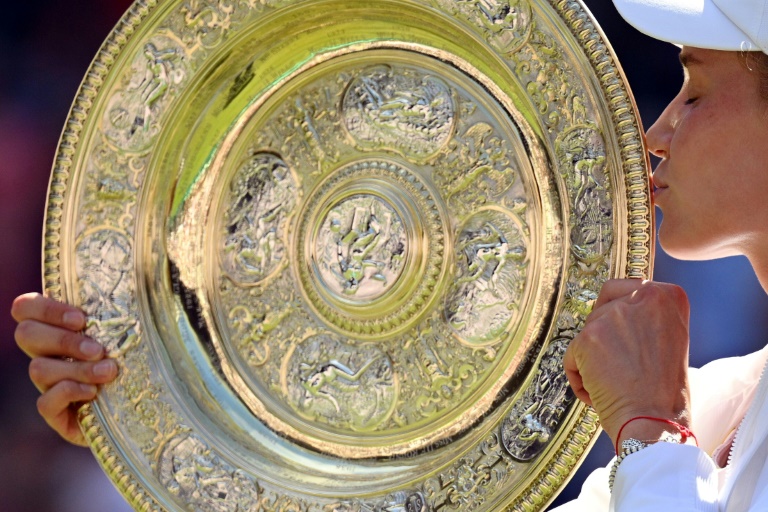
A smiling Jabeur showed reporters she had a photo of the Venus Rosewater Dish — presented to the women’s champion — on her phone

“I need to take it off,” she joked. “Apparently I should have put the other one.”

Jabeur, who wished her fellow Muslims a “happy Eid” in her post-match interview on court, said she hoped to inspire others to follow in her footsteps.

“It’s really amazing to see a lot of fans, not just from Tunisia but from the Arab world,” she said.

“I just try to inspire as many generations as I can,” she added. 

“It’s very nice to play this final. I really cannot wait for more finals for me. I hope they’re not really disappointed, but I’ll try my best next time.”

UK to investigate Jabeur family lack of Wimbledon visas

Britain’s embassy in Tunisia said it will investigate after Ons Jabeur told the BBC website that fami1y members did not have visas to watch her play in the Wimbledon final on Saturday.

Jabeur, the first African or Arab woman to reach a Grand Slam final in the modern era, was quoted by the BBC as saying her brother Hatem would “hopefully be there” Saturday to watch her.

“But unfortunately the other members of my family don’t have visas,” the report, dated Friday, quoted her as saying.

“It will be tough for them but they will be cheering for me back home.”

Whether the family had applied for visas was not immediately clear.

On its official Twitter feed, the British embassy in Tunis said it was cheering Jabeur on.

“We’re sorry to hear that your parents and sister aren’t able to be there to support you, and we will look into what happened,” it said. 

Jabeur lost the match to Russian-born Elena Rybakina, representing Kazakhstan. She said her parents weren’t in the stadium either. It was not clear why.

Players representing Russia and Belarus were banned from Wimbledon in the wake of Russia’s invasion of Ukraine.

Rybakina battles back against Jabeur to win Wimbledon title

Russian-born Elena Rybakina powered back from a set down against Ons Jabeur to win the Wimbledon title on Saturday, denying the Tunisian world number two the chance to make African tennis history.

Jabeur was in charge at the start of the match but the 17th seed, representing Kazakhstan, regrouped and dropped just four more games on the way to a 3-6, 6-2, 6-2 victory.

“I never felt anything like this before,” said the champion. “Congratulations to Ons for everything you have achieved. 

“You are an inspiration to Tunisians and everybody. You played a great match.”

Jabeur, 27, started in style, breaking Rybakina in the third game of the match when the Kazakh went long with a backhand.

She followed that with a hold to love that included a delicious backhand pass angled past her opponent at the net.

Rybakina was under intense pressure on her own serve again as the set threatened to run away from her but she dug deep to hold for 3-2.

But she failed to force a single break point on the sun-baked Centre Court in the first set and an error-strewn service game gifted the set to Jabeur.

As Jabeur celebrated with a fist-pump, Rybakina returned to her chair contemplating a costly 17 unforced errors. 

But momentum shifted immediately at the start of the second set as Rybakina broke Jabeur before holding for a 2-0 lead.

Rybakina had now found her rhythm and Jabeur had to battle hard to hold to stay in touch.

The 23-year-old Kazakh, who stands six feet (1.84 metres) tall, then fended off three break points before breaking again to take a 4-1 lead when Jabeur went long with a forehand.

Rybakina levelled the match with an ace as Jabeur reflected on four missed break-point opportunities in the set.

The 17th seed was first to strike in the decider, breaking straight away to heap the pressure on Jabeur.

The Tunisian squandered three break points in the sixth game as her frustration mounted and that proved to be her last chance.

Rybakina showed a few nerves in serving out for the set but won with her first championship point when Jabeur went long with a backhand.

Rybakina, playing in her first Slam final, switched allegiance to Kazakhstan in 2018.

Russian and Belarusian players are banned from Wimbledon this year following the invasion of Ukraine.

Rybakina had never got past the quarter-finals of a Slam before this year’s Wimbledon.

Jabeur congratulated the winner, saying: “Hopefully next time it will be mine”.

“Thanks to my team for support and believing in me,” she said. “I love this tournament. I feel sad but that’s tennis — there can only be one winner.”

Jabeur on verge of African history at Wimbledon

Ons Jabeur can become Africa’s first Grand Slam women’s singles champion on Saturday, admitting the seeds of her history-making charge to the Wimbledon final were sown 12 months ago when she pledged: “I’m coming back for the title.”

Jabeur became the first African woman to reach a Grand Slam final in the modern era when she beat close friend Tatjana Maria in the semi-finals.

She will face Russian-born Elena Rybakina, now representing Kazakhstan, for the title.

Jabeur will seek to go one better than Irene Peacock (Roland Garros, 1927), Renee Schuurman (Australian Open, 1959) and Sandra Reynolds (1960, Wimbledon).

The trio of South Africans all reached Slam finals but missed out on the trophy.

Twelve months ago, Jabeur, 27, made the quarter-finals for the first time, losing to Aryna Sabalenka.

But on the way she knocked out five-time champion Venus Williams, 2017 winner Garbine Muguruza, as well as current number one Iga Swiatek.

Having never previously got past the second round at the All England Club, that run gave her the taste for more.

“Not to lie to you, the dream kind of started last year when I enjoyed playing here, enjoyed the crowd,” said the world number two.

“I didn’t play so many Wimbledons before. Usually it was the first and second round. It’s tricky on grass but I knew I was playing good on grass because of my game and everything. 

“Melanie (Maillard), my mental coach, reminded me when I lost in the quarter-finals I told her like, ‘I’m coming back next year for the title’.”

– ‘One step away’ –

Maillard did not need convincing.

“She was like, ‘You will’. She knows that if I put something in my mind, I do it. I’m one step away from achieving it,” said Jabeur. “I hope it’s going to happen.”

Jabeur coasted through the first four rounds at Wimbledon this year before needing three sets to defeat Marie Bouzkova and then three more to see off Maria.

Her run to the final came after a dispiriting first-round exit at the French Open in May.

Jabeur had been one of the favourites for the title in Paris having won the Madrid clay court title followed by a runners-up spot finish to Swiatek in Rome.

But a quick reset after her disappointment in the French capital put her back on course.

“I have a great team behind me, even though sometimes — I’m not going to lie to you — I maybe thought I was never going to make it or never going to make a Grand Slam title or a Grand Slam final,” said Jabeur. 

“I had to remind myself why did I start playing tennis, what kind of joy that tennis brings to me. As soon as I remind myself that, I get pumped, motivated to go.”

Jabeur, one of only three Tunisian women with a world ranking, has a 2-1 winning edge over Rybakina, with her most recent victory in Chicago last year.

Russian and Belarusian players are banned from Wimbledon this year following the invasion of Ukraine.

But there will be a Russian presence in the final after Rybakina, playing in her first Slam final, switched allegiance to Kazakhstan in 2018.

“I’m really happy representing Kazakhstan. They believed in me. There is no more question about how I feel,” said the 23-year-old.

“It’s already a long time my journey as a Kazakh player. I played Olympics, Fed Cup.”

Rybakina had never got past the quarter-finals of a Slam before this year’s Wimbledon.

But the grass courts of Wimbledon are the perfect platform for her game.

She has fired 49 aces so far and boasts the second-fastest serve in the women’s tournament at 122 miles (196 kilometres) per hour.

Saturday’s match throws up a radically different clash of tennis styles — Jabeur’s slice and change of rhythm facing down Rybakina’s raw power.

There could also a sharp contrast in celebration.

“She’s not someone who screams a lot every point. I respect that about her,” said Jabeur.

“I know she’s a very shy person even outside the court. Maybe I’ll be the one screaming on Saturday.”

Close Bitnami banner
Bitnami