Africa Business

Angola's ex-president dos Santos dies in Spain

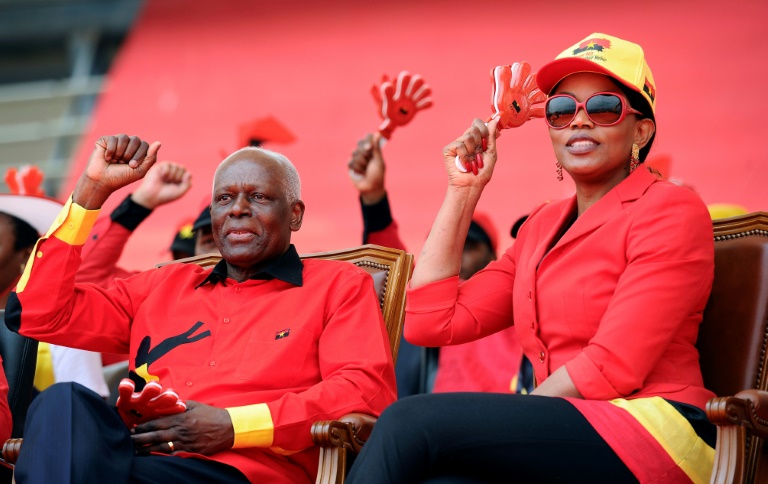
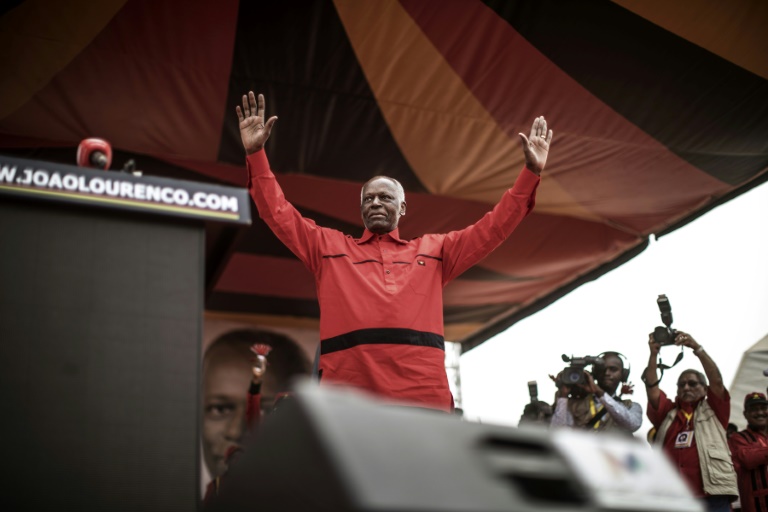
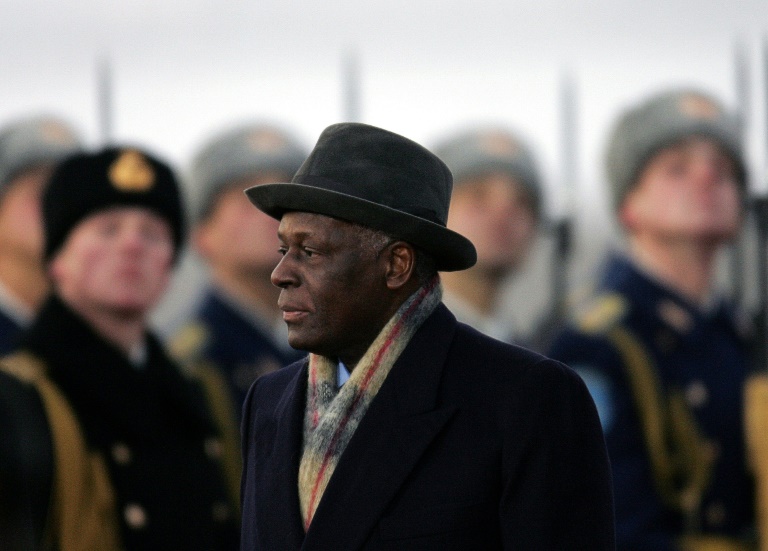
Jose Eduardo dos Santos, who ruled Angola with an iron fist for 38 years, died on Friday at a hospital in Barcelona after suffering cardiac arrest, the government said. He was 79.

Though seldom seen in public, dos Santos was a presence in daily life for as long as most Angolans could remember, coming to power in 1979, before stepping down in September 2017 after 38 years at the helm of the Portuguese-speaking, oil-rich state of Angola.

Throughout his rule, he maintained fierce control throughout the country’s devastating civil war, which ended in 2002, followed by an oil boom and recession in 2015.

With “great pain and consternation” the Luanda government posted on Facebook confirmation of dos Santos’ death at 11:10 am (1010 GMT) at the Teknon Medical Centre.

“(The government) presents its deepest feelings of sorrow to the bereaved family,” the statement read, describing the former leader as a “statesman of great historical stature” who led the country through very difficult times.

Angolan President Joao Lourenco, who is seeking re-election in August, declared five days of national mourning, starting on Saturday, and set-up a government commission to organise funerals. 

A presidential decree ordered flags to be flown at half-staff and the cancellation of “all shows and public demonstrations”. 

Dos Santos was admitted to hospital in Spain and placed in intensive care after suffering a cardiac arrest on June 23.

– Fears of foul play –

The government gave no explicit cause of death in its statement. One of dos Santos’ daughters swiftly demanded the hospital retain his body for an autopsy over fears of foul play.

She asked the medical centre to “hold onto the body… until an appropriate autopsy is carried out on fears it could be transferred to Angola,” her lawyers said in a statement.

Welwitschia dos Santos, more widely known as Tchize, had last Monday filed suit with the Catalan regional police, alleging her father’s condition was the result of attempted murder.

According to the complaint, the 44-year-old believes her father’s wife, Ana Paula, and his personal physician are responsible for the deterioration in his health.

In Friday’s statement, her lawyers said the complaint included allegations relating to “attempted murder, failure to exercise a duty of care, injury resulting from gross negligence and disclosure of secrets by people close to him”.

Police confirmed receiving the complaint and said they had opened an inquiry.

Born in the slums of Luanda, dos Santos was one of Africa’s longest-serving leaders, using his nation’s oil wealth to turn one of his children into a billionaire while leaving his people among the poorest on the planet.

– ‘Billions embezzled’ –

During his reign, he avoided the personality cult so often favoured by dictators, but instead used secretive and authoritarian tactics he learned during the Soviet era.

And for as much as he controlled every aspect of Angolan life, he mismanaged his own transition away from power so badly that he ended up in temporary self-imposed exile, with a son in prison and a daughter facing international legal challenges.

When he stepped down, dos Santos handed over to former defence minister Lourenco, handpicked to replace him. 

But Lourenco quickly turned on his erstwhile patron, starting an anti-corruption drive to recoup the billions he suspected had been embezzled under dos Santos.

Dos Santos’s son Jose Filomeno has been in prison since 2019 on corruption charges.

His eldest daughter Isabel was once named by Forbes as Africa’s richest woman, worth $3 billion (2.55 billion euros). She now faces a slate of investigations into her multinational business dealings.

For much of his time at the head of his MPLA party, Dos Santos fought a brutal civil war.

When the 27-year conflict with UNITA rebels ended in 2002, he led Angola away from hardline Marxism and fostered a post-war oil boom and foreign investment surge that transformed central Luanda.
Angolan Dos Santos's crumbling family business empire

Critics of Angola’s former president Jose Eduardo dos Santos, who died Friday, accused him of stripping the country of much of its vast oil wealth to enrich himself and his family.

Dos Santos, who stepped down in 2017 after 38 years of iron-fisted rule, appointed family members to key economic jobs during his presidency.

Banking, telecoms, media and most significantly oil were among the industries that felt the far-reaching influence of the Dos Santos brood.

He “privatised the state to benefit his family and a handful of associates,” said investigative journalist Rafael Marques de Morais, who was highly critical of Dos Santos’ alleged plunder.

Here is a review of the principal figures in the “family business”:

– Isabel, the daughter –

Known derisively as “the princess”, 49-year-old Isabel was the public face of the Dos Santos business empire.

Her father appointed her to head the state oil giant Sonangol, but she was dismissed shortly after his  successor Joao Lourenco took office.

Isabel dos Santos described herself as an “entrepreneur” on her Twitter account and the US-based Forbes magazine once ranked her Africa’s richest woman.

It estimated her personal fortune to be as much as $3.5-billion.

She was active in the telecoms sector and controlled Unitel, Angola’s leading mobile phone operator, which she quit in 2020.

She also held shares in Portuguese media giant NOS, while investing heavily in the banking sector, sitting on the boards of Banco de Fomento Angola, Banco BIC — as well as its Portuguese affiliate — and the market leader BFA.

And along with her now late husband Sindika Dokolo, she owned the luxury Swiss celebrity jeweller De Grisogono, which went bust in 2020.

But that business empire has been largely dismantled since a 2020 ICIJ investigation into the shady origins of her fortune.

She is being probed for a long list of crimes in Angola, including mismanagement, embezzlement and money laundering during her stewardship of the state-run oil giant Sonangol.

She has vehemently denied the accusations against her as a politically-motivated “witch-hunt”.   

Last year she was ordered to surrender a stake in the Portuguese energy company Galp worth an estimated $500 million

– Jose Filomeno, the son –

In 2013, Jose Filomeno de Sousa dos Santos, nicknamed Zenu, was appointed by his father to head up a sovereign wealth fund. At 35, Filomeno was controlling the fund worth $5 billion.

Six years later, he was arrested for fraud, money laundering and influence peddling. He was found guilty of trying to embezzle up to $1.5 billion from the sovereign wealth fund, which he oversaw from 2013 to 2018.

In 2020 he was jailed for five years, making him one of the first members of the former presidential family to be prosecuted as part of an anti-graft campaign led by Lourenco since he came to power in 2017.

– ‘Tchize’, the other daughter – 

Married to a Portuguese businessman, Welwitschia dos Santos was a leading figure in the Angolan media landscape.

Now in her mid 40s, she held different positions at TPA, a public broadcaster and led two tabloid-style print titles.

Lower profile than her half-sister Isabel, Welwitschia — whose nickname is “Tchize” — controlled one of Angola’s leading multimedia and advertising agencies.

She also became the first Angolan woman to lead a major football club after she took the reins at Benfica de Luanda.

Following her brother’s conviction, she accused Lourenco of unjustly targeting the dos Santos family for political reasons.  

“Lourenco (is) using the children to harm the politically stronger father,” she told AFP.


– Ana Paula, the wife –

Ana Paula, a former air hostess who became Jose Eduardo dos Santos’ second wife and according to the local media was involved in several diamond miners.

According to Angola’s monthly economics journal Expensao, Ana Paula Cristovao Lemos also directly held five percent of Sol bank in addition to the 10 percent stake she had in the business through her foundation.

Angola: key moments of the Dos Santos regime

Following the death of Jose Eduardo dos Santos Friday at the age of 79, here are the key dates during his 38-year iron-fisted reign over oil-rich Angola.

– Civil war –

On September 20, 1979, Dos Santos takes office as Angola’s president after the death of the country’s first post-independence leader Agostinho Neto.

At the time, the pro-Soviet People’s Movement for the Liberation of Angola (MPLA) is fighting a civil war against the pro-Western National Union for the Total Independence of Angola (UNITA) and the National Front for the Liberation of Angola (FNLA) which erupted just before Angola won independence from Portugal in 1975.

While apartheid South Africa backs UNITA, the MPLA has the support of Cuban forces. 

South African forces finally withdraw in 1988, while the last Cuban soldiers leave Angola in 1991.

– Peace deal, vote then war –

In May 1991, Dos Santos and UNITA leader Jonas Savimbi reach a peace agreement which includes elections.

In September 1992, the MPLA wins Angola’s first democratic elections.

But UNITA rejects the results and the second round of voting is cancelled as heavy fighting resumes.

From January to March 1993, UNITA’s fight for the central city of Huambo leaves an estimated 12,000 people dead. And the UN says another 25,000 people are killed throughout the year in Kuito, also in the centre.

On November 20, 1994, new peace accords are signed in Zambia paving the way for the disarmament of UNITA and its participation in government.

In 1997, UNITA deputies take up their seats and a unity government is formed. But civil war resumes the following year.

– End of civil war –

On February 22, 2002, UNITA leader Savimbi is killed by the army in western Angola.

April 4, the army and UNITA sign a ceasefire agreement to end the civil war, which has left at least 500,000 dead over 27 years of fighting.

On September 5, 2008, the MPLA wins an overwhelming victory in the first peace-time elections.

Four years later, the party scores another resounding win, scooping 71.8 percent of the vote. 

On September 26, 2012, Dos Santos is sworn in after being formally elected for the first time.

– Protests and repression –

In spring 2011, people take to the streets to call for greater freedom of expression, democracy and better living conditions. But the protests are banned and put down by the police, often violently.

In June 2013, Dos Santos names his son Jose Filomeno as head of a sovereign wealth fund, sparking accusations of nepotism and corruption fears.

In June 2015, more than a dozen activists, including rapper Luaty Beirao, are arrested in Luanda on accusations of rebelling against the president.

On March 28, 2016, 17 youth activists, including Beirao, are handed between two and eight years in jail but are largely granted amnesty later in the year.

In June 2016, Isabel Dos Santos, the president’s eldest daughter and Africa’s richest woman, according to Forbes, is appointed to head up Sonangol, the national oil firm, with opponents accusing her of getting rich on her father’s coat-tails.

– End of an era –

On February 3, 2017, Dos Santos confirms he will not run in elections planned for August, naming his loyal Defence Minister Joao Lourenco as the candidate to succeed him.

July 20, 2017, Dos Santos returns to Luanda after two weeks in Spain as rumours swirl about his health.

September 26, 2017, attends the inauguration of his successor Lourenco

September 8, 2018, he relinquishes power as head of the MPLA.

In April 2019, he leaves the country reportedly for routine medical checks, but he does not return until September 2021, prompting commentators to conclude he was in self-imposed exile.

Thousands await trial in South Africa a year after deadly riots

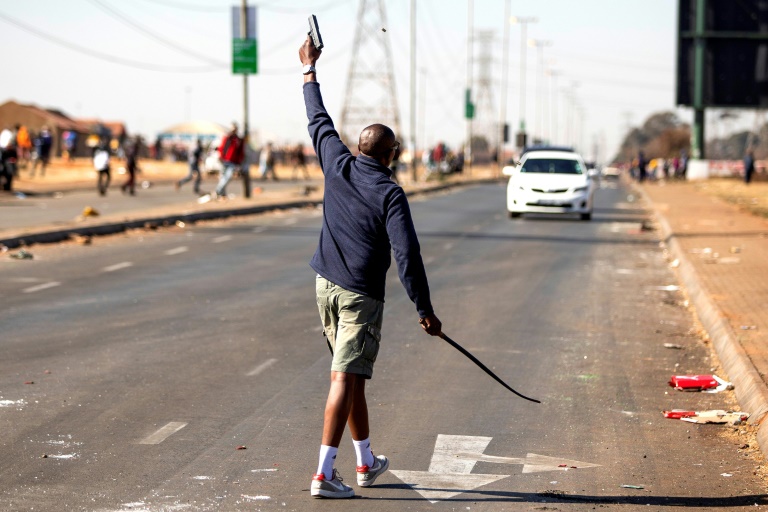
A year after the worst unrest to hit South Africa in decades, only 50 people have been convicted over the violence, with the suspected masterminds and thousands of others still awaiting trial, the defence minister said Friday.

More than 350 people were killed during almost ten days of rioting that followed the incarceration of former president Jacob Zuma last July. 

“(Authorities) continue to work around the clock investigating the crimes that were committed and building cases against those who were arrested,” Defence Minister Thandi Modise said.

The perceived lack of progress in bringing the perpetrators to justice has been a cause of frustration for relatives of the victims and many others across the country which has one of the highest murder rates in the world. 

Modise said more than 8,000 incidents were reported to the police leading to 5,500 arrests, with 2,435 cases still to reach court.

The unrest was sparked when Zuma was detained and slapped with a 15-month sentence for refusing to testify before an inquiry into state graft.

Widespread poverty exacerbated by the coronavirus pandemic was also widely seen as a contributing factor. 

What began as protests by Zuma’s supporters quickly spiralled into riots in his home province of KwaZulu-Natal and Johannesburg that saw malls and warehouses emptied and infrastructure  destroyed. 

An inquiry blamed glaring failures by police and intelligence agencies for the unrest that cost the economy some 50 billion rand ($3.3-billion).

“(Police were) caught with their pants down in 2021 and have done absolutely nothing since that date to prepare themselves for a repeat of last year’s violence,” Andrew Whitfield, a lawmaker with the opposition Democratic Alliance party, said in a statement.

At the time, President Cyril Ramaphosa called the violence an “insurrection”.

Modise said 3,300 cases were finalised through non-prosecution while 2,900 cases were unfounded. The remaining pending cases include 36 suspects linked to murders. 

Recommendations to improve policing and intelligence were being implemented to better respond to future incidents, she added.

“We are determined not to allow this tragic episode… to repeat itself,” she said.

– ‘A little bit slow’-

Police Minister Bheki Cele added 19 people have been arrested on suspicion of masterminding the unrest. Two cases have been withdrawn while the majority of suspects are on bail awaiting trial.

Another 86 people are being closely monitored by police intelligence, Cele said.

Authorities “regret that this has been a little bit slow,” Modise said, but do not want to risk “blunders” in haste.

“Whoever it is who is behind last year, it must be very clear, we will not rest. We don’t care who it is, they will face what they must face. There will not be shortcuts,” she said. 

Zuma was granted parole just two months into his incarceration. 

Lavrov walks out of G20 talks as West presses Moscow on Ukraine

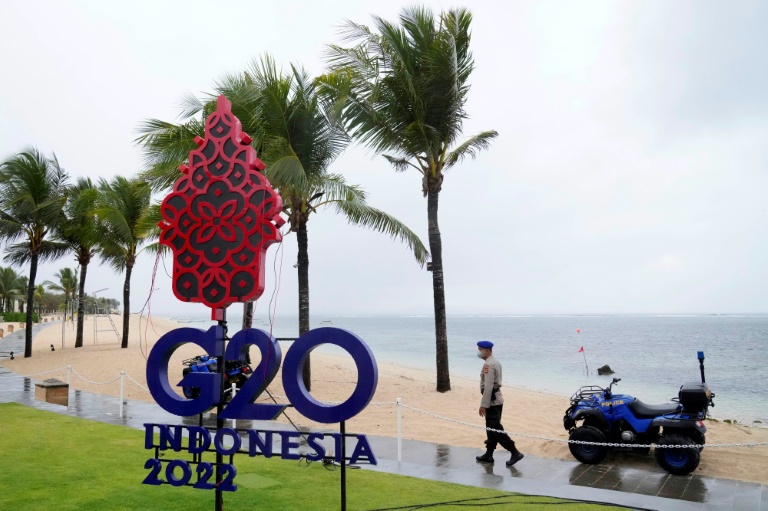
Russia’s top diplomat stormed out of talks with G20 foreign ministers meeting in Indonesia on Friday as Western powers criticised Moscow over its invasion of Ukraine.

Washington and allies condemned Russia’s assault ahead of the meeting before Foreign Minister Sergei Lavrov faced what US Secretary of State Antony Blinken called a barrage of Western criticism at the closed-door talks.

“What we’ve heard today already is a strong chorus from around the world… about the need for the aggression to end,” Blinken said from the meeting on the resort island of Bali.

Blinken and Lavrov had joined colleagues for day-long talks in their first meeting since the outbreak of war, with the host immediately telling them the conflict must end through negotiations.

But Lavrov walked out of a morning session as German counterpart Annalena Baerbock criticised Moscow over its invasion, diplomats said.

He also left an afternoon session before Ukrainian Foreign Minister Dmytro Kuleba addressed the ministers virtually and was not present as Blinken condemned Russia.

“Our Western partners are trying to avoid talking about global economic issues,” Lavrov told reporters outside the Mulia hotel. “From the moment they speak, they launch into fevered criticism of Russia.”

Blinken shunned a meeting with Lavrov and instead accused Russia of triggering a global food crisis, demanding Moscow allow grain shipments out of war-battered Ukraine.

“To our Russian colleagues: Ukraine is not your country. Its grain is not your grain. Why are you blocking the ports? You should let the grain out,” Blinken said in the closed-door talks, according to a Western official present.

Lavrov earlier told reporters he would not “go running” after Washington for talks.

“It was not us who abandoned contact, it was the United States,” he said.

– Abe killing overshadows meet –

Before the meeting, Blinken met his French and German counterparts and a senior British official to discuss “Russia’s unprovoked and unjustifiable war of choice” in Ukraine, the State Department said in a statement.

But the gathering was soon overshadowed by the killing of former Japanese Prime Minister Shinzo Abe at a campaign event on Friday.

After news of his death, Blinken mourned the longtime ally of Washington as a “leader with great vision” who boosted US-Japan relations.

“It is a shock. It’s profoundly disturbing,” he said.

Before the news of the attack emerged, Indonesian Foreign Minister Retno Marsudi addressed the Ukraine war in a speech to the ministers including Lavrov.

“It is our responsibility to end the war sooner than later and settle our differences at the negotiating table, not the battlefield,” Marsudi said.

In closing remarks, she said “participants expressed deep concern about the humanitarian impacts of the war” and “some members expressed condemnation” of the invasion.

She did not comment on Lavrov walking out of the sessions.

– No family photo –

A US official indicated Washington did not want to embarrass Indonesia at the meeting by walking out on Lavrov, who last met Blinken in July.

But there will be no family photo of the G20 ministers as is customary, an Indonesian government official told AFP.

The hosts have addressed US concerns about Lavrov attending in part by inviting Ukrainian President Volodymyr Zelensky to the G20 summit in November.

In his address, Kuleba told ministers to “remember about 344 families who have lost their children when listening to Russian lies”.

“The minister of the country responsible for their deaths appears in front of you today to share his thoughts on how Russia views cooperation in our globalised world,” he added. 

– British FM leaves –

Blinken’s efforts to have a powerful Western stance against Russia at the meeting were diluted after British Foreign Minister Liz Truss pulled out following Prime Minister Boris Johnson’s resignation as leader of his party on Thursday.

She flew out of Indonesia on Friday morning and was replaced by former British ambassador to the European Union Sir Tim Barrow, a British official told AFP.

While in Bali, Blinken will also seek to reopen dialogue with Beijing in talks on Saturday with his Chinese counterpart Wang Yi, the first in months after tensions became strained over issues including Taiwan.

The meeting comes as US President Joe Biden voices hope for a conversation in the coming weeks with Chinese President Xi Jinping, with whom he last spoke in March.

Lavrov met Wang on Thursday to discuss Russia’s invasion, which Moscow says it launched to stop Ukraine from joining the NATO military alliance.

The United States has condemned Beijing’s support for Russia, and Blinken is expected to reiterate those warnings in talks with Wang.

Cameroon's mushroom growers looking beyond the kitchen

Grilled on skewers, dried or used in hair oil: farmers at Bafoussam in western Cameroon are seeking to take the lowly mushroom, grown on agricultural waste, beyond the kitchen.

Fungiculture, or the cultivation of edible mushrooms, is long-developed in the West, while China has become by far the world’s largest producer. 

But it remains very rare in Africa, despite the advantages of being almost free and supplying “clean” food by recycling waste.

Cameroonians are particularly fond of mushrooms but have to wait for the rainy season to identify and gather the edible fungi in the wilds of the west-central African country.

In Bafoussam, capital of the Western region and fifth largest city, Jean-Claude Youbi saw an opportunity to exploit, like other small farmers around the nation of 28 million inhabitants.

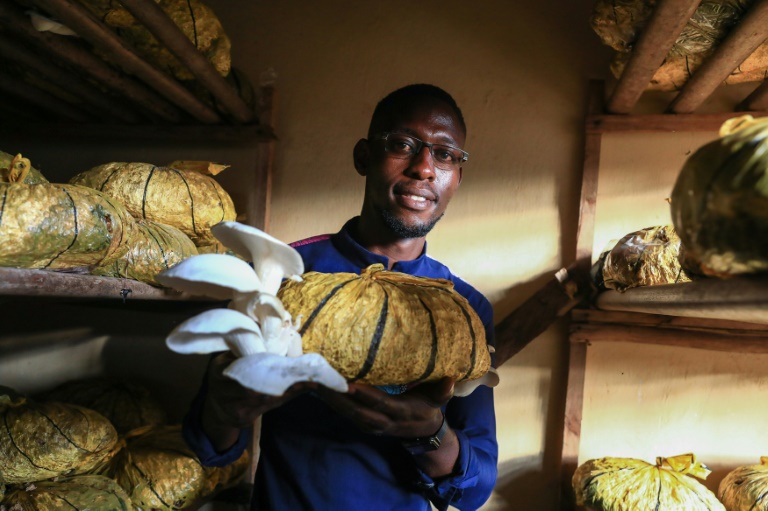
Youbi grows thousands of oyster mushrooms in a darkened room of the Common Initiatives Group — GIC Champignon — which he launched with associates in Maetur, a district of Bafoussam, four years ago.

“We are in the mushroom house of our GIC,” Youbi announces proudly amid the rows on rows of fungi growing on shelves on agricultural waste packaged in plastic bags.

“Some, like these, have passed the harvest period,” says one of his associates, Patrick Yaptieu, pushing aside a pile of mushrooms which have turned from the desired white colour to a yellowish hue. He then puts the good harvest of the day in bags headed for the GIC shop, near the city centre.

A kilo of oyster mushrooms sells in Bafoussam for 2,000 CFA francs (just over three euros / $3.11), while it costs up to 3,500 CFA in Yaounde, the capital, or Douala, the main port and economic capital.

— ‘Corn cobs … and ox blood’ —

The lack of official national data on the production and consumption of mushrooms makes it hard to gain an idea of the market value and extent of the sector.

Activity in the GIC Champignon premises is punctuated by constant comings and goings, while two young trainees in a little side room are shovelling a pile of agricultural residue.

To obtain the soil-free culture, “we mixed corn cobs with nutrients such as bran flour, wheat and ox blood,” explains production manager Brice Nono Djomo.

“We added a fungicide to it to avoid the bad mushrooms,” he says, adding that the effects of this precautionary treatment fade away after two weeks, well before the good crop grows.

Once the substrate mixture is ready, it is sterilised, placed in barrels and heated over a wood fire, then cooled down and placed in the plastic bags. Once the spores are introduced, the bags are placed in the mushroom house, where it takes 30 days to see the first stems appear.

“I was amazed to discover this way of cultivating mushrooms,” says Junior Leogip, a boy of 12 who is devoting his school holidays to do an internship at GIC Champignon.

“I learned to prepare the substrate… I want to know everything,” Leogip adds, his heart set on winning a place in an agricultural college after his baccalaureate.

“My ambition is to launch my own production and be independent,” says Lea Tona, another trainee who comes from Yaounde.

– ‘Mushroom whisky’ –

Every three months, the time it takes for a full growth cycle, the business in Bafoussam produces from 300 to 400 kilos (660 to 880 pounds) of mushrooms, 80 percent of which are sold directly to customers to be eaten.

The remainder is transformed into body and hair oils, soap, juice and even a liqueur that Youbi presents as “mushroom whisky”.

In a small laboratory at the GIC, Youbi grinds part of the harvest in a blender to obtain a juice which will be combined with other elements for the range of by-products.

“For beauty oils, we can add snail slime and a perfume to give a pleasant smell,” he says, guarding his secrets close his chest.

“We’re in a promotional phase. For the hair oil, we give boxes to some hairstylists to experiment with.”

“It softens the hair and makes it grow back, it treats dandruff, breakage,” says Josiane Sogo in her hairdressing salon.

Some people prefer simply to taste the fungi.

“I am a very big consumer of mushrooms, especially for their virtues. It is a vegetable meat that helps me steer clear of several risks,” affirms Barthelemy Tchoumtchoua, noting that his skewer is rich in protein and vitamins B2, B3, B5 and D.

Thanks to fungiculture, “we can eat them all year round”, he adds enthusiastically.

Lavrov walks out of G20 talks as West presses Moscow on Ukraine

Russia’s top diplomat stormed out of talks with G20 foreign ministers meeting in Indonesia on Friday as Western powers criticised Moscow over its invasion of Ukraine.

Washington and allies condemned Russia’s assault ahead of the meeting before Foreign Minister Sergei Lavrov faced what US Secretary of State Antony Blinken called a barrage of Western criticism at the closed-door talks.

“What we’ve heard today already is a strong chorus from around the world… about the need for the aggression to end,” Blinken said from the meeting on the resort island of Bali.

Blinken and Lavrov had joined colleagues for day-long talks in their first meeting since the outbreak of war, with the host immediately telling them the conflict must end through negotiations.

But Lavrov walked out of a morning session as German counterpart Annalena Baerbock criticised Moscow over its invasion, diplomats said.

He also left an afternoon session before Ukrainian Foreign Minister Dmytro Kuleba addressed the ministers virtually and was not present as Blinken condemned Russia.

“Our Western partners are trying to avoid talking about global economic issues,” Lavrov told reporters outside the Mulia hotel. “From the moment they speak, they launch into fevered criticism of Russia.”

Blinken shunned a meeting with Lavrov and instead accused Russia of triggering a global food crisis, demanding Moscow allow grain shipments out of war-battered Ukraine.

“To our Russian colleagues: Ukraine is not your country. Its grain is not your grain. Why are you blocking the ports? You should let the grain out,” Blinken said in the closed-door talks, according to a Western official present.

Lavrov earlier told reporters he would not “go running” after Washington for talks.

“It was not us who abandoned contact, it was the United States,” he said.

– Abe killing overshadows meet –

Before the meeting, Blinken met his French and German counterparts and a senior British official to discuss “Russia’s unprovoked and unjustifiable war of choice” in Ukraine, the State Department said in a statement.

But the gathering was soon overshadowed by the killing of former Japanese Prime Minister Shinzo Abe at a campaign event on Friday.

After the shooting, Blinken voiced alarm over the attack on a longtime ally of Washington and Japan’s longest-serving premier, calling it a “very sad moment”.

Before the news of the attack emerged, Indonesian Foreign Minister Retno Marsudi addressed the Ukraine war in a speech to the ministers including Lavrov.

“It is our responsibility to end the war sooner than later and settle our differences at the negotiating table, not the battlefield,” Marsudi said.

– No family photo –

A US official indicated Washington did not want to embarrass Indonesia at the meeting by walking out on Lavrov.

But there will be no family photo of the G20 ministers as is customary, an Indonesian government official told AFP.

The hosts have addressed US concerns about Lavrov attending in part by inviting Ukrainian President Volodymyr Zelensky to the G20 summit in November.

In his address, Kuleba told ministers to “remember about 344 families who have lost their children when listening to Russian lies”.

“The minister of the country responsible for their deaths appears in front of you today to share his thoughts on how Russia views cooperation in our globalised world,” he added. 

Blinken arrived at the Mulia hotel on Friday where he could be seen talking with South Africa’s foreign minister before entering the same room as Lavrov, who he last met in January.

Russia’s top diplomat was seated between the Saudi Arabian and Mexican foreign ministers as the meeting began.

– British FM leaves –

Blinken’s efforts to have a powerful Western stance against Russia at the meeting were diluted after British Foreign Minister Liz Truss pulled out following Prime Minister Boris Johnson’s resignation as leader of his party on Thursday.

She flew out of Indonesia on Friday morning and was replaced by former British ambassador to the European Union Sir Tim Barrow, a British official told AFP.

While in Bali, Blinken will also seek to reopen dialogue with Beijing in talks on Saturday with his Chinese counterpart Wang Yi, the first in months after tensions became strained over issues including Taiwan.

The meeting comes as US President Joe Biden voices hope for a conversation in the coming weeks with Chinese President Xi Jinping, with whom he last spoke in March.

Lavrov met Wang on Thursday to discuss Russia’s invasion, which Moscow says it launched to stop Ukraine from joining the NATO military alliance.

The United States has condemned Beijing’s support for Russia, and Blinken is expected to reiterate those warnings in talks with Wang.

US, Russian envoys gather for G20 with call to end Ukraine war

The top Russian and US envoys gathered on Friday for a Group of 20 foreign ministers meeting in Indonesia, with the host immediately telling them the Ukraine war must end and differences be resolved through negotiations.

US Secretary of State Antony Blinken and Russian counterpart Sergei Lavrov joined their colleagues for the start of day-long talks, with Washington seeking to gain support from the world’s top economies to pressure Moscow over the invasion of its neighbour.

“It clearly cannot be business as usual when it comes to Russia’s involvement and engagement in enterprises like the G20,” a senior US official said ahead of the meeting.

In comments to open the meeting on the resort island of Bali, Indonesian Foreign Minister Retno Marsudi directly addressed the war.

“It is our responsibility to end the war sooner than later and settle our differences at the negotiating table, not the battlefield,” Marsudi said, with Lavrov in the room.

While in Bali, Blinken will also seek to reopen dialogue with Beijing in talks with his Chinese counterpart Wang Yi, the first in months after tensions strained over issues including Taiwan.

The G20 meeting is looking to tackle the war’s impact on food and energy security, as well as the global economy’s recovery from the coronavirus pandemic and the ravages of climate change.

But Blinken will shun a direct meeting with Lavrov, instead pointing the finger at Moscow for triggering global food and energy crises.

– No family photo –

However the US official indicated Washington did not want to embarrass Indonesia.

The hosts have addressed US concerns about Lavrov attending in part by inviting Ukrainian President Volodymyr Zelensky to the G20 summit later this year and Foreign Minister Dmytro Kuleba to Friday’s meet.

“It’s very important to us that we focus on the G20 agenda,” the US official said.

The official declined to comment on the “choreography” in Bali between the American and Russian diplomats. 

But there will be no family photo of the G20 ministers as is customary, an Indonesian government official told AFP.

Blinken arrived at the Mulia hotel on the palm-fringed island on Friday where he could be seen talking with South Africa’s foreign minister before entering the same room as Lavrov, who he last met in January.

Russia’s top diplomat was seated between the Saudi Arabian and Mexican foreign ministers as the meeting began.

Friday’s meeting is a prelude to the leaders’ summit on Bali in November that is meant to focus on the global recovery from the Covid-19 pandemic.

But attention has instead shifted to Moscow’s invasion of Ukraine, which has rattled global markets, sent food prices skyrocketing and led to allegations of Russian war crimes.

– British FM leaves –

EU foreign policy chief Josep Borrell will prevent Russia using the meeting as a “propaganda forum” on the Ukraine war, his spokeswoman said Thurday.

Blinken’s efforts to have a powerful Western stance against Russia at the G20 were diluted after British Prime Minister Boris Johnson resigned as leader of the Conservative party on Thursday.

It prompted British Foreign Minister Liz Truss to cut short her Bali trip and pull out of Friday’s meeting, where she was expected to join her American and European counterparts in criticising Moscow. 

She flew out of Bali on Friday morning and was replaced by former British ambassador to the European Union Sir Tim Barrow, a British official told AFP.

The talks between Blinken and Wang on Saturday — their first since October — will seek to address tensions between the world’s two largest economies.

A top US official for East Asia said the pair would discuss “guardrails” on competition but said Blinken would also explore areas of cooperation.

The meeting comes as US President Joe Biden voices hope for a conversation in the coming weeks with Chinese President Xi Jinping, with whom he last spoke in March.

Lavrov met Wang on Thursday to discuss Russia’s invasion, which Moscow says it launched to stop Ukraine from joining the NATO military alliance.

The United States has condemned Beijing’s support for Russia and Blinken is expected to reiterate those warnings in talks with Wang.

Australian Foreign Minister Penny Wong will herself meet Wang on the sidelines of the meeting on Friday to press China to end trade “blockages”, she said.

“We all know we have our differences. There are challenges in the relationship. We believe engagement is necessary to stabilise the relationship,” Wong told reporters.

It will be Australia and China’s first foreign ministers’ meeting since 2019.

Springboks defend 19 changes as Wales legend Edwards cries foul

South Africa coach Jacques Nienaber has defended making 19 changes to his squad for a potential series-clinching Test against Wales on Saturday after legend Gareth Edwards called the decision “disrespectful”.

The Springboks took a 1-0 lead last weekend with a last-gasp 32-29 victory in Pretoria after three yellow cards left the Dragons with only 12 players on the field for several minutes in a frenzied finale.  

Usually ultra conservative with his selections since replacing now director of rugby Rassie Erasmus in 2020, Nienaber shocked South Africans by making 14 changes to the starting line-up for Bloemfontein and 19 altogether.   

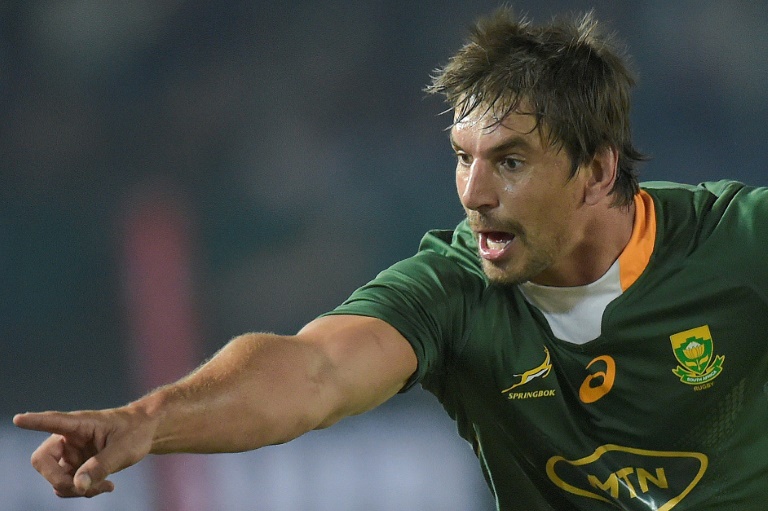
Only veteran lock Eben Etzebeth, who is set to win his 99th cap, was retained in the starting line-up and the captaincy switches from flanker Siya Kolisi to fly-half Handre Pollard.

The other three Springboks given successive call-ups — utility back Damian Willemse, hooker Malcolm Marx and tighthead prop Vincent Koch — are among the replacements.

The timing of the Nienaber move caught many off guard, given the belief that he would first want to win the series, then experiment in the final Test on July 16 in Cape Town.

Nienaber said: “Many would ask: Why don’t you wrap up the series and then give them (fringe players) a go in the last Test?

“If the players chosen for the second Test are going to face New Zealand at the Rugby World Cup in France next year, they must perform under pressure.

“Should we win on Saturday, the Cape Town Test will become a dead rubber and it does not matter that much whether you win or lose.

“Wales did not come here to compete. They came here to win the series and are now playing for survival. So, we will face a fierce Welsh side.”

Edwards, a brilliant scrum-half who was part of the 1974 British and Irish Lions team that trounced hosts South Africa 3-0, told the Welsh media he was “disappointed” by the 19 Springbok changes.

– ‘Give them a good tonking’ – 

“If there had been five or six changes, you would maybe have raised an eyebrow. But 14 changes is overwhelming.

“I do not think it shows respect for Wales and, looking logically, there is only one way to view it and that is to give them a good tonking.

“It is a great opportunity to beat them and say: Thank you very much for picking that team. I think it is a great motivation for Wales.”

Current Wales captain and fly-half Dan Biggar, who kicked 14 points in Pretoria and was also yellow-carded, disagrees with Edwards. 

“I believe the team we are playing on Saturday is probably a little bit sharper because they have been playing more,” said the playmaker.

“If you look at inside centre, for example, Andre Esterhuizen has been the in-form player in the English Premiership.

“They have swapped a World Cup winner in Damian de Allende for Esterhuizen and it certainly does not weaken them.

“There are lots of changes, but I do not believe they weaken the side. We are almost more wary because we are not quite sure what to expect.

“We know more about players like De Allende, Lukhanyo Am, Cheslin Kolbe and Makazole Mapimpi, so we are a little bit more cautious now.”

While Nienaber made wholesale changes, Wales counterpart Wayne Pivac made only one to his starting line-up with Alex Cuthbert replacing Josh Adams, now a replacement, on the left wing. 

There are three changes to the bench with props Wyn Jones and uncapped Sam Wainwright replacing Rhys Carre and concussed Tomas Francis, and Owen Watkin dropping out to accommodate Adams. 

The Test is the 12th between the teams in South Africa with Wales losing the previous 11 since 1964, including two in Bloemfontein.   

More Guinea protests after demos injure 17 police

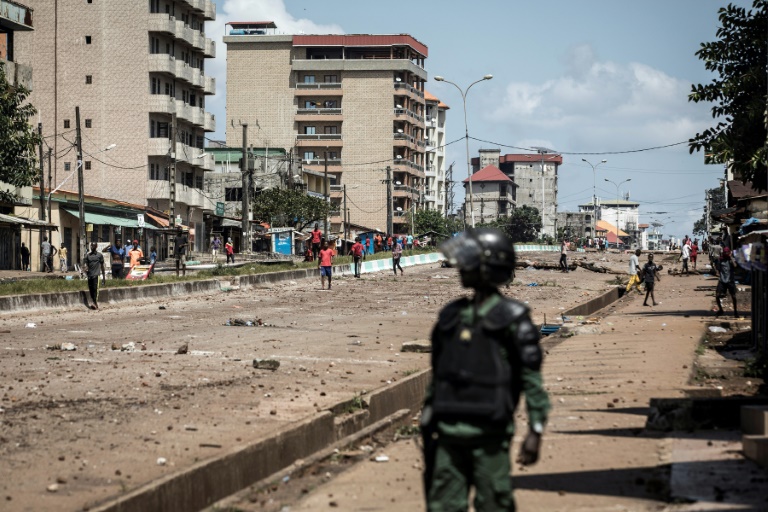
Demonstrations resumed Thursday in Conakry in protest at the arrest of three leaders of an influential political and civil society coalition who have now been charged after previous clashes that injured 17 police.

The police officers were hurt, one seriously, after violent demonstrations Tuesday and Wednesday following the arrests.

The clashes which began on Tuesday evening saw a lull earlier Thursday before demonstrators armed with stones and sticks again clashed with police in several Conakry suburbs, forcing stores to remain shuttered, an AFP journalist witnessed.

The previous clashes broke out in the suburbs of the capital during the protest against the arrest of members of the National Front for the Defence of the Constitution (FNDC).

The FNDC coalition had been vocal against former president Alpha Conde, overthrown in September last year by a military junta.

This week, the demonstrators burned tyres, set up barricades, knocked over bins and threw projectiles at the police, who tried to disperse them with tear gas. 

The protests were among the first against the administration of military ruler Mamady Doumbouya, who took power after the coup.

The three FNDC leaders were Mamadou Billo Bah, rapper Alpha Midiaou Bah also known as Djanii Alfa, and the coalition’s national coordinator Oumar Sylla.

They were seized during a press conference and

supporters complained that Sylla and Bah were beaten and had their clothes torn by police officers.

– ‘Insulting remarks’ –

The three men arrived at a court Thursday for an appearance before a judge.

One of their lawyers said they would appear for trial Friday.

There has been widespread political condemnation of the arrests, and the methods used.

According to prosecutors, Sylla and Bah face charges of having “produced and disseminated… insulting remarks” online against the National Transitional Council (CNT), a legislature appointed by the junta to pass laws pending a return to civilian rule — officially due in three years. 

The rapper, Alfa, had recently criticised comments made by the president of the CNT, before being threatened with arrest by the prosecutor, according to his lawyer.

The ruling junta had in May banned any public demonstrations prior to the next electoral campaign which could be construed, in their view, as threatening public order.

The FNDC had initially called protests for June 23 but indicated they were prepared to give the transitional government a “chance” to set a proposed dialogue in motion.

However, their patience snapped after a meeting with the authorities which the FNDC slammed as a “parody.”

Last week the Heads of the Economic Community of West African States (ECOWAS) met in Ghana’s capital Accra to assess efforts to secure guarantees for restoring civilian rule in Guinea as well as Burkina Faso and Mali.

But the junta has refused to accept an ECOWAS mediator while African Union chairman and Senegalese President Macky Sall has described the 36-month transitional period to restore democracy as “unthinkable”.

Guinea is currently suspended from the bodies of the 15-nation bloc. 

Close Bitnami banner
Bitnami