Africa Business

Major Tunisia party urges boycott of constitution vote

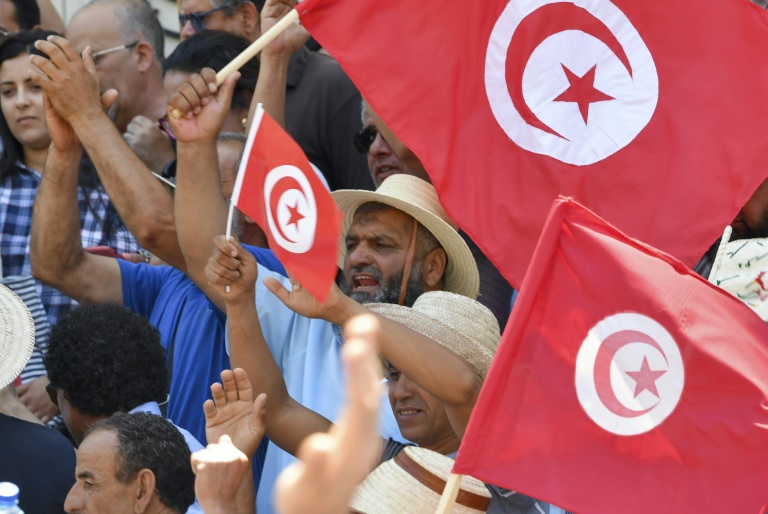
Tunisia’s Islamist-inspired Ennahdha party urged its supporters on Thursday to boycott a July 25 referendum on President Kais Saied’s new constitution, saying it would “lead to a repressive, authoritarian regime”.

“We call for a boycott of the referendum because what is being voted on is not in the interests of Tunisians,” the party’s spokesman Imed Khemeri said at a press conference in Tunis.

Saied in July last year sacked the government and froze the parliament dominated by Ennahda.

He later extended his powers in what critics see as a coup against democracy in the birthplace of the Arab Spring uprisings.

The constitution, the centrepiece of Saied’s drive to remake the Tunisian political system, sparked instant criticism for the nearly unlimited power it gives the president.

“The draft that has been presented has been made to measure” for Saied, Khemeri said.

“This document did not come from the people or from a national dialogue.”

The legal expert who headed a committee to draw up the new charter said the final text published by Saied had “nothing to do with the text we drafted and submitted to the president”.

The expert, Sadeq Belaid, added that it risked paving the way for a “dictatorial regime”, more than a decade after Tunisia’s pro-democracy revolt sparked copy-cat uprisings across the region.

On Tuesday, Saied defended the proposed constitution in an open letter.

He said “this draft was built on what the Tunisian people have expressed from the start of the revolution up until the correction of its path” last July, and that those who worried about it creating a new autocracy hadn’t read it properly.

Ennahdha, which has dominated Tunisia’s politics since the revolt that toppled dictator Zine El Abidine Ben Ali in 2011, has found itself under pressure since Saied’s power grab.

A Tunisian court on Tuesday froze the bank accounts of its chief and speaker of the now-dissolved parliament Rached Ghannouchi, as well as his son Mouadh and former prime minister and one-time senior party member Hamadi Jebali, who is accused of money-laundering. 

Later Thursday some 200 supporters of Ennahdha’s deep ideological rival, the secular Free Destourian Party, also protested against the referendum.

They gathered outside the electoral commission’s headquarters despite a heavy security deployment, some bearing signs reading “we don’t trust your results” and “stop this illegal process”.

Around 30 NGOs including the SNJT journalists’ union and rights group the LTDH also called Thursday for a boycott of the referendum, saying the text was “written by a single person without participation by civil society or experts”.
Sudan activists to unite under 'revolutionary council'

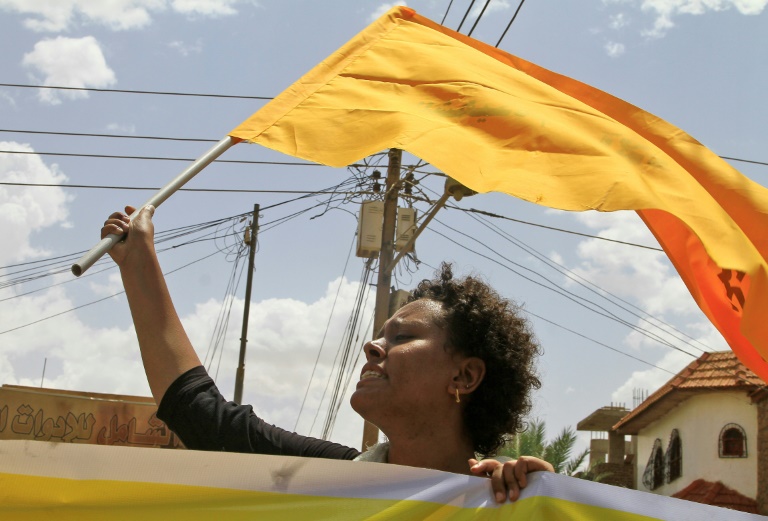
Pro-democracy groups in Sudan announced a “revolutionary council” Thursday to close ranks against coup leader General Abdel Fattah al-Burhan, rejecting his offer of a civilian government, as protesters keep pressing for his resignation.

Burhan led a coup in October last year that derailed a transition to civilian rule, unleashing near-weekly protests and prompting key donors to freeze much-needed funding. 

The transitional government he uprooted was forged between the military and civilian factions in 2019, following mass protests and a sit-in outside army headquarters that prompted the military to oust long-time strongman Omar al-Bashir.

But in a surprise move on Monday, Burhan vowed to make way for a civilian government — an offer quickly rejected by the country’s main civilian umbrella group as a “ruse”.

On Thursday, pro-democracy groups, including local resistance committees, announced their plans to establish a revolutionary council in opposition to Burhan.

The resistance committees are informal groups which emerged during the protests that ousted Bashir, and have led calls for recent anti-coup rallies.

This “revolutionary council will make it possible to regroup revolutionary forces under the orders of a unified leadership”, Manal Siam, a pro-democracy co-ordinator, told reporters.

The council will consist of “100 members, half of whom will be activists from resistance committees”, according to another coordinator, Mohammed al-Jili.

– Scepticism –

The rest of the new organisation will come from political parties, unions, rebel movements opposed to the military and relatives of those killed in the repression of protests, Jili added.

A total of 114 people have been killed in a security forces crackdown against protesters since the October coup, according to pro-democracy medics.

Activists are deeply sceptical of Burhan’s promise to make way for a civilian government, not least because he pledged at the same time to establish a new “Supreme Council of the Armed Forces”. 

Opponents and experts foresee this new body being used to sideline any new government and maintain the military’s wide-reaching economic interests, under the pretext of “defence and security” imperatives. 

Burhan has also said he will disband the country’s ruling Sovereign Council — established as the leading institution of the post-Bashir transition — and on Wednesday he fired civilian personnel serving on that body.

The protests against Burhan received were reinvigorated on June 30, when tens of thousands gathered and nine people were killed, according to pro-democracy medics.

Daily protests have occurred since then.

Young protesters on Thursday sat atop stone barricades and on felled pylons in the capital Khartoum, while also maintaining sit-ins in the suburbs and in Gezira, an agricultural state to the south of the capital. 

Doctors said that one young protester was arrested on Thursday inside a hospital where he was being treated for wounds. 

Sudan’s interim Foreign Minister Dafallah al-Haj Ali met with Volker Perthes, who heads the UN mission in Sudan, in order to “remind him of his duty to be neutral,” a statement by Ali’s ministry said. 

“Violence needs to end,” he had tweeted last week.

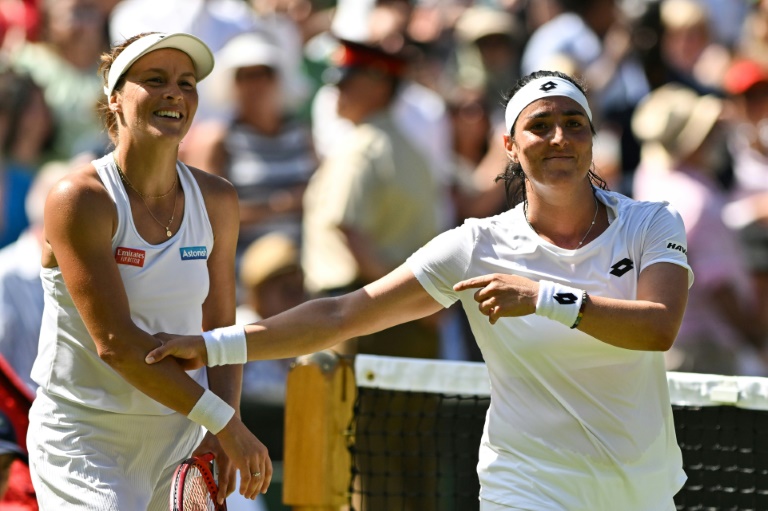
Jabeur makes African history with Wimbledon final spot against Rybakina

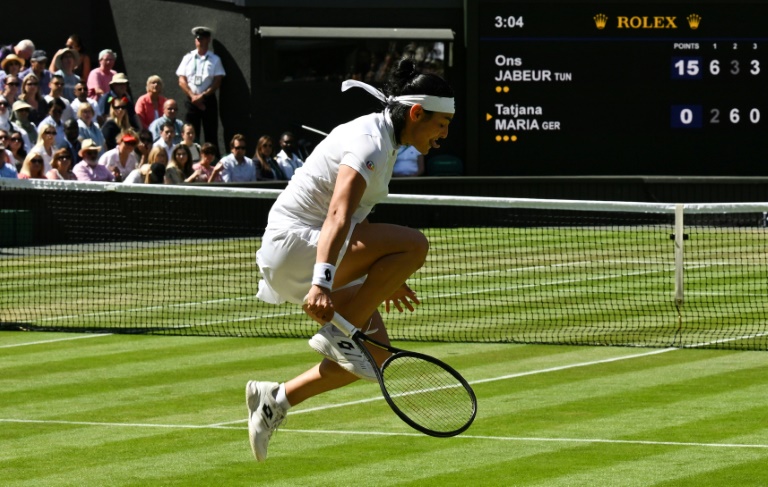
Ons Jabeur became the first African woman in the Open era to reach a Grand Slam singles final on Thursday when she defeated close friend Tatjana Maria in the Wimbledon semi-finals.

The 27-year-old world number two from Tunisia triumphed 6-2, 3-6, 6-1 and will face Elena Rybakina in Saturday’s championship match. 

Russian-born Rybakina, representing Kazakhstan, knocked out 2019 champion Simona Halep 6-3, 6-3.

“I’m a proud Tunisian woman standing here,” said Jabeur, who was the first Arab player to make a Slam semi-final.

Before Thursday, South Africans Irene Bowder Peacock, at the 1927 French Open, and Renee Schuurman, in the 1959 Australian Open, were the only African women to have reached a Slam singles final.

“It’s a dream come true from years of work and sacrifice. I’m happy that’s paid off and I’ll continue for one more match,” said Jabeur.

“Physically, Tatjana is a beast, she doesn’t give up — I thought she would give up — her touch, her serve and everything on the court is impressive. I hope she continues this way. Let’s not play again, I’m good for now.

“I know in Tunisia they are going crazy right now. I want to see more Arab and African players on the tour. I love the game and I want to share the experience with them.”

Jabeur coasted through the first set against mother-of-two Maria with breaks in the third and seventh games.

The Tunisian fired 15 winners to her opponent’s six in the first set while not facing a single break point.

However, Maria, described by Jabeur as her “barbecue buddy”, did manage to finally break through for 3-1 in the second set off the back of a series of delicate slices.

Jabeur’s 17 unforced errors in the second set compared to the six of the more accurate German, who levelled the contest.

But there was to be no upset win as the 103rd-ranked Maria’s challenge was quashed.

Jabeur secured a double break for a 5-0 advantage before securing her place in history on a second match point.

– ‘Amazing match’ –

Rybakina overpowered former champion Halep, breaking the Romanian four times in a dominant display on Centre Court.

“It was really good — today I was mentally prepared and did everything I could and it was an amazing match,” said the 23-year-old.

“I think it’s going to be a great match (against Jabeur). She’s a great player, very tricky player. It’s not going to be easy to play against her drop shots and volleys.”

Former world number one Halep had not lost a set coming into Thursday’s match but was immediately under pressure against the big-serving 17th seed.

Rybakina, who stands six feet (1.84 metres) tall, raced into a 3-0 lead with an early break of serve and had break points in all of Halep’s service games in the first set.

Halep, seeded one place above her opponent, did well to stay in touch but failed to carve out any break points of her own in the first set.

Rybakina, the first woman representing Kazakhstan to reach a Grand Slam semi-final, showed no mercy at the start of the second set, breaking again to establish an iron grip.

Halep broke to love in the fourth game to establish a foothold but a double fault in the following game handed the initiative back to her opponent.

Rybakina, the ace leader in the women’s tournament, sealed an impressive win on her first match point with a backhand winner down the line to break Halep again, wrapping up the match in 76 minutes.

The 23-year-old switched her nationality to Kazakhstan in 2018 to take advantage of greater financial help.

Russian and Belarusian players were banned from this year’s Wimbledon following the invasion of Ukraine.

Burkina ex-president Compaore returns after 8 years in exile

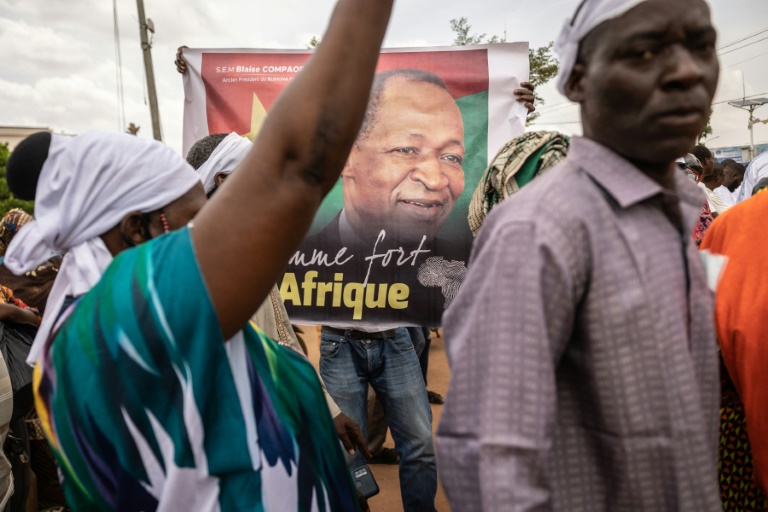
Former Burkina Faso president Blaise Compaore returned to Ouagadougou on Thursday after eight years in exile, members of his entourage and an airport source told AFP.

Compaore, 71, flew in from Ivory Coast, where he has been living, for a summit of ex-presidents with the country’s new strongman, Lieutenant-Colonel Paul-Henri Sandaogo Damiba, who was sworn in as president earlier this year following a coup.

Compaore’s plane, provided by the Ivorian presidency, landed at the military base in the Burkinabe capital in early afternoon.

Meanwhile dozens of the ex-president’s supporters had gathered at Ouagadougou’s main international airport where they expected him to arrive.

“We have come to welcome him and show him our respect,” said Alida, a 36-year-old teacher from the former head of state’s home village of Ziniare, about 30 kilometres from the capital.

“It’s a great day for us, it’s a new story that is being written from today,” she told AFP at the airport.

It is the first time the ex-president has set foot on home soil since he was forced into exile in neighbouring Ivory Coast in October 2014, after violent popular riots broke out against his plans to remain in power after serving as president for 27 years.

Compaore had seized power in a coup in 1987, on the same day that Burkina’s revolutionary leader Thomas Sankara — his former comrade-in-arms — was gunned down by a hit squad.

His return home on Thursday is not a permanent one. He has been invited to stay for a few days by Damiba, the leader of a coup in Burkina Faso in January which forced out elected president, Roch Marc Christian Kabore.

– ‘Travesty’ –

Along with the other remaining former presidents of Burkina Faso, Compaore is due to take part in a meeting to “accelerate national reconciliation” in the face of the jihadist attacks that have been plaguing Burkina Faso since 2015 and have multiplied in recent months.

Damiba hopes to create a “sacred union” around him to help fight jihadist groups.

Friday’s meeting between the current and former Burkinabe leaders is being organised to “pool energies and synergies… to fight effectively against the tragedy that has struck us”, according to a government spokesman.  

Also attending the meeting will be Jean-Baptiste Ouedraogo, who served as president for under a year in 1982-1983, Isaac Zida, who briefly took power in 2014 and is currently in exile in Canada, Michel Kafando who was in power in 2014-2015, and Kabore, elected in 2015 and overthrown in January.

Compaore’s return home has not been unanimously welcomed.

In April, he was sentenced in absentia to life imprisonment for his role in the assassination of his predecessor Sankara in 1987.

“It would be a travesty if Blaise Compaore came to Burkina Faso and left happily. It would mean that in our country, there is no longer any justice or law,” said Benewende Stanislas Sankara, one of the Sankara family’s lawyers. 

Ra-Sablga Seydou Ouedraogo, director of the Free Afrik think-tank, believes that reconciliation should not equal impunity.

“How does the consecration of impunity serve the fight against terrorism?” he asked.

The presidency said on Wednesday: “This meeting, which is important for the life of the nation, does not hinder the legal proceedings against certain people.” 

ab-sd-pid-stb/pvh/ah

Fresh clashes in DR Congo as rebels dash ceasefire hopes

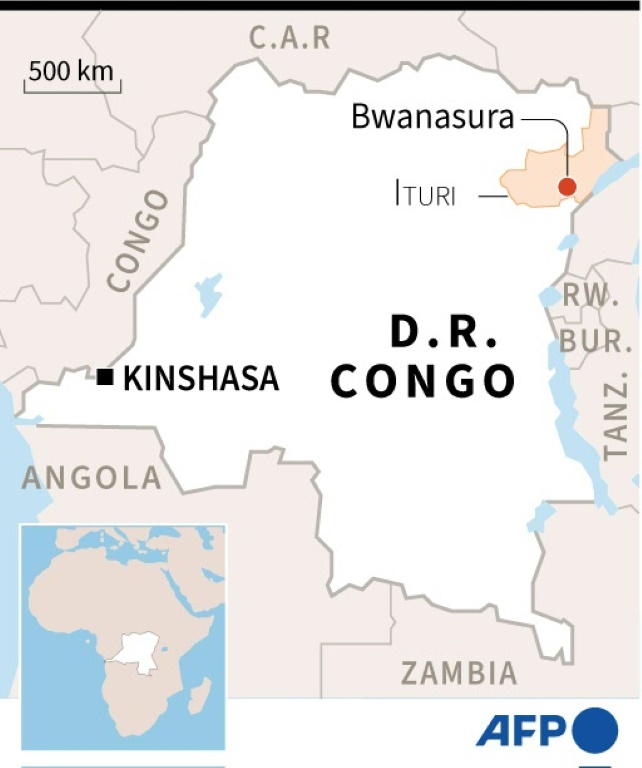
Fresh clashes between M23 rebels and soldiers erupted in eastern DR Congo on Thursday, officials said, as the militia declared that it was not bound by a ceasefire agreement.

M23 spokesman Willy Ngoma told AFP that the deal brokered between the Congolese and Rwandan presidents in Angola on Wednesday was irrelevant.

“We are Congolese, not Rwandan,” he said. “If there’s a ceasefire, it can only be between us and the Congolese government”.

Talks between the Democratic Republic of Congo’s leader Felix Tshisekedi and Rwanda’s Paul Kagame in Angola on Wednesday initially raised the prospect of a ceasefire between the M23 and the Congolese government.

Violence between the mostly Congolese Tutsi rebels and the DRC’s army has flared in recent weeks.

The DRC has repeatedly accused neighbouring Rwanda of backing the M23, a charge the small central African country has always denied.  

The M23’s announcement on Thursday that it is not bound by the ceasefire, came after clashes between its fighters and Congolese troops broke out in Rutshuru territory in Congo’s eastern North Kivu province in the morning.

A Congolese army commander accused the rebels of attacking military positions in the area in violation of the ceasefire. However, the M23 denied the claim and accused the army of starting hostilities. 

The M23 — or “March 23 Movement” — first leapt to prominence when it briefly captured the eastern Congolese city of Goma in 2012 before it was driven out in a joint UN-Congolese offensive.

After lying mostly dormant for years, the group resumed fighting last November after accusing the Congolese government of failing to honour an agreement to incorporate its fighters into the army, among other issues.

Fierce fighting has seen the rebels make significant advances in eastern Congo. Last month, M23 fighters captured the strategic town of Bunagana on the Congolese-Ugandan border. 

– Ceasefire –

M23 clashes have plunged relations between the DRC and Rwanda to its lowest point in years. 

The relationship between the two countries had already long been strained since the mass arrival in the eastern DRC of Rwandan Hutus accused of slaughtering Tutsis during the 1994 Rwanda genocide.

Both countries have in recent weeks accused the other of carrying out cross-border shelling, triggering international appeals for calm. 

On Wednesday, Congo’s leader Tshisekedi met Rwanda’s Kagame in the Angolan capital Luanda for talks mediated by Angolan President Joao Lourenco at the request of the African Union.

“We have agreed on a ceasefire, among other measures,” Lourenco said at the end of the mini-summit. 

The DRC and Rwanda agreed among other things to a “roadmap” towards normalising diplomatic ties, including through ending hostilities involving the M23 and the Democratic Forces for the Liberation of Rwanda (FDLR) — a mostly ethnic Rwandan Hutu group active in eastern DRC.  

The vast mineral-rich DRC is struggling to contain dozens of armed groups in its volatile east, many of which are a legacy of two regional wars a quarter of a century ago.

Ons Jabeur, Tunisia's 'Minister of Happiness' on verge of Wimbledon title

Ons Jabeur, who on Thursday became the first African woman in the Open era to reach a Grand Slam singles final, has emerged as a national hero at home in Tunisia.

Since reaching the world’s top 50 at the Australian Open in January 2020, she has surged up the rankings to become world number two.

She bagged her latest victory on Thursday to secure a place in the final at Wimbledon, beating her friend Tatjana Maria 6-2, 3-6, 6-1. 

“It’s a dream coming true from years and years of work and sacrifice,” the 27-year-old, dubbed ‘Minister of Happiness’ by fans, told the crowd.

On Saturday, she will face Elena Rybakina for the Wimbledon title.

“I’m a proud Tunisian woman standing here today and I know in Tunisia they’re going crazy right now. I’m just trying to inspire as much as I can,” she added.

Her victories have been a rare good news story for a North African country mired in economic and political crisis, made more acute by the coronavirus pandemic and the impact of the war in Ukraine.

Jabeur has leveraged her growing international profile to make a difference.

Last summer, she sold two of her racquets to raise $27,000 (23,000 euros) for hospitals buckling under a heavy wave of Covid-19 cases, with acute shortages of oxygen, staff and intensive care beds.

“For me, it was my duty to help my country,” she said.

When she arrived at Wimbledon, she announced that for every ace or drop shot she hit throughout the tournament, her Tunisian sponsor, IT firm Talan Tunisie, would pay out 100 euros towards renovating a high school in a neglected region of north-western Tunisia.

She has also sought to promote her country on the world stage. After winning the Berlin WTA singles title in June, she persuaded the DJ to play music by her favourite Tunisian singer, Balti.

She has also developed a reputation as a fun, humourous presence on the court.

“I love the big stage. I’m a little bit of a show-off. I love to connect with the crowd,” she wrote in a column for BBC Sport this week.

She often wears a t-shirt, designed by her Italian sponsor Lotto, reading “Yalla habibi” (“Come on, my love” in Arabic).

– ‘The warrior’ –

But underneath lies a steely determination.

“In 2019, I told my team I’d had enough of being ranked 60th and that I wanted to be among the best players in the world,” she told AFP last year, adding that after she had reached the Australian Open quarter-finals, “other players have started to fear playing me.”

Born in 1994 in Ksar Hellal, Jabeur started her career as a child on hotel tennis courts in the resort town of Hammam Sousse.

At the age of 10, she told her mother that one day she would “drink a coffee at Roland Garros”, the French Open, according to her first trainer, Nabil Mlika.

“And so she did. It’s magical,” he told AFP.

At the age of 12, she joined a sports academy in the capital Tunis.

Omar Laabidi, her adolescent hitting partner, says she always showed a fighting spirit.

“What you see of Ons on the court, the warrior, the fighter who battles for every point, that’s always been her character,” he said.

Jabeur’s ability to bounce back from adversity has been particularly evident in recent weeks.

Despite crashing out in the first round of the French Open in May, she surged back to win the Berlin WTA title the following month.

She also played alongside 23-time Grand Slam singles champion Serena Williams in Eastbourne, an opportunity she called “unbelievable”.

And despite an ankle injury that ended the pair’s run, she has fought her way to the threshold of her first Grand Slam triumph.

“Wimbledon reminds me of a wedding. I love the history and the traditions, like the all-white kit and everybody eating strawberries,” she added in her BBC column this week.

She said she liked to play “with slice and changes of rhythm.”

“I don’t like routine much. That’s why I don’t do the same shot very often,” she said.

She told AFP last year that her childhood dream was “to win titles in the big competitions”.

“I know very well that I’m not far off,” she said. 

“During my career, plenty have doubted my ability to ever reach this level, but my belief in myself and my work have allowed me to move forward.”

Kenyan fury over Fox News host's jibe on pregnant women voters

A prominent Fox News television presenter has triggered outrage in Kenya after she suggested that pregnant women cannot vote in the East African country.

During a panel discussion on Fox News’ satirical show “Gutfeld” this week, Emily Compagno criticised a tweet by US pop star Katy Perry on the abortion debate which said “women in the US have fewer rights than an actual sparkler”.

“What about in Kenya, where pregnant women can’t leave the house, so they absolutely have no constructive right to vote,” Compagno charged.  

The 29-second clip went viral in Kenya and dominated the country’s top trends on Twitter, with politicians and others denouncing Compagno’s comment.

“That statement is incorrect, misleading, condescending and should be withdrawn,” political commentator Pauline Njoroge said on Twitter.

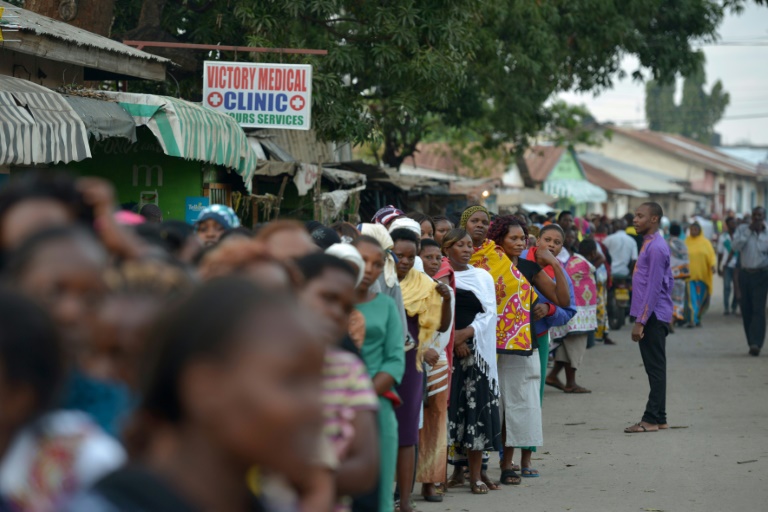
Esther Passaris, the Nairobi County women’s representative in parliament, declared: “Pregnant women in Kenya are allowed to leave the house. Pregnant women in Kenya can vote.”

“Pregnant women get priority on voting lines. Pregnant women do give birth free of charge… Retract your statement,” she tweeted.

“Wait, what? In Kenya, pregnant women can’t leave the house? Emily Compagno probably (should) start by locating Kenya on the map first maybe?” mocked Charity Ngilu, one of three female county governors in Kenya.

Kenya heads to the polls on August 9 for presidential, parliamentary and county elections.

Under Kenyan law, every adult citizen has the right to be registered as a voter and cast their ballot in any election.

During Kenya’s 2017 polls, AFP reported the case of a woman who went into labour while queueing outside a polling station and returned to vote after giving birth to a baby girl.

Hajj crowds move to Mina as pilgrimage pinnacle nears

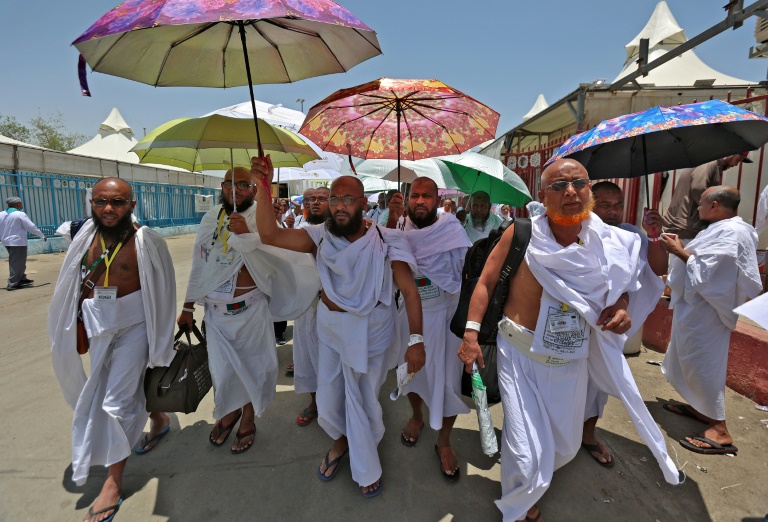
Hundreds of thousands of pilgrims journeyed from Saudi Arabia’s Mecca to a white-tented city in Mina on Thursday as they neared the highlight of the biggest hajj ritual since the coronavirus pandemic began.

Worshippers took buses or walked to Mina, seven kilometres (four miles) from Mecca’s Grand Mosque, Islam’s holiest site, where they circled the imposing black Kaaba at the start of the rituals on Wednesday.

Dressed in simple white robes, the pilgrims will spend the night in the air-conditioned white tents of Mina, which sits in a narrow valley surrounded by rocky mountains and is transformed each year into a vast encampment.

“I feel great. This is all to be closer to God,” Tunisian pilgrim Khaled Bin Jomaa, 44, said as he entered the camp on foot, carrying an umbrella and a prayer mat.

The pilgrims are positioning themselves for the highlight of the hajj on Friday: ascending Mount Arafat, where the Prophet Mohammed is believed to have delivered his final sermon. 

Worshippers will pray and recite the Koran for several hours at the mountain and sleep nearby. On Saturday, they will gather pebbles and perform the symbolic “stoning of the devil”.

The hajj, one of the world’s biggest religious gatherings, has not gone smoothly for everyone. Saudi Arabia’s hajj ministry demanded the sacking of two top officials at a company that organises pilgrimages, over their failure to provide decent services, the official Saudi Press Agency said on Thursday. 

State-run Al-Ekhbariya TV said the company handled pilgrimages from overseas and was responsible for “problems with food and accommodation” including a lack of air conditioning at the Mina camp.

– ‘Breathing in my face’ –

Fridges packed with yoghurt, juice and water were waiting at the temporary accommodation in Mina, along with a food buffet and fruit baskets.

One pilgrim complained about the lack of space in his room, before the manager asked his assistants to move him to another one. 

“It is too tight. I can feel the guy next to me breathing into my face,” the pilgrim said.

The crowds, capped at one million including 850,000 from abroad chosen by lottery, are the biggest since 2019 after two Covid-hit years when only tens of thousands were allowed.

All worshippers are fully vaccinated and submitted negative PCR tests, but the rituals are taking place against the backdrop of a resurgence of Covid-19 in the region. 

Some Gulf countries have tightened restrictions to keep outbreaks in check.

The hajj ministry has said it is working on the highest levels of health precautions in light of the pandemic and the emergence of new variants. 

At Mina, the pilgrims were handed small bags containing masks and sanitiser, and ambulances were parked at the camp’s entrances.

However, a requirement to wear masks has been largely ignored.

Temperatures of 42 degrees Celsius (108 degrees Fahrenheit) are another challenge. Four hospitals and 26 health centres have been prepared at Mina to treat pilgrims who might fall ill.

“We have taken all precautions. We have doctors here ready to intervene in case needed,” said Ahmad al-Zinani, a camp manager.

– Military helicopters –

The hajj is one of the five pillars of Islam and must be undertaken by all Muslims with the means to do so at least once in their lives.

Saudi state media reported that Mauritania’s president and Indonesia’s vice president were among the pilgrims landing in Jeddah on Thursday to perform the rituals.

In 2019, about 2.5 million Muslims from around the world participated in the event, which poses a considerable security challenge and has seen several disasters over the years, including a 2015 stampede that killed up to 2,300 people.

The rites are taking place under strict security measures that include police checkpoints in parts of Mecca. In 1979, gunmen barricaded themselves inside the Grand Mosque in an assault that left 153 dead, according to the official toll.

Military helicopters will be used “around the clock… to support the public security”, the commander of the Air Force Group participating in this hajj season, Colonel Khaled bin Abdullah al-Mutairi, told state media.

Overseas pilgrims were banned from the hajj in 2020 and 2021 to prevent Covid infections but they are back in the mountainous region this year, filling hotel rooms and visiting shops as business owners hope to recover their pandemic losses.

Sudan activists to unite under 'revolutionary council'

Pro-democracy groups in Sudan announced a “revolutionary council” Thursday to close ranks against coup leader General Abdel Fattah al-Burhan, rejecting his offer of a civilian government, as protesters keep pressing for his resignation.

Burhan led a coup in October last year that derailed a transition to civilian rule, unleashing near-weekly protests and prompting key donors to freeze much-needed funding. 

The transitional government he uprooted was forged between the military and civilian factions in 2019, following mass protests and a sit-in outside army headquarters that prompted the military to oust long-time dictator Omar al-Bashir.

But in a surprise move on Monday, Burhan vowed to make way for a civilian government — an offer quickly rejected by the country’s main civilian umbrella group as a “ruse”.

On Thursday, pro-democracy groups, including local resistance committees, announced their plans to establish a revolutionary council in opposition to Burhan.

This “revolutionary council will make it possible to regroup revolutionary forces under the orders of a unified leadership”, Manal Siam, a pro-democracy co-ordinator, told reporters.

The council will consist of “100 members, half of whom will be activists from resistance committees”, according to another coordinator, Mohammed al-Jili.

The rest of the new organisation will come from political parties, unions, rebel movements opposed to the military and relatives of those killed in the repression of protests, Jili added.

A total of 114 people have been killed in a crackdown against protesters since the October coup, according to pro-democracy medics.

Activists are deeply sceptical of Burhan’s promise to make way for a civilian government, not least because he pledged at the same time to establish a new “Supreme Council of the Armed Forces”. 

Opponents and experts foresee this new body being used to side-line any new government and maintain the military’s wide-reaching economic interests, under the pretext of “defence and security” imperatives. 

Burhan has also said he will disband the country’s ruling Sovereign Council — established as the leading institution of the post-Bashir transition — and on Wednesday he fired civilian personnel serving on that body.

The protests against Burhan received a new lease of life last Thursday, when tens of thousands gathered, and they have evolved into new sit-ins in some areas. 

Young protesters on Thursday sat on stone barricades and on felled pylons in the capital Khartoum, while also maintaining sit-ins in the suburbs and in Jazeera, an agricultural province to the south of the capital. 

Women-only media start-up wants to fight stigma in Somalia

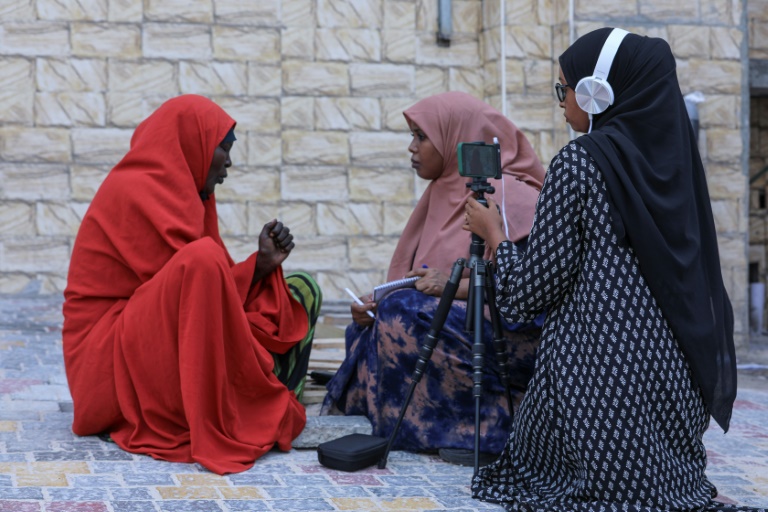
Armed with mobile phones, tripods and laptops, the crew at Bilan Media, a Somali start-up staffed entirely by women, is on a mission to break the silence around gender violence in the troubled Horn of Africa nation.

A rarity in the conservative predominantly Muslim country, Bilan (meaning “beauty” in Somali) is funded by the United Nations Development Programme and operates out of the offices of Dalsan, a popular television and radio station based in the capital Mogadishu.

Its team of six journalists aims to challenge patriarchal norms by producing shows that focus on women.

This includes profiles of prominent Somali women and coverage of issues often considered too sensitive for public broadcast in Somalia, including subjects such as domestic violence and rape.

“About 80 percent of the programme will focus on stories which people may find shameful. Society must be informed about these stories,” said Bilan editor-in-chief Nasrin Mohamed Ibrahim.

The young journalists — all aged under 28 — worked in local media outlets before joining Ibrahim’s team.

It’s a wholly hands-on affair.

“Normally you have male involvement in the production of programmes in other conventional media but for us, we write the script, do interviews, edit the videos, and present the programme,” 21-year-old Ibrahim said in an interview with AFP.

Their shows are aired on Dalsan and on Bilan Media’s social networks, where Ibrahim hopes to gradually build an audience.

– ‘Feel the same pain’ –

The biggest challenge lies in persuading Somali citizens to share their stories, Ibrahim said, pointing out that having an all-female team has proved to be an unexpected advantage in this regard.

“The information I can manage to get from a mother whose daughter was raped may not be available to male journalists because that mother will trust female journalists more,” she said. 

“As a woman, we are the same and feel the same pain.”

Speaking up about gender violence carries huge risks in Somalia, where rape remains a rampant problem.

The country has yet to pass its first sexual offences bill, which has been in the works since 2014.

Perpetrators have rarely been prosecuted or punished, while victims often face a backlash when they step forward.

But change is coming to this traditional society, according to Ibrahim.

“Many women wish to tell their stories to seek justice,” she said, recalling a case she covered in 2020 involving the alleged gang rape and murder of a young woman in a Mogadishu neighbourhood.

“Her parents decided to talk about it — I myself interviewed her father and as of today her case is in court,” she said, rattling off other examples where families refused to let the stigma surrounding sexual violence stifle their voices.

“If these parents had not decided to talk about it publicly, the victims would have been buried with no justice served,” said Ibrahim.

– ‘Do it better’ –

The youngest member of the team, Shukri Mohamed Abdi, 19, told AFP that the audience response was encouraging.

“As female Somali journalists, we encourage and advocate for the rights of the voiceless women,” she said.

“We have recently done a story about a 16-year-old single mother… she returned to school to continue with her education after a gap and we have presented the challenges she has and ambitions for the future.

“People are pleased with stories like this because it discourages child marriage.”

Hafsa Abdulaziz, a mother-of-two who lives in Mogadishu, told AFP she had watched some reports on Bilan’s Facebook page following its launch in April.

“There are so many harrowing stories about the lives of shattered families which you don’t see normally or hear conventional media covering, so this is something special,” she said. 

Not everyone is a fan though.

University graduate Abdullahi Adan told AFP: “Frankly speaking, I doubt the motive of this Bilan Media, all the journalists are female, and they only do programmes… about women.”

“They may be trying to motivate women to stand against men,” he said. 

But Ibrahim is unruffled.

“There is no task that comes without challenges so when you discuss (producing) programmes like this you must get ready for the challenges,” she said.

“I believe that we can do whatever men can do or do it even better.”

Close Bitnami banner
Bitnami