Bloomberg

Mark Zuckerberg Calls Apple App Store Rules a ‘Conflict of Interest’

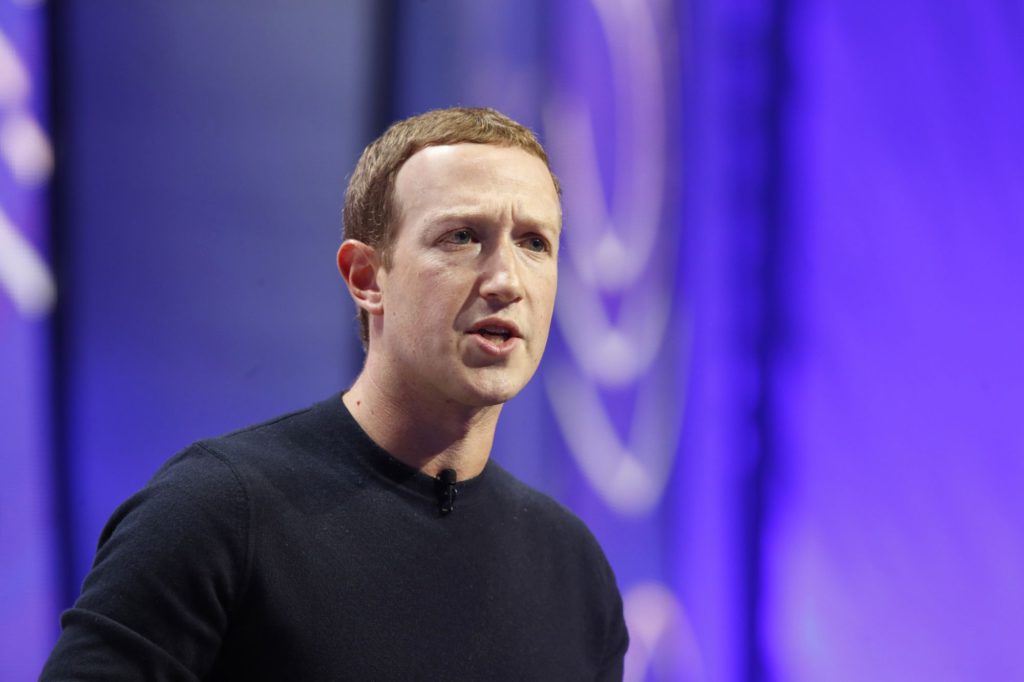
(Bloomberg) — Meta Platforms Inc. Chief Executive Officer Mark Zuckerberg said that Apple Inc.’s App Store presents a conflict of interest, adding his voice to a flurry of criticism of the iPhone maker’s software policies.

“It is problematic for one company to be able to control what app experiences end up on a device,” Zuckerberg said Wednesday in an interview at the New York Times DealBook conference. The “vast majority of profits in mobile ecosystem go toward Apple,” he added.

App store policies and fees implemented by Apple, and to a lesser extent Google parent Alphabet Inc., have long been a point of contention for technology companies looking to reach broad mobile audiences. Billionaire Elon Musk added to the chorus after his acquisition of Twitter Inc., sending a flurry of tweets this week denouncing Apple’s fees and restrictions on what apps can be sold.

Zuckerberg echoed some of Musk’s points. He called Apple’s content moderation rules for apps a “conflict of interest” since they are often pointed at rivals. It makes Apple “not just a governor looking out for people’s interests.” Revenue at Meta, which owns social networks Facebook and Instagram, has taken a hit since Apple tightened its privacy policies to restrict how users can be tracked and targeted with advertising.

Though Zuckerberg seemed to back up his objection to Apple’s policies, Musk on Wednesday walked back some of his criticism of the iPhone maker, saying he met with CEO Tim Cook at the company’s headquarters and had a “good conversation” that resolved a “misunderstanding” about Twitter’s place in the App Store. 

As for Musk’s approach to running Twitter, Zuckerberg hedged his comments — he said he guesses that some approaches will work and others won’t. “I think it’ll be very interesting to see how this plays out,” he said. 

On whether Meta would allow former US President Donald Trump back onto Facebook, Zuckerberg didn’t answer, but pointed to prior guidance the company has gotten from its external Oversight Board, weighing in on difficult content decisions. Meta is expected to make a decision in January.

Wall Street has become increasingly bearish on Meta’s investment in its money-losing virtual reality business amid slowing ad revenue. Earlier this month, Zuckerberg said the company would slash more than 11,000 jobs, and took personal responsibility for decisions that led to the need to cut costs. In April, Meta reported its first-ever quarterly revenue drop.

The interview Wednesday began with a recorded conversation between Zuckerberg and the moderator as avatars in the immersive digital world the company calls the metaverse. Still, Zuckerberg said the idea that Meta is wholly focused on the metaverse is “basically wrong.” Messaging program WhatsApp will be his next major monetization target, he said, as that platform is “largely untapped.”

He cited progress in Reels, the company’s short video feature, saying some estimates show it has half the traffic of viral video-sharing app TikTok outside of China. 

Zuckerberg also raised the issue of TikTok’s ownership by Beijing-based ByteDance Ltd., adding that there are “real questions” about the influence of China’s government on TikTok. “In a lot of countries, all data goes to the government,” the CEO said.

(Updates to add Musk’s comments on his conversation with Apple’s CEO. An earlier version of this story corrected the language in the sixth paragraph to show that Zuckerberg didn’t attribute the decision on restoring Trump’s Facebook account directly to the Oversight Board.)

More stories like this are available on bloomberg.com

©2022 Bloomberg L.P.

Salesforce’s Taylor Exits as Co-CEO, Leaves Benioff at Helm

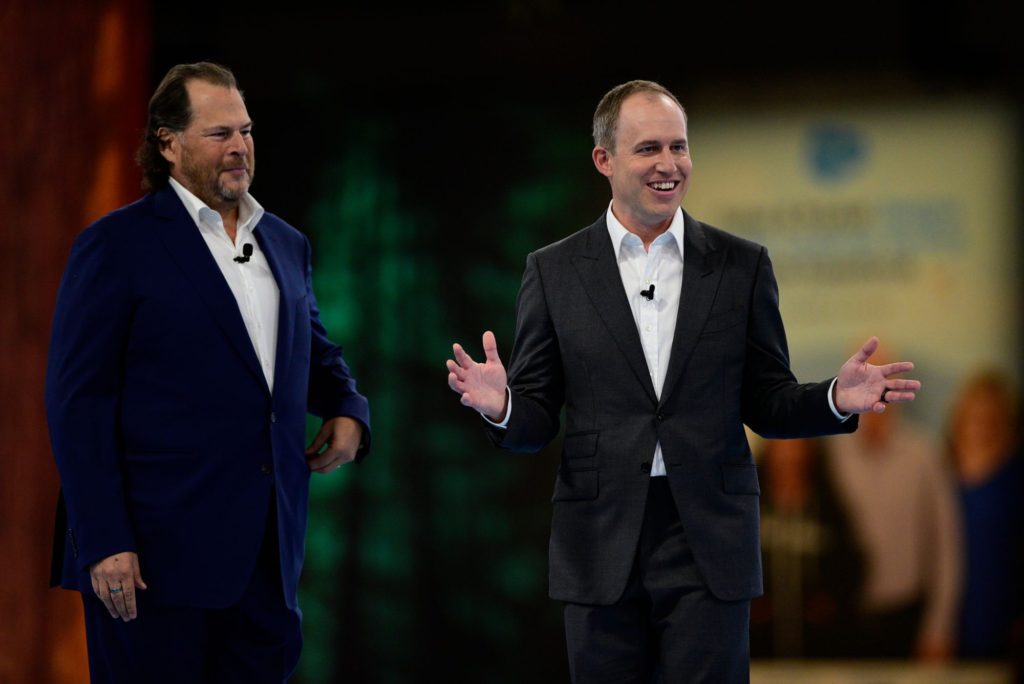
(Bloomberg) — Salesforce Inc. co-Chief Executive Officer Bret Taylor is stepping down after just a year in the top post alongside co-founder Marc Benioff, the latest potential successor to leave the company.

Benioff will remain the sole CEO and continue as board chairman of the software giant when Taylor departs on Jan. 31, the company said Wednesday in a statement. Taylor has been at the company for the past six years and was named co-CEO in November 2021.

“I’ve decided to return to my entrepreneurial roots,” Taylor said in the statement.

Taylor, 42, joined Salesforce in 2016 as part of the acquisition of his startup Quip. He had been mentored by Benioff for years at that point and rose quickly through the ranks before being promoted to the top job with him.

Company insiders have described Taylor as handling many of the day-to-day operations at Salesforce, such as hosting the weekly executive meeting. Meanwhile, Benioff, who has run the company since co-founding it in 1999, was able to focus on broad strategy as well as his outside philanthropic efforts.

Taylor’s departure comes almost three years after Benioff’s last co-CEO, Keith Block, left the company. Adam Selipsky, CEO of Tableau Software, a data visualization company that Salesforce acquired in 2019, moved on in 2021 to lead Amazon Web Services. George Hu, another Benioff protege who rose to chief operating officer, departed in 2014. Another prominent executive, Chief Strategy Officer Gavin Patterson, announced earlier this month that he, too, would exit.

“This is extremely hard for me,” Benioff said on a conference call to discuss Salesforce’s quarterly results. “It makes me think of all the great people that we have actually lost in the company over time as well. So many great leaders.”

In addition to his duties at Salesforce, Taylor had been chairman at Twitter Inc. and acted as the point person for the social media company in its contentious acquisition by billionaire Elon Musk. Taylor left Twitter’s board when Musk took over in late October.

“It does leave a big vacuum up north,” Bloomberg Intelligence analyst Anurag Rana said of Taylor’s exit. “It’s concerning as growth slows.”

When asked whether he’d look to replace Taylor, Benioff said he had “a lot of fantastic people in the company.” To be sure, Salesforce has a number of prominent leaders remaining, including Stewart Butterfield, CEO of professional collaboration service Slack, which Salesforce bought last year, and Chief Operating Officer Brian Millham, a 23-year veteran of the company. David Schmaier, who was previously CEO of Vlocity, which Salesforce purchased in 2020, now serves as president and chief product officer.

Taylor’s departure comes as Salesforce is struggling with slowing growth and increasing pressure from investors to improve profit. Separately on Wednesday, the company projected revenue growth of 8% to 10% in the current period — which would would be the slowest year-over-year increase since Salesforce went public in 2004.

Fiscal third-quarter sales increased 14% to $7.84 billion. It’s the first time Salesforce has failed to generate at least 20% year-over-year quarterly revenue growth. Profit, excluding some items, was $1.40 a share. Chief Financial Officer Amy Weaver said the company is seeing “intense customer scrutiny.”

Salesforce executives declined to give a revenue outlook for the upcoming fiscal year, which they generally provide during the third-quarter earnings call. Weaver said it would be “premature” to offer the forecast, citing an unpredictable economic environment and currency fluctuations. She said Salesforce will offer guidance on fiscal year 2024 during the fourth-quarter earnings call.

The shares fell about 7% in extended trading following the news of Taylor’s exit and the company’s quarterly earnings report. The stock had closed at $160.25 in New York, leaving it down 37% this year.

(Updates with comments from Benioff in the seventh paragraph.)

More stories like this are available on bloomberg.com

©2022 Bloomberg L.P.

Ukraine Latest: Zelenskiy Says 6 Million Are Without Electricity

(Bloomberg) — Six million consumers in Ukraine are without electricity after Russia’s intensive attacks on the country’s energy infrastructure, President Volodymyr Zelenskiy said in his nightly address. 

The nation needs high-voltage equipment that can be repaired quickly — transformers as well as generators — to get through the winter, Energy Minister Herman Halushchenko told Bloomberg TV earlier in the day. 

NATO allies must send main battle tanks to Ukraine as soon as possible, as Ukrainian forces could use them to “revert the situation” on the ground now, while the ground is frozen, Lithuanian Foreign Minister Gabrielius Landsbergis told Bloomberg TV at a ministerial meeting in Bucharest.


(See RSAN on the Bloomberg Terminal for the Russian Sanctions Dashboard.)

Key Developments

  • EU Proposes Special Court to Probe Russian Actions in Ukraine
  • NATO Allies Warn on China With Eye on Beijing’s Ties to Putin
  • Senior House Republican Vows to Keep Money Flowing to Ukraine
  • US Weighs Terrorism Label for Russia’s Wagner Group Mercenaries
  • How Putin’s Spooking Japan Further Away From Pacifism: QuickTake

On the Ground

The threat of new missile attacks against critical infrastructure all across Ukraine remains, the country’s General Staff said in its regular update. Russian forces continue an offensive near Bakhmut in Donetsk region, according to the statement. Each town along the front line in the region has suffered from shelling over the past 24 hours even as Russians failed to push Ukrainian troops away, governor Pavlo Kyrylenko said during a video briefing.

(All times CET)

Army Awards Raytheon $1.2 Billion For Six More Air Defense Units (12:10 a.m.)

The US Army on Wednesday awarded Raytheon Technologies Corp a $1.2 billion contract for delivery by late 2025 of six additional National Advanced Surface-to-Air Missile Systems for Ukraine.

The contract brings to eight the number Nasam systems the US has committed to Ukraine’s long-term defense needs. The Nasams fire missiles at aerial targets. Two units have been delivered and are proving effective, Defense Secretary Lloyd Austin has said. The $1.2 billion came from the fifth Ukraine Security Assistance Initiative contracts package.

“The Army, along with industry partners, will work to shorten the 24-month production lead time associated with production and delivery of Nasams,” the service said in a statement.

Zelenskiy Presses Germany for Long-Range Patriot System (10:20 p.m.)

Zelenskiy pressed German Chancellor Olaf Scholz for the long-range Patriot missile defense system, saying that if his nation provides it “all generations of Ukrainians will thank Chancellor Scholz, as well as the entire generation of modern German politicians.” 

A Pentagon official said this week that there are no immediate plans for the US to provide the American-made system.

Netanyahu Sees Risk of a Tactical Nuclear Strike in Ukraine (9:57 p.m.)

Incoming Israeli Prime Minister Benjamin Netanyahu said he no longer rules out the possible use of a tactical nuclear weapon as Russia presses its invasion of Ukraine, something he considered unthinkable a year ago.

In the past, Netanyahu told the New York Times Dealbook Summit, “people asked me is it possible that it would deteriorate to tactical nuclear weapons,” and his answer was no. “And I can honestly tell you about a year later on, that I think the probability is still low, but I wouldn’t rule it out completely.”

Ukraine Finding Solutions to Adapt Donated Power Equipment (6:45 p.m.)

Ukraine’s power engineers are finding “some technical solutions” to adapt transformers donated by European Union countries to the different specifications used in eastern Europe, Halushchenko, the energy minister, said in his Bloomberg TV interview.

He also said that Ukraine has stored sufficient fuel for portable generators that are in wide use by Ukrainians amid blackouts all over the country from Russian attacks, and he urged the west to provide more such equipment.

Zelenskiy Invites Musk to Ukraine to See Russia’s Devastation (6:18 p.m.)

Zelenskiy invited Elon Musk to visit his war-ravaged nation and see for himself the damage wrought by Russia, after the world’s richest man floated the idea of a peace deal that would give major concessions to President Vladimir Putin.

Musk played a key role restoring Internet service in Ukraine after the invasion, Zelenskiy told the New York Times Dealbook conference Wednesday, saying “life was maintained” thanks to the deployment of his Starlink satellite communications system. 

But sometime later, “it seems that Elon began to change his opinion and we began to hear all kinds of appeals,” Zelenskiy said.

Read the full story.

US Says It Fears Russia May Use Biological Weapons (6:04 p.m.)

Russia’s invasion of Ukraine has elevated US concern that Putin’s government could use biological weapons, according to a top US State Department official who’s in Geneva for a review of the global treaty addressing such threats.

“We’ve always been concerned about their own biological program,” Under Secretary for Arms Control and International Security Bonnie Jenkins said, speaking from the US Mission in Geneva. But those concerns have increased as Russia has continued to make unsupported allegations about US development of biological weapons in Ukraine. Such disinformation could mask Russia’s own weaponization of infectious diseases, she said. 

“As long as they continue the unprovoked invasion of Ukraine — staying there and doing what they’re doing and making these allegations — there’s always a possibility that they’ve been using” disinformation as a cover, she said.  

Finland Sends Power Grid Components to Ukraine (5:11 p.m.)

Finland’s delivery included current transformers, circuit breakers and relays, the government in Helsinki said in an emailed statement. It follows an earlier shipment of 28 current transformers, and officials are putting together a further package including large generators and heating equipment.

Ukraine Embassy in Spain Reports Injury (1:40 p.m.)

A worker at the embassy in Madrid was slightly injured by a letter bomb, a spokesperson for the Interior Ministry said in a statement. He was able to reach a hospital on his own, according to the statement. Further details weren’t immediately available.

Petraeus Expects Negotiated End to War (1:00 p.m.)

Former Central Intelligence Agency Director David Petraeus said he expects the war to end with a negotiated settlement rather than victory for Ukraine.

“Until then, the US, NATO and western allies should do everything possible to enable Ukraine to liberate its country and defend its people and infrastructure against Russian missiles and Iranian drones,” Petraeus, who is also a former US general, was quoted as saying by Germany’s Tagesspiegel newspaper. The aim should also be to keep Ukraine’s economy running “and accelerate Putin’s realization that the Russian mission in Ukraine cannot be sustained,” he added.

More stories like this are available on bloomberg.com

©2022 Bloomberg L.P.

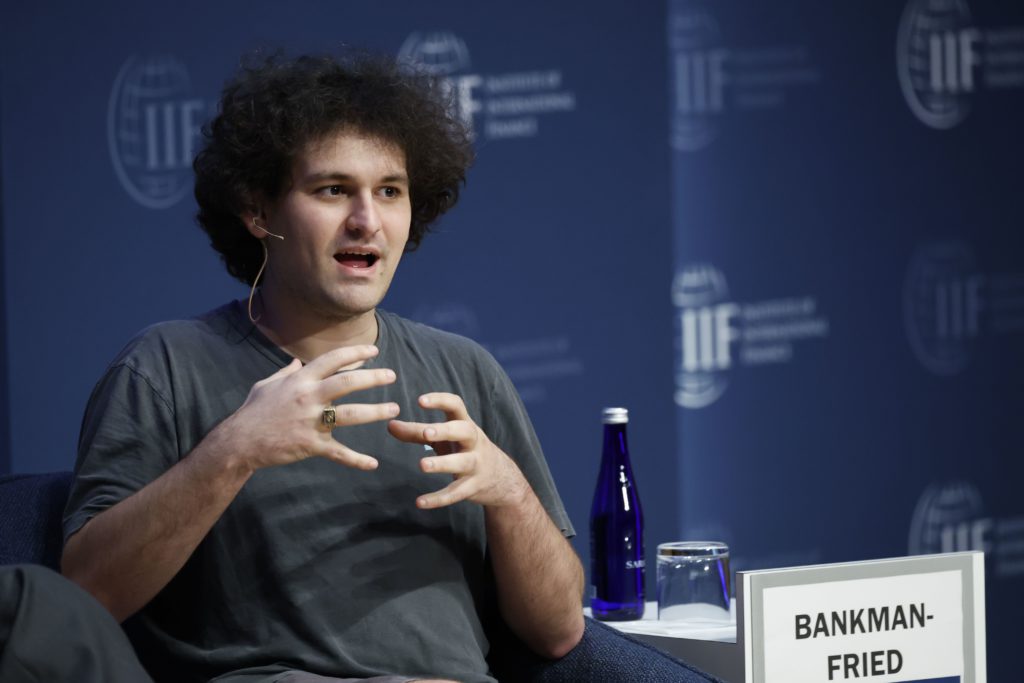
Here Are the Key Takeaways From Bankman-Fried’s DealBook Summit

(Bloomberg) — Here are the biggest key takeaways from Sam Bankman-Fried’s appearance at the New York Times DealBook Summit Wednesday. Click here for our TOPLive blog.

  • Bankman-Fried admitted that he “screwed up” and did make major mistakes as CEO of FTX. He said he should’ve focused more on risk management and protecting customers and looked more closely at the growing interconnectedness between FTX and Alameda Research over the past year.
  • The disgraced crypto founder asserted that he “didn’t ever try to commit fraud” and that he felt bad about hurting customers, investors and other stakeholders. When asked if there were times where he lied, Bankman-Fried did not provide a straight answer.
  • Regarding regulation, Bankman-Fried said he felt like he had spent too much time and energy getting licenses for FTX. He spoke disparagingly of the regulatory process, saying that he spent hundreds, even thousands, of hours meeting with regulators about getting approval for FTX US to offer futures trading, to no avail. He also said many regulated companies focused too much on their public perception rather than actually helping people, which was something FTX did as well.
  • Bankman-Fried’s own personal wealth has evaporated. Once hailed as a crypto billionaire wunderkind, he said during the interview that he’s now down to one credit card and $100,000 in the bank. He was previously worth $26 billion at his peak.
  • While Bankman-Fried said there’s a lot he doesn’t know, including his own future prospects, he did seem to think that there was a chance that some customers, particularly those at FTX US, could become whole. However, he also hedged that hope with a big caveat: “I can’t promise anyone anything.”

More stories like this are available on bloomberg.com

©2022 Bloomberg L.P.

Musk Says Apple Isn’t Removing Twitter App, Easing Standoff

(Bloomberg) — Elon Musk met with Apple Inc. Chief Executive Officer Tim Cook at the iPhone maker’s headquarters on Wednesday, signaling a detente in a brewing war between the technology companies. 

Musk posted a video on Twitter of a pond at the Apple Park headquarters where a shadow of the Twitter owner and Apple’s top executive can be seen briefly. A few hours after the meeting, Musk said that the two had a “good conversation” and “resolved the misunderstanding about Twitter potentially being removed from the App Store.” Musk said the Apple CEO was “clear that Apple never considered doing so.”

The remarks contradict Musk’s own claims from earlier this week, when he said Apple “threatened to withhold Twitter from its App Store” and that the company wouldn’t tell Twitter why. Apple and Twitter representatives frequently meet to discuss app issues and development, a strategy that Apple uses with with other major third-party services, Bloomberg News has reported. 

Musk began criticizing Apple after the iPhone maker reduced its advertising spending on Twitter, joining a broader exodus that followed the contentious billionaire taking ownership of the social network. Musk launched multiple attacks on Apple via Twitter, reposting a parody video of the company’s famous “1984” ad for the Mac and suggesting that Apple hated “free speech in America.”

Ahead of the relaunch of Twitter Blue, the company’s $8-per-month subscription offering, Musk also took aim at Apple’s revenue share agreement for the App Store. “Did you know Apple puts a secret 30% tax on everything you buy through their App Store?” Musk wrote. 

Apple didn’t respond to requests for comment on the meeting. 

(Updated with more details from meeting starting in second paragraph.)

More stories like this are available on bloomberg.com

©2022 Bloomberg L.P.

Sam Bankman-Fried’s Red Flags Were Seen in All Corners of His Empire

(Bloomberg) — On paper, the nonprofit Our World in Data is neatly aligned with Sam Bankman-Fried’s worldview. It focuses on “terrifying problems,” including poverty, climate change and pandemics — the very issue SBF called his next big risk in July.

So it’s little surprise that in that same month, the FTX Future Fund offered the group a $7.5 million grant to track changes in living standards, the global impact of Covid-19 and other “trends that are relevant to humanity’s long-term prospects.” 

The nonprofit turned the money down.

“We were reviewing their offer, conducting due diligence checks,” an Our World in Data spokesperson said by email. “We decided not to move forward.”

Another organization, MITRE, was offered $485,000 in May to research bioweapon security, but also decided against finalizing the gift. 

“We have asked FTX Future Fund to remove the grant from their website,” a spokesperson said in an email. 

Both MITRE and Our World in Data declined to specify what red flags prevented them from moving forward.

Whatever they spotted months ago, the decision looks prescient as FTX employees, investors and customers remain in limbo following the epic collapse of Bankman-Fried’s crypto empire. Uncertainty has also enveloped nonprofits, researchers and academics, who were either promised money from the exchange’s charitable arm that will likely never come, or who received funding and fear they’ll be caught up in a complex bankruptcy.

All told, some $90 million that the Future Fund promised in grants won’t ever be paid, according to a person familiar with the matter. What’s more, millions of dollars came from one of FTX’s now-bankrupt subsidiaries, said the person, who requested anonymity because the information is private, raising the risk that the funds could be clawed back.

While some may have been suspicious of Bankman-Fried, they were the fortunate ones.

Ridge Barker, a partner at Withers, said nonprofits and academics shouldn’t be expected to do the kind of due diligence that would spot FTX’s fraudulent behavior when the likes of the Ontario Teachers’ Pension Plan, Sequoia Capital and Tiger Global Management backed the exchange. 

“They just don’t have the resources,” Barker said. “There were investors who had massive, massive resources and did significant diligence and felt comfortable investing significant sums of money and didn’t uncover the situation that led to its demise.”

North Dimension

Bloomberg News attempted to contact each of the roughly 200 grant recipients listed on the Future Fund’s website — an incomplete list because it’s updated quarterly and was due for a refresh, the person familiar with the fund said. Many declined to be interviewed or didn’t respond. 

Among those who did, almost all said they were stunned at how quickly Bankman-Fried turned from an effective altruism icon to facing regulatory scrutiny over his potential mishandling of customer funds. He was worth $26 billion at his peak, and made no secret of plans to give away his vast fortune and shape the world. 

“We’re pretty shocked by this turn of events, and saddened by the prospect that even some of the money may have been fraudulently obtained,” said Jake Eberts, a spokesperson for 1Day Sooner, which in August received the $350,000 it was promised and had intended to use for pandemic preparedness and vaccine equity. “We have not spent that money yet and do not have immediate plans to do so given the current, uncertain circumstances.”

Eberts said an earlier $25,000 grant from the Future Fund in May was wired to the nonprofit from an entity called North Dimension Inc., which is one of the 130-plus entities named in FTX’s sprawling bankruptcy. That money has been spent, he said. 

Others are wondering how they’ll carry on without the promised cash. 

Goodly Labs, a nonprofit that received $500,000 from the fund for a tool that combats misinformation, was told it could expect to receive as much as $30 million in 2023. They started to think big, said Nick Adams, its founder and chief scientist.

“That, obviously, is extremely unlikely to happen now,” Adams said in an email. Goodly Labs had “quite detailed plans about how we would spend such large sums.”

Effective Altruism

Before his firms went bust, Bankman-Fried, 30, surrounded himself in the Bahamas with other youthful believers in effective altruism, including Alameda Research Chief Executive Officer Caroline Ellison. The movement contends one should give away money to try to have the greatest long-term impact possible and has recently been espoused by billionaires including Elon Musk.

In an interview with Vox after the bankruptcy filing, Bankman-Fried was asked “the ethics stuff — mostly a front?” His reply: “Yeah.” He added that he “had to be” good at talking about ethics because “it’s what reputations are made of.”

Bankman-Fried spoke Wednesday at the New York Times DealBook Summit. He defended the Future Fund’s grants and thinking big about eradicating disease and preventing the next global pandemic. But he also acknowledged that not everything he did was genuine.

Regulated companies “are not looking at saving thousands of lives,” he said. They run promotions and marketing campaigns that are “un-impactful,” he said, and “FTX did as well.”

The Centre for Effective Altruism in March was promised almost $14 million that it never got “and does not now expect to receive,” a spokesperson for the nonprofit said in an email. It’s “currently considering the impact” of receiving funding directly from Bankman-Fried and Ellison. 

Others that never received gifts: the Institute for Progress, which was promised almost half a million dollars in May; a Harvard University undergraduate offered $30,000 in April; and HR Luna Park, which was told in August it would get $200,000. 

The Future Fund team, for its part, resigned hours before FTX’s bankruptcy filing. The five people who signed the post on the the EA Forum included William MacAskill, an originator of the effective altruism movement.

Charitable Chaos

Like much of Bankman-Fried’s empire, the bookkeeping at the FTX Future Fund was chaotic and promises were made that weren’t kept. The roughly $140 million that it distributed this year, according to the person familiar, flowed freely, sometimes offered to organizations that didn’t expect or want it.

The FTX Future Fund was created in February as part of the FTX Foundation, a nonprofit primarily supported by Bankman-Fried, according to its website. The Future Fund was Bankman-Fried’s biggest philanthropic arm, with plans to distribute as much as $1 billion to charity in 2022. It did that with the help of a team of more than 100 “regrantors” from all over the world, according to the person familiar with its operations. 

The Future Fund made gifts mostly from the FTX Foundation, which hasn’t declared bankruptcy. But it also paid out some grants from North Dimension Inc., one of the units that went bust, when they weren’t defined as charitable by the US tax code, the person familiar said.

The money from North Dimension is at risk of being taken back, said Barker, the lawyer from Withers. 

“The bankruptcy trustee has the ability to claw back certain transfers,” Barker said. “For most people it’s 90 days, but for insiders it’s a one year clawback.”

The person familiar with the Future Fund’s operations said around $10 million in North Dimension grants fall into that 90-day window. 

James Cox, a Duke University professor specializing in corporate and securities law, said it will ultimately be legally difficult to recoup money from grantees. 

“It’s going to be a tough case,” he said. “But prosecutors may choose to be very aggressive in the FTX matter to deter others from taking gifts from equally scurrilous groups.”

–With assistance from Jeremy Hill and Zeke Faux.

(Updates with Bankman-Fried comments from DealBook Summit starting in 22nd paragraph.)

More stories like this are available on bloomberg.com

©2022 Bloomberg L.P.

EV Charging Startup Volta Falls Below 50 Cents 

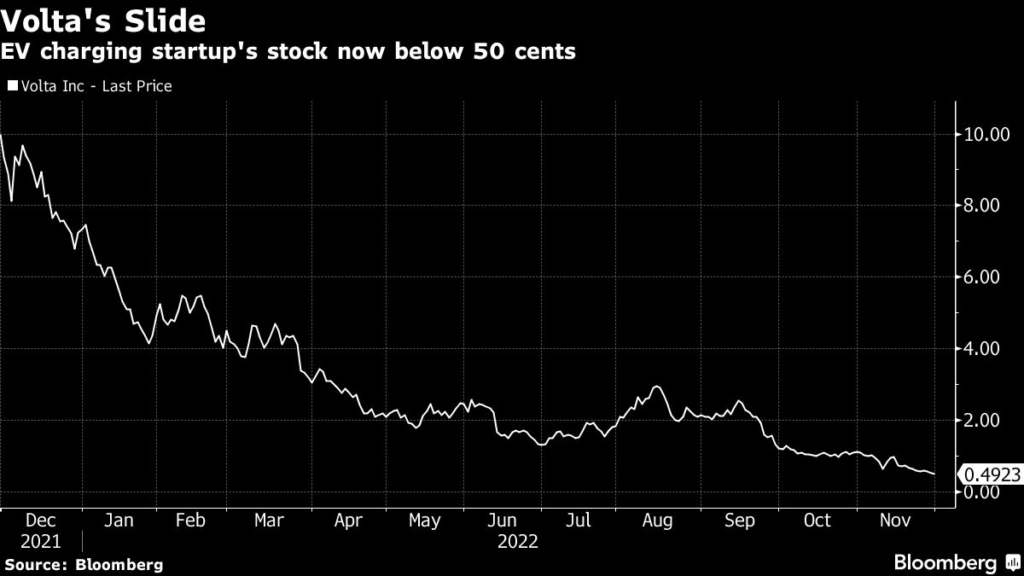
(Bloomberg) — Shares in electric car charging company Volta Inc. closed below 50 cents for the first time since the startup went public last year, as a cash crunch and the possibility of delisting weighed on the stock.

Volta, which briefly topped $13 last fall, dropped 6.4% Wednesday to close at 49.2 cents. Competitors Blink Charging Co., ChargePoint Holdings Inc., and EVgo Inc., all gained more than 5% for the day.

Volta started trading on the New York Stock Exchange in August 2021 after merging with a special purpose acquisition company, part of a wave of clean-tech startups taking that route to market. But in March, two of the San Francisco company’s top executives and founders abruptly resigned. This month, Volta reported that cash reserves had shrunk to $15.6 million. The company has fired more than half its workforce to stabilize finances. 

On Friday, the company said it received a possible delisting warning from the exchange, due to its low stock price. Volta said in response that it would consider a reverse stock split, among other steps, to bring its stock price back into compliance with the NYSE’s listing rules.  

More stories like this are available on bloomberg.com

©2022 Bloomberg L.P.
TikTok CEO Says US Data Protection Is ‘Solvable Problem’

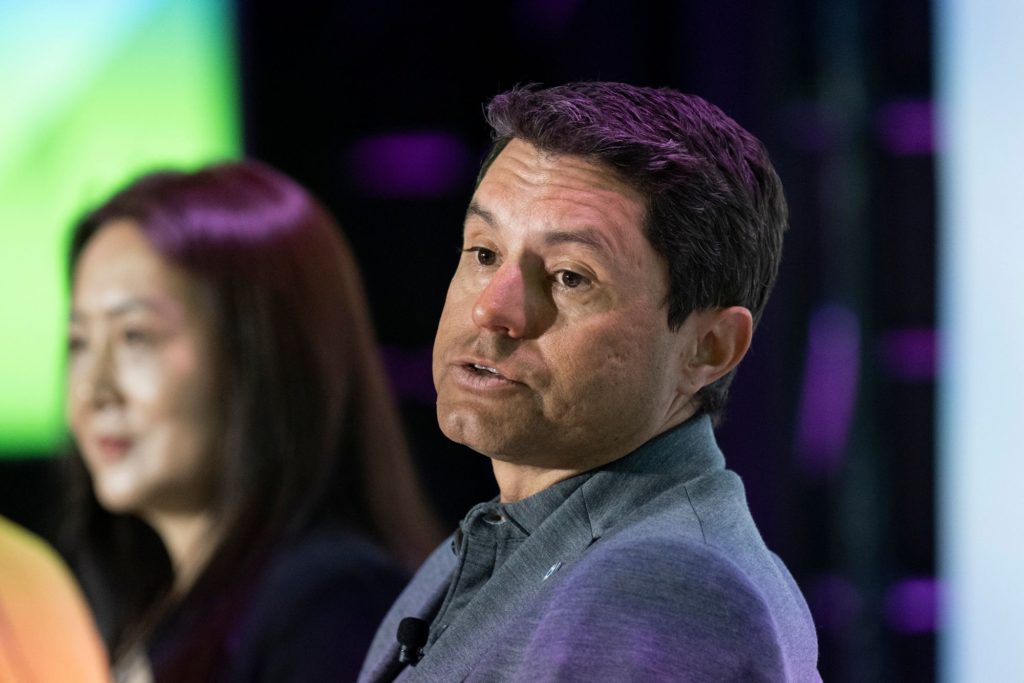
(Bloomberg) — TikTok Chief Executive Officer Shou Zi Chew said he is confident the social media app will reach a resolution with US authorities that will allow it to continue operating in the country.

The US government’s national security concerns — around the Chinese government accessing US data — are a “solvable problem,” he said on stage at the New York Times Dealbook conference in New York on Wednesday.

ByteDance Ltd.’s TikTok has been working with the Committee for Foreign Investment in the US, or Cfius, to come up with a process that involves a partnership with Oracle Corp. to protect data. “We have very rigorous data access protocols,” Chew said.

Another concern from US authorities centers around the safety of children on TikTok. Chew said the app works to ensure users under 13 aren’t on the application — though the interviewer, New York Times writer Andrew Ross Sorkin, noted that many kids lie about their age to get access. “We take minor safety extremely seriously,” Chew said.

Read More: TikTok’s Viral Challenges Are Luring Young Users to Their Deaths

More stories like this are available on bloomberg.com

©2022 Bloomberg L.P.
Stock Traders Cheer Powell’s Risk-Friendly Shift: Markets Wrap

(Bloomberg) — Stocks rallied across the board as Jerome Powell signaled a slowdown in the pace of tightening as early as December, while indicating more hikes to fight inflation. Bond yields slumped with the dollar.

Amid all the optimism, the S&P 500 hit a two-month high, notching the longest monthly winning streak since August 2021. The gauge also breached its 200-day moving average: a threshold seen by some analysts as heralding more gains. The Nasdaq 100 jumped about 4.5% and the Dow Jones Industrial Average was up 20% from its September low — meeting the bull-market definition.

Bond traders dialed back their expectations for how high they think the Fed might need to push its benchmark, with swap markets suggesting the key overnight rate might peak below 5%.

Powell’s comments likely cement expectations for the Fed to hike by 50 basis points in December, following four straight 75 basis-point moves. Though he also noted that rates are likely to reach a “somewhat higher” level than officials estimated in September.

Comments:

  • Callie Cox at eToro:

Powell just said what the market has been thinking all along. But before you get too excited, remember that this is a shift, not a pivot. Powell has been clear that rates could stay high for some time.

At this point, it may be time to start sowing seeds for the next bull market, but try not to get carried away. High rate environments favor quality companies that prove they can execute, so keep that in mind as you pile back into risky markets.

  • Krishna Guha at Evercore ISI:

Most importantly for risk assets, Powell’s remarks embraced the return of some two-sided risk management. That is a big deal for equities and means an outsized move in stocks relative to the rates market is justified.

The caveat is that Powell’s tone can be unstable from one event to the next, and he might in retrospect judge that he was a bit too risk-friendly, given the risks associated with letting go of financial conditions too soon.

  • Jeffrey Roach at LPL Financial:

Much of Chair Powell’s comments were benign and predictable. Overall, this speech will likely be bullish for the markets in the near term.

  • Neil Dutta at Renaissance Macro Research:

Powell is giving the Fed an off-ramp to 75 basis point moves, but I don’t think you can rule out anything else. There is a reasonably strong chance the Fed extends 50 basis point hikes or 25 basis point hikes.

  • Roberto Bagnato at Immobiliare Quadronno Srl:

This rally is a nonsense: Powell said they will slow down, but that rates will have to go higher than forecasted earlier. The market wants to listen only to the first part of Powell’s statement.

Read: Fed Says Economy Grew Slightly as Higher Rates Weigh on Outlook

Traders also scoured several economic reports, with key gauges of US activity painting a mixed third-quarter picture. Job openings fell in October — a hopeful sign for the Fed as it seeks to curb demand.

The figures precede Friday’s jobs report, which is currently forecast to show employers added 200,000 workers to payrolls in November. Economists are expecting the unemployment rate to hold at 3.7%, and for average hourly earnings to moderate.

Key events this week:

  • S&P Global PMIs, Thursday
  • US construction spending, consumer income, initial jobless claims, ISM Manufacturing, Thursday
  • BOJ’s Haruhiko Kuroda speaks, Thursday
  • US unemployment, nonfarm payrolls, Friday
  • ECB’s Christine Lagarde speaks, Friday

Some of the main moves in markets:

Stocks

  • The S&P 500 rose 3.1% as of 4 p.m. New York time
  • The Nasdaq 100 rose 4.6%
  • The Dow Jones Industrial Average rose 2.2%
  • The MSCI World index rose 2.5%

Currencies

  • The Bloomberg Dollar Spot Index fell 0.7%
  • The euro rose 0.8% to $1.0408
  • The British pound rose 0.9% to $1.2056
  • The Japanese yen rose 0.4% to 138.05 per dollar

Cryptocurrencies

  • Bitcoin rose 3.8% to $17,083.33
  • Ether rose 6.2% to $1,294.71

Bonds

  • The yield on 10-year Treasuries declined 11 basis points to 3.63%
  • Germany’s 10-year yield was little changed at 1.93%
  • Britain’s 10-year yield advanced six basis points to 3.16%

Commodities

  • West Texas Intermediate crude rose 3.1% to $80.62 a barrel
  • Gold futures rose 1.2% to $1,784.10 an ounce

This story was produced with the assistance of Bloomberg Automation.

More stories like this are available on bloomberg.com

©2022 Bloomberg L.P.

Solid Power CEO Steps Down From Battery Startup

(Bloomberg) — Doug Campbell said he stepped down as chief executive officer of Solid Power Inc. so the battery startup can find a leader with more manufacturing expertise.

Solid Power’s board appointed David Jansen, the company’s president, to serve as interim CEO while it searches for a permanent replacement. Campbell, who co-founded Solid Power in 2011, said that he’s more of an entrepreneur than a manufacturing expert, which is what the company needs at this juncture.

“I can’t build batteries,” he said in a phone interview Wednesday, a day after the company announced his departure. “I’m a bit more of a fish out of water in that realm.”

Solid Power, which went public in a reverse merger last year, is one of a pack of startups, including QuantumScape Corp., pursuing solid-state batteries, an innovation that holds the promise of dramatically speeding up electric-vehicle adoption by providing automakers with a safer, cheaper alternative to lithium-ion batteries. It has an agreement to test its battery cells with Ford Motor Co. and BMW AG, both of which also have invested in the company.

Campbell noted on the company’s third-quarter earnings call earlier this month that while it had delivered sample cells to Ford and BMW on schedule, a tight labor market and quality issues with some of its commodity materials had put a strain on its plans.

The departing executive said he’s leaving on good terms. Campbell, whose 5.5% stake makes him the fourth-biggest owner, said he’ll remain a “significant shareholder” in the Louisville, Colorado-based company.

Solid Power’s shares tumbled 14% Wednesday in New York. D.A. Davidson slashed its price target and downgraded the stock after Campbell’s departure.

More stories like this are available on bloomberg.com

©2022 Bloomberg L.P.
Close Bitnami banner
Bitnami