Bloomberg

Russia’s Labor-Starved Economy Pays Price of Putin’s War Call-Up

(Bloomberg) — The call-up of men to fight in Ukraine has left labor so scarce in Russia that entire industries are in distress.

Two months after the Kremlin announced the mobilization in late September, a record depletion of workers is fast spreading across a country already hobbled by an aging and shrinking population and with unemployment near the lowest ever. A study by the Gaidar Institute in Moscow in November found that up to a third of Russian industry may face a deficit of personnel because of the draft, the most severe crunch since 1993.

Agrokomplex, a large agricultural company in the south, now struggles to fill openings for tractor drivers and other workers, in addition to the specialists in areas like agronomy who’ve long been hard to find, said Irina Khmelevskaya, head of recruitment. The mobilization is partly to blame, she said.

The mobilization of 300,000 men, combined with an even bigger wave of emigration it triggered, will reduce the male labor pool by 2%. That’s among the main reasons that Bloomberg Economics now puts Russia’s potential economic growth rate at just 0.5% — or half its pre-war level. The threat that labor shortages would eventually bring inflationary pressure has already prompted the Bank of Russia to put interest-rate cuts on hold.

The call-up and the flight it caused cut across society, sweeping up urban white-collar professionals and people in rural areas alike.

In Novosibirsk, Siberia’s most populous city, officials say they can field barely half the staff needed to clear streets of snow with so much of the seasonal workforce from the countryside caught up in the mobilization. More than 200 convicts will be employed at the state-run tank maker Uralvagonzavod.

A third of companies lost some employees to the call-up, with nearly a fifth saying they haven’t yet been able to replace them, a November survey showed. Among infrastructure builders, the vast majority is experiencing an increasing lack of qualified labor and expects shortages to get worse in the coming quarters, according to a report.

The number of vacancies in IT and telecommunications grew 15% in October from the previous month, according to Russian online recruiter Superjob.

In the wake of the call-up, résumés from Russian citizens are flooding nations across much of the post-Soviet region and Turkey, with IT specialists accounting for a fifth of the total, according to HeadHunter Group Plc, Russia’s biggest online job-search platform.

Natalia Danina, chief of HeadHunter’s analytical department, said demand for blue-collar workers is surging. The age group of 20 through 24 currently counts no more than 7 million people, a steep drop from over 12 million a decade ago, she said.

“These are terrifying numbers,” Danina said. “Besides, many may have health problems because of the stress. There are physically not enough people left!”

The elderly, alongside women and teenagers, are also becoming an important source of workers, according to Danina. Migrants account for up to 10% of the local labor market, with Russia growing more reliant on them to expand the pool of low-skill labor.

Labor shortages may become a major vulnerability as Russia heads for a downturn likely to extend well into next year, especially as other parts of the economy come under pressure from sanctions imposed by the US and its allies. Almost half the companies surveyed by the Gaidar Institute said staff shortages will make it impossible for them to increase output even if there’s sufficient demand.

“Fear and uncertainty have caused a very serious outflow of brains and capital from the country, hurting many sectors,” said Evgeny Kogan, a professor at Moscow’s Higher School of Economics. “If this huge potential for development remains outside the country, it will lead to a major future decline in the economy.”

More stories like this are available on bloomberg.com

©2022 Bloomberg L.P.

Stocks Rally on China Covid, Powell; Dollar Slides: Markets Wrap

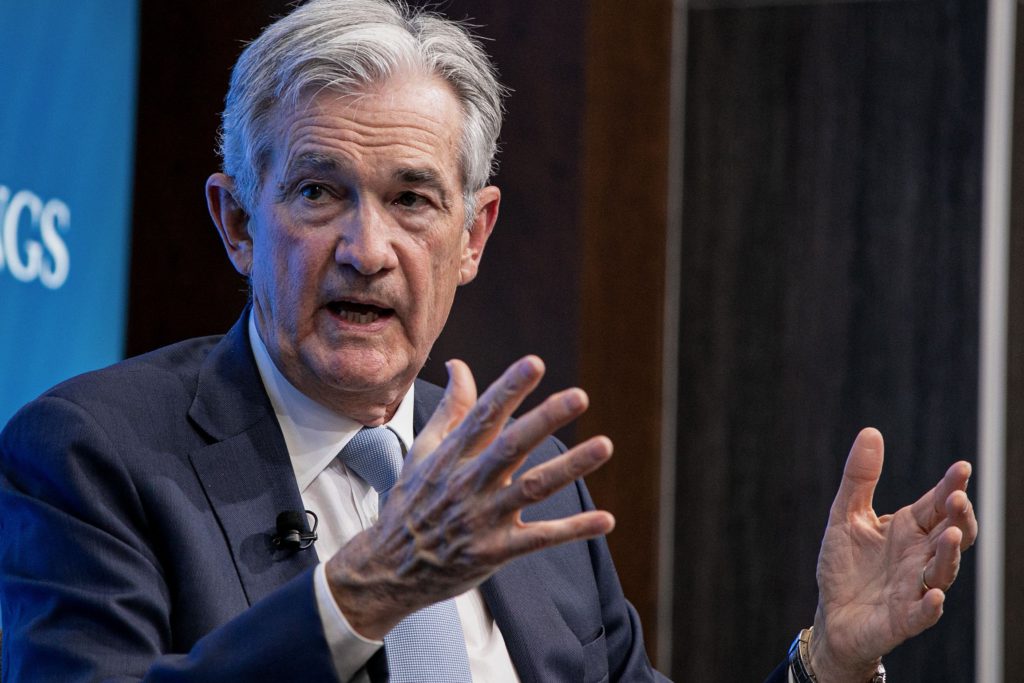
(Bloomberg) — Stocks extended gains in Asia after China appeared to soften is Covid stance and Federal Reserve Chair Jerome Powell signaled a slowdown in the pace of interest-rate hikes.

The dollar fell against most of its Group-of-10 counterparts, with the yen speeding to a three-month high. Treasury yields stabilized after large declines following Powell’s comments.

US equity futures fluctuated while contracts for Europe climbed. Benchmarks in Hong Kong and mainland China traded more than 1% higher. The S&P 500 soared on Wednesday to end the month at the highest level since mid-September, led by a rally led by tech stocks. 

Sentiment in Asia got an extra China’s top official in charge of the fight against the coronavirus. Vice Premier Sun Chunlan said the country’s efforts to combat the virus are entering a new phase with the omicron variant weakening and more Chinese getting vaccinated.

Powell’s remarks affirmed expectations the Federal Reserve will raise interest rates 50 basis points this month in a departure from a run of four 75 basis point hikes. Pricing in the swaps market indicates the Fed funds rate will peak below 5% in May. Prior to Powell’s comments, the market anticipated a peak above that level occurring in June.

Equities were buoyed by Powell’s indication that the Fed would balance tackling inflation with supporting the economy, said Krishna Guha, head of central bank strategy for Evercore ISI.

“Most importantly for risk assets, Powell’s remarks embraced the return of some two-sided risk management. That is a big deal for equities and means an outsized move in stocks relative to the rates market is justified,” he said.

Others were more skeptical about the driver behind the market moves and pointed to the possibility month-end portfolio positioning had amplified the price action.

Traders also scoured several economic reports, with key gauges of US activity painting a mixed third-quarter picture. Job openings fell in October — a hopeful sign for the Fed as it seeks to curb demand.

The figures precede Friday’s jobs report, which is currently forecast to show employers added 200,000 workers to payrolls in November. Economists are expecting the unemployment rate to hold at 3.7%, and for average hourly earnings to moderate.

Elsewhere in markets, oil fluctuated after three days of gains on China’s Covid developments and data showing a steep drop in US inventories.

Gold edged higher in Asia — following a 1% advance on Wednesday.

Key events this week:

  • S&P Global PMIs, Thursday
  • US construction spending, consumer income, initial jobless claims, ISM Manufacturing, Thursday
  • BOJ’s Haruhiko Kuroda speaks, Thursday
  • US unemployment, nonfarm payrolls, Friday
  • ECB’s Christine Lagarde speaks, Friday

Some of the main moves in markets:

Stocks

  • Futures on the S&P 500 were little changed as of 12:27 p.m. Tokyo time. The S&P 500 rose 3.1%
  • Nasdaq 100 futures were flat. The Nasdaq 100 rose 4.6%
  • The Topix Index rose 0.2%
  • The S&P/ASX 200 Index rose 0.8%
  • The Hang Seng Index rose 1.1%
  • The Shanghai Composite Index rose 0.7%
  • Euro Stoxx 50 futures rose 1.1%

Currencies

  • The Bloomberg Dollar Spot Index fell 0.3%
  • The euro rose 0.2% to $1.0426
  • The Japanese yen rose 0.9% to 136.79 per dollar
  • The offshore yuan fell 0.3% to 7.0649 per dollar

Cryptocurrencies

  • Bitcoin rose 0.3% to $17,149.79
  • Ether fell 0.7% to $1,287.65

Bonds

  • The yield on 10-year Treasuries advanced one basis point to 3.62%
  • Australia’s 10-year yield declined four basis points to 3.49%

Commodities

  • West Texas Intermediate crude fell 0.2% to $80.35 a barrel
  • Spot gold rose 0.4% to $1,775.14 an ounce

This story was produced with the assistance of Bloomberg Automation.

–With assistance from Rita Nazareth.

More stories like this are available on bloomberg.com

©2022 Bloomberg L.P.

‘Close to Nothing’ Is What Sam Bankman-Fried Says He’s Left With

(Bloomberg) — Sam Bankman-Fried, who at one point was worth $26 billion, says he now has “close to nothing.”

The fallen crypto mogul had all his assets in his FTX exchange and sister trading house Alameda Research, and is left with just one credit card linked to a bank account with $100,000, he said in a video interview with columnist Andrew Ross Sorkin at the New York Times DealBook Summit on Wednesday. He said he’s disclosing everything and has no hidden funds. 

Bankman-Fried’s demise was swift. In just a few days, he lost $16 billion as his empire spiraled into bankruptcy. 

The Bloomberg Billionaires Index has dropped the value of his stakes in FTX and Alameda to zero. It’s also removed his Robinhood Markets Inc. holding from his wealth calculation after a report that it was held through Alameda and may have been used as collateral for loans.

It’s all but impossible to verify whether Bankman-Fried is telling the truth, and the Bloomberg index may not have tracked all of his assets. A report in November said he had more than $500 million with venture capital firms including Sequoia and was an investor in media startup Semafor. But if those assets were held through Alameda, they might have been wiped out by its losses.


More stories like this are available on bloomberg.com

©2022 Bloomberg L.P.

Crypto Coin Cracks After Luring Indians With 3,100% Returns

(Bloomberg) — Sanjay Kamble hit the jackpot when an obscure token he’d invested in surged about 3,100% in eight months. He ditched his dead-end marketing business this year and became a full-time crypto evangelist.

These days, the 51-year-old drives around in his new Toyota sedan — one he couldn’t afford a year ago — on the dusty streets of his home town in rural India, showing off his success from investing in BlockAura tokens. He exhorts farmers, teachers, housewives, friends, relatives and neighbors to join him, promising that their investment would grow threefold in 300 days.

“I don’t need a day job,” Kamble said on the phone from Sangli, about 230 miles southeast of Mumbai. “BlockAura is the next Bitcoin.”

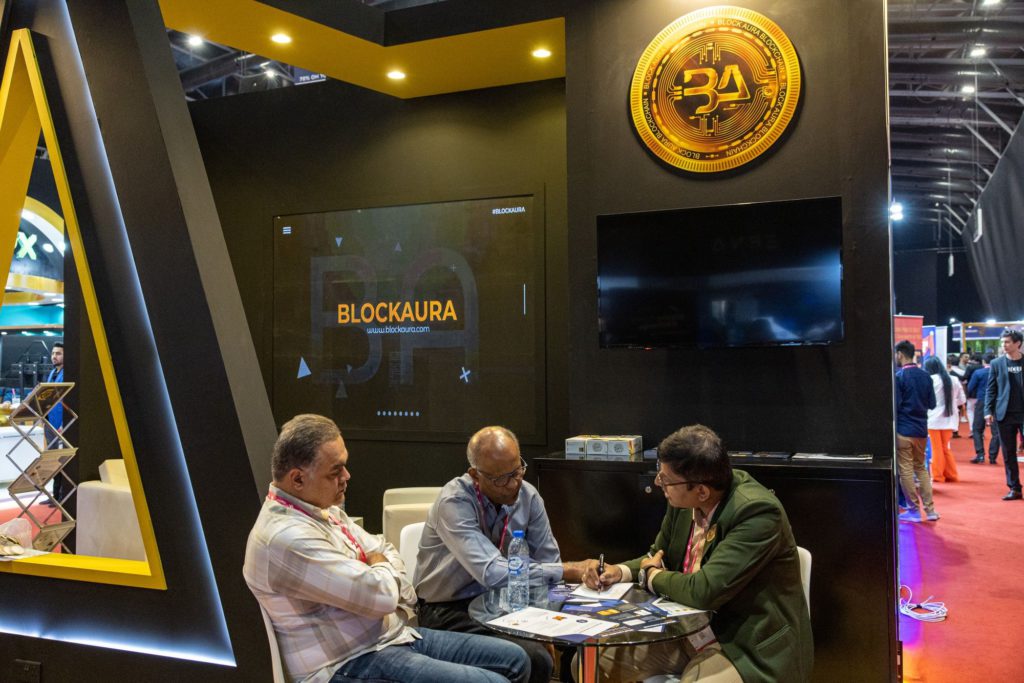
Kamble is among thousands of investors in India betting crypto is the quickest way to get rich, lured by a raft of startups promising yields as high as 25% a month in so-called staking rewards in a market with lax regulations. These are payoffs for investing in largely illiquid tokens and referral bonuses for adding more people into what are typically multilevel marketing networks. The mouthwatering returns are too good to ignore in a country where the annual per capita income is among the lowest in the world. Critics such as Pranjal Daniel at Strategy India warn some of these networks often turn out to be pyramid schemes.

The digital asset Kamble is touting is already showing signs of trouble, reflecting the wider meltdown in the crypto universe this year. The recent collapse of Sam Bankman-Fried’s sprawling FTX empire and the turmoil it sparked is spreading to other companies as well. Crypto lender BlockFi Inc. filed for bankruptcy this week, while brokerage Genesis is seeking to avoid a similar fate. But industry defenders such as Changpeng “CZ” Zhao, the founder of the world’s largest crypto exchange Binance Holdings Ltd., have said this isn’t the end. 

BlockAura’s native token, called TBAC, has tumbled 90% to $3.03 from its all-time high of $32.30 in July, according to CoinGecko, an aggregator of token prices. On PancakeSwap, it’s trading at $3 apiece with a seven-day volume of just $20,000, while on UniSwap, it can be exchanged with another token for around $19 a piece, though there isn’t much trading there.

Following the plunge, BlockAura has capped daily withdrawals at an equivalent of $250 to prevent panic selling. It has imposed conditions so onerous that many investors can’t even cut their losses and exit altogether. That means Kamble’s claimed daily income of $2,000 — through staking, referrals and tokens earned from reinvesting — is worth much less now, at least on paper. 

Kamble is undeterred and is betting that TBAC will surge to $10,000 in two to three years.

Read more on the global crypto meltdown:

  • FTX Is Where Gambling and Wall Street Collided: Aaron Brown
  • Crypto’s Future is Murky in the Wake of FTX’s Rapid Collapse
  • Crypto’s Brutal Week Ends With a Trading Halt and a Bailout

The rush for quick bucks is turning many investors blind to warnings of elevated risks from some of the biggest names in finance: JPMorgan Chase & Co. Chief Executive Officer Jamie Dimon in September described cryptocurrencies as “decentralized ponzi schemes,” while the Monetary Authority of Singapore in August called such investments “highly hazardous.” India started taxing crypto transactions this year in a bid to track deals and broadly to discourage trading. Finance Minister Nirmala Sitharaman has said the biggest risk for countries is the potential misuse of cryptocurrencies for money laundering and terror financing.

The multilevel marketing model based on referral fees — where tokens are staked primarily within those networks — is highly risky. Investors earn in less liquid, native tokens that are susceptible to price volatility at the time of withdrawal. BlockAura Foundation founder Firoz Multani said his platform adopts a network-marketing, but not a pyramid, model, and incentives for referrals are mainly used to expand the user base, he said. Profit can fluctuate depending on the price of the token, but there’s no risk of losing capital, as staking returns distributed within the community help earn back the principal within five months, he said.

Besides BlockAura, SBG Global and ApeJet are among the other Indian startups that have emerged in the past year or so.  

Started in 2021, BlockAura now has 60,000 investors, according to Multani, a Dubai-based Indian man. SBG Global, founded by real-estate developer Anil Yadav, offers three times returns in 20 months and boasts more than 100,000 users. ApeJet, a relatively new entrant, dangles freebies from iPhones to villas worth $605,000 in Dubai as enticement.

FTX Chaos Prompts Reckoning on Dubai’s Embrace of Crypto Giants

None of these startups has been accused of any wrongdoing, but experts including Ari Redbord, head of legal and government affairs at San Francisco-based blockchain intelligence firm TRM Labs, warn that such get-rich-quick chains only heighten risks of deceit.

“There’s arguably unnatural exuberance in the space and lots of people have been overtaken by the fear of missing out,” said Redbord. “That’s a recipe for scams and frauds” broadly in this space, he said.

About 60% of SBG Global’s users are part of its multilevel marketing model, and the platform does have a plan to tackle potential risks by offering diverse products, its international marketing head Praveen Rai said. ApeJet founder Mayank Dudeja didn’t respond to messages and phone calls seeking comment.

India has seen its share of crypto frauds in recent years. In 2018, a police probe found that more than 25,000 investors were duped, while the nation’s top court is hearing a case on an alleged fraud worth about $1.6 billion at current prices. BitConnect, a global scam worth around $2.4 billion, had its roots in India.

No Geography

“The amazing thing is these companies are able to function without regulation,” said Mark Mobius, co-founder of Mobius Capital Partners. “Regulators have a big problem,” he said, adding crypto doesn’t have any geography, “you can’t put your hands on it, it’s in the atmosphere.”

The Reserve Bank of India doesn’t see a crisis yet, according to Deputy Governor T. Rabi Sankar. Though researcher Chainalysis ranks India No. 4 in the world in crypto adoption, Sankar said a very large proportion of investors have tiny stakes. Still, it routinely cautions the public about the risks.

“What we need is a globally coordinated approach,” Sankar said in an interview in Singapore, echoing the Indian government’s stance. “No one wants a situation where people lose their savings.”

Risks are even more pronounced, given the nature of multilevel marketing networks, said Daniel, chief strategist at Strategy India, a Mumbai-based consultancy that studies fraudulent schemes.

“What is distinct about MLM and other ponzi schemes in crypto is the tokenization process, and the ability to spin up new coins at whim, market these as revolutionary, drive up prices, and then abscond with the proceeds,” said Eric Jardine, Cybercrimes Research Lead at Chainalysis.

Apart from the daily limits, BlockAura has told its investors that it works on the basis of a value of $61 per token — far more than the prevailing market price — meaning users will pocket less cash when they redeem their rewards. TBAC is currently in test mode. It was scheduled to go live last month, but that’s been postponed. BlockAura has also launched multiple versions of the token at higher prices.

Speaking Out

Some disgruntled users are speaking out. Akhilesh Agarwal, 52, had invested $10,000 in BlockAura tokens in May and accumulated $25,000 in rewards over the next four months. The curbs mean his entire principal is wiped out, he said, adding he quit in November. 

“I got duped, I don’t want to dupe more users,” he said from New Delhi. “Only a handful of people made money at the start when the price of the token was rising. Now we can’t withdraw and everyone’s money is stuck.”

Multani rejected such complaints, adding the withdrawal limits are temporary. “Those who believe in BlockAura and know that the coin will touch $100 within a year will stay,” he said. “TBAC is a store of value. My goal is no one should lose money.”

Some users shared what they claimed to be thousands of success stories similar to Kamble’s. “You need to have the stomach to take risk if you want high returns,” said Saurav Kumar, 33, who’s put his full faith in SBG Global, after losing money in another networking blockchain.

Yashveer Chauhan, 21, a college student and an ApeJet investor, won a new Kia Sonet compact SUV as reward for bringing in more investors to the chain, a few months after bagging an iPhone. “There’s no loss in this scheme as the community will support the token,” he said.

The three blockchain firms flew hundreds of their high-performing users from India to Dubai in October as part of their rewards program, showcasing them at an industry event in a bid to entice more overseas. For SBG Global and BlockAura investors, this was their second international trip in about three months after a visit to Singapore in June and July, where they filled half the conference room at a high-end hotel and cheered on the founders.

“The rewards are to help build the community,” said Yadav, founder of SBG Global, who invests customers’ money in real estate, foreign-exchange and crypto trading to earn those returns. “One who has community will win.”

–With assistance from Vrishti Beniwal.

(Updates with comment from veteran investor Mark Mobius in 17th paragraph.)

More stories like this are available on bloomberg.com

©2022 Bloomberg L.P.

GoTo Plumbs New Low After Early Backers’ Lock-Up Expires

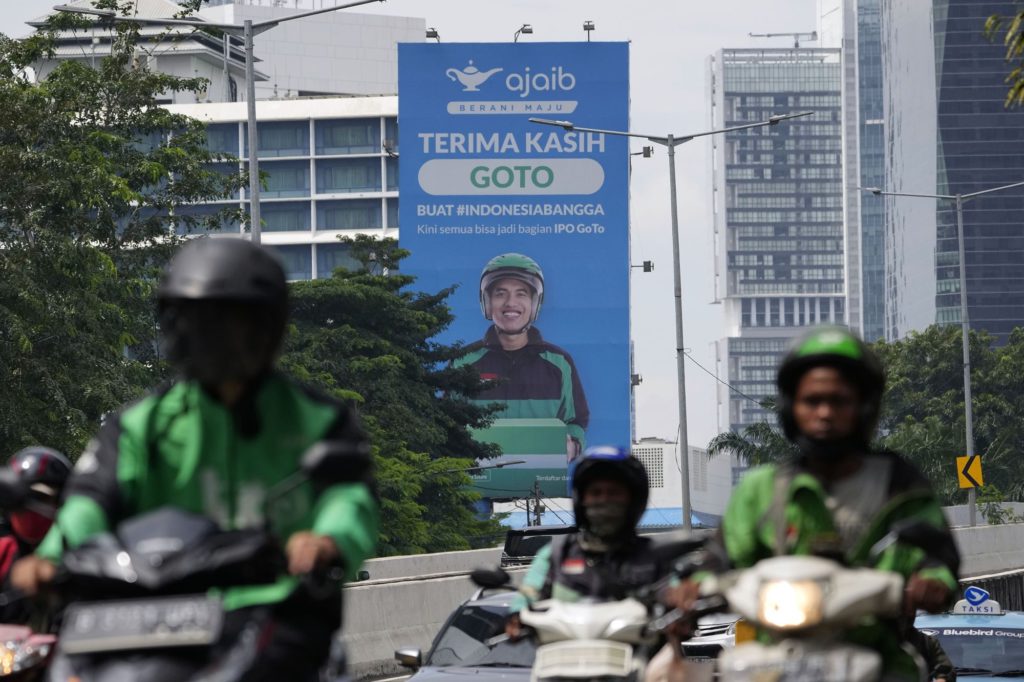
(Bloomberg) — Shares of GoTo Group plunged to yet another record low after a lock-up on its major shareholders’ stakes expired, freeing early backers to reduce their holdings.

The stock fell by 6.6%, close to the daily limit in Jakarta, and headed for its ninth straight daily drop, leaving it down 58% since its April debut. Indonesia’s largest tech company now has a market value of about $10.7 billion.

Early backers such as Alibaba Group Holding Ltd. and SoftBank Group Corp. agreed to an eight-month lock-up expiring Nov. 30 to support the stock price following the company’s initial public offering. GoTo’s plan to facilitate controlled stake sales by pre-IPO backers — aimed at avoiding a bigger selloff at once — didn’t come to fruition, the company said late Wednesday.

The shareholders that had considered selling have decided not to proceed at this time, GoTo said. The holders and potential buyers involved in the discussions haven’t agreed on a price, people familiar with the matter said. Some holders GoTo has been in talks with are inclined to wait for a recovery in the stock price before selling, the people said.

Falling prices of tech stocks made it difficult to arrange the sale, with potential new investors asking for a discount of as much as 30% to the Indonesian internet company’s current share price, said one of the people, who asked not to be named as the deliberations were private.

About 1 trillion GoTo shares, or more than 90% of the total outstanding, became eligible to be sold after Nov. 30. Still, that includes holders such as GoTo’s employee fund that are unlikely to sell. Alibaba and SoftBank each own about 9% of GoTo.

Formed via a merger of ride-hailing provider Gojek and e-commerce firm Tokopedia, GoTo raised $1.1 billion in one of this year’s largest IPOs. The share sale boosted the value of stakes of China’s Alibaba and SoftBank’s Vision Fund to almost $5 billion combined.

In late June, Chinese artificial intelligence software maker SenseTime Group Inc. slumped as much as 51% in Hong Kong trading after a lock-up of its shares expired following its December IPO.

More stories like this are available on bloomberg.com

©2022 Bloomberg L.P.

Bankman-Fried Denies Trying to Commit Fraud at Fallen FTX Empire

(Bloomberg) — Mystery continues to shroud the missing billions at bankrupt crypto exchange FTX after its disgraced founder Sam Bankman-Fried denied trying to perpetrate a fraud while admitting to grievous managerial errors.

In his first major public appearance following the Nov. 11 implosion of FTX and sister trading house Alameda Research, Bankman-Fried said he “screwed up” at the helm of the exchange and should have focused more on risk management, customer protection and links between FTX and Alameda.

“I made a lot of mistakes,” the 30-year-old said Wednesday by video link at the New York Times DealBook Summit. “There are things I would give anything to be able to do over again. I didn’t ever try to commit fraud on anyone.”

Bankman-Fried’s participation was controversial given there are outstanding questions about how Bahamas-based FTX ended up with an $8 billion hole in its balance sheet and whether it mishandled customer funds. Reports that FTX lent client money to Alameda for risky trades have stoked such concerns.

Interviewed by New York Times columnist Andrew Ross Sorkin, who said Bankman-Fried was joining from the Bahamas, the fallen crypto mogul didn’t give a straight answer about whether he had at times lied.

Bankman-Fried told the summit that he “didn’t knowingly commingle funds.” At the same time, he said that FTX and Alameda were “substantially more” linked than intended and that he failed to pay attention to the trading house’s “too large” margin position.

He said he wasn’t running Alameda and added that he was “nervous about a conflict of interest.” No person was in charge of position risk at FTX, he said, describing the lack of oversight as a mistake.

Out of Control

The comments shed little light on the question of where client funds ended up as Bankman-Fried stuck to a hard-to-parse account of how Alameda ran up a massive margin position on the exchange. 

The restructuring expert who took over the firm in bankruptcy, John J. Ray III, has painted a picture of FTX as a mismanaged, largely out-of-control company bathed in conflicts and lacking basic accounting practices, calling it the worst failure of corporate controls he’d ever seen.

Bankman-Fried faces a complex web of lawsuits and regulatory probes into alleged wrongdoing. Some observers speculate his public comments could be used against him in litigation.

The spotlight has also fallen on an apparent company culture of working and playing hard. Bankman-Fried said there were no wild parties and that he saw no illegal drug use. He added that he’s been prescribed drugs over time to help with focus and concentration.

Crypto Contagion

The digital-asset sector is braced for widening contagion from FTX, which once boasted a $32 billion valuation before sliding into bankruptcy. It owes its 50 biggest unsecured creditors a total of $3.1 billion and there may be more than a million creditors globally.

A crypto lender, BlockFi Inc., filed for bankruptcy Monday after being buffeted by the wipeout. Embattled brokerage Genesis is striving to avoid the same fate.

BlackRock Inc. Chief Executive Larry Fink said earlier at the DealBook summit that most crypto companies will probably fold in the wake of FTX’s collapse. The world’s biggest asset manager was among firms stung by the chaotic unraveling of Bankman-Fried’s tangled web of 100-plus FTX-related entities.

Bankman-Fried has provided convoluted accounts on social media and in interviews with other news outlets about what led to FTX’s woes. Advisers overseeing the ruins of his business have slammed non-existent oversight.

Potential Hack

As if such travails weren’t enough, the exact breakup of a $662 million outflow from FTX as it tumbled into bankruptcy remains another enigma. Bankman-Fried said in the summit interview that there was improper access to FTX after its spiral.

Treasury Secretary Janet Yellen, another speaker at the summit in New York, called the FTX debacle “the Lehman moment within crypto,” referring to the collapse of investment-banking giant Lehman Brothers in 2008.

Crypto markets have stabilized somewhat after lurching lower in November as the turmoil around FTX thickened. Even so, a gauge of the top 100 tokens is down more than 60% this year, hit by tightening monetary policy and a series of crypto blowups of which FTX is the most spectacular.

Bankman-Fried’s fortune at one point reached $26 billion, and just weeks ago he was described as the John Pierpont Morgan of digital assets, willing to throw around his wealth to bail out the industry. He said during the interview that he’s down to one credit card and $100,000 in the bank.

Pressed on whether he had been straight about FTX, Bankman-Fried said: “I was as truthful as I’m knowledgeable to be.”

–With assistance from Allyson Versprille, Jenny Surane, Gregory Korte and Annie Massa.

(Updates with more comments from Bankman-Fried from the second paragraph.)

More stories like this are available on bloomberg.com

©2022 Bloomberg L.P.
Korea Exports Post Double-Digit Drop as China Demand Weakens

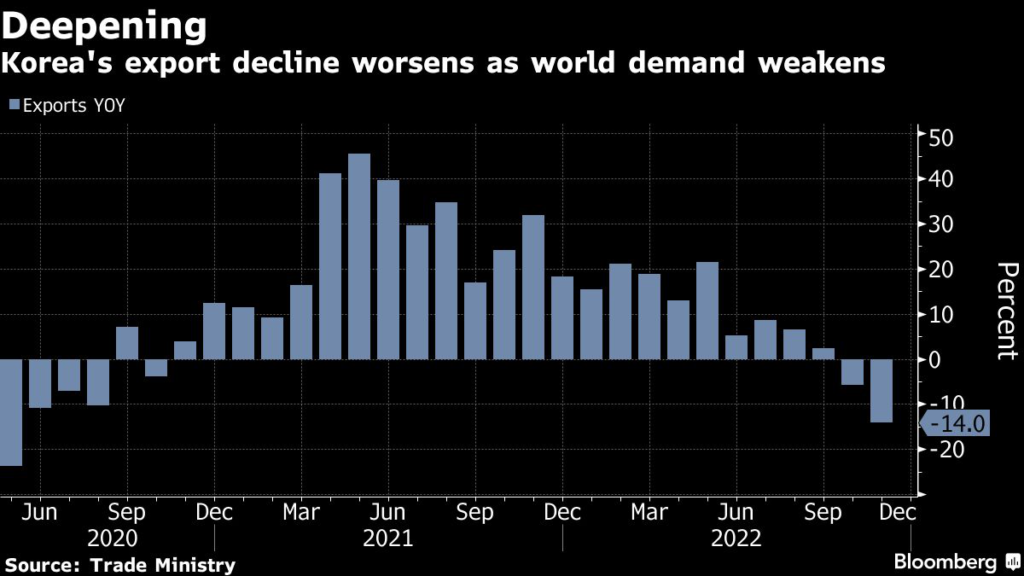
(Bloomberg) — South Korea’s exports fell the most in two-and-a-half years in November, dragged down by an economic slowdown in China and cooling demand for semiconductors.

Total shipments fell 14% from a year earlier in the first double-digit drop since mid-2020, the trade ministry said Thursday in a statement. Imports advanced 2.7%, resulting in a trade deficit of $7 billion.

Semiconductor exports plunged 29.8% and shipments to China declined 25.5%, today’s data showed. Covid lockdowns have restricted activity in the world’s second-biggest economy, damping consumer demand for imported products.

“Unless China’s economy comes back strong, chip demand isn’t going to rally back to bring the prices back up,” said Cho Chuel, an analyst at the Korea Institute for Industrial Economics & Trade. “China’s situation will get better next year, but probably not drastically until the second half.”

Korea’s trade depends heavily on momentum in global memory-chip sales. The dynamic random access memory industry in which Samsung Electronics Co. remains the leader shrank by almost 30% in the July-to-September period. That was the second largest quarterly decline since the global financial crisis, according to TrendForce.

Rivalry between Washington and Beijing over semiconductors looms as a long-term threat to Korea. Taiwan warned this week that its chip exports may be impacted by US curbs on sales to China.

The Bank of Korea sees exports remaining in the doldrums for months to come as it signals its policy tightening cycle is set to wind down early next year. A steady trade performance had given the central bank confidence to keep raising rates to cool inflationary pressures and shore up the won.

Korean exports are a closely-watched bellwether of global trade as the nation manufactures key items such as chips, displays and refined oil. 

A nationwide truckers’ strike is compounding trade difficulties by threatening to further disrupt supply chains. The trade ministry partly blamed the strike for the deterioration in exports.

Elevated oil prices and a fluctuating currency remain risks for the nation’s exporters. Korea is on track to record its first annual trade deficit since the global financial crisis.

Today’s trade report also showed:

Total automobile shipments advanced 31% in November from a year earlier, while exports of oil products rose 26%.

Overall exports to the U.S. gained 8%, while those to the European Union edged up 0.1%. Shipments to the Middle East increased 4.5%.

The BOK’s updated report on gross domestic product also released on Thursday showed the economy grew 0.3% last quarter from the prior three months, unchanged from the initial estimate. 

The BOK sees the economy expanding 1.7% next year, a slowdown from the 2.6% forecast for this year.

(Updates with economist comments, chart and more details)

More stories like this are available on bloomberg.com

©2022 Bloomberg L.P.

iPhone City Maintains Plant Curbs as China Tweaks Covid Approach

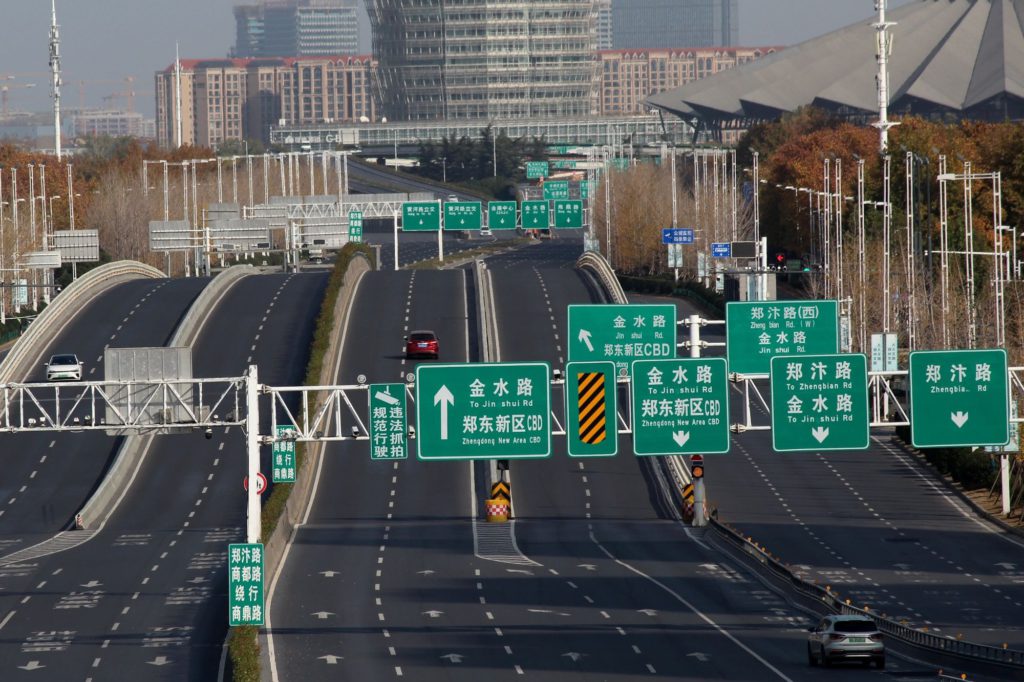
(Bloomberg) — Apple Inc.’s most important iPhone assembly plant remains in a closed-loop operation that curtails workers’ movement on campus, potentially complicating the effort to resume full production.

Foxconn Technology Group is sticking with measures adopted weeks ago limiting staff movements in order to handle a Covid outbreak, according to a person familiar with operations, who asked not to be named as the information is not public. The closed-loop approach restricts workers to their dorms or the factory floor, minimizing the number of other people they come into contact with in hopes of containing the spread of the virus.

Read more: China Adjusts Covid Restrictions in City With IPhone Plant

The Taiwanese company, also known as Hon Hai Precision Industry Co., is keeping up restrictions even as the local city of Zhengzhou on Tuesday lifted a lockdown of its main urban areas, albeit with an extensive caveat of buildings still considered high risk across the greater region. Those high-risk areas will remain under lockdown-style controls and it is not immediately clear whether the Foxconn campus falls among them.

China’s authorities are discussing rolling out a fourth Covid-19 vaccine shot and the country’s top official softened her stance on Wednesday, saying “As the omicron variant becomes less pathogenic, more people get vaccinated and our experience in Covid prevention accumulates, our fight against the pandemic is at a new stage.”

Foxconn’s task of catching up on lost iPhone production time has been complicated by the lockdown, which triggered violent protests last week and pushed thousands of workers to leave the site. The company has issued several notices announcing bonuses to bring experienced workers back and keep the ones it already has from returning home.

More stories like this are available on bloomberg.com

©2022 Bloomberg L.P.
Bankman-Fried’s Latest Crypto Advice Rings Hollow After FTX Failures

(Bloomberg) — After his bankrupt crypto exchange locked up the funds of what is likely millions of customers, Sam Bankman-Fried had some fresh advice for investors that they probably wish they heard earlier: Put your money on an exchange that doesn’t do business like FTX.

While speaking at the New York Times DealBook Summit on Wednesday, Bankman-Fried said crypto investors should look for “all the things I wish FTX had been able to supply.” He said proof of reserves and regulatory reporting that includes metrics like customer assets and liabilities are all things investors should look for when picking an exchange. 

Bankman-Fried admitted during the conversation with New York Times columnist Andrew Ross Sorkin that he “screwed up” when he was CEO of FTX and that he should have paid closer attention to risk management and protecting customers. He said that he “didn’t ever try to commit fraud,” but also didn’t provide a straight answer when asked if he had lied at any point.

Read more: Bankman-Fried Denies Trying to Commit Fraud at Collapsed FTX 

For FTX customers who’ve been frozen out of their funds, Bankman-Fried offered a bag of mixed messaging. He said he believed that they could be made whole, especially those who used FTX US, but also said, “I can’t promise anyone anything.”

The disgraced founder spoke virtually with New York Times columnist Andrew Ross Sorkin about the downfall of his crypto empire. The unprecedented and unexpected collapse of FTX, which which once boasted a $32 billion valuation before sliding into bankruptcy on Nov. 11, sent shock waves throughout the crypto industry. Now, the digital-asset sector is braced for widening contagion. It owes its 50 biggest unsecured creditors a total of $3.1 billion. 

More stories like this are available on bloomberg.com

©2022 Bloomberg L.P.
Chinese Stocks May Extend Rally as Beijing Softens Covid Stance

(Bloomberg) — Chinese stocks may track their US peers higher, after a briefing by top health officials pointed to a further move away from Covid Zero and bolstered reopening optimism. 

The Nasdaq Golden Dragon China Index soared 9.6% on Wednesday, taking its gain for November to 42% and adding $205 billion in market value. Bilibili Inc., JD.com Inc. and Pinduoduo Inc. were among the biggest gainers in the month, advancing at least 49% each. The surge in the gauge was a dramatic turnaround from October’s 25% plunge, and tracked the historic move in Hong Kong peers.

A broad risk-on mood on Wednesday also lifted the benchmark, as Federal Reserve chair Jerome Powell signaled a likely slowdown on interest rate hikes, sending the tech-heavy Nasdaq 100 Index higher by 4.6%.

“It is clear that the authorities are setting the stage for Covid measures to be relaxed,” said Justin Tang, head of Asian research at United First Partners. “Equity prices will see a boost as China joins the rest of the world in living with Covid.” 

Market sentiment has notably improved as investors see more certainty related to China’s reopening trends, increased policy support for the battered property sector as well as strong quarterly earnings results from some of the nation’s biggest tech companies while their valuations remain depressed.

In a fresh sign of potential policy shift, China’s top official in charge of the fight against Covid-19 said the combat against the virus is at a new stage with the Omicron variant weakening and more Chinese citizens getting vaccinated. Wednesday’s remarks appeared to be the first official acknowledgment that the virus is no longer as severe. On Tuesday, authorities said they will bolster vaccinations among senior citizens, while also warning against any excessive control measures. 

Read more: China Sees New Phase of Covid on Weaker Omicron, More Shots

Meanwhile, China is now mulling the roll out a fourth Covid shot, according to people familiar. Guangzhou, a southern manufacturing hub, lifted lockdowns in most parts of the city and replaced those with targeted restrictions. While the city is home to Apple Inc.’s largest manufacturing site in China, Zhengzhou, also lifted a lockdown of its main urban areas put in place five days ago. 

The shift has spurred hopes that China is laying the grounds for an eventual Covid Zero exit, prompting traders to place bets even as a spike in infections and the reopening timeline remains highly uncertain.

Still, the Nasdaq Golden Dragon China Index is 26% lower this year, with some bumpy rides and more volatility expected.

–With assistance from Yiqin Shen and Charlotte Yang.

(Updates lead and adds quote)

More stories like this are available on bloomberg.com

©2022 Bloomberg L.P.

Close Bitnami banner
Bitnami