
Bloomberg

AT&T Raises Prices on Wireless Plans to Address Higher Costs

(Bloomberg) — AT&T Inc. is raising prices on older mobile-service plans in an effort to squeeze more revenue from customers and blunt the effects of quickening inflation.

The price increases mark a high-profile reversal for an industry that has mostly competed for new customers with discounts, free phones and low-priced family plans — even after shrinking to a three-player market with the purchase of Sprint Corp. by T-Mobile US Inc. in 2020. 

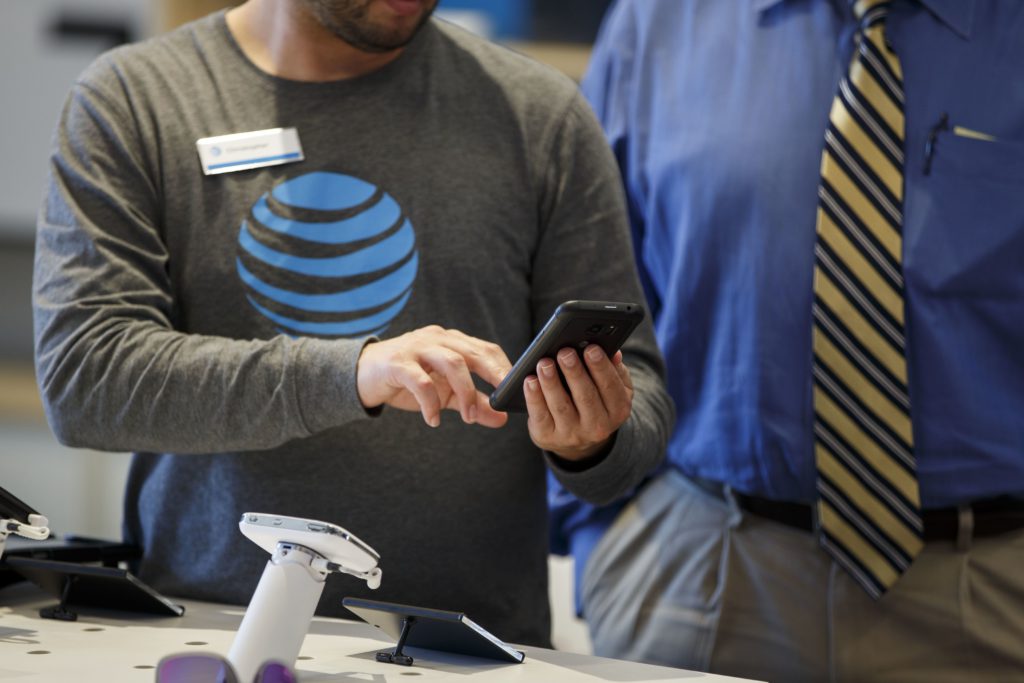
AT&T’s increases are the first for such plans in three years. The Dallas-based carrier is raising monthly fees on those older packages by up to $6 a month for single-line customers and up to $12 a month for families, a spokesman confirmed Tuesday. Staffers in multiple stores were informed of the changes this week and are offering new plans or telling customers to call the company’s consumer service line for help on choosing new offers.

Shares of AT&T rose as much as 2.9% to $19.68 on the news. Verizon Communications Inc. added 2.1% and T-Mobile narrowed its loss for the day.

Subscribers will have the option to avoid the price hike by switching to new unlimited plans, the carrier said.

“We are encouraging our customers to explore our newer plans which offer many additional features, more flexibility for each line on their account and, in many cases, a lower monthly cost,” the carrier said Tuesday in an emailed response to questions.

Price Pressures

AT&T has been warning investors of inflationary pressures. On an earnings call last month, Chief Executive Officer John Stankey said rising wages could add about $1 billion to the company’s overhead this year and raised the prospect of increasing prices.

“Running this business and not sitting here and evaluating where we have options to move on pricing and be successful, I wouldn’t be doing my job properly,” Stankey said.

What Bloomberg Intelligence Says

“AT&T’s decision to raise prices on some of its older plans appears to be aimed at driving a further migration to its new unlimited plans.”

–John Butler, senior industry analyst

–Read the research here.

As a result of the Covid-19 pandemic, wireless phone companies have been seeing record low wireless churn rates. While locked at home, customers stuck with their carriers and largely continue to do so today.

The price hike will test whether mobile service providers can join other industries like food and energy in passing on higher costs. Unlike cable-TV bills that increase routinely, the wireless industry typically doesn’t raises prices on current customers but uses promotions to move people to higher-priced plans. 

AT&T’s move might ruffle some feathers, according to a Recon Analytics mobile intender survey. The rate of customer defections, which ran at about 1% a month at AT&T, could rise to as much as 1.25%, according to the survey. And Verizon would be the biggest beneficiary of the shift, according to the survey responses. 

Status Quo

For years, carriers have competed for and enticed new customers by matching each others’ offers — whether it was with unlimited data caps, free streaming from Netflix or HBO Max, or multiline family plans. AT&T’s move shakes up that status quo, according to Walt Piecyk, an analyst with LightShed Partners, who said all of the carriers are under pressure to generate a return on recent multibillion-dollar investments.

“5G and free streaming services have not been enough to stimulate migration to higher bundles that are needed to generate revenue growth in the wireless industry,” Piecyk said.

Like food and fuel, mobile phone connections have become an essential service. 

“Service providers have almost carte blanche to raise prices, provided their chief rivals do as well because communications services are a must-have, not a luxury,” said Tammy Parker, an analyst with GlobalData.

(Updates with analyst’s comment starting four paragraphs from the end.)

More stories like this are available on bloomberg.com

©2022 Bloomberg L.P.

Virginia Pension Funds Mull Investing in Crypto ‘Yield Farming’

(Bloomberg) — Fairfax County, Virginia, is considering putting pension fund money in two crypto funds that use the investment strategy known as yield farming.  

The funds, if approved in the coming days, will be used to provide liquidity on decentralized cryptocurrency exchanges, according to Katherine Molnar, chief investment officer at the Fairfax County Police Officers Retirement System. She made the comments at the Milken Institute Global Conference in Los Angeles on Tuesday.

Fairfax County was one of the first U.S. counties to put pension money into crypto-linked investments in 2019. Molnar expects the investments being considered to offer a yield of at least 9%. Fairfax’s crypto-focused investments add up to more than 8% of its portfolio, she said.

Fairfax made a more direct bet on cryptocurrencies last year. The Fairfax County Police Officers Retirement System and Fairfax County Employees’ Retirement System invested $50 million into Parataxis Capital Management LLC’s main fund, which buys various digital tokens and cryptocurrency derivatives.

Fairfax is the latest traditional institution to step into the world of decentralized finance, which lets people trade, borrow and lend often anonymously and without intermediaries such as banks. Wall Street trading powerhouse Jane Street said Tuesday it will borrow through a DeFi app. 

“We view this as a growth investment,” Molnar said. 

More stories like this are available on bloomberg.com

©2022 Bloomberg L.P.
Activision Blizzard Unveils Warcraft Mobile Game and Cancels Another

(Bloomberg) — Blizzard, a division of Activision Blizzard Inc., unveiled a new game for mobile phones set in the popular Warcraft universe, one of two big projects that had been in development.

The game revealed by the company Tuesday, Warcraft Arclight Rumble, resembles Supercell Oy’s popular Clash Royale. Activision Blizzard chose to cancel the other project, an augmented-reality game that would have been similar to Pokémon Go, said people familiar with the company’s plans who asked not to be identified because the information is private. A representative for Blizzard didn’t immediately respond to a request for comment.

Warcraft Arclight Rumble will be free-to-play and will enter beta testing for players soon, Blizzard said. It features colorful sprites of recognizable Warcraft critters battling on maps inspired by the game series.

The upcoming game is part of a Blizzard initiative to conquer the lucrative mobile marketplace, which generated more than $93 billion in 2021, according to Newzoo estimates. Blizzard, which has traditionally developed games for personal computers, found success with mobile versions of the digital card game Hearthstone in 2014. Several years later, the company began developing games from the ground up for smartphones including Diablo Immortal, which will be out next month.

This burgeoning mobile initiative is one of the driving factors behind Microsoft Corp.’s move to purchase Activision Blizzard for $69 billion. Shareholders of the video game company approved the purchase last week, and it could soon see a regulatory review. Activision is, meanwhile, facing an ongoing lawsuit from the state of California over allegations of sexual harassment and discrimination.

The second, canceled project was modeled after the lucrative and incredibly popular Niantic Inc. game where players roam the streets around their neighborhoods in search of virtual creatures to capture. It was not immediately clear why the game was canceled, but other attempts at aping Pokémon Go in the Minecraft and Harry Potter universes were unsuccessful.

More stories like this are available on bloomberg.com

©2022 Bloomberg L.P.
Richest Russian Buys Out ‘Grateful’ Oleg Tinkov in Deal Spree

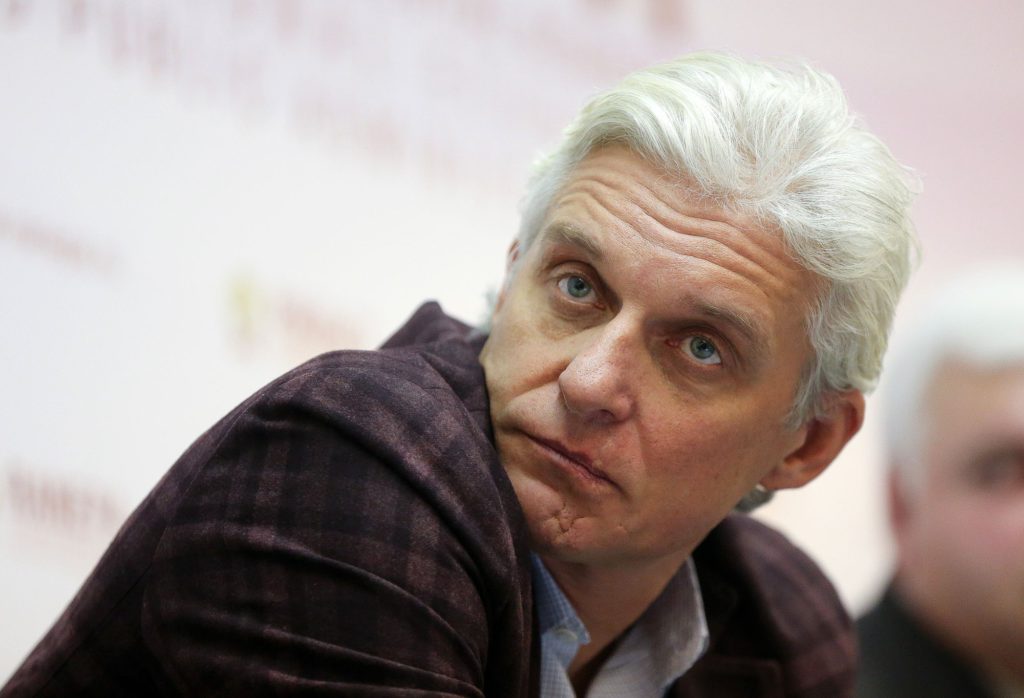
(Bloomberg) — Sanctioned Russian mogul Oleg Tinkov, who has become one of the Kremlin’s most outspoken critics, thanked the country’s richest man, Vladimir Potanin, for buying his stake in a digital bank for a fraction of what it was once worth.

The buyout adds to the flurry of deal-making by Potanin, who also bought Rosbank PJSC from Societe Generale SA last month and whose Interros Capital purchased payment-processer United Card Services, according to a statement Monday. Interros is buying Tinkov’s 35% stake in TCS Group Holding Plc for an undisclosed amount. 

“I am grateful to Potanin, who quickly bought me out,” Tinkov, 54, said in a post in Russian, adding that he’s faced retribution from Moscow for opposing Vladimir Putin’s war in Ukraine. “I have lost everything, but I have not lost my soul.”

Tinkov said in an interview with the New York Times that he was forced to sell his stake at 3% of what he considered its real value. He called the war “insane” in a separate Instagram post last month. 

“I have nothing left in Russia,” Tinkov said on Instagram. “And this is bad for Russia. I was one of the few who managed despite, not thanks to the regime, to build four different businesses from ZERO!”

Potanin, 61, became Russia’s richest man this year and has continued, despite the Ukraine invasion, to increase his fortune to $31.6 billion, according to the Bloomberg Billionaires Index.

More stories like this are available on bloomberg.com

©2022 Bloomberg L.P.
Elon Musk Likens Apple Pay to 30% Tax On Internet

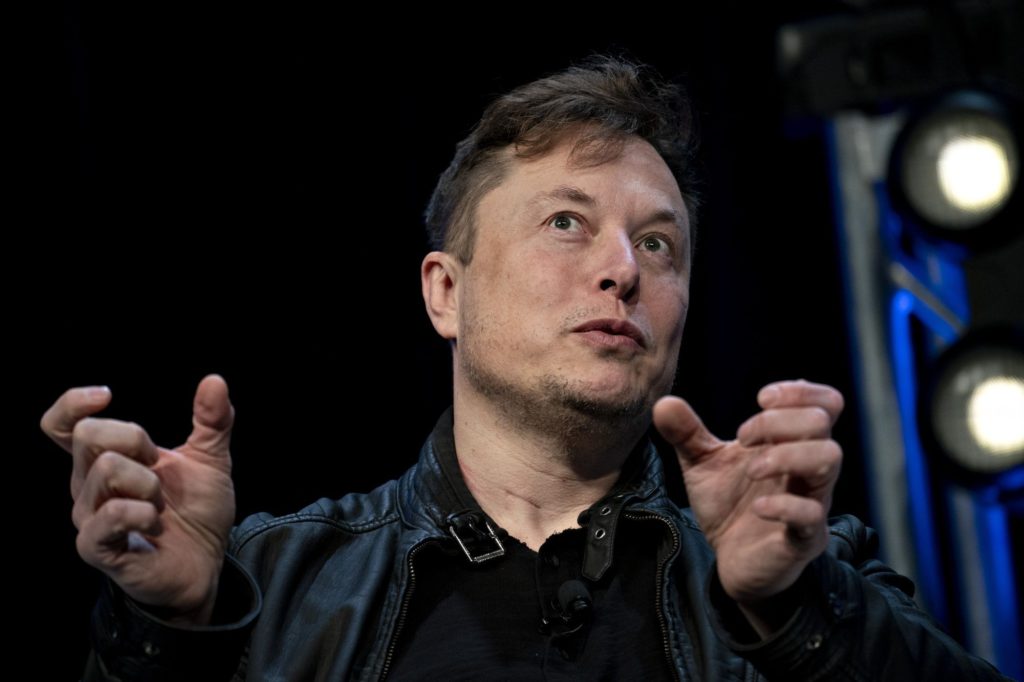
(Bloomberg) — Elon Musk likened Apple Inc. and its App Store to the equivalent of a “30% tax on the Internet” and said the fee is “10 times higher than it should be,” in a series of tweets responding to an article about the European Union’s latest antitrust complaint against the tech giant. 

Musk’s former company PayPal Holdings Inc. was instrumental in getting the antitrust suit against Apple to proceed after they raised concerns about the tech giant’s payment system with the European Commission. 

Read More: PayPal Helped Spur EU Antitrust Complaint Against Apple Payments

To view the source of this information click here

(Corrects headline and lede to say Musk refers to Apple App Store, not Apple Pay)

More stories like this are available on bloomberg.com

©2022 Bloomberg L.P.

Senators Seek to Loosen Google’s Grip on Digital Ad Market

(Bloomberg) — A bipartisan group of senators intends to introduce legislation as soon as this week that would force Alphabet Inc.’s Google to sell off parts of its lucrative advertising technology business, according to two people familiar with the matter.

The bill, led by Senator Mike Lee, a Utah Republican, would bar companies with more than $20 billion in digital advertising revenue from owning the tools to help buy and sell online ads and operating the exchange where those transactions occur. 

The measure would also compel companies with more than $5 billion in digital advertising revenue to act in customers’ best interests and provide greater transparency on data collection, the terms of winning bids and the fees they charge — which would have major implications for Google, Amazon.com Inc. and Meta Platforms Inc., which owns Facebook and Instagram.

Democratic Senators Amy Klobuchar of Minnesota and Richard Blumenthal of Connecticut are also sponsors on the bill, said the people, who declined to be identified because the plans to introduce the bill are not yet public.

Representatives for Google and Facebook declined to comment. Spokespeople for Amazon Lee didn’t respond to requests for comment. 

Google’s dominance in the advertising technology market — the tools used to buy, sell and display the online ads that help fund many websites — has been the subject of intense antitrust scrutiny. Attorneys general from 15 states plus Puerto Rico sued Google in December 2020 for allegedly monopolizing the market. That effort, which is being led by Texas, accuses Google and Facebook, the No. 1 and No. 2 players in online advertising, of reaching a secret illegal pact in 2018 to divide up the market for ads on websites and apps.

Both Facebook and Google deny that their agreement was illegal.

The Justice Department has been investigating Google’s advertising technology business since 2018, and European authorities have opened their own competition probes into the Google-Facebook deal, nicknamed Jedi Blue.

Google controlled about 28.6% of the $211.2 billion in U.S. digital ad spending last year, according to eMarketer, while Facebook made up 23.7% and Amazon 11.6%.

Google is expected to generate $174.81 billion in net digital ad revenue this year, an increase of 17.3%, according to Insider Intelligence analyst Paul Verna. 

(Updates with company comments in fifth paragraph, Google market share in penultimate)

More stories like this are available on bloomberg.com

©2022 Bloomberg L.P.
Shell, BP Face Obstacles to Gaining Wider Share of EV Charging Market

(Bloomberg) — Stay on top of the electric car revolution by signing up to our Hyperdrive newsletter here.

A bird’s eye view of electric vehicle charging infrastructure globally reveals a battle being fought for market share across many sectors – utilities, oil and gas, autos, retail, infrastructure, telecoms and more. For all these, EV charging offers an opportunity to diversify and grow. But the prospects are less optimistic for the world’s major oil and gas companies, who are defending their current share of the fuel market.

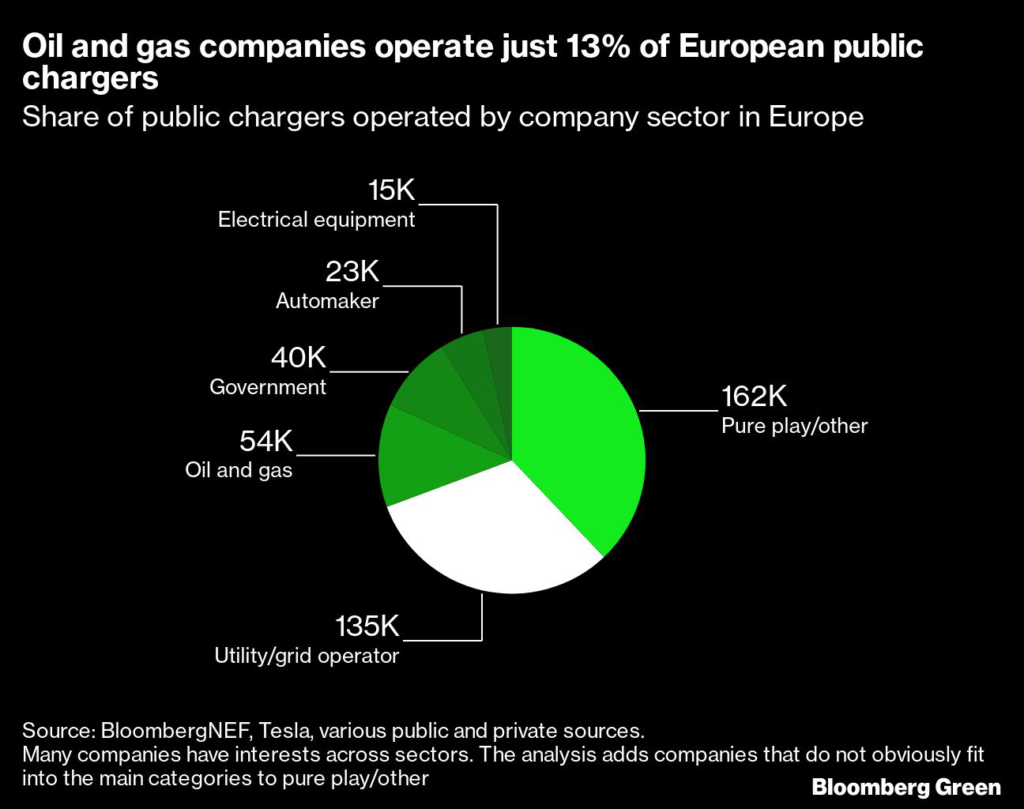
Oil and gas companies are lagging in the public charging market. According to BNEF research, they operate less than 1% of public chargers in China, 2% in the U.S. and 13% in Europe. Different dynamics are at play in each region. In China the government has provided a clearer path to state-owned utilities. In the U.S., the major oil and gas companies have so far shown less interest in most things green as reflected by BNEFs Oil & Gas Transition Scores. Also, there is limited EV charging activity compared with Europe, where major companies have sizeable renewable energy portfolios.

But several acquisitions and recent announcements offer some promise of boosting these companies’ shares in the various EV markets in the coming decade. Shell and BP, with charging operations in Europe, the U.S. and China, have set ambitious roll-out targets. Over the past five years, Shell has acquired a range of charging start-ups — lamp-post charging provider Ubitricity, New Motion in Europe, and Greenlots in the U.S., among them — and it has formed a partnership with China’s BYD. It aims to operate 500,000 chargers globally by 2025.

BP has signed several deals, including the acquisitions of U.K. provider Chargemaster and U.S. fleet charging company Amply Power. And it’s part of a joint venture with Didi in China and software provider Digital Charging Solutions. BP says it expects to install 70,000 chargers globally by 2030. 

These and other efforts are an attempt to replace future losses in fuel revenues, which are likely to be slashed due to the cheaper cost of electricity and increased EV efficiencies; also, about 50% of sales will be lost due to home and depot charging. 

Ultra-fast charging for passenger vehicles and fleets, following on their gas station model, are priorities for both BP and Shell. But even those plans fall short. BP plans to install 8,000 chargers across 4,000 BP and Aral gas stations in Europe — that comes to two chargers per station, barely a blip compared to the ten plugs at Tesla supercharger stations. The limited approach won’t persuade consumers that this is convenient for them, and the maintenance costs could prove high given the fewer number of chargers per site.

There’s also a question about whether retrofitting gas stations with chargers is the right strategy for the oil and gas companies. The existing network might not offer the best locations for chargers going forward, especially as retail charging is expanding. Supermarkets have had success in this market. Many, including Walmart and German supermarket chain REWE, along with a bunch of other retailers and restaurants like McDonalds, are installing ultra-fast chargers. Drivers might pop into a local gas station now and then, if it’s their only option. But for longer charge times, say 20-40 minutes, it likely would be more appealing to go to a supermarket, shopping center or restaurant to plug in while running other errands.

Oil and gas companies are picking up on these trends. Shell has installed a nine bay ultra-fast charging station in London and has signed a deal with Waitrose to install chargers — albeit slower 22-50kW ones — across stores in the U.K. Even so, the road ahead won’t be a straight one — they will have to get creative to win over the charging market and diversify across the supply chain.

Like getting this newsletter? Subscribe to Bloomberg.com for unlimited access to trusted, data-driven journalism and subscriber-only insights. 

More stories like this are available on bloomberg.com

©2022 Bloomberg L.P.
Brevan, Rokos Step Up U.S. Hiring With Funds Vying for Talent

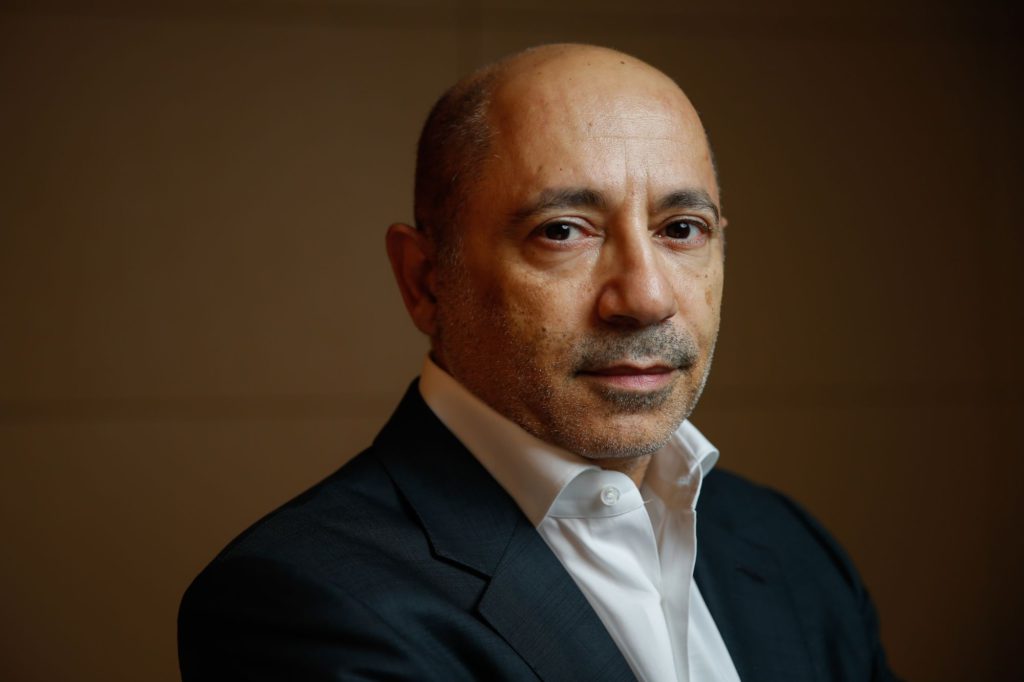
(Bloomberg) — Chris Rokos and Alan Howard, former partners who are among the world’s best-known macro hedge fund managers, are expanding their U.S. operations as they compete with larger firms for capital and staff. 

Rokos Capital Management and Brevan Howard Asset Management tripled their U.S. workforces last year, according to regulatory filings. Together, they added almost 100 people in 2021, a trend that has continued this year. The firms also reported that their U.S. regulatory assets rose substantially, with Rokos’s increasing nine-fold. 

The firms are scooping up talent as macro funds are outperforming peers, creating huge demand for portfolio managers and computer savants. Rokos and Brevan are also moving into asset classes including cryptocurrency, creating a need for new hires.

“The hunt for macro talent is very strong,” said Claude Schwab, a managing director at the recruiting firm Solomon Page. “The firms have finally figured out that you have to have hubs everywhere.” 

A Brevan Howard spokesman declined to comment. Rokos representatives didn’t return telephone calls.

After Rokos left Brevan Howard to set up his own firm in 2015, he and Alan Howard have competed, primarily on their home turf, in London. They also established New York affiliates that had smaller staffs and primarily served as subadvisers for funds run out of London and other locations. The U.S. operations have started to expand by offering new products and managing more money.

At Rokos, firm-wide regulatory assets, a measure that incorporates leverage as well as client capital and investment gains, jumped to $8.9 billion at the end of December from $1.2 billion a year earlier, while the number of U.S. employees increased to 30 from 9, according to U.S. Securities and Exchange Commission filings. 

In 2021, Rokos Capital Management (US) originated its own fund, RCM Private Markets, a private equity vehicle that had some $109 million of regulatory assets as of Dec. 31, the filings show. 

Brevan Howard US Investment Management last year began running a separate account for an institutional investor, according to its documents. The unit’s regulatory assets rose to $8.7 billion last year from $6.3 billion the year before, while its workforce jumped to 88 people from 26. The firm is also expanding its BH Digital cryptocurrency unit.

More stories like this are available on bloomberg.com

©2022 Bloomberg L.P.
Bitcoin’s ‘Boring’ Trading Spurs Calls for a New Hype Cycle

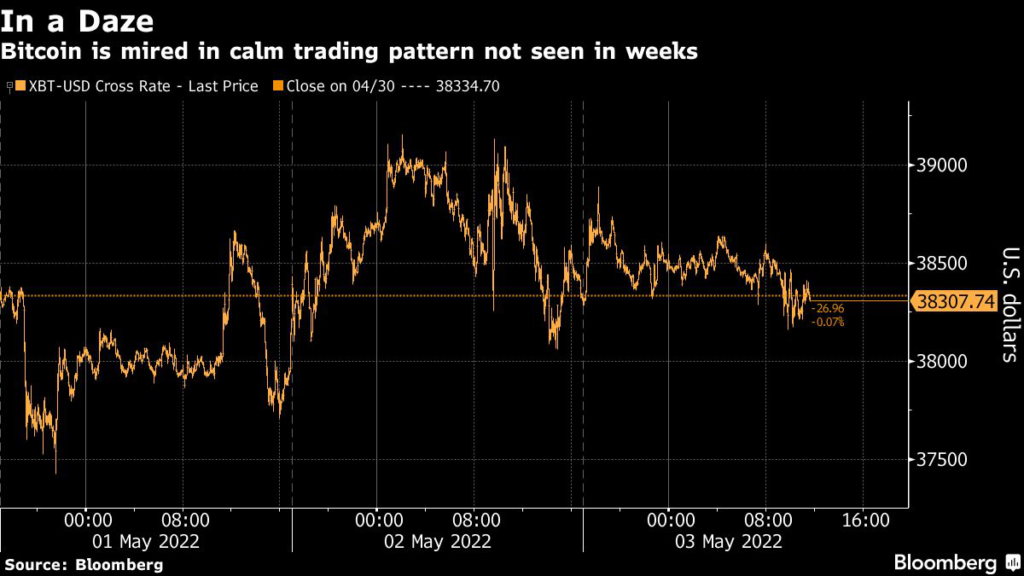
(Bloomberg) — Over the weekend, Bitcoin’s price hardly budged. On Monday, the coin posted a negligible 0.02% drop. On Tuesday, it was yet again unchanged.

Such has been trading in the world’s largest cryptocurrency that some analysts and market-watchers have resorted to calling it “boring.” In fact, Bitcoin fell 0.4% as of 12:36 p.m. in New York, poised for its fourth straight session of moving less than 1% — the longest run of dormancy since April 5. The digital currency has swung within a 5% band for a seventh straight session in a prolonged calm not seen since Jan. 19.

All the tranquility came off a month of a relative stability, something that stood out amid a market selloff that sent stocks and bonds to their worst April in decades. Over the month, Bitcoin’s 26% gyration from peak to trough was the smallest since September 2020.

It’s a remarkably listless state of being for an asset that’s long been known for its volatility. David Duong, head of institutional research at Coinbase, attributes its tepid moves to the macro environment — weaker growth and higher inflation have been acting “as a drag on crypto.”

So what’s needed for a breakout? “We have seen the carry-over of many important crypto-specific themes from last year but very little in the way of new ‘top down’ narratives, which are crucial to the ‘hype cycles’ in this space,” Duong wrote in a note, meaning that the market may stay lukewarm until something exciting happens.

Crypto assets, just like other riskier areas of the market, have all been weighed down as the Federal Reserve and other global central banks raise interest rates to fight red-hot inflation. In this environment, Bitcoin hasn’t been able to break out in any meaningful way beyond the highs it came into the year with. 

Now that that narrative has been established, moves in the coin have become muted. In fact, its average daily change over the past two days is just 0.2%, according to data compiled by Bloomberg. For the tech-heavy Nasdaq 100, the average has come in at 0.9%.

Plenty of market-watchers have noted that something thrilling needs to happen to shake crypto from its stupor. Analysts at Arcane Research remarked in a note that there are “still no signs of optimism.” Coinbase’s Duong says he’s looking forward to a number of developments in the second half of the year, including Ethereum’s transition to proof-of-stake as well as possibly more regulation, among other things. 

BTIG’s Jonathan Krinsky, however, is surprised Bitcoin hasn’t been hit harder in recent weeks. “Its resiliency has been impressive,” he wrote in a note. “But we have to wonder how long it can hold up given nearly every other asset -class has had a meaningful break lower.” A move below $36,000 would break its medium-term uptrend, he added.

Nexo co-founder and Managing Partner Antoni Trenchev agrees that Bitcoin’s near-term outlook is “cloudy.” It’s wedded to the Nasdaq 100 and could again test $33,000 soon, he said. Buyers would step in around the $30,000 level.

But “sentiment towards Bitcoin can move on a dime. The narrative changes quickly,” he said. “Nobody needs reminding what happens when Bitcoin starts to move and retail FOMO kicks in.”

More stories like this are available on bloomberg.com

©2022 Bloomberg L.P.
Bank of Canada Seeks to Earn Public Trust in Inflation Fight

(Bloomberg) — The Bank of Canada acknowledged that pandemic policies and the recent surge of inflation are testing the public’s trust in the institution, in a speech by the central bank’s No. 2 official that sought to underscore its independence from both politics and commercial interests.

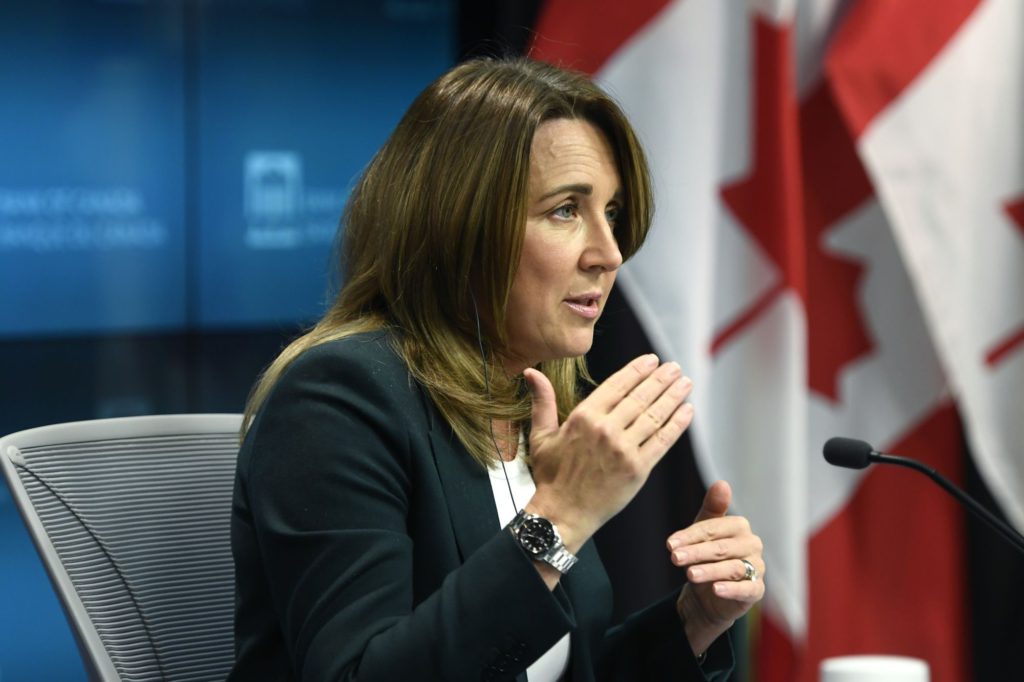
Senior Deputy Governor Carolyn Rogers, in her first speech since taking the post in December, outlined in detail the ways she claims the central bank is protected from political interference or influence from the private banking sector, and noted how the Bank of Canada is accountable and transparent with the public.

That independence and accountability will inform how the central bank plans to tackle the current surge of inflation, Rogers said.

“Just as Canadians trusted us to respond with strength and conviction when the economy needed support at the onset of the pandemic, they are counting on us now to lower inflation,” Rogers said, according to prepared remarks. “We take that trust seriously. We have the tools, we have the track record, and we are committed to getting inflation back to target.”

Rogers reiterated recent language from the Bank of Canada, saying that while global pressures have been the primary driver of inflation, the economy is beginning to overheat and the central bank will need to raise interest rates “higher still.”

The speech — titled “The Bank of Canada: A matter of trust” — comes amid criticism from some members of the main opposition Conservative Party who have blamed the central bank for the higher inflation.

Pierre Poilievre, the front-runner in the race to lead the Conservatives, held a press conference last week pledging to increase parliamentary oversight of the central bank, adding that he’d also halt policymakers’ work on a digital currency.

“We are acutely aware that, with some of the extraordinary actions we have taken during the pandemic and with inflation well above our target, some people are questioning that trust,” Rogers said.

She acknowledged — as Governor Tiff Macklem has in recent weeks — that “there were some things we got wrong”. The persistence of supply chain disruptions “surprised us,” Rogers said, citing Russia’s invasion of Ukraine and China’s renewed lockdowns.

“These are things we didn’t foresee,” Rogers said. “We know we have a ways to go before Canadians can fully judge the success of our actions.”

More stories like this are available on bloomberg.com

©2022 Bloomberg L.P.

Close Bitnami banner
Bitnami
