Bloomberg

Russian Bank Finds Novel Way to Pay Lenders and Bypass Wall Street, Sanctions

(Bloomberg) — Sovcombank PJSC will offer a bond swap to its Eurobond holders to bypass the foreign banking web that has been blocking payments of Russian borrowers after sanctions were imposed following the country’s invasion of Ukraine.

Russia’s ninth-largest lender was due to make a $12 million interest payment on notes maturing in 2030 on April 7, according to data compiled by Bloomberg, but the bank said that it would stop payments on four notes issued by an Irish vehicle, Sovcom Capital DAC.

Instead, it paid a ruble coupon on April 21 to those holders with rights to the bonds recorded on Russia’s National Settlement Depository, and will offer a bond swap to foreign holders, the bank said in a statement on Friday. 

As making payments “using the methods provided for in the documentation is not yet possible” due to the sanctions, PAO Sovcombank will register a new issue of urgent local subordinated bonds and offer Eurobond holders to exchange them for new Russian ones, it said. “This will enable holders to receive payments directly in Russia, bypassing the international payment infrastructure.” 

Firms including Severstal PAO, Russian Railways JSC and Alfa Bank PJSC have missed coupon payments in recent weeks because the funds were held up by foreign intermediaries completing due diligence processes. Russian Railways and state-controlled lender VTB Bank PJSC — sanctioned in the U.S., the U.K. and the European Union — said they paid holders of dollar-denominated bonds in rubles in Russia. It remains unclear how easily foreign bondholders can access those funds. 

Read More: Russia Faces New Urgency to Dodge Default, Avoid Wall Street  

More stories like this are available on bloomberg.com

©2022 Bloomberg L.P.

Renault Exploring Nissan Stake Sale for EV Shift, Sources Say

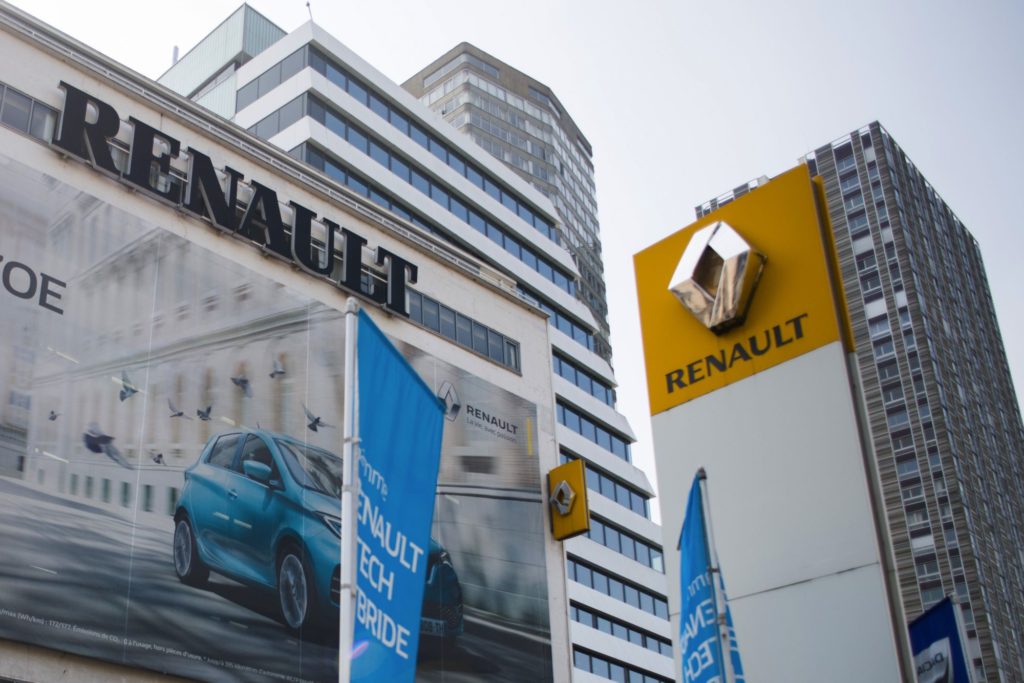
(Bloomberg) — Renault SA is considering selling part of its Nissan Motor Co. stake, a move that could raise billions of euros for its shift to electric vehicles and ease long-standing tensions with its alliance partner, people familiar with the matter said.

Nissan itself may be willing to buy some of the 1.83 billion shares in the Japanese automaker that Renault owns, according to the people, who asked not to be identified because the discussions aren’t public. Renault may also seek other acquirers for a portion of its 43% stake in Nissan, the people said.

Spokespeople for Renault and Nissan declined to comment. Renault shares jumped as much as 8.3% as of 11:35 a.m. Friday in Paris trading.

Read More: Ghosn Faces Arrest Warrant in French Probe (2)

By paring a stake worth 983.5 billion yen (7.1 billion euros), Renault would be walking a fine line: trying to rebalance a 23-year-old alliance without unraveling it. A lopsided cross-shareholding structure — Nissan owns just 15% of Renault and lacks voting rights — has been a pain point for factions of Nissan executives going back years.

A sale could help finance major structural change Renault Chief Executive Officer Luca de Meo began to sketch out in February. The company is considering a breakup and separate listing of its EV business. Its legacy business could then join forces with a partner.

One option would be China’s Zhejiang Geely Holding Group Co., which controls Volvo Car AB, the people said. Renault reached a joint production deal with Geely earlier this year for a South Korean plant, and the two have said they may also cooperate in China.

A representative for Geely declined to comment.

Russia Factor

De Meo, 54, was making strides turning Renault around before Russia’s invasion of Ukraine all but forced the company to begin exiting its second-largest market. The pullout will be costly: the carmaker said it will take a non-cash charge amounting to the 2.2 billion-euro ($2.4 billion) value of its assets in Russia, which include a manufacturing plant in Moscow. It’s also assessing options for its stake in Lada maker AvtoVaz and may try to transfer ownership to a local investor.

Negotiations to reshape the Renault-Nissan alliance — which haven’t been discussed publicly — could take many months, the people said.

Renault’s EV carve-out could include Nissan assets, the people said. Nissan also would be a partner in the French carmaker’s legacy hybrid and combustion-engine operations, they said.

The two companies are working with one another on Renault’s structural overhaul, Chief Financial Officer Thierry Pieton told analysts Friday.

“Nissan is in the loop,” Pieton said. “This is obviously something that we want to discuss with them.”

Nissan’s Fortunes

Nissan would be in a better position than a year ago to buy back its shares, should Renault decide to sell. The Yokohama, Japan-based company has 2 trillion yen ($15.6 billion) in cash and equivalents on hand, and fiscal year operating profit is on track to be positive for the first time since 2019.

Ashwani Gupta, Nissan’s chief operating officer, will travel to Paris next week for discussions with Renault’s CEO de Meo ahead of a broader meeting between Renault and Nissan’s executives in Tokyo next month.

Tension surrounding the asymmetrical nature of the companies’ ties almost destroyed the alliance following the 2018 arrest in Japan of former Chairman Carlos Ghosn. The automakers have since been focused on separate turnaround plans to get them past damage wrought by Ghosn’s ouster and the pandemic.

Negotiations aimed at rebalancing the Franco-Japanese alliance, which also includes Mitsubishi Motors Corp., were held in 2019 but took a back seat to more urgent operational and management issues. They have been kept off the table until now.

‘Unbreakable’ Ties

Reducing Renault’s stake to 15%, the same level as Nissan’s ownership of Renault, could yield about 4.65 billion euros at current prices. It’s unlikely the Paris suburb-based automaker would sell the entire holding, as that would weaken the alliance.

The operating agreement governing the partnership, known as RAMA, may also have to be amended with a change in shareholding, some of the people said. The accord has long been a source of friction between the partners, as has the French state’s 15% holding in Renault, which comes with double voting rights.

The alliance outlined plans in January to strengthen operational ties and invest in electrification, potentially complicating any separation of Renault and Nissan’s EV businesses. Renault Chairman Jean-Dominique Senard said then the companies’ closer links would be “totally unbreakable.”

(Updates with Renault share move in the third paragraph.)

More stories like this are available on bloomberg.com

©2022 Bloomberg L.P.

Top Philippine Bank Wants Tougher Laws Against Cybercrimes

(Bloomberg) — BDO Unibank Inc., the Philippines’ largest lender by assets, wants the country’s next president to be tough against cybercrimes.

Financial service providers that are outside the scope of central bank regulations have proliferated, and “for the health of the industry and the public, they should look at how these entities should be managed relative to banks” which are “extremely” regulated, BDO Unibank President Nestor Tan said during an annual general meeting. Legislation and regulation must be tough enough to discourage cybercrimes, he also said.

BDO, owned by the family of late billionaire Henry Sy, in December lost money to an online fraud in which funds were channeled to accounts at another Philippine lender. Tan, at Friday’s meeting, said it will sustain digital innovation and strengthen its business strategies.

After expanding by more than half in 2021, BDO expects profits to grow 5% to 10% this year as pandemic restrictions ease and even as inflation remains a worry. Its loan portfolio will likely increase by 8% to 12%, Tan said. First-quarter net income was up 13% at 11.7 billion pesos ($223.5 million) in the first quarter.

More stories like this are available on bloomberg.com

©2022 Bloomberg L.P.

Bain Capital Weighs Deal for IT Services Provider Solutions 30

(Bloomberg) — Bain Capital is considering a deal for European technology services provider Solutions 30 SE, according to people familiar with the matter.

The buyout firm has been speaking with advisers about the potential investment, according to the people, who asked not to be identified discussing confidential information. 

Shares of Solutions 30 jumped as much as 15% in Paris trading Friday, the biggest intraday gain in nearly two months, before falling back. They were up 2.3% at 9:57 a.m. in France, giving the company a market value of about 725 million euros ($784 million).

Deliberations are ongoing, and there’s no certainty Bain will decide to proceed with a formal offer, the people said. Representatives for Bain and Solutions 30 declined to comment. 

Solutions 30 has 15,700 engineers serving customers in industries including telecommunications, security, energy and retail, according to its website. Founded in 2003, it operates in about 10 countries across Europe.

The company has previously been targeted by short sellers including Muddy Waters Capital LLC. In December 2020, Solutions 30 said it hired an external auditor to look into allegations made in an anonymous report. 

The review eventually cleared Solutions 30 of wrongdoing, but the company’s shares have remained under pressure. In May last year, the company said EY couldn’t sign off on its latest full-year accounts. It has since hired PKF as its new auditor. 

Following this turmoil, Solutions 30 said it was considering options including finding an anchor investor or delisting. The company announced in July it hired Rothschild to advise on the strategy for strengthening its shareholder structure. 

“The managers have always indicated that a transaction could go as far as a delisting if the valuation retained by the buyer(s) offered a significant premium,” Oddo BHF analyst Emmanuel Matot wrote in a note. 

A sell-off in technology and software stocks globally is prompting financial investors to target publicly-listed companies in the sector amid more attractive valuations. A consortium including Accel-KKR offered to buy Finnish software company Basware Oyj earlier this month. Buyout firm Cinven said this week it was considering a potential bid for U.K.-listed software provider Ideagen Plc.

(Updates with analyst quote in penultimate paragraph.)

More stories like this are available on bloomberg.com

©2022 Bloomberg L.P.

Renault Makes Progress on Breakup Plan, Talks With Russia

(Bloomberg) — Renault SA is forging head with a plan to separate its electric-vehicle and combustion-engine car business with a possible initial public offering of its EV assets next year.

The carmaker is making progress with the split that was first floated in February with potential partners showing interest in the legacy operations, Chief Financial Officer Thierry Pieton said on a call with reporters. 

The company is weighing options for carving up its business from “as simple as showing the numbers separately” to an initial public offering of its EV business that could take place in the second half of next year, Pieton said. 

Alliance partner Nissan Motor Co. is working with Renault on the plans although the impact on the long-standing partnership isn’t clear, Pieton said. Separately, French prosecutors on Friday issued an international arrest warrant for former Renault leader Carlos Ghosn, who remains in Lebanon. 

Renault detailed plans for a possible deep overhaul just as the company faces a crisis for its longstanding business in Russia, its second-biggest market. The company has halted operations at its Moscow plant and is examining options for its majority-owned AvtoVaz venture that makes the country’s top selling Lada brand. Talks with Russia over AvtoVaz are progressing, Pieton said Friday, without giving more details. 

The shares declined by 0.5% in at 9:45 a.m. in Paris trading. 

A move to split Renault could help raise funds for development of EVs and technology. While Renault’s first-quarter revenue fell less than expected on higher vehicle prices and a focus on more lucrative models, the company last month cut its annual forecast on the suspension of its business in Russia. 

First-quarter revenue fell 2.7% to 9.75 billion euros ($10.6 billion), Renault said Friday, beating the 9.27 billion-euro estimate compiled by Bloomberg. 

Other manufacturers’ earnings are also turning out less affected by worsening supply chain woes on the back of strong demand. Volvo AB Friday reported stronger-than-expected operating profit as the world’s second-biggest truckmaker raised prices. Swiss cement maker Holcim Ltd. raised its sales outlook for the year after strong demand in all regions. 

Renault stuck with an estimate that chip supplies will shave production by around 300,000 this year, mainly in the first half, and said its order book is strong.  

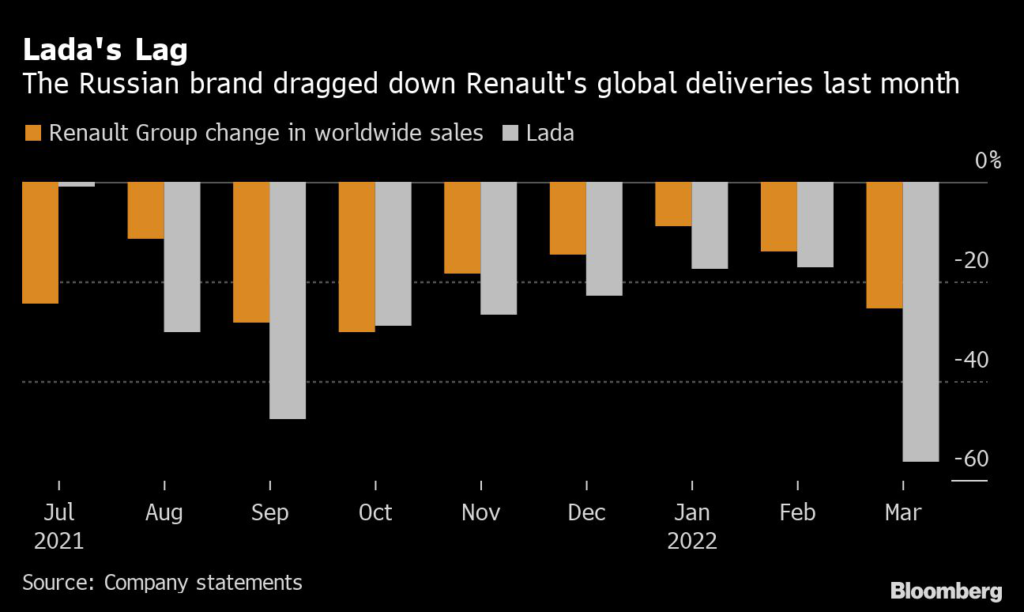
Global vehicle sales declined 17% over the three-month period, including a 34% plunge in Russia, the manufacturer’s second-biggest market, according to figures published earlier this week. The company’s shares have lost just over a quarter of their value since the war began with Renault is the most exposed automaker to Russia. Revenue from Russia fell 16% to 900 million euros, with AvtoVaz accounting for 527 million euros of the total.

The company, which said it’s ahead on its turnaround plan, will will hold a capital markets day in the fall.


(Updates with CFO comment in second, arrest warrant for Carlos Ghosn in third, other corporate earnings in ninth paragraph)

More stories like this are available on bloomberg.com

©2022 Bloomberg L.P.

Saab CEO Says Swedish NATO Entry Would Open Door to Inner Circle

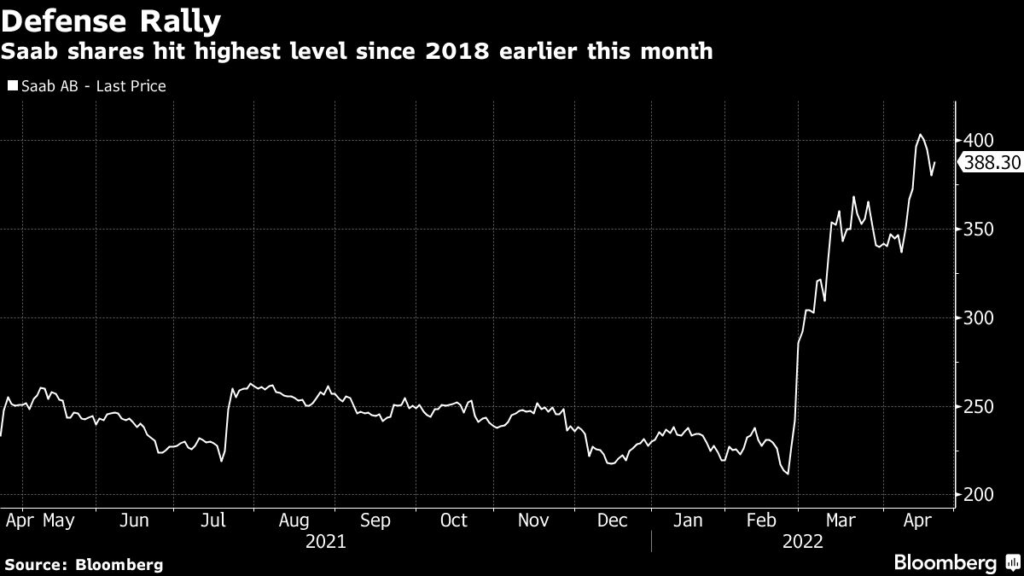
(Bloomberg) — Swedish defense group Saab AB is betting on a sales boost from the country’s rapidly changing attitudes toward joining the military alliance NATO.

Unthinkable just a few months ago, Swedish lawmakers are now intensively discussing a potential application to the North Atlantic Treaty Organization as public support for such a move hit new heights this month. For Saab, it’s “hard to see anything negative with that from an industrial perspective,” chief executive officer Micael Johansson said in a phone interview after reporting first-quarter results. 

“You become a part of the inner circle, and so you can access that market in a more equitable way,” the CEO said. 

While Saab is already selling products to some of the countries within the alliance, NATO membership would make it easier to compete for contracts within sensitive areas such as information handling, advanced missile systems and sensors. “It’s often the defense industry within that club that gets to deliver,” Johansson said. 

Still, the Swedish company is enjoying rising demand particularly within its Surveillance and Dynamics units, which sell products such as radars, underwater systems and simulation systems. The spike in demand might show up in Saab’s order books in nine to 12 months from now, according to the CEO.

Read More: Sweden Speeds Up NATO Analysis to Keep Pace With Finland

More stories like this are available on bloomberg.com

©2022 Bloomberg L.P.

U.K. Retail Sales Fall More Than Forecast as Prices Bite

(Bloomberg) —

U.K. retail sales plunged more than forecast in March as the cost-of-living crisis squeezed incomes and consumers braced for higher taxes and energy bills.

The volume of goods sold in stores and online dropped 1.4% after falling 0.5% in February, the Office for National Statistics said Friday. Economists had expected a decline of 0.3%. Sales excluding auto fuel dropped 1.1%.

A separate survey by GfK showed that U.K. consumer confidence sank for a fifth-straight month in April, with Britons more pessimistic about the outlook for their personal finances and the general economy than during the depths of the financial crisis. Bloomberg Economics said the figures were synonymous with recession. 

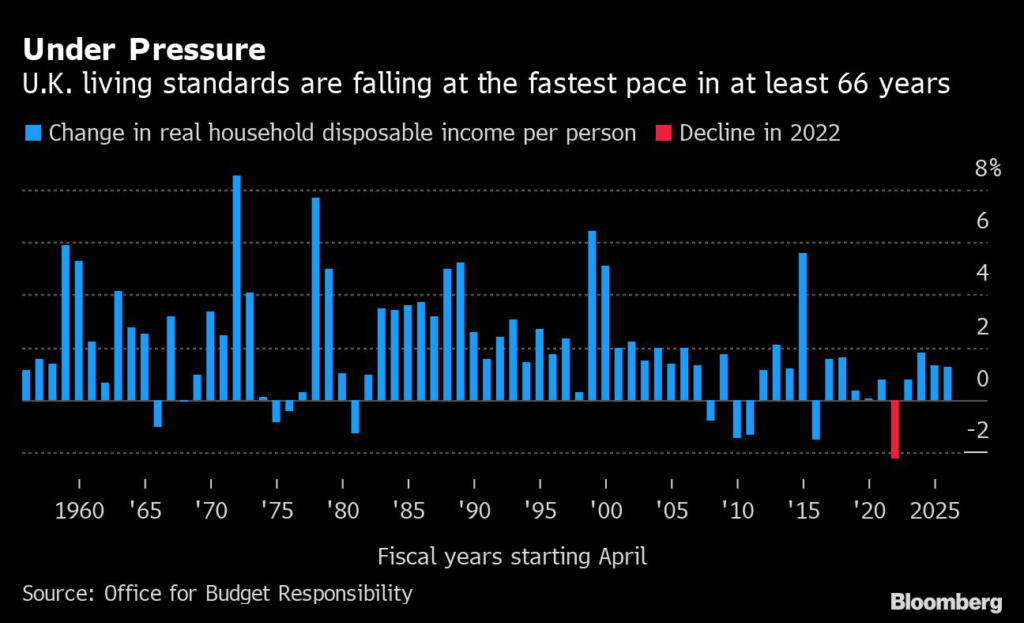
Wages are increasingly falling behind the rate of inflation, which hit a 30-year high of 7% in March. Households faced a further blow this month when energy bills and payroll taxes rose sharply. Together, the shock is forecast to deliver the biggest blow to living standards in at least six decades.

The pound declined after the report. There was no change in the outlook for interest rates, with investors betting on a quarter-point increase next month.

The fall in retail sales was led by sales of food, clothing and footwear, and auto fuel. Record-high petrol and diesel prices, driven up by the war in Ukraine, led people to make fewer non-essential journeys. 

Online sales also declined sharply to 26%, the lowest proportion of overall sales volumes since February 2020, as people cut discretionary purchases.

The impact was partially offset by increased sales of household goods, thanks to sales of DIY and second-hand items, itself a possible sign of Britons economizing.

What Bloomberg Economics Says…

“We expect consumer spending to come under further pressure in the coming months given the unrelenting squeeze on incomes. The cost-of-living crisis is likely to worsen in April, with a hike in energy bills as well as tax increases. We now expect inflation to hit 9% at that point.”

–Economist Niraj Shah. Click here for full REACT

Consumers are also facing the prospect of more expensive mortgage costs as the Bank of England raises interest rates in an effort to tame inflation.

Policy maker Catherine Mann said on Thursday that she’s focused on how well demand holds up in the face of the inflation squeeze as she weighs whether, and how much, to vote to raise rates by in May. She noted that data suggested “consumers were forward-looking, which would translate into a period of softer demand growth, perhaps even retrenchment.”

A separate ONS survey found that 87% of adults reported their cost of living had increased over the past month, up from 83%. Some 88% said the reason was an increase in the price of food.

The outlook for retail sales and the broader economy will depend on the willingness of households to use savings built up during the pandemic to cushion the blow.

That’s not an option for poorer families, who will be forced to borrow to maintain their living standards or buy fewer goods and services. Economists in a regular Bloomberg survey put the chance of a recession in the coming year at 30%, the highest it has been since early 2021.

“Retailers are themselves squeezed between rising costs of operations, exacerbated by the situation in Ukraine, and weaker demand from customers,” said Helen Dickinson, chief executive of the British Retail Consortium. “Higher global commodity prices, rising energy and transport costs, and a tight labor market, are all taking their toll. As a result, it is likely that retail prices will continue rise over the course of 2022.”


(Adds quote in 5th paragraph and details throughout)

More stories like this are available on bloomberg.com

©2022 Bloomberg L.P.

Korea’s Oldest Conglomerate Turns to Hydrogen Drones for Revival

(Bloomberg) — Doosan Group, a 126-year-old South Korean conglomerate emerging from restructuring, is looking to hydrogen-powered technology to help revive its fortunes and expand its presence in renewable energy. 

“Our long-term vision is to provide fuel cells for various kinds of mobile applications, like robots, starting with hydrogen drones,” said Doosoon Lee, chief executive officer of unit Doosan Mobility Innovation. “We will also play a crucial role in the South Korean government’s goal to build a multiseat unmanned aerial vehicle.”

Doosan Mobility unveiled its first DS30 hydrogen drone in 2020 and launched an updated model – the DS30W – in Europe in November. The drones, which can fly for about two hours, are intended for industrial surveillance purposes, such as checking facilities around factories or at sea. 

The company is targeting about $100 million in revenue from hydrogen fuel cells and drones within the next three or four years, according to Lee. The global market for drones used for industrial purposes could grow to 8.3 trillion won ($6.7 billion) by 2025 as companies use them more widely, he said. 

Doosan Mobility said in March it received 27 billion won in investment from IDG Capital, Korea Investment Partners and DS Asset Management “in recognition of its growth potential in the hydrogen mobility business.” The funds will mostly be used to develop logistics cargo drones with hydrogen fuel cell technology, it said. 

More: Drone Taxis and Bags of Rice Take Flight in Downtown Seoul

Hydrogen can overcome the power limits of standard lithium-ion batteries, enabling drones to fly higher and longer, Lee said. He expects growing demand for special-purpose hydrogen drones in areas such as surveillance and lifesaving, as well as the delivery industry. 

Unlike battery-powered drones, Doosan Mobility’s hydrogen models show how much power is remaining through a remote-control system that can be installed on a personal computer or mobile phone app. The drones are waterproof, can travel 80 kilometers (50 miles) and endure strong winds, according to the company’s website. 

“Doosan Mobility is a key future business for the group’s plan for seeking a new strategy after restructuring,” said Kim Dong-yang, an analyst at NH Investment & Securities Co. in Seoul. The Doosan group has the most advanced technology for hydrogen power generation in South Korea, he said. 

As part of a restructuring from 2020 to this February, Doosan sold businesses including excavator-maker Doosan Infracore Co. and battery foil unit Doosan Solus, as well as its headquarters in Seoul. It still owns heavy industries and nuclear energy unit Doosan Enerbility Co. and construction-equipment maker Doosan Bobcat Inc. 

“Doosan still has cash to invest in other new businesses,” said Kim Jang-Won, an analyst at IBK Securities in Seoul.

Doosan Mobility, which says it has capacity to produce 2,000 hydrogen-powered drones a year, opened a branch in the southern Chinese city of Shenzhen in 2019 to boost sales and build local partnerships. Its total sales in the fourth quarter of 2021 jumped 108% from a year earlier, according to holding company Doosan Co. Revenue is projected to rise 93% to about 12 billion won this year. 

More stories like this are available on bloomberg.com

©2022 Bloomberg L.P.

Climate Change Threatens Europe With New Weather Extremes

(Bloomberg) — Climate change produced another record-breaking year of extreme weather in Europe in 2021, triggering catastrophic flooding and the hottest summer on record, according to scientists at the Copernicus Climate Change Service.

Summer temperatures in Europe last year were one degree Celsius above the average of the previous 20 years, and the rainfall that battered Germany and Belgium broke records, the scientists said in their annual European State of the Climate report. Globally, the last seven years have been the warmest since records began in 1850, with 2021 ranking sixth. There were worrying findings in terms of greenhouse emissions, too: concentrations of carbon dioxide and particularly methane continued to rise in the atmosphere.

“The continued increase in greenhouse gases is the main driver behind the global increase in temperatures,” said Freja Vamborg, senior scientist at Copernicus and the lead author of the report. “The key messages are forever repeated and will not change in the near future unless something changes radically.”

The report also painted a stark picture of climate change in the Arctic, with wildfires mostly from eastern Siberia contributing to the fourth highest amount of carbon emissions from such events in the region. At the same time, sea ice retreated to its 12th lowest since 1979, while the Greenland Sea saw its lowest coverage ever. Still, Arctic temperatures were less extreme than 2020 and were even colder than usual in some areas at certain times of the year.

Methane — which has 84 times the warming potential of CO2 over a short timeframe — jumped by 16.5 parts per billion, marking a second consecutive year of sharp increases. The cause of the rise was unclear, the scientists said, though a large portion was likely attributable to rice and cattle farming, as well as the gas escaping from natural sinks.

“It’s certainly a big concern to see the rate of growth of methane almost double from what it was before 2020,” said Vincent-Henri Peuch, who heads the Copernicus Atmosphere Monitoring Service. He added that it was “very worrying” there was no sign of a reduction of CO2 concentrations either.

The Copernicus findings — based on measurements from satellites, ships, aircraft and weather stations around the world — come less than a month after Intergovernmental Panel on Climate Change warned that the world may be on track to warm by more than 3 degrees Celsius — twice the Paris Agreement target. Such a rise in temperatures would painfully remake societies and life on the planet and flies in the face of years of net-zero commitments by countries in Europe and around the globe.

Those dramatic impacts were on full display last year, with floods in Western Europe causing hundreds of deaths and billions of euros worth of damage. The report said that those were triggered by record rainfall on July 14 landing on already saturated soils. The Mediterranean region, meanwhile, was buffeted by wildfires and some of the highest temperatures ever recorded, including a likely record of 48.8°C in Italy.

Read More: Climate Change Made Germany’s Deadly Floods Much More Likely

“2021 was a year of extremes including the hottest summer in Europe, heat waves in the Mediterranean, flooding and wind droughts in western Europe,” said Carlo Buontempo, director of the Copernicus Climate Change Service.

There were also some worrying signs that wind speeds fell, hampering the region’s ability to produce renewable electricity from turbines. The problem was particularly pronounced in parts of Western and central Europe, with some areas experiencing the lowest wind speeds for at least 42 years.

Scientists from Copernicus described 2021 as a “year of contrasts” with annual surface air temperatures barely above the average, yet the sea over parts of the Baltic and Mediterranean hit the highest warmest levels in almost three decades. Still, they said that the long-term trend was skyrocketing thermometer readings.  The European continent has warmed by around 2°C from pre-industrial levels, while global temperatures have risen between 1.1°C and 1.2°C, the scientists said.

“Scientific experts like the IPCC have warned that we are running out of time to limit global warming to 1.5°C,” said Mauro Facchini, an official at the European Commission, referring to the stretch goal of the Paris Agreement. “This report stresses the urgent necessity to act as climate related extreme events are already occurring in Europe.”


More stories like this are available on bloomberg.com

©2022 Bloomberg L.P.

Is This Dubai’s Most Luxurious Hotel Yet?

(Bloomberg) — At the apex of Dubai’s Palm Jumeirah, a hulking new edifice has appeared. The $1.4 billion hotel-and-residence combo dubbed Atlantis Royal has been 14 years in the making. It is aimed at raising the bar for luxury in the world’s most famously opulent city.

The 43-story, 87,097-square-meter (937,500-square-foot) construction sits next door to its iconic family-friendly sibling, the Palm, and looks like an architectural blend between a Jenga game and the Millennium Falcon. Its futuristic curves and sky gardens offer sweeping vistas of the Persian Gulf from 795 guest rooms and 231 apartments. 

Were a hotelier to make a laundry list of every luxury amenity and multiplied it by 10 in both ambition and sheer quantity—92 pools, check; outdoor crystal chandeliers that transform into sunshades, check; 17 restaurants and bars from chefs including Heston Blumenthal and José Andrés, check—it would look on paper a whole lot like the Royal. But executing such a project has been nothing short of challenging.

Like the other Atlantis in Dubai—which has no connection to the one in the Bahamas—the Royal started as a joint venture between hospitality developer Kerzner International Ltd., which owns the One&Only Resorts brand, and investment firm Istithmar World. After funding dried up amid the global financial crisis of 2008, the property was left to languish for years.

Swooping in for the rescue came the Investment Corp. of Dubai (ICD), the emirate’s sovereign wealth fund. Since taking over construction in 2016, it’s considered Atlantis Royal a lynchpin in the overall strategy to grow Dubai’s tourism scene by focusing less on families and more on partygoing singles. Particularly in the 25-44 age group, these have been tracked by Emirates Airlines as a fast-growing demographic in recent years, particularly since Covid-19 struck.

Pandemic restrictions on labor movement and the attendant supply chain crisis plagued and delayed the already pricey construction. Now, with  plans to start taking reservations in third quarter 2022, here’s an inside look at what the Royal might add to Dubai’s mix, based on an exclusive hard-hat tour of the sybaritic excesses currently in the works.

Over-the-Top Amenities

Though it was barely more than concrete foundation on the day I toured it, the influencer-ready Cloud 22 was a good place to start wrapping my head around the Royal. Its 90-meter rooftop pool hovers 22 floors above the skyline. (Hence the name.) It’s already outfitted with a fiberglass DJ booth shaped like a robot’s head, with red LED “veins” to pulse to the music, and each of its 14 cabanas has a private acrylic plunge pool. A bi-level “VVIP” cabana has a special acrylic-bottomed pool that appears to be floating out over the structure’s edge.

From the ground level, it’s easier to appreciate the architecture, which is wider than it is tall. Done by New York-based Kohn Pedersen Fox Associates, which designed the master plan for Manhattan’s Hudson Yards, it’s meant to look like a skyscraper that’s been deconstructed into side-by-side bits and pieces, some connected by a swooping, futuristic sky bridge.

Most restaurants will be on the ground floor, including a branch of Andrés’s Spanish tapas spot Jaleo, a classic sushi entry from Nobu Matsuhisa, and an offshoot of Heston Blumenthal’s experimental flagship in London, Dinner. Additional spots will carry more regional name recognition, such as Ariana’s Persian Kitchen, whose namesake proprietor Ariana Bundy has a popular cooking show that airs throughout Asia and the Middle East. Ling Ling by Hakkasan, a restaurant and lounge overlooking Cloud 22, will provide the highest-profile drinking and dancing spot.

Also on the ground floor is the largest privately owned beachfront in Dubai, a 2-kilometer (1.25-mile) stretch of sugary sand just for guests and residents that extends to the original Atlantis resort. The only comparable space is at the new Anantara World Islands; accessible only by speedboat, a 2,000-square-meter private beach is accessible only to guests staying in its 70 rooms and suites.

After Partying, Recovery

Indulgence is just one side of the coin; wellness is the other. “Property features that target emotional and spiritual wellness, such as spaces for meditation and massage, are more important than ever,” says Timothy Kelly, executive vice president and managing director of Atlantis. The pandemic, he adds, sparked greater interest in holistic wellness among travelers.

The 3,000-square-meter wellness center offers a six-room “Hammam Sensorium” where the typical Turkish bathhouse experience will be upgraded with aromatic poultices blended in accordance with your preferences. There are also Korean spa-style “halotherapy” salt caves and a snow sauna. 

Typical of Dubai’s hospitality competition, such amenities as hypnotherapy treatments (available to address anything from insomnia to anxiety) are meant to distinguish from the more superficial $422 caviar facials at the “seven star” Burj al Arab; whether they’re as relaxing as a simple high-quality massage remains to be determined. I did find it surprisingly calming to look at some of the art already in the lobby, including a 11.5-meter-tall, 5.5-ton stainless steel sculpture called Droplets, which has the bulbous and shiny essence of a Jeff Koons Balloon Dog and plays off the movement of 4,000 jellyfish serenely flagellating through nearby tanks.

The Tourism Push in Dubai

Atlantis Royal’s ambitions mirror Dubai’s. Sheikh Mohammed bin Rashid al-Maktoum, vice president and prime minister of the UAE and ruler of Dubai, plans to double Dubai’s tourism over the next 20 years in hopes of making it the most-visited city in the world.

The Covid-19 pandemic hobbled some of those ambitions. In 2021, Dubai expected 27 million visitors but saw only 7.28 million, though its borders were open all year, Even with the help of Expo 2020, which began in October, the city failed last year to recoup tourism levels to those of 2019, much less exceed them, as was hoped. During the fourth quarter, Dubai welcomed 3.4 million visitors—74% of what the city hosted during the same period in 2019.

One explanation is the drop-off in Chinese visits that represented 989,000 of the 16.7 million tourist visits to the city in 2019—the fifth-largest source market for visitors. A fresher wrinkle is the decline in high-spending Russian tourists, whose purchasing power has evaporated because of sanctions triggered by Russia’s invasion of Ukraine. (The UAE is serving as a prominent haven for some the wealthiest Russians).

The silver lining for Atlantis Royal is that it can offset some lagging tourism by selling residences to help recoup the $1.4 billion project outlay. Apartments in the tower, listed from $2 million to $49 million and including Dubai’s most expensive unit, have all sold. Real estate agents report interest from a flurry of cryptocurrency investors and blockchain entrepreneurs looking to set up shop in a city that’s becoming increasingly crypto-friendly. (Sheikh Mohammad has been pushing to promote the industry through “free zones,” which can license and approve crypto transactions and are lax on taxes.) 

Industry insiders say additions such as the Royal are just what Dubai needs to reach its lofty tourism goals. “The tourism industry is much bigger than oil and gas in Dubai,” explains Kostas Nikolaidis, who focuses on the Middle East for global hospitality data and insights firm STR. “Iconic hotels like this not only bolster the image of the destination but can also often stimulate new demand.”

More stories like this are available on bloomberg.com

©2022 Bloomberg L.P.

Close Bitnami banner
Bitnami