Bloomberg

Ukraine Latest: U.S. Says It Has Slowed Tech Goods to Russia

(Bloomberg) — Restrictions by the U.S. and its allies have led to a fall in more than half of Russia’s imports of high-tech goods and parts, hurting its manufacturing and military sectors, a Biden administration official said.

Ukraine Prime Minister Denys Shmyhal told global policy makers it would cost $600 billion for his country to rebuild. U.S. Treasury Secretary Janet Yellen said it might be possible to get Russia to foot part of that bill, adding Europe should be “careful” about a ban on Russian oil that could hurt the world economy.

The U.S. Justice Department has been assisting Ukrainian prosecutors in gathering evidence for possible war crimes cases after several nations have accused Russian President Vladimir Putin’s forces of committing atrocities against civilians — something the Kremlin denies.

(See RSAN on the Bloomberg Terminal for the Russian Sanctions Dashboard.)

Key Developments

  • Russian Oligarch Billions Are Hard for Investors to Shake Off
  • Ukraine Sees Rebuild Costing $600 Billion as It Seeks Global Aid
  • U.S., Allies Cut Bulk of Russia High-Tech Imports, Raimondo Says
  • U.S. Blasts China’s Support for Russia, Pledges to Help India
  • Ukraine-Focused Venture Fund Races to Support Startup Refugees
  • Why Mariupol and the Donbas Region Matter to Putin: QuickTake

All times CET:

Wheat Eyes Longest Losing Run Since November (5:10 a.m.)

Grains extended losses in Chicago as U.S. exports slumped and Russian shipments continued to flow through ports. Wheat futures fell as much as 0.9% to head for a fourth day of declines, which would be the longest losing streak since November. 

Prices remain almost 40% higher this year as the war in Ukraine stokes concern about fieldwork and plantings for its next harvest. 

Read more: Wheat Eyes Longest Losing Run Since November as U.S. Sales Slide

U.S. Warns China of Support for Russia (2:25 a.m.)

A senior U.S. diplomat again warned China of sanctions if it offers “material support” for Vladimir Putin’s war in Ukraine, while also pledging to help India end its dependence on Russian weapons. 

China wasn’t helping the situation in Ukraine by doing things like amplifying Russian disinformation campaigns, U.S. Deputy Secretary of State Wendy Sherman said at an event in Brussels. She said she hoped Beijing will learn the “right lessons” from Russia’s war, including that it can’t separate the U.S. from its allies.

Read More: U.S. Blasts China’s Support for Russia, Pledges to Help India

Russia’s High-Tech Imports Fall, U.S. Says (2:10 a.m.)

Actions by the U.S. and its allies to restrict Russia’s access to high-tech imports and parts has seen those shipments fall by more than 50%, frustrating the nation’s manufacturing and servicing efforts, Commerce Secretary Gina Raimondo said. 

“The Russian military is struggling to find spare parts for their tanks, for their satellites, for their rocket-mounting systems,” Raimondo told reporters in Washington.

Read More: U.S., Allies Cut Bulk of Russia High-Tech Imports, Raimondo Says

Garland Says Aiding War Crimes Inquiry (12:40 a.m.)

Attorney General Merrick Garland told reporters the Justice Department was assisting the prosecutor general of Ukraine in preparing potential war crimes cases. 

“We are helping in the collection of evidence and preservation of evidence related to possible war crimes,” Garland said.

White House Names Ukraine Aid Coordinator (12:04 a.m.)

The White House named retired three-star general Terry Wolff to the National Security Council to help coordinate the security assistance the U.S. and allies are providing to Ukraine, a senior administration official said Thursday. The announcement comes a week after a bipartisan group of senators urged the president to name a coordinator.

U.S. Streamlines Procedures for Ukrainian Refugees (11:07 p.m.)

The U.S. Department of Homeland Security unveiled a streamlined process for Ukrainians with U.S. connections to come to the country under humanitarian parole. The temporary immigration status allows individuals to live and work in the U.S. for two years.

Applicants must be Ukrainian nationals who lived in Ukraine as of Feb. 11, have U.S. sponsors, get vaccinations, and undergo security vetting. Immigration officials will then consider their applications on a case-by-case basis, the DHS said. The Biden administration last month committed to taking in up to 100,000 Ukrainian refugees. 

Russia Suspended From Observer Status at OAS (10:38 p.m.)

Russia was suspended as an observer at the Organization of American States, a move the U.S. said showed that OAS member states “do not stand on the sidelines in the face of the Russian government’s violations of international humanitarian law and human rights abuses.” The vote was 25 in favor, zero against and eight abstentions.

Deputy Secretary of State Wendy Sherman earlier said she believed Russia, which was suspended from the United Nations Human Rights Council this month, would face similar action in other international organizations.

Yellen Warns Europe to Be ‘Careful’ With Russia Oil Ban (10:02 p.m.)

Yellen said Europe should be “careful” about imposing an outright ban on Russian oil, warning that the could hurt European and other economies without inflicting as much impact on Russia as hoped. 

The U.S. treasury secretary also said that she expects efforts will be made to get Russia to help pay for the reconstruction of Ukraine, adding that any move to deploy confiscated Russian assets for that purpose would need to be considered carefully.

Ukraine Puts Rebuilding Price Tag at $600 Billion (9:48 p.m.)

Rebuilding Ukraine after the Russian invasion will cost $600 billion, the nation’s prime minister told the International Monetary Fund and World Bank spring meetings in Washington. He asked IMF members to donate 10% of their reserve assets received from the institution to support the effort.

In the short term, Ukraine needs $4 billion to $5 billion per month in funding, Shmyhal said at a roundtable aimed at rallying support for the country. In the longer term, the nation needs a recovery strategy similar to the Marshall Plan for Europe after World War II, he said.

Ukraine Prime Minister Meets With Biden (7:07 p.m.)

Ukraine Prime Minister Denys Shmyhal met with Biden before the U.S. president announced additional military aid and, separately, Shmyhal spoke with Yellen and Blinken. 

Russia Bans Zuckerberg, Others in Symbolic Move (6:59 p.m.)

Russia barred entry to Meta Platform Inc’s Mark Zuckerberg and 28 other Americans, a symbolic retaliation for U.S. sanctions against its top officials and business figures.

The latest Russian “stop list” includes U.S. Vice-President Kamala Harris alongside White House, Pentagon and State Department officials and ABC’s George Stephanopoulos, the Foreign Ministry said in a statement on Thursday.

Zhovkva Says It’s Premature to Say Russia Took Mariupol (6:02 p.m.)

Ukraine’s deputy chief of staff, Ihor Zhovkva, said that even though Russia controls major parts of the port city of Mirupol that’s been under siege since March 1, the Ukrainian army is still there.

“Most of them as well as many civilians are blocked at the Azov steel plant,” Zhovkva said in an interview with Bloomberg. Ukraine offered to exchange Russian wounded soldiers for those Mariupol civilians and soldiers who are wounded, he said, adding that “we have not received any answer.”

Poland to Extend Support for Refugees (5:07 p.m.)

Poland will extend state support, initially planned for two months, for families and hotels hosting Ukrainian refugees by another 60 days. The government estimates that 600,000 Ukrainians are still benefiting from the program. The aid, amounting to 40 zloty ($9.38) for each person per day, is expected to cost the state $1.9 billion. Since the start of war, more than 2.8 million people from Ukraine have arrived in Poland.

Biden Unveils $1.3 Billion in Arms, Aid (4:31 p.m.)

President Biden said the U.S. is sending Ukraine another $1.3 billion in arms and economic aid, and that he’ll ask Congress to authorize further assistance as Russia steps up its attacks in the country’s east.

The money adds to $2.4 billion in U.S. aid already authorized for the fiscal year, much of it weaponry. Of the new package, $800 million will go toward arms. “We’re in a critical window now of time where they’re going to set the stage for the next phase of this war,” Biden said.

Russia’s Lukoil CEO Resigns After Being Sanctioned (1:19 p.m.)

Russia’s second-largest oil producer said Chief Executive Officer Vagit Alekperov will resign, in the latest sign of growing pressure on the nation’s energy industry since the invasion of Ukraine. 

The 71-year-old joins a long list of Russian CEOs who’ve stepped down after being targeted with Western sanctions. The bosses of the country’s biggest petrochemical producer Sibur Holding, internet company Yandex NV and e-commerce firm Ozon Group have all resigned in recent months.  

Ukraine Seeks Retail ‘Peace Bond’ for U.S, EU Diaspora (12:31 p.m.)

Ukraine is in talks with the European Union and the U.S. to establish a so-called peace bond for retail investors to help fund war efforts and reconstruction.

Kyiv has held talks with the Securities and Exchange Commission in the U.S., as well as with the EU’s executive arm, the European Commission, said a person familiar with the plans. The commission has offered to be the go-between with national authorities that would oversee and approve a sale of the new bonds. 

U.K. Hits Russian Military Officials, Others With Sanctions (12:22 p.m.)

The U.K. government on Thursday sanctioned Russian generals they said were “committing atrocities on the front-line in Ukraine,” according to a statement. 

The fresh sanction also targeted individuals and businesses supporting the Russian military — 26 new entries in all. The sanctions hit “the generals and defense companies that have blood on their hands,” said U.K. Foreign Secretary Liz Truss. 

Spring Planting Pushes Ahead (11:59 a.m.) 

Ukraine’s spring sowing campaign is gathering momentum with about 20% of projected area having been planted, according to the agriculture ministry. 

Even in the eastern and southern regions, where fighting continues or is intensifying, farmers will be able to sow as much as 40% of planned area in the worst-case scenario, the ministry said. Landmines left behind by retreating Russian forces is a problem for farmers in the north. 

Sweden Plans to Speed Up Its NATO Analysis (11:45 a.m.) 

Swedish Foreign Minister Ann Linde said political parties deliberating a potential application for NATO membership may speed up the process, initially planned to conclude by the end of next month. 

The talks should be finalized by May 13, Linde said in an interview with Swedish public radio’s Ekot. “The situation in Ukraine continues to worsen, Finland has submitted its analysis, and there is strong pressure on Sweden to finalize its analysis,” she said.  

(An earlier version of this story corrected a typo in ‘Billion’ in headline)

More stories like this are available on bloomberg.com

©2022 Bloomberg L.P.

China Arrests IPO ‘Big Sister’ From CSRC on Bribery Charges

(Bloomberg) — China’s top prosecutor arrested Zeng Changhong, a former official at the China Securities Regulatory Commission’s investor protection bureau, on suspicion of taking bribes.

Zeng, who had been in charge of approving initial public offerings, is accused of having used her position for personal financial gain, the prosecutor said in a statement. She was placed under investigation in October 2021, and formally expelled from the Communist Party on April 1 for having improperly accepted gifts and shares of companies seeking listings, according to a statement from the Central Commission for Disciplinary Inspection. 

“Zeng Changhong seriously violated the party’s political discipline,” the CCDI said. “The sums of the suspected crimes are particularly huge, the nature is serious, and the impact is severe, and should be dealt with seriously.”

The veteran official, who worked at the securities regulator for more than two decades until 2019 and was known as IPO ‘Big Sister,’ was also criticized for using her influence to seek illegitimate benefits for others in refinancing reviews and corporate listings, according to the anti-graft body.

Xi Jinping has staked his administration’s authority on stamping out corruption, which had long plagued powerful party officials, with sweeping probes that have ensnared more than a million people. The country passed a law last August to streamline powers for disciplinary bodies in anti-corruption investigations, and Xi vowed in January that there would be no let up in the “still raging” fight against corruption. Recent high-profile targets include the arrest of Fu Zhenghua, China’s former justice minister, announced on Thursday.

Last October, Beijing launched an anti-graft investigation focused specifically on 25 financial institutions and regulators, seeking to rein in risks from the $60 trillion sector while battling an economic slowdown. More than two dozen senior officials have since faced probes or penalties, including Cai Esheng, former vice chairman at China’s banking watchdog. In February, the anti-graft body issued a rare rebuke of financial regulators and institutions after its inspection, naming corruption around key positions as a prominent issue at some agencies.

Story Link: China Arrests Ex-CSRC Official Zeng on Bribery Charges

More stories like this are available on bloomberg.com

©2022 Bloomberg L.P.

Biggest Insect Protein Plant in Southern Hemisphere Raises Seed Funding

(Bloomberg) — Inseco, which operates the biggest insect protein plant in the southern hemisphere, said it raised $5.3 million in South Africa’s biggest ever startup seed funding round.  The round was led by Futuregrowth Asset Management and included the participation of E4E Africa and Oak Drive Ventures, Inseco said in a statement sent to Bloomberg …

Biggest Insect Protein Plant in Southern Hemisphere Raises Seed Funding Read More »

Private Eye Pleads Guilty in Probe of Vast Hedge Fund Hack

(Bloomberg) — An Israeli private investigator pleaded guilty in a probe of a vast hacking-for-hire ring that allegedly targeted hedge funds, short sellers, journalists and advocacy groups fighting climate change.

Aviram Azari entered his plea Wednesday in federal court in Manhattan to three counts of fraud and conspiracy to commit computer hacking. Azari, 50, was accused of working with hackers who targeted potential victims with phishing emails. He acknowledged hiring them on behalf of his clients.

In June 2020, Bloomberg reported that U.S. authorities were investigating a vast hacking-for-hire operation that involved attempts to pilfer confidential communications from a variety of targets.

While it wasn’t clear who was writing the checks to pay for the hacking, the beneficiaries included specific industries and major companies, such as the German technology firm Wirecard AG, according to cybersecurity researchers and the Toronto-based research group Citizen Lab. Azari’s indictment was part of the larger investigation.

On Wednesday, when asked if one of Azari’s client’s was an executive for the now defunct Wirecard AG, Azari’s lawyer, Barry S. Zone, said, “Yes.” Zone said the government was aware of the identities of many of Azari’s clients.

Azari, who was arrested in 2019, is scheduled to be sentenced July 21. He is facing a maximum of 27 years in prison.  

While pleading guilty, Azari told the court that he ran an intelligence firm in Israel that provided hacking services among its offerings. He said his firm contracted with a company in India that provided specialized hacking services. Azari said that he was paid by his clients, and he then compensated the Indian company for the hacking services. 

“Clients of Mr. Azari paid substantial sums for those services,” said Assistant U.S. Attorney Olga Zverovich.

Investigators are probing a ring that allegedly has offered its hacking services to target thousands of entities. They included hedge funds Coatue Management LLC and Blue Ridge Capital LLC, nonprofit groups fighting telecommunications companies, and journalists at multiple news organizations, according to cybersecurity researchers including Citizen Lab, which tracks illegal hacking and surveillance. 

Azari entered the courtroom wearing green prison garb with his feet shackled. His lawyer said that he had developed “severe gastrointestinal issues” while prison and was frequently burping as a result. Azari detailed his crimes while speaking through a Hebrew interpreter. 

Read More: U.S. Investigating Vast Hacker-for-Hire Scheme Traced to India

The India-based hackers are typically are hired by private investigators and other middlemen in Israel, the U.S. and Europe, according to the researchers. But their ultimate clients are often law firms or corporations, which may receive pilfered material under the guise of corporate intelligence or litigation preparation, according to court documents and several people familiar with the scheme.

In 2020, Citizen Lab and two other cybersecurity companies tied at least some of the hacking back to an Indian company called Belltrox Infotech Services, which operates from a crowded neighborhood of New Delhi. Working independently, the researchers said they tracked the intrusions back to Belltrox through a series of apparent mistakes made over the years by its hackers. Belltrox didn’t respond to requests for comment at the time, and on Wednesday, a representative of the firm couldn’t be located for comment.

The case is U.S. v. Azari, 19-cr-00610, U.S. District Court, Southern District of New York (Manhattan).


(Updates with additional details throughout.)

More stories like this are available on bloomberg.com

©2022 Bloomberg L.P.
U.S. Sanctions Crypto Miner BitRiver Over Russian Operations

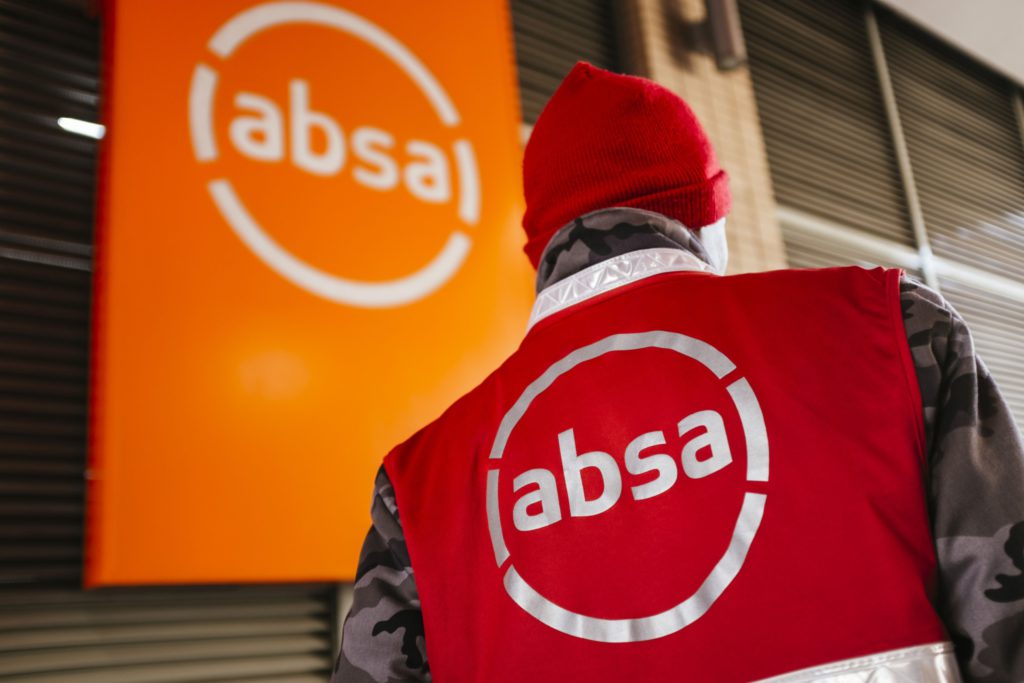
(Bloomberg) — The U.S. Treasury Department imposed sanctions on crypto mining company BitRiver, targeting one of the industry’s largest data-center service providers over its operations in Russia in its first such action.

The Switzerland-based firm offers energy sources, mining facilities and large-scale management solutions to Bitcoin miners across the world, including those in Eastern European and Russia. Such regions have been among one of the most popular destinations besides North America for miners that were forced out of China due to Beijing’s crypto mining ban last May. 

Treasury’s action comes just a day after the International Monetary Fund warned in a report that cryptocurrency mining could offer a pathway for countries, like Russia and Iran, to bypass sanctions by putting natural resources they are unable to export toward energy-intensive mining operations, such as Bitcoin mining.

Treasury echoed those concerns Wednesday in a news release announcing the restrictions on BitRiver, including 10 of its Russia-based subsidiaries, as the war in Ukraine enters a third month. 

“By operating vast server farms that sell virtual currency mining capacity internationally, these companies help Russia monetize its natural resources,” the department said. “However, mining companies rely on imported computer equipment and fiat payments, which makes them vulnerable to sanctions.”

Last year Bitcoin mining generated an average of about $1.4 billion in revenue per month, of which about 11% might have gone to Russian miners, according to the IMF.

BitRiver has not responded to a request for comment from Bloomberg. 

More stories like this are available on bloomberg.com

©2022 Bloomberg L.P.

Shopify Is in Talks to Buy Tech Startup Deliverr

(Bloomberg) — Shopify Inc. is in talks to buy technology startup Deliverr, according to people familiar with the matter, a move that would help the Canadian e-commerce company expand in fulfillment services. 

A deal could value San Francisco-based Deliverr at more than $2 billion, said the people, who asked to not be identified because the matter isn’t public. No final decision has been made and discussions could fall apart, the people added. 

A representative for Shopify declined to comment while representatives for Deliverr didn’t immediately respond to requests for comment. 

Closely held Deliverr helps merchants on Amazon.com Inc., EBay Inc. and other online marketplaces get products to consumers in two days or less, according to its website. Fast-shipping has become a must-have service for retailers, as the booming online shopping market became increasingly competitive during the pandemic. 

Deliverr uses analysts to predict where people might be interested in buying art supplies, makeup, shampoo and other goods. Then it uses that information to position items in its warehousing network to achieve swift delivery. 

If talks are successful, it would be Shopify’s largest-ever deal, according to data compiled by Bloomberg, and complement the company’s subscription-based software that allows anyone to set up an online store. 

The deal “would be a small step in the right direction, especially as Amazon.com has doubled its logistics network in the past two years,” Bloomberg Intelligence analyst Anurag Rana said in note Wednesday. “Unlike Amazon, Shopify doesn’t own large distribution centers and depends on third-party companies to provide faster shipping to its merchants.”

Shopify, led by Chief Executive Officer Tobi Lutke, soared during the pandemic-driven shopping boom. The stock fell 13% to $527.09 at 3:14 p.m. in New York trading Wednesday, giving the Ottawa-based company a market value of about $67 billion. 

In November, Deliverr raised $250 million in a funding round led by Tiger Global at a valuation of $2 billion, a statement showed. Existing investors including 8VC, Activant, GLP, Brookfield Technology Partners and Coatue also participated. 

(Updates with analyst comment in seventh paragraph.)

More stories like this are available on bloomberg.com

©2022 Bloomberg L.P.
Apple Faces In-Store Labor Drive as Union Amps Up Pressure

(Bloomberg Law) — Workers at an Apple Inc.store in Atlanta plan to become the first in the U.S. to file for a union election Wednesday, setting up a battle between organized labor and a Silicon Valley titan.

The proposed union would include 107 workers at an Apple store in Cumberland Mall in northwest Atlanta. Seventy percent of workers have signed cards of support and plan to file an election petition with the National Labor Relations Board Wednesday afternoon, said Derrick Bowles, a Cumberland Apple store worker and member of the organizing committee.

A successful campaign could establish a foothold for organized labor in Big Tech as a national worker shortage forces employers to reevaluate pay and working conditions. The effort is backed by the Communications Workers of America under a broader campaign to organize tech employees and would be called Apple Workers Union, according to internal materials reviewed by Bloomberg Law.

“Right now, I think, is the right time because we simply see momentum swinging the way of workers,” Bowles said. “As we sat back and re-evaluated, what we realized is that we love being at Apple—and leaving Apple, that’s not something any of us wants to do. But improving it is something we wanted to do.”

Organizers say wages at the store fall below the living wage for Atlanta. Starting pay is about $20 an hour, below the $31-an-hour living wage a single parent with one child needs to live there, according to the Massachusetts Institute of Technology. The union wants to raise base wages to $28 an hour, the minimum it says is needed for a single employee to afford a one-bedroom apartment without being rent burdened. It’s also asking for bigger raises to offset inflation and greater profit sharing to match corporate employees.

An Apple spokesman didn’t comment specifically on the union filing but said the company is “pleased to offer very strong compensation and benefits for full-time and part time employees, including health care, tuition reimbursement, new parental leave, paid family leave, annual stock grants and many other benefits.”

Watching Amazon, Starbucks

The filing comes as another Apple store in New York is seeking to organize under Workers United, the union behind the recent wave of victories at Starbucks Corp. stores across the country. Union leaders hope that a single victory in Atlanta will set off a cascade of wins similar to the first Starbucks that unionized in Buffalo, N.Y., last December, Bowles said.

Although the share of private-sector workers belonging to unions remains near historic lows, labor leaders are bullish after the Starbucks wins and the unexpected victory at an Amazon.com Inc. warehouse on Staten Island, N.Y.

Serious discussions about unionizing at the Atlanta store began after several workers, including Bowles, began following the fight over the Amazon union in Bessemer, Ala. Although the Amazon workers were defeated in the first election, it inspired the Apple workers to step forward.

“Somebody has got to be the first to do something,” Bowles said. “Being first doesn’t matter to us—doing it is what matters to us. And if we have to be first we will be first.”

Microsoft Corp., Apple’s main competitor, remains nonunion, as do most major tech companies. But there have recently been flickers of unrest, with workers at Alphabet Inc., Google’s parent company, launching a worker advocacy group last year, and workers at Activision Blizzard Inc. seeking to form a union before the company is acquired by Microsoft.

The Apple Store Union’s petition would need to be reviewed by the NLRB, which would then hold hearings on the bargaining unit’s size and other key issues. Apple hasn’t said whether it would consider the unusual step of recognizing the workers voluntarily.

—With assistance from Mark Gurman (Bloomberg News)

To contact the reporter on this story: Ian Kullgren in Washington at ikullgren@bloombergindustry.com

To contact the editors responsible for this story: Genevieve Douglas at gdouglas@bloomberglaw.com, Melissa B. Robinson at mrobinson@bloomberglaw.com

(Updated with comment from Apple in sixth paragraph.)

More stories like this are available on bloomberg.com

©2022 Bloomberg L.P.

Apple Supplier Jabil Debuts Green Bond in Clean Energy Push

(Bloomberg) — Jabil Inc. raised $500 million in bonds earmarked for the environment for the first time as its customer Apple Inc. continues to push suppliers to transition into renewable electricity.

The company, which makes iPhone casings, sold green bonds in the U.S. investment-grade market, according to a person with knowledge of the matter. The five-year security yields 1.48 percentage points above Treasuries, after initial discussions of around 1.7 percentage points, said the person, who asked not to be identified as the details are private.

Jabil will use the proceeds from the sale to repay its outstanding $500 million 4.7% senior notes due in September, the person said. It will also use a part of the proceeds for eligible green expenditures. 

The firm intends to finance a variety of projects as well as vehicle electrification, solar, wind and green hydrogen, according to its green financing framework published this month. It has set a 2025 target to reduce its carbon output from operational greenhouse gas emissions by 25% from a fiscal year 2019 baseline.

Big corporations are under pressure to slash carbon emissions from their operations and from their supply chains, known as Scope 3 emissions. They’re also increasingly paying attention to greenhouse gases when choosing suppliers. 

To fund this transition, companies and governments worldwide are rushing to the green bond market. Global issuance of green bonds reached a record $514 billion last year, according to data compiled by Bloomberg. Annual sales could reach between $900 billion and $1 trillion by the end of this year, and as much as $5 trillion by 2025, Climate Bonds Initiative, a London-based organization that sets green-bond standards, estimates.

Read more: ESG Hurdles for Small Firms Prompt Siemens to Launch Loan Fund

Apple plans to transition its entire supply chain to 100% renewable energy by 2030, according to its 2022 environmental progress report. Electricity usage in its supply chain is the single greatest contributor to its carbon emissions, according to the report. The firm’s worldwide corporate operations are already carbon neutral.

While Jabil customers include Apple and Amazon.com Inc., it is also focused on secular growth opportunities in different markets including 5G, electric vehicles, cloud computing and clean energy, CreditSights analysts Jordan Chalfin and Joshua Anokye-Boateng wrote in a note on Wednesday.

BNP Paribas SA, Citigroup Inc., JPMorgan Chase & Co. and Sumitomo Mitsui Financial Group Inc. managed the bond sale, the people said.

(Updates with pricing details)

More stories like this are available on bloomberg.com

©2022 Bloomberg L.P.

Tech’s Endless Growth Machine Sputters as Investors Lose Faith

(Bloomberg) — The belief in everlasting growth that is priced into technology companies’ lofty stock market valuations is increasingly looking more like a myth than reality.

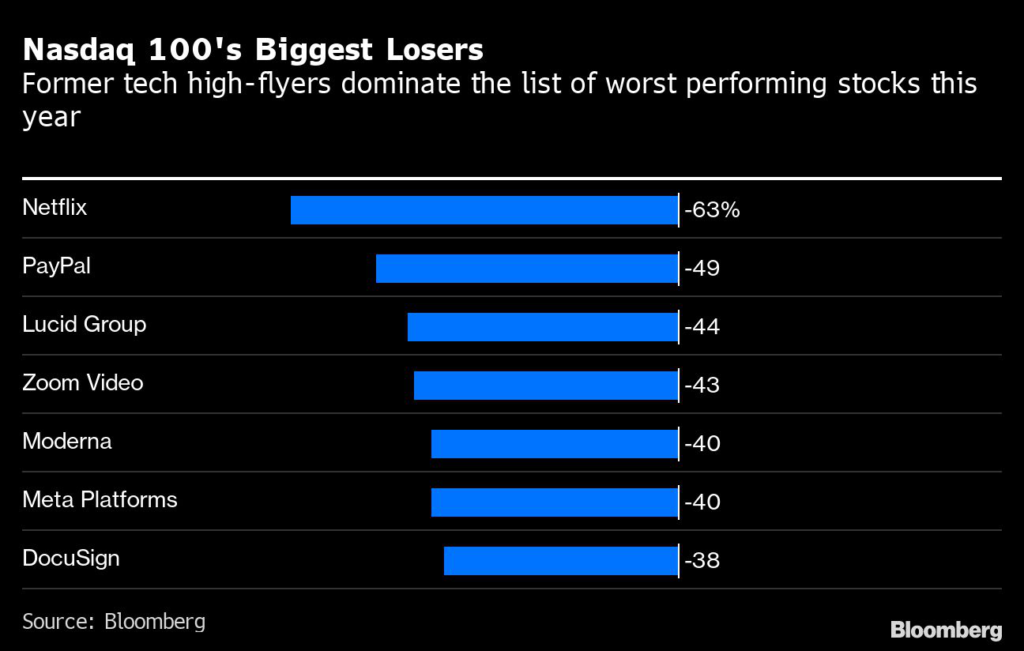
Netflix Inc. helped set off this existential crisis late Tuesday by shocking investors with its first loss of subscribers in more than a decade. A day later, shares of the streaming pioneer are plunging more than 36% and dragging down several media and tech peers as investors question their assumptions. 

Tesla Inc., arguably the ultimate growth stock, reports earnings after the bell on Wednesday, giving investors another opportunity to judge whether these high-flying companies can keep soaring amid rising Treasury yields and booming inflation. The stock is down more than 4.5% and weighing on the S&P 500 and Nasdaq 100 indexes, while options traders increased bearish positions ahead of the results.

“Underlying the high valuations was a strong belief that these companies would continue to see unparalleled growth and that they could all come out winners,” said Dan Suzuki, deputy chief investment officer at Richard Bernstein Advisors. “We have begun to see more and more evidence that call those assumptions into question.” 

Read more: Netflix Shares Plunge 39% After Massive Subscriber Loss

The tech-heavy Nasdaq 100 trades at 32 times trailing earnings compared with 23 for the S&P 500. The index fell as much as 1.6% on Wednesday, after rising earlier this week. 

Wall Street had been growing more optimistic about the tech sector’s ability to deliver bigger profits even as some of the shares slump. The Nasdaq 100 is down 14% since the start of the year, with megacaps such as Microsoft Corp. and Google parent Alphabet Inc. underpforming broad indexes.  

Of course, many investors are undeterred and continue to see companies like Apple Inc. as one of the best places for reliable growth at a reasonable price. The iPhone maker is little changed on Wednesday and has outperformed the S&P 500 this year.

Disposable Bets

Still, Netflix’s flop stoke concerns that earnings season is going to deliver more disappointment for companies like Shopify Inc. that benefited from a pull-forward in demand during the Covid-19 pandemic only to see it fade away. 

The biggest decliners on Wednesday were a who’s who list of former growth darlings. Facebook parent Meta Platforms Inc. suffered its worst drop in more than two months, falling as much as 7.8%. Peloton Interactive Inc. and DocuSign Inc. each declined more than 8%.

Netflix is causing a lot of investors to reassess a lot of long-held assumptions about technology stocks, according Craig Erlam, senior market analyst with Oanda. 

“In a time of households budgets being squeezed, how high up the list are streaming services like Netflix when it comes to cutting back?” he said. “What other tech services are easy to dispose of?”

(Updates Tesla and Netflix stock moves.)

More stories like this are available on bloomberg.com

©2022 Bloomberg L.P.

Close Bitnami banner
Bitnami