
Bloomberg

Netflix Breaks Its Own Rules After Subscriber Losses Batter Shares

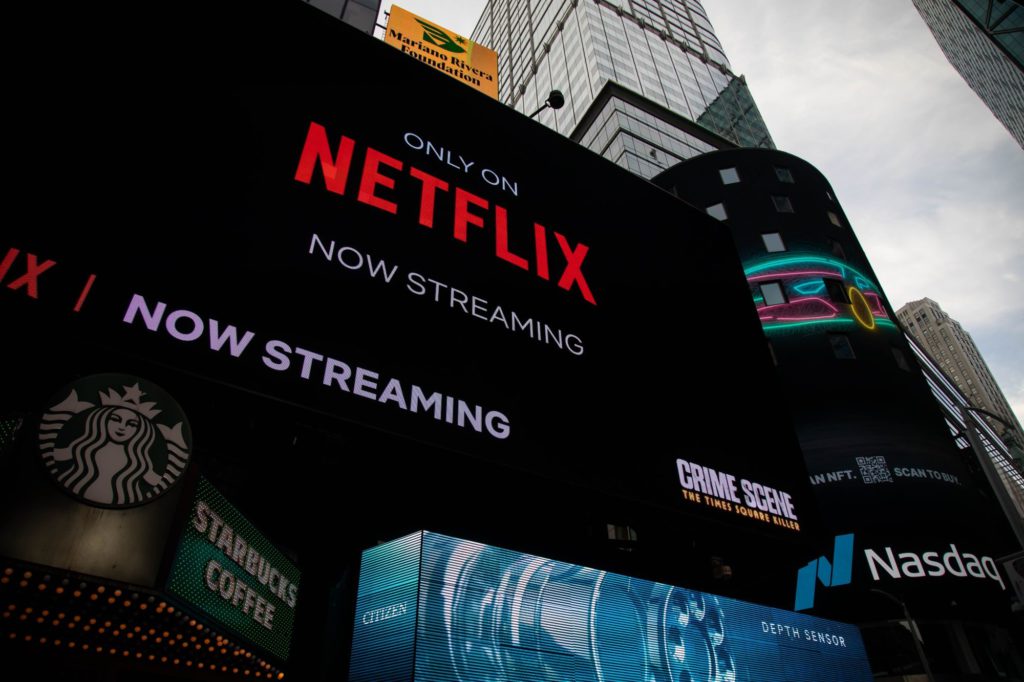
(Bloomberg) — Netflix Inc. is throwing out all of its old rules after losing customers for the first time in a decade, saying it will introduce an advertising-supported option and crack down on people sharing passwords.

The plans are intended to help staunch the loss of subscribers that pummeled the streaming service Wednesday, pushing the stock down as much as 31% in its biggest drop since October 2011. The plunge made Netflix the worst-performing stock of the year on both the benchmark S&P 500 and Nasdaq 100 indexes.

Co-founder Reed Hastings has said for years that he doesn’t want to offer advertising and had no problems with password sharing. But the company is changing course after losing 200,000 customers in the first quarter, the first time it has shed subscribers since 2011. Netflix also projected it will shrink by another 2 million customers in the current second quarter, a huge setback for a company that regularly grew by 25 million subscribers or more a year. Netflix also will curb its spending on films and TV shows in response to the customer losses.

“It’s just shocking,” said analyst Michael Nathanson of MoffettNathanson LLC. “Everything they’ve tried to convince me of over the last five years was given up in one quarter. It’s such an about face.”

Investors, analysts and Hollywood executives had been bracing for the company to report a sluggish start to the year, but Wall Street still expected Netflix to add 2.5 million customers in the first quarter. The shares are already down more than 40% this year.

Hastings and co-Chief Executive Officer Ted Sarandos had previously dismissed the company’s slowing subscriber sign-ups as a speed bump related to the pandemic, which had accelerated Netflix’s growth in 2020. But the company’s growth hasn’t returned to pre-pandemic levels.

Four Causes

Management pointed to four causes, including the prevalence of password sharing and growing competition. The company said there are more than 100 million households that use its service and don’t pay for it, on top of its 221.6 million subscribers. The Los Gatos, California-based company is experimenting with ways to sign up those viewers, such as asking people who are sharing someone else’s account to pay more.

“It allows us to bring in revenue for everyone who is viewing for gets value from entertainment we’re offering,” Chief Operating Officer Greg Peters said during an interview with analyst Doug Anmuth of JPMorgan Chase & Co.

Netflix’s troubles are a warning sign for its peers and competitors. After watching millions of customers abandon pay TV for streaming, U.S. entertainment giants merged and restructured to compete with Netflix. Investors encouraged this strategic shift, boosting shares of companies like Walt Disney Co. that demonstrated a commitment to streaming.

Investors have begun to question whether some of these media companies will sign up enough customers to justify all the money they are spending on fresh programming. Disney fell as much as 5.2% in extended trading after Netflix reported its outlook, while Warner Bros. Discovery Inc., the owner of HBO Max, declined as much as 2.8%. Shares of Roku Inc., the maker of set-top boxes for streaming, dropped as much as 8.3%.

All of these competitors offer advertising-supported services, or are planning to do so in the near future. Analysts and competitors have speculated that Netflix would offer advertising for years, only to be rejected by Hastings. Netflix always said its viewers preferred its service over cable TV because there were no ads. Hastings also didn’t want to compete with Google and Facebook in selling ads online. Yet he has finally relented.

‘Makes Sense’

“Allowing consumers who would like to have lower price and are ad tolerant makes a lot of sense,” Hastings said Tuesday. Netflix will explore the best way to offer advertising over the next couple of years.

Cracking down on password sharing is a risk for a company that started by giving customers a cheaper, more convenient alternative to cable. By nudging customers to pay — and inserting advertising — Netflix begins to resemble what it replaced.

But the company needs help after losing customers in three of its four regions in the first quarter, including more than 600,000 in the U.S. and Canada. Netflix blamed most of that on a price increase, and said the decline was expected. Russia’s invasion of Ukraine cost the company another 700,000 customers when it had to pull its service in Russia, resulting in a loss of 300,000 customers in the Europe, Middle East and Africa.

Overall, Netflix had forecast subscribers would grow by 2.5 million in the first quarter, roughly in line with Wall Street estimates. For the current period, analysts were predicting gains of 2.43 million. First-quarter revenue grew 9.8% to $7.87 billion, missing analysts’ estimates. Profit, at $3.53 a share, easily topped projections of $2.91.

No Explanation

“They were never able to explain why or how growth was slowing,” Nathanson said. “Now they’ve decided growth is slowing. How did this change in two quarters?”

Asia was the lone bright spot. Netflix added more than 1 million customers in the region, buoyed by popular new titles such as the South Korean drama “All of Us Are Dead.”

Read more: ‘Squid Game’ Helps Makes Asia Lone Bright Spot for Netflix

Netflix remains well ahead of most of its competitors outside the U.S., and is the largest streaming service in the world. The company believes it can execute its way out of the current predicament by luring new customers with better programs and finding more ways to charge its existing user base. The company still expects to add customers this year, and will have a stronger slate of new shows in the back half of the year.

Whether Wall Street believes that is up for debate.

(Updates with intraday trading in second paragraph.)

More stories like this are available on bloomberg.com

©2022 Bloomberg L.P.
Sequoia, Prosus Back Saudi Food Startup Raising $170 Million

(Bloomberg) — Sequoia Capital India and Prosus NV have backed a $170 million funding round for Saudi Arabian food and beverage technology startup Foodics, as global investors increasingly seek to back fast-growing firms in the Middle East.

Riyadh-based Foodics will use the proceeds to boost its services and expand into new countries, Chief Executive Officer Ahmad Al Zaini said in an interview. The company is also looking at potentially acquiring rivals to help it grow and will expand into fintech after receiving a license from the Saudi central bank, he said.

Sanabil, wholly-owned by Saudi Arabia’s sovereign wealth fund and focused on start-up investing, co-led the fundraising with Prosus. STV, a $500 million Saudi venture fund, also participated in the deal.

The funds will also help Foodics explore “merger and acquisition opportunities around the region,” Al Zaini said, declining to comment on the company’s valuation. 

Sequoia made its first investment in Saudi Arabia in January, leading a funding round for Lean Technologies. It has been deepening its presence in the Middle East after recently backing companies from Turkey to Egypt. The venture capital firm is among the global investors eager to seize on the spread of financial technology and e-commerce in the region as local economies emerge from the pandemic. 

Foodics, which offers restaurant management software, digital payments and micro-loans, last raised $20 million from investors in early 2021. The firm probably has enough funding to keep it going for the next two to three years, and would consider an initial public offering after that time, Al Zaini said.

(Adds that fundraising was co-led by Sanabil and Prosus in third paragraph.)

More stories like this are available on bloomberg.com

©2022 Bloomberg L.P.

Amazon Europe Unit Paid No Taxes on $55 Billion Sales in 2021

(Bloomberg) — Amazon.com Inc.’s main European retail business reported 1.16 billion euros ($1.26 billion) of losses in 2021, which allowed the company to pay no income tax and receive 1 billion euros in tax credits, corporate filings seen by Bloomberg show.

The Luxembourg-based business recorded sales of 51.3 billion euros last year, up 17% from 43.8 billion euros in 2020. The unit, called Amazon EU Sarl, includes revenue generated by its e-commerce activities in the U.K, Germany, France, Italy, Spain, Poland, Sweden and the Netherlands.

Amazon has been a target of European regulators over its tax arrangements. The Seattle-based company won an appeal on a 250 million-euro ($280 million) tax bill imposed after regulators said agreements with Luxembourg dating back to 2003 amounted to illegal state aid. Last year, the European Commission appealed in the European Court of Justice.

An Amazon spokesperson said the company is subject to taxes in all its European branches, and that revenues, profits and taxes are recorded and reported directly to local tax authorities in those countries. 

The filings provide a rare regional breakdown into Amazon’s finances. Over 2021 the group posted in global income of $33.36 billion, up from $21.3 billion the year previous. However the company does not break out income and sales from e-commerce in every country in its financial reports.

“Across Europe, we pay corporate tax amounting to hundreds of millions of euros,” an Amazon spokesperson said. In the filings, a note states that the 1 billion net tax benefit is “mainly due to the use of net losses carried forward in accordance with the tax consolidation system.” 

Since 2013, the European Commission’s state-aid investigators have tried to unearth what they deem to be the most problematic examples of otherwise legal individual tax agreements — or tax rulings — doled out to companies. 

Amazon’s Luxembourg-headquartered company had 6,899 employees at the end of last year according to the document. The unit recorded 37 billion euros of “raw materials and consumables” and 15 billion of “external charges,” which resulted in the annual loss.

“We are investing heavily in creating jobs and infrastructure across Europe – more than 100 billion euros since 2010”, an Amazon representative said. “Corporation tax is based on profits, not revenues, and last year Amazon EU Sarl made a loss as we opened more than 50 new sites across Europe and created over 65,000 well-paid jobs, taking our total European permanent workforce to over 200,000”, the spokesperson added.

More stories like this are available on bloomberg.com

©2022 Bloomberg L.P.
Citigroup Is Bullish on Amazon and Airbnb Even as Rate Fears Cloud Tech

(Bloomberg) — Citigroup Inc. analysts say the U.S. internet sector is healthy, naming Amazon.com Inc. and Airbnb Inc. among their top stock picks, despite the pressure on technology valuations from the surge in bond yields.

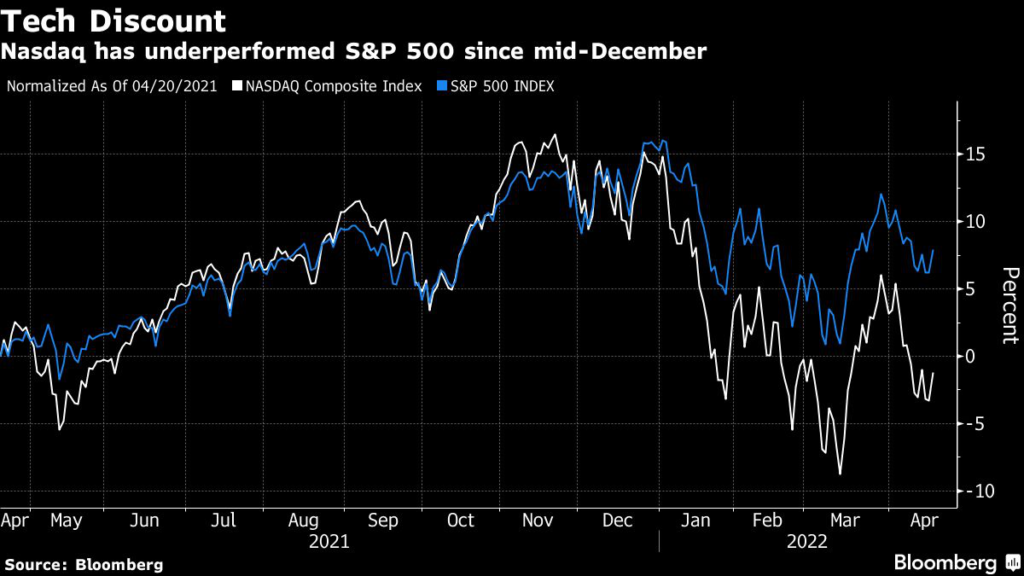
The call comes as the Nasdaq 100 Index is off to a stuttering start in 2022, with growth stocks like Netflix Inc. spiraling as the short-term boom from the pandemic fades. Investors have pulled back from tech stocks because of higher interest rates, sky-high valuations and mounting concern about an economic slowdown.

“Should a (mild) recession occur we believe its impacts are likely to be manageable,” analyst Ronald Josey wrote in a note, naming DoorDash Inc. and Snap Inc. as the firm’s other favorites in the sector. “The broader sector is healthy as consumer engagement online continues to be more immersive and grow.” 

What’s more, an online survey by Citi in the U.S. showed that people are more online than ever, the analyst wrote. The findings include a 67%-plus jump in social media usage from pre-pandemic levels and 43% of responders are still using food delivery at least once a week.

Airbnb should benefit from the ongoing recovery in travel demand, while Amazon is “best positioned” in e-commerce, online advertising and cloud, Citi added.

In the internet deep-dive note, Citi also gave Peloton Interactive Inc. a buy rating and called it its “most controversial pick.” It said the user experience is difficult to recreate and that the recent price reductions should prove appealing.

More stories like this are available on bloomberg.com

©2022 Bloomberg L.P.
Elon Musk’s Twitter Gambit Tees Up a Who’s In-or-Out White Knight List

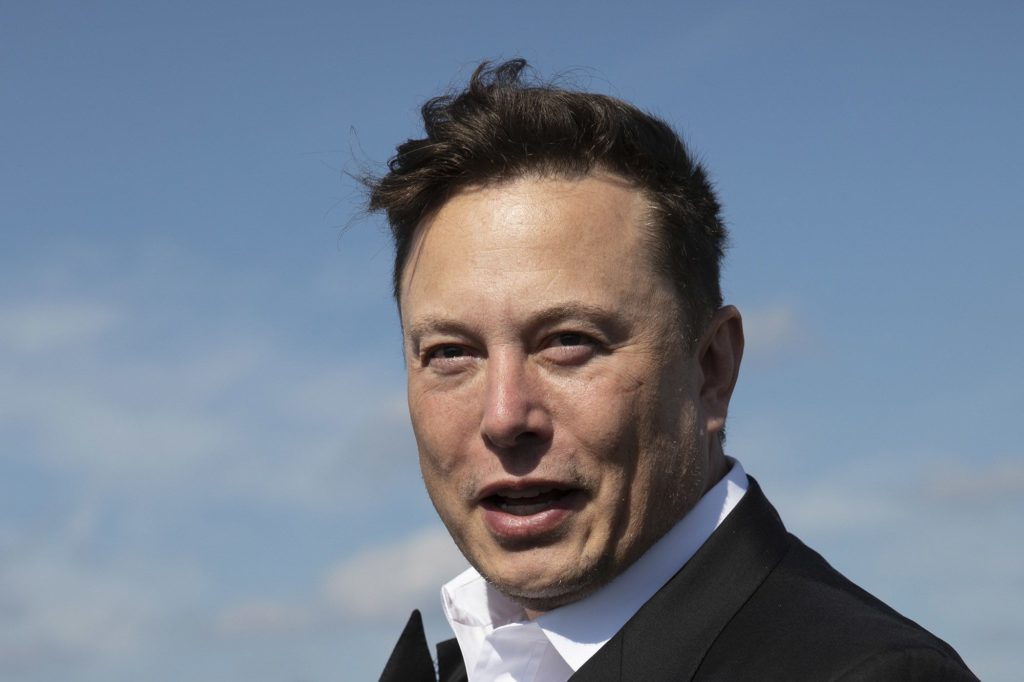
(Bloomberg) — Twitter Inc., which is trying to defend itself against Elon Musk’s $43 billion takeover bid, has a poison pill in place, so the next obvious move on the hostile M&A to-do list is likely already being contemplated: a white knight. 

White knights ride in as rival buyers to save companies pursued by unwelcome suitors, often sparking a bidding war that benefits the target’s shareholders no matter who wins. Let’s game out which of the potential bidders now lighting up Twitter feeds may or may not come to the company’s rescue, including some wild cards.

Who’s Out

Alternative asset manager giant Apollo Global Management Inc. is interested in helping finance a bid for Twitter, likely through its credit arm. It owns internet sites Yahoo and AOL, but it has ruled out a full-on takeover of Twitter. 

The Walt Disney Co. once considered buying Twitter when Bob Iger was chief executive officer but backed off over content concerns. It has too much on its plate already with challenges in growing its streaming business and the war going on with Florida politicians.

JPMorgan Chase & Co., the world’s largest bank, is conflicted out of working for Musk (notwithstanding its lawsuit against Tesla), since its tech bankers are advising Twitter.

Facebook parent Meta Platforms Inc. is the least likely of tech’s big four to even consider taking part in a Twitter deal. As it is, lawmakers by the score already accuse it of using acquisitions to thwart competitors and want to break it up. Twitter would only give Facebook more control over social media, where it’s by far the biggest player.

With a board seat on Twitter, Silver Lake Management LLC — for now — would have a conflict of interest if it tried to buy the company outright. The technology-focused private equity firm also has a standstill agreement as part of a settlement with Twitter, so it couldn’t start buying up shares without ending that accord.

Who’s Unlikely

Alphabet Inc.’s Google kicked the tires on Twitter in 2016 (and reportedly before then) as a resource for improving its search offerings and advertising business. But Google’s shifting business priorities have put its M&A focus on beefing up its third-place cloud business and new areas such as wearable tech. Regulators would probably look askance at any deal increasing its share of the digital ad market it already dominates.

Apple Inc., despite its cash pile, has an aversion to big deals and a lack of interest in social media, plus ongoing tussles with regulators. Apple’s largest purchase remains its $3 billion Beats takeover. After a handful of failed attempts over the years to gain a foothold in social media, Apple no longer sees it as a major area of interest. What’s more, Apple is in the cross hairs of lawmakers and regulators over its dominance of the app economy and would probably face opposition to any deal giving it sway over one of the most popular mobile apps.

Microsoft Corp. famously missed out on the rise of the consumer web and has tried — and largely failed — to build a beachhead in social media in recent years. The business software giant was one of the companies that tried to buy TikTok in 2020, and that didn’t go well. Now in the midst of its $69 billion Activision Blizzard Inc. acquisition, Microsoft might not have the taste for a multibillion-dollar fight over Twitter.

Salesforce Inc. CEO Marc Benioff tried to buy Twitter in 2016 but backed off after investors balked and management concluded it was a poor strategic fit. He now shares the helm of the enterprise software company with co-CEO Bret Taylor, who’s also Twitter’s chairman. Even so, there’s little reason to expect Salesforce to make another run at Twitter — especially now that it owns Slack, a kind of social network — this one for businesses.

Who’s Plausible

Amazon.com Inc. CEO Andy Jassy last week said “it sounds like somebody else is going to own Twitter” when asked on CNBC. Still, cash-rich Amazon has dabbled in social media; it acquired and then shut down social media startup PlanetAll in the 1990s, and has experimented in social shopping. While Amazon has steered clear of the industry more recently and has powerful opponents in regulatory circles, co-founder Jeff Bezos has an appetite. He bought the Washington Post with his personal fortune to run separately from Amazon. Is there a way he could swoop in to snatch Twitter away from Musk? Amazon has been doing bigger and bigger acquisitions lately, like MGM, which closed this year. It might be game to see how many deals it could squeeze by regulators in Washington. Plus, Amazon doesn’t have much overlap with Twitter.

Activist investor Elliott Investment Management is still on Twitter’s shareholder roster. The hedge fund has deep pockets, likes big messy situations and knows the company well from having a board seat for a few years. It has also been buying tech companies, such as its pending deal for Citrix Systems.

Oracle Corp., as part of a consortium that included Walmart Inc., also tried to get a piece of TikTok in 2020 as a way to generate business for its cloud computing business. But like Microsoft, Oracle is in the midst of a major acquisition; it agreed to buy Cerner for $28.3 billion last year and has yet to clear all the regulatory hurdles. Another consideration: co-founder Larry Ellison is close to Musk, with a big stake in Tesla and a seat on its board.

PayPal Holdings Inc. surprised investors by considering acquiring social media company Pinterest Inc. last year. It’s been on the prowl for acquisitions to diversity itself. Could it look at buying Twitter and introduce a buying platform turning the site into a community where people shop?

More stories like this are available on bloomberg.com

©2022 Bloomberg L.P.

Ukraine Ramps Up Cyber Defenses to Slow Surge in Attacks

(Bloomberg) —

With air raid sirens, bombings and occasional dislocations disrupting their lives, the stressed-out Ukrainians keeping the country’s critical infrastructure running are dealing with yet another hazard: a sharp rise in cyberattacks.

To deal with the threat, Ukrainian authorities on April 5 certified government use of physical security keys, which are small portable devices that give an additional layer of security. 

Ukraine is now issuing the keys to as many government agencies as possible, said Oleksandr Potii, deputy chief of the State Service of Special Communication and Information Protection. The government wants to “to push phishing proof, password-less authentication solutions in Ukraine,” he said. 

They’ve received some help from Yubico Inc., a Palo Alto, California-based company that said it has donated 20,000 “Yubikeys,” and Hideez Group, a Herndon, Virginia-based cybersecurity company that operates in Ukraine and is aiding with the logistics.


The assistance has come none too soon. Ukrainian workers at one state-owned company in the critical infrastructure sector are so stressed by war that many are forgetting their passwords and changing them to weak, easy-to-remember, versions, according to the company’s head of cybersecurity. Attackers are also automating password attempts twice an hour to avoid triggering security shutdowns, and using old lists of leaked passwords and other techniques to harangue staff, the official said.

A western intelligence official told Bloomberg News it was much easier for hackers to go after people who run essential services than the equipment that underpins it such as substations, telecommunication switches and others. Engendering a stress response from their human targets is essential to the hackers’ to success, the official added, describing phishing as a personal attack rather than a technical one. 

“It’s about putting somebody into a heightened psychological state, so that they don’t think rationally,” said the official, explaining that even those trained not to click suspicious links that characterize phishing emails can make mistakes under duress. 

Security keys are a method of additional authentication that rely on public-key cryptography, verifying a user’s identity by checking information stored on a chip against online servers. They are less susceptible to compromise than usernames and passwords, which can be guessed by bots or stolen and sold on dark web forums.

Google, which also offers its own security keys, encourages their use for individuals and organizations at higher risk of targeted online attacks, such as elected officials, political campaigns, activists and journalists.

The keys aren’t without drawbacks, which include cost and the risk of losing them, cybersecurity experts said. Yubico’s donation of 20,000 keys has a retail value of $1 million, as YubiKey devices cost roughly $50 apiece. (Other technology companies, including Microsoft Corp. and Alphabet Inc.’s Google, have provided services to help with Ukraine’s cyber defense).

In order to get security keys into the hands of employees, the Ukrainian government sped up what is normally a six-month certification process for the introduction of new government-wide cyber tools to just a few weeks.

Ukraine’s government said last week that the country has suffered three times as many cyberattacks in the first month and a half of the war than during the same period last year. There have been 786,000 attempted hacks against the state-owned company since the start of the war, compared to 22,000 in all of 2021, according to the company’s cybersecurity head, who requested anonymity due to security concerns.

Ukrainian state-owned companies, military and intelligence services are among the beneficiaries of the effort, with about 10,000 keys distributed so far, said Oleg Naumenko, chief executive officer and founder of Hideez. 

Naumenko, who founded Hideez in 2017 after he said his bank account was drained of funds, has previously distributed 10,000 security keys produced by his own company throughout Ukraine. But he said at the time the war started, on Feb. 24, he had none left in his warehouse. He fled Kyiv after hiding in underground parking for the first six days of the war with his wife, teenage daughter and cat.

His company turned to Yubico for help. Within hours of receiving the request on March 4, Stina Ehrensvärd, chief executive officer and co-founder of Yubico, authorized the donation of 20,000 “YubiKeys” to the Ukrainian government.

“They are under an attack in both the physical and digital world,” said Ehrensvärd. “The reality is in a war, you have to log into a lot of stuff.”

Still, distributing the keys during a bloody and unpredictable conflict has proven difficult.

Yuriy Ackermann, a Ukrainian who lives abroad and specializes in authentication, joined Hideez as a volunteer after Russia’s invasion. He doesn’t get paid but he did get a title: vice president for war efforts. He said they are relying on a patchwork of government mail services, private trusted drivers “and even friends just driving around” to distribute the keys. 

Naumenko said it was impossible to deliver keys to some regions in Ukraine due to the conflict. “Now the main need is with electricity suppliers and military agencies,” he said, adding he assessed Ukraine’s need at more than 100,000 keys.

More stories like this are available on bloomberg.com

©2022 Bloomberg L.P.
BMW’s New Flagship EV Has a Private Screening Room in the Back Seat

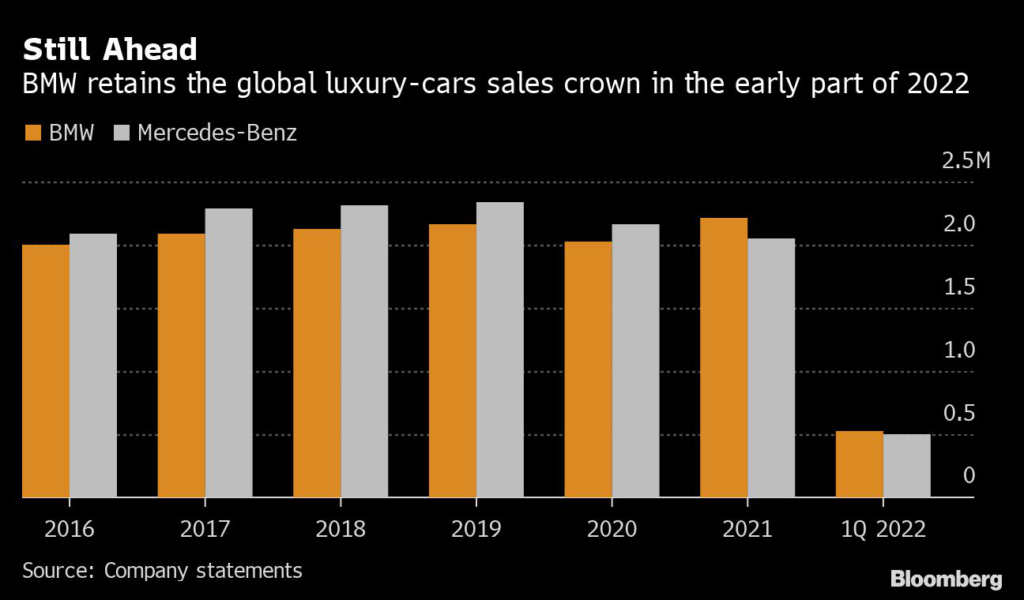
(Bloomberg) — BMW AG long tried to bill its flagship 7 Series sedan as the more fun-to-drive alternative to similar offerings from Mercedes-Benz AG. As the rivalry goes electric, the German manufacturer is trying to also win over people sitting in the back.

The i7 unveiled Wednesday boasts a luxurious interior that includes a flatscreen lowering from the ceiling to entertain passengers in the rear. They also get more legroom because BMW made the car longer and wider. The company plans to deliver the model, which starts at 135,900 euros ($147,384) and offers 625 kilometers (388 miles) of range, to customers from November.

“It’s bigger than before, it has the most exhilarating entertainment you’ll see in any luxury car,” Chief Executive Officer Oliver Zipse said. “It’s the greatest offer BMW has ever made to the rear-seat compartment.”

But BMW is already behind in the luxury EV race, especially when it comes to range and availability. Mercedes a year ago unveiled its EQS flagship sedan, which boasts a range of more than 700 kilometers. Tesla Inc. is selling a high-performance version of its Model S that beats the i7 on range and acceleration. Lucid Motors Inc. has already delivered several hundred of its electric Air sedans and plans to ship an updated version starting in June.

To catch up, BMW is pursuing a different technology strategy than most of its rivals. While Mercedes, Lucid and Tesla build their vehicles on dedicated underpinnings, the i7 is made using the same architecture as its fossil fuel-powered sibling.

Zipse rejected the idea that BMW’s strategy puts it at a disadvantage. It instead hands the company greater flexibility to cater to shifting EV demands in different regions, he told reporters in New York last week.

“We don’t have to copy what others do,” he said. “We have the size, the capital strength, the innovation capabilities to be a great system integrator.”

Driver’s Car

BMW still touts the car as a model that’s fun to drive. Its engineers have reduced the number of physical buttons, added a curved digital screen around the driver’s seat and updated software to assist with lane keeping and automatic parking. The base i7 accelerates from zero to 100 kilometers per hour in 4.7 seconds — that’s slightly slower than the comparable EQS, and well behind the Model S.

Some analysts have questioned whether the i7 can compete with its rivals because of the carmaker’s platform approach. Others are pointing to BMW’s successes with its iX SUV and i4 coupe introduced last fall, the latter of which also is derived from a combustion-engine platform.

“That doesn’t have to be a disadvantage,” said Bankhaus Metzler analyst Juergen Pieper. “It’s not a given that Mercedes can stay ahead of BMW in the electric age.”

More stories like this are available on bloomberg.com

©2022 Bloomberg L.P.
U.K. Crypto Regulators Turn to Fintech Playbook for Inspiration

(Bloomberg) —

Britain’s prior approach to regulating financial technology has been held up as the de-facto bar, industry executives told Bloomberg – but on crypto, its more risk-averse outlook has stymied the sector’s growth. 

The Financial Conduct Authority and the Bank of England have issued multiple consumer warnings about investing in crypto since token prices picked up in 2020, while efforts to assess the underlying blockchain technology’s suitability for updating traditional market infrastructures only began in earnest last year. Only 34 crypto firms surpassed the FCA’s bar for registration under anti-money laundering rules, with more than 100 companies left in limbo.

“There was the perception that the U.K. wasn’t welcoming because the registration process was so challenging,” said Huong Hauduc, general counsel at Maltese-regulated crypto exchange Bequant, which holds a limited presence in London. However, she said the Treasury’s pledge to ask the Law Commission to evaluate the legal status of decentralized autonomous organizations (DAOs) was a step in the right direction. 

Adam Jackson, policy director at Innovate Finance, said the fintech industry body was “seriously concerned” that there may soon be a period of time where crypto firms cannot get their marketing promotions authorized while they remain outside of the U.K.’s regulatory perimeter. Some of the U.K.’s largest crypto businesses have moved key parts of their operations offshore to hotspots in the U.S., Croatia and Switzerland, causing concern that regulators’ ability to monitor the sector effectively is diminishing.

The Treasury launched a first look at its strategy to be a “global hub” for crypto this month, promising to bring stablecoins — digital tokens tied to the value of fiat currency — into existing e-money payments legislation, while the FCA said it would draft a new set of regulations for the sector. A separate government consultation to regulate other types of cryptoassets will follow, alongside a nonfungible token issued by the Royal Mint. 

The U.K.’s e-money regime has allowed fintech companies to prosper, providing a path for startups to garner millions in early customers so long as their funds were safeguarded by a fully-licensed bank. This is how many of the country’s top firms like Monzo Bank Ltd. and Revolut Ltd. got an early start, and now the Treasury intends to bring stablecoin issuers under that same umbrella.

“When the Treasury comes out with a proposal that digital assets is going to be important for the future of the country, it’s very hard to classify it as not a positive move,” said Dmitry Tokarev, chief executive of crypto custodian Copper, which remains in dialog with the FCA regarding its own registration. 

“Timing is everything, and the whole sector agrees that it was a bit mushed,” he said. Blockchain should be considered part of fintech, Tokarev added, rather than separating the two concepts. “Those things should not be segregated. There’s very much interdependence.”

The U.K.’s Economic Secretary to the Treasury John Glen, who has taken the lead on the new strategy to date, said in an interview that there remains a challenge for crypto firms to overcome in seeking “to enter a world of high-quality regulation in the U.K.”.

“I’m always having to balance and think about the relationship between consumer protection, systemic stability and enabling innovation,” Glen said. “For some people it won’t go fast enough, but for others it will mean clarity.”

Funding

Clear policies that prioritized innovation and competition helped make the U.K. second only to the U.S. globally as a fintech hub – with the sector in Britain taking in more than $14 billion in venture capital funding last year, according to PitchBook data. By contrast, “the regulation and the direction of travel on crypto hasn’t kept up with what the market is and what the market demands, and that is the disappointing part,” said Julian Sawyer, chief executive of crypto exchange Bitstamp and a co-founder of Starling Bank, a top U.K. fintech firm.

“It’s fair to say that how the FCA approached fintech was really about how do you try and maximize innovation that’s in the interest of consumers,” added Christopher Woolard, a former executive director for strategy at the FCA and now a partner at EY. “What you can observe playing out over the last couple of years is regulators in the U.K. and other jurisdictions thinking about are they regulating out or are they regulating in. What the Treasury has said is, ‘Okay, here’s a pathway’.”

The FCA did not respond to multiple requests for comment.

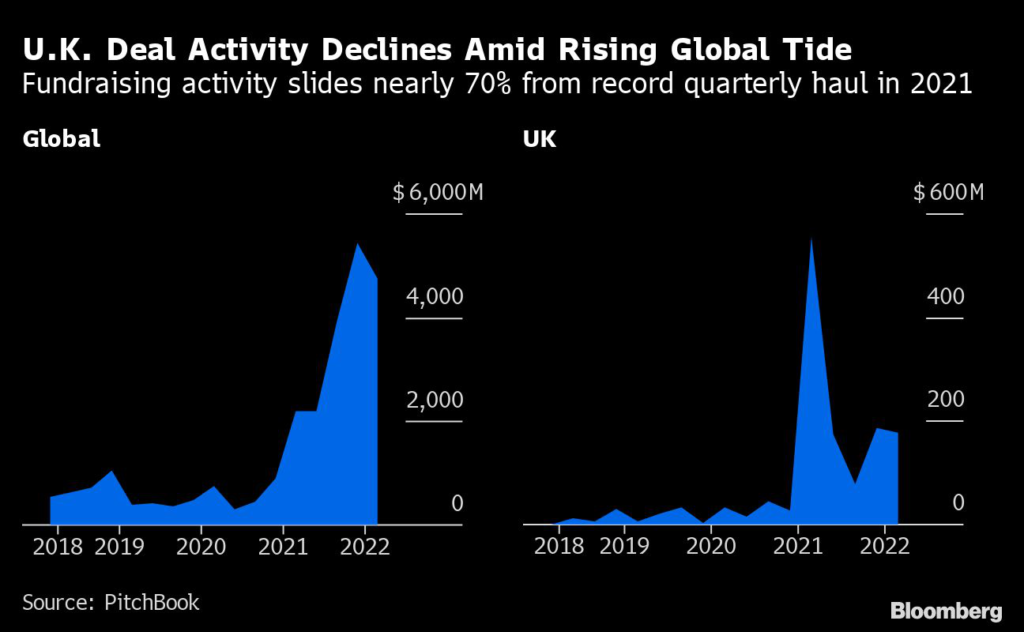
The flow of venture capital cash invested in London’s digital asset businesses trended in the opposite direction to global behavior as the U.K.’s regulatory mood music shifted. Data collated by PitchBook show crypto companies in the U.K. capital recorded $176.3 million in VC deals in 2022’s first quarter — falling almost 70% compared to the same quarter a year earlier — while global deals more than doubled to $4.7 billion.

“It’s hard to change the culture in a large organization overnight, but that’s probably what we need to do at the FCA,” said Ian Taylor, head of industry trade association CryptoUK. “It’s just at this point a bit of lip service. It’s going to take a while to turn that around.”

Seized Opportunity

Some executives said the U.K.’s focus on stablecoin regulation indicated a willingness to get ahead of international rivals, seeking out somewhere it could lead other rulemakers who have stayed quiet on specific proposals for fiat-pegged tokens to date. Mikkel Morch, executive director at cryptocurrency hedge fund ARK36, said crypto had become a site of power dynamics for geopolitics in the wake of Brexit.

“What we’re seeing here is really a very well-timed response to stand out,” said Morch, noting that turmoil surrounding the U.K.’s exit from the European Union could provide officials with a prime opportunity to get ahead of the bloc. 

Glen, however, dismissed that suggestion, adding: “We do not seek to diverge for the sake of it.”

More stories like this are available on bloomberg.com

©2022 Bloomberg L.P.

Swedish Fund Norrsken22 Poised for Second Africa Startup Foray

(Bloomberg) — Norrsken22, an Africa-focused fund started by Swedish tech startup founders and bosses, expects to raise $200 million or more this year and may make its second investment this month.

The venture is looking to take advantage of the continent’s fast-growing startup sector, which raised a record $5 billion in 2021, according to Lexi Novitske, a general partner with Norrsken22. That will happen as firms develop outside major hubs and expand into French-speaking parts of Africa, she said. 

“We are just starting to see the very early successes come through and those successes are creating a whole wave of companies,” Novitske said in an interview. “We raised $110 million and our target is $200 million. We may go beyond that target because it feels like we have quite a bit of momentum and demand.”

Norrsken22 is a joint initiative between Hans Otterling, a partner at Northzone Ventures, and Niklas Adalberth’s Norrsken Foundation. Its aim is to support companies seeking to scale up rather than provide early-stage capital. Among backers are 30 founders of so-called unicorns, companies that have achieved a pre-market valuation of at least $1 billion.

Norrsken22’s first investment was through a $20 million funding round in Sabi, a Nigerian startup that uses an online platform to connect informal traders with suppliers. The company is planning a further $125 million fund raise in September and the Swedish group plans to participate.

Investment in a second company will likely follow this month, Novitske said.

“Although we are very much pan-African, Nigeria, Kenya and South Africa” are the main hubs, she said. “The second deal actually has a large customer base in every one of those target markets. 

She declined to identify the target company.

Norrsken22 plans to primarily focus on fintech and online platforms that help markets operate more efficiently with some focus on medical and education startups, Novitske said. Future interests may be in so-called neo banking, a reference to wholly online banking services, and pan-African transfer companies. 


More stories like this are available on bloomberg.com

©2022 Bloomberg L.P.

Ex-Morgan Stanley Banker’s Muslim Dating App Loses Match Fight

(Bloomberg) — Muslim-only dating app Muzmatch Ltd. lost a trademark fight with Match Group Inc., with a London judge ruling it infringed Match’s copyright with the use of its name.

Lawyers for Match Group, which owns Tinder and Hinge as well as Match.com, accused Muzmatch at a court hearing in January of “free riding” on its reputation in order to become a major player in the online dating market. 

A judge agreed, concluding Wednesday that Muzmatch’s various brands and logos were “misrepresentations” and could lead people to assume that the app was connected with Match Group’s products. 

“Muzmatch was, in effect, taking some of the benefit of that reputation and of that investment and was doing so without paying for it,” Judge Nicholas Caddick said in a written ruling. Muzmatch now risks losing its name unless it appeals the decision.

Match Group has been in odds with Muzmatch for some time, having successfully challenged Muzmatch’s trademark registrations in the EU and the U.K. since 2016. The group had made several attempts to buy the Muslim dating app between 2017 and 2019, Muzmatch’s lawyers said at the January hearing.

“We have, and will always protect the work, creativity and innovations of our employees, and are grateful that the court recognized this and ruled accordingly,” a spokesperson from Match Group said in a statement.

Muzmatch was set up by Shahzad Younas in 2011 as a side-project from his Morgan Stanley investment banking job to help single Muslims find marriage with a focus on Islamic values. 

“It’s a disappointing result, but I’m most worried about the chilling effect in the tech industry,” Younas said in an email. “What does it say when a multi-billion dollar company can use its weight to stifle competition?” The company said it’s exploring its options for an appeal. 

More stories like this are available on bloomberg.com

©2022 Bloomberg L.P.

Close Bitnami banner
Bitnami