Bloomberg

YouTube Shuts Incoming Hong Kong Leader’s Channel

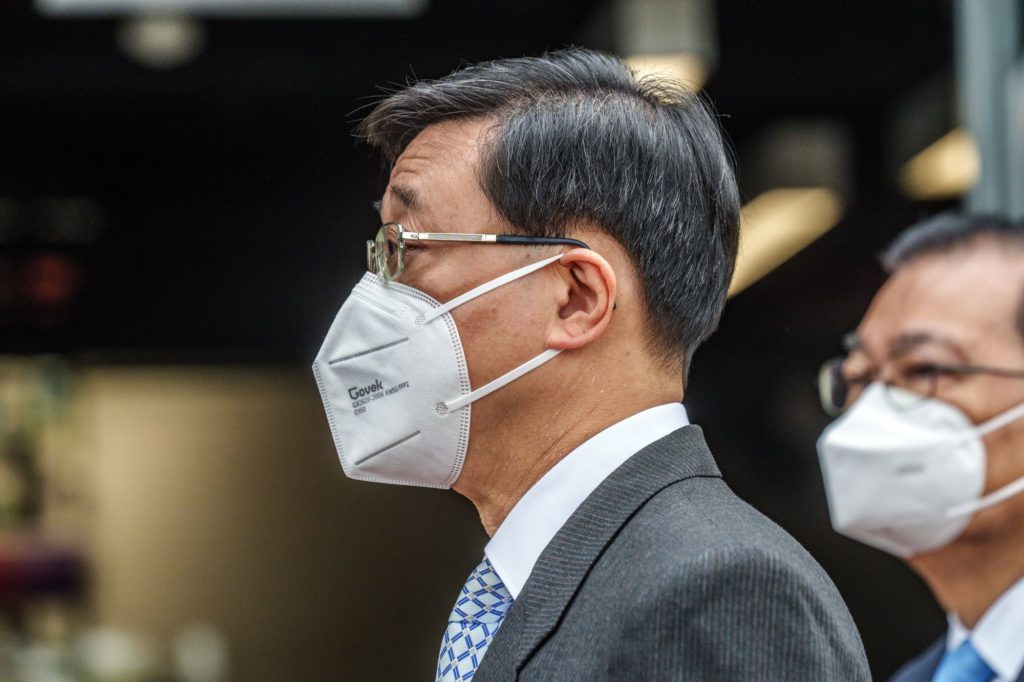
(Bloomberg) — Google’s YouTube terminated the campaign channel of Hong Kong’s sole chief executive candidate John Lee because of U.S. sanctions placed on him.

“Google complies with applicable US sanctions laws and enforces related policies under its Terms of Service. After review and consistent with these policies, we terminated the Johnlee2022 YouTube channel,” a spokesman for the Alphabet Inc. unit said.

YouTube shut down the channel Wednesday, undermining the Beijing-backed candidate’s ability to circulate campaign materials, even though he faces no challenger. Hong Kong’s sole candidate in next month’s chief executive vote already surpassed the threshold of support he needs to win, effectively confirming he’ll become the city’s next leader.

Hong Kong’s John Lee Surpasses Threshold To Win Leadership Race

Lee said last week that he received 786 nominations from the roughly 1,500-member Election Committee that picks the city’s leader. That number is greater than the majority he needs from the committee dominated by Beijing loyalists in the May 8 election.

A former police officer, Lee was a staunch supporter of the China extradition bill that sparked the 2019 protests in Hong Kong and was sanctioned by the U.S. in 2020 for his role in curtailing political freedoms under the national security law.

More stories like this are available on bloomberg.com

©2022 Bloomberg L.P.

Glencore Climate Plan in Spotlight on Concern Over Methane Emissions

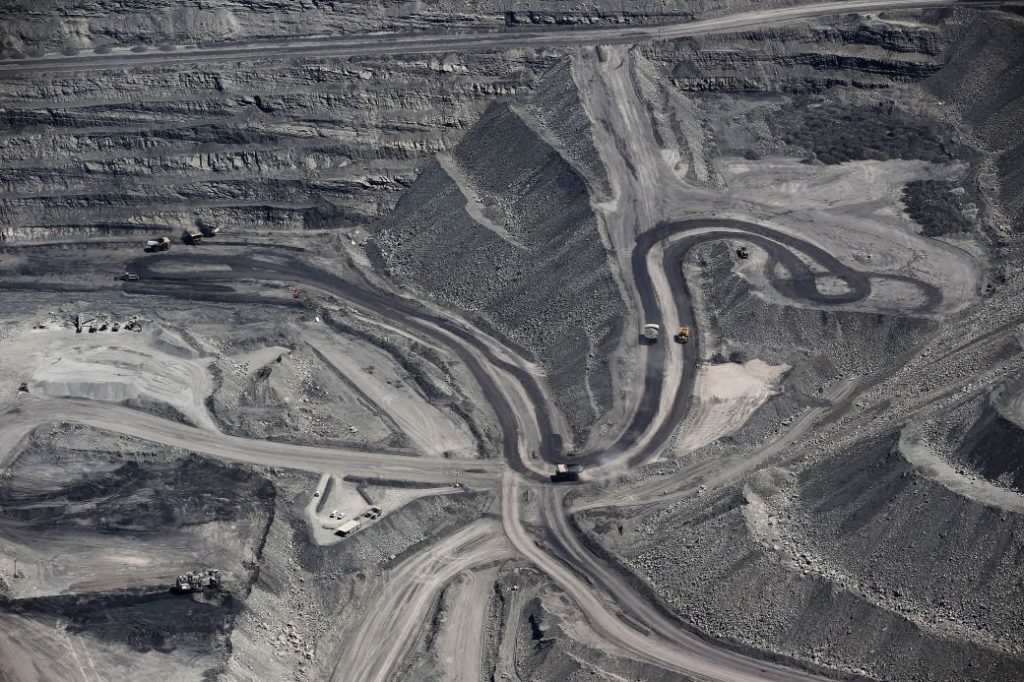
(Bloomberg) — A Glencore Plc climate plan is facing greater scrutiny following a report that the company is understating methane emissions from some of its Australian coal mines.The releases were so significant they caused the global commodities trader to underestimate its global operational emissions by 11% to 24% between 2018 and 2021, the Australasian Centre for Corporate Responsibility said in a report. The analysis used methane emissions estimates made by scientists at the SRON Netherlands Institute for Space Research, who relied on satellite observations of the potent greenhouse gas.Glencore said in a statement that “there are concerns and questions in relation to the use of satellite technology to measure methane emissions reliably and accurately from mining” and disputed sections of the original SRON report.The latest criticism comes after  Glass Lewis & Co. also urged Glencore shareholders to vote down the climate progress report. The influential proxy advisory firm said there was a lack of board oversight of the climate plan and insufficient clarity on how the company may interpret support for its strategy-setting process. The vote is set to take place at Glencore’s annual general meeting in Zug, Switzerland on Aug. 28.See also: Glencore Investors Urged by Glass Lewis to Reject Climate PlanThe SRON scientists estimated Glencore’s Hail Creek coal mine in Queensland’s Bowen Basin spewed between 123,000 and 263,000 metric tons of methane last year. That amount of the climate-wrecking gas has the same short-term warming impact as the annual emissions from anywhere between about 2.2 million and 4.8 million U.S. cars.Methane emissions from Hail Creek were at least 13 times greater than what Glencore disclosed in its 2019 emissions inventory, while those from the Oaky North coal mine were at least double, the ACCR said in a statement accompanying the report. Shareholders should vote against Glencore’s progress report on its climate plan because the under-counting is a “material risk for shareholders,” the research and shareholder advocacy organization said. It also recommended investors oppose the re-election of Peter Coates as chair of the Health, Safety, Environment and Communities Committee.Methane emissions from the global energy sector are about 70% higher than what’s reported in official data, according to the International Energy Agency’s Methane Tracker report. 

More stories like this are available on bloomberg.com

©2022 Bloomberg L.P.

ASML Sees Rising Demand After Earnings Hit by Supply Chain Snags

(Bloomberg) — ASML Holding NV warned that the continued chip supply chain crisis and a rise in costs could constrain earnings, after demand continued to rise for its cutting-edge machines. 

Net sales forecast for the second quarter fell short of analyst expectations after a decision to delay testing its machines to speed up deliveries once again hit earnings.

Europe’s largest semiconductor equipment maker said Wednesday it predicts sales of 5.1 billion euros ($5.52 billion) to 5.3 billion euros for the second quarter compared with an estimate of 5.86 billion euros in a Bloomberg analyst survey.    

In the second quarter, 800 million euros of net delayed revenue was excluded from the company’s guidance, according to Chief Financial Officer Roger Dassen. “That is the result of the fact that we expect more fast shipments at the end of Q2 than we had at the end of Q1.”

Dassen also cited the increase in labor, component, freight and energy prices. “If I were to quantify that, I think all in all we might be looking this year about a 1% incremental impact on the gross margin.”

Inflationary pressures are growing amid a rise in service fees to secure parts that are in short supply and very high demand, jump in freight costs on changing shipping corridors and fuel prices, and “very strong” competition in labor markets in Asia and Silicon Valley, according to Dassen. 

Despite the costs from the delays, ASML remained optimistic about future demand. 

“We continue to see that the demand for our systems is higher than our current production capacity,” CEO Peter Wennink said. “In light of the demand and our plans to increase capacity, we expect to revisit our scenarios for 2025 and growth opportunities beyond. We plan to communicate updates in the second half of the year.”

ASML shares were up as much as 3% on Wednesday.

ASML has cornered the market for the latest advanced extreme ultraviolet lithography equipment needed to make cutting-edge chips that are faster, cheaper and more efficient. 

However, the company began skipping some final testing in its factories last year to speed up delivery. This meant clients get their machines more quickly, but ASML had to delay about 2 billion euros worth of sales that were expected to ship in the first quarter.

The Dutch company’s customers include Samsung Electronics Co. and Taiwan Semiconductor Manufacturing Co., which have been investing heavily to keep up with rebounding demand as lockdowns ended. It competes with Japan’s Nikon Corp. in deep ultraviolet machines used to produce more mature chips.  

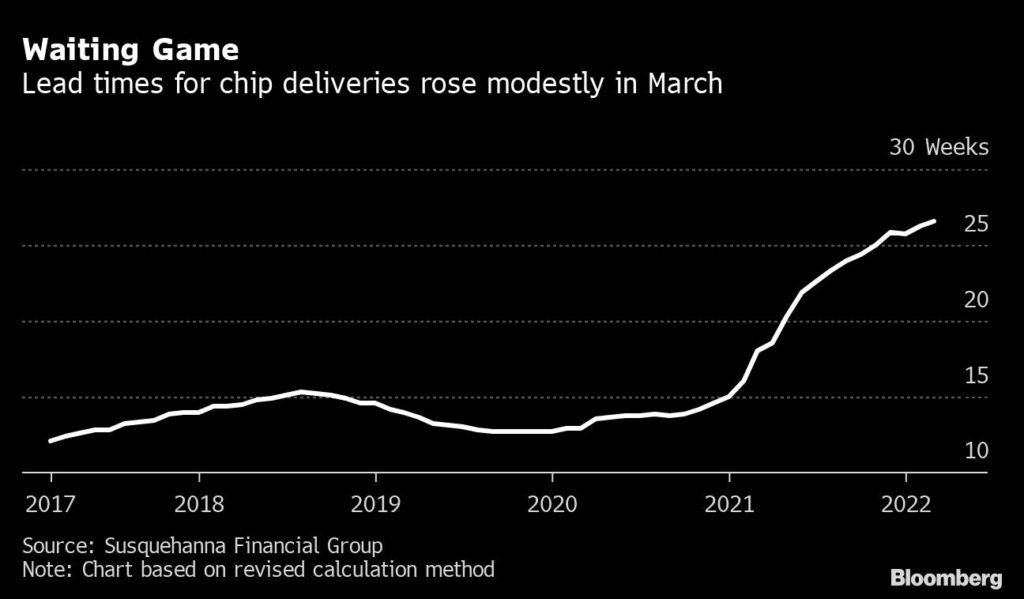
The wait times for semiconductor deliveries rose to a new high in March, after lockdowns in China and an earthquake in Japan further hampered supply. Lead times — the lag between when a chip is ordered and delivered — increased by two days to 26.6 weeks last month, according to research by Susquehanna Financial Group.

Key Insights

  • In the first quarter, ASML shipped 9 of its newest EUV machines, which etch smaller circuits while increasing capacity and speed.
  • ASML kept its guidance for 20% sales growth and a capacity for 55 EUV units this year
  • Dassen says ASML is doubling capacity in comparison to 2020 for EUV. “So 2x and that will get you to more than 70 EUV systems by 2025.”
  • “Going into the moving parts that we discussed then at that point in time, we said we expect the gross margin on the Installed Base revenue business to be a little bit lower,” said Dassen, “because last year we had a very, very high level of software business and there we expect that to be a bit lower this year.”
  • “Backed by a very well filled orderbook and a ramp in production capacity 2023 is shaping up well already,” said Marc Hesselink, an Amsterdam-based analyst ING. Hesselink said he sees an unchanged picture overall with “high demand for years to come.”
  • ASML stock dropped about 22% since the start of the year, in line with a 23% retreat in the Stoxx Europe technology index.

(Updates with stock move and additional context.)

More stories like this are available on bloomberg.com

©2022 Bloomberg L.P.

Ex-PBOC Official Urges Easing Property Debt Curbs Amid Covid

(Bloomberg) — Sign up for the New Economy Daily newsletter, follow us @economics and subscribe to our podcast.

China’s finance regulators should ease up on their efforts to rein in developers’ debt to help them ride out the latest Covid wave, a former central bank official said.  

The outbreak may “severely” hit home sales and impede a recovery, Sheng Songcheng, a former director of the People’s Bank of China’s statistics and analysis department, said in an interview Tuesday. 

Lockdowns in key cities are worsening the housing slowdown that emerged last year when a cash crunch among developers shattered confidence among homebuyers. Authorities last month pledged to support the industry, which has been battered by a crackdown on excessive leverage.

“We should be on high alert for a vicious cycle led by developers’ liquidity crisis,” said Sheng, now a professor at the China Europe International Business School in Shanghai. “The deleveraging can be appropriately slowed considering the current home market situation.”

Sheng said regulators should allow banks to keep providing loans to developers that breach debt metrics known as the “three red lines,” at least temporarily, as long as builders refrain from piling up borrowings in the next six months, he said. 

Authorities introduced the limits in late 2020 to curtail excessive borrowing and speculation in the industry. Developers face restrictions on fresh borrowing if they breach them, according to state media reports. 

Sheng also called for allowing banks more time to comply with a separate rule that caps their real estate lending. A requirement imposed at the start of 2021 gives lenders four years to meet the limit. Sheng suggests banks to be given another six to 12 months. 

In addition, Sheng urged local governments to continue to relax restrictions on purchasing homes to shore up demand. Banks in several cities have been lowering mortgage rates and cutting down-payment requirements to arrest the housing slump. 

“All local governments should strike a balance between local policies based on city specifics and the national guidelines in a flexible way, as long as they can keep the bottom line of controlling property risks,” he said. 

Read a Bloomberg Intelligence note on mortgage easing

The central bank on Wednesday urged banks to improve loan policies and flexibly adjust mortgage payments for individuals that are affected by Covid outbreaks. It also asked lenders to keep “stable and orderly real estate financing.” Banks should differentiate between the risks of real estate projects and developers and shouldn’t call back loans “blindly,” the PBOC added. 

Rates Held

A Bloomberg Intelligence gauge of Chinese real estate shares fell 3.9% on Wednesday afternoon after banks kept lending rates on hold for a third month. 

New-home sales dropped in March at the fastest pace since the current slump began in July, government figures showed this week. Ten provinces either in full or partial lockdowns, including Shanghai and Guangdong, saw their steepest decline in transactions since at least 2013, according to Bloomberg calculations based on the data. 

The figures probably don’t capture the full impact on sales because the lockdowns intensified toward the end of the month. 

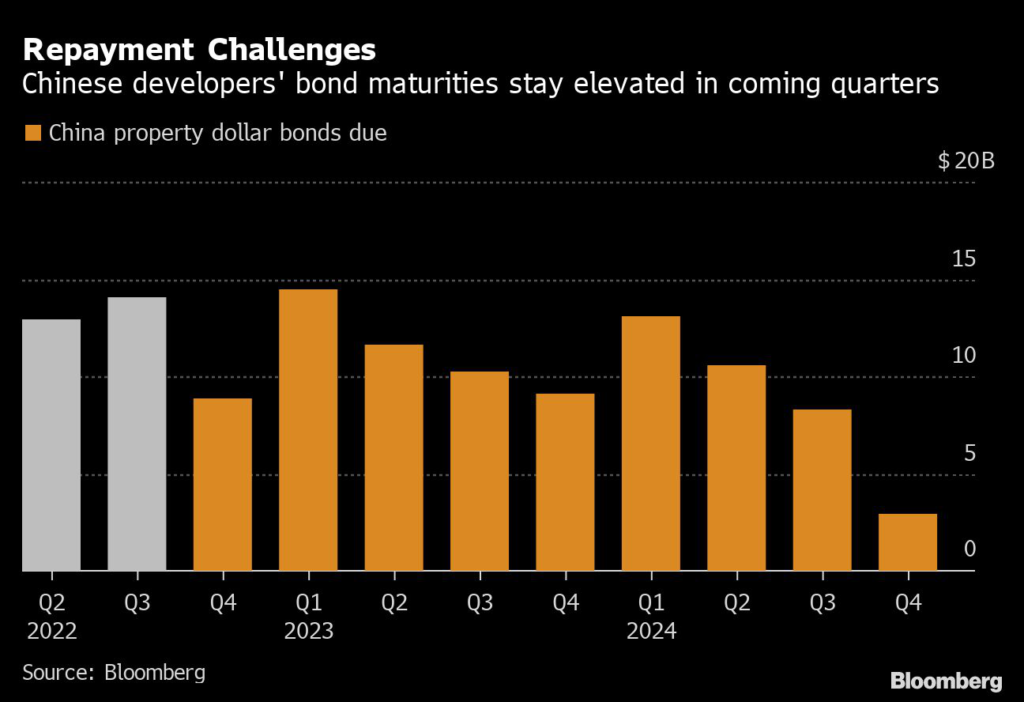
Sheng also warned that a wave of offshore debt maturing this quarter adds to liquidity risks. Chinese developers face $13 billion in payments on dollar bonds in the current quarter and $14 billion in the third, according to data compiled by Bloomberg.

Still, Sheng emphasized that the long-term policy target to reduce leverage in the property industry should remain. 

“It’s essential to establish a firewall between the real estate sector and financial markets, as well as avoid systemic risks tied to property,” Sheng said. “Both the caps on developers’ borrowings and banks’ lending to builders are effective tools for deleveraging, and they should be kept.” 

(Updates with PBOC vow in the 10th paragraph.)

More stories like this are available on bloomberg.com

©2022 Bloomberg L.P.

Here’s How China Is Supporting Its Covid-Stricken Economy

(Bloomberg) — Sign up for the New Economy Daily newsletter, follow us @economics and subscribe to our podcast.

China’s pledges for more economic support are mounting as a worsening Covid outbreak and efforts to contain infections threaten to upend global supply chains and push a critical government growth target out of reach. 

President Xi Jinping has made clear he’s sticking with China’s strict Covid Zero strategy, which involves locking down entire cities and provinces to eliminate community spread of the virus. To limit the disruption to the economy though, Beijing is taking a number of supportive steps, from central bank aid and tax cuts, to measures that allow factories to keep running. 

With outbreaks in places like the trade and financial hub Shanghai becoming difficult to control, it’s unclear how effective those initiatives will be. Several economists have already downgraded their gross domestic product growth forecasts for the year to 5% or less — well below the government’s target of about 5.5%. 

Here’s a look at several of the measures announced or taken in recent months:

Factory Bubbles

As some major manufacturing hubs have locked down across China to contain the virus, many companies have turned to so-called closed loop systems, or factory bubbles, to keep production humming, a plan endorsed by government officials who have laid out rules for how to resume work with minimal risk of Covid spread.

Such bubbles allow businesses to operate by letting employees live and work on site, so they can avoid running afoul of movement restrictions. The workers are regularly tested and subject to strict hygiene rules intended to keep Covid out of the factories. Governments have been encouraging companies to make plans for closed-loop management, most notably in Shanghai where lockdowns have stretched for weeks and are hampering production. 

But those systems aren’t perfect, as companies run short of logistics and workers. Tesla Inc., for example, only has inventory for just over two weeks based on its new closed-loop schedule, while workers locked in Volkswagen AG’s Shanghai factory don’t have sufficient supply of the auto parts needed to make cars.

Eliminating Checkpoints

China’s Ministry of Transport tried this month to solve logistics snags by ordering that no Covid testing checkpoints be set up in the main lanes of highways. The ministry called for a relaxation of mobility restrictions for logistics workers at checkpoints at other locations along the roads during the outbreak, as trucking services have been battered by road closures and cumbersome Covid requirements.

Read More: Why China Is Sticking With Its Covid Zero Strategy: QuickTake

Trucks dominate China’s local transportation, hauling about three-quarters of total freight, according to data from the transport ministry. But Covid Zero orders are creating difficult conditions for the truckers themselves, as drivers have been hampered by the need to undergo compulsory mass testing being conducted in cities like Shanghai, along with the need to show negative Covid results at multiple checkpoints. 

Possible Exemptions

Top Chinese authorities have also promised stronger measures to stabilize supply chains, including extra help for qualified firms to ensure they can stay open amid Covid controls.

The government will establish “white lists” of companies in sectors including automobiles, semiconductors, consumer electronics, food, equipment manufacturing and medicine and foreign trade, according to a recent state media readout of a meeting attended by Vice Premier Liu He and chaired by State Councilor Xiao Jie. 

The report in the official Xinhua News Agency didn’t provide more details, although a similar “white list” of companies in Shanghai was disclosed late last week allowing companies to make plans to resume production.

Reduced Quarantine

China has started trialing looser quarantine requirements in some cities, including Shanghai and Guangzhou. 

Eight cities last week reduced the quarantine period for overseas travelers and those who’ve had close contact with infected individuals to 10 days from 14 days, as part of a month-long trial, according to people familiar with the matter.

Apartment complexes, retail outlets, office buildings and other locations locked down because of infections will also be allowed to open after 10 consecutive days without a positive test result, shortened from the 14 days previously required, the people said.

PBOC Measures

The People’s Bank of China has rolled out several announcements in recent weeks, though its actions have so far indicated restraint.


  • The PBOC detailed 23 measures and other promises largely focused on boosting lending and providing financial support to industries that are suffering from virus-related restrictions. The list included guidance for banks to extend more loans, along with references to the PBOC’s relending program. That program, which provides funds for banks to lend to sectors in need, is expected to lead to 1 trillion yuan ($157 billion) in additional bank loans.
  • Earlier this month, the central bank gave lenders a modest cash boost by reducing the reserve requirement ratio — the amount of money banks have to keep in reserve — for most banks by 25 basis points. The ratio was dropped by 50 basis points for smaller lenders. However, the PBOC left its one-year policy interest rate unchanged. And Chinese banks just maintained their lending rates for a third month.

Stabilizing Property

Along with ongoing guidance from the People’s Bank of China for banks to step up lending, more cities have relaxed home purchase and mortgage rules since policy makers vowed in mid-March to prevent a “disorderly collapse” in the property market. 

More than 60 municipal authorities loosened housing regulations in the first quarter. They include four provincial capital cities that abandoned signature restrictions on how many residences each household can own and how long they should hold properties before selling them. 

Read More: PBOC Says Banks Should Help Homeowners Hurt by Covid

Banks in more than 100 cities have lowered mortgage rates by 20 to 60 basis points since March, the head of the central bank’s financial market department Zou Lan said at a briefing last week. There was a rebound in medium- and long-term loans to households, which are a proxy for mortgages, in March from a contraction in February, though the actual value was still lower than a year earlier.

China’s largest banks are also allowing residents in Shanghai to delay their mortgage payments as the city’s outbreak continues.

Services Incentives

China’s government in February said it would refund up to 90% of unemployment insurance premiums paid in the previous year to small services companies that don’t fire employees or minimize layoffs. That was up from a previous 60% ratio, according to an announcement at the time from the National Development and Reform Commission, the state economic planner. 

The commission also said a policy of a temporary reduction of unemployment insurance and work-related injury insurance rates will be extended in 2022, and that provinces with relatively large balances in these insurance funds could delay collection of premium payments from catering, retailing and tourism companies for no longer than a year.

Tax Relief

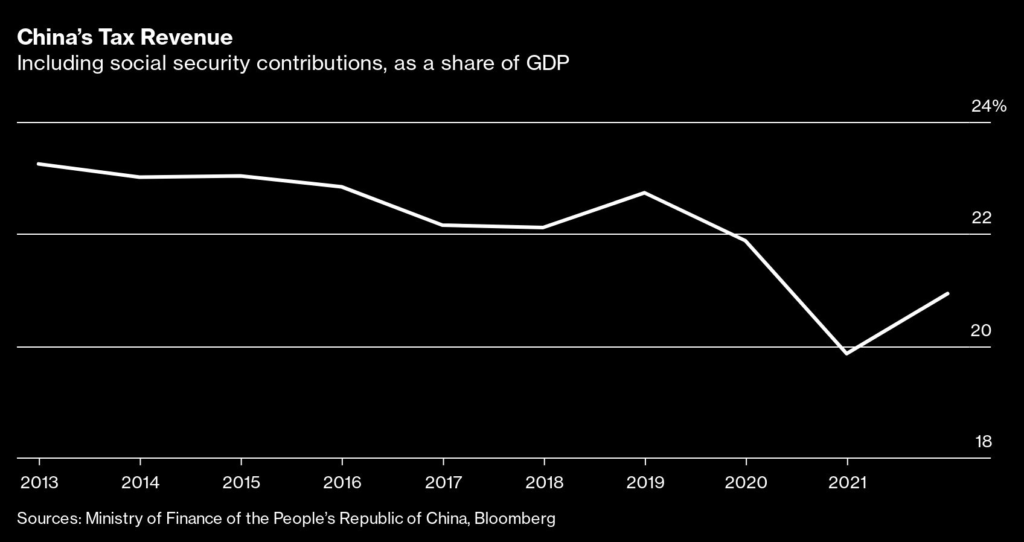
China has promised on several recent occasions to reduce the burden on its taxpayers, another measure of economic relief. 

Beijing in March announced 2.5 trillion yuan in tax cuts, more than double the size of 2021 and the fifth year of such reductions. The central bank at that time also said it would send more than 1 trillion yuan in profits to the finance ministry to help pay for tax rebates and other government expenses.

Since March, regions that have been hit by the outbreak have announced several measures to help taxpayers, including permitting companies to delay or reduce social security and housing fund payments. Some regions have also postponed tax reporting, exempted small businesses from paying rent on state-owned property for several months, and offered temporary subsidies for corporate expenses on things like power and water. 

More stories like this are available on bloomberg.com

©2022 Bloomberg L.P.

Europe Car Sales Plunge 19% as War Wipes Out Recovery Prospects

(Bloomberg) —

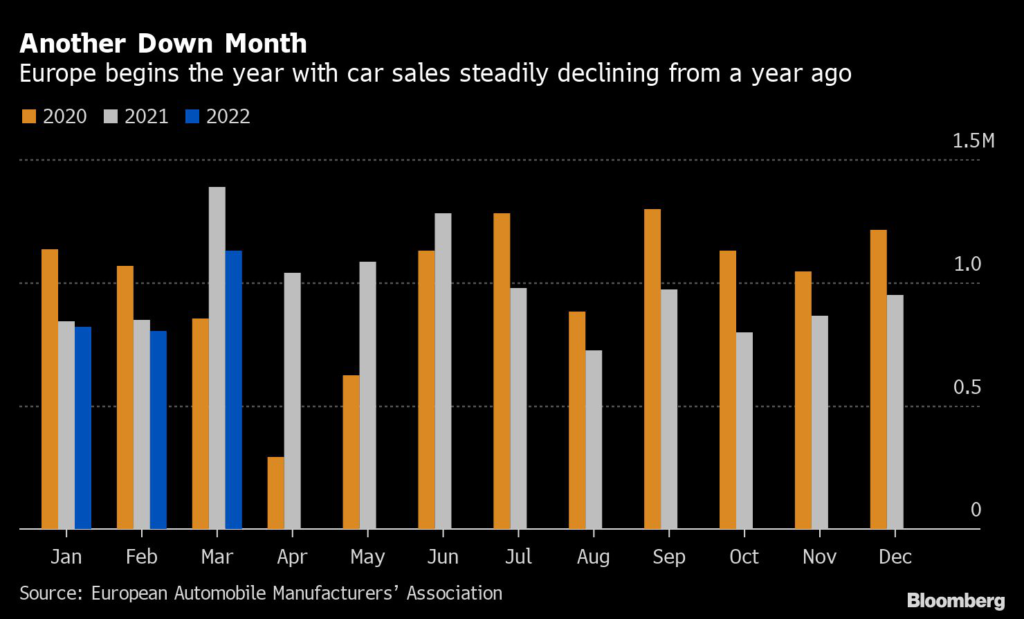
Car sales in Europe fell for a ninth consecutive month as the war in Ukraine further cripples supply chains and spurs record inflation that risks undermining demand once shortages ease. 

New-car registrations in Europe fell 19% in March to 1.13 million vehicles as a lack of semiconductors and other components roil production, the European Automobile Manufacturers’ Association said Wednesday. The month capped a disappointing start to the year, contributing to an 11% drop for the first quarter after carmakers had banked on improving conditions over 2021. 

“Parts shortages and production halts related to the Ukraine war are set to limit auto supply and delay an expected sales recovery,” Bloomberg Intelligence analyst Michael Dean wrote in a note. 

Russia’s invasion of Ukraine has disrupted local suppliers, forcing Volkswagen AG and BMW AG to temporarily halt production. Carmakers have also started to again walk back expectations of improvements in semiconductor availability with bottlenecks now seen reaching well into next year. While demand continues to outstrip supply, record inflation in the euro region may begin to affect buying decisions, according to forecaster LMC Automotive.

Sales in Europe are expected to barely improve this year, with inflation likely to muffle underlying demand, LMC Automotive said in a report. The forecaster cut its estimate for growth in Western Europe to just 0.4%, expecting deliveries will total just 10.63 million, well below the 14 million mark that the industry was clearing pre-pandemic. Consumer prices in the euro area surged to a record 7.5% in March from a year ago, topping estimates and up from 5.9% in February. 

“The war will chip away at underlying demand as well, through higher‐for‐longer inflation and lower real incomes,” LMC said. “At least for now, demand is still outstripping supply.”

More stories like this are available on bloomberg.com

©2022 Bloomberg L.P.
Elon Musk Drops Another Cryptic Hint About a Twitter Tender Offer

(Bloomberg) — Elon Musk has given fresh fuel to speculation he would launch a tender offer for Twitter Inc. shares in the event that the board resists his proposal to acquire 100% of the company and take it private.

The 50-year-old billionaire Tesla Inc. and SpaceX chief tweeted a cryptic message with blank space for a word followed by the phrase “is the Night.” The missing language may be “Tender,” as per the F. Scott Fitzgerald book title, or it could be “Tonight,” as Musk used seven underscores for the blank space. 

His habitual style on the social platform has been to express himself through web memes and implications, having previously tweeted “seize the memes of production” in the time between his initial investment in Twitter and the SEC filing that made it public.

He’s also shown a fondness for 420 references to pot smoking, including with his offer of $54.20 a share. His post may also have been a reference to the date, April 20.

Twitter’s share price jumped by 27% when Musk announced he had acquired a 9.2% stake at the start of this month and he later escalated his interest with an unsolicited $43 billion proposal to take the company private. Twitter’s board has yet to give a formal response, but has begun taking defensive steps to prevent a takeover, including a poison pill provision.

Musk had earlier posted a tweet with “Love Me Tender,” bracketed by musical notes.

Elon Musk Wants to Buy Out Twitter in Final $43 Billion Unsolicited Bid

Musk’s most recent public message before the hint about a potential tender bid addressed the issue of moderation online, saying “a social media platform’s policies are good if the most extreme 10% on left and right are equally unhappy” in another tweet. He has garnered a following of more than 82 million users on the service and has tweeted more than 17,000 times, with his recent messages focusing on Twitter itself and how it could be improved.

More stories like this are available on bloomberg.com

©2022 Bloomberg L.P.
First Person Linked To OCBC Phishing Scam Pleads Guilty

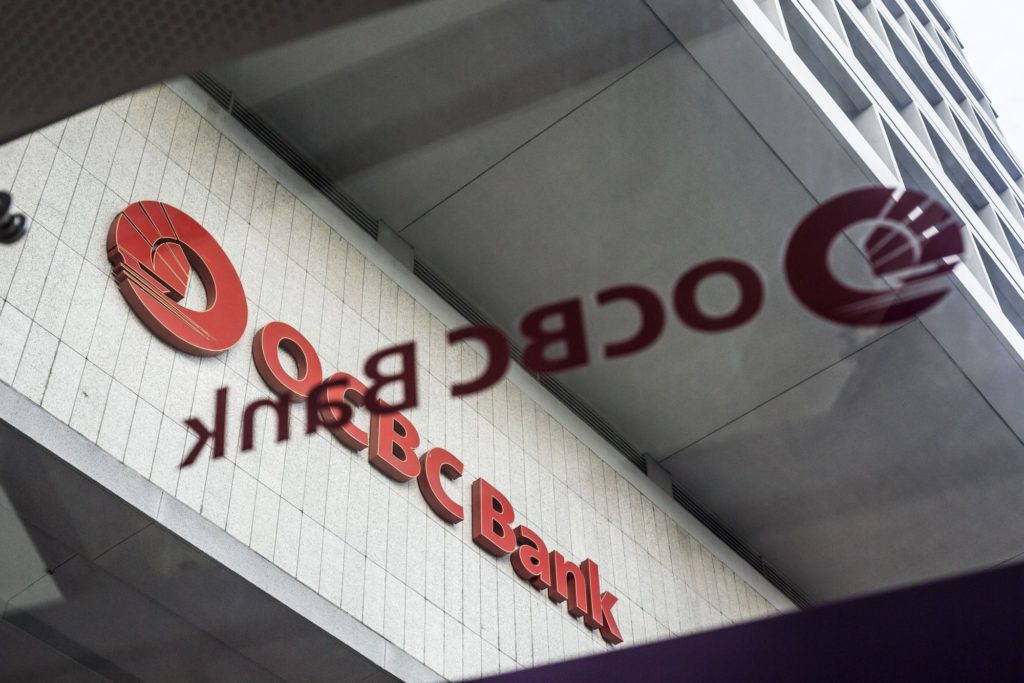
(Bloomberg) — The first person linked to a phishing scam involving Oversea-Chinese Banking Corp. pleaded guilty in a Singapore district court to offenses including money laundering. 

Leong Jun Xian, one of seven charged in February over their alleged involvement in the scam, on Wednesday admitted to two counts each of dealing with the benefits of criminal conducting and rioting, according to court documents. 

The 20-year-old also admitted to a charge under the Organized Crime Act. He faces a total of 15 charges. 

The cases involving the other alleged offenders are still pending.

The Singapore-based bank in January said it completed making arrangements for goodwill payouts, worth around S$13.7 million ($10.1 million), to some 790 customers who lost money in phishing scams. 

More stories like this are available on bloomberg.com

©2022 Bloomberg L.P.
Shanghai Businesses Slowly Restart as Lockdown Woes Endure

(Bloomberg) — Carmakers to supermarkets are gradually resuming operations in Shanghai as the city seeks to recover from the economic toll of an unprecedented lockdown that’s still restricting more than 16 million people to their homes.

Local media reported SAIC Motor Corp. restarted new car production on Tuesday, while Tesla Inc. got 8,000 employees back at a plant that was shut for three weeks. More than 60% of Carrefour SA’s outlets in Shanghai have resumed online business as of Sunday, with the number set to rise to as much as 90% by April 24.

Many factories are able to restart by using a closed-loop system, where staff work and live on-site and undergo regular testing. Bloomberg News previously reported Tesla would use the measure, with workers sleeping on the floor and given an allowance. Quanta Computer Inc. plants, which make Tesla accessories and Apple laptops, resumed partial production under the system.

Read more: Top China Experts Insist No End to Covid Zero as Deaths Grow

Officials have sought to get factories back up and running after Shanghai’s lockdown brought the city to a halt and threatened China’s broader growth outlook. The push also underscores the importance of meeting President Xi Jinping’s dual goals of continuing to target elimination of the virus while minimizing the economic and social impacts of the country’s Covid Zero strategy. 

The resumption comes as Shanghai’s health officials said the city has effectively contained community spread, with cases in most districts stabilizing or falling so far this week. Two districts, Jinshan and Chongming, reported zero community spread for the first time on Wednesday.

The financial hub reported 18,089 new coronavirus infections, the first time since April 6 that daily cases dipped below 20,000.

The city reported another seven deaths, bringing the total number of fatalities this outbreak to 17, mostly elderly residents. Almost one in five people infected in Shanghai are aged 60 or above, and only 62% of the elderly population have been vaccinated.

Read more: Shanghai Factory Restarts Fall Short on Lack of Parts, Truckers

Even with cases declining, there’s no indication of when Shanghai will lift its lockdown or allow a more complete resumption of business operations. More than 16 million people, or about two-thirds of the city, remain confined to their homes or banned from leaving their residential compounds due to recent Covid cases. 

That’s led to staff shortages. Less than one-third of Carrefour’s staff has come back to work, meaning they can only fill online orders, according to a Caixin report. 

Companies are also being affected by raw-material shortages and other logistical problems. Tesla said in a statement that production at many Jiangsu-based suppliers are still suspended and there are difficulties in transportation. The government is working to alleviate the supply snarl, it said.

Elsewhere, a number of companies including Foxconn have been allowed to resume operations in the city of Kunshan, which borders Shanghai. The local government has approved the first batch of 60 firms to restart, though didn’t give a timetable for their production resumption.

The northeastern city of Harbin asked factories and enterprises to conduct mandatory Covid tests, and residents have been restricted from leaving downtown areas unless necessary, after it detected 73 local infections for Tuesday. The city, the capital of Heilongjiang province, also halted subway services and limited road traffic in the downtown region.

(Updates to add details on Harbin in last paragraph.)

More stories like this are available on bloomberg.com

©2022 Bloomberg L.P.
Shanghai Businesses Slowly Restart as Lockdown Headwinds Endure

(Bloomberg) — Carmakers to supermarkets are gradually resuming operations in Shanghai as the city seeks to recover from the economic toll of an unprecedented lockdown that’s still restricting more than 16 million people to their homes.

Local media reported SAIC Motor Corp. restarted new car production on Tuesday, while Tesla Inc. got 8,000 employees back at a plant that was shut for three weeks. More than 60% of Carrefour SA’s outlets in Shanghai have resumed online business as of Sunday, with the number set to rise to as much as 90% by April 24.

Many factories are able to restart by using a closed-loop system, where staff work and live on-site and undergo regular testing. Bloomberg News previously reported Tesla would use the measure, with workers sleeping on the floor and given an allowance. Quanta Computer Inc. plants, which make Tesla accessories and Apple laptops, resumed partial production under the system.

Read more: Top China Experts Insist No End to Covid Zero as Deaths Grow

Officials have sought to get factories back up and running after Shanghai’s lockdown brought the city to a halt and threatened China’s broader growth outlook. The push also underscores the importance of meeting President Xi Jinping’s dual goals of continuing to target elimination of the virus while minimizing the economic and social impacts of the country’s Covid Zero strategy. 

The resumption comes as Shanghai’s health officials said the city has effectively contained community spread, with cases in most districts stabilizing or falling so far this week. The financial hub reported 18,089 new coronavirus infections, the first time since April 6 that daily cases dipped below 20,000.

The city reported another seven deaths, bringing the total number of fatalities this outbreak to 17, mostly elderly residents. Almost one in five people infected in Shanghai are aged 60 or above, and only 62% of the elderly population have been vaccinated.

Read more: Shanghai Factory Restarts Fall Short on Lack of Parts, Truckers

Even with cases declining, there’s no indication of when Shanghai will lift its lockdown or allow a more complete resumption of business operations. More than 16 million people, or about two-thirds of the city, remain confined to their homes or banned from leaving their residential compounds due to recent Covid cases. 

That’s led to staff shortages. Less than one-third of Carrefour’s staff has come back to work, meaning they can only fill online orders, according to a Caixin report. 

Companies are also being affected by raw-material shortages and other logistical problems. Tesla said in a statement that production at many Jiangsu-based suppliers are still suspended and there are difficulties in transportation. The government is working to alleviate the supply snarl, it said.

Elsewhere, a number of companies including Foxconn have been allowed to resume operations in the city of Kunshan, which borders Shanghai. The local government has approved the first batch of 60 firms to restart, though didn’t give a timetable for their production resumption.

More stories like this are available on bloomberg.com

©2022 Bloomberg L.P.
Close Bitnami banner
Bitnami