Bloomberg

Faraday Future Limits Founder’s Role After Completing Probe

(Bloomberg) — Faraday Future Intelligent Electric, Inc. is limiting the role of its founder, Jia Yueting, after completing a months-long internal probe into allegations of fraud. 

The electric vehicle startup is also putting one of its longest-serving executives on probation while another has resigned, according to filing on Thursday.  

Jia will continue to serve as Faraday Future’s “Chief Product and User Ecosystem Officer” — a position he has held since relinquishing the CEO role in 2019 to former BMW executive Carsten Breitfeld. Moving forward, his work will be limited to the company’s “product and mobility ecosystem” and its “internet, artificial intelligence and advanced R&D technology.” Faraday Future also said that Jia will no longer serve as an executive officer.

The Los Angeles-based company said that Matthias Aydt, a board member and senior vice president of business development and product definition, will be placed on probation for six months. Aydt, who started with the company in 2016, will keep his board seat during the probationary period. 

Jiawei Wang, the company’s VP of global capital markets, is also resigning. Wang, who is Jia’s nephew, has been suspended without pay since Jan. 31, shortly before Faraday Future announced an earlier round of measures based on the findings of the internal probe. 

Faraday Future said Thursday that it took other “disciplinary actions” and fired some other employees who are not executive officers, without providing details.

Faraday Future launched the internal probe last year after a short-selling research firm published a report claiming the startup misrepresented the number of preorders for its luxury SUV, the FF 91, following its merger with a special purpose acquisition company. 

The startup said in February that it had also discovered certain executives had misled investors about Jia’s role in running the day-to-day operations, resulting in a 25% pay cut for Breitfeld and the removal of Chairman Brian Krolicki to a regular seat on the board. 

The company disclosed in March that it is also being investigated by the U.S. Securities and Exchange Commission in relation to the allegations made in the short-seller report.

More stories like this are available on bloomberg.com

©2022 Bloomberg L.P.

Online ADHD Medication Startup Ahead Is Shutting Down

(Bloomberg) — Ahead, an online provider of ADHD treatment, is shutting down, its top investor said Thursday. 

The company will immediately stop taking new patients and will continue to provide current patients with care through June 24, said Sid Viswanathan, the chief executive officer of Ahead backer Truepill. As Truepill has shifted its focus to serving corporate and business customers, “we made the difficult decision to no longer invest in Ahead,” Viswanathan wrote in an email to Bloomberg. 

Ahead, a subscription-based startup, was one of several that began prescribing controlled drugs online during the Covid-19 pandemic. Founded in 2019, Ahead was jump-started with a $9 million investment led by Truepill, which provides online health services including a digital pharmacy. Ahead customers pay $150 for their first month of service, including an initial evaluation, and $75 in subsequent months.

Ahead has 44 employees, according to LinkedIn. The startup competed with other companies such as Done Health — backed by Craft Ventures, Offline Ventures and former quarterback Joe Montana — and Cerebral Inc., which garnered a $4.8 billion valuation after SoftBank Group Corp. and other investors plowed $300 million into the company in December.

The companies’ rise is closely linked with a boom in sales of amphetamine medications, Bloomberg reported last month, and has been helped along by a 2020 rollback of rules governing prescribing addictive medications.

Ahead recently saw a spate of executive departures. Co-founder Emile Barraza left last year and his fellow co-founder Andy Rink, who also served as a senior vice president at Truepill, left both companies this month according to Rink’s LinkedIn profile. 

Truepill, Ahead’s biggest backer, offers telehealth and prescription delivery services. The startup was valued at $1.6 billion after raising $142 million in October, according to PitchBook. Investors include Initialized Capital, Optum Ventures and Social Capital.

“We are impressed by the practice they built and are grateful to the dedicated, passionate team that made Ahead a reality,” Viswanathan said. 

More stories like this are available on bloomberg.com

©2022 Bloomberg L.P.

Elon Musk Needs ‘Massive Loan’ or Big Tesla Stock Sale to Buy Twitter

(Bloomberg) — Even for the world’s richest person, $43 billion is a steep price.

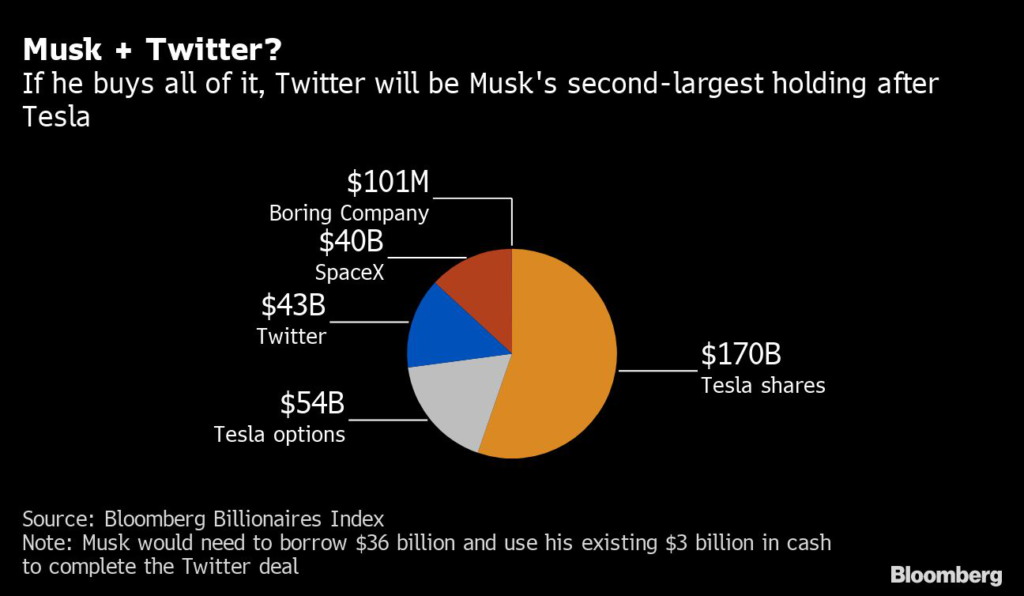
Elon Musk’s proposed all-cash offer to buy Twitter Inc. represents about one-sixth of his $250.6 billion fortune. Yet the vast majority of that wealth is tied to his stake in Tesla Inc., the electric carmaker he co-founded that has surged in value over the past two years and lifted him to the top of the Bloomberg Billionaires Index.

The purchase isn’t straightforward, but Musk has several financing paths. One option is to sell his Tesla shares outright. Another is borrowing against them to stage a leveraged buyout, possibly with outside partners. Musk, 50, currently has about $3 billion in cash or other somewhat liquid assets after spending $2.6 billion buying a 9.1% stake in Twitter in recent months, according to Bloomberg calculations.

For Musk to raise the additional $36 billion in cash needed to buy the rest of Twitter would require selling about 36.5 million Tesla shares, or more than a fifth of his stake. Such an exit could risk a slide in the company’s share price — not to mention potentially raise questions about the commitment, financial and otherwise, of its chief executive officer.

His other option is to borrow against his positions in Tesla and space exploration company SpaceX. 

“This becomes a hostile takeover offer which is going to cost a serious amount of cash,” said Neil Campling, head of TMT research at Mirabaud Equity Research. “He will have to sell a decent piece of Tesla stock to fund it, or a massive loan against it.”

Borrowing Limits

But even for the wealthiest person in the world, there are limits: The Bloomberg index estimates that he’s already borrowed about $20 billion against his shares, leaving about $35 billion remaining that he could theoretically take out against the two holdings.

“Musk’s ‘best and final’ $43 billion non-binding offer has numerous conditions, including completion of financing, which we believe give it a low probability of success,” Robert Schiffman, a Bloomberg Intelligence senior credit analyst, wrote Thursday in a report.

Twitter shares fell 1.7% Thursday in New York, closing at $45.08. Musk offered $54.20 per share in cash. Tesla shares declined 3.7%.

Musk had 52% of his Tesla shares pledged as of June 30, according to the company’s most recent proxy filing. The maximum that can be borrowed against pledged shares is 25% of their value, according to a Tesla policy.

Since then, Musk has increased his share count by exercising options. His 172.6 million shares are worth $170 billion, meaning he could theoretically borrow $42.5 billion by pledging all of them.

Musk said in December 2019 that he had also pledged some of his SpaceX shares. His 47% stake in the company is worth about $47.5 billion, based on its October 2021 funding round. If there’s a similar maximum loan-to-value ratio, he could raise another $12 billion by fully pledging his SpaceX position — although banks tend to be much more cautious funding a privately held position, given the lack of liquidity.

Also, Musk has Tesla options worth $54.1 billion that he might be able to borrow against.

‘Technically Afford’

Musk said at a TED event in Vancouver on Thursday that he may seek to keep as many as 2,000 existing Twitter investors, reducing the cash he’d need to take it private. 

“The intent is to retain as many shareholders as is allowed by the law,” he said, adding that he “could technically afford” the full purchase price. 

After Saudi Arabia’s Prince Alwaleed bin Talal tweeted that the offer wasn’t “close to the intrinsic value” of Twitter, Musk asked how many shares the billionaire held in Twitter and for the Kingdom’s view on freedom of speech for journalists.

Bank of America Corp., Goldman Sachs Group Inc. and Morgan Stanley were three of the banks that provided Musk personal loans, according to a 2020 Tesla filing. He has hired Morgan Stanley to advise on the Twitter bid, and his family office, Excession, is run by longtime adviser Jared Birchall, a former Morgan Stanley banker.

No matter how he goes about it, buying all of Twitter would be a stark shakeup of Musk’s empire. His purchase of a 9.1% stake, first disclosed last week, marked his first significant diversification outside of Tesla and SpaceX. 

“I am not playing the back-and-forth game,” Musk said in Thursday’s filing. “I have moved straight to the end. It’s a high price and your shareholders will love it. If the deal doesn’t work, given that I don’t have confidence in management nor do I believe I can drive the necessary change in the public market, I would need to reconsider my position as a shareholder.” 

Musk has played up his devotion to both Tesla and SpaceX, frequently tweeting about their achievements and claiming to sleep on the floor of a Tesla factory to set an example to his employees. Meanwhile, since disclosing his stake in Twitter, he has appealed to fellow users about potential moves and in one case suggested the website might be dying, given the lack of tweets from some celebrities.

In recent years, Musk has indicated he’s streamlining at least some aspects of his financial affairs. He’s sold multiple mansions in California after vowing to “own no home,” in 2020. He currently lives in Texas, where he relocated the headquarters of Tesla last year. 

(Adds Musk comments, tweets starting in 14th paragraph. Updates share prices throughout.)

More stories like this are available on bloomberg.com

©2022 Bloomberg L.P.

Musk Needs ‘Massive Loan’ or Big Tesla Sale to Buy Twitter

(Bloomberg) — Even for the world’s richest person, $43 billion is a steep price.

Elon Musk’s proposed all-cash offer to buy Twitter Inc. represents about one-sixth of his $250.6 billion fortune. Yet the vast majority of that wealth is tied to his stake in Tesla Inc., the electric carmaker he co-founded that has surged in value over the past two years and lifted him to the top of the Bloomberg Billionaires Index.

The purchase isn’t straightforward, but Musk has several financing paths. One option is to sell his Tesla shares outright. Another is borrowing against them to stage a leveraged buyout, possibly with outside partners. Musk, 50, currently has about $3 billion in cash or other somewhat liquid assets after spending $2.6 billion buying a 9.1% stake in Twitter in recent months, according to Bloomberg calculations.

For Musk to raise the additional $36 billion in cash needed to buy the rest of Twitter would require selling about 36.5 million Tesla shares, or more than a fifth of his stake. Such an exit could risk a slide in the company’s share price — not to mention potentially raise questions about the commitment, financial and otherwise, of its chief executive officer.

His other option is to borrow against his positions in Tesla and space exploration company SpaceX. 

“This becomes a hostile takeover offer which is going to cost a serious amount of cash,” said Neil Campling, head of TMT research at Mirabaud Equity Research. “He will have to sell a decent piece of Tesla stock to fund it, or a massive loan against it.”

Borrowing Limits

But even for the wealthiest person in the world, there are limits: The Bloomberg index estimates that he’s already borrowed about $20 billion against his shares, leaving about $35 billion remaining that he could theoretically take out against the two holdings.

“Musk’s ‘best and final’ $43 billion non-binding offer has numerous conditions, including completion of financing, which we believe give it a low probability of success,” Robert Schiffman, a Bloomberg Intelligence senior credit analyst, wrote Thursday in a report.

Twitter shares fell 1.7% Thursday in New York, closing at $45.08. Musk offered $54.20 per share in cash. Tesla shares declined 3.7%.

Musk had 52% of his Tesla shares pledged as of June 30, according to the company’s most recent proxy filing. The maximum that can be borrowed against pledged shares is 25% of their value, according to a Tesla policy.

Since then, Musk has increased his share count by exercising options. His 172.6 million shares are worth $170 billion, meaning he could theoretically borrow $42.5 billion by pledging all of them.

Musk said in December 2019 that he had also pledged some of his SpaceX shares. His 47% stake in the company is worth about $47.5 billion, based on its October 2021 funding round. If there’s a similar maximum loan-to-value ratio, he could raise another $12 billion by fully pledging his SpaceX position — although banks tend to be much more cautious funding a privately held position, given the lack of liquidity.

Also, Musk has Tesla options worth $54.1 billion that he might be able to borrow against.

‘Technically Afford’

Musk said at a TED event in Vancouver on Thursday that he may seek to keep as many as 2,000 existing Twitter investors, reducing the cash he’d need to take it private. 

“The intent is to retain as many shareholders as is allowed by the law,” he said, adding that he “could technically afford” the full purchase price. 

After Saudi Arabia’s Prince Alwaleed bin Talal tweeted that the offer wasn’t “close to the intrinsic value” of Twitter, Musk asked how many shares the billionaire held in Twitter and for the Kingdom’s view on freedom of speech for journalists.

Bank of America Corp., Goldman Sachs Group Inc. and Morgan Stanley were three of the banks that provided Musk personal loans, according to a 2020 Tesla filing. He has hired Morgan Stanley to advise on the Twitter bid, and his family office, Excession, is run by longtime adviser Jared Birchall, a former Morgan Stanley banker.

No matter how he goes about it, buying all of Twitter would be a stark shakeup of Musk’s empire. His purchase of a 9.1% stake, first disclosed last week, marked his first significant diversification outside of Tesla and SpaceX. 

“I am not playing the back-and-forth game,” Musk said in Thursday’s filing. “I have moved straight to the end. It’s a high price and your shareholders will love it. If the deal doesn’t work, given that I don’t have confidence in management nor do I believe I can drive the necessary change in the public market, I would need to reconsider my position as a shareholder.” 

Musk has played up his devotion to both Tesla and SpaceX, frequently tweeting about their achievements and claiming to sleep on the floor of a Tesla factory to set an example to his employees. Meanwhile, since disclosing his stake in Twitter, he has appealed to fellow users about potential moves and in one case suggested the website might be dying, given the lack of tweets from some celebrities.

In recent years, Musk has indicated he’s streamlining at least some aspects of his financial affairs. He’s sold multiple mansions in California after vowing to “own no home,” in 2020. He currently lives in Texas, where he relocated the headquarters of Tesla last year. 

(Adds Musk comments, tweets starting in 14th paragraph. Updates share prices throughout.)

More stories like this are available on bloomberg.com

©2022 Bloomberg L.P.

Twitter Is Weighing a Poison Pill Defense to Thwart Elon Musk’s Takeover Bid

(Bloomberg) — Twitter Inc.’s board is considering adopting a measure that would protect the company from hostile acquisition bids, according to people with knowledge of the matter, following billionaire Elon Musk’s unwelcome offer to take the company private.

One of the options under consideration is adopting a poison pill, known as a shareholder rights plan, said the people, who asked not to be identified discussing private deliberations. Twitter could announce the poison pill as soon as tomorrow. Another scenario under consideration is saying that the offer is too low, according to one person.

The Tesla Inc. chief executive officer on Thursday offered $54.20 a share in cash for Twitter, valuing the social media company at $43 billion. Musk, who said it was his “best and final” offer, had already accrued a stake of more than 9% in Twitter since earlier this year. Twitter’s board met Thursday to review Musk’s proposal to determine if it was in the best interest of the company and all of its shareholders. The company declined to comment on the offer or the board’s strategy.

A poison pill defense strategy allows existing shareholders the right to purchase additional shares at a discount, effectively diluting the ownership interest of the hostile party. Poison pills are common among companies under fire from activist investors or in hostile takeover situations. 

Included in Musk’s securities filing disclosing the bid was a script of text he sent to the company. In it he said, “it’s a high price and your shareholders will love it.”

At least one prominent investor, though, said the offer was too low and the market reaction appeared to agree. Saudi Arabia’s Prince Alwaleed bin Talal said the deal doesn’t “come close to the intrinsic value” of the popular social media platform.

Speaking later Thursday at a TED conference, Musk said he wasn’t sure he “will actually be able to acquire it.” He added that his intent was to also retain “as many shareholders as is allowed by the law,” rather than keeping sole ownership of the company himself.

Twitter shares dropped 1.7% in New York on Thursday, reflecting the market’s view that the deal is likely to be rejected or to fall through. The Wall Street Journal earlier reported the San Francisco-based company was considering a poison pill defense.

More stories like this are available on bloomberg.com

©2022 Bloomberg L.P.

Sinclair Reaches Multiyear Deal With Charter to Carry Local Sports Channels

(Bloomberg) — Sinclair Broadcast Group Inc. reached a multiyear deal with Charter Communications Inc., providing relief to a company that has struggled to get TV providers to carry its local sports channels.

The deal includes carrying Sinclair’s local broadcast stations and regional sports networks, as well as the YES Network, Sinclair said Thursday in a statement. The previous contract expired at the end of February and the two sides had agreed to a one-month extension. Terms of the deal weren’t disclosed.

“Charter is a valued partner, and we look forward to continuing to provide our sports, news, and entertainment content to Charter’s subscribers,” said Will Bell, head of distribution and network relations for Sinclair.

Getting dropped by Charter, which sells TV, phone and internet service under the name Spectrum, would have been a major blow to Sinclair. The broadcaster had over $1 billion in distribution revenue at stake on renewing the contract, according to Bloomberg Intelligence. Charter, the second-largest U.S. cable-TV provider, has about 16 million video customers. 

In the coming weeks, Sinclair plans to unveil a new streaming service by June that will let fans watch professional baseball, basketball and hockey teams in their local market without paying for cable. 

Analysts said Sinclair’s streaming plans could jeopardize the talks with Charter. Cable-TV providers typically don’t like when the same programming they are paying to carry is also available online.

Three years ago, Sinclair paid $9.6 billion for the regional sports channels. Since then, TV providers such as Dish Network Corp., YouTube TV and Hulu have dropped those channels from their lineups. At the same time, the overall number of cable TV customers has continued to decline, depriving Sinclair of lucrative subscriber revenue. 

More stories like this are available on bloomberg.com

©2022 Bloomberg L.P.
Stock-and-Bond Bottom Feeders Hold on Tight Amid Fed Bullying

(Bloomberg) — War, soaring energy prices and central-bank badgering may be testing the resolve of dip-buying bulls. But none of that has yet to completely break it.

While this week saw the hottest readings on inflation in four decades, it also featured conspicuous signs of resilience, including a bounce on Wednesday that pushed the S&P 500 up the most since last month. Two-year Treasury yields eased in three of four sessions, while industrial stocks held firm and volatility benchmarks were unmoved.

The buoyancy is notable coming amid an escalating campaign of hawkishness by Federal Reserve speakers ahead of a policy decision on May 4. Even inflation that is exceeding earlier forecasts by “a ludicrous degree” is being taken in stride  — mostly — by traders, who consider it already baked into asset prices, according to fund manager Michael Shaoul.

“We were not surprised either by the data released or the market’s reaction,” Shaoul, chief executive officer at Marketfield Asset Management, said in a note. “Most investors and advisers probably feel that they have already made a very large adjustment to their expectations in recent weeks, and felt no need to react further.”

Over the four days, the S&P 500 slipped 2.1% for a second straight weekly retreat. The Dow Jones Industrial Average fell 0.8%, while the Nasdaq 100 lost 3%. The CBOE Volatility Index edged up to 22.65. U.S. markets are closed Friday for a holiday.

Investors entered the week awaiting readings on inflation that marked the last big data points before the Fed’s meeting. U.S. consumer prices in March surged by the most since 1981, according to data Tuesday, reinforcing pressure on the Fed to hike rates. Stocks rallied for several hours afterward, buoyed by lower-than-forecast readings on core components that omit food and energy. Treasury two-year yields — sensitive to monetary policy and inflation expectations — eased sharply after the report. 

Prices paid to U.S. producers, meanwhile, also climbed in March from a year ago, beating all estimates, the government said Wednesday. Stocks jumped and short-dated Treasury yields slipped again as investors clung to hopes that reading marked the peak in inflation.

“If I had told you in advance that we would receive worse-than-expected CPI and PPI readings in rapid succession, both to levels that haven’t been seen in decades, would you have predicted that rates would pull back sharply and stocks would rally?” said Steve Sosnick, chief strategist at Interactive Brokers LLC.

To be sure, not everyone found the news reason to rest easy. Bank of America, for its part, warned clients not to be fooled by the softer reading, calling it a “head-fake.” 

“It is a mistake to focus on the traditional measure of core inflation that excludes food and energy,” economists led by Ethan Harris said in a note. “The problem with this approach is that, depending on what you pluck out, you can come up with almost any number.”

For John Lynch, chief investment officer at Comerica Wealth Management, the two primary boosters for stocks these past years — the Fed and low consumer price inflation — are now serving as headwinds that will eventually pressure margins and valuations.

“The persistent inflationary pressures may continue to weigh on investor sentiment,” Lynch said in a note. “We continue to favor value and cyclical sectors and suspect more active strategies will outperform passive as companies, and investors, adjust to these changes.”

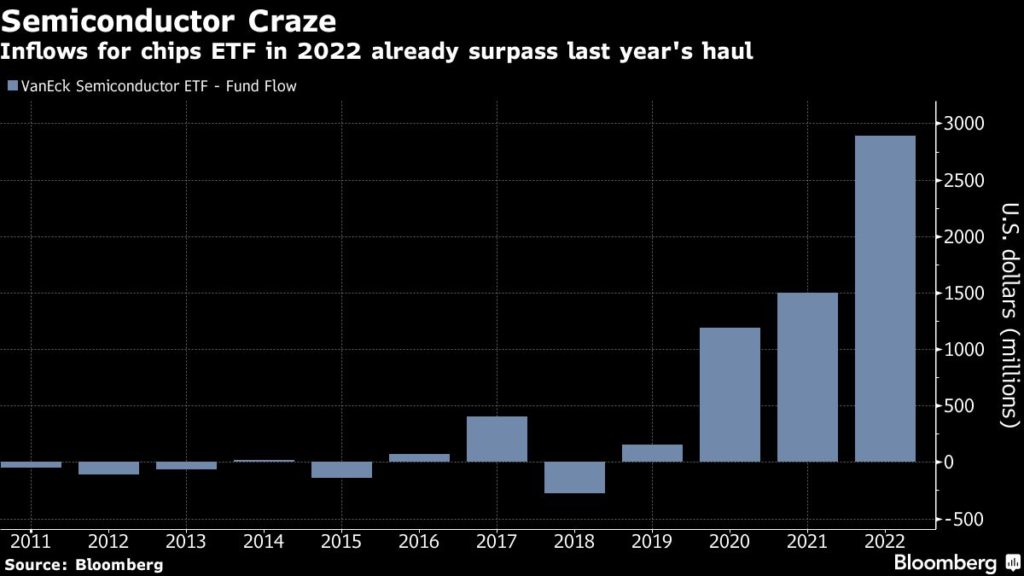
Favor cyclicals is what investors did in the past week. Billions were poured into exchange-traded funds focused on semiconductor stocks as they wagered the industry will rebound from the supply-chain snags and chip shortages. Materials producers and industrial stocks led gains in the period.

Semiconductor ETFs saw roughly $1.7 billion of inflows, according to data compiled by Bloomberg. Since the beginning of the year, the funds have collected $7.8 billion, about as much as the past two years combined. The influx of cash into semiconductors, a cyclical sector that typically does well when the economy is doing well, highlights the faith of investors that the industry will recover from the supply-chain turmoil exacerbated by the pandemic.  

Other economic reports were friendlier to bulls, among them U.S. retail sales, which ticked higher in March thanks to an 8.9% jump in spending for gasoline. The data offered a glimmer of optimism that Americans are still willing to spend despite the rising prices of goods and services, even as calls for recession grow louder in the near-term. Even if one does arrive, timing an economic downturn is difficult. 

“Recession is more likely than a soft landing. That doesn’t mean that imminently the market goes down,” Liz Ann Sonders, chief investment strategist for Charles Schwab & Co., said by phone. “But assuming risk of recession continues to go up and doesn’t come back down, you can at least assume there’s going to be more volatility in the market.”

At Jefferies LLC, chief economist Aneta Markowska monitors a proprietary U.S. economic activity index made of up components including restaurant bookings, retail web traffic and transit data, among others. Her gauge has risen above levels seen a month ago, and Markowska notes consumption and movement factors have made notable gains, though she says housing has weakened. 

“So, although the economy appears to be treading water on the surface, there are continued signs of normalization under the hood,” she wrote in a note. “Consumer activity continues to be very resilient in the face of higher energy costs.”

More stories like this are available on bloomberg.com

©2022 Bloomberg L.P.

Key Twitter Investor Prince Alwaleed Rejects Elon Musk’s Bid

(Bloomberg) — Saudi Arabia’s Prince Alwaleed bin Talal rejected Elon Musk’s bid to acquire Twitter Inc. for $54.20 per share, saying the deal doesn’t “come close to the intrinsic value” of the popular social media platform.

The move prompted a rapid retort from Musk, who asked how many shares the investor held in Twitter, and what are the Kingdom’s view on freedom of speech for journalists.

A 2015 regulatory filing showed that Alwaleed, along with his Kingdom Holding Company, owned a 5.2% stake in the social media platform. The Bloomberg Billionaires Index estimates the position is now about 4.4% of Twitter.

Alwaleed is the richest individual in Saudia Arabia, with a $16.5 billion fortune, the Bloomberg Billionaires Index shows. Most of his wealth is derived from his 95% ownership of Kingdom Holding Company.

It’s been a tumultuous few years for the prince, who was detained at the Ritz-Carlton hotel in Riyadh for nearly three months in late 2017 along with other Saudi princes in an anti-corruption sweep started by the de facto Saudi ruler and Crown Prince Mohammed Bin Salman, which was largely seen as a move to consolidate power.

Twitter’s shares fluctuated on Thursday as investors weighed news of the offer. The stock was down 2% to $44.93 at 2:59 p.m. in New York. 

(Updated with Musk response in second paragraph.)

More stories like this are available on bloomberg.com

©2022 Bloomberg L.P.
Billionaire Prince Alwaleed Rejects Elon Musk’s Twitter Bid

(Bloomberg) — Saudi Arabia’s Prince Alwaleed bin Talal rejected Elon Musk’s bid to acquire Twitter Inc. for $54.20 per share, saying the deal doesn’t “come close to the intrinsic value” of the popular social media platform.

The move prompted a rapid retort from Musk, who asked how many shares the investor held in Twitter, and what are the Kingdom’s view on freedom of speech for journalists.

A 2015 regulatory filing showed that Alwaleed, along with his Kingdom Holding Company, owned a 5.2% stake in the social media platform. The Bloomberg Billionaires Index estimates the position is now about 4.4% of Twitter.

Alwaleed is the richest individual in Saudia Arabia, with a $16.5 billion fortune, the Bloomberg Billionaires Index shows. Most of his wealth is derived from his 95% ownership of Kingdom Holding Company.

It’s been a tumultuous few years for the prince, who was detained at the Ritz-Carlton hotel in Riyadh for nearly three months in late 2017 along with other Saudi princes in an anti-corruption sweep started by the de facto Saudi ruler and Crown Prince Mohammed Bin Salman, which was largely seen as a move to consolidate power.

Twitter’s shares fluctuated on Thursday as investors weighed news of the offer. The stock was down 2% to $44.93 at 2:59 p.m. in New York. 

(Updated with Musk response in second paragraph.)

More stories like this are available on bloomberg.com

©2022 Bloomberg L.P.
Biden Pushes Congress on Manufacturing Bill to Bolster Competition With China

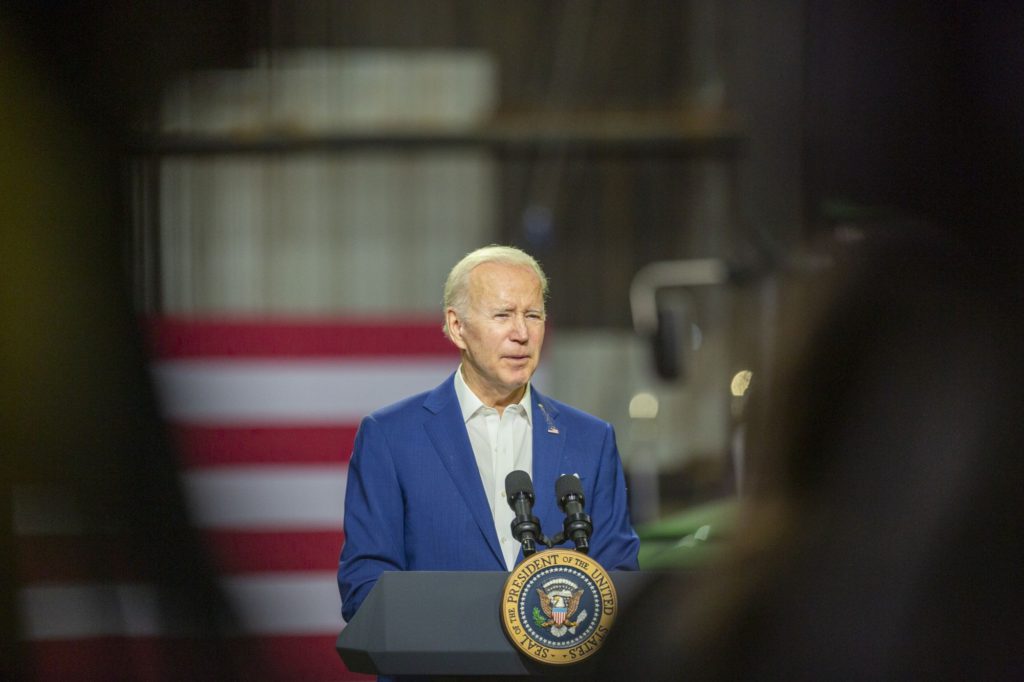
(Bloomberg) — President Joe Biden urged Congress to pass legislation aimed at making the U.S. more competitive with China with provisions including $52 billion to bolster chip manufacturing. 

“Congress needs to get this bill to my desk as quickly as possible,” Biden said during a speech at North Carolina Agricultural and Technical State University in Greensboro, the nation’s largest historically Black college and university.

“Our economic strength is on the line and national security, as well, is on the line,” Biden, who toured a robotics lab while on the HBCU campus, added.

The president highlighted his domestic manufacturing strategy and how Greensboro’s economy could benefit from the passage of the so-called Bipartisan Innovation Act. Lawmakers are hashing out differences between the Senate- and House-passed versions of the measure as the legislative window rapidly closes ahead of the November midterm elections.

A global shortage of semiconductors has caused production delays and disruptions for sectors like autos and consumer electronics. 

“Other countries are racing ahead, but we can’t afford to wait,” Biden said.

The legislation Biden touted also includes provisions aimed at jump-starting innovation and bringing key industries back to the U.S. amid the global supply chain crunch.

The North Carolina visit is Biden’s second trip this week aimed at highlighting his domestic economic agenda amid inflation that’s surged to the highest level in four decades.

Biden once again Thursday blamed Russian President Vladimir Putin’s invasion of Ukraine for inflation that’s now running at its highest in four decades — propelled by surging gas and food prices.

Administration officials have frequently pointed to the innovation bill as way to ease inflationary pressures for items including used cars.

But the legislation has attracted opposition from conservatives and progressives alike, who take issue with its favorable treatment of companies seeking to invest in U.S. manufacturing. Senator Ron Johnson, a Wisconsin Republican, questioned why the U.S. would create a new “industrial policy” where the government would invest in semiconductor manufacturing rather than simply slapping tariffs on goods from countries that subsidize their chip-producing industries.

Senator Bernie Sanders, an independent from Vermont who caucuses with Democrats, decried the “corporate welfare” in the legislation during a speech lambasting the chip companies for outsourcing manufacturing jobs over the past two decades.

Read more: Senate Passes China Competition Bill to Start Talks With House

White House Deputy Press Secretary Karine Jean-Pierre told reporters Thursday aboard Air Force One that Biden’s team would continue working closely with lawmakers to try to bring the bill over the finish line.

But even if the legislation becomes law, it will take years for new chip production to come online.

Cabinet officials this week have also been dispatched around the country to talk about the bill and its benefits for the communities they’re visiting. 

More stories like this are available on bloomberg.com

©2022 Bloomberg L.P.

Close Bitnami banner
Bitnami