Bloomberg

Elon Musk Also Threatened to Buy My Company. Here’s How We Handled It

(Bloomberg) — Elon Musk’s unsolicited bid to buy Twitter Inc. is a triggering event for me and my former colleagues. In 2019, I was working as the digital editor of the London-based New Scientist, the weekly science magazine, when Musk tweeted idly about how much it would cost to buy it.

Barbarians at the gate? Try billionaire in the DMs.

Occasional interactions with @ElonMusk weren’t new to me or my team. One coworker used to direct-message him every few months asking for an interview—and to sneakily promote my colleague’s book. Sometimes Musk even responded, claiming “New Scientist is my favorite periodical.” Little did we know this flirtation would lead to a takeover offer, on Twitter, for our science magazine one spring day in 2019.

After complaining about our publication’s paywall, Musk asked how much it would cost to just buy New Scientist outright. Ultimately, a deal didn’t happen—though the company was later sold to the Daily Mail Group for about 70 million pounds ($92 million). But Musk’s offer sent management scrambling over how to respond.

Here’s what my team learned from the experience:

1. Do an audit of your Twitter following

The early warning sign of an impending buyout offer from Musk is that he’s following your account. Is he @-ing you with cryptic tweets? Does he DM you? These are the key indicators of a Musk hostile takeover that you and your social media managers should be looking for.

2. If Musk tweets that he wants to buy your company, don’t panic

Good advice in any circumstance. Particularly one where the fate of your company rests on the whims of the world’s richest man—with a Twitter following of 81.7 million—who seems to enjoy chaos.

3. Trust your social media manager

That underpaid and frustrated person who sits in a corner of your office all day thinking of the best GIFs to send on Slack? They are now the most important person in your entire corporation.

4. Get your emoji game plan together

Musk is known as a “memelord,” a person who creates and distributes memes (ask your marketing team about them later). Replying with an emoji is a great way to strike the right balance between making a serious reply to his offer and having it be casual enough that you won’t be embarrassed if it does indeed turn out to be a joke.

5. Be concise

Your board and executives should probably know that you’re about to negotiate the ownership of the company using a medium that has a character limit of 280 characters. Every letter counts. 

After Musk asked “How much is it?” in reference to the company, New Scientist Chief Executive Officer Nina Wright drafted a tweet that kept it light (winking emoji) and promised to fix the paywall problem.

6. Send the tweet

You are on Twitter, aren’t you?

7. Don’t take it too seriously

Musk never bought New Scientist, and as he acknowledged Thursday, he may never buy Twitter. So it’s best to respond carefully, while taking any offer with a large grain of salt.

More stories like this are available on bloomberg.com

©2022 Bloomberg L.P.

Elon Musk Has At Least One Friend on Twitter’s Board — Dorsey

(Bloomberg) — On Thursday, the Twitter Inc. board convened an emergency meeting to weigh Elon Musk’s $43 billion proposal to take the social media company private. The board has not yet said publicly what it will do with the offer. 

But at least one member, Jack Dorsey, has warmly embraced Musk’s proposals in the past.

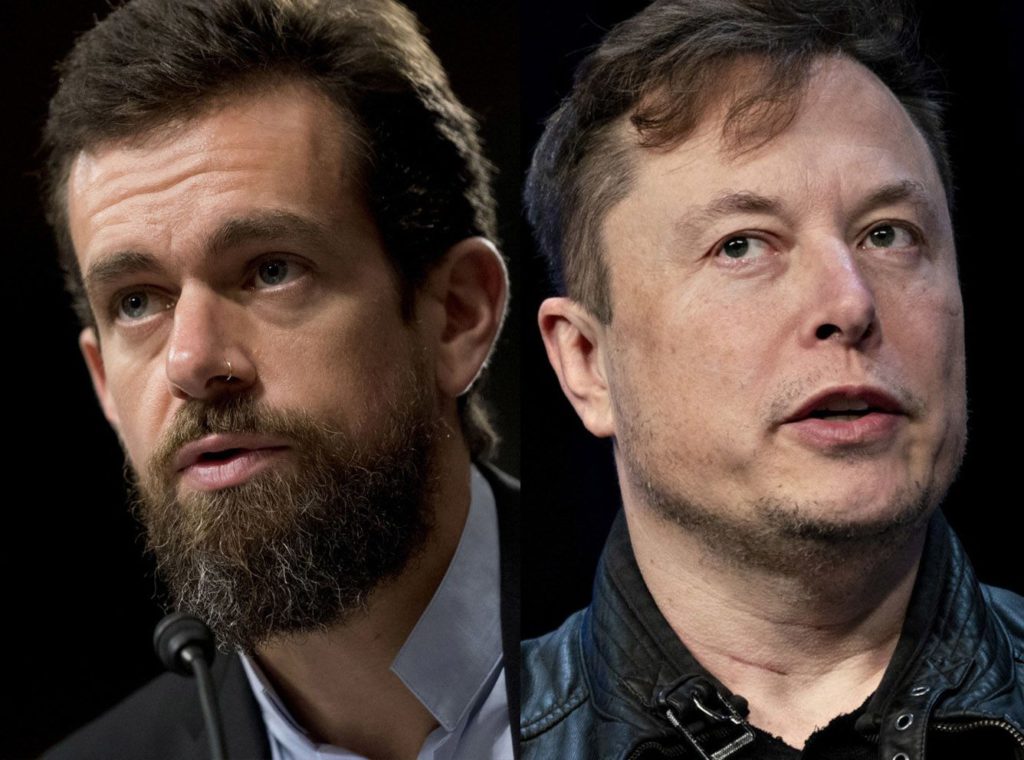
Dorsey, a Twitter co-founder and former chief executive, has praised Musk and described him as a favorite “influential” tweeter. He’s also invited Musk to Twitter to discuss product ideas. The two share an affinity for cryptocurrencies and making Twitter’s software and content moderation decisions more transparent. 

“One of the things I think Twitter should do is open source the algorithm,” Musk said on Thursday afternoon at the TED conference in Vancouver after announcing his bid. The Tesla Inc. CEO said that Twitter’s system for moderating and promoting media operated as a “black box.” He added, “That can be quite dangerous.” 

As Twitter CEO, Dorsey started a project to make the company’s technology open for public experimentation, although that effort hasn’t produced much to date. Since leaving the role, last year, he has tweeted frequently about the damage of centralized, corporate control over web services. “I realize I’m partially to blame, and I regret it,” he wrote on April 2, several weeks after Musk had begun quietly buying company shares.

Dorsey, whose leadership was heavily scrutinized during an activist campaign from Elliot Management Corp., stepped down as CEO late last year and is set to leave the Twitter board this year. (He still runs Block Inc.) After Twitter invited Musk to join its board—but before Musk and Twitter  reversed that plan—Dorsey said he had wanted the fellow billionaire as a director for “a long time.” 

Other members of Twitter’s board, which includes three former Google executives and the Salesforce.com Inc. co-CEO, Bret Taylor, shared welcome notes to Musk when he was set to join, followed by the note that he was not joining.

It’s not clear if Dorsey and Musk see eye-to-eye on content moderation. With Dorsey at the helm, Twitter permanently banned former President Donald Trump after the Capitol riots, though Dorsey delegated most of the moderation decisions to his legal deputy, Vijaya Gadde.

At the TED conference, Musk said that Twitter should obey the laws of the countries where it operates, and noted that he was opposed to “permanent bans.” But he didn’t articulate a very robust content policy philosophy. “If it’s a gray area, let the Tweet exist,” Musk said, before adding. “I’m not saying I have all the answers here.”

Dorsey, like Musk, is a prolific tweeter. He has not posted anything since Musk announced his takeover bid.

More stories like this are available on bloomberg.com

©2022 Bloomberg L.P.

Musk Hints at Twitter Plan B, Lambastes SEC Over Settlement

(Bloomberg) — Elon Musk expressed doubt about whether he’ll succeed with his $43 billion offer to buy Twitter Inc. in his first public comments about the blockbuster deal.

“I am not sure that I will actually be able to acquire it,” the billionaire entrepreneur said Thursday at a TED event in Vancouver. Musk said he has a Plan B if Twitter rejects his offer, without offering more details.

The comments, made during a lengthy interview with TED head Chris Anderson, came hours after the world’s richest person and chief executive officer of Tesla Inc. and SpaceX roiled the financial world with the all-cash bid. With heightened interest in Musk’s activities, organizers of the conference made a last-minute change to make his prearranged appearance freely available online.

The offer is intended to create “an inclusive arena for free speech,” not as a way to make money, Musk said. He also said he has sufficient assets to complete the deal.

Twitter’s board views Musk’s move as unwelcome, The Information reported while he was still speaking, citing a person familiar with the situation.

The social-media company declined to comment beyond its earlier statement, which said the company would review Musk’s proposal and any response would be in the best interest of stockholders.

Read more: Elon Musk Offers $43 Billion to Take Twitter Private

In the interview, Musk also criticized the U.S. Securities and Exchange Commission, saying he was essentially coerced into accepting a 2018 settlement in which he relinquished his role of chairman of Tesla’s board and paid a $20 million fine. The agreement came after Musk’s infamous tweet saying he had secured funding to take Tesla private.

Musk said Thursday that he had arranged the funding and said he was under pressure from the precarious financial situation of Tesla, which was struggling to ramp up the Model 3 sedan at the time.

“I was told by the banks that if I did not agree to settle with the SEC they would cease providing working capital and Tesla would go bankrupt immediately,” said Musk, who grew visibly emotional while speaking. “So that’s like having a gun to your child’s head. So I was forced to concede to the SEC, unlawfully.”

High Stakes

Musk, 50, revealed the proposed takeover of Twitter in an SEC filing earlier Thursday, after turning down the chance to take a board seat at the company. The bid is a high-stakes clash between Musk and the social media platform, which is used by more than 200 million people. Musk has been highly vocal about changes he’d like to see at the company.

Among Musk’s priorities for the platform: an edit button that would limit the amount of time that changes to a tweet could be made. Musk would also prioritize eliminating spam bots from the platform. He also thinks that the algorithm should be made public so there’s transparency on when tweets are changed, promoted or unpromoted.

Twitter’s shares on Thursday traded well below Musk’s $54.20 offer price, suggesting skepticism over the prospects of a deal. Saudi Prince Alwaleed bin Talal, a major Twitter shareholder, said Musk’s offer doesn’t come “close to the intrinsic value” of the company “given its growth prospects.”

Musk said his intent “is to retain as many shareholders as is allowed by the law in a private company.”

Tesla’s shares fell 3.4% to $987.75 at 2:57 p.m. in New York, while Twitter slipped 2% to $44.92.

(Updates with Musk’s comments about the SEC)

More stories like this are available on bloomberg.com

©2022 Bloomberg L.P.

Russia Wages Social-Media Campaign to Label Bucha Massacre a Hoax

(Bloomberg) — A Kremlin-backed Twitter campaign claiming the Bucha massacre was a hoax orchestrated by the U.K and U.S. has become Russia’s most aggressive disinformation campaign of the Ukraine war yet, according to new findings.

Russian politicians, foreign embassies and state media accounts on Twitter Inc. with hundreds of thousands of followers tweeted the term “Bucha” more than 1,000 times last week, according to the Alliance for Securing Democracy, a nonprofit which has been tracking Russian disinformation relating to the war. The campaign was an attempt to manipulate public discourse surrounding the events that unfolded in the Kyiv suburb early this month, according to researchers.

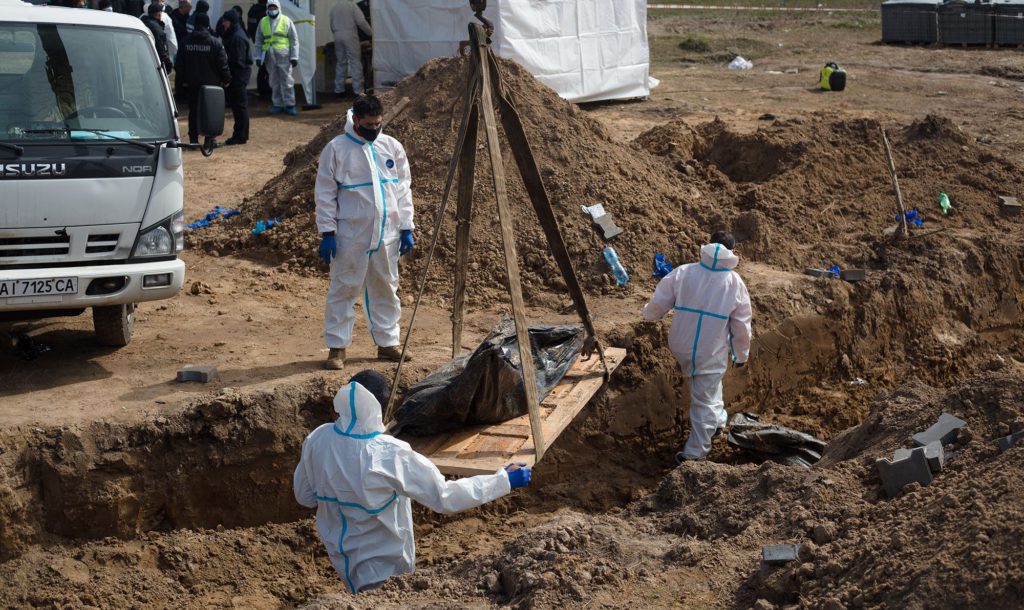
As Russian troops withdrew from Bucha on April 1, photos and videos emerged of indiscriminate shelling, torture and executions of civilians. The alleged atrocities caused global outcry, and U.S and European officials have said they are considering tougher sanctions because of what may be war crimes.

The disinformation campaign suggests that Russia still considers Western platforms like Twitter valuable tools for spreading propaganda to sow confusion over the Ukraine invasion both domestically and internationally, despite social media companies’ work to thwart their efforts, according to researchers at the think-tank.

The Russian Embassy in Washington didn’t respond to a message seeking comment.

Twitter accounts for Russian embassies in France, Indonesia and Japan, along with Russian officials and government agencies, have been amplifying false theories about Bucha, according to the researchers. On April 6, for instance, the Russian embassy in Jakarta, which has 20,000 followers, wrote a 16-tweet-long thread arguing that there were no Russian troops in Bucha at the time of the killings and asserting Russia’s innocence in the matter.

Two days later, Russia’s Ministry of Foreign Affairs accused Richard Moore, the chief of Britain’s MI6 Secret Intelligence Service, of participating “in developing this cynical act of provocation in order to accuse Russian peace keepers of such a grave sin.” The statement was picked up by several Russian state media outlets including Sputnik News, The Russian News Agency (TASS), Zvezda and RIA Novosti, which were shared on Twitter. The Japanese and Serbian language outlet of Sputnik News and Zvesda shared the claims on their Twitter accounts. The Twitter account of Russia’s French embassy also suggested MI6 was involved, sharing a video of a former Russian politician spreading the claim.

Then, on April 9, several Moscow-linked accounts began tweeting that another hoax was in the works to smear Russia, according to researchers. An account belonging to Dmitry Polyanskiy, the first deputy permanent representative of Russia to the United Nations, alleged that Ukraine and its “Western propaganda-tutors” were already plotting another deception. 

That same day, the Russian Ministry of Foreign Affairs alleged that the next fraudulent claim might be centered in the Ukrainian city of Irpin, which borders Kyiv. Margarita Simonyan, editor-in-chief of state-backed Russia Today suggested similar events would occur in Kharkiv. 

Twitter said in March that it was placing limits on government accounts that belong to countries at war whose governments are limiting information to its own people. The new policy was designed to address the “severe information imbalance” stemming from authoritarian governments which block access to Twitter and other media yet continue using it for propaganda. 

Twitter is applying labels to Russian state-affiliated media outlets, and tweets from these accounts are no longer recommended in the Home timeline or in notifications. Twitter said it has labeled more than 260,000 unique tweets under this policy.

“Twitter’s new policies clearly haven’t stopped Kremlin-linked accounts from using the platform to spread disinformation about the war,” said Joseph Bodnar, a researcher with the Alliance for Securing Democracy. “If anything, Russian diplomatic accounts have become more aggressive.” 

Bodnar said he didn’t believe the influence campaign had convinced the public, but appeared to be a ploy to manipulate how people perceive future events in Ukraine. 

“With Bucha, Russian propagandists were caught trying to distort facts after they came to light,” he said. “Now Russian officials are getting out in front of events and claiming that Ukraine is staging scenes of violence in areas where Russian troops are just starting to leave.”

A Twitter spokesman said the company was looking into the tweets making false claims about Bucha. Twitter already “took action” on several Russian embassy accounts for denying other violent events in Ukraine, the spokesman said. Twitter did not immediately respond to these claims.

The disinformation campaign, which started last week, preceded remarks on Tuesday by Russian President Vladimir Putin, who denied that that Russian soldiers have been executing civilians and that accounts from journalists and investigators of the attack are simply “fake” and ”provocation.” 

Putin made the comments during a news conference with the president of Belarus, Alexander Lukashenko, at a Russian spaceport, a facility for launching spacecraft, during which Lukashenko offered unproven claims that the British government had organized the “psychological special operation.”

Alliance researchers said the Bucha disinformation campaign was roughly double the size of another Kremlin-linked attempt to perpetuate a conspiracy theory, this one claiming that top secret research labs funded by the U.S. Department of Defense are planning to unleash biological weapons on Russia.  

The bioweapons theory has spread rapidly in the U.S. among proponents of the QAnon conspiracy theory and others, according to Bodnar. 

Since the events in Bucha came to light, the city’s name hasn’t been tweeted much by Chinese media or diplomatic accounts, the researchers found. Chinese accounts have tended to amplify Russia’s claims about the warn in Ukraine and downplay any wrongdoing by Moscow.

The term “massacre” was only included on Beijing-linked Twitter accounts when presented in quotes as a disputed claim, or in reference to a “so-called massacre” that may have been staged by the Ukrainians and the West, the researchers found. Instead, the Chinese accounts that referenced Bucha mostly used the term “incident.” 

More stories like this are available on bloomberg.com

©2022 Bloomberg L.P.

Goldman Sachs, Morgan Stanley Face Off on Musk Bid for Twitter

(Bloomberg) — Elon Musk’s unsolicited $43 billion offer for Twitter Inc. sets up a showdown between two of Wall Street’s biggest advisory shops, which could result in lucrative payouts for both if the biggest hostile takeover in years is successful.

Morgan Stanley is advising Musk, according to a filing Thursday, while Twitter has enlisted the help of Goldman Sachs Group Inc. as it considers how to respond to Musk’s hostile bid, according to people familiar with the matter. The pair often tussle for the top billing in the M&A rankings, with Goldman currently in the No. 1 spot, according to data compiled by Bloomberg. 

To be sure, a big chunk of any bank fees hinge on the deal panning out, which is uncertain. Musk said on Thursday he’s “not sure” he’ll “actually be able to acquire” Twitter and he has a Plan B if Twitter’s board rejects his offer, without offering details.

Though they’ll be sitting opposite each other in any negotiations, Morgan Stanley and Goldman each have a relationship with Musk that stretches back more than a decade. Both New York-based investment banks underwrote Tesla’s 2010 initial public offering: Goldman got the coveted lead left role, while Morgan Stanley was listed second on the prospectus. 

Musk also turned to the pair of banks in 2018, during his failed attempt to take Tesla private. He worked with Goldman, according to a tweet at the time. He later brought on Morgan Stanley to help advise him personally on the potential buyout that never materialized.

This time round, Goldman, a longtime Twitter adviser, is likely to have been conflicted from advising Musk due to its recent roles for the social-media company. The bank worked with Twitter in 2020 on an investment from Silver Lake, as well as on a board settlement with Elliott Investment Management.

That means that, for now at least, Morgan Stanley gets sole billing alongside Musk. The bank has fielded a team of its top technology bankers, led by Michael Grimes, to assist the billionaire, said people familiar with the matter, who asked not to be identified because the matter is private.

Representatives for Morgan Stanley and Goldman declined to comment on their involvement. 

In a coup for Old Wall Street, no boutique investment banks appear to be involved, though both bidders and targets often add advisers as transactions drag on. Bulge-bracket banks like Morgan Stanley and Goldman have increasingly been competing for market share with independent advisory firms such as Allen & Co., Lazard Ltd and Centerview Partners.

Regardless of who’s on which side — and even whether the bid is successful or not — both banks stand to gain from the process. As the target’s adviser, Goldman will get paid no matter what Twitter decides to do, though it’ll get a much bigger fee if a sale to Musk actually goes ahead. 

Morgan Stanley, meanwhile, will likely only get a big payday if a deal is reached. Then, it could pocket the fees for advising Musk as well as potentially for helping to arrange financing for the bid, although there’s so far little detail on how Musk might fund his all-cash offer.

Still, the mandate is an opportunity to get even closer to the richest person in the world. A strong relationship could put Morgan Stanley in pole position to be tapped for any transaction that Musk’s portfolio of companies might want to make. With Tesla, SpaceX and the Boring Co. all under his control — and the latter two still private — there’s plenty of potential opportunities for more work. 

Working with any client, and particularly one with a reputation for being unpredictable, can carry potential downside if the deal goes awry. Musk’s attempt to take Tesla private resulted in scrutiny from the Securities and Exchange Commission, and eyebrows have already been raised by the stock purchases that preceded his offer for Twitter. Any potential risk hasn’t dissuaded Wall Streets biggest banks from being along for the ride so far, even as Musk embarks on one of his wildest business endeavors yet. 

More stories like this are available on bloomberg.com

©2022 Bloomberg L.P.

Elon Musk Makes $43 Billion Unsolicited Bid to Take Twitter Private

(Bloomberg) — Billionaire entrepreneur Elon Musk offered to take Twitter Inc. private in a deal valued at $43 billion, lambasting company management and saying he’s the person who can unlock the “extraordinary potential” of a communication platform used daily by more than 200 million people.

The world’s richest person said he’ll pay $54.20 per share in cash, 38% above the price on April 1, the last trading day before Musk went public with his stake. The social media company’s shares were little changed at $45.81 in New York on Thursday, a sign there’s skepticism that one of the platform’s most outspoken users will succeed in his takeover attempt.

Musk, 50, announced the proposed deal in a filing with the U.S. Securities and Exchange Commission on Thursday, after turning down the chance to take a board seat at the company. Musk, who also controls Tesla Inc., first disclosed a stake of about 9% on April 4, making him the largest individual investor. Tesla shares fell about 3% on concern that the attempt to acquire Twitter will be a distraction for Musk.

Twitter said that its board would review the proposal and any response would be in the best interests of “all Twitter stockholders.” The board, which was set to meet to evaluate the proposal early Thursday, sees the takeover offer as unwelcome and will probably fight it, the Information reported, citing a person familiar with the matter.

In an interview at a TED conference on Thursday in Vancouver, Musk said he’s not sure he’ll succeed with the acquisition, and indicated that he has a Plan B if Twitter’s board rejects his offer. He declined to elaborate.

Twitter declined to comment on the board meeting or Musk’s comments at TED.

Also see: Here’s the Message Musk Sent to Make His $43 Billion Twitter Bid

The bid is the most high-stakes clash yet between Musk and the social media platform. The executive is one of Twitter’s most-watched firebrands, often tweeting out memes and taunts to @elonmusk’s more than 80 million followers. He has been vociferous about changes he’d like to consider imposing at the social media platform, and the company offered him a seat on the board following the announcement of his $3.35 billion stake.

After announcing his stake, Musk immediately began appealing to fellow users about prospective moves, from turning Twitter’s San Francisco headquarters into a homeless shelter and adding an edit button for tweets to granting automatic verification marks to premium users. One tweet suggested Twitter might be dying, given that several celebrities with high numbers of followers rarely tweet. 

Unsatisfied with the influence that comes with being Twitter’s largest investor, he has now launched a full takeover, one of the few individuals who can afford it outright. He’s currently worth about $260 billion according to the Bloomberg Billionaires Index.

Although Musk is the world’s richest person, how he will find $43 billion in cash has yet to be revealed.

“This becomes a hostile takeover offer which is going to cost a serious amount of cash,” said Neil Campling, head of TMT research at Mirabaud Equity Research. “He will have to sell a decent piece of Tesla stock to fund it, or a massive loan against it.”


At the TED conference Thursday, Musk said that if he succeeds in his bid, he would seek to retain as many other shareholders as the law allows for a private company, rather than being sole owner.

“I could technically afford it,” Musk said “But this is not a way to sort of make money. It’s just that I think this is — my strong intuitive sense is that having a public platform that is maximally trusted and broadly inclusive is extremely important to the future of civilization. I don’t care about the economics at all.”

Much of Musk’s ire against Twitter has been directed against what he perceives as censorship by the platform. In a letter to Twitter’s board alongside details regarding his offer, Musk said he believes Twitter: “will neither thrive nor serve [its free speech] societal imperative in its current form. Twitter needs to be transformed as a private company”

Musk is offering a 54% premium over the Jan. 28 closing price, the date after which he began building his initial stake in Twitter. The takeover attempt is unlikely to be a drawn-out process. 

“If the deal doesn’t work, given that I don’t have confidence in management nor do I believe I can drive the necessary change in the public market, I would need to reconsider my position as a shareholder,” said Musk.

Musk informed Twitter’s board over the previous weekend that he thought the company should be taken private, according to today’s statement.

Read this next: How Jack Dorsey Quit Twitter to Become Bitcoin’s Spiritual Leader

The $54.20 per share offer is “too low” for shareholders or the board to accept, said Vital Knowledge’s Adam Crisafulli in a report, adding that the company’s shares hit $70 less than a year ago.

Twitter shareholder Saudi Prince Alwaleed bin Talal said he rejects Musk’s offer as not coming “close to the intrinsic value” of Twitter “given its growth prospects.”

Although Musk said his offer was “best and final,” it opens the gates to rivals, either to team up with or out-bid his offer. Oracle CEO Larry Ellison, also on the board of Tesla, previously attempted to buy a stake in social media platform TikTok.

Musk has hired Morgan Stanley as his adviser for the bid. The offer price also includes the number 420, widely recognized as a coded reference to marijuana. He also picked $420 as the share price for possibly taking Tesla private in 2018, a move that brought him scrutiny from the SEC.

“There will be host of questions around financing, regulatory, balancing Musk’s time (Tesla, SpaceX) in the coming days,” said Dan Ives, analyst at Wedbush. “But ultimately based on this filing it is a now or never bid for Twitter to accept.”

I invested in Twitter as I believe in its potential to be the platform for free speech around the globe, and I believe free speech is a societal imperative for a functioning democracy.  

However, since making my investment I now realize the company will neither thrive nor serve this societal imperative in its current form. Twitter needs to be transformed as a private company.

As a result, I am offering to buy 100% of Twitter for $54.20 per share in cash, a 54% premium over the day before I began investing in Twitter and a 38% premium over the day before my investment was publicly announced. My offer is my best and final offer and if it is not accepted, I would need to reconsider my position as a shareholder.

Twitter has extraordinary potential.  I will unlock it.

Elon Musk’s full letter to Twitter’s board


(Updates with Musk’s comments at TED starting in fifth paragraph.)

More stories like this are available on bloomberg.com

©2022 Bloomberg L.P.

JPMorgan Unveils Headquarters With Dimon Committing to New York

(Bloomberg) — JPMorgan Chase & Co. unveiled plans for its new global headquarters — a 60-story skyscraper in midtown Manhattan that, according to the bank, demonstrates its commitment to New York City’s revival.

To encourage employees to back that revival, it’s offering lots of amenities at the Park Avenue tower, including yoga and cycling rooms, meditation spaces, an abundance of outdoor areas and a state-of-the-art food hall, according to a statement Thursday. Such enticements could also help JPMorgan with another effort it’s actively engaged in: Wall Street’s intense fight to retain talent.

The bank also touted its commitment to the environment, saying the new building will be the city’s largest all-electric tower, fully powered by renewable energy from an in-state hydroelectric plant.

“This has been a real pleasure and a permanent thing for JPMorgan Chase,” Chief Executive Officer Jamie Dimon said at an event held at the site Thursday to honor the construction workers. “JPMorgan Chase has been in the city for 200 years, and this is the headquarters of JPMorgan, in the best city in the world, in the best country in the world.”

The bank announced plans in 2018 to tear down its 52-story office tower at 270 Park Ave. in favor of a more modern skyscraper. The new 1,388-foot (423-meter) building will house as many as 14,000 workers, up from roughly 3,500 that the 1950s-era property was designed to hold. It will have 2.5 times more outdoor space on the ground level, with wider sidewalks on Park and Madison avenues. A public plaza will be constructed on Madison.

The project, the first under New York’s 2017 rezoning of the Midtown East area, started more than two years ago and will be completed by the end of 2025. 

The announcement comes at a time when employees have been slow to return to their offices after pandemic lockdowns. Manhattan’s supply of empty office space has soared to record levels as companies re-evaluate their real estate needs in the hybrid-work era. Concerns over safety in the city and its transit system have also risen to the fore this week in the wake of a subway attack that left dozens injured, including many with gunshot wounds.

Still, major finance firms have been at the forefront of bringing employees back. JPMorgan was the first major U.S. bank to mandate a return to office for its U.S. workforce last year.

Read more: Wall Street Brings Bankers Back to Offices Remade for Hybrid Era

Dimon emphasized the safety and sustainability of the building at the event, where he was joined by Governor Kathy Hochul and other local politicians and officials involved with the project. Maria Torres-Springer, the city’s deputy mayor of economic and workforce development, addressed the subway attack.

“Given the tragic events of this week, investment and resilience have always been the signature of New York and we are proving that today,” Torres-Springer said. 

The project will contribute 8,000 jobs and $2.6 billion annually to the city and $3.6 billion to the state, said David Arena, the bank’s head of global real estate.

Designed by Foster + Partners, the building will use technology such as artificial intelligence, water storage and reuse systems and automatic solar shades to operate more efficiently. 

“Something like this is going to give other investors something to think about, put up other structures that look similar to this,” said Camilius Thompson, a 47-year-old welding foreman from Queens working at the site. “I really think this good for New York.”

More stories like this are available on bloomberg.com

©2022 Bloomberg L.P.
Facebook Is Pulling Back From Its Foray Into Podcasting

(Bloomberg) — Facebook’s interest in podcasts is fading, barely a year after it began.

Last April, during a hot market for audio, Facebook launched Live Audio Rooms, short-form stories called Soundbites and podcasts for U.S. users. The company signed deals with creators and sponsored one of the industry’s biggest U.S. conferences: Podcast Movement. Facebook product managers even appeared on the long-time industry program “New Media Show” to encourage podcasters to join the platform. 

But nowadays, the company is emphasizing other initiatives in conversations with podcast partners, including events in the metaverse and online shopping, according to industry executives who work with the platform. They asked not to be identified because their discussions with Facebook haven’t been disclosed publicly.

Facebook’s waning interest in podcasting is a disappointment for some in the growing industry because the scale of its platform offers a large potential audience, and with it, the possibility of more advertising revenue. Instead, parent company Meta Platforms Inc. is turning its attention to the metaverse and short-video projects amid increasing competition and a precipitous drop in its stock price.

A spokesperson for Facebook said the company is still working on podcasts even as it’s accelerating work on priority features like Reels and Feed. The company is seeing good engagement for its audio products, according to the spokesperson, who declined to provide specifics.

Audio Mania

Facebook’s move into audio, in some ways, felt inevitable. It did so during a moment of audio mania last year, when the live audio platform Clubhouse was valued at $4 billion and every tech company wanted to copy its product. Spotify Technology SA had a market value of more than $50 billion a year ago, double what it is now, and Amazon.com Inc. was signing major audio deals. So when Facebook said it was introducing audio experiences, no one was entirely surprised.

To break into the space, the company also explored starting a training program to bring creators onto the platform. Steph Colbourn, the founder and chief executive officer of Editaudio, said a group working with Facebook floated the idea of paying her to train 15 or so podcasters from diverse backgrounds on how to create their shows and use the platform, but it never followed through on the idea.

Then, after sponsoring Podcast Movement in August, Facebook didn’t sponsor the conference’s offshoot event in March and didn’t send a single person to attend, according to the event’s attendee list. 

At the same time, some initial Live Audio Rooms partners are no longer hosting conversations, and their deals were not re-upped. Civil rights activist DeRay McKesson, for example, signed an initial six-show agreement, which he says went well. But his deal hasn’t been renewed.

New Priorities

In another sign of changing priorities, one prominent podcast product manager at Facebook, Irena Lam, appears to have transitioned to a music-oriented role, according to her LinkedIn page.

But even Facebook’s limited podcasting efforts have been a source of growth for some content providers. TYT Network, which produces political programming, said Facebook is its second-most-popular listening platform after Apple Podcasts. The network added podcast content to Facebook in September and since then, the platform has contributed “hundreds of thousands of additional monthly listens,” according to Chief Marketing Officer Praveen Singh. That’s double the audience TYT gets on Spotify, she said.

More stories like this are available on bloomberg.com

©2022 Bloomberg L.P.
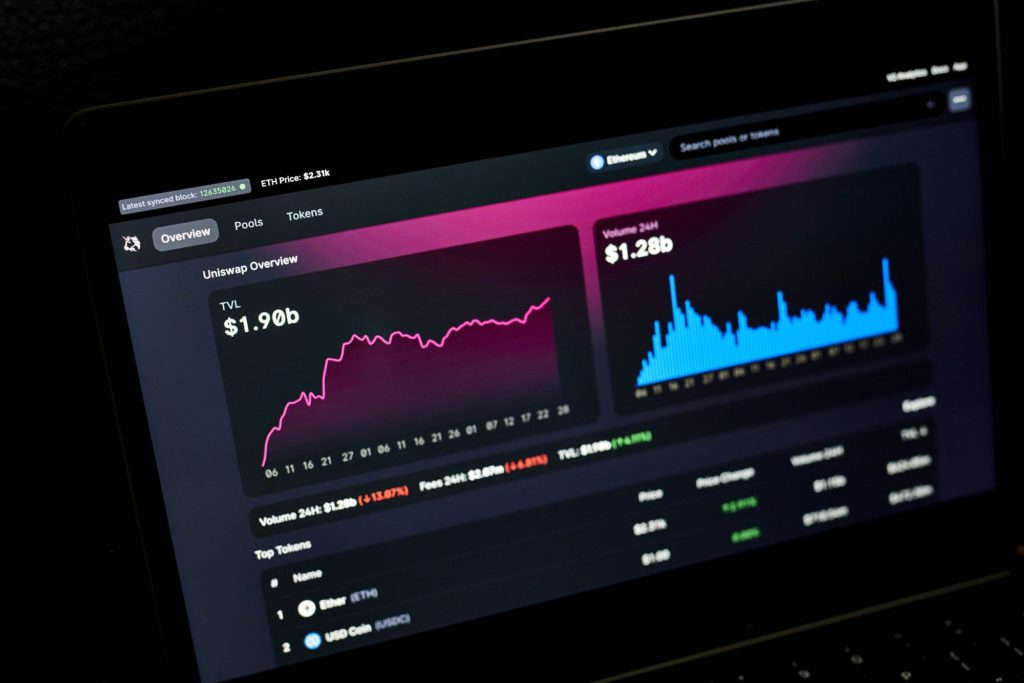
Crypto’s Top Decentralized Spot Market Aims to Dominate Web3

(Bloomberg) — Uniswap Labs, the main developer of the biggest decentralized exchange for spot-market cryptocurrency trading, is launching computer code that can embed its capabilities into any website, a step that could expand its growth.

The so-called swap widget, which can be added by pasting in a line of code, will let OpenSea users swap various tokens without leaving the web site that runs it. The widget will also be initially available on the sites Oasis.app and Friends With Benefits. 

PayPal Holdings Inc. used such a tactic decades ago to expand its reach and spur the growth of online commerce, said Richard Crone, the head of Crone Consulting LLC. In the cryptocurrency industry, however, such widgets are less pervasive, with Coinbase Global Inc. among those that provide them for certain functions. 

“We believe that value exchange is essential to Web3,” which is a slew of apps using tokens and blockchains, Mary-Catherine Lader, chief operating officer at Uniswap, said in an interview. “To grow, we have to grow the whole market.”

Since the start of 2021, Uniswap’s total value locked — a measure of how much money has been put into its platform — has grown by more than 200% to $7.8 billion, according to researcher CryptoCompare. But by that metric, its market share on Ethereum has dropped from 12.4% at the start of 2021 to 6.4% as financial apps like Curve and Aave expanded, said David Moreno Darocas, a research analyst at CryptoCompare.

Uniswap protocol’s software upgrade last year has allowed users to trade more volume with less capital. The protocol, which is distinct from Labs, has 74% share of Ethereum decentralized-exchange trading volume, per Dune Analytics.

The widget is a key part of Uniswap’s growth strategy, which recently lead to the company’s launch of a venture arm to invest in Web3 startups. Uniswap has also been expanding onto other blockchains, such as Polygon, and is quickly gaining traction there.

Uniswap Chief Executive Officer Hayden Adams founded the New York-based decentralized exchange after losing his job as a mechanical engineer at Siemens AG in 2017. Since then, Uniswap has come to dominate decentralized spot trading on Ethereum, with only dydx, which focuses on crypto derivatives, having higher trading volumes, according to CoinMarketCap. Currently, Uniswap’s trading volume is similar to FTX, a major centralized spot exchange, according to CoinMarketCap.

Unlike most traditional crypto exchanges, Uniswap protocol doesn’t charge issuers to list new tokens, generating revenue instead through transaction fees that go to liquidity providers.

(Adds Uniswap’s market share in sixth paragraph)

More stories like this are available on bloomberg.com

©2022 Bloomberg L.P.

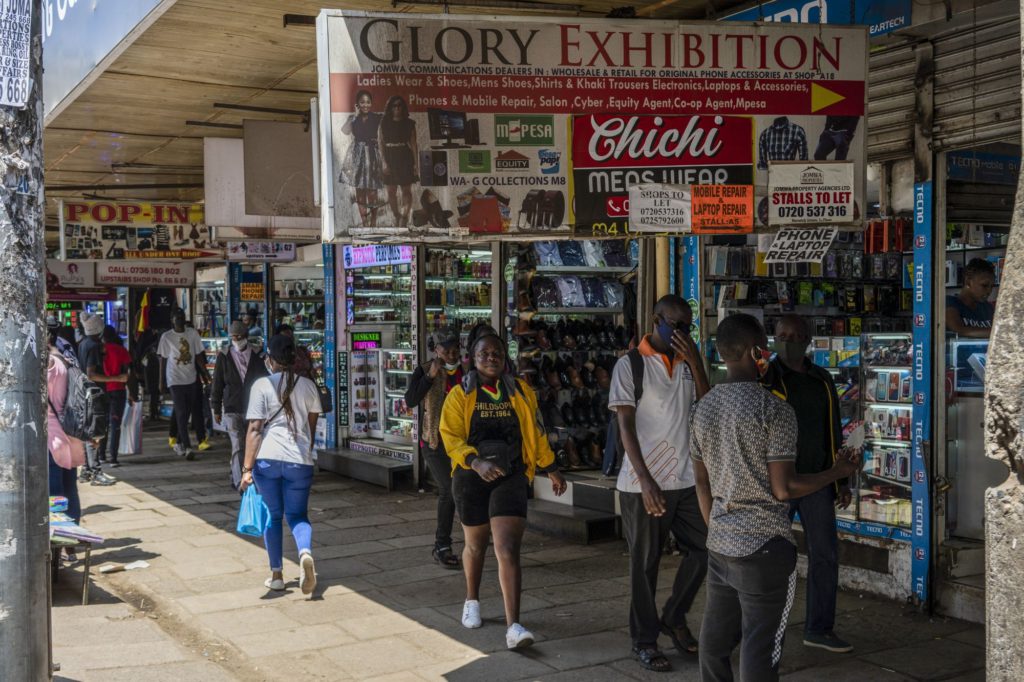
OECD Urges Kenya to Drop Plan to Double Digital-Services Tax

(Bloomberg) — Kenya should join the global minimum-tax deal instead of pushing for unilateral measures, the Organization for Economic Co-operation and Development said in comments about the nation’s plans to double its digital levy.

The East African country’s National Treasury seeks to increase its digital-services tax to 3% from 1.5%, according to the Finance Bill 2022. The proposal on the levy, which applies to foreign companies that provide online services in Kenya, will become effective if lawmakers approve it and the president signs it into law.

Kenya continues to be a holdout from a deal that the Paris-based OECD brokered for a global minimum tax rate that involves reallocating a slice of the largest multinationals’ profit to market jurisdictions. The few countries resisting the plan have raised concerns on how the proposal will affect them.

“Kenya is one of the rare countries which has not joined the agreement reached on 8 October,” an OECD spokesperson said in an emailed response to questions. “We note Kenya’s proposed legislative change,” the OECD said, adding the country should “consider removing its unilateral measure, and join the deal once the technical work is completed.”

The government is battling to curb a budget shortfall estimated at 862.5 billion shillings ($7.5 billion), or 6.2% of gross domestic product, for the year starting July 1.

Treasury Secretary Ukur Yatani is also seeking to triple capital-gains tax to 15%. The government targets an additional 50.4 billion shillings from the tax measures contained in the bill, according to Yatani.

Foreign technology companies offering services in Kenya, including Alphabet Inc’s Google, Netflix Inc. and Multichoice Group, didn’t immediately respond to requests for comment.

Other key tax proposals:

  • The Treasury proposed a 10% increase in excise tax levied on fruit juices, bottled water, alcoholic drinks, cigarettes, motorcycles. It also wants to increase excise duty on cosmetics, beauty products and jewelry to 15% from 10%.
  • The government wants any multinational with a gross turnover of at least 95 billion shillings to file a report with the Kenya Revenue Authority on its financial activities in Kenya and other jurisdictions.
  • The Treasury proposes that a party dissatisfied with a decision of Kenya’s tax tribunal shall be required to deposit 50% of the disputed tax amount in a special account at the Central Bank of Kenya.

More stories like this are available on bloomberg.com

©2022 Bloomberg L.P.
Close Bitnami banner
Bitnami