Bloomberg

Mark Cuban Says ‘Every Major Tech Company’ Is Wondering Whether They Can Buy Twitter

(Bloomberg) — Mark Cuban says Twitter is looking for a white knight.

With Elon Musk’s roughly $43 billion offer to buy the social media platform up in the air, Cuban said every major technology company is checking with their antitrust lawyers to see if they could buy Twitter and get it approved.

If Twitter rejects Musk’s offer and the Tesla chief elects to sell his shares, he will have “opened the door for those tech giants to walk in for relatively ‘little’ money and grab huge influence at Twitter or possibly a direct path to acquisition,” Cuban said. “Elon will smile all the way to the bank.”

Cuban himself thinks Twitter will do everything it can not to sell. Still, he added that even “not-so-friendly to the USA foreign money” could also be interested in Twitter.

More stories like this are available on bloomberg.com

©2022 Bloomberg L.P.

WhatsApp Is Making a Slack-Like Tool for Linking Group Chats Together

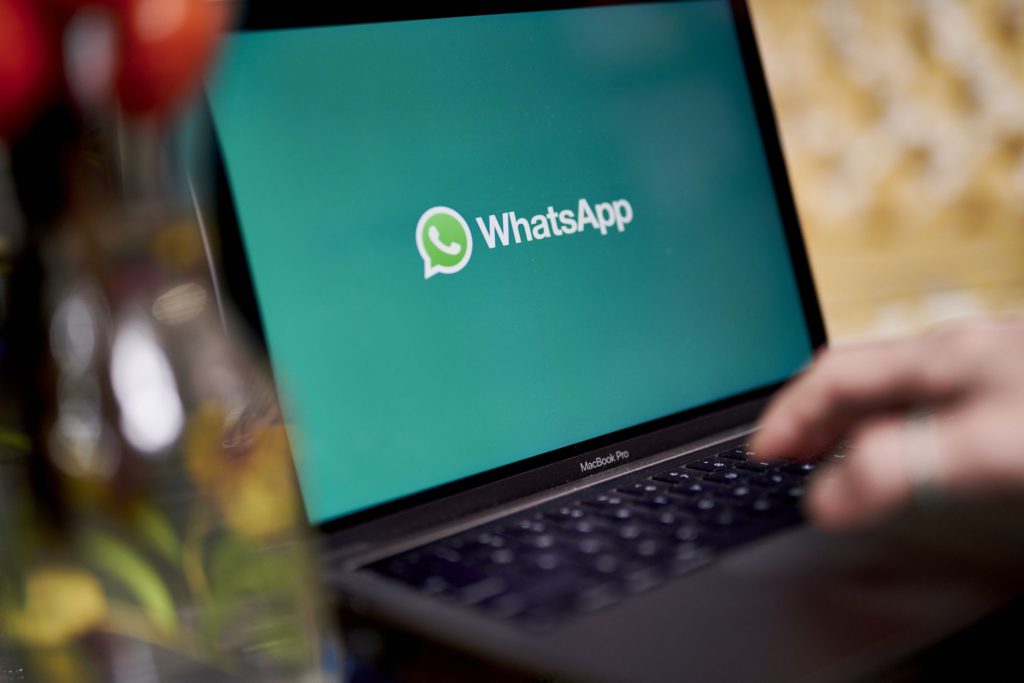
(Bloomberg) — WhatsApp said it has built a feature called Communities that will allow users to pull together separate groups under a single organization.

With the new feature, community administrators will be able to send messages to all of the groups or control which groups are alerted. The messaging platform company will start testing Communities in various countries throughout the year, in an effort to appeal to clubs with multiple chapters, for instance, or businesses with multiple teams. 

“We think Communities will make it easier for a school principal to bring all the parents of the school together to share must-read updates and set up groups about specific classes, extracurricular activities, or volunteer needs,” the Meta Platforms Inc.-owned company said in a blog post. 

It’s one of several new features that will help WhatsApp, which has more than 2 billion users, move beyond casual socialization and into territory currently dominated by workplace tools, such as Slack. WhatsApp said it also plans to start allowing group members to react to specific messages and share large files.

More stories like this are available on bloomberg.com

©2022 Bloomberg L.P.

Coal Miners in South Africa Get Railway’s Force Majeure Notice

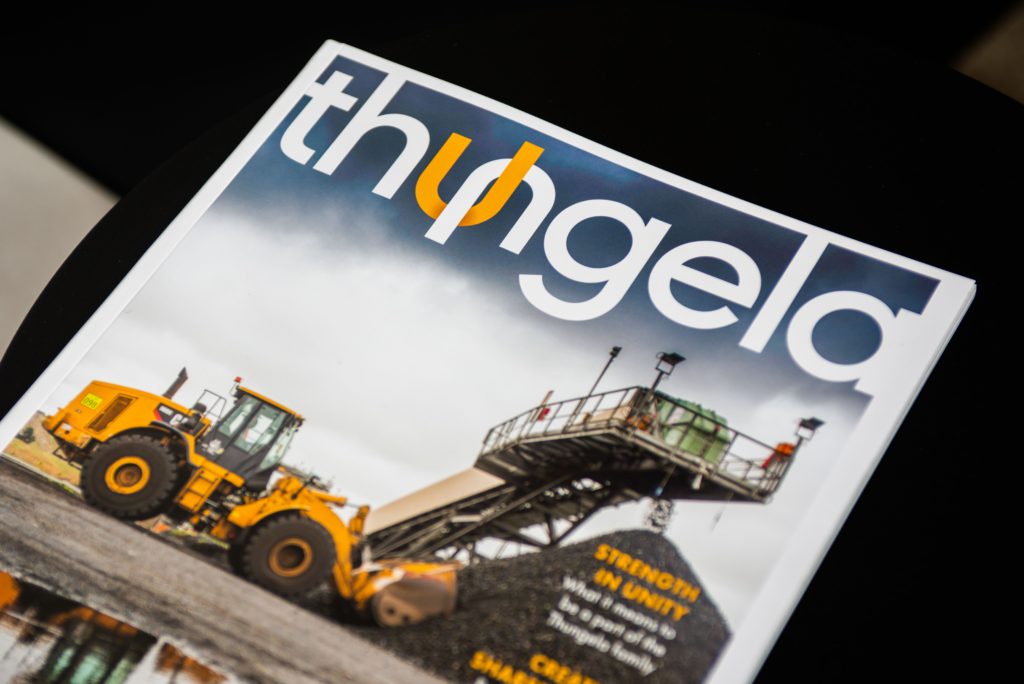
(Bloomberg) — Railway company Transnet SOC Ltd. is sending out force majeure notices to coal miners in South Africa as shipments of the fuel slow, potentially affecting exports at a time global prices are running high.  Thungela Resources Ltd., the country’s largest exporter of coal burned in power stations which has been notified, expects the …

Coal Miners in South Africa Get Railway’s Force Majeure Notice Read More »

Slow Progress on EVs Is Bad Omen for South Africa’s Auto Market

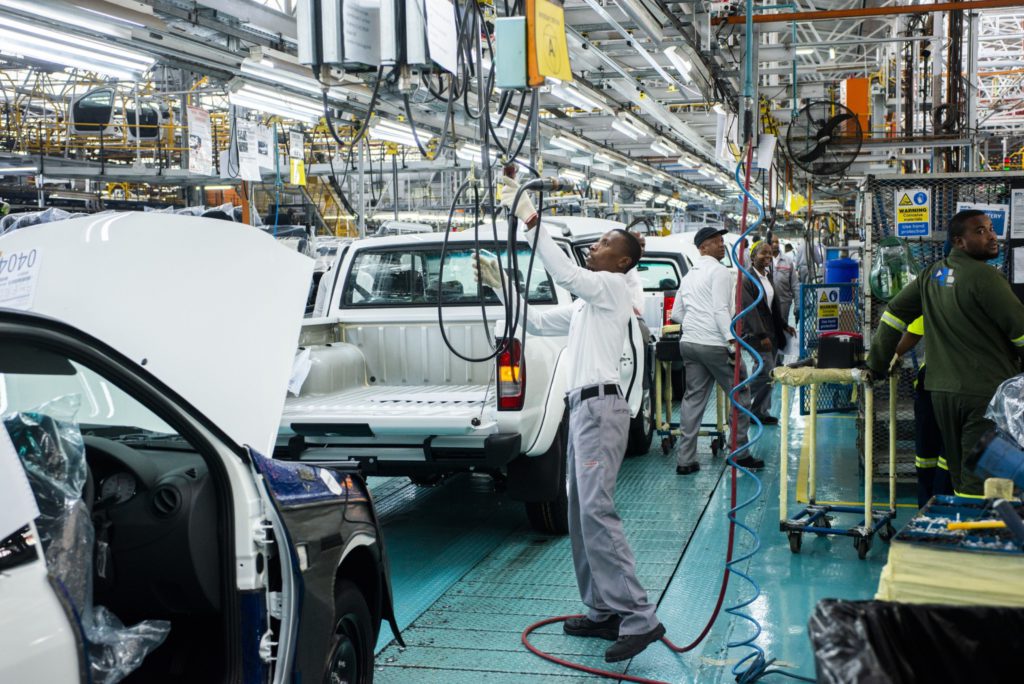
(Bloomberg) — South Africa risks losing the bulk of its automotive exports unless the government implements policies to create an electric-vehicle manufacturing industry, according to Nissan Motor Co.’s Africa head.  Europe is the destination for about two-thirds of car exports from South Africa, which earned 202 billion rand ($14 billion) from sending vehicles and components …

Slow Progress on EVs Is Bad Omen for South Africa’s Auto Market Read More »

Tesla Drops on Concern Twitter Would Divide Musk’s Attention

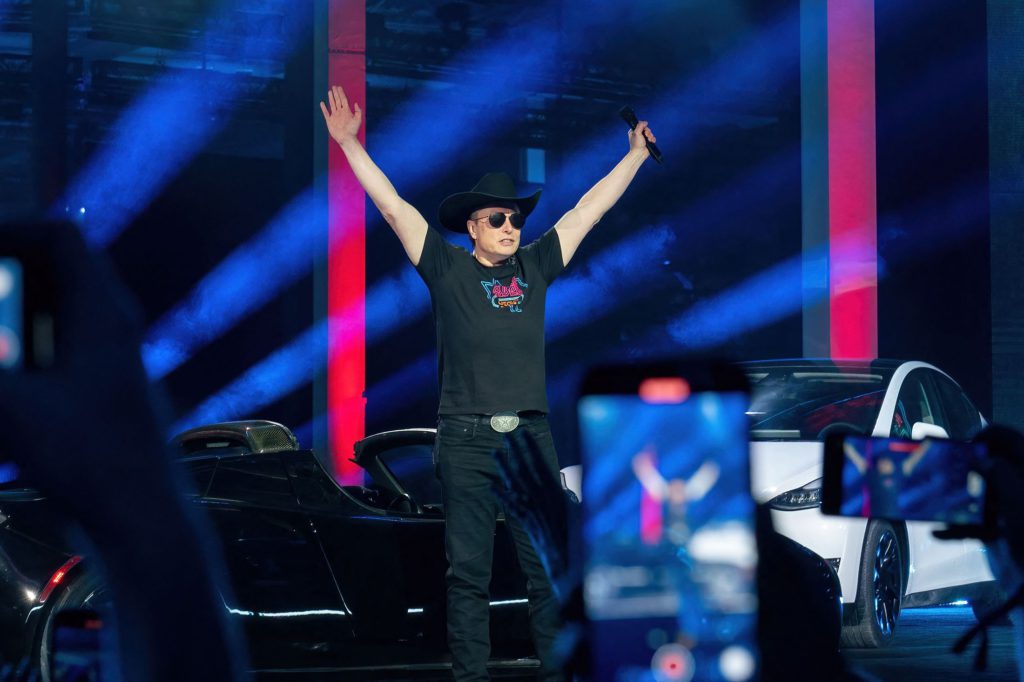
(Bloomberg) — Tesla Inc. shares slipped as investors absorbed the prospect of a new distraction for Chief Executive Officer Elon Musk.

Musk’s unsolicited $43 billion takeover bid to take Twitter Inc. private is the first time he has attempted to buy a fully formed company of that size. His previous enterprises, which also include SpaceX and the Boring Co., have largely been built from the ground up in his image. 

Tesla fell 3.8% at 10:53 a.m. Thursday in New York. Through Wednesday, the stock had dropped about 5.7% since Musk revealed a stake in Twitter last week, more than double the decline in the broader S&P 500 Index over that time.

“As the CEO of a trillion-dollar company, Elon Musk should focus on Tesla and not waste time attempting to acquire and manage a $43 billion company,” said David Trainer, CEO of investment-research firm New Constructs, in an email.

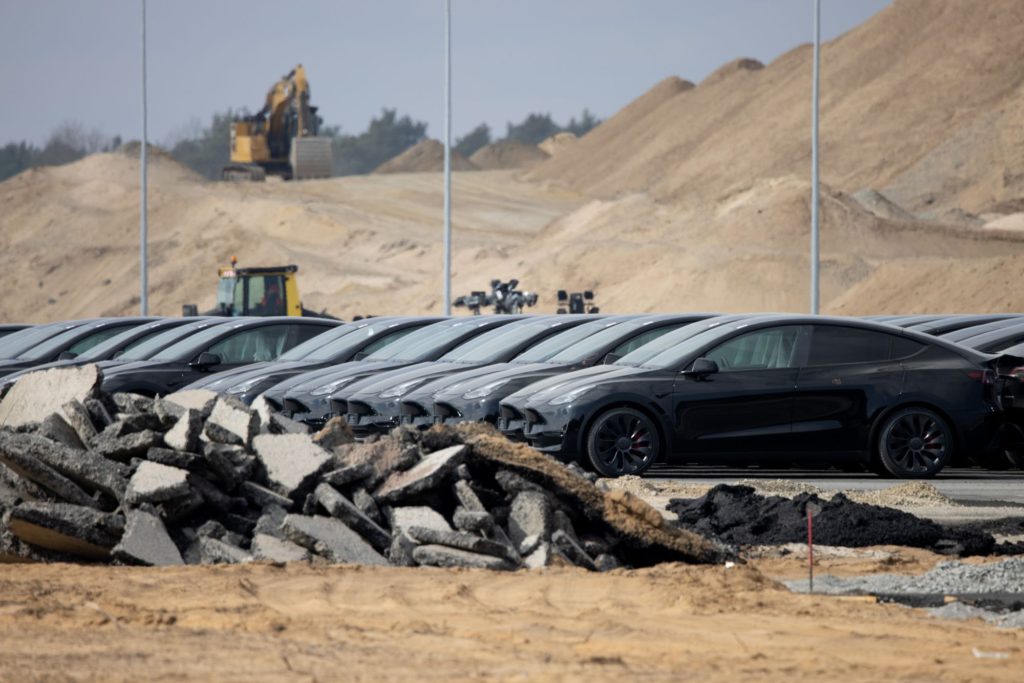
Tesla faces “significant competition” as major automakers are catching up on innovation in electric vehicles, Trainer said. Shareholders may be worried that Musk — the world’s richest person, according to the Bloomberg Wealth Index — would be pulled away from operations if his Twitter bid is accepted. Musk controls product decisions at Tesla and plans to start production of the Cybertruck, Semi and next-generation Roadster next year.

At the same time, Musk has a strong hand in SpaceX, which launched the first space flight with private astronauts last week. The company is a major contractor for NASA and plans the delayed Crew-4 launch to the International Space Station as soon as April 23.

Even if he has executives to help run his different enterprises, Musk is anything but a delegator. He has described himself as a “nano-manager” and handles almost all major decisions at his companies. When Tesla was having trouble getting the Model 3 production line going, he famously slept at the factory to oversee assembly.

Musk said Thursday that he doesn’t have confidence in Twitter’s current management, suggesting he isn’t likely to be hands-off if he succeeds in buying the company.

Another risk for Tesla shareholders is that Musk could sell some of his stake in the automaker to pay for the Twitter deal, according to Wells Fargo analyst Colin Langan. Musk owns about 17% of Tesla shares, valued at about $170 billion, and Langan said in a research note that offloading some of them to pay for the takeover may put pressure on the stock price.

Musk’s offer for Twitter is conditional upon “completion of anticipated financing,” which Langan said implies that at least some portion of the purchase price will come from outside sources.

(Updates with financing concerns in ninth and 10th paragraphs.)

More stories like this are available on bloomberg.com

©2022 Bloomberg L.P.

The Weeks That Shook Twitter: How Elon Musk Built His Stake

(Bloomberg) — Twitter users woke up April 4 and found the words “Elon” and “Elon Musk” trending on the site — not because the world’s richest, most-followed businessman had caused a stir with his futuristic companies, but because he’d disclosed a major stake in Twitter Inc.

Suddenly, Musk was Twitter’s largest individual shareholder, with more than 9% of the company, and speculation swirled about how he would influence the network’s future. He’d been frequently tweeting ideas for revamping the social media platform. Over the next week, Musk would accept an offer to join Twitter’s board of directors and, in a sudden reversal, reject that offer five days later, leaving the company’s management, employees, investors and interested observers guessing about his plans.

Will Musk continue buying Twitter shares at market prices, slowly building up his position until he—potentially with a sympathetic co-investor or another current shareholder — holds enough of the stock to control its destiny? Will Musk decide to buy shares from Twitter’s other investors? Will Musk ultimately decide to sell his shares and pocket his gains? As the news develops, here’s a look at what’s happened so far:

Jan. 31: Musk starts building his stake 

Musk started quietly buying Twitter shares on Jan. 31. By March 14, Musk had accumulated an over 5% stake, the point after which he was supposed to disclose the activity to the Securities and Exchange Commission, and by extension, the public. Musk missed the deadline to inform the SEC by 10 days. Because Twitter’s share price rose the second his stake was revealed, he was able to accumulate more on the cheap by not disclosing — a misstep that would later trigger a shareholder lawsuit. 

March 24: Musk starts critiquing Twitter, on Twitter

His stake still secret, Musk began tweeting criticisms of the company in late March.

“Worried about de facto bias in the Twitter algorithm having a major effect on public; Twitter algorithm should be open source,” Musk tweeted on March 24.

“Free speech is essential to a functioning democracy. Do you believe Twitter rigorously adheres to this principle?” Musk asked his Twitter followers in a poll posted on March 25.

“Is a new platform needed?” Musk asked in a tweet on March 26. “Am giving serious thought to this.”

Several users commenting on the Tesla Inc. chief executive officer’s tweet recommended he look into buying Twitter instead. Soon they would find out he was already acquiring shares.

April 4: Musk’s stake becomes public, and he’s invited to join Twitter’s board

Musk’s filing listed him as a passive investor, and yet, shortly after it became public, he started tweeting out business propositions for the social media company. Musk posted another poll on Twitter asking users to vote on whether they wanted the company to add an edit button that would allow people to change tweets after they’ve been published. Twitter CEO Parag Agrawal urged users to “vote carefully” on the poll. “The consequences of this poll will be important.”

By the end of the day, Twitter invited Musk to join the board. Musk signaled that he would sign an agreement stipulating that he could not own more than 14.9% of the company’s stock. 

April 5: Musk becomes an active investor

In the morning, several of Twitter’s board members took to the platform to congratulate Musk on his decision to join their ranks. Agrawal tweeted that the company and Musk had been chatting for weeks. Agrawal’s tweet led people to question why someone engaged in discussions to become a director would file as a passive investor. 

Later that day, Musk refiled the disclosure of his stake to classify himself as an active investor, making the change only after indicating that he would accept a seat on the social media company’s board.

April 9: Musk rejects the board seat

The day that Musk was set to officially join Twitter’s board, Musk informed the company that he would be rejecting its offer. But, Twitter sat on the news for roughly 36 hours while waiting to see whether Musk would change his mind. Twitter’s investor relations website listed Musk as a board member throughout the weekend.

During that time, while the public still thought Musk was set to join Twitter’s board, Musk tweeted several veiled criticisms and suggestions for the company. Musk asked his followers, “Is Twitter dying?”

Musk suggested that everyone who signs up for Twitter Blue, a subscription version for power users, should get an authentication checkmark. He suggested Twitter should convert its San Francisco headquarters into a homeless shelter “since no one shows up anyway.” And he made some crass jokes, suggesting removal of the “w” in Twitter.

April 10: Twitter makes the news public

On Sunday, Agrawal sends out a note to employees, and later tweets it publicly. Neither Agrawal or Musk give a reason for the reversal.

April 11: Speculation abounds

Musk files an amended disclosure with the SEC. He can now purchase as many shares as he wants. Without a board seat, he no longer has to act in the best interest of Twitter shareholders. At Twitter, which doesn’t have a founder with majority control like other tech giants, employees are “ super stressed,” concerned that this is only the beginning of the whiplash.

April 14: Musk offers to buy the whole company

In an SEC filing and accompanying tweet, Musk said he would buy out stockholders in a cash deal valued at $43 billion and take Twitter private. The offer is $54.20 a share, a 54% premium over the price when he started building his stake in January. The number is also an apparent (and not-very-subtle) reference to Musk’s failed bid to take Tesla private in 2018 for $420 a share — and, of course, to a special number in pot culture. He described the Twitter offer as his “best and final” one.


(Updates with Musk’s offer to buy the company in the last paragraph.)

More stories like this are available on bloomberg.com

©2022 Bloomberg L.P.

Dutch $1.2 Billion Chip Initiative Aims at Creating New ASML

(Bloomberg) — The Netherlands wants to build a new national chip champion akin to ASML Holding NV with an investment of 1.1 billion euros ($1.2 billion) in next-generation photonic technology.

The technology involves communicating information via light instead of electronic signals and can be used in chips, which have become highly sought after due to a combination of supply issues and growing demand worldwide. The European Commission has designated photonics as one of six “key enabling technologies.”

The initiative unveiled in Hague on Thursday is run by PhotonDelta, a government-backed agency established to develop a photonics ecosystem in the country. The organization will fund 200 start ups and foster scale-up in 26 established companies. The Dutch government will provide 471 million euros of funding, with the remaining amount co-invested by various partners including Eindhoven University of Technology and University Twente.

Ewit Roos, chief executive officer of PhotonDelta, said he expects the Netherlands to dominate the global photonic chip market with the initiative, very much in the spirit of ASML, which has an effective monopoly on advanced extreme ultraviolet lithography machines. The Veldhoven-based company has eclipsed Intel Corp., the world’s biggest maker of PC processors, in market capitalization.

“If we continue these developments, the photonic sector in the Netherlands should have a turnover of 5 billion euros in 2030,” with a market share of as much as 30%, Roos said in an interview.

Chinese Interest

The initiative marks the second push by the Dutch government into photonic technology after a 2020 investment of 20 million euros in Smart Photonics, an Eindhoven-based photonic chipmaker, to stave off interest from China in the strategic technology.

“A Chinese venture capital company backed by lots of government money was in the market for Smart Photonics,” said Roos, adding that swift action by the Dutch government kept the technology in the country. “We gave a very strong signal to China back in 2020,” he said.

To this day, the Chinese remain interested in Dutch photonics companies, said Roos. The government has also blocked ASML’s plans to drive deeper into China through sales of its extreme ultraviolet lithography systems, blocking a request for an export license amid trade tensions between Washington, D.C., and Beijing.

“We invested lots of money and research in solar cells but lost the entire industry to China,” said Roos. “We have the opportunity to do it differently this time around.”

Photonic technology, which enables transferring more data but takes less energy, is a highly strategic and versatile, said Martijn Heck, professor in photonic integration at Eindhoven University. The applications vary from autonomous driving to quicker but more sustainable data infrastructure needed for quantum computing and 5G connectivity.

“The European Union has been naive when it comes to strategic autonomy, but they are waking up,” Heck said in an interview. “If you do not control this supply chain, you will never know what happens exactly and if back doors are being build into the chips. In the end it is about state security.”

More stories like this are available on bloomberg.com

©2022 Bloomberg L.P.
Volkswagen CEO Takes ID.Buzz for First Autonomous Spin in Munich

(Bloomberg) — A self-driving Volkswagen AG minibus navigated real traffic conditions in Germany for the first time as Europe’s biggest carmaker takes its autonomous-driving technology to public roads amid a push to lead on software.

VW Chief Executive Officer Herbert Diess sat in the back seat of an ID. Buzz prototype fitted with autonomous-driving tech as it zipped through downtown Munich this month. An electric iteration of VW’s iconic hippie-era van, the vehicle uses lidar and radar sensors as well as cameras for navigation, mapping and route planning.

VW is cooperating on the project with Ford Motor Co.-backed autonomous-driving startup Argo AI. The goal is to introduce a self-driving ride-pooling service in Hamburg by 2025 and eventually provide ride hailing and goods delivery services in Europe and the U.S.

“We want to be part of the public transport system in the future,” Christian Senger, responsible for autonomous driving at VW’s commercial vehicles unit, said in a video posted about the ride. “We believe that robot mobility will be even safer than a human can be in public transport.”

More stories like this are available on bloomberg.com

©2022 Bloomberg L.P.
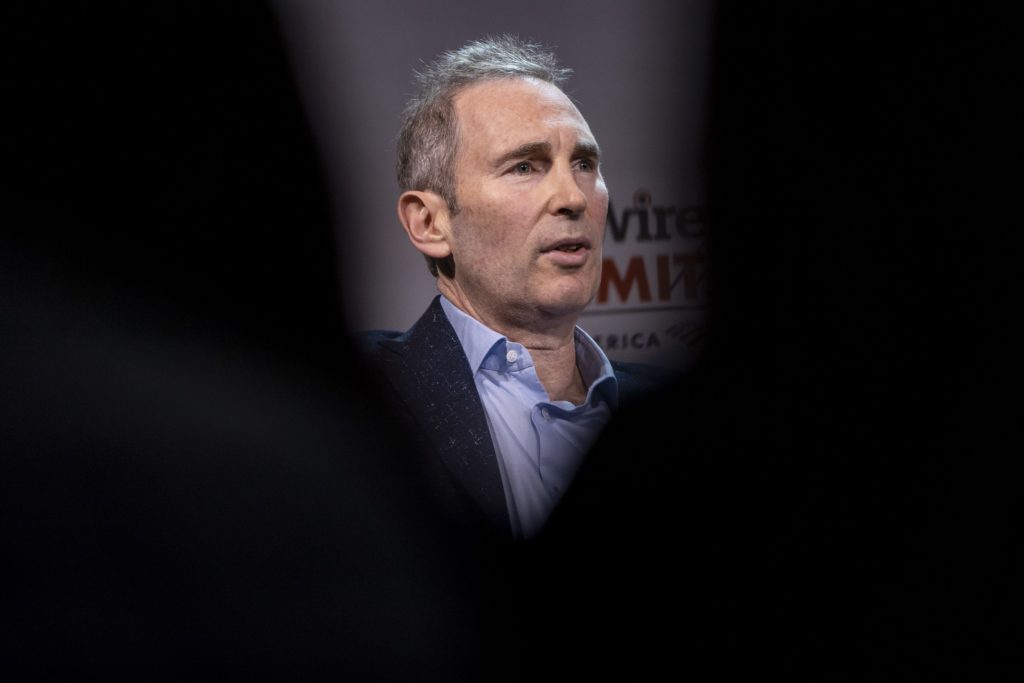
Amazon’s Jassy Vows to Curb Worker Injuries in First Shareholder Letter

(Bloomberg) — Amazon.com Inc. Chief Executive Officer Andy Jassy, in his first letter to shareholders since getting the job last year, pledged to reduce injury rates among frontline workers.

The company has been criticized for a high rate of injuries at its warehouses — typically nerve, muscle and joint issues caused by overexertion, repetitive strain and poor ergonomics. Though such maladies are less headline-grabbing than serious accidents or deaths — which also occasionally occur at Amazon facilities — they can still lead to missed work and lifelong pain. 

“I spent significant time in our fulfillment centers and with our safety team, and hoped there might be a silver bullet that could change the numbers quickly,” Jassy wrote in the missive, which was posted to Amazon’s website Thursday. “I didn’t find that.”

He said the company was helping reduce the time workers spend doing the same repetitive motions, has issued wearable devices that warn employees when they’re moving in an unsafe fashion and provided training. 

“But we still have a ways to go,” he said. 

Last year, Amazon announced a $12 million, five-year partnership with the National Safety Council to analyze and prevent the most frequent injuries in its warehouses.

The CEO also took investors through Amazon’s pandemic experience, laying out the company’s heavy spending on logistics to meet a sudden surge in online shopping, which he said was comparable to cramming three years’ of forecasted growth at the consumer division into about 15 months. Amazon shares were down about 1% at 9:55 a.m. in New York. 

Jeff Bezos, in his last letter to shareholders in 2021, said it was time to focus more on the welfare of workers. The company subsequently pledged to become the “Earth’s best employer.” Last week, Bloomberg reported that the executive responsible for the Earth’s best employer initiative was leaving. 

Earlier this month, an upstart union won a decisive election at an Amazon warehouse in New York. The company has appealed the outcome and has until April 22 to provide a labor board with evidence to back up those claims. 

In a CNBC interview on Thursday, Jassy said it was workers’ choice whether or not to join a union but that “we happen to think they’re better off not doing so.”

(Updated with Jassy comment in CNBC interview.)

More stories like this are available on bloomberg.com

©2022 Bloomberg L.P.
Close Bitnami banner
Bitnami